Maryland STEM Portfolio Project Region 1 Summer Academy S cience T echnology E ngineering M ath
Rising Above the Gathering Storm Chaired by Norm Augustine Dr. Grasmick was the only K-12 Pipeline – Who are we missing? Dedicated Funds STEM Coordinators STEM Advisory Groups Maryland’s STEM Website
Concerns Shortage of students entering these fields Threat to security Economic growth Children’s future for jobs Social promotion/remedial courses
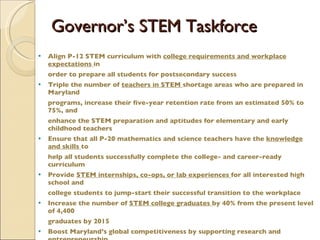
Governor’s STEM Taskforce Align P-12 STEM curriculum with  college requirements and workplace expectations  in order to prepare all students for postsecondary success Triple the number of  teachers in STEM  shortage areas who are prepared in Maryland programs, increase their five-year retention rate from an estimated 50% to 75%, and enhance the STEM preparation and aptitudes for elementary and early childhood teachers Ensure that all P-20 mathematics and science teachers have the  knowledge and skills  to help all students successfully complete the college- and career-ready curriculum Provide  STEM internships, co-ops, or lab experiences  for all interested high school and college students to jump-start their successful transition to the workplace Increase the number of  STEM college graduates  by 40% from the present level of 4,400 graduates by 2015 Boost Maryland’s global competitiveness by supporting research and entrepreneurship Create Maryland’s  STEM Innovation Network  to make STEM resources available to all
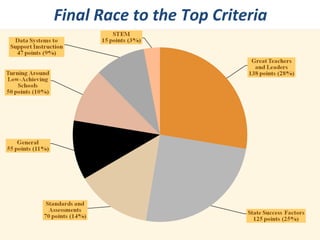
Final Race to the Top Criteria
STEM Science  Inquiry based learning into natural systems Technology New to instruction Mathematics Problem solving and justification
Designing systems for specific purposes Trans-disciplinary Creative Persevere through repeated design – test cycle Communication
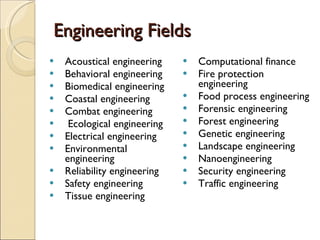
Engineering Fields Acoustical engineering  Behavioral engineering  Biomedical engineering Coastal engineering  Combat engineering  Ecological engineering  Electrical engineering  Environmental engineering  Reliability engineering  Safety engineering  Tissue engineering  Computational finance  Fire protection engineering  Food process engineering  Forensic engineering  Forest engineering  Genetic engineering  Landscape engineering  Nanoengineering  Security engineering  Traffic engineering
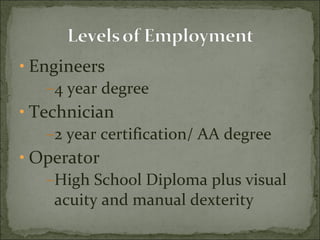
Engineers 4 year degree Technician 2 year certification/ AA degree Operator High School Diploma plus visual acuity and manual dexterity
STEM Initiatives Increased access for students Magnet schools Signature Programs After school and summer programs/clubs Purchased technology Increased the number and scope of student internships and teacher externships Revised curriculum
Maryland - Before “STEM”  Magnet Math and Science Schools Eleanor Roosevelt High School in PG County Argyle Middle School in Montgomery County Aberdeen High School in Harford County Career and Technology Programs Oracle, Project Lead the Way Advanced Placement Courses Internships and Externships Frederick County High Schools Martin Marietta Fellows
Revise the Maryland State Curriculum PreK – 12, assessments and accountability system based on the Common Core Standards to assure that all graduates are college and career ready. Adopt Common Core Standards by Summer 2010 Agree with higher education on college-ready standards Revise high school graduation requirements  4 years of mathematics, including Algebra II Develop interdisciplinary STEM curriculum Begin work on new assessments based on Common Core Standards (as part of assessment consortia)
Build a statewide technology infrastructure that links all data elements with analytic and instructional tools to monitor and promote student achievement. Accelerate and fully implement the longitudinal data system Develop online instructional toolkit to support new standards and assessments Align data systems with higher education and workforce Provide high quality professional development on the access and use of data systems
Redesign the model for the preparation, development, retention, and evaluation of teachers and principals. Define  effective  and  highly effective  teachers and principals Develop teacher and principal evaluation frameworks with student growth being a significant component Revise teacher preparation programs to meet the demands of the 21st century Develop programs to prepare teachers and principals for the challenges of working in low-achieving schools
Fully implement the innovative Breakthrough Center approach for transforming low-achieving schools and districts. Cross-divisional, statewide system of coordinating, brokering, and delivering support for low-achieving schools Builds upon Title I program success  Helps maximize resources in education, business, government, and research centers Currently in a limited number of schools and districts
Recognizing STEM Asking systems to think systemic! Start early! Pipeline! “ Investing in STEM to Secure Maryland’s Future”  http://www.mbrt.org/news/2009/stem-task-force-report.pdf A Policymaker’s Guide to 21st Century Skills  http://www.21stcenturyskills.org/
 
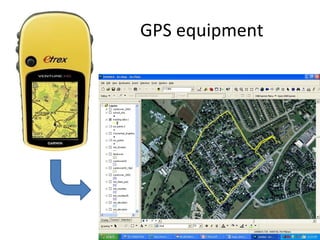
Essential Components of a STEM Activity Problem-based learning GIS software GPS equipment Research Model Information literacy Minimum of 2 Web 2.0 resources Best Practices
Problem-based Learning What is PBL? A learning strategy characterized by  self-directed  active learning starting with an “ill-structured problem”  before  any instruction Learners probe deeply into issues searching for connections, grappling with  complexity  and using knowledge to fashion solutions An excellent instructional method that can cultivate students’  critical thinking , develop their abilities to analyze and solve problems
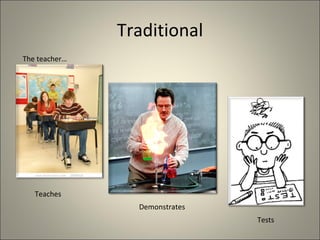
Traditional Teaches Demonstrates Tests The teacher…
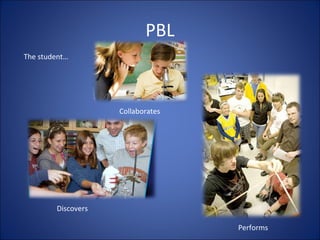
PBL Collaborates Discovers Performs The student…
Why PBL? Asks students to demonstrate understanding, not to just gather and rewrite information Builds critical thinking and reasoning skills Promotes student creativity and independence Allows students to manage their own activities Can change bored students into engaged students http://www.edutopia.org/project-learning-introduction-video
Successful MS Strategies Student choice Student decision making Student involvement in self assessment Frequent reformation of groups Cooperative learning Alternative assessments such as portfolios Challenging, complex work Anderman, Lynley Hicks, Midgley, Carol . &quot;Motivation and Middle School Students.&quot;  ERIC Digest 1997.  6/30/10 <http://www.ericdigests.org/1999-1/motivation.html>.
PBL in K-12 Solve a complex question or problem through a collaborative process of investigation Learn content, information, and facts necessary to draw conclusions about the question Learn valuable skills and habits of mind Are evaluated on their ability to reason and apply knowledge as they work on a problem http://www.edutopia.org/project-based-learning-overview
K-12 con’t Students work in flexible groups to solve challenging problems that are authentic, curriculum-based, and often interdisciplinary Students create knowledge and understanding through learning activities built around intellectual inquiry and a high degree of engagement* with meaningful tasks Projects take the role traditionally given to tests and quizzes
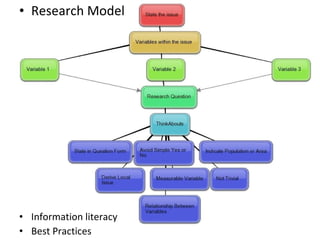
Research Model Information literacy Best Practices
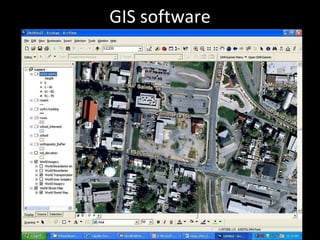
GIS software
GPS equipment


November 12, 1999 Read Pages 1-10 Answer questions 1-5 www.readpages1-10.com


Minimum of 2 Web 2.0 resources
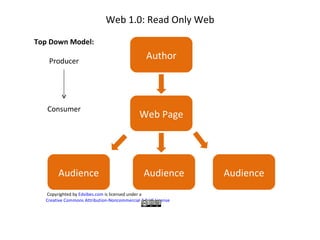
Web Page Web 1.0: Read Only Web Copyrighted by  Edvibes.com  is licensed under a  Creative Commons Attribution-Noncommercial 3.0 US License Author Audience Audience Audience Top Down Model: Producer Consumer
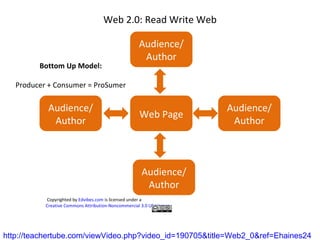
Web Page Web 2.0: Read Write Web Copyrighted by  Edvibes.com  is licensed under a  Creative Commons Attribution-Noncommercial 3.0 US License Audience/ Author Audience/ Author Audience/ Author Audience/ Author Bottom Up Model: Producer + Consumer = ProSumer http://teachertube.com/viewVideo.php?video_id=190705&title=Web2_0&ref=Ehaines24
 

Mspp presentation

  • 1.
    Maryland STEM PortfolioProject Region 1 Summer Academy S cience T echnology E ngineering M ath
  • 2.
    Rising Above theGathering Storm Chaired by Norm Augustine Dr. Grasmick was the only K-12 Pipeline – Who are we missing? Dedicated Funds STEM Coordinators STEM Advisory Groups Maryland’s STEM Website
  • 3.
    Concerns Shortage ofstudents entering these fields Threat to security Economic growth Children’s future for jobs Social promotion/remedial courses
  • 4.
    Governor’s STEM TaskforceAlign P-12 STEM curriculum with college requirements and workplace expectations in order to prepare all students for postsecondary success Triple the number of teachers in STEM shortage areas who are prepared in Maryland programs, increase their five-year retention rate from an estimated 50% to 75%, and enhance the STEM preparation and aptitudes for elementary and early childhood teachers Ensure that all P-20 mathematics and science teachers have the knowledge and skills to help all students successfully complete the college- and career-ready curriculum Provide STEM internships, co-ops, or lab experiences for all interested high school and college students to jump-start their successful transition to the workplace Increase the number of STEM college graduates by 40% from the present level of 4,400 graduates by 2015 Boost Maryland’s global competitiveness by supporting research and entrepreneurship Create Maryland’s STEM Innovation Network to make STEM resources available to all
  • 5.
    Final Race tothe Top Criteria
  • 6.
    STEM Science Inquiry based learning into natural systems Technology New to instruction Mathematics Problem solving and justification
  • 7.
    Designing systems forspecific purposes Trans-disciplinary Creative Persevere through repeated design – test cycle Communication
  • 8.
    Engineering Fields Acousticalengineering Behavioral engineering Biomedical engineering Coastal engineering Combat engineering Ecological engineering Electrical engineering Environmental engineering Reliability engineering Safety engineering Tissue engineering Computational finance Fire protection engineering Food process engineering Forensic engineering Forest engineering Genetic engineering Landscape engineering Nanoengineering Security engineering Traffic engineering
  • 9.
    Engineers 4 yeardegree Technician 2 year certification/ AA degree Operator High School Diploma plus visual acuity and manual dexterity
  • 10.
    STEM Initiatives Increasedaccess for students Magnet schools Signature Programs After school and summer programs/clubs Purchased technology Increased the number and scope of student internships and teacher externships Revised curriculum
  • 11.
    Maryland - Before“STEM” Magnet Math and Science Schools Eleanor Roosevelt High School in PG County Argyle Middle School in Montgomery County Aberdeen High School in Harford County Career and Technology Programs Oracle, Project Lead the Way Advanced Placement Courses Internships and Externships Frederick County High Schools Martin Marietta Fellows
  • 12.
    Revise the MarylandState Curriculum PreK – 12, assessments and accountability system based on the Common Core Standards to assure that all graduates are college and career ready. Adopt Common Core Standards by Summer 2010 Agree with higher education on college-ready standards Revise high school graduation requirements 4 years of mathematics, including Algebra II Develop interdisciplinary STEM curriculum Begin work on new assessments based on Common Core Standards (as part of assessment consortia)
  • 13.
    Build a statewidetechnology infrastructure that links all data elements with analytic and instructional tools to monitor and promote student achievement. Accelerate and fully implement the longitudinal data system Develop online instructional toolkit to support new standards and assessments Align data systems with higher education and workforce Provide high quality professional development on the access and use of data systems
  • 14.
    Redesign the modelfor the preparation, development, retention, and evaluation of teachers and principals. Define effective and highly effective teachers and principals Develop teacher and principal evaluation frameworks with student growth being a significant component Revise teacher preparation programs to meet the demands of the 21st century Develop programs to prepare teachers and principals for the challenges of working in low-achieving schools
  • 15.
    Fully implement theinnovative Breakthrough Center approach for transforming low-achieving schools and districts. Cross-divisional, statewide system of coordinating, brokering, and delivering support for low-achieving schools Builds upon Title I program success Helps maximize resources in education, business, government, and research centers Currently in a limited number of schools and districts
  • 16.
    Recognizing STEM Askingsystems to think systemic! Start early! Pipeline! “ Investing in STEM to Secure Maryland’s Future” http://www.mbrt.org/news/2009/stem-task-force-report.pdf A Policymaker’s Guide to 21st Century Skills http://www.21stcenturyskills.org/
  • 17.
  • 18.
    Essential Components ofa STEM Activity Problem-based learning GIS software GPS equipment Research Model Information literacy Minimum of 2 Web 2.0 resources Best Practices
  • 19.
    Problem-based Learning Whatis PBL? A learning strategy characterized by self-directed active learning starting with an “ill-structured problem” before any instruction Learners probe deeply into issues searching for connections, grappling with complexity and using knowledge to fashion solutions An excellent instructional method that can cultivate students’ critical thinking , develop their abilities to analyze and solve problems
  • 20.
  • 21.
    PBL Collaborates DiscoversPerforms The student…
  • 22.
    Why PBL? Asksstudents to demonstrate understanding, not to just gather and rewrite information Builds critical thinking and reasoning skills Promotes student creativity and independence Allows students to manage their own activities Can change bored students into engaged students http://www.edutopia.org/project-learning-introduction-video
  • 23.
    Successful MS StrategiesStudent choice Student decision making Student involvement in self assessment Frequent reformation of groups Cooperative learning Alternative assessments such as portfolios Challenging, complex work Anderman, Lynley Hicks, Midgley, Carol . &quot;Motivation and Middle School Students.&quot; ERIC Digest 1997. 6/30/10 <http://www.ericdigests.org/1999-1/motivation.html>.
  • 24.
    PBL in K-12Solve a complex question or problem through a collaborative process of investigation Learn content, information, and facts necessary to draw conclusions about the question Learn valuable skills and habits of mind Are evaluated on their ability to reason and apply knowledge as they work on a problem http://www.edutopia.org/project-based-learning-overview
  • 25.
    K-12 con’t Studentswork in flexible groups to solve challenging problems that are authentic, curriculum-based, and often interdisciplinary Students create knowledge and understanding through learning activities built around intellectual inquiry and a high degree of engagement* with meaningful tasks Projects take the role traditionally given to tests and quizzes
  • 26.
    Research Model Informationliteracy Best Practices
  • 27.
  • 28.
  • 29.
  • 30.
  • 31.
  • 32.
    November 12, 1999Read Pages 1-10 Answer questions 1-5 www.readpages1-10.com
  • 33.
  • 34.
  • 35.
  • 36.
    Minimum of 2Web 2.0 resources
  • 37.
    Web Page Web1.0: Read Only Web Copyrighted by Edvibes.com is licensed under a Creative Commons Attribution-Noncommercial 3.0 US License Author Audience Audience Audience Top Down Model: Producer Consumer
  • 38.
    Web Page Web2.0: Read Write Web Copyrighted by Edvibes.com is licensed under a Creative Commons Attribution-Noncommercial 3.0 US License Audience/ Author Audience/ Author Audience/ Author Audience/ Author Bottom Up Model: Producer + Consumer = ProSumer http://teachertube.com/viewVideo.php?video_id=190705&title=Web2_0&ref=Ehaines24
  • 39.

Editor's Notes

  • #3 Call 800 Surgery in London First Recommendation was pipeline Is this just another report?? Sputnik, A Nation at Risk, Before It’s Too Late G &amp; T Advisory Board Update 12/2009 Donna Watts (dwatts@msde.state.md.us)
  • #4 The Way We Were World is Flat – Thomas Friedman -- Death of Distance Other countries are catching up to us Working together meant – be in the same room. Barely able to have a multi-person long distance conference – to instant dialogue and pictures
  • #6 Largest RTTT pot of funds – 4 billion Two states awarded – another round for June 2010 STEM only 15 points but must permeate throughout document Office of STEM Education Develop integrated STEM lessons UTEACH - STEM Career changers
  • #7 STEM has many definitions and some say it has no definition But it is NOT a thing Science – grow seeds and vary the amount of water vs design a watering system to water appropriately Theories Technology – it is more than the Toys in the classroom vs how tech is used Math – find answer vs
  • #8 Engineering Careers – mechanical, chemical Sloan Career Center – over 100
  • #9 I was good at science and math Combine the two but how? And we don’t know tomorrow’s fields Engineers: 4 year degreed Technician: 2 year certification/ AA degree Operator: High School Diploma plus visual acuity and manual dexterity
  • #10 In the one room school house – reading, writing, arithmetic Not for today nor tomorrow
  • #12 Dr. Hairston’s Plans G &amp; T Advisory Board Update 12/2009 Donna Watts (dwatts@msde.state.md.us)
  • #13 48 states led by NGA, CCSSO, ACT, College Board, Achieve, NASBE, State HE Ex Officers First --- College and Career Ready Standards
  • #17 Don Thomas – lots of engineers got him into space but for every engineer – many/many technicians STEM is problem based learning – critical thinking – media literacy – collaborative skills G &amp; T Advisory Board Update 12/2009 Donna Watts (dwatts@msde.state.md.us)
  • #20 . Ill-structured problems, on the other hand, are messy like the problems that are faced in everyday life and in professional practice Students may need to draw from multiple disciplines
  • #21 Teacher has already taught the material that will be covered on the test It’s all about the teacher
  • #22 Students learn the material as they need it working through the problem It’s all about the student
  • #24 Research shows that the most successful middle school teaching model uses these strategies which also happen to be strategies employed in PBL
  • #25 PROJECT BASES LEARNING and PROBLEM based learning are similar, and the terms are sometimes used interchangeably. Both are based on a method inquiry into an authentic problem or question. Problem based learning is a term more commonly used in colleges and universities, while Project Based Learning is a term used in K -12 education in the United States. Outside the United States, problem based learning or ‘project work’ is the more common term for PBL. Project learning is often initiated with a Driving Questions whereas Problem-based learning begins with a problem, not just a question Seymour Papert is an MIT mathematician, computer scientist, and educator. He is one of the pioneers of artificial intelligence, as well as an inventor of the Logo programming language.
  • #26 * Problems are deliberately written to engage stu interest.PROJECT BASEd LEARNING and PROBLEM based learning are similar, and the terms are sometimes used interchangeably. Both are based on a method inquiry into an authentic problem or question. Problem based learning is a term more commonly used in colleges and universities, while Project Based Learning is a term used in K -12 education in the United States. Outside the United States, problem based learning or ‘project work’ is the more common term for PBL. Seymour Papert is an MIT mathematician, computer scientist, and educator. He is one of the pioneers of artificial intelligence, as well as an inventor of the Logo programming language.