


STEM Education WHY??
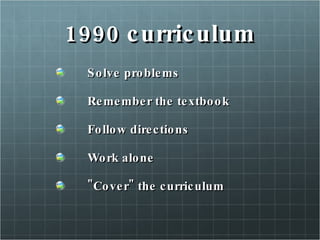
1990 curriculum Solve problems Remember the textbook Follow directions Work alone "Cover" the curriculum
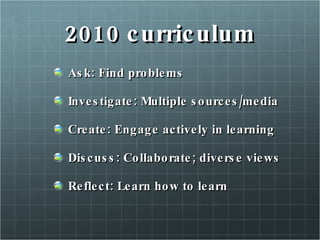
2010 curriculum Ask: Find problems Investigate: Multiple sources/media Create: Engage actively in learning Discuss: Collaborate; diverse views Reflect: Learn how to learn
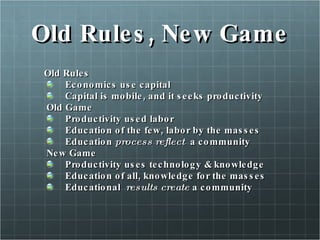
Old Rules, New Game Old Rules Economics use capital Capital is mobile, and it seeks productivity Old Game Productivity used labor Education of the few, labor by the masses Education  process reflect  a community New Game Productivity uses technology & knowledge Education of all, knowledge for the masses Educational  results create  a community
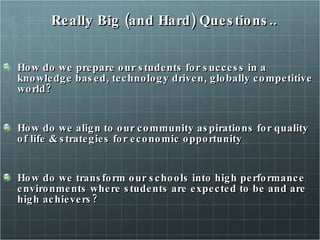
Really Big (and Hard) Questions.. How do we prepare our students for success in a knowledge based, technology driven, globally competitive world? How do we align to our community aspirations for quality of life & strategies for economic opportunity How do we transform our schools into high performance environments where students are expected to be and are high achievers?
The Primary aim of education is not to enable students to do well in school, but to help them do well in the life they will lead outside of school.
So where is this all leading…. STEM EDUCATION
Why are 21st Century skills so important?
U.S. students must compete in a new global economy. Hershey is opening their next plant in…… MEXICO!!!
The U.S. is falling behind.
The nature of work is changing.
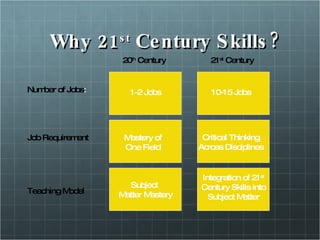
Why 21 st  Century Skills? Subject  Matter Mastery 20 th  Century 21 st  Century Number of Jobs : Job Requirement Teaching Model 1-2 Jobs Mastery of One Field 10-15 Jobs Critical Thinking Across Disciplines Integration of 21 st  Century Skills into Subject Matter
The requirements of the 21 st  Century work force are changing?
We need to prepare our students to be effective 21 st  Century citizens.
What is the Framework of 21 st  Century Skills?
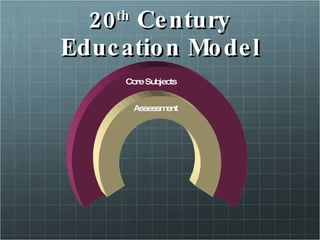
20 th  Century Education Model Core Subjects Assessment
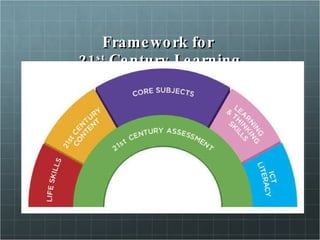
Framework for  21 st  Century Learning
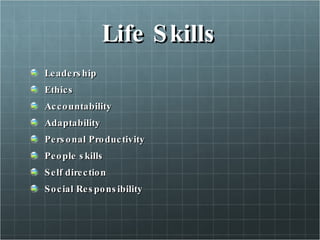
Life Skills Leadership Ethics Accountability Adaptability Personal Productivity People skills Self direction Social Responsibility
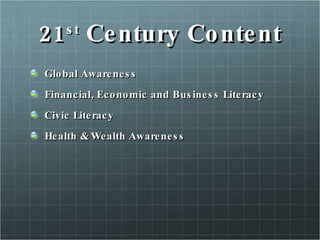
21 st  Century Content Global Awareness Financial, Economic and Business Literacy Civic Literacy Health & Wealth Awareness
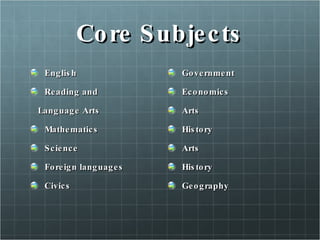
Core Subjects English Reading and Language Arts Mathematics Science Foreign languages Civics Government Economics Arts History Arts History Geography
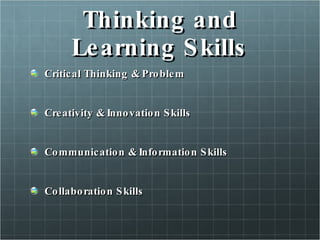
Thinking and Learning Skills Critical Thinking & Problem  Creativity & Innovation Skills Communication & Information Skills Collaboration Skills
ICT Literacy Information and communications technology (ICT) is the ability to use technology to accomplish thinking and learning skills: Critical Thinking & Problem Solving Creativity & Innovation Skills Communication & Information Skills Collaboration Skills
Today’s students are no longer the people our educational system was designed to teach. Prensky, 2001
Students learn from thinking….thinking is engaged by activity. Jonassen, 2003
How many students that start high school finish college???? Go ahead take a guess…….
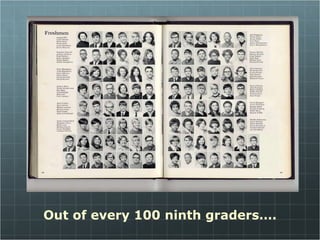
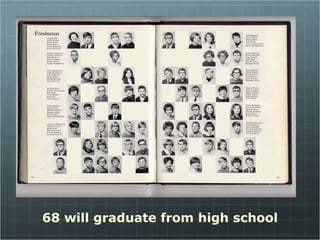
Out of every 100 ninth graders….
68 will graduate from high school
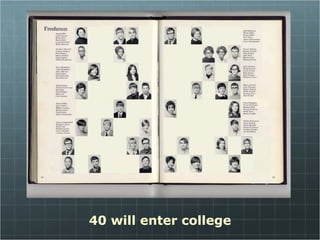
40 will enter college
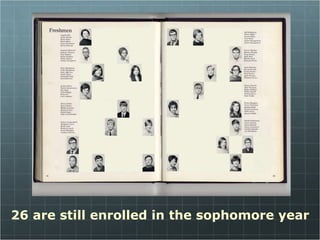
26 are still enrolled in the sophomore year
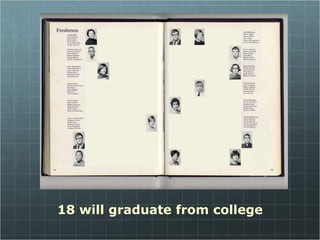
18 will graduate from college
The goal is an organization that is constantly making its future rather than defending its past. Hamel & Valiksngas, 2003
How can this be done? Programs like Robotics, Technology, Science and Engineering Fairs, physical education, health education and out of classroom activities increase student awareness and expertise in science and technology. Which will lead to greater understanding and expertise. Preparing them for the future and their career whatever it may be…..
Willard Wirtz There aren’t two worlds -- education and work, there is one world -- life.
Thoughts….. OUR STUDENTS (your children) are our future, and given the supports they need, will achieve great things Thank you for attending today

Kona

  • 1.
  • 2.
    1990 curriculum Solveproblems Remember the textbook Follow directions Work alone "Cover" the curriculum
  • 3.
    2010 curriculum Ask:Find problems Investigate: Multiple sources/media Create: Engage actively in learning Discuss: Collaborate; diverse views Reflect: Learn how to learn
  • 4.
    Old Rules, NewGame Old Rules Economics use capital Capital is mobile, and it seeks productivity Old Game Productivity used labor Education of the few, labor by the masses Education process reflect a community New Game Productivity uses technology & knowledge Education of all, knowledge for the masses Educational results create a community
  • 5.
    Really Big (andHard) Questions.. How do we prepare our students for success in a knowledge based, technology driven, globally competitive world? How do we align to our community aspirations for quality of life & strategies for economic opportunity How do we transform our schools into high performance environments where students are expected to be and are high achievers?
  • 6.
    The Primary aimof education is not to enable students to do well in school, but to help them do well in the life they will lead outside of school.
  • 7.
    So where isthis all leading…. STEM EDUCATION
  • 8.
    Why are 21stCentury skills so important?
  • 9.
    U.S. students mustcompete in a new global economy. Hershey is opening their next plant in…… MEXICO!!!
  • 10.
    The U.S. isfalling behind.
  • 11.
    The nature ofwork is changing.
  • 12.
    Why 21 st Century Skills? Subject Matter Mastery 20 th Century 21 st Century Number of Jobs : Job Requirement Teaching Model 1-2 Jobs Mastery of One Field 10-15 Jobs Critical Thinking Across Disciplines Integration of 21 st Century Skills into Subject Matter
  • 13.
    The requirements ofthe 21 st Century work force are changing?
  • 14.
    We need toprepare our students to be effective 21 st Century citizens.
  • 15.
    What is theFramework of 21 st Century Skills?
  • 16.
    20 th Century Education Model Core Subjects Assessment
  • 17.
    Framework for 21 st Century Learning
  • 18.
    Life Skills LeadershipEthics Accountability Adaptability Personal Productivity People skills Self direction Social Responsibility
  • 19.
    21 st Century Content Global Awareness Financial, Economic and Business Literacy Civic Literacy Health & Wealth Awareness
  • 20.
    Core Subjects EnglishReading and Language Arts Mathematics Science Foreign languages Civics Government Economics Arts History Arts History Geography
  • 21.
    Thinking and LearningSkills Critical Thinking & Problem Creativity & Innovation Skills Communication & Information Skills Collaboration Skills
  • 22.
    ICT Literacy Informationand communications technology (ICT) is the ability to use technology to accomplish thinking and learning skills: Critical Thinking & Problem Solving Creativity & Innovation Skills Communication & Information Skills Collaboration Skills
  • 23.
    Today’s students areno longer the people our educational system was designed to teach. Prensky, 2001
  • 24.
    Students learn fromthinking….thinking is engaged by activity. Jonassen, 2003
  • 25.
    How many studentsthat start high school finish college???? Go ahead take a guess…….
  • 26.
    Out of every100 ninth graders….
  • 27.
    68 will graduatefrom high school
  • 28.
  • 29.
    26 are stillenrolled in the sophomore year
  • 30.
    18 will graduatefrom college
  • 31.
    The goal isan organization that is constantly making its future rather than defending its past. Hamel & Valiksngas, 2003
  • 32.
    How can thisbe done? Programs like Robotics, Technology, Science and Engineering Fairs, physical education, health education and out of classroom activities increase student awareness and expertise in science and technology. Which will lead to greater understanding and expertise. Preparing them for the future and their career whatever it may be…..
  • 33.
    Willard Wirtz Therearen’t two worlds -- education and work, there is one world -- life.
  • 34.
    Thoughts….. OUR STUDENTS(your children) are our future, and given the supports they need, will achieve great things Thank you for attending today

Editor's Notes

  • #10 Hershey will open a new plant in Mexico cutting over 900 jobs in PA.
  • #11 According to Cisco Systems, in 2003 the 10th grade students in the US ranked 7 th in math and problem solving. Japan ranked first
  • #12 How many of your parents & grandparents had only one or two jobs in their lifetimes? The US Department of Labor estimates a young person between the ages of 18-38 will have 10.2 jobs.
  • #19 What does this have to do with technology? Infusing Technology into the classroom incorporates relating subject matter to real life situations.
  • #20 Engaging in anytime-anywhere learning beyond the school day and to close the gap between the classroom and the real world.
  • #21 Expanding content areas for study relevant to the new century, such as health and financial literacy as well as global awareness.
  • #22 We must educate all teachers and students to use the computer as a productivity tool as well as a tool for learning.
  • #23 Developing technical skills, such as using networked computing devices to enhance learning.blogging being good citizen in a global community.