Neonatal meningitis:
background to the studies
Paul T. Heath
Paediatric Infectious Diseases Unit &
Vaccine Institute,
St George’s, University of London.
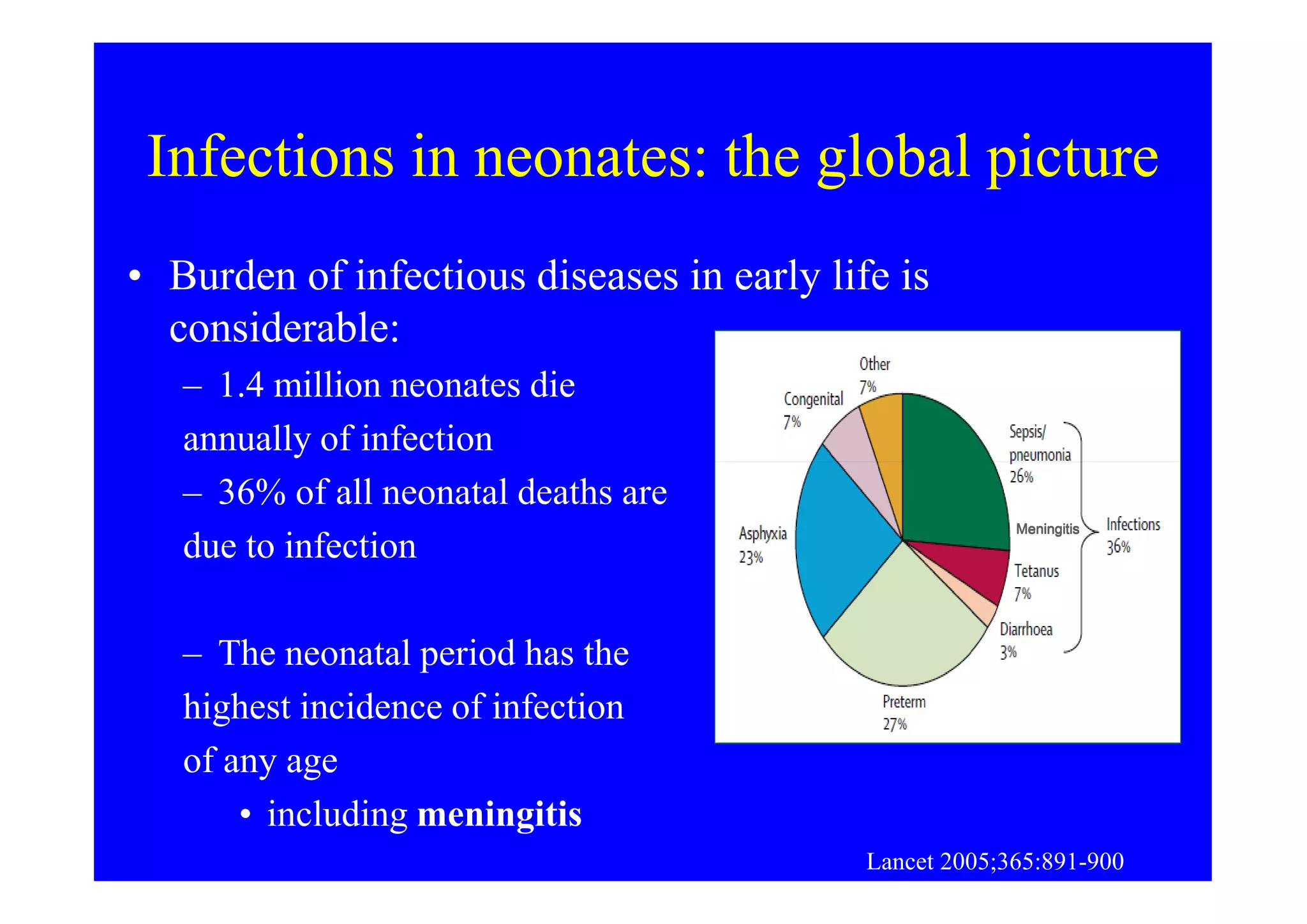
Infections in neonates: the global picture
• Burden of infectious diseases in early life is
considerable:
– 1.4 million neonates die
annually of infection
– 36% of all neonatal deaths are
due to infection
– The neonatal period has the
highest incidence of infection
of any age
• including meningitis
Lancet 2005;365:891-900
MeningitisMeningitisMeningitisMeningitis
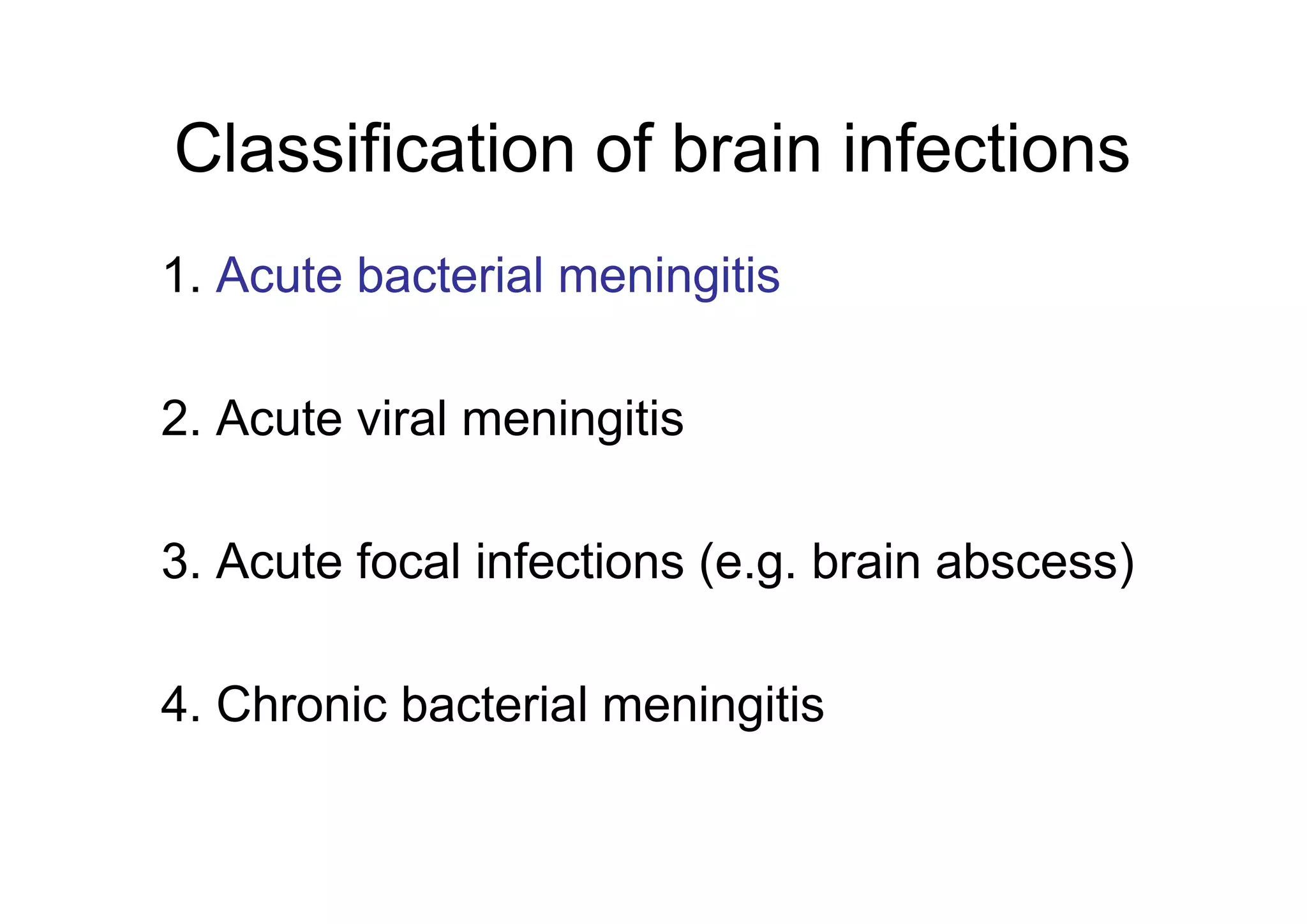
Classification of brain infections
1. Acute bacterial meningitis
2. Acute viral meningitis
3. Acute focal infections (e.g. brain abscess)
4. Chronic bacterial meningitis
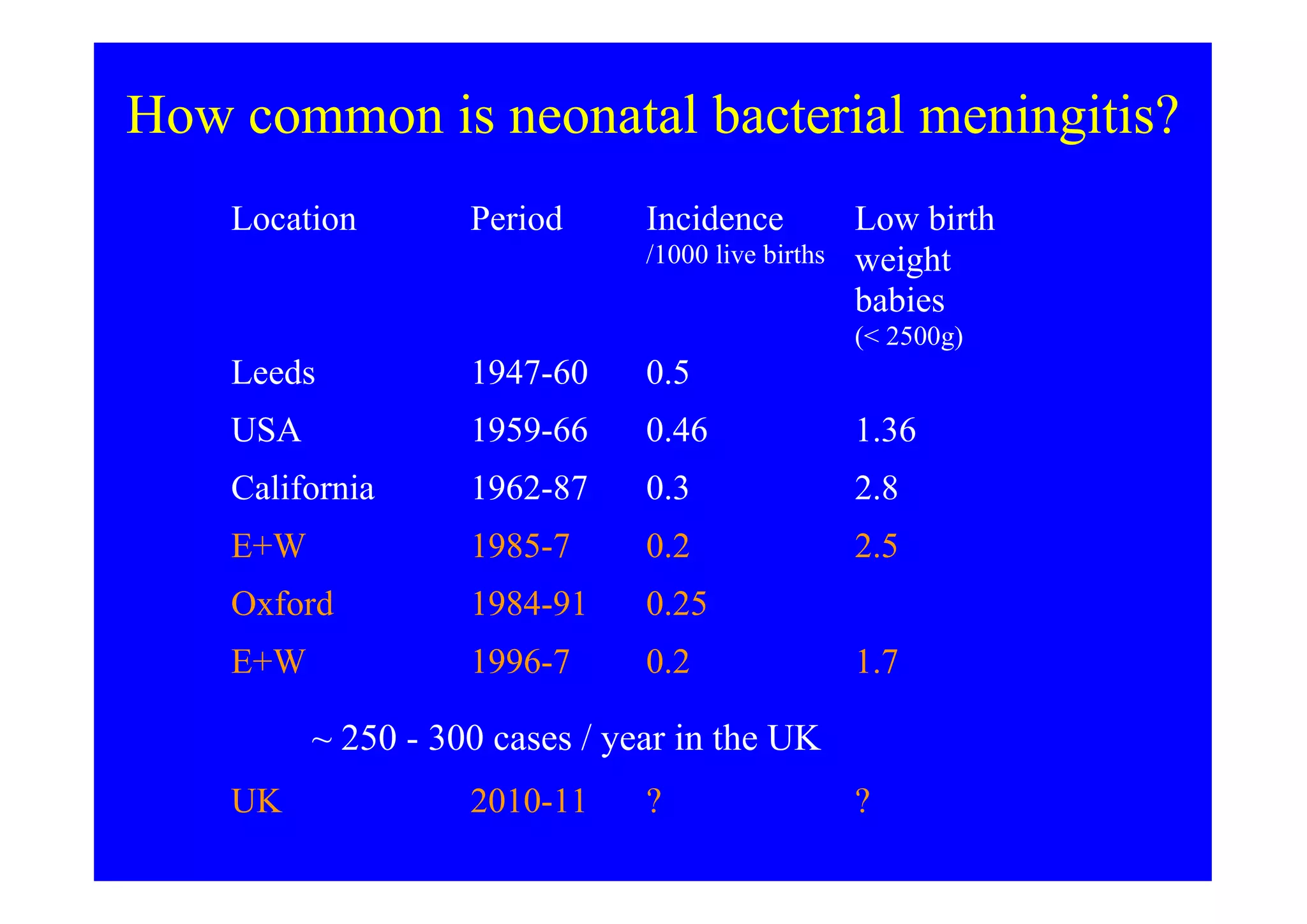
How common is neonatal bacterial meningitis?
Location Period Incidence
/1000 live births
Low birth
weight
babies
(< 2500g)
Leeds 1947-60 0.5
USA 1959-66 0.46 1.36
California 1962-87 0.3 2.8
E+W 1985-7 0.2 2.5
Oxford 1984-91 0.25
E+W 1996-7 0.2 1.7
UK 2010-11 ? ?
~ 250 - 300 cases / year in the UK
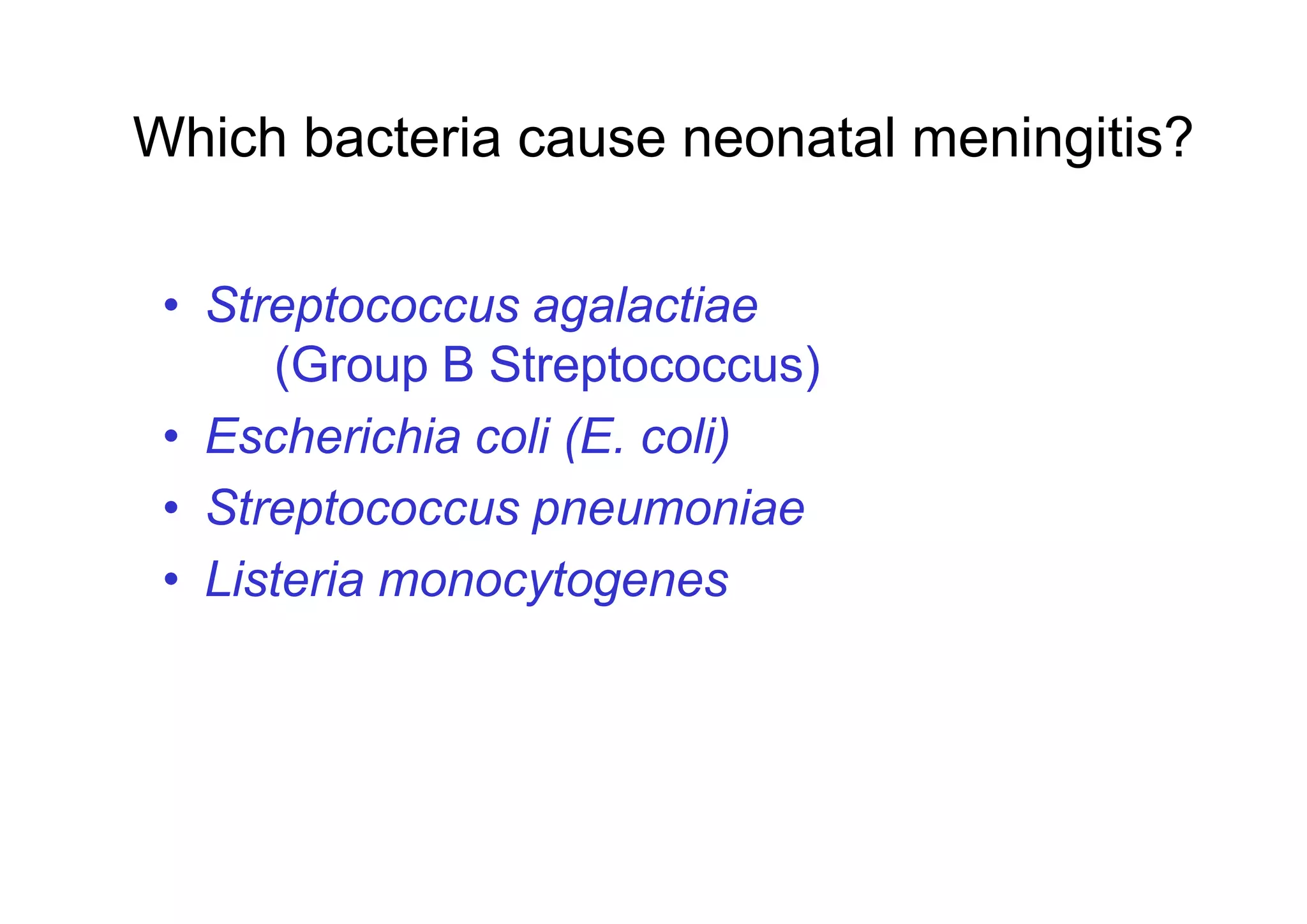
Which bacteria cause neonatal meningitis?
• Streptococcus agalactiae
(Group B Streptococcus)
• Escherichia coli (E. coli)• Escherichia coli (E. coli)
• Streptococcus pneumoniae
• Listeria monocytogenes
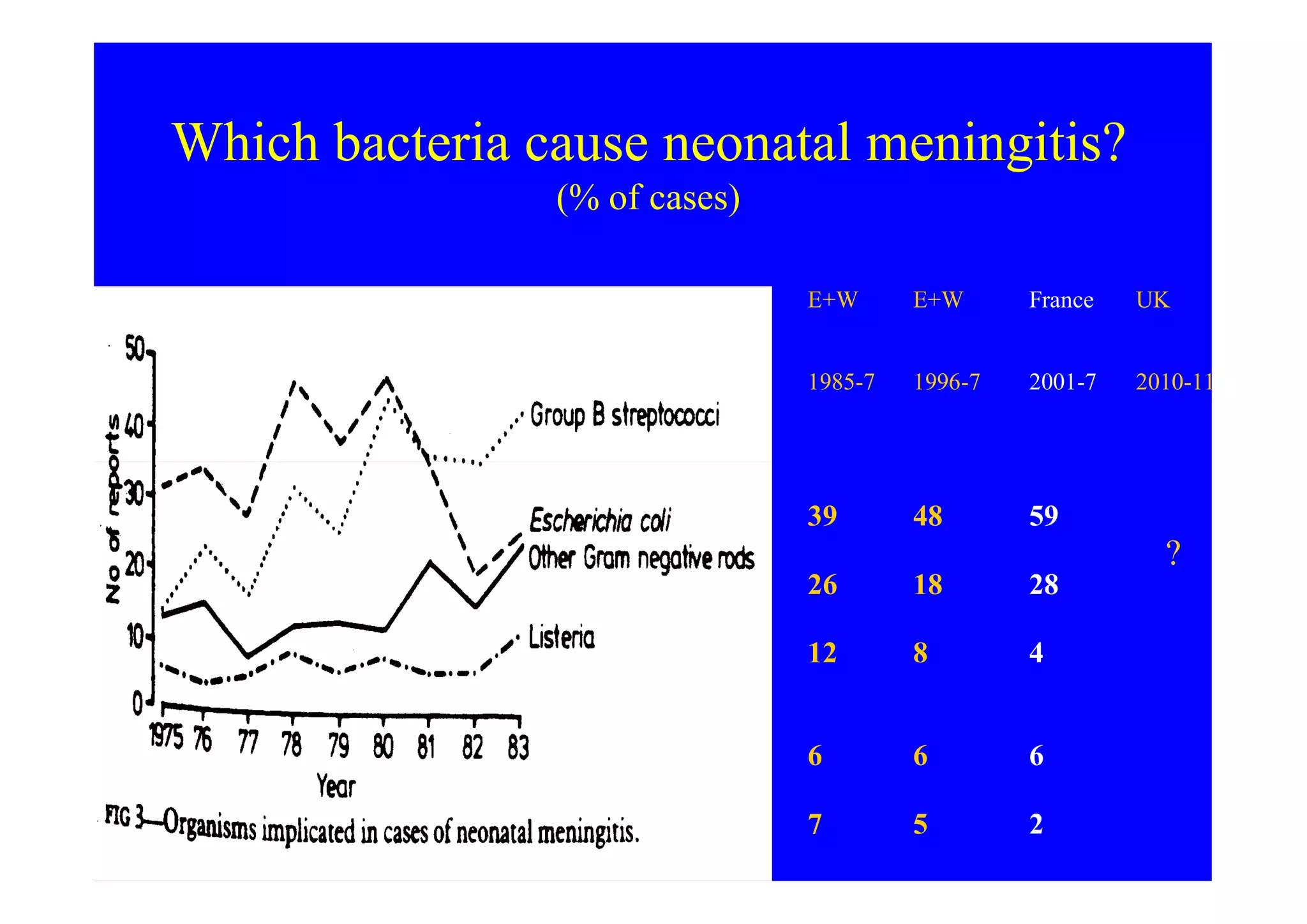
Which bacteria cause neonatal meningitis?
(% of cases)
Boston
1932-57
Los
Angelas
1963-8
USA
1971-3
Nether-
lands
1976-82
Dallas
1969-89
E+W
1985-7
E+W
1996-7
France
2001-7
UK
2010-11
β strep 12 10β strep 12 10
GBS 31 24 52 39 48 59
E.coli 33 35 38 47 16 26 18 28
?
Other
Gram-ve
12 17 9 11 5 12 8 4
SPn 9 3 2 6 6 6
Listeria 5 5 4 7 7 5 2
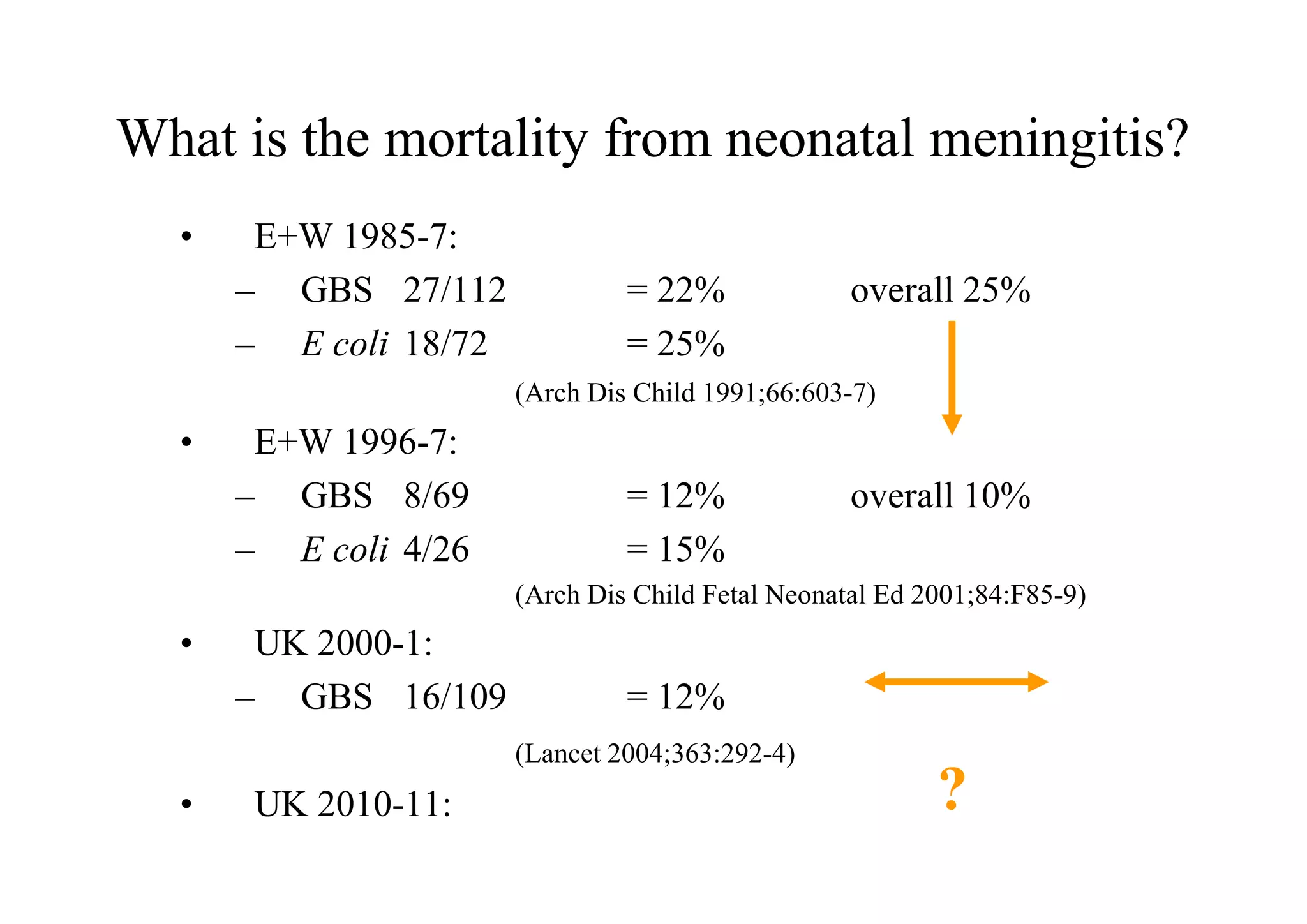
What is the mortality from neonatal meningitis?
• E+W 1985-7:
– GBS 27/112 = 22% overall 25%
– E coli 18/72 = 25%
(Arch Dis Child 1991;66:603-7)
• E+W 1996-7:• E+W 1996-7:
– GBS 8/69 = 12% overall 10%
– E coli 4/26 = 15%
(Arch Dis Child Fetal Neonatal Ed 2001;84:F85-9)
• UK 2000-1:
– GBS 16/109 = 12%
(Lancet 2004;363:292-4)
• UK 2010-11: ?
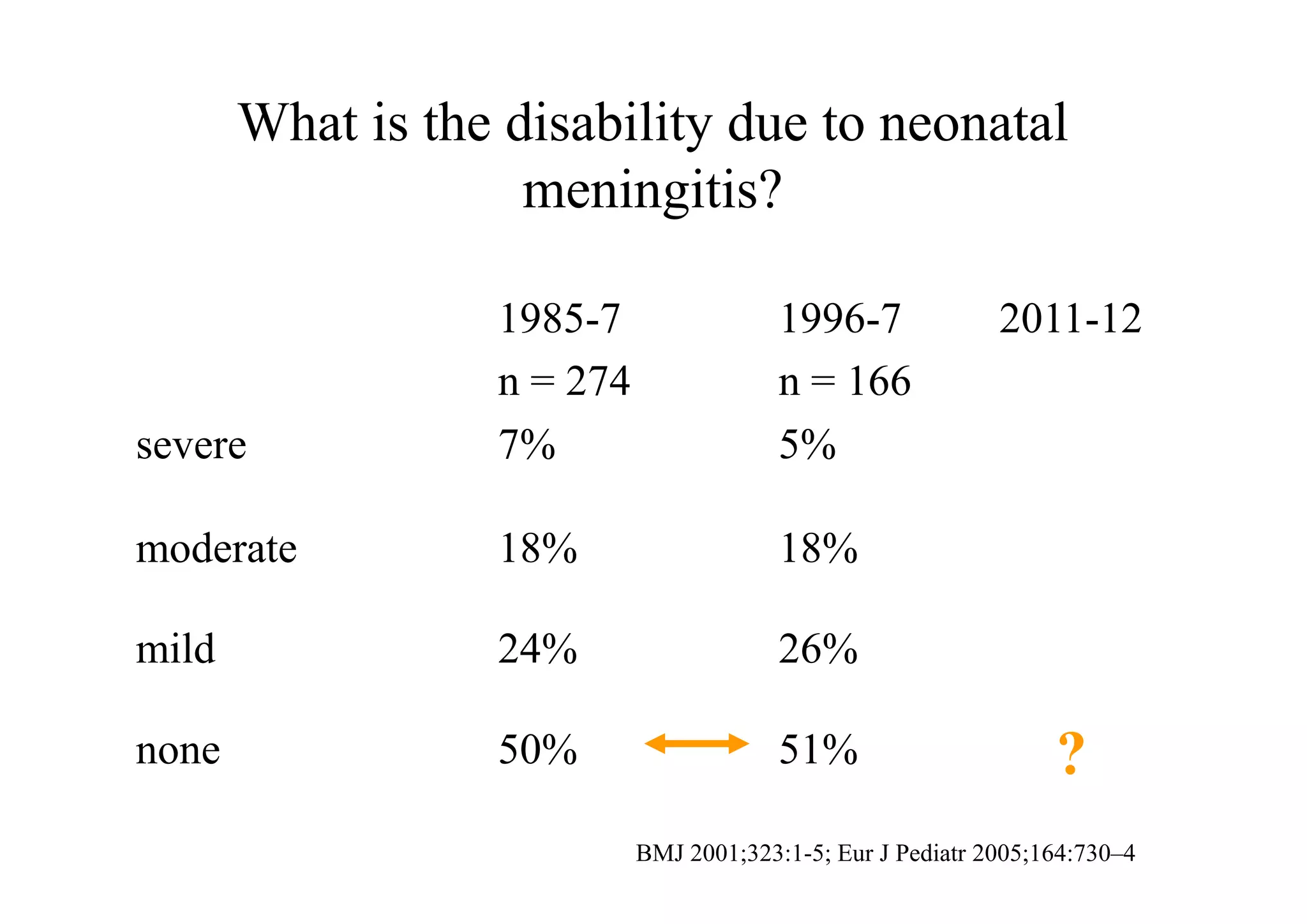
What is the disability due to neonatal
meningitis?
1985-7
n = 274
1996-7 2011-12
n = 166
severe 7% 5%severe 7% 5%
moderate 18% 18%
mild 24% 26%
none 50% 51%
BMJ 2001;323:1-5; Eur J Pediatr 2005;164:730–4
?
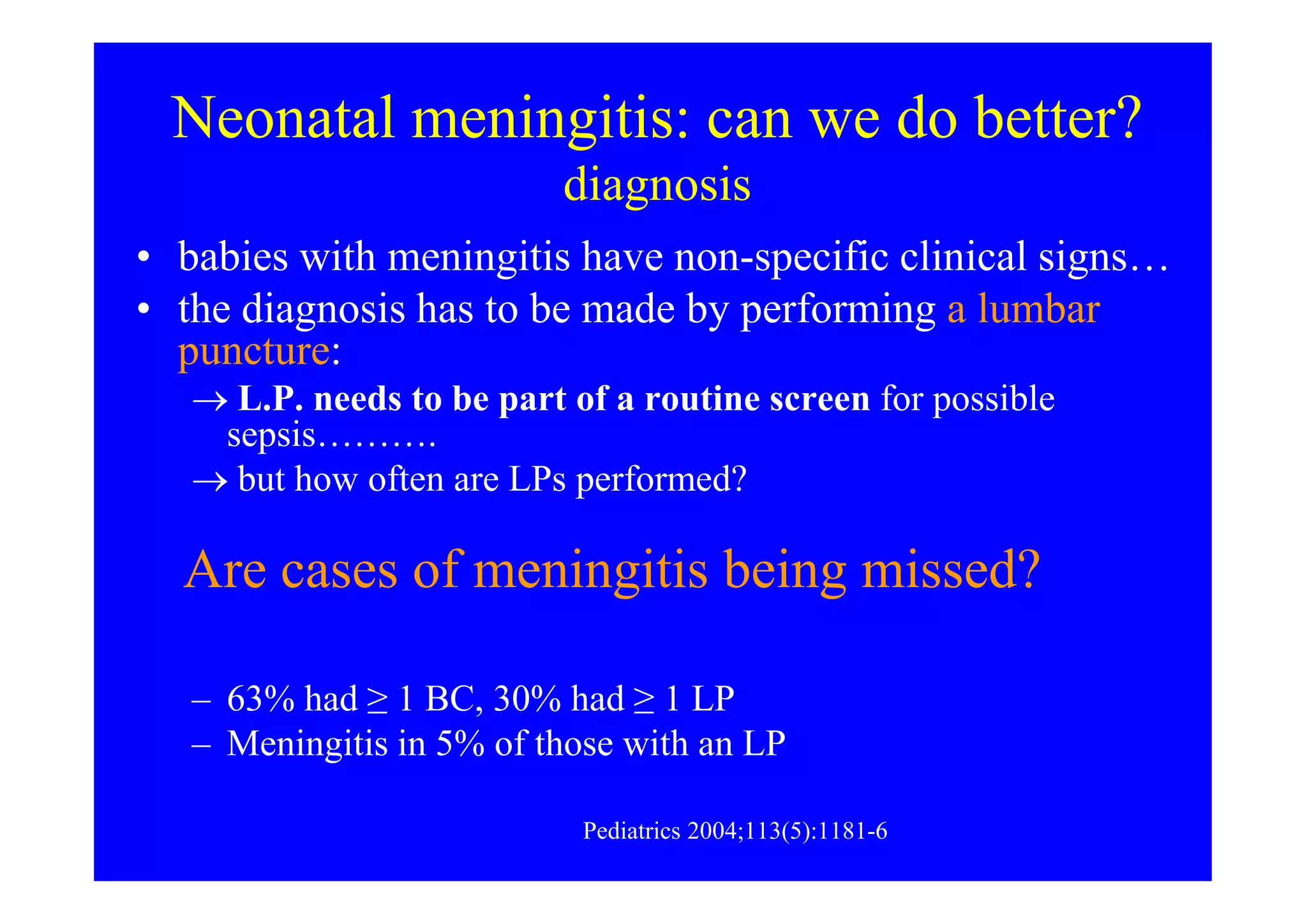
Neonatal meningitis: can we do better?
diagnosis
• babies with meningitis have non-specific clinical signs…
• the diagnosis has to be made by performing a lumbar
puncture:
→ L.P. needs to be part of a routine screen for possible
sepsis……….
→ but how often are LPs performed?→ but how often are LPs performed?
- ASGNI: 3966 with sepsis; LP in 51% - meningitis in 8%.
Arch Dis Child Fetal Neonatal Ed 2005;90:F324–F327
- NICHD: 9641 VLBW infants:
– 63% had ≥ 1 BC, 30% had ≥ 1 LP
– Meningitis in 5% of those with an LP
Pediatrics 2004;113(5):1181-6
Are cases of meningitis being missed?
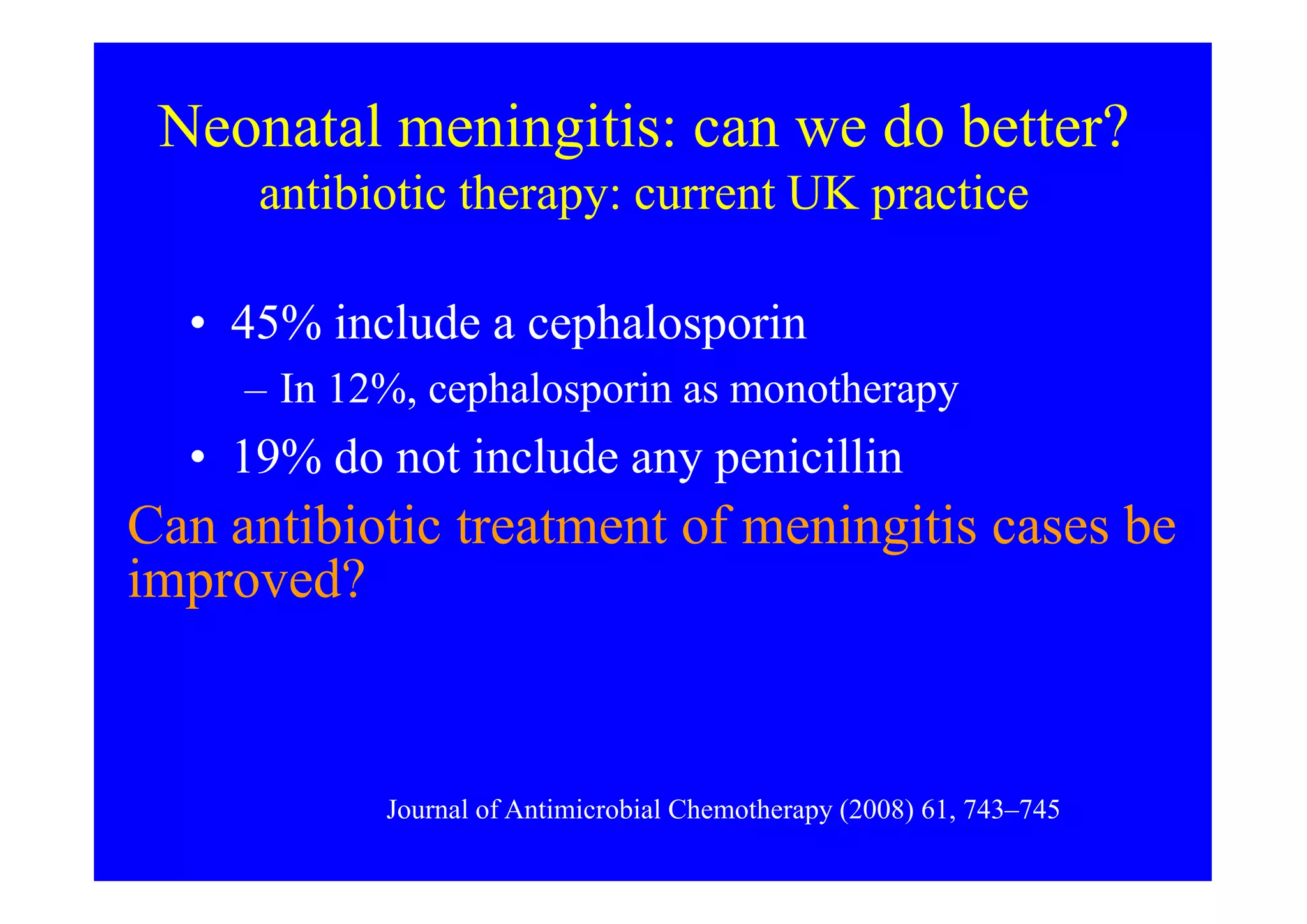
Neonatal meningitis: can we do better?
antibiotic therapy: current UK practice
• 45% include a cephalosporin
– In 12%, cephalosporin as monotherapy
• 19% do not include any penicillin• 19% do not include any penicillin
• Only 5% (11) used a triple combination
(cephalosporin + a penicillin + aminoglycoside)
Journal of Antimicrobial Chemotherapy (2008) 61, 743–745
Can antibiotic treatment of meningitis cases be
improved?
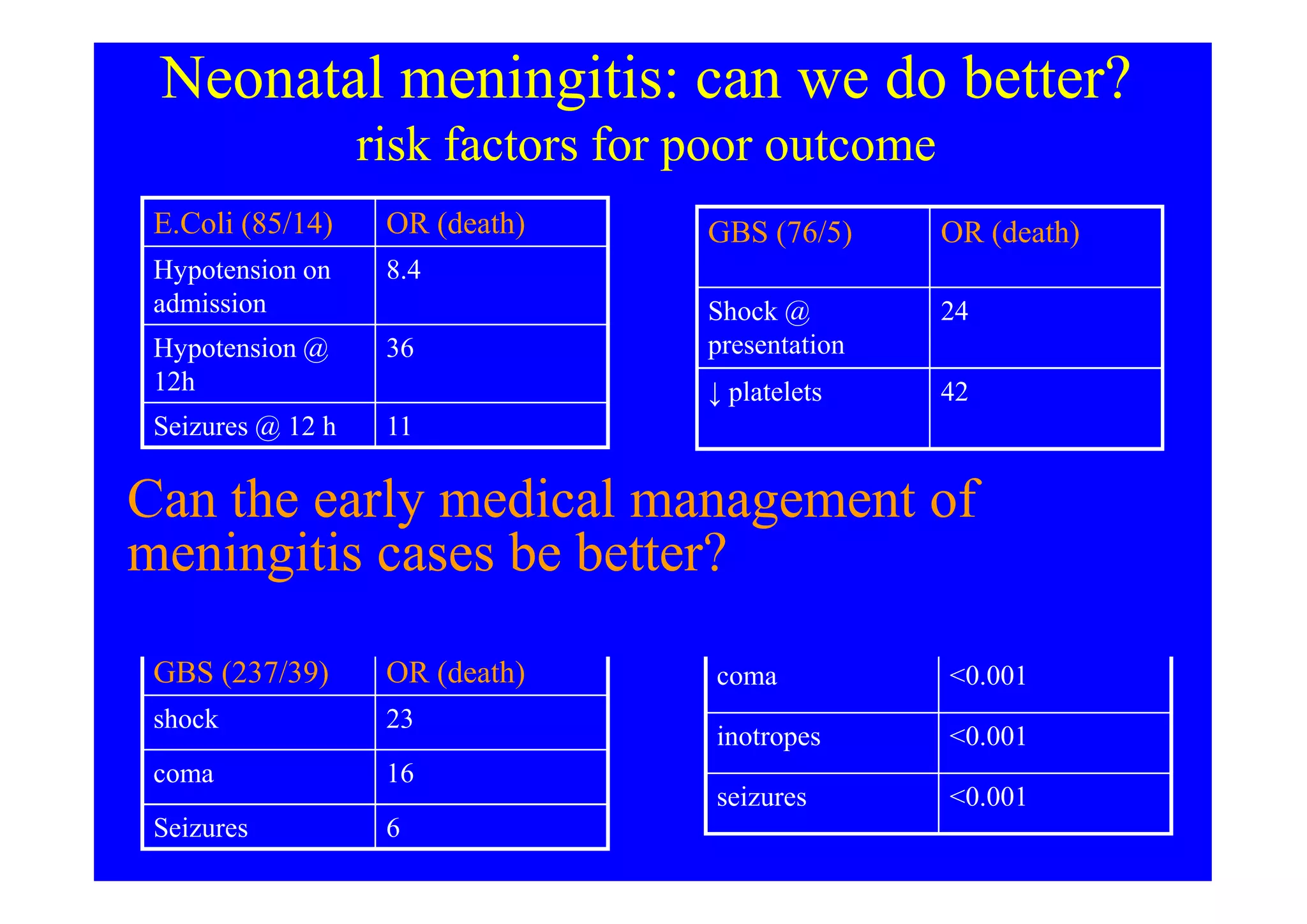
Neonatal meningitis: can we do better?
risk factors for poor outcome
E.Coli (85/14) OR (death)
Hypotension on
admission
8.4
Hypotension @
12h
36
Seizures @ 12 h 11
GBS (76/5) OR (death)
Shock @
presentation
24
↓ platelets 42
All (256/18) OR (death)
Coma on
admission
11
All (76/25) p (adverse
outcome)
hypotension <0.001
coma <0.001
inotropes <0.001
seizures <0.001
GBS (237/39) OR (death)
shock 23
coma 16
Seizures 6
Can the early medical management of
meningitis cases be better?
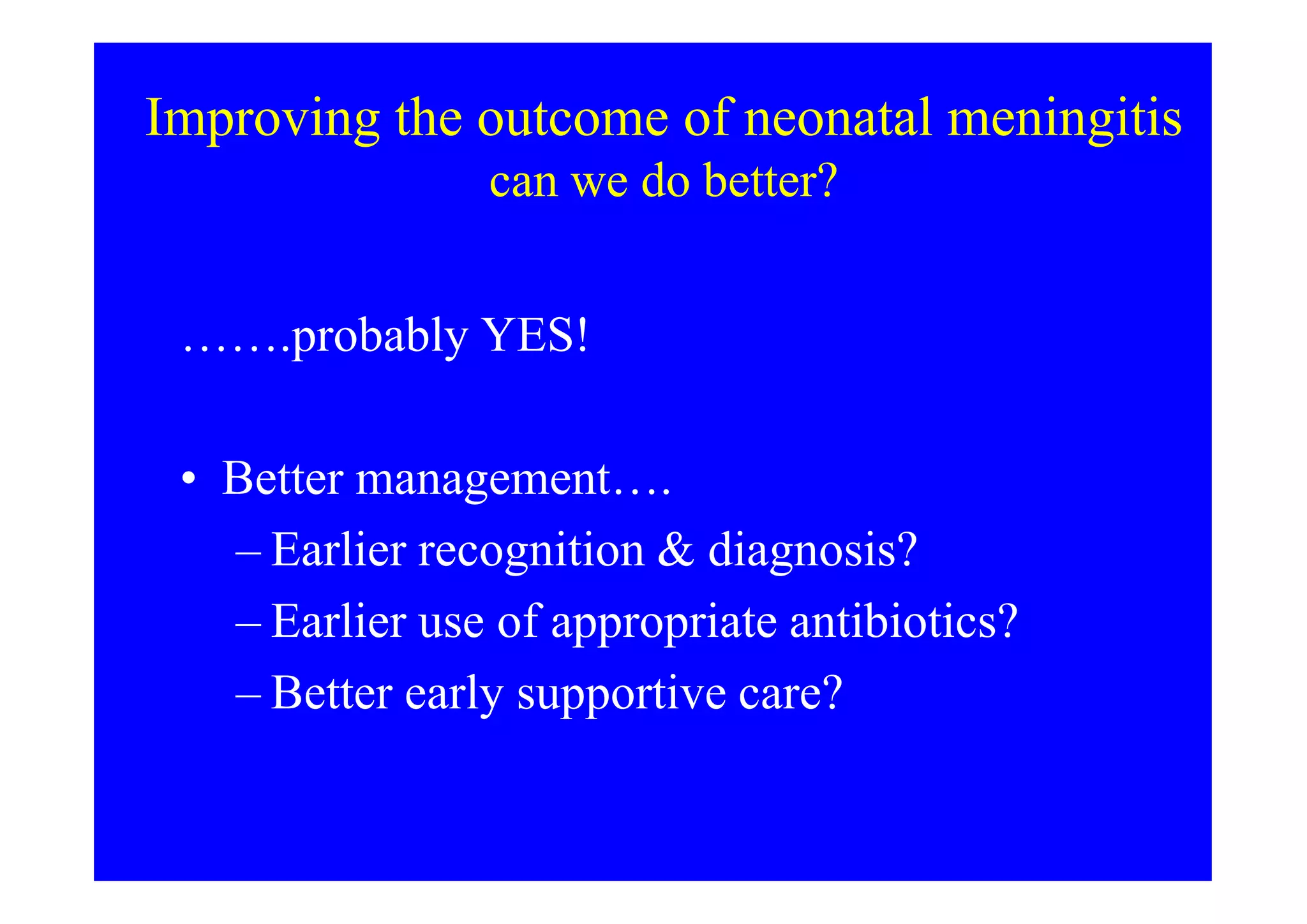
Improving the outcome of neonatal meningitis
can we do better?
…….probably YES!
• Better management….• Better management….
– Earlier recognition & diagnosis?
– Earlier use of appropriate antibiotics?
– Better early supportive care?
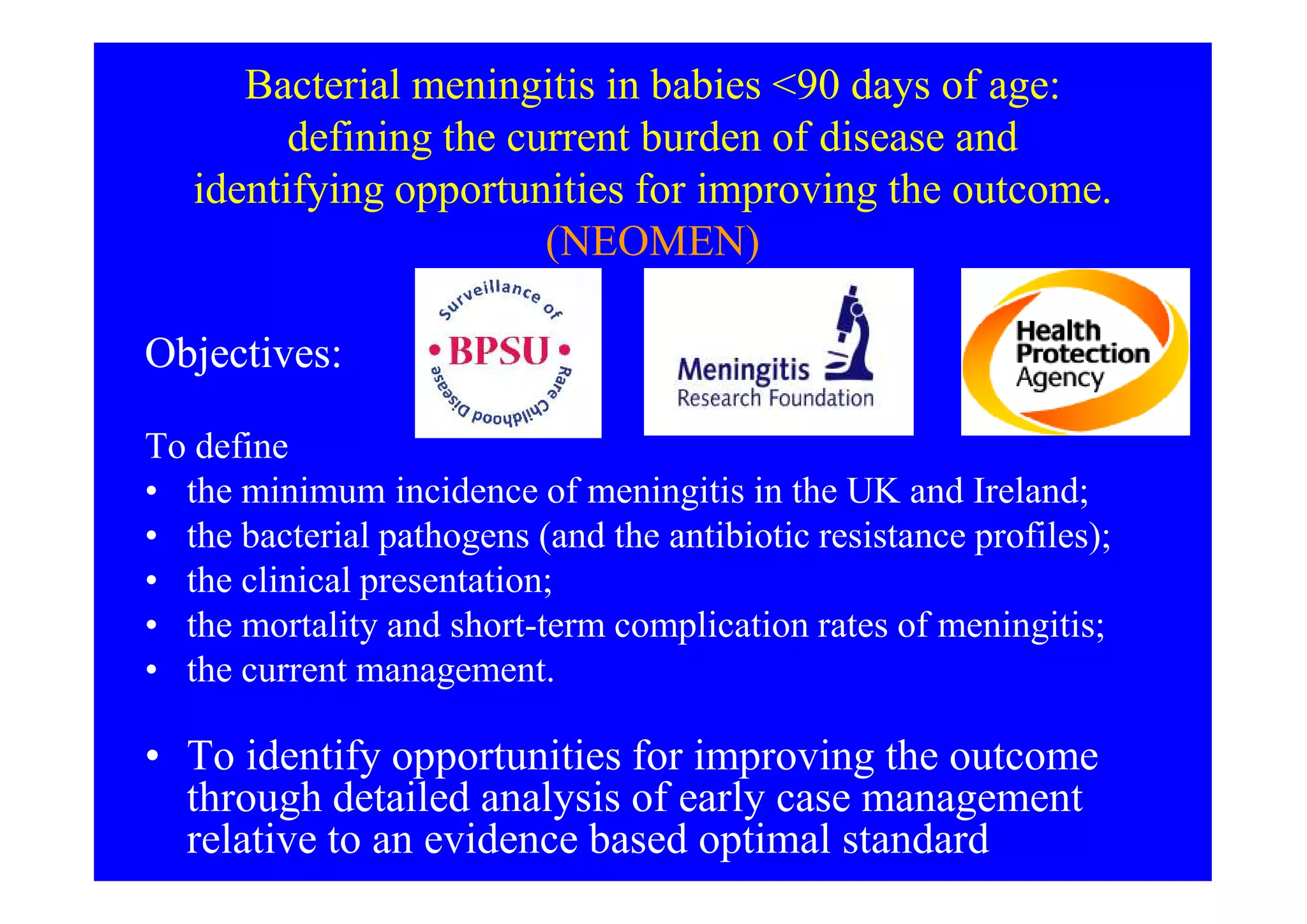
Bacterial meningitis in babies <90 days of age:
defining the current burden of disease and
identifying opportunities for improving the outcome.
(NEOMEN)
Objectives:Objectives:
To defineTo define
• the minimum incidence of meningitis in the UK and Ireland;
• the bacterial pathogens (and the antibiotic resistance profiles);
• the clinical presentation;
• the mortality and short-term complication rates of meningitis;
• the current management.
• To identify opportunities for improving the outcome
through detailed analysis of early case management
relative to an evidence based optimal standard

Professor Paul Heath on why we should be studying neonatal meningitis

  • 1.
    Neonatal meningitis: background tothe studies Paul T. Heath Paediatric Infectious Diseases Unit & Vaccine Institute, St George’s, University of London.
  • 2.
    Infections in neonates:the global picture • Burden of infectious diseases in early life is considerable: – 1.4 million neonates die annually of infection – 36% of all neonatal deaths are due to infection – The neonatal period has the highest incidence of infection of any age • including meningitis Lancet 2005;365:891-900 MeningitisMeningitisMeningitisMeningitis
  • 3.
    Classification of braininfections 1. Acute bacterial meningitis 2. Acute viral meningitis 3. Acute focal infections (e.g. brain abscess) 4. Chronic bacterial meningitis
  • 4.
    How common isneonatal bacterial meningitis? Location Period Incidence /1000 live births Low birth weight babies (< 2500g) Leeds 1947-60 0.5 USA 1959-66 0.46 1.36 California 1962-87 0.3 2.8 E+W 1985-7 0.2 2.5 Oxford 1984-91 0.25 E+W 1996-7 0.2 1.7 UK 2010-11 ? ? ~ 250 - 300 cases / year in the UK
  • 5.
    Which bacteria causeneonatal meningitis? • Streptococcus agalactiae (Group B Streptococcus) • Escherichia coli (E. coli)• Escherichia coli (E. coli) • Streptococcus pneumoniae • Listeria monocytogenes
  • 6.
    Which bacteria causeneonatal meningitis? (% of cases) Boston 1932-57 Los Angelas 1963-8 USA 1971-3 Nether- lands 1976-82 Dallas 1969-89 E+W 1985-7 E+W 1996-7 France 2001-7 UK 2010-11 β strep 12 10β strep 12 10 GBS 31 24 52 39 48 59 E.coli 33 35 38 47 16 26 18 28 ? Other Gram-ve 12 17 9 11 5 12 8 4 SPn 9 3 2 6 6 6 Listeria 5 5 4 7 7 5 2
  • 7.
    What is themortality from neonatal meningitis? • E+W 1985-7: – GBS 27/112 = 22% overall 25% – E coli 18/72 = 25% (Arch Dis Child 1991;66:603-7) • E+W 1996-7:• E+W 1996-7: – GBS 8/69 = 12% overall 10% – E coli 4/26 = 15% (Arch Dis Child Fetal Neonatal Ed 2001;84:F85-9) • UK 2000-1: – GBS 16/109 = 12% (Lancet 2004;363:292-4) • UK 2010-11: ?
  • 8.
    What is thedisability due to neonatal meningitis? 1985-7 n = 274 1996-7 2011-12 n = 166 severe 7% 5%severe 7% 5% moderate 18% 18% mild 24% 26% none 50% 51% BMJ 2001;323:1-5; Eur J Pediatr 2005;164:730–4 ?
  • 9.
    Neonatal meningitis: canwe do better? diagnosis • babies with meningitis have non-specific clinical signs… • the diagnosis has to be made by performing a lumbar puncture: → L.P. needs to be part of a routine screen for possible sepsis………. → but how often are LPs performed?→ but how often are LPs performed? - ASGNI: 3966 with sepsis; LP in 51% - meningitis in 8%. Arch Dis Child Fetal Neonatal Ed 2005;90:F324–F327 - NICHD: 9641 VLBW infants: – 63% had ≥ 1 BC, 30% had ≥ 1 LP – Meningitis in 5% of those with an LP Pediatrics 2004;113(5):1181-6 Are cases of meningitis being missed?
  • 10.
    Neonatal meningitis: canwe do better? antibiotic therapy: current UK practice • 45% include a cephalosporin – In 12%, cephalosporin as monotherapy • 19% do not include any penicillin• 19% do not include any penicillin • Only 5% (11) used a triple combination (cephalosporin + a penicillin + aminoglycoside) Journal of Antimicrobial Chemotherapy (2008) 61, 743–745 Can antibiotic treatment of meningitis cases be improved?
  • 11.
    Neonatal meningitis: canwe do better? risk factors for poor outcome E.Coli (85/14) OR (death) Hypotension on admission 8.4 Hypotension @ 12h 36 Seizures @ 12 h 11 GBS (76/5) OR (death) Shock @ presentation 24 ↓ platelets 42 All (256/18) OR (death) Coma on admission 11 All (76/25) p (adverse outcome) hypotension <0.001 coma <0.001 inotropes <0.001 seizures <0.001 GBS (237/39) OR (death) shock 23 coma 16 Seizures 6 Can the early medical management of meningitis cases be better?
  • 12.
    Improving the outcomeof neonatal meningitis can we do better? …….probably YES! • Better management….• Better management…. – Earlier recognition & diagnosis? – Earlier use of appropriate antibiotics? – Better early supportive care?
  • 13.
    Bacterial meningitis inbabies <90 days of age: defining the current burden of disease and identifying opportunities for improving the outcome. (NEOMEN) Objectives:Objectives: To defineTo define • the minimum incidence of meningitis in the UK and Ireland; • the bacterial pathogens (and the antibiotic resistance profiles); • the clinical presentation; • the mortality and short-term complication rates of meningitis; • the current management. • To identify opportunities for improving the outcome through detailed analysis of early case management relative to an evidence based optimal standard