“Sequelae at hospital discharge in 49 children
with invasive meningococcal disease. Chile,
2009-2019”.
november 2021
Cindy Arteta (1,2), Rodolfo Villena (1,3), María Elena Santolaya (1,2)
1. Faculty of Medicine Universidad de Chile, 2. Hospital de niños Dr Luis Calvo Mackenna 3. Hospital de
niños Dr Exequiel González Cortés
Contact: Rodolfo Villena. rvillena@uchile.cl
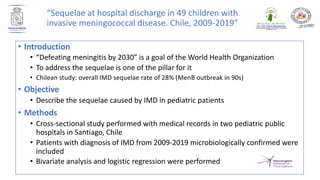
• Introduction
• “Defeating meningitis by 2030” is a goal of the World Health Organization
• To address the sequelae is one of the pillar for it
• Chilean study: overall IMD sequelae rate of 28% (MenB outbreak in 90s)
• Objective
• Describe the sequelae caused by IMD in pediatric patients
• Methods
• Cross-sectional study performed with medical records in two pediatric public
hospitals in Santiago, Chile
• Patients with diagnosis of IMD from 2009-2019 microbiologically confirmed were
included
• Bivariate analysis and logistic regression were performed
“Sequelae at hospital discharge in 49 children with
invasive meningococcal disease. Chile, 2009-2019”
Table 1. Socio-demographic data of children with IMD, Chile, 2009-2019
79,5%
98%
“Sequelae at hospital discharge in 49 children with
invasive meningococcal disease. Chile, 2009-2019”
Variables Total n=49 (%) Sequelae n=29 (%)
59%
No sequelae n=20 (%) p value
Age Median [IQR],
months
9 [4-27] 8.0 [4-23] 12.0 [4-82]
< 1 year old 28 (57.1) 18 (62.0) 10 (50.0) 0.40
1-4 years old 11 (22.4) 7 (24.1) 4 (20.0) 0.74
>5 years old 10 (20.4) 4 (13.7) 6 (30.0) 0.14
Gender Male 34 (69.3) 19 (65.5) 15 (75.0) 0.45
Socioeconomic
status
High 1 (2.0) 1 (3.4) 0 0.40
Middle 26 (53.0) 12 (41.3) 14 (70.0) 0.04
Low 22 (44.9) 16 (55.1) 6 (30.0) 0.08
Comorbidity Yes 16 (32.6) 9 (31.0) 7 (35.0) 0.76
Type of
comorbidity
Recurrent wheezing 9 (18.3) 5 (17.2) 4 (20.0) 0.78
Immunodeficiency 2 (4.0) 1 (3.4) 1 (5.0) 0.78
Prematurity 2 (4.0) 2 (6.9) 0 0.26
Neurological
disease
1 (2.0) 0 1 (5.0) 0.22
Congenital
cardiopathy
1 (2.0) 0 1 (5.0) 0.22
Obesity 4 (8.1) 3 (10.3) 1 (5.0) 0.52
Malnutrition 2 (4.0) 1 (3.4) 1 (5.0) 0.78
Results
Univariate Associations Logistic Regression analysis
Variable Total N 49 (%) Sequelae N 29
(%)
No sequelae 20
(%)
p value OR 95% CI
Onset of
symptoms before
consulting (days)
Median [IQR] 2.0 [1.0-4.0] 2.0 [1.0-3.0] 2.0 [1.0-3.0] 1 - -
Number of
medical visits
1 11 (22.4) 8 (27.5) 3 (15.0) 0.31
2 27 (55.1) 15 (51.7) 12 (60.0) 0.56
>3 11 (22.4) 6 (20.6) 5 (25.0) 0.67
Signs and
symptoms
Fever 49 (100) 29 (100) 20 (100) 1
Compromised general
condition
36 (73.4) 23 (79.3) 13 (65.0) 0.26 0.28 (0.03 – 2.56)
Shock 25 (51.0) 8 (27.5) 3 (15.0) 0.03 2.15 (0.49 – 9.41)
Vomiting 31 (63.2) 16 (55.1) 15 (75.0) 0.01 17.06 (1.74 – 166.94)
Diarrhea 14 (28.5) 8 (27.5) 6 (30.0) 0.84 1.62 (0.23 – 11.40)
Abdominal pain 6 (12.2) 2 (6.9) 4 (20.0) 0.16 0.29 (0.04 – 1.80)
Drowsiness/irritability 23 (46.9) 17 (58.6) 7 (35.0) 0.10 2.83 (0.39 – 20.44)
Meningeal signs 21 (42.8) 17 (58.6) 4 (20.0) 0.007 0.04 (0.00 – 0.55)
Neurological deficit 20 (40.8) 16 (55.1) 4 (20.0) 0.2 0.34 (0.07 – 1.56)
Headache 14 (28.5) 10 (34.4) 4 (20.0) 0.27 1.09 (0.16 – 7.28)
Seizures 3 (6.1) 2 (6.9) 1 (5.0) 0.78 - -
Petechiae/rash 20 (40.8) 12 (41.3) 8 (40.0) 0.92 0.66 (0.12 – 3.48)
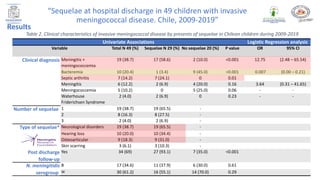
Table 2. Clinical characteristics of invasive meningococcal disease by presents of sequelae in Chilean children during 2009-2019
Results
“Sequelae at hospital discharge in 49 children with invasive
meningococcal disease. Chile, 2009-2019”
Univariate Associations Logistic Regression analysis
Variable Total N 49 (%) Sequelae N 29 (%) No sequelae 20 (%) P value OR 95% CI
Clinical diagnosis Meningitis +
meningococcemia
19 (38.7) 17 (58.6) 2 (10.0) <0.001 12.75 (2.48 – 65.54)
Bacteremia 10 (20.4) 1 (3.4) 9 (45.0) <0.001 0.007 (0.00 – 0.21)
Septic arthritis 7 (14.2) 7 (24.1) 0 0.01
Meningitis 6 (12.2) 2 (6.9) 4 (20.0) 0.16 3.64 (0.31 – 41.65)
Meningococcemia 5 (10.2) 0 5 (25.0) 0.06 - -
Waterhouse
Friderichsen Syndrome
2 (4.0) 2 (6.9) 0 0.23 - -
Number of sequelae 1 19 (38.7) 19 (65.5) -
2 8 (16.3) 8 (27.5) -
3 2 (4.0) 2 (6.9) -
Type of sequelae* Neurological disorders 19 (38.7) 19 (65.5) -
Hearing loss 10 (20.0) 10 (34.4) -
Osteoarticular 9 (18.3) 9 (31.0) -
Skin scarring 3 (6.1) 3 (10.3) -
Post discharge
follow-up
Yes 34 (69) 27 (93.1) 7 (35.0) <0.001
N. meningitidis
serogroup
B 17 (34.6) 11 (37.9) 6 (30.0) 0.61
W 30 (61.2) 16 (55.1) 14 (70.0) 0.29
Table 2. Clinical characteristics of invasive meningococcal disease by presents of sequelae in Chilean children during 2009-2019
Results
“Sequelae at hospital discharge in 49 children with invasive
meningococcal disease. Chile, 2009-2019”
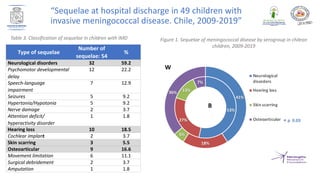
Table 3. Classification of sequelae in children with IMD
“Sequelae at hospital discharge in 49 children with
invasive meningococcal disease. Chile, 2009-2019”
Type of sequelae
Number of
sequelae: 54
%
Neurological disorders 32 59.2
Psychomotor developmental
delay
12 22.2
Speech-language
impairment
7 12.9
Seizures 5 9.2
Hypertonia/Hypotonia 5 9.2
Nerve damage 2 3.7
Attention deficit/
hyperactivity disorder
1 1.8
Hearing loss 10 18.5
Cochlear implant 2 3.7
Skin scarring 3 5.5
Osteoarticular 9 16.6
Movement limitation 6 11.1
Surgical debridement 2 3.7
Amputation 1 1.8
53%
27%
13%
7%
41%
18%
5%
36%
Sequelae of meningococcal disease by serogroup in Chilean children
Neurological
disorders
Hearing loss
Skin scarring
Osteoarticular
W
B
p 0.03
Figure 1. Sequelae of meningococcal disease by serogroup in chilean
children, 2009-2019
*
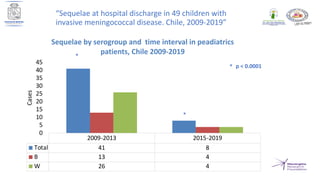
“Sequelae at hospital discharge in 49 children with
invasive meningococcal disease. Chile, 2009-2019”
2009-2013 2015-2019
Total 41 8
B 13 4
W 26 4
0
5
10
15
20
25
30
35
40
45
Cases
Sequelae by serogroup and time interval in peadiatrics
patients, Chile 2009-2019
p < 0.0001
*
*
*
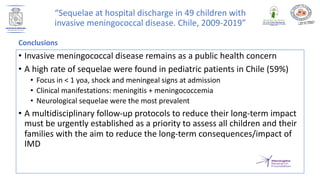
• Invasive meningococcal disease remains as a public health concern
• A high rate of sequelae were found in pediatric patients in Chile (59%)
• Focus in < 1 yoa, shock and meningeal signs at admission
• Clinical manifestations: meningitis + meningococcemia
• Neurological sequelae were the most prevalent
• A multidisciplinary follow-up protocols to reduce their long-term impact
must be urgently established as a priority to assess all children and their
families with the aim to reduce the long-term consequences/impact of
IMD
Conclusions
“Sequelae at hospital discharge in 49 children with
invasive meningococcal disease. Chile, 2009-2019”
“Sequelae at hospital discharge in 49 children
with invasive meningococcal disease. Chile,
2009-2019”.
november 2021
Cindy Arteta (1,2), Rodolfo Villena (1,3), María Elena Santolaya (1,2)
1. Faculty of Medicine Universidad de Chile, 2. Hospital de niños Dr Luis Calvo Mackenna 3. Hospital de
niños Dr Exequiel González Cortés
Contact: Rodolfo Villena. rvillena@uchile.cl

Dr Rodolfo villena

  • 1.
    “Sequelae at hospitaldischarge in 49 children with invasive meningococcal disease. Chile, 2009-2019”. november 2021 Cindy Arteta (1,2), Rodolfo Villena (1,3), María Elena Santolaya (1,2) 1. Faculty of Medicine Universidad de Chile, 2. Hospital de niños Dr Luis Calvo Mackenna 3. Hospital de niños Dr Exequiel González Cortés Contact: Rodolfo Villena. rvillena@uchile.cl
  • 2.
    • Introduction • “Defeatingmeningitis by 2030” is a goal of the World Health Organization • To address the sequelae is one of the pillar for it • Chilean study: overall IMD sequelae rate of 28% (MenB outbreak in 90s) • Objective • Describe the sequelae caused by IMD in pediatric patients • Methods • Cross-sectional study performed with medical records in two pediatric public hospitals in Santiago, Chile • Patients with diagnosis of IMD from 2009-2019 microbiologically confirmed were included • Bivariate analysis and logistic regression were performed “Sequelae at hospital discharge in 49 children with invasive meningococcal disease. Chile, 2009-2019”
  • 3.
    Table 1. Socio-demographicdata of children with IMD, Chile, 2009-2019 79,5% 98% “Sequelae at hospital discharge in 49 children with invasive meningococcal disease. Chile, 2009-2019” Variables Total n=49 (%) Sequelae n=29 (%) 59% No sequelae n=20 (%) p value Age Median [IQR], months 9 [4-27] 8.0 [4-23] 12.0 [4-82] < 1 year old 28 (57.1) 18 (62.0) 10 (50.0) 0.40 1-4 years old 11 (22.4) 7 (24.1) 4 (20.0) 0.74 >5 years old 10 (20.4) 4 (13.7) 6 (30.0) 0.14 Gender Male 34 (69.3) 19 (65.5) 15 (75.0) 0.45 Socioeconomic status High 1 (2.0) 1 (3.4) 0 0.40 Middle 26 (53.0) 12 (41.3) 14 (70.0) 0.04 Low 22 (44.9) 16 (55.1) 6 (30.0) 0.08 Comorbidity Yes 16 (32.6) 9 (31.0) 7 (35.0) 0.76 Type of comorbidity Recurrent wheezing 9 (18.3) 5 (17.2) 4 (20.0) 0.78 Immunodeficiency 2 (4.0) 1 (3.4) 1 (5.0) 0.78 Prematurity 2 (4.0) 2 (6.9) 0 0.26 Neurological disease 1 (2.0) 0 1 (5.0) 0.22 Congenital cardiopathy 1 (2.0) 0 1 (5.0) 0.22 Obesity 4 (8.1) 3 (10.3) 1 (5.0) 0.52 Malnutrition 2 (4.0) 1 (3.4) 1 (5.0) 0.78 Results
  • 4.
    Univariate Associations LogisticRegression analysis Variable Total N 49 (%) Sequelae N 29 (%) No sequelae 20 (%) p value OR 95% CI Onset of symptoms before consulting (days) Median [IQR] 2.0 [1.0-4.0] 2.0 [1.0-3.0] 2.0 [1.0-3.0] 1 - - Number of medical visits 1 11 (22.4) 8 (27.5) 3 (15.0) 0.31 2 27 (55.1) 15 (51.7) 12 (60.0) 0.56 >3 11 (22.4) 6 (20.6) 5 (25.0) 0.67 Signs and symptoms Fever 49 (100) 29 (100) 20 (100) 1 Compromised general condition 36 (73.4) 23 (79.3) 13 (65.0) 0.26 0.28 (0.03 – 2.56) Shock 25 (51.0) 8 (27.5) 3 (15.0) 0.03 2.15 (0.49 – 9.41) Vomiting 31 (63.2) 16 (55.1) 15 (75.0) 0.01 17.06 (1.74 – 166.94) Diarrhea 14 (28.5) 8 (27.5) 6 (30.0) 0.84 1.62 (0.23 – 11.40) Abdominal pain 6 (12.2) 2 (6.9) 4 (20.0) 0.16 0.29 (0.04 – 1.80) Drowsiness/irritability 23 (46.9) 17 (58.6) 7 (35.0) 0.10 2.83 (0.39 – 20.44) Meningeal signs 21 (42.8) 17 (58.6) 4 (20.0) 0.007 0.04 (0.00 – 0.55) Neurological deficit 20 (40.8) 16 (55.1) 4 (20.0) 0.2 0.34 (0.07 – 1.56) Headache 14 (28.5) 10 (34.4) 4 (20.0) 0.27 1.09 (0.16 – 7.28) Seizures 3 (6.1) 2 (6.9) 1 (5.0) 0.78 - - Petechiae/rash 20 (40.8) 12 (41.3) 8 (40.0) 0.92 0.66 (0.12 – 3.48) Table 2. Clinical characteristics of invasive meningococcal disease by presents of sequelae in Chilean children during 2009-2019 Results “Sequelae at hospital discharge in 49 children with invasive meningococcal disease. Chile, 2009-2019”
  • 5.
    Univariate Associations LogisticRegression analysis Variable Total N 49 (%) Sequelae N 29 (%) No sequelae 20 (%) P value OR 95% CI Clinical diagnosis Meningitis + meningococcemia 19 (38.7) 17 (58.6) 2 (10.0) <0.001 12.75 (2.48 – 65.54) Bacteremia 10 (20.4) 1 (3.4) 9 (45.0) <0.001 0.007 (0.00 – 0.21) Septic arthritis 7 (14.2) 7 (24.1) 0 0.01 Meningitis 6 (12.2) 2 (6.9) 4 (20.0) 0.16 3.64 (0.31 – 41.65) Meningococcemia 5 (10.2) 0 5 (25.0) 0.06 - - Waterhouse Friderichsen Syndrome 2 (4.0) 2 (6.9) 0 0.23 - - Number of sequelae 1 19 (38.7) 19 (65.5) - 2 8 (16.3) 8 (27.5) - 3 2 (4.0) 2 (6.9) - Type of sequelae* Neurological disorders 19 (38.7) 19 (65.5) - Hearing loss 10 (20.0) 10 (34.4) - Osteoarticular 9 (18.3) 9 (31.0) - Skin scarring 3 (6.1) 3 (10.3) - Post discharge follow-up Yes 34 (69) 27 (93.1) 7 (35.0) <0.001 N. meningitidis serogroup B 17 (34.6) 11 (37.9) 6 (30.0) 0.61 W 30 (61.2) 16 (55.1) 14 (70.0) 0.29 Table 2. Clinical characteristics of invasive meningococcal disease by presents of sequelae in Chilean children during 2009-2019 Results “Sequelae at hospital discharge in 49 children with invasive meningococcal disease. Chile, 2009-2019”
  • 6.
    Table 3. Classificationof sequelae in children with IMD “Sequelae at hospital discharge in 49 children with invasive meningococcal disease. Chile, 2009-2019” Type of sequelae Number of sequelae: 54 % Neurological disorders 32 59.2 Psychomotor developmental delay 12 22.2 Speech-language impairment 7 12.9 Seizures 5 9.2 Hypertonia/Hypotonia 5 9.2 Nerve damage 2 3.7 Attention deficit/ hyperactivity disorder 1 1.8 Hearing loss 10 18.5 Cochlear implant 2 3.7 Skin scarring 3 5.5 Osteoarticular 9 16.6 Movement limitation 6 11.1 Surgical debridement 2 3.7 Amputation 1 1.8 53% 27% 13% 7% 41% 18% 5% 36% Sequelae of meningococcal disease by serogroup in Chilean children Neurological disorders Hearing loss Skin scarring Osteoarticular W B p 0.03 Figure 1. Sequelae of meningococcal disease by serogroup in chilean children, 2009-2019 *
  • 7.
    “Sequelae at hospitaldischarge in 49 children with invasive meningococcal disease. Chile, 2009-2019” 2009-2013 2015-2019 Total 41 8 B 13 4 W 26 4 0 5 10 15 20 25 30 35 40 45 Cases Sequelae by serogroup and time interval in peadiatrics patients, Chile 2009-2019 p < 0.0001 * * *
  • 8.
    • Invasive meningococcaldisease remains as a public health concern • A high rate of sequelae were found in pediatric patients in Chile (59%) • Focus in < 1 yoa, shock and meningeal signs at admission • Clinical manifestations: meningitis + meningococcemia • Neurological sequelae were the most prevalent • A multidisciplinary follow-up protocols to reduce their long-term impact must be urgently established as a priority to assess all children and their families with the aim to reduce the long-term consequences/impact of IMD Conclusions “Sequelae at hospital discharge in 49 children with invasive meningococcal disease. Chile, 2009-2019”
  • 9.
    “Sequelae at hospitaldischarge in 49 children with invasive meningococcal disease. Chile, 2009-2019”. november 2021 Cindy Arteta (1,2), Rodolfo Villena (1,3), María Elena Santolaya (1,2) 1. Faculty of Medicine Universidad de Chile, 2. Hospital de niños Dr Luis Calvo Mackenna 3. Hospital de niños Dr Exequiel González Cortés Contact: Rodolfo Villena. rvillena@uchile.cl