
Bacterial meningitis  in babies, establishing standards of care to improve the outcome. Dr  Ifeanyichukwu Okike Clinical Research Fellow Child Health & Vaccine Institute St. George`s, University of London. MRF Meningitis Symposium, Bristol 16 June 2011
Neonatal bactertial meningitis What is the burden of disease? How many cases? How often is it fatal? Long term complications? (Cost to the family and to society?) What are the causes? How is it diagnosed? How is it managed? Results from Neomen (BPSU arm of study)
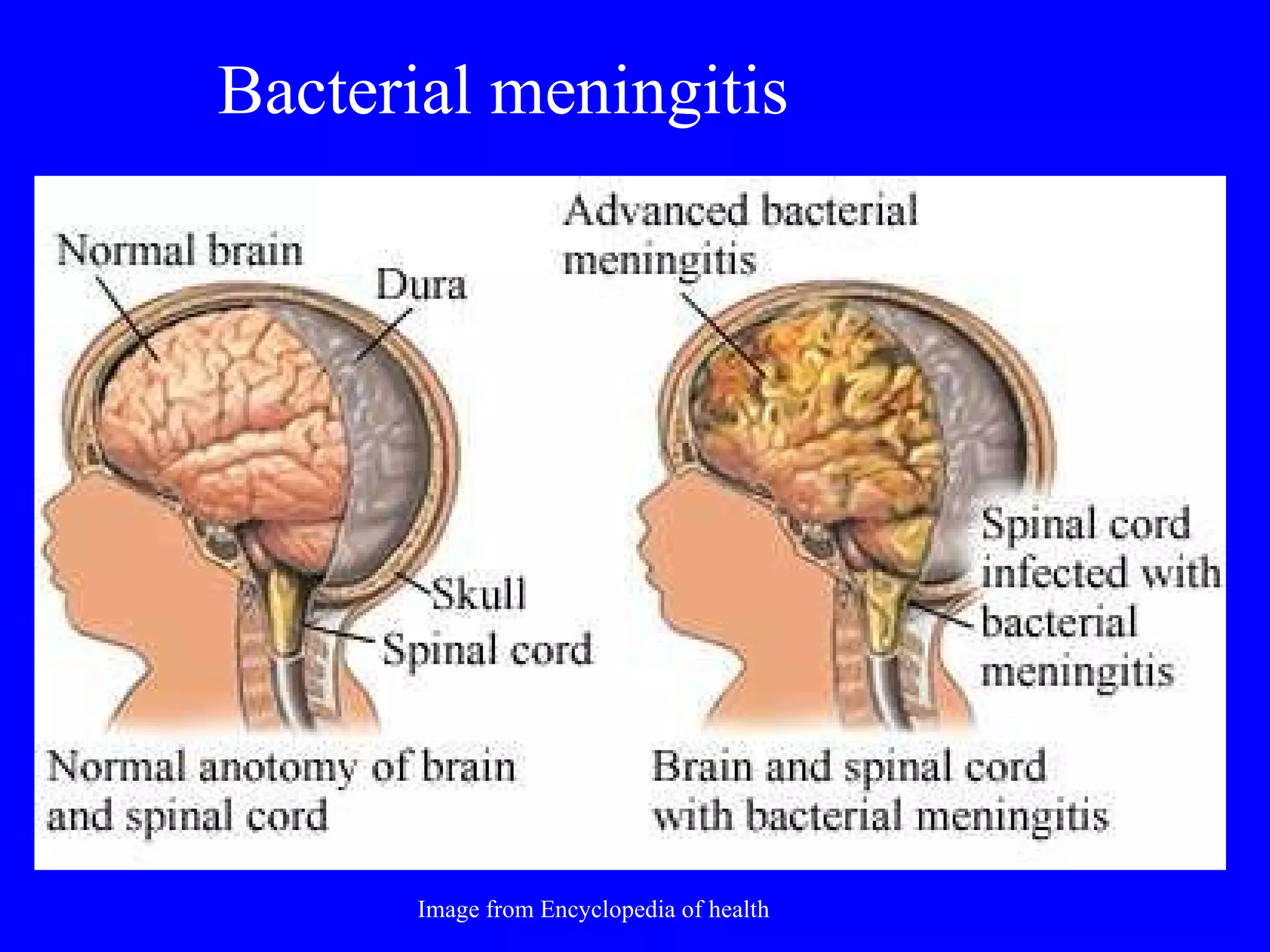
Bacterial meningitis Image from Encyclopedia of health
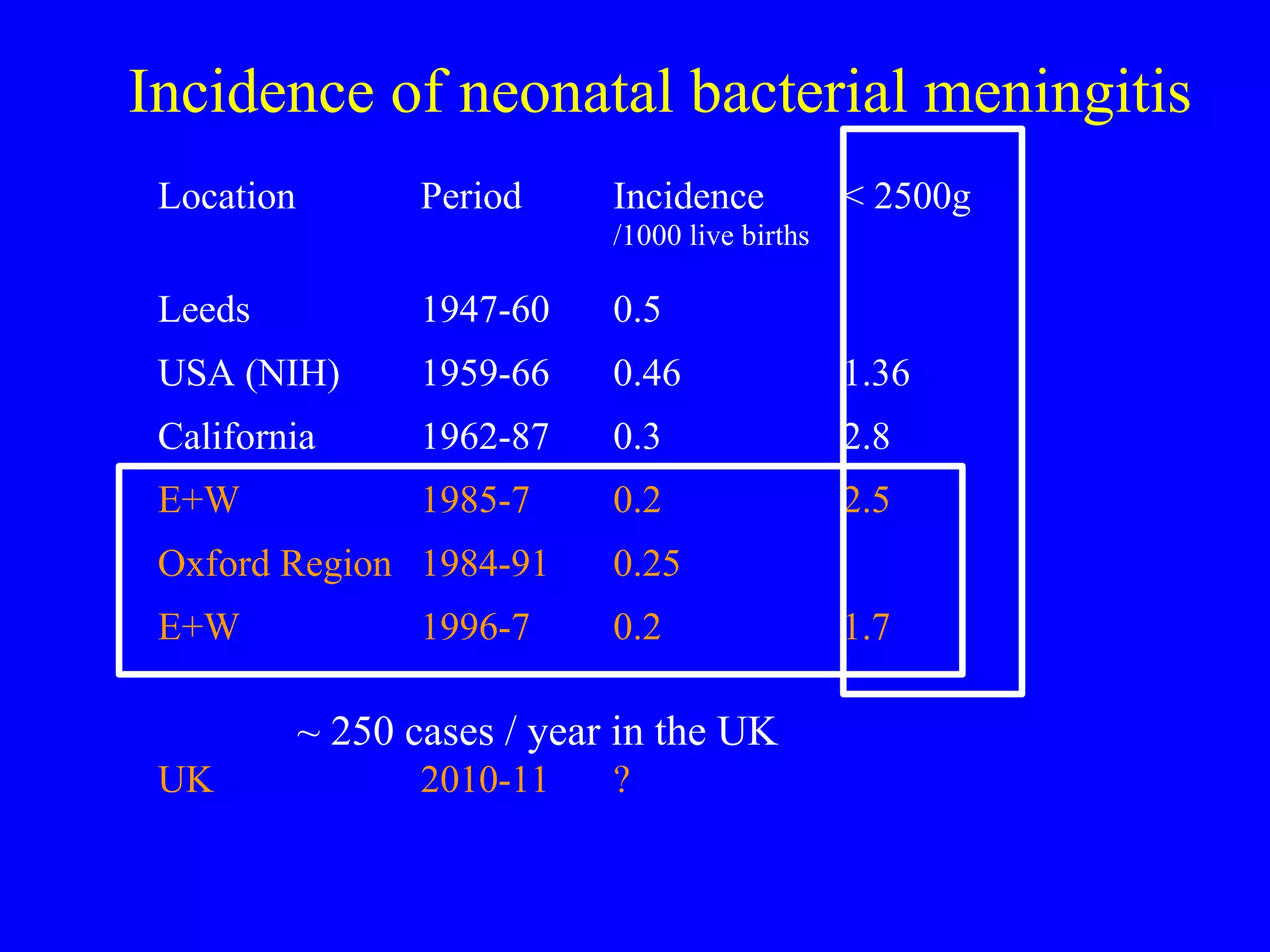
Incidence of neonatal bacterial meningitis ~ 250 cases / year in the UK
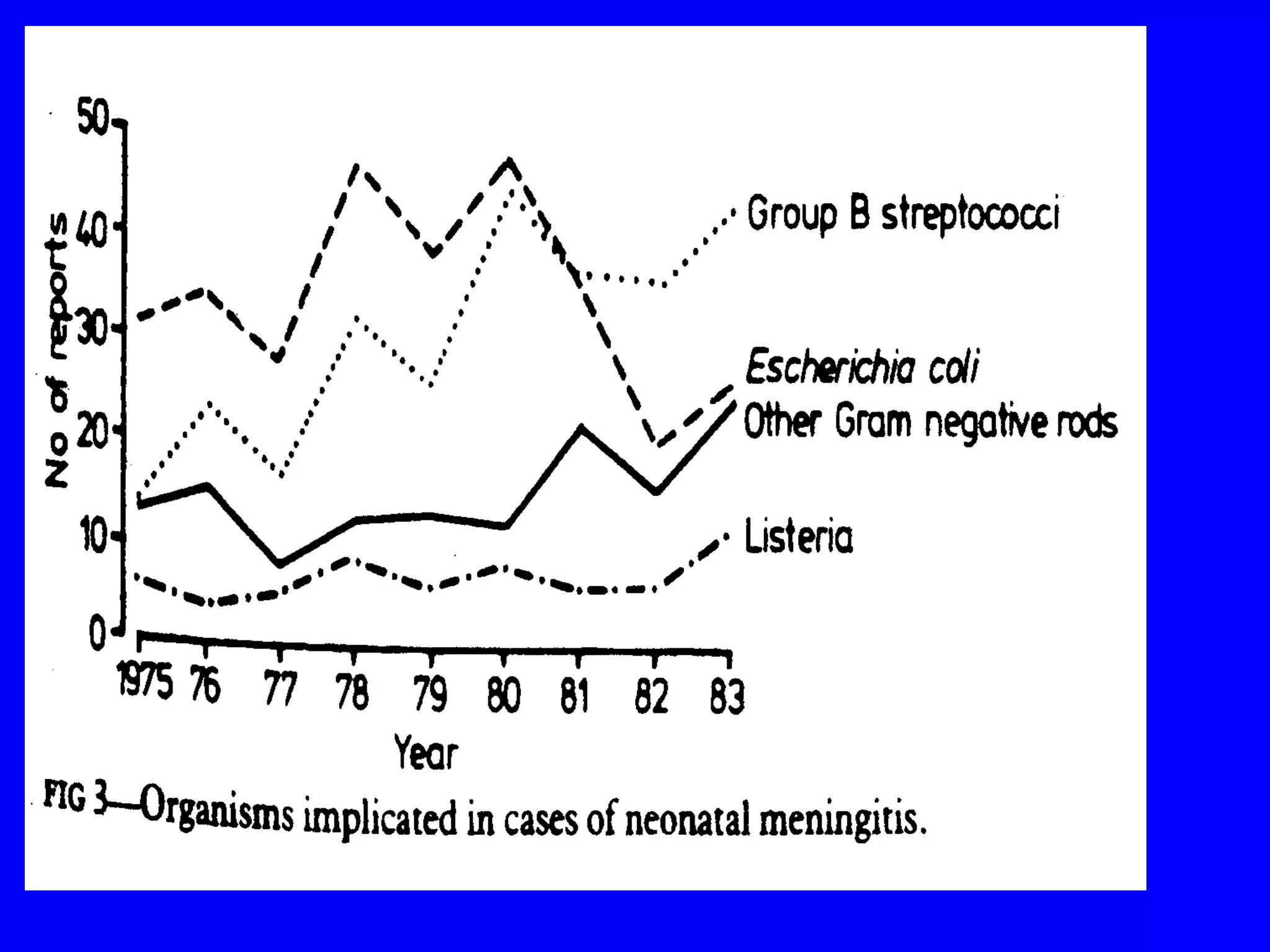
Bacterial causes of meningitis in neonates (1996-97) Group B Streptococcus  (48%) E. coli   (18%) Other Gram- negatives  (8%) Streptococcus pneumoniae  (6%) Listeria monocytogenes  (5%) In 2010-11 ?
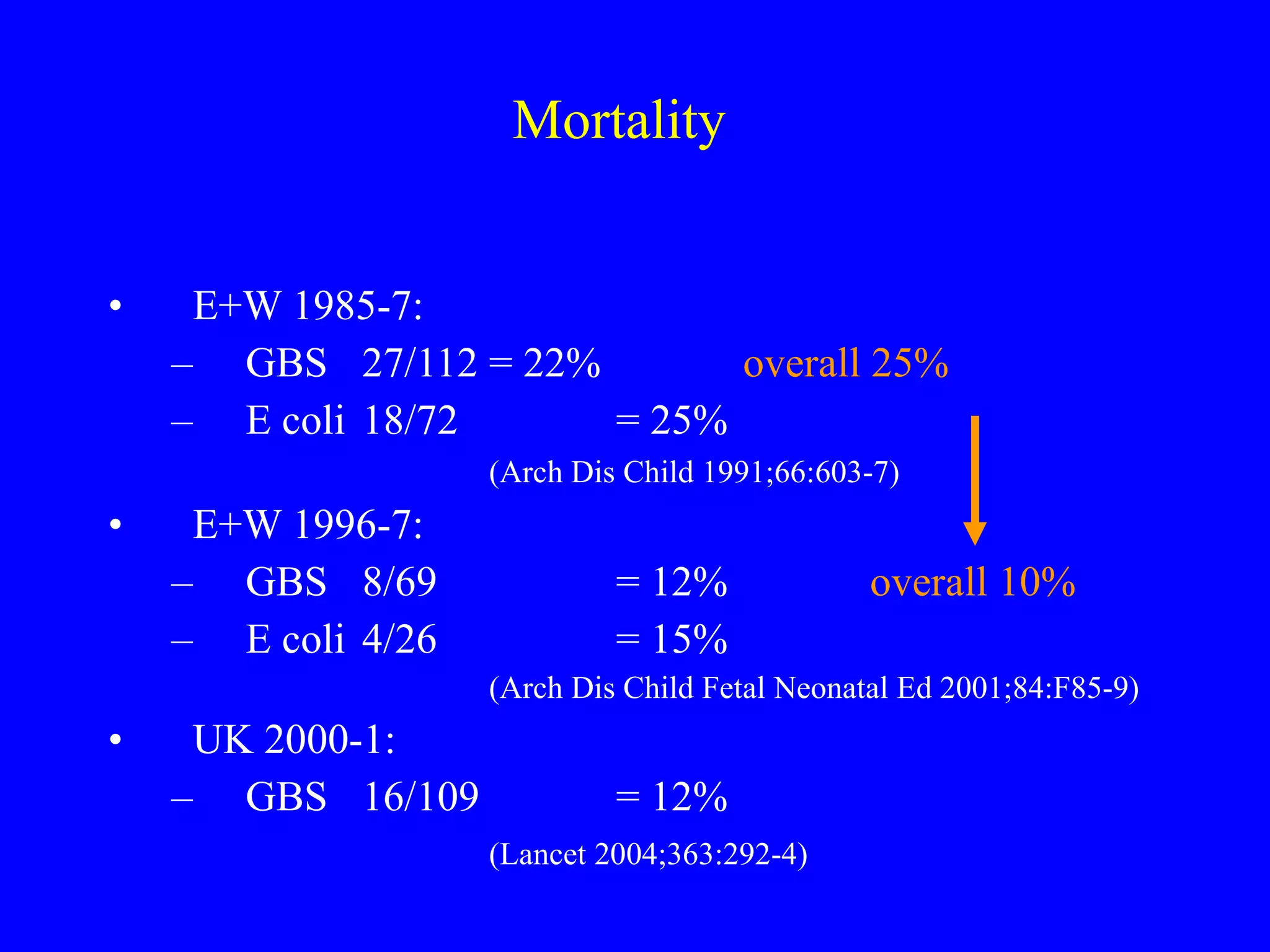
Mortality E+W 1985-7: GBS 27/112  = 22% overall 25% E coli 18/72   = 25% (Arch Dis Child 1991;66:603-7) E+W 1996-7:  GBS  8/69 = 12% overall 10% E coli  4/26  = 15% (Arch Dis Child Fetal Neonatal Ed 2001;84:F85-9) UK 2000-1: GBS 16/109 = 12% ( Lancet 2004;363:292-4)
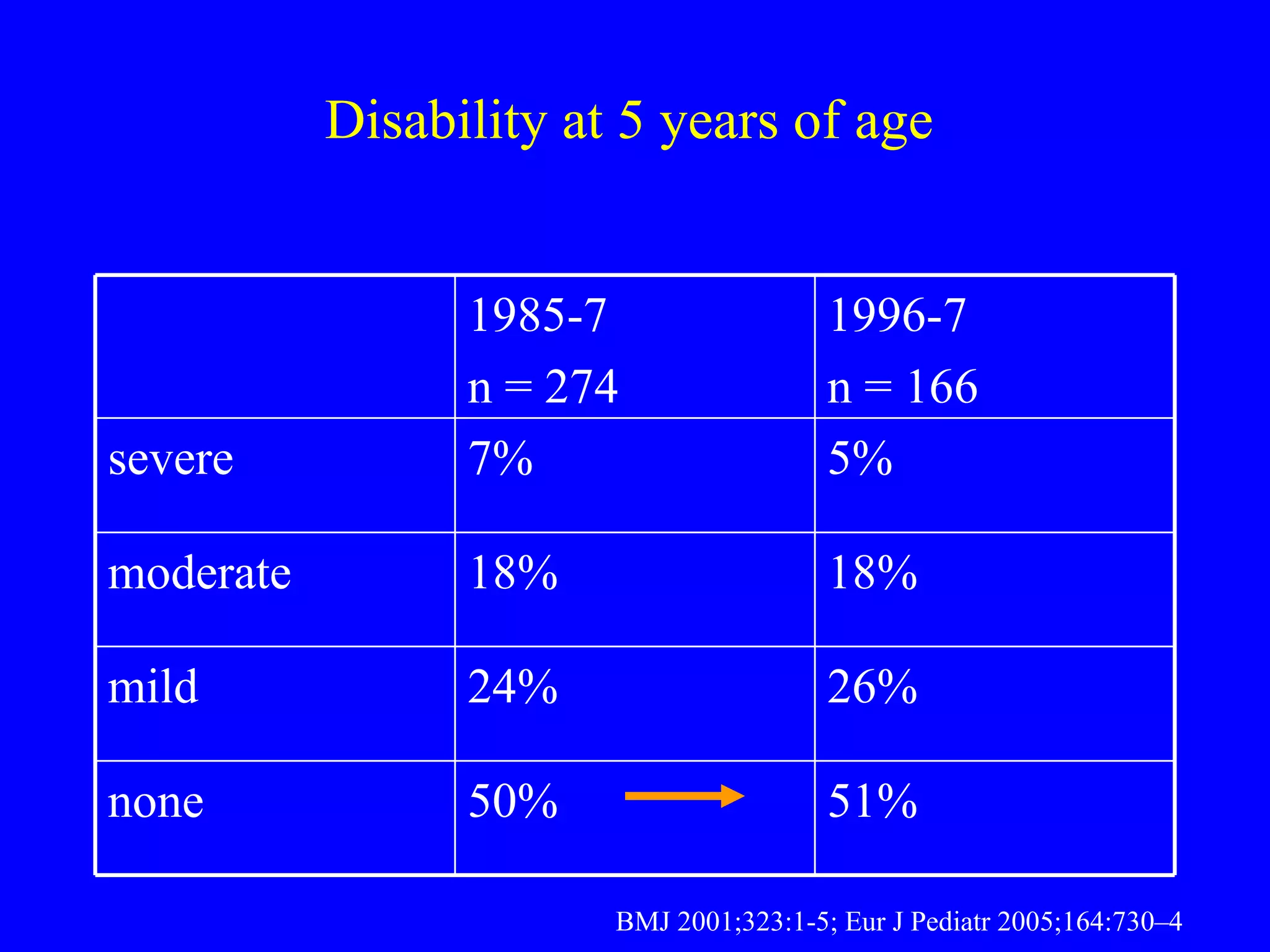
Disability at 5 years of age BMJ 2001;323:1-5; Eur J Pediatr 2005;164:730–4 1985-7 n = 274 1996-7 n = 166 severe 7% 5% moderate 18% 18% mild 24% 26% none 50% 51%
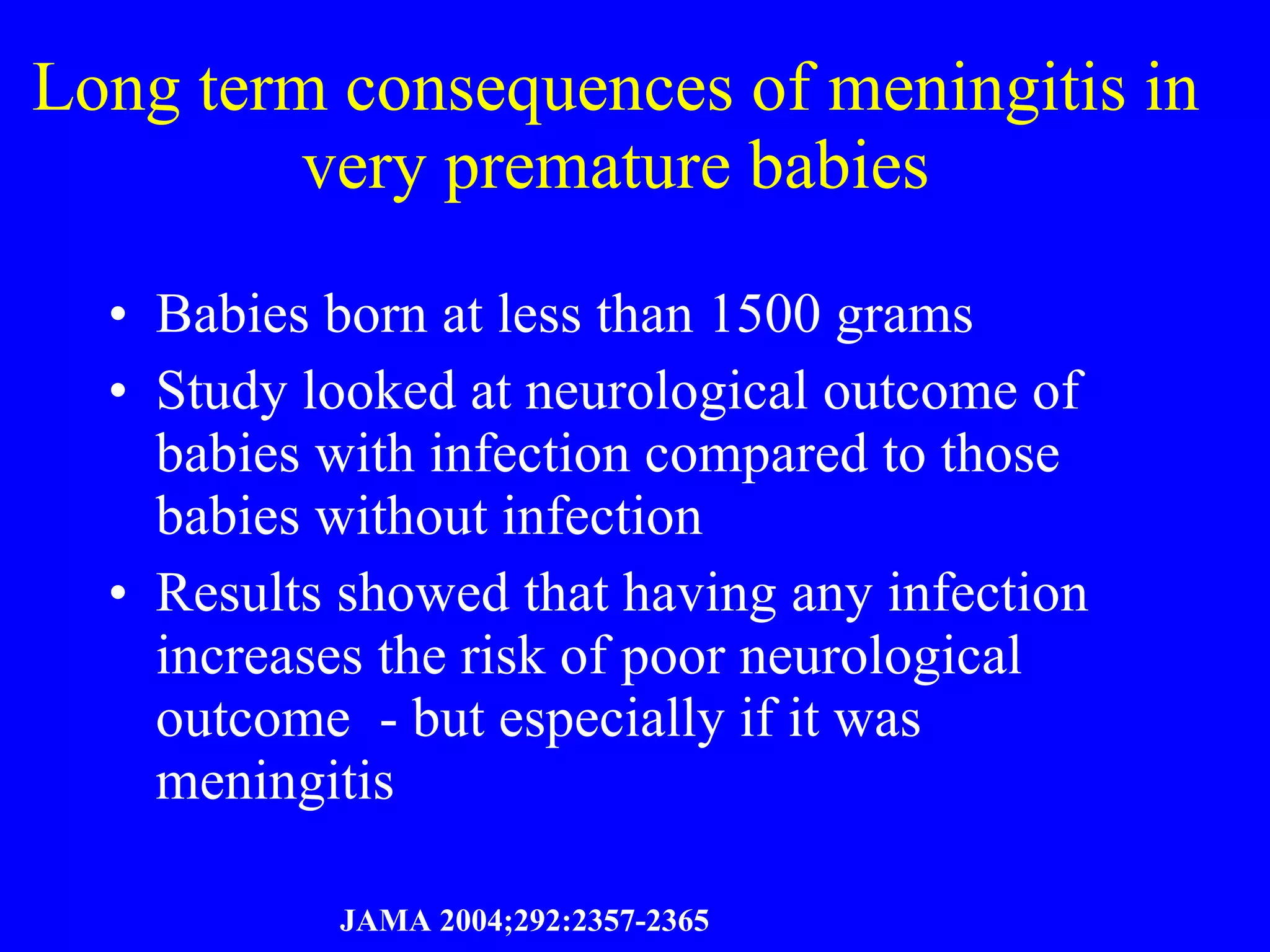
Long term consequences of meningitis in very premature babies Babies born at less than 1500 grams  Study looked at neurological outcome of  babies with infection compared to those babies without infection Results showed that having any infection increases the risk of poor neurological outcome  - but especially if it was meningitis JAMA 2004;292:2357-2365
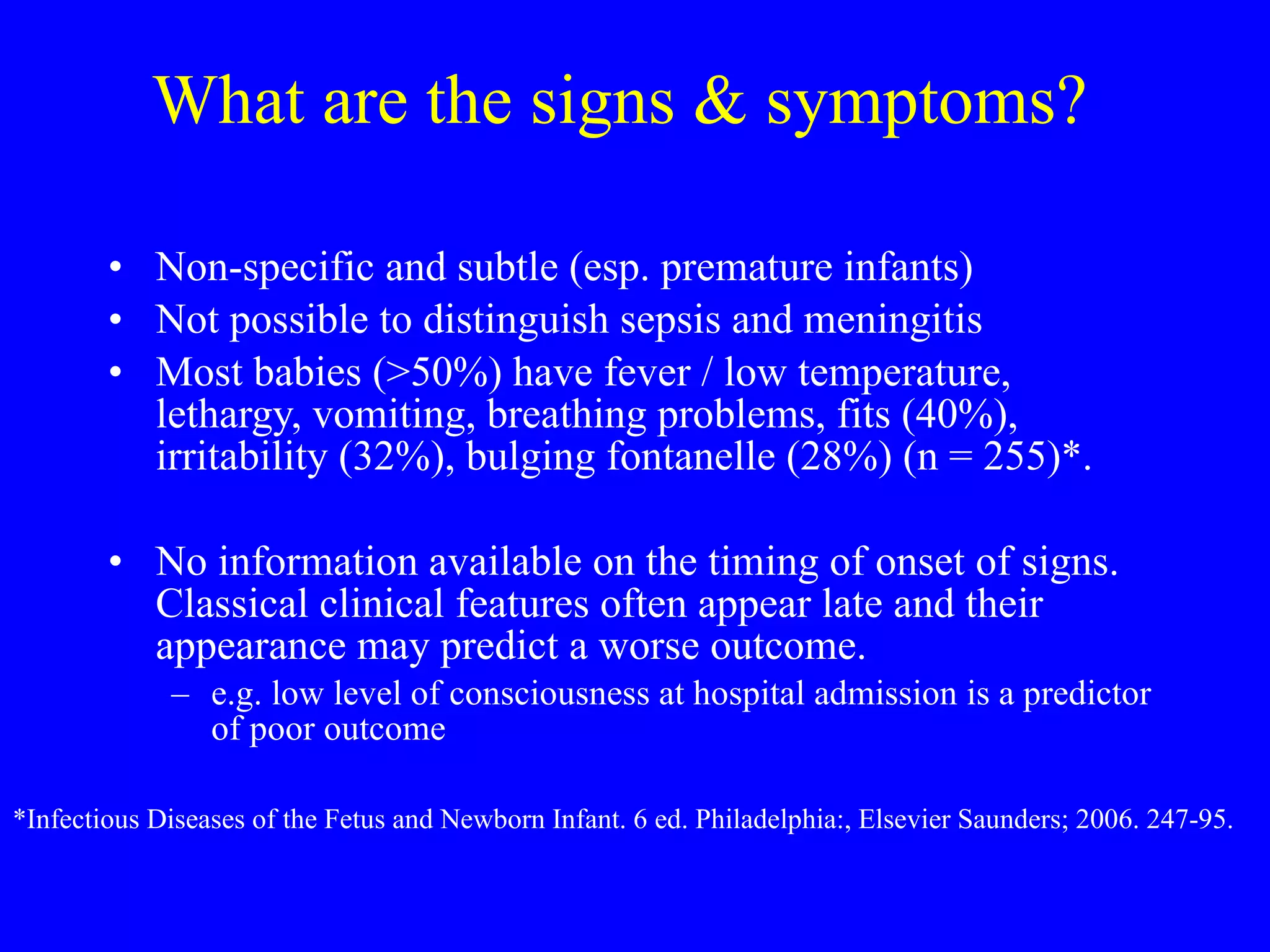
What are the signs & symptoms? Non-specific and subtle (esp. premature infants) Not possible to distinguish sepsis and meningitis Most babies (>50%) have fever / low temperature, lethargy, vomiting, breathing problems, fits (40%), irritability (32%), bulging fontanelle (28%) (n = 255)*. No information available on the timing of onset of signs. Classical clinical features often appear late and their appearance may predict a worse outcome.  e.g. low level of consciousness at hospital admission is a predictor of poor outcome *Infectious Diseases of the Fetus and Newborn Infant. 6 ed. Philadelphia:, Elsevier Saunders; 2006. 247-95.
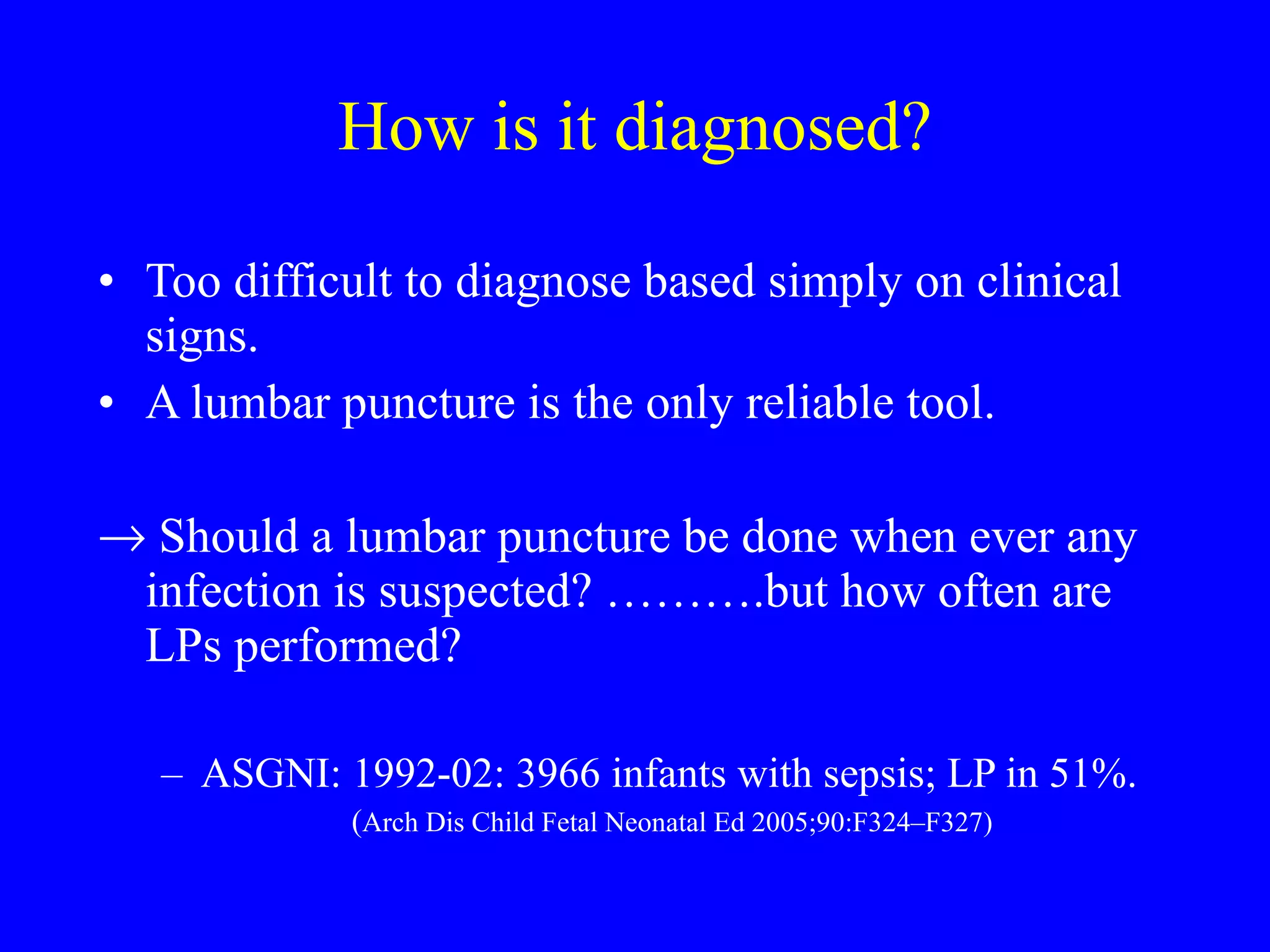
How is it diagnosed? Too difficult to diagnose based simply on clinical signs.  A lumbar puncture is the only reliable tool. Should a lumbar puncture be done when ever any infection is suspected? ……….but how often are LPs performed?  ASGNI: 1992-02: 3966 infants with sepsis; LP in 51%.  ( Arch Dis Child Fetal Neonatal Ed 2005;90:F324–F327)
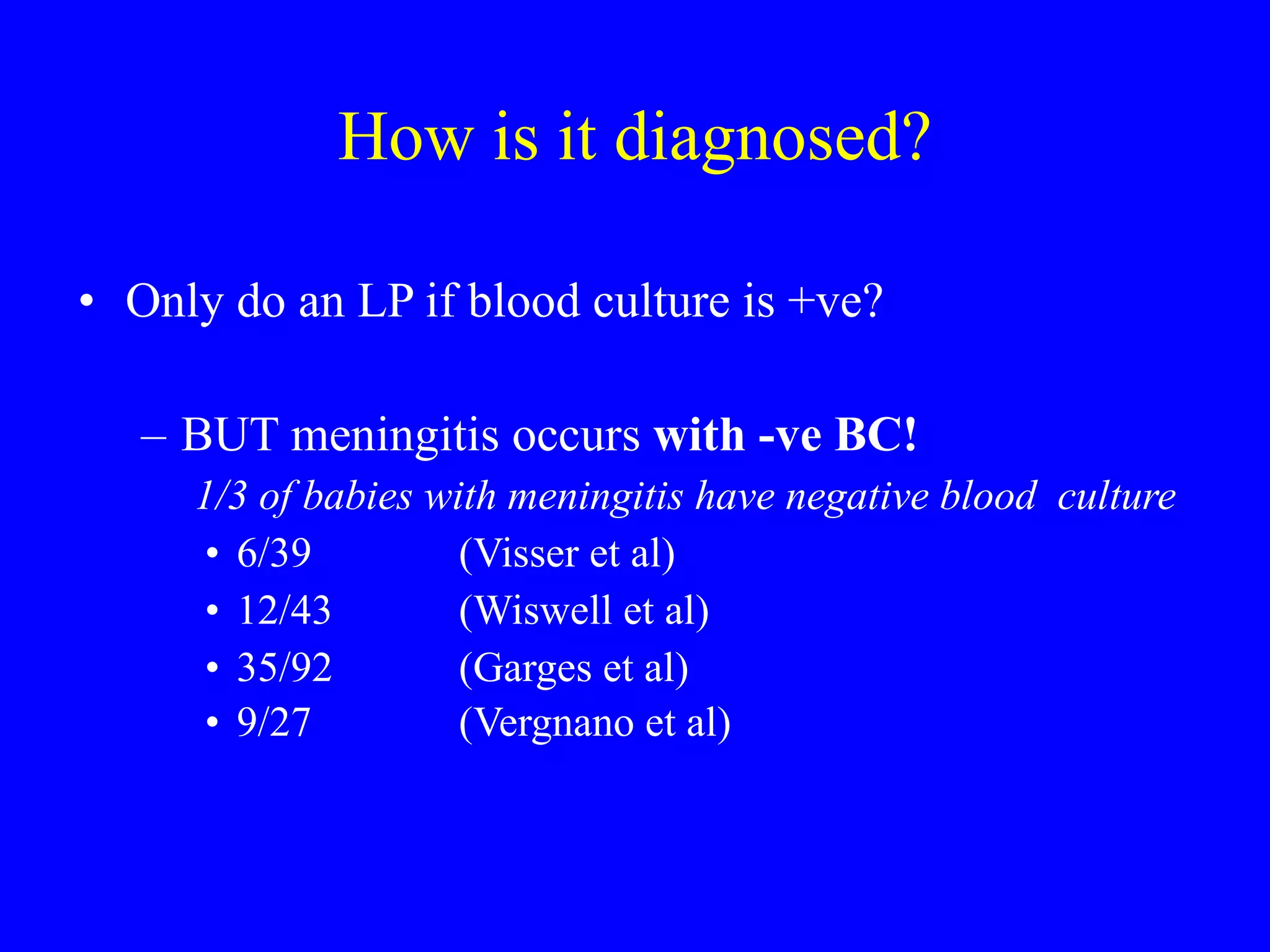
How is it diagnosed? Only do an LP if blood culture is +ve? BUT meningitis occurs  with -ve BC!   1/3 of babies with meningitis have negative blood  culture 6/39  (Visser et al)  12/43  (Wiswell et al) 35/92  (Garges et al)  9/27  (Vergnano et al)
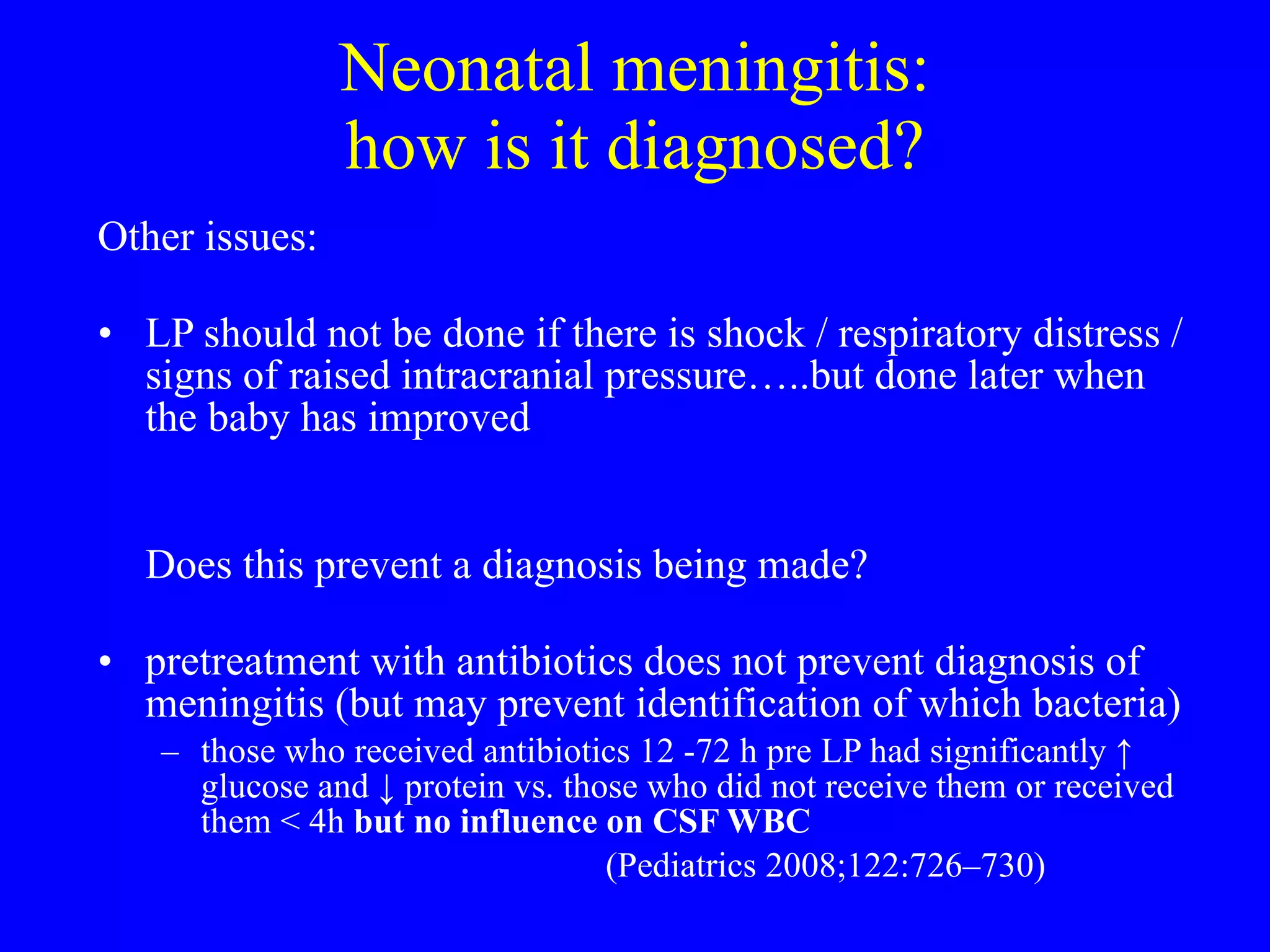
Neonatal meningitis: how is it diagnosed? Other issues: LP should not be done if there is shock / respiratory distress / signs of raised intracranial pressure…..but done later when the baby has improved  Does this prevent a diagnosis being made?  pretreatment with antibiotics does not prevent diagnosis of meningitis (but may prevent identification of which bacteria) those who received antibiotics 12 -72 h pre LP had significantly  ↑  glucose and  ↓  protein vs. those who did not receive them or received them < 4h  but no influence on CSF WBC (Pediatrics 2008;122:726–730)
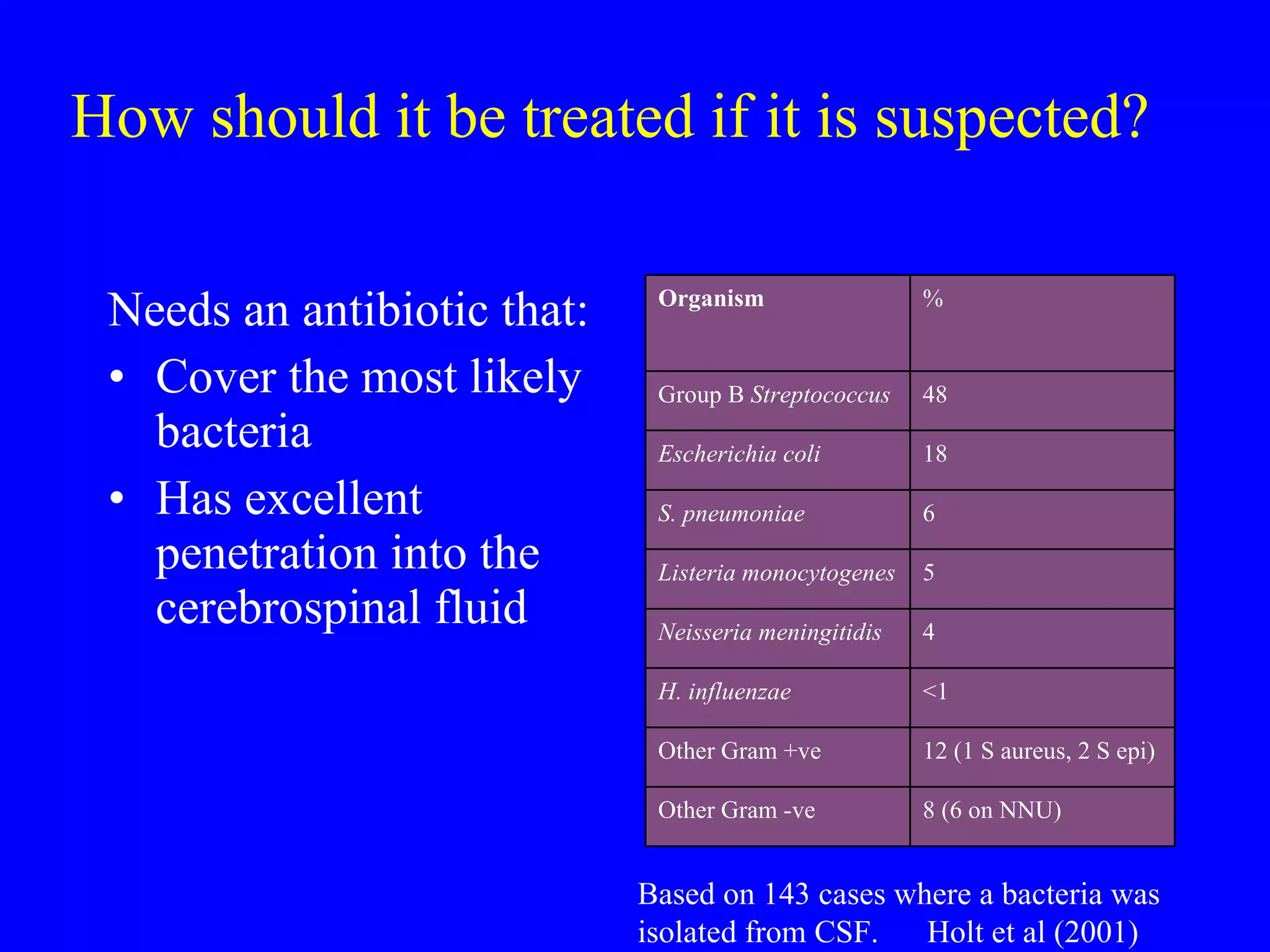
How should it be treated if it is suspected? Needs an antibiotic that: Cover the most likely bacteria Has excellent penetration into the cerebrospinal fluid Based on 143 cases where a bacteria was isolated from CSF.  Holt et al (2001) Organism %  Group B  Streptococcus 48 Escherichia coli 18 S. pneumoniae 6 Listeria monocytogenes 5 Neisseria meningitidis 4 H. influenzae <1 Other Gram +ve 12 (1 S aureus, 2 S epi) Other Gram -ve 8 (6 on NNU)
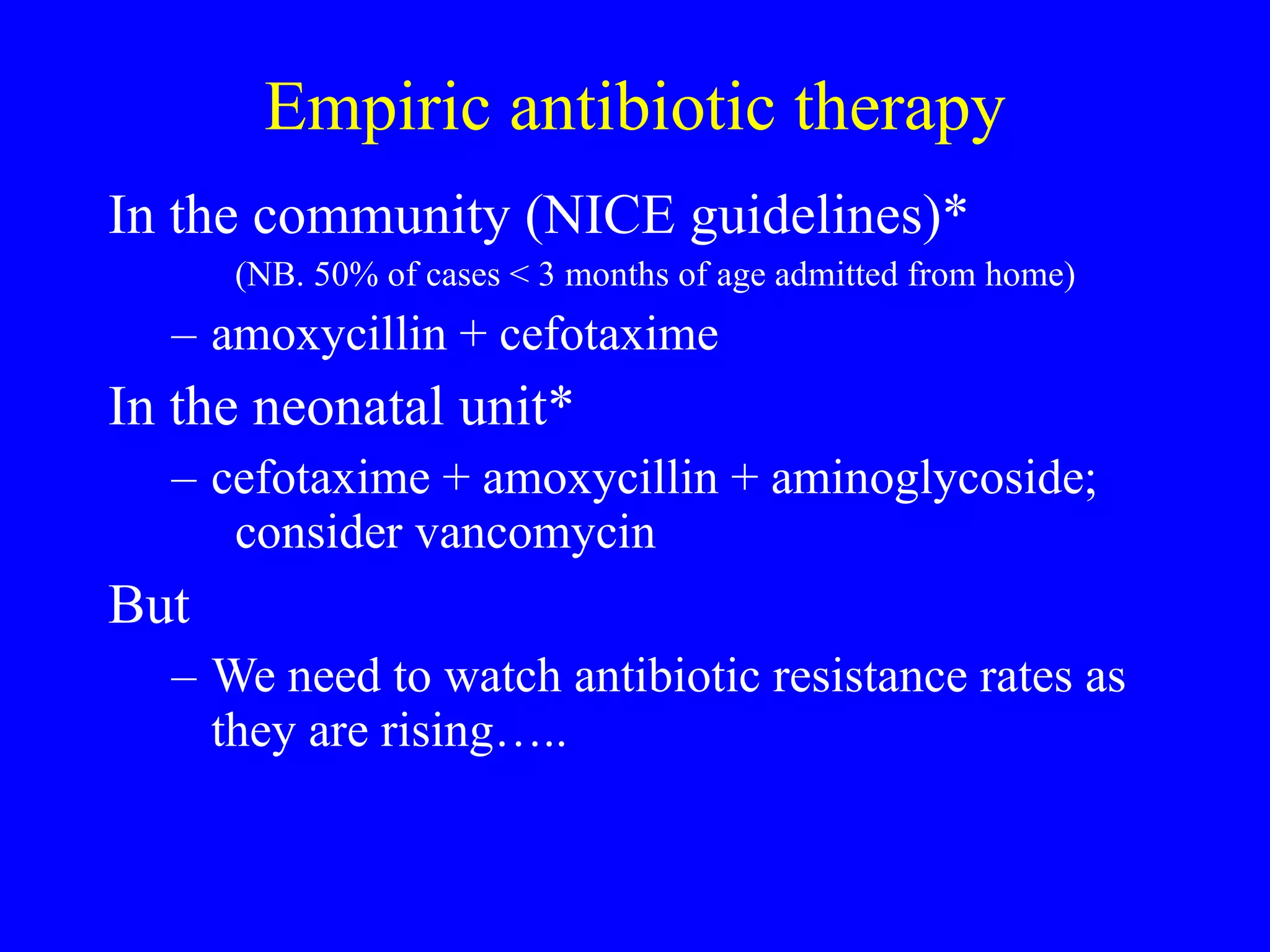
Empiric antibiotic therapy In the community (NICE guidelines)*  (NB. 50% of cases < 3 months of age admitted from home) amoxycillin + cefotaxime  In the neonatal unit* cefotaxime + amoxycillin + aminoglycoside;  consider vancomycin But We need to watch antibiotic resistance rates as they are rising…..
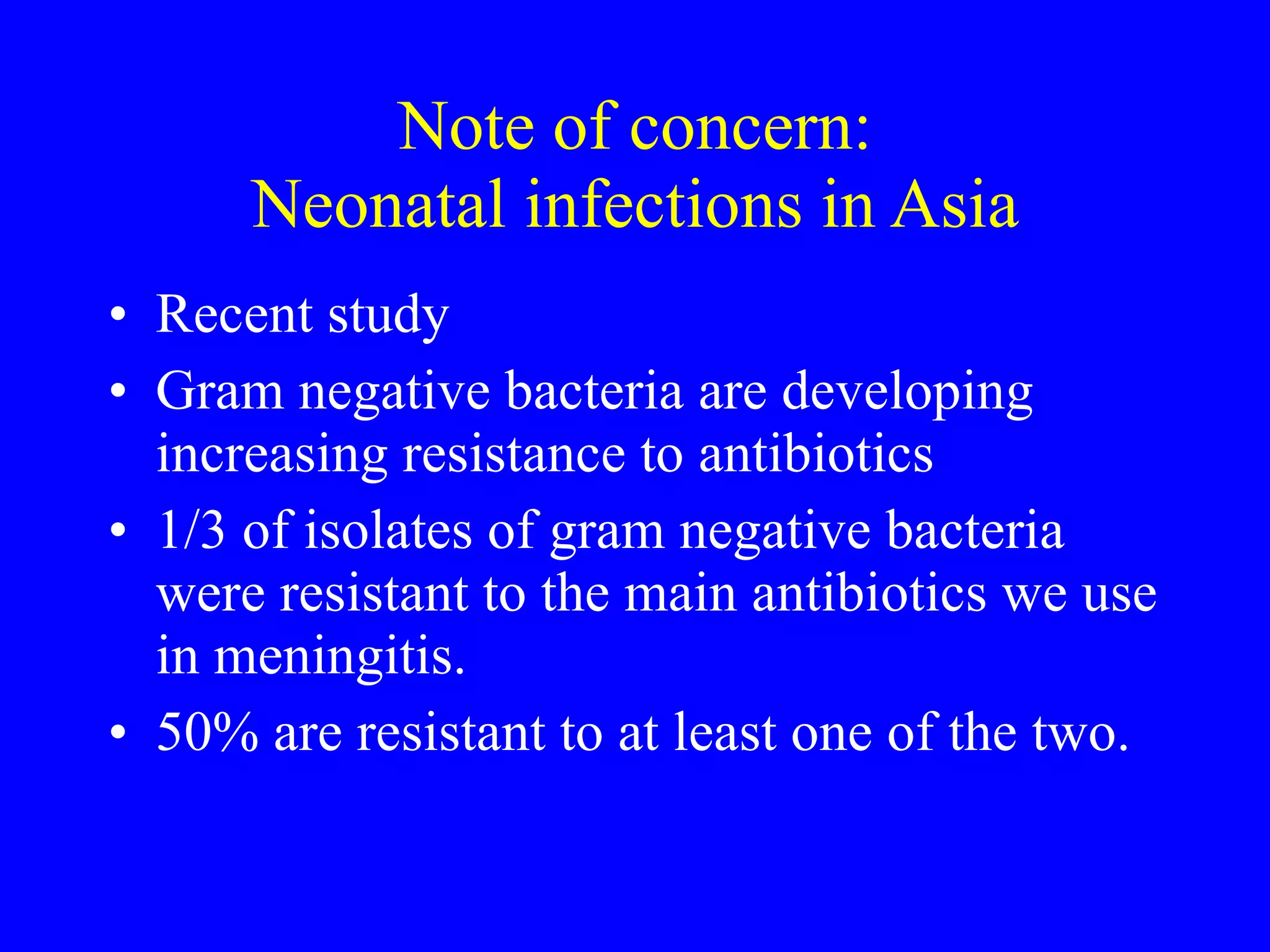
Note of concern: Neonatal infections in Asia Recent study Gram negative bacteria are developing increasing resistance to antibiotics 1/3 of isolates of gram negative bacteria were resistant to the main antibiotics we use in meningitis. 50% are resistant to at least one of the two.
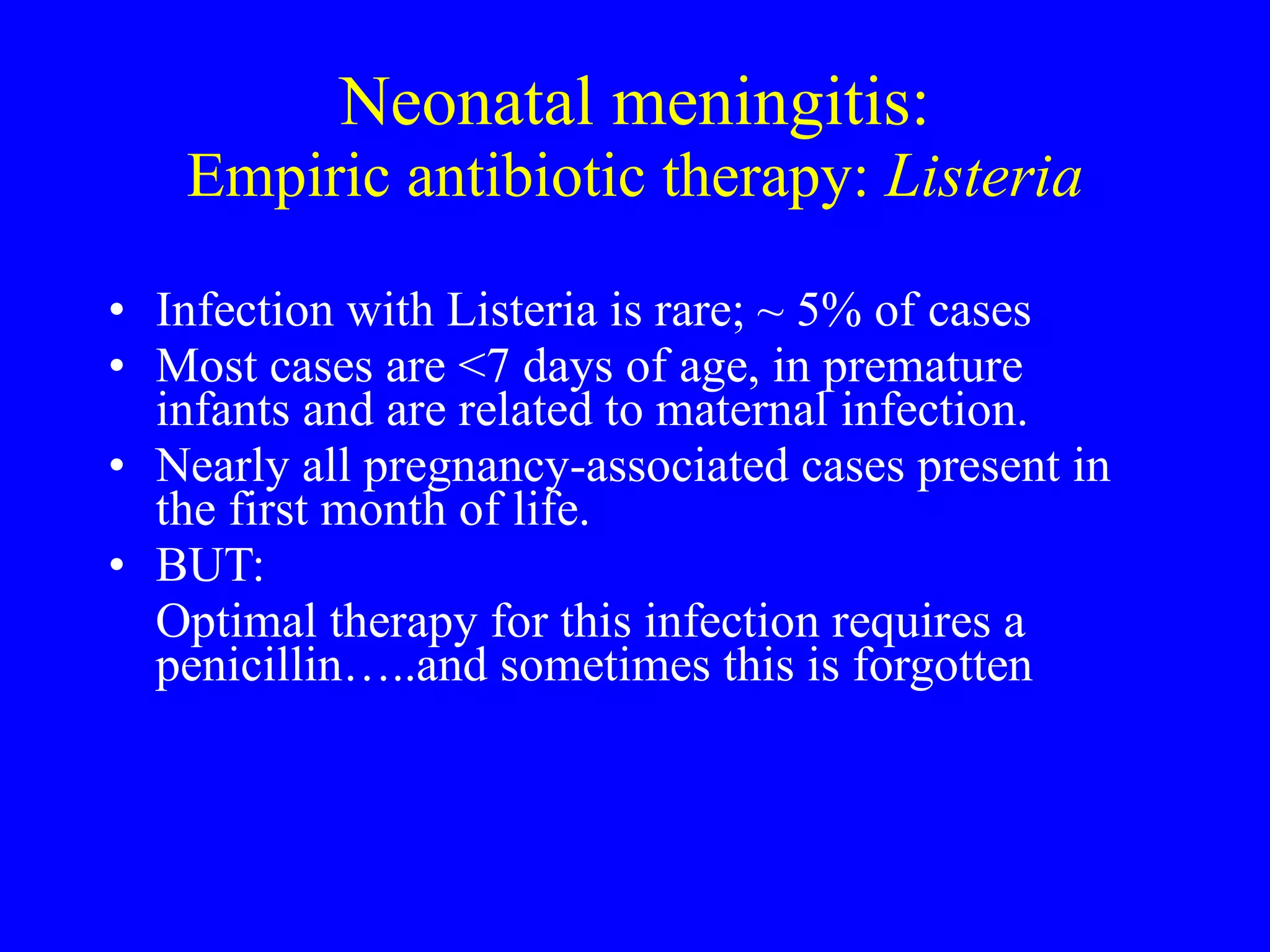
Neonatal meningitis: Empiric antibiotic therapy:  Listeria Infection with Listeria is rare;  ~  5% of cases  Most cases are <7 days of age, in premature infants and are related to maternal infection.  Nearly all pregnancy-associated cases present in the first month of life.  BUT:  Optimal therapy for this infection requires a penicillin…..and sometimes this is forgotten
Neonatal meningitis: Empiric antibiotic therapy:  what are UK Neonatologist currently doing? 45% use a cephalosporin 19% do not include any penicillin 5% (11) used a triple combination  (cephalosporin + a penicillin + aminoglycoside) Journal of Antimicrobial Chemotherapy (2008) 61, 743–745
Which antibiotic is best? how long should antibiotics be given for?   No good studies found comparing antibiotics currently used to treat meningitis in infants younger than 3 months. No good studies found that evaluated the optimal duration of antibiotic treatment in infants younger than 3 months.  NICE Meningitis Guidelines 2010
Neonatal meningitis: what about new antibiotics? Meropenem? European multicenter network of Meropenem in neonatal sepsis and meningitis (NeoMero) evaluate its pharmacokinetics and safety in bacterial meningitis ( how it gets to the area of the body with infection and the safety in babies )
Adjunctive therapy Steroids - works well in adults and children for meningitis by certain bacteria - no good study to support this in neonates. Glycerol - evidence that it works in children is emerging but no studies in neonates.
Neonatal meningitis:  what about better early management?  Factors  that predict poor outcome On admission: Low blood pressure  Need for medication to support blood pressure Seizures Coma  Perhaps more aggressive management of these factors might improve the outcome?
Improving the outcome from neonatal infection There is good evidence in adults and children BUT There are no high-quality studies assessing initial fluid therapy in neonates with meningitis  (NICE meningitis 2010). Delayed reversal of shock = worse outcome;  every hour of failure to reverse shock = doubling of risk of death  (Pediatrics 2003;112:793-9)
Neonatal meningitis how can we do better? Better management? Earlier recognition of symptoms/signs? Earlier use of appropriate antibiotics? New antibiotics? Better fluid therapy and supportive care? New adjunctive therapy?
How can we do better? Prevention: - antibiotics in labour (GBS) - vaccination  (pneumococcal, meningoccocal B*) - vaccination** (GBS)  - Avoidance of certain food in pregnancy ( listeria ) * Submitted to EMEA for approval ** Currently no licensed vaccine
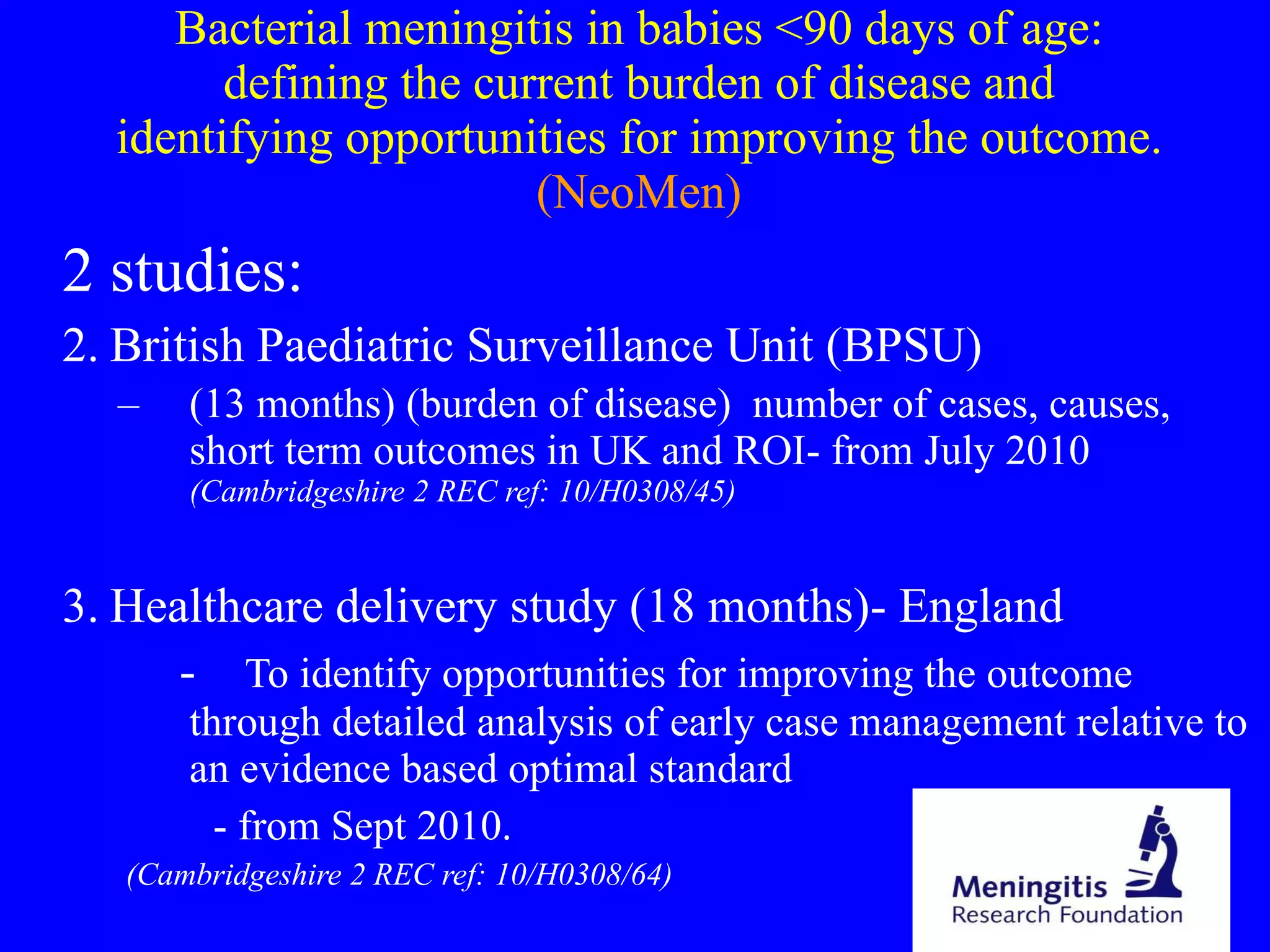
Bacterial meningitis in babies <90 days of age: defining the current burden of disease and identifying opportunities for improving the outcome.  (NeoMen) 2 studies: British Paediatric Surveillance Unit (BPSU)  (13 months) (burden of disease)  number of cases, causes, short term outcomes in UK and ROI- from July 2010  (Cambridgeshire 2 REC ref: 10/H0308/45) Healthcare delivery study (18 months)- England -  To identify opportunities for improving the outcome  through detailed analysis of early case management relative to an evidence based optimal standard - from Sept 2010. (Cambridgeshire 2 REC ref: 10/H0308/64)
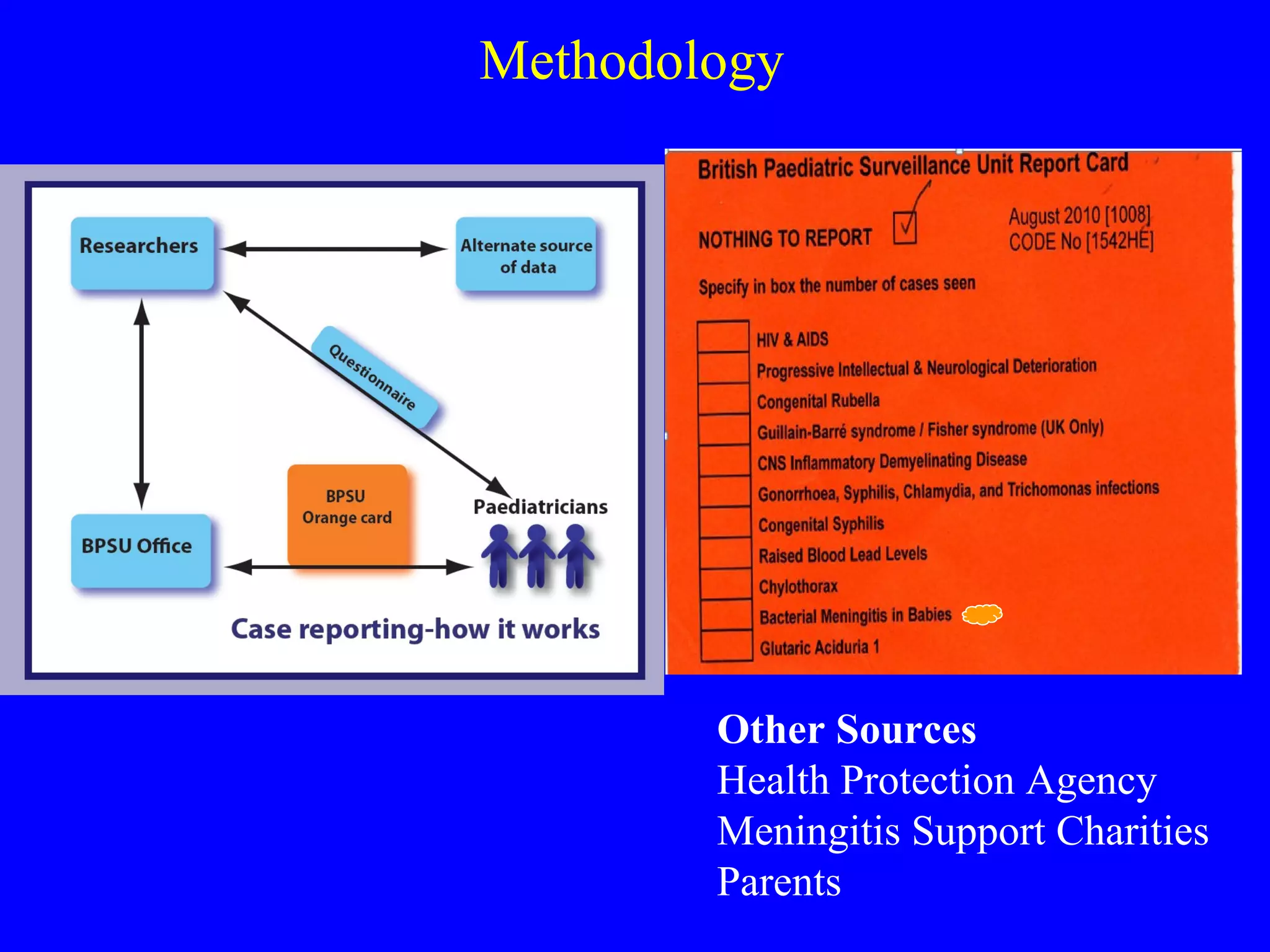
Methodology  Other Sources Health Protection Agency Meningitis Support Charities Parents
RESULTS
Summary Mortality has decreased but morbidity has not changed…..both are still unacceptable. There are a number of possible areas for improvement. NeoMen hopes to address and identify some of these areas.
Acknowledgements Chief Investigator and Supervisor: Dr Paul T Heath BPSU- Helen Friend and Richard Lyn Health Protection Agency London Dr Alan Johnson, Katherine Henderson, Ruth Blackburn, Berritt Muler-Peabody Other Paediatricians/ Neonatologists Dr Nelly Ninis (London) Dr Mark Anthony (Oxford) Dr Laura Jones (Edinburgh) Health Protection Scotland Dr Katy Sinka, Dr Claire Cameron Irish National Meningitis Reference Centre: Dr Mary Cafferkey Funding -  Meningitis Research Foundation Support Charities: Meningitis UK, Meningitis Trust and Group B Strep Support All Paediatrician in the UK and Ireland who report cases regularly to the BPSU St George’s vaccine Institute staff
A BIG THANK YOU!

Okike for web

  • 1.
    Bacterial meningitis in babies, establishing standards of care to improve the outcome. Dr Ifeanyichukwu Okike Clinical Research Fellow Child Health & Vaccine Institute St. George`s, University of London. MRF Meningitis Symposium, Bristol 16 June 2011
  • 2.
    Neonatal bactertial meningitisWhat is the burden of disease? How many cases? How often is it fatal? Long term complications? (Cost to the family and to society?) What are the causes? How is it diagnosed? How is it managed? Results from Neomen (BPSU arm of study)
  • 3.
    Bacterial meningitis Imagefrom Encyclopedia of health
  • 4.
    Incidence of neonatalbacterial meningitis ~ 250 cases / year in the UK
  • 5.
    Bacterial causes ofmeningitis in neonates (1996-97) Group B Streptococcus (48%) E. coli (18%) Other Gram- negatives (8%) Streptococcus pneumoniae (6%) Listeria monocytogenes (5%) In 2010-11 ?
  • 6.
    Mortality E+W 1985-7:GBS 27/112 = 22% overall 25% E coli 18/72 = 25% (Arch Dis Child 1991;66:603-7) E+W 1996-7: GBS 8/69 = 12% overall 10% E coli 4/26 = 15% (Arch Dis Child Fetal Neonatal Ed 2001;84:F85-9) UK 2000-1: GBS 16/109 = 12% ( Lancet 2004;363:292-4)
  • 7.
    Disability at 5years of age BMJ 2001;323:1-5; Eur J Pediatr 2005;164:730–4 1985-7 n = 274 1996-7 n = 166 severe 7% 5% moderate 18% 18% mild 24% 26% none 50% 51%
  • 8.
    Long term consequencesof meningitis in very premature babies Babies born at less than 1500 grams Study looked at neurological outcome of babies with infection compared to those babies without infection Results showed that having any infection increases the risk of poor neurological outcome - but especially if it was meningitis JAMA 2004;292:2357-2365
  • 9.
    What are thesigns & symptoms? Non-specific and subtle (esp. premature infants) Not possible to distinguish sepsis and meningitis Most babies (>50%) have fever / low temperature, lethargy, vomiting, breathing problems, fits (40%), irritability (32%), bulging fontanelle (28%) (n = 255)*. No information available on the timing of onset of signs. Classical clinical features often appear late and their appearance may predict a worse outcome. e.g. low level of consciousness at hospital admission is a predictor of poor outcome *Infectious Diseases of the Fetus and Newborn Infant. 6 ed. Philadelphia:, Elsevier Saunders; 2006. 247-95.
  • 10.
    How is itdiagnosed? Too difficult to diagnose based simply on clinical signs. A lumbar puncture is the only reliable tool. Should a lumbar puncture be done when ever any infection is suspected? ……….but how often are LPs performed? ASGNI: 1992-02: 3966 infants with sepsis; LP in 51%. ( Arch Dis Child Fetal Neonatal Ed 2005;90:F324–F327)
  • 11.
    How is itdiagnosed? Only do an LP if blood culture is +ve? BUT meningitis occurs with -ve BC! 1/3 of babies with meningitis have negative blood culture 6/39 (Visser et al) 12/43 (Wiswell et al) 35/92 (Garges et al) 9/27 (Vergnano et al)
  • 12.
    Neonatal meningitis: howis it diagnosed? Other issues: LP should not be done if there is shock / respiratory distress / signs of raised intracranial pressure…..but done later when the baby has improved Does this prevent a diagnosis being made? pretreatment with antibiotics does not prevent diagnosis of meningitis (but may prevent identification of which bacteria) those who received antibiotics 12 -72 h pre LP had significantly ↑ glucose and ↓ protein vs. those who did not receive them or received them < 4h but no influence on CSF WBC (Pediatrics 2008;122:726–730)
  • 13.
    How should itbe treated if it is suspected? Needs an antibiotic that: Cover the most likely bacteria Has excellent penetration into the cerebrospinal fluid Based on 143 cases where a bacteria was isolated from CSF. Holt et al (2001) Organism % Group B Streptococcus 48 Escherichia coli 18 S. pneumoniae 6 Listeria monocytogenes 5 Neisseria meningitidis 4 H. influenzae <1 Other Gram +ve 12 (1 S aureus, 2 S epi) Other Gram -ve 8 (6 on NNU)
  • 14.
    Empiric antibiotic therapyIn the community (NICE guidelines)* (NB. 50% of cases < 3 months of age admitted from home) amoxycillin + cefotaxime In the neonatal unit* cefotaxime + amoxycillin + aminoglycoside; consider vancomycin But We need to watch antibiotic resistance rates as they are rising…..
  • 15.
    Note of concern:Neonatal infections in Asia Recent study Gram negative bacteria are developing increasing resistance to antibiotics 1/3 of isolates of gram negative bacteria were resistant to the main antibiotics we use in meningitis. 50% are resistant to at least one of the two.
  • 16.
    Neonatal meningitis: Empiricantibiotic therapy: Listeria Infection with Listeria is rare; ~ 5% of cases Most cases are <7 days of age, in premature infants and are related to maternal infection. Nearly all pregnancy-associated cases present in the first month of life. BUT: Optimal therapy for this infection requires a penicillin…..and sometimes this is forgotten
  • 17.
    Neonatal meningitis: Empiricantibiotic therapy: what are UK Neonatologist currently doing? 45% use a cephalosporin 19% do not include any penicillin 5% (11) used a triple combination (cephalosporin + a penicillin + aminoglycoside) Journal of Antimicrobial Chemotherapy (2008) 61, 743–745
  • 18.
    Which antibiotic isbest? how long should antibiotics be given for? No good studies found comparing antibiotics currently used to treat meningitis in infants younger than 3 months. No good studies found that evaluated the optimal duration of antibiotic treatment in infants younger than 3 months. NICE Meningitis Guidelines 2010
  • 19.
    Neonatal meningitis: whatabout new antibiotics? Meropenem? European multicenter network of Meropenem in neonatal sepsis and meningitis (NeoMero) evaluate its pharmacokinetics and safety in bacterial meningitis ( how it gets to the area of the body with infection and the safety in babies )
  • 20.
    Adjunctive therapy Steroids- works well in adults and children for meningitis by certain bacteria - no good study to support this in neonates. Glycerol - evidence that it works in children is emerging but no studies in neonates.
  • 21.
    Neonatal meningitis: what about better early management? Factors that predict poor outcome On admission: Low blood pressure Need for medication to support blood pressure Seizures Coma Perhaps more aggressive management of these factors might improve the outcome?
  • 22.
    Improving the outcomefrom neonatal infection There is good evidence in adults and children BUT There are no high-quality studies assessing initial fluid therapy in neonates with meningitis (NICE meningitis 2010). Delayed reversal of shock = worse outcome; every hour of failure to reverse shock = doubling of risk of death (Pediatrics 2003;112:793-9)
  • 23.
    Neonatal meningitis howcan we do better? Better management? Earlier recognition of symptoms/signs? Earlier use of appropriate antibiotics? New antibiotics? Better fluid therapy and supportive care? New adjunctive therapy?
  • 24.
    How can wedo better? Prevention: - antibiotics in labour (GBS) - vaccination (pneumococcal, meningoccocal B*) - vaccination** (GBS) - Avoidance of certain food in pregnancy ( listeria ) * Submitted to EMEA for approval ** Currently no licensed vaccine
  • 25.
    Bacterial meningitis inbabies <90 days of age: defining the current burden of disease and identifying opportunities for improving the outcome. (NeoMen) 2 studies: British Paediatric Surveillance Unit (BPSU) (13 months) (burden of disease) number of cases, causes, short term outcomes in UK and ROI- from July 2010 (Cambridgeshire 2 REC ref: 10/H0308/45) Healthcare delivery study (18 months)- England - To identify opportunities for improving the outcome through detailed analysis of early case management relative to an evidence based optimal standard - from Sept 2010. (Cambridgeshire 2 REC ref: 10/H0308/64)
  • 26.
    Methodology OtherSources Health Protection Agency Meningitis Support Charities Parents
  • 27.
  • 28.
    Summary Mortality hasdecreased but morbidity has not changed…..both are still unacceptable. There are a number of possible areas for improvement. NeoMen hopes to address and identify some of these areas.
  • 29.
    Acknowledgements Chief Investigatorand Supervisor: Dr Paul T Heath BPSU- Helen Friend and Richard Lyn Health Protection Agency London Dr Alan Johnson, Katherine Henderson, Ruth Blackburn, Berritt Muler-Peabody Other Paediatricians/ Neonatologists Dr Nelly Ninis (London) Dr Mark Anthony (Oxford) Dr Laura Jones (Edinburgh) Health Protection Scotland Dr Katy Sinka, Dr Claire Cameron Irish National Meningitis Reference Centre: Dr Mary Cafferkey Funding - Meningitis Research Foundation Support Charities: Meningitis UK, Meningitis Trust and Group B Strep Support All Paediatrician in the UK and Ireland who report cases regularly to the BPSU St George’s vaccine Institute staff
  • 30.

Editor's Notes

  • #13 important role for non-culture methods of detection (PCR) – 62 cases with preRx: +ve culture 29%, +ve PCR 58% (J infect Chemother 2009; 15:92-8)