SHAHBAZ ALAM
SATYABAMA DENTAL COLLEGE
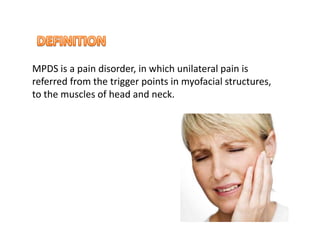
MPDS is a pain disorder, in which unilateral pain is
referred from the trigger points in myofacial structures,
to the muscles of head and neck.
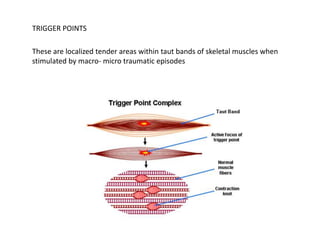
These are localized tender areas within taut bands of skeletal muscles when
stimulated by macro- micro traumatic episodes
TRIGGER POINTS
 30 % of population suffers
 Female- male ratio is 3:1
 Age group – 15-40 years
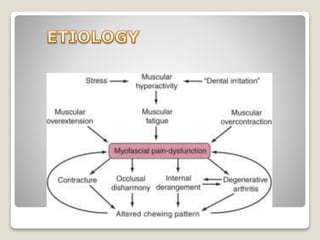
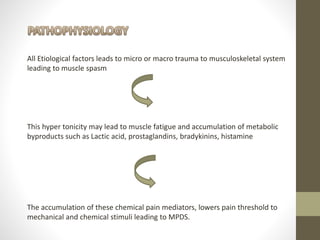
All Etiological factors leads to micro or macro trauma to musculoskeletal system
leading to muscle spasm
This hyper tonicity may lead to muscle fatigue and accumulation of metabolic
byproducts such as Lactic acid, prostaglandins, bradykinins, histamine
The accumulation of these chemical pain mediators, lowers pain threshold to
mechanical and chemical stimuli leading to MPDS.
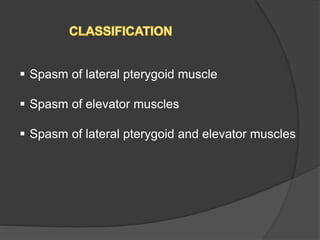
 Spasm of lateral pterygoid muscle
 Spasm of elevator muscles
 Spasm of lateral pterygoid and elevator muscles
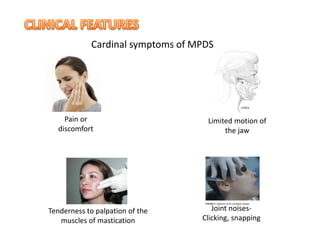
Cardinal symptoms of MPDS
Pain or
discomfort
Limited motion of
the jaw
Joint noises-
Clicking, snapping
Tenderness to palpation of the
muscles of mastication
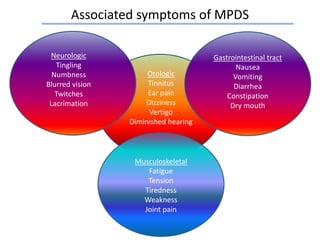
Associated symptoms of MPDS
Neurologic
Tingling
Numbness
Blurred vision
Twitches
Lacrimation
Otologic
Tinnitus
Ear pain
Dizziness
Vertigo
Diminished hearing
Gastrointestinal tract
Nausea
Vomiting
Diarrhea
Constipation
Dry mouth
Musculoskeletal
Fatigue
Tension
Tiredness
Weakness
Joint pain
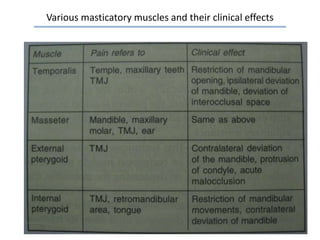
Various masticatory muscles and their clinical effects
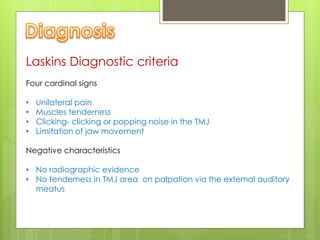
Laskins Diagnostic criteria
Four cardinal signs
• Unilateral pain
• Muscles tenderness
• Clicking- clicking or popping noise in the TMJ
• Limitation of jaw movement
Negative characteristics
• No radiographic evidence
• No tenderness in TMJ area on palpation via the external auditory
meatus

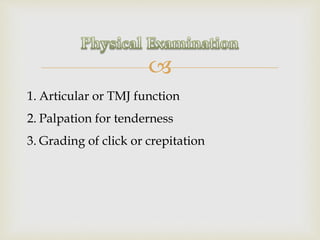
1. Articular or TMJ function
2. Palpation for tenderness
3. Grading of click or crepitation

Range of motion
a) Vertical opening – check for hypo mobility
( Normal range for an adult is 40-50 mm)
b) Deviation while opening and closing
c) Protrusive deviation and movement – normal range is
10mm
d) Lateral excursion – Normal range is 10mm
Palpation for tenderness
The area responsive to palpation are called “Trigger
points”.
The muscles are palpated bilaterally and simultaneously
with firm but gentle pressure lasting for 1-2 mins
Middle finger is used for palpation
For larger area adjacent fingers can be used.
Grading of click
• Early , immediate or wide open zones of condylar
excursion are noted
• It should be noted whether the sound is on opening ,
closing or both.
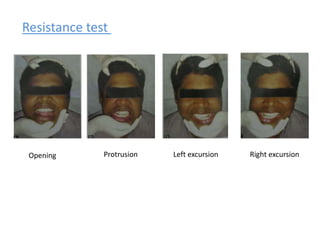
Resistance test
Opening Protrusion Left excursion Right excursion
Goal of treatment :
• 1.TrP inactivation
• 2.Prevention of recurrence
• 3.Correction of perpetuating factors
Prognosis depends on :
• Correct diagnosis
• Early and proper treatment
• Acute MPS good prognosis
• To educate and empower patients to understand
and manage the symptoms of MPDS and to regain
and maintain normal function with as much
independence as possible
Follow – 7 R’s for occlusal rehabilitation
1.Remove - extract
2.Reshape - grind
3.Reposition - orthodontia
4.Restore – conservative dentistry
5.Replace - prosthesis
6.Reconstruct – TMJ surgery
7.Regulate – control habit and symptoms
Pharmacotherapy
Pain control – mainly used analgesics Salicylates (aspirin 2 tabs 0.3-
0.6 gm/4 hourly)
Tranquilizers – provides calming effect in anxiety state and relieves
tension, fear and produces a sense of well being (Diazepam 2-5 mg at
bedtime)
Antidepressants – these are mood elevators like lithium carbonate
and caffeine
Sedatives & Hypnotics – reduces excitement and produces sleep
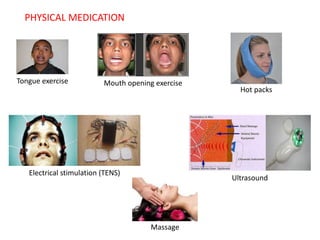
PHYSICAL MEDICATION
Tongue exercise Mouth opening exercise
Hot packs
Ultrasound
Massage
Electrical stimulation (TENS)
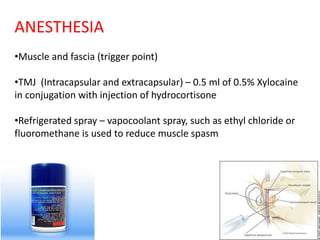
ANESTHESIA
•Muscle and fascia (trigger point)
•TMJ (Intracapsular and extracapsular) – 0.5 ml of 0.5% Xylocaine
in conjugation with injection of hydrocortisone
•Refrigerated spray – vapocoolant spray, such as ethyl chloride or
fluoromethane is used to reduce muscle spasm
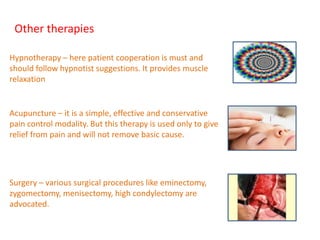
Other therapies
Hypnotherapy – here patient cooperation is must and
should follow hypnotist suggestions. It provides muscle
relaxation
Acupuncture – it is a simple, effective and conservative
pain control modality. But this therapy is used only to give
relief from pain and will not remove basic cause.
Surgery – various surgical procedures like eminectomy,
zygomectomy, menisectomy, high condylectomy are
advocated.
Mpds (Myofacial pain dysfunction syndrome)

Mpds (Myofacial pain dysfunction syndrome)

  • 1.
  • 2.
    MPDS is apain disorder, in which unilateral pain is referred from the trigger points in myofacial structures, to the muscles of head and neck.
  • 3.
    These are localizedtender areas within taut bands of skeletal muscles when stimulated by macro- micro traumatic episodes TRIGGER POINTS
  • 4.
     30 %of population suffers  Female- male ratio is 3:1  Age group – 15-40 years
  • 6.
    All Etiological factorsleads to micro or macro trauma to musculoskeletal system leading to muscle spasm This hyper tonicity may lead to muscle fatigue and accumulation of metabolic byproducts such as Lactic acid, prostaglandins, bradykinins, histamine The accumulation of these chemical pain mediators, lowers pain threshold to mechanical and chemical stimuli leading to MPDS.
  • 7.
     Spasm oflateral pterygoid muscle  Spasm of elevator muscles  Spasm of lateral pterygoid and elevator muscles
  • 8.
    Cardinal symptoms ofMPDS Pain or discomfort Limited motion of the jaw Joint noises- Clicking, snapping Tenderness to palpation of the muscles of mastication
  • 9.
    Associated symptoms ofMPDS Neurologic Tingling Numbness Blurred vision Twitches Lacrimation Otologic Tinnitus Ear pain Dizziness Vertigo Diminished hearing Gastrointestinal tract Nausea Vomiting Diarrhea Constipation Dry mouth Musculoskeletal Fatigue Tension Tiredness Weakness Joint pain
  • 10.
    Various masticatory musclesand their clinical effects
  • 11.
    Laskins Diagnostic criteria Fourcardinal signs • Unilateral pain • Muscles tenderness • Clicking- clicking or popping noise in the TMJ • Limitation of jaw movement Negative characteristics • No radiographic evidence • No tenderness in TMJ area on palpation via the external auditory meatus
  • 12.
     1. Articular orTMJ function 2. Palpation for tenderness 3. Grading of click or crepitation
  • 13.
     Range of motion a)Vertical opening – check for hypo mobility ( Normal range for an adult is 40-50 mm) b) Deviation while opening and closing c) Protrusive deviation and movement – normal range is 10mm d) Lateral excursion – Normal range is 10mm
  • 14.
    Palpation for tenderness Thearea responsive to palpation are called “Trigger points”. The muscles are palpated bilaterally and simultaneously with firm but gentle pressure lasting for 1-2 mins Middle finger is used for palpation For larger area adjacent fingers can be used.
  • 15.
    Grading of click •Early , immediate or wide open zones of condylar excursion are noted • It should be noted whether the sound is on opening , closing or both.
  • 16.
    Resistance test Opening ProtrusionLeft excursion Right excursion
  • 17.
    Goal of treatment: • 1.TrP inactivation • 2.Prevention of recurrence • 3.Correction of perpetuating factors Prognosis depends on : • Correct diagnosis • Early and proper treatment • Acute MPS good prognosis
  • 18.
    • To educateand empower patients to understand and manage the symptoms of MPDS and to regain and maintain normal function with as much independence as possible
  • 19.
    Follow – 7R’s for occlusal rehabilitation 1.Remove - extract 2.Reshape - grind 3.Reposition - orthodontia 4.Restore – conservative dentistry 5.Replace - prosthesis 6.Reconstruct – TMJ surgery 7.Regulate – control habit and symptoms
  • 20.
    Pharmacotherapy Pain control –mainly used analgesics Salicylates (aspirin 2 tabs 0.3- 0.6 gm/4 hourly) Tranquilizers – provides calming effect in anxiety state and relieves tension, fear and produces a sense of well being (Diazepam 2-5 mg at bedtime) Antidepressants – these are mood elevators like lithium carbonate and caffeine Sedatives & Hypnotics – reduces excitement and produces sleep
  • 21.
    PHYSICAL MEDICATION Tongue exerciseMouth opening exercise Hot packs Ultrasound Massage Electrical stimulation (TENS)
  • 22.
    ANESTHESIA •Muscle and fascia(trigger point) •TMJ (Intracapsular and extracapsular) – 0.5 ml of 0.5% Xylocaine in conjugation with injection of hydrocortisone •Refrigerated spray – vapocoolant spray, such as ethyl chloride or fluoromethane is used to reduce muscle spasm
  • 23.
    Other therapies Hypnotherapy –here patient cooperation is must and should follow hypnotist suggestions. It provides muscle relaxation Acupuncture – it is a simple, effective and conservative pain control modality. But this therapy is used only to give relief from pain and will not remove basic cause. Surgery – various surgical procedures like eminectomy, zygomectomy, menisectomy, high condylectomy are advocated.