Welcome
SREE NARAYANA TRAINING COLLEGE 
SREEKANDESWARAM 
Submitted by, 
Umadevi.B 
Submitted on, 
Submitted to,
Locomotion-various type
Introduction 
There are different types of unicellular organisms 
found.Hydra,paramecium,euglena etc. are the 
important ones among them.They have different types 
of locomotory organs for their movement.This 
presentation is to give information about their 
locomotions.
Hydra 
 Hydra is a microscopic organism found in 
water 
 Food captured using tentacles 
 Moving the tentacles for gathering food and 
contracting the whole body are the common 
movement
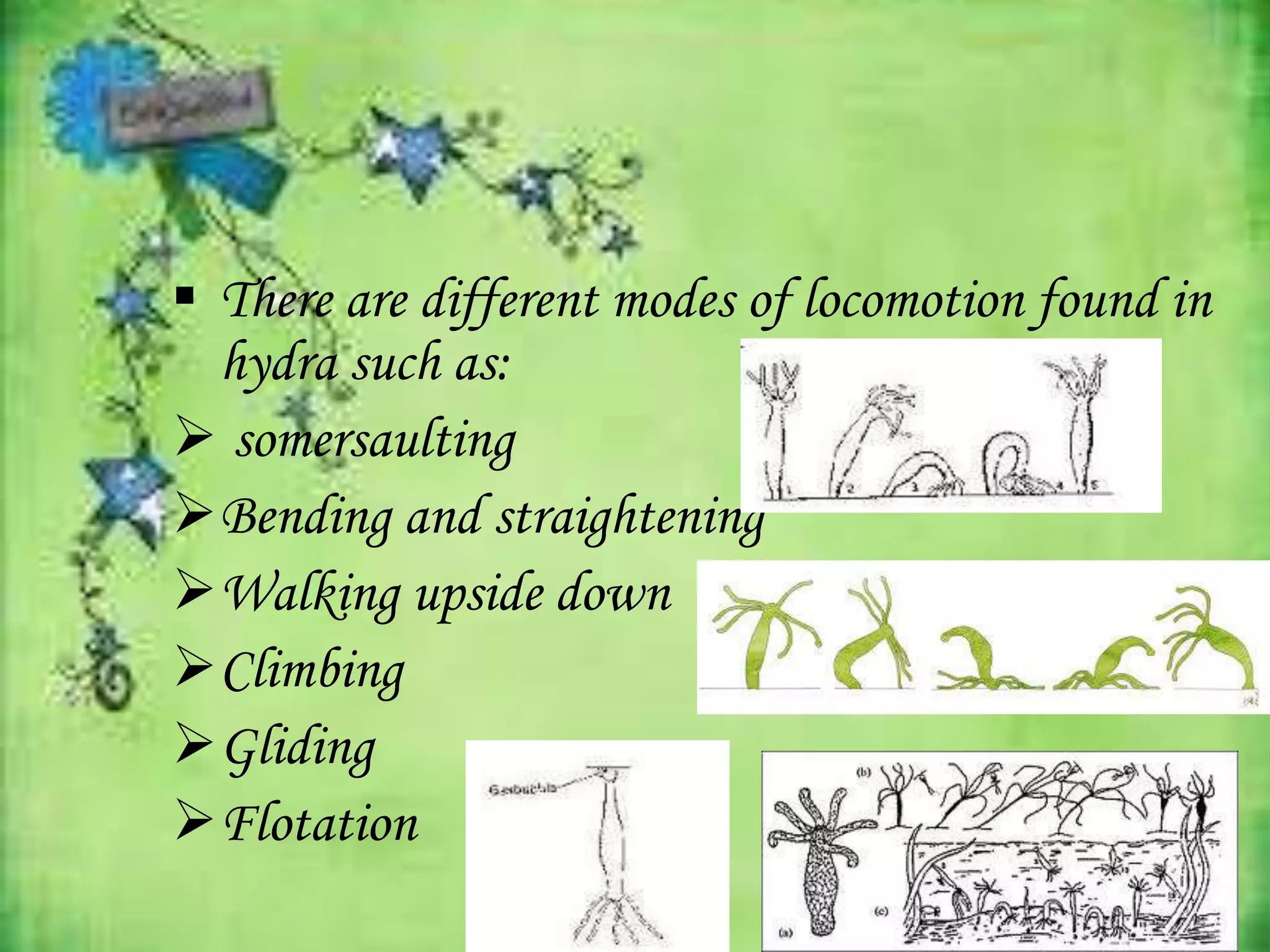
 There are different modes of locomotion found in 
hydra such as: 
 somersaulting 
Bending and straightening 
Walking upside down 
Climbing 
Gliding 
Flotation
Amoeba 
Amoeba is a unicellular organism found in water 
Pseudopodia are locomotory organs in amoeba 
Cytoplasm present in the amoeba helps in the 
digestion of food particles 
The extension of cytoplasm towards the direction of 
movement are the pseudopodia
Paramecium 
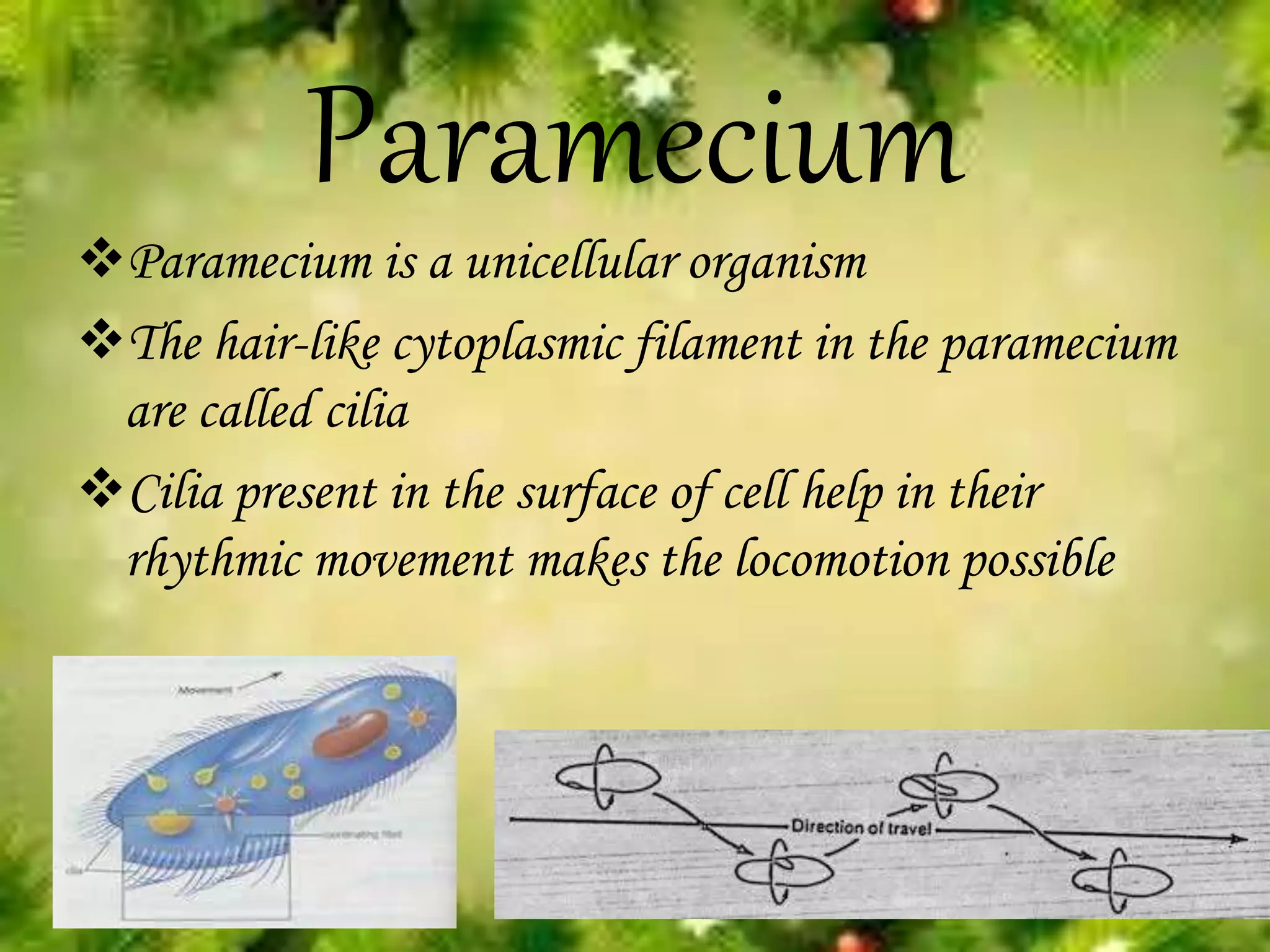
Paramecium is a unicellular organism 
The hair-like cytoplasmic filament in the paramecium 
are called cilia 
Cilia present in the surface of cell help in their 
rhythmic movement makes the locomotion possible
Euglena 
o It is a microscopic organism found in water 
o Flagella are the long cytoplasmic filaments and also 
helps in locomotion 
o Whipping these flagella helps in movement and makes 
locomotion possible
Bacteria 
Flagella are the common locomotory organ in some of 
the bacterias.eg.vibrio cholerae 
Some uses spiral shaped body eg.triponema,for 
locomotion 
Others move according to the flow of water or wind
THANK YOU……..

Locomotion various type

  • 1.
  • 2.
    SREE NARAYANA TRAININGCOLLEGE SREEKANDESWARAM Submitted by, Umadevi.B Submitted on, Submitted to,
  • 3.
  • 4.
    Introduction There aredifferent types of unicellular organisms found.Hydra,paramecium,euglena etc. are the important ones among them.They have different types of locomotory organs for their movement.This presentation is to give information about their locomotions.
  • 5.
    Hydra  Hydrais a microscopic organism found in water  Food captured using tentacles  Moving the tentacles for gathering food and contracting the whole body are the common movement
  • 6.
     There aredifferent modes of locomotion found in hydra such as:  somersaulting Bending and straightening Walking upside down Climbing Gliding Flotation
  • 7.
    Amoeba Amoeba isa unicellular organism found in water Pseudopodia are locomotory organs in amoeba Cytoplasm present in the amoeba helps in the digestion of food particles The extension of cytoplasm towards the direction of movement are the pseudopodia
  • 8.
    Paramecium Paramecium isa unicellular organism The hair-like cytoplasmic filament in the paramecium are called cilia Cilia present in the surface of cell help in their rhythmic movement makes the locomotion possible
  • 9.
    Euglena o Itis a microscopic organism found in water o Flagella are the long cytoplasmic filaments and also helps in locomotion o Whipping these flagella helps in movement and makes locomotion possible
  • 10.
    Bacteria Flagella arethe common locomotory organ in some of the bacterias.eg.vibrio cholerae Some uses spiral shaped body eg.triponema,for locomotion Others move according to the flow of water or wind
  • 11.