TOPIC
MORPHOLOGY AND CLASSIFICATION
OF BRYOPHYTES.
• plant body is gametophyte, independent, dominant,
autotrophic, either thalloid or foliose, containing a rootless
leafy shoot.
• vascular system is absent
• function of stem is performed by axis
• function of leaves is performed by phylloid.
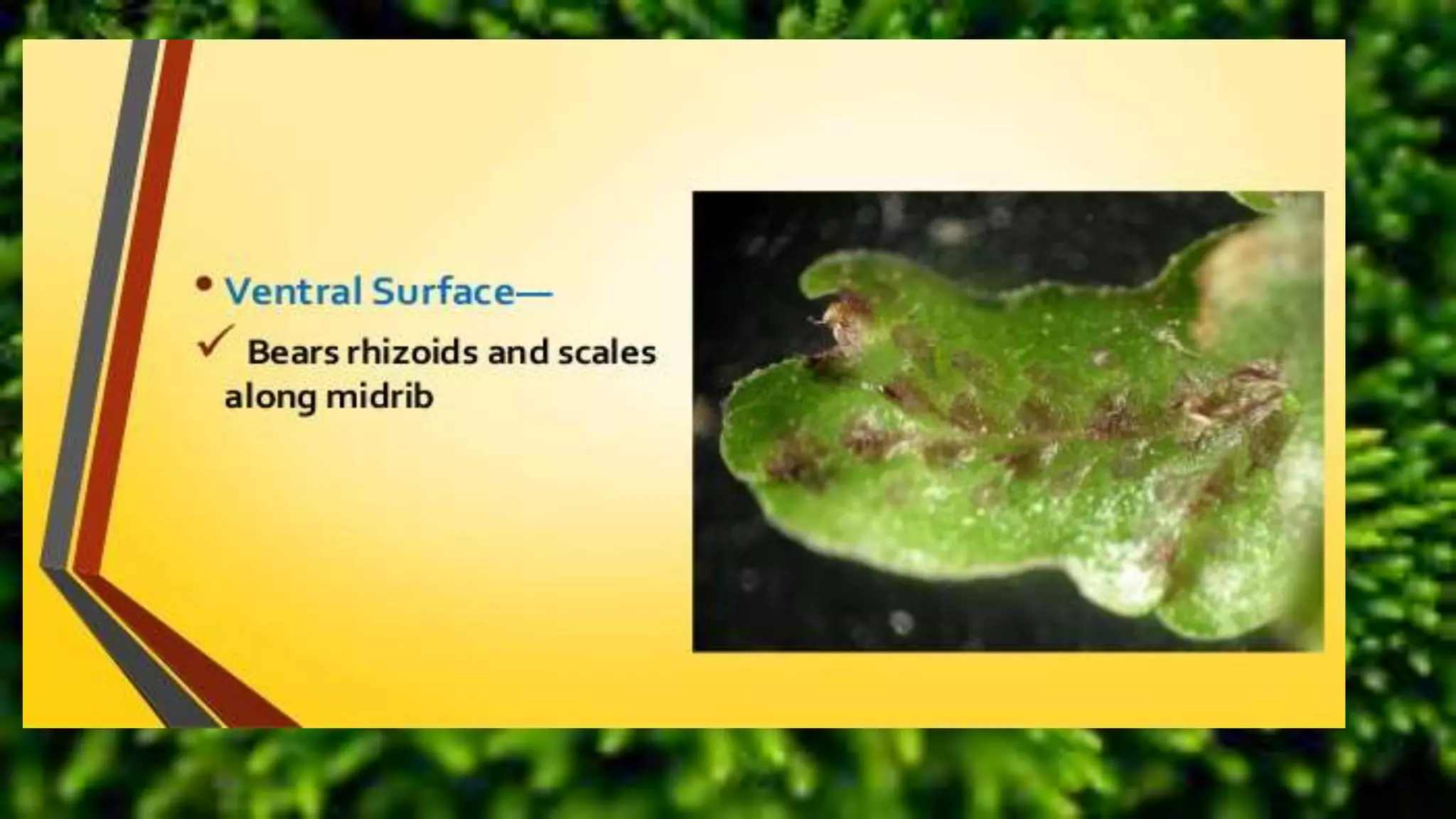
• function of roots is performed by rhizoids.
• cells are also capable to absorb moisture directly from the
ground or atmosphere. thus it can survive on moist soil.
MORPHOLOGY
• they contain chlorophyll for the synthesis of food by
photosynthesis.
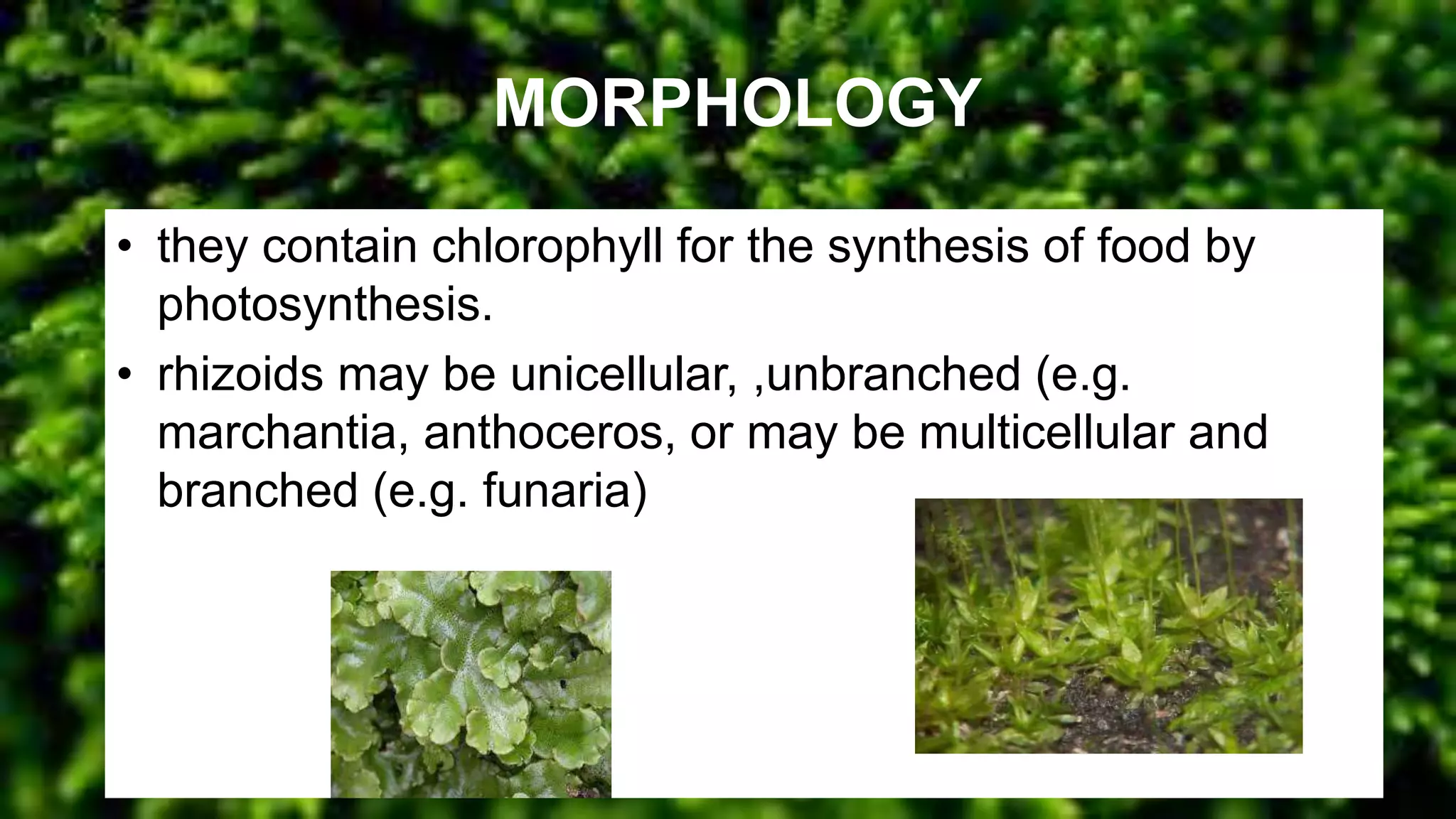
• rhizoids may be unicellular, ,unbranched (e.g.
marchantia, anthoceros, or may be multicellular and
branched (e.g. funaria)
MORPHOLOGY
• scales are present in some members which are violet
coloured multicellular single cell thick. they protect the
growing point and help to retain moisture.
• cuticle is present and stomata are absent.
• water and food is transported from cell to cell. however in
some bryophytes a few cells in groups of 2-3 are present
for conduction of water and food. these cells are known
as hydroid and leptoid respectively.
MORPHOLOGY
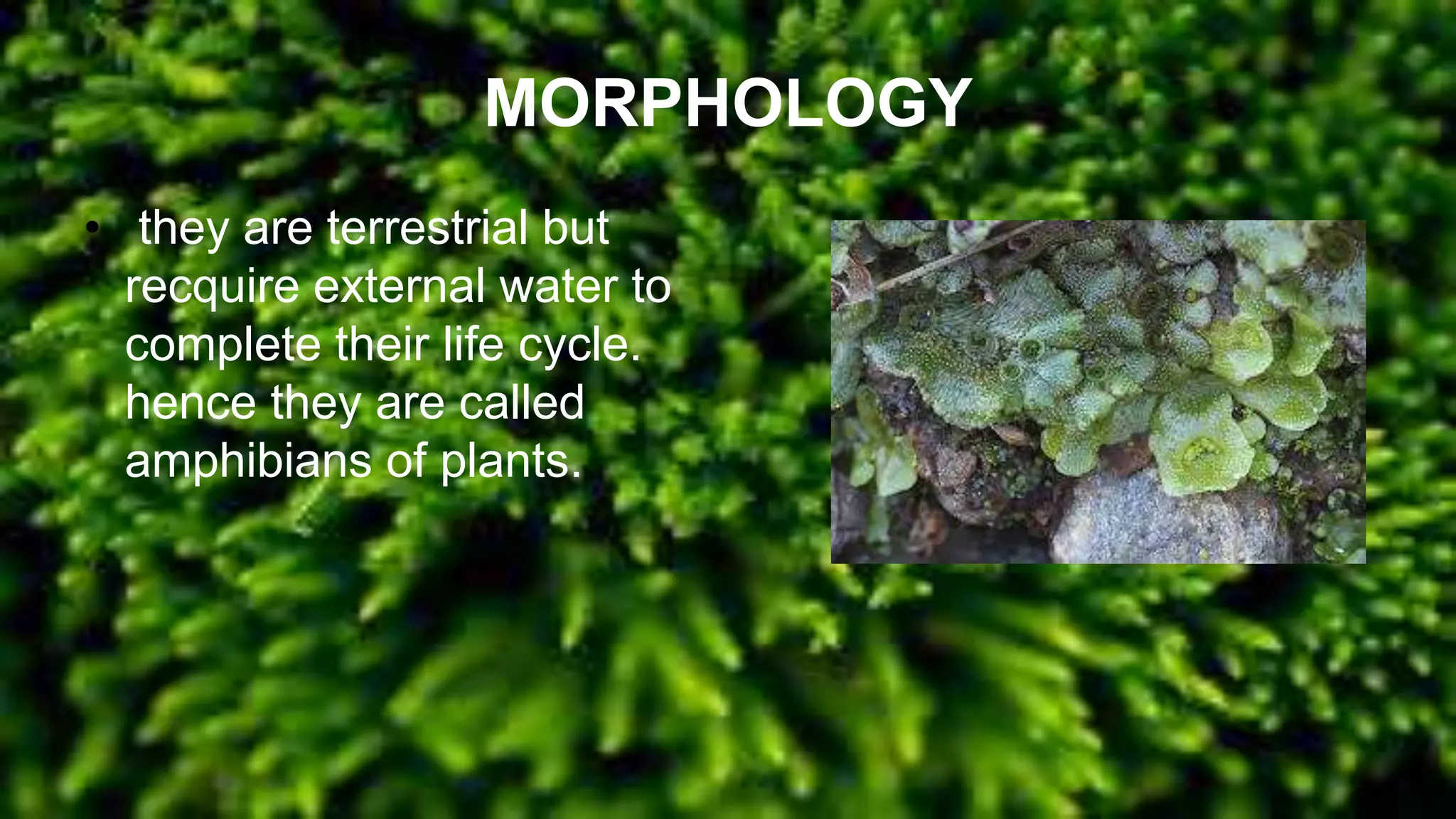
• they are terrestrial but
recquire external water to
complete their life cycle.
hence they are called
amphibians of plants.
CLASSIFICATION
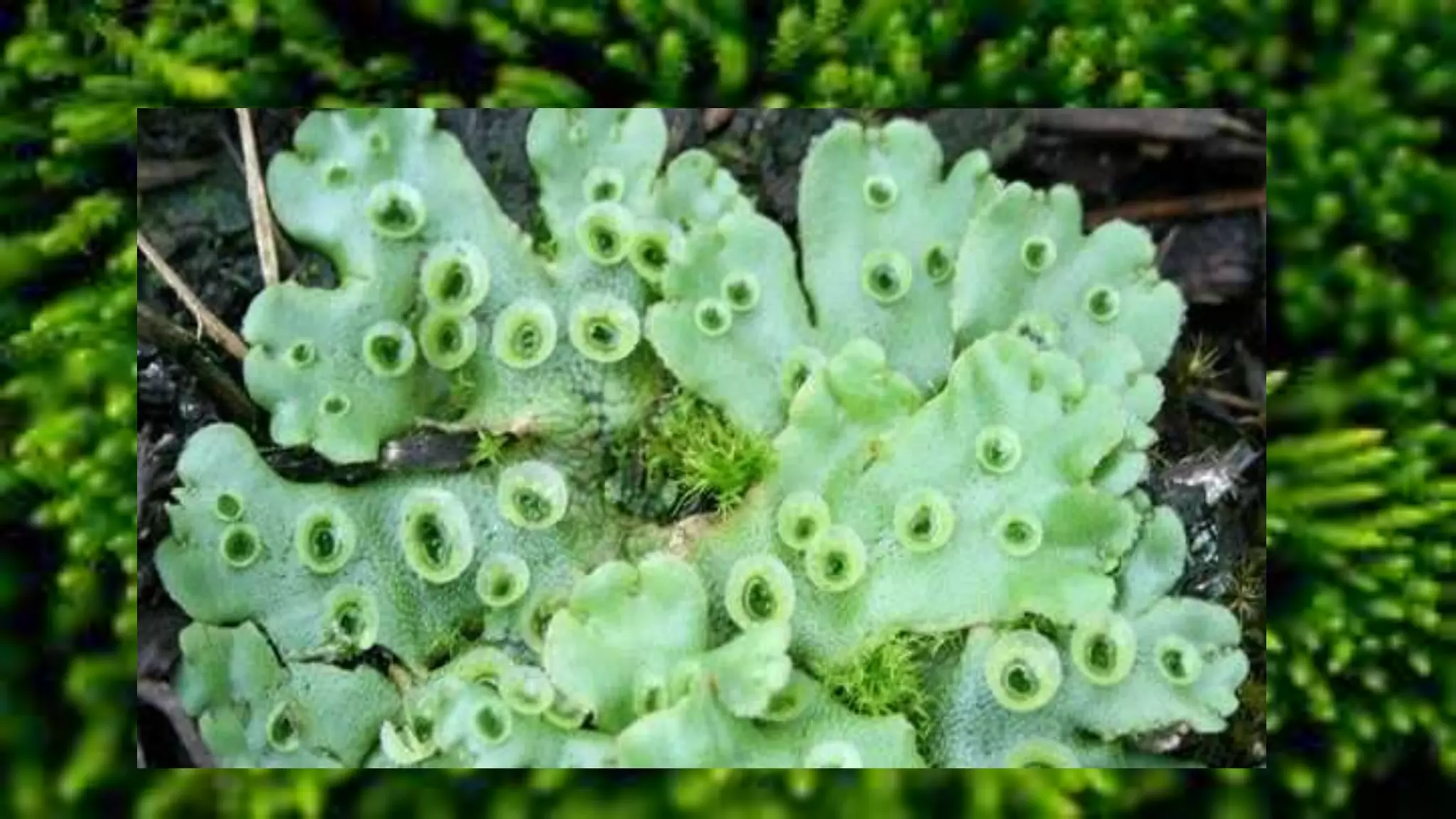
LIVERWORTS
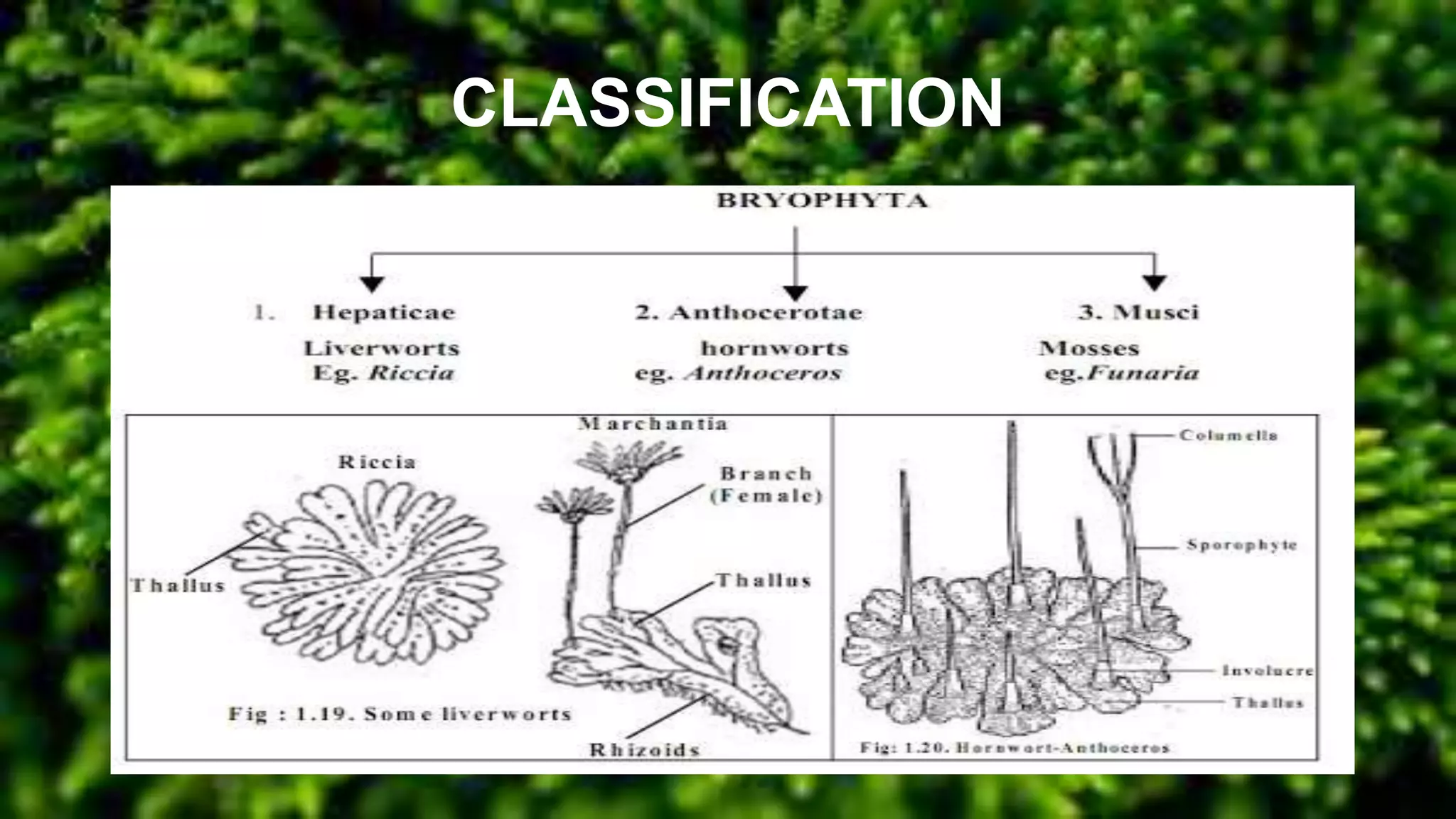
 liverworts are very small characterized by
undifferentiated leaves, flattened stems and 1 celled
rhizoids.
 membrane bound oil bodies within their cells which is not
present in other members.(it shows evolutionary connection between green
algae and liverworts because both have oil membrane bodies to store neutral lipid as food.)
For example:
riccia
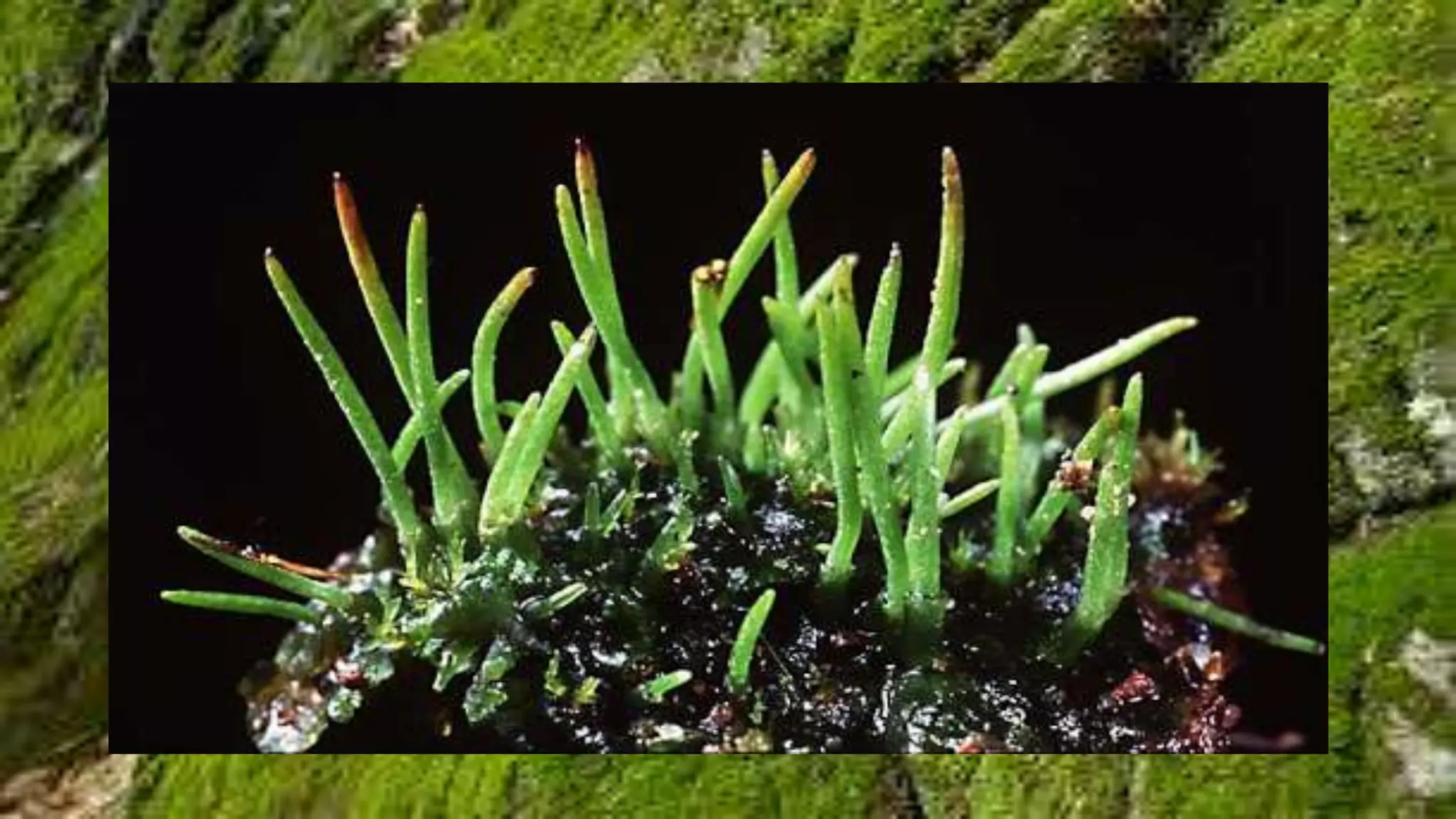
HORNWORTS
• they are named after the characteristic of long horn-like
sporophyte that develops.
• gametophyte is flat, green bodied plant.
• for example:
Anthocros.
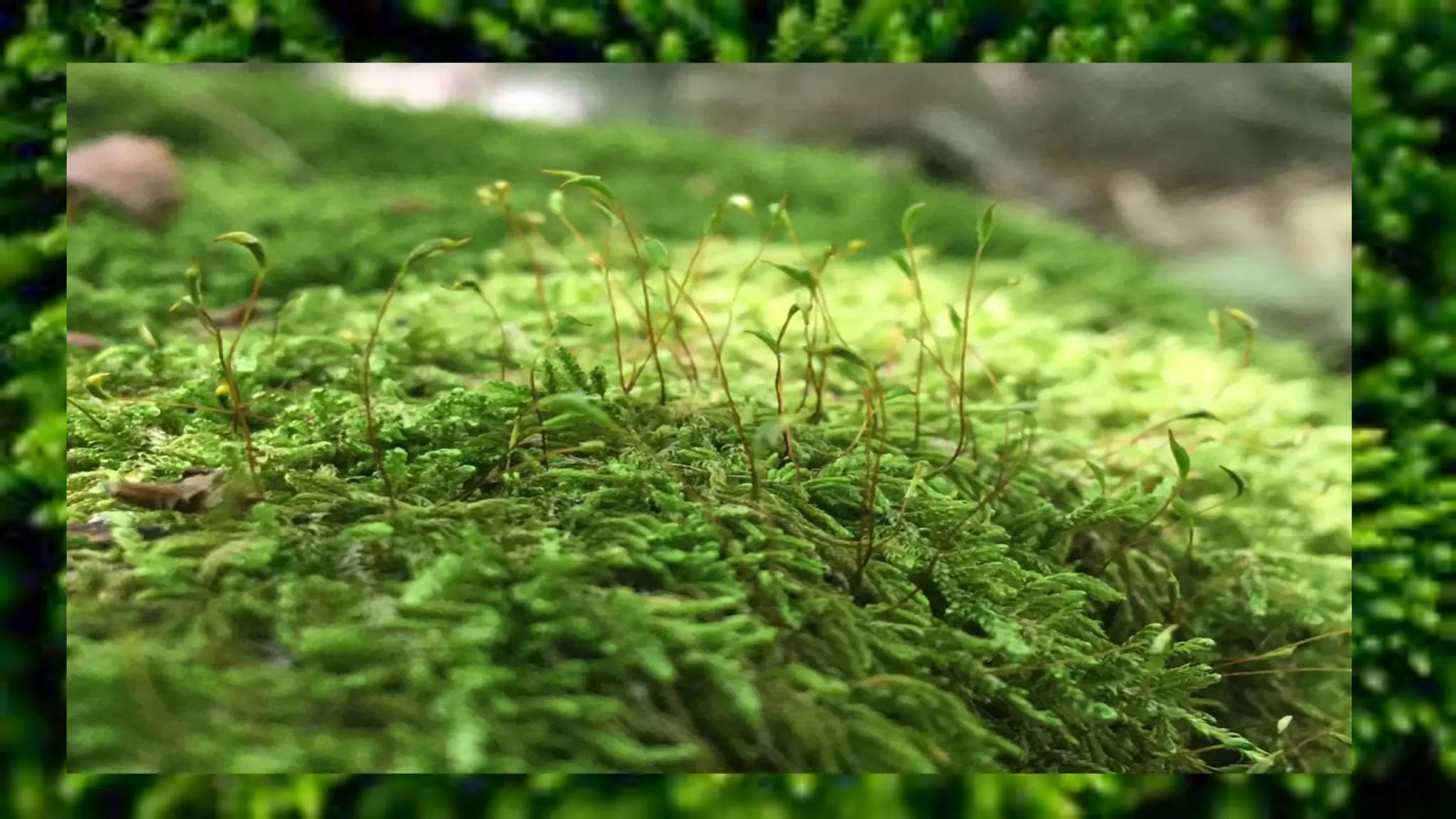
MOSSES
• geen, clumpy plants found in moist environment.
• mosses are characterized by the presence of 1 cell wide
leaves attached that is used to the stem for water and
food.
• mosses are ale to absorb considerable amount of water.
• they are used for insulation, water absorption and a
source of peat.
• for example: mosses, funariia.
Morphology and classification of bryophytes

Morphology and classification of bryophytes

  • 1.
  • 2.
    • plant bodyis gametophyte, independent, dominant, autotrophic, either thalloid or foliose, containing a rootless leafy shoot. • vascular system is absent • function of stem is performed by axis • function of leaves is performed by phylloid. • function of roots is performed by rhizoids. • cells are also capable to absorb moisture directly from the ground or atmosphere. thus it can survive on moist soil.
  • 3.
    MORPHOLOGY • they containchlorophyll for the synthesis of food by photosynthesis. • rhizoids may be unicellular, ,unbranched (e.g. marchantia, anthoceros, or may be multicellular and branched (e.g. funaria)
  • 4.
    MORPHOLOGY • scales arepresent in some members which are violet coloured multicellular single cell thick. they protect the growing point and help to retain moisture. • cuticle is present and stomata are absent. • water and food is transported from cell to cell. however in some bryophytes a few cells in groups of 2-3 are present for conduction of water and food. these cells are known as hydroid and leptoid respectively.
  • 6.
    MORPHOLOGY • they areterrestrial but recquire external water to complete their life cycle. hence they are called amphibians of plants.
  • 7.
  • 8.
    LIVERWORTS  liverworts arevery small characterized by undifferentiated leaves, flattened stems and 1 celled rhizoids.  membrane bound oil bodies within their cells which is not present in other members.(it shows evolutionary connection between green algae and liverworts because both have oil membrane bodies to store neutral lipid as food.) For example: riccia
  • 10.
    HORNWORTS • they arenamed after the characteristic of long horn-like sporophyte that develops. • gametophyte is flat, green bodied plant. • for example: Anthocros.
  • 12.
    MOSSES • geen, clumpyplants found in moist environment. • mosses are characterized by the presence of 1 cell wide leaves attached that is used to the stem for water and food. • mosses are ale to absorb considerable amount of water. • they are used for insulation, water absorption and a source of peat. • for example: mosses, funariia.