MORAL DEVELOPMENT
IN CHILDREN
Dr. Ankita Raj
ankitaraj3@gmail.com
CHILDREN LEARN FROM YOUR ACTIONS!
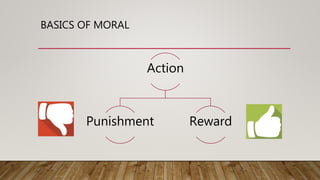
BASICS OF MORAL
Action
Punishment Reward
IMPORTANCE OF MORAL VALUES
Thoughts Words Beliefs Actions Results
Jeff Keller (2017). Attitude is Everything. Noida: HarperCollins
WHERE DO WE MAKE A DIFFERENCE
Experiences!
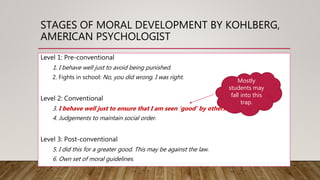
STAGES OF MORAL DEVELOPMENT BY KOHLBERG,
AMERICAN PSYCHOLOGIST
Level 1: Pre-conventional
1. I behave well just to avoid being punished.
2. Fights in school: No, you did wrong. I was right.
Level 2: Conventional
3. I behave well just to ensure that I am seen ‘good’ by others.
4. Judgements to maintain social order.
Level 3: Post-conventional
5. I did this for a greater good. This may be against the law.
6. Own set of moral guidelines.
Mostly
students may
fall into this
trap.
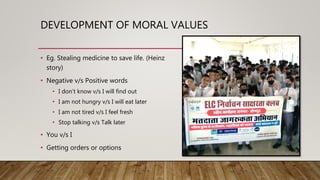
DEVELOPMENT OF MORAL VALUES
• Eg. Stealing medicine to save life. (Heinz
story)
• Negative v/s Positive words
• I don’t know v/s I will find out
• I am not hungry v/s I will eat later
• I am not tired v/s I feel fresh
• Stop talking v/s Talk later
• You v/s I
• Getting orders or options
STUDENTS OF SAME CLASS
ALL PEOPLE ARE EQUAL???
• Kid 1: Very weak
• Kid 2: Average
• Kid 3: Exceptionally good
NOTE:
If you give up, your children will give up!
Who needs you?
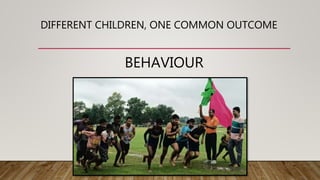
DIFFERENT CHILDREN, ONE COMMON OUTCOME
BEHAVIOUR
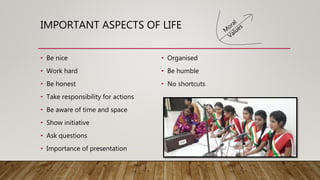
IMPORTANT ASPECTS OF LIFE
• Be nice
• Work hard
• Be honest
• Take responsibility for actions
• Be aware of time and space
• Show initiative
• Ask questions
• Importance of presentation
• Organised
• Be humble
• No shortcuts
CONNECT STORIES TO REAL LIFE
1. Spectacles- read and write. 2. Decimals- Hospital report and Patient.
3. Egg, carrot, coffee- performance. 4. Ant and the grasshopper- Hard
work
5. Hare and Tortoise- eating ice-cream v/s tiffin sharing.
6. King and comedian boy- Hobby, Laugh, Problem v/s solution
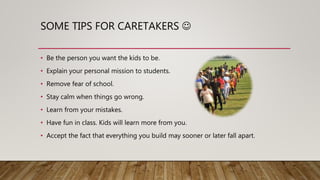
SOME TIPS FOR CARETAKERS 
• Be the person you want the kids to be.
• Explain your personal mission to students.
• Remove fear of school.
• Stay calm when things go wrong.
• Learn from your mistakes.
• Have fun in class. Kids will learn more from you.
• Accept the fact that everything you build may sooner or later fall apart.
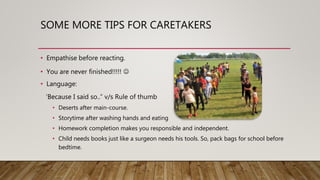
SOME MORE TIPS FOR CARETAKERS
• Empathise before reacting.
• You are never finished!!!!! 
• Language:
‘Because I said so..” v/s Rule of thumb
• Deserts after main-course.
• Storytime after washing hands and eating
• Homework completion makes you responsible and independent.
• Child needs books just like a surgeon needs his tools. So, pack bags for school before
bedtime.
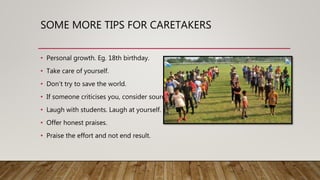
SOME MORE TIPS FOR CARETAKERS
• Personal growth. Eg. 18th birthday.
• Take care of yourself.
• Don’t try to save the world.
• If someone criticises you, consider source.
• Laugh with students. Laugh at yourself.
• Offer honest praises.
• Praise the effort and not end result.
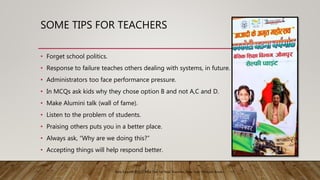
SOME TIPS FOR TEACHERS
• Forget school politics.
• Response to failure teaches others dealing with systems, in future.
• Administrators too face performance pressure.
• In MCQs ask kids why they chose option B and not A,C and D.
• Make Alumini talk (wall of fame).
• Listen to the problem of students.
• Praising others puts you in a better place.
• Always ask, “Why are we doing this?”
• Accepting things will help respond better.
Rafe Esquith (2013). Real Talk for Real Teachers. New York: Penguin Books
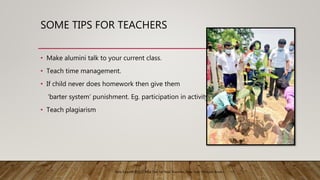
SOME TIPS FOR TEACHERS
• Make alumini talk to your current class.
• Teach time management.
• If child never does homework then give them
‘barter system’ punishment. Eg. participation in activity.
• Teach plagiarism
Rafe Esquith (2013). Real Talk for Real Teachers. New York: Penguin Books
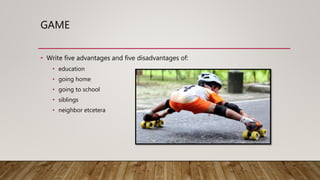
GAME
• Write five advantages and five disadvantages of:
• education
• going home
• going to school
• siblings
• neighbor etcetera
THANK YOU


Moral Development in Children

  • 1.
    MORAL DEVELOPMENT IN CHILDREN Dr.Ankita Raj ankitaraj3@gmail.com
  • 2.
    CHILDREN LEARN FROMYOUR ACTIONS!
  • 3.
  • 4.
    IMPORTANCE OF MORALVALUES Thoughts Words Beliefs Actions Results Jeff Keller (2017). Attitude is Everything. Noida: HarperCollins
  • 5.
    WHERE DO WEMAKE A DIFFERENCE Experiences!
  • 6.
    STAGES OF MORALDEVELOPMENT BY KOHLBERG, AMERICAN PSYCHOLOGIST Level 1: Pre-conventional 1. I behave well just to avoid being punished. 2. Fights in school: No, you did wrong. I was right. Level 2: Conventional 3. I behave well just to ensure that I am seen ‘good’ by others. 4. Judgements to maintain social order. Level 3: Post-conventional 5. I did this for a greater good. This may be against the law. 6. Own set of moral guidelines. Mostly students may fall into this trap.
  • 7.
    DEVELOPMENT OF MORALVALUES • Eg. Stealing medicine to save life. (Heinz story) • Negative v/s Positive words • I don’t know v/s I will find out • I am not hungry v/s I will eat later • I am not tired v/s I feel fresh • Stop talking v/s Talk later • You v/s I • Getting orders or options
  • 8.
    STUDENTS OF SAMECLASS ALL PEOPLE ARE EQUAL??? • Kid 1: Very weak • Kid 2: Average • Kid 3: Exceptionally good NOTE: If you give up, your children will give up! Who needs you?
  • 9.
    DIFFERENT CHILDREN, ONECOMMON OUTCOME BEHAVIOUR
  • 10.
    IMPORTANT ASPECTS OFLIFE • Be nice • Work hard • Be honest • Take responsibility for actions • Be aware of time and space • Show initiative • Ask questions • Importance of presentation • Organised • Be humble • No shortcuts
  • 11.
    CONNECT STORIES TOREAL LIFE 1. Spectacles- read and write. 2. Decimals- Hospital report and Patient. 3. Egg, carrot, coffee- performance. 4. Ant and the grasshopper- Hard work 5. Hare and Tortoise- eating ice-cream v/s tiffin sharing. 6. King and comedian boy- Hobby, Laugh, Problem v/s solution
  • 12.
    SOME TIPS FORCARETAKERS  • Be the person you want the kids to be. • Explain your personal mission to students. • Remove fear of school. • Stay calm when things go wrong. • Learn from your mistakes. • Have fun in class. Kids will learn more from you. • Accept the fact that everything you build may sooner or later fall apart.
  • 13.
    SOME MORE TIPSFOR CARETAKERS • Empathise before reacting. • You are never finished!!!!!  • Language: ‘Because I said so..” v/s Rule of thumb • Deserts after main-course. • Storytime after washing hands and eating • Homework completion makes you responsible and independent. • Child needs books just like a surgeon needs his tools. So, pack bags for school before bedtime.
  • 14.
    SOME MORE TIPSFOR CARETAKERS • Personal growth. Eg. 18th birthday. • Take care of yourself. • Don’t try to save the world. • If someone criticises you, consider source. • Laugh with students. Laugh at yourself. • Offer honest praises. • Praise the effort and not end result.
  • 15.
    SOME TIPS FORTEACHERS • Forget school politics. • Response to failure teaches others dealing with systems, in future. • Administrators too face performance pressure. • In MCQs ask kids why they chose option B and not A,C and D. • Make Alumini talk (wall of fame). • Listen to the problem of students. • Praising others puts you in a better place. • Always ask, “Why are we doing this?” • Accepting things will help respond better. Rafe Esquith (2013). Real Talk for Real Teachers. New York: Penguin Books
  • 16.
    SOME TIPS FORTEACHERS • Make alumini talk to your current class. • Teach time management. • If child never does homework then give them ‘barter system’ punishment. Eg. participation in activity. • Teach plagiarism Rafe Esquith (2013). Real Talk for Real Teachers. New York: Penguin Books
  • 17.
    GAME • Write fiveadvantages and five disadvantages of: • education • going home • going to school • siblings • neighbor etcetera
  • 18.