 HPI- 21 y/o female presents to the ED post mvc c/o
left arm pain. She was an unrestrained driver and
her arm struck the steering wheel.
 PMX- Herpes type II
 Social- ETOH
 Allergies- Seasonal
 PSX- Elective abortion
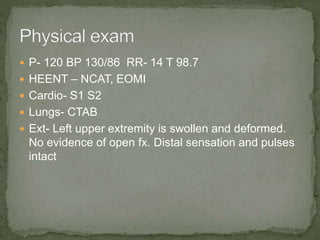
 P- 120 BP 130/86 RR- 14 T 98.7
 HEENT – NCAT, EOMI
 Cardio- S1 S2
 Lungs- CTAB
 Ext- Left upper extremity is swollen and deformed.
No evidence of open fx. Distal sensation and pulses
intact
 Pain Control
 Reduction and Splint
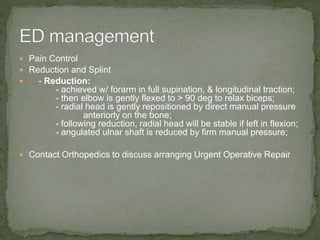
 - Reduction:
- achieved w/ forarm in full supination, & longitudinal traction;
- then elbow is gently flexed to > 90 deg to relax biceps;
- radial head is gently repositioned by direct manual pressure
anteriorly on the bone;
- following reduction, radial head will be stable if left in flexion;
- angulated ulnar shaft is reduced by firm manual pressure;
 Contact Orthopedics to discuss arranging Urgent Operative Repair
 Background
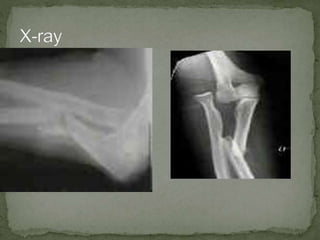
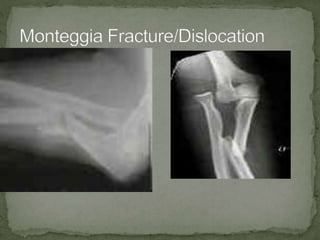
 Giovanni Monteggia (1814) first described frx of
proximal 1/3 of ulna in association w/ anterior
dislocation of radial head;
 Mechanism:
 Proposed mechanisms include direct blow & hyper-
pronation injuries as well- as the hyperextension theory
 Associated Injuries
 Tear of the annular ligament
 Nerve Damage
 Paralysis of deep branch of the radial nerve is most common.
The posterior interosseous nerve may be wrapped around neck
of radius, preventing reduction;
 Note: that patients whose operative treatment is delayed
may be found to have a progressive PIN palsy from
constant pressure exerted by the dislocated radial head

Monteggia

  • 2.
     HPI- 21y/o female presents to the ED post mvc c/o left arm pain. She was an unrestrained driver and her arm struck the steering wheel.  PMX- Herpes type II  Social- ETOH  Allergies- Seasonal  PSX- Elective abortion
  • 3.
     P- 120BP 130/86 RR- 14 T 98.7  HEENT – NCAT, EOMI  Cardio- S1 S2  Lungs- CTAB  Ext- Left upper extremity is swollen and deformed. No evidence of open fx. Distal sensation and pulses intact
  • 6.
     Pain Control Reduction and Splint  - Reduction: - achieved w/ forarm in full supination, & longitudinal traction; - then elbow is gently flexed to > 90 deg to relax biceps; - radial head is gently repositioned by direct manual pressure anteriorly on the bone; - following reduction, radial head will be stable if left in flexion; - angulated ulnar shaft is reduced by firm manual pressure;  Contact Orthopedics to discuss arranging Urgent Operative Repair
  • 7.
     Background  GiovanniMonteggia (1814) first described frx of proximal 1/3 of ulna in association w/ anterior dislocation of radial head;  Mechanism:  Proposed mechanisms include direct blow & hyper- pronation injuries as well- as the hyperextension theory
  • 8.
     Associated Injuries Tear of the annular ligament  Nerve Damage  Paralysis of deep branch of the radial nerve is most common. The posterior interosseous nerve may be wrapped around neck of radius, preventing reduction;  Note: that patients whose operative treatment is delayed may be found to have a progressive PIN palsy from constant pressure exerted by the dislocated radial head