Hinduja Hospital Webinar Series: A Health Awareness Initiative


           Monsoon Maladies


                                     by
                                     Dr. Khusrav Bajan
                                     Consulting Physician, HH
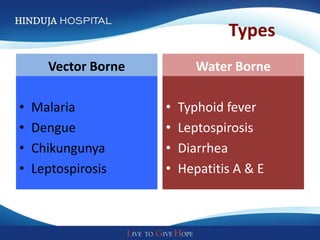
Types
      Vector Borne          Water Borne

โ€ข   Malaria          โ€ข   Typhoid fever
โ€ข   Dengue           โ€ข   Leptospirosis
โ€ข   Chikungunya      โ€ข   Diarrhea
โ€ข   Leptospirosis    โ€ข   Hepatitis A & E
Vector - Borne
MALARIA
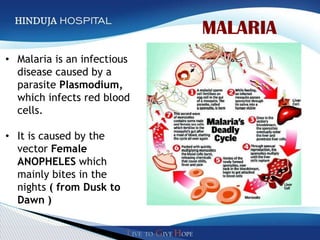
โ€ข Malaria is an infectious   ๏ฝ   Click to edit Master
  disease caused by a            text styles
  parasite Plasmodium,       โ—ฆ Second level
  which infects red blood    ๏‚– Third level
  cells.                     ๏‚– Fourth level
                             ๏‚– Fifth level
โ€ข It is caused by the
  vector Female
  ANOPHELES which
  mainly bites in the
  nights ( from Dusk to
  Dawn )
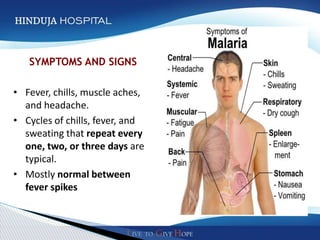
SYMPTOMS AND SIGNS            ๏ฝ   Click to edit Master
                                     text styles
โ€ข Fever, chills, muscle aches,   โ—ฆ Second level
  and headache.                  ๏‚– Third level
                                 ๏‚– Fourth level
โ€ข Cycles of chills, fever, and
                                 ๏‚– Fifth level
  sweating that repeat every
  one, two, or three days are
  typical.
โ€ข Mostly normal between
  fever spikes
Dengue
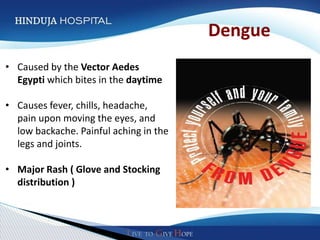
โ€ข Caused by the Vector Aedes
  Egypti which bites in the daytime

โ€ข Causes fever, chills, headache,
  pain upon moving the eyes, and
  low backache. Painful aching in the
  legs and joints.

โ€ข Major Rash ( Glove and Stocking
  distribution )
Dengue
โ€ข 3 Types
   โ€“ Dengue fever
   โ€“ Dengue shock syndrome
   โ€“ Dengue Hemorrhagic fever

โ€ข Could be simple on one hand but
  could be fatal on the other

โ€ข Usually a Biphasic illness
  characterised by severe
  dehydration
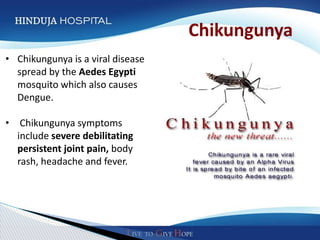
Chikungunya
โ€ข Chikungunya is a viral disease   ๏ฝ   Click to edit Master
  spread by the Aedes Egypti           text styles
  mosquito which also causes
                                   โ—ฆ Second level
  Dengue.
                                   ๏‚– Third level
                                   ๏‚– Fourth level
โ€ข Chikungunya symptoms             ๏‚– Fifth level
  include severe debilitating
  persistent joint pain, body
  rash, headache and fever.
Leptospirosis
Leptospirosis

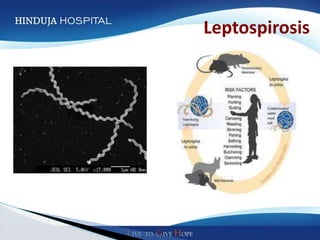
โ€ข It is an infectious disease caused by a type of bacteria called a
  spirochete.
โ€ข Leptospirosis can be transmitted by many animals such as rats,
  skunks, opossums, raccoons, foxes, and other vermin.
โ€ข It is transmitted though contact with infected soil or water.
โ€ข The soil or water is contaminated with the waste products of an
  infected animal.
โ€ข People contract the disease by either ingesting contaminated food
  or water or by broken skin and mucous membrane (eyes, nose,
  sinuses, mouth) contact with the contaminated water or soil.
Water โ€“ Borne
Typhoid Mary
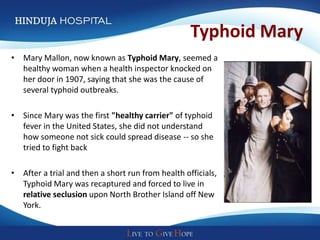
โ€ข Mary Mallon, now known as Typhoid Mary, seemed a
  healthy woman when a health inspector knocked on
  her door in 1907, saying that she was the cause of
  several typhoid outbreaks.

โ€ข Since Mary was the first "healthy carrier" of typhoid
  fever in the United States, she did not understand
  how someone not sick could spread disease -- so she
  tried to fight back

โ€ข After a trial and then a short run from health officials,
  Typhoid Mary was recaptured and forced to live in
  relative seclusion upon North Brother Island off New
  York.
Typhoid
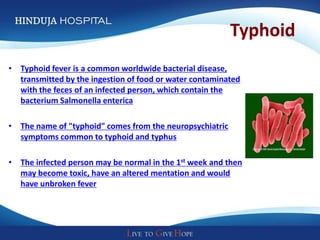
โ€ข Typhoid fever is a common worldwide bacterial disease,
  transmitted by the ingestion of food or water contaminated
  with the feces of an infected person, which contain the
  bacterium Salmonella enterica

โ€ข The name of "typhoid" comes from the neuropsychiatric
  symptoms common to typhoid and typhus

โ€ข The infected person may be normal in the 1st week and then
  may become toxic, have an altered mentation and would
  have unbroken fever
Diarrhea
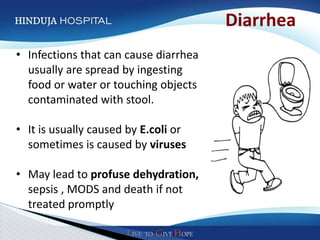
โ€ข Infections that can cause diarrhea
  usually are spread by ingesting
  food or water or touching objects
  contaminated with stool.

โ€ข It is usually caused by E.coli or
  sometimes is caused by viruses

โ€ข May lead to profuse dehydration,
  sepsis , MODS and death if not
  treated promptly
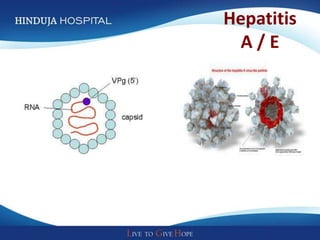
Hepatitis
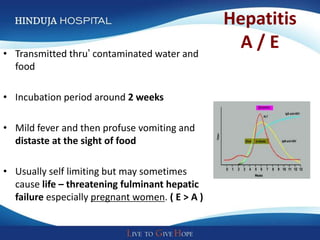
โ€ข Transmitted thruโ€™ contaminated water and
                                                   A/E
  food

โ€ข Incubation period around 2 weeks

โ€ข Mild fever and then profuse vomiting and
  distaste at the sight of food

โ€ข Usually self limiting but may sometimes
  cause life โ€“ threatening fulminant hepatic
  failure especially pregnant women. ( E > A )
Hepatitis
  A/E
Safety Tips
                                                    Vector control
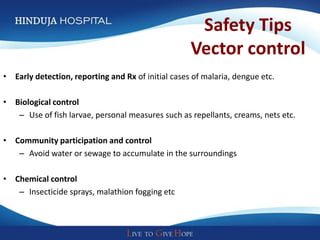
โ€ข Early detection, reporting and Rx of initial cases of malaria, dengue etc.

โ€ข Biological control
   โ€“ Use of fish larvae, personal measures such as repellants, creams, nets etc.

โ€ข Community participation and control
   โ€“ Avoid water or sewage to accumulate in the surroundings

โ€ข Chemical control
   โ€“ Insecticide sprays, malathion fogging etc
Safety Tips
                                             Food & Water control
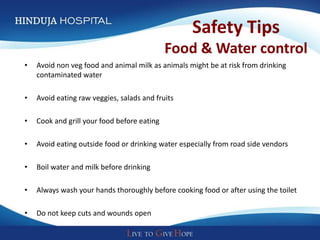
โ€ข   Avoid non veg food and animal milk as animals might be at risk from drinking
    contaminated water

โ€ข   Avoid eating raw veggies, salads and fruits

โ€ข   Cook and grill your food before eating

โ€ข   Avoid eating outside food or drinking water especially from road side vendors

โ€ข   Boil water and milk before drinking

โ€ข   Always wash your hands thoroughly before cooking food or after using the toilet

โ€ข   Do not keep cuts and wounds open
Thank - U


Dr. Khusrav Bajan

Monsoon Maladies - by Hinduja Hospital

  • 1.
    Hinduja Hospital WebinarSeries: A Health Awareness Initiative Monsoon Maladies by Dr. Khusrav Bajan Consulting Physician, HH
  • 2.
    Types Vector Borne Water Borne โ€ข Malaria โ€ข Typhoid fever โ€ข Dengue โ€ข Leptospirosis โ€ข Chikungunya โ€ข Diarrhea โ€ข Leptospirosis โ€ข Hepatitis A & E
  • 3.
  • 4.
    MALARIA โ€ข Malaria isan infectious ๏ฝ Click to edit Master disease caused by a text styles parasite Plasmodium, โ—ฆ Second level which infects red blood ๏‚– Third level cells. ๏‚– Fourth level ๏‚– Fifth level โ€ข It is caused by the vector Female ANOPHELES which mainly bites in the nights ( from Dusk to Dawn )
  • 5.
    SYMPTOMS AND SIGNS ๏ฝ Click to edit Master text styles โ€ข Fever, chills, muscle aches, โ—ฆ Second level and headache. ๏‚– Third level ๏‚– Fourth level โ€ข Cycles of chills, fever, and ๏‚– Fifth level sweating that repeat every one, two, or three days are typical. โ€ข Mostly normal between fever spikes
  • 6.
    Dengue โ€ข Caused bythe Vector Aedes Egypti which bites in the daytime โ€ข Causes fever, chills, headache, pain upon moving the eyes, and low backache. Painful aching in the legs and joints. โ€ข Major Rash ( Glove and Stocking distribution )
  • 7.
    Dengue โ€ข 3 Types โ€“ Dengue fever โ€“ Dengue shock syndrome โ€“ Dengue Hemorrhagic fever โ€ข Could be simple on one hand but could be fatal on the other โ€ข Usually a Biphasic illness characterised by severe dehydration
  • 8.
    Chikungunya โ€ข Chikungunya isa viral disease ๏ฝ Click to edit Master spread by the Aedes Egypti text styles mosquito which also causes โ—ฆ Second level Dengue. ๏‚– Third level ๏‚– Fourth level โ€ข Chikungunya symptoms ๏‚– Fifth level include severe debilitating persistent joint pain, body rash, headache and fever.
  • 9.
  • 10.
    Leptospirosis โ€ข It isan infectious disease caused by a type of bacteria called a spirochete. โ€ข Leptospirosis can be transmitted by many animals such as rats, skunks, opossums, raccoons, foxes, and other vermin. โ€ข It is transmitted though contact with infected soil or water. โ€ข The soil or water is contaminated with the waste products of an infected animal. โ€ข People contract the disease by either ingesting contaminated food or water or by broken skin and mucous membrane (eyes, nose, sinuses, mouth) contact with the contaminated water or soil.
  • 11.
  • 12.
    Typhoid Mary โ€ข MaryMallon, now known as Typhoid Mary, seemed a healthy woman when a health inspector knocked on her door in 1907, saying that she was the cause of several typhoid outbreaks. โ€ข Since Mary was the first "healthy carrier" of typhoid fever in the United States, she did not understand how someone not sick could spread disease -- so she tried to fight back โ€ข After a trial and then a short run from health officials, Typhoid Mary was recaptured and forced to live in relative seclusion upon North Brother Island off New York.
  • 13.
    Typhoid โ€ข Typhoid feveris a common worldwide bacterial disease, transmitted by the ingestion of food or water contaminated with the feces of an infected person, which contain the bacterium Salmonella enterica โ€ข The name of "typhoid" comes from the neuropsychiatric symptoms common to typhoid and typhus โ€ข The infected person may be normal in the 1st week and then may become toxic, have an altered mentation and would have unbroken fever
  • 14.
    Diarrhea โ€ข Infections thatcan cause diarrhea usually are spread by ingesting food or water or touching objects contaminated with stool. โ€ข It is usually caused by E.coli or sometimes is caused by viruses โ€ข May lead to profuse dehydration, sepsis , MODS and death if not treated promptly
  • 15.
    Hepatitis โ€ข Transmitted thruโ€™contaminated water and A/E food โ€ข Incubation period around 2 weeks โ€ข Mild fever and then profuse vomiting and distaste at the sight of food โ€ข Usually self limiting but may sometimes cause life โ€“ threatening fulminant hepatic failure especially pregnant women. ( E > A )
  • 16.
  • 17.
    Safety Tips Vector control โ€ข Early detection, reporting and Rx of initial cases of malaria, dengue etc. โ€ข Biological control โ€“ Use of fish larvae, personal measures such as repellants, creams, nets etc. โ€ข Community participation and control โ€“ Avoid water or sewage to accumulate in the surroundings โ€ข Chemical control โ€“ Insecticide sprays, malathion fogging etc
  • 18.
    Safety Tips Food & Water control โ€ข Avoid non veg food and animal milk as animals might be at risk from drinking contaminated water โ€ข Avoid eating raw veggies, salads and fruits โ€ข Cook and grill your food before eating โ€ข Avoid eating outside food or drinking water especially from road side vendors โ€ข Boil water and milk before drinking โ€ข Always wash your hands thoroughly before cooking food or after using the toilet โ€ข Do not keep cuts and wounds open
  • 19.
    Thank - U Dr.Khusrav Bajan