DR. MUNNI AZAM
DA STUDENT
ShSWMCH
 MONITOR: is from MONERE means
warning .An electronic device used to record ,
regulate or control a process or system .
 MONITORING:
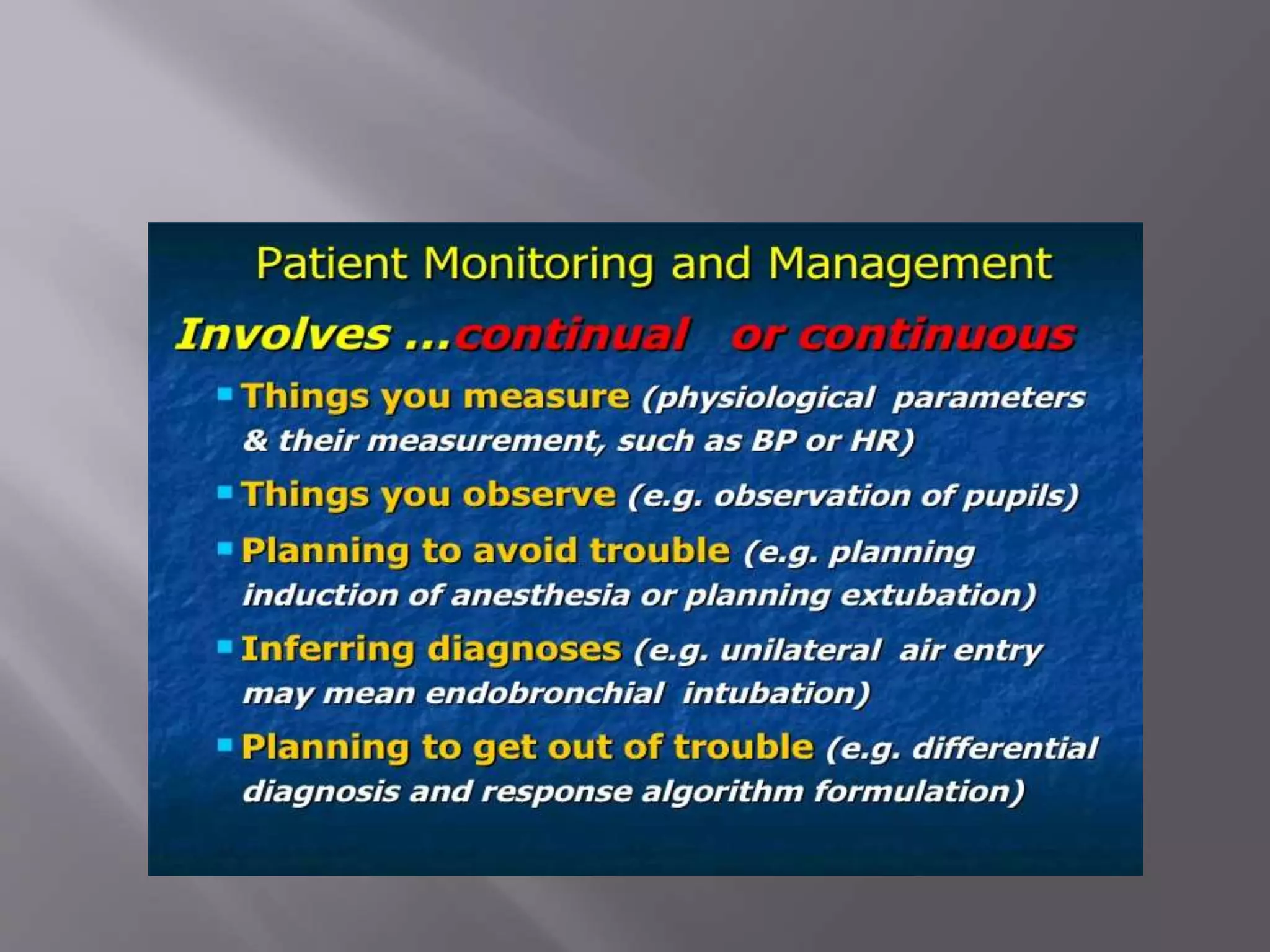
Monitoring means continuous recording of
particular data
 Observation
 Vigilance
 Instrumentation
 Interpretation and corrective
therapy when needed .
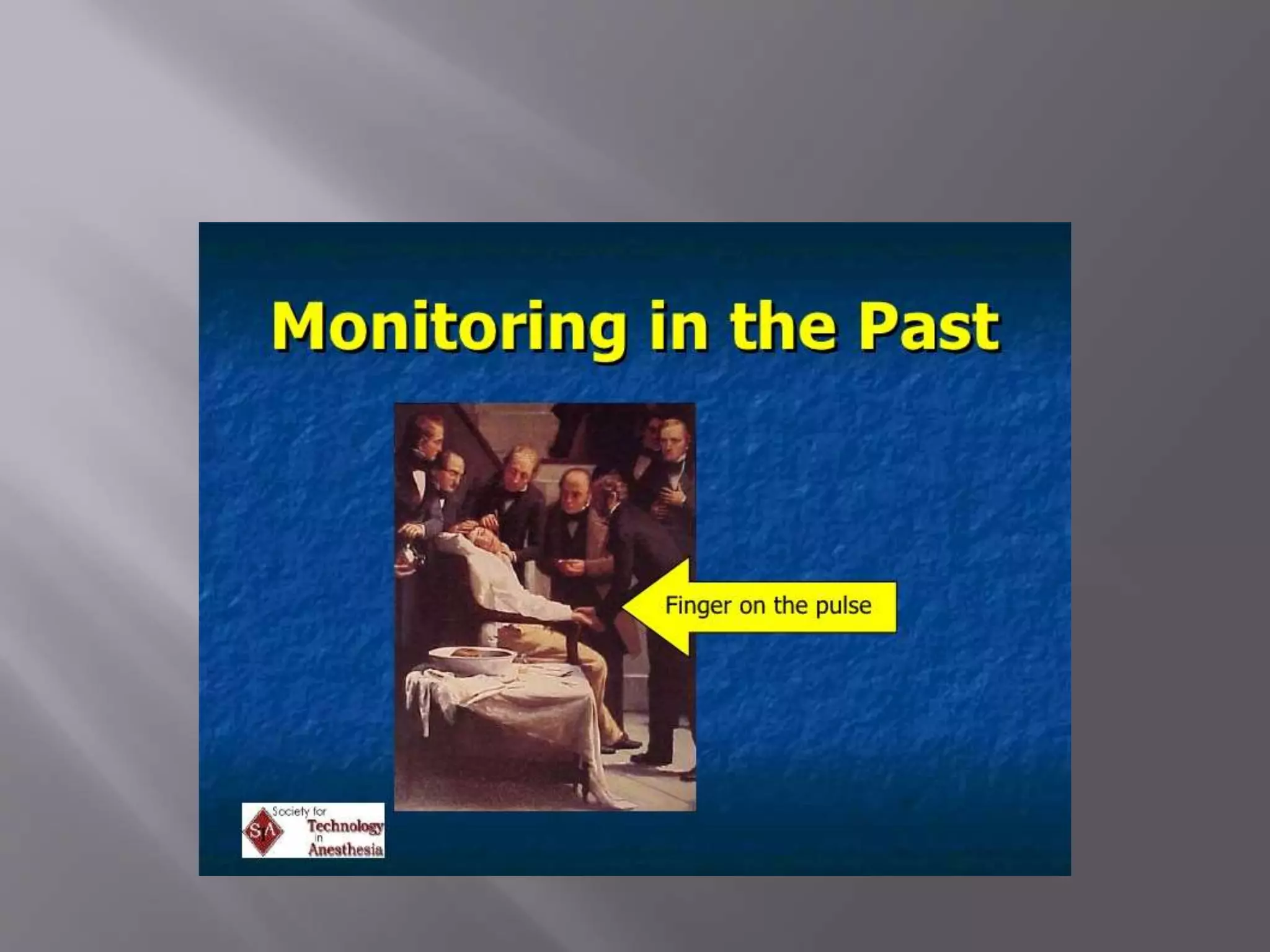
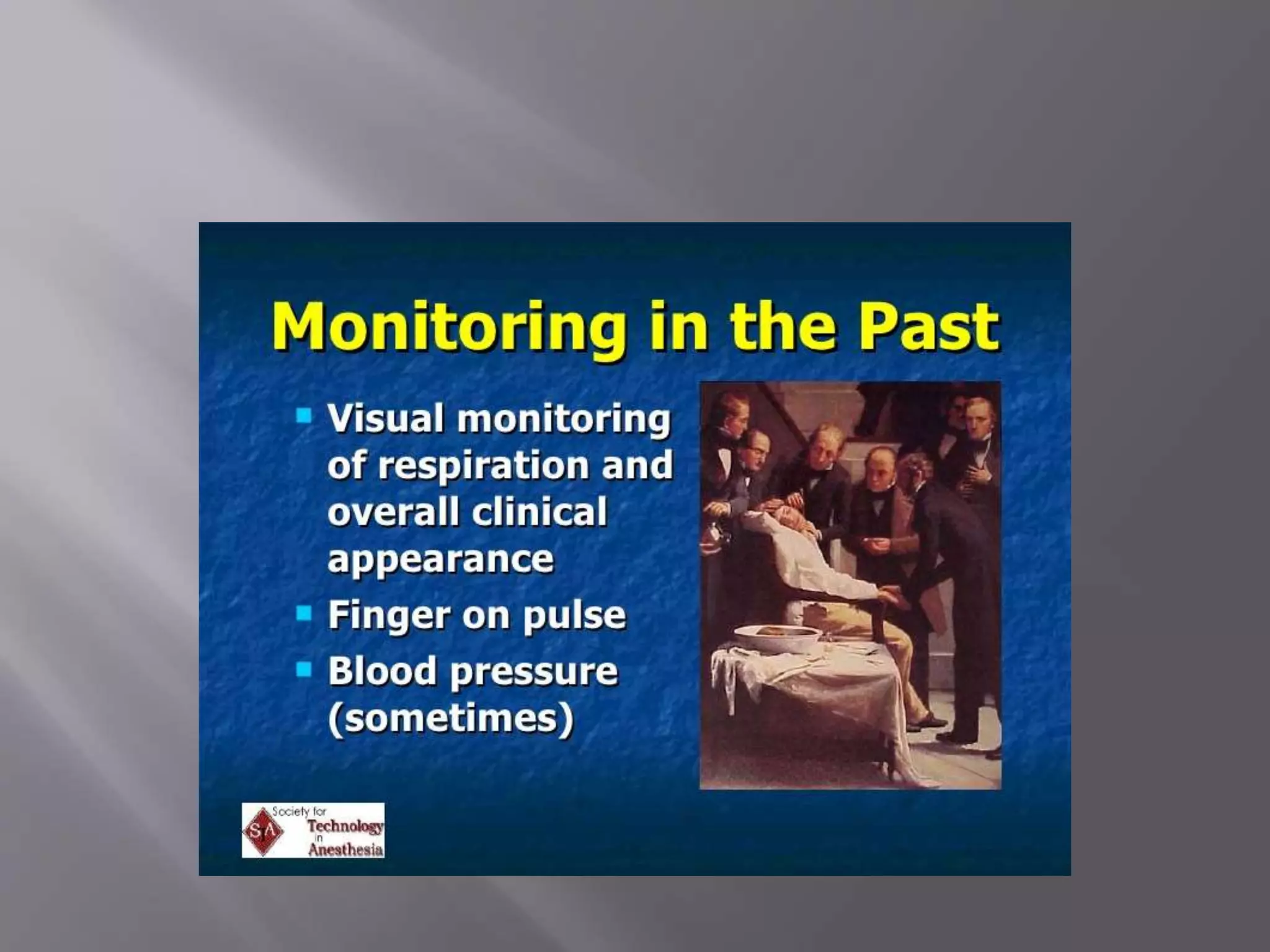
 Clinical monitoring
 Instrumental monitoring
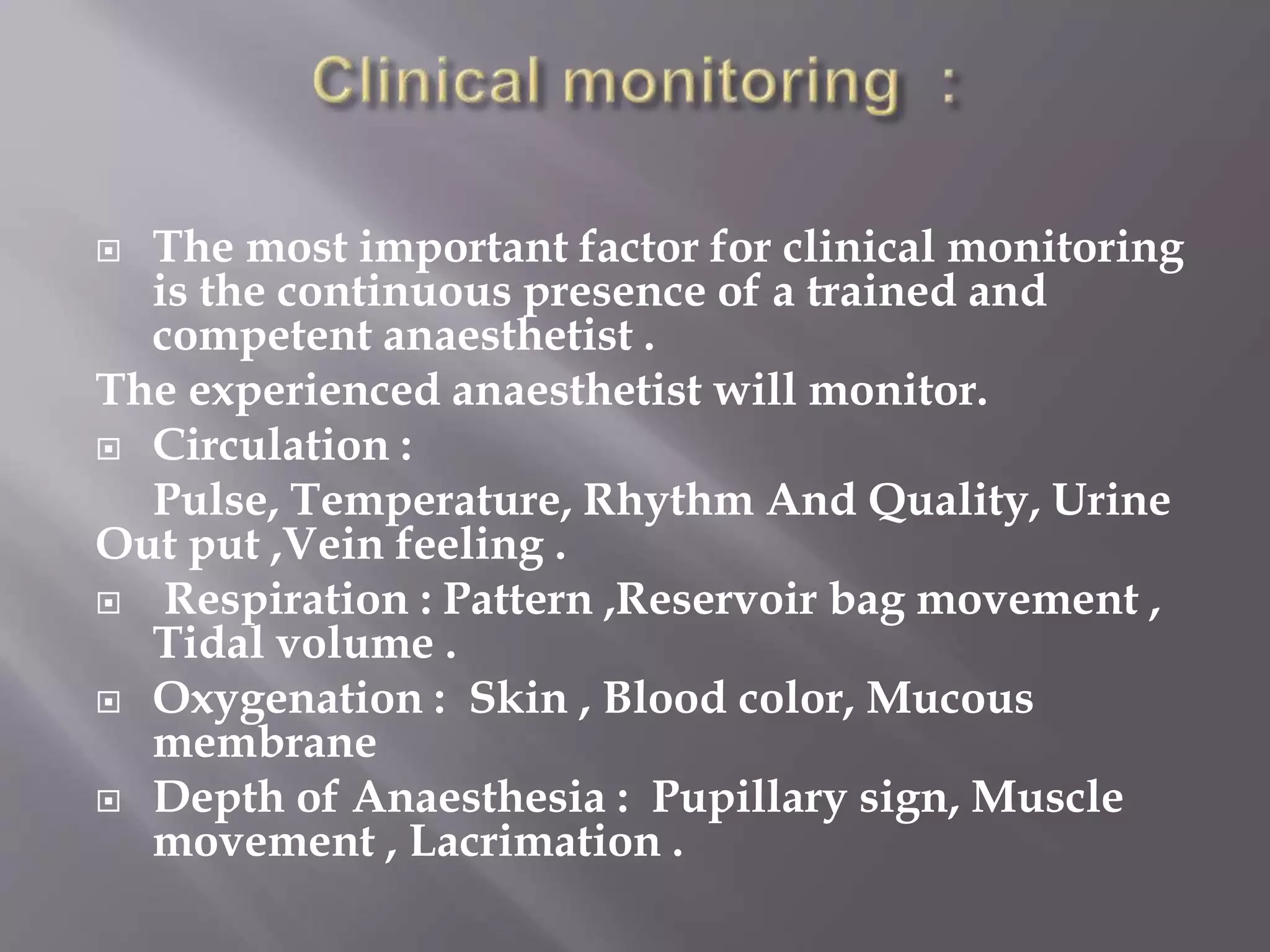
 The most important factor for clinical monitoring
is the continuous presence of a trained and
competent anaesthetist .
The experienced anaesthetist will monitor.
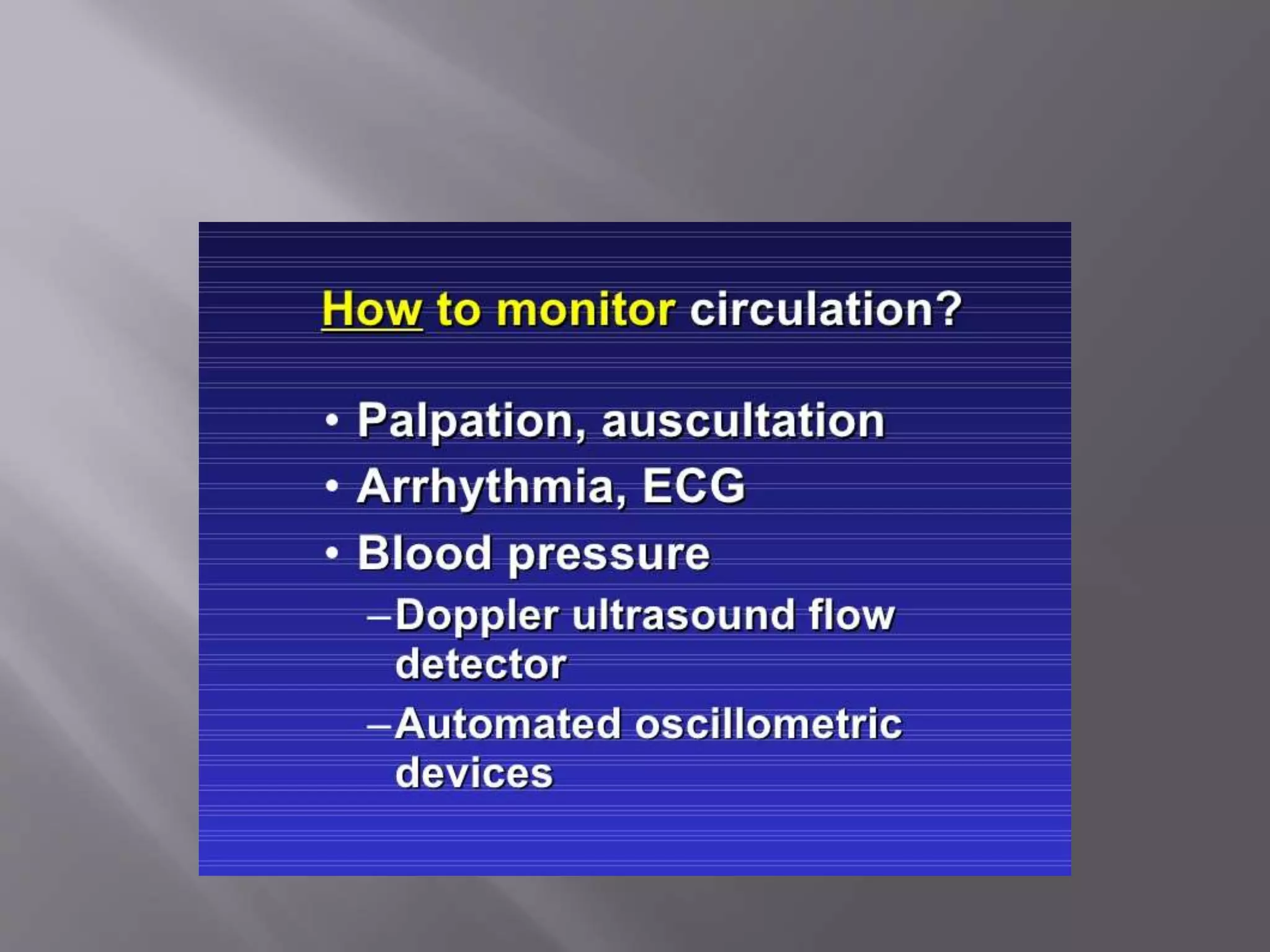
 Circulation :
Pulse, Temperature, Rhythm And Quality, Urine
Out put ,Vein feeling .
 Respiration : Pattern ,Reservoir bag movement ,
Tidal volume .
 Oxygenation : Skin , Blood color, Mucous
membrane
 Depth of Anaesthesia : Pupillary sign, Muscle
movement , Lacrimation .
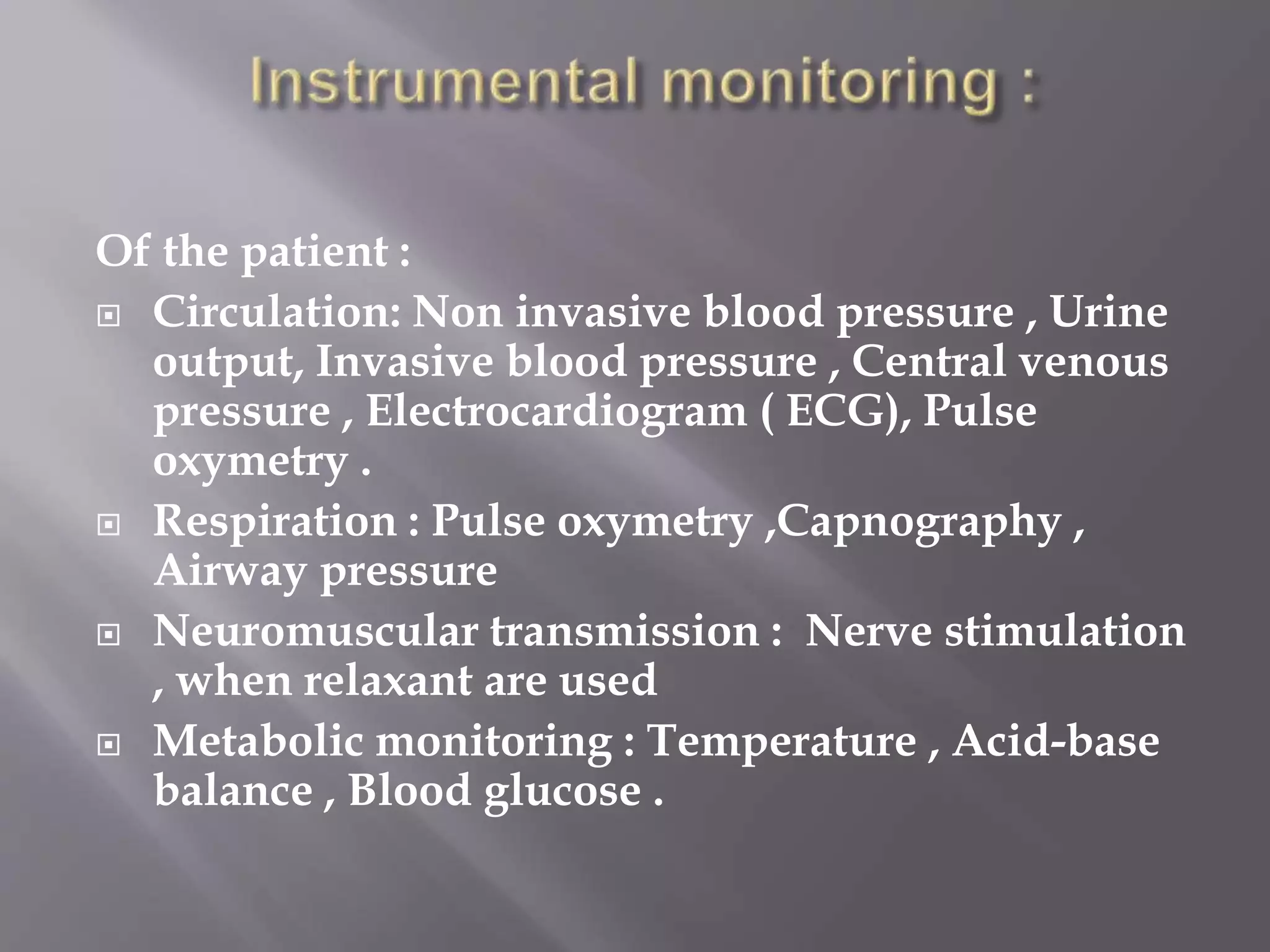
Of the patient :
 Circulation: Non invasive blood pressure , Urine
output, Invasive blood pressure , Central venous
pressure , Electrocardiogram ( ECG), Pulse
oxymetry .
 Respiration : Pulse oxymetry ,Capnography ,
Airway pressure
 Neuromuscular transmission : Nerve stimulation
, when relaxant are used
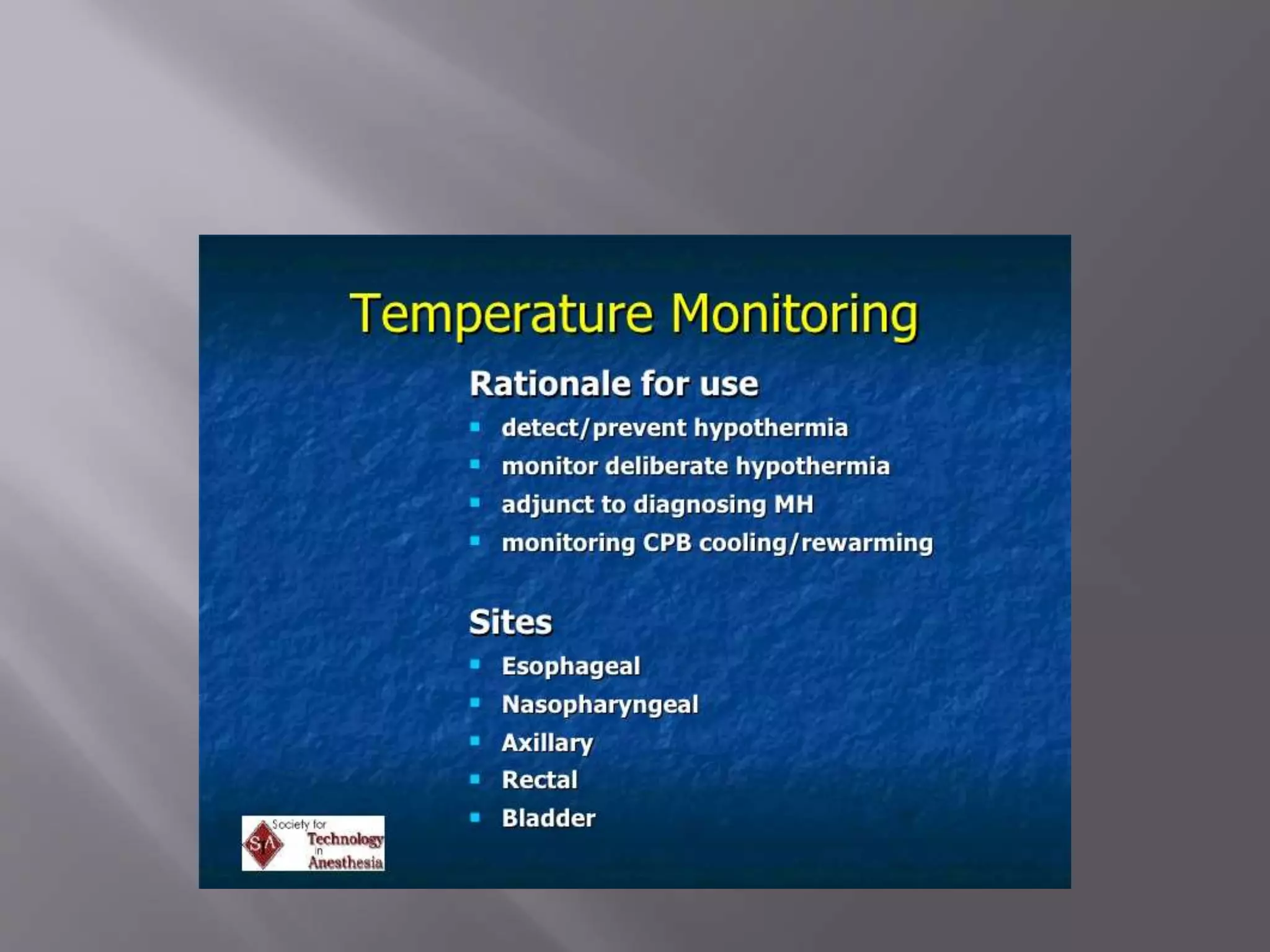
 Metabolic monitoring : Temperature , Acid-base
balance , Blood glucose .
Of the Anaesthetic machine :
 Loss of reduction of gas supply :
Gas pressure , Oxygen failure warning device ,
Gas concentration
 Breathing system disconnection or ventrilator
failure :
Airway pressure , inspired and expired CO2
concentration .
 Vaporizer malfunction :
inspired and expired volatile agent.
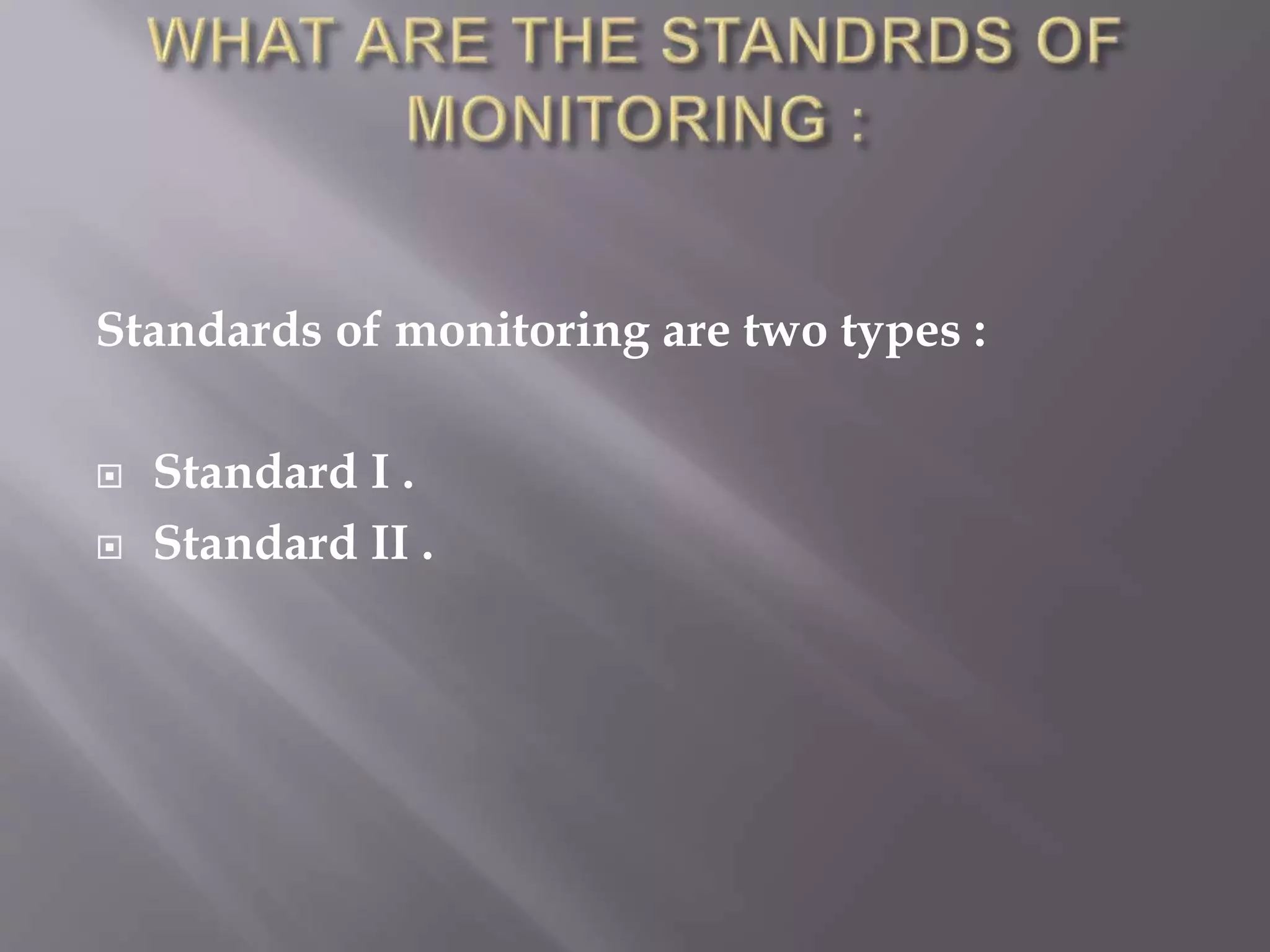
Standards of monitoring are two types :
 Standard I .
 Standard II .
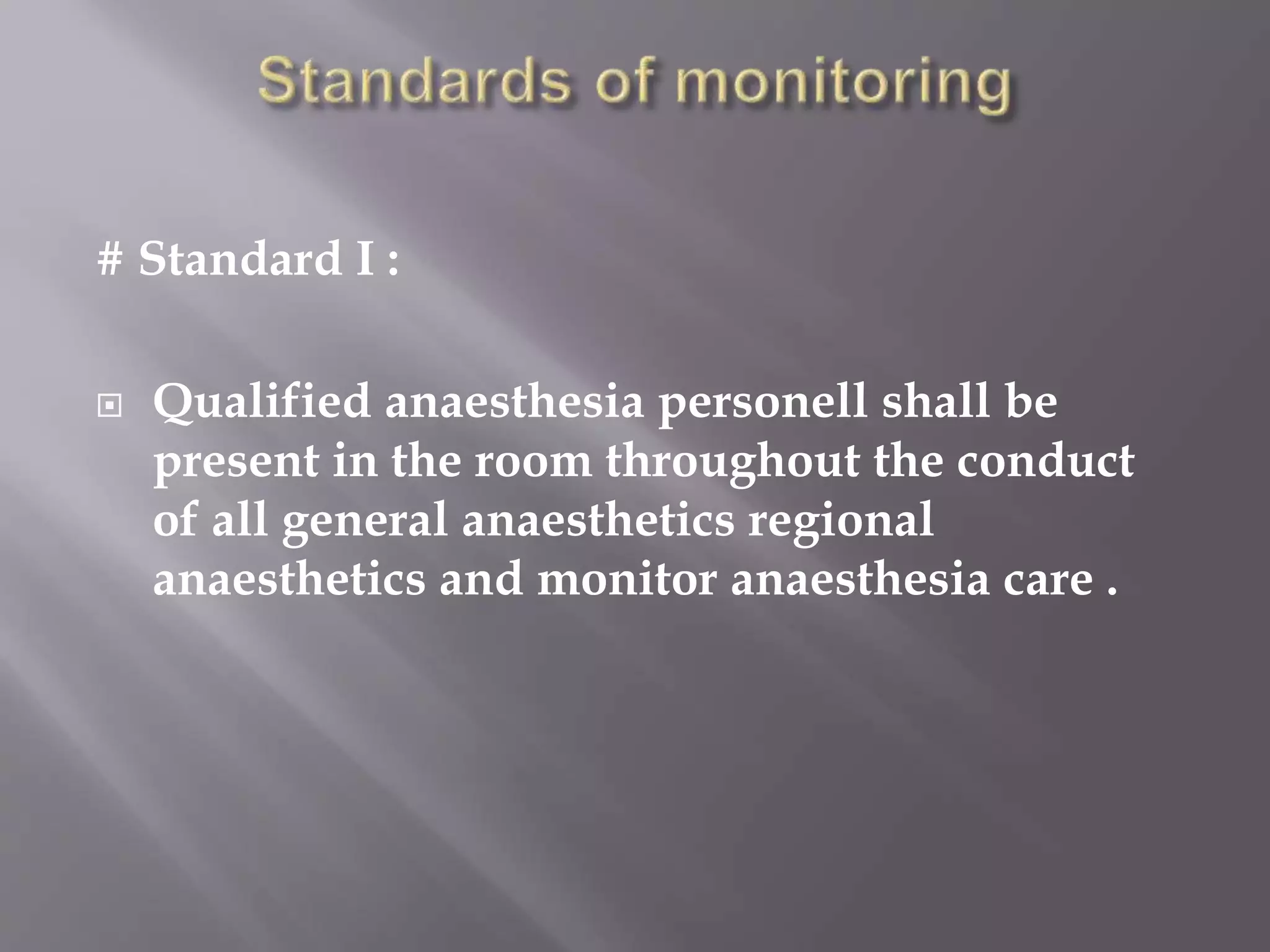
# Standard I :
 Qualified anaesthesia personell shall be
present in the room throughout the conduct
of all general anaesthetics regional
anaesthetics and monitor anaesthesia care .
# Standard II :
 During all anaesthetics the patients
oxygenation , ventilation , circulation , and
temperature shall be continually evaluated .
Oxygenation :
Objective : To ensure adequate oxygen
concentration in the inspired gas and the blood
during all anaesthetics
 Inspired gas : During every administration of
general anaesthesia using an anaesthesia
machine , the concentration of oxygen in the
patient breathing system shall be measured
by an oxygen analyzer with a low oxygen
concentration limit alarm is use .
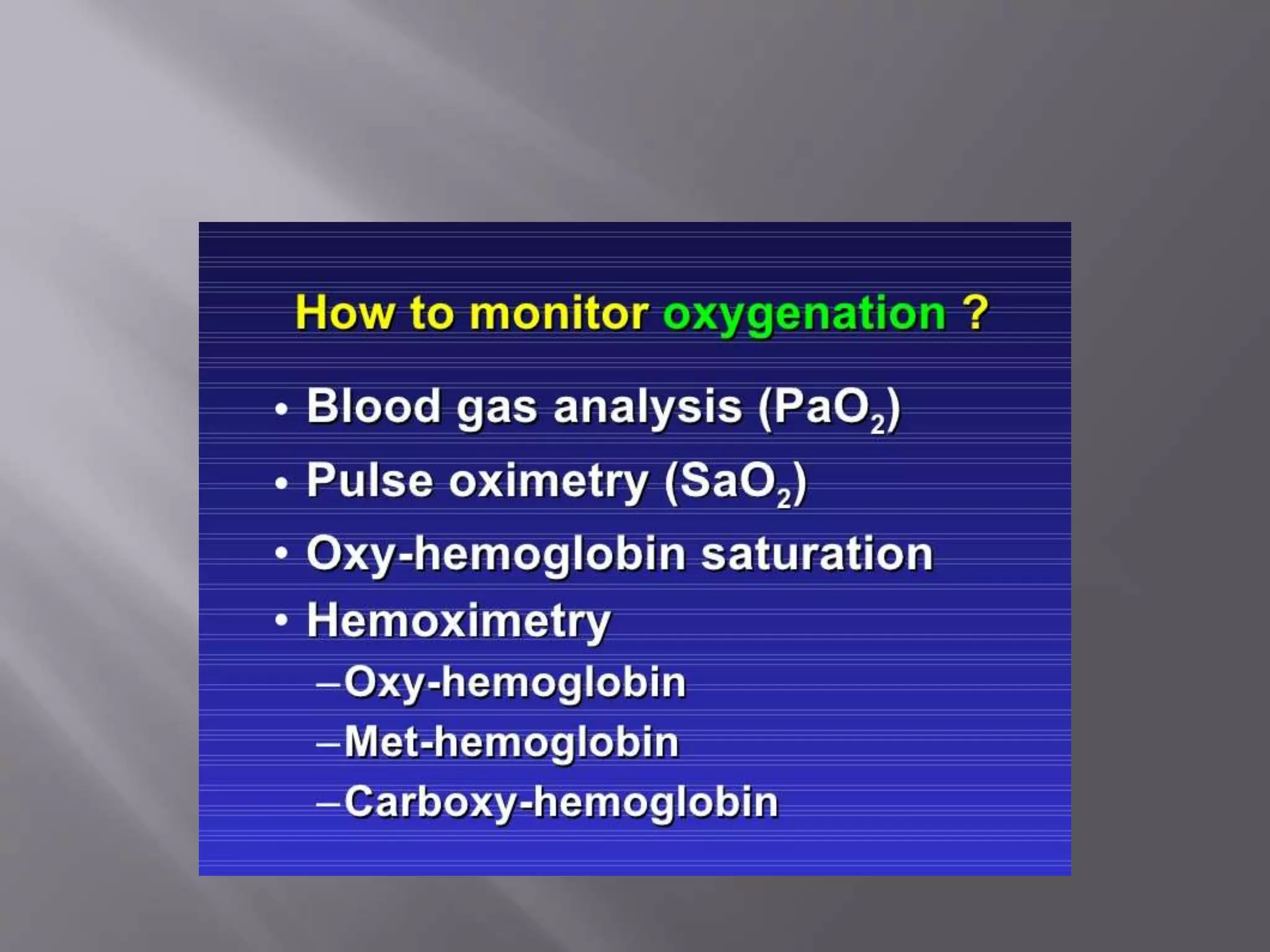
 Blood oxygenation : During all anaesthetics a
quantitative method of assessing oxygenation
such as pulse oxymetry shall be employed *
adequate illumination and exposure of the
patient are necessary to asses color .
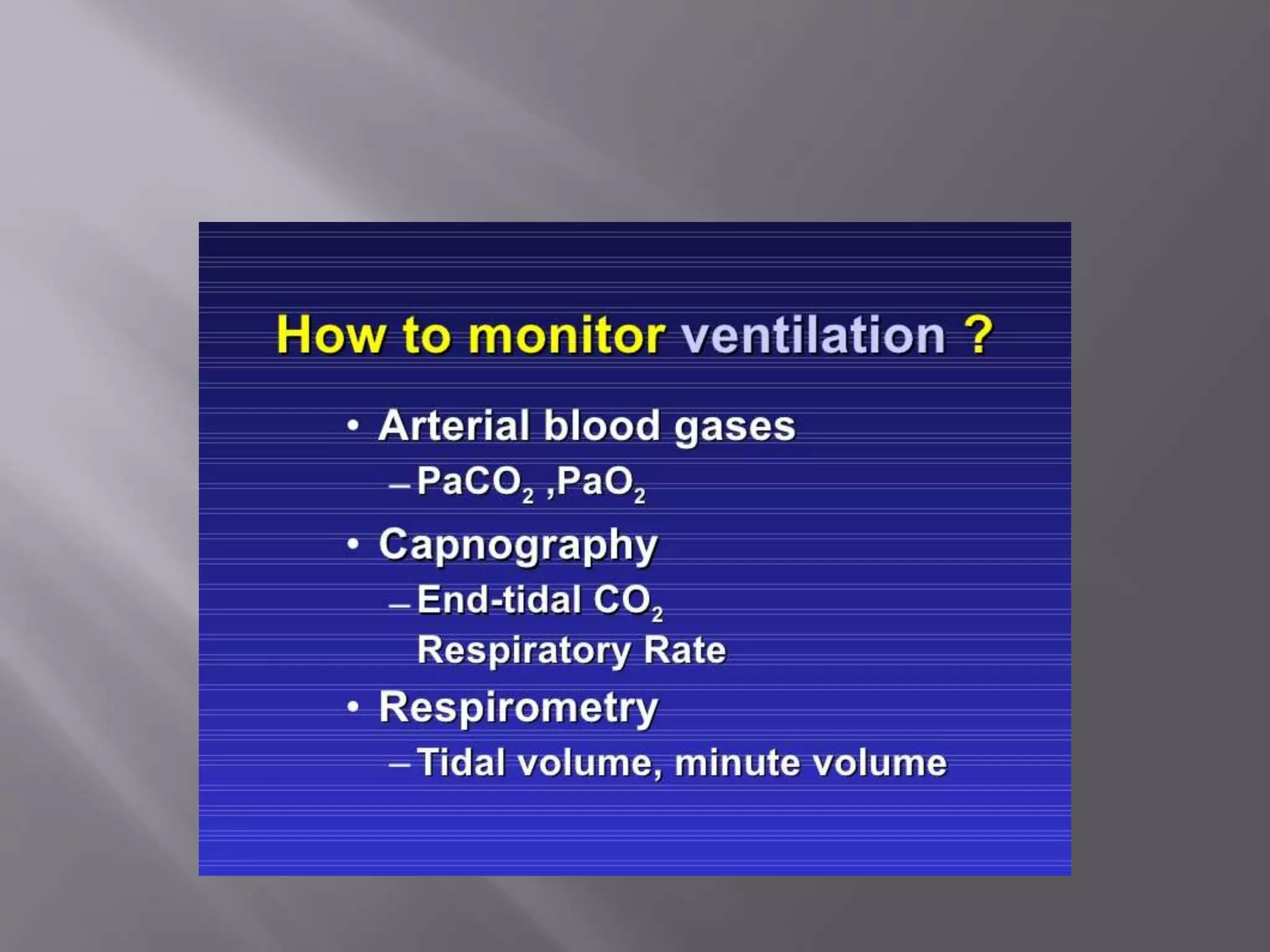
Ventilation :
 Objective : To ensure adequate Ventilation of
the patient during all anaeshtetics
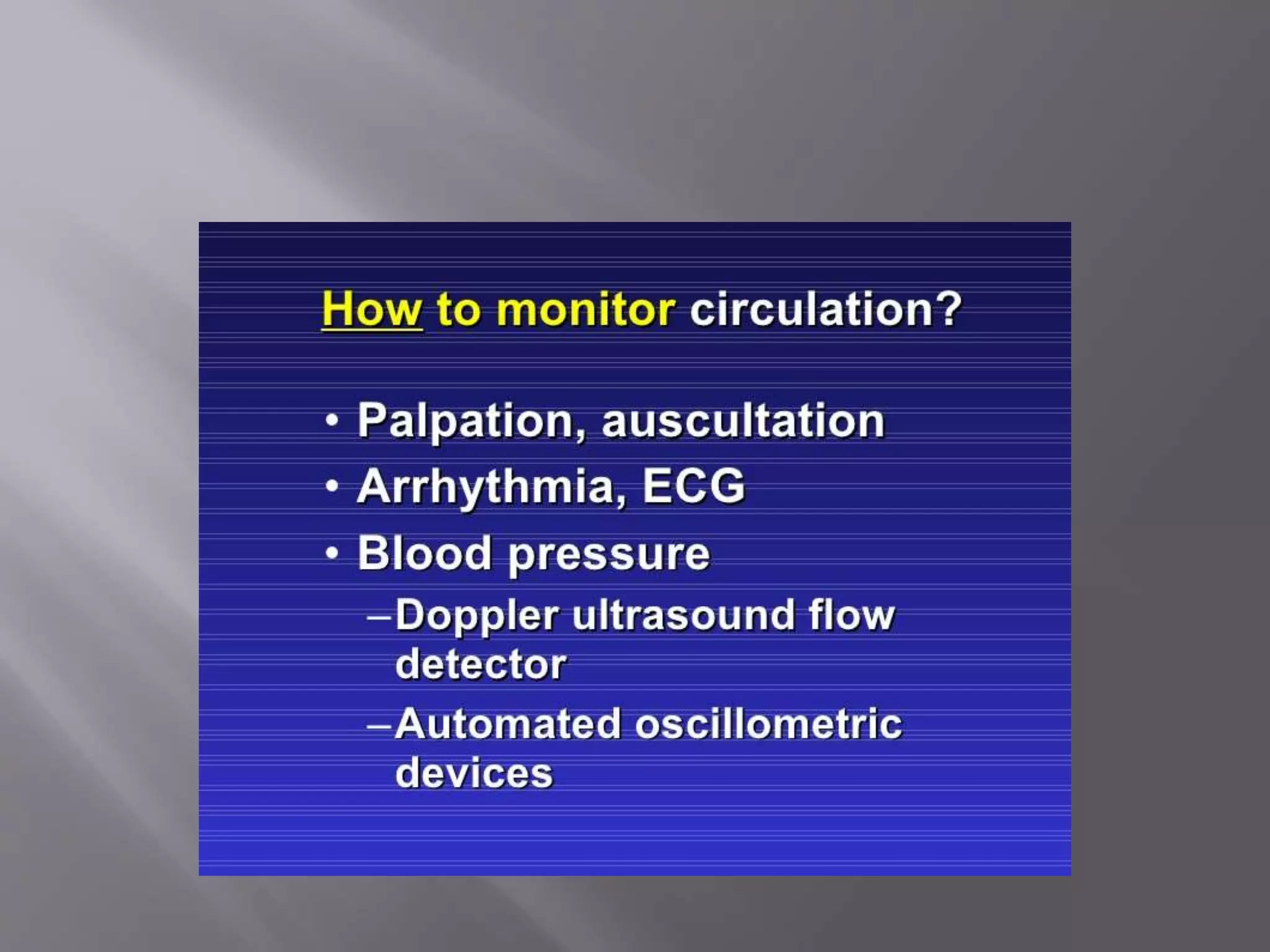
Circulation :
 Objective : To ensure the adequacy of the
patients circulatory function during all
anaesthetics .
 Body temperature :
 Objective : To aid in the maintenance of
appropriate body temperature during all
anaesthetics .
During general anaesthesia :
Induction of anaesthesia :
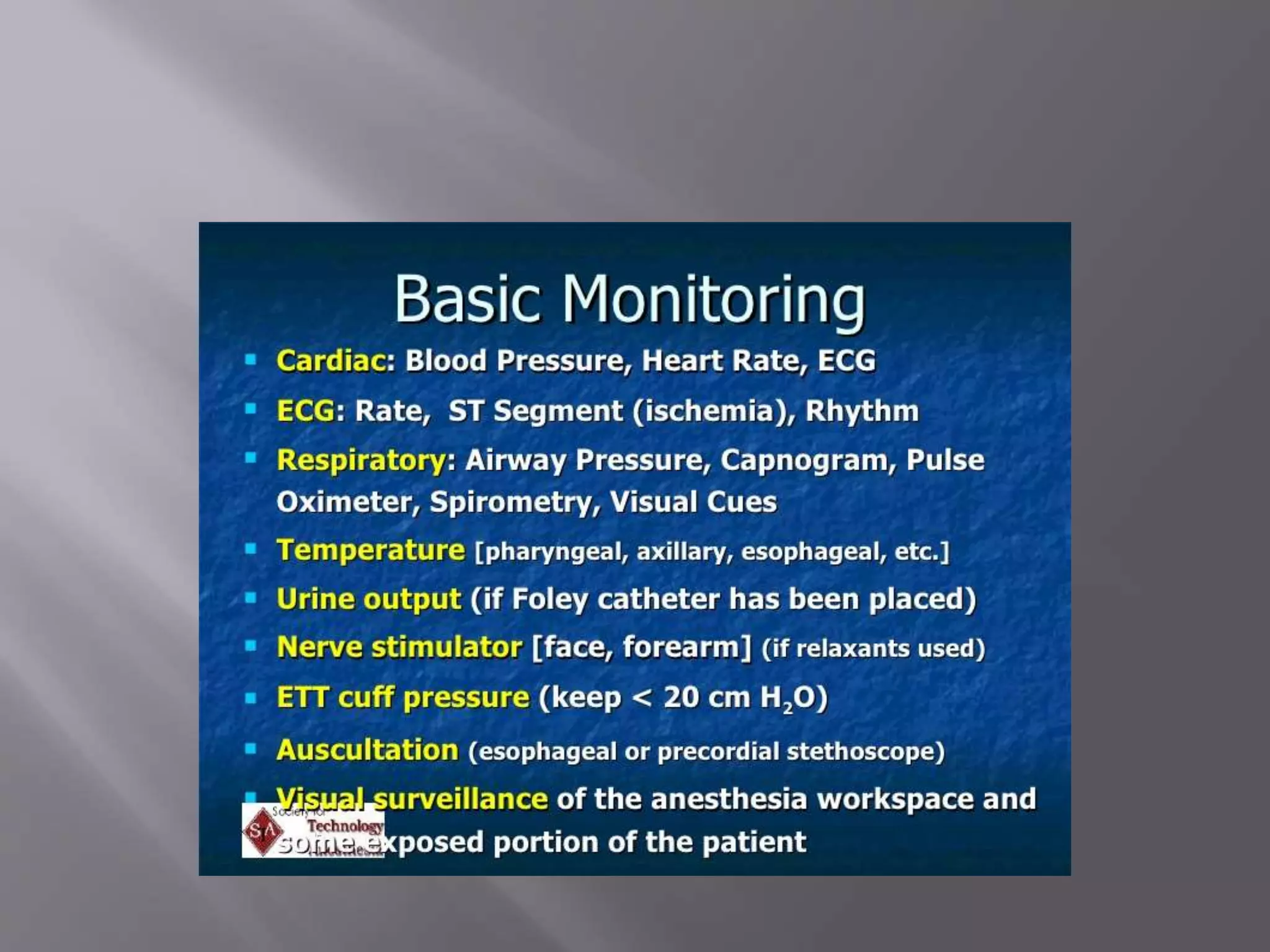
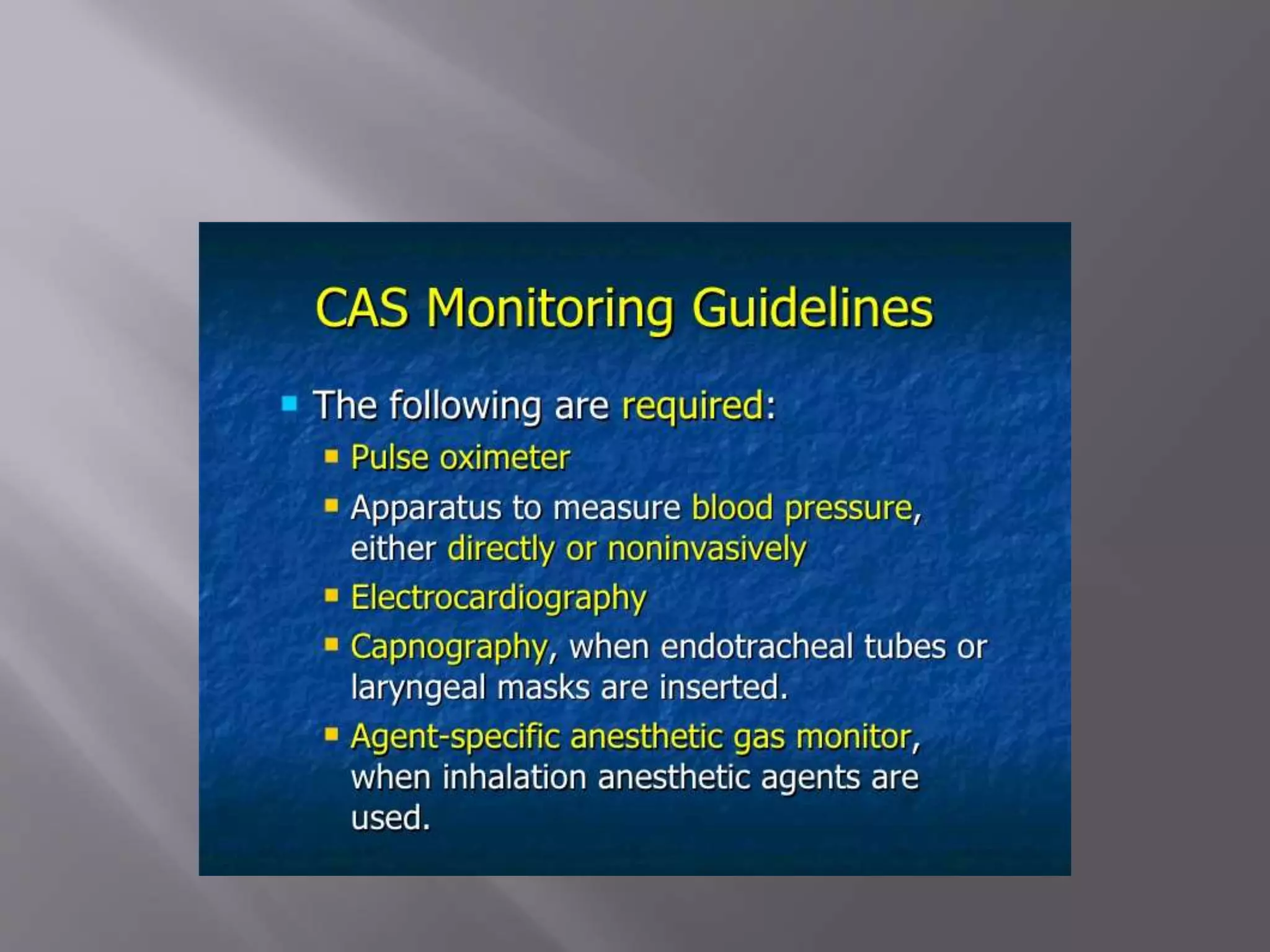
 Pulse oximeter .
 Non – invasive blood pressure monitor
 Electrocardiograph
 Capnograph
The following must also be available :
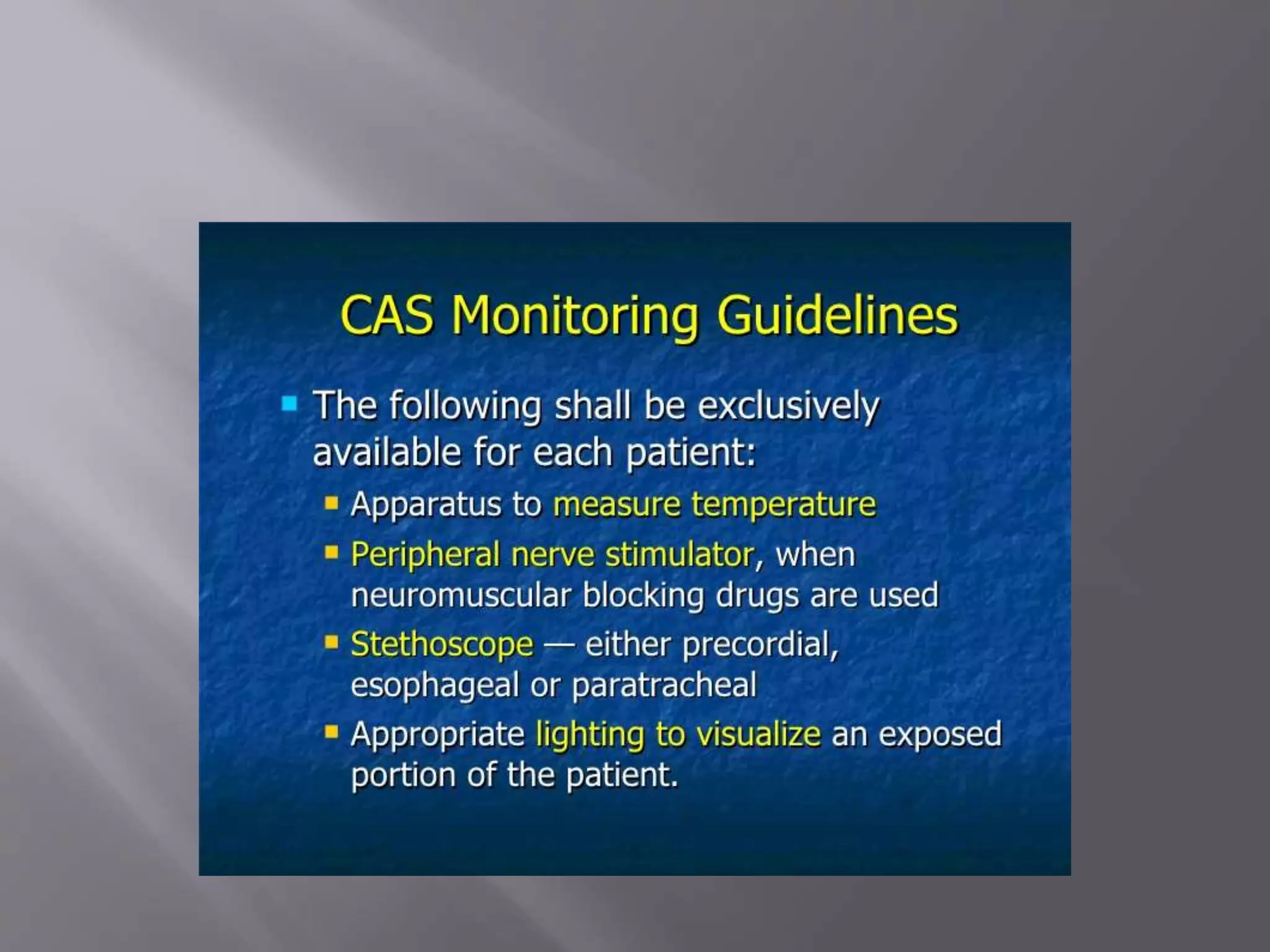
 A nerve stimulator whenever a muscle relaxant is
used .
 A means of measuring the patients temperature .
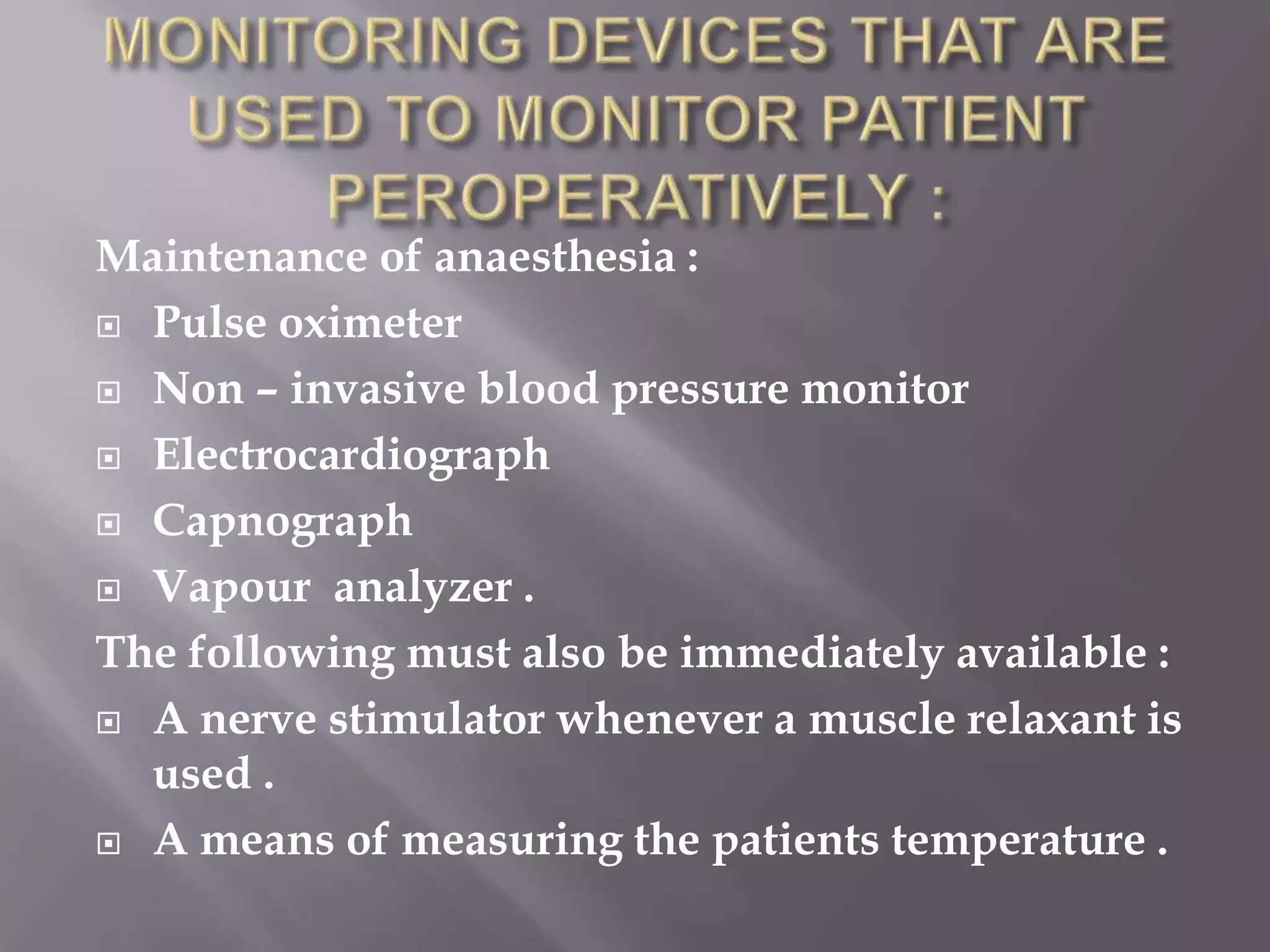
Maintenance of anaesthesia :
 Pulse oximeter
 Non – invasive blood pressure monitor
 Electrocardiograph
 Capnograph
 Vapour analyzer .
The following must also be immediately available :
 A nerve stimulator whenever a muscle relaxant is
used .
 A means of measuring the patients temperature .
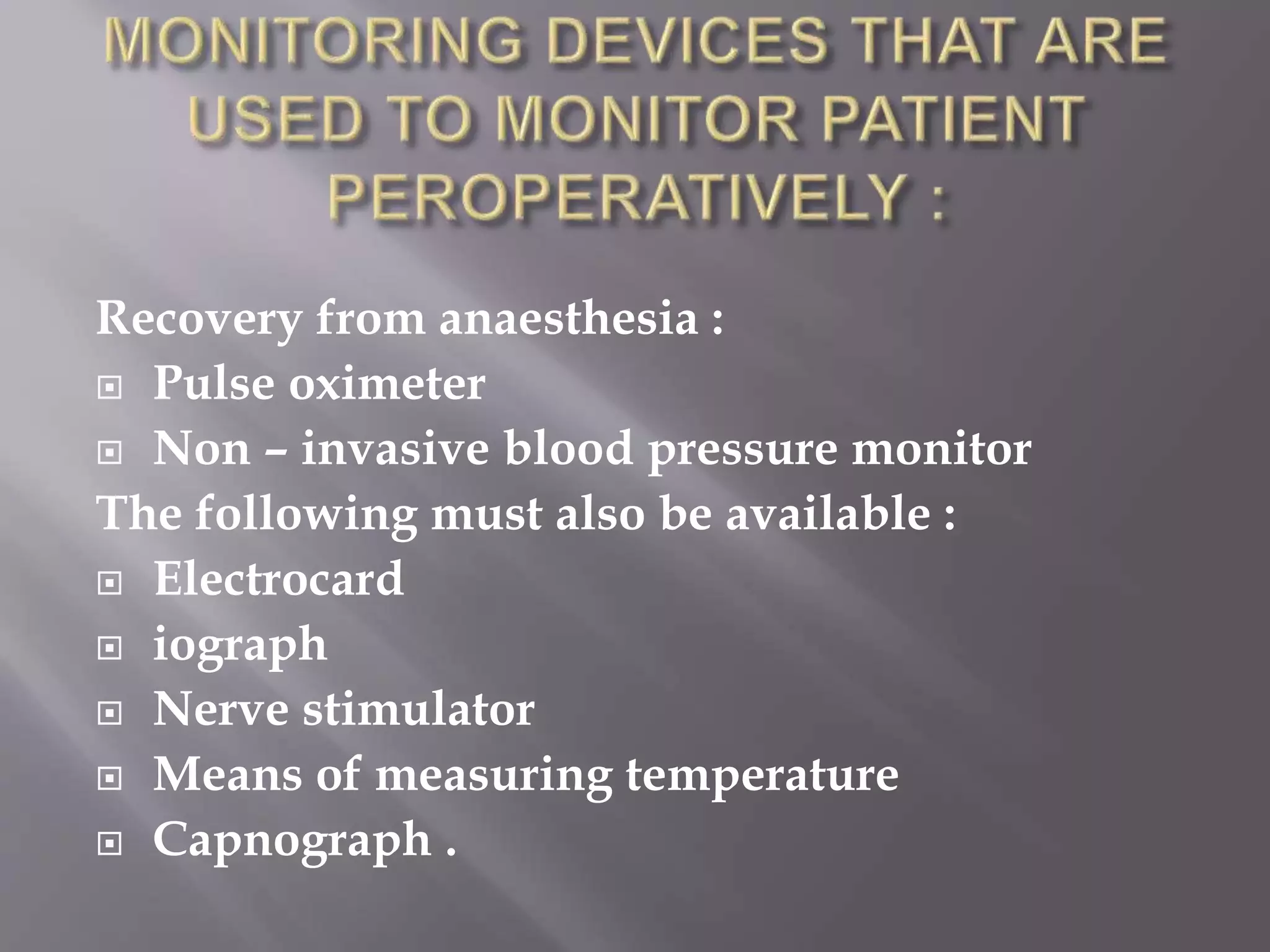
Recovery from anaesthesia :
 Pulse oximeter
 Non – invasive blood pressure monitor
The following must also be available :
 Electrocard
 iograph
 Nerve stimulator
 Means of measuring temperature
 Capnograph .
Regional techniques and sedation for operative
procedures:
 Patients must have appropriate monitoring
including the following device
 Pulse oximeter
 Non – invasive blood pressure monitor
 Electrocardiograph
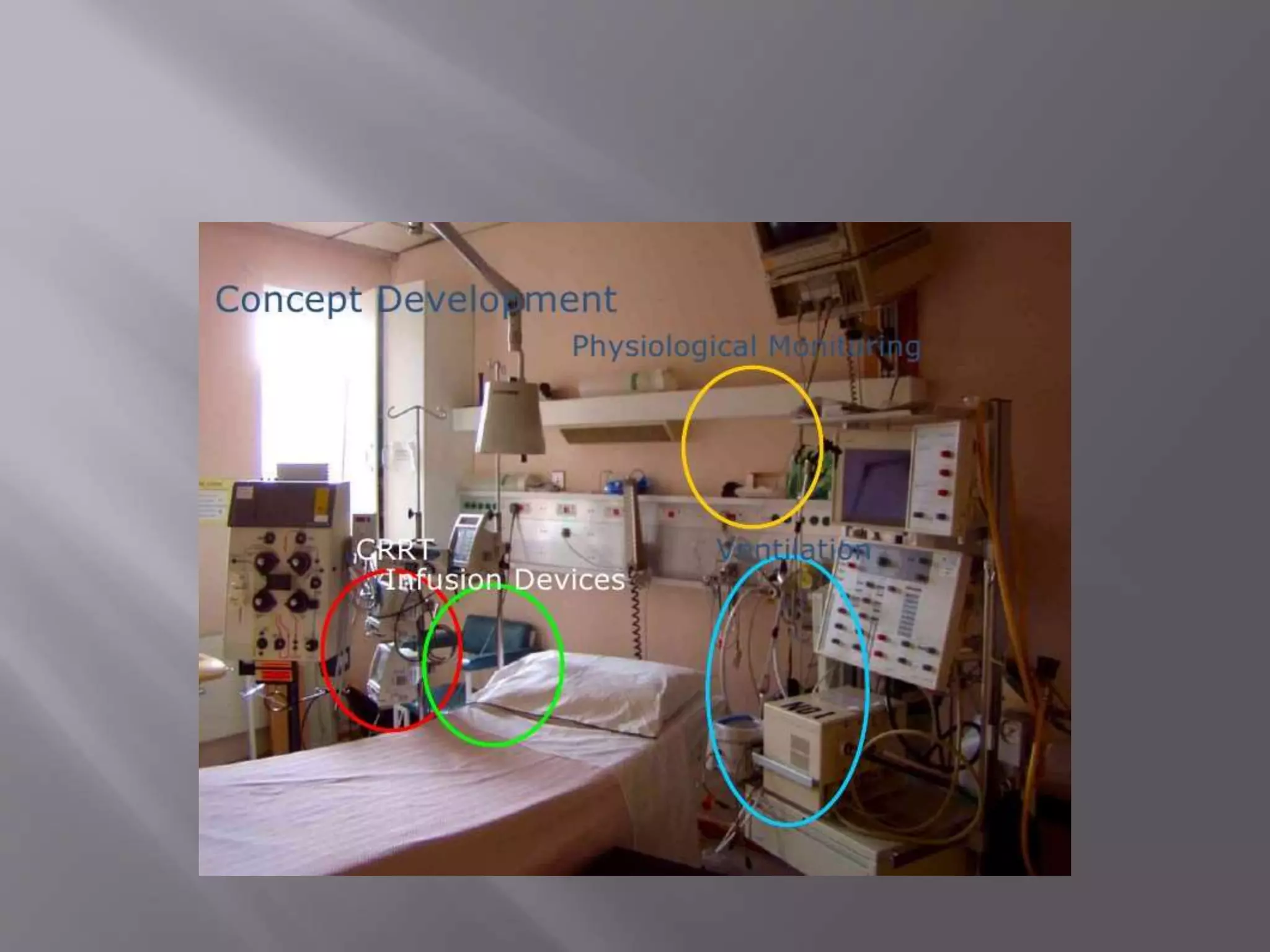
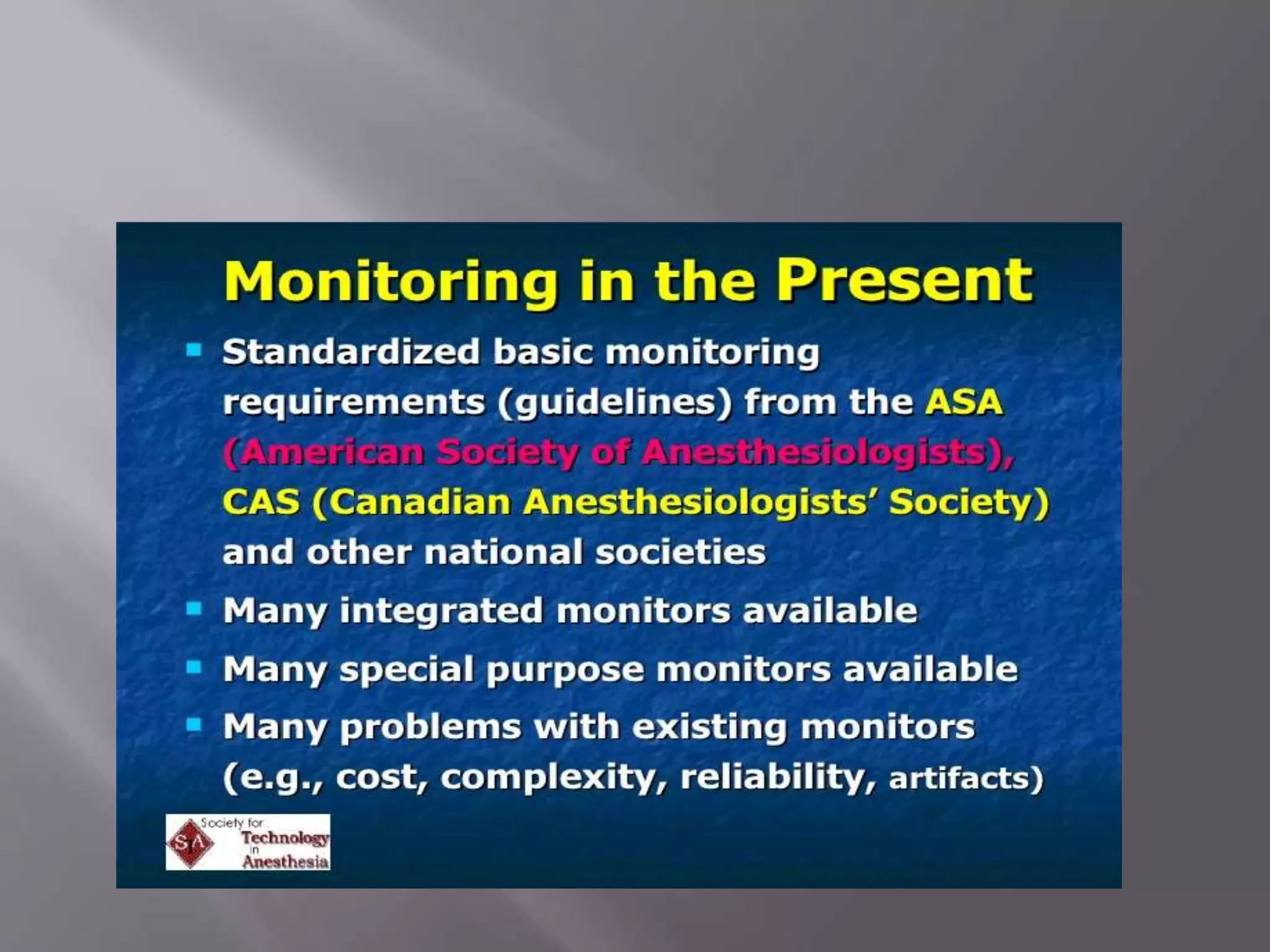
Monitoring system of anaesthesia

Monitoring system of anaesthesia

  • 1.
    DR. MUNNI AZAM DASTUDENT ShSWMCH
  • 2.
     MONITOR: isfrom MONERE means warning .An electronic device used to record , regulate or control a process or system .  MONITORING: Monitoring means continuous recording of particular data
  • 3.
     Observation  Vigilance Instrumentation  Interpretation and corrective therapy when needed .
  • 8.
     Clinical monitoring Instrumental monitoring
  • 9.
     The mostimportant factor for clinical monitoring is the continuous presence of a trained and competent anaesthetist . The experienced anaesthetist will monitor.  Circulation : Pulse, Temperature, Rhythm And Quality, Urine Out put ,Vein feeling .  Respiration : Pattern ,Reservoir bag movement , Tidal volume .  Oxygenation : Skin , Blood color, Mucous membrane  Depth of Anaesthesia : Pupillary sign, Muscle movement , Lacrimation .
  • 10.
    Of the patient:  Circulation: Non invasive blood pressure , Urine output, Invasive blood pressure , Central venous pressure , Electrocardiogram ( ECG), Pulse oxymetry .  Respiration : Pulse oxymetry ,Capnography , Airway pressure  Neuromuscular transmission : Nerve stimulation , when relaxant are used  Metabolic monitoring : Temperature , Acid-base balance , Blood glucose .
  • 12.
    Of the Anaestheticmachine :  Loss of reduction of gas supply : Gas pressure , Oxygen failure warning device , Gas concentration  Breathing system disconnection or ventrilator failure : Airway pressure , inspired and expired CO2 concentration .  Vaporizer malfunction : inspired and expired volatile agent.
  • 23.
    Standards of monitoringare two types :  Standard I .  Standard II .
  • 24.
    # Standard I:  Qualified anaesthesia personell shall be present in the room throughout the conduct of all general anaesthetics regional anaesthetics and monitor anaesthesia care .
  • 25.
    # Standard II:  During all anaesthetics the patients oxygenation , ventilation , circulation , and temperature shall be continually evaluated .
  • 26.
    Oxygenation : Objective :To ensure adequate oxygen concentration in the inspired gas and the blood during all anaesthetics
  • 28.
     Inspired gas: During every administration of general anaesthesia using an anaesthesia machine , the concentration of oxygen in the patient breathing system shall be measured by an oxygen analyzer with a low oxygen concentration limit alarm is use .  Blood oxygenation : During all anaesthetics a quantitative method of assessing oxygenation such as pulse oxymetry shall be employed * adequate illumination and exposure of the patient are necessary to asses color .
  • 29.
    Ventilation :  Objective: To ensure adequate Ventilation of the patient during all anaeshtetics
  • 31.
    Circulation :  Objective: To ensure the adequacy of the patients circulatory function during all anaesthetics .
  • 33.
     Body temperature:  Objective : To aid in the maintenance of appropriate body temperature during all anaesthetics .
  • 39.
    During general anaesthesia: Induction of anaesthesia :  Pulse oximeter .  Non – invasive blood pressure monitor  Electrocardiograph  Capnograph The following must also be available :  A nerve stimulator whenever a muscle relaxant is used .  A means of measuring the patients temperature .
  • 40.
    Maintenance of anaesthesia:  Pulse oximeter  Non – invasive blood pressure monitor  Electrocardiograph  Capnograph  Vapour analyzer . The following must also be immediately available :  A nerve stimulator whenever a muscle relaxant is used .  A means of measuring the patients temperature .
  • 41.
    Recovery from anaesthesia:  Pulse oximeter  Non – invasive blood pressure monitor The following must also be available :  Electrocard  iograph  Nerve stimulator  Means of measuring temperature  Capnograph .
  • 43.
    Regional techniques andsedation for operative procedures:  Patients must have appropriate monitoring including the following device  Pulse oximeter  Non – invasive blood pressure monitor  Electrocardiograph