MODULE-V
New Techniques in Constructions—Introduction,3D printing, photo
catalytic admixture, self-healing concrete, zero cement
concrete ,hemp lime, wood-glass epoxy composites, bamboo.
Prepared By-
Prof. Basweshwar S. J.
New Techniques in Constructions-
• The development of innovative new building materials has
allowed architects to better realize their visions, as they
make more daring structures possible due to their improved
strength, flexibility and durability.
• The next decade is likely to be instrumental in seeing some
key applications realized commercially and being adopted
by the mass market.
Prepared By-
Prof. Basweshwar S. J.
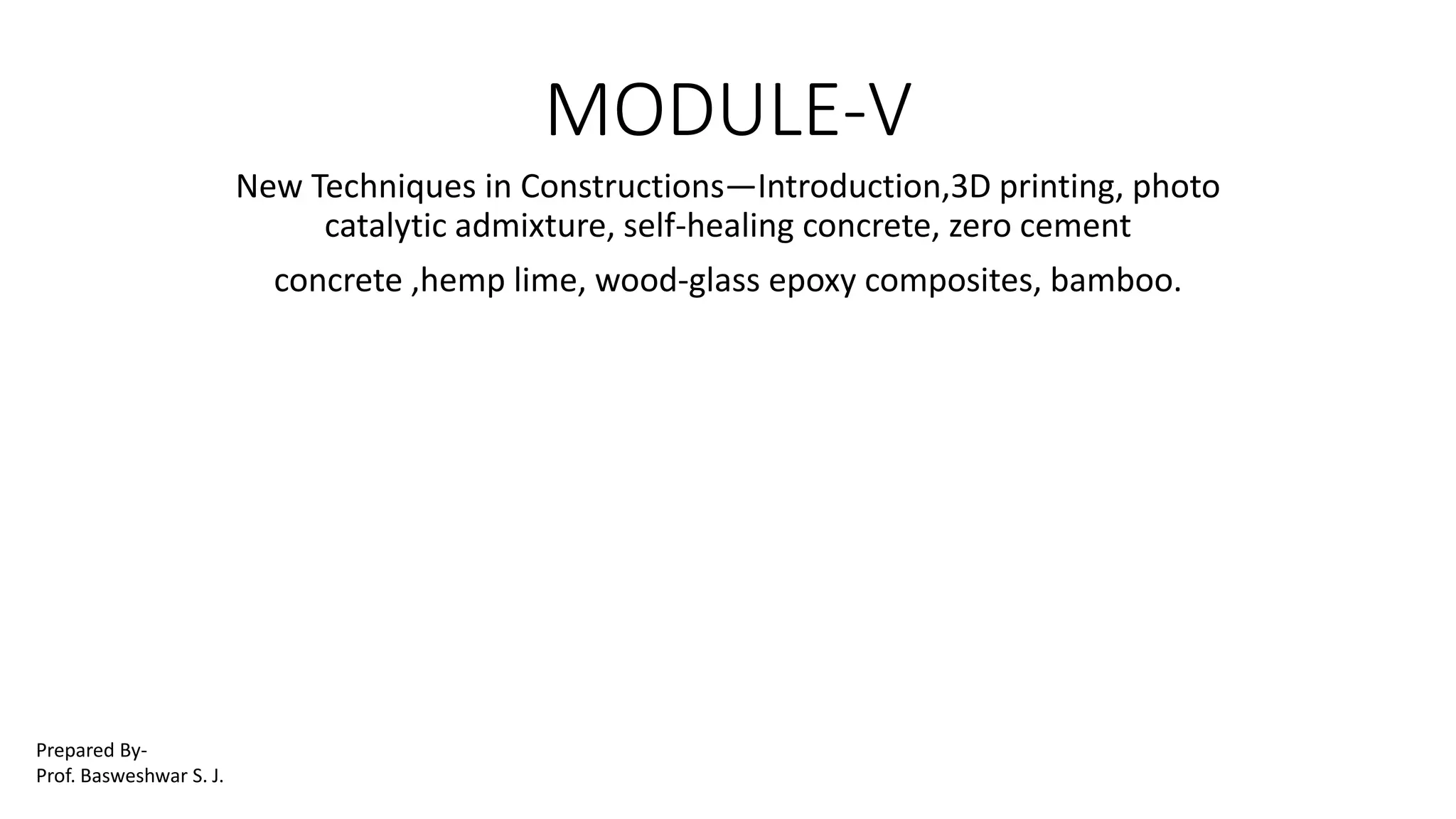
• Solar-Harvesting Roads
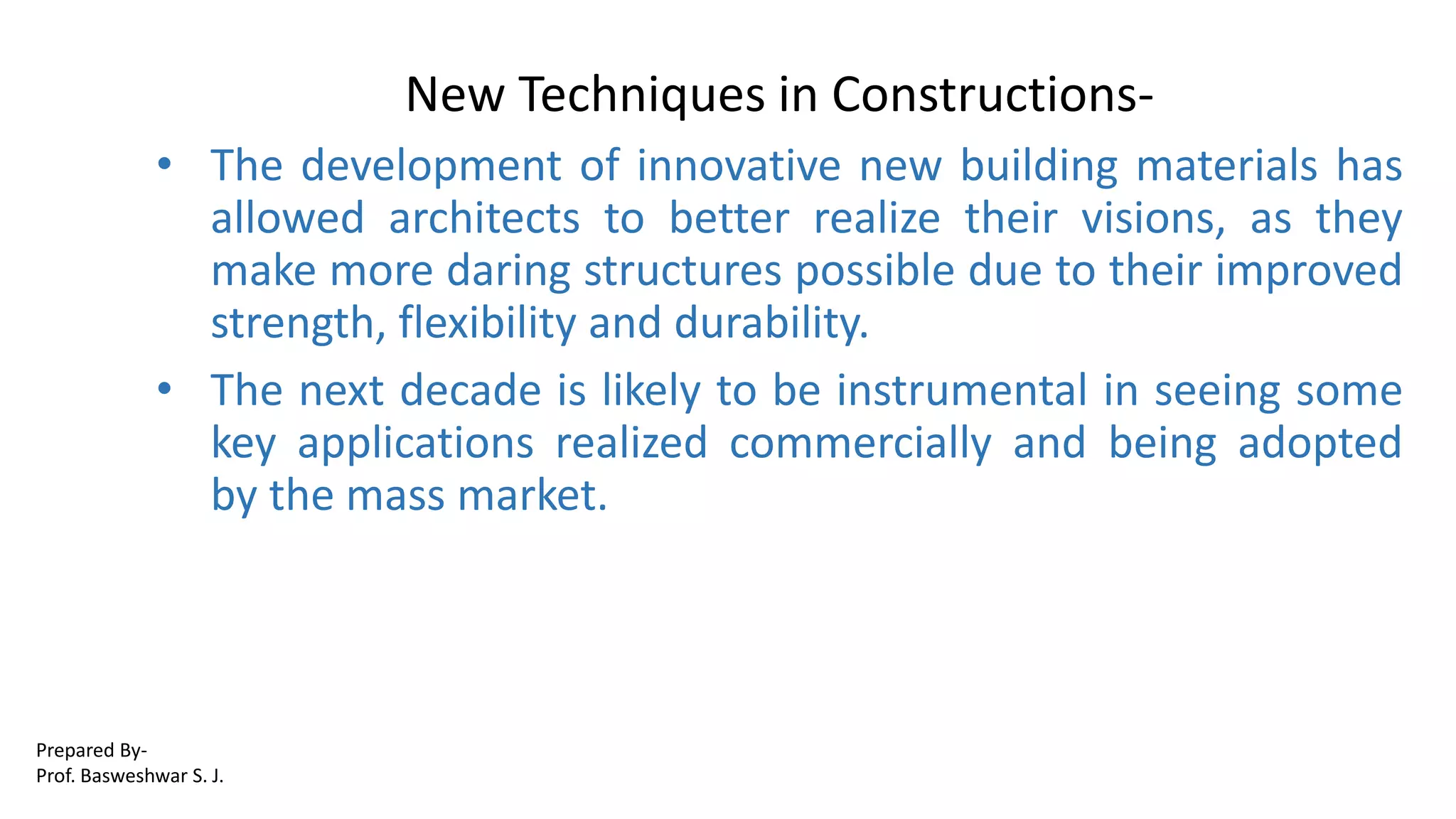
• Cooling system in bricks
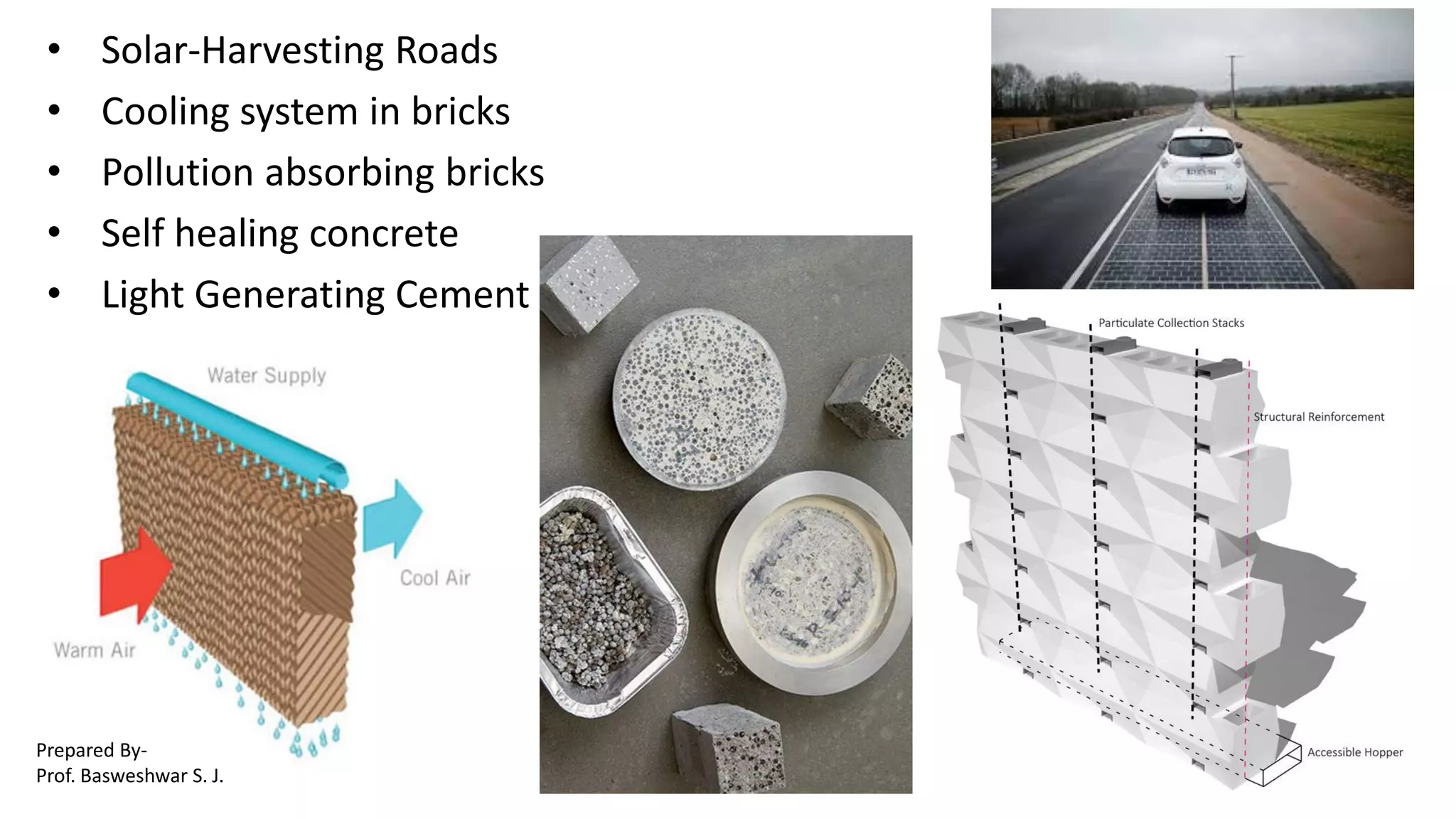
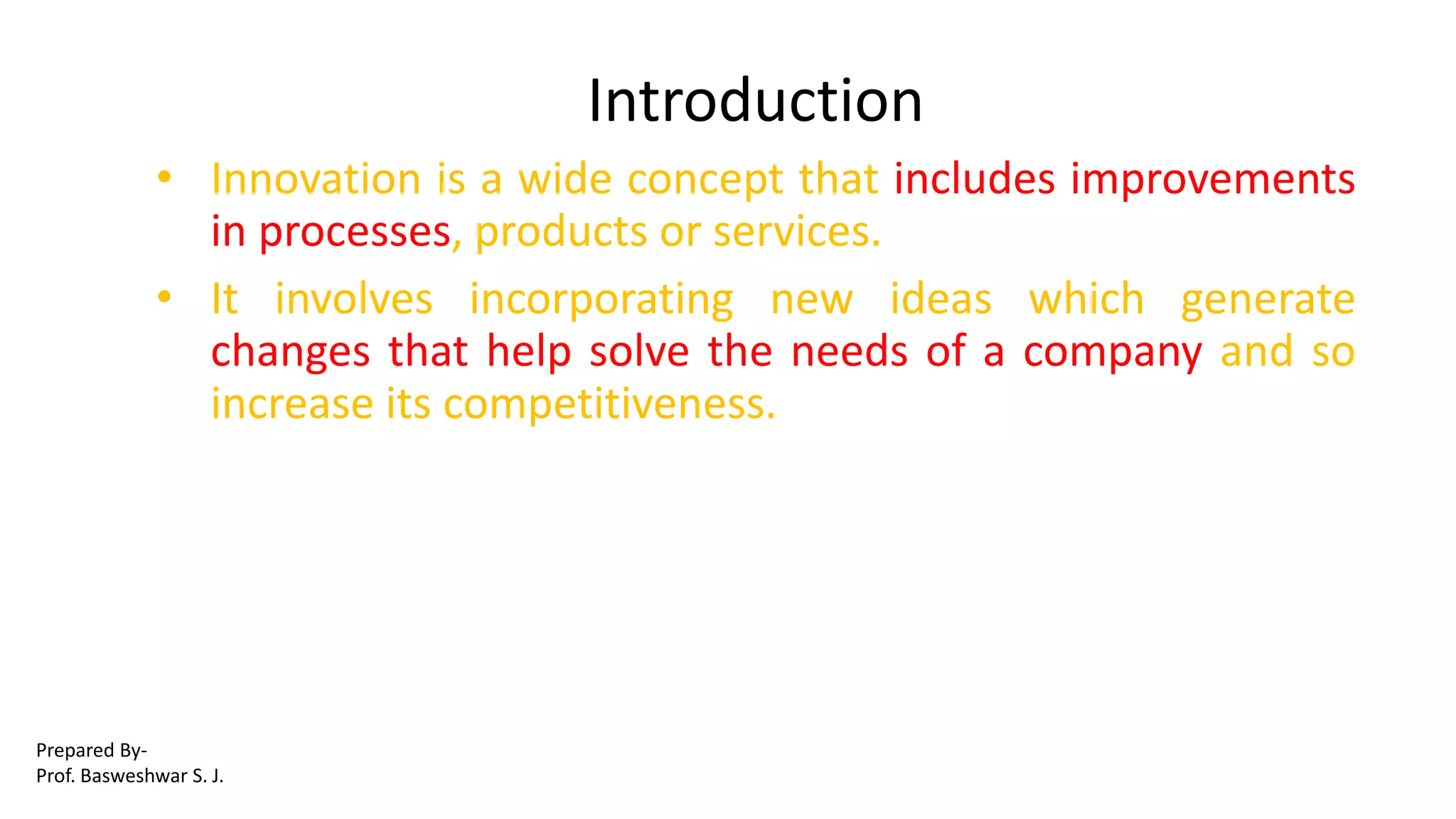
• Pollution absorbing bricks
• Self healing concrete
• Light Generating Cement
Prepared By-
Prof. Basweshwar S. J.
Introduction
• Innovation is a wide concept that includes improvements
in processes, products or services.
• It involves incorporating new ideas which generate
changes that help solve the needs of a company and so
increase its competitiveness.
Prepared By-
Prof. Basweshwar S. J.
3D printing
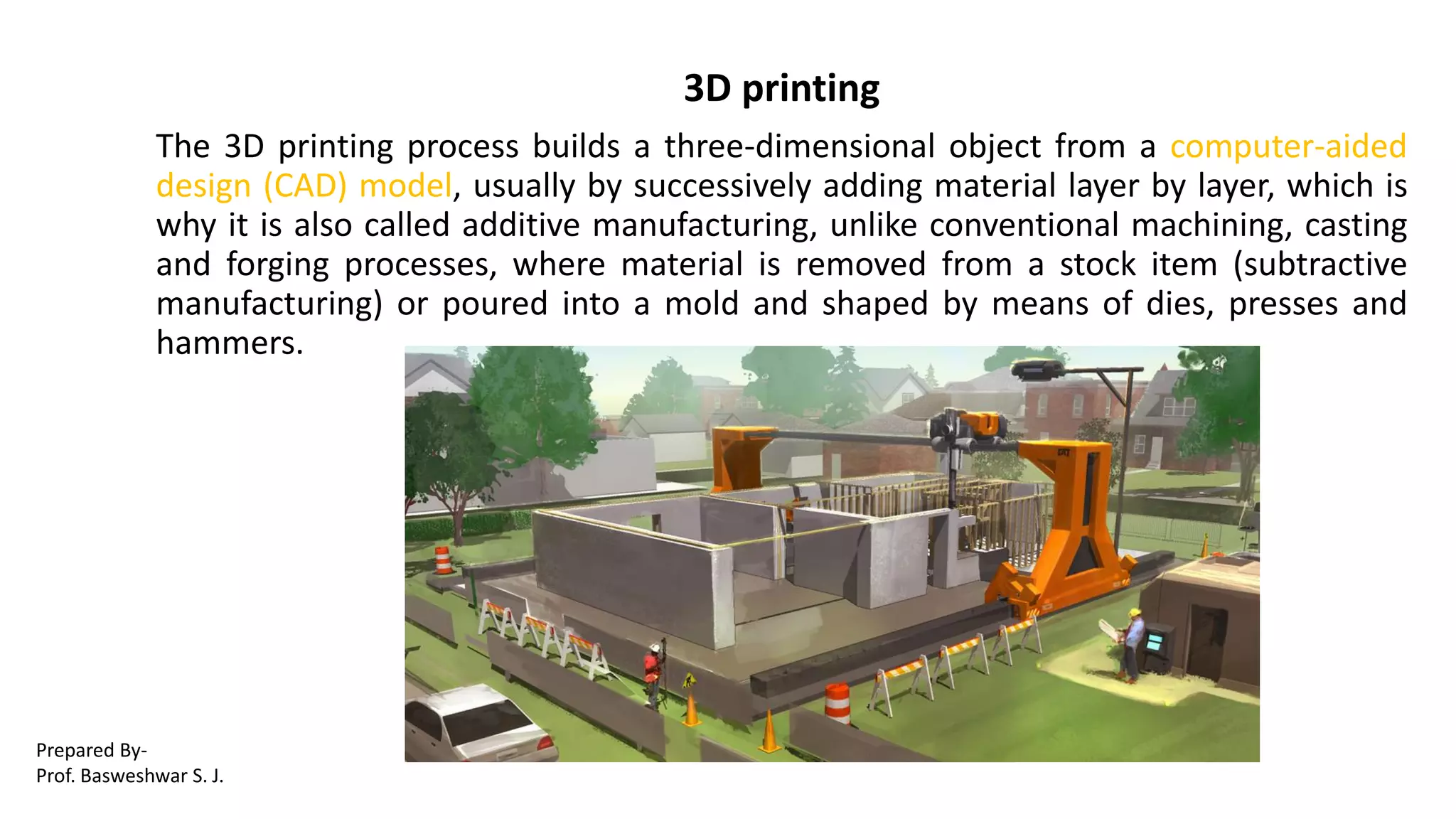
The 3D printing process builds a three-dimensional object from a computer-aided
design (CAD) model, usually by successively adding material layer by layer, which is
why it is also called additive manufacturing, unlike conventional machining, casting
and forging processes, where material is removed from a stock item (subtractive
manufacturing) or poured into a mold and shaped by means of dies, presses and
hammers.
Prepared By-
Prof. Basweshwar S. J.
Photo catalytic admixture
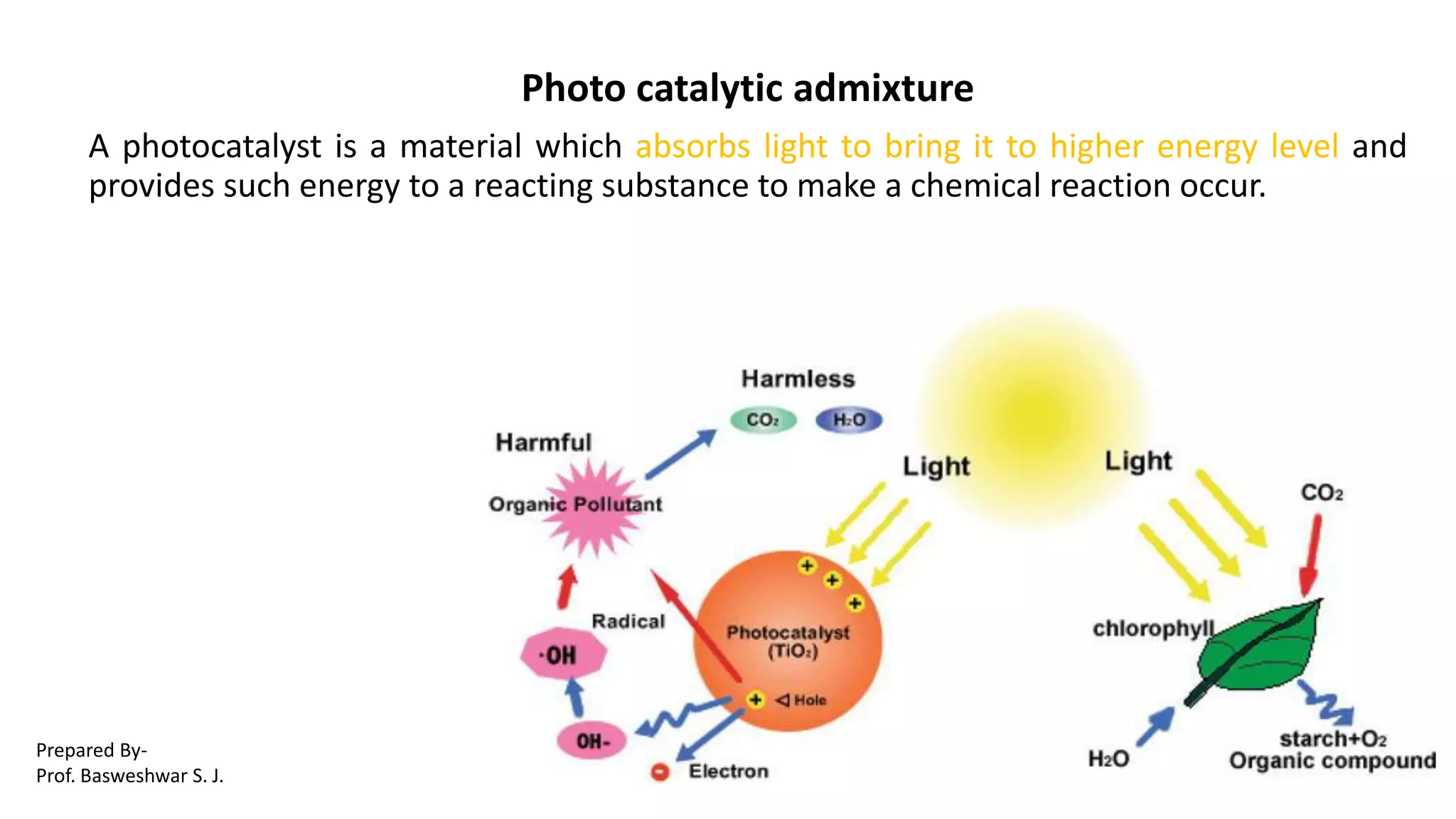
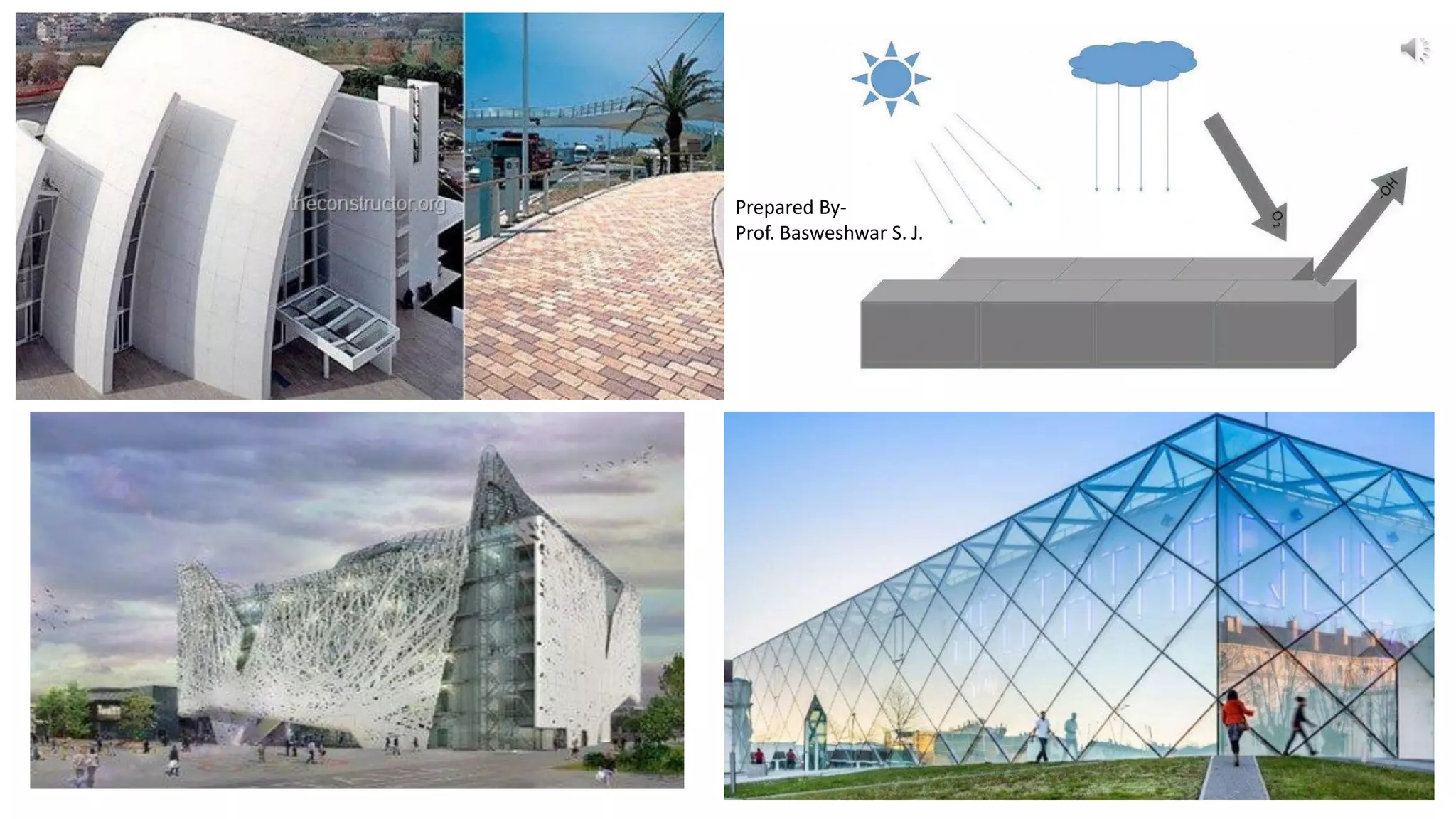
A photocatalyst is a material which absorbs light to bring it to higher energy level and
provides such energy to a reacting substance to make a chemical reaction occur.
Prepared By-
Prof. Basweshwar S. J.
Prepared By-
Prof. Basweshwar S. J.
ZERO CEMENT CONCRETE
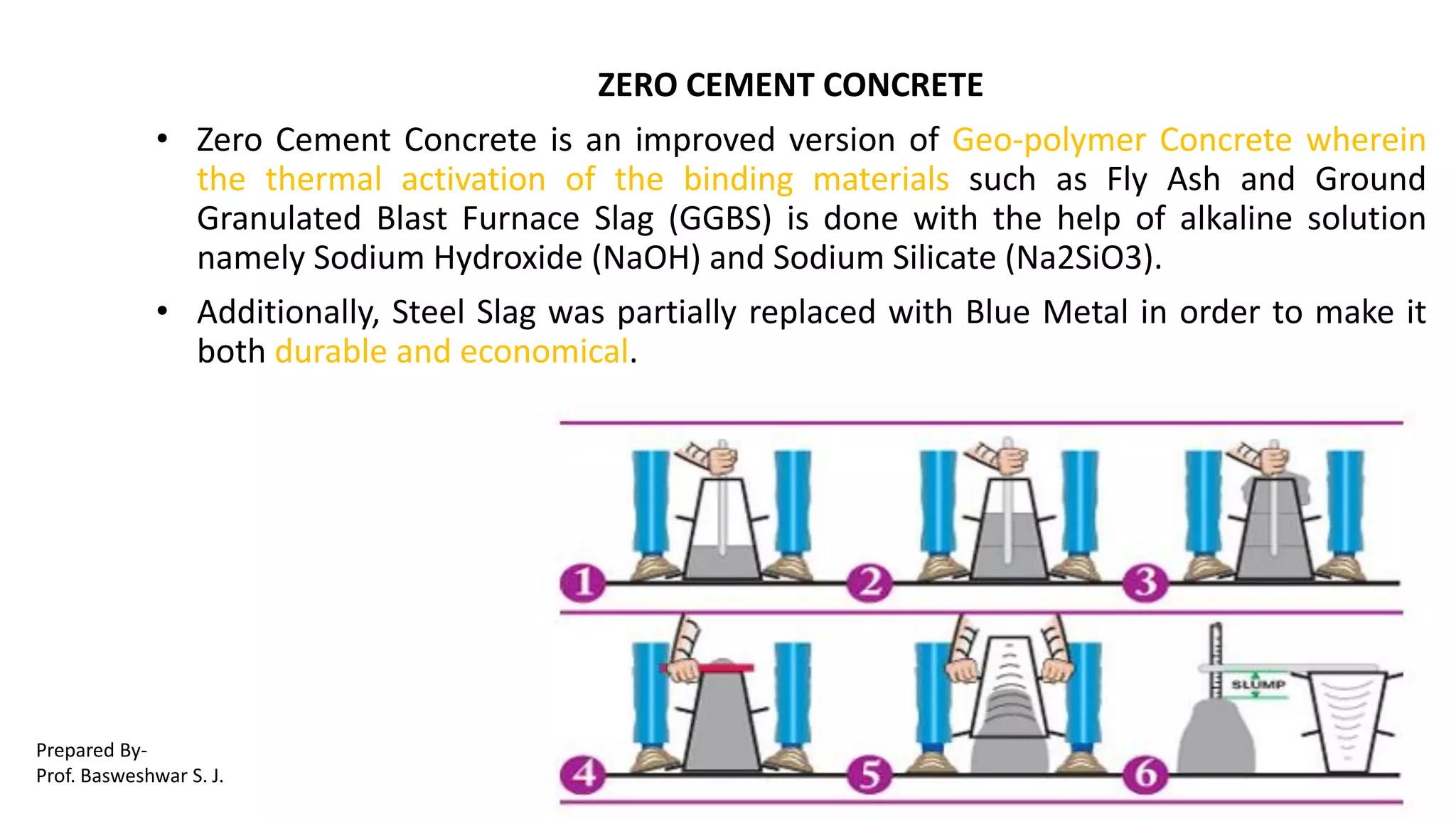
• Zero Cement Concrete is an improved version of Geo-polymer Concrete wherein
the thermal activation of the binding materials such as Fly Ash and Ground
Granulated Blast Furnace Slag (GGBS) is done with the help of alkaline solution
namely Sodium Hydroxide (NaOH) and Sodium Silicate (Na2SiO3).
• Additionally, Steel Slag was partially replaced with Blue Metal in order to make it
both durable and economical.
Prepared By-
Prof. Basweshwar S. J.
SELF-HEALING CONCRETE
• Bacterial concrete or self healing concrete fills up the cracks developed in
structures by the help of bacterial reaction in the concrete after hardening.
• But due to human mistakes, incorrect handling and unskilled labors.
• An efficient building is hard to sustain its designed life.
• Many problems like weathering, cracks, leaks and bending etc., arises after
the construction.
The common problem found-
• Concrete expands and shrinks due to temperature differences
• Settlement of structure
• Due to heavy load applied
• Due to loss of water from concrete surface shrinkage occurs
• Insufficient vibration at the time of laying the concrete
• Improper cover provided during concreting
• High water cement ratio to make the concrete workable
• Due to corrosion of reinforcement steelPrepared By-
Prof. Basweshwar S. J.
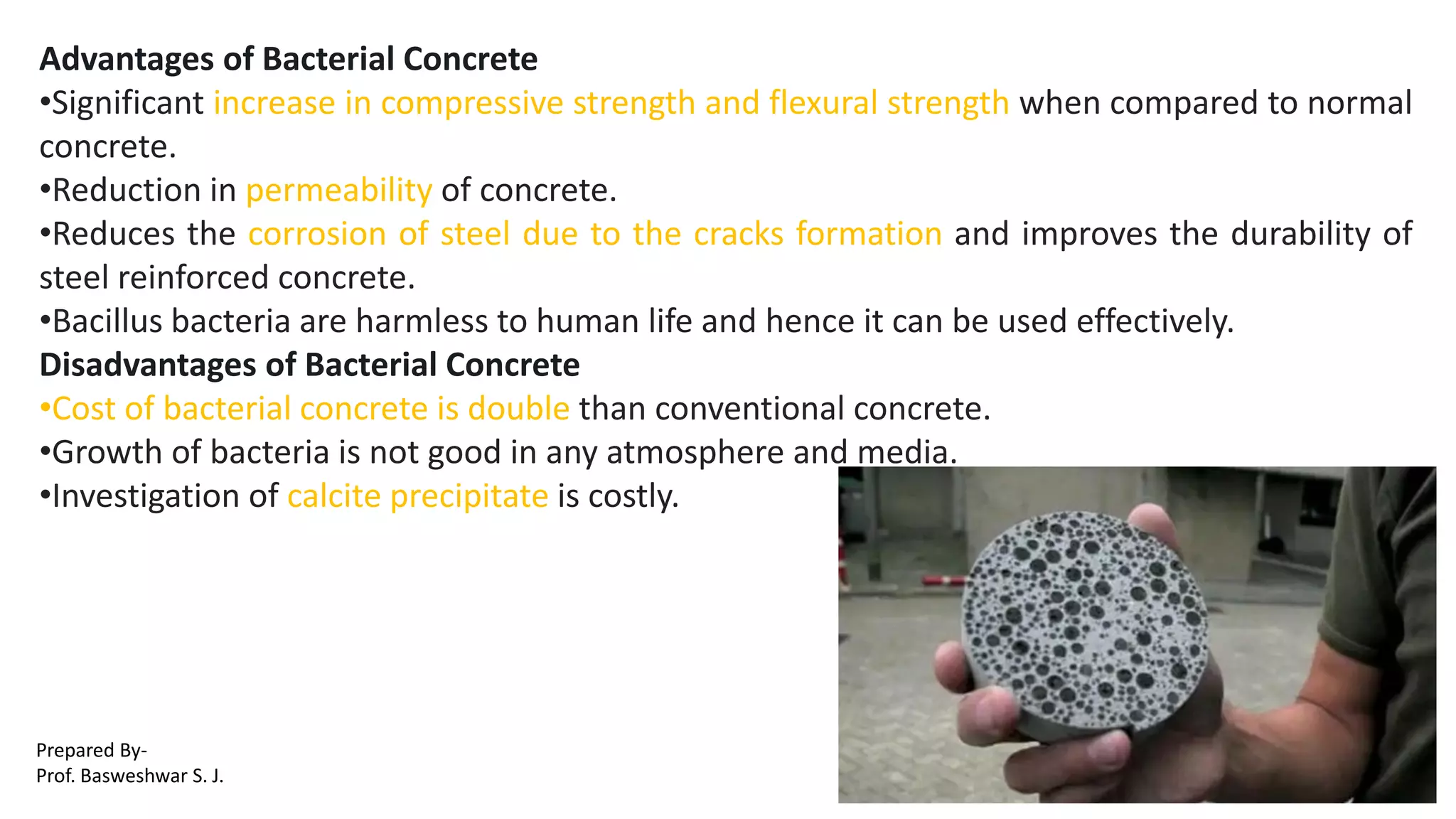
Advantages of Bacterial Concrete
•Significant increase in compressive strength and flexural strength when compared to normal
concrete.
•Reduction in permeability of concrete.
•Reduces the corrosion of steel due to the cracks formation and improves the durability of
steel reinforced concrete.
•Bacillus bacteria are harmless to human life and hence it can be used effectively.
Disadvantages of Bacterial Concrete
•Cost of bacterial concrete is double than conventional concrete.
•Growth of bacteria is not good in any atmosphere and media.
•Investigation of calcite precipitate is costly.
Prepared By-
Prof. Basweshwar S. J.
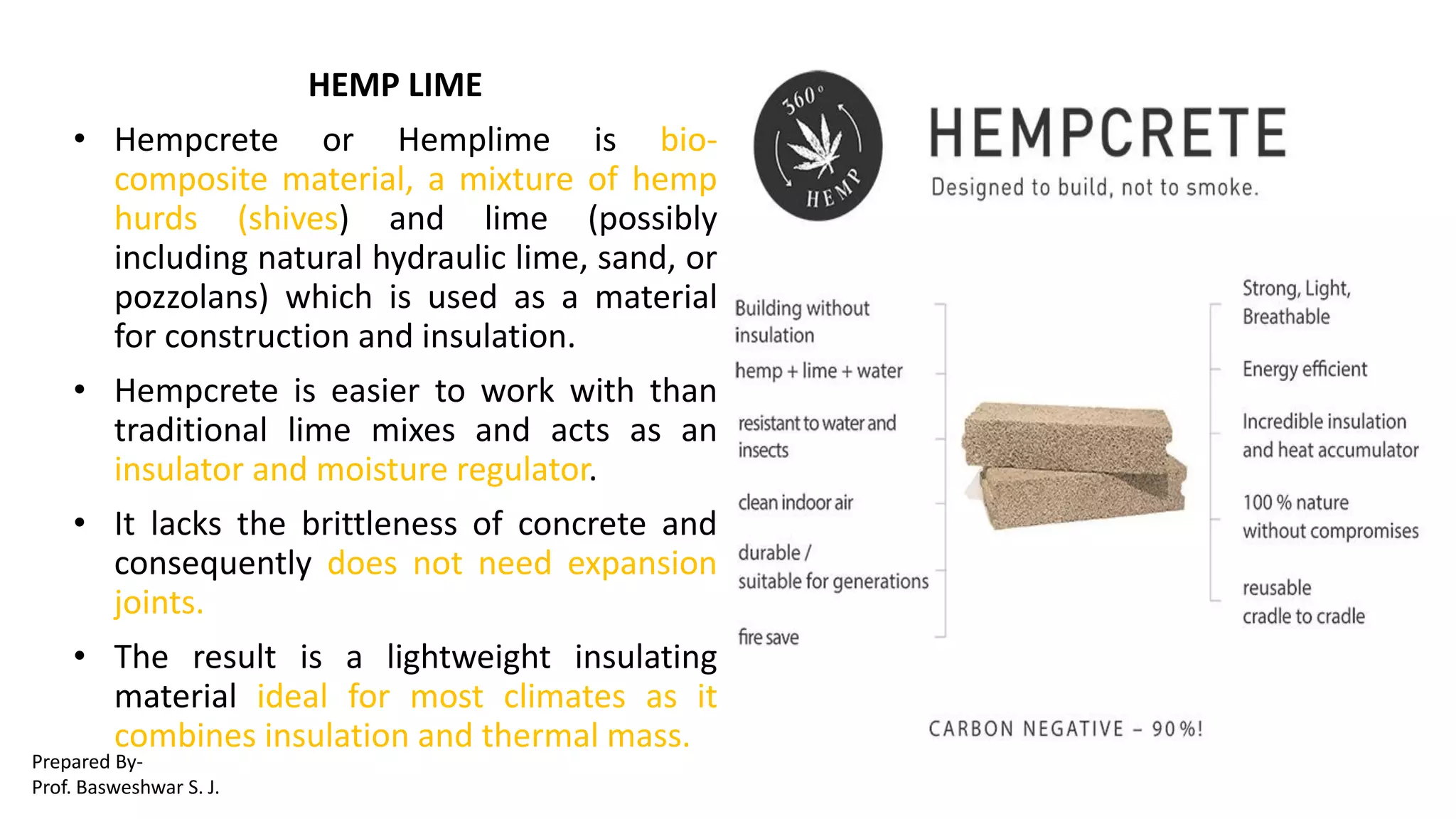
HEMP LIME
• Hempcrete or Hemplime is bio-
composite material, a mixture of hemp
hurds (shives) and lime (possibly
including natural hydraulic lime, sand, or
pozzolans) which is used as a material
for construction and insulation.
• Hempcrete is easier to work with than
traditional lime mixes and acts as an
insulator and moisture regulator.
• It lacks the brittleness of concrete and
consequently does not need expansion
joints.
• The result is a lightweight insulating
material ideal for most climates as it
combines insulation and thermal mass.
Prepared By-
Prof. Basweshwar S. J.
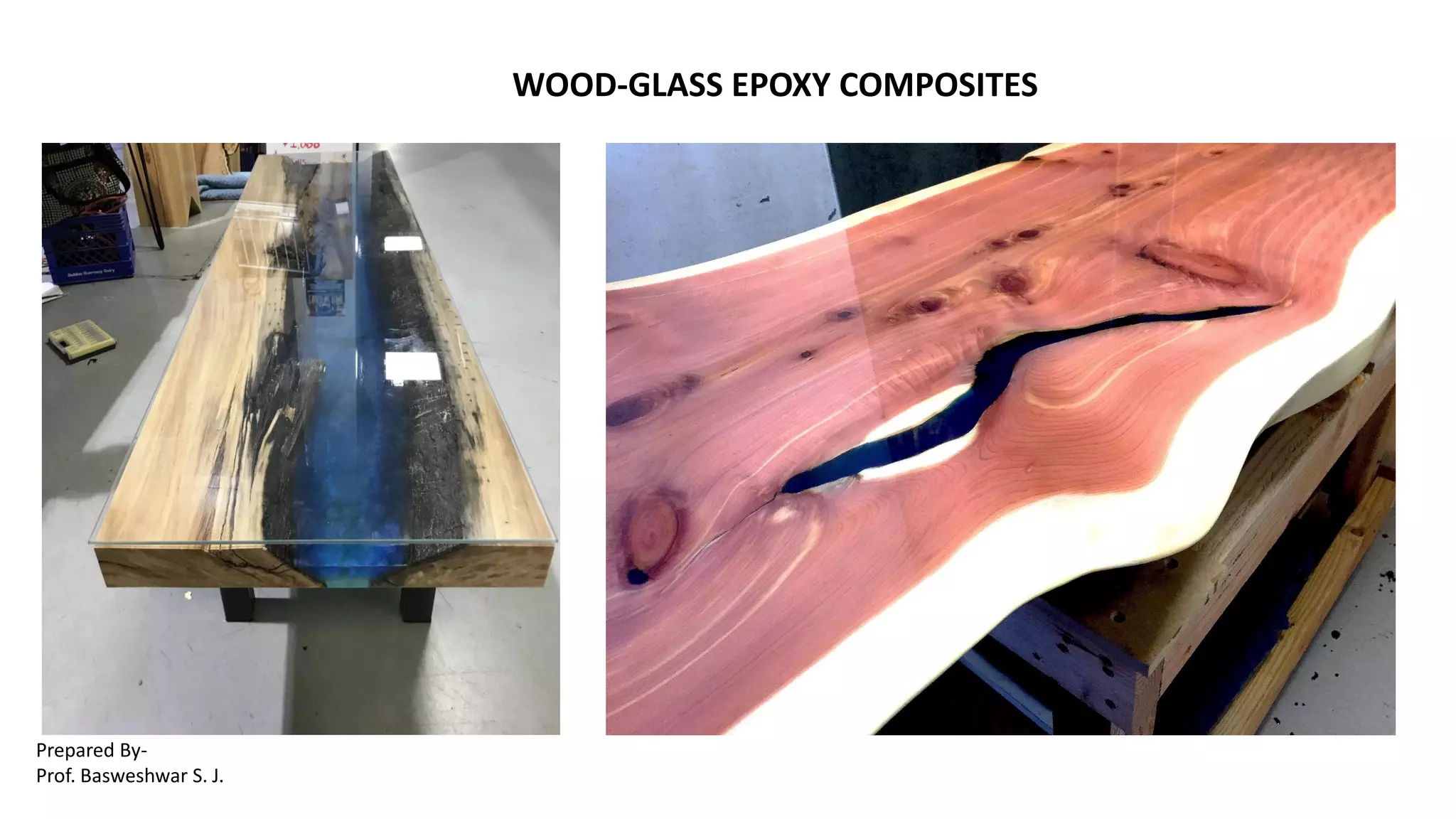
WOOD-GLASS EPOXY COMPOSITES
Prepared By-
Prof. Basweshwar S. J.
BAMBOO.
Bamboo as a building material has high compressive strength and low weight has been one of the most used
building material as support for concrete, especially in those locations where it is found in abundance.
Advantages of Bamboo as a Building Material
The various advantages of bamboo are as mentioned below:
Tensile strength:
Fire Resistance:
Elasticity:
Weight of bamboo:
Unlike other building materials like cement and asbestos, bamboo poses no danger to health.
They are cost effective and easy to use.
They are especially in great demand in earthquake prone areas.
Disadvantages of Bamboo
They require preservation
Shrinkage: Bamboo shrinks much greater than any other type of timber especially when it loses water.
Durability: Bamboo should be sufficiently treated against insect or fungus attack before being utilized for building purposes.
Jointing: Despite prevalence of various techniques of jointing, structural reliability of bamboo is questionable.
Prepared By-
Prof. Basweshwar S. J.

Module V MATERIAL TESTING AND EVALUATION [BTCVE506A]

  • 1.
    MODULE-V New Techniques inConstructions—Introduction,3D printing, photo catalytic admixture, self-healing concrete, zero cement concrete ,hemp lime, wood-glass epoxy composites, bamboo. Prepared By- Prof. Basweshwar S. J.
  • 2.
    New Techniques inConstructions- • The development of innovative new building materials has allowed architects to better realize their visions, as they make more daring structures possible due to their improved strength, flexibility and durability. • The next decade is likely to be instrumental in seeing some key applications realized commercially and being adopted by the mass market. Prepared By- Prof. Basweshwar S. J.
  • 3.
    • Solar-Harvesting Roads •Cooling system in bricks • Pollution absorbing bricks • Self healing concrete • Light Generating Cement Prepared By- Prof. Basweshwar S. J.
  • 4.
    Introduction • Innovation isa wide concept that includes improvements in processes, products or services. • It involves incorporating new ideas which generate changes that help solve the needs of a company and so increase its competitiveness. Prepared By- Prof. Basweshwar S. J.
  • 5.
    3D printing The 3Dprinting process builds a three-dimensional object from a computer-aided design (CAD) model, usually by successively adding material layer by layer, which is why it is also called additive manufacturing, unlike conventional machining, casting and forging processes, where material is removed from a stock item (subtractive manufacturing) or poured into a mold and shaped by means of dies, presses and hammers. Prepared By- Prof. Basweshwar S. J.
  • 6.
    Photo catalytic admixture Aphotocatalyst is a material which absorbs light to bring it to higher energy level and provides such energy to a reacting substance to make a chemical reaction occur. Prepared By- Prof. Basweshwar S. J.
  • 7.
  • 8.
    ZERO CEMENT CONCRETE •Zero Cement Concrete is an improved version of Geo-polymer Concrete wherein the thermal activation of the binding materials such as Fly Ash and Ground Granulated Blast Furnace Slag (GGBS) is done with the help of alkaline solution namely Sodium Hydroxide (NaOH) and Sodium Silicate (Na2SiO3). • Additionally, Steel Slag was partially replaced with Blue Metal in order to make it both durable and economical. Prepared By- Prof. Basweshwar S. J.
  • 9.
    SELF-HEALING CONCRETE • Bacterialconcrete or self healing concrete fills up the cracks developed in structures by the help of bacterial reaction in the concrete after hardening. • But due to human mistakes, incorrect handling and unskilled labors. • An efficient building is hard to sustain its designed life. • Many problems like weathering, cracks, leaks and bending etc., arises after the construction. The common problem found- • Concrete expands and shrinks due to temperature differences • Settlement of structure • Due to heavy load applied • Due to loss of water from concrete surface shrinkage occurs • Insufficient vibration at the time of laying the concrete • Improper cover provided during concreting • High water cement ratio to make the concrete workable • Due to corrosion of reinforcement steelPrepared By- Prof. Basweshwar S. J.
  • 10.
    Advantages of BacterialConcrete •Significant increase in compressive strength and flexural strength when compared to normal concrete. •Reduction in permeability of concrete. •Reduces the corrosion of steel due to the cracks formation and improves the durability of steel reinforced concrete. •Bacillus bacteria are harmless to human life and hence it can be used effectively. Disadvantages of Bacterial Concrete •Cost of bacterial concrete is double than conventional concrete. •Growth of bacteria is not good in any atmosphere and media. •Investigation of calcite precipitate is costly. Prepared By- Prof. Basweshwar S. J.
  • 11.
    HEMP LIME • Hempcreteor Hemplime is bio- composite material, a mixture of hemp hurds (shives) and lime (possibly including natural hydraulic lime, sand, or pozzolans) which is used as a material for construction and insulation. • Hempcrete is easier to work with than traditional lime mixes and acts as an insulator and moisture regulator. • It lacks the brittleness of concrete and consequently does not need expansion joints. • The result is a lightweight insulating material ideal for most climates as it combines insulation and thermal mass. Prepared By- Prof. Basweshwar S. J.
  • 12.
    WOOD-GLASS EPOXY COMPOSITES PreparedBy- Prof. Basweshwar S. J.
  • 13.
    BAMBOO. Bamboo as abuilding material has high compressive strength and low weight has been one of the most used building material as support for concrete, especially in those locations where it is found in abundance. Advantages of Bamboo as a Building Material The various advantages of bamboo are as mentioned below: Tensile strength: Fire Resistance: Elasticity: Weight of bamboo: Unlike other building materials like cement and asbestos, bamboo poses no danger to health. They are cost effective and easy to use. They are especially in great demand in earthquake prone areas. Disadvantages of Bamboo They require preservation Shrinkage: Bamboo shrinks much greater than any other type of timber especially when it loses water. Durability: Bamboo should be sufficiently treated against insect or fungus attack before being utilized for building purposes. Jointing: Despite prevalence of various techniques of jointing, structural reliability of bamboo is questionable. Prepared By- Prof. Basweshwar S. J.