   Role Based Security
   Pre – Defined roles Installed with CA Service
    Desk
   Levels of CA Service desk Security
   Create Access Data Types
   Create Contacts & groups
   Create Data Partitions
   Access Types & Roles are primary components
    you use to control CA Service Desk Manager
    Security
   Pre- Defines Roles are assigned to align with
    ITIL v3 best Practices & reduce amount of site-
    specific customization required


                       Microsoft Word
                          Document
 Object Manager Controls all Service Desk
  Security
 3 Levels of Security

System Level :
 Implemented in Object layer

 Secures whole collection of objects

 Implemented by Function Access tab of an

  access type
Record Level Security :
Controls access to records in DBI Tables

Implemented by Data Partitions

Implemented in Logical DB Layer


Column Level Security :
Controls access to same field in every Record

Implemented by web page adaptations

Implemented in Logical DB Layer
    Defining Access type & relating them to contact
     is key to setup Security in Service Desk
    Using Access Types, We can Control all
     Security related aspects including:
3.   Access & Grant levels
4.   Web Interface Defaults
5.   User Authentication
6.   Internal Logs & Function Access Privileges
7.   Data Partition
   Users are defined as Contacts in Service Desk
   Group is a collection of users that represent a
    specific area of responsibility in Service Desk
   A user’s contact record identifies all info that
    system need
   Group enables you to assign responsibility for
    resolving a ticket when the responsibility is
    shared among individuals
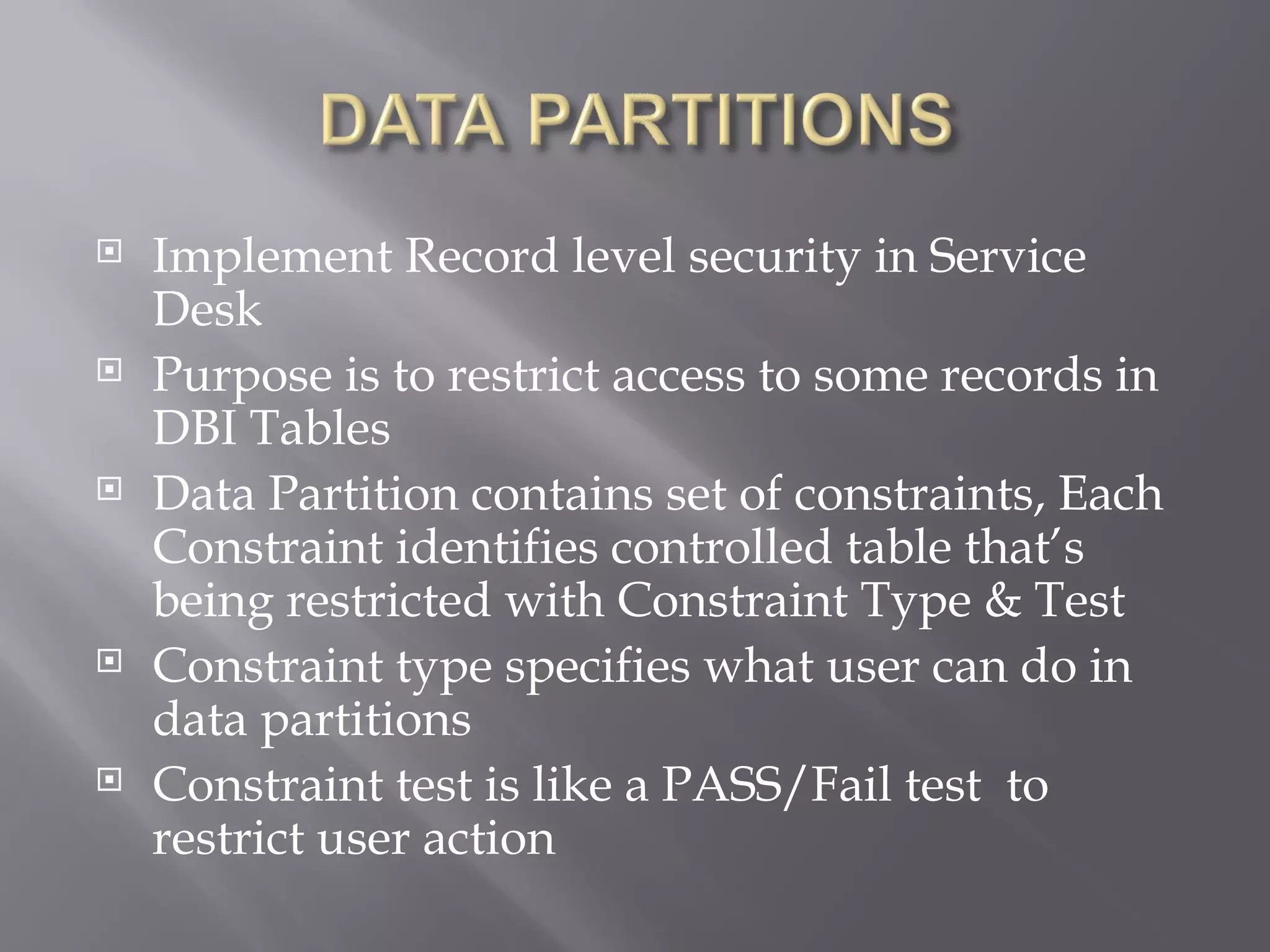
   Implement Record level security in Service
    Desk
   Purpose is to restrict access to some records in
    DBI Tables
   Data Partition contains set of constraints, Each
    Constraint identifies controlled table that’s
    being restricted with Constraint Type & Test
   Constraint type specifies what user can do in
    data partitions
   Constraint test is like a PASS/Fail test to
    restrict user action

Module – implement security

  • 2.
    Role Based Security  Pre – Defined roles Installed with CA Service Desk  Levels of CA Service desk Security  Create Access Data Types  Create Contacts & groups  Create Data Partitions
  • 3.
    Access Types & Roles are primary components you use to control CA Service Desk Manager Security
  • 4.
    Pre- Defines Roles are assigned to align with ITIL v3 best Practices & reduce amount of site- specific customization required Microsoft Word Document
  • 5.
     Object ManagerControls all Service Desk Security  3 Levels of Security System Level :  Implemented in Object layer  Secures whole collection of objects  Implemented by Function Access tab of an access type
  • 6.
    Record Level Security: Controls access to records in DBI Tables Implemented by Data Partitions Implemented in Logical DB Layer Column Level Security : Controls access to same field in every Record Implemented by web page adaptations Implemented in Logical DB Layer
  • 7.
    Defining Access type & relating them to contact is key to setup Security in Service Desk  Using Access Types, We can Control all Security related aspects including: 3. Access & Grant levels 4. Web Interface Defaults 5. User Authentication 6. Internal Logs & Function Access Privileges 7. Data Partition
  • 8.
    Users are defined as Contacts in Service Desk  Group is a collection of users that represent a specific area of responsibility in Service Desk  A user’s contact record identifies all info that system need  Group enables you to assign responsibility for resolving a ticket when the responsibility is shared among individuals
  • 9.
    Implement Record level security in Service Desk  Purpose is to restrict access to some records in DBI Tables  Data Partition contains set of constraints, Each Constraint identifies controlled table that’s being restricted with Constraint Type & Test  Constraint type specifies what user can do in data partitions  Constraint test is like a PASS/Fail test to restrict user action