Security Clearance
Presented by:
Kevin Prow, Chief Information Officer
William Dewey, Implementation Manager
Security Roles (Enterprise)
• “Sec Roles”
• Users can have many security roles
• Gives access to forms, reports, document types, functions, customer
statuses, widgets
• Prohibits access to document types, custom data fields
• Denies read/write permissions on certain fields on forms
Security Roles (Enterprise)
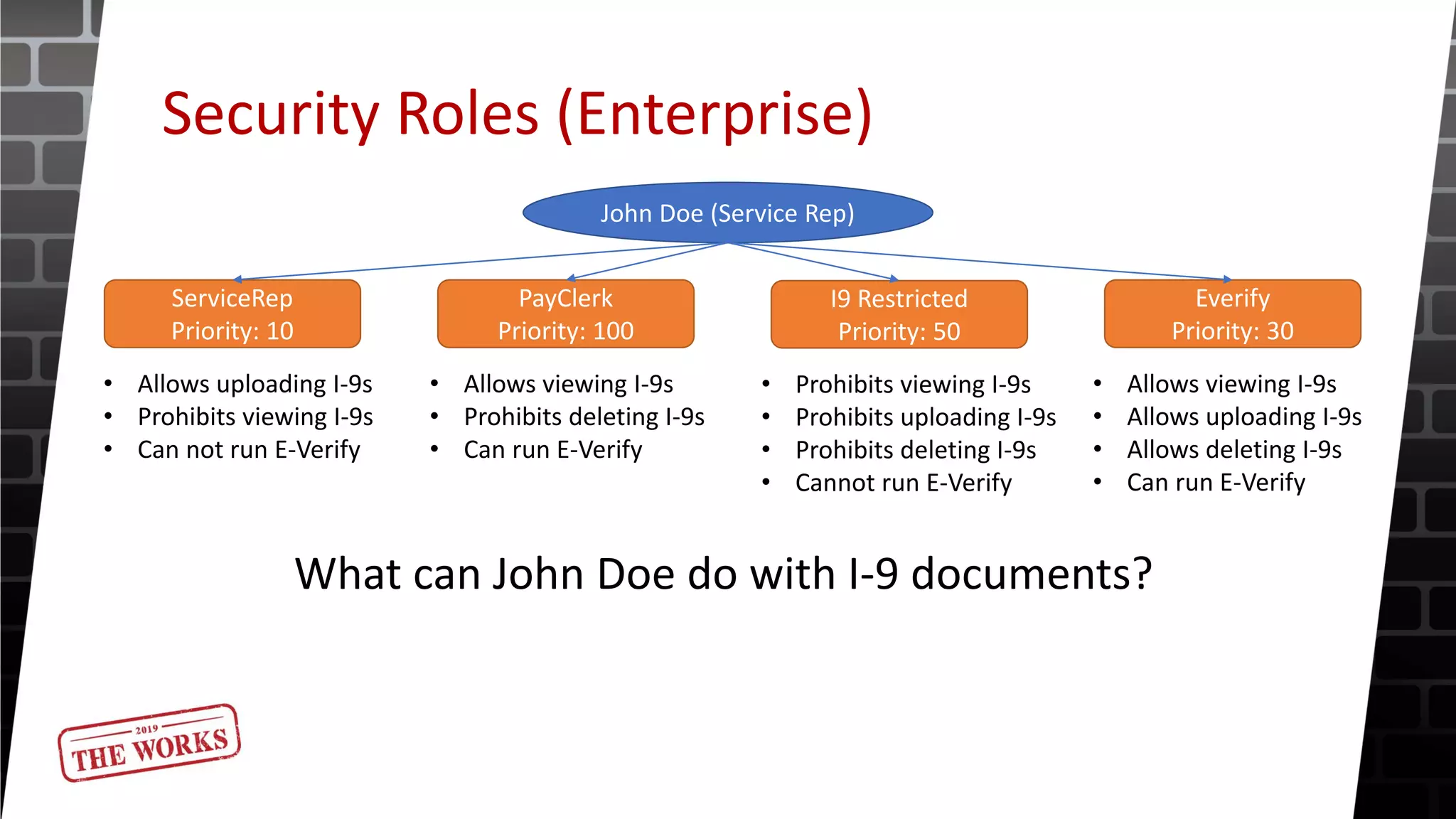
John Doe (Service Rep)
ServiceRep
Priority: 10
PayClerk
Priority: 100
I9 Restricted
Priority: 50
Everify
Priority: 30
• Allows uploading I-9s
• Prohibits viewing I-9s
• Can not run E-Verify
• Allows viewing I-9s
• Prohibits deleting I-9s
• Can run E-Verify
• Prohibits viewing I-9s
• Prohibits uploading I-9s
• Prohibits deleting I-9s
• Cannot run E-Verify
• Allows viewing I-9s
• Allows uploading I-9s
• Allows deleting I-9s
• Can run E-Verify
What can John Doe do with I-9 documents?
Security Roles (Enterprise)
• Challenges
• Conflicting permissions
• Determining why something is/isn’t available
• Difficult to administer (tends to need Support assistance)
• Hard to report on/audit
Security Groups (Beyond)
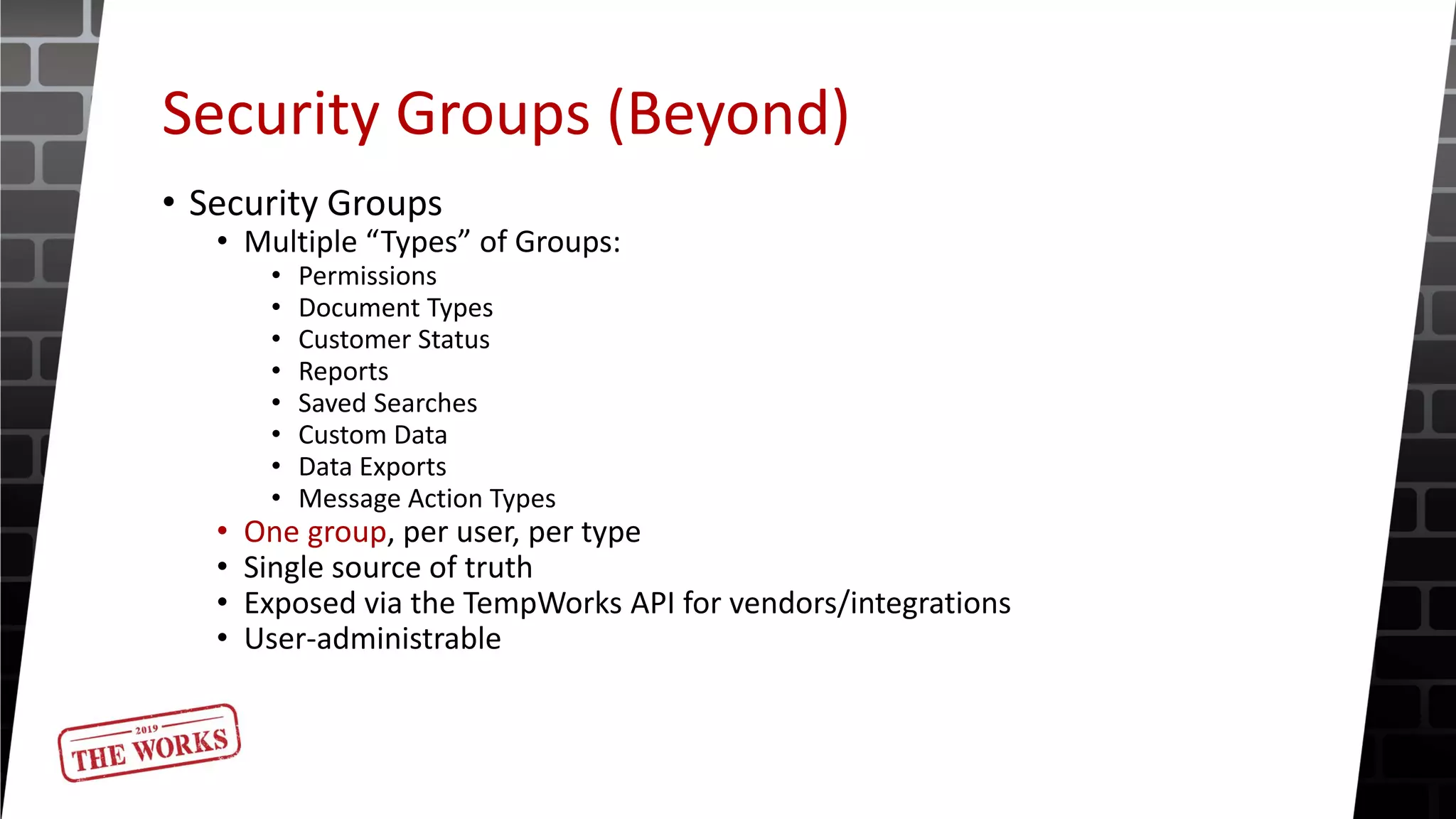
• Security Groups
• Multiple “Types” of Groups:
• Permissions
• Document Types
• Customer Status
• Reports
• Saved Searches
• Custom Data
• Data Exports
• Message Action Types
• One group, per user, per type
• Single source of truth
• Exposed via the TempWorks API for vendors/integrations
• User-administrable
Security Groups (Beyond)
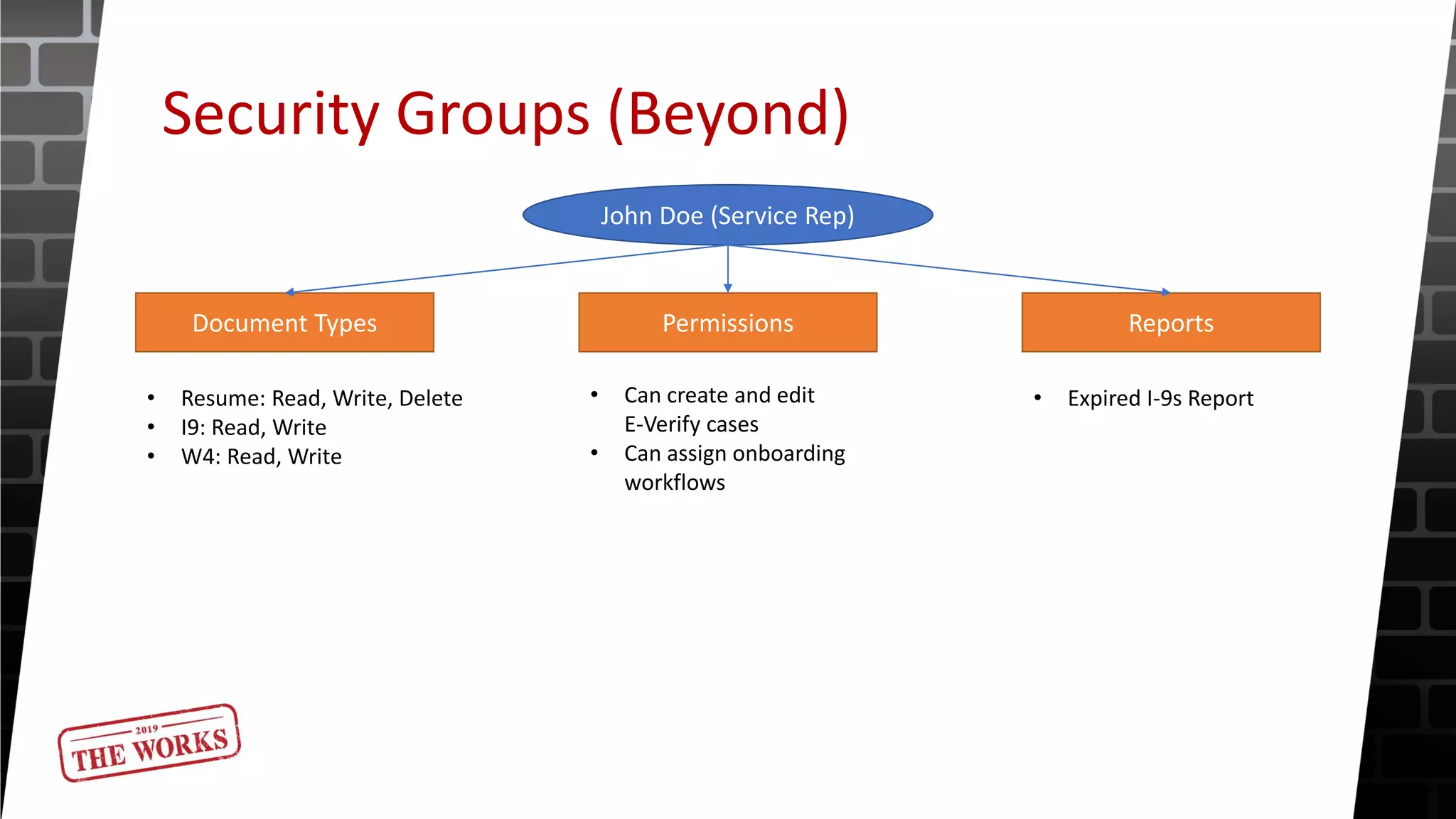
John Doe (Service Rep)
Document Types Permissions Reports
• Resume: Read, Write, Delete
• I9: Read, Write
• W4: Read, Write
• Can create and edit
E-Verify cases
• Can assign onboarding
workflows
• Expired I-9s Report
Security Groups vs. Teams
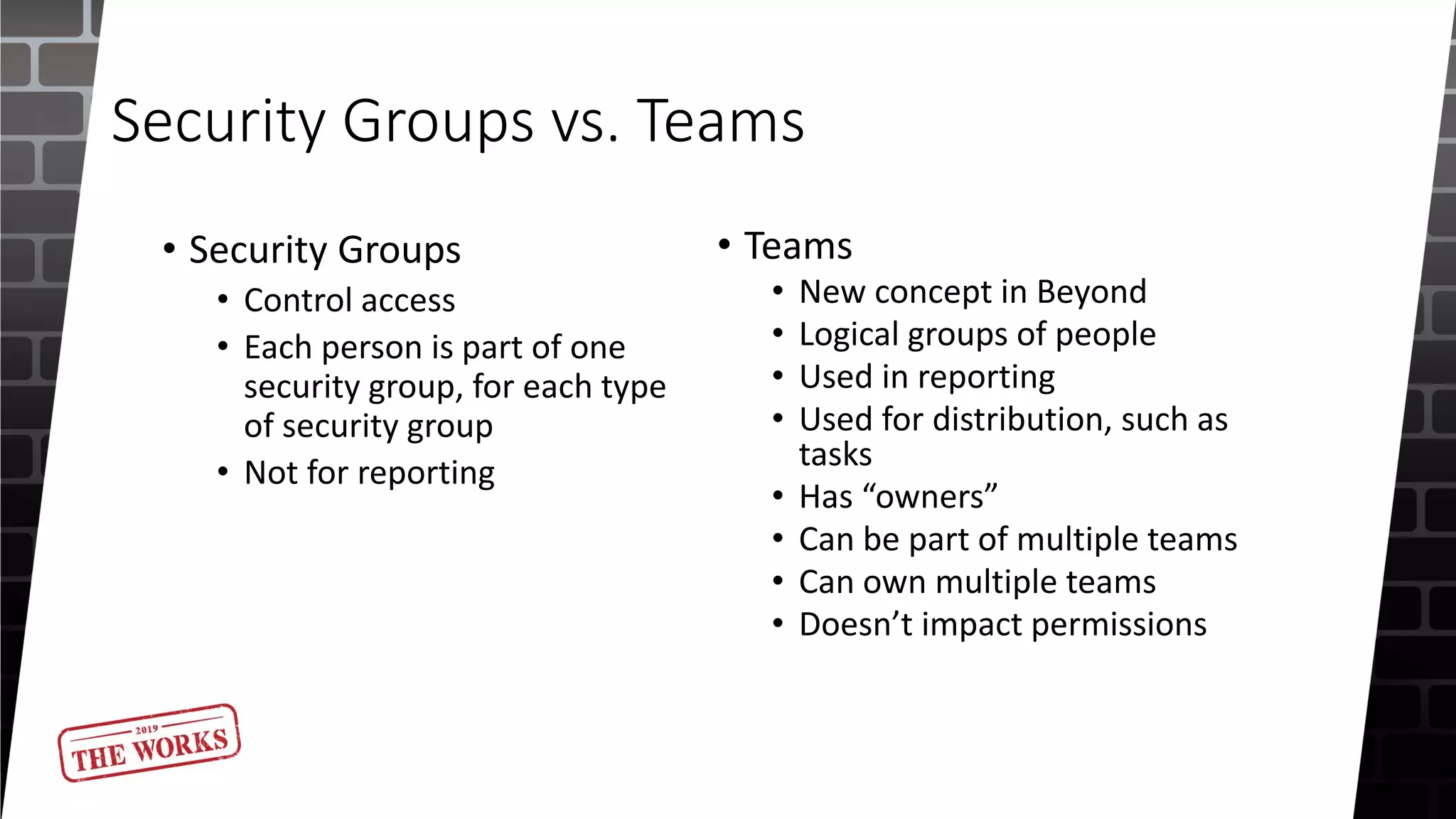
• Security Groups
• Control access
• Each person is part of one
security group, for each type
of security group
• Not for reporting
• Teams
• New concept in Beyond
• Logical groups of people
• Used in reporting
• Used for distribution, such as
tasks
• Has “owners”
• Can be part of multiple teams
• Can own multiple teams
• Doesn’t impact permissions
Teams
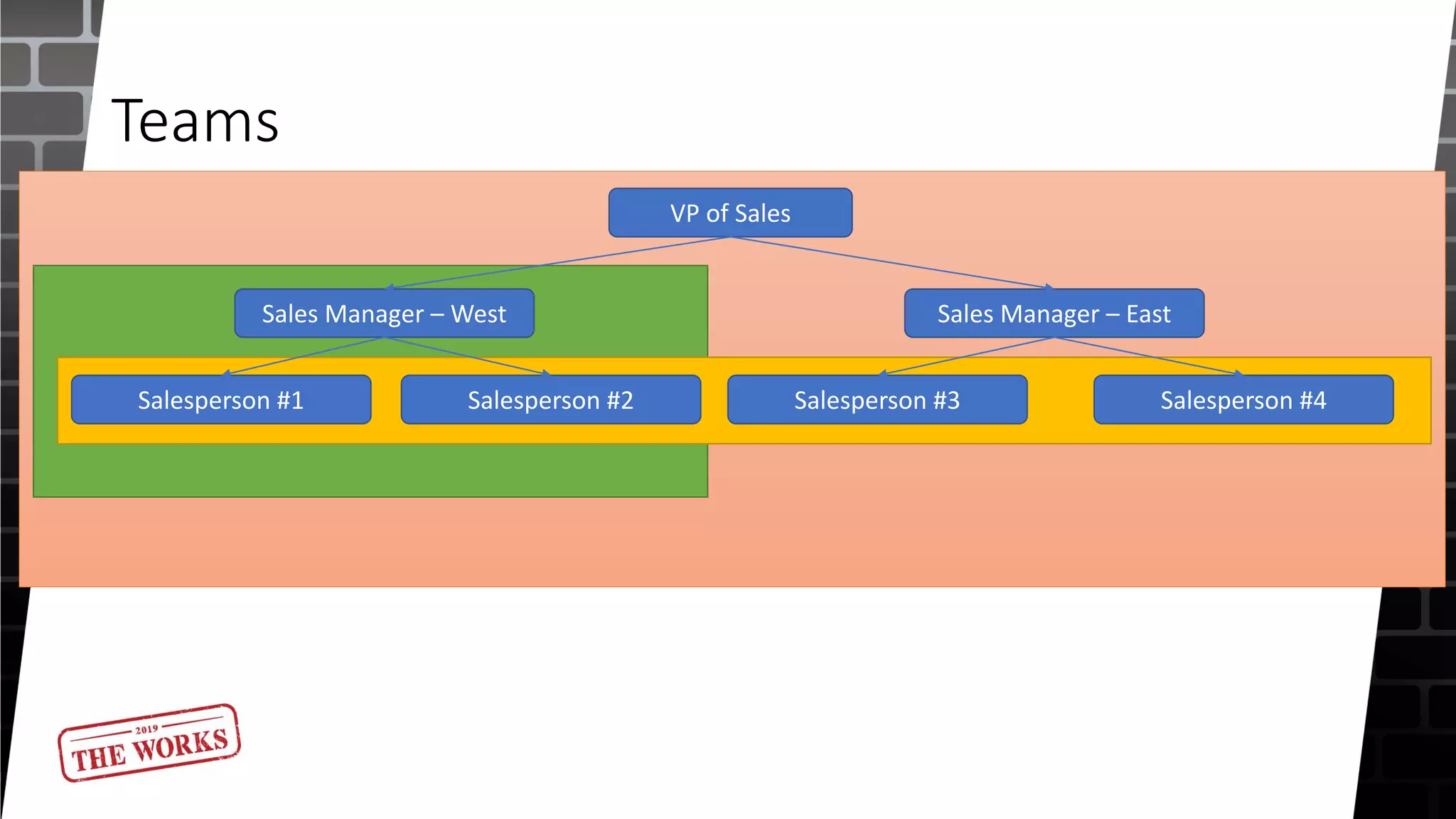
VP of Sales
Sales Manager – West Sales Manager – East
Salesperson #1 Salesperson #2 Salesperson #3 Salesperson #4
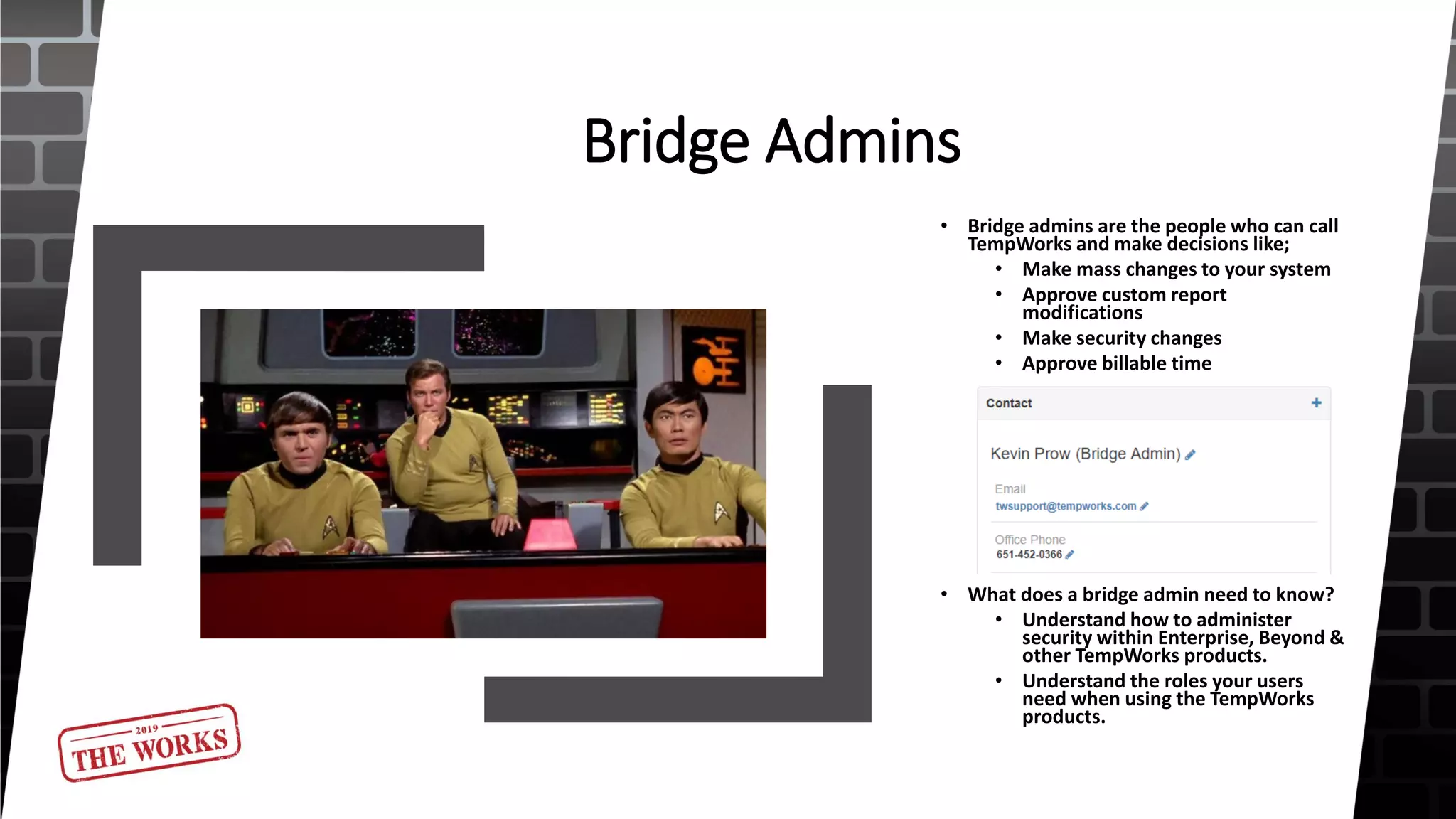
Bridge Admins
• Bridge admins are the people who can call
TempWorks and make decisions like;
• Make mass changes to your system
• Approve custom report
modifications
• Make security changes
• Approve billable time
• What does a bridge admin need to know?
• Understand how to administer
security within Enterprise, Beyond &
other TempWorks products.
• Understand the roles your users
need when using the TempWorks
products.
HAVE NO
IDEA WHAT I
AM DOING
Step 2
Use our readily available tools to learn about security
• Try searching our knowledge base
• Try using our community form
• Come to a super awesome security presentation at The Works
• Still confused? Contact a TempWorks representative.
Step 2
Understand the issue you are trying to solve
• Getting details around a scenario is very important when trying to find an
answer.
• Think about possible solutions you may already know.
Step 1 Don’t Panic
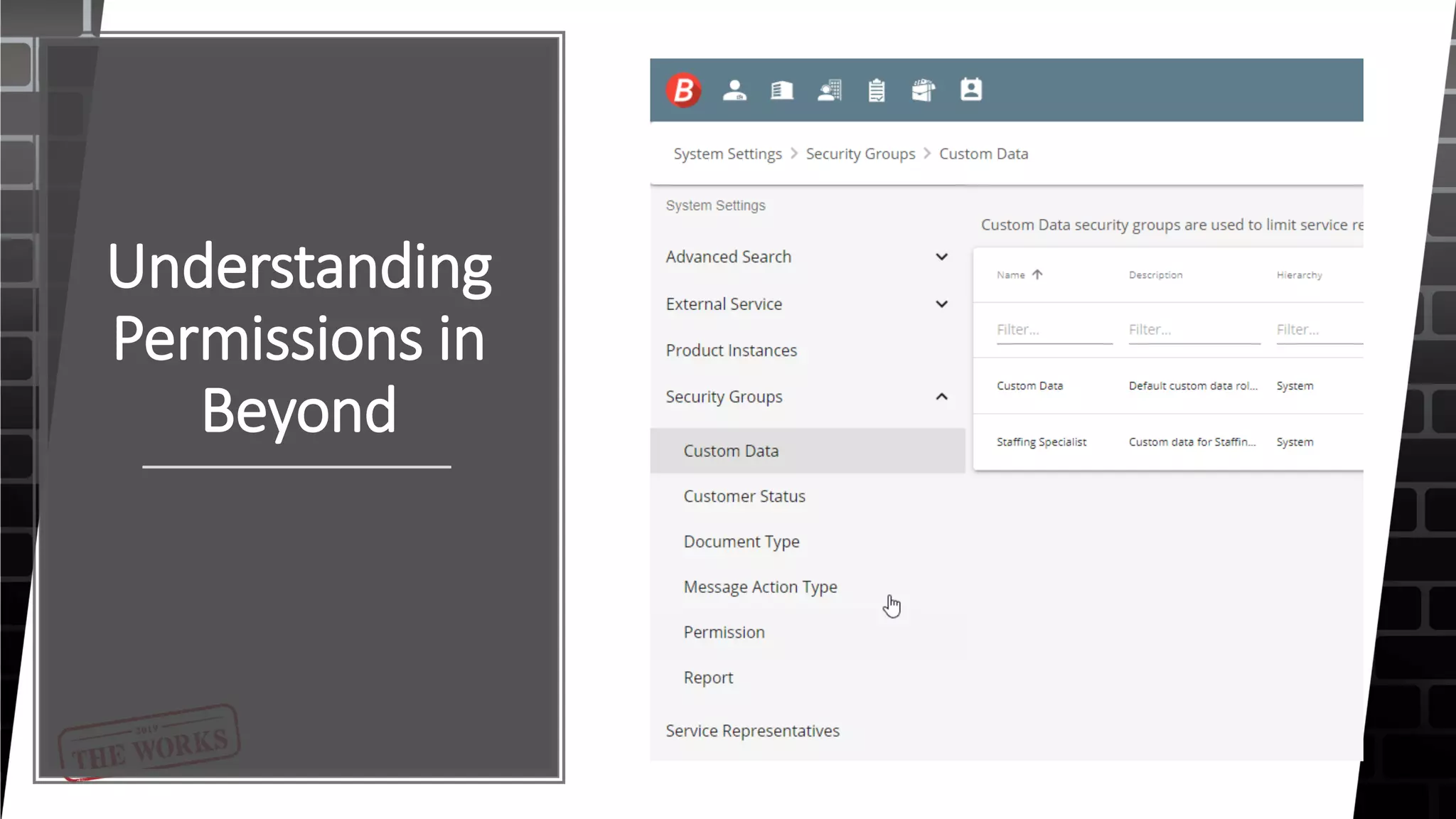
Understanding
Permissions in
Beyond
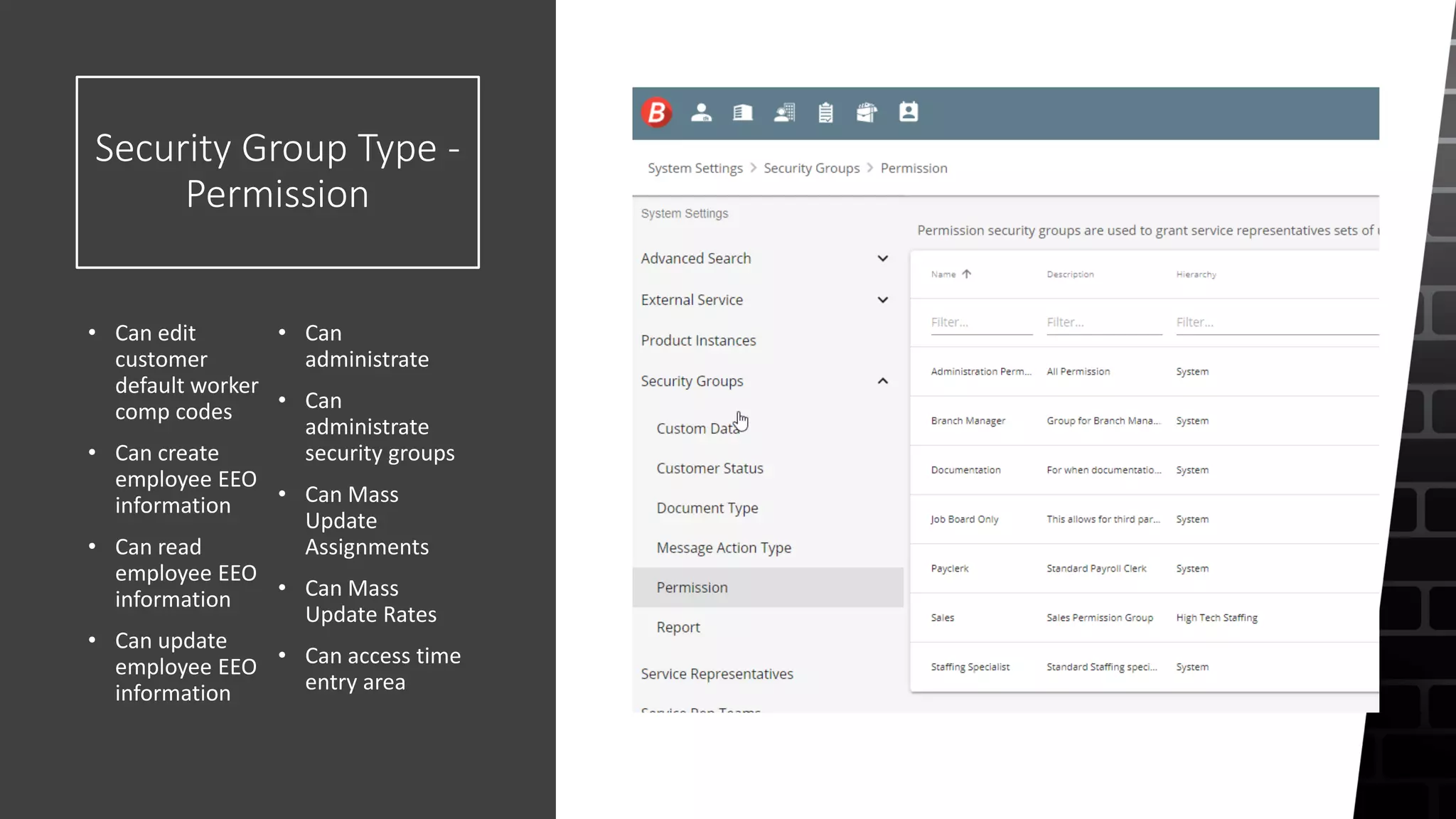
Security Group Type -
Permission
• Can edit
customer
default worker
comp codes
• Can create
employee EEO
information
• Can read
employee EEO
information
• Can update
employee EEO
information
• Can
administrate
• Can
administrate
security groups
• Can Mass
Update
Assignments
• Can Mass
Update Rates
• Can access time
entry area
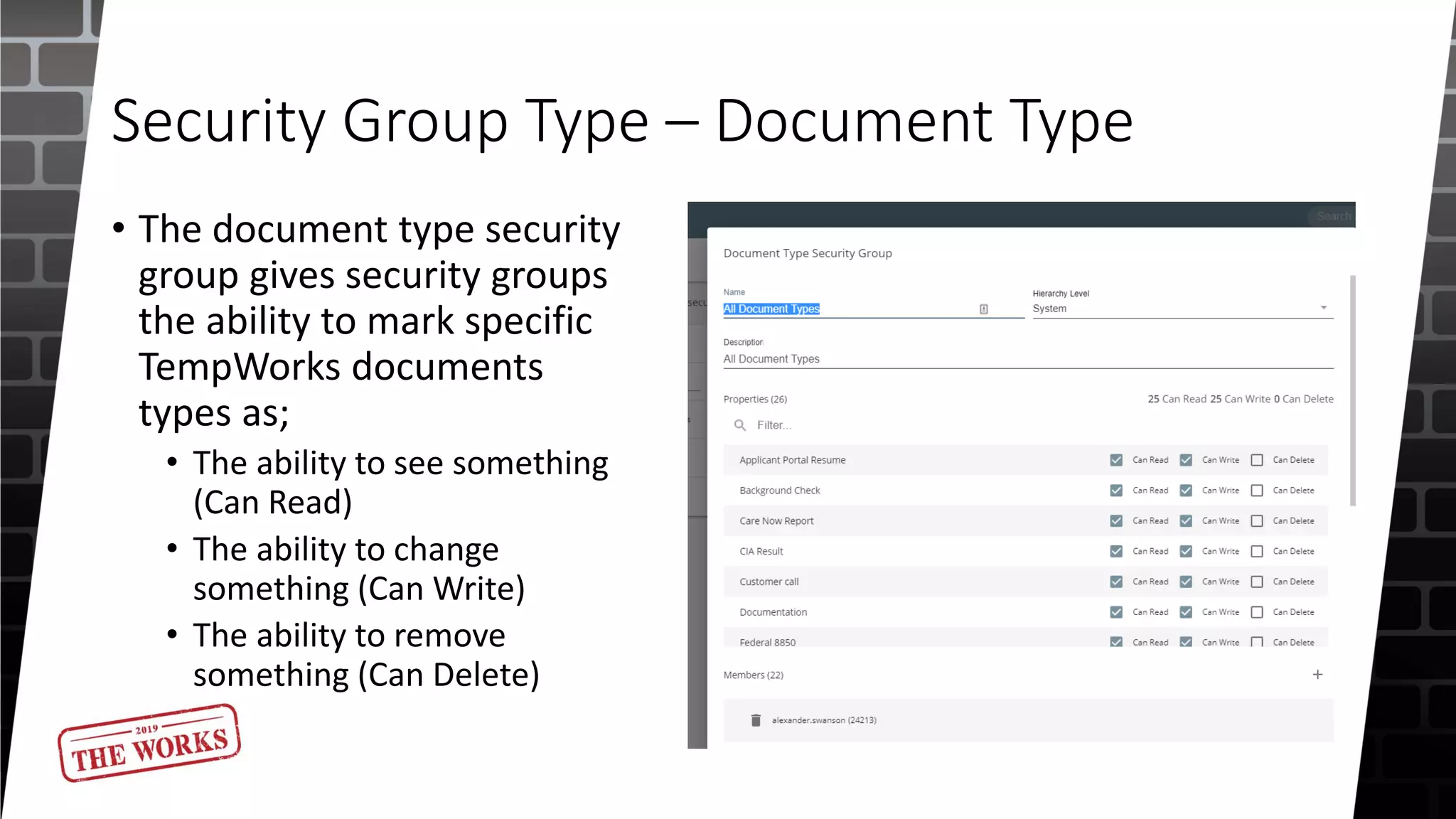
Security Group Type – Document Type
• The document type security
group gives security groups
the ability to mark specific
TempWorks documents
types as;
• The ability to see something
(Can Read)
• The ability to change
something (Can Write)
• The ability to remove
something (Can Delete)
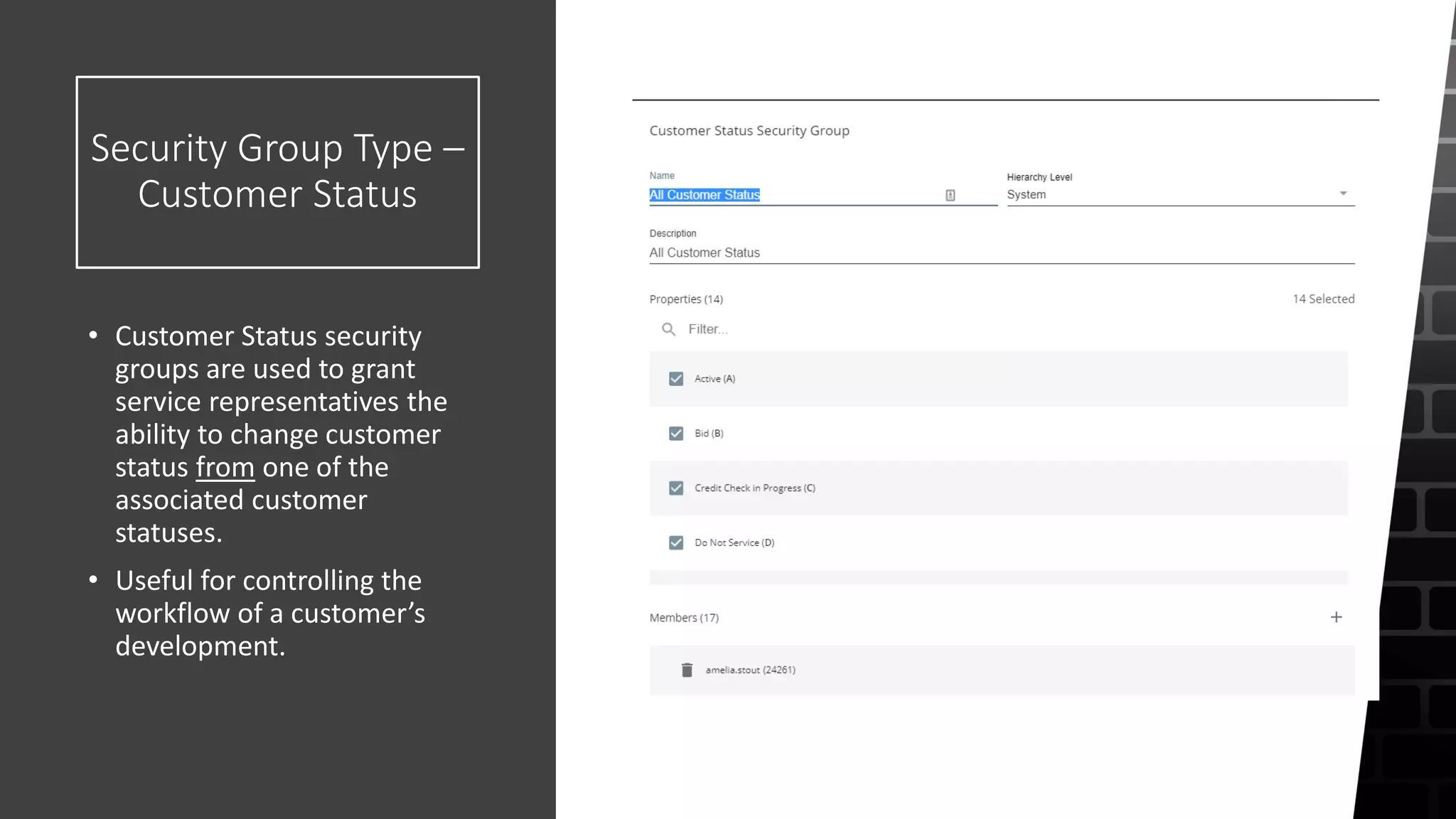
Security Group Type –
Customer Status
• Customer Status security
groups are used to grant
service representatives the
ability to change customer
status from one of the
associated customer
statuses.
• Useful for controlling the
workflow of a customer’s
development.
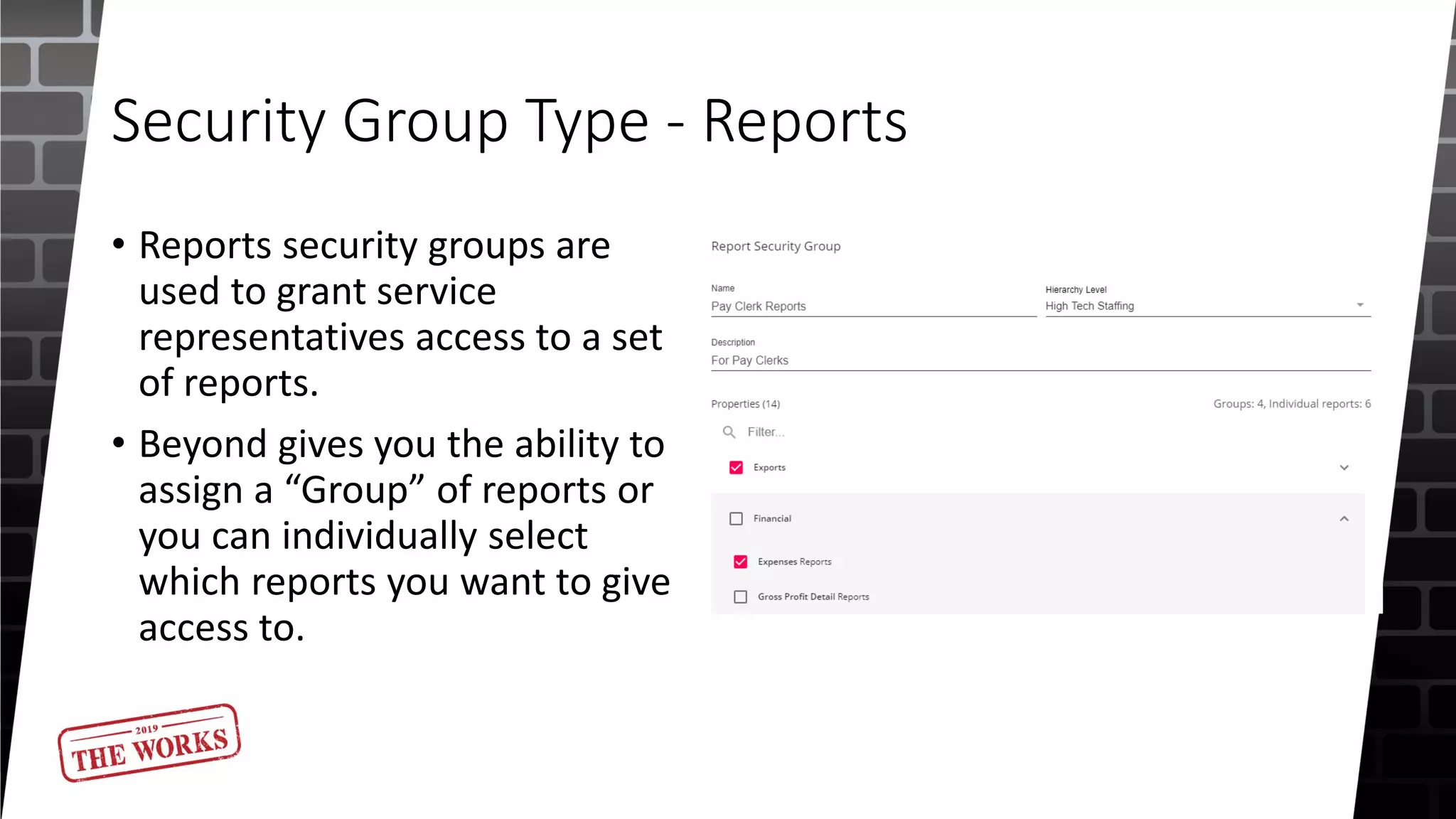
Security Group Type - Reports
• Reports security groups are
used to grant service
representatives access to a set
of reports.
• Beyond gives you the ability to
assign a “Group” of reports or
you can individually select
which reports you want to give
access to.
Security Group Type –
Custom Data
• Custom Data security
groups are used to limit
service representatives
access to read/write access
to custom data properties.
• Restrict the ability to see
the custom data (Deny
Read)
• Restrict the ability to edit
the custom data (Deny
Write)
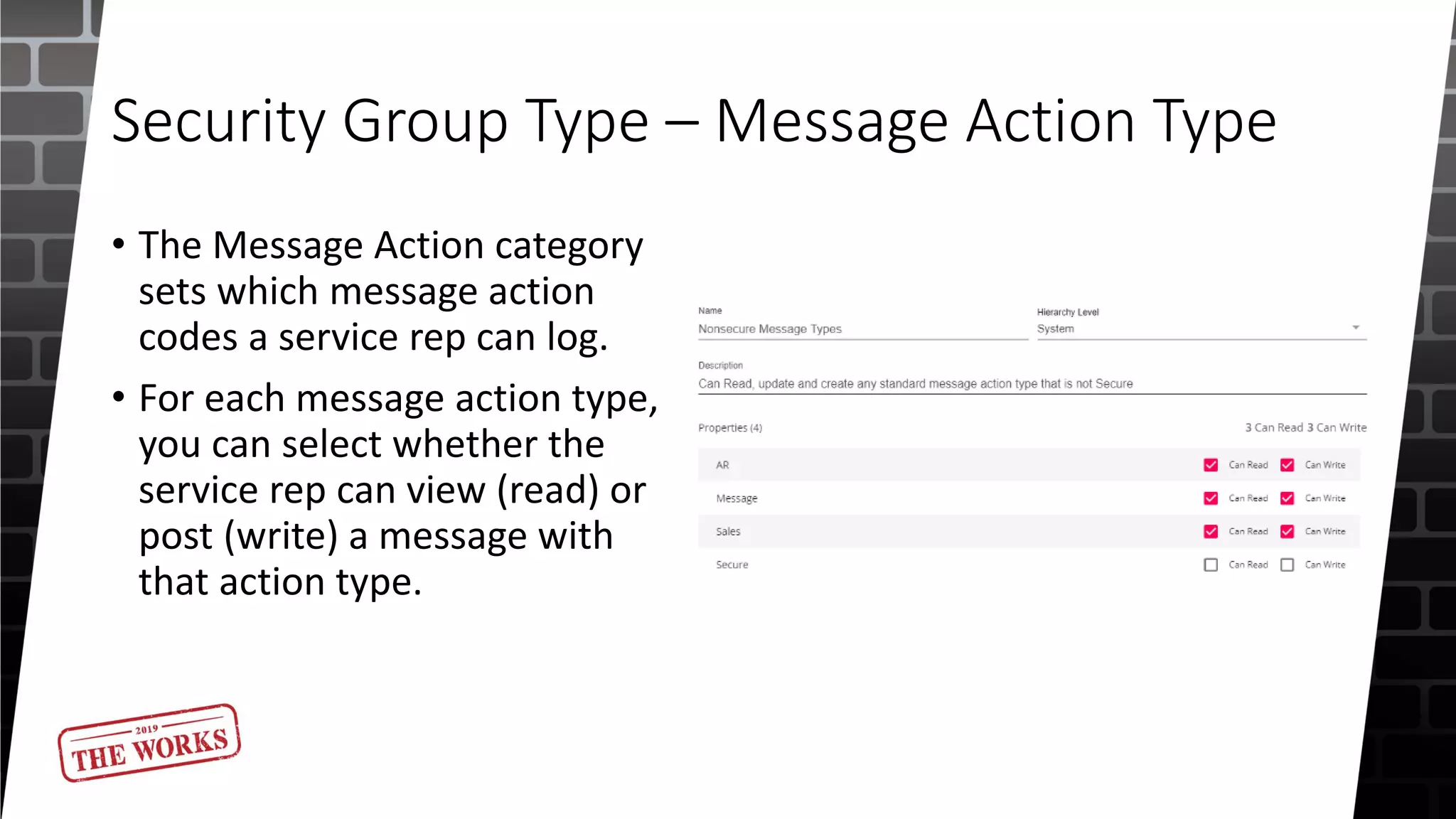
Security Group Type – Message Action Type
• The Message Action category
sets which message action
codes a service rep can log.
• For each message action type,
you can select whether the
service rep can view (read) or
post (write) a message with
that action type.
Security Clearance – Q & A
Presented by:
Kevin Prow, Chief Information Officer
William Dewey, Implementation Manager

The Works 2019 - Breakout Session: Security Clearance

  • 1.
    Security Clearance Presented by: KevinProw, Chief Information Officer William Dewey, Implementation Manager
  • 2.
    Security Roles (Enterprise) •“Sec Roles” • Users can have many security roles • Gives access to forms, reports, document types, functions, customer statuses, widgets • Prohibits access to document types, custom data fields • Denies read/write permissions on certain fields on forms
  • 3.
    Security Roles (Enterprise) JohnDoe (Service Rep) ServiceRep Priority: 10 PayClerk Priority: 100 I9 Restricted Priority: 50 Everify Priority: 30 • Allows uploading I-9s • Prohibits viewing I-9s • Can not run E-Verify • Allows viewing I-9s • Prohibits deleting I-9s • Can run E-Verify • Prohibits viewing I-9s • Prohibits uploading I-9s • Prohibits deleting I-9s • Cannot run E-Verify • Allows viewing I-9s • Allows uploading I-9s • Allows deleting I-9s • Can run E-Verify What can John Doe do with I-9 documents?
  • 4.
    Security Roles (Enterprise) •Challenges • Conflicting permissions • Determining why something is/isn’t available • Difficult to administer (tends to need Support assistance) • Hard to report on/audit
  • 5.
    Security Groups (Beyond) •Security Groups • Multiple “Types” of Groups: • Permissions • Document Types • Customer Status • Reports • Saved Searches • Custom Data • Data Exports • Message Action Types • One group, per user, per type • Single source of truth • Exposed via the TempWorks API for vendors/integrations • User-administrable
  • 6.
    Security Groups (Beyond) JohnDoe (Service Rep) Document Types Permissions Reports • Resume: Read, Write, Delete • I9: Read, Write • W4: Read, Write • Can create and edit E-Verify cases • Can assign onboarding workflows • Expired I-9s Report
  • 7.
    Security Groups vs.Teams • Security Groups • Control access • Each person is part of one security group, for each type of security group • Not for reporting • Teams • New concept in Beyond • Logical groups of people • Used in reporting • Used for distribution, such as tasks • Has “owners” • Can be part of multiple teams • Can own multiple teams • Doesn’t impact permissions
  • 8.
    Teams VP of Sales SalesManager – West Sales Manager – East Salesperson #1 Salesperson #2 Salesperson #3 Salesperson #4
  • 9.
    Bridge Admins • Bridgeadmins are the people who can call TempWorks and make decisions like; • Make mass changes to your system • Approve custom report modifications • Make security changes • Approve billable time • What does a bridge admin need to know? • Understand how to administer security within Enterprise, Beyond & other TempWorks products. • Understand the roles your users need when using the TempWorks products.
  • 10.
    HAVE NO IDEA WHATI AM DOING Step 2 Use our readily available tools to learn about security • Try searching our knowledge base • Try using our community form • Come to a super awesome security presentation at The Works • Still confused? Contact a TempWorks representative. Step 2 Understand the issue you are trying to solve • Getting details around a scenario is very important when trying to find an answer. • Think about possible solutions you may already know. Step 1 Don’t Panic
  • 11.
  • 12.
    Security Group Type- Permission • Can edit customer default worker comp codes • Can create employee EEO information • Can read employee EEO information • Can update employee EEO information • Can administrate • Can administrate security groups • Can Mass Update Assignments • Can Mass Update Rates • Can access time entry area
  • 13.
    Security Group Type– Document Type • The document type security group gives security groups the ability to mark specific TempWorks documents types as; • The ability to see something (Can Read) • The ability to change something (Can Write) • The ability to remove something (Can Delete)
  • 14.
    Security Group Type– Customer Status • Customer Status security groups are used to grant service representatives the ability to change customer status from one of the associated customer statuses. • Useful for controlling the workflow of a customer’s development.
  • 15.
    Security Group Type- Reports • Reports security groups are used to grant service representatives access to a set of reports. • Beyond gives you the ability to assign a “Group” of reports or you can individually select which reports you want to give access to.
  • 16.
    Security Group Type– Custom Data • Custom Data security groups are used to limit service representatives access to read/write access to custom data properties. • Restrict the ability to see the custom data (Deny Read) • Restrict the ability to edit the custom data (Deny Write)
  • 17.
    Security Group Type– Message Action Type • The Message Action category sets which message action codes a service rep can log. • For each message action type, you can select whether the service rep can view (read) or post (write) a message with that action type.
  • 18.
    Security Clearance –Q & A Presented by: Kevin Prow, Chief Information Officer William Dewey, Implementation Manager