Module 6
CURRICULUM AND TEACHING
STRATEGIES
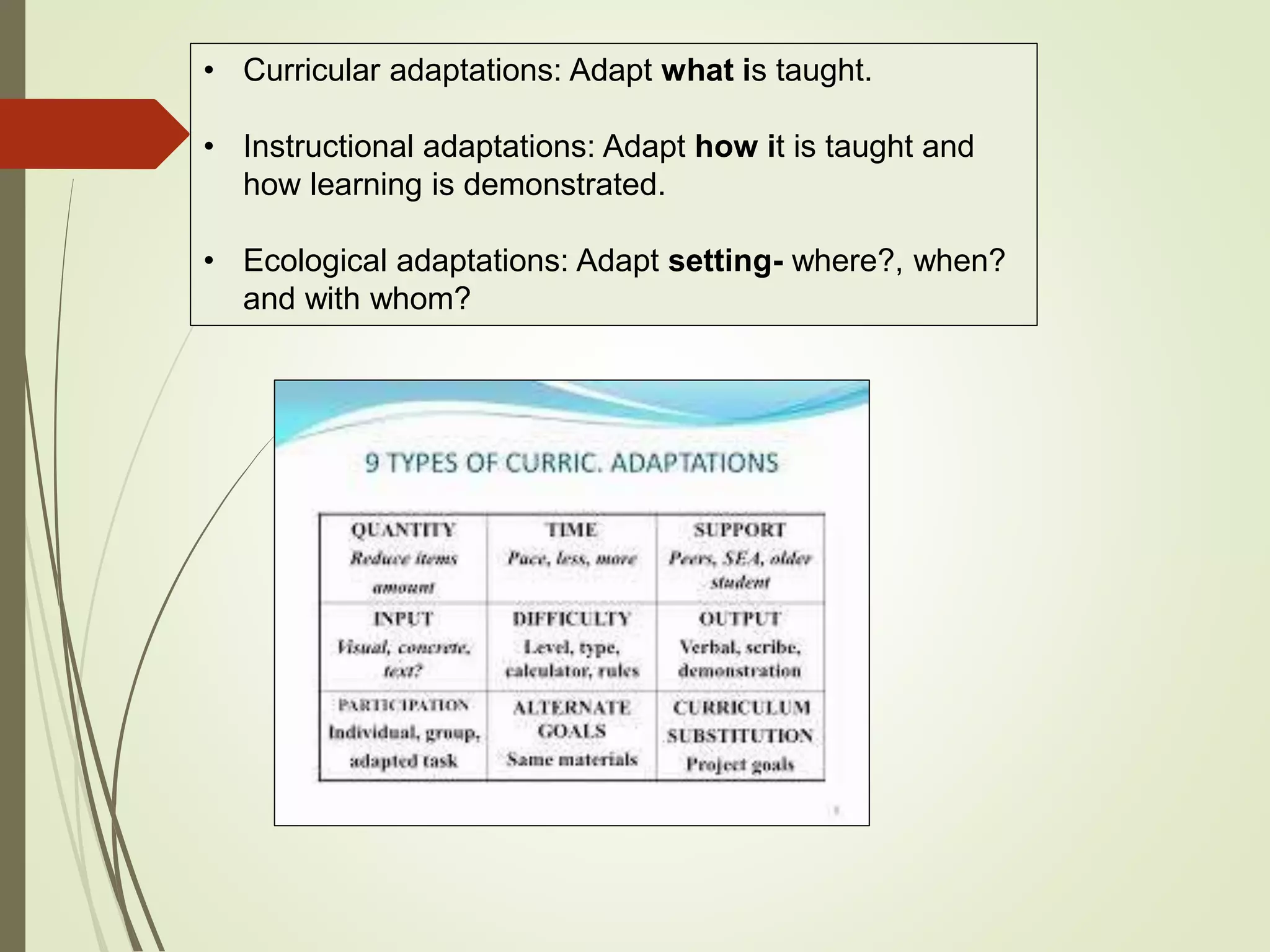
 Curriculum, modifications and adaptations:
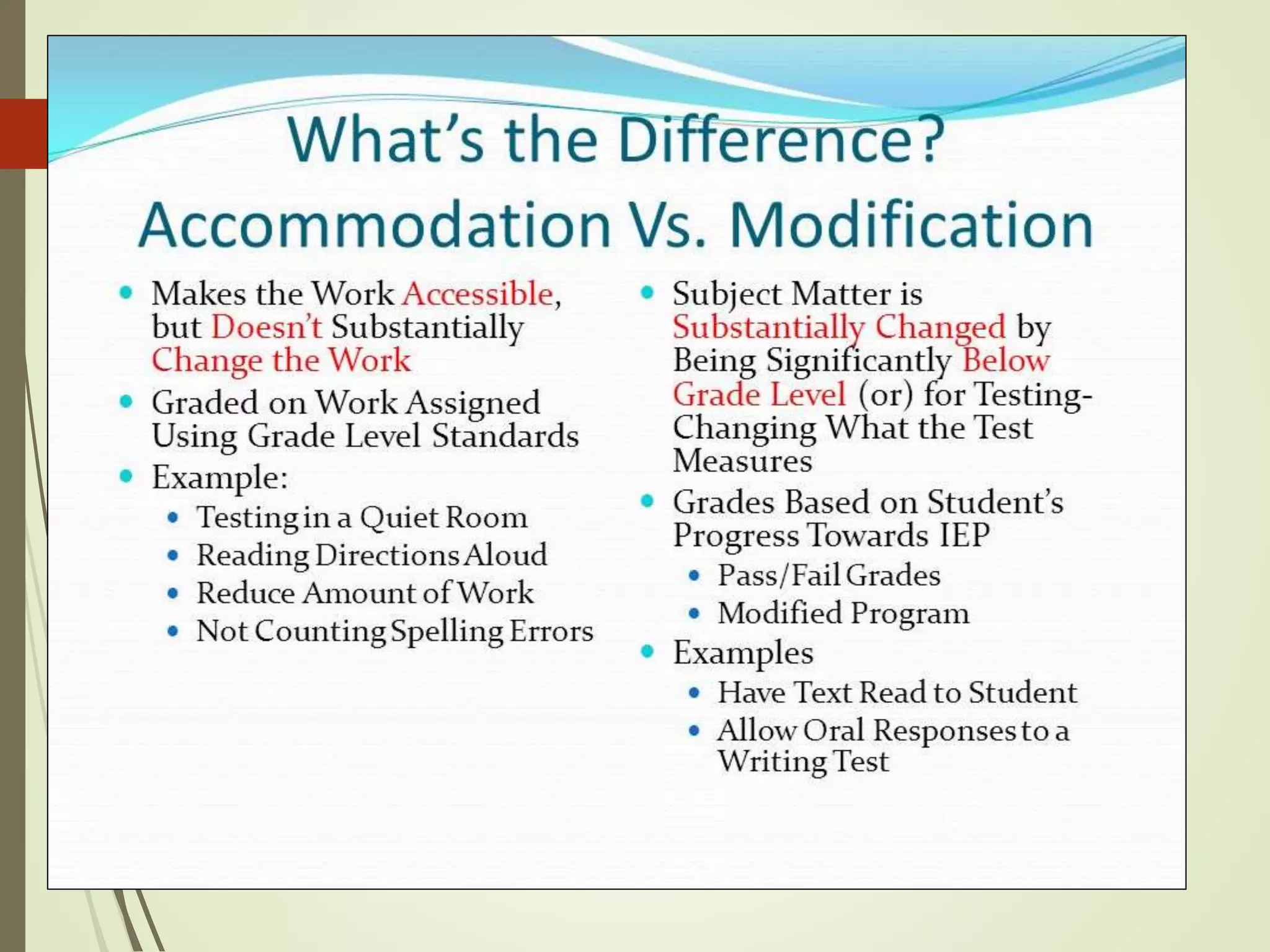
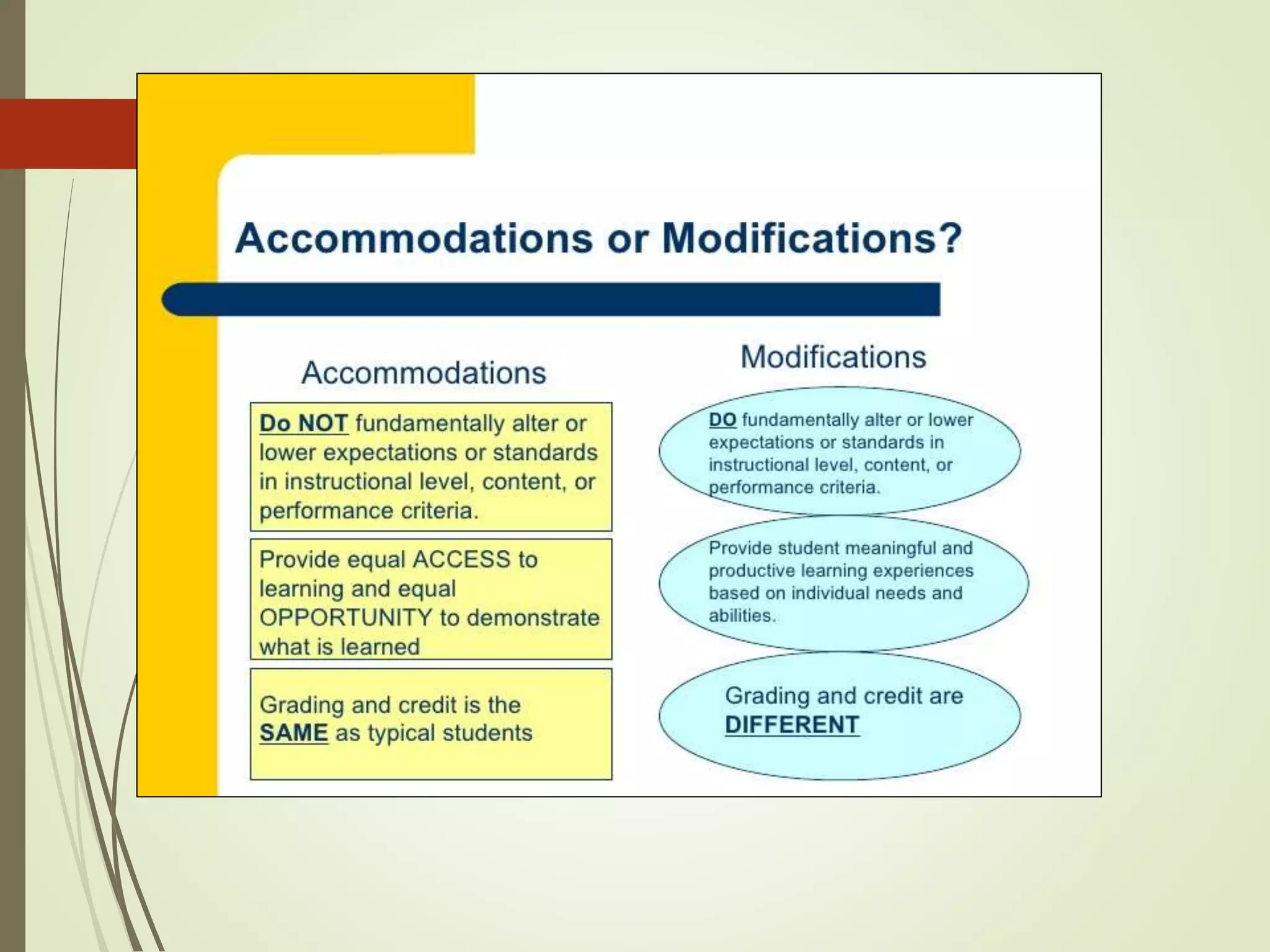
Adaptations are changes in the
way instruction and assessment
are carried out to allow a learner
equal opportunity to demonstrate
mastery of concepts and achieve
the desired learning outcomes.
They are made to meet a
student’s needs as identified on
an individualized education plan
(IEP).
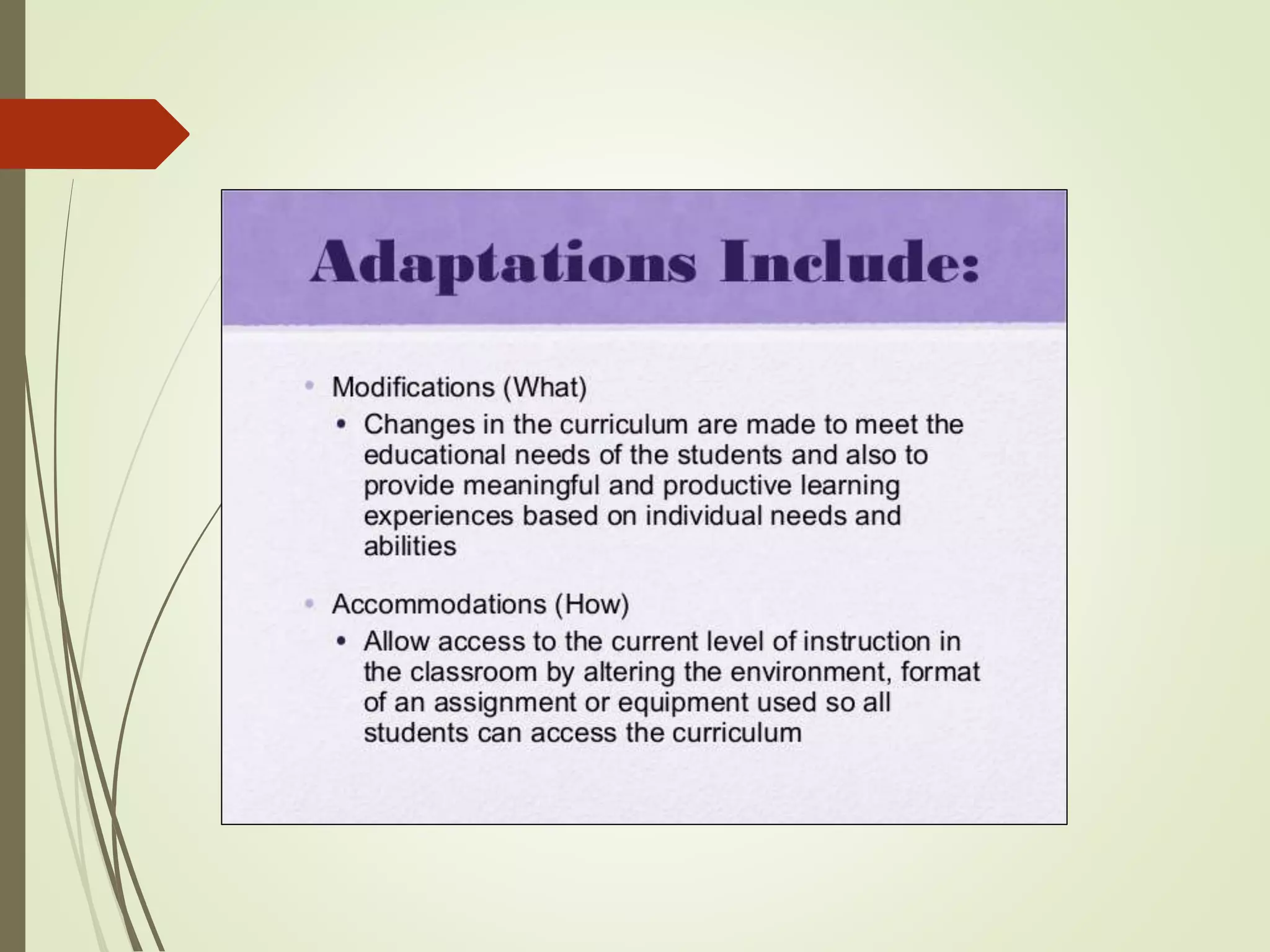
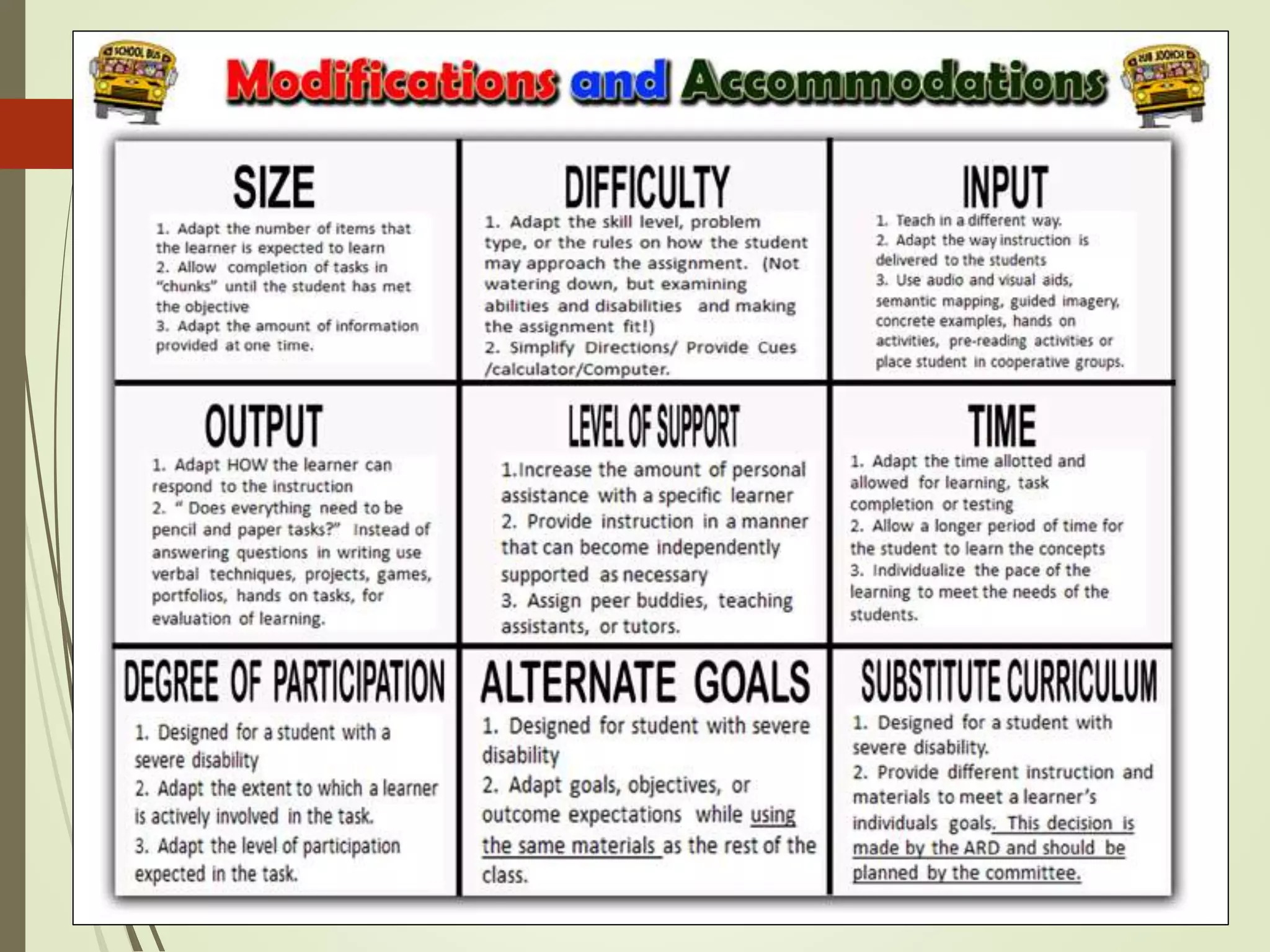
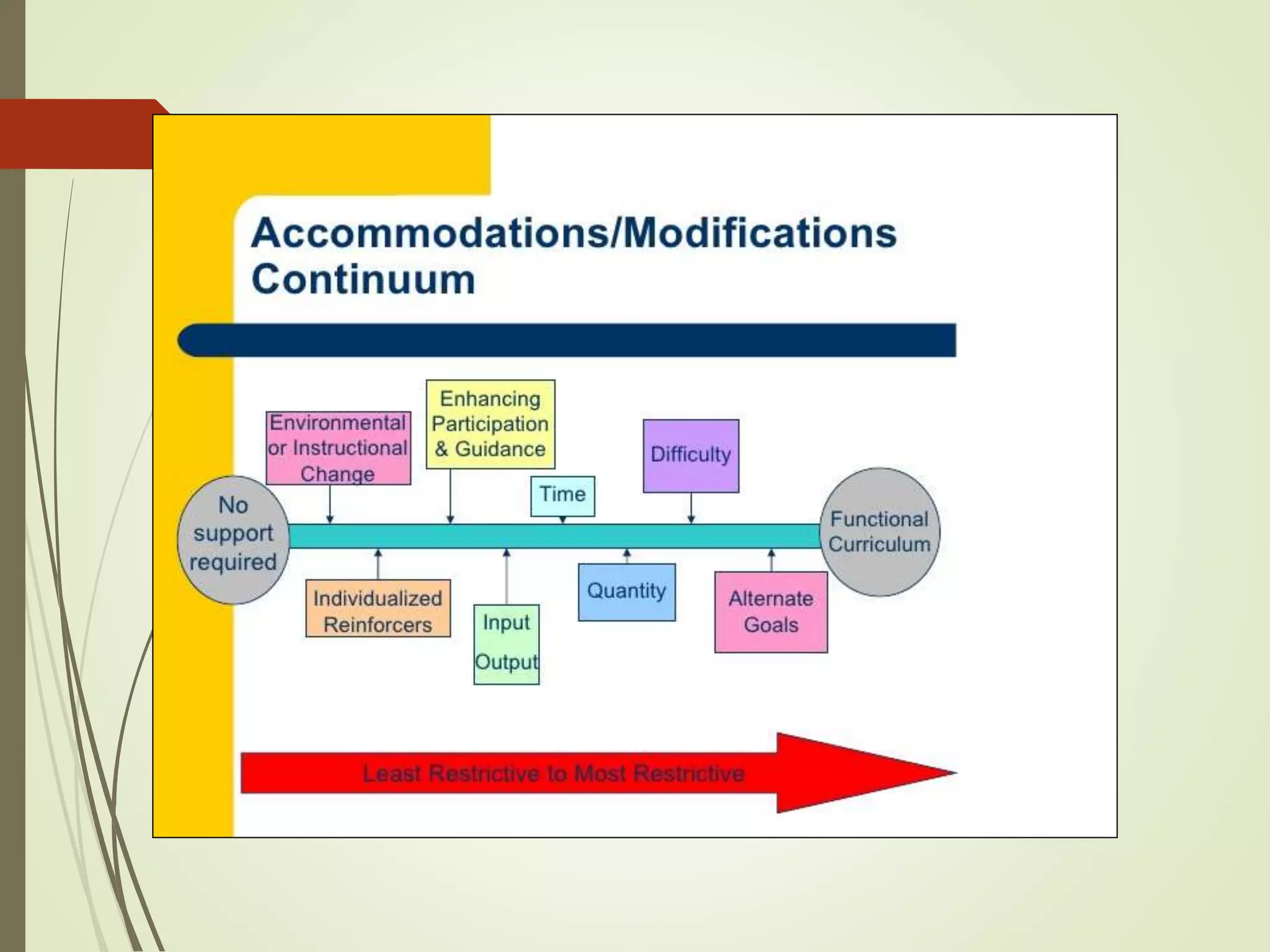
• Curricular adaptations: Adapt what is taught.
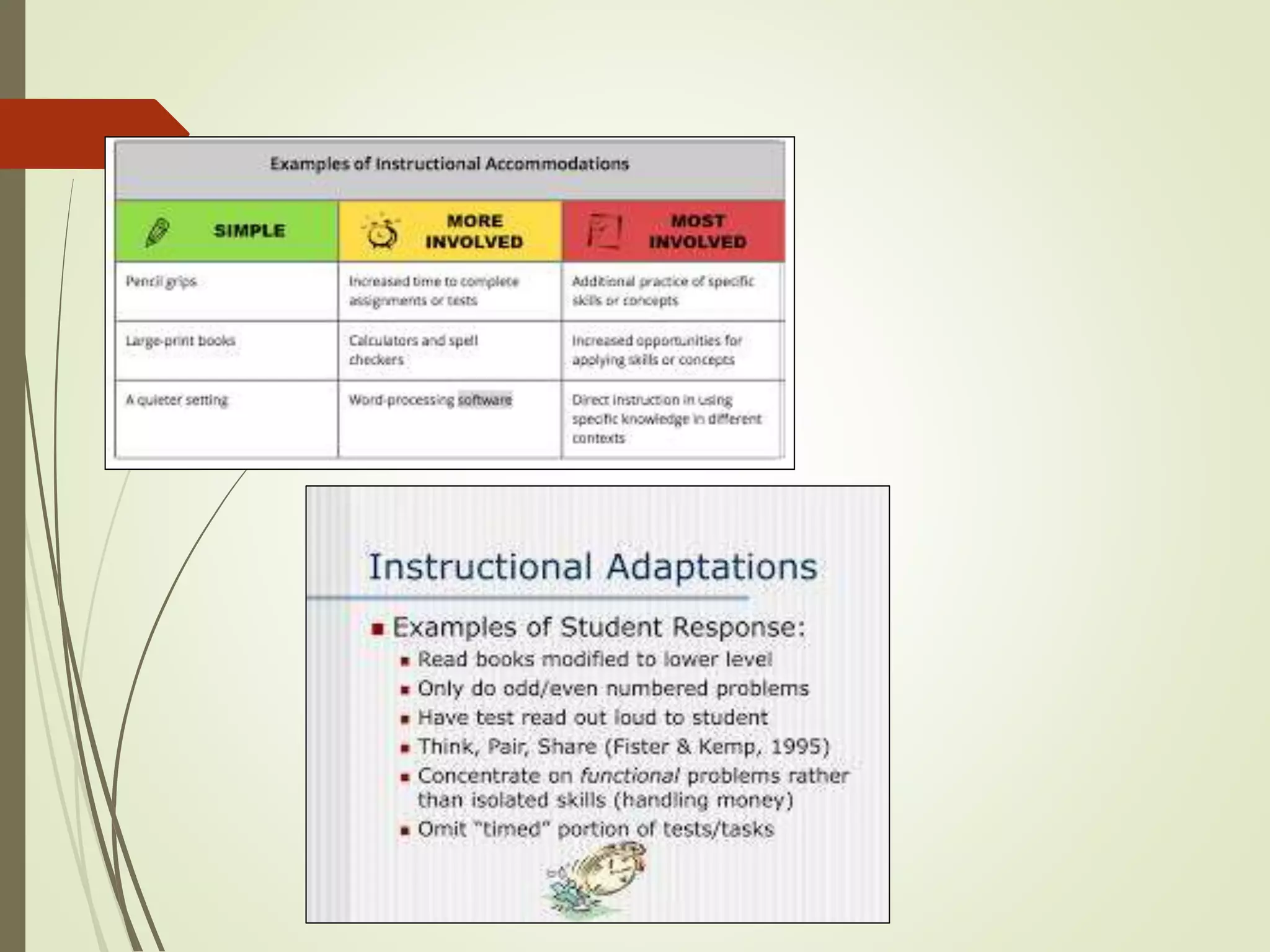
• Instructional adaptations: Adapt how it is taught and
how learning is demonstrated.
• Ecological adaptations: Adapt setting- where?, when?
and with whom?
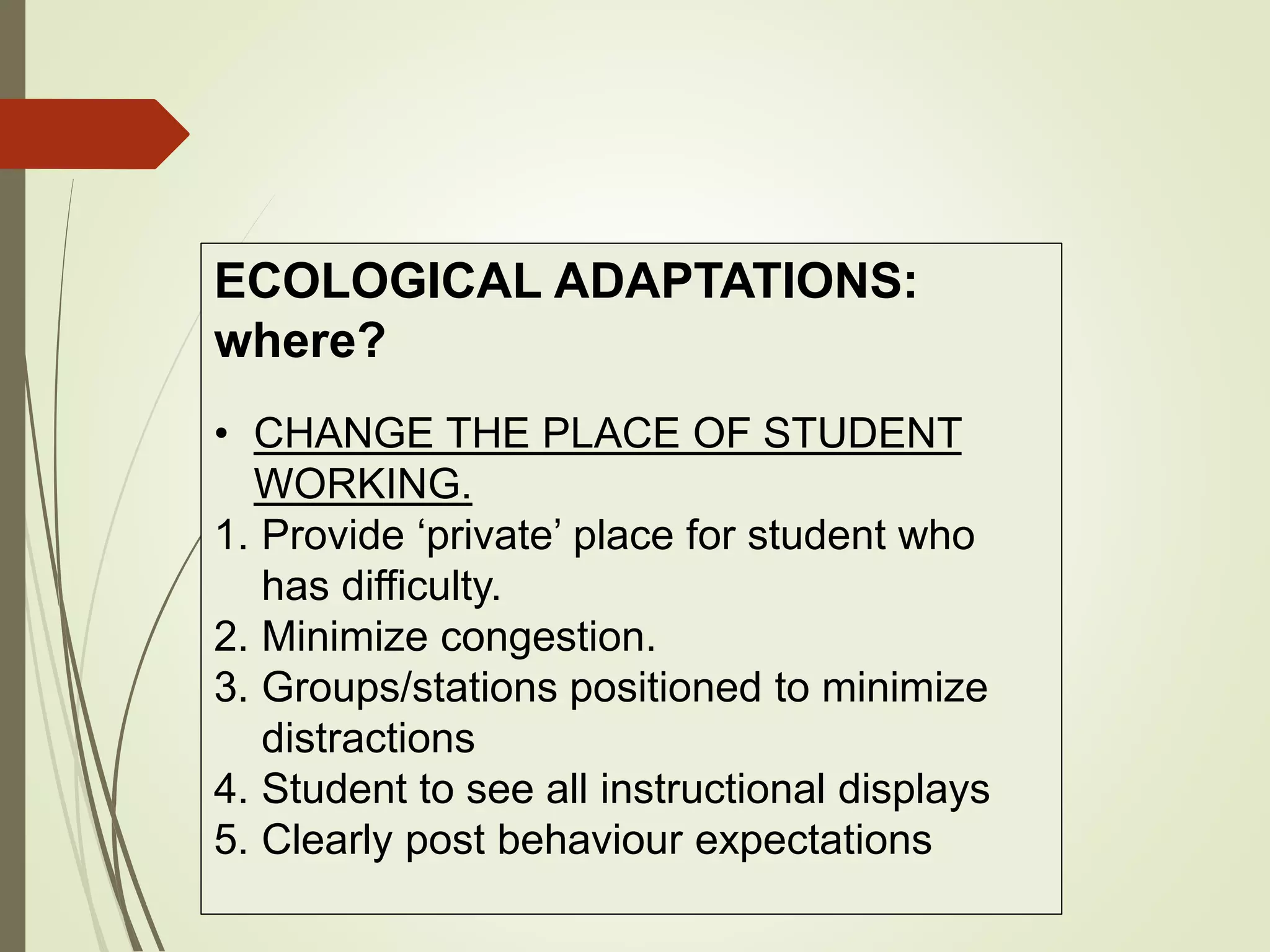
ECOLOGICAL ADAPTATIONS:
where?
• CHANGE THE PLACE OF STUDENT
WORKING.
1. Provide ‘private’ place for student who
has difficulty.
2. Minimize congestion.
3. Groups/stations positioned to minimize
distractions
4. Student to see all instructional displays
5. Clearly post behaviour expectations
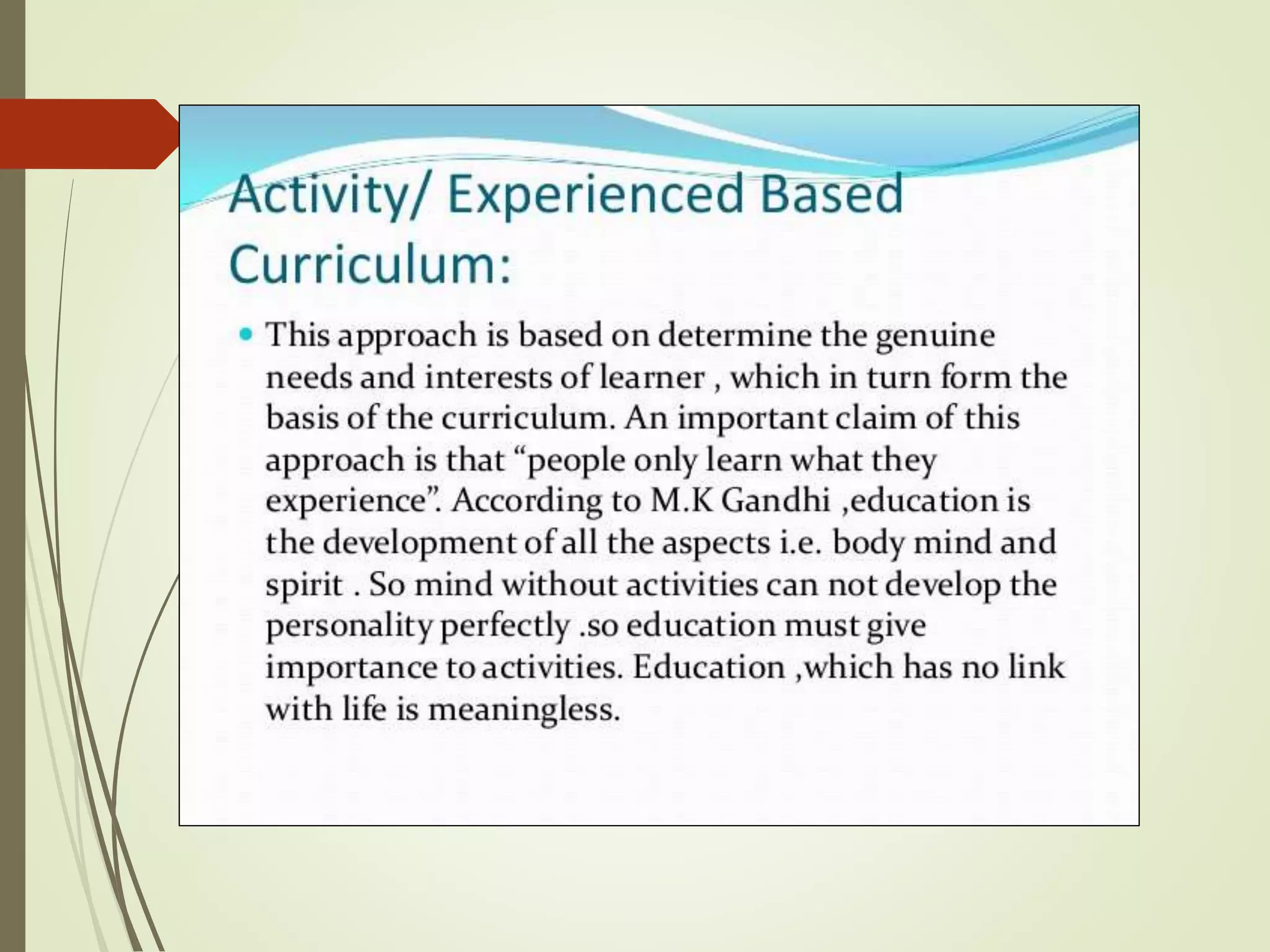
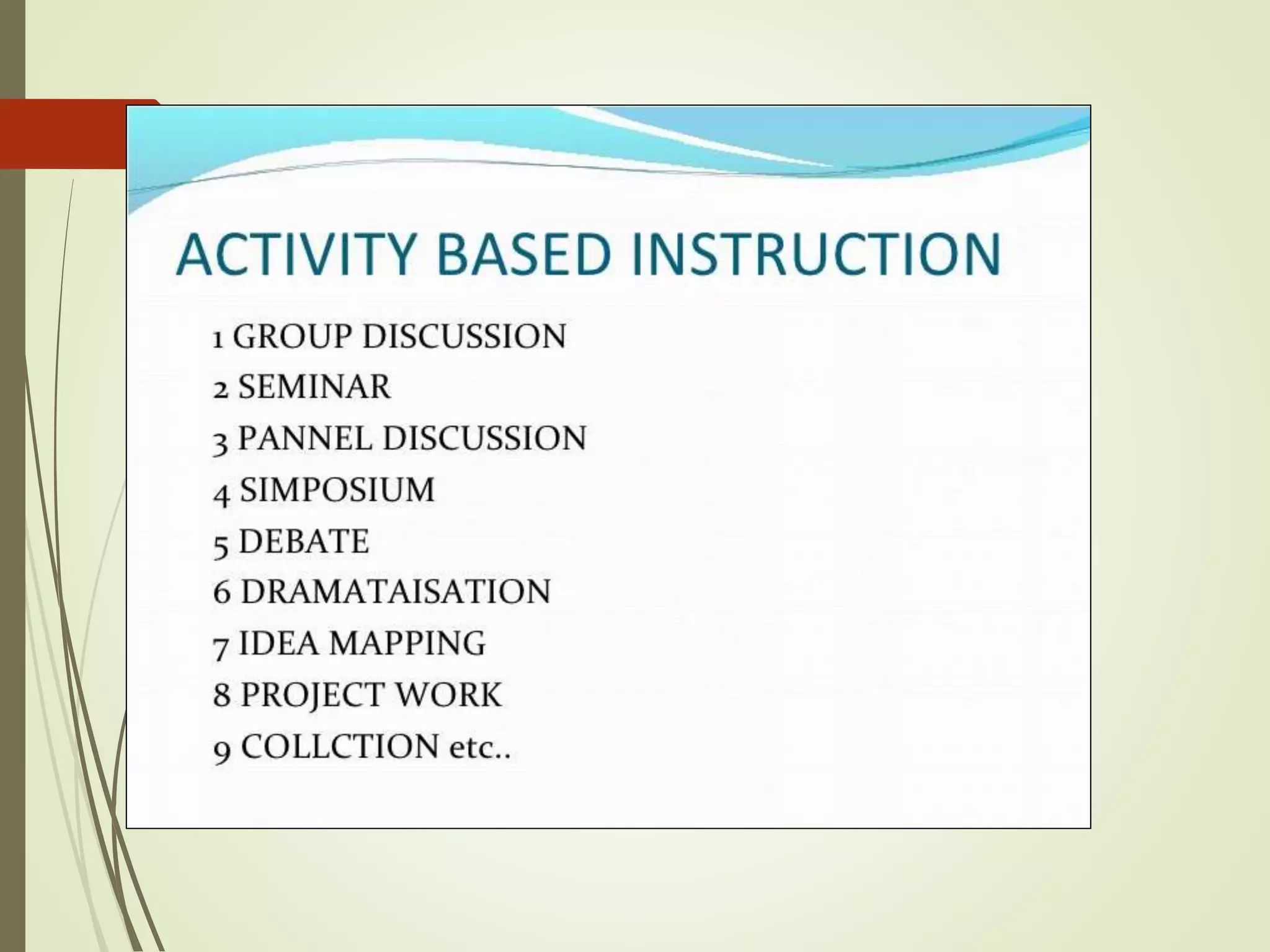
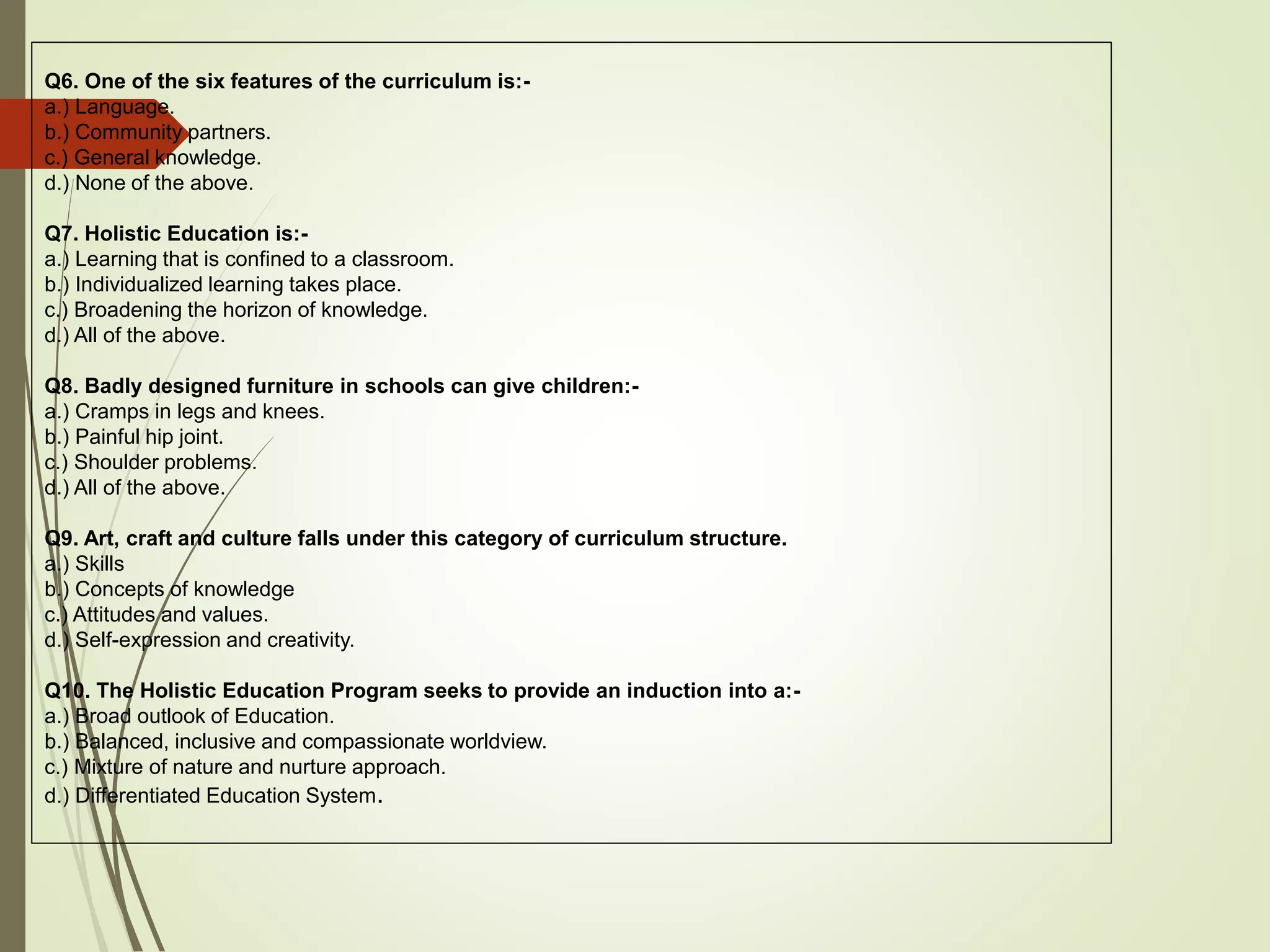
‘Learning by doing’: John Dewey, Piaget, Tagore, Gandi, Aurobindo
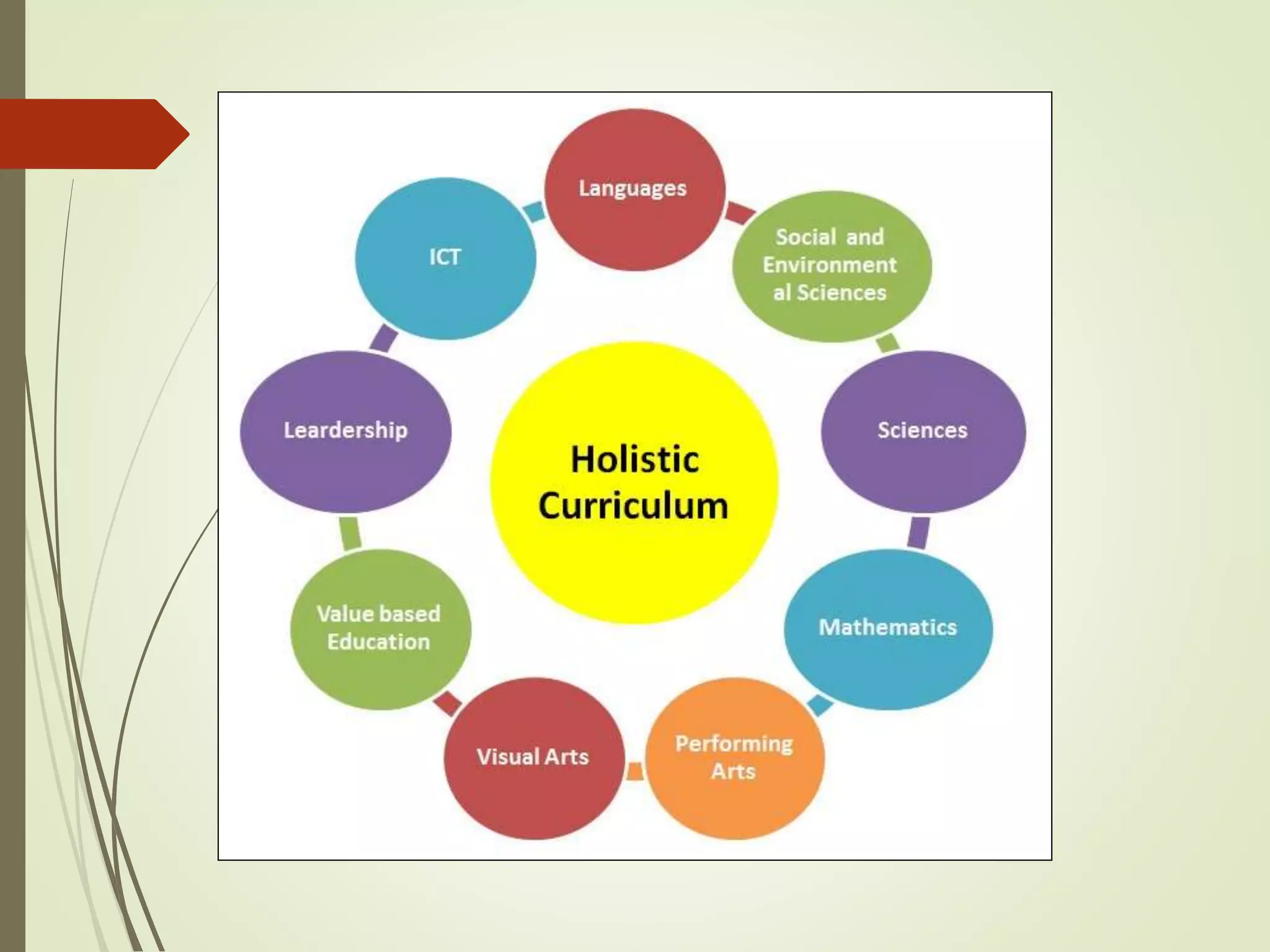
HOLISTIC EDUCATION: WHAT IS IT?
Prepares for lifelong learning
For a productive life in which their skills and attributes are constantly
challenged, developed and
applied.
Collaboration rather than competition in classrooms, teachers help
young people feel the world of
human relations.
Learning to know – implies learning as to how to learn by developing
one’s concentration, memory skills
and ability to think.
Learning to do – Education can equip people to do different types of
work needed in the future either in
paid employment or in self-employment.
Learning to live together – people will be able to work collectively for a
common goal.
Learning to be – The complete fulfillment of man, in all the richness of his
personality, the complexity of
his forms of expression, and his various commitments –as individual,
member of a family, and of a
community, citizen and producer, inventor of techniques and creative
dreamer.
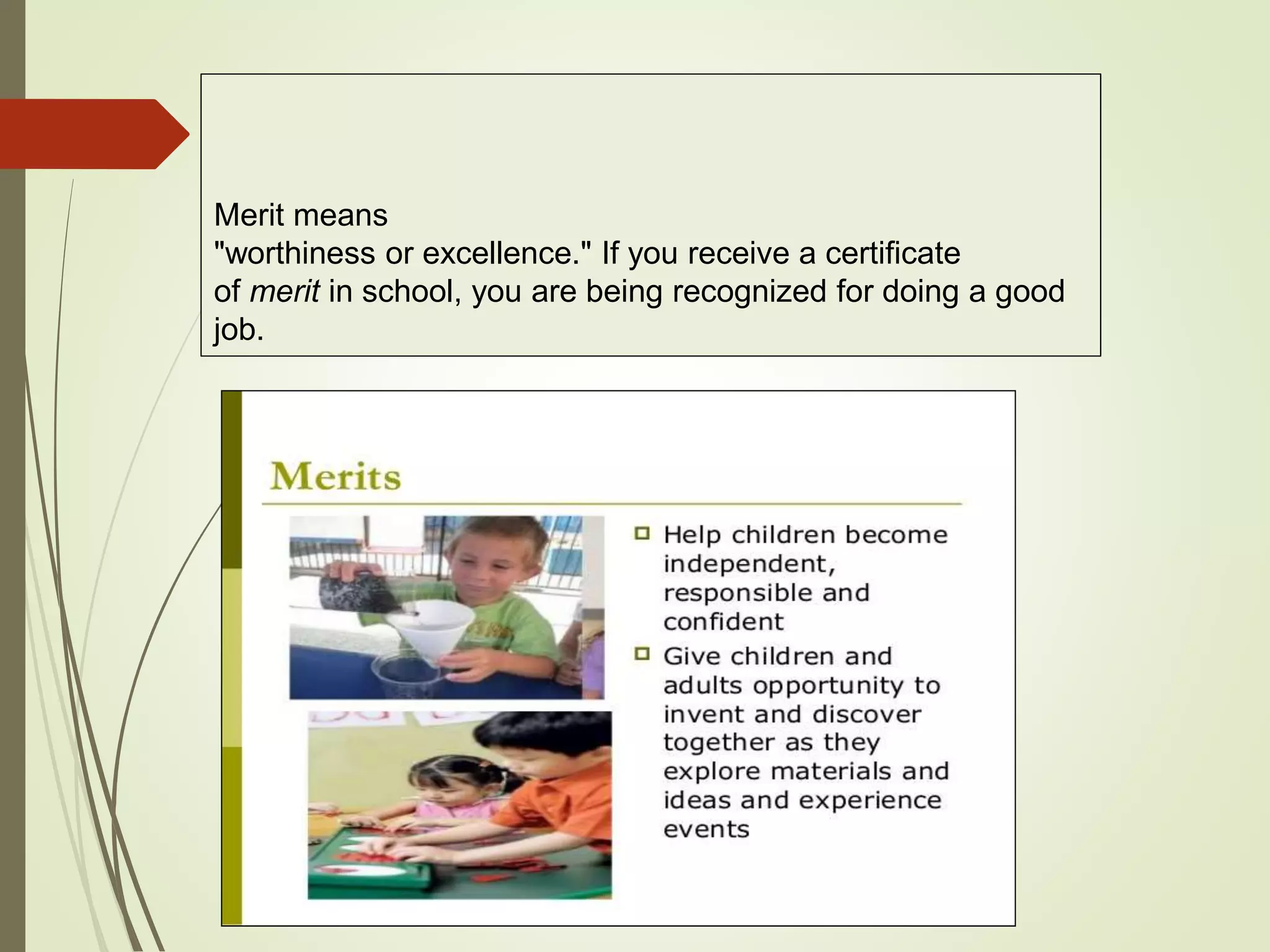
Merit means
"worthiness or excellence." If you receive a certificate
of merit in school, you are being recognized for doing a good
job.
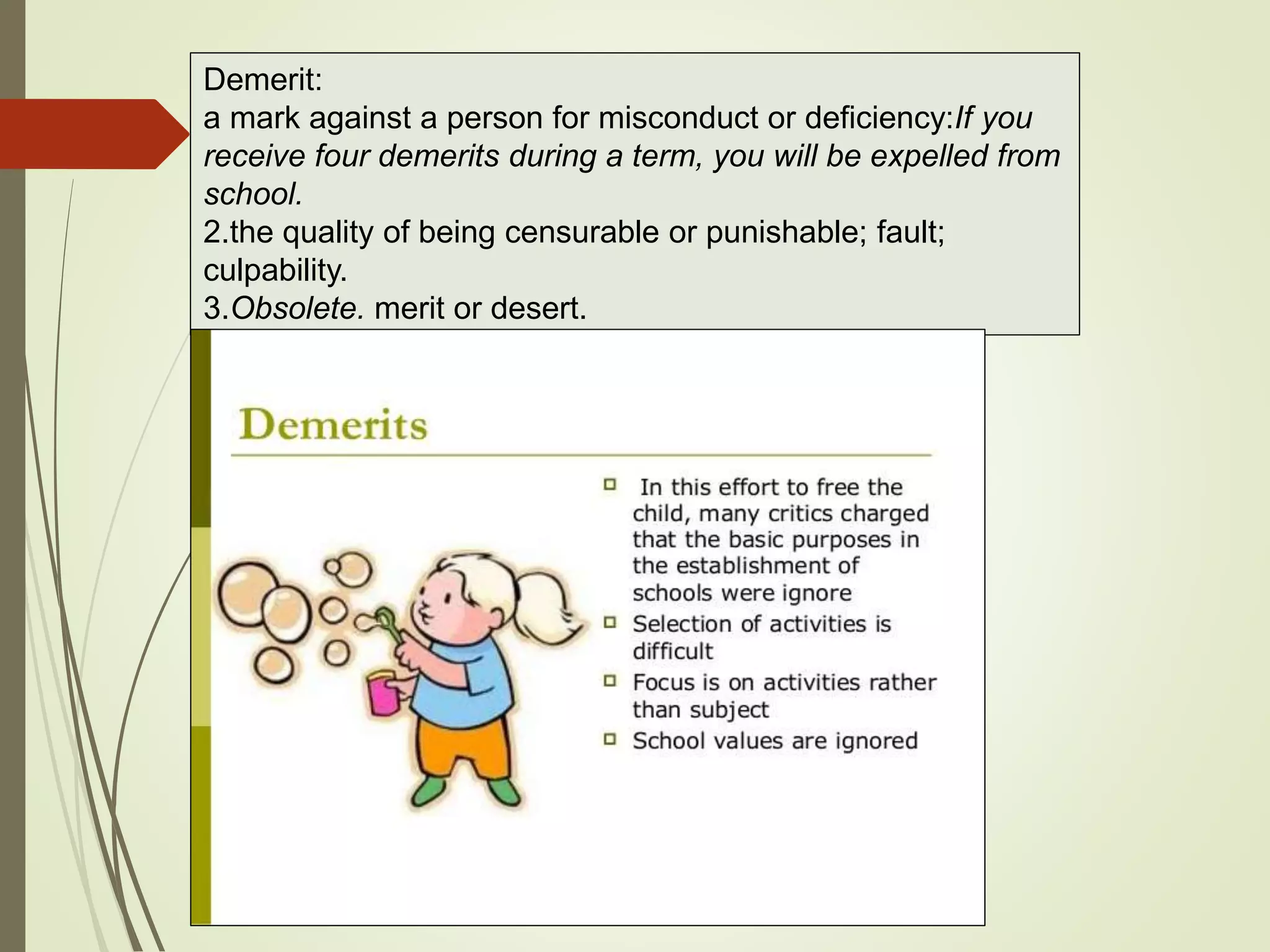
Demerit:
a mark against a person for misconduct or deficiency:If you
receive four demerits during a term, you will be expelled from
school.
2.the quality of being censurable or punishable; fault;
culpability.
3.Obsolete. merit or desert.
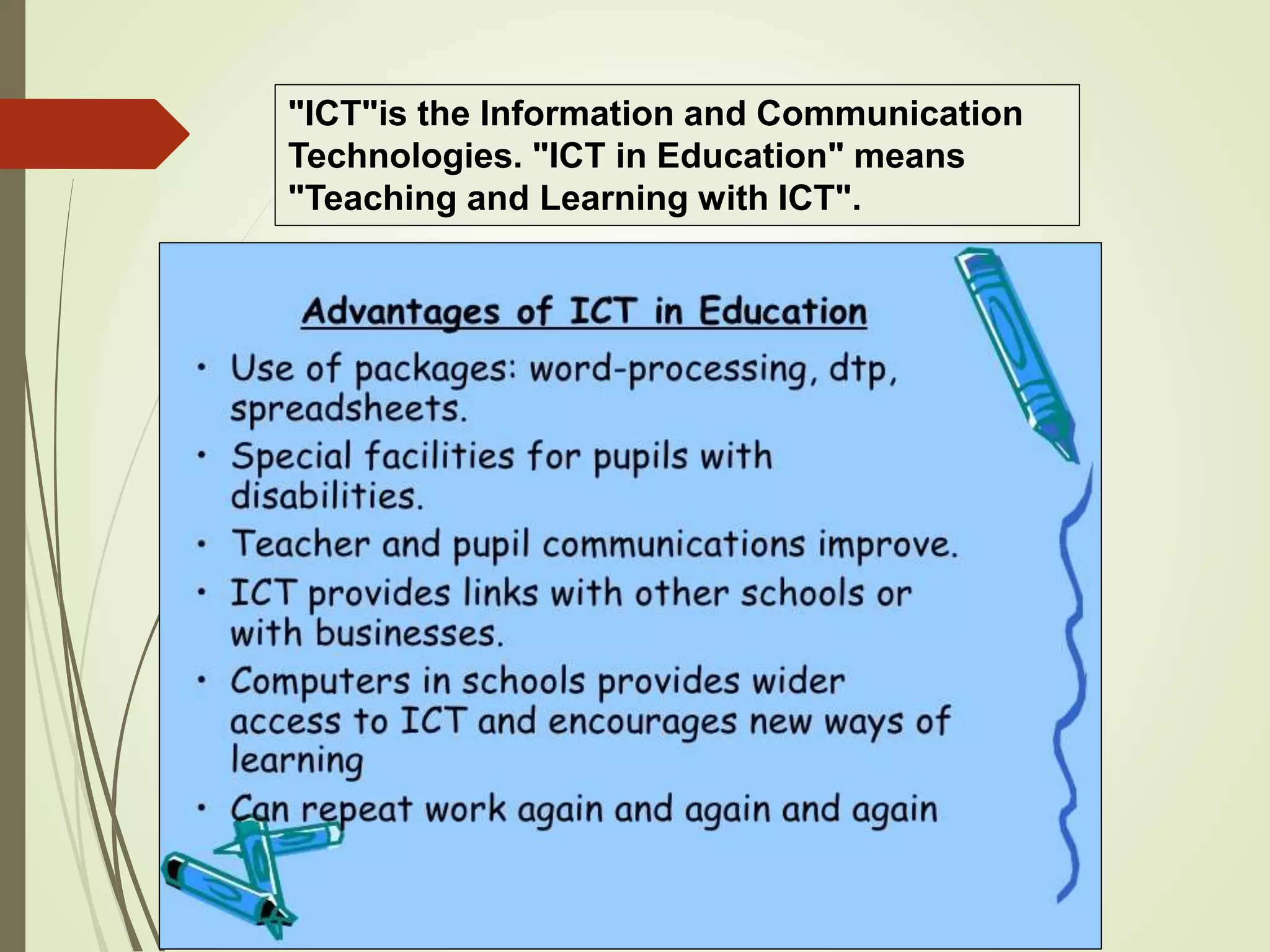
"ICT"is the Information and Communication
Technologies. "ICT in Education" means
"Teaching and Learning with ICT".
ICT
advantage
 Images can easily be used in
teaching and improving the
retentive memory of
students.
 teachers can easily explain
complex instructions and
ensure students'
comprehension.
 teachers are able to create
interactive classes and make
the lessons more enjoyable,
which could improve student
attendance and
concentration.
disadvantage
 Setting up the devices
can be very
troublesome.
 Too expensive to afford.
 Hard for teachers to use
with a lack of
experience using ICT
tools
Module – 6
Q1.Theprocess of selecting and implementing curricular adaptations should be used as a tool for a
team in:-
a.) Articulate the expectations for the student’s performance in general education
activities.
b.) Determining an individual student’s needs.
c.) Determine what to teach.
d.) All of the above.
Q2. In order to make the Student’s participation and understanding be increased by changing the
delivery of instruction or teaching style, we need to:-
a.) Examine the students IQ.
b.) Examine the Learning Environment.
c.) Examine the teacher’s creativity.
d.) None of the above.
Q3. The different types of curriculum are:-
a.) Social.
b.) Cultural.
c.) Traditional.
d.) Basic.
Q4. Child-centered Learning is the best approach as:-
a.) It provides the best traditional method of teaching.
b.) It has no possibilities of “misinterpretation”.
c.) It helps children to become responsible, confident and independent.
d.) All of the above.
Q5. “Education which does not influence child's conduct is useless.” This view was believed by:-
a.) Rousseau.
b.) Dewey.
c.) Gandhi.
d.) All of the above.
Q6. One of the six features of the curriculum is:-
a.) Language.
b.) Community partners.
c.) General knowledge.
d.) None of the above.
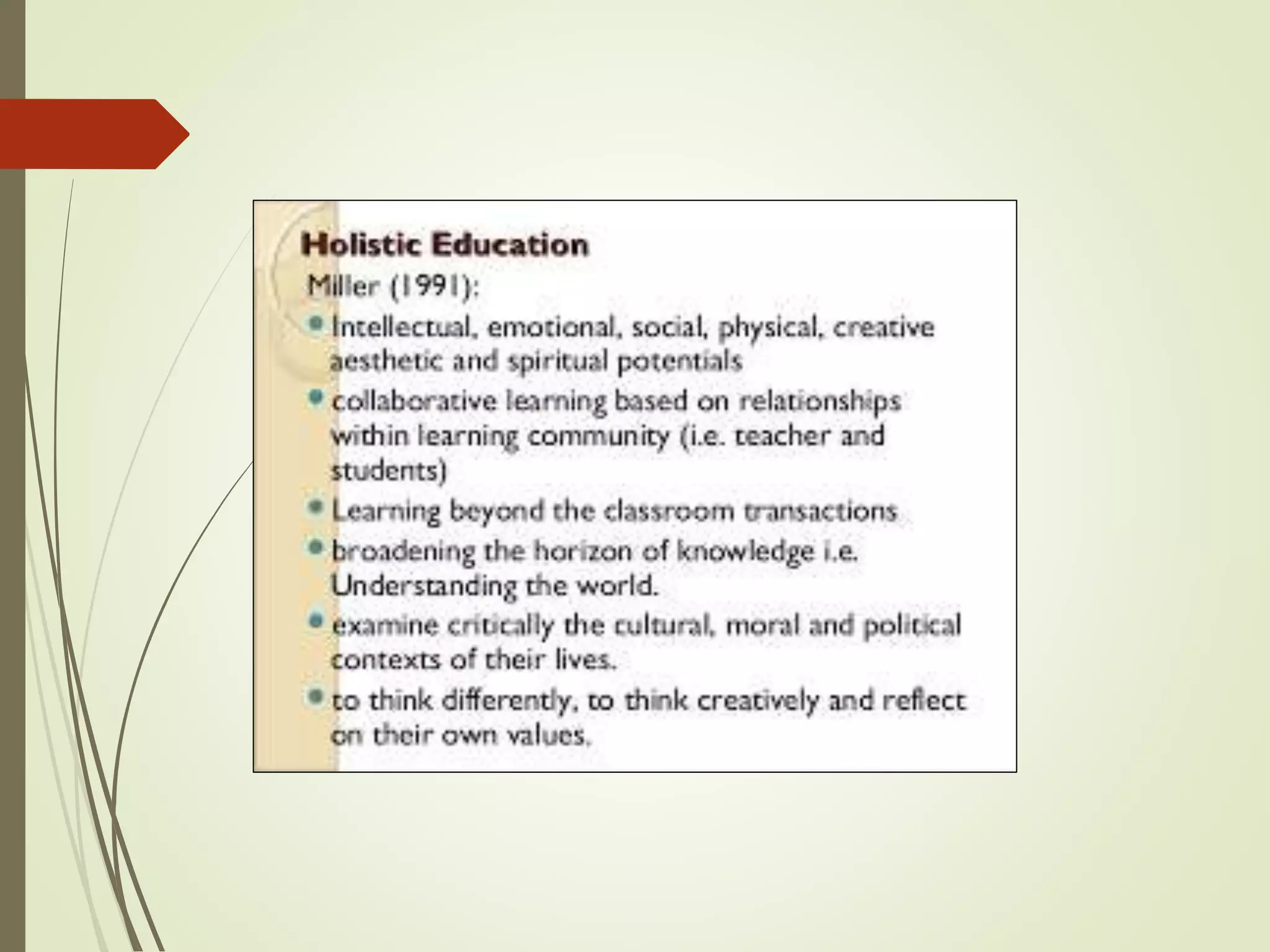
Q7. Holistic Education is:-
a.) Learning that is confined to a classroom.
b.) Individualized learning takes place.
c.) Broadening the horizon of knowledge.
d.) All of the above.
Q8. Badly designed furniture in schools can give children:-
a.) Cramps in legs and knees.
b.) Painful hip joint.
c.) Shoulder problems.
d.) All of the above.
Q9. Art, craft and culture falls under this category of curriculum structure.
a.) Skills
b.) Concepts of knowledge
c.) Attitudes and values.
d.) Self-expression and creativity.
Q10. The Holistic Education Program seeks to provide an induction into a:-
a.) Broad outlook of Education.
b.) Balanced, inclusive and compassionate worldview.
c.) Mixture of nature and nurture approach.
d.) Differentiated Education System.

Module 6 spec ed

  • 1.
    Module 6 CURRICULUM ANDTEACHING STRATEGIES  Curriculum, modifications and adaptations:
  • 3.
    Adaptations are changesin the way instruction and assessment are carried out to allow a learner equal opportunity to demonstrate mastery of concepts and achieve the desired learning outcomes. They are made to meet a student’s needs as identified on an individualized education plan (IEP).
  • 9.
    • Curricular adaptations:Adapt what is taught. • Instructional adaptations: Adapt how it is taught and how learning is demonstrated. • Ecological adaptations: Adapt setting- where?, when? and with whom?
  • 11.
    ECOLOGICAL ADAPTATIONS: where? • CHANGETHE PLACE OF STUDENT WORKING. 1. Provide ‘private’ place for student who has difficulty. 2. Minimize congestion. 3. Groups/stations positioned to minimize distractions 4. Student to see all instructional displays 5. Clearly post behaviour expectations
  • 37.
    ‘Learning by doing’:John Dewey, Piaget, Tagore, Gandi, Aurobindo
  • 39.
    HOLISTIC EDUCATION: WHATIS IT? Prepares for lifelong learning For a productive life in which their skills and attributes are constantly challenged, developed and applied. Collaboration rather than competition in classrooms, teachers help young people feel the world of human relations. Learning to know – implies learning as to how to learn by developing one’s concentration, memory skills and ability to think. Learning to do – Education can equip people to do different types of work needed in the future either in paid employment or in self-employment. Learning to live together – people will be able to work collectively for a common goal. Learning to be – The complete fulfillment of man, in all the richness of his personality, the complexity of his forms of expression, and his various commitments –as individual, member of a family, and of a community, citizen and producer, inventor of techniques and creative dreamer.
  • 42.
    Merit means "worthiness orexcellence." If you receive a certificate of merit in school, you are being recognized for doing a good job.
  • 43.
    Demerit: a mark againsta person for misconduct or deficiency:If you receive four demerits during a term, you will be expelled from school. 2.the quality of being censurable or punishable; fault; culpability. 3.Obsolete. merit or desert.
  • 44.
    "ICT"is the Informationand Communication Technologies. "ICT in Education" means "Teaching and Learning with ICT".
  • 45.
    ICT advantage  Images caneasily be used in teaching and improving the retentive memory of students.  teachers can easily explain complex instructions and ensure students' comprehension.  teachers are able to create interactive classes and make the lessons more enjoyable, which could improve student attendance and concentration. disadvantage  Setting up the devices can be very troublesome.  Too expensive to afford.  Hard for teachers to use with a lack of experience using ICT tools
  • 46.
    Module – 6 Q1.Theprocessof selecting and implementing curricular adaptations should be used as a tool for a team in:- a.) Articulate the expectations for the student’s performance in general education activities. b.) Determining an individual student’s needs. c.) Determine what to teach. d.) All of the above. Q2. In order to make the Student’s participation and understanding be increased by changing the delivery of instruction or teaching style, we need to:- a.) Examine the students IQ. b.) Examine the Learning Environment. c.) Examine the teacher’s creativity. d.) None of the above. Q3. The different types of curriculum are:- a.) Social. b.) Cultural. c.) Traditional. d.) Basic. Q4. Child-centered Learning is the best approach as:- a.) It provides the best traditional method of teaching. b.) It has no possibilities of “misinterpretation”. c.) It helps children to become responsible, confident and independent. d.) All of the above. Q5. “Education which does not influence child's conduct is useless.” This view was believed by:- a.) Rousseau. b.) Dewey. c.) Gandhi. d.) All of the above.
  • 47.
    Q6. One ofthe six features of the curriculum is:- a.) Language. b.) Community partners. c.) General knowledge. d.) None of the above. Q7. Holistic Education is:- a.) Learning that is confined to a classroom. b.) Individualized learning takes place. c.) Broadening the horizon of knowledge. d.) All of the above. Q8. Badly designed furniture in schools can give children:- a.) Cramps in legs and knees. b.) Painful hip joint. c.) Shoulder problems. d.) All of the above. Q9. Art, craft and culture falls under this category of curriculum structure. a.) Skills b.) Concepts of knowledge c.) Attitudes and values. d.) Self-expression and creativity. Q10. The Holistic Education Program seeks to provide an induction into a:- a.) Broad outlook of Education. b.) Balanced, inclusive and compassionate worldview. c.) Mixture of nature and nurture approach. d.) Differentiated Education System.