C++ Programming
Understanding programming languages
Mohammed Jehan
Lecturer
The for loop
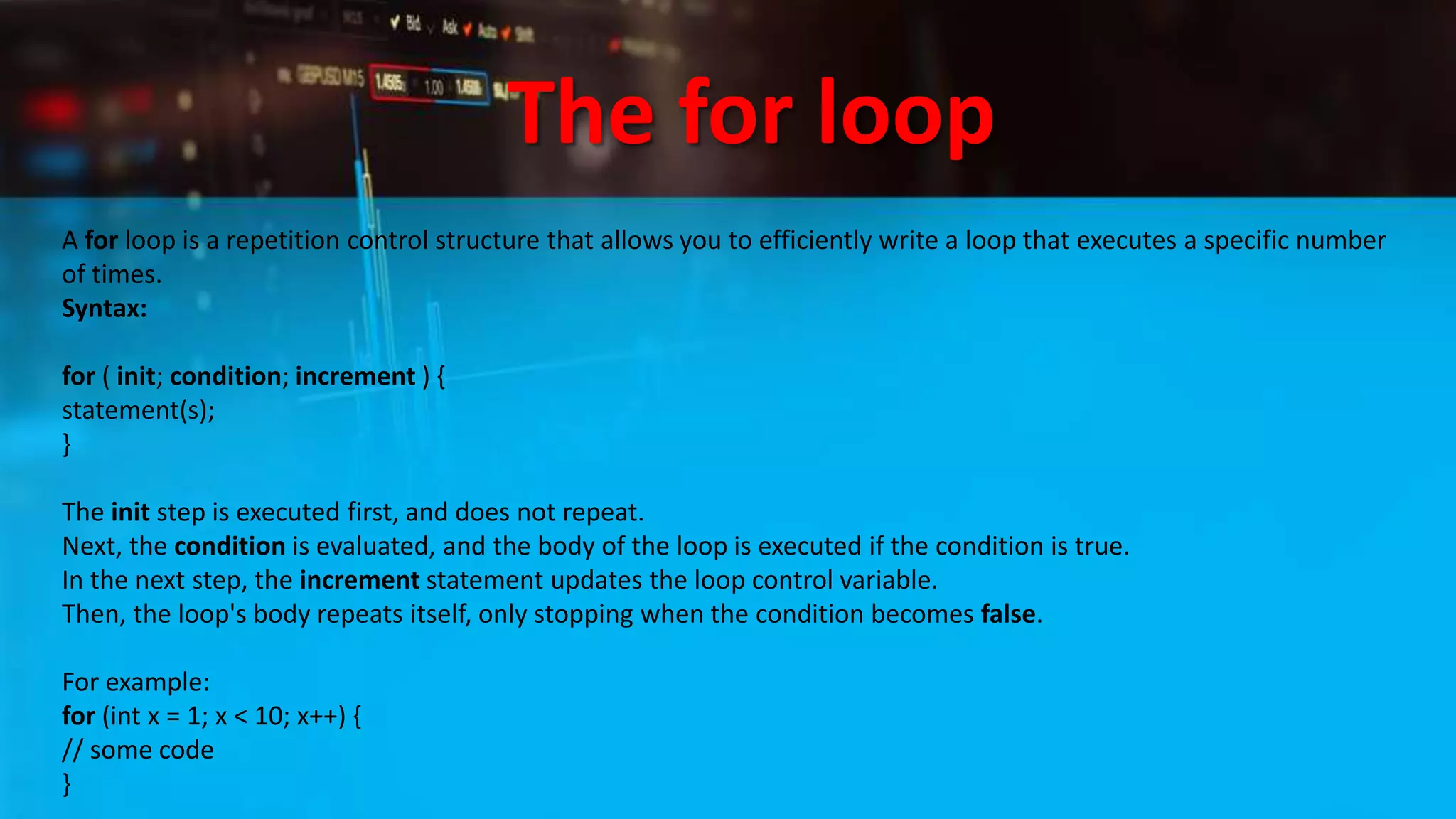
A for loop is a repetition control structure that allows you to efficiently write a loop that executes a specific number
of times.
Syntax:
for ( init; condition; increment ) {
statement(s);
}
The init step is executed first, and does not repeat.
Next, the condition is evaluated, and the body of the loop is executed if the condition is true.
In the next step, the increment statement updates the loop control variable.
Then, the loop's body repeats itself, only stopping when the condition becomes false.
For example:
for (int x = 1; x < 10; x++) {
// some code
}
The for Loop
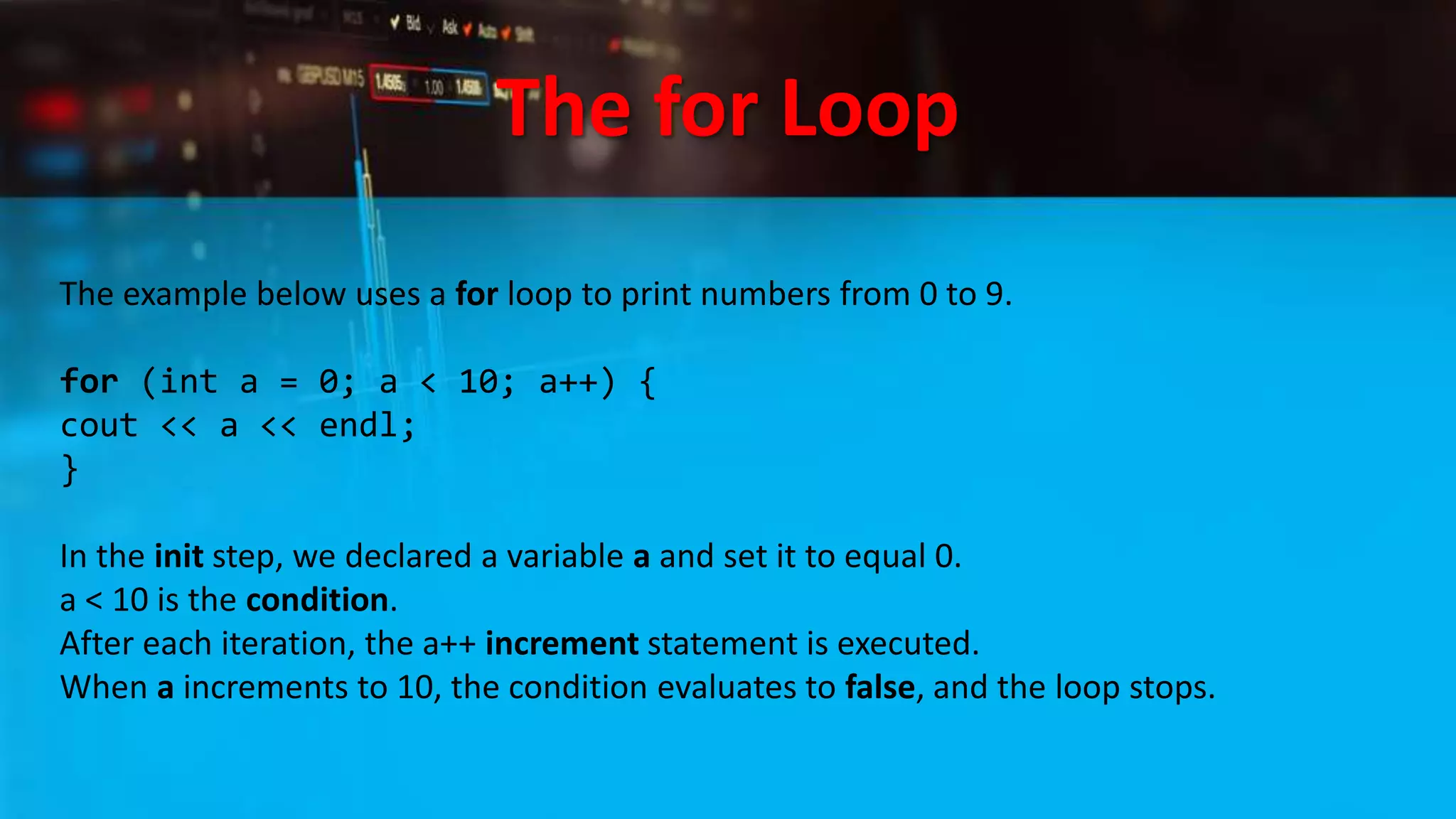
The example below uses a for loop to print numbers from 0 to 9.
for (int a = 0; a < 10; a++) {
cout << a << endl;
}
In the init step, we declared a variable a and set it to equal 0.
a < 10 is the condition.
After each iteration, the a++ increment statement is executed.
When a increments to 10, the condition evaluates to false, and the loop stops.
The for Loop
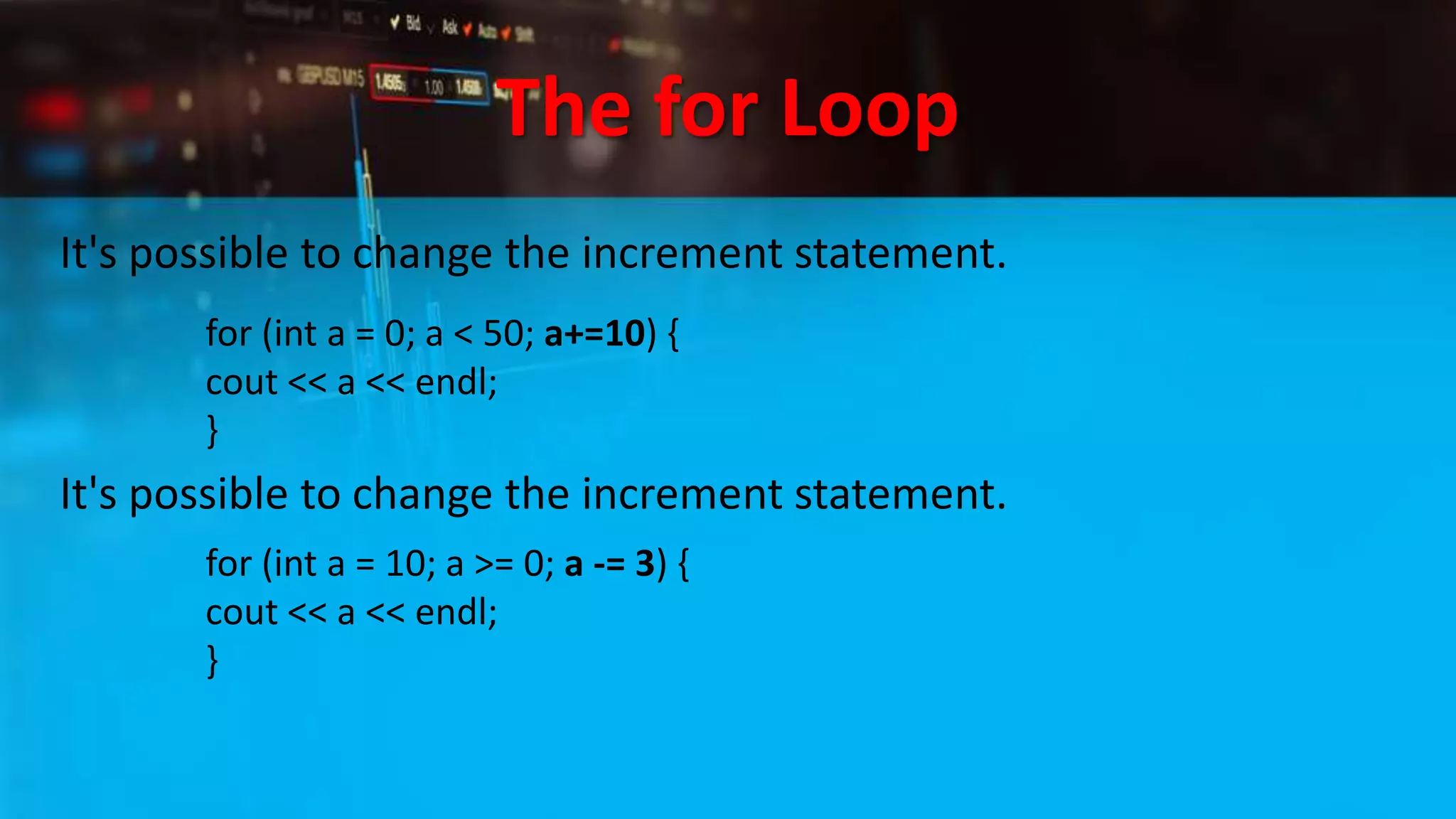
It's possible to change the increment statement.
for (int a = 0; a < 50; a+=10) {
cout << a << endl;
}
It's possible to change the increment statement.
for (int a = 10; a >= 0; a -= 3) {
cout << a << endl;
}
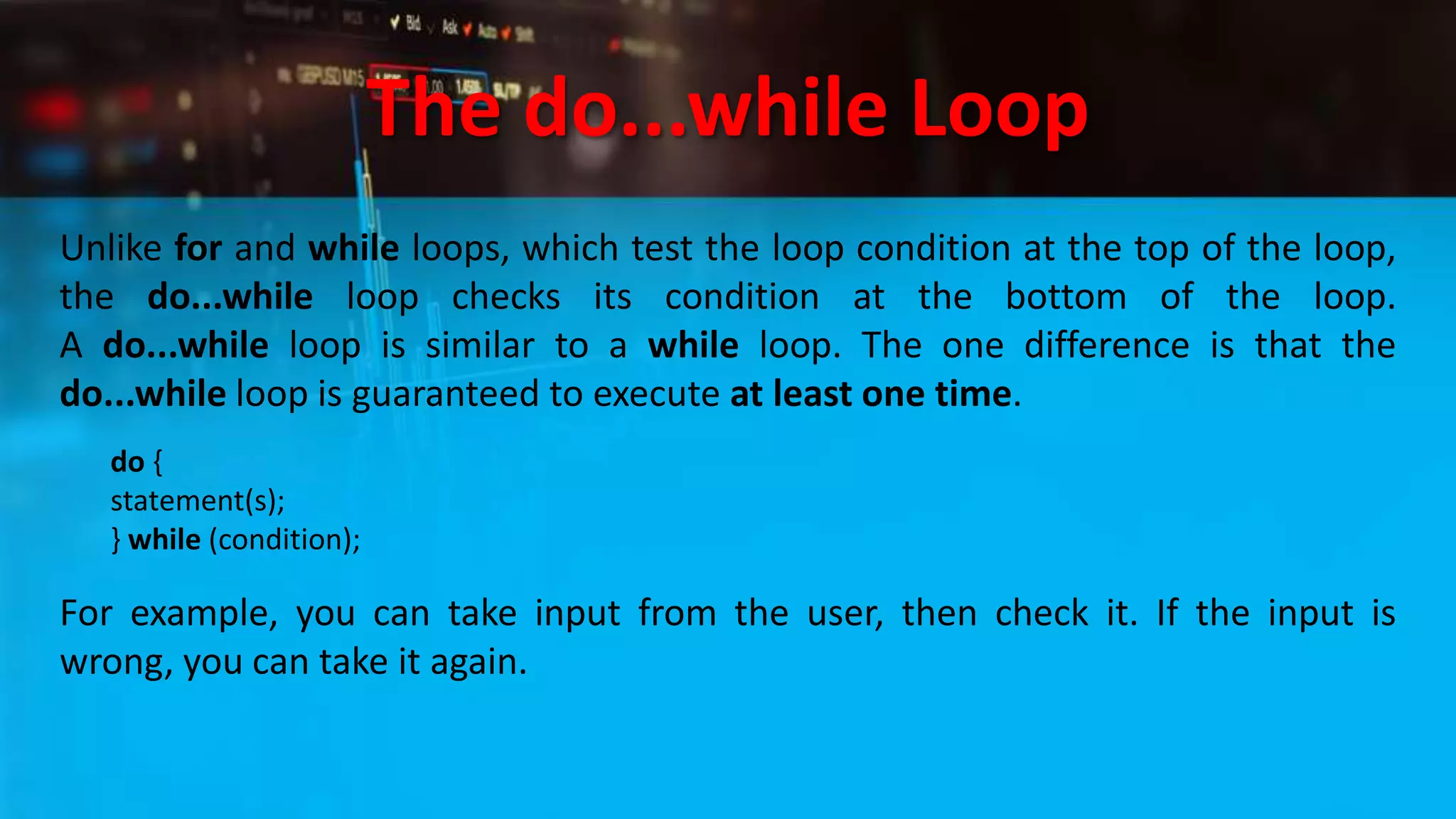
The do...while Loop
Unlike for and while loops, which test the loop condition at the top of the loop,
the do...while loop checks its condition at the bottom of the loop.
A do...while loop is similar to a while loop. The one difference is that the
do...while loop is guaranteed to execute at least one time.
do {
statement(s);
} while (condition);
For example, you can take input from the user, then check it. If the input is
wrong, you can take it again.
The do...while Loop
Here is an example:
int a = 0;
do {
cout << a << endl;
a++;
} while(a < 5);
while vs. do...while
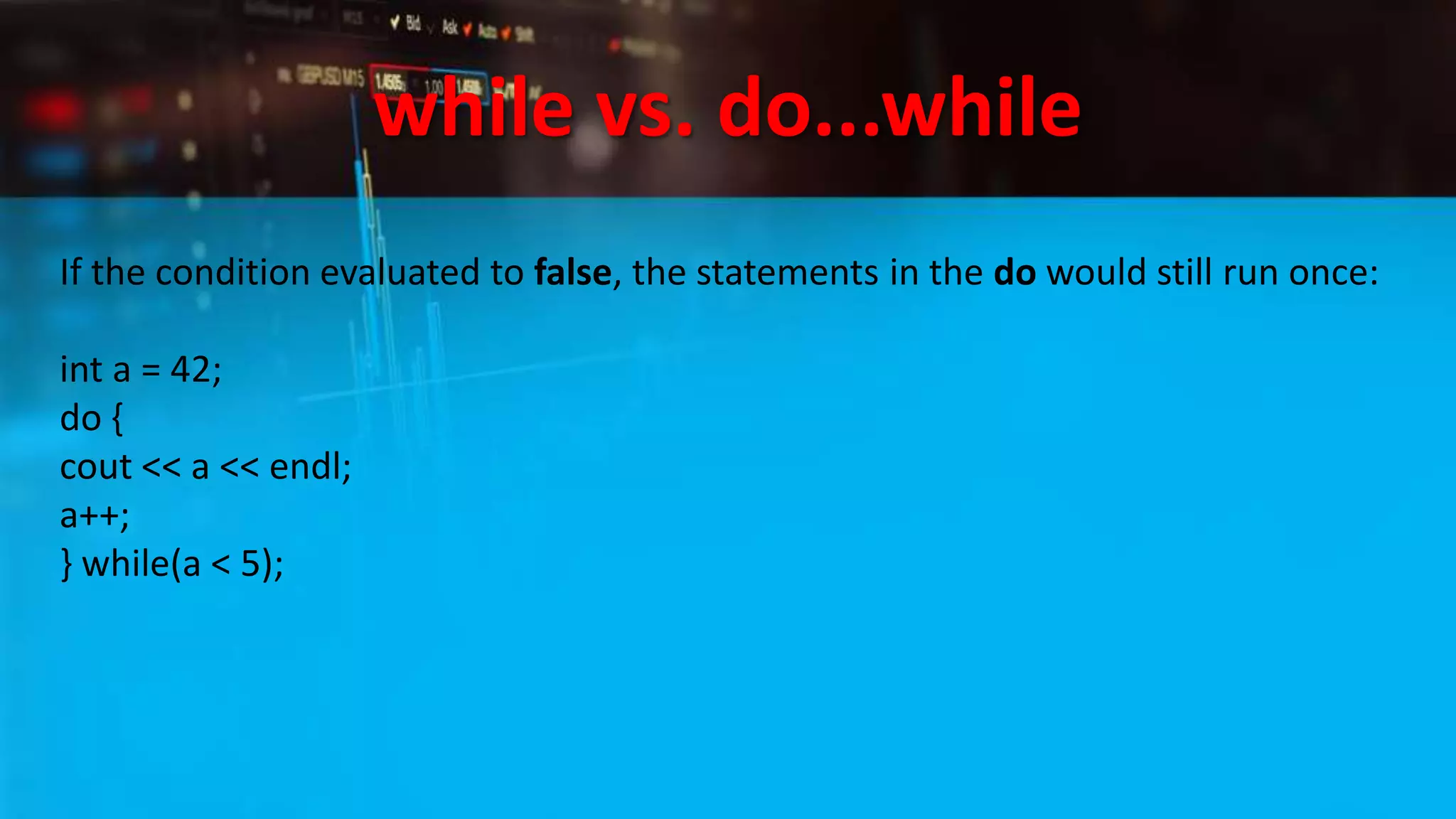
If the condition evaluated to false, the statements in the do would still run once:
int a = 42;
do {
cout << a << endl;
a++;
} while(a < 5);
while vs. do...while
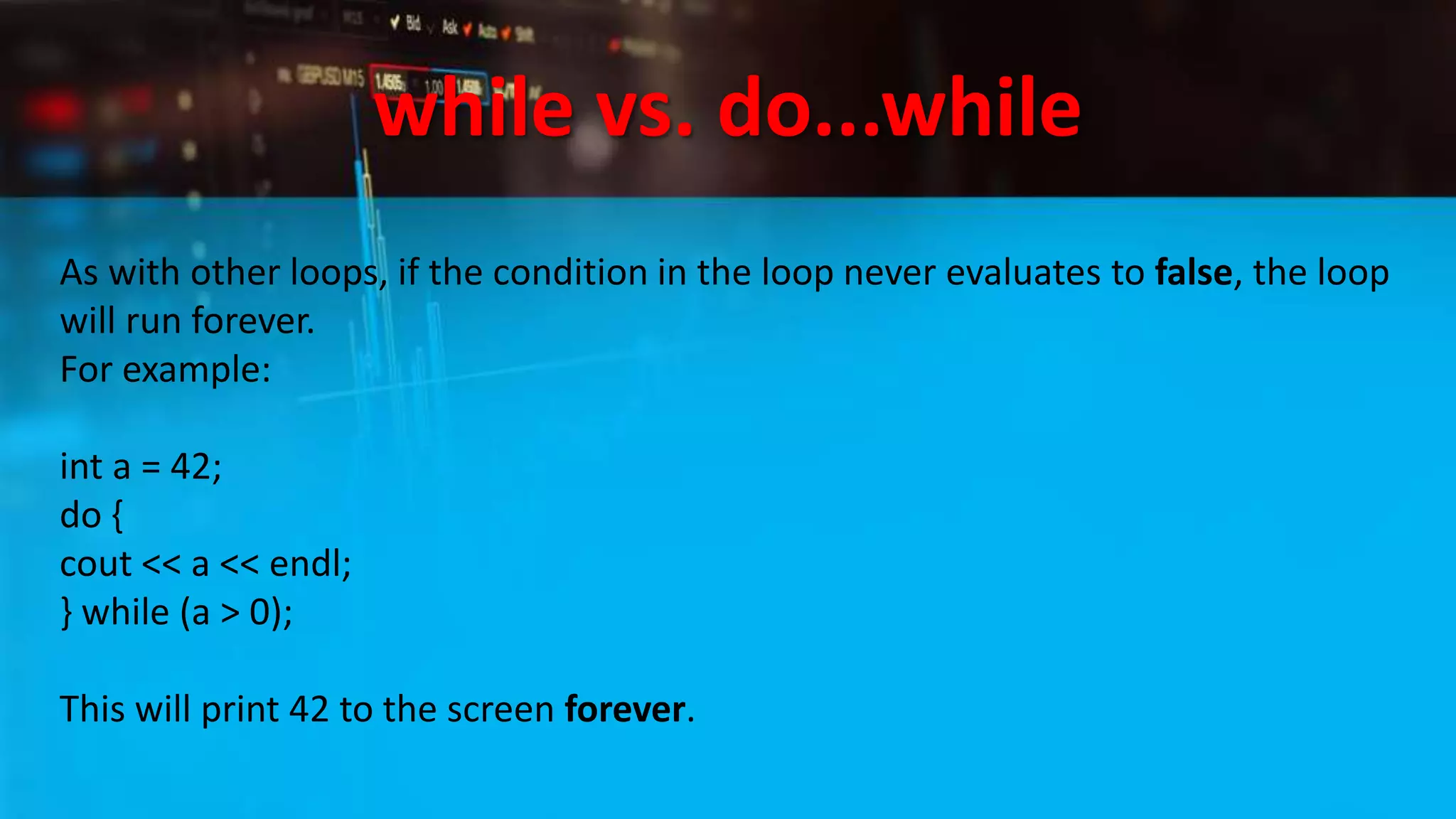
As with other loops, if the condition in the loop never evaluates to false, the loop
will run forever.
For example:
int a = 42;
do {
cout << a << endl;
} while (a > 0);
This will print 42 to the screen forever.

Lecture 5

  • 1.
    C++ Programming Understanding programminglanguages Mohammed Jehan Lecturer
  • 2.
    The for loop Afor loop is a repetition control structure that allows you to efficiently write a loop that executes a specific number of times. Syntax: for ( init; condition; increment ) { statement(s); } The init step is executed first, and does not repeat. Next, the condition is evaluated, and the body of the loop is executed if the condition is true. In the next step, the increment statement updates the loop control variable. Then, the loop's body repeats itself, only stopping when the condition becomes false. For example: for (int x = 1; x < 10; x++) { // some code }
  • 3.
    The for Loop Theexample below uses a for loop to print numbers from 0 to 9. for (int a = 0; a < 10; a++) { cout << a << endl; } In the init step, we declared a variable a and set it to equal 0. a < 10 is the condition. After each iteration, the a++ increment statement is executed. When a increments to 10, the condition evaluates to false, and the loop stops.
  • 4.
    The for Loop It'spossible to change the increment statement. for (int a = 0; a < 50; a+=10) { cout << a << endl; } It's possible to change the increment statement. for (int a = 10; a >= 0; a -= 3) { cout << a << endl; }
  • 5.
    The do...while Loop Unlikefor and while loops, which test the loop condition at the top of the loop, the do...while loop checks its condition at the bottom of the loop. A do...while loop is similar to a while loop. The one difference is that the do...while loop is guaranteed to execute at least one time. do { statement(s); } while (condition); For example, you can take input from the user, then check it. If the input is wrong, you can take it again.
  • 6.
    The do...while Loop Hereis an example: int a = 0; do { cout << a << endl; a++; } while(a < 5);
  • 7.
    while vs. do...while Ifthe condition evaluated to false, the statements in the do would still run once: int a = 42; do { cout << a << endl; a++; } while(a < 5);
  • 8.
    while vs. do...while Aswith other loops, if the condition in the loop never evaluates to false, the loop will run forever. For example: int a = 42; do { cout << a << endl; } while (a > 0); This will print 42 to the screen forever.