a familiar form of energy
energy required to operate
appliances, devices, gadgets
and machines
is the continuous flow of
electrons in a material.
Transformed into many other
forms of energy.
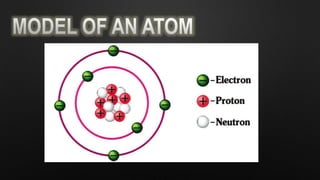
atoms are neutral (no charge)
the number of positive and
negative particles are equal
some objects can lose electrons
and some can gain electrons.
why only electron is
transferred???
there is more proton compared to
electrons
so the objects is said to be
POSITIVELY CHARGED
there is more electrons compared
to protons
so the objects is said to be
NEGATIVELY CHARGED
the number of electrons lost is
always equal to the number of
electrons gained.
LAW OF CONSERVATION OF
CHARGE
Charges cannot be
created nor destroyed,
but can be transferred
from one material to
an invisible force acting on charge
materials or objects
attract
repel
Like charges repel and
opposite charges
attract.
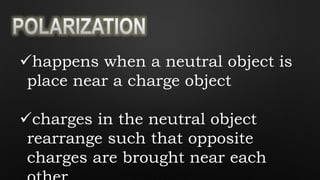
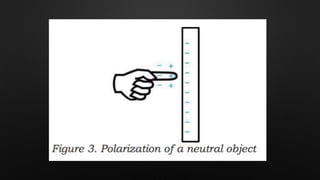
happens when a neutral object is
place near a charge object
charges in the neutral object
rearrange such that opposite
charges are brought near each
the process of removing excess
charges on an object
providing a ground
any object that can be a source of
unlimited electrons in order to
neutralize the charged object
GROUNDING
happens when two objects are in
direct contact and rubbing each
other.
as object rapidly strip away, one
loses electron and the other gains
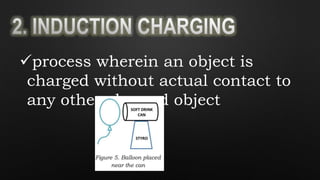
process wherein an object is
charged without actual contact to
any other charged object
process wherein a neutral object
is charged by direct contact with a
charged object
a material that permits chargers
to flow freely within it
metals are usually good
conductors of electricity
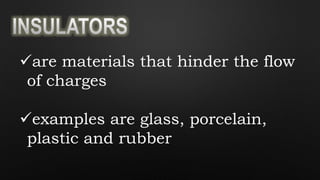
are materials that hinder the flow
of charges
examples are glass, porcelain,
plastic and rubber
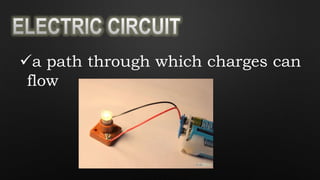
a path through which charges can
flow
Module 6   electricity

Module 6 electricity

  • 2.
    a familiar formof energy energy required to operate appliances, devices, gadgets and machines
  • 5.
    is the continuousflow of electrons in a material. Transformed into many other forms of energy.
  • 6.
    atoms are neutral(no charge) the number of positive and negative particles are equal
  • 7.
    some objects canlose electrons and some can gain electrons. why only electron is transferred???
  • 8.
    there is moreproton compared to electrons so the objects is said to be POSITIVELY CHARGED
  • 9.
    there is moreelectrons compared to protons so the objects is said to be NEGATIVELY CHARGED
  • 10.
    the number ofelectrons lost is always equal to the number of electrons gained. LAW OF CONSERVATION OF CHARGE
  • 11.
    Charges cannot be creatednor destroyed, but can be transferred from one material to
  • 12.
    an invisible forceacting on charge materials or objects attract repel
  • 13.
    Like charges repeland opposite charges attract.
  • 14.
    happens when aneutral object is place near a charge object charges in the neutral object rearrange such that opposite charges are brought near each
  • 16.
    the process ofremoving excess charges on an object providing a ground
  • 17.
    any object thatcan be a source of unlimited electrons in order to neutralize the charged object GROUNDING
  • 21.
    happens when twoobjects are in direct contact and rubbing each other. as object rapidly strip away, one loses electron and the other gains
  • 22.
    process wherein anobject is charged without actual contact to any other charged object
  • 23.
    process wherein aneutral object is charged by direct contact with a charged object
  • 25.
    a material thatpermits chargers to flow freely within it metals are usually good conductors of electricity
  • 26.
    are materials thathinder the flow of charges examples are glass, porcelain, plastic and rubber
  • 30.
    a path throughwhich charges can flow