Clinical Supervision FoundationsClinical Supervision Foundations
Module Four
Supervisory ModalitiesSupervisory Modalities
and Methodsand Methods
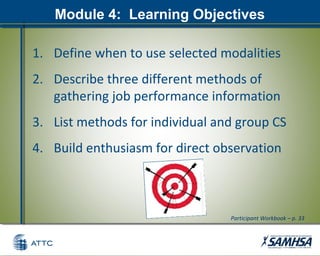
Module 4: Learning Objectives
1. Define when to use selected modalities
2. Describe three different methods of
gathering job performance information
3. List methods for individual and group CS
4. Build enthusiasm for direct observation
Participant Workbook – p. 33
Clinical Supervision Models
• Competency based
• Treatment based
• Developmental
• Integrated
Participant Workbook – p. 33
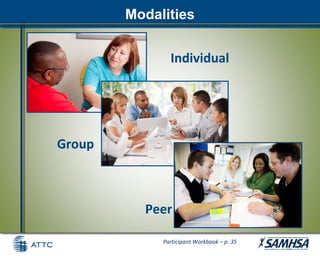
Modalities
Individual
Peer
Group
Participant Workbook – p. 35
Supervision Modality Decision
Questionnaire
Participant Workbook – p. 34
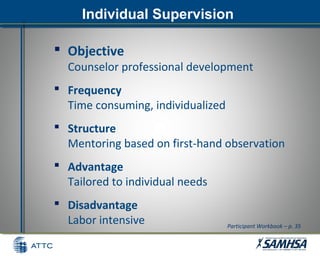
Individual Supervision
 Objective
Counselor professional development
 Frequency
Time consuming, individualized
 Structure
Mentoring based on first-hand observation
 Advantage
Tailored to individual needs
 Disadvantage
Labor intensive Participant Workbook – p. 35
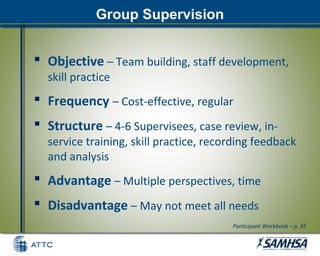
Group Supervision
 Objective – Team building, staff development,
skill practice
 Frequency – Cost-effective, regular
 Structure – 4-6 Supervisees, case review, in-
service training, skill practice, recording feedback
and analysis
 Advantage – Multiple perspectives, time
 Disadvantage – May not meet all needs
Participant Workbook – p. 35
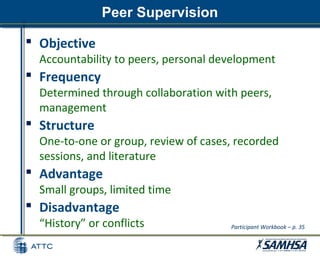
Peer Supervision
 Objective
Accountability to peers, personal development
 Frequency
Determined through collaboration with peers,
management
 Structure
One-to-one or group, review of cases, recorded
sessions, and literature
 Advantage
Small groups, limited time
 Disadvantage
“History” or conflicts Participant Workbook – p. 35
Case Study ReviewCase Study Review
1. Briefly review the four cases and
decide which supervision
modality seems most appropriate for
each
2. Share your reasoning with your small
group
3. Discuss your conclusions in the large
group
Participant Workbook – pp. 36-38
Supervisory Methods
Choices depend on:
 Personal preference
 Supervisee needs
 Agency policy
Participant Workbook – p. 39
Direct Observation
 Live
 One-way mirror
 Audio or video recording
Participant Workbook – p. 39
Individual MethodsIndividual Methods
• Role play
• Interpersonal process recall
• Motivational interviewing
Participant Workbook – p. 40
Group Methods
 Case consultation
 Team or peer feedback
 Skill practice
Participant Workbook – p. 40
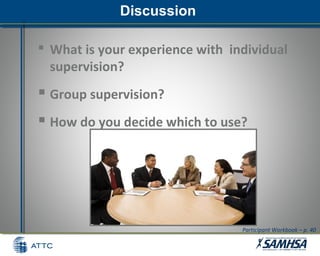
Discussion
 What is your experience with individual
supervision?
 Group supervision?
 How do you decide which to use?
Participant Workbook – p. 40
Ways to Build Support
1. Present the rationale
2. Help counselor get comfortable with
observation
3. Clarify how observations will be dealt with in
supervisory sessions
4. Volunteer to be recorded or observed first
5. Acknowledge that supervision is a required
condition of employment
Participant Workbook – p. 41
Discussion
1. What might concern supervisees most about
being observed and receiving feedback?
2. What assurance or clarification would be most
effective in relieving supervisee anxiety?
Participant Workbook – p. 42
Practice Securing SupportPractice Securing Support
1. Observe a demonstration and discuss
2. Practice in groups of 3
 Supervisor
 Supervisee
 Observer
3. Roles rotate as you engage in three 5-7
minute interviews
4. Observer gives feedback on methods used
5. Supervisee shares impact of the interview
on enthusiasm for clinical supervision
Participant Workbook – p. 41
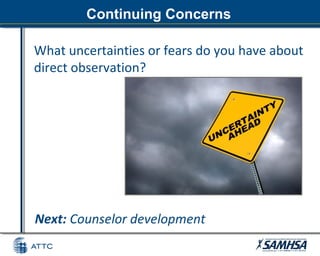
Continuing Concerns
What uncertainties or fears do you have about
direct observation?
Next: Counselor development

Module 4

  • 1.
    Clinical Supervision FoundationsClinicalSupervision Foundations Module Four Supervisory ModalitiesSupervisory Modalities and Methodsand Methods
  • 2.
    Module 4: LearningObjectives 1. Define when to use selected modalities 2. Describe three different methods of gathering job performance information 3. List methods for individual and group CS 4. Build enthusiasm for direct observation Participant Workbook – p. 33
  • 3.
    Clinical Supervision Models •Competency based • Treatment based • Developmental • Integrated Participant Workbook – p. 33
  • 4.
  • 5.
  • 6.
    Individual Supervision  Objective Counselorprofessional development  Frequency Time consuming, individualized  Structure Mentoring based on first-hand observation  Advantage Tailored to individual needs  Disadvantage Labor intensive Participant Workbook – p. 35
  • 7.
    Group Supervision  Objective– Team building, staff development, skill practice  Frequency – Cost-effective, regular  Structure – 4-6 Supervisees, case review, in- service training, skill practice, recording feedback and analysis  Advantage – Multiple perspectives, time  Disadvantage – May not meet all needs Participant Workbook – p. 35
  • 8.
    Peer Supervision  Objective Accountabilityto peers, personal development  Frequency Determined through collaboration with peers, management  Structure One-to-one or group, review of cases, recorded sessions, and literature  Advantage Small groups, limited time  Disadvantage “History” or conflicts Participant Workbook – p. 35
  • 9.
    Case Study ReviewCaseStudy Review 1. Briefly review the four cases and decide which supervision modality seems most appropriate for each 2. Share your reasoning with your small group 3. Discuss your conclusions in the large group Participant Workbook – pp. 36-38
  • 10.
    Supervisory Methods Choices dependon:  Personal preference  Supervisee needs  Agency policy Participant Workbook – p. 39
  • 11.
    Direct Observation  Live One-way mirror  Audio or video recording Participant Workbook – p. 39
  • 12.
    Individual MethodsIndividual Methods •Role play • Interpersonal process recall • Motivational interviewing Participant Workbook – p. 40
  • 13.
    Group Methods  Caseconsultation  Team or peer feedback  Skill practice Participant Workbook – p. 40
  • 14.
    Discussion  What isyour experience with individual supervision?  Group supervision?  How do you decide which to use? Participant Workbook – p. 40
  • 15.
    Ways to BuildSupport 1. Present the rationale 2. Help counselor get comfortable with observation 3. Clarify how observations will be dealt with in supervisory sessions 4. Volunteer to be recorded or observed first 5. Acknowledge that supervision is a required condition of employment Participant Workbook – p. 41
  • 16.
    Discussion 1. What mightconcern supervisees most about being observed and receiving feedback? 2. What assurance or clarification would be most effective in relieving supervisee anxiety? Participant Workbook – p. 42
  • 17.
    Practice Securing SupportPracticeSecuring Support 1. Observe a demonstration and discuss 2. Practice in groups of 3  Supervisor  Supervisee  Observer 3. Roles rotate as you engage in three 5-7 minute interviews 4. Observer gives feedback on methods used 5. Supervisee shares impact of the interview on enthusiasm for clinical supervision Participant Workbook – p. 41
  • 18.
    Continuing Concerns What uncertaintiesor fears do you have about direct observation? Next: Counselor development

Editor's Notes

  • #3 Trainer Guidebook – page 42
  • #4 Trainer Guidebook – page 43
  • #5 Trainer Guidebook – pages 43-44
  • #6 Trainer Guidebook – page 43
  • #7 Trainer Guidebook – page 44
  • #8 Trainer Guidebook – page 44
  • #9 Trainer Guidebook – page 44
  • #10 Trainer Guidebook – page 45
  • #11 Trainers Guidebook – pages 46-48
  • #12 Have participants refer to Participant Workbook.Trainer Guidebook – page 46-47
  • #13 Trainer Guidebook – page 48
  • #14 Trainer Guidebook – page 48
  • #15 Trainer Guidebook – page 49
  • #16 Trainer Guidebook – page 49
  • #17 Trainer Guidebook – page 49
  • #18 Trainer Guidebook – page 50
  • #19 Trainer Guidebook – page 51