Perspectives about and
Models for Supervision in the
Health Professions
Violet H. Barkauskas, PhD, RN, MPH, FAAN
The University of Michigan
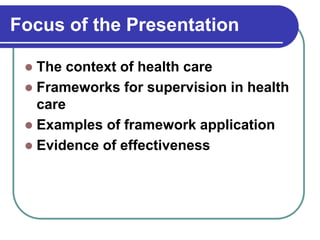
Focus of the Presentation
 The context of health care
 Frameworks for supervision in health
care
 Examples of framework application
 Evidence of effectiveness
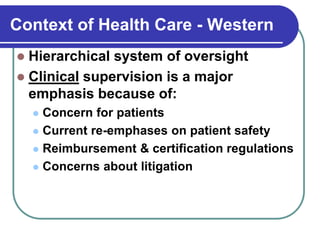
Context of Health Care - Western
 Hierarchical system of oversight
 Clinical supervision is a major
emphasis because of:
 Concern for patients
 Current re-emphases on patient safety
 Reimbursement & certification regulations
 Concerns about litigation
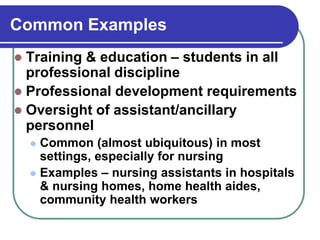
Common Examples
 Training & education – students in all
professional discipline
 Professional development requirements
 Oversight of assistant/ancillary
personnel
 Common (almost ubiquitous) in most
settings, especially for nursing
 Examples – nursing assistants in hospitals
& nursing homes, home health aides,
community health workers
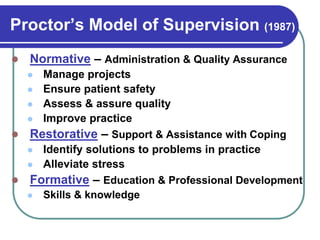
Proctor’s Model of Supervision (1987)
 Normative – Administration & Quality Assurance
 Manage projects
 Ensure patient safety
 Assess & assure quality
 Improve practice
 Restorative – Support & Assistance with Coping
 Identify solutions to problems in practice
 Alleviate stress
 Formative – Education & Professional Development
 Skills & knowledge
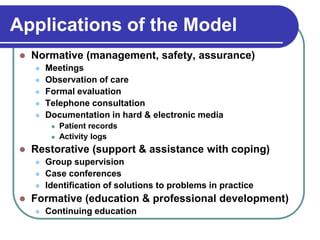
Applications of the Model
 Normative (management, safety, assurance)
 Meetings
 Observation of care
 Formal evaluation
 Telephone consultation
 Documentation in hard & electronic media
 Patient records
 Activity logs
 Restorative (support & assistance with coping)
 Group supervision
 Case conferences
 Identification of solutions to problems in practice
 Formative (education & professional development)
 Continuing education
Heron’s Model of Supervision (1989)
 Authoritative Supervision Interventions
 Prescriptive – direct behavior
 Informative – give information/instruct
 Confronting – challenge
 Facilitative Supervision Interventions
 Cathartic – release tension/strong emotion
 Catalytic – encourage self-exploration
 Supportive – validate/confirm
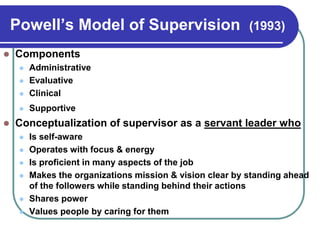
Powell’s Model of Supervision (1993)
 Components
 Administrative
 Evaluative
 Clinical
 Supportive
 Conceptualization of supervisor as a servant leader who
 Is self-aware
 Operates with focus & energy
 Is proficient in many aspects of the job
 Makes the organizations mission & vision clear by standing ahead
of the followers while standing behind their actions
 Shares power
 Values people by caring for them
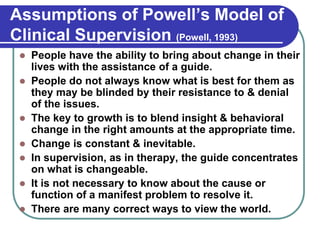
Assumptions of Powell’s Model of
Clinical Supervision (Powell, 1993)
 People have the ability to bring about change in their
lives with the assistance of a guide.
 People do not always know what is best for them as
they may be blinded by their resistance to & denial
of the issues.
 The key to growth is to blend insight & behavioral
change in the right amounts at the appropriate time.
 Change is constant & inevitable.
 In supervision, as in therapy, the guide concentrates
on what is changeable.
 It is not necessary to know about the cause or
function of a manifest problem to resolve it.
 There are many correct ways to view the world.
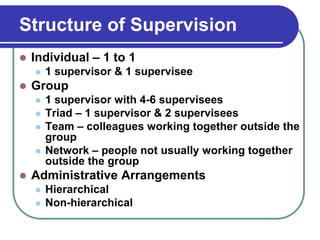
Structure of Supervision
 Individual – 1 to 1
 1 supervisor & 1 supervisee
 Group
 1 supervisor with 4-6 supervisees
 Triad – 1 supervisor & 2 supervisees
 Team – colleagues working together outside the
group
 Network – people not usually working together
outside the group
 Administrative Arrangements
 Hierarchical
 Non-hierarchical
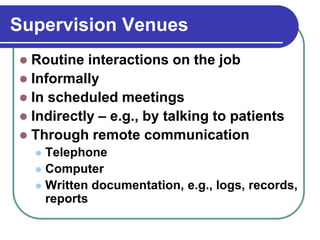
Supervision Venues
 Routine interactions on the job
 Informally
 In scheduled meetings
 Indirectly – e.g., by talking to patients
 Through remote communication
 Telephone
 Computer
 Written documentation, e.g., logs, records,
reports
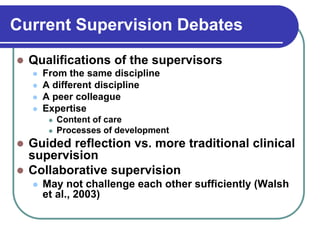
Current Supervision Debates
 Qualifications of the supervisors
 From the same discipline
 A different discipline
 A peer colleague
 Expertise
 Content of care
 Processes of development
 Guided reflection vs. more traditional clinical
supervision
 Collaborative supervision
 May not challenge each other sufficiently (Walsh
et al., 2003)
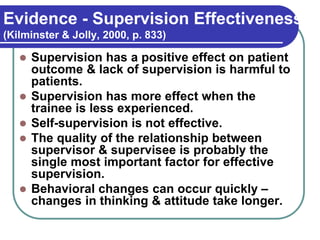
Evidence - Supervision Effectiveness
(Kilminster & Jolly, 2000, p. 833)
 Supervision has a positive effect on patient
outcome & lack of supervision is harmful to
patients.
 Supervision has more effect when the
trainee is less experienced.
 Self-supervision is not effective.
 The quality of the relationship between
supervisor & supervisee is probably the
single most important factor for effective
supervision.
 Behavioral changes can occur quickly –
changes in thinking & attitude take longer.
Tips
 Combine supervision with focused
feedback
 Continuity
 Reflection by both participants
Characteristics of Effective
Supervisors
 Empathetic
 Supportive
 Flexible
 Interested in supervision
 Track supervisees effectively
 Link theory with practice
 Engage in joint problem-solving
 Interpretative
 Respectful
 Focused
 Practical
 Knowledgeable
Characteristics of Ineffective
Supervisors
 Rigid
 Low empathy
 Low support
 Failure to consistently track supervisee concerns
 Failure to teach or instruct
 Indirect & intolerant
 Closed
 Lack respect for differences
 Non-collegial
 Lacking in praise & encouragement
 Sexist
 Emphasize evaluation, weaknesses, & deficiencies
Recommended Content for
Supervisor Training
 Supervision frameworks
 Assessment of learning needs
 Teaching the adult learner
 Counseling
 Provision of feedback
 Issues of power & social stratification
 Transcultural relationships
References
 Heron, J. (1989). Six category intervention analysis. Guildford:
Human Potential Resource Group, University of Surrey.
 Kilminster, S. M., & Jolly, B.C. (2000). Effective supervision in
clinical practice settings: A literature review. Medical Education,
34, 827-840.
 Powell, D. (1993). Clinical supervision in alcohol and drug abuse
counseling. San Francisco: Jossey-Bass .
 Proctor, B. (1987). Supervision: A cooperative exercise in
accountability. In M. Marken, & M. Payne (Eds.). Enabling and
ensuring supervision in practice. Leicester: Youth Bureau and
Council for Education and Training in Youth and Community
Work.
 Sloan, G., & Watson, H. (2002). Clinical supervision models for
nursing: Structure, research and limitations. Nursing Standard,
17(4), 41-46.
 Walsh, K. et al. (2003). Development of a group model of clinical
supervision to meet the needs of a community mental health
nursing team. International Journal of Nursing Practice, 9, 33-39.
QUESTIONS?

Techniques of Supervision

  • 1.
    Perspectives about and Modelsfor Supervision in the Health Professions Violet H. Barkauskas, PhD, RN, MPH, FAAN The University of Michigan
  • 2.
    Focus of thePresentation  The context of health care  Frameworks for supervision in health care  Examples of framework application  Evidence of effectiveness
  • 3.
    Context of HealthCare - Western  Hierarchical system of oversight  Clinical supervision is a major emphasis because of:  Concern for patients  Current re-emphases on patient safety  Reimbursement & certification regulations  Concerns about litigation
  • 4.
    Common Examples  Training& education – students in all professional discipline  Professional development requirements  Oversight of assistant/ancillary personnel  Common (almost ubiquitous) in most settings, especially for nursing  Examples – nursing assistants in hospitals & nursing homes, home health aides, community health workers
  • 5.
    Proctor’s Model ofSupervision (1987)  Normative – Administration & Quality Assurance  Manage projects  Ensure patient safety  Assess & assure quality  Improve practice  Restorative – Support & Assistance with Coping  Identify solutions to problems in practice  Alleviate stress  Formative – Education & Professional Development  Skills & knowledge
  • 6.
    Applications of theModel  Normative (management, safety, assurance)  Meetings  Observation of care  Formal evaluation  Telephone consultation  Documentation in hard & electronic media  Patient records  Activity logs  Restorative (support & assistance with coping)  Group supervision  Case conferences  Identification of solutions to problems in practice  Formative (education & professional development)  Continuing education
  • 7.
    Heron’s Model ofSupervision (1989)  Authoritative Supervision Interventions  Prescriptive – direct behavior  Informative – give information/instruct  Confronting – challenge  Facilitative Supervision Interventions  Cathartic – release tension/strong emotion  Catalytic – encourage self-exploration  Supportive – validate/confirm
  • 8.
    Powell’s Model ofSupervision (1993)  Components  Administrative  Evaluative  Clinical  Supportive  Conceptualization of supervisor as a servant leader who  Is self-aware  Operates with focus & energy  Is proficient in many aspects of the job  Makes the organizations mission & vision clear by standing ahead of the followers while standing behind their actions  Shares power  Values people by caring for them
  • 9.
    Assumptions of Powell’sModel of Clinical Supervision (Powell, 1993)  People have the ability to bring about change in their lives with the assistance of a guide.  People do not always know what is best for them as they may be blinded by their resistance to & denial of the issues.  The key to growth is to blend insight & behavioral change in the right amounts at the appropriate time.  Change is constant & inevitable.  In supervision, as in therapy, the guide concentrates on what is changeable.  It is not necessary to know about the cause or function of a manifest problem to resolve it.  There are many correct ways to view the world.
  • 10.
    Structure of Supervision Individual – 1 to 1  1 supervisor & 1 supervisee  Group  1 supervisor with 4-6 supervisees  Triad – 1 supervisor & 2 supervisees  Team – colleagues working together outside the group  Network – people not usually working together outside the group  Administrative Arrangements  Hierarchical  Non-hierarchical
  • 11.
    Supervision Venues  Routineinteractions on the job  Informally  In scheduled meetings  Indirectly – e.g., by talking to patients  Through remote communication  Telephone  Computer  Written documentation, e.g., logs, records, reports
  • 12.
    Current Supervision Debates Qualifications of the supervisors  From the same discipline  A different discipline  A peer colleague  Expertise  Content of care  Processes of development  Guided reflection vs. more traditional clinical supervision  Collaborative supervision  May not challenge each other sufficiently (Walsh et al., 2003)
  • 13.
    Evidence - SupervisionEffectiveness (Kilminster & Jolly, 2000, p. 833)  Supervision has a positive effect on patient outcome & lack of supervision is harmful to patients.  Supervision has more effect when the trainee is less experienced.  Self-supervision is not effective.  The quality of the relationship between supervisor & supervisee is probably the single most important factor for effective supervision.  Behavioral changes can occur quickly – changes in thinking & attitude take longer.
  • 14.
    Tips  Combine supervisionwith focused feedback  Continuity  Reflection by both participants
  • 15.
    Characteristics of Effective Supervisors Empathetic  Supportive  Flexible  Interested in supervision  Track supervisees effectively  Link theory with practice  Engage in joint problem-solving  Interpretative  Respectful  Focused  Practical  Knowledgeable
  • 16.
    Characteristics of Ineffective Supervisors Rigid  Low empathy  Low support  Failure to consistently track supervisee concerns  Failure to teach or instruct  Indirect & intolerant  Closed  Lack respect for differences  Non-collegial  Lacking in praise & encouragement  Sexist  Emphasize evaluation, weaknesses, & deficiencies
  • 17.
    Recommended Content for SupervisorTraining  Supervision frameworks  Assessment of learning needs  Teaching the adult learner  Counseling  Provision of feedback  Issues of power & social stratification  Transcultural relationships
  • 18.
    References  Heron, J.(1989). Six category intervention analysis. Guildford: Human Potential Resource Group, University of Surrey.  Kilminster, S. M., & Jolly, B.C. (2000). Effective supervision in clinical practice settings: A literature review. Medical Education, 34, 827-840.  Powell, D. (1993). Clinical supervision in alcohol and drug abuse counseling. San Francisco: Jossey-Bass .  Proctor, B. (1987). Supervision: A cooperative exercise in accountability. In M. Marken, & M. Payne (Eds.). Enabling and ensuring supervision in practice. Leicester: Youth Bureau and Council for Education and Training in Youth and Community Work.  Sloan, G., & Watson, H. (2002). Clinical supervision models for nursing: Structure, research and limitations. Nursing Standard, 17(4), 41-46.  Walsh, K. et al. (2003). Development of a group model of clinical supervision to meet the needs of a community mental health nursing team. International Journal of Nursing Practice, 9, 33-39.
  • 19.