By:HAJIRA
Vemana Institute of technology
 In electronics and telecommunication,
Modulation is the process in which
the carrier signal varies in
accordance with the message signal
 Modulation is done to reduce the size
of the antenna and to reduce the
interference
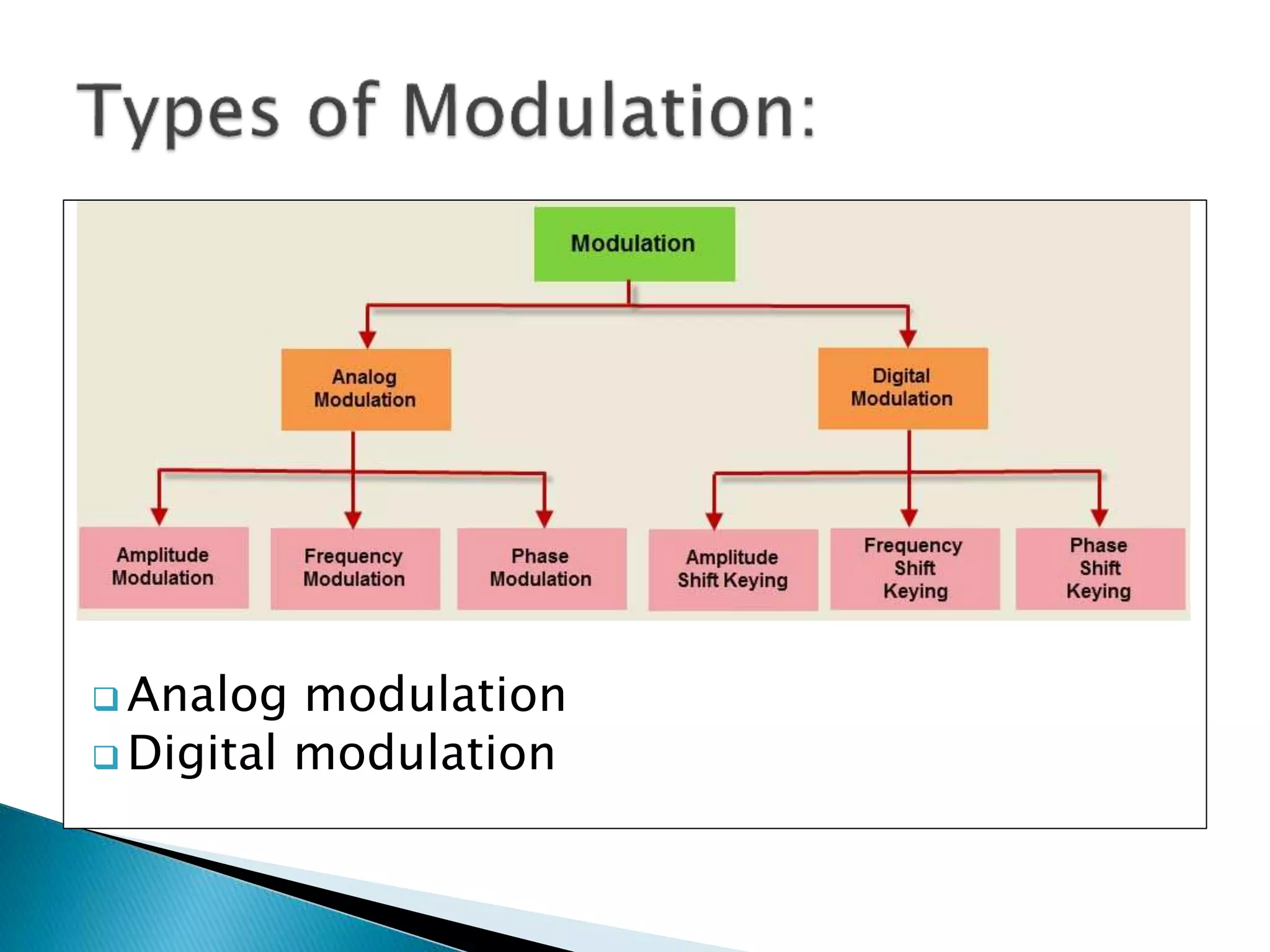
 Analog modulation
 Digital modulation
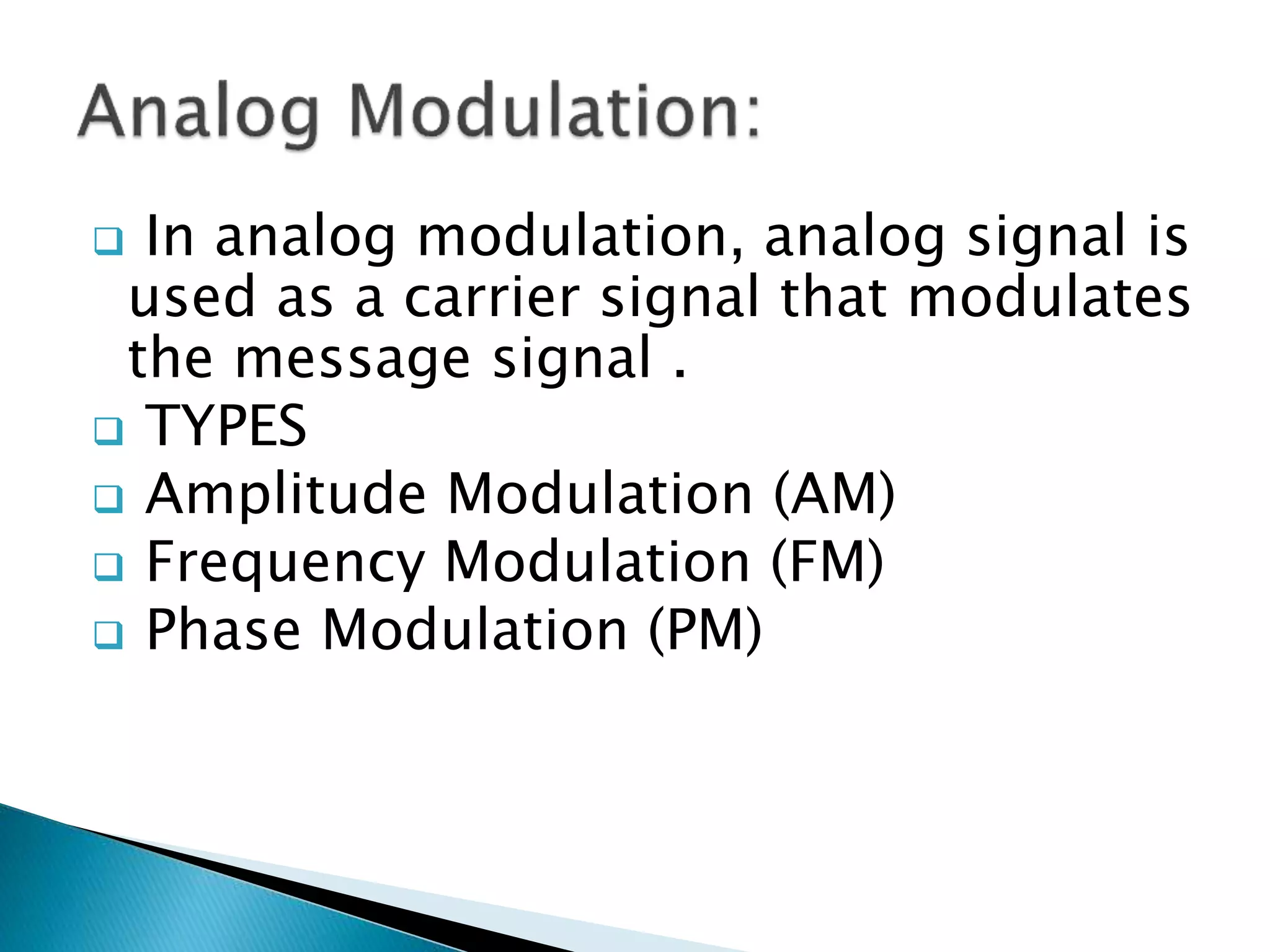
 In analog modulation, analog signal is
used as a carrier signal that modulates
the message signal .
 TYPES
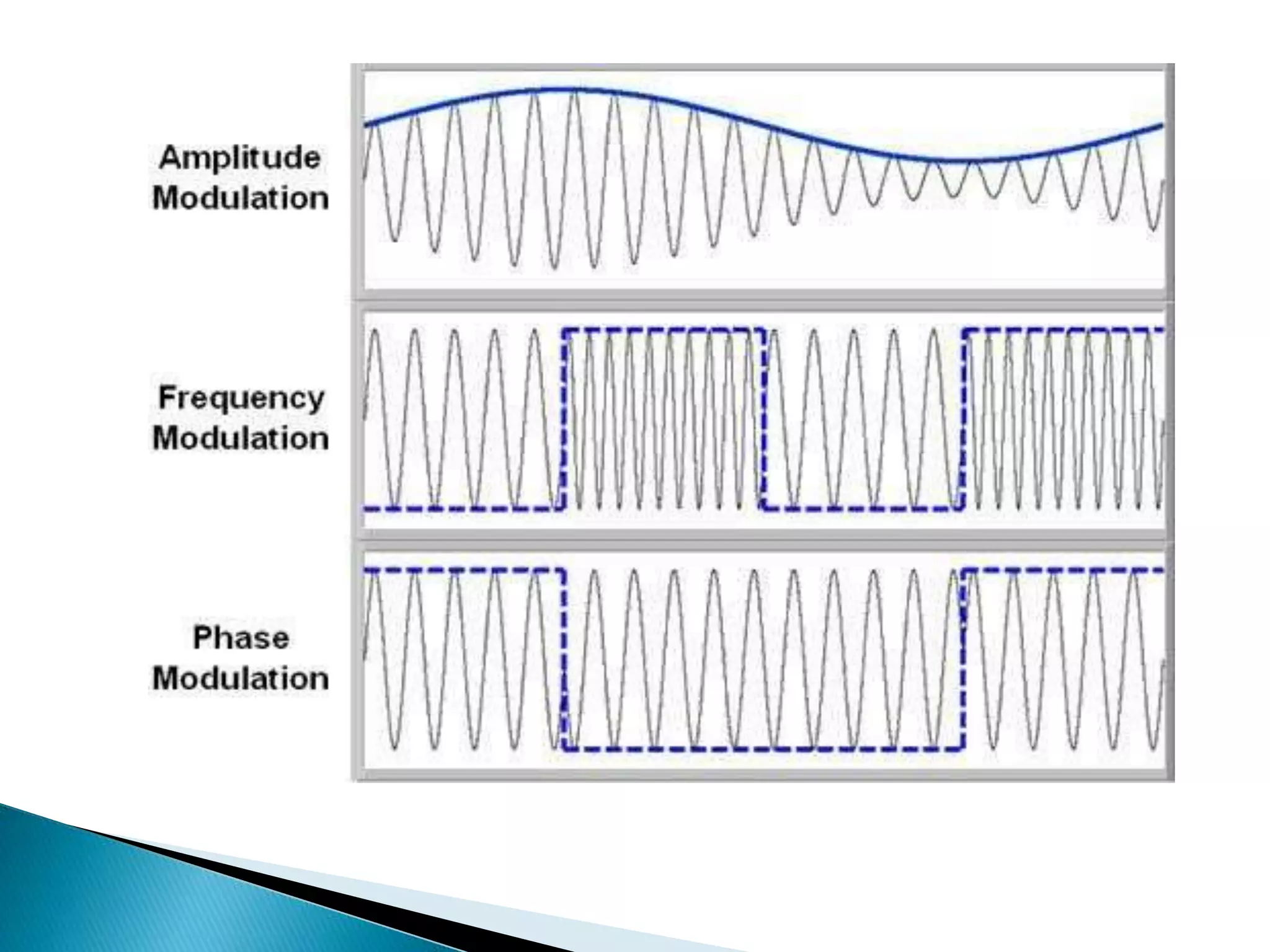
 Amplitude Modulation (AM)
 Frequency Modulation (FM)
 Phase Modulation (PM)
 In this modulation, the amplitude of the
carrier signal varies in accordance with the
message signal, and other factors like phase
and frequency remain constant.
 It consists of lower frequency band, upper-
frequency band, and carrier frequency
components. This type of modulation
requires greater bandwidth, more power.
 In this modulation the frequency of the
carrier signal varies in accordance with the
message signal and the other factors like
amplitude and phase remain constant.
 It is used in applications like radio, radar etc.
The efficiency and bandwidths depend on the
modulation index and maximum modulating
frequency.
 In phase modulation, the carrier phase is
varied in accordance with the data signal. In
this type of modulation, when the phase is
changed it also affects the frequency, so this
modulation also comes under frequency
modulation
 This type of modulation is used for signal
generation in synthesizers.
 For a better quality and efficient
communication, digital modulation technique
is employed. The main advantages of the
digital modulation over analog modulation
include available bandwidth , high noise
immunity and permissible power. In digital
modulation, a message signal is converted
from analog to digital message, and then
modulated by using a carrier wave.
 Amplitude Shift Keying (ASK)
 Phase Shift Keying (PSK)
 Frequency Shift Keying(FSK)
 Quadrature Amplitude Modulation(QAM)
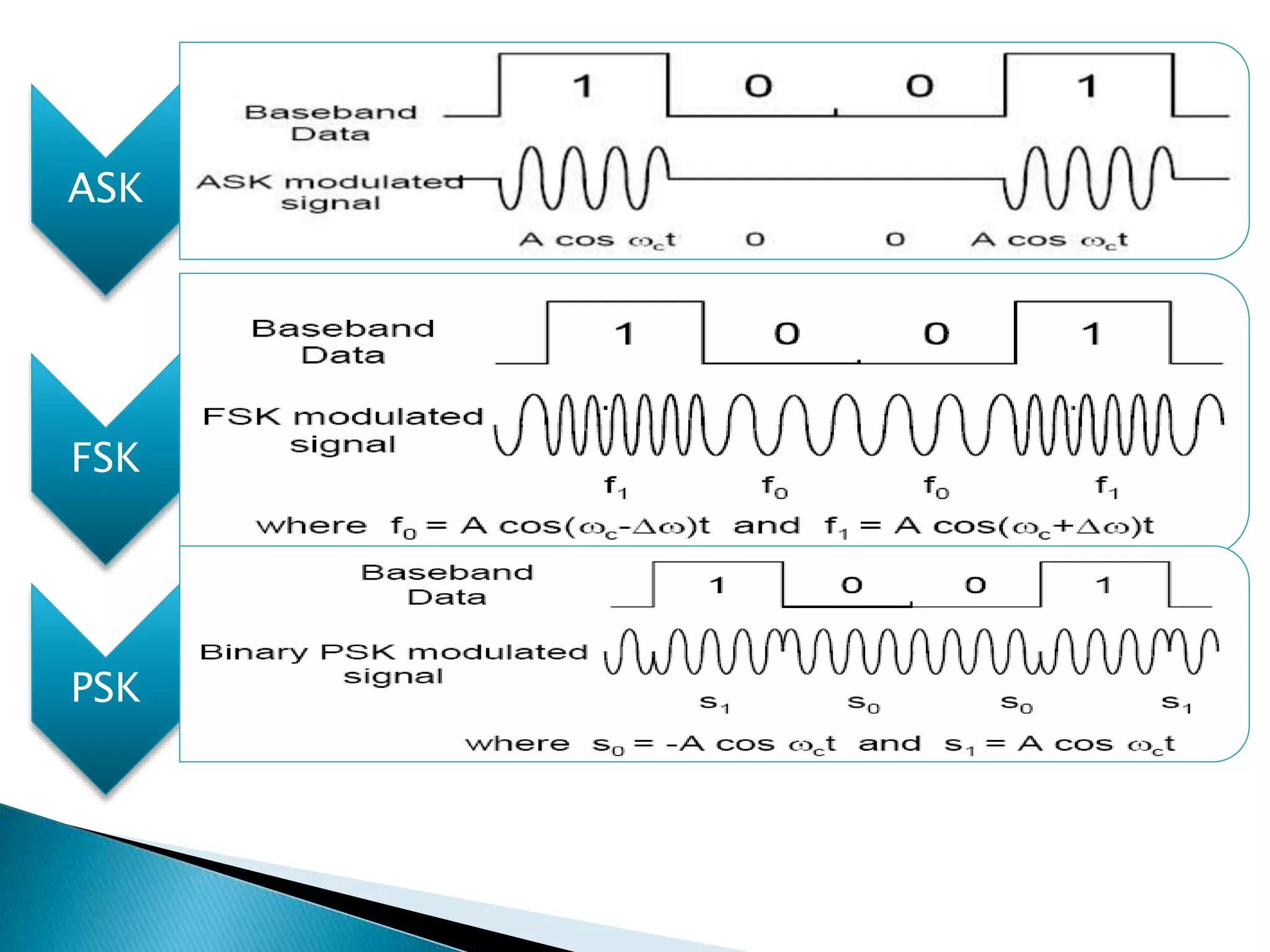
ASK
FSK
PSK
 QAM which is widely used in radio communication
especially in LTE.
 QAM is used in radio communication as it is able to
carry higher data rates when compared to other
modulation techniques.
 The most common forms of QAM are 16-QAM, 64-
QAM and 256-QAM. By using higher order
modulation formats. The advantage of moving to
the higher order formats is that it is possible to
transmit more bits per symbol. However the
disadvantage is that it is more sensitive to noise.
As a result, higher versions of QAM are used only
when there is a sufficiently high signal to noise
ratio(S/N).
THANK YOU

Modulation Techniques.pptx

  • 1.
  • 2.
     In electronicsand telecommunication, Modulation is the process in which the carrier signal varies in accordance with the message signal  Modulation is done to reduce the size of the antenna and to reduce the interference
  • 3.
     Analog modulation Digital modulation
  • 4.
     In analogmodulation, analog signal is used as a carrier signal that modulates the message signal .  TYPES  Amplitude Modulation (AM)  Frequency Modulation (FM)  Phase Modulation (PM)
  • 5.
     In thismodulation, the amplitude of the carrier signal varies in accordance with the message signal, and other factors like phase and frequency remain constant.  It consists of lower frequency band, upper- frequency band, and carrier frequency components. This type of modulation requires greater bandwidth, more power.
  • 6.
     In thismodulation the frequency of the carrier signal varies in accordance with the message signal and the other factors like amplitude and phase remain constant.  It is used in applications like radio, radar etc. The efficiency and bandwidths depend on the modulation index and maximum modulating frequency.
  • 7.
     In phasemodulation, the carrier phase is varied in accordance with the data signal. In this type of modulation, when the phase is changed it also affects the frequency, so this modulation also comes under frequency modulation  This type of modulation is used for signal generation in synthesizers.
  • 9.
     For abetter quality and efficient communication, digital modulation technique is employed. The main advantages of the digital modulation over analog modulation include available bandwidth , high noise immunity and permissible power. In digital modulation, a message signal is converted from analog to digital message, and then modulated by using a carrier wave.
  • 10.
     Amplitude ShiftKeying (ASK)  Phase Shift Keying (PSK)  Frequency Shift Keying(FSK)  Quadrature Amplitude Modulation(QAM)
  • 11.
  • 12.
     QAM whichis widely used in radio communication especially in LTE.  QAM is used in radio communication as it is able to carry higher data rates when compared to other modulation techniques.  The most common forms of QAM are 16-QAM, 64- QAM and 256-QAM. By using higher order modulation formats. The advantage of moving to the higher order formats is that it is possible to transmit more bits per symbol. However the disadvantage is that it is more sensitive to noise. As a result, higher versions of QAM are used only when there is a sufficiently high signal to noise ratio(S/N).
  • 13.