


Realising Possibilities
 - Using Web 2.0 Technologies
 To Empower Practitioners
 Within A Community Of
 Practice To Deliver Education
 And Training


           Anne Spencer
        Dublin City University
               PETAL
OVERVIEW
 Aim is to leave you with some thoughts for further
  consideration and discussion perhaps within the
  conference or within your own respective institutions,
  both academia and practice


 Offer you some ‘real life’ case examples of COP’s that are
  emerging within Ireland and North America


 To tell their stories as they are unfolding and the
  challenges and opportunities each are facing
WEB 2.0 AND EDUCATION


The two-way web allows us to expand on how
we teach, communicate, learn and create
knowledge.


Many higher education institutions are
discovering that new models of teaching and
learning are required to meet the needs of a new
generation of students.
THE AFFORDANCES OF WEB 2.0

We know that students are becoming active participants
rather than passive consumers of web content.

We as educators should be encouraging and supporting
our students to use new technologies to create
communities to collaborate, learn and build knowledge.

Learning becomes a participatory, social process. It is
this sociability aspect that holds the greatest potential
for the future of education.
KEY OPPORTUNITIES ARISE FROM
THE INTEGRATION OF WEB 2.0
TECHNOLOGIES
Pedagogical Innovation
 • Fostering collaboration
 • Co-construction and sharing of knowledge
 • Exchange of learning content
 • Creation of ‘knowledge communities’
 • More constructivist and situative learning approaches
   can be fostered
 • Individualised personal learning networks created
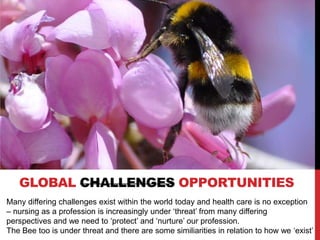
GLOBAL CHALLENGES OPPORTUNITIES
Many differing challenges exist within the world today and health care is no exception
– nursing as a profession is increasingly under ‘threat’ from many differing
perspectives and we need to ‘protect’ and ‘nurture’ our profession.
The Bee too is under threat and there are some similiarities in relation to how we ‘exist’
ECOSYSTEMS
• An ecosystem can be defined as a system formed by the
  interaction of a community of organisms with their
  physical environment.
   • Increasingly healthcare is perceived and referred to as a
     type of ecosystem.

• For example in 2011 EU Final Report on e-Health
  infrastructures in Europe identifies a conceptual model for
  national e-Health infrastructures as an ecosystem.


• If this is the case then where is nursing located within this
  ecosystem and what is our function?
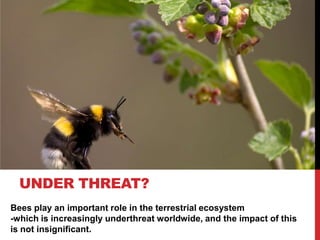
UNDER THREAT?
Bees play an important role in the terrestrial ecosystem
-which is increasingly underthreat worldwide, and the impact of this
is not insignificant.
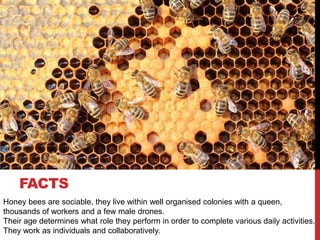
FACTS
Honey bees are sociable, they live within well organised colonies with a queen,
thousands of workers and a few male drones.
Their age determines what role they perform in order to complete various daily activities.
They work as individuals and collaboratively.
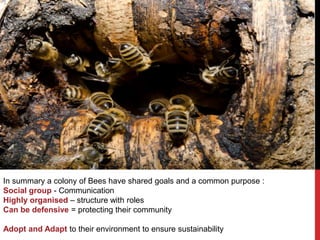
In summary a colony of Bees have shared goals and a common purpose :
Social group - Communication
Highly organised – structure with roles
Can be defensive = protecting their community

Adopt and Adapt to their environment to ensure sustainability
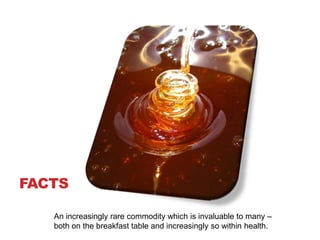
FACTS

   An increasingly rare commodity which is invaluable to many –
   both on the breakfast table and increasingly so within health.
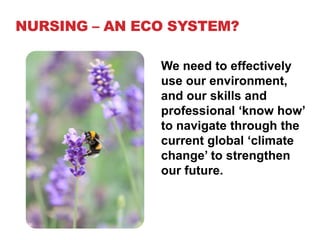
NURSING – AN ECO SYSTEM?

               We need to effectively
               use our environment,
               and our skills and
               professional ‘know how’
               to navigate through the
               current global ‘climate
               change’ to strengthen
               our future.
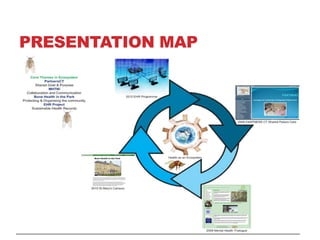
PRESENTATION MAP
COMMUNITIES OF PRACTICE
               Communities of Practice (COP)
               originally were devised as a form of
               learning theory to promote
               empowerment and professional
               development in the workplace.

               Today COP’s are often used to
               promote the uptake of new
               knowledge and to create knowledge
               networks.

               The World Health Organisation
               Strategic Directions Plan for Nursing
               and Midwifery for 2011-15 identifies
               COP as effective networking and
               partnerships activities (KRA 5).


Wenger, 2006
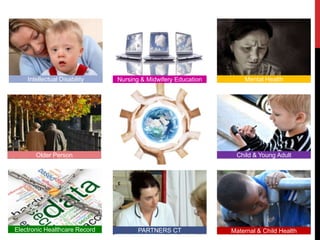
Intellectual Disability    Nursing & Midwifery Education       Mental Health


       Older Person                                             Child & Young Adult


Electronic Healthcare Record          PARTNERS CT              Maternal & Child Health
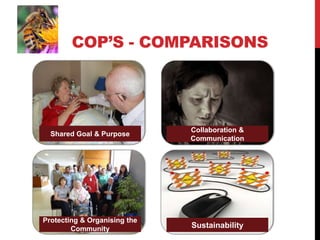
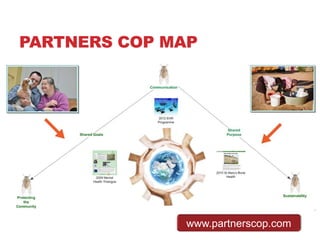
COP’S - COMPARISONS


                              Collaboration &
  Shared Goal & Purpose
                              Communication


Protecting & Organising the
        Community             Sustainability
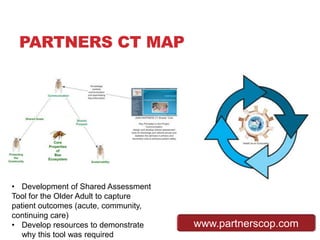
PARTNERS CT MAP


• Development of Shared Assessment
Tool for the Older Adult to capture
patient outcomes (acute, community,
continuing care)
• Develop resources to demonstrate    www.partnerscop.com
   why this tool was required
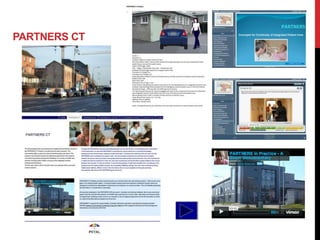
PARTNERS CT
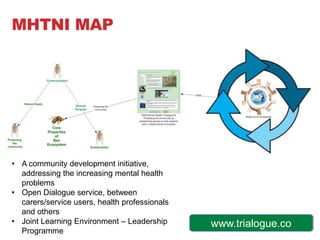
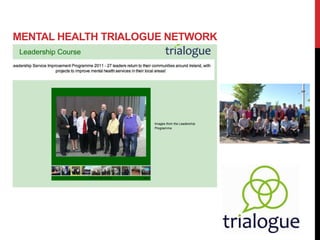
MHTNI MAP


• A community development initiative,
  addressing the increasing mental health
  problems
• Open Dialogue service, between
  carers/service users, health professionals
  and others
• Joint Learning Environment – Leadership      www.trialogue.co
  Programme
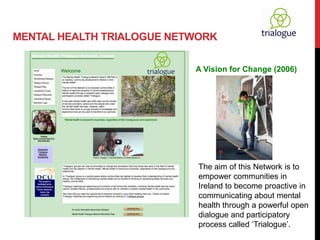
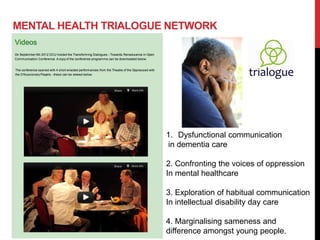
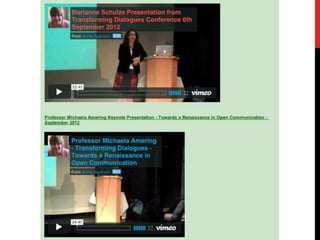
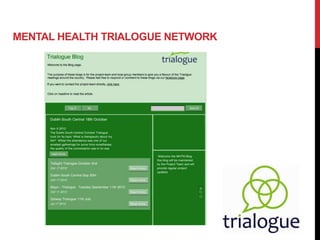
MENTAL HEALTH TRIALOGUE NETWORK

                           A Vision for Change (2006)


                            The aim of this Network is to
                            empower communities in
                            Ireland to become proactive in
                            communicating about mental
                            health through a powerful open
                            dialogue and participatory
                            process called ‘Trialogue’.
MENTAL HEALTH TRIALOGUE NETWORK


                       1. Dysfunctional communication
                       in dementia care

                       2. Confronting the voices of oppression
                       In mental healthcare

                       3. Exploration of habitual communication
                       In intellectual disability day care

                       4. Marginalising sameness and
                       difference amongst young people.
MENTAL HEALTH TRIALOGUE NETWORK
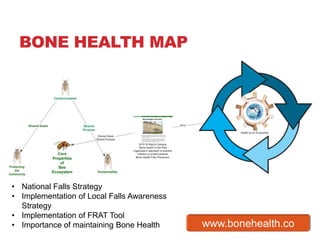
BONE HEALTH MAP


• National Falls Strategy
• Implementation of Local Falls Awareness
  Strategy
• Implementation of FRAT Tool
• Importance of maintaining Bone Health     www.bonehealth.co
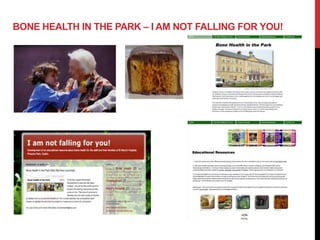
BONE HEALTH IN THE PARK – I AM NOT FALLING FOR YOU!
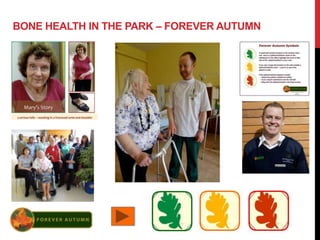
BONE HEALTH IN THE PARK – FOREVER AUTUMN
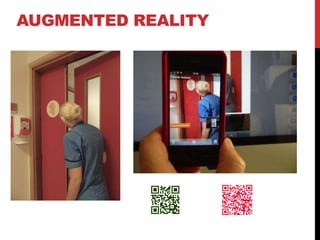
AUGMENTED REALITY
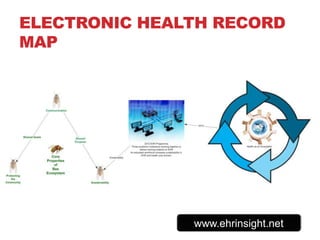
ELECTRONIC HEALTH RECORD
MAP


               www.ehrinsight.net
OVERVIEW OF EHR
The Electronic Healthcare Record Project ia joint initiative across three academic
institutions in Ireland – Dublin Institute of Technology, Dublin City University and
Trinity College Dublin.

The project team leader is Dr Pamela Hussey from SNHS DCU.

The project team have a keen interest in the successful implementation of EHR in
Ireland and collectively have a comprehensive understanding of what is required to
ensure that Ireland is properly prepared to engage in national implementation
programmes in the future.

There is significant evidence to suggest that enterprise or national EHR
implementations are not as effective as one would expect.

This project focuses on creating an introductory resource for education and training
of key stakeholders on the importance of EHR and is designed for use across a
number of disciplines including health care professionals and engineering students.
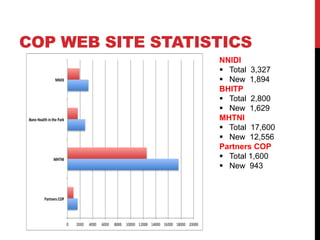
COP WEB SITE STATISTICS
                   NNIDI
                    Total 3,327
                    New 1,894
                   BHITP
                    Total 2,800
                    New 1,629
                   MHTNI
                    Total 17,600
                    New 12,556
                   Partners COP
                    Total 1,600
                    New 943
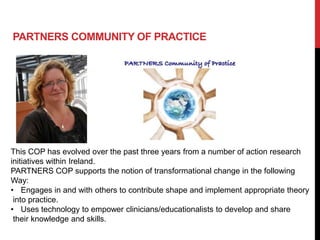
PARTNERS COMMUNITY OF PRACTICE


This COP has evolved over the past three years from a number of action research
initiatives within Ireland.
PARTNERS COP supports the notion of transformational change in the following
Way:
• Engages in and with others to contribute shape and implement appropriate theory
 into practice.
• Uses technology to empower clinicians/educationalists to develop and share
 their knowledge and skills.
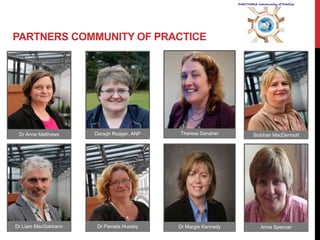
PARTNERS COMMUNITY OF PRACTICE


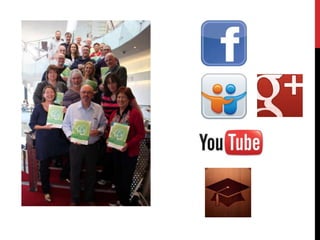
 Dr Anne Matthews    Daragh Rodger, ANP   Therese Danaher     Siobhan MacDermott


Dr Liam MacGabhann    Dr Pamela Hussey    Dr Margie Kennedy     Anne Spencer
PARTNERS COP MAP


              www.partnerscop.com
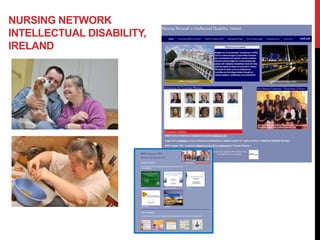
NURSING NETWORK
INTELLECTUAL DISABILITY,
IRELAND
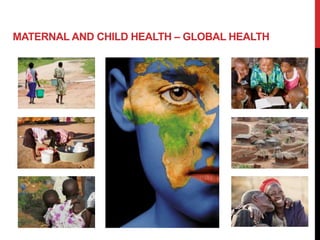
MATERNAL AND CHILD HEALTH – GLOBAL HEALTH
COSYS STRATEGIC
 ALLIANCE PROGRAMME
Is the cooperation between Irish Aid and Higher Education and
Research Institutes.
The PI is Dr Ruarai Brugha from the Royal College of Surgeons
Ireland and the following organisations and institutions are partners
in the project:

   Dublin City University (DCU), Ireland
   College of Medicine (COM), Malawi
   Zambia AIDS Related Tuberculosis Project (ZAMBART), Zambia
   Makerere University School of Public Health (MUSPH) - Uganda
   Concern Universal (CU) Malawi
   Concern Worldwide (CW) Ireland and Malawi
   AIDS Alliance Zambia (AAZ)
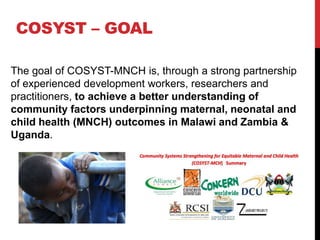
COSYST – GOAL

The goal of COSYST-MNCH is, through a strong partnership
of experienced development workers, researchers and
practitioners, to achieve a better understanding of
community factors underpinning maternal, neonatal and
child health (MNCH) outcomes in Malawi and Zambia &
Uganda.
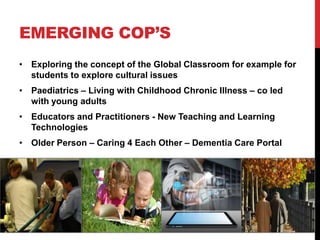
EMERGING COP’S
• Exploring the concept of the Global Classroom for example for
  students to explore cultural issues
• Paediatrics – Living with Childhood Chronic Illness – co led
  with young adults
• Educators and Practitioners - New Teaching and Learning
  Technologies
• Older Person – Caring 4 Each Other – Dementia Care Portal
SUMMARY
 Nursing and its future use of technology within the
  scope of healthcare needs to be managed and
  strong leadership is now required.
 Much is written reporting nurses as the knowledge
  workers in health care who through a process of
  assimilation convert data to information---
  Information to knowledge and with experience we
  use our wisdom and clinical judgement to inform our
  practice.
 In so doing we can deliver the best possible care
  and ensure that the knowledge of nursing and the
  craft of caring is maintained for future generations
  to come.
FINALLY -


 Considering health as an ecosystem and comparing
  ourselves to the ecosystems of bees offers us time to reflect
  and consider ourselves as ‘knowledge workers’ in a global
  environment which is changing.
 Just as bees are adopting and adapting to their new climate
  so too will nursing as a profession.
Education is not the
filling of a pail ………
But the lighting of a fire!   William Butler-Yeats
QUESTIONS & QUERIES


      #ICIN12
      @as48


Email aspencer@petalireland.com   www.petalireland.com

ICIN 2012 Key Note Presentation - Anne Spencer

  • 1.
    Realising Possibilities -Using Web 2.0 Technologies To Empower Practitioners Within A Community Of Practice To Deliver Education And Training Anne Spencer Dublin City University PETAL
  • 2.
    OVERVIEW  Aim isto leave you with some thoughts for further consideration and discussion perhaps within the conference or within your own respective institutions, both academia and practice  Offer you some ‘real life’ case examples of COP’s that are emerging within Ireland and North America  To tell their stories as they are unfolding and the challenges and opportunities each are facing
  • 4.
    WEB 2.0 ANDEDUCATION The two-way web allows us to expand on how we teach, communicate, learn and create knowledge. Many higher education institutions are discovering that new models of teaching and learning are required to meet the needs of a new generation of students.
  • 5.
    THE AFFORDANCES OFWEB 2.0 We know that students are becoming active participants rather than passive consumers of web content. We as educators should be encouraging and supporting our students to use new technologies to create communities to collaborate, learn and build knowledge. Learning becomes a participatory, social process. It is this sociability aspect that holds the greatest potential for the future of education.
  • 6.
    KEY OPPORTUNITIES ARISEFROM THE INTEGRATION OF WEB 2.0 TECHNOLOGIES Pedagogical Innovation • Fostering collaboration • Co-construction and sharing of knowledge • Exchange of learning content • Creation of ‘knowledge communities’ • More constructivist and situative learning approaches can be fostered • Individualised personal learning networks created
  • 7.
    GLOBAL CHALLENGES OPPORTUNITIES Manydiffering challenges exist within the world today and health care is no exception – nursing as a profession is increasingly under ‘threat’ from many differing perspectives and we need to ‘protect’ and ‘nurture’ our profession. The Bee too is under threat and there are some similiarities in relation to how we ‘exist’
  • 8.
    ECOSYSTEMS • An ecosystemcan be defined as a system formed by the interaction of a community of organisms with their physical environment. • Increasingly healthcare is perceived and referred to as a type of ecosystem. • For example in 2011 EU Final Report on e-Health infrastructures in Europe identifies a conceptual model for national e-Health infrastructures as an ecosystem. • If this is the case then where is nursing located within this ecosystem and what is our function?
  • 9.
    UNDER THREAT? Bees playan important role in the terrestrial ecosystem -which is increasingly underthreat worldwide, and the impact of this is not insignificant.
  • 10.
    FACTS Honey bees aresociable, they live within well organised colonies with a queen, thousands of workers and a few male drones. Their age determines what role they perform in order to complete various daily activities. They work as individuals and collaboratively.
  • 11.
    In summary acolony of Bees have shared goals and a common purpose : Social group - Communication Highly organised – structure with roles Can be defensive = protecting their community Adopt and Adapt to their environment to ensure sustainability
  • 12.
    FACTS An increasingly rare commodity which is invaluable to many – both on the breakfast table and increasingly so within health.
  • 13.
    NURSING – ANECO SYSTEM? We need to effectively use our environment, and our skills and professional ‘know how’ to navigate through the current global ‘climate change’ to strengthen our future.
  • 14.
  • 15.
    COMMUNITIES OF PRACTICE Communities of Practice (COP) originally were devised as a form of learning theory to promote empowerment and professional development in the workplace. Today COP’s are often used to promote the uptake of new knowledge and to create knowledge networks. The World Health Organisation Strategic Directions Plan for Nursing and Midwifery for 2011-15 identifies COP as effective networking and partnerships activities (KRA 5). Wenger, 2006
  • 16.
    Intellectual Disability Nursing & Midwifery Education Mental Health Older Person Child & Young Adult Electronic Healthcare Record PARTNERS CT Maternal & Child Health
  • 17.
    COP’S - COMPARISONS Collaboration & Shared Goal & Purpose Communication Protecting & Organising the Community Sustainability
  • 18.
    PARTNERS CT MAP •Development of Shared Assessment Tool for the Older Adult to capture patient outcomes (acute, community, continuing care) • Develop resources to demonstrate www.partnerscop.com why this tool was required
  • 19.
  • 20.
    MHTNI MAP • Acommunity development initiative, addressing the increasing mental health problems • Open Dialogue service, between carers/service users, health professionals and others • Joint Learning Environment – Leadership www.trialogue.co Programme
  • 21.
    MENTAL HEALTH TRIALOGUENETWORK A Vision for Change (2006) The aim of this Network is to empower communities in Ireland to become proactive in communicating about mental health through a powerful open dialogue and participatory process called ‘Trialogue’.
  • 22.
    MENTAL HEALTH TRIALOGUENETWORK 1. Dysfunctional communication in dementia care 2. Confronting the voices of oppression In mental healthcare 3. Exploration of habitual communication In intellectual disability day care 4. Marginalising sameness and difference amongst young people.
  • 24.
  • 25.
  • 26.
  • 28.
    BONE HEALTH MAP •National Falls Strategy • Implementation of Local Falls Awareness Strategy • Implementation of FRAT Tool • Importance of maintaining Bone Health www.bonehealth.co
  • 29.
    BONE HEALTH INTHE PARK – I AM NOT FALLING FOR YOU!
  • 30.
    BONE HEALTH INTHE PARK – FOREVER AUTUMN
  • 32.
  • 35.
  • 36.
    OVERVIEW OF EHR TheElectronic Healthcare Record Project ia joint initiative across three academic institutions in Ireland – Dublin Institute of Technology, Dublin City University and Trinity College Dublin. The project team leader is Dr Pamela Hussey from SNHS DCU. The project team have a keen interest in the successful implementation of EHR in Ireland and collectively have a comprehensive understanding of what is required to ensure that Ireland is properly prepared to engage in national implementation programmes in the future. There is significant evidence to suggest that enterprise or national EHR implementations are not as effective as one would expect. This project focuses on creating an introductory resource for education and training of key stakeholders on the importance of EHR and is designed for use across a number of disciplines including health care professionals and engineering students.
  • 38.
    COP WEB SITESTATISTICS NNIDI  Total 3,327  New 1,894 BHITP  Total 2,800  New 1,629 MHTNI  Total 17,600  New 12,556 Partners COP  Total 1,600  New 943
  • 39.
    PARTNERS COMMUNITY OFPRACTICE This COP has evolved over the past three years from a number of action research initiatives within Ireland. PARTNERS COP supports the notion of transformational change in the following Way: • Engages in and with others to contribute shape and implement appropriate theory into practice. • Uses technology to empower clinicians/educationalists to develop and share their knowledge and skills.
  • 40.
    PARTNERS COMMUNITY OFPRACTICE Dr Anne Matthews Daragh Rodger, ANP Therese Danaher Siobhan MacDermott Dr Liam MacGabhann Dr Pamela Hussey Dr Margie Kennedy Anne Spencer
  • 41.
    PARTNERS COP MAP www.partnerscop.com
  • 42.
  • 44.
    MATERNAL AND CHILDHEALTH – GLOBAL HEALTH
  • 45.
    COSYS STRATEGIC ALLIANCEPROGRAMME Is the cooperation between Irish Aid and Higher Education and Research Institutes. The PI is Dr Ruarai Brugha from the Royal College of Surgeons Ireland and the following organisations and institutions are partners in the project:  Dublin City University (DCU), Ireland  College of Medicine (COM), Malawi  Zambia AIDS Related Tuberculosis Project (ZAMBART), Zambia  Makerere University School of Public Health (MUSPH) - Uganda  Concern Universal (CU) Malawi  Concern Worldwide (CW) Ireland and Malawi  AIDS Alliance Zambia (AAZ)
  • 46.
    COSYST – GOAL Thegoal of COSYST-MNCH is, through a strong partnership of experienced development workers, researchers and practitioners, to achieve a better understanding of community factors underpinning maternal, neonatal and child health (MNCH) outcomes in Malawi and Zambia & Uganda.
  • 47.
    EMERGING COP’S • Exploringthe concept of the Global Classroom for example for students to explore cultural issues • Paediatrics – Living with Childhood Chronic Illness – co led with young adults • Educators and Practitioners - New Teaching and Learning Technologies • Older Person – Caring 4 Each Other – Dementia Care Portal
  • 48.
    SUMMARY  Nursing andits future use of technology within the scope of healthcare needs to be managed and strong leadership is now required.  Much is written reporting nurses as the knowledge workers in health care who through a process of assimilation convert data to information--- Information to knowledge and with experience we use our wisdom and clinical judgement to inform our practice.  In so doing we can deliver the best possible care and ensure that the knowledge of nursing and the craft of caring is maintained for future generations to come.
  • 49.
    FINALLY -  Consideringhealth as an ecosystem and comparing ourselves to the ecosystems of bees offers us time to reflect and consider ourselves as ‘knowledge workers’ in a global environment which is changing.  Just as bees are adopting and adapting to their new climate so too will nursing as a profession.
  • 50.
    Education is notthe filling of a pail ……… But the lighting of a fire! William Butler-Yeats
  • 51.
    QUESTIONS & QUERIES #ICIN12 @as48 Email aspencer@petalireland.com www.petalireland.com

Editor's Notes

  • #5 Videos in you tube to support this and TED
  • #8 Many differing challenges exist within the world today for example financial and climatic and health care is no exception – nursing as a profession is increasingly under ‘threat’ from many differing perspectives and we need to be cohesive in our strategy going for forward to protect and nurture our profession.Similarly the Bee is also under threat and there are some similarties in how we ‘exist and operate’ within our respective communities are used as a navigational metaphor within this presentation.
  • #9 http://www.e-health-com.eu/fileadmin/user_upload/dateien/Downloads/eHealthStrategies_Final_Report.pdf
  • #11 Honey bees are social creatures , they live within well organised colonies with a queen, thousands of workers and a few male drones Their age determines what role they perform in order to complete various daily activities.
  • #12 Shared goals and purpose Social group - Communication Highly organised – structure with roles Can be defensive = protecting their community Adopt and adapt to their environment to ensure sustainability
  • #15 Let me start by just drawing some comparisons between the work that we have engaged in over the past 5 years and existing ecosystems , as health is now being perceived in the evidence base as an ecosystem. I will used this graphic in this presentation as a conceptual framework for our discussion
  • #16 Add definition and images here WengerCommunities of Practice (COP) originally were devised as a form of learning theory to promote empowerment and professional development in the workplace 1. Today COP’s are often used to promote the uptake of new knowledge and to create knowledge networks 2,3 . The World Health Organisation Strategic Directions Plan for Nursing and Midwifery for 2011-15 identifies COP as effective networking and partnerships activities4. The PARTNERSCOP has evolved over the past three years from a number of action research initiatives within Ireland. Discussion with our colleagues on the existing clinical context would suggest that PARTNERSCOP supports the notion of transformational change in the following manner 1, Engages in and with others to contribute shape and implement appropriate theory to practice.2. Capitalises on the use of technology to empower clinicians to organise and develop their practice.3. Use the COP as an enabler to facilitate the development of a learning enterprise for generating knowledge based on users’ expressed needs or stated clinical requirements.
  • #19 Partners CT was conceived from an action research phd completed in trinity college Dublin over a three year period 2007- 2010 ,A key element of this participatory action research study was to empower nurses from differing services ( acute , community and continuing care) to develop a shared assessment tool for care of older person to capture patient centred outcomes over extended time intervals. Eighteen patients were recruited into the study and the pilot assessment tool was tested to ascertain whether it was if for purpose. Over the duration of the project, Nursing participants were empowered to develop a number of resources including a video demonstrating why this assessment tool was required and the participating nurses were educated on health informatics standards particularly in relation to the importance of using core concepts and terms in the design of nursing assessment. The partnersct project was underpinned by C.Hobic the Canadian health outcomes for better information and care and two members from the original team are now actively engaged in the development of documentation for future EHR in Ireland.All resources developed in partnersct are also used in the undergraduate programmes in DCU with students as part of a case study  
  • #29 These are not in chronological order you should reverse bone health and mhtni
  • #30 Care in the community residential care homesSensor technology
  • #31 Care in the community residential care homesSensor technology
  • #37 OECD – HIQA Report
  • #42 I suggest you move partnerscop up and then include the nnid and the cosyst work we are doing you could say something that as part of this mapping exercise these two ecosystems share a lot in common and as we scale up to include our more vulnerable populations its important to be inclusive. Here I would also put in a table for the last slide of each of the projects and the number of hits that they are getting to demonstrate the idea that the communities of practice in health care are living organic ecosystems that are evolving and that web 2.0 and 3.0 offer good enablers or vehicles to help us through these tough times.
  • #43 Palliative care development Facts and figures on web siteNo of ID nurses slideshare
  • #47 Insert african images here
  • #48 Referece caring 4 each other to the poster – walking with carers – supportive information for carers -
  • #50 Add images of bees and nurses