21
2
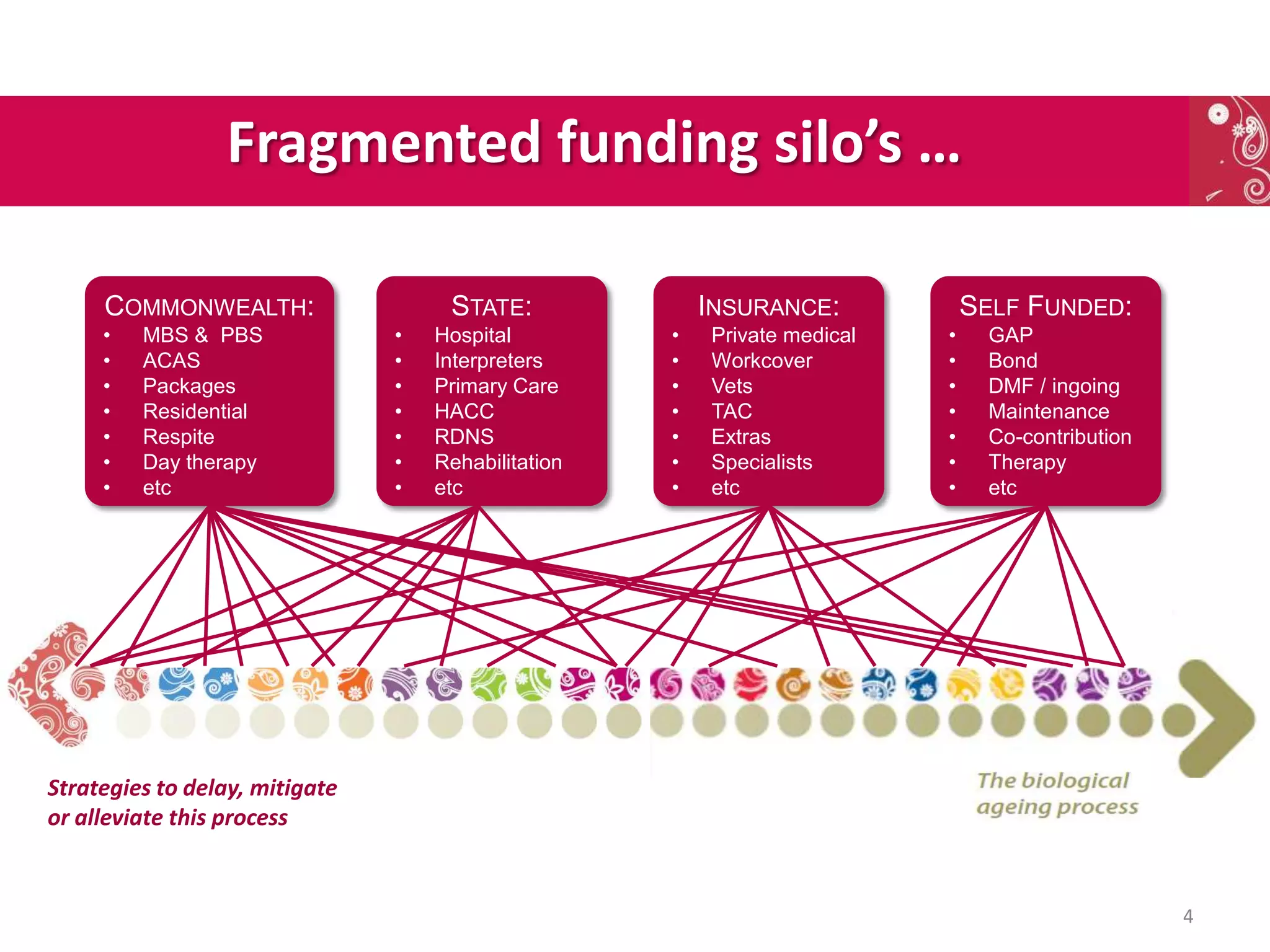
Fragmented funding silo’s …

     COMMONWEALTH:                   STATE:              INSURANCE:            SELF FUNDED:
     •   MBS & PBS              •   Hospital         •   Private medical   •     GAP
     •   ACAS                   •   Interpreters     •   Workcover         •     Bond
     •   Packages               •   Primary Care     •   Vets              •     DMF / ingoing
     •   Residential            •   HACC             •   TAC               •     Maintenance
     •   Respite                •   RDNS             •   Extras            •     Co-contribution
     •   Day therapy            •   Rehabilitation   •   Specialists       •     Therapy
     •   etc                    •   etc              •   etc               •     etc


Strategies to delay, mitigate
or alleviate this process


                                                                                                   4
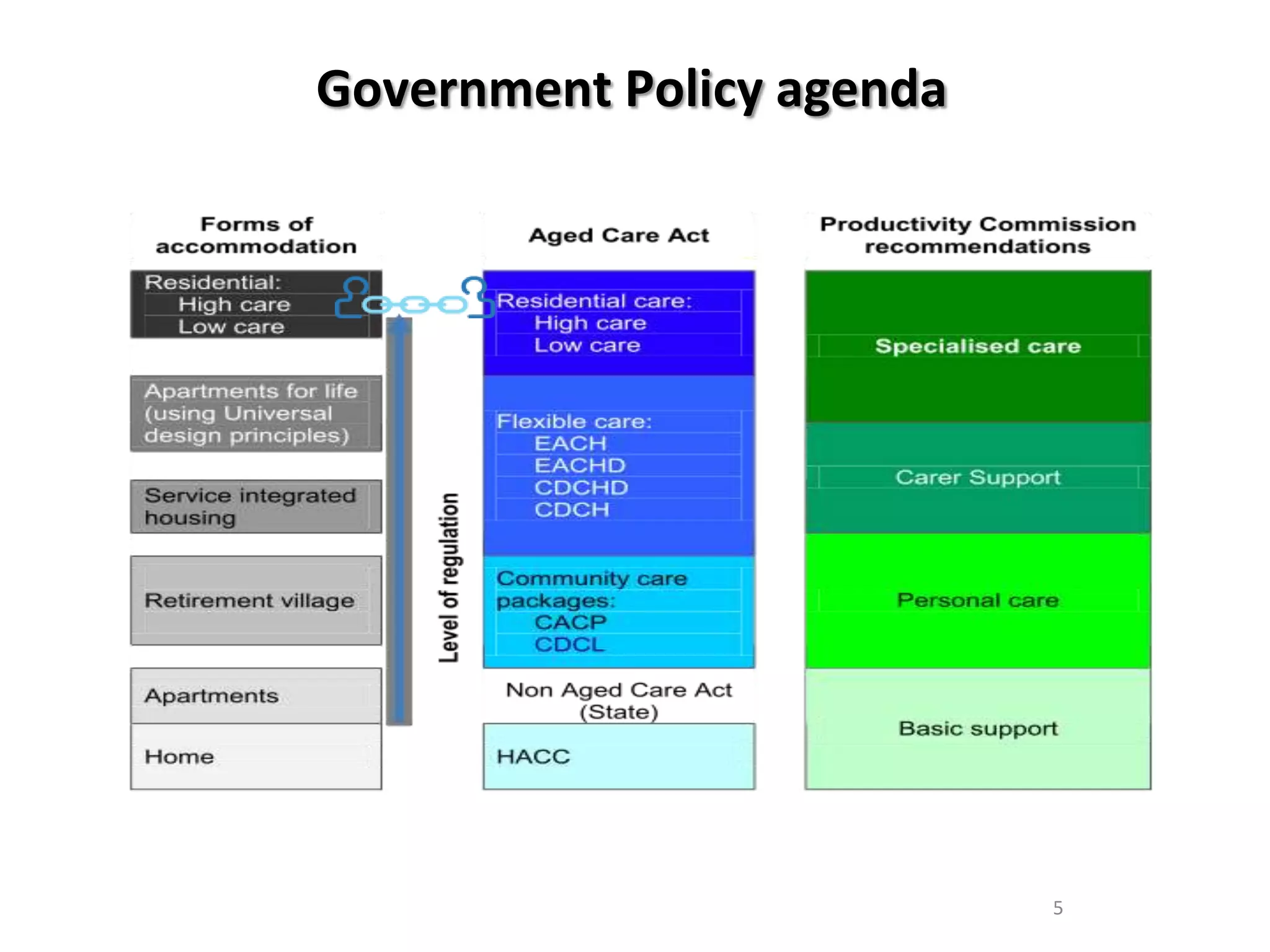
Government Policy agenda


                           5
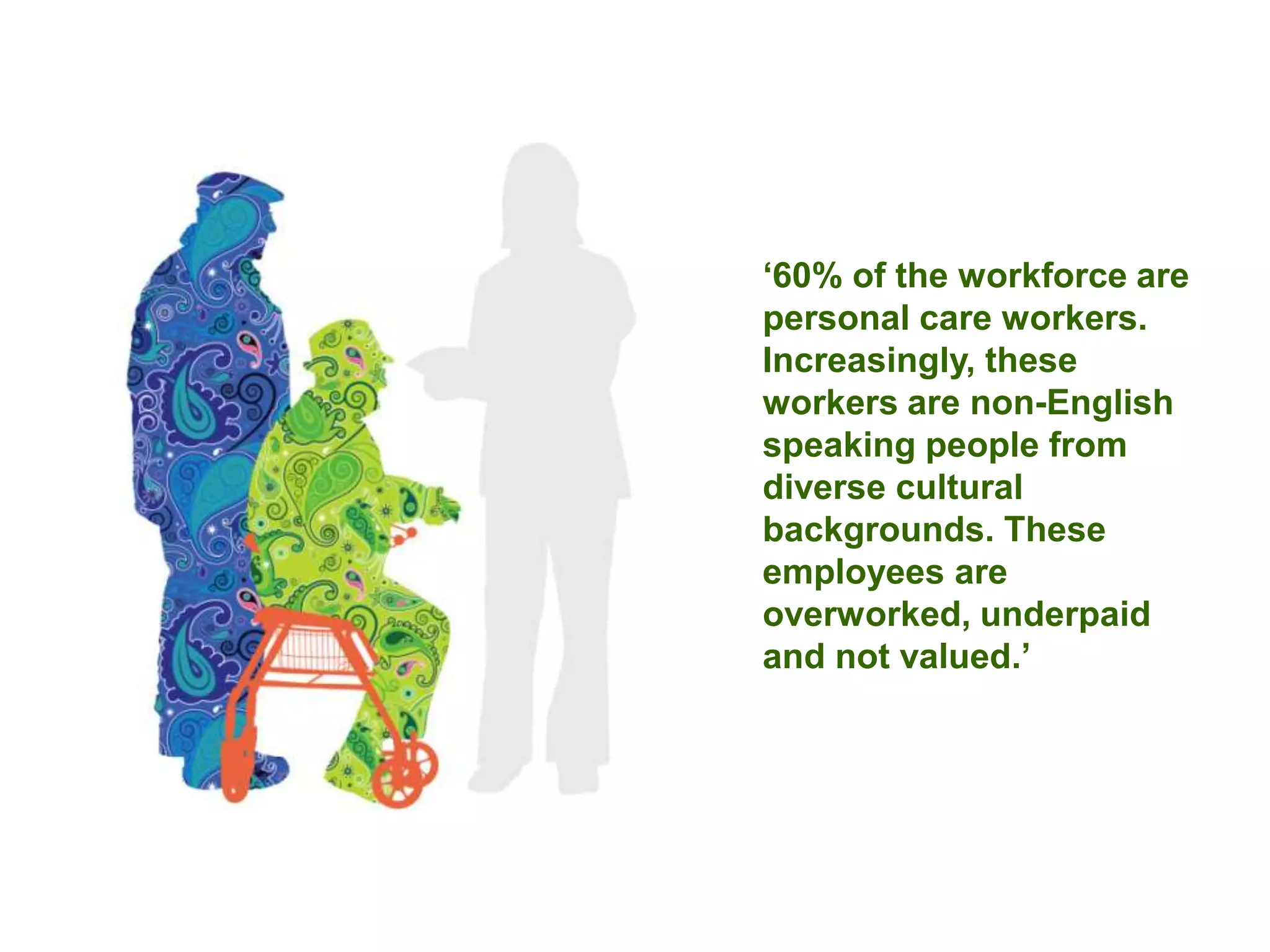
‘60% of the workforce are
personal care workers.
Increasingly, these
workers are non-English
speaking people from
diverse cultural
backgrounds. These
employees are
overworked, underpaid
and not valued.’
More of the same is not going to work!


                                         7
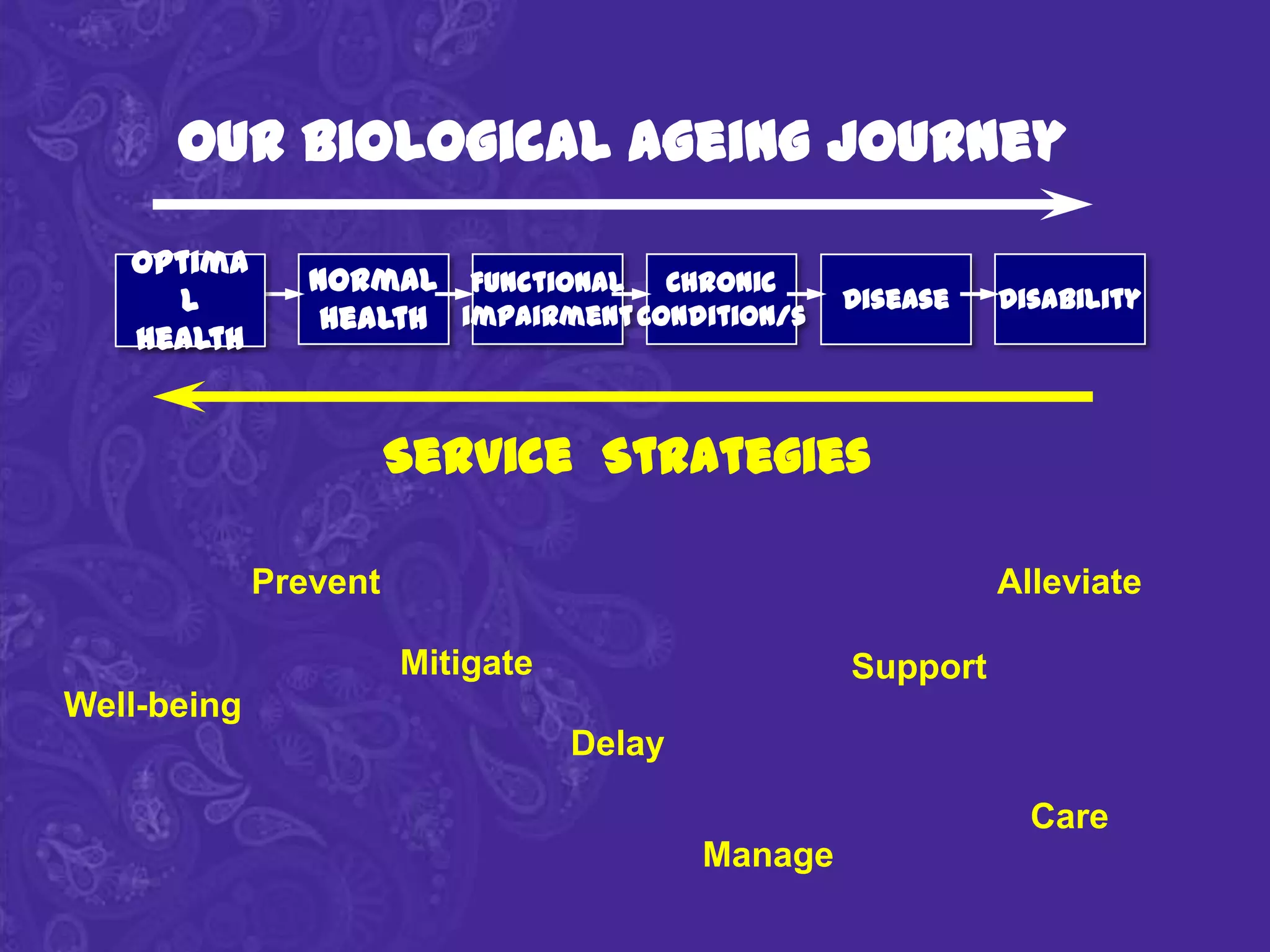
Our biological ageing journey
   Optima
                Normal Functional Chronic
     l                                             Disease   Disability
                 health impairment Condition/s
   health


                       Service Strategies

             Prevent                                         Alleviate

                       Mitigate                    Support
Well-being
                                  Delay

                                                               Care
                                          Manage
Providers


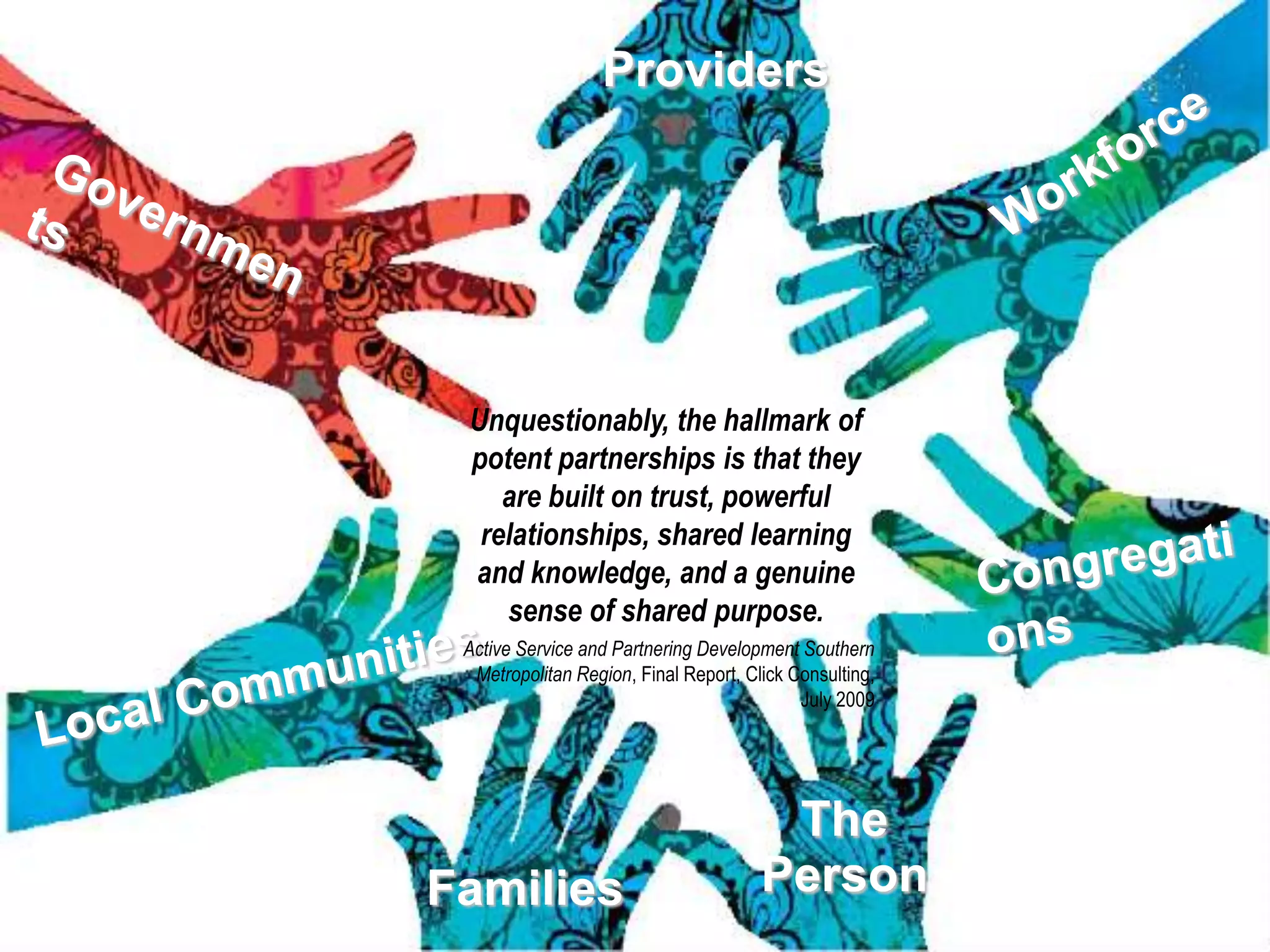
 Unquestionably, the hallmark of
 potent partnerships is that they
    are built on trust, powerful
  relationships, shared learning
 and knowledge, and a genuine
    sense of shared purpose.
 Active Service and Partnering Development Southern
  Metropolitan Region, Final Report, Click Consulting,
                                            July 2009


                                        The
Families                               Person
13
14
16
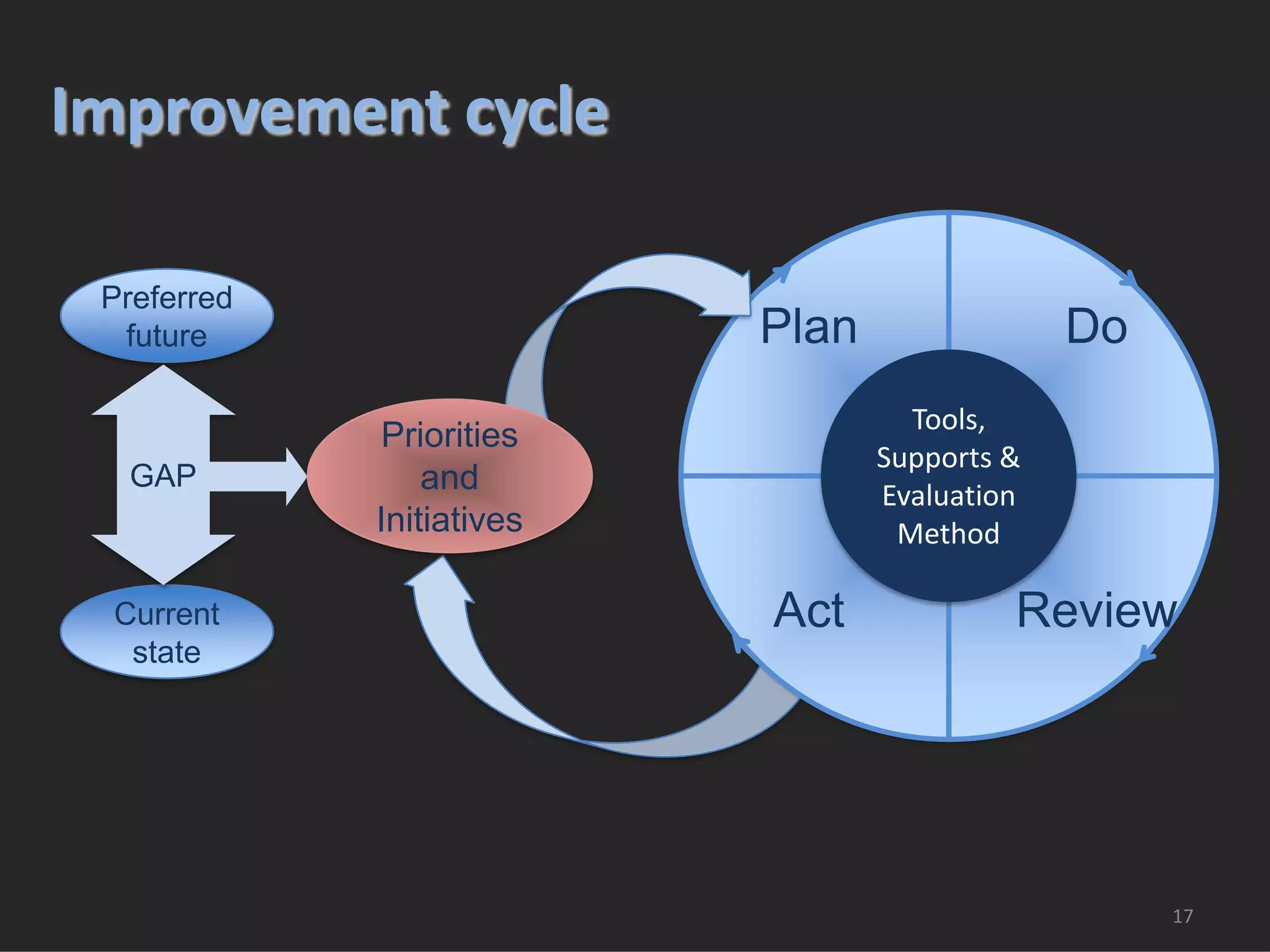
Improvement cycle

 Preferred
  future                   Plan                Do
                                    Tools,
             Priorities
                                  Supports &
  GAP            and              Evaluation
             Initiatives           Method

 Current                   Act             Review
  state


                                                    17
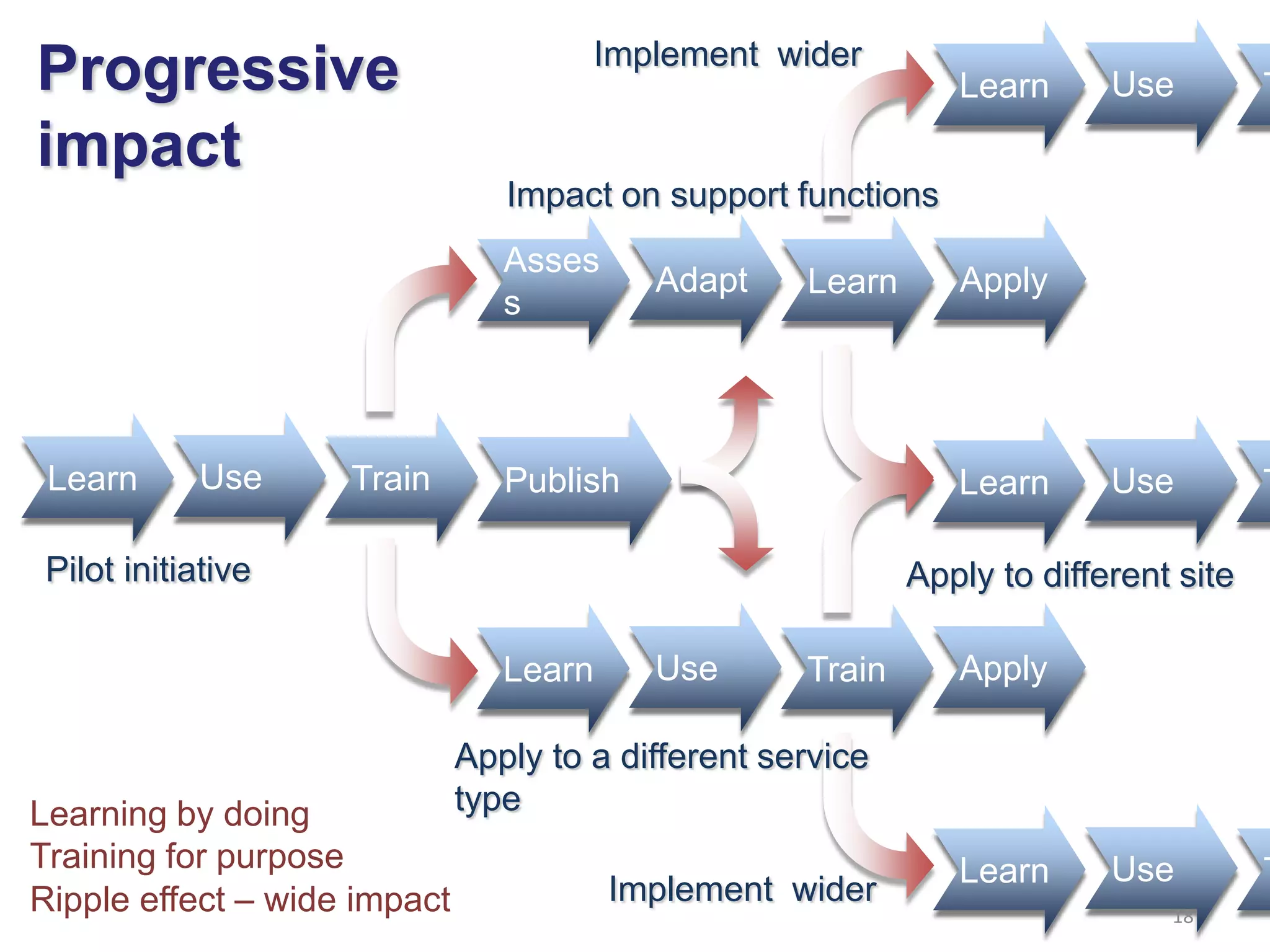
Implement wider
Progressive                                                     Learn      Use         T
impact
                                 Impact on support functions
                                 Asses
                                           Adapt     Learn      Apply
                                 s


 Learn      Use     Train        Publish                        Learn      Use         T

 Pilot initiative                                            Apply to different site

                                 Learn     Use       Train      Apply

                              Apply to a different service
Learning by doing             type
Training for purpose                                            Learn      Use         T
Ripple effect – wide impact              Implement wider
                                                                               18
19
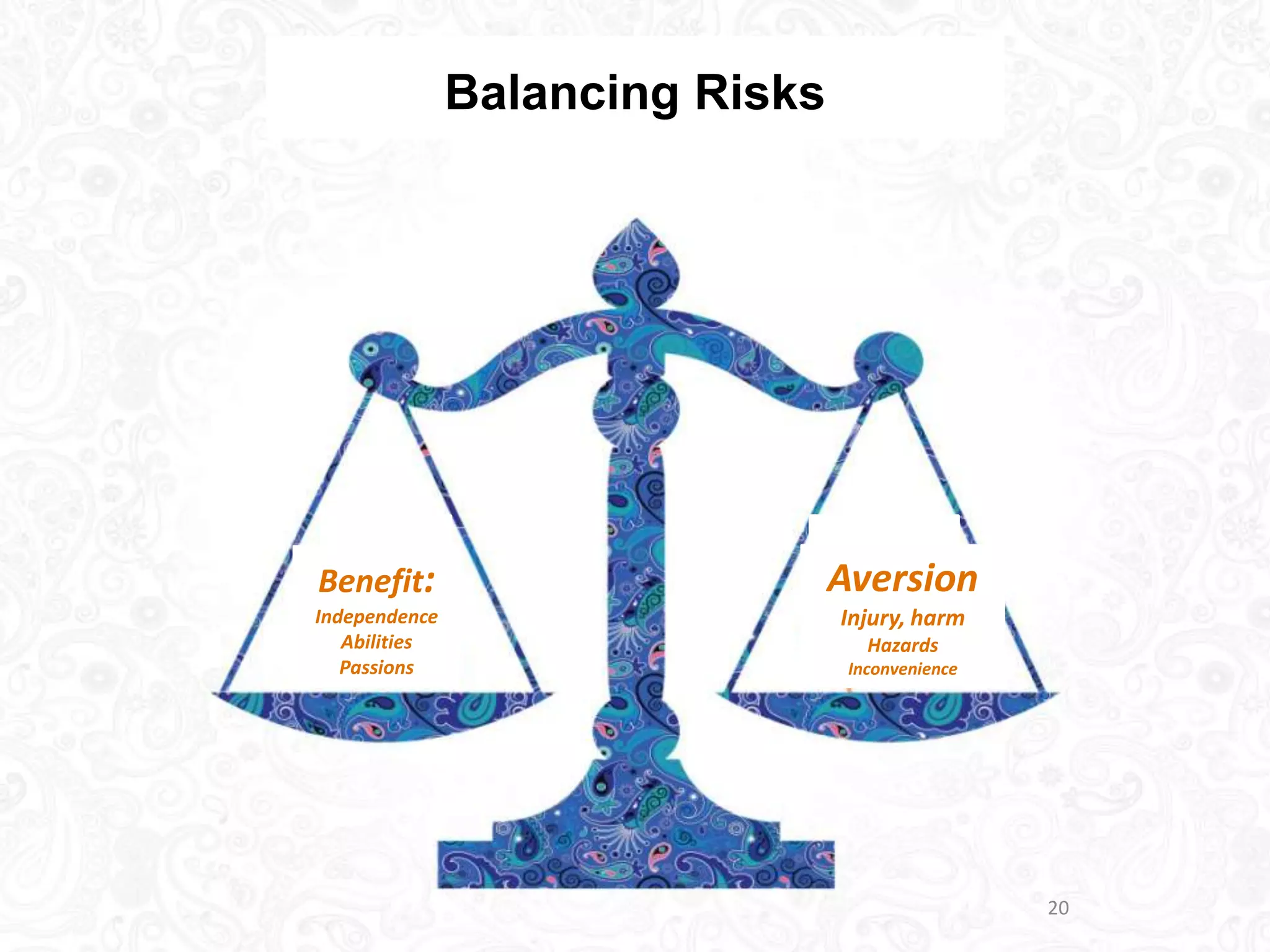
Balancing Risks


Benefit:                         Aversion
Independence                     Injury, harm
   Abilities                        Hazards
   Passions                       Inconvenience


                                                  20
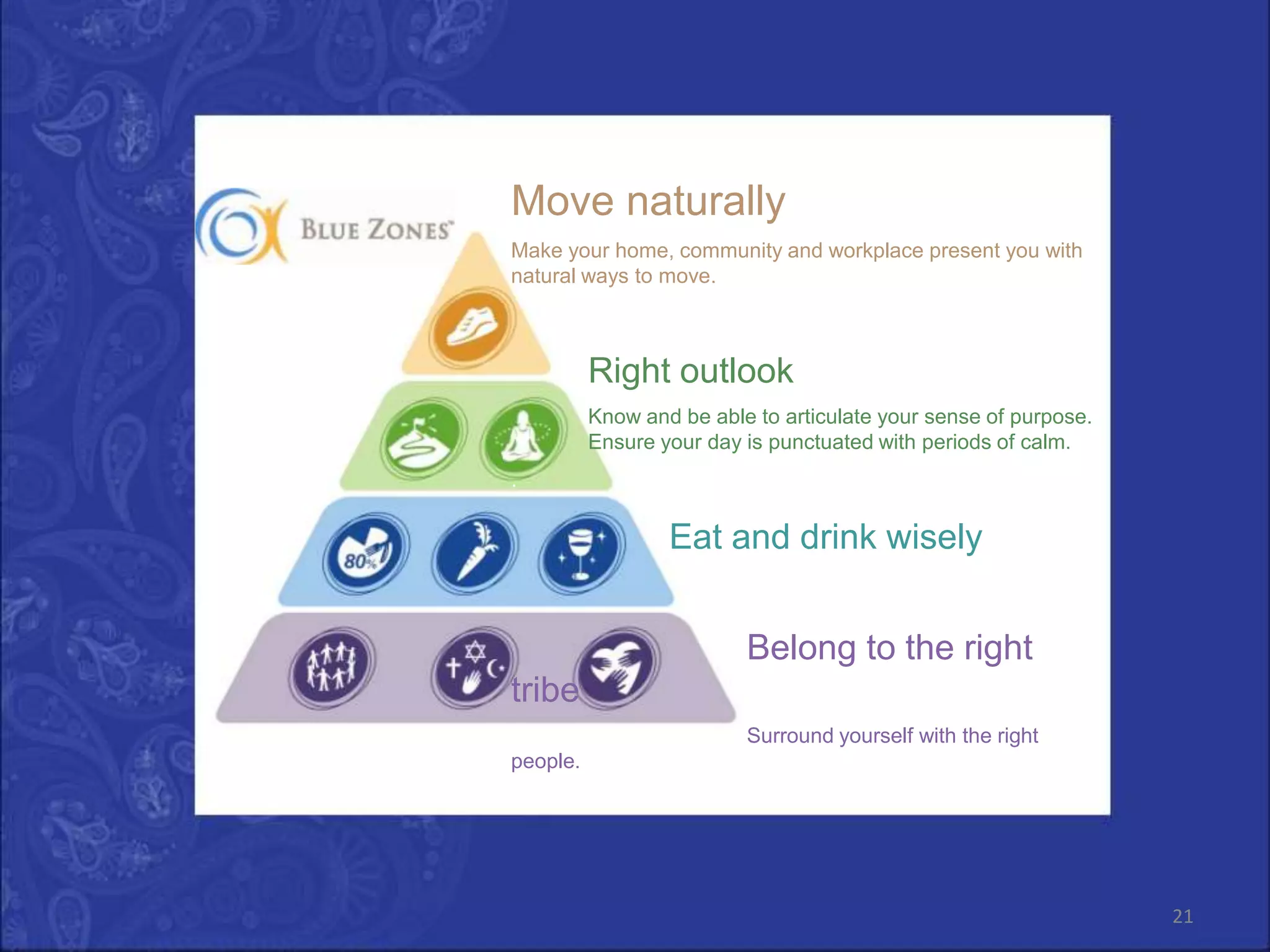
Move naturally
Make your home, community and workplace present you with
natural ways to move.


          Right outlook
          Know and be able to articulate your sense of purpose.
          Ensure your day is punctuated with periods of calm.
.

                  Eat and drink wisely


                          Belong to the right
tribe
                          Surround yourself with the right
people.


                                                                  21
22

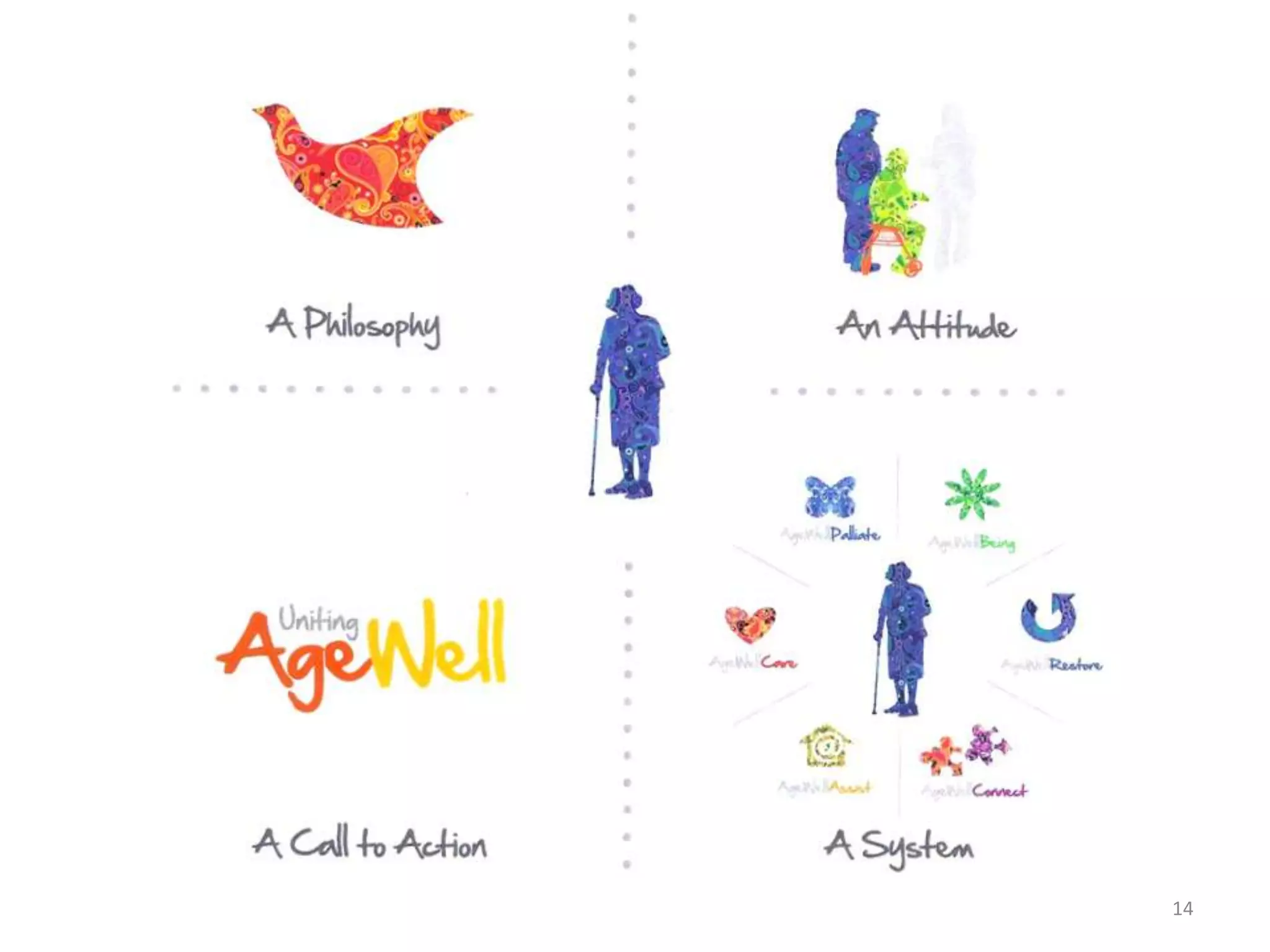
Uniting AgeWell

  • 1.
  • 2.
  • 4.
    Fragmented funding silo’s… COMMONWEALTH: STATE: INSURANCE: SELF FUNDED: • MBS & PBS • Hospital • Private medical • GAP • ACAS • Interpreters • Workcover • Bond • Packages • Primary Care • Vets • DMF / ingoing • Residential • HACC • TAC • Maintenance • Respite • RDNS • Extras • Co-contribution • Day therapy • Rehabilitation • Specialists • Therapy • etc • etc • etc • etc Strategies to delay, mitigate or alleviate this process 4
  • 5.
  • 6.
    ‘60% of theworkforce are personal care workers. Increasingly, these workers are non-English speaking people from diverse cultural backgrounds. These employees are overworked, underpaid and not valued.’
  • 7.
    More of thesame is not going to work! 7
  • 8.
    Our biological ageingjourney Optima Normal Functional Chronic l Disease Disability health impairment Condition/s health Service Strategies Prevent Alleviate Mitigate Support Well-being Delay Care Manage
  • 10.
    Providers Unquestionably, thehallmark of potent partnerships is that they are built on trust, powerful relationships, shared learning and knowledge, and a genuine sense of shared purpose. Active Service and Partnering Development Southern Metropolitan Region, Final Report, Click Consulting, July 2009 The Families Person
  • 13.
  • 14.
  • 16.
  • 17.
    Improvement cycle Preferred future Plan Do Tools, Priorities Supports & GAP and Evaluation Initiatives Method Current Act Review state 17
  • 18.
    Implement wider Progressive Learn Use T impact Impact on support functions Asses Adapt Learn Apply s Learn Use Train Publish Learn Use T Pilot initiative Apply to different site Learn Use Train Apply Apply to a different service Learning by doing type Training for purpose Learn Use T Ripple effect – wide impact Implement wider 18
  • 19.
  • 20.
    Balancing Risks Benefit: Aversion Independence Injury, harm Abilities Hazards Passions Inconvenience 20
  • 21.
    Move naturally Make yourhome, community and workplace present you with natural ways to move. Right outlook Know and be able to articulate your sense of purpose. Ensure your day is punctuated with periods of calm. . Eat and drink wisely Belong to the right tribe Surround yourself with the right people. 21
  • 22.

Editor's Notes

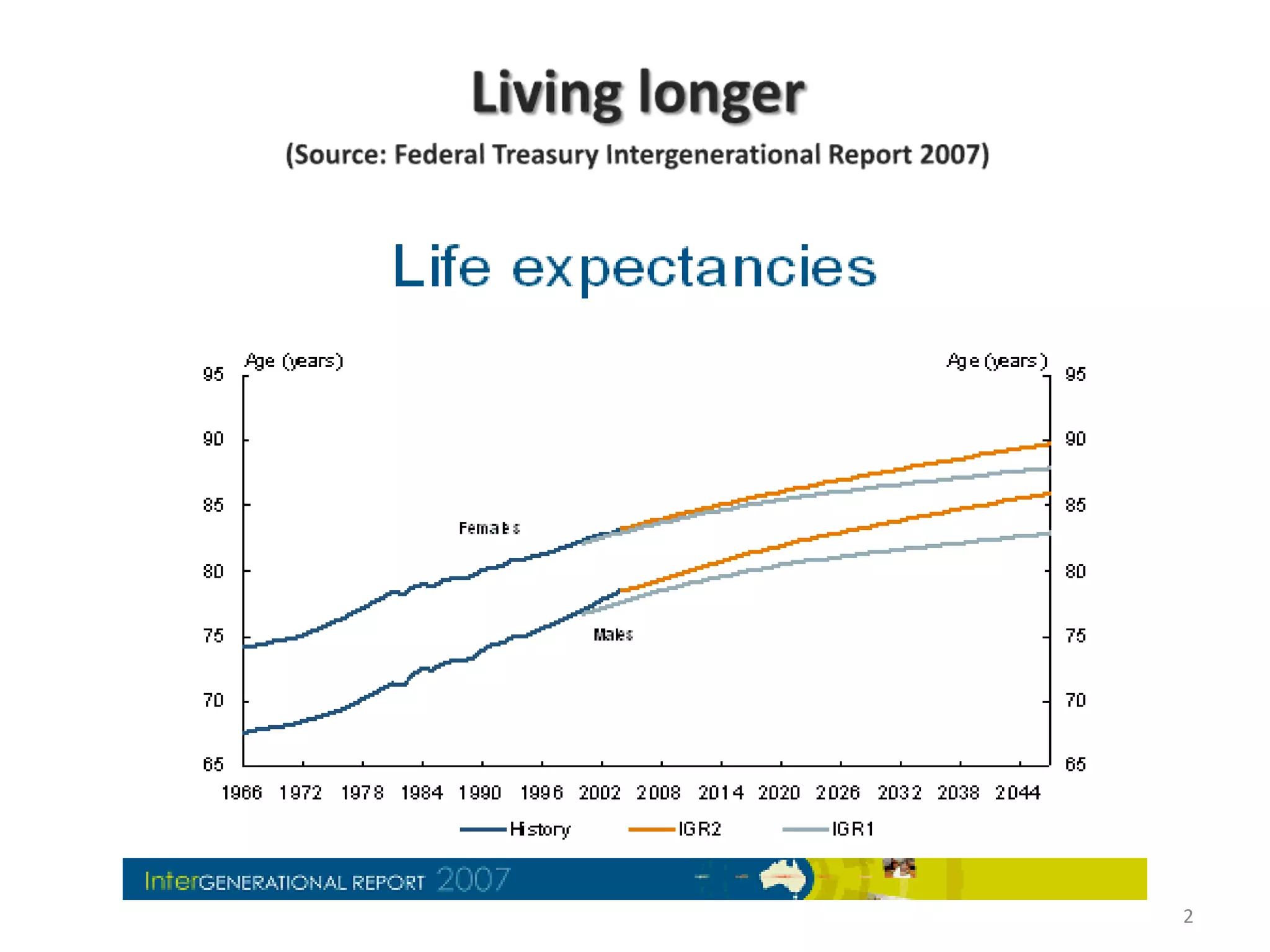
  • #3 So what is happening in the aged care space?The key driver of aged care is, of course, old people, and the chart on your screen shows one of the demographic changes that analysts predict for Australia. We are both living longer, and there are more people reaching retirement age!In 2012 the first “baby boomers” reach retirement age and there is an increasing number of them following.The demographers are predicting a 4 fourfold increase in the number of people accessing aged care by 2050 – this means 4 times the number of people over 75 years old.Our aged care services are going to have to respond to this increase in demand.
  • #5 While there is an overall message to this slide, it also introduces a number of useful concepts, so I might go through these one-by-one.The bottom, brown arrow is intended to give a sense of each of our biological ageing journeys. This is an inevitable part of life, with each person experiencing this at a different rate.The more colourful arrow above suggests that there are strategies and ways that we can prevent, delay, mitigate or alleviate some of the conditions of ageing. Ideally these strategies are applied by the various services that make up the aged care system.Finally we illustrate how these strategies are funded. And as you will notice, there are some response that are not funded at all.The message in this is that the aged care system has evolved over 30 plus years in response to the particular issues and the politics of the day. Many of the first aged care services were in fact congregation-led response built on church land in the 50’s and 60’s. These then often grew becoming hostels or nursing homes, at the same time as governments provided funding support for the growing number of people needing this sort of care.What we have today though is a complex web of funding, around which services are constructed, and in many cases relies on the good work of the professionals on the ground to ensure that older people get the support or care they need.
  • #6 To take this one step further, let’s look quickly at the government policy agenda.On the left hand side are the various forms of housing available for older people. Some of this housing is supported by government, some operates under the Retirement Villages Act and is funded by the people buying a unit.In the middle are the various government-supported funding arrangements for older people to access support. The current arrangements are fragmented, with quota’s (or ratio’s) for each type of support.On the right hand side the Productivity Commission recommended a more flexible and streamlined system. This is the direction that the government is moving in, and broadly what was announced in their Living Longer, Living Better Aged Care Reform agenda.The full details are still to be released, and while the policy is headed in the right direction, unfortunately it has been overlaid with a budget reduction at the same time.
  • #7 The last issue I want to highlight, is that of the workforce.We have growing numbers of old people, and at the same time fewer people in the workforce. Aged care is a people intensive service and this means that workforce will be an increasing issue in the future.
  • #9 We have researched both the conditions of ageing, and the strategies that can work to prevent, delay or mitigate these conditions as illustrated in the slide. Give some examples.
  • #11 We also recognised that there are already not enough resources to go around, and these are likely to be stretched even further.Consequently we need to work together and use what resources are already available.And again you probably already do some of this better in the rural areas, but you will still know that there are gaps in what is available.
  • #12 We also recognised that dementia is going to be one of the biggest challenges facing our services in the future.Depending on who you can believe, it is predicted that up to 40% of all people accessing aged care services in 2020 will have some form of dementia.
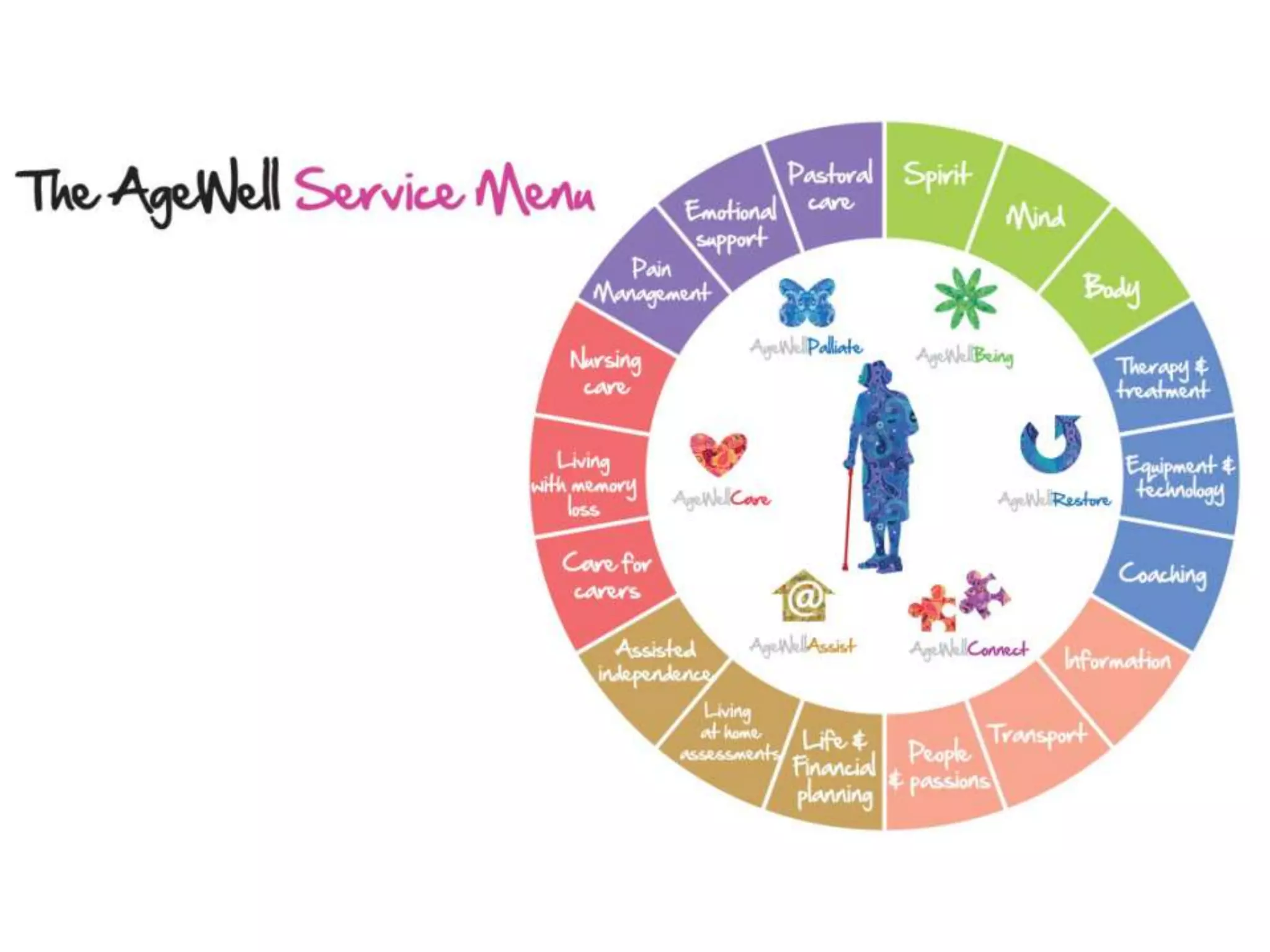
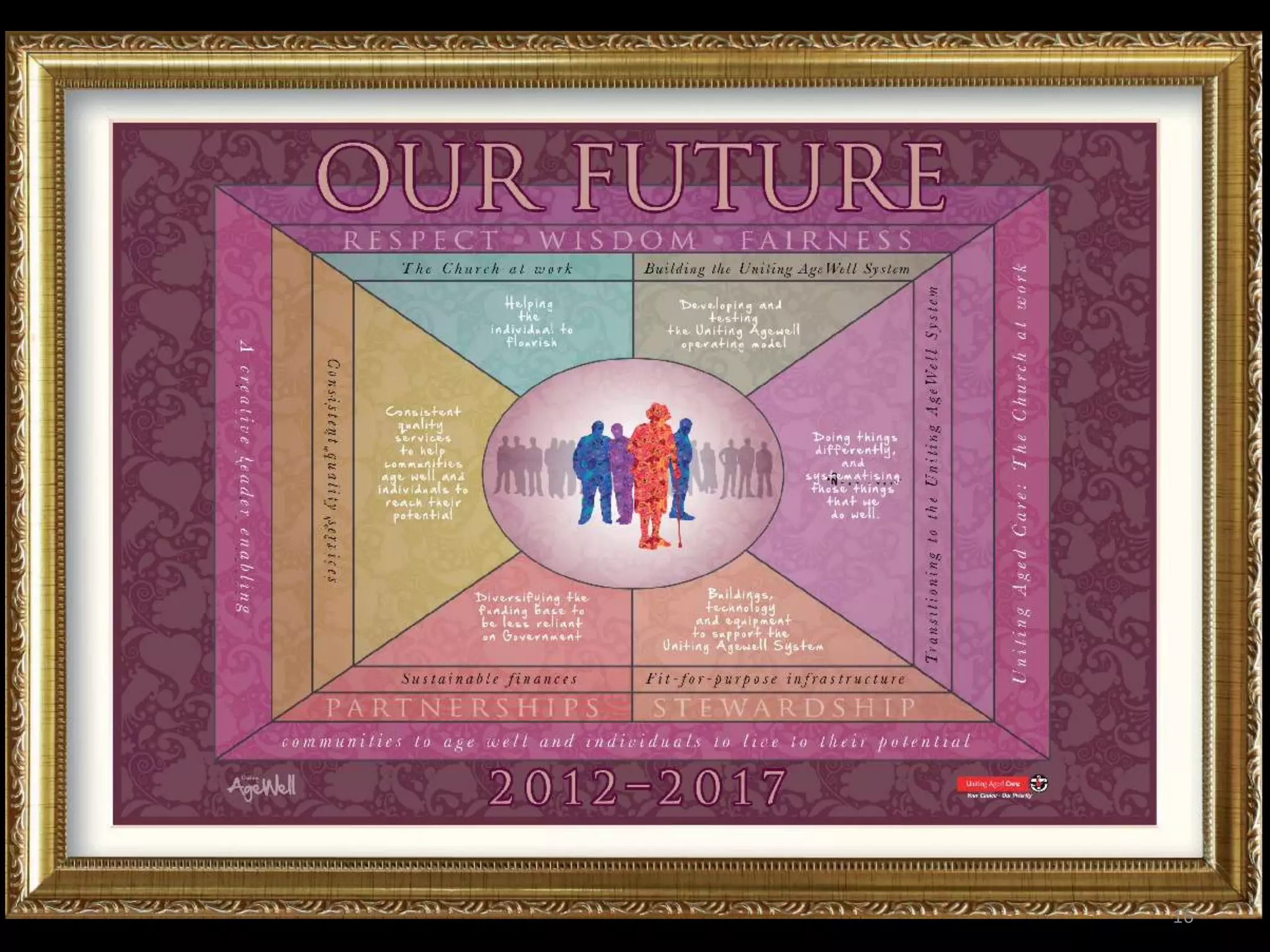
  • #15 The AgeWell system has resonated with staff and clients and been well received by government.Just to explain a bit further it has four levels of meaning as illustrated.
  • #16 We also understand that each community is different and therefore each community will have to develop a menu of services appropriate for their needs and situations.