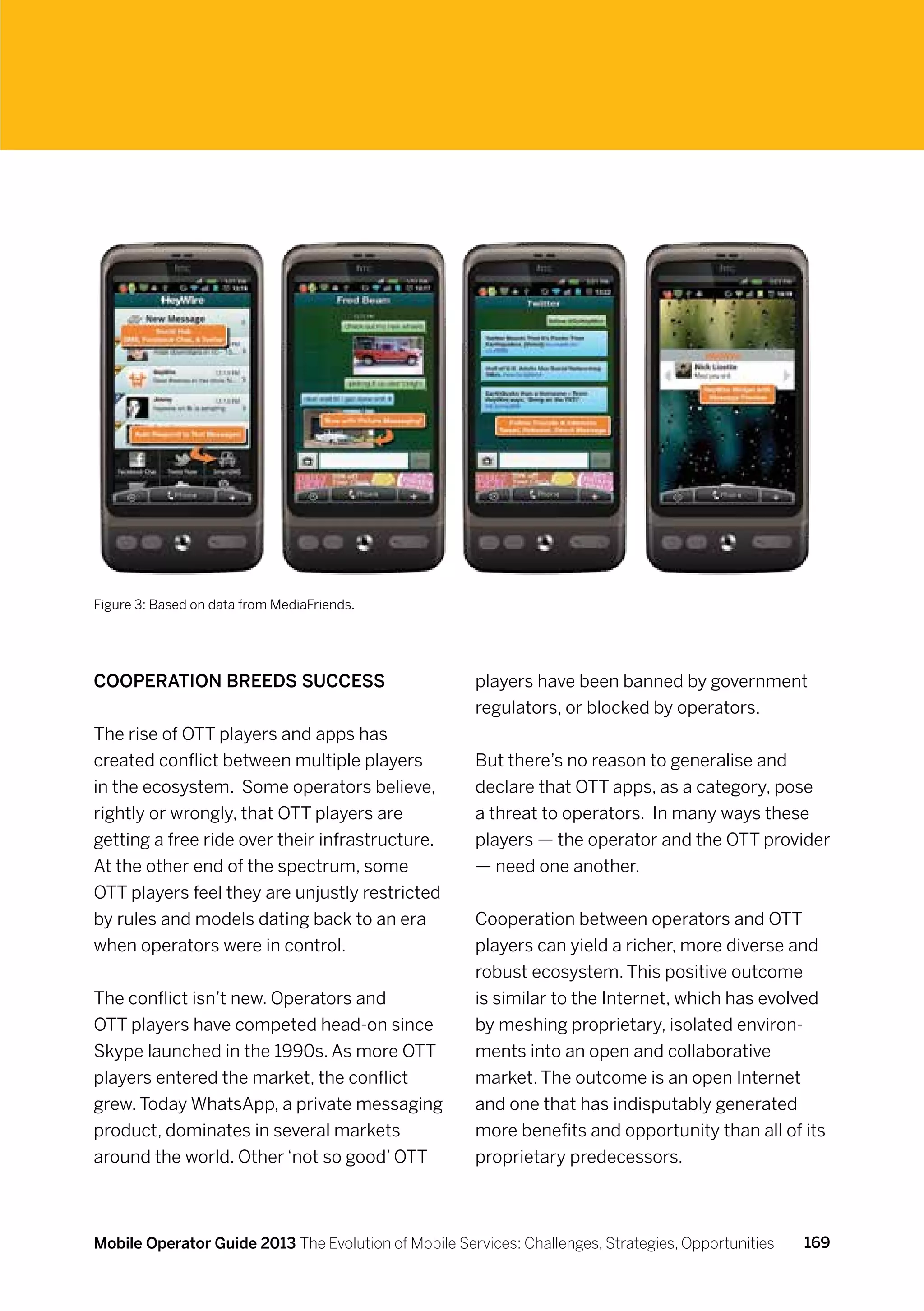
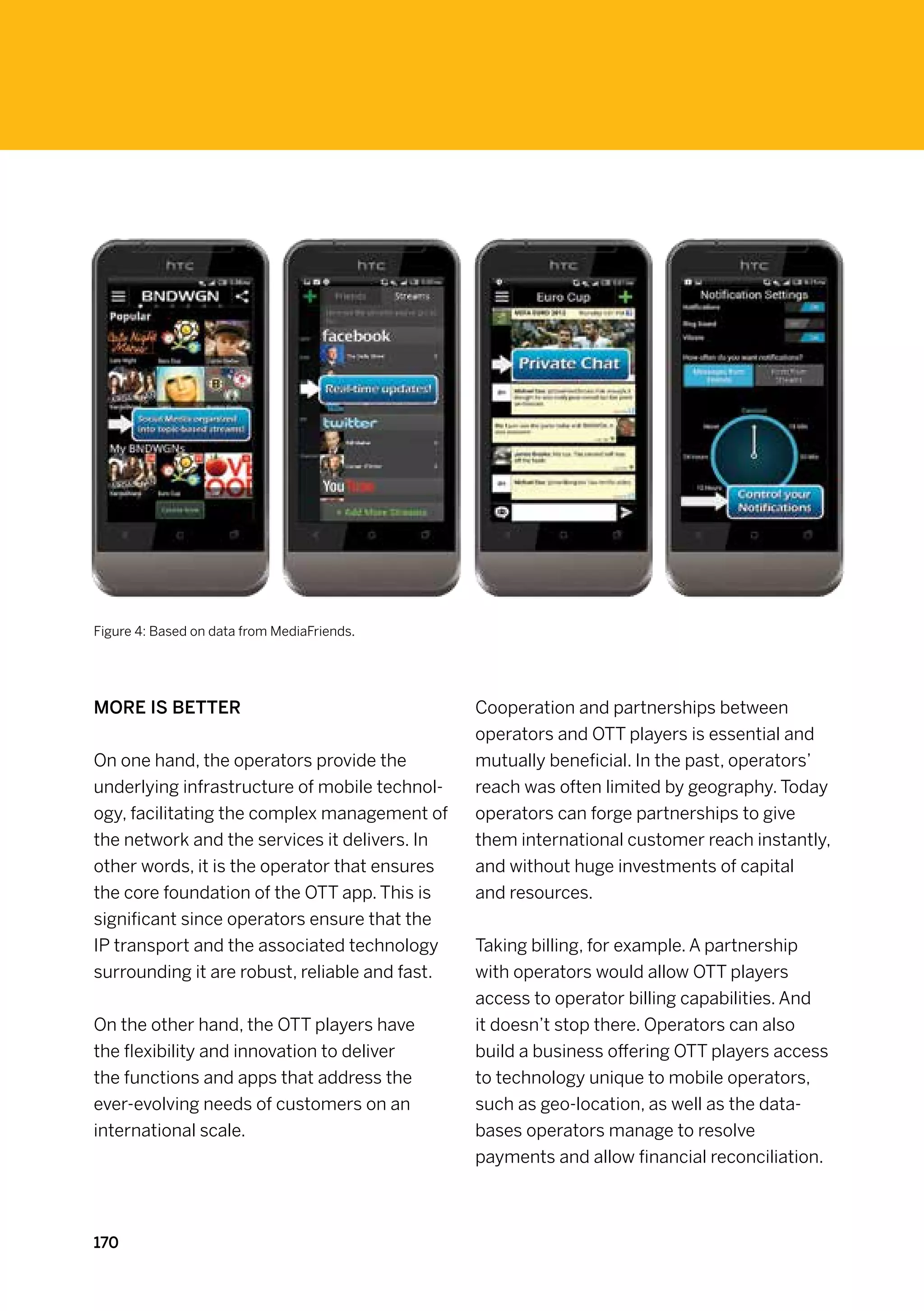
SAP Mobile Services


 Mobile Operator Guide 2013
 The Evolution of Mobile Services:
 Challenges, Strategies, Opportunities
SAP Mobile Services


Mobile Operator Guide 2013
The Evolution of Mobile Services:
Challenges, Strategies, Opportunities
Mobile Operator Guide 2013
The Evolution of Mobile Services: Challenges, Strategies, Opportunities
Published by Sybase, an SAP Company
Sybase, One Sybase Drive, Dublin, CA 94568-7902, U.S.A.
© 2013 SAP AG or an SAP affiliate company. All rights reserved.
No part of this publication may be reproduced or transmitted in any form or for any purpose without the express permission of SAP AG.
The information contained herein may be changed without prior notice.
Some software products marketed by SAP AG and its distributors contain proprietary software components of other software vendors.
National product specifications may vary.
These materials are provided by SAP AG and its affiliated companies ("SAP Group") for informational purposes only, without representation or
warranty of any kind, and SAP Group shall not be liable for errors or omissions with respect to the materials. The only warranties for SAP Group
products and services are those that are set forth in the express warranty statements accompanying such products and services, if any. Nothing
herein should be construed as constituting an additional warranty.
SAP and other SAP products and services mentioned herein as well as their respective logos are trademarks or registered trademarks of SAP AG
in Germany and other countries. Please see http://www.sap.com/corporate-en/legal/copyright/index.epx#trademark for additional trademark
information and notices.
Library of Congress Cataloging-in-Publication Data
SAP Mobile Services
Mobile Operator Guide 2013, The Evolution of Mobile Services: Challenges, Strategies, Opportunities
Edited by Peggy Anne Salz
p. cm.
ISBN 978-0-9885886-2-2
1.Mobile technology.
Library of Congress Control Number: # 2012953199
Printed in the United States of America
Except as permitted under the United States Copyright Act of 1976, no part of this publication may be reproduced or distributed in any form or
by any means, or stored in a database or retrieval system, without the prior written permission of the publisher.
Table of Contents

10	     FOREWARD
        By John Sims, President, SAP Mobile Services


13	     PART 1: INTRODUCTION : A WEALTH OF OPPORTUNITIES
14	     Mapping A New World For Mobile Operators
        By John Sims, President, SAP Mobile Services

18	     Driving Growth In The Digital Economy
        By Stephan Gatien, Global Lead, Telecommunications Business Unit, SAP and
        Jens Amail, Senior Vice President and General Manager for Services, SAP


25	     PART 2: STRATEGIES FOR DRIVING REVENUE
26 	    Long Live SMS
        Text messaging continues to grow from strength to strength as new services and
        paradigms around mobile marketing and mobile apps drive volumes and usage.
        By William Dudley, Group Director, Product Management, SAP Mobile Services

33 	    Moving To The SMS Hubbing Model
        Operators are recognising that SMS hubbing is not just about connectivity; it can
        ease the management burden around cross-border messaging traffic.
        By Robert Rose, Senior Director, Global Operator Services, SAP Mobile Services

36 	    Latin America Offers Big SMS Opportunities
        Personal Paraguay and Tigo Colombia discuss local market requirements and weigh
        on the tremendous opportunities and innovation that are driving SMS growth.


Mobile Operator Guide 2013 The Evolution of Mobile Services: Challenges, Strategies, Opportunities   3
43 	   Cybersafety: Everyone’s Responsibility
       The Cyber Information Sharing and Protection Act addresses how information
       should be shared between private companies and the government to catch malicious
       actors breaching networks to steal information or sabotage systems.
       By Steve Largent, President & CEO, CTIA-The Wireless Association

48 	   Does The Future Of Mobile Security Lie In The Past?
       Text messages are a powerful vehicle for reaching people — but they are also
       increasingly the starting point for malware attacks.
       By Mary Landesman, Senior Security Researcher, Cloudmark

53 	   Mobile Number Portability: Increasing Competition And Driving Value
       Mobile Number Portability has come a long way since it was implemented in the 1990s,
       but it now confronts mobile operators with a variety of commercial challenges.
       By Mitul Ruparelia, Director of Sales Engineering (EMEA and LATAM), SAP Mobile Services

58 	   Intelligent Hubbing: Easing International SMS Routing Complexity
       A comprehensive checklist and solid advice aimed at helping operators remove
       the complexity around establishing and managing SMS routing.
       By Mark Weait, Vice President Sales, SAP Mobile Services

63 	   Orchestrating Capabilities Delivers High Performance
       Bharti Airtel details the strategy that has allowed it to spread its wings across
       the African continent, lay the groundwork for value-added services and deliver
       high volume at low cost.
       By N. Arjun, Chief of Projects & Transformation, Bharti Airtel


68	    PART 3: IPX: INTERCONNECTING OPERATORS FOR UNLIMITED
       OPPORTUNITIES
69 	   Bundling Services Makes Business Sense
       Korea Telecom discusses the importance of Voice over IPX in its larger strategy to
       future-proof its network, ensure end-to-end quality of service and grow its wholesale
       business. Interview with Incheul Park, Head of Wholesale Team, Global Business Unit,
       Korea Telecom


4
74	     Expanding Voice Connectivity Via IPX: An Operator Perspective
        In the Philippines Globe Telecom is embarking on an ambitious network change to
        deliver customer benefit by making cross regional interconnectivity better and easier.
        By Gil Genio, Head of International and Business Markets, Globe Telecom, Inc.

78 	    The Value Of A True IPX
        Mobile Operators can best leverage the full benefits and economies of scale that
        IPX provides if they look beyond just offering basic services, such as voice and data
        roaming, and focus on delivering the services their customers will demand next.
        By John Candish, Senior Director, IPX Business, SAP Mobile Services and
        William Dudley, Group Director, Product Management, SAP Mobile Services

83 	    Nine Ways To Get More Value Out Of IPX
        IPX offers tremendous value and here are 9 things operators need to do to ensure
        they can reap and maximise the benefits.
        By John Candish, Senior Director, IPX Business SAP Mobile Services

86	     Making The Right Connections
        SingTel recounts the lessons, learnings and results of its recent IPX trial, the first
        step in a private international network connecting all the Group companies.
        Interview with David Ng — Vice President, Regional Technical, of SingTel’s
        International team in the Group Consumer organization

91 	    A Brave New All-IP World
        When it comes to IPX, peering among IPX providers is an essential element because
        it is the enabler of global reachability.
        By Elena Sacco, Chairman of the IWG at the GSMA and Senior Interconnect Manager, TIM

94 	    Boosting Trust, Building Business
        In countries like Africa IPX does more than provide interconnectivity; it also meets the
        needs of local telecommunications authorities for transparency and accountability.
        By Ranjeet Wilkhu, Director, Neucom Solutions

98 	    Voice: The IPX Killer App
        A candid view of the many benefits IPX provides. While many focus on future
        scenarios around LTE roaming, PCCW outlines how IPX can already enhance voice.
        By Richard Midgett, Managing Director – Wireless Business, PCCW


Mobile Operator Guide 2013 The Evolution of Mobile Services: Challenges, Strategies, Opportunities   5
104	 PART 4: LTE: UNLEASHING INNOVATION TO DELIVER RESULTS
105	    Enabling 4G LTE For ALL
        MetroPCS discusses its early decision to deploy LTE and how this head start on
        the competition has allowed the U.S. operator to scale its business and satisfy its
        customers with value-driven services.
        By Ed Chao, Senior Vice President, Engineering and Network Operations, MetroPCS

111 	   Fighting Smart To Win Big
        A clever approach harnessing RCS will allow operators to compete with OTT players
        with new services such as group instant messaging or chat, live video sharing and file
        transfer across any device, on any network, with anyone in a mobile address book.
        By Madan Jagernauth, Vice President, Marketing & Strategy, Mavenir Systems

117	    Positioning LTE For Success
        Research and insights brings clarity into the industry discussion about LTE, the
        benefits it delivers and reasons why operators take the lead in educating consumers.
        By Declan Lonergan, Research VP, Yankee Group

124	    Breaking Down Borders: Getting The Most Out Of LTE Roaming
        LTE is reaching a stage of maturity where technology is no longer a barrier to
        deployment, so now it’s up to mobile operators to architect the strategies that
        will leverage the complete range of benefits.
        By James Middleton, Managing Editor, Telecoms.com

127 	   Video Communications: “A Perfect Storm”
        Consumer use of video has entered a new phase of growth, driven by devices,
        services and networks built to support it. But the wave of interest in mobile
        video could overwhelm service providers.
        By Ramsey Masri, Vice President, Sales & Alliances, Aylus Networks

134 	   Enabling Roaming Across LTE Networks
        LTE will enable new services, but it will also put high demands on the data roaming
        backbone and require more bandwidth and resilient network connectivity.
        By Matthew Tonkin, Global Head, IPX Business, SAP Mobile Services


6
138 	   LTE Roaming In Latin America: Conditions For Success
        The deployment of LTE across Latin America brings with it a host of benefits and
        equips operators to address the spectrum limitations facing their networks.
        By Alejandro Martinez, Chairman, Billing & Roaming Working Group (BARG), GSMA LA

142 	   LTE: New Technology Boosts New Business
        A review of the business models, approaches and services, such as mobile video
        calling, that will allow operators to drive even more revenue out of their costly
        LTE investments.
        By Michel Van Veen, Group Manager, Product Management, SAP Mobile Services


147	    PART 5: OTT: OPEN THREAT OR HIDDEN OPPORTUNITY
148 	   OTT Threat: Top Strategies To Fight Smart
        Learn from real-life examples, including KPN and China Mobile, about the real impact of
        OTT services on voice and messaging revenues and how mobile operators turn the tide.
        By Pamela Clark Dickson, Senior Analyst, Mobile Content & Applications Intelligence
        Center, Informa Telecoms & Media

156 	   Evaluating Strategies To Face OTT Providers
        Operators need to be more digital. Does Telefónica Digital, a unit aimed at developing
        new applications and business models for mobile technology show the way?
        By Eusebio Felguera, Corporate Regulatory Manager, Telefónica

161 	   NUVOs: An Alternative To Disruptive OTT
        Not all OTT apps threaten mobile operator revenues. Network Unaffiliated Virtual
        Operators (NUVOs) actually benefit operators and boost their business.
        By Austin Murray, Founder & President, textPlus

166 	   OTT Ecosystem: Paving The Way For Opportunity
        The inevitable arrival of an all-IP world also reinforces the needs for deeper part-
        nerships between operators and OTT players. MediaFriends discusses apps and
        approaches showing the way.
        By Gene Lew, CTO, MediaFriends


Mobile Operator Guide 2013 The Evolution of Mobile Services: Challenges, Strategies, Opportunities   7
172	    PART 6: UNLEASHING THE POWER OF MOBILE COMMERCE
173 	   Mobile Money For The Masses
        Qtel has made its mark with its Mobile Money services and an innovative self-serve
        approach that meets the needs of both migrant workers and affluent customers.
        By Richard Morecroft, Assistant Director Mobile Money, Qtel

179	    Driving Mobile Money Usage In Unbanked Regions
        Driving customer adoption and increasing activation rates in mobile money is no
        easy task. The key is proper audience segmentation and a sharp focus on customer
        education.
        By Yasmina McCarty, Senior Manager, GSMA MMU

184 	   Blueprint For A Successful Remittance Service
        A review of the mobile remittance services available today reveals a variety of
        different approaches to tackle the challenges of sign-up, cash-in and cash-out.
        By Diarmuid Mallon, Head of Global Mobile Marketing Programs, Programs &
        Demand Generation, SAP

190 	   Operators: Tap Your Strategic Assets
        Mobile operators might only have scratched the surface when it comes to
        understanding their true potential to accelerate and enhance the mobile
        payments and commerce experience for consumers everywhere.
        By Aditya Kurejkar, Co-Founder and Program Director, Money2020

194 	   Mobile Commerce Opportunities For Operators
        Building and deploying a successful mobile payment service requires operators
        to consider a wide range of variables, from business models to local telecom
        and financial regulations.
        By Matthew Talbot, Senior Vice President, Mobile Commerce, SAP


200	PART 7: LEVERAGING MOBILE TO ACHIEVE LASTING LOYALTY
201	    Perception vs Reality: What’s Your Mobile Strategy?
        The arrival of the empowered consumer turns up pressure on operators and
        enterprises to create and implement a comprehensive mobile strategy that is
        truly end-to-end, multi-channel and, more importantly, customer-centric.
        By Howard Stevens, Senior Vice President, Global Messaging Solutions,
        SAP Mobile Services


8
205 	 The Power Of Push
        Push notifications also open up new opportunities around customer service
        and marketing, allowing mobile operators to deliver simple alerts to the
        customer — and trigger the customer to take action.
        By Coleen Carey, Director of Product Marketing, Urban Airship

211 	   Harmonising Touch Points, Technology, Processes And People
        Celcom details the milestones and motivations that have helped it evolve its view
        of customer experience and sharpen its focus on encouraging lasting loyalty.
        By Suresh Sidhu, Chief Corporate and Operations Officer, Celcom Axiata Berhad

215 	   Ask, Listen And Build Lasting Loyalty
        Talk to your customers, and listen to what they say. A successful mCRM program
        integrates social interaction, customer engagement and customer feedback.
        By Sally Burley, Director, The 3rd Degree

220 	 Why Customer Engagement Campaigns Pay Dividends
        An in-depth look at how mobile changes the rules of engagement, allowing mobile
        operators, brands and businesses to maintain continuous customer touch and drive
        deeper engagement.
        By Gregory Dunn, Vice President, Product Management, SAP Mobile Services

228	    Glossary Of Terms

234	    Index Of Contributor Companies

240	    Acknowledgements


Mobile Operator Guide 2013 The Evolution of Mobile Services: Challenges, Strategies, Opportunities   9
FOREWORD


Mapping A New World For
Mobile Operators
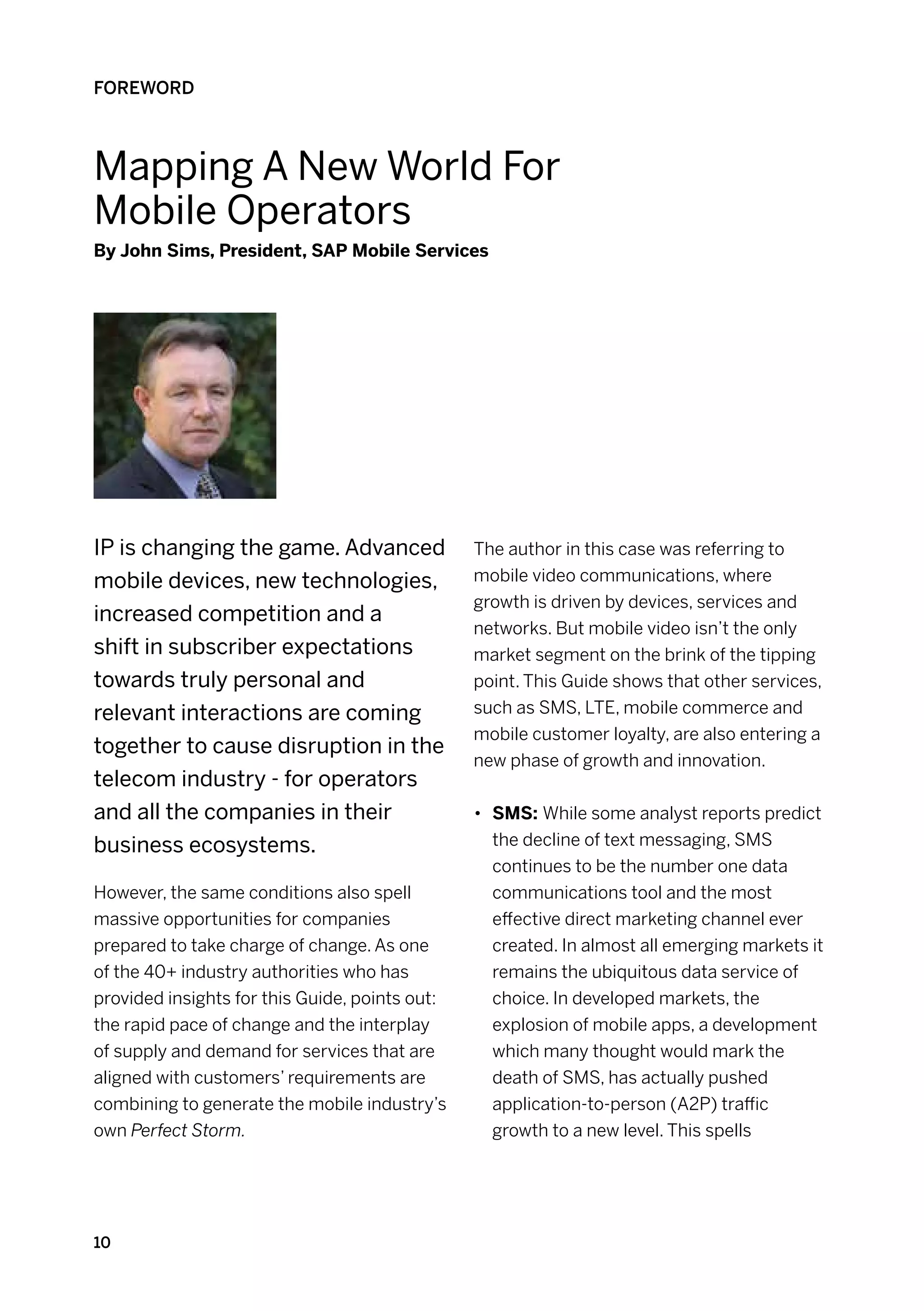
By John Sims, President, SAP Mobile Services


IP is changing the game. Advanced               The author in this case was referring to
mobile devices, new technologies,               mobile video communications, where
                                                growth is driven by devices, services and
increased competition and a
                                                networks. But mobile video isn’t the only
shift in subscriber expectations                market segment on the brink of the tipping
towards truly personal and                      point. This Guide shows that other services,
relevant interactions are coming                such as SMS, LTE, mobile commerce and
                                                mobile customer loyalty, are also entering a
together to cause disruption in the
                                                new phase of growth and innovation.
telecom industry - for operators
and all the companies in their                  •	 SMS: While some analyst reports predict
business ecosystems.                               the decline of text messaging, SMS
                                                   continues to be the number one data
However, the same conditions also spell            communications tool and the most
massive opportunities for companies                effective direct marketing channel ever
prepared to take charge of change. As one          created. In almost all emerging markets it
of the 40+ industry authorities who has            remains the ubiquitous data service of
provided insights for this Guide, points out:      choice. In developed markets, the
the rapid pace of change and the interplay         explosion of mobile apps, a development
of supply and demand for services that are         which many thought would mark the
aligned with customers’ requirements are           death of SMS, has actually pushed
combining to generate the mobile industry’s        application-to-person (A2P) traffic
own Perfect Storm.                                 growth to a new level. This spells


10
opportunity for mobile operators and                   enhance mobile money and mobile
  service providers to harness text                      banking services. Now it’s up to mobile
  messaging to supercharge a variety of                  operators to map out comprehensive
  services, ranging from mobile marketing                strategies that cultivate partnerships
  and mobile advertising, to mobile                      with key players, such as banks, and
  commerce and mobile banking.                           adapt to local market conditions, such
                                                         as regulations, demographics, and the
•	 LTE: As mobile network operators move                 emergence of new remittance corridors.
   towards 4G/LTE and an all-IP network,
   many will cooperate to expand their                •	 Mobile loyalty: Because mobile is a
   network footprint and pave the way for                fiercely personal device, it’s an ideal
   compelling new services that will delight             means to reach customers on every step
   customers and drive positive results for              of their daily journey to encourage inter-
   everyone in the ecosystem. The advance                action and deepen engagement. Whether
   of LTE will also challenge operators to               operators and marketers choose to
   develop strategies to cooperate with and              harness text messaging, new forms of
   enable Over-the-Top players in a manner               IP-based messaging, mobile web or
   that benefits the ecosystem and wrings                mobile apps (or all in combination) they
   new revenues out of operator core capa-               can clearly leverage mobile as a channel
   bilities such as location information,                to boost customer loyalty and recruit true
   billing support and network management.               brand advocates. However, just as in real-
                                                         life, building a relationship is about talking
•	 Mobile commerce: From researching                     and listening, and that’s why companies
   products to making purchases, consum-                 must develop mobile loyalty programs
   ers are increasingly reaching for their               that effectively do both.
   mobile devices as an essential shopping
   companion. At the other end of the                 This inaugural edition of the Mobile
   spectrum, and particularly in the under-           Operator Guide features the insights of
   banked regions of the world, consumers             industry thought leaders and innovators to
   are gravitating to services delivered by           identify market trends, best practices and
   mobile operators that have expertly                key lessons learned in deploying mobile
   leveraged their distribution channels,             services. The purpose of this industry
   retail presence and trust to expand and            knowledge resource is to provide readers


Mobile Operator Guide 2013 The Evolution of Mobile Services: Challenges, Strategies, Opportunities   11
clear direction and critical information,
equipping them to develop strategies to
drive messaging revenue, deploy cost saving
solutions, generate new revenue streams
from mobile commerce, build loyalty
through customer engagement programs,
plan for LTE roaming through IPX adoption
and maintain competitive advantage in an
IP-based world.


The onward march of next-generation
services into daily life has created a new
world order in the telecoms industry.
Think of this Guide as a starting point to a
roadmap, one that will allow you to plot the
transformational path your business needs
to follow to succeed in this exciting new
digital economy.


12
PART ONE: INTRODUCTION
A WEALTH OF OPPORTUNITIES
PART ONE: INTRODUCTION: A WEALTH OF OPPORTUNITIES


Mapping A New World For
Mobile Operators
By John Sims, President, SAP Mobile Services


What a difference a decade makes.           product offerings were comparatively
You need only go back that far to           straightforward, with “all-you-can-eat”
                                            pricing plans the industry standard. It
find the “early days” of mobile
                                            seems like a long time ago, but it was only
network operators’ journey with             in 2001 that the first inter-operator SMS
mobile data, comparatively speak-           messages were delivered in the U.S., with
ing, a world that hardly compares           SAP Mobile Services launching the first
                                            inter-operator SMS messaging hub in
to today’s landscape. Amid the
                                            concert with AT&T Wireless. More signifi-
far-reaching changes that have              cantly, during those formative years,
taken hold since then, the com-             operators took a walled-garden approach
plexity that now distinguishes              to mobile data, with services delivered
                                            within a closed ecosystem – a far cry from
operator services brings with it
                                            the interoperable, pan-operator network
a rich abundance of opportunities           topology that has evolved since then.
to those who are forward-thinking
and adaptive in their strategies            From that initial “closed system” approach,
                                            rapidly advancing technology and the
and capabilities.
                                            explosive growth of international travel by
A decade or so ago, an operator’s world     globe-trotting executives and power users
revolved almost exclusively around voice.   contributed to the dramatic changes we
In an environment of minimal competition,   have seen take root since then. The eclipse


“  s the cost of spectrum and the pace at which
  A
  new network technologies needed to be deployed
  rose, operators needed to consider cooperative
  arrangements with their fellow operators,
  something that would not have previously
  been on the table.”

14
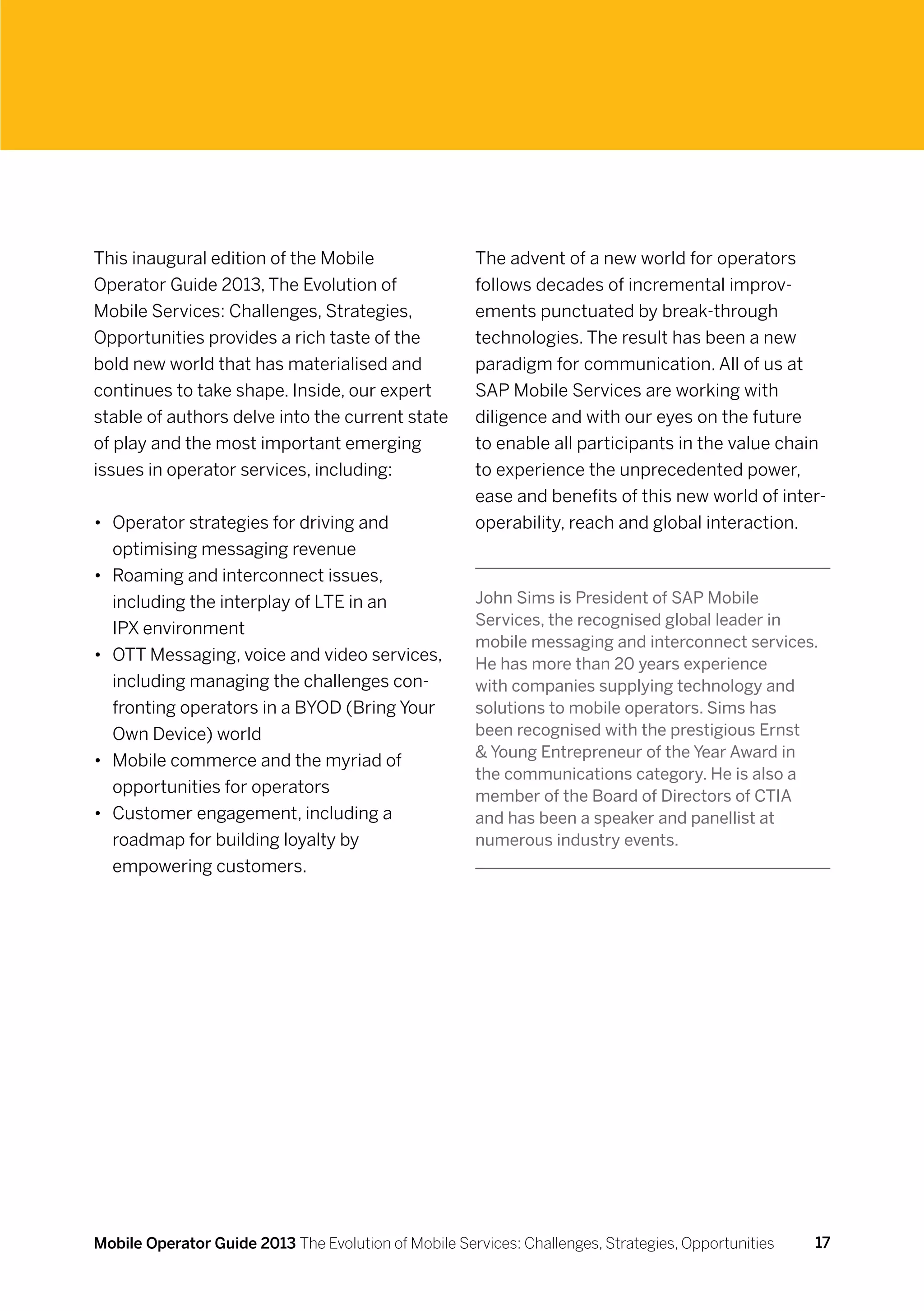
Table 1: Global mobile data growth today is similar to global internet growth
in the late 1990s

Global internet traffic growth (fixed)                       Global mobile data traffic growth

1997                             178%                        2009                                      140%

1998                             124%                        2010                                      159%

1999                             128%                        2011                                      133%

2000                             195%                        2012 (estimate)                           110%

2001                             133%                        2013 (estimate)                            90%

2002                             103%                        2014 (estimate)                            78%

Figure 1: Based on data from Cisco. Cisco Visual Networking Index Mobile 2012

www.slideshare.net/CiscoSP360/cisco-visual-networking-index-vni-global-mobile-data-traffic-forecast-20112016


of voice by data, accompanied by the advent                   it was clear that mobile network operators
of successively more powerful generations                     could no longer dictate the user interface.
of network technology leading to 4G, an                       As the cost of spectrum and the pace at
all-IP environment, accompanied by today’s                    which new network technologies needed
open infrastructure, means operators must                     to be deployed rose, operators needed to
generate profits by significantly rethinking                  consider cooperative arrangements with
their business models.                                        their fellow operators, something that
                                                              would not have previously been on the table.
Traditionally, mobile network operators have
owned and controlled everything, including                    In addition, in order to accelerate the adv-
physical equipment, radio networks, serv-                     ance of the network effect for new services,
ices infrastructure, devices and user inter-                  operators in some countries have come
faces. But amid their changing economics,                     together in joint ventures or cooperatives to
many have had to rethink this approach.                       lower their costs and seed the market with
With the rise of the smartphone, driven by                    new service technologies – for example, the
the iPhone and Android devices,                               Isis joint venture in the United States or the


Mobile Operator Guide 2013 The Evolution of Mobile Services: Challenges, Strategies, Opportunities             15
proposed mobile payments venture among            to fiercely defend their franchises against the
operators in the United Kingdom.                  threat from the Internet-based companies
                                                  or so-called Over-The-Top (OTT) players. As
To a certain degree this kind of thinking         part of their strategy, operators will want to
has been accelerated by operators’ need           not only create a strong domestic footprint;
to compete against Internet-based players,        they will also look to extend this to a global
which have arrived in the mobile space as         level, much as they have done over the past
creative and formidable competitors. It also      decade or so with SMS.
marks a realisation by many mobile network
operators that their future success depends       This is precisely where SAP Mobile Services
more upon the innovative services that they       provides the most critical value. We are
offer subscribers than it does on the under-      delivering the world-class interoperability
lying network technology – a substantial          and reach that comes with our role as an
shift in emphasis.                                independent custodian residing between
                                                  and among operators. It is a role that
So, as mobile network operators move              demands a truly holistic level of visibility –
towards 4G/LTE and an all-IP network,             horizontally, across geographies spanning
many will cooperate to achieve a more rapid       the Americas, Europe, the Middle East,
and ubiquitous network footprint that will        Africa and Asia, and vertically, providing the
allow them to offer compelling new services       technology and connectivity required to
that will capture the imagination of their        ensure that today’s ever-expanding operator
subscribers. In doing so, they will compete       ecosystem continues to flourish. Most
against other mobile network operators,           importantly, SAP Mobile Services possesses
but they will also have to operate in a much      the vision and resources to realise its custo-
faster cycle of innovation that will allow them   dial role in every dimension.


“  he advent of a new world for operators follows
  T
  decades of incremental improvements
  punctuated by breakthrough technologies.”


16
This inaugural edition of the Mobile                  The advent of a new world for operators
Operator Guide 2013, The Evolution of                 follows decades of incremental improv-
Mobile Services: Challenges, Strategies,              ements punctuated by break-through
Opportunities provides a rich taste of the            technologies. The result has been a new
bold new world that has materialised and              paradigm for communication. All of us at
continues to take shape. Inside, our expert           SAP Mobile Services are working with
stable of authors delve into the current state        diligence and with our eyes on the future
of play and the most important emerging               to enable all participants in the value chain
issues in operator services, including:               to experience the unprecedented power,
                                                      ease and benefits of this new world of inter-
•	 Operator strategies for driving and                operability, reach and global interaction.
   optimising messaging revenue
•	 Roaming and interconnect issues,
   including the interplay of LTE in an               John Sims is President of SAP Mobile
                                                      Services, the recognised global leader in
   IPX environment
                                                      mobile messaging and interconnect services.
•	 OTT Messaging, voice and video services,           He has more than 20 years experience
   including managing the challenges con-             with companies supplying technology and
   fronting operators in a BYOD (Bring Your           solutions to mobile operators. Sims has
   Own Device) world                                  been recognised with the prestigious Ernst
                                                       Young Entrepreneur of the Year Award in
•	 Mobile commerce and the myriad of
                                                      the communications category. He is also a
   opportunities for operators                        member of the Board of Directors of CTIA
•	 Customer engagement, including a                   and has been a speaker and panellist at
   roadmap for building loyalty by                    numerous industry events.
   empowering customers.


Mobile Operator Guide 2013 The Evolution of Mobile Services: Challenges, Strategies, Opportunities   17
PART ONE: INTRODUCTION: A WEALTH OF OPPORTUNITIES


Driving Growth In The
Digital Economy
By Stephan Gatien, Global Lead, Telecommunications Business Unit, SAP
and Jens Amail, Senior Vice President and General Manager for Services, SAP


In July 2012, just before the                  On one hand, the success of smartphones
London 2012 Olympics, no one                   has led to increased data activities, with
                                               subscribers happily clocking time to play
could have imagined that one of
                                               games, watch videos, post on social sites,
the first headlines in the main-               tweet and send text messages. This phe-
stream press would be about the                nomenon has contributed to the decline of
local mobile networks’ bandwidth               revenues from voice services, once the cash
                                               cow of the entire industry without really
problems. But this is precisely
                                               offsetting it to date.
what happened shortly after the
Games opened.                                  On the other hand, costs to provide
                                               adequate network infrastructure to support
After having encouraged athletes and fans      this explosion of data traffic are on the rise.
to tweet freely, Twitter was blamed for        As the 2012 Olympic Games in London
disrupting the coverage of the cycling road    showed, the infrastructure available still
race. Ironically, the sheer volume of mobile   cannot always handle the load and meet
social traffic along the course was so over-   expectations for connectivity and reliability.
whelming that it even interfered with the
GPS and telemetry updates from the race,       Granted, network upgrade investments
which left those covering the games without    represent a heavy financial burden for all
information on positions and timings.          players in the ecosystem. However, these
                                               network investments are essential building
This twist of fate was a perfect metaphor      blocks for future services and business
for the dilemma and challenges faced by        models. In fact, 2013 is widely expected to
communications service providers today.        be a blockbuster year for infrastructure


2013 is widely expected to be a blockbuster year
for infrastructure spending, with a large number of
operators aggressively expanding their LTE networks.


18
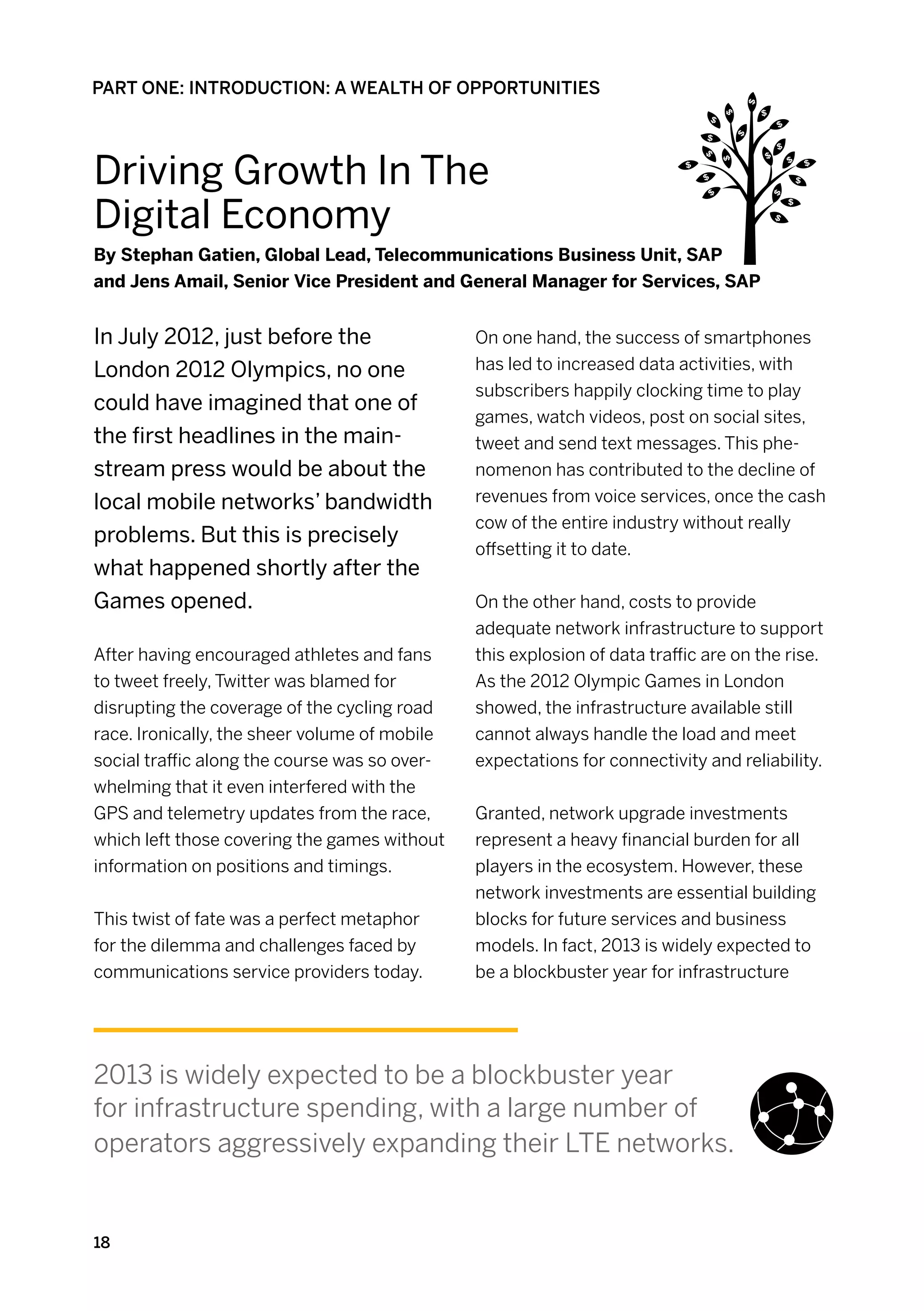
London Olympics - UK SMS traffic
(Times are local to London - August 6 - 8)

                                                                                                                                                               +10%
                                                    + 46%                         +18%                                          +8%


                                                                                                                                                                                               August 8
                                                                                                                                                                                               August 7
                                                                                                                                                                                               August 6
1:30
       2:30
              3:30
                     4:30
                            5:30
                                   6:30
                                          7:30
                                                 8:30
                                                        9:30
                                                               10:30
                                                                        11:30
                                                                                 12:30


                                                                                                                                                               21:30


                                                                                                                                                                               23:30
                                                                                                                                                                                        0:30
                                                                                          13:30
                                                                                                  14:30
                                                                                                           15:30
                                                                                                                    16:30
                                                                                                                             17:30
                                                                                                                                      18:30
                                                                                                                                              19:30
                                                                                                                                                       20:30


                                                                                                                                                                       22:30
Figure 1: Based on data from SAP.


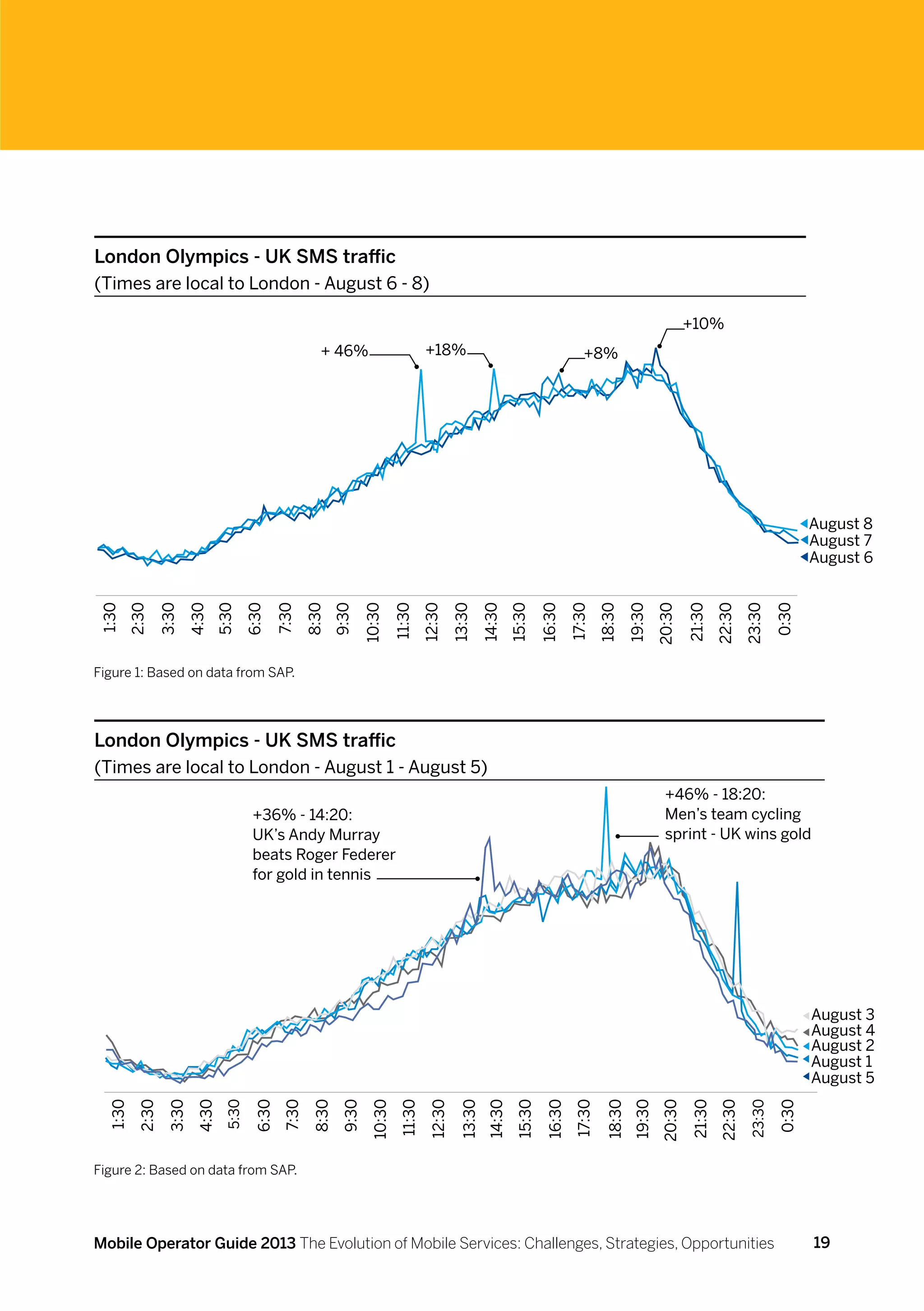
London Olympics - UK SMS traffic
(Times are local to London - August 1 - August 5)
                                                                                                                                                         +46% - 18:20:
                                    +36% - 14:20:                                                                                                        Men’s team cycling
                                    UK’s Andy Murray                                                                                                     sprint - UK wins gold
                                    beats Roger Federer
                                    for gold in tennis


                                                                                                                                                                                               August 3
                                                                                                                                                                                               August 4
                                                                                                                                                                                               August 2
                                                                                                                                                                                               August 1
                                                                                                                                                                                               August 5
 1:30
        2:30
               3:30
                      4:30
                             5:30

                                    6:30
                                           7:30
                                                  8:30
                                                         9:30
                                                                10:30
                                                                         11:30
                                                                                  12:30


                                                                                                                                                                       22:30
                                                                                           13:30
                                                                                                   14:30
                                                                                                            15:30
                                                                                                                     16:30
                                                                                                                              17:30

                                                                                                                                       18:30
                                                                                                                                               19:30
                                                                                                                                                       20:30
                                                                                                                                                               21:30


                                                                                                                                                                                23:30

                                                                                                                                                                                        0:30


Figure 2: Based on data from SAP.


Mobile Operator Guide 2013 The Evolution of Mobile Services: Challenges, Strategies, Opportunities                                                                                             19
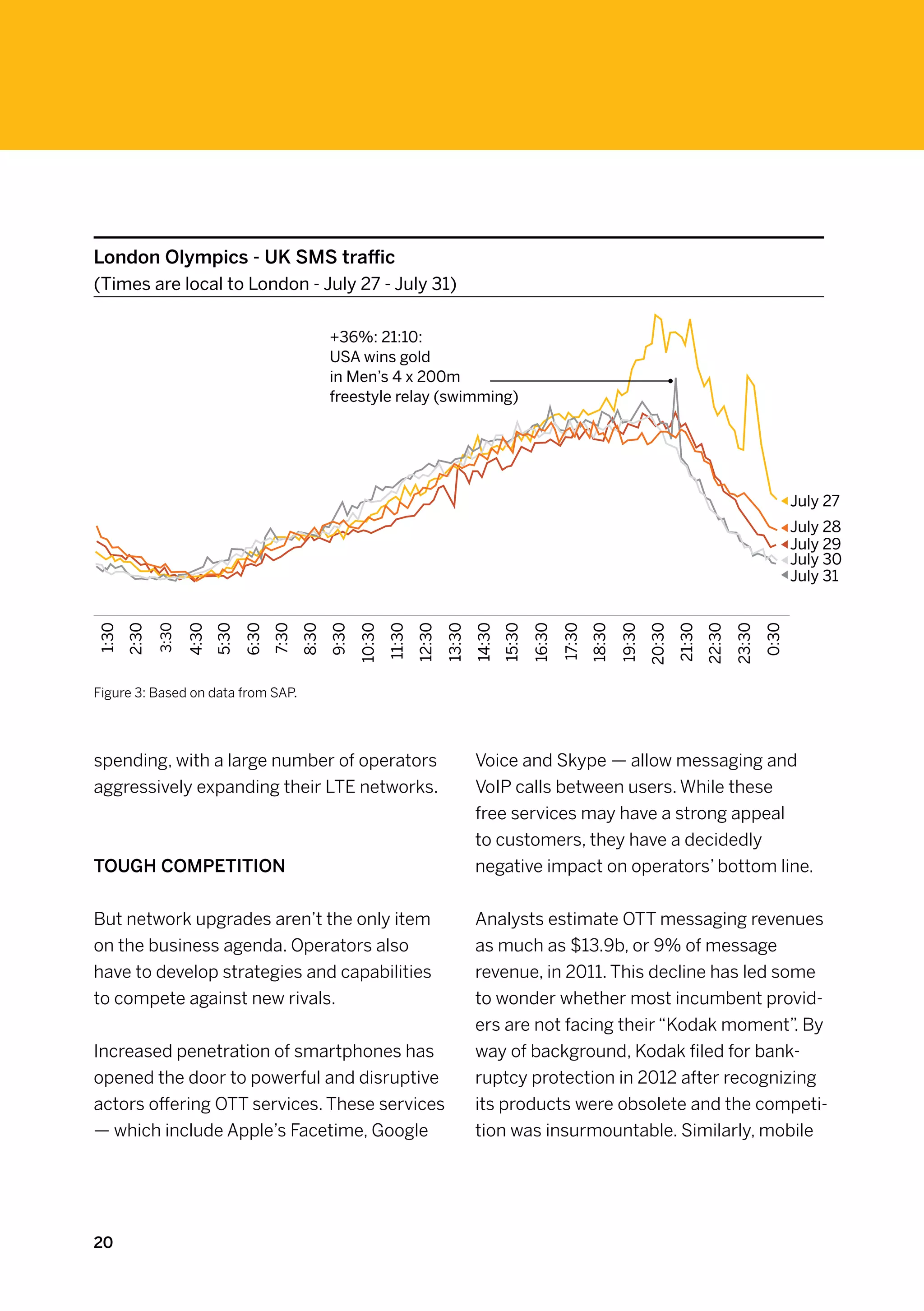
London Olympics - UK SMS traffic
(Times are local to London - July 27 - July 31)

                                                        +36%: 21:10:
                                                        USA wins gold
                                                        in Men’s 4 x 200m
                                                        freestyle relay (swimming)


                                                                                                                                                                                      July 27
                                                                                                                                                                                      July 28
                                                                                                                                                                                      July 29
                                                                                                                                                                                      July 30
                                                                                                                                                                                      July 31
1:30
       2:30
              3:30

                     4:30
                            5:30
                                   6:30
                                          7:30
                                                 8:30
                                                        9:30
                                                               10:30
                                                                       11:30
                                                                               12:30
                                                                                       13:30
                                                                                               14:30
                                                                                                       15:30
                                                                                                               16:30
                                                                                                                       17:30
                                                                                                                               18:30
                                                                                                                                       19:30
                                                                                                                                               20:30
                                                                                                                                                       21:30
                                                                                                                                                               22:30
                                                                                                                                                                       23:30
                                                                                                                                                                               0:30
Figure 3: Based on data from SAP.


spending, with a large number of operators                                                     Voice and Skype — allow messaging and
aggressively expanding their LTE networks.                                                     VoIP calls between users. While these
                                                                                               free services may have a strong appeal
                                                                                               to customers, they have a decidedly
Tough competition                                                                              negative impact on operators’ bottom line.


But network upgrades aren’t the only item                                                      Analysts estimate OTT messaging revenues
on the business agenda. Operators also                                                         as much as $13.9b, or 9% of message
have to develop strategies and capabilities                                                    revenue, in 2011. This decline has led some
to compete against new rivals.                                                                 to wonder whether most incumbent provid-
                                                                                               ers are not facing their “Kodak moment”. By
Increased penetration of smartphones has                                                       way of background, Kodak filed for bank-
opened the door to powerful and disruptive                                                     ruptcy protection in 2012 after recognizing
actors offering OTT services. These services                                                   its products were obsolete and the competi-
— which include Apple’s Facetime, Google                                                       tion was insurmountable. Similarly, mobile


20
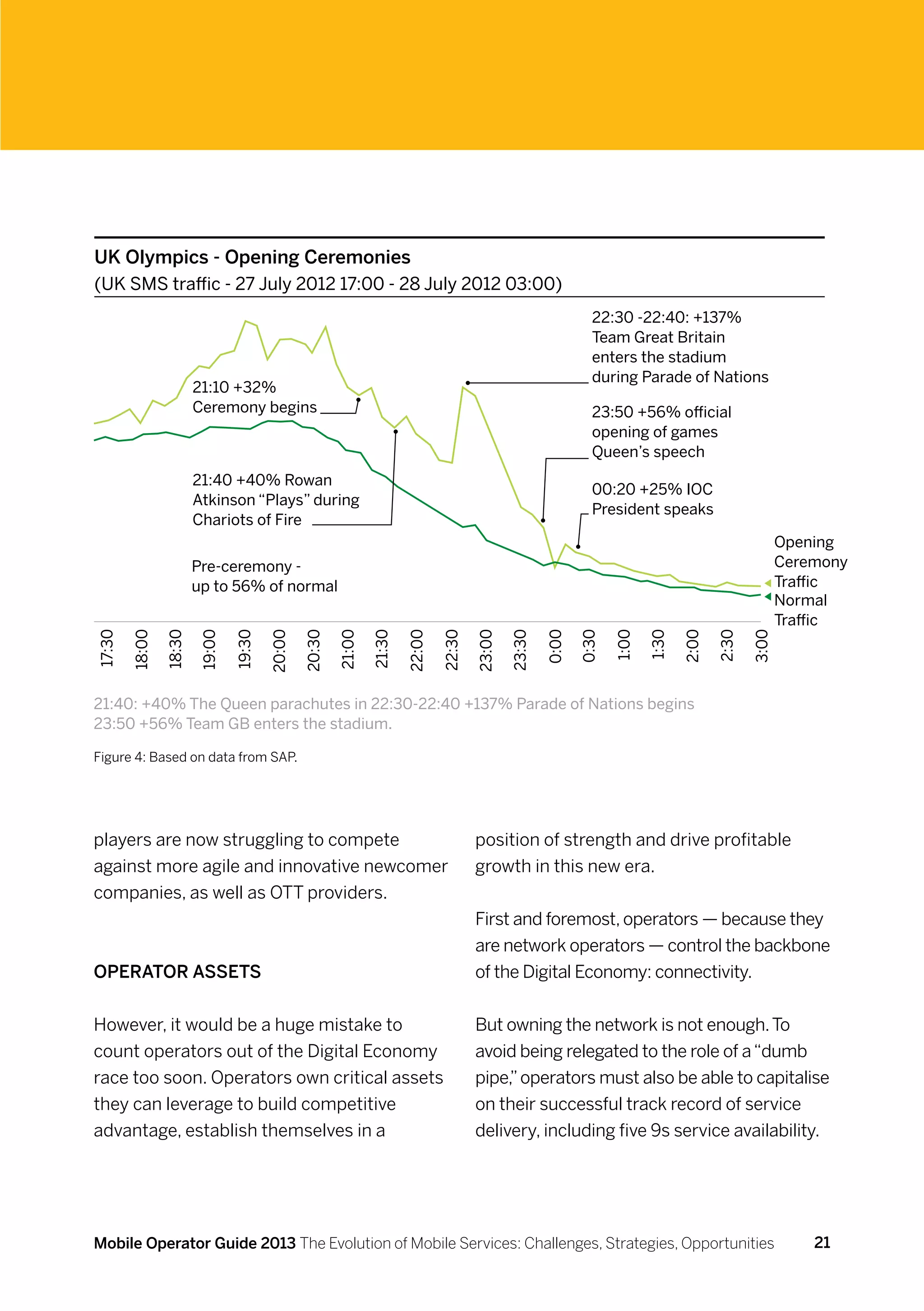
UK Olympics - Opening Ceremonies
(UK SMS traffic - 27 July 2012 17:00 - 28 July 2012 03:00)
                                                                                                                 22:30 -22:40: +137%
                                                                                                                 Team Great Britain
                                                                                                                 enters the stadium
                                                                                                                 during Parade of Nations
                        21:10 +32%
                        Ceremony begins                                                                          23:50 +56% official
                                                                                                                 opening of games
                                                                                                                 Queen’s speech
                        21:40 +40% Rowan
                                                                                                                 00:20 +25% IOC
                        Atkinson “Plays” during
                                                                                                                 President speaks
                        Chariots of Fire
                                                                                                                                                         Opening
                        Pre-ceremony -                                                                                                                   Ceremony
                        up to 56% of normal                                                                                                              Traffic
                                                                                                                                                         Normal
                                                                                                                                                         Traffic
17:30

        18:00

                18:30

                        19:00

                                19:30

                                        20:00

                                                20:30

                                                        21:00

                                                                21:30

                                                                        22:00

                                                                                22:30

                                                                                        23:00

                                                                                                23:30

                                                                                                        0:00

                                                                                                               0:30

                                                                                                                      1:00

                                                                                                                             1:30

                                                                                                                                    2:00

                                                                                                                                           2:30

                                                                                                                                                  3:00
21:40: +40% The Queen parachutes in 22:30-22:40 +137% Parade of Nations begins
23:50 +56% Team GB enters the stadium.

Figure 4: Based on data from SAP.


players are now struggling to compete                                                   position of strength and drive profitable
against more agile and innovative newcomer                                              growth in this new era.
companies, as well as OTT providers.
                                                                                        First and foremost, operators — because they
                                                                                        are network operators — control the backbone
Operator assets                                                                         of the Digital Economy: connectivity.


However, it would be a huge mistake to                                                  But owning the network is not enough. To
count operators out of the Digital Economy                                              avoid being relegated to the role of a “dumb
race too soon. Operators own critical assets                                            pipe,” operators must also be able to capitalise
they can leverage to build competitive                                                  on their successful track record of service
advantage, establish themselves in a                                                    delivery, including five 9s service availability.


Mobile Operator Guide 2013 The Evolution of Mobile Services: Challenges, Strategies, Opportunities                                                           21
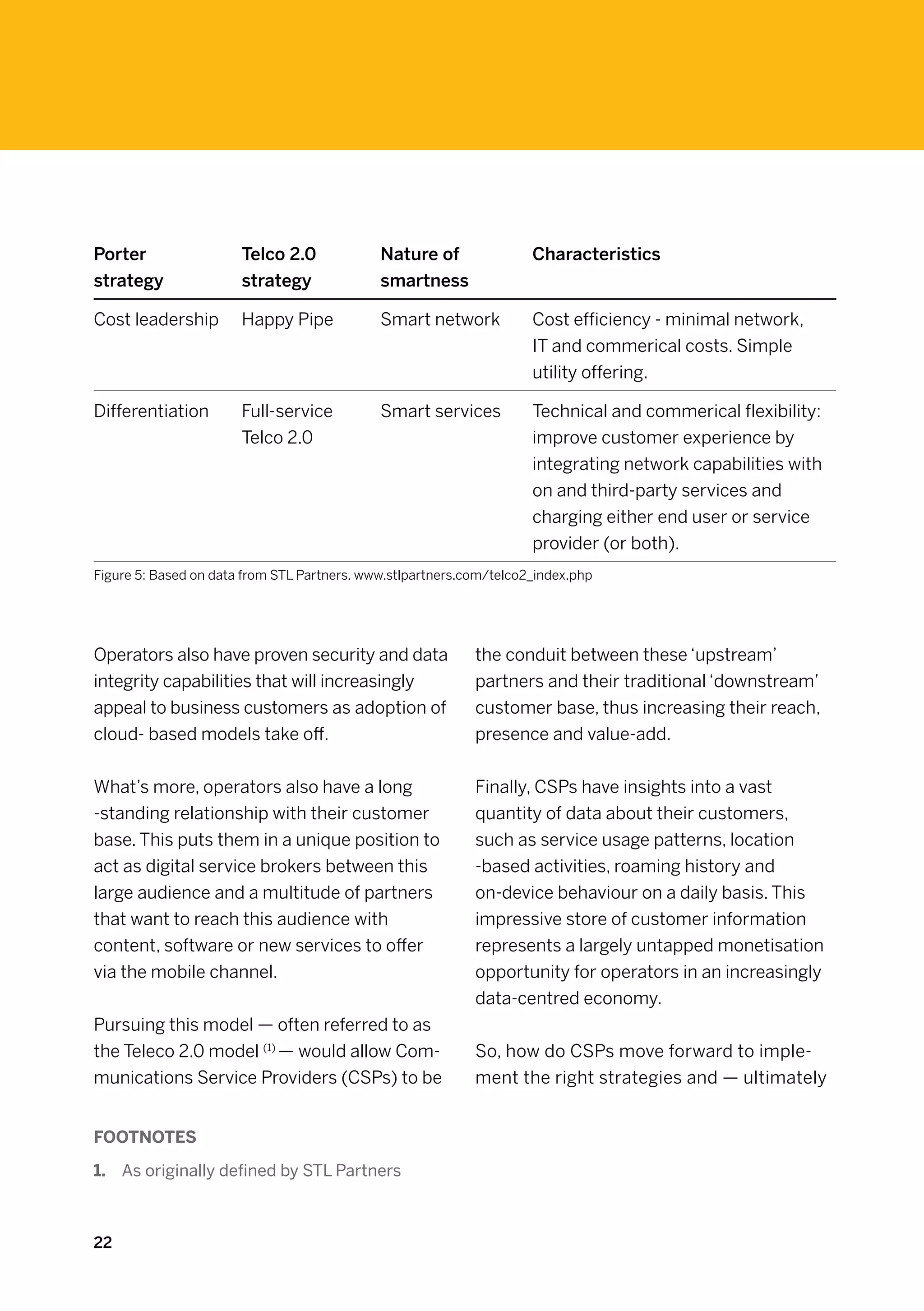
Porter                 Telco 2.0             Nature of               Characteristics
strategy               strategy              smartness

Cost leadership        Happy Pipe            Smart network           Cost efficiency - minimal network,
                                                                     IT and commerical costs. Simple
                                                                     utility offering.

Differentiation        Full-service          Smart services          Technical and commerical flexibility:
                       Telco 2.0                                     improve customer experience by
                                                                     integrating network capabilities with
                                                                     on and third-party services and
                                                                     charging either end user or service
                                                                     provider (or both).
Figure 5: Based on data from STL Partners. www.stlpartners.com/telco2_index.php


Operators also have proven security and data                the conduit between these ‘upstream’
integrity capabilities that will increasingly               partners and their traditional ‘downstream’
appeal to business customers as adoption of                 customer base, thus increasing their reach,
cloud- based models take off.                               presence and value-add.


What’s more, operators also have a long                     Finally, CSPs have insights into a vast
-standing relationship with their customer                  quantity of data about their customers,
base. This puts them in a unique position to                such as service usage patterns, location
act as digital service brokers between this                 -based activities, roaming history and
large audience and a multitude of partners                  on-device behaviour on a daily basis. This
that want to reach this audience with                       impressive store of customer information
content, software or new services to offer                  represents a largely untapped monetisation
via the mobile channel.                                     opportunity for operators in an increasingly
                                                            data-centred economy.
Pursuing this model — often referred to as
the Teleco 2.0 model (1) — would allow Com-                 So, how do CSPs move forward to imple-
munications Service Providers (CSPs) to be                  ment the right strategies and — ultimately


FOOTNOTES

1.	 As originally defined by STL Partners


22
2013 is widely expected to be a blockbuster year
for infrastructure spending, with a large number of
operators aggressively expanding their LTE networks.


— succeed in the digital era? We believe                 created new digital divisions to seize new
they will need to focus on some key areas                opportunities including mobile commerce
to drive profitable growth in the new                    and machine-to-machine communications
Digital Economy.                                         (M2M) in order to generate incremental
                                                         revenue beyond their traditional services.
•	 CSPs should fully leverage their scale,               Telefónica’s direct to bill initiative is a strik-
   superior reliability and service delivery             ing example of how an operator can lever-
   capabilities, to invest in new business               age its billing relationship with its mobile
   models in areas such as Cloud and Mob-                customers to increase sales of digital goods
   ility. Operators such as China Telecom or             and services, while learning to partner —
   Telstra in Australia have already adopted             not compete — with OTT players.
   this strategy with success. They offer
   on-demand business solutions to a                  The monetisation of subscriber data, in
   variety of business customer segments,             accordance with privacy laws, is also
   in particular targeting small and medium           emerging as a strong opportunity for CSPs
   size businesses. Other mobile operators,           to grow their revenues. By leveraging the
   such as Rogers Communications in                   vast amounts of customer data they own —
   Canada, are launching business-oriented            in real-time and at scale — CSPs can gain
   mobile app stores. This is part of a larger        advantage in two important ways. They can
   effort to become a one-stop shop for               serve their existing customers more effec-
   business customers, providing everything           tively, and they can also use the customer
   mobility-related, including mobile app             information to take advantage of opportuni-
   hosting and mobile device management.              ties in new markets — such as proximity
•	 Large providers should also think beyond           marketing or mobile advertising — where
   connectivity. Telefónica and SingTel are           customer data is key. To accomplish this
   perfect examples of what operators can             CSPs will need to adopt a highly scalable
   achieve. They have transcended their               foundation suited for the real-time world.
   traditional organisational boundaries, and         An examination of the results achieved by


Mobile Operator Guide 2013 The Evolution of Mobile Services: Challenges, Strategies, Opportunities      23
However, it would be a huge mistake to count
operators out of the Digital Economy race
too soon. Operators own critical assets they
can leverage to build competitive advantage,
establish themselves in a position of strength
and drive profitable growth in this new era.


T-Mobile US, for example, confirms that
an in-memory based platform is very well        Jens Amail is Senior Vice President and
                                                General Manager for Services Industries at
suited to provide such a foundation.
                                                SAP as well as the Business Unit for Billing,
                                                Revenue and Innovation Management. Prior
Fortune smiles on the brave. It is time for     to joining SAP in 2008, Jens was with Siemens
CSPs to make bold moves to develop their        Communications for 10+ years in a variety of
growth strategy in the digital era. They have   Senior Executive and General Management
                                                roles both in Europe and the US. Jens has a
the necessary assets to create new growth
                                                broad cross-functional background in the
engines and focus on the abundant oppor-        Communications Industry with Executive
tunities in the Cloud and Mobility markets.     assignments in Sales, Services, Marketing,
Moreover, operators can innovate and invent     Solution Management and Operations.
new data-driven business models and
services (such as proximity marketing).         Stephan Gatien is a Global Lead within the
                                                Telecommunications Business Unit at SAP
If operators can arm themselves with the
                                                focusing on Business Analytics and Database
correct capabilities and business models,        Technology. In that capacity, he is respon-
they can seize these opportunities, create      sible for the analytics and data platform
lucrative new revenue streams and prosper       strategy in the industry, including SAP HANA,
from the Digital Economy.                       oversees the related solution activities and
                                                leads the  analytics and data platform  go-
                                                to-market activities globally Prior to joining
                                                SAP, Stephan was with Telus where he held a
                                                variety of management roles in the wireless
                                                division of this Canadian operator.


24
PART TWO
STRATEGIES FOR DRIVING REVENUE
PART TWO: STRATEGIES FOR DRIVING REVENUE


Long Live sms
By William Dudley, Group Director, Product Management, SAP Mobile Services


Mobile industry watchers have                     (and do) use their mobile phones to send
been predicting the death of the                  and receive text messages.

humble text message for over
                                                  Veteran mobile author and analyst Tomi
a decade, but a raft of recent                    Ahonen estimates people sent a whopping
research confirms that SMS is                     6.1 trillion text messages in 2011, up from
very much alive and kicking.                      1.8 trillion in 2007. Meanwhile Informa
                                                  Telecoms  Media state that total SMS
Marking the 20th anniversary of SMS, U.K.         traffic will reach 8.7 trillion by 2015, up
analyst firm Portio Research points out that      from over 5 trillion messages in 2010. In
SMS has been very successful, generating          its newest forecast analyst firm Portio
approximately $821 billion for operators          Research calculates that total traffic will
worldwide since it was invented in 1992.          reach nearly 10 trillion messages by 2015.


Overall, worldwide mobile messaging was           Clearly, SMS is THE most ubiquitous,
the highest earner in the industry, raking in     non-verbal communications medium in the
$179.2 billion in 2010 alone. Portio Research     history of mankind. Today, SMS can reach
forecasts that this total will increase to more   over 5.4 billion people around the world —
than $280 billion in 2014, and exceed $300        over 77 percent of the world’s population.
billion by 2016. Of this total, SMS alone will
generate $155 billion worldwide in 2014, and      In developing countries SMS plays a special
it promises to continue to play a significant    role, transforming lives and economies at an
role in revenue terms in the coming years,       amazing scale. Innovation in these regions
the report said.                                  also allows companies, organisations and
                                                  governments to harness simple text mes-
                                                  saging and achieve extraordinary results.
Pervasive and personal                            From life-simplifying reminders to life-saving
                                                  medical advice, text message services are
It’s the simplicity, pervasiveness and sheer      changing the nature of commerce, banking,
dominance of text messaging that has made         education, healthcare, news reporting and
it the world’s leading data communication         political participation.
tool. People everywhere on the planet can


26
In developed markets SMS is by far the most           In other countries text messaging continues
effective way for people to communicate with          to dominate. In Canada The Wireless
each other — and connect with companies.              Telecommunications Association reports
Whether chatting with friends, or receiving           the number of personal text messages sent
alerts from banks and favourite brands, text          every year has nearly quadrupled since
is the primary communications tool.                   2008 and hit a whopping 78 billion
                                                      messages in 2011. In the U.K. the Ofcom
                                                      Telecommunications Market Data Update
Continuing tide of text                               Q1 2011 reports the total number of SMS
                                                      and MMS messages sent in Q1 2011 was
Significantly, even the advance of smart-             36.9 billion, up 22.7 percent over Q1 2010.
phones — chock-full of features, functional-
ity and a wide variety of mobile applications
— hasn’t changed consumers’ dependence                The impact of OTT
on text messaging to connect with the world
around them. In fact, a recent consumer               Amid this stellar growth, some analysts
study from Deloitte shows that SMS holds              wonder if the text messaging trend could
the lead. More consumers than ever prefer-            flip from growth to decline. New messaging
ring texting, and the vast majority (90               capabilities bundled with iPhones and
percent) of smartphone users sending at               Android phones, as well as the advance of
least one text message per day.                       OTT messaging services and applications
                                                      are among the root causes for the recent
Another trend that shows no signs of slowing          dip in SMS volumes in mature markets such
is text use among teenagers. In the U.S. this         as Philippines and Taiwan. News that OTT
demographic relies on text more than any              player WhatsApp reported hitting the mile-
other customer segment. Research firm                 stone of ten billion messages a day further
Nielsen, which bases its finding on a variety         suggests operators could be vulnerable to
of data including monthly survey results from         this new competition.
300,000 consumers, reports that texting has
tripled, with teenage girls sending 40 percent        However, Analysts point out the race is far
more text messages than boys. That’s an               from run. It estimates that companies like
average of 3,952 text messages per month.             WhatsApp and BlackBerry will generate 35
It’s a continuing tide of communication               percent of the total messaging traffic in
Nielsen calls a “mobile data tsunami.”                2016, but only 8 percent of the revenues.


Mobile Operator Guide 2013 The Evolution of Mobile Services: Challenges, Strategies, Opportunities   27
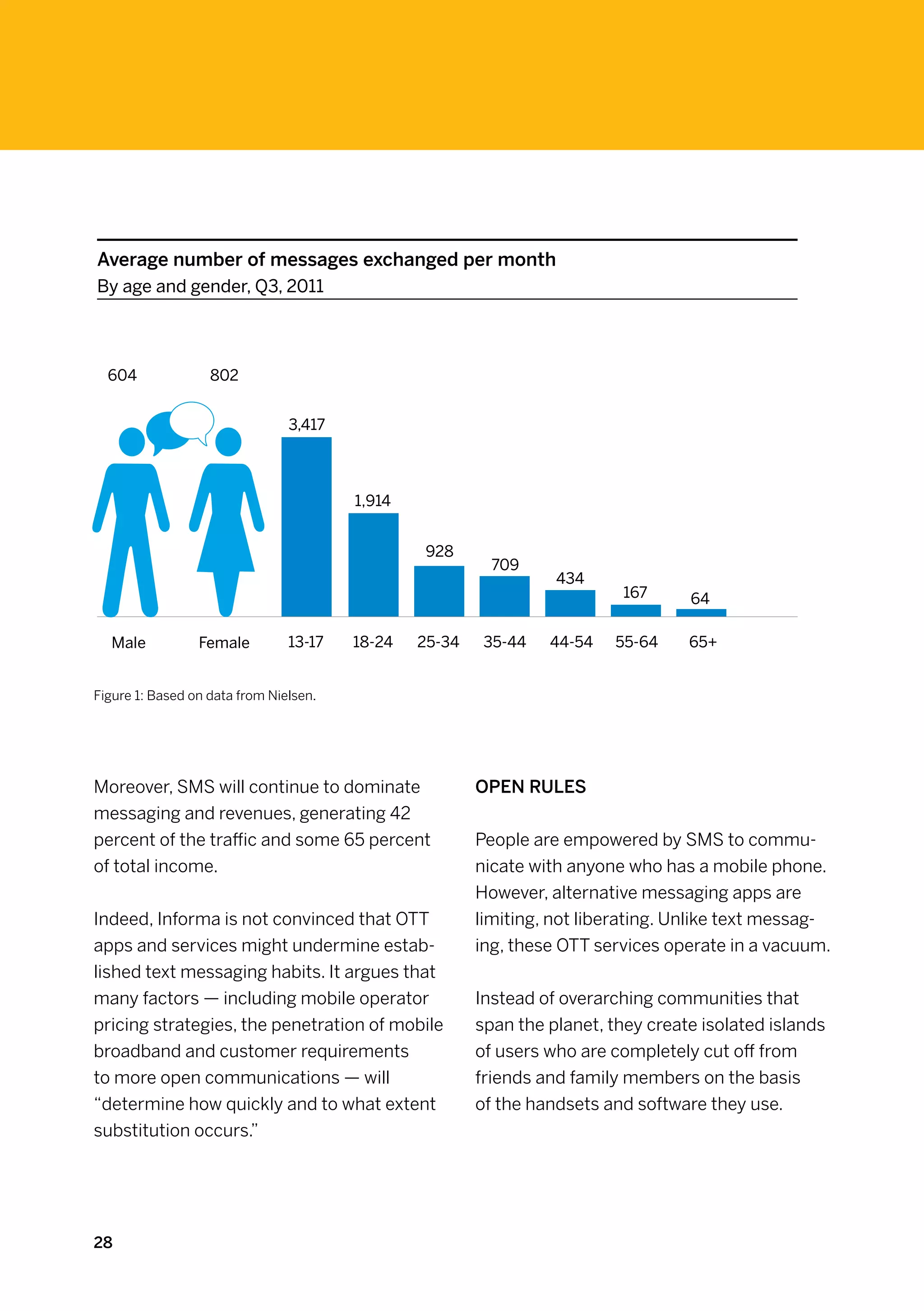
Average number of messages exchanged per month
By age and gender, Q3, 2011


  604              802


                                3,417


                                        1,914


                                                 928
                                                          709
                                                                  434
                                                                           167     64

  Male           Female         13-17   18-24   25-34    35-44   44-54    55-64    65+


Figure 1: Based on data from Nielsen.


Moreover, SMS will continue to dominate                 Open rules
messaging and revenues, generating 42
percent of the traffic and some 65 percent              People are empowered by SMS to commu-
of total income.                                        nicate with anyone who has a mobile phone.
                                                        However, alternative messaging apps are
Indeed, Informa is not convinced that OTT               limiting, not liberating. Unlike text messag-
apps and services might undermine estab-                ing, these OTT services operate in a vacuum.
lished text messaging habits. It argues that
many factors — including mobile operator                Instead of overarching communities that
pricing strategies, the penetration of mobile           span the planet, they create isolated islands
broadband and customer requirements                     of users who are completely cut off from
to more open communications — will                      friends and family members on the basis
“determine how quickly and to what extent               of the handsets and software they use.
substitution occurs.”


28
A Facebook user and a person using iMessage           interworks with the existing SMS eco-
may be good friends in real-life, but the fact        system. Indeed, many of the operators
they use different services prevents them             featured throughout this first edition of
sending and receiving messages.                       the Mobile Operator Guide are betting
                                                      on RCS to drive an interoperable, back-
This flies in the face of what communica-             ward compatible messaging medium for
tions is all about, and presents opportunities        subscribers and — ultimately — pave
for mobile operators to bridge the gap.               the way for new and innovative services.
There are exciting and lucrative options
to consider. Some mobile operators will
choose to work with OTT players, enabling             No limits
them to achieve the integration of messag-
ing communications. Others will follow the            Technology advances like RCS will allow
lead of operators like Telefónica, which              messaging — including text messaging —
recently launched a free mobile application           to evolve and continue to account for a signi-
that combines free text chat, voice calls,            ficant share of operator revenues. The future
picture and location sharing between users.           for OTT providers, however, is not quite so
                                                      positive. Spoiled by choice and delighted by
Interoperability will also be delivered by            the freedom to communicate with anyone
the GSM Association standard called                   (and not just people that use that the same
Rich Communications Suite (RCS), which                application), consumers will no doubt vote
includes a next-gen, real-time, presence-             with their feet. It’s clear that many of the OTT
enabled messaging component that also                 players will simply fade away.


Unlike text messaging, these OTT services
operate in a vacuum. Instead of overarching
communities that span the planet, they create
isolated islands of users who are completely
cut off from friends and family members on the
basis of the handsets and software they use.


Mobile Operator Guide 2013 The Evolution of Mobile Services: Challenges, Strategies, Opportunities   29
It’s the simplicity, pervasiveness and sheer
dominance of text messaging that has made it
the world’s leading data communication tool.


In the meantime, SMS-compatible1 services          Ironically, the rise of mobile apps, initially
from companies including textPlus will             hailed as a new channel to the customer
continue to flourish, offering customers           that could potentially dethrone SMS, has
more features and greater reach. But it’s          actually pushed text messaging growth
not just person-to-person messaging that           to a new level.
will increase. Growth will be also be driven
by a desire from companies, businesses             Brands and marketers, as well as applica-
and brands to connect with their customers         tion developers, are harnessing SMS to
(and potential customers) via SMS.                 extend the life of their apps, keeping their
                                                   users posted on updates, breaking news,
Research underlines the pivotal role of            location-based opportunities, campaign
mobile in campaigns to engage with custom-         perks and other important information.
ers, encourage interaction and boost loyalty.      More importantly, text messaging allows
From consumer facing brands that use text          brands and marketers to re-connect with
messaging to deliver brand messages and            customers who haven’t used their apps
links to downloadable content and perks, to        recently — or even deleted it altogether. The
large retailers that cleverly use text messaging   result is a booming Application-to-Person
to deliver product vouchers and drive cus-         (A2P) market Jupiter Research estimates
tomer loyalty, the central role of SMS is          will be worth $70.1 billion by 2016.
clear. Perhaps the best confirmation comes
from Coca-Cola, that declared that SMS is
the “number one priority” in its comprehen-        Positive outlook
sive strategy to reach a global audience and
increase customer engagement. Analysts             Clearly, the next five years will see operators
termed it a “bombshell announcement”               in many parts of the world leverage their
because other marketers quickly followed           all-IP networks, but even this progress will
suit, launching strategies with mobile             not shut the door to SMS. To the contrary,
messaging at the center.                           LTE networks using IMS infrastructure will
                                                   lay the groundwork for messaging services


Footnote:

1.	 SMS-compatible services include some OTT service providers (also known as NUVOs or
Network Unaffiliated Virtual Operators that inter-work with the SMS ecosystem. This stands in
strong contrast to other OTT providers, such as WhatsApp, that do not offer SMS interoperability.


30
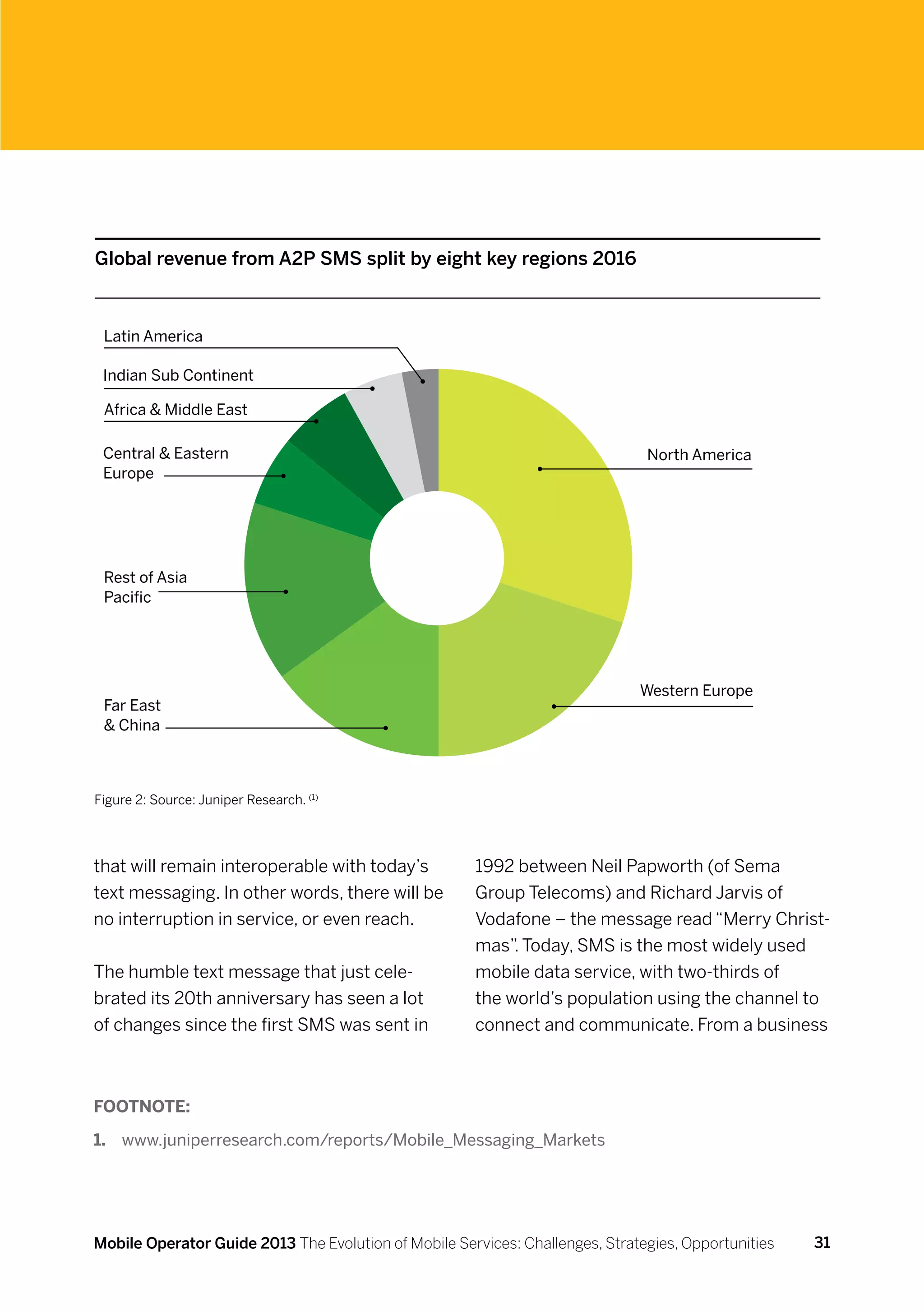
Global revenue from A2P SMS split by eight key regions 2016


 Latin America

 Indian Sub Continent

 Africa  Middle East

 Central  Eastern                                                             North America
 Europe


 Rest of Asia
 Pacific


                                                                              Western Europe
 Far East
  China


Figure 2: Source: Juniper Research. (1)


that will remain interoperable with today’s           1992 between Neil Papworth (of Sema
text messaging. In other words, there will be         Group Telecoms) and Richard Jarvis of
no interruption in service, or even reach.            Vodafone – the message read “Merry Christ-
                                                      mas”. Today, SMS is the most widely used
The humble text message that just cele-               mobile data service, with two-thirds of
brated its 20th anniversary has seen a lot            the world’s population using the channel to
of changes since the first SMS was sent in            connect and communicate. From a business


FOOTNOTE:

1.	 www.juniperresearch.com/reports/Mobile_Messaging_Markets


Mobile Operator Guide 2013 The Evolution of Mobile Services: Challenges, Strategies, Opportunities   31
perspective, SMS is expected to remain
a significant source of revenues and traffic
for mobile operators on a global basis
for years to come. The bottom line: the
advance of an all-IP world will transform
SMS, but text messaging will also continue
to be alive and well.


William Dudley has 25 years experience
building and managing telecommunications
network infrastructures. He leads SAP Mobile
Services Messaging Team, which focuses on
solutions including inter-operator SMS and
MMS products (P2P) and mobile messaging
hubs and services (A2P SMS and MMS).
Dudley also provides industry commentary
to both internal and external mobile industry
publications, through analyst and media
interviews, and is active in several industry
groups. http://scn.sap.com/people/william.
dudley/content


32
PART TWO: STRATEGIES FOR DRIVING REVENUE


Moving To The sms
Hubbing Model
By Robert Rose, Senior Director, Global Operator Services, SAP Mobile Services


SMS is ubiquitous, universal and                      services dedicated to message protocol
widely regarded as the truly native                   conversion. Having met the domestic
                                                      challenges of the North American market,
language of mobile. However, this
                                                      international messaging between non-
phenomenon, and the massive                           GSM U.S./Canadian operators and their
development of SMS since the last                     GSM counterparts worldwide soon also
years of the 20th century, has not                    benefitted from the technology and
                                                      connectivity offered by the hub solution.
been without its challenges around
enabling — and guaranteeing —                         In developing countries, scarce human
message delivery.                                     and technical resources within operators
                                                      across these markets has accelerated the
Notably, there have been challenges in North          requirement for hubbing services. In the
America, where differences in technologies            case of Tier 1 and 2 operators, for example,
prevented the launch of off- net messaging            hubbing has tended to be a niche solution.
for a few years. In contrast, almost the rest         In other words, the solution enabled “gap-
of the world was well progressed in its adopt-        filling” in a mobile operator’s footprint,
ion of inter-operator SMS based largely on            thus satisfying subscriber demand for
homogenous GSM standards.                             international SMS P2P connections when
                                                      that operator’s own roaming agreements
The solution to the technology differences            were not sufficient to provide the required
in North America was provided by hubbing              messaging interconnects.


In developing countries, scarce human and technical
resources within operators across these markets has
accelerated the requirement for hubbing services.


Mobile Operator Guide 2013 The Evolution of Mobile Services: Challenges, Strategies, Opportunities   33
As a consequence, operators are recognising that a hub
can enable them to outsource the management burden
around some of their cross-border messaging traffic.


Making the mainstream                             operator can actually become a much
                                                  more significant benefit.
The situation began to change when the
GSM Association launched the Open
Connectivity project in 2005. By seeking          Good business sense
to manage and regulate (in a light-touch
manner) the development of peering hubs           Today, economic pressure on most oper-
for person-to-person SMS the GSMA                 ators is now driving even more traffic (and
effectively endorsed the hubbing concept.         more revenue for the networks). Headcount
This, in turn, ensured the adoption of            cuts, affecting even the most-established
hubbing as a mainstream business practice         operators, are reducing their ability to
for the global operator community.                manage their interworking activity effectively.


Since 2005 the major hub providers have           As a consequence, operators are recogn-
seen a steady growth in demand for their          ising that a hub can enable them to out-
services. This has resulted in the develop-       source the management burden around
ment of an abundant revenue stream based          some of their cross-border messaging
on the termination charges on inbound             traffic. This approach also reduces the
traffic delivered by hubs. The ability to drive   managerial overhead around areas such as
new revenues from additional SMS traffic          the negotiation and maintenance of bilateral
— possible because hub prov-iders have            agreements with destination operators and,
extesive global reach and the ability to          when traffic is flowing, the upkeep of various
provide two-way access to operators               number ranges within the SMSC.
previously unreachable — has been an
added attraction over and above the               Routing all traffic for a particular country to
greater reach achieved.                           a hub mitigates number range management
                                                  tasks and delivers business benefit. As
Since term fees are paid on a strictly per-       operators come to embrace the idea of
message basis, this revenue source clearly        delegating responsibility for some cross-
increases in proportion to the organic as         border SMS traffic, they also discover that
well as incremental growth in traffic. As a       the more routes they outsource to the hub
result, what might first appear to be a minor     provider, the more they can increase their
contributor to the Roaming Department             revenue “take” from their inbound traffic.
PL account belonging to a mobile                 In the end, what started out as a simple


34
exercise to offload a handful of “awkward”            Real-world examples of this problem
destinations soon becomes a full-scale                are currently being addressed. Efforts to
outsourcing venture.                                  resolve this effectively will naturally require
                                                      flexibility on behalf of both operators and
                                                      hub providers.
Growing revenues
                                                      In summary, in just over ten years subscrib-
The financial ecosystem surrounding                   ers’ need for global two-way communication
cross-border P2P SMS is a complex matrix              via SMS has become the fundamental driver
of MO charges and MT payments. For hub                of mobile network data revenues. While
providers, managing this is well worth the            domestic interworking is mainly addressed
effort as long as they can continue to make           through bilateral relationships, cross-border
a margin on the connectivity services they            traffic is increasingly being routed through
provide. In view of this dynamic, traffic             the established, peered hubs. Though this
through hubs will continue to grow. Impor-            trend is a consequence of the expedient and
tantly, the opportunities for operators to            effective solution that a hub connection can
cultivate a worthwhile revenue stream will            provide, the opportunity to develop a new
also grow in parallel.                                and worthwhile revenue stream is now —
                                                      more than ever — an incentive for operators
However, it’s worth noting that outsourcing           to subscribe to the hubbing model.
can impact the revenues operators poten-
tially gain from their bulk messaging (or
“enterprise messaging”) business. This is             A 20-year veteran of the information systems
                                                      business (both fixed and mobile), Robert Rose
because outsourcing all messaging traffic
                                                      began working in the mobile industry as a con-
means outsourcing bulk messaging as well.             sultant to British Telecom’s mobile operations
                                                      subsidiary Cellnet. Since 2004 Robert has
By way of background, this traffic would              guided SAP Mobile Services’s international
have been reliant on the prior, direct                development in P2P messaging services.
connect, bilateral routes. Obviously, in
cases where these are replaced by a hub’s
connections for P2P business, the non-P2P
traffic needs to secure its own routing and,
potentially, its own commercial agreements.


Mobile Operator Guide 2013 The Evolution of Mobile Services: Challenges, Strategies, Opportunities   35
PART TWO: STRATEGIES FOR DRIVING REVENUE


Latin America Offers Big
sms Opportunites

From the rural regions, where farmers             SMS leads the pack
and small businesses use mobile to
                                                  Interestingly, this revolution also brings a
manage their workday, to exciting city
                                                  boost to text messaging services. But it’s
centres where youth — in particular—              not just about operator services allowing
rely on mobile to connect with friends            people with ordinary feature phones to
and family 24/7, Latin America is                 communicate. Analysts note that text
                                                  messaging continues to provide a solid
more connected than ever before.
                                                  foundation for a wide range of services,
In fact, making or receiving a call or text       from banking to basic education, to
message in Latin America has never been           widening access to health information.
easier. A new report titled Maximising            Against this backdrop, it is clear markets
Mobile, the third in a series on Information      like Latin America — not the more devel-
and Communications for Development                oped markets of Europe and North
published by the World Bank, reveals that         America — will lead messaging growth
nearly 98 percent of the region’s population      and innovation.
have mobile cell signal and 84 percent of
households use a mobile service.                  Feature phones are the focus because Latin
                                                  America’s smartphone market is still in its
On average 81 percent of subscriptions in         infancy. Research firm Pyramid Research
Latin America are prepaid. Understandably,        reports that the smartphone segment in
many in the region use mobile phones to           Latin America will grow to 48 million in 2014.
make voice calls, averaging 141 minutes of        This is a marked increase, but doesn’t
talk-time a month. In most markets the vast       negate the fact that Latin America continues
majority of users (97 percent in Argentina, for   to lag behind the rest of the world in smart-
example) regularly use SMS to communicate.        phone adoption.


Clearly, the level of growth in mobile usage      But this gap also offers mobile operators
will continue, expanding into ever more           a tremendous opportunity to wring more
rural areas across Latin America. It marks        value out of text messaging. Ironically, it is
what the report calls “the beginning of the       also the low penetration of smartphones
mobile revolution.”                               that has kept over-the-top (OTT) players


36
Maximising mobile for development

Growth of global mobile subscriptions                                   World’s population with mobile cell signal

                      2000                                                               Over 6 billion
    71%        29% 0.7 billion                                               2003
                                                                             61%         mobile subscriptions
                   subscriptions                                                         worldwide
                                                   2010
    23%          77%                               5.9 billion
                                                                             2010        75% of the World
                                                   subscriptions                         now has access to
                                                                             90%
    High-income countries             Developing countries                               a mobile phone


Rise of non-voice mobile usage
% National population
                                                             96
    89
                        82                 49
                                                                                    72               72
                              61                                                         58
                                                                                                          48
                                                                   38
          31    29                               26
                                   18                                     22                                    19
                                                        10                                    15
     KENYA                   MEXICO             INDIA         INDONESIA          EGYPT          UKRAINE
                                                                               (ARAB REP)
    Send text message		                    Take pictures or video with mobile	        Use mobile internet

Pace of mobile phones spread globally
(billions)
     The number of mobile subscriptions will soon take over the world’s population
                                                                                                      Fixed-line
8                                                                                                     subscriptions
     2002 There are over 1 billion mobile subscriptions, passing fixed-line users                     Global
                                                                                                      population
6
     1978 First commerical cellular mobile services established

4
     1961 85 years later, fixed-line subscriptions
     reach 100 million
2
     1876 Alexander Graham Bell holds the first                                                       Mobile
     two-way telephone conversation                                                                   subscriptions
0
     1875            1900          1925               1950         1975              2000     2011 2015
Figure 1: Based on data from Infodev. www.infodev.org/en/Document.1178.pdf

Mobile Operator Guide 2013 The Evolution of Mobile Services: Challenges, Strategies, Opportunities               37
at bay. This, in turn, has slowed the advance    Personal Paraguay, a leading mobile
of messaging apps that enable smartphone         operator in Paraguay and part of Personal
users to send unlimited free messages to         Telecom group, has extended its
their friends. These OTT messaging apps          international SMS coverage to reap
such as WhatsApp, Viber and Apple’s              significant business benefits. “SMS is an
iMessage are cannibalising SMS revenue           important part of how our customers
and changing the way mobile users comm-          communicate,” notes Miguel Ruiz, Personal
unicate with their peers.                        Paraguay Roaming Manager. “Our cust-
                                                 omers want to be in touch with friends,
This is not the case in Latin America,           family and colleagues whether they are in
according to ABI Research, developed             the same neighborhood, or living in a
markets have experienced a marked                different country.”
decrease in SMS sent because of the rise
of OTT alternatives, but the drop in regions     More importantly, customers expect their
such as Latin America and Africa is not          text message communications to be
as significant.                                  dependable and robust. “To achieve these
                                                 SMS connections is a huge task that
                                                 requires negotiations with operators and
International SMS requirements                   technical tests to ensure SMS quality and
                                                 reliability,” Ruiz explains. To streamline the
Clearly, feature phones have several             process and deliver customers the service
more years to thrive in Latin America. This      they expect, Personal Paraguay has teamed
provides operators a window of opportunity       up with SAP Mobile Services. “The hub SMS
to generate strong revenues from their           service helps us to have complete coverage
domestic and international SMS offerings.        with all operators in North America, the U.S.,
The international SMS business, for example,     Canada and Mexico, as well as operators
provides operators with the potential to drive   across LATAM, Europe, Asia and Africa.”
significant volume and earn hefty margins.  
Opening new international routes, securing       SMS hubbing also allows Personal Paraguay
two-way service for their customers and          the capabilities to cater to the portion of its
marketing attractive bundle packages are         customer base that are Paraguay citizens
also part of a strategy that would certainly     living and working in neighboring Argentina.
help improve the bottom line.                    “About 1.5 million Paraguayan people have


38
Against this backdrop, it is clear markets like Latin
America — not the more developed markets of
Europe and North America — will lead messaging
growth and innovation.


emigrated to Argentina, and they want to              To take advantage of this robust growth
be in contact with friends and family in an           in text messaging mobile operators are
affordable way,” Ruiz says. The answer is             also migrating to more flexible pricing
International SMS, a popular service that             to encourage use and to appeal to new
also represents an important differentiator.          customer segments. A prime example is
In a nutshell, the service allows customers           Tigo Colombia, a mobile operator that is
to send an SMS to a Telecom Personal                  developing a new approach to enable users
Argentina customer and be charged the                 to do what they want most: communicate
same rate as a local SMS. “There are a lot            with family and friends in other countries
of opportunities to be gained by offering             at affordable prices, observes Juan Felipe
customers services that pair a simple way             Velasquez, Latam International Roaming
of communication with reasonable tariffs.”            Coordinator at Tigo Colombia.


                                                      At a deeper level, Tigo Colombia’s business
Attractive pricing                                    model is based on partnership to ensure
                                                      access to key capabilities and technologies.
SMS is expected to continue accounting                According to Velasquez, the decision to
for a major proportion of value-added                 cooperate with SAP Mobile Services is
services revenue as services like banking,            driven by the internal requirement to keep
mobile money and M2M gain traction.                   pace with innovation. “Many times we fail
Another driver is social media, the pastime           to seize opportunities because technology
and passion of nearly 100 percent of the              changes so fast and we sometimes
Latin American population using mobile                neglect segments that do not have access
or Internet, according to comScore. While             to new technologies.”
social media isn’t a new phenomenon, the
growth is phenomenal.


Mobile Operator Guide 2013 The Evolution of Mobile Services: Challenges, Strategies, Opportunities   39
Exciting opportunities ahead                      Velasquez is also bullish about the outlook
                                                  for value-added services that harness SMS
What are the highest areas of opportunity         in new ways. Chief among these is M2M. As
on the operator agenda?                           he puts it: “I think that the next step in our
                                                  industry is machine-to-machine, where we
Personal Paraguay’s Ruiz is squarely              can connect all the machines with machines
focused on extracting more value out of           — and with the people managing them —
offering a wide variety of packages with          around the world with simple SMS.”
truly personal communications at the core.
                                                  Whether it’s person-to-person or machine-
“Our slogan is ‘Cada Persona es un mundo          to-machine, it’s clear that messaging is king.
— Each person is a world.’ This means
delivering each customer the services and         A promising and fast-growing service that
bundles that are in tune with their lives. They   should not be ignored is A2P, or Application-
are at the center.” Looking ahead, Personal       To-Person messaging. In this scenario, soft-
Paraguay is also planning to deploy LTE/4G        ware applications and organisations, such
“with IPX to support new services” that           as enterprises and governments, establish
satisfy customer requirements for quality,        a one or two-way communication channel
coverage and convenience.                         with people using SMS.


Tigo’s Velasquez says he is also looking          The revenue potential is significant. Accord-
to a future where continued cooperation           ing to a study published by Portio Research
between the stakeholders — operators,             Ltd, a research firm based in the U.K., for
suppliers and users — creates a win-win           the period 2011-2016 worldwide A2P SMS
for everyone. Additionally, it is important       revenue is expected to outpace Person-
to add these services onto an IPX, where          To-Person (P2P) SMS revenue and grow at
connectivity meets users’ needs for quality       a CAGR of 13.1 percent.
and desire to communicate on their terms.


Looking ahead, Personal Paraguay is also
planning to deploy LTE/4G “with IPX to
support new services” that satisfy customer
requirements for quality, coverage and convenience.

40
P2P  A2P SMS revenue – worldwide
(in USD billions, 2009-2016F)
SMS Revenue (in USD billions)


                                                             93.6     95.5
                                                   89.5                        94.2
                                         83.9                                            85.7
                                                                                                  78.5   A2P SMS
                                 73.4
                                                                                                         Revenue
                                                                                                         P2P SMS
                                                                                                  75.1
                                                                                          70.1           Revenue
                                                                                60.4
                                                                      52.3
                                                             44.2

                                          30.7      27.4
                                25.5


                                2009     2010     2011F     2012F    2013F    2014F     2015F    2016F


                                Note: The sum of A2P and P2P SMS revenues may not add up to total SMS
                                revenue because of rounding off errors.

Figure 2: Based on data from Portio Research Ltd.


As of end-2012, A2P traffic represented 23                               campaigns, offers and brand messages via
percent of total SMS traffic worlwide, and                               text messaging. Banks are also harnessing
33 percent of SMS global revenues. In Latin                              SMS to send transaction notifications to
America, A2P traffic accounted for 15.2                                  their clients, a convenient service that con-
percent of total SMS traffic, significantly                              sumers have come to accept and appreciate.
lower compared with the U.S. and Canada.
This would indicate there is a significant                               These examples show there is a lot of
potential for A2P growth in the region in                                mileage — and value — left in text messag-
the years ahead.                                                         ing. In Latin America, in particular, the
                                                                         growth of SMS shows no signs of slowing,
Indeed, the outlook for A2P SMS growth is                                a positive trend that benefits mobile opera-
positive. A key driver: the advance of more                              tors that develop the mix of capabilities —
conversational commerce and advertising,                                 billing, bundles and international coverage
requiring marketers and retailers to deliver                             — their customers expect.


Mobile Operator Guide 2013 The Evolution of Mobile Services: Challenges, Strategies, Opportunities                  41
SMS traffic break-out-regional (in billions, 2009 – 2016F)

Region                   2009        2010           2011    2012F      2013F        2014F       2015F          2016F

Latin          P2P       203.4       285.3          341.7   381.6      417.6        443.7       460.5          478.3
America
               A2P       22.7        32.9           50.6    68.6       84.7         101.0       118.1          125.8
Note: Sum of regional numbers may not equal total due to rounding off errors.
Figure 3: Based on data from Portio Research Ltd.

www.slideshare.net/CiscoSP360/cisco-visual-networking-index-vni-global-mobile-data-traffic-forecast-20112016


     Strong growth drives penetration, usage


     By 2015 Latin America is forecast to have                being one of the
     more than 750 million mobile connec-                     largest, Latin
     tions, with an average penetration rate of               America is also
     122 percent. According to the GSMA, the                  one of the world’s
     region is one of the world’s largest mobile              fastest-growing
     markets by volume. With HSPA and LTE                     mobile markets.
     connections reaching more than 305                       We have experienced
     million by 2015, mobile broadband will be                13 percent growth per
     a key driver of growth. It will also be the              year for the past four years, driven
     primary means of Internet access for                     by increasing accessibility, flexibility and
     people across the region.                                affordability of mobile services, and
                                                              boosted by the increasing affluence of
     Sebastian Cabello, Director of Latin                     the region and the relative shortage of
     America, GSMA commented: “As well as                     the fixed line infrastructure.”


42
PART TWO: STRATEGIES FOR DRIVING REVENUE


Cybersafety: Everyone’s
Responsibility
By Steve Largent, President  CEO, CTIA-The Wireless Association


Imagine identifying a cyberthreat                     well as many other significant problems. How
such as a virus, worm or malicious                    can this possibly be considered efficient, effec-
                                                      tive or “good business”? It’s not.
code on your company’s commun-
ications network. You know how to                     If you’re like the CTIA-The Wireless
remove it, but you also believe that                  Association, and many of its members, then
your company isn’t the only one                       you already know that private sector net-
                                                      works are targeted every day by hackers,
under attack. You tell your boss
                                                      criminals and nation-state actors for cyber
that others, including your comp-                     exploitation and theft. The scenario I des-
etitors and military commun-                          cribed above, as well as the attacks that
ication networks, might likewise                      confront the private sector daily, are pivotal
                                                      reasons why we support the Cyber Informa-
be affected (but their IT experts
                                                      tion Sharing and Protection Act [(CISPA)
might not have noticed the threat                     (H.R. 3523)].
yet, or simply haven’t figured out
how to stop it).                                      This legislation would pave the way for
                                                      efficient and effective business practice,
As a courtesy, you’d like to alert these other        allowing our members to communicate
parties and offer your assistance to help             with all the stakeholders — competitors,
them protect their networks in anticipation of        federal government agencies, IT directors,
the virus, or help them remove it altogether.         academia and experts — to identify
Unfortunately, if you did that, you would put         potential issues and create solutions
your company and yourself in danger of                before, during and after the problem.
lawsuits and in violation of antitrust laws, as


CTIA and its members have already taken
an active role in addressing cybersecurity,
but time isn’t on our side because the hacker
community is moving fast.


Mobile Operator Guide 2013 The Evolution of Mobile Services: Challenges, Strategies, Opportunities   43
The cybersecurity ecosystem                        up of more than the operators and their
                                                   networks. It now encompasses several
The CISPA’s sponsors, U.S. House of                other players, including device manufac-
Representatives Permanent Select Comm-             turers, mobile app and content creators,
ittee on Intelligence Chairman Mike Rogers         operating system developers and infra-
(R-AL-3) and Committee Ranking Member              structure producers. Quite simply, every
Dutch Ruppersberger (D-MD-2), recognise            single mobile user and company in the
that cyberthreat intelligence sharing and          wireless ecosystem has an important role
providing clear authority for the private          in ensuring cybersafety and protecting all
sector to defend its own networks is               of us from cyberthreats.
critically important in today’s world.


When passed, CISPA, which has already              Work in progress
been approved by the U.S. House of
Representatives and is awaiting the U.S.           In recognition of the vast and diverse
Senate to vote, will carefully balance appro-      wireless ecosystem and the need to bring
priate privacy protections with immunity           all the stakeholders together to address
from lawsuit protections so that private and       cyberthreats, CTIA created a cybersecurity
public entities are genuinely incentivised to      working group in March 2012.
share cyberthreat information to help our
nation get ahead of the challenge.                 This group is comprised of our members,
                                                   and maintains an ongoing dialogue with gov-
While CISPA is vital, CTIA and its members         ernment agency representatives, researchers
also want to highlight the importance of           and experts from around the country to help
other pieces in the cybersecurity puzzle.          protect the wireless industry — and our
Of these two are our immediate focus areas.        customers — against cyberthreats.


First, is to educate policymakers and con-         In particular, this group focuses on sharing:
sumers about the role they play in fighting
cyberthreats. Or, as we like to put it, the role   •	 Best practices and existing standards
these parties play in ensuring cybersafety.           (including technical exchange)
                                                   •	 Known vulnerabilities and
Second, is to remind people that the                  countermeasures
wireless industry’s ecosystem is made


44
96% Agree that government should allow companies to exchange information
to help identify vulnerabilities and protect users from hacking and cyberfraud


   Strongly disagree
   1.8%

   Somewhat disagree
   2.2%

                                                                                              Strongly agree
                                                                                                      49.4%


   Somewhat agree
   46.6%


Figure 1: Based on data from McLaughlin  Associates. National Survey of IT Decision Makers, July 27, 2012.


•	 Suggestions and ideas on how the                            easy-to-understand tips on how to protect
   industry improves security while being                      themselves, their wireless devices and
   technology agnostic and maintains the                       their information.
   openness of the Internet
                                                               This is important since today’s smartphones
The working group has a number of initiatives                  and tablets have features and functions that
already in the works, but I can’t reveal them                  have turned them into mini-computers.
yet. However, I can share the new Cybersafety                  Because these mobile devices are also
pamphlet, which was written in non-techni-                     packed with personal information, such
cal terms, and provides consumers with                         as banking and health records, consumers


Mobile Operator Guide 2013 The Evolution of Mobile Services: Challenges, Strategies, Opportunities             45
How should industry and government proceed on cybersecurity?


                      Industry should take the
                                                                 14.8%
                    lead in defining standards.


                 Government should take the
                  lead in defining standards.             4.0%


     Industry and government should share
          information on threats, and work                                                          68.0%
        collaboratively to define standards.


             Industry and government should
                 share information on threats                  13.2%
                  without defining standards.


                                                    0.0    10.0 20.0 30.0 40.0 50.0 60.0 70.0 80.0


Figure 2: Based on data from McLaughlin  Associates. National Survey of IT Decision Makers, July 27, 2012.

http://files.ctia.org/pdf/IT-Decisionmaker-Survey-FINAL.pdf


need to take more responsibility for the pro-                  Collaboration is essential
tection of this sensitive data. Specifically,
consumers need to actively protect them-                       Education is key to ensuring cybersecurity
selves by following simple tips, such as                       for everyone, but there’s only so much
using passwords and PINs. They can also                        the working group can do without CISPA.
back up their personal information on the                      Right now, the working group may only
cloud, or other external sources, and                          share limited information, so it isn’t
update the operating systems on their                          helping us to address the real issues
mobile devices.                                                at hand: the daily attacks that threaten
                                                               industry and consumers.


46
By enacting CISPA, the private sector will be         wireless industry ecosystem must be
able to better leverage its own cyberdefense          allowed to work collaboratively to stem
efforts in a coordinated way with govern-             the rising tide.
ment entities through information sharing to
protect the nation’s systems, networks and            For more information and to download the
consumers. Additionally, by helping facilitate        cybersafety brochure, please visit: www.ctia.
the creation of a more robust cybersecurity           org/cybersafety
marketplace, CISPA will lead to expanded
research, service offerings and more jobs
for cybersecurity experts. Those are positive         Steve Largent has served as President and
outcomes that will surely benefit our nation          CEO of CTIA-The Wireless Association® and
and our economy.                                      President of The Wireless Foundation since
                                                      November 2003. Previously, Largent repre-
CTIA and its members have already taken               sented Oklahoma’s First Congressional
an active role in addressing cybersecurity,           District in the U.S. House of Representatives
but time isn’t on our side because the                from 1994 to 2001. During this time Largent
hacker community is moving fast. Several              was the Vice-Chairman of the Energy and
independent reports have revealed up to 30            Air Quality Subcommittee and also served
percent growth in the instances malware.              on the Telecommunications Subcommittee,
They also report rapid growth in spyware              the Oversight and Investigations Subcom-
designed to steal sensitive personal, finan-          mittee, and the Environment and Hazardous
cial and work-related information from                Materials Subcommittee.  
mobile devices. To counterbalance this
significant threat, all of the players in the


This legislation would pave the way for efficient
and effective business practice, allowing our
members to communicate with all the stake-
holders — competitors, federal government
agencies, IT directors, academia and experts —
to identify potential issues and create solutions
before, during and after the problem.

Mobile Operator Guide 2013 The Evolution of Mobile Services: Challenges, Strategies, Opportunities   47
PART TWO: STRATEGIES FOR DRIVING REVENUE


Does The Future of Mobile
Security Lie in the Past?
By Mary Landesman, Senior Security Researcher, Cloudmark


The nature of malware and the                  disposable without penalty – if one social
entire computer attack spectrum                campaign fails, the attackers can quickly
                                               and cost effectively move on to the next.
has changed dramatically over the
past decade. Originally designed
to be disruptive to the computer,              Open for attack
today’s malware is no longer the
                                               The always-on/always-carried nature of
end game, but rather a tool that
                                               mobile devices enhances the potential for
serves as a means to a new end:                social manipulation. Many social engineer-
criminal profiteering. With that               ing attacks succeed because they foster
evolution, social manipulation                 some sense of urgency. Mobile device users
                                               may be more distracted while checking or
has become a key facilitator in
                                               receiving messages (whether via email or
modern attacks, and messaging                  SMS). This is because they are encounter-
is the obvious medium through                  ing these messages during the normal
which it is affected.                          course of their day, rather than specifically
                                               setting aside dedicated time to check
Social engineering entices potential victims   messages at their PC. Being distracted a
into taking some action that will prove        recipient may act more hastily and open
harmful to themselves and/or the device        messages on their mobile device without
they are using. Social engineering is plat-    thinking about the risk first. Further,
form-agnostic, cannot be patched, and          people’s inherent trust in their mobile
has a seemingly infinite number of angles      devices and the messages received on
through which susceptible victims can          those devices, can exacerbate the situation.
be manipulated. Further, there are no
development costs associated with social       In concert with evolutionary changes on the
engineering, no concerns of cross-platform     malware front, smartphone, tablet and
compatibility issues, and is completely        general mobile adoption rates are quickly


48
outpacing traditional computers. In develop-          threats are following a similar – yet greatly
ing nations users are bypassing traditional           accelerated – track first witnessed with
computer adoption altogether and moving               traditional computer threats.
directly into smartphone and tablet adopt-
ion. This leapfrogging to mobile makes                For example, there is currently a thriving
perfect sense; mobile devices are generally           gray-hat market for Android users engaged
less expensive than traditional computers             in click fraud and other forms of advertising
and are highly transportable, a distinct              manipulation. This closely parallels the
advantage in countries where Internet                 computer scene in the early 2000s, when
cafes are the norm.                                   Web 2.0 first provided the opportunity for
                                                      affiliate marketing relationships. A subset
The combination of digital criminal profit-           of those affiliates quickly realised they
eering and mobile adoption may well be the            could increase their revenue potential by
perfect storm. Not only does widespread               incorporating unethical (and sometimes
mobile adoption provide a steady and                  illegal) means of generating clicks for profit.
increasing supply of potential new victims;           Instead of taking several years to crossover,
mobile devices are also proving to be cost-           this practice has already materialised in the
effective attack tools. Indeed, the ease with         mobile arena.
which mobile devices can be obtained
(either through purchase or theft) signif-            Likewise, traditional spam – problematic
icantly lowers the barrier to entry for               since the beginning of email – received a
would-be attackers.                                   tremendous boost in 2003 through illicit
                                                      spam proxies distributed by the SoBig
Short of having a crystal ball, it’s not entirely     worm. This shift has already occurred on
possible to determine the exact nature of             smartphones, with a wide range of bulk
the future threat for mobile devices. Regard-         mail and proxy tools available to would-be
less, there are tell-tale signs that mobile           spammers who want to use mobile as the


The always-on/always-carried nature of mobile
devices enhances the potential for social manipulation.


Mobile Operator Guide 2013 The Evolution of Mobile Services: Challenges, Strategies, Opportunities   49
sending device. In early 2011 the first         up to 70 percent of unwanted text messages
observed spam attack originating from           are attempts at financial fraud.
Android devices occurred. This culminated
in a mass spam campaign in mid-2012, thus       Social engineering factors heavily in scam
demonstrating mobile’s suitability for use      and fraud campaigns and, as a result, the
as a spam tool.                                 exact pitch, or hook, used by the scammer
                                                varies by geographical region. Scams
                                                offering free Wal-Mart or Best Buy gift
Spam goes mobile                                cards abound in the U.S., a country where
                                                the Wal-Mart and Best Buy chains are
The nature of spam attacks targeting            well known. In the U.K. scams use PPI
mobile users has also adapted to the new        compensation or accident claims as the
ecosystem. Attackers do not necessarily         primary hook.
need to rely on installation of malware or
covert phishing attacks to profit. Instead, a   Text messages are a powerful vehicle for
mobile attack may simply trick the recipient    reaching people. Currently, SMS marketers
into agreeing to send premium rate SMS          claim SMS message open rates are higher
messages. This results in expensive and         than 90 percent and opened within 15
unexpected charges to the victim, allowing      minutes of receipt. By regionalising topics
the attacker to profit.                         to the victim’s locale, attackers are simply
                                                ensuring a higher open and reaction rate for
Indeed, the majority of SMS spam falls into     these text messages in an environment that
the category of scam or fraud, which is         already fosters a high open/reaction rate.
defined as a campaign to entice the recip-      (Traditional email, by contrast, has an open
ient into taking some action that unwitt-       rate of only 20-25 percent within 24 hours
ingly results in information disclosure or      of receipt).
financial loss. Recent estimates suggest that


Attackers do not necessarily need to rely on
installation of malware or covert phishing attacks
to profit. Instead, a mobile attack may simply trick
the recipient into agreeing to send premium rate
SMS messages.

50
Exacerbating the problem, the typical                 naturally hamper law enforcement efforts
SMS text scam is seldom single-purposed;              and make it more difficult to thwart attacks.
rather each click through or response from
the recipient leads to another possible               Hopefully, we can all learn from past mis-
angle to the scam. For example, a free gift           takes. Central to the success of traditional
card spam may begin with ‘just’ a survey.             computer attacks was a failure to recognise
However, not only is personal information             or act on early indications that malware had
collected (and sold in aggregate), but the            turned to profit. Criminal attacks on mobile
often obscured terms of service for the               devices are following an accelerated path
survey spell out insidious actions such as            leading in the same direction. Let’s hope
the inability to cancel the account or the            that we will act as quickly and adopt the
unwitting agreement to send SMS texts to              appropriate counter - measures before the
premium rate numbers.                                 tipping point is reached.


Also, a ‘free’ offer often requires the partici-
pant to pay various fees in order to continue         Mary Landesman has over 20 years experi-
progressing towards the final giveaway. This          ence in the security industry and is a widely
can progress to the point that, even if actual        cited expert in the field of antivirus, malware
merchandise is ever ‘won’, the participant            and computer security trends. Apollo
has spent more in up-front fees and unan-             Research named her the top spokesperson
ticipated SMS charges than the actual                 for both malware and phishing, the third for
merchandise is worth.                                 DLP (data loss prevention) and the third
                                                      most quoted security spokesperson overall.
                                                      Additionally, she was recently named one of
Fighting back                                         the top 10 women in information security by
                                                      eWeek. Since 2007, Landesman has also
Mobile devices have already proven to be              been an annual recipient of a Microsoft MVP
favourable and cost effective, both as an             award for her work in consumer security.
attack tool and as an attack target, with
social manipulation playing a key role.
Further, the ease of disposal and/or
replacement of mobile devices will


Mobile Operator Guide 2013 The Evolution of Mobile Services: Challenges, Strategies, Opportunities   51
The growing threat of smartphone hackers.
Mobile malware and what you need to know


                             Do you think it’s safe to access sensitive data on your mobile phone?
                             Perhaps you should think again. With malicious programs designed to
                             target cell phones skyrocketing, it’s becoming increasingly dangerous
                             to use your phone without the necessary precautions. Here’s how to
                             prevent malware from taking over your phone... and your life.


                             What is mobile malware
                             Malware is software with a malicious purpose. It may be designed to
                             disable your phone, remotely control your device, or steal valuable
                             information. Mobile malware uses the same techniques as PC
                             malware to infect mobile devices.


                             The growth of malware
                             Number of mobile malware

                                                                                           2,500


                                                                                853

                                                                     437
                                                         229
                                 52          119

                                2005       2006        2007         2008       2009        2010


                             The real dangers of malware
                             • Bank account passwords are stolen
                             • Private information is captured
                             • The phone is forced to send messages to premium numbers
                             • Phone data is deleted
                             • Device is “bricked” and needs replacing
                             •  alware-infected devices can be used by botnet owners to launch
                               M
                               attacks on digital targets.

Figure 1: Based on data from Bullguard.

52
PART TWO: STRATEGIES FOR DRIVING REVENUE


Mobile Number Portability:
Increasing Competition And
                                                                                9    421
Driving Value
By Mitul Ruparelia, Director of Sales Engineering, SAP Mobile Services


Mobile operators are understand-                      internal home location registry databases.
ably concerned about subscriber                       The turnaround time for this process
                                                      depends on the country where this takes
churn and constantly on the watch
                                                      place because it is dictated by the
for ways to prevent it. But this task                 technology and regulation present in the
has become more difficult since                       country in question.
the advent of Mobile Number Port-
ability (MNP), also known as Wire-
                                                      MNP advances
less Number Portability (WNP),
which allows subscribers to vote                      MNP was first implemented in the late
with their feet when services are                     1990s in mature European markets such as
                                                      the U.K. and the Netherlands. The objective
not satisfactory. This is because
                                                      was to enable mobile operators to compete
MNP allows the subscriber to take                     for customers on other networks.
their phone number with them —
even when they switch to another                      To date 70 countries worldwide have imple-
                                                      mented MNP, and this number continues
operator in the same country.
                                                      to increase as new markets and regions
In principle, MNP simply allows subscribers           advance. Predictably, we see it’s the
to retain their phone number. However, the            dominant mobile operators with stronger
process of porting a number from one mobile           market share that are less likely to support
operator to the other can be complicated.             the implementation of MNP. This is because
It involves a number of steps including the           they perceive it as a scheme that will likely
initiation of the port from the subscriber,           increase the chances that they will lose
which is the request to the donor network             — not gain — subscribers.
that starts off the handover. It also involves
an exchange of porting information among              Indeed, this is a realistic scenario, and one
the mobile operators, and results in an               that has effectively motivated mobile opera-
update to the network routing scheme and              tors to innovate and deliver value-added


Mobile Operator Guide 2013 The Evolution of Mobile Services: Challenges, Strategies, Opportunities   53
services to delight and retain their custom-   of subscribers in the U.K. ported their
ers. They have also introduced lower pricing   number from one network to another.
and exclusive packages with unique hand-
sets in order to meet consumer require-
ments for services and — ultimately — grow     Fierce competition
their subscriber base.
                                               Since the economic slowdown that marked
A prime example of this approach is how        2008 and 2009, mobile operators across
mobile operators marketed the Apple            the globe have become more cost conscious
iPhone to attract customers to their brand.    than ever before. This shift in mindset is also
                                               a reaction to fierce competition and mount-
In the U.K. Apple awarded Telefónica UK        ing pressure from regional bodies and insti-
(O2 UK) a two-year exclusivity on the          tutions to accept MNP. This has combined
handset, making it the only network sup-       to result in a significant decline in operator
porting the iconic device. This gave           ARPU. Another outcome of this is the
Telefónica UK a significant advantage,         impact on OPEX and CAPEX budgets,
allowing it to report the lowest churn rate    limiting the investments operators can
in the country. Churn stood at a mere 1.1      make in key technologies such as LTE/4G.
percent in both 2009 and 2010.
                                               Regulators and government institutions
During the same period other U.K. operators    have moved forward with plans to liberalise
lost a significant number of their subscrib-   markets by mandating the implementation
ers to Telefónica U.K. — no doubt attracted    of MNP. This is also the focus in the more
by the Apple iPhone package. In fact our       mature and saturated markets, where
figures for 2009 show that 15 percent          penetration is near 100-percent and thus


Investment in MNP solutions is critical to the
capabilities of any telecommunications company
to satisfy and retain their customers, as well as
successfully complete calls and messages routed
via their network.


54
UK contract churn (%)
by operator 2005-2010 (annual average)

   3.5


   3.0


   2.5


                                                                                         (Hutchinson)*
   2.0


                                                                                         T-Mobile
   1.5
                                                                                         Orange
                                                                                         Vodafone
                                                                                         02 (Teléfonica)
   1.0

                                                                                         Everything everywhere

   0.5


     0
         2005           2006           2007           2008          2009          2010

Figure 1: Based on data from Wireless Intelligence.

https://wirelessintelligence.com/analysis/2011/04/o2-records-lowest-churn-rates-in-uk/


limits the number of new customers/non-                      all countries, including those where MNP
subscribers that can be won by mobile                        is not the accepted procedure, to know
operators in those countries.                                when subscribers who have chosen to
                                                             retain their number and to route messages
MNP clearly benefits subscribers by offer-                   and voice calls to them. This confusion
ing lower tariffs and the freedom to switch.                 exists because mobile operators, as a
But it also creates commercial and technical                 default, will typically route voice calls
challenges for mobile operators across the                   and messages to a subscriber based on
board. Chief among these is the lack of a                    pre-allocated number ranges.
standard process that allows operators in


Mobile Operator Guide 2013 The Evolution of Mobile Services: Challenges, Strategies, Opportunities          55
Regulators and government institutions have
moved forward with plans to liberalise markets
by mandating the implementation of MNP. This
is also the focus in the more mature and
saturated markets.


In cases where MNP has been implemented           Critical capability
by the destination country, the originating
mobile operator is dependent on either            As this example clearly shows, investment in
direct GSM connectivity (GSM Forwarding/          MNP solutions is critical to the capabilities
Onward Routing) with all of the operators in      of any telecommunications company to
the country to route calls and messages, or       satisfy and retain their customers, as well as
they rely on a service provider — such as a       successfully complete calls and messages
voice operator or a SMS hub — to handle           routed via their network.
both the MNP and delivery.
                                                  Clearly, MNP is a good news story for sub-
Choosing not to adopt one of these two            scribers, because it allows them to switch
options can have a negative impact on the         operators and retain their phone numbers.
call and message success rate. This was           However, it also confronts mobile operators
precisely the outcome in January 2011, the        with a variety of commercial challenges.
year MNP was introduced in India. Two oper-       To delight and retain their subscribers and
ators in the Middle East region were proac-       stand up to formidable competition in the
tively measuring KPIs at the time. They saw       marketplace mobile operators must be
a 12 percent increase in failed SMS in the        innovative and agile. To accomplish this
first quarter alone, which is quite significant   operators are well advised to create services
given the tremendous volume of traffic            to offer more value to their customers and
exchanged between the Middle East and             begin — through outsourcing and partner-
Asian operators.                                  ship — to build the capabilities to ensure
                                                  the successful delivery of all messaging,
                                                  voice and data.


56
Mitul Ruparelia joined SAP Mobile Services
in 2007 as a Pre-Sales Engineer after
graduating with a first-class honours
degree in Computer Information Systems.
In 2010, he was named the design authority
for the Intelligent Hubbing solution, which
is a unique, patent-pending technology,
allowing mobile operators to increase
revenues, reduce operational costs and
improve customer experience.


Mobile Operator Guide 2013 The Evolution of Mobile Services: Challenges, Strategies, Opportunities   57
PART TWO: STRATEGIES FOR DRIVING REVENUE


Intelligent Hubbing:
Easing International sms
Routing Complexity
By Mark Weait, Vice President Sales (EMEA  LATAM), SAP Mobile Services


At a high level, most Mobile Operators           Second, operators need to have the com-
roaming teams are focused on                     mercial mechanisms in place to monetise
                                                 the message flow.
achieving two key objectives:
achieving the best possible Quality
of Service for subscribers, and                  Sounds simple, right? Well, it isn’t!
optimising the associated retail
                                                 Today operators that want to enable this
and wholesale revenues.
                                                 are confronted by a variety of hurdles. To
                                                 complicate matters, operators’ operating
How does an operator achieve                     margins are coming under increasing
these aims?                                      pressure, a situation that can limit the avail-
                                                 able resources operators can direct toward
First, operators must ensure they have the       enabling and monetising the message flow
network connectivity in place to deliver their   in the first place. What’s more, operators
subscribers’ text messages to their destina-     must cope with the advance of Mobile
tion. Of course, operators must also enable      Number Portability (MNP), a development
a reply path to guarantee the delivery of the    that has made the messaging landscape
SMS response.                                    even more complex.


This approach has enabled operators
to dramatically increase the number of
messages they have successfully delivered
on behalf of their subscribers. This, in turn,
has sharply increased retail revenues and
customer satisfaction.


58
The outcome: many operators today strug-              operator would need to invest resources and
gle to meet the increasing demands of their           effort to ensure the following conditions are
customers messaging requirements.                     met. Specifically, an operator must have:


Failing to satisfy the consumers messaging                A
                                                           n operator at the receiving end that has
requirements can lead to customer churn                   the desire — and the time — to negotiate
as well as revenue and margin leakage. Due                and conclude an agreement
to the increasing pervasiveness of OTT
players in the market, this has become even               A
                                                           clearing and settlement provider
more of an issue.                                         in place to manage the commercial
                                                          settlement
Against this backdrop, many operators are
striving to maximize revenues and customer                R
                                                           elevant SPAM controls and filters in place
satisfaction by pursuing strategies to inc-               to protect the network and subscribers
rease their SMS delivery footprint. It’s
a smart decision, but operators also face                 R
                                                           esources available to manage the legal,
some challenges along the way.                            technical routing, provisioning and
                                                          testing requirements of a new AA19, a
                                                          lengthy process that can take up to 6
Ensuring SMS delivery                                     months per connection


Clearly, there are three ways to enable                   A
                                                           ccess to the resources necessary to
2-way SMS delivery. Operators can use                     manage the on-going IR21 provisioning
an SMS hub; they can set up a direct AA19;                needs, a task that — in a country with MNP
or they can utilise existing roaming agree-               present — often involves monthly activity
ments. If the operator is focused on
ensuring wholesale revenue generation,                    T
                                                           he SS7 controls and monitoring in place
then the last option offers little value.                 to provide end-to-end SMS visibility in
                                                          case of subscriber complaints
Therefore, lets focus on the first two
options, highlighting the steps operators                 If
                                                           MNP is present in the country where
must take to realise benefits.                            the operator operates, then that operator
                                                          must either have an MNP feed, or an SS7
Imagine an operator has opted to set up                   connection in place with all the other
and manage an AA19 base. In this case the                 operators in that country


Mobile Operator Guide 2013 The Evolution of Mobile Services: Challenges, Strategies, Opportunities   59
OTT players will have a major impact on the telco business model
Total projected 3-5 year impact on core services


  Data carriage costs                                         g g
                                                                                                      g Google

     Mobile data sales                                        g g                                      Apple

                                                                                                       Facebook

                                                                                                       Skype/
 Messaging revenues                                    g g                                             Microsoft

                                                                                                       Skype/Amazon

       Voice revenues                                  g g
                       -50% -40% -30% -20% -10% 0%                 10% 20% 30% 40% 50%
NB These projections are based on the sum of a weighted average of respondents’ votes. We regard
them as indicative of the overall market effect and relative impact of the players on different areas
rather than an absolute measure.


Figure 1: Based on data from Telco2Research.com. Telco 2.0 Survey, September 2011, 301 Respondents.

www.telco2research.com/articles/SR_google-apple-facebook-microsoft-skype-amazon-disruption-telco2_Summary


A review of this detailed list confirms that                Connecting for
this is not a simple undertaking. In many                   competitive advantage
African countries, for example, an operator’s
AA19 footprint would seldom exceed 50                       Against this backdrop, many operators
contracts. However, operators must also                     are turning to SMS hubs to provide
reach over 900 operators globally. To                       holistic connectivity.
complicate matters, MNP will shortly be
present in 90 countries, representing over                  Operators are making this move because
one fourth of all the countries an operator                 by connecting to an SMS hub, they can
would need to reach.                                        immediately gain access to an existing
                                                            interconnected ecosystem.


60
Mostly because, by connecting to an SMS               ‘Hybrid-solution’ path
hub, the operator can immediately gain
access to an already existing interconnected          Many operators have invested significant
operator ecosystem. Hubs can offer value              resources and money into building their
added services, such as MNP solutions.                own bilateral footprints for SMS exchange.
                                                      In Western Europe, for example, many large
In practice connecting to an SMS hub allows           operators have over 250 direct bilateral
operators to access :                                 agreements already in place, and a number
                                                      of those are managed AA19 agreements.
•	 A connectivity footprint far greater than          Clearly, it’s not an investment in capabilities
   their own, and one that is continually             that operators will want to abandon.
   increasing
•	 Clearing and settlement from day one               What are the other options open to opera-
   to ensure wholesale revenues are                   tors? Often operators are advised to go
   maximised                                          down a ‘hybrid-solution’ path. In this
•	 Global MNP solutions that help maximise            scenario operators maintain their AA19 base
   message delivery success rates and                 and work with an SMS hub provider. Despite
   eliminate the management overhead                  obvious benefits, this path also presents
   for the operator                                   challenges, particularly in countries where
•	 Constantly evolving SPAM and spoofing              MNP is present.
   filtering solutions
•	 R21 provisioning and associated number             So, how does an operator manage to
   range management services                          successfully route to AA19 connected
•	 Local support resource with access to              operators in a given country, as well as via
   end-to-end SS7 visibility (where this is           the SMS hub to another operator in that
   offered)                                           same country, whilst in parallel supporting
                                                      MNP requirements?
Such standard hubbing services go a long
way to addressing the SMS requirement of              Ironically, the traditional approach to stream-
today’s operators, but SAP Mobile Services            line this generally creates more complexity.
believes that this is not the whole answer,           What’s more, it often forces operators to
and has therefore evolved its standard                manage additional and unwanted overhead.
market offering to deliver greater value to           This is because the traditional approach
the operator.                                         requires the operator to manage the routing


Mobile Operator Guide 2013 The Evolution of Mobile Services: Challenges, Strategies, Opportunities   61
Many operators are striving to maximise revenues
and customer satisfaction by pursuing strategies
to increase their SMS delivery footprint. It’s a
smart decision, but operators also face some
challenges along the way.

down to the operator level, as opposed to        hub and in turn an increase in wholesale
the country level. Due to routing table          revenue with the added comfort of knowing
restrictions, operators determined to take       those MT payments are guaranteed.
this path are also confronted by added tech-
nical difficulties.                              There are additional benefits to this
                                                 approach, such as reducing the complexity
                                                 involved with managing SMS routing and
Providing an intelligent approach                MNP management. But it’s not just about
                                                 delivering an operator immediate business
The challenge now is for hubs to provide         benefits. This approach also frees up the
more functionality, so that operators can        Roaming team, enabling them to focus more
remove the complexity associated with            time and effort in reducing revenue leakage,
routing international SMS from their             managing traffic imbalances, preventing
network to their hub provider. The ideal         spam abuses and — ultimately — building
solution is one that routes each SMS along       sustainable advantage.
the optimal route – whether that is via an
existing bilateral connection or through the
hub providers’ network – all whilst dealing      Mark Weait runs the commercial
with the challenges MNP introduces.              department of SAP Mobile Services across
                                                 EMEA and LATAM that provides and sells
Taking this approach has enabled operators       solutions into businesses across all market
to dramatically increase the number of           segments, including telecoms, financial
messages they have successfully delivered        services, FMCG, manufacturing, logistics
on behalf of their subscribers. This, in turn,   and many others.
sharply increased retail revenues and
customer satisfaction. It also drives an
increase of return traffic delivered via the


62
PART TWO: STRATEGIES FOR DRIVING REVENUE


Orchestrating Capabilities
Delivers High Performance
By N. Arjun, Chief of Projects  Transformation, Bharti Airtel


Indian telecom giant Bharti Airtel                     Meeting local needs
has spread its wings across the
                                                      Analysts note that Africa has many market
African continent to reach nearly
                                                      conditions that make it a booming market
60 million customers in 17                            for telecom services. First, there is the
countries including Nigeria,                          potential for growth. Africa is home to over
Burkina Faso, Chad, Congo                             1 billion people and has the world’s youngest
                                                      population. People under 25 account for 60
Brazzaville, Democratic Republic
                                                      percent of the total population, compared
of Congo, Gabon, Madagascar,                          with around 30 percent in developed coun-
Niger, Ghana, Kenya, Malawi,                          tries. In addition, apart from China and India,
Seychelles, Sierra Leone, Tanzania,                   most of the world’s fastest growing econo-
                                                      mies are in Africa, according to the IMF’s
Uganda and Zambia.
                                                      World Economic Outlook.
The strategy paving the way for this expan-
sion — and success — is sharply focused on            When Airtel entered the African market in
bridging the digital divide with affordable           2010 it realised that customer demand for
telecom services. Airtel in Africa has                connectivity and coverage, as well as cust-
adapted the low-cost, high-volume model               omer service, would need to be addressed.
— which was employed in the home market               First, coverage was boosted by adding more
of India — to serve the African market and            sites. Then customer experience and service
provide customers world-class and innova-             was improved by offering new and innovative
tive voice and data services to add value             services at an affordable price.
to their daily lives.


SMS services were a big part of this because
African youth are more mobile savvy and prefer
to do text messaging. Airtel responded by creating
and promoting bundles that includes SMS as part
of the package.

Mobile Operator Guide 2013 The Evolution of Mobile Services: Challenges, Strategies, Opportunities   63
The African mobile market is thriving, reaching over 642 billion
      connections in 2011 – after exceeding 65% penetration in 2011.

      Total African mobile connections, penetration rate and growth drive
      (millions, % penetration)

                                      Penetration                                                                                                        +30%
                                     Connections

                         1000                                                                                                                            90%
                                                                                                                                              85%
                                                                                                                                        82%
                         900                                                                                                   78%                       80%
                                                                                                                                                 910
                                                                                                                      73%                860
                         800
                                                                                                                                807                      70%
                                                                                                               65%


                                                                                                                                                                Penetration rate (%)
Connections (millions)


                         700                                                                                           735
                                                                                                                                                         60%
                                                                                                       57%

                         600                                                                                   642
                                                                                               48%                                                       50%
                                                                                                       552
                         500
                                                                                        40%
                                                                                                                                                         40%
                                                                                               458
                         400
                                                                                 31%
                                                                                        379                                                              30%
                         300
                                                                          22%
                                                                                 283
                                                                                                                                                         20%
                         200
                                                                   15%
                                                                          201
                                                            9%                                                                                           10%
                          100                                      136
                                                     6%
                                2%     3%     4%
                                                            83
                                       26     37     53
                            0   17                                                                                                                       0%
                                2000

                                       2001

                                              2002

                                                     2003

                                                            2004

                                                                   2005

                                                                          2006

                                                                                 2007

                                                                                        2008

                                                                                                2009

                                                                                                        2010

                                                                                                               2011

                                                                                                                       2012F

                                                                                                                                2013F

                                                                                                                                         2014F

                                                                                                                                                 2015F


                     Economic development in the region                                        Introduction of low-cost handsets
                     S
                      uccess of cost-effective pre-paid services                              A
                                                                                                mbitious rollout of mobile network
                     (96% of total) and significant price reductions                           infrastructure –fast expansion of mobile
                                                                                               coverage
      Figure 1: Based on data from Wireless Intelligence. Excludes M2M connections.

      A.T. Kearney 28/02 2012 MWC

      www.gsma.com/publicpolicy/wp-content/uploads/2012/03/mea12atkearneyafricapresentation.pdf


      64
This approach — built on collaboration with
strong partners — lays the groundwork for a
sustainable model that also equips Airtel to
introduce the latest technology and offer
competitive services.


SMS services were a big part of this                  Tapping talent to achieve
because African youth are more mobile                 excellence
savvy and prefer to communicate via text
messaging. Airtel responded by creating               How does an operator deliver high volume
and promoting bundles that includes SMS               at low cost? Across its markets in Asia and
as part of the package.                               Africa Bharti Airtel has successfully driven
                                                      down costs and ensured quality by part-
Today Airtel is focusing efforts on three             nering with key companies to manage all
areas. These are 2G, which is about deliver-          non-core operations — including network
ing voice services; 3G, which supports data           management and IT hardware and software
services; and mobile money and mobile                 needs. Put simply, we tap into the talents
commerce services. The latter is all about            and capabilities of partners in all areas
building relationships and serving the                where we at Airtel feel we do not have a
under-banked.                                         core competency.


To date Airtel offers mobile commerce                 This approach — built on collaboration with
services in 15 of the 17 African countries            strong partners — lays the groundwork for
in which it operates. The aim is to build an          a sustainable model that also equips Airtel
ecosystem that ensures money stays within             to introduce the latest technology and offer
the customer’s wallet. In other words, they           competitive services. Additionally, Airtel
can do everything without having to use               maintains a sharp focus on core areas
cash, or go to the bank.                              within the business — and a core compe-
                                                      tency is understanding customers.


Mobile Operator Guide 2013 The Evolution of Mobile Services: Challenges, Strategies, Opportunities   65
Over the next 5 years Africa will be the second fastest growing region in total
connections and the fastest growing in subscribers

Global mobile connections by regions
(millions)

                                                                                                        CAGR
                                                                                          9082
                                                                                                         11-15
                                                                            8484
                                                                                           894                7%
                                                              7840
                                                                             845
                                          7194
                                                              790
                       6524               734
     5835                680                                                               4424
     627                                                                    4154                          8%
                                                              3861
                                          3548
     2823              3200                                                                709            13%
                                                                             631
                                                              555
                                          492                               947            1015               7%
     389                 440
                                          819                 876
     722                 766                                                               656            7%
                                          510                  555          607
     424                 465                                                413     5%     434            9%
              5%                 5%       361          5%      388    5%                          5%
     229                 333
     552      9%         642    10%       731         10%      815    10%   887     10%    949    10%     10%
     2010              2011              2012F               2013F          2014F         2015F

     ME	          EEA	         APAC	        Africa	         Others	   NA	       LATAM
  1)Includes M2M and mobile connections

Figure 2: Based on data from Wireless Intelligence.

A.T. Kearney 28/02 2012 MWC

www.gsma.com/publicpolicy/wp-content/uploads/2012/03/mea12atkearneyafricapresentation.pdf


Airtel has chosen to harness the SMS                            across our African markets as quickly as
hubbing capabilities of SAP Mobile Services                     possible, and at the best quality possible.
for two reasons. At a basic level, there are
partners that understand the SMS business                       This approach also delivers significant
better than we do. At a more complex level,                     business benefit. At Airtel we measure
it’s about having the capabilities to offer the                 success in two ways: in terms of how many
widest coverage to our customers in the                         complaints we have received from custom-
shortest possible time. In fact, it is the                      ers that their messages have not been deliv-
approach that allows Airtel to provide SMS                      ered; and the overall impact on revenues.


66
Over the last 12 months the number of SMS             be open and ongoing, and a key learning has
messages both in and out has increased by             been that there is always room for improve-
12 percent. We have also seen a significant           ment in this exchange.
reduction in the time taken to resolve a
customer complaint.                                   Achieving business objectives is not about
                                                      owning the capabilities; it’s about orches-
Moving forward, the focus is to build on this         trating the capabilities of partners. This way
foundation to increase the percentage of              the model itself becomes the way to achieve
value-added services in the mix, and SMS              high performance, maintain growth and
is one of those services. Airtel will offer           deliver customers innovative — and affordable
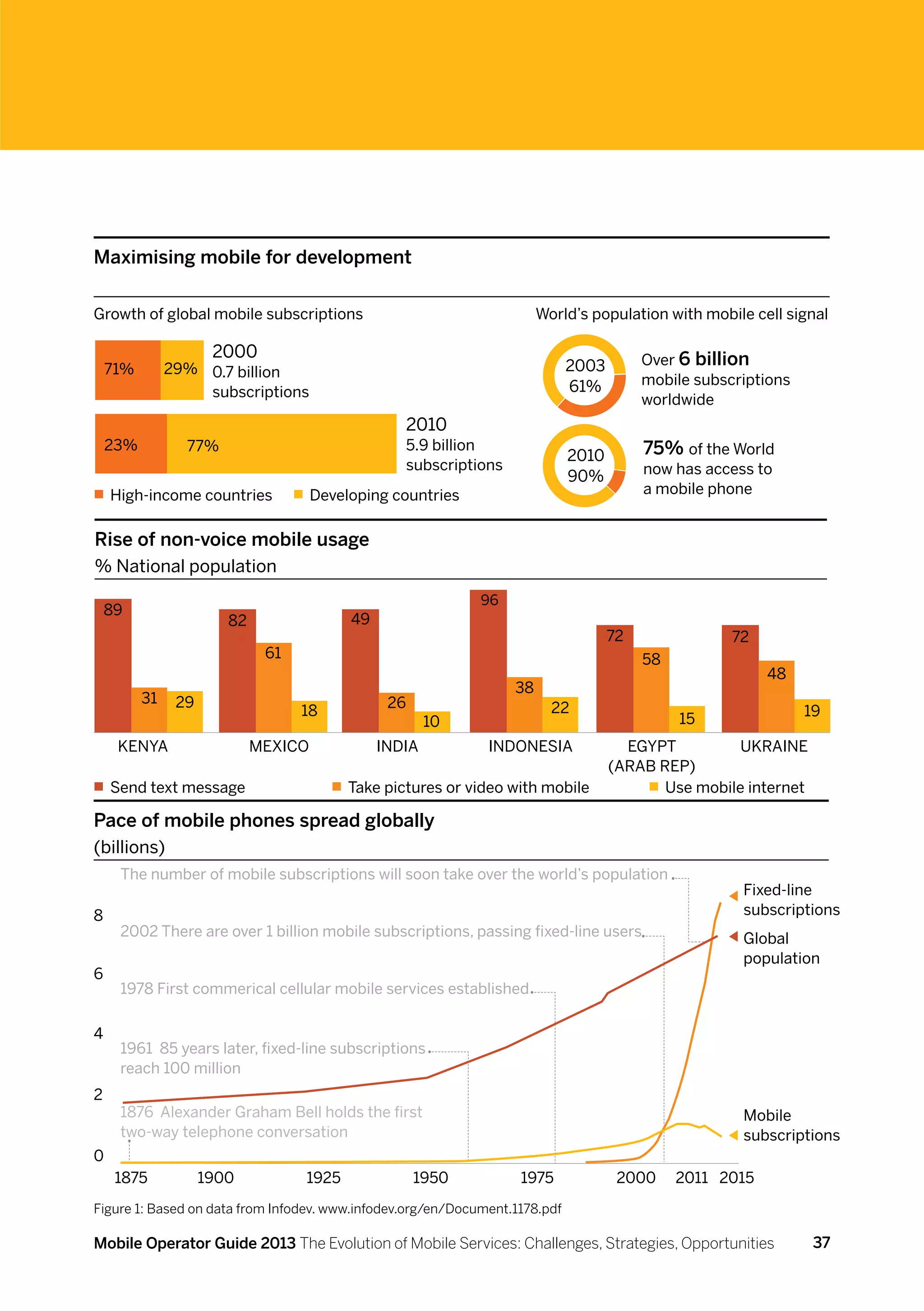
more bundles to encourage customers to                — voice and data services. Airtel follows this
use text to send out messages on special              model to innovate and delight the customer.
occasions, for example. It’s all about                However, there will always be certain tech-
creating specific packages for specific               nological innovations, which will come from
customer segments. Airtel will also offer             partners that we will need to marry with our
special rates for communities of interest,            deep knowledge of the customer. This way
where we know these communities exist.                Airtel ensures that we offer what the
This approach allows us to increase and               consumer wants on time, every time.
improve the traffic between the various
communities of interest across the globe.
                                                      N. Arjun is responsible for strategy, plan-
                                                      ning and rollout of all new projects in Africa,
Orchestrating capabilities                            including projects focused on mCommerce
                                                      and international voice and data. Prior to
Harnessing the talents and capabilities of            this Arjun held the position of Integrations
partners has allowed Airtel to export its high        Director and was responsible for the
volume/low cost business model to Africa.             successful integration of operations,
It has also helped Airtel overcome many               spanning 15 countries, belonging to the
local market challenges and close network             African operator Zain Telecom. Bharti Airtel
and services gaps.                                    completed the acquisition of the African
                                                      operations in 2011.
To be effective — and successful — this
approach requires a constant exchange of
information. Dialogue with partners has to


Mobile Operator Guide 2013 The Evolution of Mobile Services: Challenges, Strategies, Opportunities   67
PART THREE
IPX: CONNECTING OPERATORS
TO REAP BENEFITS
PART THREE: IPX: CONNECTING OPERATORS TO REAP BENEFITS


Bundling Services
Makes Business Sense

In many ways Korea Telecom (KT)                       directing voice and mobile data
mirrors the history — and the                         services traffic over its IP Exchange
future — of telecommunications.                       (IPX). Incheul Park — Head of the
KT was established in 1981, when                      Wholesale Team, Global Business
it was spun off from the state-run                    Unit, within KT —discusses the
Ministry of Telecommunications.                       central importance of Voice over
First on the agenda, KT worked to                     IPX in KT’s larger strategy to future-
make voice telephony services                         proof its network, ensure end-to-end
universal and available to every                      quality of service and grow its whole-
citizen. It has since engaged in the                  sale business.
development of advanced commu-                        Your strategy — which is sharply focused
nications services, helping to make                   on wringing more value and revenues out
the country a leader in communica-                    of voice — has its roots in your company
                                                      history. Please explain the connection.
tions and prepare for a world where
voice and data, fixed and mobile,
                                                      KT started out as the incumbent operator in
and communication and broadcast-                      Korea, so we cover the range from fixed to
ing services are converged. To                        mobile, data, Internet, IPTV — the works. As
ensure quality of service and                         you know the technology trend is moving to
                                                      IP. In the market, we are also seeing a shift
capture new efficiencies, KT is


IPX is clearly a way to reduce costs and increase
efficiency because it’s all about delivering
services over a single network. At KT we are
interconnecting with IPX providers and we are
trying to find out which model is more efficient.


Mobile Operator Guide 2013 The Evolution of Mobile Services: Challenges, Strategies, Opportunities   69
from fixed to mobile. As a result, KT has         I always get that question! Frankly speaking,
seen a drop in revenue it generates from          there is no right answer right now. Every
offering fixed services, voice as well as basic   operator has difficulties dealing with the
data services. Like every other operator,         decrease in revenues. In our case, we are
we face the same difficulties and must make       working to reduce costs and also generate
up for the decreased revenue with a new           revenues based on volume — from buying
revenue business model.                           power and bundling services, for example.

How does the focus on improving voice
                                                  KT provides a roaming service and offers
services allow you to meet the local
                                                  international voice services for our operator
needs of your customers?
                                                  customers. Additionally, we have a voice
Of course, it all depends on the customer         hopping service, so we can increase the
segment. Retail customers always ask for          volume of calls while helping our partners
a good price and a good connection. And           to reduce their costs. In this way we use
we can deliver this. General wholesale            the volume generated to develop new direct
customers are more focused on quality.            interconnections with the new operators.
They require end-to-end quality as a basis
for international roaming services. This is       Put another way, one of our strategic aims
particularly important when we look at the        is to bundle services and get more volume.
number of inbound roamers from neighboring        That enables us to achieve economies of
countries like China. Indeed, there are many      scale. In the case of data services, we are
tourists and business professionals in transit    also bundling in voice and IP. This way we
in Korea — and this number continues to           can offer customers a bundled solution,
grow. Therefore, roaming is naturally one         and we can benefit from some synergies.
of the services we are focused on.                So, this is our strategy to recover revenue
                                                  and recapture customers in the market.
There is increasing demand for quality
roaming services. At the same time, you           An increasing number of operators
are witnessing a decline in overall voice         in your region recognise the value of
revenues. What are your objectives and            delivering multiple services through
your strategy to meet and satisfy the             a single, secure IPX connection. This
demands of both the marketplace and               is also a capability that lies at the core
your customers?                                   of your company’s strategy?


70
Correct, KT is actively involved in IPX. The          I myself do not have a technical background,
trend is moving traffic from TDM to IPX.              but when I talk with our network engineers,
Ultimately, IPX is all about enabling end-to-         they tell me the technology itself is not an
end traffic delivery and quality of service over      issue. In fact, it’s not that different between
a single IP network. That is the concept, but         operators when we interconnect with
each operator has a different view of what IPX        several IPX providers. Also, the technical
can provide — and many have different                 spend out is almost the same because the
approaches to reach their objective.                  industry standard is there to follow. These
                                                      guidelines and standards ensure that every
IPX is clearly a way to reduce costs and              vendor in the world is providing a high
increase efficiency because it’s all about            standard for IPX. If there is a barrier to
delivering services over a single network.            interconnection via IPX, then it’s the cost
At KT we are interconnecting with IPX                 for interconnection.
providers and we are trying to find out
                                                      One driver behind the shift to IPX is the
which model is more efficient. Put simply,
                                                      argument that it provides a proven and
the focus is on interconnecting to gain more
                                                      simple route to 4G, or LTE, and will be
experience with the technology and what it
                                                      required to support LTE roaming. What
delivers. IPX is the correct direction for KT.
                                                      are your views?

As I mentioned, we also have a voice                  For LTE roaming we will need more bandwidth
wholesale business. If it turns out that it is        to support data roaming. So — yes — I see
easy to move from the existing voice                  this as one of the key drivers to encourage
network to IPX, then we can very simply               IPX connectivity within operators.
jumpstart our IPX business with operator
                                                      What is the impact of free phone call
customers. On top of this, we can add in
                                                      services such as KakaoTalk on South
services like signaling and GRX. That is the
                                                      Korean telecommunications companies
starting point for IPX here at KT.
                                                      and giants such as KT? In your view, how
Moving to an IPX network is exciting.                 should operators react to maintain, even
But the shift can also have its challenges.           build, competitive advantage?
What can you tell me about your experi-
                                                      The free phone services may be good from
ences and your key learnings so far?
                                                      the perspective of the consumer, but it’s a
                                                      real headache for the service providers like


Mobile Operator Guide 2013 The Evolution of Mobile Services: Challenges, Strategies, Opportunities   71
In the case of data services, we are also bundling
in voice and IP. This way we can offer customers
a bundled solution, and we can benefit from
some synergies.


KT. KakaoTalk offers free services, and to      Other service providers will introduce their
do this they are using our existing network     own service. Think of Skype, Google and
without any settlement or pay. What’s more,     iPhone. All these offers compete with the
these services raise some issues with the       traditional mobile operators and major
customer. The customers say they already        network operators. But when we compare
paid for unlimited data service, and this       ourselves against these OTT players, we as
gives them the right to use a service like      operators should not compete only on price.
KakaoTalk. However, this usage requires         For example, we could differentiate by
bandwidth and this is a heavy burden on         offering value-added services to enhance
the network. There is also the worry that       security. Leveraging on our service port-
services will collapse altogether if there is   folios, we could also bundle various services
not enough bandwidth, and then there will       together, tailored to the customer that also
really be problems.                             allow us to compete

                                                How do you plan to encourage your
Going to an all IP-network means we will be
                                                customers to increase their use of your
able to make an offer that reduces cost and
                                                services, to balance out the drop in call
creates more competitiveness. Another
                                                revenues?
approach, as I mentioned, is to use IPX to
bundle services, thus providing services in a   For the domestic service, it may be that
way that allows us to compete head-on with      we can provide the customer with a more
free phone call services and the providers      flexible service or bundled service,this can
delivering them.                                also include security. On the wholesale side,
                                                using IPX interconnection will allow us to
And you have to keep in mind the                offer good quality and maintain competitive
competition is more than just KakaoTalk.


72
advantage on routes like Philippines
or Vietnam, for example.


We are also trying to expand our market
areas, and this is where IPX can also come
in. In Asia KT is very strong in the whole-
sale business, but this isn’t the case in the
Middle East and Africa. So, we are trying
to expand our network and also offer
customer coverage in Western Africa and
to do more interconnection with those
operators. If IPX can help us to interconnect
with them easily, it will be also good
advantage for us to be using IPX.


Incheul Park has over 15 years experience
in the international telecoms industry. He
heads the Wholesale Team within KT’s Global
Business Unit, where he is focused on sup-
porting the international voice business,
which includes bilateral, hubbing and IP
based services. Park was also responsible for
driving the new interconnection and business
development globally on behalf of KT.


Mobile Operator Guide 2013 The Evolution of Mobile Services: Challenges, Strategies, Opportunities   73
PART THREE: IPX: CONNECTING OPERATORS TO REAP BENEFITS


Expanding Voice Connectivity
Via IPX: An Operator's
Perspective
By Gil Genio, Head of International and Business Markets, Globe Telecom, Inc.


For Globe, the capability to support       First, a sizable portion of the population
customers calling across borders           lives overseas, a separation that sometimes
                                           spans several generations. Social media
today — and cope with the massive
                                           is one way families keep in touch over the
increase in mobile data use — will         distance, and one of the reasons why the
depend on our ability to leverage          Philippines ranks very high in the use and
new ways of connecting and                 consumption of social media.

managing operator partnerships.
                                           At the other end of the spectrum, the
IPX is a natural path.                     Philippines is also a top destination for
                                           business travelers and vacationers. Many
The concept of IPX is particularly         tourists visit to enjoy the many scenic
relevant to the Philippines, a coun-       spots across the country’s 7,000+ islands.
                                           Obviously, people and businesses need to
try where Globe is also a leading
                                           stay connected across boundaries. That’s
mobile operator, for many critical         where IPX comes in. It promises to make
reasons. These are linked to the           this connectivity easier for both operators
makeup and requirements of our             and their customers.

local customer base.


Operators must be able to establish direct
commercial and technical interconnect with
each other, specifically for cross regional
connectivity. This is why our future
infrastructure plans include IPX.


74
Ratio of international trips to population %, 2011


                        65%                             35%                              10%


                 Europe                      North America                       Asia Pacific

Figure 1: Based on data from GSMA.


Voice on the rise                                     enabling Globe to exchange international
                                                      calls directly with other mobile operators.
Globally, international voice traffic has been        This has become a key driver for Globe’s
stagnant for some time now. This is because           initial IPX efforts. Additionally, operators
customers are choosing alternative ways to            around the world — Globe included — are
stay connected. At Globe, however, this is            moving to an all-IP infrastructure. It’s a shift
not the case. We continue to see increased            that can’t be ignored.
voice traffic, even though customers can
also communicate using alternatives includ-
ing social media, VoIP and text messaging.            The data challenge


Because of this trend, Globe clearly needed           At Globe we also have to adapt to the shift
to build the capabilities to support the              in customer requirements.
growth in voice traffic in a more cost-
effective manner. It was also important for           Customers are exploring alternative ways
Globe to make it easier for many operator             of staying connected, and we at Globe have
partners to send their similar traffic to our         to support this through investments in data
network. This is where IPX plays a role,              connectivity. Unfortunately, most operators


Mobile Operator Guide 2013 The Evolution of Mobile Services: Challenges, Strategies, Opportunities   75
Overview of international roaming technology and operations


 Initiated call                                                                     Received call


                    Visited          International     Home            Receiver’s
                   Operator              transit      operator           home
                                        services                        operator


Figure 2: Based on data from GSMA.


did not respond quickly enough. The exis-            user experience at home and abroad. In
tence of complicated, unpredictable and              other words, the quality of the experience
high priced services, together with bill shock       for the roaming customer should be
issues, has somewhat stunted traditional             consistent and high quality.
voice roaming traffic. In other words, it
simply hasn’t grown as quickly — or as
much — as expected.                                  Quality control


On the other hand, mobile data use by                Globe is well aware of this challenge, and
business travelers and roaming customer              has therefore taken steps to make it easier
is increasing exponentially. This growth is          for travelers and roamers to use data. To this
driven by the increased penetration of               end we at Globe have made the customer
smartphones, people’s love of social                 experience a central focus of all we do.
media and the constant need of users
to be connected.                                     In the Philippines Globe is embarking on an
                                                     ambitious network change that will result in
This boom in mobile data use presents                a pervasive HSPA+ footprint and the deploy-
operators with a new challenge. They                 ment of tens of thousands of kilometers of
must work with the visited operators to              fiber to support mobile data. And we are
ensure roaming customers enjoy a good                preparing to launch an LTE network. To close


76
This boom in mobile data use presents operators with a new challenge.
They must work with the visited operators to ensure roaming
customers enjoy a good user experience at home and abroad.


the loop with a superior customer experi-             Globe believes that — in the long run — IPX
ence Globe is also moving to a real- time             provides the best path to easier connectiv-
convergent billing and customer care                  ity. It also delivers a lower cost structure,
platform, and making additional investments           savings Globe can pass on to customers.
in analytics and other back-end systems.
                                                      Clearly, IPX offers many benefits to
These are measures that will deliver cust-            operators and their customers. Today the
omer benefit. However, Globe customers                path to IPX implementation is not an easy
who travel overseas, or people who come to            one. But the effort is well worth it. It is
the Philippines for business or pleasure, will        important to keep an eye on the prize, and
not experience these advantages unless we             focus on the many advantages IPX delivers.
at Globe work to make interconnect better             Chief among these are: a better experience
and easier. In other words, operators must            for customers, a lower long run cost struc-
be able to establish direct commercial and            ture for operators and the capability to
technical interconnect with each other,               manage current and future voice and data
specifically for cross regional connectivity.         traffic. Keep this top of mind and mobile
This is why our future infrastructure                 operators, like the pioneers of the past, will
plans include IPX.                                    enjoy the first fruits. Personally, I am looking
                                                      forward to an IPX-enabled future.


IPX is inevitable
                                                      Gil Genio is head of Corporate Strategy and
IPX today is a given for two reasons. For             Business Development at Globe Telecom.
customers, it’s all about being able to               He is also the head of International and
experience the same quality overseas that             Business Markets, which are the groups
they have come to expect in their home                responsible for sales, relationships, market-
network. What’s more, the exponential                 ing, products and support for Globe’s
increase in data use demands the infra-               overseas Filipino and service provider cus-
structure can grow to adapt to what                   tomers, and for business customers from
customers need now and in the future.                 SMEs to the largest enterprises. He also
                                                      serves as CEO of Innove Communications
For operators, IPX is an easy path to inter-          and GTI Business Holdings, subsidiaries
connectivity. More importantly, operators             belonging to Globe Telecom. He is also the
are moving to all-IP networks. Bottom line:           Vice Chairman of GSMA AP.


Mobile Operator Guide 2013 The Evolution of Mobile Services: Challenges, Strategies, Opportunities   77
PART THREE: IPX: CONNECTING OPERATORS TO REAP BENEFITS


The Value Of A True IPX
by William Dudley, Group Director, Product Management, SAP Mobile
Services  John Candish, Senior Director, IPX Business, SAP Mobile Services


IPX is fundamentally about building             Strong and capable
a connected community of telecom
                                                To deliver a full range of services at the
operators, services and applications.
                                                highest quality the mobile operator must
It serves to enable the customers of            choose its IPX partners. Additionally, an IPX
mobile operators in this community              should be strong in all areas, not just basic
to connect to one another, as well as           services like voice or 3G data roaming.

access a wide variety of applications
                                                The concept of IPX evolved from GRX, a
and services. Being able to guaran-             community of mobile operators formed to
tee quality of experience and keep              exchange roaming data. While the under-
costs under control are key require-            lying network quality is clearly key to an IPX,
                                                the services provided are no less significant.
ments for the mobile operators.
An IPX needs to deliver the full range of
services, ranging from the basics that          Data Roaming
include data roaming, messaging and
voice, to LTE-based multimedia services,        The quality data roaming (specifically,
to applications such as OTT services. Once      3G roaming or GRX) depends on the
operators are able to offer the full range of   community of mobile operators connected
services through an IPX, they can leverage      to an IPX. This is not just about the number
the benefits and economies of scale that        of mobile operators connected to an IPX.
IPX delivers.                                   It’s about which mobile operators are


With IPX there will be no need to set up
dedicated connections and policies for each
service, nor will it be necessary to manage
the capacity of each separately.


78
connected. If you take the strategy of conn-          calls end-to-end, whilst also achieving
ecting key Tier 1 operators within a region to        full transparency between the partners
an IPX, your ensure the majority of a mobile          regarding transit and termination charges.
operator’s traffic can be delivered on-net
and managed directly end-to-end.                      IPX voice interconnectivity guarantees
                                                      delivery Calling Line Identification (CLI) for
                                                      mobile destinations, as well as assured
Messaging                                             quality based on predefined Answer Seizure
                                                      Ratio (ASR) and Network Efficiency Ratio
Most mobile operators are considering or              (NER) benchmarks at the destination level.
have already engaged with one or more IPX             Another benefit of IPX Voice is the significantly
service providers. Consequently, the ability          reduced Post Dial Delay— that is, the time
to leverage the benefits of an IPX to route           interval between dialling completion and the
SMS (and MMS) messaging traffic to their              ringing tone to indicate reception of the
hubs is becoming paramount.                           recipient network response.


SMS traffic, for example, may use the IPX             Of course, voice destinations may now
as a transport for SMPP or for GSM MAP                include VoIP or OTT Voice providers, as well
over IP (SIGTran). The resiliency of an               as fixed networks. IPX Voice is by no means
underlying MPLS network provides multiple             just limited to mobile operators.
benefits over VPNs (for SMPP) and direct
SS7-cloud reach. For instance, with SIGTran
the MNO no longer has to incur MSU fees               LTE
just to reach their preferred messaging hub.
Instead, the messages reach the Messaging             The success of 3G roaming services (GRX)
hub via SIGTran, where they are delivered to          has set a high standard. When LTE services
the end destinations.                                 are deployed customers will expect the
                                                      ability to roam to other LTE networks to be
Voice interconnectivity                               supported from day one. IPX can deliver a
                                                      one-stop solution for LTE services, manag-
Customers and providers are connected to              ing end-to-end connectivity and quality. The
create an on-net community of IPX Voice.              Diameter protocol is essential to roaming in
This allows for all parties to maintain full          the LTE world. It manages the authentica-
control over the quality and routing of voice         tion, access and accounting associated with


Mobile Operator Guide 2013 The Evolution of Mobile Services: Challenges, Strategies, Opportunities   79
Once operators are able to offer the full range
of services through an IPX, they can leverage
the benefits and economies of scale that IPX
delivers.

roaming users. By leveraging an IPX             the cell-site locations together), as well as
Diameter hubbing service, operators can         within the Evolved Packet Core (or EPC)
rapidly achieve roaming relationships for       and, finally, between networks (the IPX).
LTE data services and mobile broadband.
                                                Additionally, LTE Roaming will support the
For LTE services such as Voice, the ability     concept of 3G fallback. This usually occurs
of the IPX network to differentiate and         when the visited network does not support
manage the various traffic types appropri-      LTE or does support it, but at incompatible
ately is key; especially as LTE IMS multime-    frequencies. In that case, the device will
dia services are deployed including VoLTE       connect to the UTRAN (or 3G radio net-
(native LTE based voice).                       work), if it supports such frequency bands.
                                                Most LTE devices support both 3G and LTE
The IPX enables connectivity between LTE        frequency bands.
networks, delivering subscribers virtually
the same services and quality of service
while they are roaming that they know from      Applications and OTT Services
their home network. This is critical when the
roaming customer is using services such as      IPX can also reduce the complexity of con-
Voice over LTE (or VoLTE). With high-band-      necting third-party services and OTT prov-
width services such as voice and video          iders to a mobile network. With IPX there will
calling, the IP latency and jitter must be      be no need to set up dedicated connections
extremely low from end-to-end to deliver        and policies for each service, nor will it be
customers a good experience. Certainly,         necessary to manage the capacity of each
the LTE (E-UTRAN) radio network will            separately. A good example of this is the
provide low-latency and high bandwidth          inclusion of BlackBerry connectivity. This
between the device and the towers, but          service enables mobile operators to connect
operators must also require QoS solutions       to BlackBerry cloud services without the
for backhaul (the network connecting all of     need to install and manage separate


80
Intelligent Services


                                                       IPX


            Fixed Line                    3G                       LTE                LTE
         Service Provider           Service Provider         Service Provider   Service Provider


                                                     Internet


         Figure 1: Based on data from SAP Mobile Services.


Mobile Operator Guide 2013 The Evolution of Mobile Services: Challenges, Strategies, Opportunities   81
dedicated connectivity — all enabled
securely and over a resilient MPLS network.       William Dudley has 25 years experience
                                                  building and managing telecommunications
Other Cloud/OTT services may leverage the         network infrastructures. He leads SAP
IPX by using an approach that is similar to       Mobile Services Product Management for
the BlackBerry model for connection via           P2P and A2P Messaging. Dudley also
IPX. This enables mobile subscribers easy         provides industry commentary to both
reach to the OTT or Cloud services because        internal and external mobile industry
operators have created dedicated connec-          publications, through analyst and media
tivity to the service. Going forward, these       interviews, and is active in several industry
services will likely include other advanced       groups. blogs. http://scn.sap.com/people/
mobile capabilities that leverage existing        william.dudley/content
models like voice connectivity or inter-
working (such as Diameter or Messaging),          John Candish is responsible for driving the
and for services including — but not limited      company’s IPX business globally. Prior to
to — RCS and IMS.                                 this Candish held positions within Cable 
                                                  Wireless, where he was responsible for the
SAP Mobile Services believes that by              development of the GRX and messaging
combining this breadth of services that           Services, subsequently leading the integra-
the full benefit of IPX can be achieved. For      tion of the GRX  MMX services into the
mobile operators, the choice of IPX provider      SAP Mobile Services portfolio.
should not just be decided with a view to
the handful of services they are required
to deliver today. It should be based on an
understanding of their long-term needs. A
future IPX provider will need to be able to
deliver capacity and network quality, along
with the full range of services, to deliver the
full potential of IPX.


82
PART THREE: IPX: CONNECTING OPERATORS TO REAP BENEFITS


Nine Ways To Get More
Value Out Of IPX
By John Candish, Senior Director, IPX Business, SAP Mobile Services


IPX can reduce connectivity costs,                       Putting in the right long-term infrastruc-
boost service quality and improve                        ture now will enable the operators to soft
                                                         upgrade connections rapidly to meet
the time to implement new services
                                                         demand in the future.
and roaming destinations. Clearly,
IPX should have a central role in                     3	Involve vendors early. Once an operator
operators’ strategies to develop                         has connected and tested a service over
                                                         IPX, whether that be voice, video, messag-
and deliver future services. Here
                                                         ing or another application, they are able
are 9 key lessons to guide operators                     to access the entire community for that
along the path to IPX and equip                          service on the IPX. The initial testing
them to maximise the benefits.                           process is fundamental to success and
                                                         enabling infrastructure vendors early is
1	 	Chose a quality network. An IPX is                   key to this. Even different releases of a
  about far more than simply roaming data.               platform from the same vendor can result
  A whole range of services from messaging               in quite different results. Ensuring equip-
  through to real time voice and video now               ment vendors are closely involved in the
  flow over IPX. It is therefore critical that           process of IPX testing from an early stage
  operators chose an IPX capable of both                 significantly reduces project timelines
  providing the network service levels and               and will enable full service launch sooner.
  resilience to deliver these services, as well
  as proactively managing the different               4	Recognise the value of community.
  traffic types.                                         An IPX is about connecting operators
                                                         together with each other and with services
2	Plan for future capacity. The growth                   and applications. When choosing an IPX,
  of roaming data volumes between mobile                 an operator should consider both the
  operators has been considerable over the               range of services provided and the com-
  last few years. Add to that voice, messag-             munity of operators connected. Right now,
  ing and LTE-based services and the need                operators may be connecting with each
  to plan ahead when deploying IPX is clear.             other to enable just one or two particular
  A 10 M, 30 M or 100 M connection may                   services, but in the longer term they are
  look adequate this year, but will it con-              likely to want more.
  tinue to meet demand in 18 months time?


Mobile Operator Guide 2013 The Evolution of Mobile Services: Challenges, Strategies, Opportunities   83
5	Plan roaming connectivity at the same              in control of who can access services and
  time as domestic role out. The success             what policies are applied to that access.
  of roaming has set a high bar. Users in-           It is therefore essential that an IPX
  creasingly expect all home services to be          provides clear control of services and
  available when roaming, not six months or          does not merely function as a ‘dumb’ pipe
  a year after launch. Although the initial          connecting the various parties. An IPX
  focus may be on the domestic launch of             that provides the ‘hubbing’ of services
  new services such as LTE, consideration            such as voice is not only able to increase
  should be given to roaming of those                the interoperability of services through its
  services early on. IPX can enable rapid roll       ability to ‘translate’ between systems (as
  out of roaming connectivity. Provided              described in #6). It is also able to control
  operators build IPX connectivity into the          which partners are able to access services
  deployment plans for new services early            and which originators may connect, as
  on, roaming revenues can be rapidly                well as applying the required policies to
  achieved for new services.                         such traffic. As the telecom world moves
                                                     to LTE and multimedia, services such as
6	Ensure the IPX service can translate               access and policy management will
  between systems. IPX is about enabling             become even more critical.
  connectivity and with the rapid roll out
  of new services this increasingly requires       8		Select an IPX with strong accounting
  the ability to bring differing implement-          capability. Clearly, IPX must enable
  ations of the same service together. For           connectivity of services. But it must also
  example, two operators may have                    ensure that the revenue streams follow
  deployed different voice switches with             services. Whether connecting data, mes-
  different SIP-I implementations. An IPX            saging, voice or other applications, IPX
  should be able to translate between these          has a key role to play in accounting func-
  switches, ironing out the differences and          tions ensuring payment follows the traffic.
  enabling seamless communication
                                                   9	Consider the commercial relationships
7	Chose an IPX with strong Policy and                as well as the connectivity. When
  Access control. IPX is about enabling              testing IPX connectivity it’s important
  connectivity, but for operators to be able         to plan ahead and select the priority
  to leverage this, it is vital that they remain     roaming destinations for a service.


84
This enables an IPX to be working on the
  roll out of an operator’s roaming footprint         John Candish is responsible for driving the
  ahead of the initial connection being               company’s IPX business globally. Prior to
  deployed and tested. This significantly             this Candish held positions within Cable 
  shortens the time between the IPX                   Wireless, where he was responsible for the
  connectivity being completed and the                development of the GRX and messaging
  revenues and service benefits delivered.            Services, subsequently leading the integra-
                                                      tion of the GRX  MMX services into the
By following this advice you will have what           SAP Mobile Services portfolio.
you need to make the most out of your IPX
deployment. Having an IPX that is truly
multi-service, thus supporting both existing
services and services on your roadmap,
operators will be able to realise full cost-
savings and competitive advantage, rather
than have to make additional investments
simply to keep step with the pace of change.


Mobile Operator Guide 2013 The Evolution of Mobile Services: Challenges, Strategies, Opportunities   85
PART THREE: IPX: CONNECTING OPERATORS TO REAP BENEFITS


Making The Right
Connections

With major investments in              technology and benefits it delivers.
Singapore, Australia, Africa,          Chief among these is connectivity
India, Indonesia, the Philippines,     to deliver international mobile
Thailand, Pakistan and Bangladesh,     data roaming and voice traffic.
SingTel is Asia’s largest multi-       However, an international private
market mobile operator. In July        network also allows the rapid
2011 the company embarked              deployment of new applications
on a trial of IPX, the first step in   and services, shortening the
exploring the establishment of         time to market and potentially
a private international network        increasing competitive advantage.
                                       David Ng — Vice President, Regional
connecting all the Group
                                       Technical, of SingTel’s International team
companies starting with SingTel        in the Group Consumer organization
Mobile (Singapore), Globe Telecom      discusses the trial, results and overall
(Philippines) and AIS (Thailand).      outlook for IPX in the Asia Pacific region.

SingTel — determined to grow the       SingTel has recently concluded its trial
business by leveraging scale, reach    of IPX. Please share the rationale behind
                                       your decision to test this technology.
and service innovation — used
the trial to better understand the


Moving forward, IPX would offer a flatter IP
network architecture, enabling Voice over LTE
services and supporting new services like
RCSe. This is an important consideration
since OTT players are also moving in the
direction of Voice over IP services.

86
In my position, it is part of my responsibility       enables when we carry voice and how
to look at technology on the horizon and              it performs when it carries this traffic
understand what it provides in terms of both          between two geographical territories.
service capabilities and competitive advan-
                                                      Let’s discuss the IPX trial. Where are
tage to the business we are operate in. In
                                                      you in the process and what have you
the case of IPX, we wanted to see how we
                                                      achieved?
can best manage our mobile data roaming
costs. We identified IPX as a good platform           Originally, we picked three operations
to achieve this and looking again to the              in three locations — SingTel Mobile in
horizon, LTE is also emerging strongly and            Singapore, Globe in the Philippines and
steadily in the market landscape. And this            AIS in Thailand where each operator
also plays a role in our thinking. Moving             connected to a private international IP
forward, IPX would offer a flatter IP network         network provided by SAP Mobile Services
architecture, enabling Voice over LTE                 IPX™ via the respective local points of
services and supporting new services like             presence. To date, we have concluded the
RCSe. This is an important consideration              IPX validation test on delivering mobile data
since OTT players are also moving in the              roaming, mobile voice roaming and
direction of Voice over IP services.                  international IDD voice amongst the three
                                                      operators over the IPX connection. The
For these reasons, we thought IPX would               validation test covered a good mix of test
be a good platform. It addresses the mobile           cases based on SIP-I interconnect (for
data roaming problem we originally set out            mobile voice roaming and international IDD
to solve and, looking ahead, it might also            voice), GSMA IR87 (for inter-operator SIP-I
deliver us an advantage when LTE is rolled            inter-working) and GSMA IR35 (for mobile
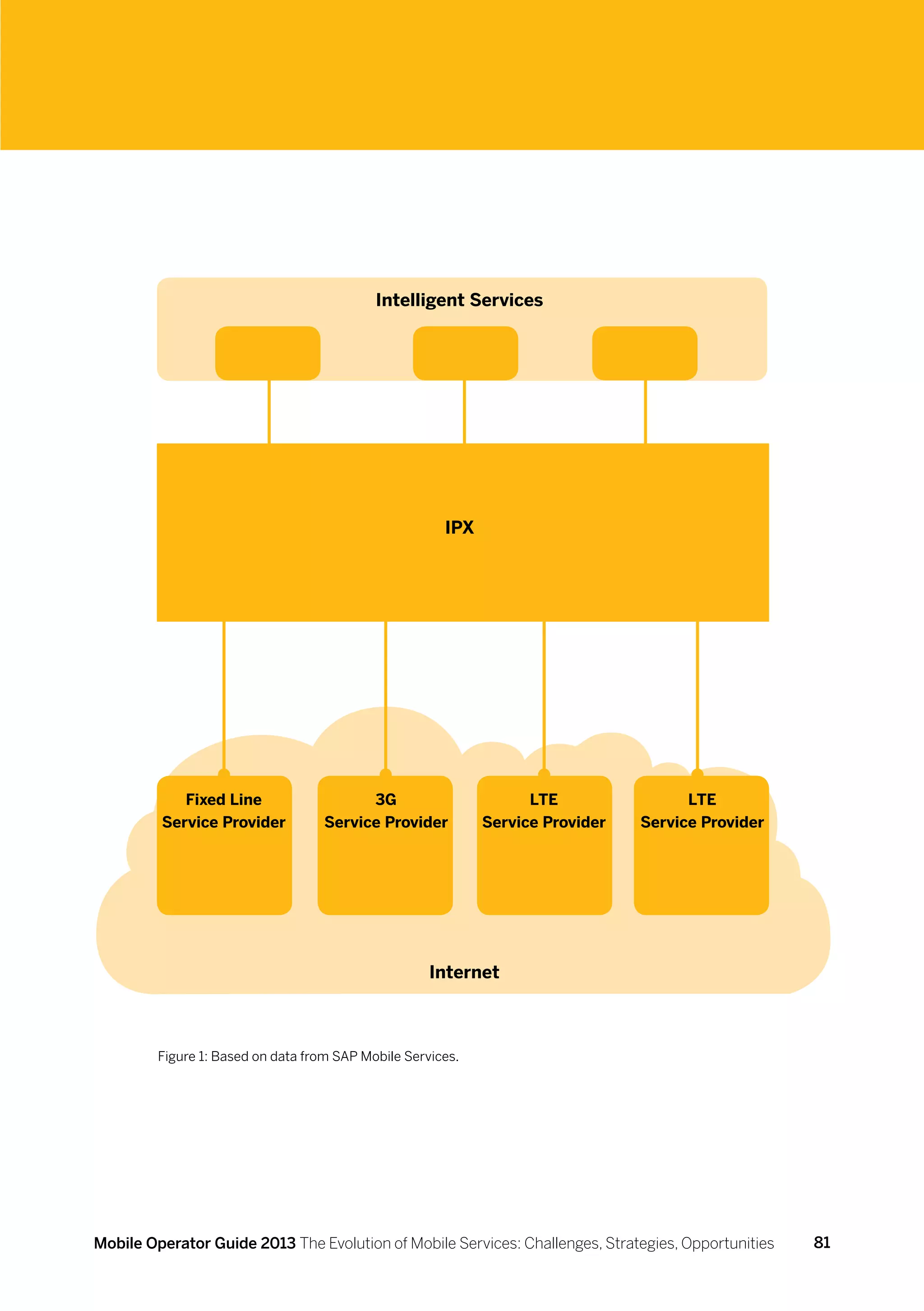
out aggressively across the region. At that           data roaming). I am pleased to share that
point, LTE roaming will need to be enabled,           the test results were positive.
and IPX is certainly the right platform to
facilitate LTE roaming. What’s more, IPX              The IPX trial successfully demonstrated
allows the ability to do a local breakout,            the reliability of IPX as a managed private
which naturally provides a better customer            IP network that can transport multiple
experience to the roamer.                             services within a single IP connection across
                                                      different geographies. What I can also share
So, before we jump onto the IPX platform,             with you is that — internally — we are
we conducted this trial to understand its             brainstorming and discussing how to
capabilities, performance and deployment              take IPX forward.
challenges. That is, what kind of quality IPX


Mobile Operator Guide 2013 The Evolution of Mobile Services: Challenges, Strategies, Opportunities   87
Global mobile data traffic growth/regions
     MEA has the highest growth rate (104%) from 2011-2016
     APAC* will generate 40% of all mobile data traffic by 2016

                     12                                                                             78% CAGR
                                                                                                    2011-2016
                     10                                                                               5.88%
                                                                                                      6.54%
                                                                                                      6.83%
Exabytes per month


                     8
                                                                                                      18.18%

                     6
                                                                                                     22.56%
                     4

                     2                                                                                40.01%

                     0
                                                                                                                    *Includes
                            2011         2012         2013          2014             2015              2016
                                                                                                                    Japan


                          Middle East and Africa (MEA) 	 Central and Eastern Europe (CEE)	        Latin America (LATAM) 	
                          North America (NA)	            Western Europe (WE) 	                    Asia Pacific (APAC)


     Figure 1: Based on data from Cisco Visual Networking Index. Global Mobile Data Traffic Forecast, 2011-2016.

     www.slideshare.net/CiscoSP360/cisco-visual-networking-index-vni-global-mobile-data-traffic-forecast-20112016


     SingTel clearly has an understanding of                        facing margin squeeze due to the scissor-
     the benefits of IPX. Interestingly, Asia                       effect of diverging mobile data traffic and
     Pacific leads in awareness of IPX overall.                     revenues. This forces them to think about
     Why do you think this is?                                      ways to generate revenues and identify
                                                                    new services they can offer to customers.
     As we all know, this region is seeing a shift                  At the same time, it’s very important for us
     in the market landscape due to the rise of                     as operators to manage our bottom line.
     OTT players. According to the Cisco Visual                     Against this backdrop, cost management
     Networking Index Mobile 2012, Asia Pacific                     becomes a key issue. If the IPX platform
     is expected to account for up to 40 percent                    performs and delivers its promises, then it
     of global mobile data traffic by 2016. As a                    will allow us as operators to consolidate and
     result, many — if not all — operators are


     88
optimise our IP interconnect for delivering           effectiveness. For the customer it’s about
packetised traffic outside our network.               quality of service and the requirement for
                                                      a consistent and good experience no
For example, if IPX does indeed allow us              matter where they are.
to consolidate and deliver mobile data
roaming, BlackBerry and tele-presence via a           If you go through IPX, then you can solve
single IP pipe, then it is clearly more efficient     these issues because you have the control
and cost effective. This is why I believe             and can deliver a desired quality of service
many operators in the region are looking              — a level of service that also delivers a user
into exploring IPX. IPX is also seen as a way         experience the customer will enjoy. And this
to ‘future-proof’ the networks and support            is where the local breakout capability I men-
future IP services such as HD services like           tioned before comes into play. With IPX if
HD voice and HD video.                                you can do a local breakout, which means
                                                      the roamer will be able to enjoy the same
We have discussed the business benefits
                                                      level of quality as the local customer does.
of IPX — what are the benefits to the
                                                      It’s a better experience all round.
customer?
                                                      Your trial focuses on using IPX to connect
Take the case of customers who are access-
                                                      operations within the group company.
ing data while roaming. Their Internet traffic
                                                      What is it about IPX that makes good
when they are abroad is actually routed all
                                                      business sense in this scenario?
the way back to their home network first. In
other words, the signalling and payload part          I think if you take the perspective of a group
of the data session is passed to the local            company, a company where it has many
operator’s network and then back to the               operations across different countries, then
customer’s home network.                              there is an incentive to find a way to better
                                                      interconnect the operations with each other.
This presents two challenges. For the                 At the least it’s about making sure that the
operator: it’s about how to maintain cost             mutual customer, who roams between the


If you go through IPX, then you can solve these issues
because you have the control and can deliver a desired
quality of service — a level of service that also
delivers a user experience the customer will enjoy.

Mobile Operator Guide 2013 The Evolution of Mobile Services: Challenges, Strategies, Opportunities   89
different countries that are interconnected        exchange video or other visual content
via IPX, will have a more consistent quality       are turning phones into a medium that is
service experience.                                more about seeing content and seeing
                                                   people than necessarily just speaking.
Looking back at your recent IPX trial,
what can you share in the way of key               Overall, where do over-the-top service
learnings, impressions or surprises?               providers fit into the IPX landscape?
                                                   Are they a threat, an opportunity or
The findings are positive. Aside from the
                                                   something else?
technology, we also learned more about the
talents and the skills set that we would need      My personal philosophy is that there is no
in a service team in order to offer IPX and to     ‘forever enemy’. We can compete on one
support it. The service team plays a very          hand, but we can also be allies on the other.
important role in delivering the service in        So, yes IPX may play a role in bringing OTT
a timely manner.                                   players and telecom players together to
                                                   cooperate in a slightly more meaningful way,
As you pointed out, IPX allows operators
                                                   which will also benefit the mutual customer.
to control and deliver quality services to
                                                   In my view, there are similarities here to
roaming customers, for example. Look-
                                                   Open Innovation, an approach and a mind-
ing at the range of what an IPX network
                                                   set that is all about finding ways to collabo-
can support — new multimedia services
                                                   rate for mutual benefit.
or even provisioning services into cars
— what excites you most?

Without divulging too much of our internal         David Ng is the Vice President (Regional
strategy, I would say the type of services we      Technical) within the International arm of
are going to offer are likely to be more IP        Group Consumer at SingTel. In this role he
oriented. There is a very good match bet-          drives the regional network initiatives and
ween what we can use IPX for and how it can        strategies within SingTel to shape technology
benefit us at SingTel as a group operator, as      strategy and achieve synergies across the
well how IPX can benefit our customers.            SingTel Group. Prior to this Ng was Director
                                                   of Operations at Telkomsel, a SingTel joint
The multimedia services are also interest-         venture company in Indonesia, where he
ing. If the analysts are correct, IPX will drive   was in charge of network design and
more video, more social sharing and more           operational management.
visual content to our phones. Therefore,
the high quality of voice and the ability to


90
PART THREE: IPX: CONNECTING OPERATORS TO REAP BENEFITS


A Brave, New, All-IP World
by Elena Sacco, Chairman, The Interconnection Working Group (IWG),
GSMA  Senior Interconnect Manager, TIM


An open and flexible model for                        the market and the economy have had
service exchange will be part of the                  some impact on contingency plans,
                                                      operator targets and —ultimately — the
critical path the industry will travel
                                                      pace of progress.
in order to implement Voice over
IP (VoIP).
                                                      Dramatic dynamics
IP eXchange, or IPX, is the industry standard
solution to solve the interconnect problem            At first glance, it may seem that IPX is a
by setting out common specifications for              chicken-and-egg situation. But that will
end-to-end IP traffic delivery and quality of         change dramatically as more operators
service. On the market there is a high level of       launch IP services.
awareness and interest in IPX. This is linked
to the fact that the industry is moving to an         To understand the hold-up, it’s important
all-IP environment, which creates the need            to understand the dynamics at play here.
for an interconnection enabler over a private         For mobile operators, moving to an all-IP
secure network, at an affordable price and            environment means a revolution in commu-
with the guarantee of the required QoS.               nications, and this implies high investments.


Clearly, there are benefits to IPX, but there         VoIP services are expected to drive the
is currently a low level of demand for IPX            move to an all-IP environment that will
services due to the low number of IP inter-           stimulate the use of IPX.
connections between operators on the
market. This is because mobile operators              Nonetheless, several factors, such as
are not yet launching IP data services on             the existence of VoIP services offered by
a large scale.                                        non-telecom players, solutions such as
                                                      Circuit Switch (CS) Fallback, the high cost
However, this is changing. There is strong            of LTE implementation and the availability
evidence of a shift right now as the market           of LTE devices, are slowing down the
moves toward an all-IP world. But, of course,         advance of VoLTE. These same factors are


Mobile Operator Guide 2013 The Evolution of Mobile Services: Challenges, Strategies, Opportunities   91
also slowing the evolutionary path of             Peering matters
mobile operators towards offering VoIP
services in general.                              When it comes to IPX, peering among IPX
                                                  providers is an essential element because
                                                  it enables global reachability. Without full
Driving demand                                    peering among IPX providers on the market
                                                  there is the risk that IPX services will be
However, if VoIP services may not be              developed as ‘silo’ solutions. This certainly
considered the imminent driver of IPX deploy-     doesn’t serve the better interests of mobile
ment on a large scale, data services requir-      operators, or their customers. Solutions
ing a guaranteed QoS might serve to               cannot be offered as ‘islands’, so this is
stimulate market demand for IPX services.         exactly what operators must avoid.


LTE Roaming is the perfect example. With          Peering enables general interoperability
the high-speed data transmission enabled          of services on IPX between operators and
by LTE, it might be risky to keep on applying     multiple connections and global reachability
data pricing plans for roaming traffic based      via one-stop connectivity. In other words
on volume or usage per month. Such pricing        when full peering among IPX providers is a
models may, in fact, impact consumers neg-        reality on the market, operators, through just
atively as faster data speed will significantly   one contract with IPX providers, can update
increase data consumption.                        connections to hundreds of operators and
                                                  third-party players around the world.
New pricing schemes, where charging is
more in line with the transmission opportu-       Peering also enables the offering of data
nities enabled by LTE, may be based, for          services on IPX at a high QoS and, above
example, on different guaranteed QoS levels       all, the migration of voice services over IP.
per different services (and also per applica-     Indeed, with the migration of voice services
tion, as it may happen in the case of cloud       on IP there is clearly the need to ensure cross-
services). In this case IPX would be the          border interconnection on a global level.
essential enabler, being the only current         Equally important is the guarantee of a level of
solution for a QoS guaranteed IP inter-           quality related to these voice services, which
connection able to ensure proper traffic          can be applied globally and which is comp-
exchange between different players on             arable to the high level of QoS end-users
the market.                                       already experience. Worldwide peering makes
                                                  IPX the key enabler of such a migration.


92
Cooperate and interconnect
                                                      Elena Sacco works within the Industry
The move to an all-IP world doesn’t only              Relations  Roaming Division of Telecom
present operators with a world of opport-             Italia, where her areas of expertise include
unities. There is also the increased comp-            business development, Interconnection and
etition from alternative service providers            Roaming with a strong focus on the evolu-
offering services to subscribers, creating            tion of mobile TLC services. Sacco also
the need for operators to interconnect with           chairs the Interconnection Working Group
these players.                                        (IWG), one of the eight permanent Working
                                                      Groups under the GSM Association (GSMA)
Clearly, the big question is how to imple-            IWG brings together more than 350
ment a proper interconnection with these              members including mobile operators,
parties and find a model that properly com-           international carriers, hubbing providers
pensates all the players in the value chain.          and equipment providers.


There will be many approaches — but one
common objective. The operator’s task here
is to find a model of co-existence and
cooperation that allows them —and other
players — to achieve their objectives and
stay relevant. In this case, the IPX network,
because of all the characteristics highlighted
above, will be the key solution to support the
market’s interconnect objectives.


Mobile Operator Guide 2013 The Evolution of Mobile Services: Challenges, Strategies, Opportunities   93
PART THREE: IPX: CONNECTING OPERATORS TO REAP BENEFITS


Boosting Trust,
Building Business
By Ranjeet Wilkhu, Director, Neucom Solutions


In some African and the Middle                Mixed results
Eastern countries, the practise
                                              The first model centers on new controls and
of outsourcing international traffic
                                              visibility. Some MoCs have empowered the
management is seen by regulators              regulator to have access to near real-time
and Ministries of Communications              data for all international traffic — voice,
(MoCs) as a means to get their                SMS, MMS — managed by the local opera-
                                              tors. To gain visibility into this data within
fair share of revenues from local
                                              the operator network the regulator invests
operators. The outsourcing model              in traffic monitoring systems. The informa-
is considered by MoCs as a way                tion gathered by such a system allows the
round the notion that operators               MoC to calculate and collect correct amount
                                              of levy from the operators. A number of
declare lower levels of international
                                              traffic management and monitoring sys-
traffic than they actually handle,            tems tailored to a specific regulator’s
resulting in lower payments to                requirements are available on the market
the local MoC.                                to make this an easy task.


While outsourcing may be a way to collect     The other business model being adopted is
‘true’ revenues, MoCs and regulators have     around third-party management. According to
to balance between enforcing license          this model the MoC outsources international
conditions without damaging competition       traffic management to an independent third
at the consumer level and having a negative   party or to an international Wholesale
impact on quality of service (QoS). The two   Operator. All domestic operators in a given
operating models gaining traction with        country are then required to send and receive
MoCs are monitoring operator traffic          international calls through single or multiple
streams and outsourcing international         international gateways (switches) managed
traffic management to third parties.          by the third party.


94
Some MoCs have even gone so far as to                 Clearly, this would have obvious and
outsource financial settlements between               negative repercussions for the operator.
local operators and international operators,          At one level, an operator suffers a loss in
making the third party responsible for                revenues. At the other end of the spectrum,
billing, collections and payments. In this            the perceived lack of attention for QoS could
scenario the third party may also earn                result in an increased number of customer
revenue from the financial transaction. In            complaints and an increased burden on
addition, the third party may be entitled to          customer care services.
a percentage of revenue, or be permitted to
charge a fixed fee plus a share of revenues,
or gross margin. The third party is also              IPX solves issues
responsible for all operator activity, includ-
ing negotiation of operator interconnects             When it comes to connectivity across the
and traffic routing.                                  region and with the rest of the world, the
                                                      advance of IPX provides interesting options
Under the latter model local operators are            and opportunities. By way of background,
concerned that their interests and the inter-         provisioning connectivity for operators in
ests of the third party — the company to              Africa and Middle East can be an expensive
which traffic management has been out-                and a lengthy process.
sourced —are not aligned. Put another way,
operators believe the third party may be              The high cost of provisioning connectivity,
more focused on maximising profit for                 be it via cable or satellite circuits, is driven
themselves than on reducing termination               by scarce capacity. At present a large pro-
cost for the operator, or delivering QoS              portion of voice and SMS traffic is carried
for the customer.


Operators believe the third party may be more
focused on maximising profit for themselves than
on reducing termination cost for the operator, or
delivering QoS for the customer.


Mobile Operator Guide 2013 The Evolution of Mobile Services: Challenges, Strategies, Opportunities       95
Providers deliver guaranteed QoS and gain a share of the revenue stream


                                     $                 $                       $


         SP A

                   IP Network             IPX 1                 IPX 2                 IP Network


                                 SLA                  SLA                     SLA
         MNOs                                                                                MNOs


Figure 1: Based on data from GSMA.


over expensive TDM networks to and from            IPX, which means the traffic will not
these regions to manage and maintain QoS.          trombone. Instead, it will be completed
                                                   using single hop.
Connecting to IPX reduces this cost since the
operator does not have to procure individual       Once IPX reaches maturity and creates
TDM circuits for each operator interconnec-        adequate connected communities, then
tion. Additional savings are gained from not       an operator connecting to IPX will not need
having to send traffic destined for a neigh-       multiple connections to multiple operators
bouring country via Europe or the U.S. For         for multiple products. A single connection
example, telephony traffic from Iran to Iraq       to an IPX will do the job. This is because
is directed to Europe/U.S. first, and then         voice calls, SMS, MMS and other traffic
delivered to the final destination, Iraq. There-   are carried on the same, single and secure
fore, two separate expensive TDM circuits are      network connected point-to-point, thus
used to transport a single call. On IPX, both      ensuring optimal routing, an improved QoS
operators may be connected to the same             and excellent customer experience.


96
The needs of MoCs for transparency and                and out of the country - visibility that builds
accountability are also addressed. In other           trust and — ultimately — puts operators
words, IPX would provide MoCs or regulators           back in charge.
access to traffic reporting and monitoring,
giving them visibility into near real-time
traffic data. Such information, obtained              Ranjeet Wilkhu is a Director with Neucom
through an operator-independent source,               Solutions, an independent telecoms consult-
would further give MoCs and regulators                ing company. His efforts to forge relationships
confidence that they are paid their share             with telecom businesses globally allowed him
of dues for international traffic. This, in turn,     to make a major contribution to the success-
would build trust in the system, and remove           ful implementation of a program under the
the need to invest in expensive monitoring            Iraqi Ministry Of Communications titled
systems, or outsourcing international traffic         “International Marketing and Management
management to third parties.                          of Voice, SMS and MMS Traffic.”


In Africa and the Middle East IPX is in an early
roll out phase. One hold up is the further
work needed to establish standards and
encourage acceptance within the operators
and mobile network operator community. I
do not expect to see a huge uptake of IPX
interconnects in Europe or the U.S. in the
near future. In Asia, the Middle East and
Africa IPX offers a viable option for manag-
ing multiple interconnects with a single IP
connection. This has a number of advan-
tages. Chief among these: it would allow
domestic operators the flexibility to negoti-
ate their own termination rates with other
operators connected to IPX, while maintain-
ing QoS. At the other end of the spectrum,
MoCs and regulators would have access to
accurate information about traffic flows in


Mobile Operator Guide 2013 The Evolution of Mobile Services: Challenges, Strategies, Opportunities   97
PART THREE: IPX: CONNECTING OPERATORS TO REAP BENEFITS


Voice: The Ipx Killer App
By Richard Midgett, Managing Director, Wireless Business,
PCCW Limited


Hong Kong is a vibrant telecommu-           both local and international — with a wide
nications market where customers            range of services, including 4G/3G/2G
                                            mobile and public Wi-Fi wireless services,
have come to expect — even demand
                                            traditional and next-generation fixed line
— high-speed, high quality service of-      services, Internet access and broadband
ferings through fixed-line and mobile       pay-TV, a wide array of business services,
services. Naturally, operators, includ-     as well as large-scale IT solutions.

ing PCCW, have responded with
                                            Trace the history of PCCW and there is a
triple-play and even quadruple              keen and consistent focus on delivering
play services. Now, as the region’s         value-add to fixed-line and mobile services.
mobile industry shifts from being           This approach has allowed PCCW to evolve
                                            from a franchised monopoly fixed operator
voice-centric to data-centric, LTE
                                            to become the provider of Hong Kong’s first
has emerged as the foundation of            quadruple-play experience. In addition to
operators’ future business. What            offering local services, PCCW operates inter-
motivated PCCW to launch LTE in             national carrier services under PCCW Global
                                            and has recently launched an LTE network
April, and what services will drive
                                            in the U.K. via its UK Broadband subsidiary.
adoption? How can LTE both boost
domestic service and support                Hong Kong is a crowded and competitive
international roaming? To what              market where customers have developed a
                                            tremendous appetite for — and appreciation
extent is IPX an essential route to
                                            of — data services. Even before PCCW
4G and next-generation services?            launched LTE in April 2012 the residents of
Richard Midgett provides us a               Hong Kong were long accustomed to having
candid and first-hand perspective.          the highest quality of coverage and
                                            extremely fast data connections. At home,
PCCW is the largest and most comprehen-     a majority of the population has access to
sive provider of communications services    the Internet at speeds up to 1 Gbps via fibre
in Hong Kong, where it meets the needs of   services. In fact, the typical offering now is
consumer customers and enterprises —        considered to be 100 Mbps. On the move,


98
high-speed access is everywhere, even                 Of course, investments in this new infra-
in unusual indoor areas: parking garages,             structure should also deliver the best
elevators, subways — the works!                       performance possible for our customers.
                                                      LTE is an obvious choice for technology,
Put another way, the Hong Kong consumer               but an adequate supply of handsets that
is accustomed to high fixed-line speeds that          make use of that technology in the relevant
are widely available. Against this backdrop,          spectrum is also critical. This point cannot
mobile is not typically a substitute where            be overstated.
fixed-line access is not available. Instead,
mobile functions as an extension of the               Look back to the introduction of 2G (GSM)
high-speed access consumers have come                 technologies. Operators built the networks,
to expect in their daily lives. Spoiled by high-      but customer adoption lagged behind
speed access at home, these consumers                 because the handsets failed to deliver the
demand this when they step out of their               quality and performance they wanted. They
home, and across a variety of devices.                were big, clunky and battery-life was limited.
                                                      It was only after new and improved handsets
                                                      hit the market that we saw a significant
Highly motivated                                      increase in customer adoption of 2G. The
                                                      launch of 3G followed a similar pattern.
Asia-Pacific, as a whole, is poised to become         Although the 3G networks were operational,
the largest LTE market in the world by 2015.          the mass-market move to 3G didn’t happen
Accordingly, Hong Kong is seeing an expo-             until the handsets were mature.
nential growth in data adoption and in the
volume of data consumption on the mobile              And it’s the same with LTE, which is why
networks. Naturally, this creates concerns            PCCW purposely launched in April with
about the availability of adequate spectrum.          a suite of handset products that meet
As a rule, more customers on a mobile                 customer requirements. Specifically, PCCW
network will cause each user’s speed to               started offering LTE handsets, tablets and
drop because everyone on that network                 dongles from major brands like Samsung,
shares it. Keeping pace with this dynamic             HTC, LG and Huawei in the run-up to the full
requires operators to increase the capacity           commercial launch of its 4G network. Even
of the network. At PCCW, acquiring new                so, LTE handsets are currently a two-chipset
capacity was one of the drivers behind the            solution, which means they have the existing
decision to launch LTE.                               chipset that is used in 3G phones plus an


Mobile Operator Guide 2013 The Evolution of Mobile Services: Challenges, Strategies, Opportunities   99
additional chipset to extend that capability     frequency band for LTE, which could hold
to 4G. The downside: they use more battery       great promise for roaming in the future.
to power the two chipsets, which either          Most handset manufacturers will find it
impacts the performance or increases             impractical to support all the frequency
the size and weight of the handsets.             bands being used globally for LTE, so it
Nonetheless in relative terms these              will be important to identify the key bands
handsets perform better than prior-              which represent the greatest common
generation predecessors, are improving           denominator for travelers. In view of this,
rapidly, and are expected to become fully        I think it’s no mistake that the 1800 band
optimised by 1Q 2013.                            is already supported in many handsets.


                                                 It’s still early days for LTE and for those
LTE Business benefits                            customers who are enjoying LTE in their
                                                 domestic markets. So, when these early
At PCCW our core strength is providing the       adopters travel out of their domestic
highest quality networks which enable cus-       market, their roaming service will probably
tomers to communicate with each other            fall back to 3G networks. But there is no
and with services on the Internet. To this       ignoring the fact that LTE has already
end we have built — and continue to build —      created the customer expectation for higher
network capability that meets customers’         quality service — at home and abroad. At
needs for coverage and speed. This is where      PCCW it will be a challenge for us to keep
LTE comes in — PCCW made the decision to         our customers satisfied because they
launch LTE to continuing delivering on these     already expect to enjoy the same services
objectives. Of course, LTE roaming also          when roaming that they have at home, and
plays a role, but there are challenges.          that will soon include LTE data speeds.


Currently, there is a great disparity in terms
of what frequency bands are being identified     IPX underpins data
and made available for LTE globally. While
the 2600 frequency band is broadly adopt-        At PCCW we view IPX as a managed IP
ed as a primary band it is not available         network, one that provides a reliable quality
everywhere. Some markets, including Hong         of service and enables operators to connect
Kong, are actively re-farming the 1800           to one another and offer a managed quality


100
of service to their customers. That is a given.       altogether when usage exceeds a pre-
It’s what operators deliver over IPX in the way       determined threshold. In many cases,
of services that becomes the real question.           PCCW being one, this emphasis on
                                                      protecting customer interest is now in place.
At PCCW the first service to be embraced,
under what was called GRX, was all about              Accordingly, until ‘remote controls’ can be
the capability to have our roaming custom-            put into place, there will continue to be a
ers’ data traffic routed back to us. This             demand for the GRX model of data traffic,
arrangement has been essential in                     with the traffic being routed back to the home
determining how, and how well, we serve               networks, where operators have visibility
our customers. More recently there is                 and control. Therefore, IPX is part of an
discussion about local breakout and the               on-going business plan for GRX traffic. This
benefits it delivers. We may indeed see               will certainly be the case for the near-term,
arrangements move in this direction,                  and will continue until the systems to enable
but not until the service management                  local breakout materialise and are tested.
capabilities are in place to enable operators
to have their own policy controls. This is
essential because operators need to have              Voice gets a boost
‘remote control’ to ensure visibility,
enforcement of policies and the ability               But this scenario is not just about the
to manage service quality.                            benefits to roaming customers using
                                                      data services. There is also an opportunity
But it’s not just about maintaining control           around voice.
of the service; it’s also about avoiding
unfortunate outcomes for the customer.                Awareness of the main benefits which
Take the example of ‘bill shock’. Customers,          IPX provides are currently focused on
and some regulators, have called for                  future scenarios for LTE roaming customers.
operators to inform roaming customers                 In other words, the use cases around LTE
of the amount of data they use — and the              roaming and — later— VoLTE immediately
precise cost — when they are abroad. There            come to mind. However, there is a much
is also the expectation that operators will           more immediate opportunity to consider:
enforce limits to protect the customer from           how IPX can already enhance today’s
bill shock by suspending data services                3G/2G voice roaming.


Mobile Operator Guide 2013 The Evolution of Mobile Services: Challenges, Strategies, Opportunities   101
Consider when a PCCW customer roaming             right now. First, there is more controlled
overseas receives an incoming call. Today         routing. As a result, there is also a higher
this call is rerouted to the visited network      quality of service. Second, the operator
via a traditional IDD operator. In other          can determine what to do when a call is not
words, PCCW passes that call to the IDD           answered. Should it be connected to voice
operator, and it is delivered via an uncertain    mail, or some other answering services?
number of network connections, albeit             The operator can decide and take specific
hopefully with the CLI — or calling line          action. With this comes the opportunity for
identity— so the PCCW roaming customer            operators to offer value-added services to
can see who is calling in the first place.        roaming customers to manage those calls
                                                  in new and innovative ways. Perhaps the
With an IPX it is possible to redirect this IDD   roamer would like calls routed to a service
traffic and deliver added value. In practice      that records the message and delivers it,
the IPX provider can deliver a guaranteed         similar to Bubble Talk. This is the type of
quality of service between mobile operators.      service travelers could find useful, and
Furthermore, the IPX provider can ensure          one that operators cannot deliver so
the call-control signaling is reliably exchan-    easily today.
ged between home and visited networks to
facilitate enhanced home- network control if
the call is unanswered. Because of this           Three IPX scenarios
benefit, IPX also becomes the obvious first
choice path for an operator to route voice        Broadly speaking, there are three key
traffic to a roaming customer.                    scenarios around IPX involving mobile-
                                                  originated voice traffic, which offer a varying
Put simply, this approach provides the            degree of benefit to the home operator.
operator important visibility into what is        Imagine first a scenario where the roaming
happening on the other end. Is the sub-           customer makes a local call in the local
scriber busy on the phone? Is the subscriber      country. If you are the home operator you
offline? Knowing this for sure equips the         still have to rely on the visited network to
operator to manage the call, rather than          deliver the call. In other words, IPX doesn’t
just blindly sending it to the IDD operator       deliver notable benefit. This is not the case
with hopes for the best.                          in the next scenario.


Thus, IPX enables a number of advantages          Imagine, however, that a roamer wants to
for the operator and the roaming customer         call a number in their home country. In this


102
scenario there is the potential for the               Clearly, IPX services can take all the guess-
visited network to route that call back               work out of call delivery control for the
through the IPX to the roamer’s specific              home network. There are benefits for mobile
home network operator, not just back to               operators and their roaming customers, as
the roamer’s home country. In this way,               well as the IDD operators. For IDD operators
the home network operator is not only                 it means modifying their current business
delivering the call, it is controlling how            model to become IPX providers. Underlining
the call is delivered. IPX equips the home            this shift is the recognition that IPX will be
network operator to manage that call in               the medium for voice communications in
new and innovative ways.                              the future. Granted the IPX business model
                                                      is built around the potential of mobile-to-
The final scenario is an IDD call to a third          mobile data connectivity, but IPX is also at
country, where the home network operator              the core of the more traditional killer
and the visited network operator are dep-             app: voice.
endent on other operators to manage and
terminate the call. Whether or not IPX is
used in this scenario would be subject to             Richard Midgett has over 30 years experience
an agreement between the operators on                 in the telecommunications industry. He began
how to manage such calls. Nonetheless, a              his career with Cable  Wireless USA, where
benefit for that traffic to be routed back to         he served in a range of technical management
the home network, where it can be                     roles. After joining Hong Kong Telecom’s CSL
managed, potentially still exists.                    mobile team in 1989, he served in a variety of
                                                      areas spanning business and product devel-
The second scenario, in particular, illus-            opment, government policy and regulation,
trates how IPX delivers benefits to the               and overseeing the commercial business for
customer by enabling the home network                 roaming, international operator, and whole-
operator to enhance quality of service and            sale services before moving to PCCW. Mr.
— if they choose —deliver additional value            Midgett has also held active positions in a
-add on top of the service. But it doesn’t stop       number of industry organisations including
there. There are likely to be cost —or cost           most notably serving as chairman of the
management — benefits, which the home                 GSM Association, chairman of GSM Asia-
operator can pass along to its customers.             Pacific, and as a member of the board of
                                                      governors of the Universal Wireless
                                                      Communications Consortium.


Mobile Operator Guide 2013 The Evolution of Mobile Services: Challenges, Strategies, Opportunities   103
PART FOUR
LTE: UNLEASHING INNVOVATION
TO DELIVER RESULTS
PART FOUR: LTE: UNLEASHING INNVOVATION TO DELIVER RESULTS


Enabling 4G LTE For All
By Ed Chao, Senior Vice President, Engineering and
Network Operations, MetroPCS

MetroPCS Communications, Inc. —                       approximately 9 million customers. In Sep-
the fifth largest U.S. facilities-based               tember 2010, MetroPCS was the first U.S.
                                                      operator to deploy a commercial 4G LTE
wireless carrier operating on its own
                                                      network, a network that today covers the
network — reached a milestone in                      majority of the Company’s CDMA footprint.
August 2012, becoming the first
operator globally to launch Voice                     MetroPCS began operations just over a
                                                      decade ago. Since then the operator has
over LTE (VoLTE) services. The roll-
                                                      focused on deploying technology that equips
out of these services marks a win                     it to scale its business and satisfy its custom-
in the international race to provide                  ers with reliable, robust and value-driven
next-generation mobile voice and                      services. Naturally, the decision to deploy
                                                      LTE also had its roots in that strategy.
paves the way for MetroPCS to
achieve significant spectral
efficiencies and enhance the 4G                       Extracting value
LTE experience for customers.
                                                      We at MetroPCS knew we needed to build
Innovation and first-mover advantage are              our future on a technology that would deliver
part of the corporate DNA at MetroPCS                 long-lasting capability and competitive edge.
that has allowed the company to be a                  With three key benefits in mind, MetroPCS
pioneer and become the U.S. leader in                 started down the path to LTE.
no-annual-contract mobile service with


Soon customers will feel limited by these vertically
integrated application ecosystems and content
ecosystems. That’s when MetroPCS will leverage
rich communication services (RCS) to provide
customers with a unified experience that cannot be
achieved with today’s OTT services.


Mobile Operator Guide 2013 The Evolution of Mobile Services: Challenges, Strategies, Opportunities   105
First, LTE is a global standard within         Delivering value-driven services
the 3GPP ecosystem. Therefore, it would
allow MetroPCS to benefit from economies       LTE provides MetroPCS with the capabilities
of scale. It would also ensure access to a     to stand up against the competition while
large supply of smartphones at attractive      also allowing us to be agile and deliver on our
and affordable prices, meeting the unique      chief value proposition: to deliver service that
requirements of our customers and              is predictable, simple and affordable. This
increasingly important demand of value         proposition resonates with our customers'
-conscious consumers.                          desire for easy to use, value- driven services
                                               and a better mobile experience.
Second, LTE can squeeze more capacity
out of spectrum. In the case of MetroPCS,      MetroPCS’ key theme began as delivering
this would support our own aim to refarm       “Wireless for All,” reinforcing our aim to
spectrum and achieve efficiencies. LTE will    provide our customers with predictability
allow the company to convert 2G airwaves       and simplicity when it came to their
to 4G, opening capacity for new customers      wireless service. We achieved this
and new services.                              through offering complete transparency
                                               by including taxes and regulatory fees for
Finally, it was clear that LTE would enable    unlimited voice, text and data packages.
MetroPCS to send voice calls and provide       It also gave customers a comfort level
better voice quality in the process.           because they could be certain there would
                                               be no surprises in their monthly bill.
After carefully weighing available options ,
we decided that LTE was the technology         In 2011, in line with the rollout of LTE,
that would best complement our capabili-       MetroPCS took this theme and campaign
ties, equip us to serve our customer base,     to the next level and launched the second
and ultimately, allow us to be the 'David'     chapter of its Wireless for All strategy –,
among the four other ‘Goliaths’ in             aptly called “Android for All,” which was also a
the U.S. 4G mobile market.                     world-first. Android for All aimed at providing
                                               our no-contract customer base an Android
                                               phone and a great smartphone experience
                                               at an affordable price — namely, under $100.


106
throughout our major markets, which
                                                      comprise 11,000 cities and towns.


                                                      The beauty of this rollout was the alignment
                                                      between strategy and tactics, and how
                                                      industry forces are converging to deliver
                                                      significant business benefits.  In addition
                                                      to being first to offer 4G LTE at unmatched
                                                      affordability, MetroPCS was also the first in
                                                      the world to launch a commercial voice-
Figure 1: Based on data from MetroPCS.
                                                      over-LTE (VoLTE) service. This is significant
                                                      for several reasons. First, by converting
                                                      voice to data, VoLTE makes better use of
LTE (and more) for all                                our radio spectrum. Second, it allows for
                                                      better voice quality for our customers.
Fast forward to mid-2012, when MetroPCS               Finally, VoLTE is a technology that will
marked a new and successful chapter in its            also provide the basis for future RCS (Rich
evolution. Specifically, MetroPCS launched            Communication Services) offerings later on.
“4G LTE for All,” a campaign to promote the
U.S. debut of an unlimited 4G LTE data plan
that bundled unlimited voice, text and data,          Rich services, just in time
for just $55 per month. The offer is coupled
with the lowest priced 4G LTE smartphone              MetroPCS has worked hard to provide
ever launched at $129.                                customers 4G LTE technology and enable
                                                      a great user experience that incorporates
With these services, 'David' once again has           fast speeds, affordable phones and the
a leg up on the 'Goliaths' in the marketplace.        latest technology. We are focused on what
MetroPCS is able to maintain a competitive            we do best, namely offering communica-
edge by offering 4G LTE for All because of            tions. That said, it is difficult for a smaller
the early decision to make the move from              operator like MetroPCS to provide every-
CDMA to LTE. To date, MetroPCS has                    thing a customer wants. To ensure that
completed 97 percent of its LTE coverage              we meet our customers’ needs, we want


Mobile Operator Guide 2013 The Evolution of Mobile Services: Challenges, Strategies, Opportunities   107
We decided that LTE was the technology that
would complement our capabilities, equip us to
serve our customer base and ultimately, allow us
to be the ‘David’ among the four other Goliaths
in the U.S. 4G mobile market.


to make it possible for our customers to        services (RCS) to provide customers with a
get content, apps and services that we are      unified experience that cannot be achieved
not able to offer, and this is where Android    with today’s OTT services.
comes in to provide customers with a wide
choice of apps and content they can access      Customers will be free to communicate with
and enjoy on their smartphones.                 anyone they want, regardless of the applica-
                                                tion they use. RCS will bridge this divide
The same approach applies to communica-         between applications and extend the user
tions. Customers should be able to choose       experience customers have with MetroPCS
and to use the services they want. It's up to   on voice and text to the next generation of
them whether they use Skype, Google Voice       communications services.
or Facebook. MetroPCS supports this
variety of Over the Top (OTT) services to       In a way, it's almost as if history repeats
drive a desire among customers for the          itself and takes us back to the early 2000s
interoperability of these services.             when there was no SMS interoperability
                                                because operators wanted to make sure
Imagine a customer on Facebook, who has         they could differentiate their services.
a good friend on Google+. The two friends       As we now know, SMS interoperability
can't communicate freely using those plat-      unleashed a lot of value for operators and
forms because they don't use the same           their customers. And we see the same
application. Soon customers will feel limited   potential with RCS.
by these vertically integrated application
ecosystems and content ecosystems, and
MetroPCS will leverage rich communication


108
Unleashing value                                      Back to the future


Against this backdrop, the goal at MetroPCS           The pace of change is only accelerating,
is to rollout RCS to its markets and educate          and the impact on mobile is profound and
our consumers so that we can deliver a                often unpredictable. Just five years ago it
great user experience. MetroPCS also wants            seemed the appeal of smartphones would
to work with partners — and competitors —             surely be limited to an audience of affluent
to drive more rich communication services             early-adopters willing to spend $500 on
across the ecosystem. To this end,                    a device and $200 a month on limited
MetroPCS plans to launch an initial set of            rate plans.
RCS services later this year and then move
rapidly to RCS 5.                                     Today, smartphone penetration in the U.S.
                                                      market has passed the 50 percent mile-
One other important part of MetroPCS’                 stone (with total mobile device saturation at
plans going forward is 4G LTE roaming.                more than 105 percent) — and that doesn’t
There are some challenges around the                  count the increase in tablet shipments and
establishment of agreements that must be              usage. What's more, it is now typical for
overcome in order for MetroPCS and other              people to have multiple devices. As a result,
operators to move forward. However, this              mobile operators have introduced shared
situation will change the next 12 – 18                data plans and packages that allow people
months once agreements are in place. When             to have and use a multitude of connected
these issues are resolved, and operators              devices on their terms.
have a common foundation on which to
enable LTE roaming across the ecosystem,              What will happen another five years from
we will have a clear path to deliver additional       now? There's no way of knowing. But it's
value for our customers. It's here that IPX           important to prepare now, which is why
provides the necessary foundational                   MetroPCS has consciously and consistently
element to this strategy, allowing MetroPCS           made technology decisions and investments
to connect with roaming partners, both                that allow us to be agile and flexible.
domestically and internationally and scale
up quickly. Another benefit of IPX is the             MetroPCS built the foundation for our future
interoperability it facilitates.                      when it made the early decision to move to


Mobile Operator Guide 2013 The Evolution of Mobile Services: Challenges, Strategies, Opportunities   109
4G LTE. Today, we’re beyond the heavy
lifting, and from here it's about adding      Mr. Chao joined MetroPCS as Senior Vice
capacity so we can continue to evolve         President Engineering  Network Opera-
LTE. This is where policy control becomes     tions in September 2008. Prior to joining
essential to guarantee our customers have     the company, Mr. Chao served as Vice Presi-
a certain level of quality of experience,     dent Product Management at Alcatel-
regardless of the application they may        Lucent in the CDMA Networks Business
be using.                                     Division. He held a variety of other positions
                                              at Alcatel-Lucent, including Business Devel-
Clearly, MetroPCS is delivering on our 4G     opment and Strategic Planning, as well as
LTE vision that is built on the decision to   conducting research on wireless applica-
deploy LTE. The capabilities are in place     tions in Bell Labs. Prior to Alcatel-Lucent,
to serve and retain our customers, remain     Mr. Chao worked with Nortel/ BNR where he
relevant and stand up to the 'Goliaths'       was primarily involved in defining front-end
for years to come.                            requirements and standards in support of
                                              the company’s entry into CDMA. Mr. Chao
                                              holds a MBA from Columbia University, a
                                              MS in Electrical Engineering from Georgia
                                              Tech, and a BS in Electrical Engineering
                                              from Rutgers University.


110
PART FOUR: LTE: UNLEASHING INNVOVATION TO DELIVER RESULTS


Fighting Smart To Win Big
By Madan Jagernauth, Vice President, Marketing  Strategy,
Mavenir Systems


In the mobile industry nothing                        The Apple iPhone, the smartphones from
excites analysts and investors as                     other manufacturers that followed, and the
                                                      app store model that swept in behind are all
much as disruptive technology that
                                                      developments that can certainly be classi-
can potentially change all the rules.                 fied as disruptive. Granted these innovations
They are in awe of technology that                    were quickly absorbed into the overall
can be labeled as a “game-changer,”                   mobile ecosystem, laying the groundwork
                                                      for a new phase of growth and innovation
or can be seen to “re-write the
                                                      around smartphones, mobile apps and an
rules” that came before. Disruptive                   ever-growing array of connected devices.
technology spells opportunity and
paves the way for new players.                        But the impact of these disruptive technolo-
                                                      gies on the operator business models was
But not all players welcome the
                                                      profound. The space was shaken to its core
tremendous change it brings.                          before anyone in the industry could react.
Network operators, for example,                       In fact, the advance of smartphones paved
would rather see disruptive tech-                     the way for the most potentially disruptive
                                                      development of all: a whole raft of new,
nology integrate smoothly, and
                                                      so-called Over the Top (OTT) competitors
offer up business opportunities,                      and services that could marginalise
not problems.                                         operators in the revenue chain.


It [RCS] capitalises on the operators’ core
proposition of ubiquity, reliability and reach,
providing a common approach to a set of new
value-added services that operators can offer
on existing 3G infrastructure, as well as future
LTE networks.


Mobile Operator Guide 2013 The Evolution of Mobile Services: Challenges, Strategies, Opportunities   111
Number of mobile VoIP users (millions) 2010-2012 by eight key regions


120

                                                                        Africa  Middle East
                                                                        Rest of Asia Pacific
                                                                        Indian Sub Continent
                                                                        Far East  China
                                                                        Central  Eastern Europe
                                                                        Western Europe
                                                                        Latin America
                                                                        North America
  0
                2010                      2012        2012

Figure 1: Source: Juniper Research. (1)


Connect the dots, and the swift advance of        in the game doesn’t require massive invest-
smartphones, mobile apps and new services         ment in long-term infrastructure overhaul.
have changed the rules of the game forever.


The good news: the game just started. The         Get rich quick
same disruptive technology — and the new
business models it enables — offers opera-        Over the past years, the GSMA has invested
tors a way to get back in the game. And if        time and resources to enhance its Rich
they develop and deploy the right strategies      Communication Suite (RCS) concept, aimed
they can even move back up to the top of          at allowing mobile operators to offer innova-
the revenue chain. Better still for an industry   tive and competitive services. RCS builds on
that was created through the vision of            the universal success of the GSM standard
worldwide standards, this disruptive tech-        and is an opportunity for operators to re-
nology has created a new space that is big        invigorate and expand their product and
enough for everyone. What’s more, getting         service portfolios. It capitalises on the oper-


Footnote

1.	 www.juniperresearch.com/reports/mobile_voice_strategies

112
This cloud-based approach to delivering
Voice, regardless of data path, will enable
operators to jumpstart deployment of
enhanced services.


ators’ core proposition of ubiquity, reliability      players. It has the global support of the
and reach, providing a common approach to             operator community and it is also embraced
a set of new value-added services that oper-          by many of the major handset vendors,
ators can offer on existing 3G infrastructure,        companies that have committed to the
as well as future LTE networks.                       project and are embedding RCS services
                                                      onto their latest handset models.
RCS will allow operators to fight back
against OTT players by enabling them to
move beyond traditional voice, text and               Fast track
data services to offer new services such as
group instant messaging or chat, live video           Before operators can launch RCS services
sharing and file transfer across any device,          and reap the benefits, they will need to
on any network, with anyone in a mobile               implement some changes within their
address book. RCS will enable operators to            network. One key change will be the imple-
provide services that meet the increasing             mentation of IMS but not all operators are
requirements of today’s hyper-connected               ready to move forward on this.
consumer because they are completely in
sync with how people share their content —            Clearly, there are RCS services whose
and their lives — with each other via laptops,        deployment is dependent upon the roll-out
tablets and smartphones.                              of LTE networks. Fortunately, the advent of
                                                      cloud-based solutions offers operators a
For operators, and their customers, RCS               short-cut, allowing them to offer RCS-like
is a compelling proposition. RCS also enjoys          services starting today, without IMS.
the support of the several mobile ecosystem


Mobile Operator Guide 2013 The Evolution of Mobile Services: Challenges, Strategies, Opportunities   113
Take the case of operators looking at            that the simple act of making a call triggers
Voice over LTE as a way to compete against       the question: “Do you want to use Skype,
services offered by the VoIP players such as     Viber or the Phone?”
Skype and Viber. Rather than wait for the
roll-out of their LTE networks (necessary for    However, operators shouldn’t only be con-
VoLTE), these operators can start fighting       cerned about the loss of the connection
back now by migrating to Voice over Wi-Fi        with the customer, or the impact on their
(VoWi-Fi) using the same voice (and video)       position as the go-to trusted supplier of
call control infrastructure that is needed for   voice services.
VoLTE and incidentally, the same infra-
structure that supports Voice over HSPA          Research shows that OTT-provided VoIP
(VoHSPA) in the future.                          services hardly use bandwidth effectively.
                                                 In fact, they typically occupy about 25
This cloud-based approach to delivering          percent more bandwidth to handle traffic
Voice, regardless of data path, will enable      than operators could achieve using
operators to jumpstart deployment of             VoWiFi or VoLTE.
enhanced services. In fact, the cloud can
become a fast-route-to-market service            There is no shortage of sources that use
delivery platform for a host of operator-        significant amounts of bandwidth. Given
provided fully integrated RCS style services,    the demands on mobile data networks, the
including messaging.                             pressure is on operators to find ways to save
                                                 capacity and avoid a bandwidth crunch. Put
And there are other advantages to consider.      another way, operators must find ways to
Group messaging services like Viber not          free up capacity, and opting to deliver
only overtake the operator network, they         messaging service using VoMBB is clearly
also access information stored in the add-       a path operators should seriously consider.
ress book on the device, and use this to
show users who else among their contacts         In exploring the many compelling reasons
has Viber and can make a call using the app.     why operators should explore the RCS-style
This integration plays in favor of OTT           services they can deliver now by using a
players, making it easy to find and call         cloud-based service delivery model, let’s not
contacts using the same software. On some        forget the key competitive advantage these
smartphones this has been automated so           services can deliver. Indeed, a prime driver


114
This cloud-based approach to delivering
Voice, regardless of data path, will enable
operators to jumpstart deployment of
enhanced services.


and benefit of RCS is the level playing field         The benefits of this approach can already be
it can create. This is a positive outcome             seen in countries such as Spain. Operators
because RCS effectively equips operators              there jointly launched RCS services under
to stand up to the OTT players.                       joyn, a new consumer-facing brand
                                                      developed by the GSMA for RCS.


Smooth moves                                          While RCS has created a level playing field,
                                                      it has not changed the business dynamics
The GSMA is taking a market-by-market                 that separate the market-leaders from the
approach to enable a smooth launch of RCS.            also-rans. The task now for those operators
In practice this means working with a group           is to market and deliver joyn services, a
of operators to ensure the full ecosystem             goal that forces them to compete head-
— including the necessary network infra-              on against both the OTT players and each
structure and handsets — is in place                  other. Significantly, the transition from
across each market.                                   working together to speed market implem-
                                                      entation to competing against each other
As a result, all operators in a particular            for market success has been virtually an
market can be positioned to launch                    overnight process.
RCS services at the same time. More
importantly, the RCS promise of cross-                Against this backdrop, we believe operators
handset and cross-network compatibility               can benefit from disruptive technology —
can be supported.                                     and beat the competition at their own game
                                                      — provided they make the right choices.


Mobile Operator Guide 2013 The Evolution of Mobile Services: Challenges, Strategies, Opportunities   115
But they shouldn’t wait to innovate.
Operators that make the move to deliver     Madan Jagernauth has 20 years experience
RCS-style services now by using a cloud-    in the wireless industry. As a mobile broad-
based platform over their existing infra-   band pioneer, Madan managed wireless
structure will have a head start in the     access products from GSM/GPRS to WiMAX
marketplace. But it’s not just about        and LTE. Prior to joining Mavenir, Madan was
introducing RCS services first, operators   with Huawei for four years where he held
will also gain valuable and practical       responsibility for wireless marketing and
experience that will help them maintain     product management, and mobile broad-
their competitive edge against both OTT     band solutions, with Nortel Networks for 21
players and local market rivals.            years and Honeywell for 9 years.


116
PART FOUR: LTE: UNLEASHING INNVOVATION TO DELIVER RESULTS


Positioning LTE For Success
By Declan Lonergan, Research VP, Yankee Group


Research underlines the pivotal                       Who are the tablet-owners? Our research
importance of LTE. But success                        shows they are:

with LTE is not dependent upon
                                                      Younger. In fact, tablet owners today are
how operators implement the tech-                     more than 10 years younger on average
nology. They must also succeed in                     than non-owners.
how they launch and communicate                       More affluent. The average tablet owner
                                                      earns $70,000 per year and has an annual
their offer in the marketplace. To
                                                      household income of $87,000. The average
guide operators as they define their                  non-owner earns $56,000 per year and has
approaches we have identified six                     an annual household income of $66,000.
ways to position LTE in today’s                       Smartphone-enthusiast. Respondents
                                                      who own a tablet are 31 percent more likely
data-centric world. Whilst this
                                                      to own a smartphone than people who
is not an exhaustive list, it does                    don’t yet own a tablet.
introduce needed clarity into the
increasingly murky discussion                         In our view, tablets plus LTE is a match
                                                      made in heaven. Against this backdrop,
about this technology and the
                                                      operators that position LTE as the ideal
benefits it delivers.                                 connectivity solution for tablets are on the
                                                      right track. Additionally, operators have the
                                                      opportunity to establish their company (and
No. 1 for Tablet Users                                their brand) as THE number one choice for
                                                      this discriminating demographic.
Pitch LTE as the preferred connectivity
solution for tablet owners who want more              And let’s not forget the chance to attract
than patchy Wi-Fi service. Keep in mind that          customers who are migrating their PC
tablet owners differ — both in demographics           behavior to tablets and therefore need
and behavior — from non-owners. Under-                to get online using their tablets. Connect
standing these differences allows operators           the dots, and a market leadership position
to cater their LTE packages to tablet-own-            awaits smart operators that grab hold of
ers, a demographic that clearly sees the              this opportunity and make it a central part
value in robust and reliable connectivity.            of their marketing and communications.


Mobile Operator Guide 2013 The Evolution of Mobile Services: Challenges, Strategies, Opportunities   117
No. 1 for Cord-Cutters                        No. 1 for Families


Establish LTE as the answer for customers     Focus on presenting the family unit — or
looking to discontinue their land-line        similar groups — with a subscription offer
conn-ections and move to a mobile-only        they can share. The concept of offering
lifestyle. As we know, 3G-based mobile        multi-user or multi-device price plans has
broadband may have been positioned as         gained significant traction and attention
a viable alternative to land-line services,   during the first half of 2012. This trend is
however, its performance is hardly on a par   pronounced in markets such as the U.S.,
with fixed broadband. LTE changes all the     where the state of LTE services is relatively
rules, allowing operators to provide cust-    advanced. This is not yet the case in Europe,
omers the promises of an untethered life-     where operators plan their LTE launches
style and position themselves as the go-to    for later in 2012 or 2013. Clearly, it makes
company for cord-cutters in the process.      good business sense for European opera-
The timing is perfect as consumers are        tors to follow the U.S. example and make
already begin-ning to substitute mobile for   multi-device plans a core part of their offers.
fixed broad-band, even in 3G scenarios. A     The result is a proposition that covers the
2011 survey commissioned by U.K. commu-       bases to deliver households improved
nications industry regulator Ofcom, for       price-certainty, thus enabling operators to
example, revealed that 44 percent of U.K.     differentiate their LTE offers from existing
households with a mobile broadband            3G services. Granted mobile services have
service had discontinued their land-line      traditionally been purchased and consumed
broadband connection. Significantly, the      by individuals, but this is changing. The con-
highest instance of mobile-only broadband     venience and cost advantages of sharing
was among households at the lower end of      data allowances across multiple devices will
the socio-economic scale. This sends a        no doubt encourage more Europeans to
clear message to operators that LTE pricing   explore family plans. Operators should get
must be suitable to the needs of these        ahead of this potential demand, and
price-conscious customers. Prepaid plans      promote their family-friendly LTE services
and price-transparency are important, and     from day one.
— if operators get the pricing and packages
right — then they can count on attracting
cust-omers eager to cut their cords and
control their costs.


118
No. 1 for Prepaid                                     No. 1 for Roaming


Adapt your offer to the shift in prepaid —            Cash in on the confusion around data
fast. While the lion’s share (62 percent) of          roaming. Consumers’ continued uncert-
all mobile lines in Europe are prepaid, these         ainty about data roaming charges, as well
services are under pressure. In fact, the             as recent initiatives by European regulatory
erosion of the prepaid base is particularly           authorities to reduce roaming fees are
noticeable in markets like the U.K., where            shining a spotlight once again on the data
prepaid services accounted for only 50                roaming issue. The public discussion
percent of all mobile lines at the end of 2011,       presents operators with an opportunity to
down from 65 percent in 2007. Naturally,              aggressively pursue a market leadership
mobile operators prefer to deliver postpaid           position. But to get there from here opera-
services, catering to a customer segment              tors must first equip themselves to deliver
that guarantees steady ARPU and lower                 fair and transparent data roaming pricing.
churn rates since customers are locked into           They must also ensure customers have
a contract. But mobile operators can’t take           access to all the service features they enjoy
the easy way out. When it comes to LTE, our           on their home networks, including Quality
advice to operators is simple: ignore prepaid         of Service and class-of-service parameters.
at your peril. Prepaid has an important role          What’s more, the rapid migr-ation to all-IP
to play in LTE, especially as consumers               traffic in domestic mobile networks will
move from having just one mobile phone to             make IP eXchange (IPX) a natural choice for
adding connected devices such as laptops,             LTE operators as they work to ensure their
tablets and games consoles. For cost-                 customers’ experiences remain consistent
conscious customers who need more than                — even when customers travel beyond their
Wi-Fi connectivity for this array of devices          home networks.
prepaid LTE fits the bill nicely. To take full
advantage of this opportunity operators
should partner with device manufacturers              Lessons Learned From 3G
to offer products with embedded LTE and
the option to connect via prepaid. A good             Whether operators pursue one (or more)
example is Lenovo, which recently intro-              of the approaches we have presented—
duced a 3G version of its ThinkPad laptops.           or come up with their own strategy — the
Such offers are precursors to what we can             end-game is all about successfully position-
expect with LTE. Smart operators will recog-          ing LTE for the future without repeating the
nise the opportunity here to establish them-          mistakes that marked the past.
selves as the No. 1 choice for prepaid LTE.


Mobile Operator Guide 2013 The Evolution of Mobile Services: Challenges, Strategies, Opportunities   119
Prepaid was essential to early 3G success


                    6.0%
                                                                                                3 Italia

                    5.0%                                                                        3 U.K.


                    4.0%
mobile customers
Share of national


                    3.0%
                                                                                 Aug 2004: 36% of U.K.
                    2.0%          Feb 2004: U.K. prepaid                         3G users were prepaid
                                    3G service launched

                    1.0%


                    0.0%

                           1Q03    2Q03    3Q03     4Q03   1Q04   2Q04   3Q04    4Q04    1Q05


Figure 1: Source: Yankee Group, 2005.


The technology won’t sell itself. An LTE                     content that drove the move to 3G. LTE is
badge won’t mean a lot to consumers. They                    sure to produce a similar surprise motivator.
didn’t care much about 3G until they could
understand how it improved their connected                   Prepaid is essential. 3G adoption was
experiences. Operators should therefore sell                 severely hindered in the early stages due to
the benefits of LTE (or 4G), not the acronym.                limited availability of prepaid (see Figure 1).
                                                             When it comes to LTE, prepaid should not
Expect the unexpected. While most                            be an afterthought.
expected the promise of video telephony
to move 3G devices off the shelves, it was                   Handsets matter. Once operators
really the lure of better mobile access to                   improved the quality and choice in their 3G
Facebook, YouTube and other Web 2.0                          handset portfolios, they saw a dramatic


120
Many US consumers still don’t understand what 4G is
Yankee Group's US Mobile Broadband Survey, April 2012.

                                              Are you aware of, and do you have a basic
                                              understanding of 4G? (n=601)


       I have never heard of the term 4G                  9%


              I have heard of the term 4G
                                                                                          35%
                  but I don’t understand it


        I have heard of the term 4G and I                                                   38%
               understand what it means


    I am anxiously awaiting 4G products                   8%


                     I am already using 4G                 10%


Figure 2: Source: Yankee Group.


increase in 3G adoption rates. It’s the same              roaming by proactively helping customers
for LTE. From day one, operators must                     to manage their consumption and spending.
ensure a good supply of desirable LTE
phones for the mass market.
                                                          Clarity Is the Key to Success
Roaming must be addressed.
Frequent instances of bill-shock, caused                  The approaches we outline here are really
by customers’ unintended use of 3G-based                  only a sample of the options available to
data services while traveling abroad, created             operators seeking to position LTE in a way
negative headlines and disgruntled custom-                that both benefits customers and their
ers. Operators must do a better job with 4G               company bottom line.


Mobile Operator Guide 2013 The Evolution of Mobile Services: Challenges, Strategies, Opportunities   121
Tablet owners and non-owners have different profiles


                                           Tablet owner             Tablet non-owner


         Demographics                                22%                      78%


         Average age                      34                        45


         Gender                            Male 56%                 Male 49%
                                           Female 44%               Female 51%


                                          36         32             43        46
         Average age by gender             M                                   F
                                                      F              M


         Minutes per day spent
                                                     22                       19
         on mobile internet


         Minutes per day spent
                                                     24                       22
         in mobile apps


         Mean personal income             $70 000                   $56 000


         Mean household income            $87 000                   $66 000


         Smartphone owners                81%                       50%


Figure 3: Based on data from Yankee Group. Consumer Survey, 2012.


122
No matter how operators choose to market
their offers, success depends on their ability        Declan Lonergan is a vice president of
to position LTE (and the benefits it delivers)        Yankee Group’s research team and
clearly and consistently in the minds of their        produces and manages research that
customer base. This is a tall order since             improves service providers’ and technology
research shows many consumers simply                  vendors’ business results. Lonergan has 20
don’t know what LTE (4G) is, let alone the            years of experience in the communications
services it supports. (see Figure 2).                 industry. He spent several years with BT,
                                                      where he held management positions in
Read between the lines, and boosting                  radio systems procurement and access
awareness (not use) is the chief challenge            network planning.
operators face. The pressure is on
operators to take the lead in educating
consumers about the real-life benefits
of LTE and show how LTE is superior to
existing 3G services without losing the key
message in a sea of confusing acronyms
and technology-speak. Operators cannot
afford to fail in this basic task.


Mobile Operator Guide 2013 The Evolution of Mobile Services: Challenges, Strategies, Opportunities   123
PART FOUR: LTE: UNLEASHING INNVOVATION TO DELIVER RESULTS


Breaking Down Borders:
Getting The Most From
LTE Roaming
By James Middleton, Managing Editor, Telecoms.com


Against the backdrop of the eco-                operators might underestimate the
nomic slowdown and its debilitating             challenges they need to address.

effect on the global roaming
                                                In the early days of mobile roaming operators
market, the advent of Voice over                would strike bilateral agreements between
IP (VoIP), which marks the end of               their networks to cater to the needs of their
an era for circuit-switched voice,              roaming customers. But this approach had
                                                its limits. To meet customer demand and
represents the most significant
                                                increase efficiency specialist providers set
industry shift to date.                         up roaming hubs to ease the burden on the
                                                operators and improve scalability.
Whilst the majority of voice traffic today is
still generated by legacy circuit-switched      The trend now is to look at GRX as part of
networks, packetised voice will eventually      the IPX (IP eXchange) offering. In this
become the norm, driven by the transition       scenario mobile operators use a specialist
to LTE. Shifting TDM traffic to packetised      supplier that manages the hub to which the
networks opens up opportunities to extend       operator community connects. The hub
communities and services between the            solution is a remedy for roaming issues
wired and wireless worlds, but this is not      going forward, particularly as the barriers
without its challenges. Without automated       between roaming and interconnect blur with
end-to-end monitoring in place and a proper     the introduction of LTE and the flexibility
understanding of the teething problems still    that it introduces.
present in the nascent area of LTE roaming,


Operators are switching their traffic to the hub
because it’s more efficient and provides them
with greater control over the management and
outsourcing of interconnects into the hub.


124
Breakthrough progress                                 opportunity for mobile operators. Rather
                                                      than seeing these new entrants as a
The first hubbing deployments broke signifi-          competitive threat, many mobile operators
cant ground by paving the way for a more              are beginning to understand that they can
connected global mobile industry. The IPX             benefit from carefully structured and
extends this concept by enabling deeper               managed partnerships with OTT players.
connectivity for fixed, wireless and inter-
net-based service providers in a much more            The key for mobile operators is to offer
open and flexible environment.                        connectivity to these rival providers without
                                                      giving away control of their network assets.
Today these hubs allow networks to extend             Fortunately, operators can leverage their
their footprint and services to countries             fixed and mobile network assets through
where they do not have bilateral deals in             IPX, so successful interaction with OTT
place, but it’s not just about reach. Operators       players is just a case of finding the right
are switching their traffic to the hub because        business model.
it’s more efficient and provides them with
greater control over the management and               As Michel Van Veen, Group Manager,
outsourcing of interconnects into the hub.            Product Management, at SAP Mobile
                                                      Services, observes: “If an LTE operator
In terms of interconnect, third-party supplied        starts to offer LTE roaming to customers,
voice and messaging services will be avail-           the only way to establish a short time to
able from day one on LTE networks. These              market is to use a hubbing solution.” Thus,
services could also potentially show improv-          if operators were to only establish roaming
ed QoS compared to 2G and 3G, whilst ben-             agreements with a small number of trusted
efiting from lower regulated data charges.            roaming partners, then they wouldn’t neces-
                                                      sarily use a Diameter hub in the middle. But,
On one hand, the traditional operator menu            he stresses, “in reality operators need to
of services — which includes voice, SMS               establish roaming agreements with
and data roaming — are necessary to avoid             hundreds of their peers and hubbing is the
a massive shift of traffic to third parties,          only way to scale up quickly and efficiently.”
including OTT service providers. On the
other hand, inter-working with OTT service
providers introduces a wealth of commercial


Mobile Operator Guide 2013 The Evolution of Mobile Services: Challenges, Strategies, Opportunities   125
Rather than seeing these new entrants as a
competitive threat, many mobile operators are
beginning to understand that they can benefit
from carefully structured and managed
partnerships with OTT players.


Overcoming obstacles                            The first successful deployments of LTE are
                                                in place and rollouts are growing at a rapid
Some operators may think they can control       pace. Clearly, LTE is reaching a stage of
their network end-to-end and beyond, thus       maturity where technical challenges of
satisfying the needs of their roaming cus-      deploying LTE are no longer a barrier. Now
tomers. However, this is a mammoth effort       it’s up to the operator community to over-
that can be fraught with challenges and         come the last hurdle and develop a com-
commercial headaches. If the operators          mercial strategy that wrings value out of
insist on running this in-house, then the       LTE to enable roaming services that benefit
requirement for a fully managed, specialist     customers and drive positive results for
service to share the burden becomes all the     everyone in the ecosystem.
more pronounced. After all, failing to offer
a high quality of service in global roaming
services, results in a drop in roaming usage,   James Middleton has over 12 years’ experi-
and a loss of roaming revenue. Another          ence of writing and reporting on the tele-
outcome is unhappy customers, which             coms and tech sectors. Middleton has also
results in churn and higher customer            helped to build and launch several success-
service costs.                                  ful websites with a keen focus on content
                                                management and community building.


126
PART FOUR: LTE: UNLEASHING INNOVATION TO DELIVER RESULTS


Video Communications:
“A Perfect Storm”
By Ramsey Masri, Vice President, Sales  Alliances, Aylus Networks


“You’re headed right for the middle                   In the last few years we have seen a seismic
of the monster.” These were the                       shift in consumer acceptance and use of
                                                      mobile video. Smartphones and tablets
words of Linda Greenlaw, the boat
                                                      — popular devices equipped with video
captain in The Perfect Storm, a                       cameras — have reached the mass-market
gripping film released in 2000.                       tipping point.
The true-life drama recounted the
                                                      We have also seen a dramatic change in how
tragic fate of the fishing vessel
                                                      consumers use Skype to do more than just
Andrea Gail in 1991, when weather                     make voice calls. In fact, Skype now reports
conditions combined to form a kill-                   that over half of all Skype calls now progress
er storm in the North Atlantic. The                   to video. Likewise, we have seen a slew of
                                                      communications services, including Apple’s
details of this unusually intense
                                                      Facetime, Facebook’s video calling and
storm pattern were captured in                        Google’s Hangouts, embrace and offer video.
computer-generated graphics,
detailing the relentless power of                     At the same time we are witnessing the
                                                      advance of mobile broadband networks
a perfect storm and what happens
                                                      designed to support video communications.
when seemingly routine shifts in                      In fact, video is widely promoted as the flag-
wind and temperature come                             ship service that can be supported by LTE.
together to produce a monster.
                                                      Connect the dots, and we have a series
Today, we are seeing a similar alignment of           of separate and significant events that
key conditions in the video communications            are combining to have a massive impact
landscape, where the rapid pace of change             on the industry.
and the interplay of supply and demand are
combining to generate the mobile industry’s           Clearly, consumer use of video has entered
own Perfect Storm.                                    a new phase of growth, driven by devices,


For long-term viability, video calling must
generate its own revenue.

Mobile Operator Guide 2013 The Evolution of Mobile Services: Challenges, Strategies, Opportunities   127
Annual global IP traffic will surpass the zettabyte threshold


2015 The annual run rate of total IP traffic reaches the zettabyte
                                                                                                       90
threshold. Internet traffic from wireless devices exceeds internet
traffic from wired devices. The number of network devices is double
the size of the entire global population                                                               80


2014 1/5 of consumer internet video                                                                    70
now originates from non-PC devices

                                                                                                       60


                                                                                                       50
2012 Internet video reaches 50% consumer internet


                                                                                                            Exabytes per month
traffic. The number of households generating 1 TB
per month hits the million mark                                                                        40

2011 The screen surface area of all consumer devices
reaches 1 sq. foot per capita. The number of networked                                                 30
devices equals the size of the entire global population

2010 Internet video surpasses P2P as the                                                               20
largest consumer internet video traffic category

                                                                                                       10
2000 Consumer internet
surpasses business internet
                                                                                                       0
   2000                             2005                     2010                        2015


Figure 1: Based on data from Cisco, 2011.

www.cisco.com/en/US/solutions/collateral/ns341/ns525/ns537/ns705/ns827/VNI_Hyperconnectivity_WP.html


128
services and networks built from the ground           in how they communicate and with whom.
up to make this experience easy and enjoy-            These Islands have been created by a
able. The result is a wave of excitement              variety of companies that include Over-the-
around video that could overwhelm service             Top (OTT) video networks (example: Skype,
providers gearing up to deliver video com-            Apple’s Facetime); Social Networks
munications right now. In my view, these              (example: Google+, Facebook) and network
service providers are headed right into a             operators (example: Verizon Wireless and
monster of a storm.                                   Japan’s DoCoMo).


                                                      In practice, Skype users can video call their
Prepare for impact                                    Skype friends; Facebook users can conduct
                                                      video calls with their Facebook friends on
To complicate matters video communication             Facebook; and Google+ users can employ
is not the same as voice communication.               ‘Hangout’ on a video chat with friends in
Make a voice call and you can expect to               their Google+ circles. As a result, users exist
“connect” with anyone you wish because the            in Islands, and they cannot reach out and
operators themselves are also connected.              connect with their wider communities.
The glue that holds it together, and makes it
possible to contact people we want, is the            The different services don’t talk together
humble telephone number. These digits,                — full stop. This is because each video com-
coupled with all the dialing codes that we            munications service uses different address-
(mostly) love and cherish, provide the basis          ing capabilities, different client software
for a unique and universal address system             and makes use of different video formats
that allows us to ring anyone.                        that exist in the industry.


IPX networks connect data networks in the
same way, but there is a catch. Video com-            Mind the gap
munications (carried over IP) is predomi-
nantly peer-to-peer, which means users are            Clearly, the emergence of these video
only able to reach people on the same video           service Islands effectively limits users,
service using the same calling software.              barring them from connecting with all their
                                                      contacts regardless of the video call service
The upshot: Users sit on different video              they choose to use. However, this issue has
service “Islands” where they are limited              neither hampered the growth in OTT video


Mobile Operator Guide 2013 The Evolution of Mobile Services: Challenges, Strategies, Opportunities   129
Average mobile user, traffic per month


Figure 2: Based on data from Cisco.

www.slideshare.net/CiscoSP360/cisco-visual-networking-index-vni-global-mobile-data-traffic-forecast-20112016


communications, nor has it harmed the                       the OTT model has serious shortcomings.
brand appeal of the players that offer them.                For one, there is a huge question mark
                                                            over the scalability and sustainability of
To the contrary, Google, Apple, Facebook                    a model that effectively isolates users
and Skype all now manage powerful brands,                   on service Islands.
offering a free service model largely at
the expense of the operators who have                       Indeed, a video calling service that only
invested in the networks to make video                      per mits users to communicate with their
communications possible.                                    friends who use the same service may
                                                            be deemed acceptable among the Digerati
For the moment, the storm rages on. How                     and the Facebook masses, but it is an
long will it last, and what will be the impact?             alien concept to everyone else out in the
Tough questions, but one thing is for sure:                 wider ocean.


130
In the last few years we have seen a seismic shift
in consumer acceptance and use of mobile video.
Smartphones and tablets — popular devices
equipped with video cameras — have reached
the mass-market tipping point.


Accustomed to the simplicity and                      Come together
seamlessness of voice communications
users expect — and demand — universal                 Service providers are presented with both
connectivity that allows them to connect              a problem and a golden opportunity.
with anyone they please.
                                                      The problem is how to wring more value out
Naturally, users will require the same free-          of today’s IPX networks. The solution can be
dom and flexibility when they make a video            found in an approach where these networks
call. However, for this to happen, there will         are used as smart inter-operator video hubs.
need to be companies that have the capabil-           In this scenario the hubs connect incompat-
ities to bridge the service Islands. Put              ible video services and apply transcoding
another way, the door is wide open for                and transrating policies to ensure video
service providers to step up to the helm and          call service quality and consistency.
use their networks to connect the Islands,
even better if they can address all the               The opportunity lies in the ways providers
incompatibilities that currently exist                can make money by charging for inter-
between different video call services.                operator video connectivity on their IPX
                                                      networks. And no worry that the space will
Providing universal connectivity is                   crowd too quickly when word of this massive
necessary if video is to reach its full market        opportunity spreads. Video is inherently
potential. This capability comes at a cost            more complex than voice, a factor that
— but there is also a significant benefit             creates a significant barrier to entry for any
to the providers equipped for the job.                service providers who simply want to jump
                                                      on the bandwagon.


Mobile Operator Guide 2013 The Evolution of Mobile Services: Challenges, Strategies, Opportunities   131
Properly implemented, universal video con-        Will users pay for the interexchange that
nectivity should ‘just work.’ And, because        bridges the service Islands, allowing them
they combine universal addressing with            to make video calls to anyone they choose?
smart video hubs, they should operate in the      The evidence that consumers will buy in to
background making sure users don’t experi-        this proposition is overwhelmingly positive.
ence or realise the incompatibilities between
services and devices. What’s more, video          Today users already accept the concept
should also be a simple upgrade option to an      of a call plan bundle that permits them to
existing voice call. Finally, this connectivity   call family and friends at a reduced rate and
and convenience should come at a price.           charges separately for calls they make to
In fact, there is no reason why it shouldn’t      numbers that are not part of their call plan.
command premium interconnection fees.             This suggests users will see the value of
                                                  being able to connect with their friends
Connectivity is baked into IPX networks.          and family, and thus agree to pay for
Therefore, connecting video service Islands       interexchange video traffic.
should be seen as a logical and natural next
step and an extension of the IPX network          Clearly, video calling is a service that will pay
core business model.                              its way. But developing the pricing and pack-
                                                  ages will hardly be this simple. Driven by the
The remaining question, therefore, centers        widespread adoption of LTE, 2-way video
on the economics.                                 calling is just one of a whole spectrum of
                                                  video communications services that will
Video calling occupies a significant amount       soon reach the mainstream. Already value
of bandwidth, which is quite costly. For long-    -added video services such as video voice-
term viability, video calling must generate       mail, multi-way video calling, 1-way live video
its own revenue. Only in this way will the        sharing and HD video are gaining traction.
broadest range of operators be able to part-
icipate and provide a truly universal service.    In time we can expect to see many more
This is a challenge since video calling is        bundles and offers hit the marketplace,
already a free service within service Islands     choice that we enjoy (or suffer!) today,
such as Skype. It’s difficult to see how there    with value-added premium services
can be any going back on this one.                charged separately.


132
As the storm clouds gather we can ask what
lies beyond the horizon.                              Ramsey Masri has over 17 years experience
                                                      in the mobile applications and infrastructure
Expect operators to make significant invest-          space. After starting his career at Oracle,
ments to launch video communications that             Ramsey went on to become what has been
provide universal connectivity, with the              defined as a turnaround specialist, helping
aim of charging for interconnect to other             three companies transition to profitability
service providers. Equally, you can expect            and success. In his role with Aylus Networks,
interexchange operators to invest in video            he created the go-to-market strategy that
interconnect hubs to join up and monetise             led to the successful partnership with
the video world.                                      SAP/Sybase.


It’s a huge task that lies ahead, and one the
industry must face. As Billy Tyne, captain of
the Andrea Gail in The Perfect Storm, put
 it: “There is no rest for the weary.” But the
determination of the industry is necessary
to embrace — and benefit from — this
opportunity. To borrow from the words of
crewman Bobby Shatford: “I’m out here
because I need the money.”


Mobile Operator Guide 2013 The Evolution of Mobile Services: Challenges, Strategies, Opportunities   133
PART FOUR: LTE: UNLEASHING INNVOVATION TO DELIVER RESULTS


Enabling Roaming Across
LTE Networks
By Matthew Tonkin, Global Head, IPX Business, SAP Mobile Services


Once again the mobile industry              In view of this requirement mobile operators
is entering a new phase of                  that deploy LTE networks in their domestic
                                            markets are starting to review options avail-
technological change. With the
                                            able to ensure LTE services allow seamless
proliferation of data services and          roaming overseas. The first users of LTE will
smartphones, the mobile operator            typically be VIP customers or key corporate
community is working to address             accounts, a segment made up of high-end
                                            users and frequent travelers. To serve these
the increasing need for bandwidth
                                            premium customers operators will need to
with the rollout of next generation         address LTE Roaming requirements sooner,
4G networks, known as LTE                   rather than later.
networks. This development
will pave the way to full IP
                                            Prepare for roaming
convergence, enabling mobile
operators to accelerate the time-           LTE will enable new services such as video
to-market for new services that             streaming, HD voice and Voice over LTE app-
                                            lications. However, these services will also
drive customer satisfaction and
                                            put high demands on the data roaming
generate new revenues.                      backbone and require much more bandwidth
                                            and resilient network connectivity. As mobile
As operators launch LTE services in their   operators review their LTE Roaming connec-
home markets, consumers will naturally      tivity options, they will need to consider the
expect the same quality experience every-   following business and technical factors in
where — especially when they are abroad.    preparation to enable LTE Roaming:


As operators launch LTE networks over the
coming years, new roaming connectivity will
be required with each new operator. Effectively,
the work performed over the last 10 years
will need to be repeated.

134
1	 Diameter Signaling                                 4	An IPX Provider
  The build out of high-speed LTE networks               It is widely accepted that LTE Roaming
  is different from the technologies that                with Diameter signaling will be connected
  preceded it. LTE requires a completely                 across IPX networks. As LTE Roaming
  new signaling protocol. Put another way,               proliferates, there will be a need for
  SS7 MAP— which has been the rule for                   IPX providers to enable peering both at
  2G / 3G mobile networks — is no longer                 the data level and at the signaling level.
  needed. A new signaling protocol has                   Consideration will also be needed to
  been introduced, called Diameter.                      ensure Quality of Service (QoS) SLAs
                                                         re implemented.
2	New Roaming Connectivity
  In a roaming environment, the existence
  of this new protocol will require mobile            Important choices
  operators to establish new roaming con-
  nections. As operators launch LTE net-              In the new LTE world, mobile operators
  works over the coming years, new                    will have a choice: they can work with LTE
  roaming connectivity will be required with          Roaming hubs, or they can directly connect
  each new operator. Effectively, the work            with mobile operators.
  performed over the last 10 years will need
  to be repeated.                                     The hubbing concept is not new to the
                                                      industry. There is a wide variety of these —
3	Diameter Relay Agent                                including iSMS hubs, iMMS hubs, roaming
  To enable this connectivity, operators              hubs and clearing hubs — and all fulfill a
  will require a Diameter Relay Agent (DRA).          similar role. Depending on the operator
  In the initial build out of LTE networks, the       requirements, hubbing allows them to reach
  majority of mobile operators have not               operators with one-to-many connectivity,
  deployed a DRA into their networks. Oper-           reduce efforts and testing time, accelerate
  ators are facing challenges of the immedi-          time-to-market for services and facilitate
  ate business requirements to enable LTE             transaction settlements between operators.
  Roaming versus the need to obtain
  CAPEX budget approvals to acquire the               In the LTE Roaming environment, mobile
  required DRA equipment.                             operators can connect to an LTE Roaming


Mobile Operator Guide 2013 The Evolution of Mobile Services: Challenges, Strategies, Opportunities   135
hub, a hub that will also facilitate connectiv-   5	Immediate time-to-market.
ity to the wider operator community made            This equips operators to deliver an imme-
up of operators that also connected to              diate service to their high-value customers.
the same hub.
                                                  6	Cost effectiveness.
To facilitate active deployment for mobile          Whilst LTE roaming capability will be key,
operators, the LTE Roaming hub will also            network rollouts will take time and the
need to provide an outsourced DRA capabil-          number of roaming users to start will be
ity running on the hub itself. Operators have       low. Mobile operators can monetise their
the option to utilise this outsourced DRA           initial rollouts through an LTE Roaming Hub.
capability immediately to connect to
roaming partners.                                 7	Technical readiness.
                                                    Many operators are missing a key techno-
This may sound easy, but, as the industry           logical component, the Diameter Relay
has experienced through operator trials,            Agent. An LTE Roaming hub — which
interworking with suppliers’ DRA equipment          offers an outsourced DRA capability —
can be challenging. Whilst specifications are       will enable operators to move forward
defined for the Diameter protocol, unique           with an LTE roaming solution.
supplier variations are evident and require
mapping to enable seamless interworking.          As the market matures, LTE revenues
                                                  proliferate, and the necessary network
In the initial stages of LTE Roaming              equipment is deployed, mobile operators
deployments, it is likely operators will use      will also have the option to connect directly
their connection to an LTE Roaming hub            with each other. As in today’s hub environ-
to facilitate LTE Roaming. The business           ments, it’s likely that mobile operators will
benefits delivered by this approach               connect directly to key operator partners
are as follows:                                   and roaming destinations. Other operators
                                                  will pursue a dual strategy for LTE Roaming.


Mobile operators can monetise their initial
rollouts through an LTE Roaming Hub.


136
Connecting directly to key roaming
partners, and also work with LTE Roaming              Matthew Tonkin oversees SAP Mobile
hubs to access the community. No doubt                Services’s global GRX/IPX/LTE Roaming
there will also be some operator groups that          business. In addition Tonkin is responsible
operate their own hub, with a lead operator           for managing and driving the company’s
sponsoring the hubbing capability and                 growth and market leadership in both Enter-
enabling connectivity across the group.               prise Services and Mobile Operator Services
                                                      businesses across the AsiaPac region,
Incorporating the roaming hub principles,             through a combination of direct sales and
an LTE Roaming hub running over the IPX               a partner  alliances sales network.
network will enable and ensure the rapid
rollout of LTE Roaming for the operator
community. The IPX network will also deliver
the bandwidth and network resiliency
demanded by consumers.


Mobile Operator Guide 2013 The Evolution of Mobile Services: Challenges, Strategies, Opportunities   137
PART FOUR: LTE: UNLEASHING INNVOVATION TO DELIVER RESULTS


Lte Roaming In Latin America:
Conditions For Success
By Alejandro Martinez, Chairman, Billing and Roaming Working Group
(BARG), GSMA LA


Despite numerous announce-                      Clearly, LTE will equip mobile operators
ments by Latin American mobile                  to increase revenues by delivering new
                                                services and improving their current
operators to deploy LTE as early
                                                offering. But it’s not only about providing
as 2012, it’s clear the shift will not          customers with high-speed and high
happen overnight. However, as                   quality data and voice services. LTE will
with 3G, the move to LTE will have              also address the spectrum limitations
                                                facing many Latin American operators.
a significant impact on each
                                                To this end it will allow greater spectral
market in the region.                           efficiency, and thus boost the amount
                                                of spectrum available.
In view of this development the GSMA Latin
America BARG Working Group has been             In fact, this is one of the conclusions of
working to encourage discussion of the mig-     GSMA Latin America BARG Working Group.
ration to LTE, as well as the opportunities     Our discussions determined that LTE will
and implications for operators. A chief focus   have an immediate and significant impact
of this exchange has been the technical and     at the Access level, and not so much at the
commercial impact on international              Core level. We expect this to be the case for
roaming services.                               the next few years.


Spectrum benefits                               Hurdles to overcome


The deployment of LTE across Latin              Predictably, the barriers to LTE deployment
America brings with it a host of benefits.      in Latin America will be similar to those that


The advance of LTE will create the need for new
billing models that allow customers more control
of their services consumption.


138
Although still embryonic, MBB is expected to become a
significant driver for the mobile industry in Latin America.

Number of mobile broadband connections and expected usage


      Mobile Broadband Connections                           Mobile data traffic in LatAm and per capita,
      (millions)1                                            (petabytes per month)

                                                              22MB per                  850MB per
                                                              capita in 2010            capita in 2015

                        +566%                                                  +3,967%
                                            344                                                    488


                                                                                            257

                                                                                      127
             72
    52                                                                      60
                                                            12       26

   2010    2011    2012F 2013F 2014F 2015F                 2010    2011    2012F 2013F 2014F 2015F

   2010 saw 35 LTE commitments, 7 trials and 4 commerical launches.
   The number of LTE connections is expected to reach 15 million by 2015

Figure 1: Based on data from GSMA. The GSMA Latin American Mobile Observatory 2011.

A.T. Kearney 12/13557

www.gsma.com/publicpolicy/wp-content/uploads/2012/03/latam12presentationatkearneythestatusofthemobileindustryin-

latammobileobservatory.pdf


marked the introduction of 3G and previous                 of frequencies and overall shortage of
technological evolutions.                                  spectrum. These factors will cause higher
                                                           terminal and dongle prices. Since the
The difficulty to reach economies of scale                 current level of subsidies is already high, this
in the region is combined with problems                    development will mean higher CAPEX costs
around disparities in the current assignment               for mobile operators across the region.


Footnote

1.	 Numbers have been updated after the publication of the Latin America Mobile Observatory.
Q4 each year based on technology: # of subscribers to CDMA 2000 fxEV-DO (Rev. A and Rev. B
also), WCDMA HSPA and LTE. Source: The GSMA Latin American Mobile Observatory 2011.

Mobile Operator Guide 2013 The Evolution of Mobile Services: Challenges, Strategies, Opportunities          139
If no new spectrum is made available in suitable
bands, then it will be difficult for operators to evolve —
and migrate their customer base — from 3G to LTE.


On the other hand, investment in the net-         delays. A prime example is Argentina, there
work elements will be significant given the       the cap per operator is only 50MHz, and
geographical extension of the majority of         even that frequency is not fully allocated.
the territories in the region.                    What’s more, the auction for AWS spectrum
                                                  has no certain schedule at this time.
In view of these costs and obstacles, there
is a trend among Latin American operators         To date the spectrum currently available
to share networks and the infrastructure          is fully utilised by GSM/3G. If no new
required for LTE. However, experience with        spectrum is made available in suitable
network sharing in other regions shows            bands, then it will be difficult for operators
this option is not free from major difficulties   to evolve — and migrate their customer
and limitations.                                  base — from 3G to LTE. Put another way,
                                                  the shift from 3G to LTE will be gradual, and
                                                  there will need to be a coexistence of these
Gradual shift                                     technologies for a while to come.


For operators to capitalise on the benefits
of LTE, a spectrum band of at least 20 MHz        Roaming and rewards
must be available. While it is possible to
deliver services using a smaller allocation       No doubt there will be some cases where
of spectrum, the experience delivered at          operators will launch LTE networks focused
this suboptimal speed will not be much            entirely on offering high-speed data
faster than what we know from 3G.                 services. But it is likely that operators will
                                                  eventually decide to extend their offer and
In Latin America spectrum caps are very           provide voice services for two reasons.
low in comparison to other regions. To            First, voice is essential to complete a solid
further complicate matters, several of the        commercial offering. Second, the access
spectrum auctions that were announced             resources that voice services require in
have not yet taken place due to repeated          comparison to data are reduced.


140
To date the provision of voice services under         In recognition of this requirement the BARG
LTE is held back by the lack of standards             of GSMA Latin America has fostered debate
and the strong convenience of fall back               between operators and vendors to promote
capacity to legacy networks.                          progress toward these new billing models at
                                                      a regional level. As a result, several opera-
In terms of Roaming Service, LTE will inherit         tors have launched commercial services
the difficulties of the disparity of frequen-         that include billing caps for periods of time.
cies. Terminals should be multiband, further
increasing its cost, in order to work in differ-      Clearly, LTE will drive benefits for operators
ent countries. Fallback capacity to legacy            and their customers. But the path to LTE
networks will be necessary in order to                will be gradual. Indeed, the pace of mass-
provide a good footprint from the beginning.          market deployment will be subject to a
                                                      variety of factors, including the allocation of
At wholesale billing level, it will be necessary      additional spectrum and the availability of
to migrate to TAP 3.12 version and make               handsets and dongles at a reasonable price
adjustments throughout the supply chain               customers are willing to pay. LTE paves the
and service assurance. The traffic gener-             way for new and better value-added
ated by roamers from LTE home networks                services provided operators succeed in
will be a source of revenues for Latin                finding business models and approaches
American operators.                                   that allow reasonable profitability.


In time an extra advantage of LTE — similar
to 3G —will be the possibility of roaming             Alejandro Martinez is the Corporate  B2B
between networks that were previously                 Marketing Manager at Telecom Personal
not interoperable. This benefit opens up              Argentina. He has more than 12 years
business opportunities in both directions.            experience in the retail, product, technical,
                                                      and wholesale mobile business, and is the
The advance of LTE will create the need for           current Chairman of the BARG Group
new billing models that allow customers               of GSM LA.
more control of their services consumption.
Operators will therefore need to adjust their
offering to match customer needs for more
transparency. What’s more, operators will
need to be sure these models and offers
also support a sustainable business.


Mobile Operator Guide 2013 The Evolution of Mobile Services: Challenges, Strategies, Opportunities   141
PART FOUR: LTE: UNLEASHING INNVOVATION TO DELIVER RESULTS


LTE: New Technology
Boosts New Business
By Michel Van Veen, Group Manager, Product Management,
SAP Mobile Services


About 10 years ago, operators           The cost of fixed bandwidth may have
offering IP-based VPN services to       declined in the last decade. But this is
                                        not the case for mobile networks. Radio
companies introduced Classes of
                                        networks are generally costly to build out
Service (or CoS) to enable more         and maintain. In view of this many Mobile
efficient use of bandwidth. The         Service Providers have become increasingly
principle is simple: assign a high      creative in improving the return on their
                                        investment. One way they have achieved
CoS to a quality-sensitive app-
                                        this is by pursuing strategies around sharing
lication, like video calling, to make   radio network infrastructure with Mobile
sure IP packets associated with         Virtual Network Operators.
that application get a higher
                                        However, the advance of LTE puts the topic
priority on the backbone than
                                        of how to balance high costs associated
packets associated with less            with radio network capacity back on the
critical applications, such as          agenda. In many countries LTE will use
email and web browsing. This            higher frequencies than 3G, thus requiring
                                        the deployment of even more antennas in
helps guarantee the performance
                                        metropolitan areas, and further adding to
of more demanding services in           the cost and the challenge.
situations where a connection to
an IP-VPN has limited capacity,         It therefore comes as no surprise that CoS
                                        has been built in to the 3GPP standards for
and bandwidth upgrades are costly.


The roll-out of LTE networks and the growing
penetration of smartphones and tablets are finally
making the mobile Internet a reality. As a result,
mobile video calling is getting a second chance.


142
Huge increases in mobile data capacity demand threaten to outstrip mobile
network capacity supply


                                                                  Capacity demand
                                      Demand risks
                                      outstripping supply
                                                                               4G       Capacity supply

                                               3G
  Demand


                                                                  Data becomes primary
                                                                  demand driver

                 2G


                                      Mass market adoption
                                      of mobile voice


                                              Time

Figure 1: Based on data from HSBC .

www.hsbcnet.com/gbm/about-us/global-research.html


LTE, thus providing operators a way to deal           Premium quality for
with bandwidth limitations in a smart way.            premium customers
But how smart is this really? CoS is normally
viewed as just a technical tool to guarantee          One of the services sure to take off on LTE
the quality of a service, particularly in             networks is mobile video calling. IP-based
situations where bandwidth is limited.                video calling has been available on the
But the creative Mobile Service Provider              Internet for many years now, provided by
will see a revenue-generating opportunity             Over-the-Top (OTT) providers like Skype and
here as well. Let’s look at some examples             Google. Video conferencing on traditional
of how these companies can wring more                 telephone networks has been around for
value out of CoS.                                     even longer.


Mobile Operator Guide 2013 The Evolution of Mobile Services: Challenges, Strategies, Opportunities   143
HD Voice trials or network deployments
 (copyright GSA- May 21, 2012)

 TMN, Portugal                                       Trialling HD Voice in 3G network
 Du, UAE                                             Trialled HD Voice in 3G network
 AT7T, USA                                           VoLTE planned in LTE network
 Sasktel, Canada                                     VoLTE planned in LTE network
 Sprint, USA                                         Deploying VoLTE in LTE network
 Verizon Wireless, USA                               Deploying VoLTE in LTE network
 LG U Plus, South Korea                              Deploying VoLTE in LTE network
 KT, South Korea                                     Deploying VoLTE in LTE network
 StarHub, Singapore                                  VoLTE trial planned by end of 2012

Figure 2: Based on data from Gsacom. www.gsacom.com/gsm_3g/info_papers.php4


Early attempts by Mobile Service Providers             marginalised and relegated to the role of
to launch mobile video calling on 3G                   basic ISPs is obviously there. And this is all
networks have failed. This was not just                the more painful if we consider the costs of
because 3G handsets have the camera on                 licenses and the investments Mobile Service
the opposite side of the display. The                  Providers have made to build their business.
deciding factor was the call quality, which            This is the risk, but the reality looks quite
was quite disappointing. To complicate                 different.  Customers are accustomed to
matters video calling was often only                   the high bandwidth — and high quality of
possible between compatible handsets.                  service — delivered via fixed-line Internet
But now all that has changed. The roll-out             access. The limitations on radio bandwidth —
of LTE networks and the growing penetra-               even on LTE networks — means customers
tion of smartphones and tablets are finally            cannot always get the quality they expect.
making the mobile Internet a reality. As a             This is where Mobile Service Providers have
result, mobile video calling is getting a              a great opportunity. After all, they control
second chance.                                         the LTE network.


This development puts the OTT providers in             By cleverly applying CoS, Mobile Service
an ideal position to strengthen their hold on          Providers can control the quality of service
customers and to grow their business. The              that is delivered to individual customers,
risk that Mobile Service Providers might be            even by application. What’s more, Mobile


144
Collaboration with OTT providers makes sense. However,
it should at least result in seamless interoperability
between the services provided by both parties.


Service Providers can now launch their own            to get that content streamed flawlessly
OTT-like communication services with guar-            to your brand new HD tablet ?
anteed performance down to the mobile
device. This is something OTT providers               In other words, wouldn’t it be great if you
cannot do. And it may be easier for Mobile            could get access to premium bandwidth
Service Providers to offer these services             at a one-off charge, and just when you
than one might expect, particularly now that          need it? Absolutely.
standards for the Rich Communication
Suite (RCS) have matured and many                     This idea — sometimes referred to as the
vendors are offering compliant solutions.             slot machine model (“throw in a quarter
                                                      and get 15 minutes worth of bandwidth”)
This benefits customers, who now have a               — can become a reality with LTE. In this
choice between the “best-effort” type OTT             same scenario managing CoS is only one
services and premium-charged quality                  part of the challenge. CRM systems and
services offered by their Mobile Service              billing systems will also need to be fully
Provider. And, as the successful launch and           integrated with the core network. So, even
take up of HD Voice on 3G networks in some            though the slot machine proposition has
markets clearly shows, there is a significant         as much potential as prepaid cards, the
segment of customers willing to pay for               general expectation is that we will need
premium services.                                     to be patient.


Slot machine                                          Collaborative models


Granted, many consumers will not be pre-              The more adventurous Mobile Service
pared to sign up for premium services. But            Providers will not stop there. They will
there will also be moments when these con-            certainly look for collaborative business
sumers will wish they had.                            models to drive even more revenue out
                                                      of their costly LTE investments.
A video call from your friends showing the
litter of newborn puppies is certainly no             Collaboration with OTT providers makes
fun when the image freezes all the time.              sense. However, it should at least result
And what about that movie trailer you                 in seamless interoperability between the
have been waiting so impatiently to see?              services provided by both parties –
Wouldn’t it be a much better experience               including a translation between mobile


Mobile Operator Guide 2013 The Evolution of Mobile Services: Challenges, Strategies, Opportunities   145
phone numbers on one side, and user IDs,
such as Skype handles, on the other. But        Michel Van Veen is responsible for managing
it is also conceivable that Mobile Service      and driving the GPRS Roaming Exchange
Providers could offer access to their LTE       (GRX)/ IP eXchange (IPX) product line for
networks under some wholesale arrange-          SAP Mobile Services. He began his career
ment – either by choice or because they         at KPN Telecom where he worked on major
are forced to do so by regulating bodies.       projects including international standard-
Collaboration with content providers, not       isation of ISDN and Fiber-to-the-Home
a new phenomenon in itself, could be taken      systems, and establishment of an opera-
to the next level once LTE technology makes     tional management center for the first GSM
it possible to tailor services down to the      network in The Netherlands. Van Veen is
individual customer.                            also the current Deputy Chairman of the
                                                GRXIPX Working Group, which is a sub-
Before Mobile Service Providers can tap into    working group under GSMA’s IREG
any of these new revenue streams, they will     (Inter-Working Roaming, Expert Group).
need to get very familiar with this new LTE
technology. Controlling a high-performing
radio network is key, but being able to
manage the core network and have it fully
integrated with IMS platforms, as well as
CRM and billing systems, is crucial.


And let’s not forget the other challenge that
makes the mobile Internet so different from
the fixed Internet: roaming. The first quest-
ion that immediately comes to mind is: how
can the operator guarantee — and deliver
— a roaming customer the same quality of
service they enjoy in the home network?
Tough question, indeed! But I will leave that
discussion for some other time.


146
PART FIVE
OTT: OPEN THREAT OR
HIDDEN OPPORTUNITY
PART FIVE: OTT: OPEN THREAT OR HIDDEN OPPORTUNITY


OTT Threat: Top Strategies
To Fight Smart
By Pamela Clark-Dickson, Senior Analyst, Mobile Content
 Applications Intelligence Center, Informa Telecoms  Media


The rise of Over-the-Top providers                 receive messages for “free” that are also
(OTTs) of mobile VoIP (mVoIP) and                  posing a very real threat to mobile opera-
                                                   tors’ voice and messaging revenues.
IP-based messaging is significantly
altering the dynamics of the mobile
services market.                                   The “KPN effect”


The growing penetration of smartphones             In May 2011 KPN became the first mobile
and mobile broadband, combined with the            operator to report that subscriber use of
availability of open application programming       OTT voice and messaging applications – in
interfaces (APIs) for handsets, has created        particular, WhatsApp – had caused a decline
an environment where third-party applica-          in voice and messaging traffic and revenues.
tion and service providers can more easily         Initially, what became known in the wider
develop and distribute mobile applications,        industry as “the KPN effect” was confined
including mobile voice-over-IP (mVoIP) and         to KPN’s “Hi” brand. The operator found that
IP-based messaging applications. In this           85 percent of its Hi subscribers were using
environment, mobile operators risk being           WhatsApp, usage that resulted in a year-on
relegated to becoming providers of network         -year decline of 24 percent in outgoing SMS
access only.                                       traffic by 3Q 2011. The effect quickly spread
                                                   to the operator’s mainstream brand, KPN,
Significantly, it’s the third-party applications   causing outgoing SMS per customer to
and services from OTTs that enable sub-            decline 5 percent year-on-year by 3Q 2011.
scribers to make voice calls and send and


Significantly, it’s the third-party applications and
services from OTTs that enable subscribers to make
voice calls and send and receive messages for “free”
that are also posing a very real threat to mobile
operators’ voice and messaging revenues.


148
KPN Mobile, Netherlands, SMS per subscriber, 1Q2010-2Q2012


                     60


                     55


                     50
SMS per subscriber


                     45


                     40


                     35


                     30

                          1Q10   2Q10   3Q10   4Q10   1Q11   2Q11   3Q11    4Q11     1Q12    2Q12


Figure. 1: Source: KPN


Despite KPN’s attempts to stem its declin-              OTT impact spreads
ing SMS traffic and revenues through the
introduction of integrated tariffs — which              Vodafone Group has also experienced a
included a mixture of voice minutes, SMS                decline in its SMS traffic and revenues,
and mobile data — the year-on-year decline              partly because its subscribers preferred
in SMS traffic among KPN’s overall cons-                to use OTT alternatives. The operator’s 1Q
umer mobile customer base accelerated                   2013 financial results paints a fairly grim
from 19.6 percent in 3Q 2011 to 32.7 percent            picture, showing a decline in messaging
by 2Q 2012 (see figure. 1).                             revenues across most of its operating
                                                        divisions (see figures. 2, 3).


Mobile Operator Guide 2013 The Evolution of Mobile Services: Challenges, Strategies, Opportunities   149
Vodafone Group, messaging revenues by division, 1Q2012 and 1Q2013


                              7


                              6
      Revenues (£ billions)


                                                                                              Group

                              5


                              4

                                                                                              Europe
                              3


                              2                                                               Africa, Middle
                                                                                              East  Asia

                              1


                              0
                                               1Q12                                    1Q13

                              Notes: £:1=US$1.62 *Ends June 30,2012

Figure. 2: Source: Vodafone.


The impact of OTT services was not limited                            As a result of this competition, China
to Europe. China Mobile stated in its 1H                              Mobile’s SMS and MMS revenues declined
2012 financial report that competition in the                         2.6 percent year-on-year (see figure. 4).
Chinese mobile services market was intensi-                           Despite this drop, China Mobile is still the
fying. The operator stressed that revenues                            largest in the world in terms of SMS traffic.
from traditional voice and messaging                                  According to Informa Telecoms  Media’s
services were under pressure from mobile                              World Cellular Data Metrics, China Mobile’s
operator rivals and “new technologies and                             624 million subscribers sent a total of 736
services that are replacing traditional com-                          billion text messages in 2011.
munications services.”


150
Vodafone Group, messaging revenues by country, 1Q2012 and 1Q2013


                          350

                                                                                          UK
                          300
  Revenues (£ billions)


                          250

                                                                                          Germany
                          200
                                                                                          Italy

                          150


                          100

                                                                                          Vodafone (South Africa)
                           50                                                             Spain
                                                                                          India
                           0
                                            1Q12                                   1Q13

                           Notes: £:1=US$1.62 *Ends June 30,2012

Figure 3: Source: Vodafone.


Formidable competition                                        combination mobile instant messenger
                                                              and social network. (see figure. 5).
Key OTT providers range from nimble new-
comers to established handset manufactur-                     In August 2012 WhatsApp announced
ers. Their ranks include: start-up companies                  that its daily traffic hit a record 10 billion
such as WhatsApp, KakaoTalk, Viber Media                      messages. This represents a five-fold
and Line; handset vendors such as RIM                         increase in the six months since March
(BlackBerry Messenger) and Apple                              2012, when WhatsApp’s average daily
(iMessage); and South Africa’s MXit, a                        traffic was 2 billion messages.


Mobile Operator Guide 2013 The Evolution of Mobile Services: Challenges, Strategies, Opportunities             151
China Mobile, wireless data services revenues 1H2011 and 1H2012


                           30                                          Wireless data traffic
Revenues (CNY trillions)


                                                                       Applications 
                           25                                          information services
                                                                       SMS  MMS
                           20


                           15

                           10

                            5


                           0
                                           1H11                 1H12

                           Notes: CNY1=US$0.15

Figure. 4: Source: China Mobile


Other OTT providers gained similar traction.      Five key strategies
Apple announced in June 2012 that users
of iMessage had sent 150 billion messages         How can mobile operators turn the tide and
since the service’s launch in October 2011.       compete with OTT providers on their turf?
Meanwhile, South Korea’s KakaoTalk                Fortunately, mobile operators do have a num-
managed to significantly reduce SK Tele-          ber of competitive capabilities they can use
com’s SMS traffic. To avert a similar decline     to provide subscribers an OTT-like service,
in voice traffic from KakaoTalk’s recent          one that could potentially be far richer than
launch of its mVoIP capability in South           the services provided by the OTTs.
Korea, the South Korean mobile operator
SK Telecom teamed up with rival operators         It seems mobile operators need little conv-
KTF and LGT to lobby the Korean Communi-          incing of the merits of this approach. In fact,
cations Commission for permission to block        Informa has identified service emulation as
their subscribers’ use of KakaoTalk’s mVoIP       one of the five key strategies mobile opera-
capability on their networks.                     tors are pursuing in answer to the threat
                                                  posed by OTTs.


152
Key over the top mobile VoIP and IP-based messaging providers

 OTT               Services          No. users                    Messaging traffic      Voice
 providers                                                                               traffic

 Apple             iMessage          140 million                  150 billion messages   n/a
                                     (June 2012)                  since launch in
                                                                  October 2011;
                                                                  1 billion messages
                                                                  a day (June 2012)

 Kakao Talk        Kakao Talk        45.2 million registered:     1.2 billion            n/a
                                     36 million local,            messages a day
                                     9.2 million international    (February 2012)
                                     (June 2012)

 Line              Line              40 million registered:       Not disclosed          Not disclosed
                                     22 million local,
                                     9.2 million international,
                                     18 million local
                                     (June 2012)

 Mxit              Mxit              12.5 million                 750 million            n/a
                                     (February 2012)              messages a day
                                                                  (February 2012)

 RIM               BlackBerry        55 million                   100 million messages   n/a
                                     (May 2012)                   a month(May 2011)

 Viber             Viber             100 million                  6 billion messages     2 billion
 Media                               registered users             a month                minutes a
                                     (September 2012)                                    month

 WhatsApp          WhatsApp          Not disclosed                10 billion messages    n/a
                                                                  a day (peak traffic,
                                                                  August 2012)

Figure. 5: Source: Informa Telecoms  Media


Mobile Operator Guide 2013 The Evolution of Mobile Services: Challenges, Strategies, Opportunities   153
Mobile operators own and control the billing
relationship, assets that position it to charge
subscribers for the use of OTT-like services,
either through a monthly subscription or on
a per-event basis.

Specifically, Informa regards service emula-    Operators can also play a central role enabling
tion and partnership with an OTT as the two     new ecosystems and new innovation. This
strategies that are most sustainable for        is possible because network infrastructure
mobile operators.                               vendors are exposing application program-
                                                ming interfaces (APIs) associated with their
The remaining three strategies operators        equipment. The aim here is to open these
can adopt include: 1) doing nothing, or         platforms, thus enabling operators and third
embracing OTTs as the driver of data traffic    parties to quickly develop and launch services
on operator networks, 2) blocking access        on the mobile operator networks.
to OTT services on their networks; and 3)
trying to neutralise the impact of OTT          The result is new and innovative services
services by restructuring of their price        that could conceivably connect into multiple
plans to be more competitive.                   network assets, including voice, voice-mail
                                                and messaging infrastructure. This would
                                                also position mobile operators to provide a
Operator assets                                 network- or application-based converged
                                                communications service, as well as a range
Operators also have competitive capabil-        of value-added services around communi-
ities and assets that give them the edge over   cations. These services may either be
OTT players. Put simply, the operators alone    proprietary to the operator that offers them,
own and control their existing network          or they may be based on Rich Communica-
assets. Operators also own and control          tions Suite (RCS) or RCS Enhanced
their subscriber base because of the long-      (RCSe) standards issued by the GSMA.
standing billing relationship they have with
their customers.


154
Ownership matters                                     could act as a catalyst for operators
                                                      to compete by creating far richer
Because the mobile operator owns and                  OTT-like services that bind subscribers
controls the network, it alone can ensure             to their networks.
service reliability and quality for subscrib-
ers. OTTs, on the other hand, can exercise            As always, execution will be key. Mobile
relatively little control over reliability and        operators do have significant advantages
quality of service. Put another way, their            over the OTTs, but it’s up to the operators
sphere of influence is limited to the infra-          to ensure that they can transform these
structure and apps they use to deliver and            advantages into revenue-generating services.
support their services.


What’s more, mobile operators own and                 Pamela Clark-Dickson is a senior analyst
control the billing relationship, assets that         at Informa Telecoms  Media with over 16
position it to charge subscribers for the             years experience in the field. She focuses
use of OTT-like services, either through a            on mobile messaging and produces
monthly subscription or on a per-event                analysis of the global messaging market
basis. Alternatively, the operator could              for the Mobile Content and Applications
also include free access to these OTT-like            Intelligence Centre. Her areas of expertise
services as part of an existing, or new price         cover all aspects of mobile messaging in
plan, that may also include voice minutes,            the consumer, enterprise and marketing
SMS and/or data. Adopting the latter                  industry sectors globally, including
approach may well help the mobile operator            SMS, MMS, mobile e-mail, mobile instant
to minimise the rate at which its subscribers         messaging and rich communications. She
churn to the networks of other operators,             also co-edits Mobile Media and Messaging,
or to OTT services.                                   a continuous research service published
                                                      by Informa.
As the examples outlined here show, subs-
cribers’ use of OTT services has proven
to have a negative impact the traffic and
revenues many mobile operators generate
from their traditional communications
services. However, it is possible that OTTs


Mobile Operator Guide 2013 The Evolution of Mobile Services: Challenges, Strategies, Opportunities   155
PART FIVE: OTT: OPEN THREAT OR HIDDEN OPPORTUNITY


Evaluating Strategies To Face
OTT Providers
By Eusebio Felguera, Corporate Regulatory Manager, Telefónica


No one doubts the Internet has                     In other words, it’s about focusing on what
become an integral part of our                     operators do best. Operators have always
                                                   been successful in creating services to meet
lives. Likewise, no one doubts the
                                                   specific customer needs and they should
Internet ecosystem will be                         continue to focus on this core capability. A
different in the next 3-7 years.                   customer-first focus has allowed operators
                                                   to prosper, and this approach will also be
The evolution of the Internet is marked by a       key to their future growth.
series of developments that have decoupled
the networks from the services they offer.         Operators are also innovative in offering
This has opened the door to third parties          services where vertical integration is a must,
and over-the-top players (OTT), allowing           a strategy that plays in their favour.
them to provide services over the top of the
operator network. This, in turn, has led to a      Significantly, OTT players cannot reach this
greater level of service flexibility and innova-   level of vertical integration by themselves.
tion. Thus, a departure from the vertical          They need operators — and these operators
integration of services that operators             must offer much more than just connectiv-
provide has paved the way for new services.        ity by leveraging their network assets. Why?
                                                   Because OTT players need much more. For
                                                   operators this means offering services that
But that isn’t the only outcome.                   demand expertise and experience in areas
                                                   including Customer Relationship Manage-
The advance of OTT players means it’s time         ment (CRM), billing and customer service
for operators to reinvent themselves. But          and support.
it’s not about pursuing strategies to become
the new Google or Facebook. Any initiative         Fortunately, these capabilities are built into
to copy these companies will simply fail.          the competitive DNA of operators. Another
This is about developing new and different         advantage operators have is a trusted
services that complement and compete               relationship with their customers. This
with the services these OTT players offer to       is a relationship that operators have built
users, while building strength in the services     up over years. These trust assets are key
operators have traditionally offered.              and operators can benefit from their
                                                   unique position.


156
A world of opportunity                                Another area of opportunity is banking.
                                                      A huge number of people in developing
What are the vertical services that                   markets worldwide — and particularly in
should be high on operators’ agendas?                 Latin America — do not have bank
Opportunities will come from services                 accounts. But they do have a pre-paid
(mobile, fixed and WiFi) and verticals                mobile phone. This is a vertical where
including finance, government, health,                operators clearly have a role to play in
security, advertising, digital content                the delivery of mobile banking and
distribution and M2M (machine-to-                     mobile money services. In developed
machine) communications. There are                    markets operators can also benefit
also opportunities for operators around               from the advance of NFC, which lays the
the Cloud and the delivery of cloud-based             groundwork for mobile payment services.
services. And no doubt there are many
more services — and growth opportunities              And let’s not forget the huge market
— still to come.                                      opportunity in providing M2M
                                                      communication and services, enabling
Interestingly, these services also build              machines to talk to each other and the
on the close relationship operators                   people managing them. The overall M2M
already enjoy with their customers.                   market encompasses an extraordinarily
                                                      broad range of applications, including
More importantly, these services are not              automotive telematics, smart metering
just plug ‘n play. This is key since it’s the         and smart cities. In these smart cities
close relationship the operator has with the          sensors, networks and intelligent systems
customer that also allows them access to              help authorities manage water, gas,
the customer’s home or business to install            electricity, waste, transportation, fuel use
the equipment that makes these services               and provide urban dwellers an improved
possible in the first place.                          quality of life.


A prime example is healthcare, which                  Finally, there is video. This is an area of
requires the installation of expensive and            opportunity many consider to be the next
complex monitoring tools, tools that also             “killer app” and a space where operators are
need to be connected and maintained.                  well positioned to capture value. Since many
Healthcare is an increasingly important               industry reports forecast rapid growth in
services offer in Western countries,                  mobile video content and communications,
where there is an ageing population.                  there is no doubt the space will become


Mobile Operator Guide 2013 The Evolution of Mobile Services: Challenges, Strategies, Opportunities   157
crowded and competition will be fierce.          capabilities to offer value in key areas, such as
But operators should play in that space.         billing, connectivity and services innovation.


                                                 This is precisely our model at Telefónica
Rethink and react                                Digital, where we have launched TUENTI —
                                                 a social communications platform — to
The growth opportunities are there, but          compete with other social networks. We
operators must first change their mindset.       achieve this by leveraging in our key asset:
We cannot react as traditional telecom           mobile network access. And we add value
operators; we must evolve to be more             by offering users confidentiality, something
flexible and cut time-to-market. In other        no other social network can provide.
words, operators need to be more digital.
                                                 We have also launched To Me, a free mobile
This is precisely our approach at Telefónica.    application that combines free text chat,
We started out in 2009 by creating a new         voice calls and picture and location sharing
structure within Telefónica focused on           between users. To Me is part of the larger
the development of new IP services. The          Tu family of services, which will come to
outcome is Telefónica Digital, a specially       include other services such as Tu Go. Due
created unit established in 2011 to develop      out later this year, Tu Go allows customers
new applications and business models for         to use their voice minutes and SMS pack-
IP technology. This new unit recently had its    ages on any device or platform, not
first ‘investors day’ in London, an event that   just their phone.
gave the new unit the opportunity to share
recent developments in this field.  Telefónica
Digital now has more than 2,500 employees        Collaborating for
working on new and innovative ‘Over the          competitive edge
Telco’ services, and is always thinking out-
side of the box.                                 I’ve outlined the B2C opportunities oper-
                                                 ators can — and should — take advantage
What have we learned? It’s important that        of today. But we should also be aware of the
operators learn from OTT players. But this       opportunities around B2B2C.
isn’t about merely borrowing from their
approaches. Operators must wield their


158
Once again, delivering these new services             Clearly, operators must work with OTT
will require more vertical integration than           players to achieve mutual benefit and
OTT players can provide. Indeed, we can               market advantage. But it’s not just about
conclude that there is an enormous opport-            partnerships that pair one operator with
unity for operators that have expertise and           one OTT player. Telefónica believes that —
trust assets to provide new services to this          in order to be attractive for an OTT player—
customer segment — one that OTT players               an operator must have extensive coverage.
cannot serve on their own. This is also where
collaboration between operators and OTT               Since no single operator can provide this
players is essential and will open the door to        connectivity alone, it makes sense for the
a wide range of opportunities and innovation.         operator to work with other operators.
                                                      Through agreements and partnerships
Operators should offer OTT players attrac-            operators can provide a full footprint to
tive ways to leverage all their assets — not          deliver services on a global scale. Partner-
just network connectivity. This approach will         ship also makes it possible for operators
lay the groundwork for win-win relationships          to fill the gaps in local services, where
that will drive a new stage of growth and             access is mainly via fixed networks and
innovation in Internet services.                      mobile connectivity is a must.


To this end operators have to create a new            To offer all these services operators must
family of horizontal services that will exist         have a reliable platform that allows them to
right below the OTT layer of services. These          provide these capabilities to OTT players in
services include: Managed Connectivity,               a seamless way. Fortunately, that platform
Data Collection  Analysis, Operator Billing          exists today: it is IPX.
and Device Installation  Management.
                                                      Telefónica is leading this (r)evolution by har-
Cooperation between OTT players and                   nessing this platform and by creating strong
operators will allow both providers to create         partnerships with OTT players. This provides
services customers will be willing to pay for.        OTT players a single point of entry, allowing
This collaboration will also pave the way for         them to benefit from vast coverage on a
mobile commerce, mobile advertising and               reliable network. This also deliversenormous
other services that provide sustainability            opportunity and benefits to both parties.
for all the players in the value chain.


Mobile Operator Guide 2013 The Evolution of Mobile Services: Challenges, Strategies, Opportunities   159
In summary, should operators compete with
OTT players? Yes, they should — by doing it      Eusebio Felguera manages the regulatory
better. Should they collaborate? Yes. I have     and public policy strategy of Telefónica. He
shown how OTT players and operators can          has over 23 years experience in the mobile
work together to win big. Should operators       industry, where he is an expert in the areas
try to be like OTT players? Again, the answer    of Interconnect and Roaming. Felguera also
is a resounding “yes, they should.”              represents Telefónica in the GSMA with
                                                 regard to interconnection issues and serves
Despite the advances of OTT players, opera-      as the IMQ subgroup chair.
tors can do and achieve a lot to maintain
their competitive advantage. In all cases, the
key to success is to take action, rather than
not doing anything.


160
PART FIVE: OTT: OPEN THREAT OR HIDDEN OPPORTUNITY


Nuvos: An Alternative
To Disruptive OTT
By Austin Murray, Founder and President, textPlus Inc.


The iPhone launched a revolution                      numbers. The result is a win-win for
that is changing the face of mobile                   NUVOs and MNOs that both satisfies
                                                      consumer demand and drives innovation.
telecommunications. As a result,
millions of applications are now
delivered “over the top” of mobile                    IM: Closed and fragmented
network operators (MNOs) to app-
                                                      Before we discuss how NUVOs benefit
happy consumers. Some MNOs,
                                                      MNOs, it is important to understand the
however, are not quite so pleased.                    current landscape and the challenges
This is because most over-the-                        posed by OTT apps such as Facebook
top (OTT) communications                              Messenger, WhatsApp, Viber, and TuMe.
                                                      These OTT apps operate like desktop
applications use IP to reach their
                                                      Instant Messaging (IM) clients, requiring
customers, effectively bypassing                      both senders and recipients of messages
the networks owned and managed                        or voice calls to use the app. As a result,
by MNOs., and disrupting MNO                          these OTT apps bypass other networks,
                                                      like the Public Switched Telephone Network
business models.
                                                      (PSTN), and do not require users to use
But there is one kind of OTT app that supp-           existing address mechanisms like telephone
orts MNO business models. This particular             numbers. Put another way, these OTT
kind of app — often called a Network Unaffil-         apps use the Internet to route around the
iated Virtual Operator (NUVO) – benefits              traditional mobile telecom networks to
MNOs by interconnecting with them and the             service their customers.
broader telecom ecosystem via telephone


The result is a win-win for NUVOs and MNOs
that both satisfies consumer demand and
drives innovation.


Mobile Operator Guide 2013 The Evolution of Mobile Services: Challenges, Strategies, Opportunities   161
Industry research shows the rise of OTT          NUVOs increase reach, revenues
messaging and calling apps is already hav-
ing a tremendous effect on MNOs. Industry        NUVOs like textPlus and Google Voice allow
Analysts estimate that MNO messaging             users to communicate with anyone — not
revenue declined by $13.9 billion in 2011.       just other people who use the app — by
What’s more, consumers are increasingly          interconnecting with the PSTN and its 8
choosing OTT messaging apps over SMS             billion telephone numbers.
because they provide enhanced features at
an improved price point. But the advance         By assigning telephone numbers to users,
of OTT apps is not just displacing MNO text      NUVOs may transmit messages (via SMS)
messaging revenues. The rise of alternative      and voice calls (via SIP/RTP) to anyone with
OTT voice solutions such as Skype and            a telephone number. This is important
Viber is also negatively impacting core MNO      because it allows an app user to communi-
voice usage and revenues.                        cate with anyone simply by dialing a phone
                                                 number – just as they normally do with any
Clearly, these increasingly popular applica-     garden-variety telephone – rather than
tions are poised to threaten the long-term       limiting their communications to other
viability of current MNO business models.        app users, as most OTT apps do.
How can MNOs compete?
                                                 This convenience benefits customers and
Fortunately, there is a solution that provides   MNOs alike. It is estimated that five billion
users a better alternative to the disruptive     SMS messages a month in the U.S. alone
OTT apps, while at the same time driving         are sent by people using textPlus and other
MNO voice, messaging and data traffic            NUVOs. In addition to providing services on
and revenues. Moreover, this solution            MNO handsets, NUVOs also turn connected,
enables connected, non-telephonic devices        non-telephonic devices – including iPod
to be addressable by MNO services via            touch, iPad and tablets – into functional
telephone numbers. NUVOs bring these             mobile phones that can send real SMS and
MNO benefits and more to the smartphone          make phone calls. Connect the dots, and
app ecosystem.                                   this means a significant increase in the
                                                 market of devices addressable to core
                                                 MNO services.


162
Like other OTT services,                 Unlike most OTT, NUVOs
                    NUVOs connect app users                  also reach phone numbers


        text+                                    text+


Figure 1: Based on data from textPlus.


Lessons learned                                          WhatsApp, Viber, Facebook Messenger —
                                                         each requires users to be on the same app
The 1990s saw the rapid consumer uptake                  in order to communicate. It’s up to users
of PC-based Instant Messaging services.                  to make sure all their friends and family
ICQ was the first to gain traction, but AOL’s            members have also downloaded the app
AIM, Microsoft’s Windows Messenger,                      — and understand how to use it — before
Yahoo’s Y! Messenger, and Google’s Gchat                 they can send a message or make a call,
closed the gap quickly, becoming the lead-               not exactly the best user experience.
ing players in the fast-moving IM space.
                                                         Despite their shortcomings, these OTT apps
Unfortunately, there was no underlying                   — and the closed networks they support —
standard at the time — like SMTP (email)                 count a significant number of users. There
or E.164 (telephone numbers) — to unite                  are two market conditions that have allowed
these closed networks. For a long time they              these apps to grow their reach.
were islands unto themselves, unable to
communicate with each other directly.                    First, the app distribution model is friction-
                                                         less and efficient, allowing users to down-
This fragmented and closed approach did                  load these apps quickly and easily to their
not help when the world made the leap to                 smartphones. Second, consumers have
smartphones. Instead, desktop IM quickly                 come to demand more choice than MNOs
lost mobile market share to new, native                  and their OEM partners currently provide.
mobile OTT apps like WhatsApp and Viber,                 Users want it all: group messaging, walkie-
apps that are likewise closed networks.                  talkie, rich picture messaging and sharing,


Mobile Operator Guide 2013 The Evolution of Mobile Services: Challenges, Strategies, Opportunities   163
video calling, social networking, and more,     maintaining MNOs’ traditional central role
all in one convenient place. And they want      in the communications ecosystem.
these features at a lower price point than
their MNOs provide.                             One of the immutable laws of telecommuni-
                                                cations is “just interconnect.” This is where
The good news: Consumers have a healthy         the PSTN with its 8 billion E.164-standard
appetite for OTT apps. The better news: not     telephone numbers enables everyone to
all OTT apps bypass MNOs and disrupt their      connect with everyone else. It’s ubiquitous
business models. NUVOs like textPlus cover      — and it’s easy. Everyone knows how to use
the bases to meet consumer demand for           a telephone number, and no one needs to be
better features, thus pushing the boundaries    invited or read the FAQs to use it. It just works.
of what is possible in communications, while


 Granted, these new, closed IM/OTT              •	 Turning connected, non-telephonic
 networks may continue to gain traction,           devices – like iPod touch, iPad and
 but their reach and communities will likely       tablets – into functional phones by
 remain significantly smaller than the             giving them a real telephone number
 PSTN. This difference translates into less
 utility for IM/OTT users and more opport-      •	 Driving traditional SMS and voice
 unity for NUVOs and the ecosystem they            traffic volumes, as well as data
 enable together with MNOs.
                                                •	 Leveraging the common, well-
 NUVOs like textPlus enable all the fantastic      understood user behavior of dialing
 features one expects from a smartphone            telephone numbers to make ubiquitous
 app — and more. In addition to connecting         communications possible via
 its users to MNOs and the broader telecom         smartphone applications
 ecosystem via real telephone numbers,
 NUVOs provide the following benefits:          •	 Providing a better
                                                   alternative to all-IP
 •	 Enabling communication with the PSTN           OTT apps, thus keeping
    and its 8 billion telephone numbers - the      MNO voice/SMS/data
    largest social network in the world            services central to the
                                                   mobile Internet


164
The good news: Consumers have a healthy
appetite for OTT apps. The better news: not
all OTT apps bypass MNOs and disrupt their
business models.


Austin Murray is Founder and President
of textPlus, Inc., a leading mobile communi-
cation destination. Prior to textPlus, Murray
co-founded wireless entertainment pub-
lisher JAMDAT Mobile, and held positions at
a variety of digital content companies.


Mobile Operator Guide 2013 The Evolution of Mobile Services: Challenges, Strategies, Opportunities   165
PART FIVE: OTT: OPEN THREAT OR HIDDEN OPPORTUNITY


OTT Ecosystem: Paving The
Way For Opportunity
By Gene Lew, CTO, MediaFriends, Inc.


The mobile app market is more                 is similar to the one that defined the
than a new distribution channel               ‘dotcom’ era. But there is a difference
                                              because investors have learned from the
for applications and software.
                                              dotcom bust that a business built on
It ushers in a new business para-             ‘eyeballs’ alone — without a path toward a
digm. As a result, companies and              sound business model — is fatally flawed.
individual developers can market
                                              Freemium models also centre on charging
and monetise their mobile apps
                                              one-time fees for downloading the app,
supported by an ecosystem where               or collecting ongoing monthly/annual fees.
mobile operators no longer have               Finally, freemium models also support a
complete control.                             pay-as-you-go approach.


As of June 2012 the app stores combined       Are these the only monetisation models?
offered 500,000+ mobile applications.         It’s hard to say. The avalanche of apps
Many of these apps rely on a freemium         — from games and entertainment, to social
business model to generate revenues and       networking and business productivity —
reach customers. In practice this model       would indicate that the app market is just
allows various monetisation approaches.       beginning. There is much to come and there
                                              is no telling what monetisation models will
For example, advertisers or other third       emerge to enable this new economy.
parties can sponsor the app, thus subsidis-
ing the cost of providing the services and
functions delivered by the app. This model


After all, billing is not the business of OTT players.
They are focused on innovation and delivering
apps their users will appreciate.


166
Figure1: Based on data from MediaFriends.


The rise of the OTT                                   These are the same services — voice, SMS/
                                                      MMS and data — supported by feature
A popular app category is communications.             phones and delivered by mobile operators.
These apps provide services — such as
voice, SMS, MMS and video, but they do                Another example is Apple’s iMessage.
this without using the mobile networks                This OTT app provides the native SMS/MMS
owned and managed by mobile operators.                functionality as well as other capabilities
Instead, they perform all the functions               and services (only available via IP). But
within an all-IP realm, and only ‘gateway’            there’s a catch, Apple’s iMessage only
into the SS7 world when necessary. These              works with other Apple devices. If the user
apps allow communications over the top                is sending a message to a non-Apple device,
of operator networks — which why they                  or an Apple device that does not have IP
are known as OTT.                                     connectivity, the app falls back on SS7, the
                                                      default transport of the operator’s SMS.
A prime example of an early OTT app is
Skype. It started on the PC and migrated to           Because Apple’s iMessage is IP-based, it
smartphone platforms. Based entirely on IP,           also allows additional functionality, such as
this app offers voice, video and data services.       SMS, that is not supported by SS7 services.


Mobile Operator Guide 2013 The Evolution of Mobile Services: Challenges, Strategies, Opportunities   167
Mobile Device                                           Mobile Device


                   Applications              IP                IP          Applications


                                             IP                IP
                     Apple iOS                                              Apple iOS
                                                     Apple
                                                   iMessage

                      Carrier                SS7              SS7             Carrier


Figure 2: Based on data from MediaFriends.


Apple’s iMessage also provides presence                 agnostic and uses IP — a default for every
and real-time notifications, features that              network and one that works anywhere in the
SMS doesn’t support.                                    world and is not limited or constrained by
                                                        geography, operator or technology.


More functionality                                      The MediaFriends, product BNDWGN™ is a
                                                        prime example an OTT service that is not a
OTT apps are IP-based, which means they                 replication of a legacy operator or SS7
are not limited by SS7. In fact, just the               based function (voice, SMS, etc.). Instead,
opposite is true. This opens the door to a              BNDWGN™ is a completely “new” app that
variety of ways to enhance communications               is specifically designed for mobile use.
and deliver a good user experience.
                                                        The OTT app BNDWGN™ enables users to
The OTT app HeyWire, offered by                         combine and share social media in private
MediaFriends, — is a good example. It                   groups, and message one another about
provides real SMS text messaging. But it                common social media interests. This is
also allows Twitter and Facebook messag-                done using graphics, video, text (not SMS),
ing, as well as a plethora of other services            Twitter, Facebook, Pinterest, and many other
that only an IP-based platform can deliver              popular social media content sources.
such as cloud-based storage and multi-
device honing. Finally, the app is network


168
Figure 3: Based on data from MediaFriends.


Cooperation breeds success                            players have been banned by government
                                                      regulators, or blocked by operators.
The rise of OTT players and apps has
created conflict between multiple players             But there’s no reason to generalise and
in the ecosystem. Some operators believe,             declare that OTT apps, as a category, pose
rightly or wrongly, that OTT players are              a threat to operators. In many ways these
getting a free ride over their infrastructure.        players — the operator and the OTT provider
At the other end of the spectrum, some                — need one another.
OTT players feel they are unjustly restricted
by rules and models dating back to an era             Cooperation between operators and OTT
when operators were in control.                       players can yield a richer, more diverse and
                                                      robust ecosystem. This positive outcome
The conflict isn’t new. Operators and                 is similar to the Internet, which has evolved
OTT players have competed head-on since               by meshing proprietary, isolated environ-
Skype launched in the 1990s. As more OTT              ments into an open and collaborative
players entered the market, the conflict              market. The outcome is an open Internet
grew. Today WhatsApp, a private messaging             and one that has indisputably generated
product, dominates in several markets                 more benefits and opportunity than all of its
around the world. Other ‘not so good’ OTT             proprietary predecessors.


Mobile Operator Guide 2013 The Evolution of Mobile Services: Challenges, Strategies, Opportunities   169
Figure 4: Based on data from MediaFriends.


More is better                                  Cooperation and partnerships between
                                                operators and OTT players is essential and
On one hand, the operators provide the          mutually beneficial. In the past, operators’
underlying infrastructure of mobile technol-    reach was often limited by geography. Today
ogy, facilitating the complex management of     operators can forge partnerships to give
the network and the services it delivers. In    them international customer reach instantly,
other words, it is the operator that ensures    and without huge investments of capital
the core foundation of the OTT app. This is     and resources.
significant since operators ensure that the
IP transport and the associated technology      Taking billing, for example. A partnership
surrounding it are robust, reliable and fast.   with operators would allow OTT players
                                                access to operator billing capabilities. And
On the other hand, the OTT players have         it doesn’t stop there. Operators can also
the flexibility and innovation to deliver       build a business offering OTT players access
the functions and apps that address the         to technology unique to mobile operators,
ever-evolving needs of customers on an          such as geo-location, as well as the data-
international scale.                            bases operators manage to resolve
                                                payments and allow financial reconciliation.


170
But there’s no reason to generalise and declare that
OTT apps, as a category, pose a threat to operators.
In many ways these players — the operator and the
OTT provider — need one another.


This is critical since the monetisation               demand for services that require an all-IP
models for apps are still evolving. Clearly,          ecosystem. It is therefore critical that
freemium and paid models dictate how                  operators and OTT players work together
companies currently monetise their apps,              to determine what an all-IP ecosystem
but this could change.                                will look like and deliver. In this new environ-
                                                      ment the winners will be the players that
For this reason, it would be mutually                 work together to innovate and adapt to the
beneficial for both parties if OTT players            lesson of the Internet: open is better.
had the billing capabilities —provided by
the operator — to invoice users on a
recurring basis. After all, billing is not the        Gene Lew has more than 25 years of
business of OTT players. They are focused             technology management and engineering
on innovation and deliv ering apps their              experience in the Internet, mobile, telecom,
users will appreciate. Even the app stores            cable, and multimedia industries. He has
offered by Apple, Google and Microsoft are            worked with some of the world’s largest
limited in their ability to do recurring billing      operators and involved in the development
on regular cycles. Moreover, custom service           of key IP communications technologies,
billing is a difficult, if not impossible, task.      including broadband, FTTH and messaging
                                                      services. Before joining MediaFriends, Lew
It’s a given that the ecosystem will eventu-          served as VP of IP Advanced Technology
ally become an all IP-based environment.              for NeuStar; CTO for PAIX/Switch and Data;
It’s just a matter of time.                           VP Advanced Technology for RoadRunner
                                                      of TimeWarnerCable; VP Advanced Technol-
The inevitable arrival of an all-IP world             ogy for Verizon and began his career with
also reinforces the needs for deeper part-            MCI focusing on IP technology before “IP
nerships between operators and OTT                    was cool”.
players. After all, OTT apps play an import-
ant role in helping to shape and drive the


Mobile Operator Guide 2013 The Evolution of Mobile Services: Challenges, Strategies, Opportunities   171
PART SIX
      UNLEASHING THE POWER
      OF MOBILE COMMERCE


172
PART SIX: UNLEASHING THE POWER OF MOBILE COMMERCE


Mobile Money For The Masses
By Richard Morecroft, Assistant Director Mobile Money, Qtel


Qatar Telecom (Qtel) has built its                    including Nepal, India, Bangladesh, and
Mobile Money service from the                         Sri Lanka. These workers generally earn
                                                      between $150 and $500 a month, and they
ground up to satisfy the needs of
                                                      demand a service that allows them to remit
two different customer segments.                      most of their monthly salary to their families
On one level, average Qatari                          in their home countries.
residents rely on the Mobile Money
                                                      Of course, the Qtel Mobile Money service
service to pay their monthly mobile
                                                      caters to this demographic, making sure
phone bills — and will soon be able                   that the service works on all mobile phone
to make merchant payments and                         makes and models, including low-end
purchases using their Qtel mWallet.                   feature phones. But we have also taken this
                                                      approach one giant step further, making it
At the other end of the spectrum,
                                                      possible for the Mobile Money customers
migrant workers without bank                          to use Qtel’s own network of Self-Service
accounts use the Qtel Mobile                          Machines, or SSMs.
Money service to send money
                                                      Like ATMs, the SSMs allow customers 24/7
back home, add airtime to their
                                                      access to deposit their money (in cash) and
pre-paid account and send airtime                     conduct transactions. Customer can also
as a gift to family and friends.                      use these machines to top up their pre-paid
                                                      cards and pay their phone bill. We have
To date Qtel counts around 2.38 million               deployed more than 200 of these SSMs
customers, a significant proportion of whom           across the country.
are migrant workers who traditionally work
in the construction sector. They come from            These locations — together with a network
countries across the South Asian continent,           of more than 20 retail shops — strengthen


Moving forward, we are considering plans to expand
the service to offer additional financial services such
as insurance and micro-loans.


Mobile Operator Guide 2013 The Evolution of Mobile Services: Challenges, Strategies, Opportunities   173
Qtel’s market presence. They also lay the       network of SSMs and ATMs when they
groundwork for an innovative strategy that      want to make a cash withdrawal. It’s simple
will extend Qtel’s influence and offer far      and it’s secure.
beyond what mobile money and banking
services deliver today.
                                                Mutual benefit


Easy does it                                    The Mobile Money service is also frictionless
                                                because we have a forged a solid partner-
Take remittance for example. We know it         ship with a leading bank, thus overcoming
is possible to transfer money using mobile      the tensions that traditionally exists
phones and text message services that           between banks and mobile operators to
automatically updates the mobile wallet,        focus the efforts on achieving a common
but is it really convenient for customers?      objective. It’s all about serving the customer
At Qtel we think there must be an easier        and building the customer base.
way.  Specifically, we envision that this can
be done as a wallet-to-wallet transaction.      Why does the relationship work? You need
                                                to look at the region, Qatar is a developing
Moreover, we believe the service must be        market, which means that a significant per-
extended into ATMs. This is why we have         centage of the population is under-banked.
released cardless cash in and out, a service    In Qatar arguably up to 75 percent of the
that harnesses the network of ATM’s by          country does not have access to financial
enabling customers to deposit and withdraw      services, but they do have mobile phones.
money by entering a secure code received
by SMS without the need for an ATM card. In     Put another way, the under-banked are more
practice, this new service allows customers     likely to have established relationships with
the flexibility to put their money into their   mobile operators. What’s more, operators
mobile wallet through Qtel’s self-service       are in a prime position to encourage their
machines. Likewise, they can also withdraw      customers to use mobile banking services.
their money in cash by using the ATMs
managed by Qtel’s partner bank Qatar            Not so for the banks. They don’t have this
National Bank (QNB). In other words,            long-standing relationship with the lower-
customers can use their mobile for mobile       income customer because these customers
banking, and they can access the vast           don’t have bank accounts. To complicate


174
Total mobile payment market ($ millions) split by eight key regions, 2012-2017


                                                                                       Africa  Middle East

$1,400,000                                                                             Rest of Asia Pacific

                                                                                       Indian Subcontinent
                                                                                       Far East  China


                                                                                       Central  Eastern Europe
                                                                                       Western Europe


                                                                                       Latin America
                                                                                       North America


           $0
                2012                                                                2017F

Figure 1. Source: Juniper Research. (1)


matters, the effort to reach out to this              It’s a completely different picture in devel-
customer segment would require banks to               oped markets such as Europe and North
invest in a complex and expensive network             America. In these countries customers are
of bank offices. It’s what they want to avoid,        not under-banked, nor are they underserved
so they partner with mobile operators to              by the banks operating in these countries.
reach these customers.                                This has a huge impact of how banks and
                                                      mobile operators can work together.

Footnote

1.	 www.juniperresearch.com/reports.php?id=446


Mobile Operator Guide 2013 The Evolution of Mobile Services: Challenges, Strategies, Opportunities        175
Instead of cooperating and collaborating        But it’s not limited to making banking
to increase reach and grow their customer       simple and convenient for the under-
base, banks and mobile operators in devel-      banked. Our Mobile Money service also
oped markets are competing head-on for          benefits the country’s wealthy, providing
the same customers. Little wonder industry      them a secure and simple way to do their
observers warn mobile operators and all the     banking. In many cases, this affluent
other companies in the emerging mobile          customer segment employs staff — maids,
money ecosystem — banks, credit card            gardeners, cooks — who don’t have bank
companies and payments providers —              accounts. With our Mobile Money service
are heading for a showdown.                     it is possible to pay staff directly and
                                                electronically, rather than cash.
Another point in our favor is regulation. The
regulatory environment in Qatar is different    There are also plans to enable merchants
from other regions, allowing us to partner      to accept electronic payments from
with the QNB. The agreement, under the          customers. They can then either withdraw
guidance of the Central Bank, allows us to      the money from their mWallet, or move
take deposits and deposit these into a bank     the money to a bank account at their
account. Of course, financial regulation does   convenience. In this sense, we’re actually
limit the amount of money that can be trans-    replacing the electronic point-of-sale.
ferred and these limits need to be clearly
explained and indicated to customers.           We’re also looking at delivering services
                                                aimed at allowing customers to pay their
                                                monthly utility and water bills. Beyond the
Gaining serious traction                        obvious benefits around security and
                                                convenience, enabling these payments
The Qtel Mobile Money service targets the       would also provide customers another
under-banked, providing them a service that     reason to have an mWallet.
allows money to be paid into their mWallet.
Moving forward, we are considering plans
to expand the service to offer additional       Powerful assets
financial services such as insurance and
micro-loans.                                    Mobile Money services have gained traction
                                                since we took the wraps off the first offer in
                                                November 2011. The next phase of growth


176
Instead of cooperating and collaborating to
increase reach and grow their customer
base, banks and mobile operators in
developed markets are competing head-on
for the same customers.

and opportunity is on the horizon, and it             would receive a text message on my
will be about convenience and enabling                phone confirming my purchase.
everyone to pay for goods and products
electronically at retail.
                                                      All that is possible right now.
How do we get there from here? The good
news: mobile operators already have a deep            But it becomes tricky in a scenario where we
relationship with their customers based on            want to enable this seamlessly on a larger
trust. Our own research shows that our                scale. For example, what happens if I want to
customers are very comfortable with Qtel,             a shop at a supermarket where the partner
a mobile operator, handling their money.              bank for the Mobile Money service — in this
                                                      case, QNB — isn’t the acquirer bank for the
The even better news: technology is not an            supermarket? It’s a tough question.
issue. In fact, it’s easy to imagine a scenario
where I buy goods in a supermarket using
my Mobile Money service.                              NFC challenge


In practice, this is how it would work. I would       Interestingly, this is where NFC may provide
make my decision to pay for my groceries              an answer. NFC provides the second level of
using Mobile Money, then I would be direct-           authentication that banks require because it
ed to the terminal. There I would pay by              enables secure communication between the
simply inputting my number and the four-              phone and the terminal.
digit PIN that I was provided for authentica-
tion when I signed up for the Mobile Money            The big question is: is NFC coming fast
service in the first place. To close the loop, I      enough? In my view, it will likely be 3 to 5


Mobile Operator Guide 2013 The Evolution of Mobile Services: Challenges, Strategies, Opportunities   177
five years before       ers. In summary, we have an NFC solution in
                              NFC becomes             the market right now, but it’s not targeted at
                              mainstream.             our Mobile Money customers — yet.
                              Why? Because
                              smartphone              Clearly, the industry is only on the cusp of
                              penetration has         realising the full potential of mobile money
                              changed all the         and mobile banking services. At Qtel we
                              rules.                  have made our mark with the Mobile
                                                      Money services, services we can — and
                                   Put another way,   will — expand and enhance to serve the
                                   smartphones        two distinct customer segments: migrant
                                   — which are        workers and affluent residents. Our exper-
                                   mini-computers     ience has shown that technology is a factor,
                                   — have a longer    but it’s the ability to satisfy increasing
                                   shelf life than    customer demands for convenience and
Figure 2: Based on data from QTel. low-end feature    security that is at the core of lasting success.
                                   phones. These
                                   devices are also
more expensive than feature phones, which             Richard Morecroft has over 25 years experi-
mean they require longer contracts. The               ence in telecommunications. He spent the
result is a slowdown in the handset replace-          first 11 years serving in the U.K. armed
ment cycle — and that presents the industry           forces in locations all over the world. Since
with a huge challenge. After all, NFC take up         leaving he has led projects and businesses
and use depends on consumers having NFC-              that have transformed the consumer tele-
enabled devices.                                      communications space including building
                                                      AOL’s UK internet access platform and
What can be done in the interim? It’s a               launching the U.K.’s first “Free” broadband
tough one to call, but it’s also clear that           business at TalkTalk. Morecroft joined Qtel
we in the industry can’t be spectators.               in 2008 to lead the new and emerging
                                                      business team.
In Qatar our partner bank QNB has begun
rolling out contactless payment terminals.
At Qtel we have also collaborated with QNB
and MasterCard to deliver an NFC solution
to market that caters to these bank custom-


178
PART SIX: UNLEASHING THE POWER OF MOBILE COMMERCE


Driving Mobile Money Usage
In Unbanked Regions
By M. Yasmina McCarty, Senior Manager, GSMA MMU
(Mobile Money for the Unbanked)


The mobile money industry is                          were just six million active mobile money
growing fast. Today there are over                    customers as of June 2011. Activity rates
                                                      across deployments also varied quite
130 live mobile money deploy-
                                                      significantly with some mobile money
ments, up from the approximately                      deployments having just 0.2 percent of their
20 at the beginning of 2009. There                    registered customers’ active, while others
is also a significant increase in the                 boasted an 80 percent active customer rate.

number of registered users. The
GSMA Global Mobile Money                              The Mobile Money
Adoption Survey counted over 60                       customer journey
million registered mobile money
                                                      Customer activation has shown to be a
customers as of June 2011 and
                                                      significant hurdle and a number of mobile
found a 49 percent growth rate                        money services find themselves facing
in the number of subscribers                          these common challenges:
from 2010 to 2011.
                                                      •	 Customers are aware of the mobile
The top line growth has been impressive,                 money service, but do not understand
but customer activation rates lag behind.                how it could be beneficial to them
Excluding the active mobile money custom-             •	 Customers get bogged down in the regis-
ers of Safaricom’s M-PESA and Smart, there               tration process and never try the product


The trick is to identify which marketing
mechanisms are effective at each stage in the
customer journey and which elements of the
marketing toolbox are simply not effective


Mobile Operator Guide 2013 The Evolution of Mobile Services: Challenges, Strategies, Opportunities   179
Number of registered customer accounts by service, June 2011


           16
millions


                                                                 49%       Increase in the number of
                                                                           mobile money customers
                                                                 CAGR      in the second half of 2011
           14


           12


           10


           8


           6


           4


           2


           0

                Between 31 December 2010 and 30 June 2011, the number of registered mobile money
                customers of the services in our sample-excluding Safaricom, SMART, and Globe-grew
                at an annualised rate of 49%


  Figure 1: Based on data from GSMA.

  www.gsma.com/mobilefordevelopment/wp-content/uploads/2012/05/MMU_State_of_industry_AW_Latest.pdf


  180
Unaware         Awareness           Understanding     Knowledge        Trial          Regular Use

 Customer      Customer has          Customer          Customer       Customer         Customer
 has never     heard of              understands       knows the      tries the        habitually
 heard of      mobile money          how mobile        steps          service          uses the
 mobile        and knows             money could       necessary to                    mobile
 money         what it is            be useful to      transact                        money
                                     them                                              service


Figure 2: Based on data from GSMA.


•	 Customers don’t understand the                            services must also build understanding
   mechanics of performing transactions                      to help users see how this new service is
   and are hesitant to try something as                      both relevant and beneficial to them.
   novel as mobile money                                  •	 Knowledge: Once the customer under-
•	 Customers don’t trust the operator’s                      stands what mobile money is, what it
   brand or network and are hesitant to                      does and how it could be useful to them,
   conduct financial transactions                            the customer needs to learn how to
                                                             transact. This customer education
Understanding the mobile money customer                      typically requires the assistance of
journey can shed light on the issues which                   mobile money agents, or a friend and/
lead to customer inactivity. The customer                    or family member.
journey, as shown below, is comprised of                  •	 Trial  Regular Use: Once a customer is
6 stages: (1) unaware, (2) awareness, (3)                    aware of the mobile money service, knows
understanding, (4) knowledge, (5) trial,                     what it is, is convinced that it can be
and (6) regular use.                                         useful for them, and understands the pro-
                                                             cesses for performing transactions, then
•	 Awareness  Understanding: At the                         they are ready for to try the service. After
   start of the customer’s journey, custom-                  a number of positive transaction experi-
   ers become aware of the existence of a                    ences, users can become regular users.
   mobile money service. But it’s not enough
   to simply know the name of the mobile                  Whilst not listed as a separate step in the
   money service or even what the mobile                  customer journey, the customer registration
   money service is. Rather, mobile money                 process is an important consideration.


Mobile Operator Guide 2013 The Evolution of Mobile Services: Challenges, Strategies, Opportunities     181
Mobile money services that can be access-        Equally important as the size of a segment
ed over-the-counter, allow customers to          is the intensity of the demand. To put this
become regular users before they register,       more strongly, operators can focus on the
and therefore make the registration step a       segment of customers that is suffering from
non-issue. However wallet based services         the most acute ‘pain points’ that mobile
typically insist on some type of registration.   money might solve.
In situations where customers struggle to
meet KYC requirements, the registration          With the target market selected, mobile
process becomes so onerous, that custom-         money marketing is the process of
ers would rather not enrol in the service.       persuading potential customers to become
                                                 regular users. Operators have a range of
                                                 marketing tools that they can use to help
Effective approaches for                         customers along this journey. The trick here
driving usage                                    is to identify which marketing mechanisms
                                                 are effective at each stage in the customer
Financial services are more complex than         journey and which elements of the market-
mobile value-added services because they         ing toolbox are simply not effective.
must meet a wide variety of customer needs
and requirements. For this reason, market        Awareness-building campaigns, typically
segmentation is essential to develop a com-      done through mass media advertising
prehensive marketing strategy.                   campaigns, help customers learn what
                                                 mobile money is and how mobile money
Need-based segmentation can be a useful          might be useful to them. Beyond these ATL
first step, quantifying the customer seg-        campaigns, however, a significant amount of
ments which have frequent need to make           work remains to be done to compel users to
high volumes of remote payments. It is           actually try the service. Customer education
important to have a reasonably large initial     typically requires a more personal approach.
target market in mobile money for two            As such, operators should leverage transac-
reasons: 1) because of the strong econo-         tional agents, field agents, and/or current
mies of scale present at both the platform       users to guide potential customers from
and the agent level, and 2) because trans-       awareness to use.
fer-oriented mobile money services benefit
from strong network effects.


182
Market segmentation is essential to develop
a comprehensive marketing strategy.


To leverage mobile money agents for                   technological platform, well designed
effective BTL customer activation, there              products, and an enabling regulatory envi-
are three important considerations:                   ronment. But, if customers do not see the
                                                      value in the service, or do not know how to
1	 Training: Well-trained agents are proven           use a product, then the success of the
  to be effective in driving customer                 business can be severely hindered.
  activation


2	Incentives: It is important that agents             In her role as Senior Manager at GSMA’s
  have been incentivised properly for                 Mobile Money for the Unbanked programme
  both registration and usage, and for                M. Yasmina McCarty works with Mobile
  the balance between those incentives                Network Operators in emerging markets
  to be right                                         on their mobile money services. Prior to
                                                      joining the GSMA, she co-founded and led
3	Oversight: Agents can be a powerful                 GreenMango in India and held positions at
  force for driving customer adoption.                Women’s World Banking, working in microfi-
  Unfortunately, if unsupervised, these               nance in LAC, Africa and South Asia, and at
  agents can just as easily drive                     Goodby Silverstein  Partners, working on
  customers away.                                     marketing and advertising. To read the full
                                                      version of this article, visit mmublog.org .
Driving customer adoption and increasing
activation rates in mobile money is no easy
task. But understanding the customer
journey, segmenting and prioritising the
target market and identifying the best
suited marketing tactics to move the user
through each stage of that journey, can
help mobile money services achieve high
customer usage rates.


A mobile money deployment can have all
the right conditions in place such as a
ubiquitous and liquid agent network, reliable


Mobile Operator Guide 2013 The Evolution of Mobile Services: Challenges, Strategies, Opportunities   183
PART SIX: UNLEASHING THE POWER OF MOBILE COMMERCE


Blueprint For A Successful
Remittance Service
By Diarmuid Mallon, Head of Global Mobile Marketing Programs,
Programs  Demand Generation, SAP


Without a doubt the single most                like M-PESA. This explains why P2P is
successful mobile payment service              not the killer app for most operators.

for operators has been person
                                               Beyond that initial hurdle, operators face
-to-person (P2P) payments.                     two other challenges. First, frequency, that
Safaricom, a mobile operator                   is, how often consumers would use such a
in Kenya, led the way with their               service.  After all, buying a coffee is some-
                                               thing people do every day, buying a concert
groundbreaking M-PESA service.
                                               ticket, on the other hand, is a service most
Since then many other operators                people might only use once a year.
have launched mobile payments
on the back of that success.                   Second, interoperability with other payment
                                               services. The cash in your pocket works for
But winning is not about being a first-mover   any proximity payment, and the credit card
or a fast-follower. Market conditions are      in your wallet works in many remote and
decisive here. For an operator-led P2P         proximity payment scenarios. For an
payments scheme to succeed within a            operator considering offering a new pay-
country there must be some very specific       ment method, it clearly either needs to work
market conditions. Chief among these: a        in wide range of scenarios, or offer clear
single operator must have the dominant         benefits over existing payment methods.
market share. In other words, there is no
room for market rivalry when the goal is to    How do people use these services? And
deliver a successful P2P payments service      how often do they really need them? Our


Our experience is that the more steps there are to
sign-up, and the longer the wait from initial sign-up
to the service being active, the lower the success
rate for enrolling consumers.


184
Total value of international mobile money transactions sent p.a ($ billions)
Split by eight key regions 2011-2016


      $60
                                                                                        Africa  Middle East


                                                                                        Rest of Asia Pacific

                                                                                        Indian Subcontinent
                                                                                        Far East  China

                                                                                        Central 
                                                                                        Eastern Europe

                                                                                        Western Europe


                                                                                        Latin America
                                                                                        North America


        $0
               2011                                                             2016


Figure 1. Source: Juniper Research (1)


Footnote

1.	 www.juniperresearch.com/reports/mobile_money_transfer_and_remittances


Mobile Operator Guide 2013 The Evolution of Mobile Services: Challenges, Strategies, Opportunities       185
own daily routines provide some clues. Ask        But don’t break out the champagne just yet.
yourself: How often do you need to give           Like P2P payments there are a number of
money to any other person, and in what cir-       challenges to overcome before remittance
cumstances? Sure, you might loan someone          services really deliver. These are: the initial
some cash for lunch, but it is not something      Sign-up, the KYC (know your customer) pro-
people do regularly. In reality, many P2P         cesses, and details around how consumers
mobile payment services are not focused           get cash-in and cash-out of the service.
on this scenario. First and fore-most, they
enable people to send money back home.            Before customers can use a remittance
                                                  service they must first be enrolled. Ideally,
Now let’s consider the few occasions when I       the registration process should be fast and
want to send money to a friend or colleague.      straightforward. After all, keeping it simple is
Are they on the same mobile network? If           the best way to ensure maximum take-up of
not, then how do I send funds from one            the service. Our experience is that the more
mobile wallet to another? Clearly, interoper-     steps there are to sign-up, and the longer
ability is critical to make these services work   the wait from initial sign-up to the service
end-to-end. Currently, only a few operators       being active, the lower the success rate for
are working on interoperable wallet solu-         enrolling consumers.
tions. Among these Telefónica, Qtel and
the Axiata Group are notable examples of          Keeping enrolment quick and simple
interoperable schemes.                            needs to be balanced with additional KYC
                                                  requirements that are core to a remittance
                                                  service. Many mobile remittance services
P2P playbook                                      accomplish this by making use of the
                                                  existing operator retail store networks. The
The real opportunity for P2P payments is          benefit to the operators is that they can use
remittances. A remittance is a lot like a P2P     their staff, IT systems and much of their
money transfer, except the amount trans-          existing business process when on-boarding
ferred leaves the country.                        new users of the service.


Research firm Juniper Research estimates          In Malaysia Celcom has gone one step
the total value of mobile remittance world-       further. It allows new customers to enroll
wide will be nearly $55 billion by 2016. This     for the remittance service direct from their
underlines the real potential of this market.     mobile phone. The final stage of the KYC


186
However, if you must enable customers to
send funds that be withdrawn as cash, then
you can’t go it alone.


process is completed when these custom-               local operator store, then there is no clear
ers enter a Celcom store to deposit or                benefit for the consumer. And there is abso-
withdraw funds.                                       lutely no reason to use a mobile phone to
                                                      make the transfer.


Successful approaches                                 This is why Qtel in Qatar has come up with
                                                      an entirely new approach that joins our
If the concept of on-device sign-up for a             mobile and physical worlds. The mobile
remittance service seems daunting, then               operator has launched a remittance service
there are other blueprints you can follow.            that is also supported by a network of
It’s worth looking at how banks handle this           self-service machines, or SSMs.
task. South Africa’s Standard Bank, for
example, has not stopped at streamlining              After the initial sign-up in the operator retail
the sign-up service. It allows people to open         store, users of their remittance service can
up a full service bank account using only             use these SSMs to add funds into their
their mobile device.                                  mobile wallets. Once the funds are loaded,
                                                      the consumer can make the money transfer
Cash-in is another area to address. The               using their mobile phone at a time that suits
value proposition behind remittance serv-             them. Another plus: these SSMs, which are
ices is centered on convenience. In other             located in shopping malls, are convenient to
words, it must be simple and easy for cus-            access, so users can easily use one without
tomers to use these services. In the real             taking a detour from their usual routine.
world migrant workers already line up at
money transfer stores on payday to send               Finally, there are a variety of challenges that
money home. If all a remittance service               complicate cash-out, the last stage of the
does is swap the line they would stand in at          remittance transaction. While there is no one
the money transfer store for a line at the            solution, there are several options to consider.


Mobile Operator Guide 2013 The Evolution of Mobile Services: Challenges, Strategies, Opportunities   187
One option is to not send cash at all.            where both sending and receiving sides
Instead, create a service that allows people      have mobile wallets.
to transfer airtime, rather than cash, from
their mobile wallet. This is what Celcom          Once you have a wallet funded remittance
does to enable airtime remittance. This           service in place, there are two ways to grow
enables consumers to remotely transfer            the service. First, add more remittance
airtime credit instead of money as an inter-      routes. What corridors should be included?
national remittance. Since the transfer           This decision will be driven by demograph-
involves airtime the rules governing the          ics, and the requirement of specific
remittance are much simpler than they             customer segments — such as migrant
would be if the pay-out was cash. With            workers — to use your service to send
fewer regulatory hurdles to negotiate, the        money back home. It’s also a good idea to
service is also much quicker to implement.        look at your international P2P SMS traffic
                                                  for clues to help identify potential new
                                                  remittance corridors.
Building an ecosystem
                                                  Second, you can grow the service by adding
However, if you must enable customers             more services to the Wallet. The lead
to send funds that be withdrawn as cash,          services for this are prepay top-up and bill
then you can’t go it alone.                       pay. In Qatar Qtel has boosted its mobile
                                                  wallet service with salary disbursements for
You will need to form a partnership with a        small business. This allows small business
local entity on the receiving side of the         owners to pay their workers direct to their
remittance transaction. Some operators            mobile wallet. To enable cash-out Qtel has
partner with existing money transfer net-         also partnered with a local bank to tap into
works. In practice, this enables the receiver     the bank’s network of ATMs.
to collect the sent funds via agent networks
of these services.                                A review of the mobile remittance services
                                                  available today reveals a variety of different
Other operators work with local banks. This       approaches to tackle the challenges of
has advantages because it allows the rec-         sign-up, cash-in and cash-out. Clearly, oper-
eiver to use bank branches or even ATMs to        ators interested in launching their own
withdraw funds. Against this backdrop, we         remittance service need to identify an
are starting to see Wallet-to-Wallet transfers,   approach that best matches their local


188
market conditions and customer needs since
no one approach is universally applicable.            Diarmuid Mallon is Head of Global Mobile
                                                      Marketing Programs for SAP, which includes
The different challenges — when addressing            the SAP Mobile Services division and SAP
both the needs of the sending side and the            Mobile Commerce solutions. Before joining
receiving side of the transaction — require           SAP, Diarmuid was Product Manager of
a considered approach to service design.              Logica's Wireless Networks division. He has
Once the initial remittance corridor/service          worked in mobile messaging since 1996,
is successful, and the service expands with           holding a wide variety of range of roles and
the addition of new remittance routes, new            titles ranging from Business Development
challenges will surely arise because each             to Product Evangelism. Follow him on
country has its own financial and mobile              twitter @diarmuidmallon and read his blog
operator requirements and regulations                 at http://scn.sap.com/community/mobile.
regarding money transfers. The wide range
of potential solutions means you need to
ensure you have the flexibility within your
solution that will enable you to expand
to new markets and match those local
market requirements.


Mobile Operator Guide 2013 The Evolution of Mobile Services: Challenges, Strategies, Opportunities   189
PART SIX: UNLEASHING THE POWER OF MOBILE COMMERCE


Operators: Tap Your Strategic Assets
By Aditya Khurjekar, Co-Founder and Program Director, Money2020


Mobility — like transportation                  financial services value chain. Moreover,
and electricity — is an increasingly            all services related to money are heavily
                                                regulated. For sustainable and at-scale
powerful enabler for many other
                                                innovation in mobile payments and
industry sectors. A prime example               commerce, existing mobile-unique
is banking and financial services.              capabilities must be brought to bear
This is a space that benefits greatly           in the infrastructure layer of payments
                                                and commerce, not just in the end
from advances in mobile technolo-
                                                user experience.
gies, open platforms, and efforts to
deliver engaging user experiences.              Mobile enables many consumer-facing
While mobile wallets and digital                technologies, especially on the handset,
                                                that provide better interactivity, richer
currencies are the center of atten-
                                                experiences, and choice in how customers
tion in the market and the press,               consume financial services innovations
we see the potential for some key               offered to them by service providers using
infrastructure innovations to                   the mobile channel. Against this backdrop,
                                                there are several operator-owned assets
surface at this fascinating intersec-
                                                that are not fully appreciated. But it is
tion of multiple industries. Mobile             precisely these operator assets that can
operators bring many core assets                provide valuable enabling capabilities,
to this emerging ecosystem.                     skills that are beneficial and essential to
                                                creating compelling user experiences.
Whilst mobile operators are uniquely
positioned to bring these core capabilities     In this article, I outline three unique and
to the table, they are probably not leveraged   strategic operator-owned assets that can
to their full potential due to the historical   be leveraged to deliver superior mobile
relationships — and tensions — in the           payments and commerce propositions.


It is here that mobile operators excel; they
have continuously launched new products
and services successfully for decades.

190
1	 Operator-Grade Billing Systems                         the operator with their personal infor-
                                                          mation and volunteer it freely to receive
   Mobile Operators, cable companies and                  and benefit from services provided by
   Internet Service Providers serve tens of               the operator. If the operator enters into
   millions of customers. Larger companies                an agreement with a company in the
   serve a hundred million subscribers and                financial services sector, and agrees to
   more. Their mission-critical billing and               share subscriber or billing data, then it is
   rating systems support their subscribers               the respons-ibility of the operator to be
   during every transaction and at every                  transparent about this and obtain clear
   billing cycle. These capabilities also allow           consent from the subscriber.
   these companies to maintain critical
   subscriber information — such as name,             2	Highly Efficient Distribution Channels
   address, and personal data — and, in                   Customer Service
   some cases, even payment credentials.
                                                          In many countries, it’s the mobile
   More importantly, for post-paid subscrib-              operator — not a department store chain
   ers, operators can build bill payment                  — that runs the largest retail operations.
   histories. Such rich information, both                 Mobile operators sell cutting-edge tech-
   the static identification data as well as              nology with many diverse propositions
   dynamic/cumulative data, is extremely                  that change every few months. They
   valuable to a financial institution or                 source products from multiple global
   online merchant for a variety of reasons.              vendors and operate extremely efficient
   Specifically, financial institutions and               supply chains. They also serve an
   merchants can use this operator-                       amazing number of individual customers
   managed subscriber data to establish                   and customer segments. Indeed, no two
   the identity of their customers, assess                customers are ever identical and opera-
   the credit worthiness of customers                     tors must manage innumerable combina-
   when assigning a risk profile, or simply               tions of handset brands, operating
   complete a checkout with minimal user                  systems, preloaded applications, pricing
   intervention on a connected device.                    plans and account hierarchies.


   Of course, privacy and confidentiality                 Despite this complexity, most mobile
   considerations, as well as country-spe-                operators excel at the point of sale in
   cific regulations regarding subscriber                 stores or online. They also get high marks
   data, are paramount. Subscribers trust                 in customer service, a key area of exper-


Mobile Operator Guide 2013 The Evolution of Mobile Services: Challenges, Strategies, Opportunities   191
In many countries, it’s the mobile operator
— not a department store chain — that runs
the largest retail operations.


  tise that can make or break the business       3	Globally Interoperable Authentication
  in this age of openness and consumer              Provisioning Protocols
  choice. This is important when it comes
  to offering a new mobile-eabled financial        Whenever a mobile subscriber buys a
  product or service. Delivering financial         new handset, replaces a SIM card, or
  services requires a high degree of sophis-       roams into a new coverage area — in
  tication, both in selling and servicing the      another area or even on a different
  customer, especially if the customer is          continent — the operators’ provisioning
  not educated about the value the new             and authentication protocols are at work
  service delivers. It is here that mobile         behind the scenes to allow for seamless
  operators excel; they have continuously          communications. These same capabili-
  launched new products and services               ties also allow a trusted reconciliation
  successfully for decades.                        of the revenues that are shared between
                                                   the operators and other players in
  Offering financial products and services         the value chain.
  would normally be a burden on the sales
  and service teams of any company. How-           As long as a customer has sufficient
  ever, mobile operators are well-equipped         coverage and enough money on their
  to meet the challenge, this because oper-        account, they have what they need to
  ators, as a rule, manage a well-oiled            make a phone call or conduct a transac-
  system of distribution and employ the            tion. But it’s more than that: customers
  trained staff to support it. There is really     benefit from a seamless and simple
  no substitute for this high-touch engage-        experience, one that transcends the
  ment at the customer touch-points — a            boundaries of both countries and tech-
  capability mobile operators own and              nology. The customer doesn’t need to
  which is critical to the successful market-      know what device the other party has,
  ing of financial products and services.          or worry about network protocol, it just
                                                   works. This same seamless and border-


192
less experience is desirable in mobile             surface when it comes to understanding
   commerce and payments as well. In the              their true potential in this space and
   in-store payments world, this is concep-           offering the mobile-specific enablers
   tually similar to the ease with which con-         to accelerate and enhance the mobile
   sumers can also pay for goods and                  payments and commerce experience for
   services using a mag-stripe card. In               consumers everywhere.
   practice, a mag-stripe card with a global
   payment mark/scheme, such as
   a credit card, is honored as tender by all         Aditya Khurjekar is Co-Founder and
   merchants and banks worldwide that                 Program Director of Money2020 Expo, a
   accept that particular card as payment.            new conference that attracts a community
                                                      of thought leaders in emerging payments
   Commerce transactions on any conn-                 and financial services, bringing together
   ected device, especially if they are               innovators from financial institutions,
   conducted via a consumer mobile device,            mobile, retail and advertising to discuss
   should also be as seamless and simple.             key issues and the consumer experience.
   Specifically, they should be able to               His independent consulting practice, TNBT
   benefit from a globally interoperable              Global, advises companies on optimising
   protocol that enhances the user experi-            their next-generation mobile money strate-
   ence by leveraging the connectivity and            gies, especially around mobile payments.
   intelligence of the device and the mobile          Prior to this, Khurjekar was responsible for
   network. This is essential to remove               Verizon’s strategy and partnerships in
   unnecessary steps and friction from                commerce and payments and managed
   a shopper’s mobile commerce and                    it’s investments in its NFC venture Isis.
   payments experience.


As I have shown, mobile operators have
the capabilities mix to play a defining and
leading role in mobile commerce. I have
identified the three most obvious ones here.
However, time will tell if there are additional
assets mobile operators can leverage to
improve and innovate mobile commerce
and mobile payments. Indeed, mobile
operators might only have scratched the


Mobile Operator Guide 2013 The Evolution of Mobile Services: Challenges, Strategies, Opportunities   193
PART SIX: UNLEASHING THE POWER OF MOBILE COMMERCE


Mobile Commerce Opportunities
For Operators
By Matthew Talbot, Senior Vice President, mCommerce, SAP


Mobile commerce has a track                    was quickly commercialised by operators
record dating back to the late                 with the introduction of premium SMS
                                               (PSMS). PSMS enabled the cost of the
1990s. In the last few years the
                                               content to be charged directly to the
types of services mobile commerce              customer’s monthly mobile phone bill. And,
makes possible have significantly              while there have been several refinements
changed. So, if you are looking to             to this model (such as WAP Billing), this
                                               model has remained the dominant charging
launch a mobile commerce serv-
                                               method for digital content.
ice, what should you consider?
                                               In the last few years we have seen more
Arguably, the first mobile commerce            operators move past this payment mech-
services centered on enabling payments         anism to offer more flexible mobile payment
for early digital content such as ringtones,   services to their customers. The biggest
wallpapers and operator logos. In 1998         benefit of PSMS for payments — similar to
Nokia introduced a mobile phone that           SMS — was its ubiquity. However, the many
supported a customisable ringtone and          limitations around the PSMS charging
operator logo graphic, which were del-         model (high costs, charging not linked
ivered over the air via SMS.                   to delivery of goods, and poor roll-back
                                               mechanisms) made it best suited for the
The advance of digital content allowing        purchase of low-value digital goods.
users to personalise their mobile phones


Once you have chosen your approach, you will
need to decide between the payments services.
Most mobile operators start this journey by moving
existing airtime top-up services for their prepaid
customers to mobile payments.

194
The payments landscape                                Each of these approaches has both clear
                                                      benefits and challenges. The Global
While PSMS works today as a payment                   approach offers the greatest potential
method for digital goods and services, it             rewards, however, developing a solution that
doesn’t allow the purchase of real-world              can span developed and developing markets
goods and services, nor does it enable                is not a simple task. Beyond the technical
person-to-person payments. For that a                 challenges, there are wide range of business
new payment mechanism is needed.                      models and local regulations. But the advan-
                                                      tages of a global approach are clear, after all,
These new payment services are centred                the bigger the ecosystem for payments,
on mobile wallets and stored value accounts           the greater the chance of success.
(SVA), with financial models much closer
to that of credit card interchange than the           Once you have chosen your approach, you
revenue-share models of PSMS. Funding                 will need to decide between the payments
moved away from charging via the SMSC,                services. Most mobile operators start this
and to either debiting the SVA or charging            journey by moving existing airtime top-up
via the mobile wallet (which is funded by             services for their prepaid customers to
credit, debit, bank account and phone bill).          mobile payments. This approach offers
                                                      obvious cost-saving benefits over traditional
Unlike the early years of mobile commerce,            top-up mechanisms. More importantly,
there is no single business model for mobile          these benefits are clear and easy for cus-
commerce. Instead, operators have adopted             tomers to understand.
a variety of models that reflect local market
needs and regulatory constraints.                     In developing markets, top-up services
                                                      are often followed by P2P payments and
Overall, payment services can be divided              remittance services. The lack of other
into five broad categories.                           remote payment mechanisms in these


Mobile Operator Guide 2013 The Evolution of Mobile Services: Challenges, Strategies, Opportunities   195
Payment services can be divided into five broad categories

 Type        Description              Advantages                Challenges
 Solo        •• Single operator       •• Quickest to            •• Lack of
                scheme                   implement                 interoperability
             •• Service is only                                 •• Difficult to scale
                available to
                the operator’s
                customers


 Cross       •• Single country        •• Instant scale          •• Additional
 Operator       scheme                •• Increased reach           complexity that
             •• Service is run as        through partners          comes from
                a joint venture          (and their                running a multiple-
                between multiple         customers and             party payment
                operators.               merchants)                scheme,


 Joint       •• Mobile payment        •• Credit card            •• Need to integrate
 Ventures       schemes that             companies bring           multiple payment
                include partners         interoperability          networks and
                from the wider           with their payment        interfaces in a
                payments ecosystem       network and               single solution
             •• Can include              merchants
                credit card           •• Money transfer
                companies and            companies can
                money transfer           provide cash-in/
                companies                cash-out locations


markets makes these services very attract-    potential to be more affordable than
ive to consumers. This is because many of     existing mobile transfer services.
these consumers are among the unbanked
and will have limited or no access to pay-    Developed markets are a different story.
ment mechanisms other than cash. Mobile       Their customers’ needs are served by a
P2P and remittance services also have the     variety of existing payment mechanisms,


196
Payment services can be divided into five broad categories (cont)

 Type            Description                        Advantages                 Challenges
 Group           •• Operator group                  •• Potential for scale,    •• Services must
                    mobile wallet                      with tens of millions      reflect each market
                 •• Local wallets that                 of users.               •• Platform needs to
                    are interoperable               •• Interoperability for       comply with multiple
                    May include mobile                 roaming customers          financial regulations
                    wallet hub                      •• Hub based approach
                                                       speeds deployment
                                                       of remittance
                                                       services


 Global          •• Global play to                  •• Huge potential for      •• Services must
                    launch global                      scale, with hundreds       reflect each market
                    mobile wallet                      of millions of users    •• Platform needs to
                    services                        ••  nteroperability for
                                                       I                          comply with multiple
                 •• Group based                        roaming customers          financial regulations
                    approach that                                              •• Need to support
                    spans continents                                              developed and
                 •• Likely to include                                             emerging market
                    other partners such                                           business models
                    as card networks
                 ••
                 ••
                 ••
                 ••
Figure 1: Based on data from SAP Mobile Services.


such as credit cards, debit cards, cheques                  In these developed markets, services
and even inter-account transfer via online                  focused on convenience feature highly.
banking. In a market with so many options                   A great example is paybox in Austria, a
it’s clear that P2P can only be a feature                   cross-operator service that allows users
of the payments service, not a lead                         to pay their car parking via mobile. The
service in itself.                                          service also warns users when the parking


Mobile Operator Guide 2013 The Evolution of Mobile Services: Challenges, Strategies, Opportunities    197
When mobile NFC arrives full force it will provide
the basis for additional payment use cases and
significantly improve existing services such as
mobile ticketing for transport by speeding up
transaction times.

period is about to expire and offers the         are picking up momentum in some more
option to top-up the meter remotely.             developed markets. When mobile NFC
                                                 arrives full force it will provide the basis
                                                 for additional payment use cases and
Built to last                                    significantly improve existing services
                                                 such as mobile ticketing for transport by
If your focus is emerging markets, then you      speeding up transaction times.
should also consider adding a SVA (stored
value account) to your service. This enables     With so many variables to consider — the
your customers to load cash in to the            choice of business models, the array of
mobile wallet that can then be used to pay       potential services and local telecom and
merchants and bills.                             financial regulations — there is no one way
                                                 to build a successful mobile payment
Adding partners to the mobile wallet service     service. In addition, any service created still
helps grow the ecosystem the mobile wallet       needs to be aligned with the local market
supports. For example, adding a credit card      conditions and customer demographics.
company or money transfer network will
provide valuable interoperability to the
service, which will help it to grow and scale.   No matter the model you choose,
                                                 be prepared to adapt it over time
Finally, you need to factor in the impact of
new technologies such as mobile NFC on           As the service is rolled out there will come a
your payments services. While these new          time to add functionality, build partnerships
technologies are still not mainstream, they      and scale the service. And, as new


198
technologies become mainstream, there will
be the need to incorporate these into the             Matthew Talbot is senior vice president of
service as well. No matter what the initial           SAP Mobile Commerce division. Prior to
service design, the requirements will                 this, he was vice president of SAP in Asia.
change. Operators determined to build a               Before joining SAP, Talbot was the CEO of
successful mobile payment service need to             Mobile Internet Group (MIG), a leading
build in flexibility.                                 wireless application service provider and
                                                      co-publisher with offices in Beijing,
Over a decade ago, when operators first               Shanghai, Hong Kong, London, Sydney,
rolled out Premium SMS services to enable             and the U.S. Read his blog at: http:/ /scn.sap.
teenagers to customise the ringtone on                com/people/matthew.talbot/activity
their mobile phones, one could not foresee
how mobile commerce services would
evolve. The idea that migrant workers in
Qatar would use automated self-service
kiosks to load their mobile wallet and remit
money home to friends and family was
beyond imagination. This progress in a short
span of time teaches an important lesson:
no matter what the initial launch require-
ments are, if the service is success-ful, it will
very quickly outgrow them.


Mobile Operator Guide 2013 The Evolution of Mobile Services: Challenges, Strategies, Opportunities   199
PART SEVEN
      LEVERAGING MOBILE
      TO ACHIEVE LASTING LOYALTY


200
PART SEVEN: LEVERAGING MOBILE TO ACHIEVE LASTING LOYALTY


Perception vs Reality: What’s Your
Mobile Strategy?
By Howard Stevens, Senior Vice President, Global Messaging Solutions,
SAP Mobile Services

The enormous success of                               expense of those deemed “legacy.” However,
smartphones generally, and of                         forward-thinking enterprises in today’s
                                                      world need to get past “perception,” looking
Apple’s iPhone and the Android
                                                      beyond the latest trends in mobile apps,
operating system in particular,                       for example (without overlooking them, of
have elevated the ‘mobile app’ to                     course). They must start thinking about the
a status shared by few peers in the                   realities of how they can help their custom-
                                                      ers fulfill a robust mobile strategy, one that
hallowed halls of tech history. So
                                                      is truly end-to-end, multi-channel and,
it’s no surprise that many mobile                     perhaps most important, customer-centric.
network operators and enterprises
find them-selves over-allocating
                                                      Multi-Channel, Customer-Centric
time, money and resources toward
an app-centric view of their                          The importance of having a real mobile
customers rather than taking a                        strategy, while obvious to some organisa-
more holistic view. Even more                         tions, is by no means a foregone conclusion
                                                      for many others. Many are in “consider-
disconcerting is the number of
                                                      ation” mode, while others have taken some
enterprises that have yet to                          initial steps. Few enterprises, however, have
embrace a substantive mobile                          implemented a genuine mobile strategy.
strategy at all, despite the presence                 Moreover, they have yet to regard mobile as
                                                      a rich, multi-channel platform through
of competitors that have done so.
                                                      which consumers and others are interact-
There is enormous pressure today to                   ing, often on a 24/7 basis. Answering the
emphasise certain popular services at the             question, “What is your mobile strategy?”


Marshalling the complete arsenal of tools in your
mobile strategy will enable you to look at your
customers in materially new ways.

Mobile Operator Guide 2013 The Evolution of Mobile Services: Challenges, Strategies, Opportunities   201
begins with close consideration of how          tactics that enable enterprises to learn and
end users behave in the mobile realm, what      understand consumer behaviors and in turn
they’re looking for, then determining how       shape consumer experiences. At the heart
best to package that solution.                  of this eco-system is a commitment to
                                                multi-channel, multi-faceted mobile market-
For example, in the unrelenting spotlight       ing capable of becoming a game-changer
of the media, all we seemingly hear about       for an enterprise.
is apps. Meanwhile, feature phones still
account for roughly 70 to 80 percent of the
global customer base with SMS and MMS           The ‘Rite’ stuff
being the only viable non-voice channels to
these customers. In fact, both of these         That said, virtually any of the particular
channels need to be synchronised as part of     channels mentioned above can constitute
a full complement of value-added, strategic     one of many roads to Rome. One prime
offerings necessary to engender loyalty,        example of how SMS, for example, can serve
retention, as well as acquisition in order to   as a gateway to richer services can be seen
realise a comprehensive mobile strategy.        with Rite Aid.


Indeed, an effective mobile strategy is one     When this national brand set out to increase
that builds on a foundation of multi-channel    customer convenience and maintain pre-
options (e.g., SMS, MMS, apps, mobile           scription compliance, it chose to implement
browser) to support longer-range customer       a strategy that employed customers’
engagement strategies. Marshalling the          preferred communication methods. In this
complete arsenal of tools in your mobile        case, Rite Aid provided a service allowing
strategy will enable you to look at your        patients to be notified when the prescrip-
customers in materially new ways. The           tions are ready by opting in to pharmacy
dividends such a strategy bestows upon          alerts. In addition to notification by conven-
enterprises are numerous, including break-      tional mail, the alerts are delivered, based
through techniques to build awareness with      on customer preference, via email, phone
consumers, enabling them to transact easily     or text message. Patients who opt in are
through those multiple channels. The            automatically enrolled in the free Wellness+
eventual outcome is a virtuous circle           loyalty program, which includes a monthly
constituting a continuous engagement            newsletter and weekly special offers.
cycle, leveraging loyalty, coupons and other


202
Until organisations overcome these and other
hurdles, they will continue to miss out on the
holy grail of a continuous engagement cycle that
rewards customers for their loyalty by allowing
them to transact easily through multiple channels,
when and how they wish to.


The results include heightened brand                  These and other issues impede organisa-
loyalty and increased in-store foot traffic.          tions from doing the real work of redefining
Importantly, Rite Aid is looking at ways to           the way they look at their customers, which
incorporate mobile vouchers as part of the            in turn influences the nature of their aware-
loyalty mix to drive traffic between different        ness strategies. Until organisations over-
parts of its stores. All of which began by            come these and other hurdles, they will
offering a service based on the most                  continue to miss out on the holy grail of a
widely used mobile channels, SMS.                     continuous engagement cycle that rewards
                                                      customers for their loyalty by allowing them
                                                      to transact easily through multiple channels,
The Next Leap                                         when and how they wish to.


What’s holding enterprises back from                  At the same time, technological leaps have
seizing a sustainable competitive advantage           delivered the operator community from
through a robust mobile strategy? Surpris-            person-to-person and person-to-machine
ingly, there is still a fundamental need for          communications to an era of machine-to-
greater realisation by enterprises with               machine communications. This has also
regard to what consumers are doing, how               helped drive a need for discrete, segmented
they’re behaving on mobile channels, and              services, delivered under a usage-based
what they want. Generational issues at                pricing model, that are far more differenti-
some organisations have inhibited pursuing            ated than so-called commodities such as
more than a cursory mobile-aware approach.            voice service, for example. The features that
                                                      are being ushered in by 4G and continuing


Mobile Operator Guide 2013 The Evolution of Mobile Services: Challenges, Strategies, Opportunities   203
LTE deployments, for example, have led
mobile network operators to compete                Howard Stevens is responsible for the
as they move to generate new revenues              continued profitable growth of SAP Mobile
and profits while managing costs more              Services’s global messaging revenues
carefully than ever.                               across the telecommunications community
                                                   and all other market verticals. Stevens has
The progression of mobility has taken us           driven the overall go-to-market plan and
from a sharply defined, voice-driven model         overseen targeted MA activity to help
to a dramatically dynamic model of remark-         augment the overall SAP offering. Prior to
able reach and power. At each step along           joining SAP, Stevens ran global sales teams
the way, we have seen the extraordinary            for ADC Metrica and First Hop.
become ordinary. Along with these adv-
ances has come an ever-widening grid of
interoperability, complexity, intelligence and
analytics. It is in the midst of this trajectory
that enterprises and mobile network opera-
tors need to be thinking pro-actively about
what their customers and their subscriber
base need in order to succeed in the longer
term, in ways that remain customer-centric.
Customers will soon begin to pose the
question themselves: How do I reach you
through my mobile? At which point some
very clear answers will be needed.


204
PART SEVEN: LEVERAGING MOBILE TO ACHIEVE LASTING LOYALTY


The Power of Push
By Coleen Carey, Director of Product Marketing, Urban Airship


Smartphones are with us in every                      also rely on their mobile phones
situation — every day, all day.                       at every stage of the consumer
They’re the medium that allows                        journey. From researching prod-
us to record our daily routines, stay                 ucts, to shopping, to sharing a
up to date, manage our social and                     product review with their social
business lives, and figure out what                   network, people reach to their
to do next and where. As a result,                    smartphones.
people are increasingly moving                        Ironically, smartphones aren’t really smart.
away from personal computers                          It’s the mobile apps that have given these
and using their smartphones to                        devices the information and authority to
                                                      play a major role in their daily lives. Put
conduct business and make daily
                                                      another way, it’s all about communication.
decisions. Significantly, people                      The rise of third-party apps has created the


What is the size of the mobile market of the world's 4 billion mobile
phones in use?


 1.08 billion are smartphones
 27%                                                                                         25%


                                                                                   3.05 billion are
                                                                                     SMS enabled
                                                                                  (950 million are
                                                                                not SMS enabled)
                                                                                              75%


Figure 1: Based on data from Urban Airship.


Mobile Operator Guide 2013 The Evolution of Mobile Services: Challenges, Strategies, Opportunities    205
Push messaging is critical for app engagement
Engagement % of total app opens


                                                                            81%
                                                                                             4x
                                              74%                                            increase in app
                                                                                             engagement
                 67%
                                                                                               Push
                                                                                               No Push


                           33%

                                                        26%
                                                                                      19%


                       1                            2                             3          Months
                Important                     Essential                       Critical
             67% of app usage              74% of app usage               81% of app usage


Figure 2: Based on data from Urban Airship. Good Push Index, July 2012.


need for a new kind of conversation, one                      over the data network, which means no
that allows developers to connect with the                    relationship with the operator is required.
people who use their apps and communi-                        Push messaging allows businesses to send
cate helpful and relevant information.                        targeted messages that bring users back to
                                                              the app and build loyalty.
This is where push notifications come in.
Push notifications are messages sent from                     In fact, a recent Urban Airship study found
the app directly to the devices’ home screen                  that many customers who implement push
or to the notification center. Contrary to                    notifications have seen increases in app
SMS messages, push notifications are sent


206
engagement of up to 4 times within the                provided to customers, a mobile operator
first three months of sending notifications.          is well- equipped to deliver highly effective
                                                      programs that drive results.
Without push notifications, an application is
‘just another app’ It is relegated to the ranks
                   .                                  Wielding hard data and deep insights mobile
of the other 45-60 apps people download to            operators can improve their services — includ-
their smartphones, only to use them sporadi-          ing their own marketing efforts — to create
cally. In worst case, these apps are ignored          new revenue streams that, in turn, result in
and abandoned completely within a month.              ARPU uplifts for data and voice packages. This
                                                      ultimately helps offset the cannibalisation of
                                                      SMS revenue, improve customer satisfaction
Deep(er) insights                                     and reduce customer churn.


Clearly, push notifications are a bonus for           What’s at stake if mobile operators fail to
developers because they boost customer                see the benefits of encouraging user
engagement and extend the life of the app.            engagement with apps on their smart-
But mobile operators can also reap huge               phones? It’s a risky business, to say the
benefits from enabling this ongoing exchange.         least, for the following reasons:


Indeed, operators are in a unique position to         1	 The lack of a ‘conversation’ between app
be the organisation that best understands                developers and their customers means
the customer, based on insights into all                 lower overall data usage. This is an
aspects of the user’s relationship with the              outcome operators certainly want to
most intimate device they own, their mobile              avoid as they move their business model
phone. How is this possible? By combining                from one that is voice centered to one
Urban Airship’s highly scalable Push Notifi-             that is data centered.
cations with analytics reporting capabilities


By participating in this exchange operators can
build loyalty, increase the value of the device they
offer and — ultimately — reduce churn.


Mobile Operator Guide 2013 The Evolution of Mobile Services: Challenges, Strategies, Opportunities   207
Push notifications also open up new
opportunities around advertising and
marketing, allowing mobile operators to
better understand and service their
customers.

2	Failing to encourage customers to engage       Push notifications also open up new oppor-
  with their apps might actually backfire        tunities around advertising and marketing,
  and increase customer churn.                   allowing mobile operators to better under-
                                                 stand and service their customers, both
3	By making it difficult for users to realise    with integrated customer lifecycle messag-
  — let alone experience — everything apps       ing and with an operator-controlled opt-in
  can deliver; users may fail to see the value   advertising/deal network.
  in owning a smartphone and reject the
  additional costs of owning a smartphone.       The potential customer service benefits
                                                 enabled by push notifications are very
By embracing and using push notifications        powerful. Operators have an additional
effectively operators can avoid these neg-       channel to the customer, one that allows
ative scenarios and outcomes.                    them to quickly and effectively provide
                                                 their customers relevant information
                                                 around upgrade eligibility, international
Push pays dividends                              data package availability, network upgrades
                                                 and a wide range of service offers.
The customer service benefits around push
notifications are huge. While apps create an     Good push notification messages give the
opportunity to build a relationship with a       app a voice, allowing them to communicate
customer, push notifications can take it         with the customer and deliver a superior
to the next level.  Push notifications allow     customer service experience. This lays a
operators to deliver simple alerts to the        solid groundwork for an ongoing conversa-
customer — and trigger the customer to           tion. By participating in this exchange
take action.                                     operators can build loyalty, increase the
                                                 value of the device they offer and —


208
ultimately — reduce churn. Operators are              The process is permission based, which
in a thought leadership position to encour-           means the user must opt in to push and
age the practice of sending relevant push             be open to receiving notifications. Beyond
messages to the developer community.                  that, its important users get the right
                                                      message at the right time. Anything else
                                                      might be dismissed as annoying spam.
The Importance of Good Push                           Without careful consideration of the end
                                                      user’s reaction to the message, the comm-
Push notifications represent a new comm-              unication will be wasted leaving a negative
unications channel and a new way to conn-             impression of the app on the user. By
ect with the customer. Little wonder that             pursuing a careful approach aimed at
people are experimenting with different               getting the right message to the right
ways of using it. By providing the customer           person at the right time, operators have
the ability to choose when, how, and what             unlimited opportunities to lead the way in
information they receive, you put the                 an emerging — and exciting — market.
customer in control and reduce the risk that
they will grow tired of your app and delete it.


   The 7 Rules of Good Push.


   For more information go to http://urbanairship.com/goodpush/
   1. Give the customer control over when they receive messages.

   2. Engage customers with relevant messages.

   3. Allow customers to personalise their experience.

   4. Stay consistent with your brand.

   5. Deliver an engaging experience.

   6. Make messages better over time by analysing customer engagement.

   7. Adapt messages to your users' ever changing locations and situations.


Mobile Operator Guide 2013 The Evolution of Mobile Services: Challenges, Strategies, Opportunities   209
Our high performance push messaging platform


                                                         ise                          Ta
          Enable your team to:                         im


                                                   t


                                                                                       rg
                                                 Op


                                                                                         et
                                                                                           	
          • Target the right audience


          • Maximise messaging reach  speed   	
                                                                 Urban Airship

          • Enhance conversion Opportunities
                                                      	
                                                   ert


          • Evaluate success to optimise
                                                 nv
                                               Co


                                                                                           M
                                                                                 es
                                                                                   sa
                                                                                     ge


Figure 2: Based on data from Urban Airship.


Coleen Carey brings over 20 years of
technology and consumer packaged goods
experience to Urban Airship. As Director
of product and partner marketing, she
leads the charge in bringing Urban Airship’s
industry-leading push messaging platform
to market aligned with key strategic part-
ners. She has held leadership positions at
Kimberly-Clark, Keebler, NEC, 3Com and
WebTrends.


210
PART SEVEN: LEVERAGING MOBILE TO ACHIEVE LASTING LOYALTY


Harmonising Touch Points,
Technology, Processes And People
By Suresh Sidhu, Chief Corporate  Operations Officer,
Celcom Axiata Berhad


Thanks to the proliferation of                        tors need to embrace a more holistic
connected devices —mobile                             approach to customer experience.

phones, smartphones and tablets
                                                      While a customer-centric approach has
— consumers across all demo-                          always been at the core of our strategy
graphics now share a common                           at Celcom, there is a greater understanding
trait: they are empowered. They                       now that telecommunications is not solely
                                                      about technology. Put another way, techn-
have the freedom to choose how
                                                      ology must adapt to customer needs, not
they interact with companies and                      the other way around. The shift from a “walk
each other.                                           and talk” mobility approach to a “sit and
                                                      play” one requires mobile operators to
They also demand flexible services that               rethink experience.
truly match their personal profiles and
needs, and they want these services any-              The traditional telecom approach of improv-
time, anywhere. While this is an exciting             ing call success rates, reducing dropped
prospect for consumers, it represents a               calls and providing VIP service is still appli-
profound challenge to the traditional                 cable. However, the “data anywhere” needs
telecom business model. Operators have                of today’s consumers are changing the land-
been used to a mass model of provisioning             scape. A tweed-jacketed banker just may be
and deployment, with customer interaction             a secret mobile gamer, while low voice ARPU
happening through a few formal channels.              elderly ladies may also be high consumers
In order to harness the opportunity, opera-           of Bollywood content. Customers have


From sales to service, from voice to surfing,
customers now look for very different support
from their operator.


Mobile Operator Guide 2013 The Evolution of Mobile Services: Challenges, Strategies, Opportunities   211
many facets. This challenges the customer        In Celcom’s bid to win back share it had
segmentation approach, often based on            lost, it followed exactly this approach. We
usage or demographics that operators have        embarked on a program to “fix the basics”
assumed and applied.                             by solving billing issues, reducing the time
                                                 needed by call centre agents to respond
Celcom has taken specific steps to evolve        to customer calls and streamlining how
its view of customer experience to match         customers sign up for a service plan.
how people have made mobility an integral        Besides internal improvements, the pro-
part of their daily routine. The approach that   gram also enabled customers everywhere
works is to design services that encompass       in Malaysia to reach Celcom by dialing a
all the stages of daily life. These are: Rest,   single number (1111).
which is about how customers enjoy
mobility at home; Work, which is about how       However, the increasing growth of data on
users harness mobile in the office or to         networks has challenged this approach. It’s
perform their job; and Play, which is about      no longer enough to focus on voice quality
how customers use the mobile device to           or even connectivity assurance. From sales
enhance their leisure or travel time. Today,     to service, from voice to surfing, customers
the key to customer satisfaction comes           now look for very different support from
from harnessing four key pillars – touch         their operator. Some examples of these
points, technology, process and people.          customer needs are:


                                                 •	 Always having the latest devices available
Time for a rethink                                  in well designed retail stores
                                                 •	 Staff that is knowledgeable about mobile,
Many of the approaches to customer                  including the differences between devices
experience stem from the days when the              and versions of Android, and can provide
network was largely about delivering voice.         help with trouble shooting
Even with the advent of 3G, the demands          •	 Single sign on across a range of services,
were often still focused on voice quality           from mobile to Wi-Fi
and the traditional elements of customer         •	 High-speed access everywhere in urban
service – call centre response, complaint           centres
management and differentiated service            •	 High quality connectivity in rural locations
for premium customers.                           •	 Easy to understand pricing and transparent
                                                    billing


212
Put another way, technology must adapt to
customer needs, not the other way around.


•	 Convenient self-service channels,                  ments we are making and the aspirations
   integrated with physical ones                      we have when the work is completed.


This is a daunting list, and by no means              •	 Touch Points: We are transforming our
exhaustive. The operator that rises to this              stores from branches to real retail stores.
challenge, and executes well, is likely to               Device sales are central to this vision.
reap significant rewards.                                Equally important, staff is equipped with
                                                         tablets and a sound knowledge of our
                                                         products so that they are able to provide
The Four Pillars                                         expert advice and comparisons while
                                                         customers shop. This year, we will launch
Our approach at Celcom to this challenge                 our flagship store and even roll-out stores
has been to ensure everything we do is int-              focused entirely on offering Apple devices.
egrated across the four pillars of Customer           •	 Technology: We are focusing not just
Experience – Touch Points, Technology,                   on our IT capabilities, but also on our
Process and People. We would be the first to             network. In IT, we have a major pro-
admit that we have a long way to go. We are              gramme to upgrade our end-to-end
very much in the early phase of the change,              capabilities with a brand new Business
with significant investments committed. But              Support Systems and analytics capability.
many projects are still in its implementation            At the heart of this approach is the single
phase. There are also other valid approaches             screen for customer service, so that time
– but these are the ones we feel suit our                spent with customers is maximised and
customers’ needs best.                                   personalised. On the network side,
                                                         Celcom is investing in its next-generation
To provide an illustration of what we aim to             network and upgrading to an intelligent
achieve, I have outlined some of the invest-             packet core that is standards-based and
                                                         supports rich features and functionality.


Mobile Operator Guide 2013 The Evolution of Mobile Services: Challenges, Strategies, Opportunities   213
This simplified but flexible architecture     lenges, we have learnt that persistence
   will enable seamless movement between         and consistency are the keys to success.
   services, allowing Celcom to deliver on its
   customer experience with features like        The future data-centric world will challenge
   single sign on and integrated policy          operators in ways we may not be able to
   management.                                   imagine today. The major risk is that of dis-
•	 Process: A key part of our process work       intermediation, that operators will become
   is to embed “The Celcom Way” into             nothing more than a pipe for customers to
   product and service design. We have           reach Facebook, Google, or OTT messaging
   developed a ‘moment of truth’ approach        services such as WhatsApp. To rise to this
   that we use to ensure a new service, or       challenge operators will need to deploy
   even an existing one, has the customer        many different strategies from pricing to
   experience built into our design.             new businesses. However, Celcom is con-
•	 People: People are always part of the         vinced customers will stay loyal provided
   equation of a unique customer experi-         they are provided with the right experience.
   ence. Our approach is aimed at ensuring
   that the store experience is more like
   Starbucks, than a traditional telecom         Suresh Narain Singh Sidhu is responsible
   store. Naturally, this culture change         for technology operations across Network
   doesn’t happen overnight, so it’s here that   and IT, Strategy and Regulatory affairs as
   we are also currently focusing the most       well as the end to end business transform-
   time and effort.                              ation of Celcom. Prior Sidhu was at Dialog
                                                 Telekom PLC in Sri Lanka where he held the
                                                 role of Group Chief Officer – Enterprise and
Next-gen customer experience                     Global at Dialog Telekom PLC. He also
                                                 helped create two new ventures for Dialog -
The transformation into a true service expe-     a branded Overseas Foreign Workers
rience is still at an early stage. However,      partnership in the UK, Dialog Vizz, and a
Celcom aspires to be at the forefront of         joint venture in the Business Process
what it calls the “Next Generation Customer      Outsourcing space with First Source
Experience.” Whilst our approaches have          Solutions of India.
had their fair share of successes and chal-


214
PART SEVEN: LEVERAGING MOBILE TO ACHIEVE LASTING LOYALTY


Ask, Listen And Build
Lasting Loyalty
By Sally Burley, Co-founder  Director, The 3rd Degree


We live our lives on mobile. Our                      — independent consultant and author of
devices are never more than three                     several industry best-selling argues that
                                                      mobile is a new mass media. Following print
feet away. What’s more, we look at
                                                      from the 1500s, recording from the 1900s,
our mobile phone displays at least                    cinema from the 1910s, radio from the
150 times a day, that’s roughly                       1920s TV from the 1950s and Internet
every 5 minutes! Mobile also plays                    from the 1990s, mobile is the mass
                                                      media where “all forms of content and
a central role in our daily routines.
                                                      communications converge.”
We reach to mobile devices to
liberate our work lives, organise
our home lives and strengthen                         Real relationships

our social lives.
                                                      Connect the dots, and it is the
Mobile is also our primary communications             pervasiveness and sheer dominance
tool. Two-thirds of the human race rely on            of mobile devices that have given them
text messaging to connect with a growing              a central position in our daily lives. But
network of family, friends, businesses,               mobile is also a fiercely personal device,
organisations — even governments. Little              which makes it ideal mass media for
wonder that SMS is the most widely used               interaction and engagement. This is
data application on the planet.                       why mobile can also improve customer
                                                      relationship management.
Mobile is the most potent form of media in
the history of mankind. In fact, Tomi Ahonen


Finding out why a customer is unhappy, and
working to fix it straight away with customer care
follow up, can turn a potential defector into a
powerful advocate.


Mobile Operator Guide 2013 The Evolution of Mobile Services: Challenges, Strategies, Opportunities   215
The combination of the two — referred to        Fortunately, for both the operator and
as Mobile CRM (mCRM) — offers a way for         other players in the business ecosystem,
companies to build lasting relationships with   the information necessary to deliver per-
their customers by harnessing the unique        sonalised and targeted communications
bond we all have with our mobile devices to     — communications that is therefore aligned
connect with us in a way we appreciate. But     with our personal preferences and require-
it’s not just about deepening ties with the     ments — is baked into the relationship
customers; mCRM also allows companies           operators have with their customers. This
to gain instant insight and feedback about      long-standing and intimate relationship
how their audience thinks, feels and acts.      ensures that first communications bet-
                                                ween companies and consumers are
Operators sit in a unique position to use       engaging and relevant.
mCRM in its most capable and potent form
to create and maintain a 360-degree view
of their customers. This is possible because    Two-way communication
operators own the customer billing relation-
ship and important data including usage         Just as in real-life, building relationship
levels, personal preferences and purchasing     is about talking and listening. A successful
patterns. Access to this powerful combina-      mCRM program integrates social interac-
tion of insights and information puts opera-    tion, customer engagement and customer
tors in a strong position to benefit from       feedback. It also uses the conversations it
deep and ongoing mobile engagement.             enables between customers and businesses
                                                to support and assist buying decisions, drive
Another factor in favor of operators is         loyalty and encourage brand advocacy.
their ability — powered by customer data        At the same time, the program gathers
— to satisfy our growing requirement for        insights and customer data that will help
personal and relevant information and           ensure the relationship remains healthy,
communications. This is imperative on a         ongoing and relevant.
mobile device, where we have created a
highly intimate space and expect companies      Clearly, the customer relationship is built
and businesses to respect the rules of          on engagement and a successful program
engagement. Put another way, relevance          seeks ways to deepen that engagement.
and personalisation are the key elements        This is where mCRM comes in to extend and
of a successful ongoing dialogue.               enhance the relationship every step of the


216
Operators sit in a unique position to use mCRM
in its most capable and potent form to create
and maintain a 360-degree view of their
customers.


customer journey. But it’s not just about             also an excellent way to deliver
enabling interaction between companies                customer service.
and their customers.
                                                      A whopping 5.6 billion people use mobile
An mCRM platform should also enable                   phones. In addition, 1.8 billion people access
a two-way conversation using SMS, and                 the Internet via their mobile devices — that’s
harness all the other channels — mobile               more than the total number of PC-based
web, apps and social media — to ensure                Internet users worldwide. Clearly, mobile
the exchange is deep and ongoing.                     plays a key role in developed markets and it
Following this approach allows companies              has become the first and only screen for
to create engagement, build loyalty, gain             people in developing markets.
customer insights and gather customer
data. It also lays the groundwork for a               Ensuring that existing and potential
successful strategy to achieve a deeper,              customers can rely on their mobile devices
more valuable relationship with customers.            to ‘self-serve’ quickly and easily is key to
Below I outline the specific benefits and             customer acquisition in the mobile space.
use cases that underline the growing                  Enabling customers to perform a simple
requirement for mCRM.                                 task on their own — like requesting a SIM
                                                      card via text, for example — can take
                                                      pressure off operator call centers and
Customer acquisition                                  walk-in retail stores. What’s more, it goes
                                                      a long way toward removing the barriers
Mobile is the smartest and fastest way to             and friction new customers can encounter.
build a bond with your audience. But it is


Mobile Operator Guide 2013 The Evolution of Mobile Services: Challenges, Strategies, Opportunities   217
Loyalty and advocacy                            advocacy by encouraging loyal customers
                                                to recruit new customers using a variety
Loyalty ensures that customers become           of channels including text messaging
fans and brand advocates. The process           and social media.
usually starts when people make a
purchase. After that the pressure is on the
brand to deliver on its promise— which, in      Feedback loop
many cases, spans the lifetime of the
product or service. For operators this can      Mobile lets companies begin the conversa-
be an even bigger task. After all, we rely on   tion, but it’s also important to listen to what
our mobile devices every step of our daily      customers have to say. It’s easier to serve —
routine. If our operators fail to deliver the   and consistently delight — a customer once
services and support we need, then it’s a       you get to know them. To accomplish this
speedy decline to customer dissatisfaction.     companies need a deep understanding of
                                                the customer. And it helps to be able to ask
But it doesn’t have to end that way. Mobile     — and find out —their interests, personal
allows operators to create and deliver          preferences and motivations. This informa-
campaigns that talk directly to customers,      tion allows companies to refine and improve
to nip problems in the bud. With mobile and     their customer segmentation and targeting,
a comprehensive mCRM program operators          ensuring the delivery of personal and
can ask questions, gauge reactions, gather      relevant information and communications
feedback and grow their relationship with       that are essential to boost customer loyalty.
individual customers. Get it right and opera-   This approach also provides the basis for
tors can not only reduce churn; they can        all communications with the customer.
also boost loyalty and use of their services.
                                                Using mobile as a tool to conduct research
The goal is to build a loyal legion of          is approach that delivers dividends. This
brand advocates. These are fans that            proactive outreach allows companies to
have engaged with a brand and enjoyed the       monitor customer satisfaction and sent-
results. Based on this good customer expe-      iment. These are important indicators that
rience, these fans pass the good word on.       allow companies to achieve two key object-
It’s word-of-mouth advertising, but mobile      ives: get to know their customers better, and
increases its reach and effectiveness. In       detect situations quickly that — unattended
this scenario mCRM can nurture brand            — could cause customers to switch.


218
Finding out why a customer is unhappy, and            Customers are empowered to request —
working to fix it straight away with customer         even demand — products and services on
care follow up, can turn a potential defector         their terms. Against this backdrop, it’s never
into a powerful advocate. With mCRM this              been more important for companies to
research and feedback process can be                  know and understand their customers. It
ongoing and automatic. A prime example is             is essential to create a 360-degree view of
how SMS can be used to survey customers.              your customers based on details about their
Integrating this in mCRM shows your cus-              preferences, personal tastes and how they
tomers that you care — interaction that can           are using their mobile devices, but this
increase overall satisfaction levels — and            information is just part of the equation.
provides the organisation instant and                 Companies and mobile operators should
actionable insights. Significantly, this infor-       also harness mobile to ask questions and
mation can be immediately accessible to               listen to the answers. Enable an ongoing
customer care centres, and even the board             conversation and you can build the capabili-
can be monitoring this data in real-time.             ties mix to satisfy the customer, reduce
                                                      churn and maximise revenue opportunities.


Good listener
                                                      Sally Burley is Co-founder and Director of
We are mobile. Therefore it is critical to            The 3rd Degree. Burley began her career as
make sure that mobile communication                   a cognitive scientist working with artificial
channels are leading the way in the conv-             intelligence systems before specialising in
ersation between you and your customer.               SaaS applications and GUI design. She has
An mCRM platform is essential to ensure               worked with mobile technology since 1999.
the exchange delivers value to both parties.
This can be achieved in two ways: mCRM
can be used as a tactical tool to enable and
deepen the mobile relationship, or it can be
integrated — as needed — to support your
strategic CRM capability to empower the
ongoing mobile relationship.


Mobile Operator Guide 2013 The Evolution of Mobile Services: Challenges, Strategies, Opportunities   219
PART SEVEN: LEVERAGING MOBILE TO ACHIEVE LASTING LOYALTY


Why Customer Engagement
Campaigns Pay Dividends
By Gregory Dunn, Vice President, Product Strategy and Solutions,
SAP Mobile Services

Mobile has come to represent                  Perkins Caufield  Byers (KPCB), shows
the most pervasive channel of                 that feature phone users still outnumber
                                              smartphone users by a ratio of nearly
communications and targeted
                                              six-to-one.
engagement on the planet. What’s
more, the immediacy, convenience              Overall, mobile phone users vastly outnum-
and personal attachment around                ber PC Internet users by a ratio of more
                                              than four to one. According to the global
our connected devices makes
                                              research firm Gartner, there are roughly one
mobile an ideal mass media and                billion PCs installed worldwide, and the
means of delivering relevant                  number of users connecting to the Internet
marketing messages and app-                   via their PCs is estimated at 1.7 billion. This
                                              pales in comparison to the number of
lication interaction to a global
                                              mobile Internet users, which is pegged at 6
customer base.                                billion-plus. Of that total, a whopping 80
                                              percent send and receive text messages,
Portio Research projects over 7 billion       making SMS the most widely used data
mobile subscribers globally by end-2013       application in the world.
and annual handset shipments of over 2.15
billion by 2016. While smartphones already    In fact, worldwide SMS traffic reached 8.6
account for a significant number of handset   billion messages in 2012, a number expect-
shipped, a mega-trends presentation comp-     ed to exceed 9.5 trillion by 2015, according
iled by the venture capital firm Kleiner      to Portio Research.


From researching products, to conducting
transactions, to sharing a product review with their
social network, people rely on their mobile devices
to access advice and make the right decisions.


220
Despite tremendous ramp so far, smartphones usage still has huge upside.
     Global smartphones vs. mobile phone subscribers, 2011E


                                                                        5.6B Mobile
                          6,000                                      phone subscribers

                          5,000
Global users (millions)


                          4,000


                          3,000

                          2,000     835MM
                                  Smartphone
                                  subscribers
                          1,000

                             0
                                  Smartphones                          Mobile phone
                                     users                                users

     Note: While there are 936MM global 3G subscribers as of Q2: 11, not all of them were smartphone users.
     One may have multiple mobile subscriptions, therefore actual users #s may be lower than subscriber #s.

     Figure 1: Based on data from KPCB. Smartphone subscriber estimates per Morgan Stanely Research; Mobile phone

     subscribers per Informa (as of Q2: 11).

     http://kpcb.com/insights/2012-internet-trends


     Creating a conversation                                    The marketing firm Ruder Finn, for example,
                                                                reports that 91 percent of mobile phone
     Mobile changes the rules of engagement,                    users reach to their devices to connect with
     impacting how people communicate with                      their social networks and keep up-to-date
     each other and how they choose to connect                  with their communities. Mobile and social
     with brands and businesses. Reams of                       are morphing, and the impact on business
     consumer research support the existence                    is profound.
     of a seismic shift in human behavior and
     show the boundary between mobile and                       Indeed, mobile has empowered people
     social is blurring.                                        to expect (even demand) marketers to


     Mobile Operator Guide 2013 The Evolution of Mobile Services: Challenges, Strategies, Opportunities             221
Vertical explosion
Year over year spend growth -2011/2010

                             Verticals                                                        Growth

                             Technology                                                        698%

                             Finance                                                           314%

                             Health:Fitness  Wellness                                         229%

                             CPG/FMCG                                                          199%

                             Retail  Restaurants                                              193%

                             Automative                                                        185%

                             Pharmaceuticals                                                   159%

                             Entertainment                                                     133%

                             Education                                                         122%


Figure 2: Based on data from Millennial Media. www.millennialmedia.com/mobile-intelligence/


conduct conversations with them on their                     rather receive product information and
devices and — more importantly — listen to                   marketing messages through SMS camp-
their responses. More importantly, because                   aigns than any other channel.
this interaction takes place on their personal
mobile phones, marketing messages must                       But the applications of SMS are not just
also match the context of what matters                       limited to enabling personalised, two-way
most to these always-on individuals: their                   dialog around marketing and advertising
preferences, interests and daily experiences.                messages. Analysts report that nearly 80
                                                             percent of best-in-class call centers are
Research reveals that nearly half (44                        already leveraging SMS to increase effi-
percent) of consumers say they would                         ciency and support customers who prefer


222
the convenience of self-service to the hassle         funnel (awareness, consideration, engage-
of waiting for a live call center agent to            ment, conversion and loyalty). In short,
answer their query.                                   people are relying on their mobile phones
                                                      at every stage of the consumer journey.
                                                      From researching products, to conducting
Mobile at the center                                  transactions, to sharing a product review
                                                      with their social network, people rely on
Mobile as a marketing channel has trem-               their mobile devices to access advice and
endous potential. Google — in its research            make the right decisions.
aptly titled “The new Multi-screen World:
Understanding Cross-platform Consumer
Behavior— shows that mobile has become               Engaging at every stage
our constant companion. In partnership with
Sterling Brands and Ipsos Google surveyed             Our increasing dependence on mobile
1,611 consumers in the U.S. to determine              devices for assistance and advice paves the
their media interactions and behaviors.               way for marketers to harness mobile as part
                                                      of an ongoing strategy to engage customers
People have become what Google terms                  at every stage of the purchase process, from
‘multi-screeners,’ choosing their screen              building awareness all the way through to
(mobile, tablet, PC or TV) depending on               boosting loyalty.
their context and what they want to accom-
plish. Against this backdrop, mobile phones           It’s a huge opportunity that brands around
have become “the backbone of our daily                the world are grasping with both hands.
media interactions.” Smartphones, in partic-          The result is what mobile ad and platform
ular, have the highest number of user inter-          company Millennial Media calls a “vertical
actions per day and serve as the starting             explosion” and one that has seen triple digit
point for activities across multiple screens.         growth or greater in mobile advertising
                                                      spend. From Technology to Entertainment ,
Mobile clearly plays a central role in our            and from Automotive to Education, a wide
daily lives. The impact on retail, for example,       variety of brands are using mobile to reach
is well documented. Market research firm              and engage their customers.
comScore finds that mobile reaches and
influences people throughout the purchase


Mobile Operator Guide 2013 The Evolution of Mobile Services: Challenges, Strategies, Opportunities   223
Mobile operators that break down messaging silos
and build the capabilities to complement their
regular text communications with related marketing
messages that show a deep understanding of the
individual user can position themselves to make their
subscribers an offer they will find hard to refuse.


But it’s also an area of opportunity where   First, mobile operators own the network.
mobile operators can — and must —            This control allows them to connect with
become more active.                          their audience and deliver targeted market-
                                             ing messages about services, tariffs and
                                             special offers. Second, mobile operators
New mandate                                  own the customer relationship. This allows
                                             them visibility into key subscriber informa-
Faced with the decline in the ‘average       tion, including service usage, personal
revenue per user’ (ARPU) mobile              preferences and purchase patterns.
operators have two options: they can         These insights are essential and enable the
attract more customers from rival            mobile operator to deliver marketing their
operators, or they can wring more            subscribers will genuinely appreciate.
value from their existing customers.
                                             Put another way, mobile operators are in
Success is all about learning how to sell    the enviable position to deliver personal,
more services to more customers better.      relevant and valuable marketing messages
Fortunately, mobile operators are already    from the get-go because these commun-
extremely well equipped to achieve this      ications are completely aligned with the
goal. Several factors provide them           customer data the mobile operator
competitive advantage.                       already owns.


224
Deep trust                                            respondents would welcome mobile
                                                      marketing messages as part of top-up
Best of all, surveys show consumers trust             confirmations (9 percent), missed call
their operators to deliver useful marketing.          and voicemail alerts (8 percent), balance
It’s a close relationship the mobile operator         updates (7 percent) and roaming
enjoys and can deepen through targeted                notifications (7 percent).
SMS communications.


A recent Upstream Mobile Marketing                    Lasting loyalty
Consumer Attitudes Report confirms the
close (and untapped) relationship mobile              Imagine the effectiveness of a personalised
operators have with their subscribers.                and targeted marketing message that pairs
                                                      an account balance notification with an offer
Based on a survey of 2,198 U.K. adults the            based on the subscriber’s own unique usage
report reveals that over half (59 percent)            and requirements.
of consumers are happy to be contacted by
their operator with relevant offers. Notably,         Mobile operators that break down mess-
15 percent of respondents said they would             aging silos and build the capabilities to
welcome personalised suggestions for plan             complement their regular text commun-
upgrades, and 13 percent would like to                ications with related marketing messages
receive advertising about discounts aligned           that show a deep understanding of the
with their actual usage and requirements.             individual user can position themselves to
                                                      make their subscribers an offer they will
How do consumers want to be contacted                 find hard to refuse.
by mobile operators? Again the Upstream
survey offers some key insights.                      But it’s not just about wielding the power
                                                      of mobile to cross-sell and up-sell
The most popular format was text message              subscribers based on their profiles and
(61 percent), and 51 percent said that they           preferences. Mobile also enables mobile
would like to be informed about new offers            operators —and the marketers that
and services within the normal flow of SMS            partner with them — to super-charge
messages that they already receive from               their CRM strategies.
their mobile operators. Specifically,


Mobile Operator Guide 2013 The Evolution of Mobile Services: Challenges, Strategies, Opportunities   225
Put another way, the optimised use of the       Clearly, mobile complements all marketing
mobile channel allows mobile operators          and messaging channels. As an effective
to maintain continuous customer touch,          mass media on its own or well integrated
enabling them to deliver sustained support      into a comprehensive digital strategy,
and service and participate in two-way          mobile has vast potential to create business
conversations with their subscribers.           value, improve process efficiency, trigger
The result is an approach that rewards          product consumption and use, and increase
both stakeholders.                              customer feedback. Executed correctly,
                                                mobile doesn’t simply clinch the one-off
Subscribers are encouraged to engage in         deal. It furthers loyalty, cements relation-
‘conversations’ on their terms, interactions    ships and improves CRM.
that boost loyalty and build intimacy. Mobile
operators gain greater insights into what
their subscribers want and appreciate,          Gregory Dunn manages the global product
data that also helps operators refine           management group within SAP Mobile
their services and —ultimately — ensure         Services. Dunn has over 28 years of tele-
customer loyalty is deep and long-lasting.      communications experience, with primary
                                                focus in the wireless industry. He started his
Mobile can also extend the impact and value     career at the divestiture of ATT, spending
of advertising. Case in point: point-of-sale    time at Pacific Telesis, where he held senior
displays where mobile allows marketers to       management positions of increasing respons-
gauge response in real-time and track the       ibility, with a core milestone achievement of
degree to which that particular advertising     launching the first statewide 900mhz mes-
is attracting the attention of consumers        saging system in the US.
and prompting them to interact using their
mobile device. It’s a similar story in print
media, where innovations such as 2D
barcodes make it possible for consumers
to access more information using their
mobile phones.


226
APPENDIX


Mobile Operator Guide 2013 The Evolution of Mobile Services: Challenges, Strategies, Opportunities   227
APPENDIX


Glossary Of Terms

A2P (Application to Person) - This is            CISPA - Cyber Information Sharing and
typically a human communicating with             Protection Act [(CISPA) (H.R. 3523)] -
an application via messaging.                    CISPA addresses how information would
                                                 be shared between private companies and
ARPU (Average Revenue Per User) - This           the government to catch malicious actors
is usually abbreviated to ARPU is a measure      breaching networks to steal information or
used primarily by consumer communica-            sabotaging systems.
tions and networking companies, defined
as the total revenue divided by the number       CoS - Classes of Service
of subscribers.
                                                 CSP - Communications Service Providers
ASR (Answer Seizure Ratio) - In Voice
telecommunications, this is a measure of
                                                 DRA - Diameter Relay Agent
network quality defined as the number of
successfully answered calls divided by the
                                                 DSC - Diameter Signalling Controller
total number of calls. Defined by ITU E.411
specifications.
                                                 Diameter - An Authentication, Authoriza-
BARG (GSMA's Billing and Accounting              tion, and Accounting (AAA) protocol
Roaming Group) - This is a working group         for computer and telecommunications
that manages the various standards and           networks. It is the successor to the Radius
procedures for GMS billing and roaming.          Protocol. In LTE networks, used to
Various regional and international BARG          authenticate subscribers on networks
groups meet at various times through             (home or visited).
the year.
                                                 Dongle - This is a small piece of hardware
BYOD - Bring Your Own Device                     that plugs into an electrical connector on a
                                                 computer and serves as an electronic key
BYON - Bring Your Own Number                     for a piece of software; the program will run
                                                 only when the dongle is plugged in. The term
CAPEX (Capital Expenditure) - A capital          dongle was originally used to refer only
expenditure is incurred when a business          to software-protection dongles; however,
spends money either to buy fixed assets or       currently dongle is often used to refer to
to add to the value of an existing fixed asset   any small piece of hardware that plugs into
with a useful life extending beyond the          a computer.
taxable year.


228
E.164 - The ITU standard for defining tele-           GSMA (GSM Association) - An association
phone numbers. Consists of a country code             of mobile operators and related companies
+ local dialing digits. All Telephone Numbers         to manage standardization, deployment and
should comply with E.164.                             promotion of the GSM-based mobile tele-
                                                      phone system.
E-UTRAN - Evolved Universal Terrestrial
Radio Access Network - the LTE radio/air              GSMA AA.19 - A GSMA document used to
interface.                                            exchange SMS parameters and termination
                                                      fees for bi-lateral interworking.
Fallback [Capacity] - The ability for an LTE
subscriber to connect to the 3G (non-LTE)             GMSA IR.21 - A GSMA document that is
infrastructure while roaming.                         used to define the protocols and informa-
                                                      tion regarding roaming procedures as well
Five 9s service availability - Also written           as messaging parameters between mobile
as 99.999%. This is used in Service Level             operators.
Agreements (SLAs) that indicate that a
service should be available 99.999% of                GSMA IR.35 -A GSMA document describing
the time (or greater).                                End-to-End Functional Capability Test Speci-
                                                      fication for Inter-PLMN GPRS Roaming.
GNU - GNU is not Unix. A Unix-like
computer operating system developed by                HPLMN (Home Public Land Mobile
the GNU Project, ultimately aiming to be              Network) - A subscriber's home network
a complete Unix-compatible software                  in a roaming scenario.
system comp-osed wholly of free software.
                                                      HSS (Home Subscriber Servicer) - Think
GPRS (General packet radio service) -                 of this as a net-gen HLR (Home Location
A packet oriented mobile data service on the          Register). The HSS is used in LTE networks.
2G and 3G cellular communication system's
global system for mobile communications.              HSPA (High Speed Packet Access) -
                                                      A combination of two mobile packet proto-
GRX (GPRS Roaming Exchange) - A hub                   cols: High Speed Downlink Packet Access
for GPRS connections from roaming users,              (HSDPA) and High Speed Uplink Packet
removing the need for a dedicated link                Access (HSUPA) to extend and improve 3G
between each GPRS service provider.                   networks using the WCDMA protocols.
                                                      Some call this 3.5G (a marketing term only).


Mobile Operator Guide 2013 The Evolution of Mobile Services: Challenges, Strategies, Opportunities   229
HSPA+ - Evolved HSPA - Extends HSPA to          M2M - Machine to Machine
higher speeds. Some networks' marketing
groups refer to this as 4G.                   MDN (Mobile Directory Number) -
                                                An alternative (mostly CDMA based) nomen-
IDD (International Direct Dial) -               clature for a subscriber's telephone number.
A telecommunications system that enables
callers to dial direct an international tele-   MMS (Multimedia Messaging Service) -
phone number for a voice call.                  A messaging service that enables users to
                                                send/receive rich content (images, audio,
IP-VPN - IP - based Virtual Private Network     and video clips).


IPX - IP eXchange - A global extremely          MNO (Mobile Network Operator) -
high speed, high quality of service network     Also known as a mobile carrier. A
backbone used to provide interworking of        service provider that provides mobile
mobile and fixed operator services such         services (voice, messaging, network
as voice, messaging, data roaming, video,       access) to subscribers.
RCS and more.
                                                MNP (Mobile Number Portability) -
ISP - Internet Service Providers                Enables mobile telephone users to retain
                                                their mobile telephone numbers when
Joyn - The GSMA brand name of the RCSe          changing from one mobile network operator
implementation for many operators in            to another, also known as Wireless Number
Europe. Joyn was rolled out in 2012.            Portability (WNP).


Local breakout - The ability for a roaming      MO (Mobile Originated) - Traffic
subscriber to reach the Internet cloud          originating from a mobile or user device
through the visited network instead of all IP
data being routed (via GRX) back to the         MSISDN (Mobile Station International
home network.                                   Subscriber Directory Number) -
                                                A subscriber's telephone number on a GSM
LTE (Long Term Evolution) - Standard for        or UMTS network.
wireless communication of high-speed data
for mobile phones and data terminals. Many      MT (Mobile Terminated) - Traffic received
times LTE is referred to as 4G.               on a mobile or user device.


230
NER (Network Efficiency Ratio) -                      P2P - Person to Person (or human to human
A measure of network quality defined as:              via telecommunications devices)
Answers + User Busy + Ring No Answer
_ Terminal Rejects / Total call attempts              PLMN (Public Land Mobile Network) -
(seizures). Defined as an addition to                 A Mobile network
ITU E.411.
                                                      PSMS - Premium SMS (PSMS).
NFC (Near Field Communication) - A set
of mobile device standards to establish a             PSTN (Public Switched Telephone
close-proximity radio connection.                     Network) - The legacy telephone network


NGN (Next Generation Network) -                       QoS (Quality of Service) - Refers to
A broad term used to describe key architec-           several related aspects of telephony and
tural evolutions in telecommunication core            computer networks that allow the transport
and access networks.                                  of traffic with special requirements.


NUVO (Network Unaffiliated Virtual                    RCS (Rich Communications System) -
Operator) - A service provider that assigns           RCS is a GSMA initiative to support next
alternate telephone numbers to provide                generation messaging, voice calls with
Messaging and/or Voice services with                  advanced capabilities including presence,
interoperability to legacy Messaging  Voice          video, real-time messaging with inter-work-
networks (e.g. Mediafriends, Pinger, etc).            ing and compatibility with legacy voice 
                                                      messaging services.
OPEX (Operational Expenditure) -
An ongoing cost for running a product,                RCSe - Defines a subset of the full RCS
business, or system.                                  standard. RCSe is being established in
                                                      Europe at several operators in 2012, using
OTT (Over The Top) - In the fields of broad-          the Joyn brand.
casting and content delivery, over-the-top
content (OTT) means on-line delivery of               SIGTran - GSM MAP (or SS7) over IP
video and audio without the Internet service
provider(Comcast, Verizon, etc.) being                SIP (Session Initiation Protocol) -
involved in the control or distribution of the        The Session Initiation Protocol (SIP) is an
content itself.                                       IETF-defined signalling protocol widely used


Mobile Operator Guide 2013 The Evolution of Mobile Services: Challenges, Strategies, Opportunities   231
for controlling communication sessions         TAP (Transferred Account Procedure) -
such as voice and video calls over Internet    This is the process and document formats
Protocol (IP).                                 that allow a visited network operator to send
                                               billing records of roaming subscriberrs to
SMS (Short Message Service) - A text           their respecitive home network operators.
messaging service component of phone,          The latest version of the standard is TAP 3.
web, or mobile communication systems,
using standardized communications              TAP 3.12 - A GSMA specification, released
protocols that allow the exchange of short     in GSMA document TD.57 v30.1 on May 1,
text messages between fixed line or mobile     2012. New functionality includes LTE
phone devices.                                 Service support for voice and SMA as well
                                               as charging flexibility and validation
Social Engineering - Social engineering        improvements among other chagnes.
entices potential victims into taking some
action that will prove harmful to themselves   TDM (Time-Division Multiplexing) - A type
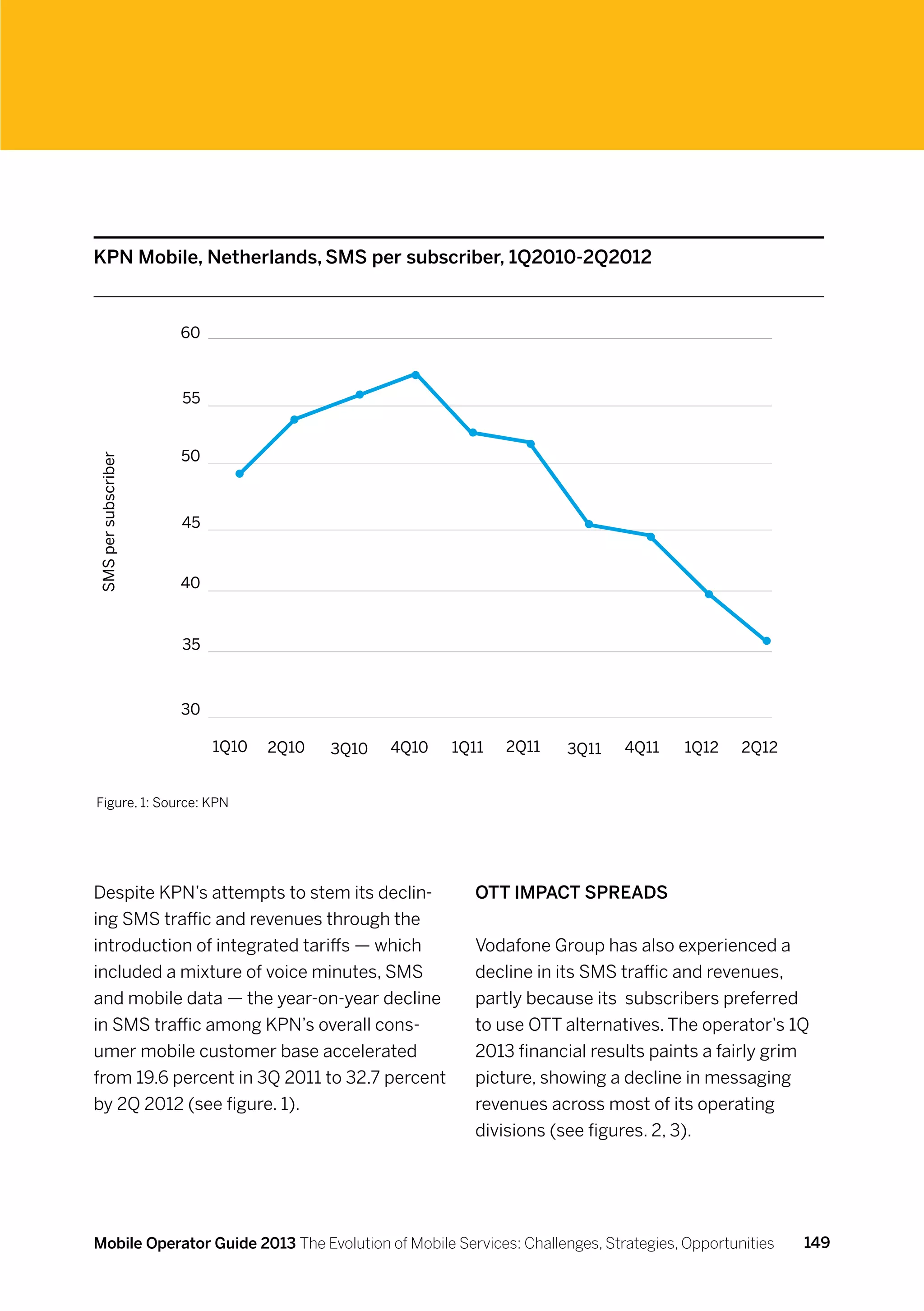
and/or the device they are using.              of digital multiplexing in which two or more
                                               bit streams or signals are transferred appar-
SS7 (Signalling System No 7) - A set of        ently simultaneously as sub-channels in one
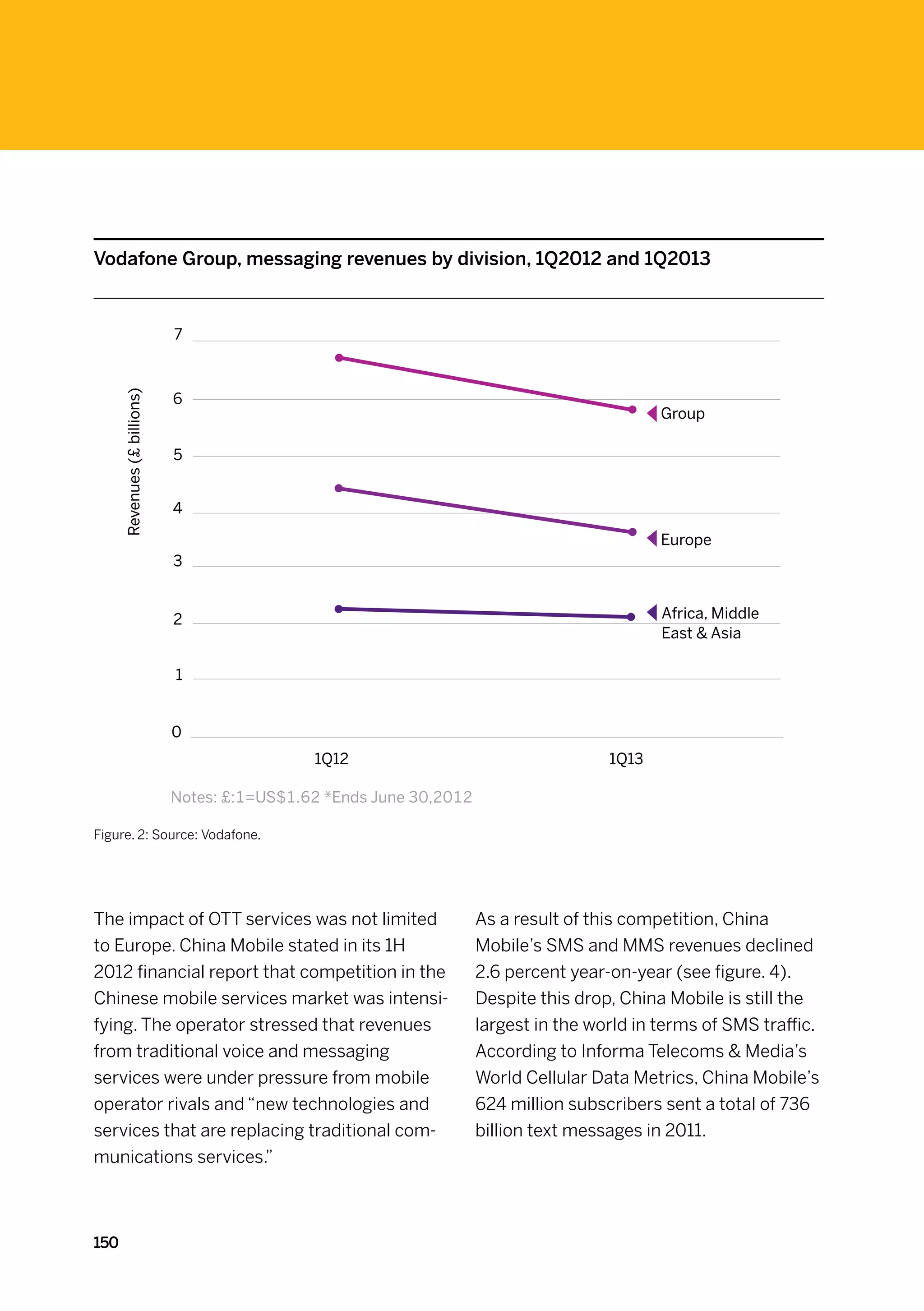
telephony signalling protocols which are       communication channel, but are physically
used to set up most of the world's public      taking turns on the channel.
switched telephone network telephone calls.
                                               Transrating - Transrating means changing
SSM - Self-Service Machines                    the bitrate (bandwidth) of a stream by
                                               means of processing. For instance, process-
SVA - Stored Value Accounts                    ing an input video stream of 1Mbps so that
                                               the output stream is 256Kbps only. Tran-
SAP Mobile Services Number Resolution          srating can increase or decrease the bitrate,
System - A globally distributed database of    and usually involves changing the encoding
numbering plans and number portability         parameters.
information for countries around the world.
NRS is continually updated (real-time for      Transcoding - A two-step process in which
some countries) with the latest number         the original data/file is decoded to an inter-
portability and number range data.             mediate uncompressed format, which is
                                               then encoded into the target format.


232
TN - Telephone Number


VPLMN (Visited Public Land Mobile
Network) - In a roaming scenario, the
network that the subscriber is currently
connected to.


VoHSPA - Voice over HSPA


VoLTE - Voice over LTE


VoIP (Voice over Internet Protocol) -
Commonly refers to the communication
protocols, technologies, methodologies,
and transmission techniques involved in the
delivery of voice communications and multi-
media sessions over Internet Protocol (IP)
networks, such as the Internet.


VoWIFI - Voice-over-Wi-Fi


WAP Billing - This is a capability for mobile
subscribers to buy content from Wireless
Application Protocol sites (or mobile sites)
and have the purchases charged directly
to their mobile phone bills from their
mobile operator.


Mobile Operator Guide 2013 The Evolution of Mobile Services: Challenges, Strategies, Opportunities   233
APPENDIX


Index Of Contributor Companies
Aylus Networks                                    CTIA – The Wireless Association ®

Aylus Networks, helps mobile operators and        CTIA is an international non-profit member-
communications service providers deliver          ship organisation that has represented the
live video services for consumers and enter-      wireless communications industry since
prises. Solutions range from live video           1984. Membership in the association
sharing, including social networks and RCS/       includes wireless operators and their
RCSe devices, to multi-party video calling on     suppliers, as well as providers and manufac-
mobile networks. Aylus’ innovative, IP-based      turers of wireless data services and
core infrastructure platform is unique in its     products. The association advocates on
ability to serve as a video calling inter-        behalf of its members at all levels of govern-
exchange, enabling mobile service providers       ment. CTIA also coordinates the industry’s
to optimise video communications among            voluntary efforts to provide consumers
different networks (3G/4G/Wi-Fi) regard-          with a variety of choices and information
less of the endpoints, build new revenue          regarding their wireless products and
streams through QoS/QoE, and drive                services. This includes the voluntary
mass-market adoption of mobile video              industry guidelines; programs that promote
services based on existing voice calling          mobile device recycling and reusing; and
offerings. Visit www.aylus.com                    wireless accessibility for individuals with
                                                  disabilities. Visit www.ctia.org
Bharti Airtel
                                                  Celcom Axiata
Bharti Airtel is a leading integrated telecom-
munications company with operations in 20         Celcom is Malaysia’s leading mobile tele-
countries across Asia and Africa. Headquar-       communications provider with over 12
tered in New Delhi, India the company ranks       million customers. Established in 1988, it
amongst the top 5 mobile service providers        has the widest national 2G and 3G networks,
globally in terms of subscribers. In India, the   covering over 98 percent of the population.
company’s product offerings include 2G, 3G        Celcom, that is also the country’s number
and 4G services, fixed line, high speed           one mobile broadband provider, is moving
broadband through DSL, IPTV, DTH, enter-          towards offering integrated multi-access
prise services including national and inter-      and multimedia services that are aligned
national long distance services to operators.     with consumer behaviour and demand.
In the rest of the geographies, it offers         Celcom is part of the Axiata Group of Com-
2G, 3G mobile services. Bharti Airtel had         panies, one of the world’s largest telecom-
over 246 million customers across its             munications companies, with more than 180
operations at the end of February 2012.           million customers across 10 Asian markets.
Visit www.airtel.in                               Visit: www.celcom.com.my.


234
Cloudmark                                             GSMA LA

Cloudmark is the global leader in messaging           GSMA Latin America (GSMA LA) has four
security solutions, delivering the industry’s         Operator Expert Working Groups covering
fastest and most effective protection                 Billing and Roaming (BARG), Regulatory
against the widest range of messaging                 (REGU), Technical and Terminals (TECT),
threats to mobile operators, Internet Service         and Security and Fraud (SEGF) issues in the
Providers and social networks. Cloudmark              region. GSMA LA hosts two key plenaries a
simplifies and advances the management                year, featuring working group sessions plus
of messaging abuse, thereby increasing                workshops and seminars on other key
network utilisation and reducing infrastruc-          GSMA initiatives. In Latin America, the
ture costs. Protecting 1.8 billion subscribers        GSMA member companies serve over
for the world’s largest carrier networks,             630 million connections, accounting for
including ATT, Verizon, T-Mobile, Comcast,           95% of the total mobile region’s connec-
MySpace, NTT, Swisscom and Time Warner-               tions. Visit: www.gsma.com/latinamerica
Cable, Cloudmark currently scans 15
                                                      GSMA MMU
percent of the world’s mobile network traffic,
15 percent of the world’s Internet traffic and        GSMA’s Mobile Money for the Unbanked
50 percent of the world’s social networking           Programme help mobile operators and
traffic. Visit: www.cloudmark.com                     the financial industry collaborate to deliver
                                                      affordable financial services that provide
Globe Telecom
                                                      safety, security and convenience to millions
Globe Telecom is a full-service telecommun-           of previously unbanked customers. Since
ications provider in the Philippines, with its        the Mobile Money for the Unbanked
own international gateways, cable landing             programme was founded, the industry has
stations, domestic fibre backhaul and a               increased in size five-fold, with over 100
national access network (data, fibre, 3G/             mobile money deployments active in the
HSDPA). It offers a range of wireless and             world today – 80% of which are in develop-
wireline voice and data services (including           ing markets. The GSMA represents the
Mobile GSM/ 3G/ HSDPA, broadband, PSTN                interests of mobile operators world-
Fixed lines, IDD, NDD, Corporate Data, IPLC           wide,spanning more than 220 countries,
and Internet). Globe offers the most compre-          and uniting nearly 800 of the world’s mobile
hensive coverage for international roaming,           operators, as well as more than 200
with more than 600 partner networks                   companies in the broader mobile ecosys-
worldwide. Visit: www.globe.com.ph                    tem, including handset makers, software
                                                      companies, equipment providers, Internet
                                                      companies, and media and entertainment


Mobile Operator Guide 2013 The Evolution of Mobile Services: Challenges, Strategies, Opportunities   235
Mavenir Systems
organisations. Visit: www.gsma.com.
To learn more about the Mobile Money              Mavenir delivers Converged Voice, Video
for the Unbanked Programme Visit                  and Messaging solutions, based on the
www.mmublog.org                                   mOne™ Convergence Platform, to wireless
                                                  operators globally. Mavenir’s value-added
Informa Telecoms  Media
                                                  IMS and cloud-based solutions enable the
Informa delivers strategic insight, key market    transformation of legacy core networks by
data and forecasts to help clients make           offering compelling new services such as
better business decisions for more than 25        VoLTE and RCS, and by providing uniquely
years. It counts 65 analysts in nine research     innovative solutions to address the
offices offering pragmatic advice to the          challenge of migrating subscribers and
leading global operators and builders of com-     services to 4G. These solutions are deployed
munications infrastructure. Its chief objective   by customers in both North America and
is to be accessible, responsive and connected     Europe. Visit: www.mavenir.com
both to the markets it serves and the clients
                                                  MediaFriends
it assists. Visit: www.informatandm.com
                                                  MediaFriends enables the world to
Korea Telecom
                                                  communicate more freely by breaking
KT provides telecommunication services            down barriers of device compatibility
including local, long distance, and interna-      through its patent pending Mobile-to-IP
tional calling, satellite communication,          and Multi-Screen Messaging technology.
data transmission, and wireless telephone         HeyWire™, the company’s real-time social
services in South Korea. The company also         messaging hub, empowers consumers
offers network portal and high-speed              worldwide to connect with each other in
Internet access, and has the largest share        better ways using mobile messaging (SMS
of the South Korean local telephone and            MMS), IM, Facebook and Twitter on
high-speed Internet business. KT is using its     virtually any Internet enabled device.
broad capabilities to lead the global market      Visit: www.mediafriendsinc.com
in an era of convergence that sees the
                                                  Metros PCS
boundaries blur between voice and data,
wired and wireless, and broadcasting and          Dallas-based MetroPCS Communications,
telecommunications. Visit: www.kt.com             Inc. (NYSE: PCS) is a provider of no annual
                                                  contract, unlimited wireless communica-
                                                  tions service for a flat rate. MetroPCS is the
                                                  fifth largest facilities-based wireless carrier


236
in the United States based on number                  tion especially in Next Generation fixed line
of subscribers served. With Metro USA(SM),            services, broadband pay-TV and Internet
MetroPCS customers can use their service              access, IP-based business services, 3G  2G
in areas throughout the United States                 mobile and public Wi-Fi services, and large-
covering a population of over 280 million             scale IT solutions. Visit: www.pccw.com
people. As of September 30, 2012,
                                                      Qatar Telecom
MetroPCS had approximately 9.0 million
subscribers. For more information please              Qtel provides a full range of telecommunica-
visit www.metropcs.com.                               tions services in Qatar and across its
                                                      presence in 17 countries. The company
Money2020
                                                      offers leading-edge products and services,
Money2020 Expo is a new conference                    and enjoys partnerships with many of the
focused on emerging payments and next                 world’s leading telecommunications players.
generation financial services that brings             Qtel has invested over US$3.2 billion in
together innovators from financial                    Qatar’s technology infrastructure and has
institutions, mobile, retail and advertising          developed leading-edge Fibre and 4G
to discuss issues around mobile money                 Solutions, as well as an exciting portfolio
and the customer experience. Money2020                of mobile, fixed-line and entertainment
was co-founded by industry veterans in                services. Qtel is part of the Qtel Group,
payments and mobile to bring together all             a leading international communications
stakeholders. Visit: www.money2020.com                company, with a significant presence in
                                                      the MENA region and Southeast Asia, and
Neucom Solutions
                                                      a consolidated customer base of 83.7
Neucom Solutions provides consulting                  million as of June 2012. Its companies
services to the telecom sector focusing               include Indosat, Asiacell, Wataniya, Nawras,
on areas including: business planning,                Nedjma and Tunisiana. Visit: www.qtel.qa
commercial management, partnering,
                                                      SAP
change management, business
transformation and new market entry                   As the market leader in enterprise applica-
strategy. Visit: www.neucom.eu.com                    tion software, SAP (NYSE: SAP) helps com-
                                                      panies of all sizes and industries run better.
PCCW
                                                      From back office to boardroom, warehouse
PCCW is the largest and most comprehen-               to storefront, desktop to mobile device, SAP
sive provider of communications services in           empowers people and organisations to work
Hong Kong, offering award-winning innova-             together more efficiently and use business


Mobile Operator Guide 2013 The Evolution of Mobile Services: Challenges, Strategies, Opportunities   237
insight more effectively to stay ahead of the   Group’s consumer-related functions and
competition. SAP applications and services      focuses on setting new benchmarks in
enable more than 195,000 customers to           customer experience. Visit www.singtel.com
operate profitably, adapt continuously, and
                                                Telecoms.com
grow sustainably. Visit www.sap.com.
                                                Telecoms.com is the go-to website for any-
SAP Mobile Services
                                                one and everyone in the global telecommu-
SAP Mobile Services is the global leader, in    nications industry. Visit. www.telecoms.com
enabling mobile information services for
                                                Telefónica
mobile operators, financial institutions and
enterprises. It provides customers the          Telefónica has one of the broadest geo-
widest offering in SMS, MMS, GRX, IPX           graphic footprints of any operator. It is
Interoperability and innovative mobile con-     present in 25 countries and provides tele-
sumer engagement services. SAP Mobile           communications services to over 300
Services processes more than 1.8 billion        million customers in Europe and Latin
messages per day reaching 900 operations        America. In addition, through its industrial
and 5.5 billion connections around the world    alliances, which are unique in the sector, it
visit www.SAP.com                               shares a joint customer base of more than
                                                700 million, 10 percent of the world’s popu-
Singtel
                                                lation. Telefónica operates with four brands:
The SingTel Group is Asia’s leading commu-      Telefónica, Movistar, O2 and Vivo. Visit:
nications group, providing a wide spectrum      www.telefonica.com
of multimedia and infocoms technology
                                                textPlus
(ICT) solutions, including voice, data and
video services over fixed and wireless plat-    textPlus is the world’s leading mobile com-
forms. Headquartered in Singapore, SingTel      munication destination. It’s where the world
has more than 130 years of operating expe-      goes to say hello - anytime, anywhere,
rience and has played a pivotal role in the     anyplace. Over 35 million people worldwide
country’s development as a major commu-         use textPlus to text and talk for free or
nications hub. As at 30 June 2012, the          extremely low cost. textPlus works on
Group serves 462 million mobile customers       multiple platforms and devices including
around the world. The Group is structured       iOS, Android, Symbian and Windows
along three key businesses: Group               Phones. The company was founded in 2007
Consumer, Group Digital L!fe and Group ICT.     and backed by leading VC firms Matrix
Group Consumer brings together the


238
Urban Airship
Partners, GRP Partners, and Kleiner Perkins
Caufield  Byers. Visit: www.textplus.com.            Urban Airship is the unrivalled leader in
                                                      push messaging, delivering billions of
TIM
                                                      messages per month with unparalleled
The Telecom Italia Group is Italy’s leading           speed and scale for leading brands such as
ICT enterprise, active in fixed-line and              CBS Interactive, Groupon, Soundtracking,
mobile telecommunications, the Internet               Walgreens and Warner Bros. Urban Airship
and media, office and system solutions,               enables these brands and 65,000 other cus-
research and development. The Group                   tomers to engage consumers directly on
also has a significant presence in Latin              their mobile device home screens with pre-
America. Group growth is driven by                    cision-targeted mobile messaging. Com-
providing leading-edge infrastructure,                plete mobile engagement suites offer easy
the latest technology, a customer centric             and effective end-to-end management of
organisational model and the capabilities             the push messaging process from customer
to cater to the needs of each customer                and location targeting, to automation and
cluster. Visit: www.tim.it                            delivery including message composition,
                                                      instant in-app landing page creation and
The 3rd Degree
                                                      analytics to optimise effectiveness. Visit
The 3rd Degree was founded in 2001 to                 www.urbanairship.com
bring enterprise class, real-time research
                                                      Yankee Group
capabilities to the mobile platform. The
platform quickly extended to become a                 Yankee is the preeminent research and
full mobile CRM solution delivering highly            advisory firm equipping companies to profit
scalable, secure, reliable mobile services            in a mobile world. The core of its content is
including mobile research, marketing,                 proprietary research and analytics on the
loyalty, mobile web site builder and language         attitudes, behaviours and usage patterns of
analysis. Today Synapta mCRM offers a                 mobile users. Based on this research, the firm
unified mobile platform utilised by mobile            provides a range of actionable data, insights
operators, FMCG companies, research                   and advice. Visit: www.yankeegroup.com
agencies, the government, banks and
retail environments worldwide. Visit:
www.the3rddegree.co.uk


Mobile Operator Guide 2013 The Evolution of Mobile Services: Challenges, Strategies, Opportunities   239
Mobile Operator Guide 2013

Editorial Direction

Carmel Coscia
Diarmuid Mallon

Project Managers

Shahzia Banth
Jean Loh
Matthew Sims

Design

Boing Design Paris
BoingDesignParis@yahoo.co.uk

Developed and produced

Peggy Anne Salz,
Publisher  Chief Analyst


MobileGroove
www.mobilegroove.com
peggy@mobilegroove.com


Amanda Roulstone
Assistant to Peggy Anne Salz
www.dragonvirtualassistants.co.uk
Amanda@dragonvirtualassistants.


240
www.sap.com/contactsap

© 2013 SAP AG or an SAP affiliate company. All rights reserved.

No part of this publication may be reproduced or transmitted in any form or for any purpose without the express permission of SAP AG.
The information contained herein may be changed without prior notice.

Some software products marketed by SAP AG and its distributors contain proprietary software components of other software vendors.

National product specifications may vary.

These materials are provided by SAP AG and its affiliated companies (“SAP Group”) for informational purposes only, without representation or
warranty of any kind, and SAP Group shall not be liable for errors or omissions with respect to the materials. The only warranties for SAP Group
products and services are those that are set forth in the express warranty statements accompanying such products and services, if any. Nothing
herein should be construed as constituting an additional warranty.

SAP and other SAP products and services mentioned herein as well as their respective logos are trademarks or registered trademarks of SAP AG
in Germany and other countries. Please see http://www.sap.com/corporate-en/legal/copyright/index.epx#trademark for additional trademark
information and notices.

Mobile Operator Guide 2013 The Evolution of Mobile Services: Challenges, Strategies, Opportunities

  • 1.
    SAP Mobile Services Mobile Operator Guide 2013 The Evolution of Mobile Services: Challenges, Strategies, Opportunities
  • 3.
    SAP Mobile Services MobileOperator Guide 2013 The Evolution of Mobile Services: Challenges, Strategies, Opportunities
  • 4.
    Mobile Operator Guide2013 The Evolution of Mobile Services: Challenges, Strategies, Opportunities Published by Sybase, an SAP Company Sybase, One Sybase Drive, Dublin, CA 94568-7902, U.S.A. © 2013 SAP AG or an SAP affiliate company. All rights reserved. No part of this publication may be reproduced or transmitted in any form or for any purpose without the express permission of SAP AG. The information contained herein may be changed without prior notice. Some software products marketed by SAP AG and its distributors contain proprietary software components of other software vendors. National product specifications may vary. These materials are provided by SAP AG and its affiliated companies ("SAP Group") for informational purposes only, without representation or warranty of any kind, and SAP Group shall not be liable for errors or omissions with respect to the materials. The only warranties for SAP Group products and services are those that are set forth in the express warranty statements accompanying such products and services, if any. Nothing herein should be construed as constituting an additional warranty. SAP and other SAP products and services mentioned herein as well as their respective logos are trademarks or registered trademarks of SAP AG in Germany and other countries. Please see http://www.sap.com/corporate-en/legal/copyright/index.epx#trademark for additional trademark information and notices. Library of Congress Cataloging-in-Publication Data SAP Mobile Services Mobile Operator Guide 2013, The Evolution of Mobile Services: Challenges, Strategies, Opportunities Edited by Peggy Anne Salz p. cm. ISBN 978-0-9885886-2-2 1.Mobile technology. Library of Congress Control Number: # 2012953199 Printed in the United States of America Except as permitted under the United States Copyright Act of 1976, no part of this publication may be reproduced or distributed in any form or by any means, or stored in a database or retrieval system, without the prior written permission of the publisher.
  • 5.
    Table of Contents 10 FOREWARD By John Sims, President, SAP Mobile Services 13 PART 1: INTRODUCTION : A WEALTH OF OPPORTUNITIES 14 Mapping A New World For Mobile Operators By John Sims, President, SAP Mobile Services 18 Driving Growth In The Digital Economy By Stephan Gatien, Global Lead, Telecommunications Business Unit, SAP and Jens Amail, Senior Vice President and General Manager for Services, SAP 25 PART 2: STRATEGIES FOR DRIVING REVENUE 26 Long Live SMS Text messaging continues to grow from strength to strength as new services and paradigms around mobile marketing and mobile apps drive volumes and usage. By William Dudley, Group Director, Product Management, SAP Mobile Services 33 Moving To The SMS Hubbing Model Operators are recognising that SMS hubbing is not just about connectivity; it can ease the management burden around cross-border messaging traffic. By Robert Rose, Senior Director, Global Operator Services, SAP Mobile Services 36 Latin America Offers Big SMS Opportunities Personal Paraguay and Tigo Colombia discuss local market requirements and weigh on the tremendous opportunities and innovation that are driving SMS growth. Mobile Operator Guide 2013 The Evolution of Mobile Services: Challenges, Strategies, Opportunities 3
  • 6.
    43 Cybersafety: Everyone’s Responsibility The Cyber Information Sharing and Protection Act addresses how information should be shared between private companies and the government to catch malicious actors breaching networks to steal information or sabotage systems. By Steve Largent, President & CEO, CTIA-The Wireless Association 48 Does The Future Of Mobile Security Lie In The Past? Text messages are a powerful vehicle for reaching people — but they are also increasingly the starting point for malware attacks. By Mary Landesman, Senior Security Researcher, Cloudmark 53 Mobile Number Portability: Increasing Competition And Driving Value Mobile Number Portability has come a long way since it was implemented in the 1990s, but it now confronts mobile operators with a variety of commercial challenges. By Mitul Ruparelia, Director of Sales Engineering (EMEA and LATAM), SAP Mobile Services 58 Intelligent Hubbing: Easing International SMS Routing Complexity A comprehensive checklist and solid advice aimed at helping operators remove the complexity around establishing and managing SMS routing. By Mark Weait, Vice President Sales, SAP Mobile Services 63 Orchestrating Capabilities Delivers High Performance Bharti Airtel details the strategy that has allowed it to spread its wings across the African continent, lay the groundwork for value-added services and deliver high volume at low cost. By N. Arjun, Chief of Projects & Transformation, Bharti Airtel 68 PART 3: IPX: INTERCONNECTING OPERATORS FOR UNLIMITED OPPORTUNITIES 69 Bundling Services Makes Business Sense Korea Telecom discusses the importance of Voice over IPX in its larger strategy to future-proof its network, ensure end-to-end quality of service and grow its wholesale business. Interview with Incheul Park, Head of Wholesale Team, Global Business Unit, Korea Telecom 4
  • 7.
    74 Expanding Voice Connectivity Via IPX: An Operator Perspective In the Philippines Globe Telecom is embarking on an ambitious network change to deliver customer benefit by making cross regional interconnectivity better and easier. By Gil Genio, Head of International and Business Markets, Globe Telecom, Inc. 78 The Value Of A True IPX Mobile Operators can best leverage the full benefits and economies of scale that IPX provides if they look beyond just offering basic services, such as voice and data roaming, and focus on delivering the services their customers will demand next. By John Candish, Senior Director, IPX Business, SAP Mobile Services and William Dudley, Group Director, Product Management, SAP Mobile Services 83 Nine Ways To Get More Value Out Of IPX IPX offers tremendous value and here are 9 things operators need to do to ensure they can reap and maximise the benefits. By John Candish, Senior Director, IPX Business SAP Mobile Services 86 Making The Right Connections SingTel recounts the lessons, learnings and results of its recent IPX trial, the first step in a private international network connecting all the Group companies. Interview with David Ng — Vice President, Regional Technical, of SingTel’s International team in the Group Consumer organization 91 A Brave New All-IP World When it comes to IPX, peering among IPX providers is an essential element because it is the enabler of global reachability. By Elena Sacco, Chairman of the IWG at the GSMA and Senior Interconnect Manager, TIM 94 Boosting Trust, Building Business In countries like Africa IPX does more than provide interconnectivity; it also meets the needs of local telecommunications authorities for transparency and accountability. By Ranjeet Wilkhu, Director, Neucom Solutions 98 Voice: The IPX Killer App A candid view of the many benefits IPX provides. While many focus on future scenarios around LTE roaming, PCCW outlines how IPX can already enhance voice. By Richard Midgett, Managing Director – Wireless Business, PCCW Mobile Operator Guide 2013 The Evolution of Mobile Services: Challenges, Strategies, Opportunities 5
  • 8.
    104 PART 4:LTE: UNLEASHING INNOVATION TO DELIVER RESULTS 105 Enabling 4G LTE For ALL MetroPCS discusses its early decision to deploy LTE and how this head start on the competition has allowed the U.S. operator to scale its business and satisfy its customers with value-driven services. By Ed Chao, Senior Vice President, Engineering and Network Operations, MetroPCS 111 Fighting Smart To Win Big A clever approach harnessing RCS will allow operators to compete with OTT players with new services such as group instant messaging or chat, live video sharing and file transfer across any device, on any network, with anyone in a mobile address book. By Madan Jagernauth, Vice President, Marketing & Strategy, Mavenir Systems 117 Positioning LTE For Success Research and insights brings clarity into the industry discussion about LTE, the benefits it delivers and reasons why operators take the lead in educating consumers. By Declan Lonergan, Research VP, Yankee Group 124 Breaking Down Borders: Getting The Most Out Of LTE Roaming LTE is reaching a stage of maturity where technology is no longer a barrier to deployment, so now it’s up to mobile operators to architect the strategies that will leverage the complete range of benefits. By James Middleton, Managing Editor, Telecoms.com 127 Video Communications: “A Perfect Storm” Consumer use of video has entered a new phase of growth, driven by devices, services and networks built to support it. But the wave of interest in mobile video could overwhelm service providers. By Ramsey Masri, Vice President, Sales & Alliances, Aylus Networks 134 Enabling Roaming Across LTE Networks LTE will enable new services, but it will also put high demands on the data roaming backbone and require more bandwidth and resilient network connectivity. By Matthew Tonkin, Global Head, IPX Business, SAP Mobile Services 6
  • 9.
    138 LTE Roaming In Latin America: Conditions For Success The deployment of LTE across Latin America brings with it a host of benefits and equips operators to address the spectrum limitations facing their networks. By Alejandro Martinez, Chairman, Billing & Roaming Working Group (BARG), GSMA LA 142 LTE: New Technology Boosts New Business A review of the business models, approaches and services, such as mobile video calling, that will allow operators to drive even more revenue out of their costly LTE investments. By Michel Van Veen, Group Manager, Product Management, SAP Mobile Services 147 PART 5: OTT: OPEN THREAT OR HIDDEN OPPORTUNITY 148 OTT Threat: Top Strategies To Fight Smart Learn from real-life examples, including KPN and China Mobile, about the real impact of OTT services on voice and messaging revenues and how mobile operators turn the tide. By Pamela Clark Dickson, Senior Analyst, Mobile Content & Applications Intelligence Center, Informa Telecoms & Media 156 Evaluating Strategies To Face OTT Providers Operators need to be more digital. Does Telefónica Digital, a unit aimed at developing new applications and business models for mobile technology show the way? By Eusebio Felguera, Corporate Regulatory Manager, Telefónica 161 NUVOs: An Alternative To Disruptive OTT Not all OTT apps threaten mobile operator revenues. Network Unaffiliated Virtual Operators (NUVOs) actually benefit operators and boost their business. By Austin Murray, Founder & President, textPlus 166 OTT Ecosystem: Paving The Way For Opportunity The inevitable arrival of an all-IP world also reinforces the needs for deeper part- nerships between operators and OTT players. MediaFriends discusses apps and approaches showing the way. By Gene Lew, CTO, MediaFriends Mobile Operator Guide 2013 The Evolution of Mobile Services: Challenges, Strategies, Opportunities 7
  • 10.
    172 PART 6: UNLEASHING THE POWER OF MOBILE COMMERCE 173 Mobile Money For The Masses Qtel has made its mark with its Mobile Money services and an innovative self-serve approach that meets the needs of both migrant workers and affluent customers. By Richard Morecroft, Assistant Director Mobile Money, Qtel 179 Driving Mobile Money Usage In Unbanked Regions Driving customer adoption and increasing activation rates in mobile money is no easy task. The key is proper audience segmentation and a sharp focus on customer education. By Yasmina McCarty, Senior Manager, GSMA MMU 184 Blueprint For A Successful Remittance Service A review of the mobile remittance services available today reveals a variety of different approaches to tackle the challenges of sign-up, cash-in and cash-out. By Diarmuid Mallon, Head of Global Mobile Marketing Programs, Programs & Demand Generation, SAP 190 Operators: Tap Your Strategic Assets Mobile operators might only have scratched the surface when it comes to understanding their true potential to accelerate and enhance the mobile payments and commerce experience for consumers everywhere. By Aditya Kurejkar, Co-Founder and Program Director, Money2020 194 Mobile Commerce Opportunities For Operators Building and deploying a successful mobile payment service requires operators to consider a wide range of variables, from business models to local telecom and financial regulations. By Matthew Talbot, Senior Vice President, Mobile Commerce, SAP 200 PART 7: LEVERAGING MOBILE TO ACHIEVE LASTING LOYALTY 201 Perception vs Reality: What’s Your Mobile Strategy? The arrival of the empowered consumer turns up pressure on operators and enterprises to create and implement a comprehensive mobile strategy that is truly end-to-end, multi-channel and, more importantly, customer-centric. By Howard Stevens, Senior Vice President, Global Messaging Solutions, SAP Mobile Services 8
  • 11.
    205 ThePower Of Push Push notifications also open up new opportunities around customer service and marketing, allowing mobile operators to deliver simple alerts to the customer — and trigger the customer to take action. By Coleen Carey, Director of Product Marketing, Urban Airship 211 Harmonising Touch Points, Technology, Processes And People Celcom details the milestones and motivations that have helped it evolve its view of customer experience and sharpen its focus on encouraging lasting loyalty. By Suresh Sidhu, Chief Corporate and Operations Officer, Celcom Axiata Berhad 215 Ask, Listen And Build Lasting Loyalty Talk to your customers, and listen to what they say. A successful mCRM program integrates social interaction, customer engagement and customer feedback. By Sally Burley, Director, The 3rd Degree 220 Why Customer Engagement Campaigns Pay Dividends An in-depth look at how mobile changes the rules of engagement, allowing mobile operators, brands and businesses to maintain continuous customer touch and drive deeper engagement. By Gregory Dunn, Vice President, Product Management, SAP Mobile Services 228 Glossary Of Terms 234 Index Of Contributor Companies 240 Acknowledgements Mobile Operator Guide 2013 The Evolution of Mobile Services: Challenges, Strategies, Opportunities 9
  • 12.
    FOREWORD Mapping A NewWorld For Mobile Operators By John Sims, President, SAP Mobile Services IP is changing the game. Advanced The author in this case was referring to mobile devices, new technologies, mobile video communications, where growth is driven by devices, services and increased competition and a networks. But mobile video isn’t the only shift in subscriber expectations market segment on the brink of the tipping towards truly personal and point. This Guide shows that other services, relevant interactions are coming such as SMS, LTE, mobile commerce and mobile customer loyalty, are also entering a together to cause disruption in the new phase of growth and innovation. telecom industry - for operators and all the companies in their • SMS: While some analyst reports predict business ecosystems. the decline of text messaging, SMS continues to be the number one data However, the same conditions also spell communications tool and the most massive opportunities for companies effective direct marketing channel ever prepared to take charge of change. As one created. In almost all emerging markets it of the 40+ industry authorities who has remains the ubiquitous data service of provided insights for this Guide, points out: choice. In developed markets, the the rapid pace of change and the interplay explosion of mobile apps, a development of supply and demand for services that are which many thought would mark the aligned with customers’ requirements are death of SMS, has actually pushed combining to generate the mobile industry’s application-to-person (A2P) traffic own Perfect Storm. growth to a new level. This spells 10
  • 13.
    opportunity for mobileoperators and enhance mobile money and mobile service providers to harness text banking services. Now it’s up to mobile messaging to supercharge a variety of operators to map out comprehensive services, ranging from mobile marketing strategies that cultivate partnerships and mobile advertising, to mobile with key players, such as banks, and commerce and mobile banking. adapt to local market conditions, such as regulations, demographics, and the • LTE: As mobile network operators move emergence of new remittance corridors. towards 4G/LTE and an all-IP network, many will cooperate to expand their • Mobile loyalty: Because mobile is a network footprint and pave the way for fiercely personal device, it’s an ideal compelling new services that will delight means to reach customers on every step customers and drive positive results for of their daily journey to encourage inter- everyone in the ecosystem. The advance action and deepen engagement. Whether of LTE will also challenge operators to operators and marketers choose to develop strategies to cooperate with and harness text messaging, new forms of enable Over-the-Top players in a manner IP-based messaging, mobile web or that benefits the ecosystem and wrings mobile apps (or all in combination) they new revenues out of operator core capa- can clearly leverage mobile as a channel bilities such as location information, to boost customer loyalty and recruit true billing support and network management. brand advocates. However, just as in real- life, building a relationship is about talking • Mobile commerce: From researching and listening, and that’s why companies products to making purchases, consum- must develop mobile loyalty programs ers are increasingly reaching for their that effectively do both. mobile devices as an essential shopping companion. At the other end of the This inaugural edition of the Mobile spectrum, and particularly in the under- Operator Guide features the insights of banked regions of the world, consumers industry thought leaders and innovators to are gravitating to services delivered by identify market trends, best practices and mobile operators that have expertly key lessons learned in deploying mobile leveraged their distribution channels, services. The purpose of this industry retail presence and trust to expand and knowledge resource is to provide readers Mobile Operator Guide 2013 The Evolution of Mobile Services: Challenges, Strategies, Opportunities 11
  • 14.
    clear direction andcritical information, equipping them to develop strategies to drive messaging revenue, deploy cost saving solutions, generate new revenue streams from mobile commerce, build loyalty through customer engagement programs, plan for LTE roaming through IPX adoption and maintain competitive advantage in an IP-based world. The onward march of next-generation services into daily life has created a new world order in the telecoms industry. Think of this Guide as a starting point to a roadmap, one that will allow you to plot the transformational path your business needs to follow to succeed in this exciting new digital economy. 12
  • 15.
    PART ONE: INTRODUCTION AWEALTH OF OPPORTUNITIES
  • 16.
    PART ONE: INTRODUCTION:A WEALTH OF OPPORTUNITIES Mapping A New World For Mobile Operators By John Sims, President, SAP Mobile Services What a difference a decade makes. product offerings were comparatively You need only go back that far to straightforward, with “all-you-can-eat” pricing plans the industry standard. It find the “early days” of mobile seems like a long time ago, but it was only network operators’ journey with in 2001 that the first inter-operator SMS mobile data, comparatively speak- messages were delivered in the U.S., with ing, a world that hardly compares SAP Mobile Services launching the first inter-operator SMS messaging hub in to today’s landscape. Amid the concert with AT&T Wireless. More signifi- far-reaching changes that have cantly, during those formative years, taken hold since then, the com- operators took a walled-garden approach plexity that now distinguishes to mobile data, with services delivered within a closed ecosystem – a far cry from operator services brings with it the interoperable, pan-operator network a rich abundance of opportunities topology that has evolved since then. to those who are forward-thinking and adaptive in their strategies From that initial “closed system” approach, rapidly advancing technology and the and capabilities. explosive growth of international travel by A decade or so ago, an operator’s world globe-trotting executives and power users revolved almost exclusively around voice. contributed to the dramatic changes we In an environment of minimal competition, have seen take root since then. The eclipse “ s the cost of spectrum and the pace at which A new network technologies needed to be deployed rose, operators needed to consider cooperative arrangements with their fellow operators, something that would not have previously been on the table.” 14
  • 17.
    Table 1: Globalmobile data growth today is similar to global internet growth in the late 1990s Global internet traffic growth (fixed) Global mobile data traffic growth 1997 178% 2009 140% 1998 124% 2010 159% 1999 128% 2011 133% 2000 195% 2012 (estimate) 110% 2001 133% 2013 (estimate) 90% 2002 103% 2014 (estimate) 78% Figure 1: Based on data from Cisco. Cisco Visual Networking Index Mobile 2012 www.slideshare.net/CiscoSP360/cisco-visual-networking-index-vni-global-mobile-data-traffic-forecast-20112016 of voice by data, accompanied by the advent it was clear that mobile network operators of successively more powerful generations could no longer dictate the user interface. of network technology leading to 4G, an As the cost of spectrum and the pace at all-IP environment, accompanied by today’s which new network technologies needed open infrastructure, means operators must to be deployed rose, operators needed to generate profits by significantly rethinking consider cooperative arrangements with their business models. their fellow operators, something that would not have previously been on the table. Traditionally, mobile network operators have owned and controlled everything, including In addition, in order to accelerate the adv- physical equipment, radio networks, serv- ance of the network effect for new services, ices infrastructure, devices and user inter- operators in some countries have come faces. But amid their changing economics, together in joint ventures or cooperatives to many have had to rethink this approach. lower their costs and seed the market with With the rise of the smartphone, driven by new service technologies – for example, the the iPhone and Android devices, Isis joint venture in the United States or the Mobile Operator Guide 2013 The Evolution of Mobile Services: Challenges, Strategies, Opportunities 15
  • 18.
    proposed mobile paymentsventure among to fiercely defend their franchises against the operators in the United Kingdom. threat from the Internet-based companies or so-called Over-The-Top (OTT) players. As To a certain degree this kind of thinking part of their strategy, operators will want to has been accelerated by operators’ need not only create a strong domestic footprint; to compete against Internet-based players, they will also look to extend this to a global which have arrived in the mobile space as level, much as they have done over the past creative and formidable competitors. It also decade or so with SMS. marks a realisation by many mobile network operators that their future success depends This is precisely where SAP Mobile Services more upon the innovative services that they provides the most critical value. We are offer subscribers than it does on the under- delivering the world-class interoperability lying network technology – a substantial and reach that comes with our role as an shift in emphasis. independent custodian residing between and among operators. It is a role that So, as mobile network operators move demands a truly holistic level of visibility – towards 4G/LTE and an all-IP network, horizontally, across geographies spanning many will cooperate to achieve a more rapid the Americas, Europe, the Middle East, and ubiquitous network footprint that will Africa and Asia, and vertically, providing the allow them to offer compelling new services technology and connectivity required to that will capture the imagination of their ensure that today’s ever-expanding operator subscribers. In doing so, they will compete ecosystem continues to flourish. Most against other mobile network operators, importantly, SAP Mobile Services possesses but they will also have to operate in a much the vision and resources to realise its custo- faster cycle of innovation that will allow them dial role in every dimension. “ he advent of a new world for operators follows T decades of incremental improvements punctuated by breakthrough technologies.” 16
  • 19.
    This inaugural editionof the Mobile The advent of a new world for operators Operator Guide 2013, The Evolution of follows decades of incremental improv- Mobile Services: Challenges, Strategies, ements punctuated by break-through Opportunities provides a rich taste of the technologies. The result has been a new bold new world that has materialised and paradigm for communication. All of us at continues to take shape. Inside, our expert SAP Mobile Services are working with stable of authors delve into the current state diligence and with our eyes on the future of play and the most important emerging to enable all participants in the value chain issues in operator services, including: to experience the unprecedented power, ease and benefits of this new world of inter- • Operator strategies for driving and operability, reach and global interaction. optimising messaging revenue • Roaming and interconnect issues, including the interplay of LTE in an John Sims is President of SAP Mobile Services, the recognised global leader in IPX environment mobile messaging and interconnect services. • OTT Messaging, voice and video services, He has more than 20 years experience including managing the challenges con- with companies supplying technology and fronting operators in a BYOD (Bring Your solutions to mobile operators. Sims has Own Device) world been recognised with the prestigious Ernst Young Entrepreneur of the Year Award in • Mobile commerce and the myriad of the communications category. He is also a opportunities for operators member of the Board of Directors of CTIA • Customer engagement, including a and has been a speaker and panellist at roadmap for building loyalty by numerous industry events. empowering customers. Mobile Operator Guide 2013 The Evolution of Mobile Services: Challenges, Strategies, Opportunities 17
  • 20.
    PART ONE: INTRODUCTION:A WEALTH OF OPPORTUNITIES Driving Growth In The Digital Economy By Stephan Gatien, Global Lead, Telecommunications Business Unit, SAP and Jens Amail, Senior Vice President and General Manager for Services, SAP In July 2012, just before the On one hand, the success of smartphones London 2012 Olympics, no one has led to increased data activities, with subscribers happily clocking time to play could have imagined that one of games, watch videos, post on social sites, the first headlines in the main- tweet and send text messages. This phe- stream press would be about the nomenon has contributed to the decline of local mobile networks’ bandwidth revenues from voice services, once the cash cow of the entire industry without really problems. But this is precisely offsetting it to date. what happened shortly after the Games opened. On the other hand, costs to provide adequate network infrastructure to support After having encouraged athletes and fans this explosion of data traffic are on the rise. to tweet freely, Twitter was blamed for As the 2012 Olympic Games in London disrupting the coverage of the cycling road showed, the infrastructure available still race. Ironically, the sheer volume of mobile cannot always handle the load and meet social traffic along the course was so over- expectations for connectivity and reliability. whelming that it even interfered with the GPS and telemetry updates from the race, Granted, network upgrade investments which left those covering the games without represent a heavy financial burden for all information on positions and timings. players in the ecosystem. However, these network investments are essential building This twist of fate was a perfect metaphor blocks for future services and business for the dilemma and challenges faced by models. In fact, 2013 is widely expected to communications service providers today. be a blockbuster year for infrastructure 2013 is widely expected to be a blockbuster year for infrastructure spending, with a large number of operators aggressively expanding their LTE networks. 18
  • 21.
    London Olympics -UK SMS traffic (Times are local to London - August 6 - 8) +10% + 46% +18% +8% August 8 August 7 August 6 1:30 2:30 3:30 4:30 5:30 6:30 7:30 8:30 9:30 10:30 11:30 12:30 21:30 23:30 0:30 13:30 14:30 15:30 16:30 17:30 18:30 19:30 20:30 22:30 Figure 1: Based on data from SAP. London Olympics - UK SMS traffic (Times are local to London - August 1 - August 5) +46% - 18:20: +36% - 14:20: Men’s team cycling UK’s Andy Murray sprint - UK wins gold beats Roger Federer for gold in tennis August 3 August 4 August 2 August 1 August 5 1:30 2:30 3:30 4:30 5:30 6:30 7:30 8:30 9:30 10:30 11:30 12:30 22:30 13:30 14:30 15:30 16:30 17:30 18:30 19:30 20:30 21:30 23:30 0:30 Figure 2: Based on data from SAP. Mobile Operator Guide 2013 The Evolution of Mobile Services: Challenges, Strategies, Opportunities 19
  • 22.
    London Olympics -UK SMS traffic (Times are local to London - July 27 - July 31) +36%: 21:10: USA wins gold in Men’s 4 x 200m freestyle relay (swimming) July 27 July 28 July 29 July 30 July 31 1:30 2:30 3:30 4:30 5:30 6:30 7:30 8:30 9:30 10:30 11:30 12:30 13:30 14:30 15:30 16:30 17:30 18:30 19:30 20:30 21:30 22:30 23:30 0:30 Figure 3: Based on data from SAP. spending, with a large number of operators Voice and Skype — allow messaging and aggressively expanding their LTE networks. VoIP calls between users. While these free services may have a strong appeal to customers, they have a decidedly Tough competition negative impact on operators’ bottom line. But network upgrades aren’t the only item Analysts estimate OTT messaging revenues on the business agenda. Operators also as much as $13.9b, or 9% of message have to develop strategies and capabilities revenue, in 2011. This decline has led some to compete against new rivals. to wonder whether most incumbent provid- ers are not facing their “Kodak moment”. By Increased penetration of smartphones has way of background, Kodak filed for bank- opened the door to powerful and disruptive ruptcy protection in 2012 after recognizing actors offering OTT services. These services its products were obsolete and the competi- — which include Apple’s Facetime, Google tion was insurmountable. Similarly, mobile 20
  • 23.
    UK Olympics -Opening Ceremonies (UK SMS traffic - 27 July 2012 17:00 - 28 July 2012 03:00) 22:30 -22:40: +137% Team Great Britain enters the stadium during Parade of Nations 21:10 +32% Ceremony begins 23:50 +56% official opening of games Queen’s speech 21:40 +40% Rowan 00:20 +25% IOC Atkinson “Plays” during President speaks Chariots of Fire Opening Pre-ceremony - Ceremony up to 56% of normal Traffic Normal Traffic 17:30 18:00 18:30 19:00 19:30 20:00 20:30 21:00 21:30 22:00 22:30 23:00 23:30 0:00 0:30 1:00 1:30 2:00 2:30 3:00 21:40: +40% The Queen parachutes in 22:30-22:40 +137% Parade of Nations begins 23:50 +56% Team GB enters the stadium. Figure 4: Based on data from SAP. players are now struggling to compete position of strength and drive profitable against more agile and innovative newcomer growth in this new era. companies, as well as OTT providers. First and foremost, operators — because they are network operators — control the backbone Operator assets of the Digital Economy: connectivity. However, it would be a huge mistake to But owning the network is not enough. To count operators out of the Digital Economy avoid being relegated to the role of a “dumb race too soon. Operators own critical assets pipe,” operators must also be able to capitalise they can leverage to build competitive on their successful track record of service advantage, establish themselves in a delivery, including five 9s service availability. Mobile Operator Guide 2013 The Evolution of Mobile Services: Challenges, Strategies, Opportunities 21
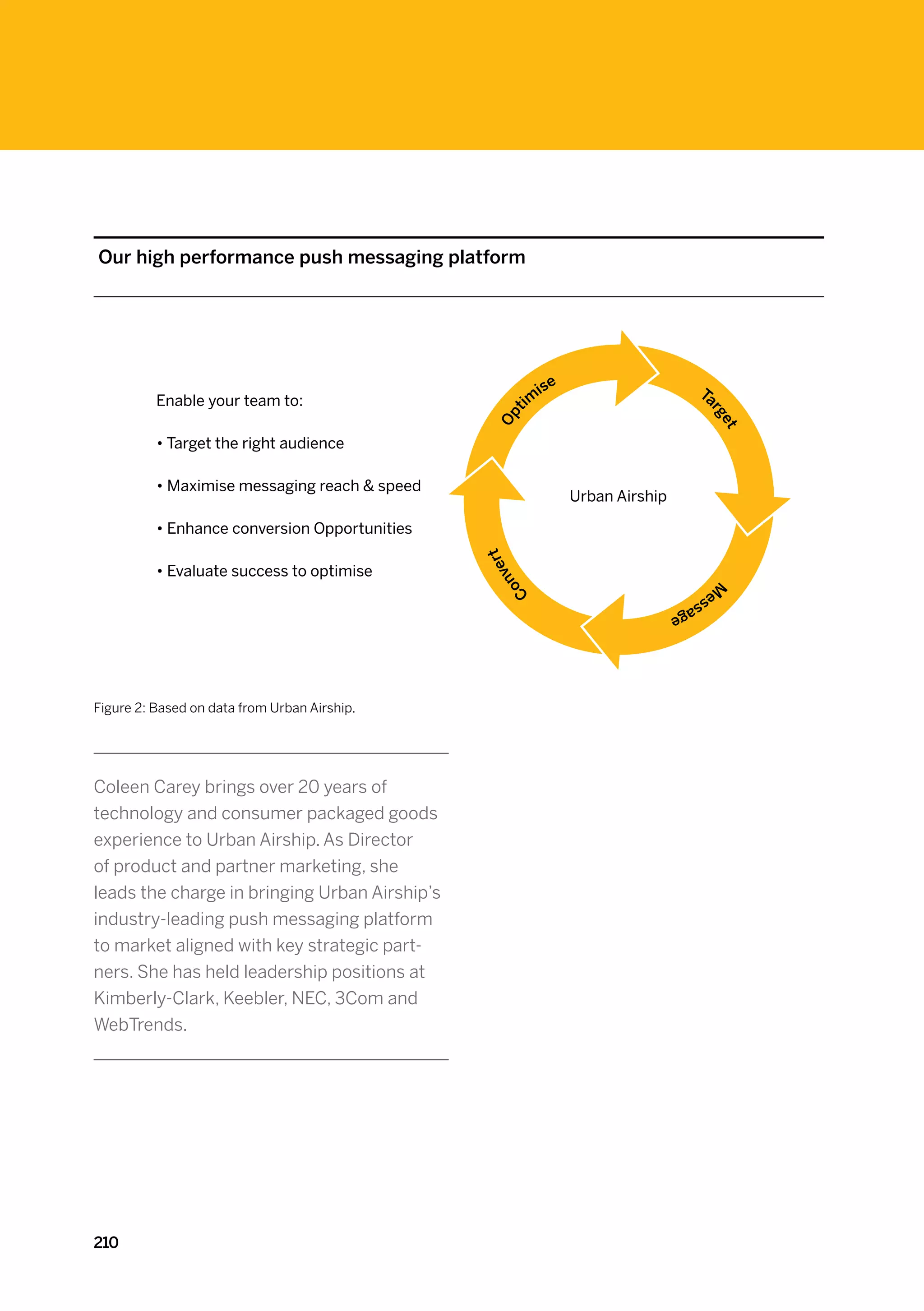
  • 24.
    Porter Telco 2.0 Nature of Characteristics strategy strategy smartness Cost leadership Happy Pipe Smart network Cost efficiency - minimal network, IT and commerical costs. Simple utility offering. Differentiation Full-service Smart services Technical and commerical flexibility: Telco 2.0 improve customer experience by integrating network capabilities with on and third-party services and charging either end user or service provider (or both). Figure 5: Based on data from STL Partners. www.stlpartners.com/telco2_index.php Operators also have proven security and data the conduit between these ‘upstream’ integrity capabilities that will increasingly partners and their traditional ‘downstream’ appeal to business customers as adoption of customer base, thus increasing their reach, cloud- based models take off. presence and value-add. What’s more, operators also have a long Finally, CSPs have insights into a vast -standing relationship with their customer quantity of data about their customers, base. This puts them in a unique position to such as service usage patterns, location act as digital service brokers between this -based activities, roaming history and large audience and a multitude of partners on-device behaviour on a daily basis. This that want to reach this audience with impressive store of customer information content, software or new services to offer represents a largely untapped monetisation via the mobile channel. opportunity for operators in an increasingly data-centred economy. Pursuing this model — often referred to as the Teleco 2.0 model (1) — would allow Com- So, how do CSPs move forward to imple- munications Service Providers (CSPs) to be ment the right strategies and — ultimately FOOTNOTES 1. As originally defined by STL Partners 22
  • 25.
    2013 is widelyexpected to be a blockbuster year for infrastructure spending, with a large number of operators aggressively expanding their LTE networks. — succeed in the digital era? We believe created new digital divisions to seize new they will need to focus on some key areas opportunities including mobile commerce to drive profitable growth in the new and machine-to-machine communications Digital Economy. (M2M) in order to generate incremental revenue beyond their traditional services. • CSPs should fully leverage their scale, Telefónica’s direct to bill initiative is a strik- superior reliability and service delivery ing example of how an operator can lever- capabilities, to invest in new business age its billing relationship with its mobile models in areas such as Cloud and Mob- customers to increase sales of digital goods ility. Operators such as China Telecom or and services, while learning to partner — Telstra in Australia have already adopted not compete — with OTT players. this strategy with success. They offer on-demand business solutions to a The monetisation of subscriber data, in variety of business customer segments, accordance with privacy laws, is also in particular targeting small and medium emerging as a strong opportunity for CSPs size businesses. Other mobile operators, to grow their revenues. By leveraging the such as Rogers Communications in vast amounts of customer data they own — Canada, are launching business-oriented in real-time and at scale — CSPs can gain mobile app stores. This is part of a larger advantage in two important ways. They can effort to become a one-stop shop for serve their existing customers more effec- business customers, providing everything tively, and they can also use the customer mobility-related, including mobile app information to take advantage of opportuni- hosting and mobile device management. ties in new markets — such as proximity • Large providers should also think beyond marketing or mobile advertising — where connectivity. Telefónica and SingTel are customer data is key. To accomplish this perfect examples of what operators can CSPs will need to adopt a highly scalable achieve. They have transcended their foundation suited for the real-time world. traditional organisational boundaries, and An examination of the results achieved by Mobile Operator Guide 2013 The Evolution of Mobile Services: Challenges, Strategies, Opportunities 23
  • 26.
    However, it wouldbe a huge mistake to count operators out of the Digital Economy race too soon. Operators own critical assets they can leverage to build competitive advantage, establish themselves in a position of strength and drive profitable growth in this new era. T-Mobile US, for example, confirms that an in-memory based platform is very well Jens Amail is Senior Vice President and General Manager for Services Industries at suited to provide such a foundation. SAP as well as the Business Unit for Billing, Revenue and Innovation Management. Prior Fortune smiles on the brave. It is time for to joining SAP in 2008, Jens was with Siemens CSPs to make bold moves to develop their Communications for 10+ years in a variety of growth strategy in the digital era. They have Senior Executive and General Management roles both in Europe and the US. Jens has a the necessary assets to create new growth broad cross-functional background in the engines and focus on the abundant oppor- Communications Industry with Executive tunities in the Cloud and Mobility markets. assignments in Sales, Services, Marketing, Moreover, operators can innovate and invent Solution Management and Operations. new data-driven business models and services (such as proximity marketing). Stephan Gatien is a Global Lead within the Telecommunications Business Unit at SAP If operators can arm themselves with the focusing on Business Analytics and Database correct capabilities and business models, Technology. In that capacity, he is respon- they can seize these opportunities, create sible for the analytics and data platform lucrative new revenue streams and prosper strategy in the industry, including SAP HANA, from the Digital Economy. oversees the related solution activities and leads the  analytics and data platform  go- to-market activities globally Prior to joining SAP, Stephan was with Telus where he held a variety of management roles in the wireless division of this Canadian operator. 24
  • 27.
    PART TWO STRATEGIES FORDRIVING REVENUE
  • 28.
    PART TWO: STRATEGIESFOR DRIVING REVENUE Long Live sms By William Dudley, Group Director, Product Management, SAP Mobile Services Mobile industry watchers have (and do) use their mobile phones to send been predicting the death of the and receive text messages. humble text message for over Veteran mobile author and analyst Tomi a decade, but a raft of recent Ahonen estimates people sent a whopping research confirms that SMS is 6.1 trillion text messages in 2011, up from very much alive and kicking. 1.8 trillion in 2007. Meanwhile Informa Telecoms Media state that total SMS Marking the 20th anniversary of SMS, U.K. traffic will reach 8.7 trillion by 2015, up analyst firm Portio Research points out that from over 5 trillion messages in 2010. In SMS has been very successful, generating its newest forecast analyst firm Portio approximately $821 billion for operators Research calculates that total traffic will worldwide since it was invented in 1992. reach nearly 10 trillion messages by 2015. Overall, worldwide mobile messaging was Clearly, SMS is THE most ubiquitous, the highest earner in the industry, raking in non-verbal communications medium in the $179.2 billion in 2010 alone. Portio Research history of mankind. Today, SMS can reach forecasts that this total will increase to more over 5.4 billion people around the world — than $280 billion in 2014, and exceed $300 over 77 percent of the world’s population. billion by 2016. Of this total, SMS alone will generate $155 billion worldwide in 2014, and In developing countries SMS plays a special it promises to continue to play a significant role, transforming lives and economies at an role in revenue terms in the coming years, amazing scale. Innovation in these regions the report said. also allows companies, organisations and governments to harness simple text mes- saging and achieve extraordinary results. Pervasive and personal From life-simplifying reminders to life-saving medical advice, text message services are It’s the simplicity, pervasiveness and sheer changing the nature of commerce, banking, dominance of text messaging that has made education, healthcare, news reporting and it the world’s leading data communication political participation. tool. People everywhere on the planet can 26
  • 29.
    In developed marketsSMS is by far the most In other countries text messaging continues effective way for people to communicate with to dominate. In Canada The Wireless each other — and connect with companies. Telecommunications Association reports Whether chatting with friends, or receiving the number of personal text messages sent alerts from banks and favourite brands, text every year has nearly quadrupled since is the primary communications tool. 2008 and hit a whopping 78 billion messages in 2011. In the U.K. the Ofcom Telecommunications Market Data Update Continuing tide of text Q1 2011 reports the total number of SMS and MMS messages sent in Q1 2011 was Significantly, even the advance of smart- 36.9 billion, up 22.7 percent over Q1 2010. phones — chock-full of features, functional- ity and a wide variety of mobile applications — hasn’t changed consumers’ dependence The impact of OTT on text messaging to connect with the world around them. In fact, a recent consumer Amid this stellar growth, some analysts study from Deloitte shows that SMS holds wonder if the text messaging trend could the lead. More consumers than ever prefer- flip from growth to decline. New messaging ring texting, and the vast majority (90 capabilities bundled with iPhones and percent) of smartphone users sending at Android phones, as well as the advance of least one text message per day. OTT messaging services and applications are among the root causes for the recent Another trend that shows no signs of slowing dip in SMS volumes in mature markets such is text use among teenagers. In the U.S. this as Philippines and Taiwan. News that OTT demographic relies on text more than any player WhatsApp reported hitting the mile- other customer segment. Research firm stone of ten billion messages a day further Nielsen, which bases its finding on a variety suggests operators could be vulnerable to of data including monthly survey results from this new competition. 300,000 consumers, reports that texting has tripled, with teenage girls sending 40 percent However, Analysts point out the race is far more text messages than boys. That’s an from run. It estimates that companies like average of 3,952 text messages per month. WhatsApp and BlackBerry will generate 35 It’s a continuing tide of communication percent of the total messaging traffic in Nielsen calls a “mobile data tsunami.” 2016, but only 8 percent of the revenues. Mobile Operator Guide 2013 The Evolution of Mobile Services: Challenges, Strategies, Opportunities 27
  • 30.
    Average number ofmessages exchanged per month By age and gender, Q3, 2011 604 802 3,417 1,914 928 709 434 167 64 Male Female 13-17 18-24 25-34 35-44 44-54 55-64 65+ Figure 1: Based on data from Nielsen. Moreover, SMS will continue to dominate Open rules messaging and revenues, generating 42 percent of the traffic and some 65 percent People are empowered by SMS to commu- of total income. nicate with anyone who has a mobile phone. However, alternative messaging apps are Indeed, Informa is not convinced that OTT limiting, not liberating. Unlike text messag- apps and services might undermine estab- ing, these OTT services operate in a vacuum. lished text messaging habits. It argues that many factors — including mobile operator Instead of overarching communities that pricing strategies, the penetration of mobile span the planet, they create isolated islands broadband and customer requirements of users who are completely cut off from to more open communications — will friends and family members on the basis “determine how quickly and to what extent of the handsets and software they use. substitution occurs.” 28
  • 31.
    A Facebook userand a person using iMessage interworks with the existing SMS eco- may be good friends in real-life, but the fact system. Indeed, many of the operators they use different services prevents them featured throughout this first edition of sending and receiving messages. the Mobile Operator Guide are betting on RCS to drive an interoperable, back- This flies in the face of what communica- ward compatible messaging medium for tions is all about, and presents opportunities subscribers and — ultimately — pave for mobile operators to bridge the gap. the way for new and innovative services. There are exciting and lucrative options to consider. Some mobile operators will choose to work with OTT players, enabling No limits them to achieve the integration of messag- ing communications. Others will follow the Technology advances like RCS will allow lead of operators like Telefónica, which messaging — including text messaging — recently launched a free mobile application to evolve and continue to account for a signi- that combines free text chat, voice calls, ficant share of operator revenues. The future picture and location sharing between users. for OTT providers, however, is not quite so positive. Spoiled by choice and delighted by Interoperability will also be delivered by the freedom to communicate with anyone the GSM Association standard called (and not just people that use that the same Rich Communications Suite (RCS), which application), consumers will no doubt vote includes a next-gen, real-time, presence- with their feet. It’s clear that many of the OTT enabled messaging component that also players will simply fade away. Unlike text messaging, these OTT services operate in a vacuum. Instead of overarching communities that span the planet, they create isolated islands of users who are completely cut off from friends and family members on the basis of the handsets and software they use. Mobile Operator Guide 2013 The Evolution of Mobile Services: Challenges, Strategies, Opportunities 29
  • 32.
    It’s the simplicity,pervasiveness and sheer dominance of text messaging that has made it the world’s leading data communication tool. In the meantime, SMS-compatible1 services Ironically, the rise of mobile apps, initially from companies including textPlus will hailed as a new channel to the customer continue to flourish, offering customers that could potentially dethrone SMS, has more features and greater reach. But it’s actually pushed text messaging growth not just person-to-person messaging that to a new level. will increase. Growth will be also be driven by a desire from companies, businesses Brands and marketers, as well as applica- and brands to connect with their customers tion developers, are harnessing SMS to (and potential customers) via SMS. extend the life of their apps, keeping their users posted on updates, breaking news, Research underlines the pivotal role of location-based opportunities, campaign mobile in campaigns to engage with custom- perks and other important information. ers, encourage interaction and boost loyalty. More importantly, text messaging allows From consumer facing brands that use text brands and marketers to re-connect with messaging to deliver brand messages and customers who haven’t used their apps links to downloadable content and perks, to recently — or even deleted it altogether. The large retailers that cleverly use text messaging result is a booming Application-to-Person to deliver product vouchers and drive cus- (A2P) market Jupiter Research estimates tomer loyalty, the central role of SMS is will be worth $70.1 billion by 2016. clear. Perhaps the best confirmation comes from Coca-Cola, that declared that SMS is the “number one priority” in its comprehen- Positive outlook sive strategy to reach a global audience and increase customer engagement. Analysts Clearly, the next five years will see operators termed it a “bombshell announcement” in many parts of the world leverage their because other marketers quickly followed all-IP networks, but even this progress will suit, launching strategies with mobile not shut the door to SMS. To the contrary, messaging at the center. LTE networks using IMS infrastructure will lay the groundwork for messaging services Footnote: 1. SMS-compatible services include some OTT service providers (also known as NUVOs or Network Unaffiliated Virtual Operators that inter-work with the SMS ecosystem. This stands in strong contrast to other OTT providers, such as WhatsApp, that do not offer SMS interoperability. 30
  • 33.
    Global revenue fromA2P SMS split by eight key regions 2016 Latin America Indian Sub Continent Africa Middle East Central Eastern North America Europe Rest of Asia Pacific Western Europe Far East China Figure 2: Source: Juniper Research. (1) that will remain interoperable with today’s 1992 between Neil Papworth (of Sema text messaging. In other words, there will be Group Telecoms) and Richard Jarvis of no interruption in service, or even reach. Vodafone – the message read “Merry Christ- mas”. Today, SMS is the most widely used The humble text message that just cele- mobile data service, with two-thirds of brated its 20th anniversary has seen a lot the world’s population using the channel to of changes since the first SMS was sent in connect and communicate. From a business FOOTNOTE: 1. www.juniperresearch.com/reports/Mobile_Messaging_Markets Mobile Operator Guide 2013 The Evolution of Mobile Services: Challenges, Strategies, Opportunities 31
  • 34.
    perspective, SMS isexpected to remain a significant source of revenues and traffic for mobile operators on a global basis for years to come. The bottom line: the advance of an all-IP world will transform SMS, but text messaging will also continue to be alive and well. William Dudley has 25 years experience building and managing telecommunications network infrastructures. He leads SAP Mobile Services Messaging Team, which focuses on solutions including inter-operator SMS and MMS products (P2P) and mobile messaging hubs and services (A2P SMS and MMS). Dudley also provides industry commentary to both internal and external mobile industry publications, through analyst and media interviews, and is active in several industry groups. http://scn.sap.com/people/william. dudley/content 32
  • 35.
    PART TWO: STRATEGIESFOR DRIVING REVENUE Moving To The sms Hubbing Model By Robert Rose, Senior Director, Global Operator Services, SAP Mobile Services SMS is ubiquitous, universal and services dedicated to message protocol widely regarded as the truly native conversion. Having met the domestic challenges of the North American market, language of mobile. However, this international messaging between non- phenomenon, and the massive GSM U.S./Canadian operators and their development of SMS since the last GSM counterparts worldwide soon also years of the 20th century, has not benefitted from the technology and connectivity offered by the hub solution. been without its challenges around enabling — and guaranteeing — In developing countries, scarce human message delivery. and technical resources within operators across these markets has accelerated the Notably, there have been challenges in North requirement for hubbing services. In the America, where differences in technologies case of Tier 1 and 2 operators, for example, prevented the launch of off- net messaging hubbing has tended to be a niche solution. for a few years. In contrast, almost the rest In other words, the solution enabled “gap- of the world was well progressed in its adopt- filling” in a mobile operator’s footprint, ion of inter-operator SMS based largely on thus satisfying subscriber demand for homogenous GSM standards. international SMS P2P connections when that operator’s own roaming agreements The solution to the technology differences were not sufficient to provide the required in North America was provided by hubbing messaging interconnects. In developing countries, scarce human and technical resources within operators across these markets has accelerated the requirement for hubbing services. Mobile Operator Guide 2013 The Evolution of Mobile Services: Challenges, Strategies, Opportunities 33
  • 36.
    As a consequence,operators are recognising that a hub can enable them to outsource the management burden around some of their cross-border messaging traffic. Making the mainstream operator can actually become a much more significant benefit. The situation began to change when the GSM Association launched the Open Connectivity project in 2005. By seeking Good business sense to manage and regulate (in a light-touch manner) the development of peering hubs Today, economic pressure on most oper- for person-to-person SMS the GSMA ators is now driving even more traffic (and effectively endorsed the hubbing concept. more revenue for the networks). Headcount This, in turn, ensured the adoption of cuts, affecting even the most-established hubbing as a mainstream business practice operators, are reducing their ability to for the global operator community. manage their interworking activity effectively. Since 2005 the major hub providers have As a consequence, operators are recogn- seen a steady growth in demand for their ising that a hub can enable them to out- services. This has resulted in the develop- source the management burden around ment of an abundant revenue stream based some of their cross-border messaging on the termination charges on inbound traffic. This approach also reduces the traffic delivered by hubs. The ability to drive managerial overhead around areas such as new revenues from additional SMS traffic the negotiation and maintenance of bilateral — possible because hub prov-iders have agreements with destination operators and, extesive global reach and the ability to when traffic is flowing, the upkeep of various provide two-way access to operators number ranges within the SMSC. previously unreachable — has been an added attraction over and above the Routing all traffic for a particular country to greater reach achieved. a hub mitigates number range management tasks and delivers business benefit. As Since term fees are paid on a strictly per- operators come to embrace the idea of message basis, this revenue source clearly delegating responsibility for some cross- increases in proportion to the organic as border SMS traffic, they also discover that well as incremental growth in traffic. As a the more routes they outsource to the hub result, what might first appear to be a minor provider, the more they can increase their contributor to the Roaming Department revenue “take” from their inbound traffic. PL account belonging to a mobile In the end, what started out as a simple 34
  • 37.
    exercise to offloada handful of “awkward” Real-world examples of this problem destinations soon becomes a full-scale are currently being addressed. Efforts to outsourcing venture. resolve this effectively will naturally require flexibility on behalf of both operators and hub providers. Growing revenues In summary, in just over ten years subscrib- The financial ecosystem surrounding ers’ need for global two-way communication cross-border P2P SMS is a complex matrix via SMS has become the fundamental driver of MO charges and MT payments. For hub of mobile network data revenues. While providers, managing this is well worth the domestic interworking is mainly addressed effort as long as they can continue to make through bilateral relationships, cross-border a margin on the connectivity services they traffic is increasingly being routed through provide. In view of this dynamic, traffic the established, peered hubs. Though this through hubs will continue to grow. Impor- trend is a consequence of the expedient and tantly, the opportunities for operators to effective solution that a hub connection can cultivate a worthwhile revenue stream will provide, the opportunity to develop a new also grow in parallel. and worthwhile revenue stream is now — more than ever — an incentive for operators However, it’s worth noting that outsourcing to subscribe to the hubbing model. can impact the revenues operators poten- tially gain from their bulk messaging (or “enterprise messaging”) business. This is A 20-year veteran of the information systems business (both fixed and mobile), Robert Rose because outsourcing all messaging traffic began working in the mobile industry as a con- means outsourcing bulk messaging as well. sultant to British Telecom’s mobile operations subsidiary Cellnet. Since 2004 Robert has By way of background, this traffic would guided SAP Mobile Services’s international have been reliant on the prior, direct development in P2P messaging services. connect, bilateral routes. Obviously, in cases where these are replaced by a hub’s connections for P2P business, the non-P2P traffic needs to secure its own routing and, potentially, its own commercial agreements. Mobile Operator Guide 2013 The Evolution of Mobile Services: Challenges, Strategies, Opportunities 35
  • 38.
    PART TWO: STRATEGIESFOR DRIVING REVENUE Latin America Offers Big sms Opportunites From the rural regions, where farmers SMS leads the pack and small businesses use mobile to Interestingly, this revolution also brings a manage their workday, to exciting city boost to text messaging services. But it’s centres where youth — in particular— not just about operator services allowing rely on mobile to connect with friends people with ordinary feature phones to and family 24/7, Latin America is communicate. Analysts note that text messaging continues to provide a solid more connected than ever before. foundation for a wide range of services, In fact, making or receiving a call or text from banking to basic education, to message in Latin America has never been widening access to health information. easier. A new report titled Maximising Against this backdrop, it is clear markets Mobile, the third in a series on Information like Latin America — not the more devel- and Communications for Development oped markets of Europe and North published by the World Bank, reveals that America — will lead messaging growth nearly 98 percent of the region’s population and innovation. have mobile cell signal and 84 percent of households use a mobile service. Feature phones are the focus because Latin America’s smartphone market is still in its On average 81 percent of subscriptions in infancy. Research firm Pyramid Research Latin America are prepaid. Understandably, reports that the smartphone segment in many in the region use mobile phones to Latin America will grow to 48 million in 2014. make voice calls, averaging 141 minutes of This is a marked increase, but doesn’t talk-time a month. In most markets the vast negate the fact that Latin America continues majority of users (97 percent in Argentina, for to lag behind the rest of the world in smart- example) regularly use SMS to communicate. phone adoption. Clearly, the level of growth in mobile usage But this gap also offers mobile operators will continue, expanding into ever more a tremendous opportunity to wring more rural areas across Latin America. It marks value out of text messaging. Ironically, it is what the report calls “the beginning of the also the low penetration of smartphones mobile revolution.” that has kept over-the-top (OTT) players 36
  • 39.
    Maximising mobile fordevelopment Growth of global mobile subscriptions World’s population with mobile cell signal 2000 Over 6 billion 71% 29% 0.7 billion 2003 61% mobile subscriptions subscriptions worldwide 2010 23% 77% 5.9 billion 2010 75% of the World subscriptions now has access to 90% High-income countries Developing countries a mobile phone Rise of non-voice mobile usage % National population 96 89 82 49 72 72 61 58 48 38 31 29 26 18 22 19 10 15 KENYA MEXICO INDIA INDONESIA EGYPT UKRAINE (ARAB REP) Send text message Take pictures or video with mobile Use mobile internet Pace of mobile phones spread globally (billions) The number of mobile subscriptions will soon take over the world’s population Fixed-line 8 subscriptions 2002 There are over 1 billion mobile subscriptions, passing fixed-line users Global population 6 1978 First commerical cellular mobile services established 4 1961 85 years later, fixed-line subscriptions reach 100 million 2 1876 Alexander Graham Bell holds the first Mobile two-way telephone conversation subscriptions 0 1875 1900 1925 1950 1975 2000 2011 2015 Figure 1: Based on data from Infodev. www.infodev.org/en/Document.1178.pdf Mobile Operator Guide 2013 The Evolution of Mobile Services: Challenges, Strategies, Opportunities 37
  • 40.
    at bay. This,in turn, has slowed the advance Personal Paraguay, a leading mobile of messaging apps that enable smartphone operator in Paraguay and part of Personal users to send unlimited free messages to Telecom group, has extended its their friends. These OTT messaging apps international SMS coverage to reap such as WhatsApp, Viber and Apple’s significant business benefits. “SMS is an iMessage are cannibalising SMS revenue important part of how our customers and changing the way mobile users comm- communicate,” notes Miguel Ruiz, Personal unicate with their peers. Paraguay Roaming Manager. “Our cust- omers want to be in touch with friends, This is not the case in Latin America, family and colleagues whether they are in according to ABI Research, developed the same neighborhood, or living in a markets have experienced a marked different country.” decrease in SMS sent because of the rise of OTT alternatives, but the drop in regions More importantly, customers expect their such as Latin America and Africa is not text message communications to be as significant. dependable and robust. “To achieve these SMS connections is a huge task that requires negotiations with operators and International SMS requirements technical tests to ensure SMS quality and reliability,” Ruiz explains. To streamline the Clearly, feature phones have several process and deliver customers the service more years to thrive in Latin America. This they expect, Personal Paraguay has teamed provides operators a window of opportunity up with SAP Mobile Services. “The hub SMS to generate strong revenues from their service helps us to have complete coverage domestic and international SMS offerings. with all operators in North America, the U.S., The international SMS business, for example, Canada and Mexico, as well as operators provides operators with the potential to drive across LATAM, Europe, Asia and Africa.” significant volume and earn hefty margins. Opening new international routes, securing SMS hubbing also allows Personal Paraguay two-way service for their customers and the capabilities to cater to the portion of its marketing attractive bundle packages are customer base that are Paraguay citizens also part of a strategy that would certainly living and working in neighboring Argentina. help improve the bottom line. “About 1.5 million Paraguayan people have 38
  • 41.
    Against this backdrop,it is clear markets like Latin America — not the more developed markets of Europe and North America — will lead messaging growth and innovation. emigrated to Argentina, and they want to To take advantage of this robust growth be in contact with friends and family in an in text messaging mobile operators are affordable way,” Ruiz says. The answer is also migrating to more flexible pricing International SMS, a popular service that to encourage use and to appeal to new also represents an important differentiator. customer segments. A prime example is In a nutshell, the service allows customers Tigo Colombia, a mobile operator that is to send an SMS to a Telecom Personal developing a new approach to enable users Argentina customer and be charged the to do what they want most: communicate same rate as a local SMS. “There are a lot with family and friends in other countries of opportunities to be gained by offering at affordable prices, observes Juan Felipe customers services that pair a simple way Velasquez, Latam International Roaming of communication with reasonable tariffs.” Coordinator at Tigo Colombia. At a deeper level, Tigo Colombia’s business Attractive pricing model is based on partnership to ensure access to key capabilities and technologies. SMS is expected to continue accounting According to Velasquez, the decision to for a major proportion of value-added cooperate with SAP Mobile Services is services revenue as services like banking, driven by the internal requirement to keep mobile money and M2M gain traction. pace with innovation. “Many times we fail Another driver is social media, the pastime to seize opportunities because technology and passion of nearly 100 percent of the changes so fast and we sometimes Latin American population using mobile neglect segments that do not have access or Internet, according to comScore. While to new technologies.” social media isn’t a new phenomenon, the growth is phenomenal. Mobile Operator Guide 2013 The Evolution of Mobile Services: Challenges, Strategies, Opportunities 39
  • 42.
    Exciting opportunities ahead Velasquez is also bullish about the outlook for value-added services that harness SMS What are the highest areas of opportunity in new ways. Chief among these is M2M. As on the operator agenda? he puts it: “I think that the next step in our industry is machine-to-machine, where we Personal Paraguay’s Ruiz is squarely can connect all the machines with machines focused on extracting more value out of — and with the people managing them — offering a wide variety of packages with around the world with simple SMS.” truly personal communications at the core. Whether it’s person-to-person or machine- “Our slogan is ‘Cada Persona es un mundo to-machine, it’s clear that messaging is king. — Each person is a world.’ This means delivering each customer the services and A promising and fast-growing service that bundles that are in tune with their lives. They should not be ignored is A2P, or Application- are at the center.” Looking ahead, Personal To-Person messaging. In this scenario, soft- Paraguay is also planning to deploy LTE/4G ware applications and organisations, such “with IPX to support new services” that as enterprises and governments, establish satisfy customer requirements for quality, a one or two-way communication channel coverage and convenience. with people using SMS. Tigo’s Velasquez says he is also looking The revenue potential is significant. Accord- to a future where continued cooperation ing to a study published by Portio Research between the stakeholders — operators, Ltd, a research firm based in the U.K., for suppliers and users — creates a win-win the period 2011-2016 worldwide A2P SMS for everyone. Additionally, it is important revenue is expected to outpace Person- to add these services onto an IPX, where To-Person (P2P) SMS revenue and grow at connectivity meets users’ needs for quality a CAGR of 13.1 percent. and desire to communicate on their terms. Looking ahead, Personal Paraguay is also planning to deploy LTE/4G “with IPX to support new services” that satisfy customer requirements for quality, coverage and convenience. 40
  • 43.
    P2P A2PSMS revenue – worldwide (in USD billions, 2009-2016F) SMS Revenue (in USD billions) 93.6 95.5 89.5 94.2 83.9 85.7 78.5 A2P SMS 73.4 Revenue P2P SMS 75.1 70.1 Revenue 60.4 52.3 44.2 30.7 27.4 25.5 2009 2010 2011F 2012F 2013F 2014F 2015F 2016F Note: The sum of A2P and P2P SMS revenues may not add up to total SMS revenue because of rounding off errors. Figure 2: Based on data from Portio Research Ltd. As of end-2012, A2P traffic represented 23 campaigns, offers and brand messages via percent of total SMS traffic worlwide, and text messaging. Banks are also harnessing 33 percent of SMS global revenues. In Latin SMS to send transaction notifications to America, A2P traffic accounted for 15.2 their clients, a convenient service that con- percent of total SMS traffic, significantly sumers have come to accept and appreciate. lower compared with the U.S. and Canada. This would indicate there is a significant These examples show there is a lot of potential for A2P growth in the region in mileage — and value — left in text messag- the years ahead. ing. In Latin America, in particular, the growth of SMS shows no signs of slowing, Indeed, the outlook for A2P SMS growth is a positive trend that benefits mobile opera- positive. A key driver: the advance of more tors that develop the mix of capabilities — conversational commerce and advertising, billing, bundles and international coverage requiring marketers and retailers to deliver — their customers expect. Mobile Operator Guide 2013 The Evolution of Mobile Services: Challenges, Strategies, Opportunities 41
  • 44.
    SMS traffic break-out-regional(in billions, 2009 – 2016F) Region 2009 2010 2011 2012F 2013F 2014F 2015F 2016F Latin P2P 203.4 285.3 341.7 381.6 417.6 443.7 460.5 478.3 America A2P 22.7 32.9 50.6 68.6 84.7 101.0 118.1 125.8 Note: Sum of regional numbers may not equal total due to rounding off errors. Figure 3: Based on data from Portio Research Ltd. www.slideshare.net/CiscoSP360/cisco-visual-networking-index-vni-global-mobile-data-traffic-forecast-20112016 Strong growth drives penetration, usage By 2015 Latin America is forecast to have being one of the more than 750 million mobile connec- largest, Latin tions, with an average penetration rate of America is also 122 percent. According to the GSMA, the one of the world’s region is one of the world’s largest mobile fastest-growing markets by volume. With HSPA and LTE mobile markets. connections reaching more than 305 We have experienced million by 2015, mobile broadband will be 13 percent growth per a key driver of growth. It will also be the year for the past four years, driven primary means of Internet access for by increasing accessibility, flexibility and people across the region. affordability of mobile services, and boosted by the increasing affluence of Sebastian Cabello, Director of Latin the region and the relative shortage of America, GSMA commented: “As well as the fixed line infrastructure.” 42
  • 45.
    PART TWO: STRATEGIESFOR DRIVING REVENUE Cybersafety: Everyone’s Responsibility By Steve Largent, President CEO, CTIA-The Wireless Association Imagine identifying a cyberthreat well as many other significant problems. How such as a virus, worm or malicious can this possibly be considered efficient, effec- tive or “good business”? It’s not. code on your company’s commun- ications network. You know how to If you’re like the CTIA-The Wireless remove it, but you also believe that Association, and many of its members, then your company isn’t the only one you already know that private sector net- works are targeted every day by hackers, under attack. You tell your boss criminals and nation-state actors for cyber that others, including your comp- exploitation and theft. The scenario I des- etitors and military commun- cribed above, as well as the attacks that ication networks, might likewise confront the private sector daily, are pivotal reasons why we support the Cyber Informa- be affected (but their IT experts tion Sharing and Protection Act [(CISPA) might not have noticed the threat (H.R. 3523)]. yet, or simply haven’t figured out how to stop it). This legislation would pave the way for efficient and effective business practice, As a courtesy, you’d like to alert these other allowing our members to communicate parties and offer your assistance to help with all the stakeholders — competitors, them protect their networks in anticipation of federal government agencies, IT directors, the virus, or help them remove it altogether. academia and experts — to identify Unfortunately, if you did that, you would put potential issues and create solutions your company and yourself in danger of before, during and after the problem. lawsuits and in violation of antitrust laws, as CTIA and its members have already taken an active role in addressing cybersecurity, but time isn’t on our side because the hacker community is moving fast. Mobile Operator Guide 2013 The Evolution of Mobile Services: Challenges, Strategies, Opportunities 43
  • 46.
    The cybersecurity ecosystem up of more than the operators and their networks. It now encompasses several The CISPA’s sponsors, U.S. House of other players, including device manufac- Representatives Permanent Select Comm- turers, mobile app and content creators, ittee on Intelligence Chairman Mike Rogers operating system developers and infra- (R-AL-3) and Committee Ranking Member structure producers. Quite simply, every Dutch Ruppersberger (D-MD-2), recognise single mobile user and company in the that cyberthreat intelligence sharing and wireless ecosystem has an important role providing clear authority for the private in ensuring cybersafety and protecting all sector to defend its own networks is of us from cyberthreats. critically important in today’s world. When passed, CISPA, which has already Work in progress been approved by the U.S. House of Representatives and is awaiting the U.S. In recognition of the vast and diverse Senate to vote, will carefully balance appro- wireless ecosystem and the need to bring priate privacy protections with immunity all the stakeholders together to address from lawsuit protections so that private and cyberthreats, CTIA created a cybersecurity public entities are genuinely incentivised to working group in March 2012. share cyberthreat information to help our nation get ahead of the challenge. This group is comprised of our members, and maintains an ongoing dialogue with gov- While CISPA is vital, CTIA and its members ernment agency representatives, researchers also want to highlight the importance of and experts from around the country to help other pieces in the cybersecurity puzzle. protect the wireless industry — and our Of these two are our immediate focus areas. customers — against cyberthreats. First, is to educate policymakers and con- In particular, this group focuses on sharing: sumers about the role they play in fighting cyberthreats. Or, as we like to put it, the role • Best practices and existing standards these parties play in ensuring cybersafety. (including technical exchange) • Known vulnerabilities and Second, is to remind people that the countermeasures wireless industry’s ecosystem is made 44
  • 47.
    96% Agree thatgovernment should allow companies to exchange information to help identify vulnerabilities and protect users from hacking and cyberfraud Strongly disagree 1.8% Somewhat disagree 2.2% Strongly agree 49.4% Somewhat agree 46.6% Figure 1: Based on data from McLaughlin Associates. National Survey of IT Decision Makers, July 27, 2012. • Suggestions and ideas on how the easy-to-understand tips on how to protect industry improves security while being themselves, their wireless devices and technology agnostic and maintains the their information. openness of the Internet This is important since today’s smartphones The working group has a number of initiatives and tablets have features and functions that already in the works, but I can’t reveal them have turned them into mini-computers. yet. However, I can share the new Cybersafety Because these mobile devices are also pamphlet, which was written in non-techni- packed with personal information, such cal terms, and provides consumers with as banking and health records, consumers Mobile Operator Guide 2013 The Evolution of Mobile Services: Challenges, Strategies, Opportunities 45
  • 48.
    How should industryand government proceed on cybersecurity? Industry should take the 14.8% lead in defining standards. Government should take the lead in defining standards. 4.0% Industry and government should share information on threats, and work 68.0% collaboratively to define standards. Industry and government should share information on threats 13.2% without defining standards. 0.0 10.0 20.0 30.0 40.0 50.0 60.0 70.0 80.0 Figure 2: Based on data from McLaughlin Associates. National Survey of IT Decision Makers, July 27, 2012. http://files.ctia.org/pdf/IT-Decisionmaker-Survey-FINAL.pdf need to take more responsibility for the pro- Collaboration is essential tection of this sensitive data. Specifically, consumers need to actively protect them- Education is key to ensuring cybersecurity selves by following simple tips, such as for everyone, but there’s only so much using passwords and PINs. They can also the working group can do without CISPA. back up their personal information on the Right now, the working group may only cloud, or other external sources, and share limited information, so it isn’t update the operating systems on their helping us to address the real issues mobile devices. at hand: the daily attacks that threaten industry and consumers. 46
  • 49.
    By enacting CISPA,the private sector will be wireless industry ecosystem must be able to better leverage its own cyberdefense allowed to work collaboratively to stem efforts in a coordinated way with govern- the rising tide. ment entities through information sharing to protect the nation’s systems, networks and For more information and to download the consumers. Additionally, by helping facilitate cybersafety brochure, please visit: www.ctia. the creation of a more robust cybersecurity org/cybersafety marketplace, CISPA will lead to expanded research, service offerings and more jobs for cybersecurity experts. Those are positive Steve Largent has served as President and outcomes that will surely benefit our nation CEO of CTIA-The Wireless Association® and and our economy. President of The Wireless Foundation since November 2003. Previously, Largent repre- CTIA and its members have already taken sented Oklahoma’s First Congressional an active role in addressing cybersecurity, District in the U.S. House of Representatives but time isn’t on our side because the from 1994 to 2001. During this time Largent hacker community is moving fast. Several was the Vice-Chairman of the Energy and independent reports have revealed up to 30 Air Quality Subcommittee and also served percent growth in the instances malware. on the Telecommunications Subcommittee, They also report rapid growth in spyware the Oversight and Investigations Subcom- designed to steal sensitive personal, finan- mittee, and the Environment and Hazardous cial and work-related information from Materials Subcommittee.   mobile devices. To counterbalance this significant threat, all of the players in the This legislation would pave the way for efficient and effective business practice, allowing our members to communicate with all the stake- holders — competitors, federal government agencies, IT directors, academia and experts — to identify potential issues and create solutions before, during and after the problem. Mobile Operator Guide 2013 The Evolution of Mobile Services: Challenges, Strategies, Opportunities 47
  • 50.
    PART TWO: STRATEGIESFOR DRIVING REVENUE Does The Future of Mobile Security Lie in the Past? By Mary Landesman, Senior Security Researcher, Cloudmark The nature of malware and the disposable without penalty – if one social entire computer attack spectrum campaign fails, the attackers can quickly and cost effectively move on to the next. has changed dramatically over the past decade. Originally designed to be disruptive to the computer, Open for attack today’s malware is no longer the The always-on/always-carried nature of end game, but rather a tool that mobile devices enhances the potential for serves as a means to a new end: social manipulation. Many social engineer- criminal profiteering. With that ing attacks succeed because they foster evolution, social manipulation some sense of urgency. Mobile device users may be more distracted while checking or has become a key facilitator in receiving messages (whether via email or modern attacks, and messaging SMS). This is because they are encounter- is the obvious medium through ing these messages during the normal which it is affected. course of their day, rather than specifically setting aside dedicated time to check Social engineering entices potential victims messages at their PC. Being distracted a into taking some action that will prove recipient may act more hastily and open harmful to themselves and/or the device messages on their mobile device without they are using. Social engineering is plat- thinking about the risk first. Further, form-agnostic, cannot be patched, and people’s inherent trust in their mobile has a seemingly infinite number of angles devices and the messages received on through which susceptible victims can those devices, can exacerbate the situation. be manipulated. Further, there are no development costs associated with social In concert with evolutionary changes on the engineering, no concerns of cross-platform malware front, smartphone, tablet and compatibility issues, and is completely general mobile adoption rates are quickly 48
  • 51.
    outpacing traditional computers.In develop- threats are following a similar – yet greatly ing nations users are bypassing traditional accelerated – track first witnessed with computer adoption altogether and moving traditional computer threats. directly into smartphone and tablet adopt- ion. This leapfrogging to mobile makes For example, there is currently a thriving perfect sense; mobile devices are generally gray-hat market for Android users engaged less expensive than traditional computers in click fraud and other forms of advertising and are highly transportable, a distinct manipulation. This closely parallels the advantage in countries where Internet computer scene in the early 2000s, when cafes are the norm. Web 2.0 first provided the opportunity for affiliate marketing relationships. A subset The combination of digital criminal profit- of those affiliates quickly realised they eering and mobile adoption may well be the could increase their revenue potential by perfect storm. Not only does widespread incorporating unethical (and sometimes mobile adoption provide a steady and illegal) means of generating clicks for profit. increasing supply of potential new victims; Instead of taking several years to crossover, mobile devices are also proving to be cost- this practice has already materialised in the effective attack tools. Indeed, the ease with mobile arena. which mobile devices can be obtained (either through purchase or theft) signif- Likewise, traditional spam – problematic icantly lowers the barrier to entry for since the beginning of email – received a would-be attackers. tremendous boost in 2003 through illicit spam proxies distributed by the SoBig Short of having a crystal ball, it’s not entirely worm. This shift has already occurred on possible to determine the exact nature of smartphones, with a wide range of bulk the future threat for mobile devices. Regard- mail and proxy tools available to would-be less, there are tell-tale signs that mobile spammers who want to use mobile as the The always-on/always-carried nature of mobile devices enhances the potential for social manipulation. Mobile Operator Guide 2013 The Evolution of Mobile Services: Challenges, Strategies, Opportunities 49
  • 52.
    sending device. Inearly 2011 the first up to 70 percent of unwanted text messages observed spam attack originating from are attempts at financial fraud. Android devices occurred. This culminated in a mass spam campaign in mid-2012, thus Social engineering factors heavily in scam demonstrating mobile’s suitability for use and fraud campaigns and, as a result, the as a spam tool. exact pitch, or hook, used by the scammer varies by geographical region. Scams offering free Wal-Mart or Best Buy gift Spam goes mobile cards abound in the U.S., a country where the Wal-Mart and Best Buy chains are The nature of spam attacks targeting well known. In the U.K. scams use PPI mobile users has also adapted to the new compensation or accident claims as the ecosystem. Attackers do not necessarily primary hook. need to rely on installation of malware or covert phishing attacks to profit. Instead, a Text messages are a powerful vehicle for mobile attack may simply trick the recipient reaching people. Currently, SMS marketers into agreeing to send premium rate SMS claim SMS message open rates are higher messages. This results in expensive and than 90 percent and opened within 15 unexpected charges to the victim, allowing minutes of receipt. By regionalising topics the attacker to profit. to the victim’s locale, attackers are simply ensuring a higher open and reaction rate for Indeed, the majority of SMS spam falls into these text messages in an environment that the category of scam or fraud, which is already fosters a high open/reaction rate. defined as a campaign to entice the recip- (Traditional email, by contrast, has an open ient into taking some action that unwitt- rate of only 20-25 percent within 24 hours ingly results in information disclosure or of receipt). financial loss. Recent estimates suggest that Attackers do not necessarily need to rely on installation of malware or covert phishing attacks to profit. Instead, a mobile attack may simply trick the recipient into agreeing to send premium rate SMS messages. 50
  • 53.
    Exacerbating the problem,the typical naturally hamper law enforcement efforts SMS text scam is seldom single-purposed; and make it more difficult to thwart attacks. rather each click through or response from the recipient leads to another possible Hopefully, we can all learn from past mis- angle to the scam. For example, a free gift takes. Central to the success of traditional card spam may begin with ‘just’ a survey. computer attacks was a failure to recognise However, not only is personal information or act on early indications that malware had collected (and sold in aggregate), but the turned to profit. Criminal attacks on mobile often obscured terms of service for the devices are following an accelerated path survey spell out insidious actions such as leading in the same direction. Let’s hope the inability to cancel the account or the that we will act as quickly and adopt the unwitting agreement to send SMS texts to appropriate counter - measures before the premium rate numbers. tipping point is reached. Also, a ‘free’ offer often requires the partici- pant to pay various fees in order to continue Mary Landesman has over 20 years experi- progressing towards the final giveaway. This ence in the security industry and is a widely can progress to the point that, even if actual cited expert in the field of antivirus, malware merchandise is ever ‘won’, the participant and computer security trends. Apollo has spent more in up-front fees and unan- Research named her the top spokesperson ticipated SMS charges than the actual for both malware and phishing, the third for merchandise is worth. DLP (data loss prevention) and the third most quoted security spokesperson overall. Additionally, she was recently named one of Fighting back the top 10 women in information security by eWeek. Since 2007, Landesman has also Mobile devices have already proven to be been an annual recipient of a Microsoft MVP favourable and cost effective, both as an award for her work in consumer security. attack tool and as an attack target, with social manipulation playing a key role. Further, the ease of disposal and/or replacement of mobile devices will Mobile Operator Guide 2013 The Evolution of Mobile Services: Challenges, Strategies, Opportunities 51
  • 54.
    The growing threatof smartphone hackers. Mobile malware and what you need to know Do you think it’s safe to access sensitive data on your mobile phone? Perhaps you should think again. With malicious programs designed to target cell phones skyrocketing, it’s becoming increasingly dangerous to use your phone without the necessary precautions. Here’s how to prevent malware from taking over your phone... and your life. What is mobile malware Malware is software with a malicious purpose. It may be designed to disable your phone, remotely control your device, or steal valuable information. Mobile malware uses the same techniques as PC malware to infect mobile devices. The growth of malware Number of mobile malware 2,500 853 437 229 52 119 2005 2006 2007 2008 2009 2010 The real dangers of malware • Bank account passwords are stolen • Private information is captured • The phone is forced to send messages to premium numbers • Phone data is deleted • Device is “bricked” and needs replacing • alware-infected devices can be used by botnet owners to launch M attacks on digital targets. Figure 1: Based on data from Bullguard. 52
  • 55.
    PART TWO: STRATEGIESFOR DRIVING REVENUE Mobile Number Portability: Increasing Competition And 9 421 Driving Value By Mitul Ruparelia, Director of Sales Engineering, SAP Mobile Services Mobile operators are understand- internal home location registry databases. ably concerned about subscriber The turnaround time for this process depends on the country where this takes churn and constantly on the watch place because it is dictated by the for ways to prevent it. But this task technology and regulation present in the has become more difficult since country in question. the advent of Mobile Number Port- ability (MNP), also known as Wire- MNP advances less Number Portability (WNP), which allows subscribers to vote MNP was first implemented in the late with their feet when services are 1990s in mature European markets such as the U.K. and the Netherlands. The objective not satisfactory. This is because was to enable mobile operators to compete MNP allows the subscriber to take for customers on other networks. their phone number with them — even when they switch to another To date 70 countries worldwide have imple- mented MNP, and this number continues operator in the same country. to increase as new markets and regions In principle, MNP simply allows subscribers advance. Predictably, we see it’s the to retain their phone number. However, the dominant mobile operators with stronger process of porting a number from one mobile market share that are less likely to support operator to the other can be complicated. the implementation of MNP. This is because It involves a number of steps including the they perceive it as a scheme that will likely initiation of the port from the subscriber, increase the chances that they will lose which is the request to the donor network — not gain — subscribers. that starts off the handover. It also involves an exchange of porting information among Indeed, this is a realistic scenario, and one the mobile operators, and results in an that has effectively motivated mobile opera- update to the network routing scheme and tors to innovate and deliver value-added Mobile Operator Guide 2013 The Evolution of Mobile Services: Challenges, Strategies, Opportunities 53
  • 56.
    services to delightand retain their custom- of subscribers in the U.K. ported their ers. They have also introduced lower pricing number from one network to another. and exclusive packages with unique hand- sets in order to meet consumer require- ments for services and — ultimately — grow Fierce competition their subscriber base. Since the economic slowdown that marked A prime example of this approach is how 2008 and 2009, mobile operators across mobile operators marketed the Apple the globe have become more cost conscious iPhone to attract customers to their brand. than ever before. This shift in mindset is also a reaction to fierce competition and mount- In the U.K. Apple awarded Telefónica UK ing pressure from regional bodies and insti- (O2 UK) a two-year exclusivity on the tutions to accept MNP. This has combined handset, making it the only network sup- to result in a significant decline in operator porting the iconic device. This gave ARPU. Another outcome of this is the Telefónica UK a significant advantage, impact on OPEX and CAPEX budgets, allowing it to report the lowest churn rate limiting the investments operators can in the country. Churn stood at a mere 1.1 make in key technologies such as LTE/4G. percent in both 2009 and 2010. Regulators and government institutions During the same period other U.K. operators have moved forward with plans to liberalise lost a significant number of their subscrib- markets by mandating the implementation ers to Telefónica U.K. — no doubt attracted of MNP. This is also the focus in the more by the Apple iPhone package. In fact our mature and saturated markets, where figures for 2009 show that 15 percent penetration is near 100-percent and thus Investment in MNP solutions is critical to the capabilities of any telecommunications company to satisfy and retain their customers, as well as successfully complete calls and messages routed via their network. 54
  • 57.
    UK contract churn(%) by operator 2005-2010 (annual average) 3.5 3.0 2.5 (Hutchinson)* 2.0 T-Mobile 1.5 Orange Vodafone 02 (Teléfonica) 1.0 Everything everywhere 0.5 0 2005 2006 2007 2008 2009 2010 Figure 1: Based on data from Wireless Intelligence. https://wirelessintelligence.com/analysis/2011/04/o2-records-lowest-churn-rates-in-uk/ limits the number of new customers/non- all countries, including those where MNP subscribers that can be won by mobile is not the accepted procedure, to know operators in those countries. when subscribers who have chosen to retain their number and to route messages MNP clearly benefits subscribers by offer- and voice calls to them. This confusion ing lower tariffs and the freedom to switch. exists because mobile operators, as a But it also creates commercial and technical default, will typically route voice calls challenges for mobile operators across the and messages to a subscriber based on board. Chief among these is the lack of a pre-allocated number ranges. standard process that allows operators in Mobile Operator Guide 2013 The Evolution of Mobile Services: Challenges, Strategies, Opportunities 55
  • 58.
    Regulators and governmentinstitutions have moved forward with plans to liberalise markets by mandating the implementation of MNP. This is also the focus in the more mature and saturated markets. In cases where MNP has been implemented Critical capability by the destination country, the originating mobile operator is dependent on either As this example clearly shows, investment in direct GSM connectivity (GSM Forwarding/ MNP solutions is critical to the capabilities Onward Routing) with all of the operators in of any telecommunications company to the country to route calls and messages, or satisfy and retain their customers, as well as they rely on a service provider — such as a successfully complete calls and messages voice operator or a SMS hub — to handle routed via their network. both the MNP and delivery. Clearly, MNP is a good news story for sub- Choosing not to adopt one of these two scribers, because it allows them to switch options can have a negative impact on the operators and retain their phone numbers. call and message success rate. This was However, it also confronts mobile operators precisely the outcome in January 2011, the with a variety of commercial challenges. year MNP was introduced in India. Two oper- To delight and retain their subscribers and ators in the Middle East region were proac- stand up to formidable competition in the tively measuring KPIs at the time. They saw marketplace mobile operators must be a 12 percent increase in failed SMS in the innovative and agile. To accomplish this first quarter alone, which is quite significant operators are well advised to create services given the tremendous volume of traffic to offer more value to their customers and exchanged between the Middle East and begin — through outsourcing and partner- Asian operators. ship — to build the capabilities to ensure the successful delivery of all messaging, voice and data. 56
  • 59.
    Mitul Ruparelia joinedSAP Mobile Services in 2007 as a Pre-Sales Engineer after graduating with a first-class honours degree in Computer Information Systems. In 2010, he was named the design authority for the Intelligent Hubbing solution, which is a unique, patent-pending technology, allowing mobile operators to increase revenues, reduce operational costs and improve customer experience. Mobile Operator Guide 2013 The Evolution of Mobile Services: Challenges, Strategies, Opportunities 57
  • 60.
    PART TWO: STRATEGIESFOR DRIVING REVENUE Intelligent Hubbing: Easing International sms Routing Complexity By Mark Weait, Vice President Sales (EMEA LATAM), SAP Mobile Services At a high level, most Mobile Operators Second, operators need to have the com- roaming teams are focused on mercial mechanisms in place to monetise the message flow. achieving two key objectives: achieving the best possible Quality of Service for subscribers, and Sounds simple, right? Well, it isn’t! optimising the associated retail Today operators that want to enable this and wholesale revenues. are confronted by a variety of hurdles. To complicate matters, operators’ operating How does an operator achieve margins are coming under increasing these aims? pressure, a situation that can limit the avail- able resources operators can direct toward First, operators must ensure they have the enabling and monetising the message flow network connectivity in place to deliver their in the first place. What’s more, operators subscribers’ text messages to their destina- must cope with the advance of Mobile tion. Of course, operators must also enable Number Portability (MNP), a development a reply path to guarantee the delivery of the that has made the messaging landscape SMS response. even more complex. This approach has enabled operators to dramatically increase the number of messages they have successfully delivered on behalf of their subscribers. This, in turn, has sharply increased retail revenues and customer satisfaction. 58
  • 61.
    The outcome: manyoperators today strug- operator would need to invest resources and gle to meet the increasing demands of their effort to ensure the following conditions are customers messaging requirements. met. Specifically, an operator must have: Failing to satisfy the consumers messaging A n operator at the receiving end that has requirements can lead to customer churn the desire — and the time — to negotiate as well as revenue and margin leakage. Due and conclude an agreement to the increasing pervasiveness of OTT players in the market, this has become even A clearing and settlement provider more of an issue. in place to manage the commercial settlement Against this backdrop, many operators are striving to maximize revenues and customer R elevant SPAM controls and filters in place satisfaction by pursuing strategies to inc- to protect the network and subscribers rease their SMS delivery footprint. It’s a smart decision, but operators also face R esources available to manage the legal, some challenges along the way. technical routing, provisioning and testing requirements of a new AA19, a lengthy process that can take up to 6 Ensuring SMS delivery months per connection Clearly, there are three ways to enable A ccess to the resources necessary to 2-way SMS delivery. Operators can use manage the on-going IR21 provisioning an SMS hub; they can set up a direct AA19; needs, a task that — in a country with MNP or they can utilise existing roaming agree- present — often involves monthly activity ments. If the operator is focused on ensuring wholesale revenue generation, T he SS7 controls and monitoring in place then the last option offers little value. to provide end-to-end SMS visibility in case of subscriber complaints Therefore, lets focus on the first two options, highlighting the steps operators If MNP is present in the country where must take to realise benefits. the operator operates, then that operator must either have an MNP feed, or an SS7 Imagine an operator has opted to set up connection in place with all the other and manage an AA19 base. In this case the operators in that country Mobile Operator Guide 2013 The Evolution of Mobile Services: Challenges, Strategies, Opportunities 59
  • 62.
    OTT players willhave a major impact on the telco business model Total projected 3-5 year impact on core services Data carriage costs g g g Google Mobile data sales g g Apple Facebook Skype/ Messaging revenues g g Microsoft Skype/Amazon Voice revenues g g -50% -40% -30% -20% -10% 0% 10% 20% 30% 40% 50% NB These projections are based on the sum of a weighted average of respondents’ votes. We regard them as indicative of the overall market effect and relative impact of the players on different areas rather than an absolute measure. Figure 1: Based on data from Telco2Research.com. Telco 2.0 Survey, September 2011, 301 Respondents. www.telco2research.com/articles/SR_google-apple-facebook-microsoft-skype-amazon-disruption-telco2_Summary A review of this detailed list confirms that Connecting for this is not a simple undertaking. In many competitive advantage African countries, for example, an operator’s AA19 footprint would seldom exceed 50 Against this backdrop, many operators contracts. However, operators must also are turning to SMS hubs to provide reach over 900 operators globally. To holistic connectivity. complicate matters, MNP will shortly be present in 90 countries, representing over Operators are making this move because one fourth of all the countries an operator by connecting to an SMS hub, they can would need to reach. immediately gain access to an existing interconnected ecosystem. 60
  • 63.
    Mostly because, byconnecting to an SMS ‘Hybrid-solution’ path hub, the operator can immediately gain access to an already existing interconnected Many operators have invested significant operator ecosystem. Hubs can offer value resources and money into building their added services, such as MNP solutions. own bilateral footprints for SMS exchange. In Western Europe, for example, many large In practice connecting to an SMS hub allows operators have over 250 direct bilateral operators to access : agreements already in place, and a number of those are managed AA19 agreements. • A connectivity footprint far greater than Clearly, it’s not an investment in capabilities their own, and one that is continually that operators will want to abandon. increasing • Clearing and settlement from day one What are the other options open to opera- to ensure wholesale revenues are tors? Often operators are advised to go maximised down a ‘hybrid-solution’ path. In this • Global MNP solutions that help maximise scenario operators maintain their AA19 base message delivery success rates and and work with an SMS hub provider. Despite eliminate the management overhead obvious benefits, this path also presents for the operator challenges, particularly in countries where • Constantly evolving SPAM and spoofing MNP is present. filtering solutions • R21 provisioning and associated number So, how does an operator manage to range management services successfully route to AA19 connected • Local support resource with access to operators in a given country, as well as via end-to-end SS7 visibility (where this is the SMS hub to another operator in that offered) same country, whilst in parallel supporting MNP requirements? Such standard hubbing services go a long way to addressing the SMS requirement of Ironically, the traditional approach to stream- today’s operators, but SAP Mobile Services line this generally creates more complexity. believes that this is not the whole answer, What’s more, it often forces operators to and has therefore evolved its standard manage additional and unwanted overhead. market offering to deliver greater value to This is because the traditional approach the operator. requires the operator to manage the routing Mobile Operator Guide 2013 The Evolution of Mobile Services: Challenges, Strategies, Opportunities 61
  • 64.
    Many operators arestriving to maximise revenues and customer satisfaction by pursuing strategies to increase their SMS delivery footprint. It’s a smart decision, but operators also face some challenges along the way. down to the operator level, as opposed to hub and in turn an increase in wholesale the country level. Due to routing table revenue with the added comfort of knowing restrictions, operators determined to take those MT payments are guaranteed. this path are also confronted by added tech- nical difficulties. There are additional benefits to this approach, such as reducing the complexity involved with managing SMS routing and Providing an intelligent approach MNP management. But it’s not just about delivering an operator immediate business The challenge now is for hubs to provide benefits. This approach also frees up the more functionality, so that operators can Roaming team, enabling them to focus more remove the complexity associated with time and effort in reducing revenue leakage, routing international SMS from their managing traffic imbalances, preventing network to their hub provider. The ideal spam abuses and — ultimately — building solution is one that routes each SMS along sustainable advantage. the optimal route – whether that is via an existing bilateral connection or through the hub providers’ network – all whilst dealing Mark Weait runs the commercial with the challenges MNP introduces. department of SAP Mobile Services across EMEA and LATAM that provides and sells Taking this approach has enabled operators solutions into businesses across all market to dramatically increase the number of segments, including telecoms, financial messages they have successfully delivered services, FMCG, manufacturing, logistics on behalf of their subscribers. This, in turn, and many others. sharply increased retail revenues and customer satisfaction. It also drives an increase of return traffic delivered via the 62
  • 65.
    PART TWO: STRATEGIESFOR DRIVING REVENUE Orchestrating Capabilities Delivers High Performance By N. Arjun, Chief of Projects Transformation, Bharti Airtel Indian telecom giant Bharti Airtel Meeting local needs has spread its wings across the Analysts note that Africa has many market African continent to reach nearly conditions that make it a booming market 60 million customers in 17 for telecom services. First, there is the countries including Nigeria, potential for growth. Africa is home to over Burkina Faso, Chad, Congo 1 billion people and has the world’s youngest population. People under 25 account for 60 Brazzaville, Democratic Republic percent of the total population, compared of Congo, Gabon, Madagascar, with around 30 percent in developed coun- Niger, Ghana, Kenya, Malawi, tries. In addition, apart from China and India, Seychelles, Sierra Leone, Tanzania, most of the world’s fastest growing econo- mies are in Africa, according to the IMF’s Uganda and Zambia. World Economic Outlook. The strategy paving the way for this expan- sion — and success — is sharply focused on When Airtel entered the African market in bridging the digital divide with affordable 2010 it realised that customer demand for telecom services. Airtel in Africa has connectivity and coverage, as well as cust- adapted the low-cost, high-volume model omer service, would need to be addressed. — which was employed in the home market First, coverage was boosted by adding more of India — to serve the African market and sites. Then customer experience and service provide customers world-class and innova- was improved by offering new and innovative tive voice and data services to add value services at an affordable price. to their daily lives. SMS services were a big part of this because African youth are more mobile savvy and prefer to do text messaging. Airtel responded by creating and promoting bundles that includes SMS as part of the package. Mobile Operator Guide 2013 The Evolution of Mobile Services: Challenges, Strategies, Opportunities 63
  • 66.
    The African mobilemarket is thriving, reaching over 642 billion connections in 2011 – after exceeding 65% penetration in 2011. Total African mobile connections, penetration rate and growth drive (millions, % penetration) Penetration +30% Connections 1000 90% 85% 82% 900 78% 80% 910 73% 860 800 807 70% 65% Penetration rate (%) Connections (millions) 700 735 60% 57% 600 642 48% 50% 552 500 40% 40% 458 400 31% 379 30% 300 22% 283 20% 200 15% 201 9% 10% 100 136 6% 2% 3% 4% 83 26 37 53 0 17 0% 2000 2001 2002 2003 2004 2005 2006 2007 2008 2009 2010 2011 2012F 2013F 2014F 2015F Economic development in the region Introduction of low-cost handsets S uccess of cost-effective pre-paid services A mbitious rollout of mobile network (96% of total) and significant price reductions infrastructure –fast expansion of mobile coverage Figure 1: Based on data from Wireless Intelligence. Excludes M2M connections. A.T. Kearney 28/02 2012 MWC www.gsma.com/publicpolicy/wp-content/uploads/2012/03/mea12atkearneyafricapresentation.pdf 64
  • 67.
    This approach —built on collaboration with strong partners — lays the groundwork for a sustainable model that also equips Airtel to introduce the latest technology and offer competitive services. SMS services were a big part of this Tapping talent to achieve because African youth are more mobile excellence savvy and prefer to communicate via text messaging. Airtel responded by creating How does an operator deliver high volume and promoting bundles that includes SMS at low cost? Across its markets in Asia and as part of the package. Africa Bharti Airtel has successfully driven down costs and ensured quality by part- Today Airtel is focusing efforts on three nering with key companies to manage all areas. These are 2G, which is about deliver- non-core operations — including network ing voice services; 3G, which supports data management and IT hardware and software services; and mobile money and mobile needs. Put simply, we tap into the talents commerce services. The latter is all about and capabilities of partners in all areas building relationships and serving the where we at Airtel feel we do not have a under-banked. core competency. To date Airtel offers mobile commerce This approach — built on collaboration with services in 15 of the 17 African countries strong partners — lays the groundwork for in which it operates. The aim is to build an a sustainable model that also equips Airtel ecosystem that ensures money stays within to introduce the latest technology and offer the customer’s wallet. In other words, they competitive services. Additionally, Airtel can do everything without having to use maintains a sharp focus on core areas cash, or go to the bank. within the business — and a core compe- tency is understanding customers. Mobile Operator Guide 2013 The Evolution of Mobile Services: Challenges, Strategies, Opportunities 65
  • 68.
    Over the next5 years Africa will be the second fastest growing region in total connections and the fastest growing in subscribers Global mobile connections by regions (millions) CAGR 9082 11-15 8484 894 7% 7840 845 7194 790 6524 734 5835 680 4424 627 4154 8% 3861 3548 2823 3200 709 13% 631 555 492 947 1015 7% 389 440 819 876 722 766 656 7% 510 555 607 424 465 413 5% 434 9% 5% 5% 361 5% 388 5% 5% 229 333 552 9% 642 10% 731 10% 815 10% 887 10% 949 10% 10% 2010 2011 2012F 2013F 2014F 2015F ME EEA APAC Africa Others NA LATAM 1)Includes M2M and mobile connections Figure 2: Based on data from Wireless Intelligence. A.T. Kearney 28/02 2012 MWC www.gsma.com/publicpolicy/wp-content/uploads/2012/03/mea12atkearneyafricapresentation.pdf Airtel has chosen to harness the SMS across our African markets as quickly as hubbing capabilities of SAP Mobile Services possible, and at the best quality possible. for two reasons. At a basic level, there are partners that understand the SMS business This approach also delivers significant better than we do. At a more complex level, business benefit. At Airtel we measure it’s about having the capabilities to offer the success in two ways: in terms of how many widest coverage to our customers in the complaints we have received from custom- shortest possible time. In fact, it is the ers that their messages have not been deliv- approach that allows Airtel to provide SMS ered; and the overall impact on revenues. 66
  • 69.
    Over the last12 months the number of SMS be open and ongoing, and a key learning has messages both in and out has increased by been that there is always room for improve- 12 percent. We have also seen a significant ment in this exchange. reduction in the time taken to resolve a customer complaint. Achieving business objectives is not about owning the capabilities; it’s about orches- Moving forward, the focus is to build on this trating the capabilities of partners. This way foundation to increase the percentage of the model itself becomes the way to achieve value-added services in the mix, and SMS high performance, maintain growth and is one of those services. Airtel will offer deliver customers innovative — and affordable more bundles to encourage customers to — voice and data services. Airtel follows this use text to send out messages on special model to innovate and delight the customer. occasions, for example. It’s all about However, there will always be certain tech- creating specific packages for specific nological innovations, which will come from customer segments. Airtel will also offer partners that we will need to marry with our special rates for communities of interest, deep knowledge of the customer. This way where we know these communities exist. Airtel ensures that we offer what the This approach allows us to increase and consumer wants on time, every time. improve the traffic between the various communities of interest across the globe. N. Arjun is responsible for strategy, plan- ning and rollout of all new projects in Africa, Orchestrating capabilities including projects focused on mCommerce and international voice and data. Prior to Harnessing the talents and capabilities of this Arjun held the position of Integrations partners has allowed Airtel to export its high Director and was responsible for the volume/low cost business model to Africa. successful integration of operations, It has also helped Airtel overcome many spanning 15 countries, belonging to the local market challenges and close network African operator Zain Telecom. Bharti Airtel and services gaps. completed the acquisition of the African operations in 2011. To be effective — and successful — this approach requires a constant exchange of information. Dialogue with partners has to Mobile Operator Guide 2013 The Evolution of Mobile Services: Challenges, Strategies, Opportunities 67
  • 70.
    PART THREE IPX: CONNECTINGOPERATORS TO REAP BENEFITS
  • 71.
    PART THREE: IPX:CONNECTING OPERATORS TO REAP BENEFITS Bundling Services Makes Business Sense In many ways Korea Telecom (KT) directing voice and mobile data mirrors the history — and the services traffic over its IP Exchange future — of telecommunications. (IPX). Incheul Park — Head of the KT was established in 1981, when Wholesale Team, Global Business it was spun off from the state-run Unit, within KT —discusses the Ministry of Telecommunications. central importance of Voice over First on the agenda, KT worked to IPX in KT’s larger strategy to future- make voice telephony services proof its network, ensure end-to-end universal and available to every quality of service and grow its whole- citizen. It has since engaged in the sale business. development of advanced commu- Your strategy — which is sharply focused nications services, helping to make on wringing more value and revenues out the country a leader in communica- of voice — has its roots in your company history. Please explain the connection. tions and prepare for a world where voice and data, fixed and mobile, KT started out as the incumbent operator in and communication and broadcast- Korea, so we cover the range from fixed to ing services are converged. To mobile, data, Internet, IPTV — the works. As ensure quality of service and you know the technology trend is moving to IP. In the market, we are also seeing a shift capture new efficiencies, KT is IPX is clearly a way to reduce costs and increase efficiency because it’s all about delivering services over a single network. At KT we are interconnecting with IPX providers and we are trying to find out which model is more efficient. Mobile Operator Guide 2013 The Evolution of Mobile Services: Challenges, Strategies, Opportunities 69
  • 72.
    from fixed tomobile. As a result, KT has I always get that question! Frankly speaking, seen a drop in revenue it generates from there is no right answer right now. Every offering fixed services, voice as well as basic operator has difficulties dealing with the data services. Like every other operator, decrease in revenues. In our case, we are we face the same difficulties and must make working to reduce costs and also generate up for the decreased revenue with a new revenues based on volume — from buying revenue business model. power and bundling services, for example. How does the focus on improving voice KT provides a roaming service and offers services allow you to meet the local international voice services for our operator needs of your customers? customers. Additionally, we have a voice Of course, it all depends on the customer hopping service, so we can increase the segment. Retail customers always ask for volume of calls while helping our partners a good price and a good connection. And to reduce their costs. In this way we use we can deliver this. General wholesale the volume generated to develop new direct customers are more focused on quality. interconnections with the new operators. They require end-to-end quality as a basis for international roaming services. This is Put another way, one of our strategic aims particularly important when we look at the is to bundle services and get more volume. number of inbound roamers from neighboring That enables us to achieve economies of countries like China. Indeed, there are many scale. In the case of data services, we are tourists and business professionals in transit also bundling in voice and IP. This way we in Korea — and this number continues to can offer customers a bundled solution, grow. Therefore, roaming is naturally one and we can benefit from some synergies. of the services we are focused on. So, this is our strategy to recover revenue and recapture customers in the market. There is increasing demand for quality roaming services. At the same time, you An increasing number of operators are witnessing a decline in overall voice in your region recognise the value of revenues. What are your objectives and delivering multiple services through your strategy to meet and satisfy the a single, secure IPX connection. This demands of both the marketplace and is also a capability that lies at the core your customers? of your company’s strategy? 70
  • 73.
    Correct, KT isactively involved in IPX. The I myself do not have a technical background, trend is moving traffic from TDM to IPX. but when I talk with our network engineers, Ultimately, IPX is all about enabling end-to- they tell me the technology itself is not an end traffic delivery and quality of service over issue. In fact, it’s not that different between a single IP network. That is the concept, but operators when we interconnect with each operator has a different view of what IPX several IPX providers. Also, the technical can provide — and many have different spend out is almost the same because the approaches to reach their objective. industry standard is there to follow. These guidelines and standards ensure that every IPX is clearly a way to reduce costs and vendor in the world is providing a high increase efficiency because it’s all about standard for IPX. If there is a barrier to delivering services over a single network. interconnection via IPX, then it’s the cost At KT we are interconnecting with IPX for interconnection. providers and we are trying to find out One driver behind the shift to IPX is the which model is more efficient. Put simply, argument that it provides a proven and the focus is on interconnecting to gain more simple route to 4G, or LTE, and will be experience with the technology and what it required to support LTE roaming. What delivers. IPX is the correct direction for KT. are your views? As I mentioned, we also have a voice For LTE roaming we will need more bandwidth wholesale business. If it turns out that it is to support data roaming. So — yes — I see easy to move from the existing voice this as one of the key drivers to encourage network to IPX, then we can very simply IPX connectivity within operators. jumpstart our IPX business with operator What is the impact of free phone call customers. On top of this, we can add in services such as KakaoTalk on South services like signaling and GRX. That is the Korean telecommunications companies starting point for IPX here at KT. and giants such as KT? In your view, how Moving to an IPX network is exciting. should operators react to maintain, even But the shift can also have its challenges. build, competitive advantage? What can you tell me about your experi- The free phone services may be good from ences and your key learnings so far? the perspective of the consumer, but it’s a real headache for the service providers like Mobile Operator Guide 2013 The Evolution of Mobile Services: Challenges, Strategies, Opportunities 71
  • 74.
    In the caseof data services, we are also bundling in voice and IP. This way we can offer customers a bundled solution, and we can benefit from some synergies. KT. KakaoTalk offers free services, and to Other service providers will introduce their do this they are using our existing network own service. Think of Skype, Google and without any settlement or pay. What’s more, iPhone. All these offers compete with the these services raise some issues with the traditional mobile operators and major customer. The customers say they already network operators. But when we compare paid for unlimited data service, and this ourselves against these OTT players, we as gives them the right to use a service like operators should not compete only on price. KakaoTalk. However, this usage requires For example, we could differentiate by bandwidth and this is a heavy burden on offering value-added services to enhance the network. There is also the worry that security. Leveraging on our service port- services will collapse altogether if there is folios, we could also bundle various services not enough bandwidth, and then there will together, tailored to the customer that also really be problems. allow us to compete How do you plan to encourage your Going to an all IP-network means we will be customers to increase their use of your able to make an offer that reduces cost and services, to balance out the drop in call creates more competitiveness. Another revenues? approach, as I mentioned, is to use IPX to bundle services, thus providing services in a For the domestic service, it may be that way that allows us to compete head-on with we can provide the customer with a more free phone call services and the providers flexible service or bundled service,this can delivering them. also include security. On the wholesale side, using IPX interconnection will allow us to And you have to keep in mind the offer good quality and maintain competitive competition is more than just KakaoTalk. 72
  • 75.
    advantage on routeslike Philippines or Vietnam, for example. We are also trying to expand our market areas, and this is where IPX can also come in. In Asia KT is very strong in the whole- sale business, but this isn’t the case in the Middle East and Africa. So, we are trying to expand our network and also offer customer coverage in Western Africa and to do more interconnection with those operators. If IPX can help us to interconnect with them easily, it will be also good advantage for us to be using IPX. Incheul Park has over 15 years experience in the international telecoms industry. He heads the Wholesale Team within KT’s Global Business Unit, where he is focused on sup- porting the international voice business, which includes bilateral, hubbing and IP based services. Park was also responsible for driving the new interconnection and business development globally on behalf of KT. Mobile Operator Guide 2013 The Evolution of Mobile Services: Challenges, Strategies, Opportunities 73
  • 76.
    PART THREE: IPX:CONNECTING OPERATORS TO REAP BENEFITS Expanding Voice Connectivity Via IPX: An Operator's Perspective By Gil Genio, Head of International and Business Markets, Globe Telecom, Inc. For Globe, the capability to support First, a sizable portion of the population customers calling across borders lives overseas, a separation that sometimes spans several generations. Social media today — and cope with the massive is one way families keep in touch over the increase in mobile data use — will distance, and one of the reasons why the depend on our ability to leverage Philippines ranks very high in the use and new ways of connecting and consumption of social media. managing operator partnerships. At the other end of the spectrum, the IPX is a natural path. Philippines is also a top destination for business travelers and vacationers. Many The concept of IPX is particularly tourists visit to enjoy the many scenic relevant to the Philippines, a coun- spots across the country’s 7,000+ islands. Obviously, people and businesses need to try where Globe is also a leading stay connected across boundaries. That’s mobile operator, for many critical where IPX comes in. It promises to make reasons. These are linked to the this connectivity easier for both operators makeup and requirements of our and their customers. local customer base. Operators must be able to establish direct commercial and technical interconnect with each other, specifically for cross regional connectivity. This is why our future infrastructure plans include IPX. 74
  • 77.
    Ratio of internationaltrips to population %, 2011 65% 35% 10% Europe North America Asia Pacific Figure 1: Based on data from GSMA. Voice on the rise enabling Globe to exchange international calls directly with other mobile operators. Globally, international voice traffic has been This has become a key driver for Globe’s stagnant for some time now. This is because initial IPX efforts. Additionally, operators customers are choosing alternative ways to around the world — Globe included — are stay connected. At Globe, however, this is moving to an all-IP infrastructure. It’s a shift not the case. We continue to see increased that can’t be ignored. voice traffic, even though customers can also communicate using alternatives includ- ing social media, VoIP and text messaging. The data challenge Because of this trend, Globe clearly needed At Globe we also have to adapt to the shift to build the capabilities to support the in customer requirements. growth in voice traffic in a more cost- effective manner. It was also important for Customers are exploring alternative ways Globe to make it easier for many operator of staying connected, and we at Globe have partners to send their similar traffic to our to support this through investments in data network. This is where IPX plays a role, connectivity. Unfortunately, most operators Mobile Operator Guide 2013 The Evolution of Mobile Services: Challenges, Strategies, Opportunities 75
  • 78.
    Overview of internationalroaming technology and operations Initiated call Received call Visited International Home Receiver’s Operator transit operator home services operator Figure 2: Based on data from GSMA. did not respond quickly enough. The exis- user experience at home and abroad. In tence of complicated, unpredictable and other words, the quality of the experience high priced services, together with bill shock for the roaming customer should be issues, has somewhat stunted traditional consistent and high quality. voice roaming traffic. In other words, it simply hasn’t grown as quickly — or as much — as expected. Quality control On the other hand, mobile data use by Globe is well aware of this challenge, and business travelers and roaming customer has therefore taken steps to make it easier is increasing exponentially. This growth is for travelers and roamers to use data. To this driven by the increased penetration of end we at Globe have made the customer smartphones, people’s love of social experience a central focus of all we do. media and the constant need of users to be connected. In the Philippines Globe is embarking on an ambitious network change that will result in This boom in mobile data use presents a pervasive HSPA+ footprint and the deploy- operators with a new challenge. They ment of tens of thousands of kilometers of must work with the visited operators to fiber to support mobile data. And we are ensure roaming customers enjoy a good preparing to launch an LTE network. To close 76
  • 79.
    This boom inmobile data use presents operators with a new challenge. They must work with the visited operators to ensure roaming customers enjoy a good user experience at home and abroad. the loop with a superior customer experi- Globe believes that — in the long run — IPX ence Globe is also moving to a real- time provides the best path to easier connectiv- convergent billing and customer care ity. It also delivers a lower cost structure, platform, and making additional investments savings Globe can pass on to customers. in analytics and other back-end systems. Clearly, IPX offers many benefits to These are measures that will deliver cust- operators and their customers. Today the omer benefit. However, Globe customers path to IPX implementation is not an easy who travel overseas, or people who come to one. But the effort is well worth it. It is the Philippines for business or pleasure, will important to keep an eye on the prize, and not experience these advantages unless we focus on the many advantages IPX delivers. at Globe work to make interconnect better Chief among these are: a better experience and easier. In other words, operators must for customers, a lower long run cost struc- be able to establish direct commercial and ture for operators and the capability to technical interconnect with each other, manage current and future voice and data specifically for cross regional connectivity. traffic. Keep this top of mind and mobile This is why our future infrastructure operators, like the pioneers of the past, will plans include IPX. enjoy the first fruits. Personally, I am looking forward to an IPX-enabled future. IPX is inevitable Gil Genio is head of Corporate Strategy and IPX today is a given for two reasons. For Business Development at Globe Telecom. customers, it’s all about being able to He is also the head of International and experience the same quality overseas that Business Markets, which are the groups they have come to expect in their home responsible for sales, relationships, market- network. What’s more, the exponential ing, products and support for Globe’s increase in data use demands the infra- overseas Filipino and service provider cus- structure can grow to adapt to what tomers, and for business customers from customers need now and in the future. SMEs to the largest enterprises. He also serves as CEO of Innove Communications For operators, IPX is an easy path to inter- and GTI Business Holdings, subsidiaries connectivity. More importantly, operators belonging to Globe Telecom. He is also the are moving to all-IP networks. Bottom line: Vice Chairman of GSMA AP. Mobile Operator Guide 2013 The Evolution of Mobile Services: Challenges, Strategies, Opportunities 77
  • 80.
    PART THREE: IPX:CONNECTING OPERATORS TO REAP BENEFITS The Value Of A True IPX by William Dudley, Group Director, Product Management, SAP Mobile Services John Candish, Senior Director, IPX Business, SAP Mobile Services IPX is fundamentally about building Strong and capable a connected community of telecom To deliver a full range of services at the operators, services and applications. highest quality the mobile operator must It serves to enable the customers of choose its IPX partners. Additionally, an IPX mobile operators in this community should be strong in all areas, not just basic to connect to one another, as well as services like voice or 3G data roaming. access a wide variety of applications The concept of IPX evolved from GRX, a and services. Being able to guaran- community of mobile operators formed to tee quality of experience and keep exchange roaming data. While the under- costs under control are key require- lying network quality is clearly key to an IPX, the services provided are no less significant. ments for the mobile operators. An IPX needs to deliver the full range of services, ranging from the basics that Data Roaming include data roaming, messaging and voice, to LTE-based multimedia services, The quality data roaming (specifically, to applications such as OTT services. Once 3G roaming or GRX) depends on the operators are able to offer the full range of community of mobile operators connected services through an IPX, they can leverage to an IPX. This is not just about the number the benefits and economies of scale that of mobile operators connected to an IPX. IPX delivers. It’s about which mobile operators are With IPX there will be no need to set up dedicated connections and policies for each service, nor will it be necessary to manage the capacity of each separately. 78
  • 81.
    connected. If youtake the strategy of conn- calls end-to-end, whilst also achieving ecting key Tier 1 operators within a region to full transparency between the partners an IPX, your ensure the majority of a mobile regarding transit and termination charges. operator’s traffic can be delivered on-net and managed directly end-to-end. IPX voice interconnectivity guarantees delivery Calling Line Identification (CLI) for mobile destinations, as well as assured Messaging quality based on predefined Answer Seizure Ratio (ASR) and Network Efficiency Ratio Most mobile operators are considering or (NER) benchmarks at the destination level. have already engaged with one or more IPX Another benefit of IPX Voice is the significantly service providers. Consequently, the ability reduced Post Dial Delay— that is, the time to leverage the benefits of an IPX to route interval between dialling completion and the SMS (and MMS) messaging traffic to their ringing tone to indicate reception of the hubs is becoming paramount. recipient network response. SMS traffic, for example, may use the IPX Of course, voice destinations may now as a transport for SMPP or for GSM MAP include VoIP or OTT Voice providers, as well over IP (SIGTran). The resiliency of an as fixed networks. IPX Voice is by no means underlying MPLS network provides multiple just limited to mobile operators. benefits over VPNs (for SMPP) and direct SS7-cloud reach. For instance, with SIGTran the MNO no longer has to incur MSU fees LTE just to reach their preferred messaging hub. Instead, the messages reach the Messaging The success of 3G roaming services (GRX) hub via SIGTran, where they are delivered to has set a high standard. When LTE services the end destinations. are deployed customers will expect the ability to roam to other LTE networks to be Voice interconnectivity supported from day one. IPX can deliver a one-stop solution for LTE services, manag- Customers and providers are connected to ing end-to-end connectivity and quality. The create an on-net community of IPX Voice. Diameter protocol is essential to roaming in This allows for all parties to maintain full the LTE world. It manages the authentica- control over the quality and routing of voice tion, access and accounting associated with Mobile Operator Guide 2013 The Evolution of Mobile Services: Challenges, Strategies, Opportunities 79
  • 82.
    Once operators areable to offer the full range of services through an IPX, they can leverage the benefits and economies of scale that IPX delivers. roaming users. By leveraging an IPX the cell-site locations together), as well as Diameter hubbing service, operators can within the Evolved Packet Core (or EPC) rapidly achieve roaming relationships for and, finally, between networks (the IPX). LTE data services and mobile broadband. Additionally, LTE Roaming will support the For LTE services such as Voice, the ability concept of 3G fallback. This usually occurs of the IPX network to differentiate and when the visited network does not support manage the various traffic types appropri- LTE or does support it, but at incompatible ately is key; especially as LTE IMS multime- frequencies. In that case, the device will dia services are deployed including VoLTE connect to the UTRAN (or 3G radio net- (native LTE based voice). work), if it supports such frequency bands. Most LTE devices support both 3G and LTE The IPX enables connectivity between LTE frequency bands. networks, delivering subscribers virtually the same services and quality of service while they are roaming that they know from Applications and OTT Services their home network. This is critical when the roaming customer is using services such as IPX can also reduce the complexity of con- Voice over LTE (or VoLTE). With high-band- necting third-party services and OTT prov- width services such as voice and video iders to a mobile network. With IPX there will calling, the IP latency and jitter must be be no need to set up dedicated connections extremely low from end-to-end to deliver and policies for each service, nor will it be customers a good experience. Certainly, necessary to manage the capacity of each the LTE (E-UTRAN) radio network will separately. A good example of this is the provide low-latency and high bandwidth inclusion of BlackBerry connectivity. This between the device and the towers, but service enables mobile operators to connect operators must also require QoS solutions to BlackBerry cloud services without the for backhaul (the network connecting all of need to install and manage separate 80
  • 83.
    Intelligent Services IPX Fixed Line 3G LTE LTE Service Provider Service Provider Service Provider Service Provider Internet Figure 1: Based on data from SAP Mobile Services. Mobile Operator Guide 2013 The Evolution of Mobile Services: Challenges, Strategies, Opportunities 81
  • 84.
    dedicated connectivity —all enabled securely and over a resilient MPLS network. William Dudley has 25 years experience building and managing telecommunications Other Cloud/OTT services may leverage the network infrastructures. He leads SAP IPX by using an approach that is similar to Mobile Services Product Management for the BlackBerry model for connection via P2P and A2P Messaging. Dudley also IPX. This enables mobile subscribers easy provides industry commentary to both reach to the OTT or Cloud services because internal and external mobile industry operators have created dedicated connec- publications, through analyst and media tivity to the service. Going forward, these interviews, and is active in several industry services will likely include other advanced groups. blogs. http://scn.sap.com/people/ mobile capabilities that leverage existing william.dudley/content models like voice connectivity or inter- working (such as Diameter or Messaging), John Candish is responsible for driving the and for services including — but not limited company’s IPX business globally. Prior to to — RCS and IMS. this Candish held positions within Cable Wireless, where he was responsible for the SAP Mobile Services believes that by development of the GRX and messaging combining this breadth of services that Services, subsequently leading the integra- the full benefit of IPX can be achieved. For tion of the GRX MMX services into the mobile operators, the choice of IPX provider SAP Mobile Services portfolio. should not just be decided with a view to the handful of services they are required to deliver today. It should be based on an understanding of their long-term needs. A future IPX provider will need to be able to deliver capacity and network quality, along with the full range of services, to deliver the full potential of IPX. 82
  • 85.
    PART THREE: IPX:CONNECTING OPERATORS TO REAP BENEFITS Nine Ways To Get More Value Out Of IPX By John Candish, Senior Director, IPX Business, SAP Mobile Services IPX can reduce connectivity costs, Putting in the right long-term infrastruc- boost service quality and improve ture now will enable the operators to soft upgrade connections rapidly to meet the time to implement new services demand in the future. and roaming destinations. Clearly, IPX should have a central role in 3 Involve vendors early. Once an operator operators’ strategies to develop has connected and tested a service over IPX, whether that be voice, video, messag- and deliver future services. Here ing or another application, they are able are 9 key lessons to guide operators to access the entire community for that along the path to IPX and equip service on the IPX. The initial testing them to maximise the benefits. process is fundamental to success and enabling infrastructure vendors early is 1 Chose a quality network. An IPX is key to this. Even different releases of a about far more than simply roaming data. platform from the same vendor can result A whole range of services from messaging in quite different results. Ensuring equip- through to real time voice and video now ment vendors are closely involved in the flow over IPX. It is therefore critical that process of IPX testing from an early stage operators chose an IPX capable of both significantly reduces project timelines providing the network service levels and and will enable full service launch sooner. resilience to deliver these services, as well as proactively managing the different 4 Recognise the value of community. traffic types. An IPX is about connecting operators together with each other and with services 2 Plan for future capacity. The growth and applications. When choosing an IPX, of roaming data volumes between mobile an operator should consider both the operators has been considerable over the range of services provided and the com- last few years. Add to that voice, messag- munity of operators connected. Right now, ing and LTE-based services and the need operators may be connecting with each to plan ahead when deploying IPX is clear. other to enable just one or two particular A 10 M, 30 M or 100 M connection may services, but in the longer term they are look adequate this year, but will it con- likely to want more. tinue to meet demand in 18 months time? Mobile Operator Guide 2013 The Evolution of Mobile Services: Challenges, Strategies, Opportunities 83
  • 86.
    5 Plan roaming connectivityat the same in control of who can access services and time as domestic role out. The success what policies are applied to that access. of roaming has set a high bar. Users in- It is therefore essential that an IPX creasingly expect all home services to be provides clear control of services and available when roaming, not six months or does not merely function as a ‘dumb’ pipe a year after launch. Although the initial connecting the various parties. An IPX focus may be on the domestic launch of that provides the ‘hubbing’ of services new services such as LTE, consideration such as voice is not only able to increase should be given to roaming of those the interoperability of services through its services early on. IPX can enable rapid roll ability to ‘translate’ between systems (as out of roaming connectivity. Provided described in #6). It is also able to control operators build IPX connectivity into the which partners are able to access services deployment plans for new services early and which originators may connect, as on, roaming revenues can be rapidly well as applying the required policies to achieved for new services. such traffic. As the telecom world moves to LTE and multimedia, services such as 6 Ensure the IPX service can translate access and policy management will between systems. IPX is about enabling become even more critical. connectivity and with the rapid roll out of new services this increasingly requires 8 Select an IPX with strong accounting the ability to bring differing implement- capability. Clearly, IPX must enable ations of the same service together. For connectivity of services. But it must also example, two operators may have ensure that the revenue streams follow deployed different voice switches with services. Whether connecting data, mes- different SIP-I implementations. An IPX saging, voice or other applications, IPX should be able to translate between these has a key role to play in accounting func- switches, ironing out the differences and tions ensuring payment follows the traffic. enabling seamless communication 9 Consider the commercial relationships 7 Chose an IPX with strong Policy and as well as the connectivity. When Access control. IPX is about enabling testing IPX connectivity it’s important connectivity, but for operators to be able to plan ahead and select the priority to leverage this, it is vital that they remain roaming destinations for a service. 84
  • 87.
    This enables anIPX to be working on the roll out of an operator’s roaming footprint John Candish is responsible for driving the ahead of the initial connection being company’s IPX business globally. Prior to deployed and tested. This significantly this Candish held positions within Cable shortens the time between the IPX Wireless, where he was responsible for the connectivity being completed and the development of the GRX and messaging revenues and service benefits delivered. Services, subsequently leading the integra- tion of the GRX MMX services into the By following this advice you will have what SAP Mobile Services portfolio. you need to make the most out of your IPX deployment. Having an IPX that is truly multi-service, thus supporting both existing services and services on your roadmap, operators will be able to realise full cost- savings and competitive advantage, rather than have to make additional investments simply to keep step with the pace of change. Mobile Operator Guide 2013 The Evolution of Mobile Services: Challenges, Strategies, Opportunities 85
  • 88.
    PART THREE: IPX:CONNECTING OPERATORS TO REAP BENEFITS Making The Right Connections With major investments in technology and benefits it delivers. Singapore, Australia, Africa, Chief among these is connectivity India, Indonesia, the Philippines, to deliver international mobile Thailand, Pakistan and Bangladesh, data roaming and voice traffic. SingTel is Asia’s largest multi- However, an international private market mobile operator. In July network also allows the rapid 2011 the company embarked deployment of new applications on a trial of IPX, the first step in and services, shortening the exploring the establishment of time to market and potentially a private international network increasing competitive advantage. David Ng — Vice President, Regional connecting all the Group Technical, of SingTel’s International team companies starting with SingTel in the Group Consumer organization Mobile (Singapore), Globe Telecom discusses the trial, results and overall (Philippines) and AIS (Thailand). outlook for IPX in the Asia Pacific region. SingTel — determined to grow the SingTel has recently concluded its trial business by leveraging scale, reach of IPX. Please share the rationale behind your decision to test this technology. and service innovation — used the trial to better understand the Moving forward, IPX would offer a flatter IP network architecture, enabling Voice over LTE services and supporting new services like RCSe. This is an important consideration since OTT players are also moving in the direction of Voice over IP services. 86
  • 89.
    In my position,it is part of my responsibility enables when we carry voice and how to look at technology on the horizon and it performs when it carries this traffic understand what it provides in terms of both between two geographical territories. service capabilities and competitive advan- Let’s discuss the IPX trial. Where are tage to the business we are operate in. In you in the process and what have you the case of IPX, we wanted to see how we achieved? can best manage our mobile data roaming costs. We identified IPX as a good platform Originally, we picked three operations to achieve this and looking again to the in three locations — SingTel Mobile in horizon, LTE is also emerging strongly and Singapore, Globe in the Philippines and steadily in the market landscape. And this AIS in Thailand where each operator also plays a role in our thinking. Moving connected to a private international IP forward, IPX would offer a flatter IP network network provided by SAP Mobile Services architecture, enabling Voice over LTE IPX™ via the respective local points of services and supporting new services like presence. To date, we have concluded the RCSe. This is an important consideration IPX validation test on delivering mobile data since OTT players are also moving in the roaming, mobile voice roaming and direction of Voice over IP services. international IDD voice amongst the three operators over the IPX connection. The For these reasons, we thought IPX would validation test covered a good mix of test be a good platform. It addresses the mobile cases based on SIP-I interconnect (for data roaming problem we originally set out mobile voice roaming and international IDD to solve and, looking ahead, it might also voice), GSMA IR87 (for inter-operator SIP-I deliver us an advantage when LTE is rolled inter-working) and GSMA IR35 (for mobile out aggressively across the region. At that data roaming). I am pleased to share that point, LTE roaming will need to be enabled, the test results were positive. and IPX is certainly the right platform to facilitate LTE roaming. What’s more, IPX The IPX trial successfully demonstrated allows the ability to do a local breakout, the reliability of IPX as a managed private which naturally provides a better customer IP network that can transport multiple experience to the roamer. services within a single IP connection across different geographies. What I can also share So, before we jump onto the IPX platform, with you is that — internally — we are we conducted this trial to understand its brainstorming and discussing how to capabilities, performance and deployment take IPX forward. challenges. That is, what kind of quality IPX Mobile Operator Guide 2013 The Evolution of Mobile Services: Challenges, Strategies, Opportunities 87
  • 90.
    Global mobile datatraffic growth/regions MEA has the highest growth rate (104%) from 2011-2016 APAC* will generate 40% of all mobile data traffic by 2016 12 78% CAGR 2011-2016 10 5.88% 6.54% 6.83% Exabytes per month 8 18.18% 6 22.56% 4 2 40.01% 0 *Includes 2011 2012 2013 2014 2015 2016 Japan Middle East and Africa (MEA) Central and Eastern Europe (CEE) Latin America (LATAM) North America (NA) Western Europe (WE) Asia Pacific (APAC) Figure 1: Based on data from Cisco Visual Networking Index. Global Mobile Data Traffic Forecast, 2011-2016. www.slideshare.net/CiscoSP360/cisco-visual-networking-index-vni-global-mobile-data-traffic-forecast-20112016 SingTel clearly has an understanding of facing margin squeeze due to the scissor- the benefits of IPX. Interestingly, Asia effect of diverging mobile data traffic and Pacific leads in awareness of IPX overall. revenues. This forces them to think about Why do you think this is? ways to generate revenues and identify new services they can offer to customers. As we all know, this region is seeing a shift At the same time, it’s very important for us in the market landscape due to the rise of as operators to manage our bottom line. OTT players. According to the Cisco Visual Against this backdrop, cost management Networking Index Mobile 2012, Asia Pacific becomes a key issue. If the IPX platform is expected to account for up to 40 percent performs and delivers its promises, then it of global mobile data traffic by 2016. As a will allow us as operators to consolidate and result, many — if not all — operators are 88
  • 91.
    optimise our IPinterconnect for delivering effectiveness. For the customer it’s about packetised traffic outside our network. quality of service and the requirement for a consistent and good experience no For example, if IPX does indeed allow us matter where they are. to consolidate and deliver mobile data roaming, BlackBerry and tele-presence via a If you go through IPX, then you can solve single IP pipe, then it is clearly more efficient these issues because you have the control and cost effective. This is why I believe and can deliver a desired quality of service many operators in the region are looking — a level of service that also delivers a user into exploring IPX. IPX is also seen as a way experience the customer will enjoy. And this to ‘future-proof’ the networks and support is where the local breakout capability I men- future IP services such as HD services like tioned before comes into play. With IPX if HD voice and HD video. you can do a local breakout, which means the roamer will be able to enjoy the same We have discussed the business benefits level of quality as the local customer does. of IPX — what are the benefits to the It’s a better experience all round. customer? Your trial focuses on using IPX to connect Take the case of customers who are access- operations within the group company. ing data while roaming. Their Internet traffic What is it about IPX that makes good when they are abroad is actually routed all business sense in this scenario? the way back to their home network first. In other words, the signalling and payload part I think if you take the perspective of a group of the data session is passed to the local company, a company where it has many operator’s network and then back to the operations across different countries, then customer’s home network. there is an incentive to find a way to better interconnect the operations with each other. This presents two challenges. For the At the least it’s about making sure that the operator: it’s about how to maintain cost mutual customer, who roams between the If you go through IPX, then you can solve these issues because you have the control and can deliver a desired quality of service — a level of service that also delivers a user experience the customer will enjoy. Mobile Operator Guide 2013 The Evolution of Mobile Services: Challenges, Strategies, Opportunities 89
  • 92.
    different countries thatare interconnected exchange video or other visual content via IPX, will have a more consistent quality are turning phones into a medium that is service experience. more about seeing content and seeing people than necessarily just speaking. Looking back at your recent IPX trial, what can you share in the way of key Overall, where do over-the-top service learnings, impressions or surprises? providers fit into the IPX landscape? Are they a threat, an opportunity or The findings are positive. Aside from the something else? technology, we also learned more about the talents and the skills set that we would need My personal philosophy is that there is no in a service team in order to offer IPX and to ‘forever enemy’. We can compete on one support it. The service team plays a very hand, but we can also be allies on the other. important role in delivering the service in So, yes IPX may play a role in bringing OTT a timely manner. players and telecom players together to cooperate in a slightly more meaningful way, As you pointed out, IPX allows operators which will also benefit the mutual customer. to control and deliver quality services to In my view, there are similarities here to roaming customers, for example. Look- Open Innovation, an approach and a mind- ing at the range of what an IPX network set that is all about finding ways to collabo- can support — new multimedia services rate for mutual benefit. or even provisioning services into cars — what excites you most? Without divulging too much of our internal David Ng is the Vice President (Regional strategy, I would say the type of services we Technical) within the International arm of are going to offer are likely to be more IP Group Consumer at SingTel. In this role he oriented. There is a very good match bet- drives the regional network initiatives and ween what we can use IPX for and how it can strategies within SingTel to shape technology benefit us at SingTel as a group operator, as strategy and achieve synergies across the well how IPX can benefit our customers. SingTel Group. Prior to this Ng was Director of Operations at Telkomsel, a SingTel joint The multimedia services are also interest- venture company in Indonesia, where he ing. If the analysts are correct, IPX will drive was in charge of network design and more video, more social sharing and more operational management. visual content to our phones. Therefore, the high quality of voice and the ability to 90
  • 93.
    PART THREE: IPX:CONNECTING OPERATORS TO REAP BENEFITS A Brave, New, All-IP World by Elena Sacco, Chairman, The Interconnection Working Group (IWG), GSMA Senior Interconnect Manager, TIM An open and flexible model for the market and the economy have had service exchange will be part of the some impact on contingency plans, operator targets and —ultimately — the critical path the industry will travel pace of progress. in order to implement Voice over IP (VoIP). Dramatic dynamics IP eXchange, or IPX, is the industry standard solution to solve the interconnect problem At first glance, it may seem that IPX is a by setting out common specifications for chicken-and-egg situation. But that will end-to-end IP traffic delivery and quality of change dramatically as more operators service. On the market there is a high level of launch IP services. awareness and interest in IPX. This is linked to the fact that the industry is moving to an To understand the hold-up, it’s important all-IP environment, which creates the need to understand the dynamics at play here. for an interconnection enabler over a private For mobile operators, moving to an all-IP secure network, at an affordable price and environment means a revolution in commu- with the guarantee of the required QoS. nications, and this implies high investments. Clearly, there are benefits to IPX, but there VoIP services are expected to drive the is currently a low level of demand for IPX move to an all-IP environment that will services due to the low number of IP inter- stimulate the use of IPX. connections between operators on the market. This is because mobile operators Nonetheless, several factors, such as are not yet launching IP data services on the existence of VoIP services offered by a large scale. non-telecom players, solutions such as Circuit Switch (CS) Fallback, the high cost However, this is changing. There is strong of LTE implementation and the availability evidence of a shift right now as the market of LTE devices, are slowing down the moves toward an all-IP world. But, of course, advance of VoLTE. These same factors are Mobile Operator Guide 2013 The Evolution of Mobile Services: Challenges, Strategies, Opportunities 91
  • 94.
    also slowing theevolutionary path of Peering matters mobile operators towards offering VoIP services in general. When it comes to IPX, peering among IPX providers is an essential element because it enables global reachability. Without full Driving demand peering among IPX providers on the market there is the risk that IPX services will be However, if VoIP services may not be developed as ‘silo’ solutions. This certainly considered the imminent driver of IPX deploy- doesn’t serve the better interests of mobile ment on a large scale, data services requir- operators, or their customers. Solutions ing a guaranteed QoS might serve to cannot be offered as ‘islands’, so this is stimulate market demand for IPX services. exactly what operators must avoid. LTE Roaming is the perfect example. With Peering enables general interoperability the high-speed data transmission enabled of services on IPX between operators and by LTE, it might be risky to keep on applying multiple connections and global reachability data pricing plans for roaming traffic based via one-stop connectivity. In other words on volume or usage per month. Such pricing when full peering among IPX providers is a models may, in fact, impact consumers neg- reality on the market, operators, through just atively as faster data speed will significantly one contract with IPX providers, can update increase data consumption. connections to hundreds of operators and third-party players around the world. New pricing schemes, where charging is more in line with the transmission opportu- Peering also enables the offering of data nities enabled by LTE, may be based, for services on IPX at a high QoS and, above example, on different guaranteed QoS levels all, the migration of voice services over IP. per different services (and also per applica- Indeed, with the migration of voice services tion, as it may happen in the case of cloud on IP there is clearly the need to ensure cross- services). In this case IPX would be the border interconnection on a global level. essential enabler, being the only current Equally important is the guarantee of a level of solution for a QoS guaranteed IP inter- quality related to these voice services, which connection able to ensure proper traffic can be applied globally and which is comp- exchange between different players on arable to the high level of QoS end-users the market. already experience. Worldwide peering makes IPX the key enabler of such a migration. 92
  • 95.
    Cooperate and interconnect Elena Sacco works within the Industry The move to an all-IP world doesn’t only Relations Roaming Division of Telecom present operators with a world of opport- Italia, where her areas of expertise include unities. There is also the increased comp- business development, Interconnection and etition from alternative service providers Roaming with a strong focus on the evolu- offering services to subscribers, creating tion of mobile TLC services. Sacco also the need for operators to interconnect with chairs the Interconnection Working Group these players. (IWG), one of the eight permanent Working Groups under the GSM Association (GSMA) Clearly, the big question is how to imple- IWG brings together more than 350 ment a proper interconnection with these members including mobile operators, parties and find a model that properly com- international carriers, hubbing providers pensates all the players in the value chain. and equipment providers. There will be many approaches — but one common objective. The operator’s task here is to find a model of co-existence and cooperation that allows them —and other players — to achieve their objectives and stay relevant. In this case, the IPX network, because of all the characteristics highlighted above, will be the key solution to support the market’s interconnect objectives. Mobile Operator Guide 2013 The Evolution of Mobile Services: Challenges, Strategies, Opportunities 93
  • 96.
    PART THREE: IPX:CONNECTING OPERATORS TO REAP BENEFITS Boosting Trust, Building Business By Ranjeet Wilkhu, Director, Neucom Solutions In some African and the Middle Mixed results Eastern countries, the practise The first model centers on new controls and of outsourcing international traffic visibility. Some MoCs have empowered the management is seen by regulators regulator to have access to near real-time and Ministries of Communications data for all international traffic — voice, (MoCs) as a means to get their SMS, MMS — managed by the local opera- tors. To gain visibility into this data within fair share of revenues from local the operator network the regulator invests operators. The outsourcing model in traffic monitoring systems. The informa- is considered by MoCs as a way tion gathered by such a system allows the round the notion that operators MoC to calculate and collect correct amount of levy from the operators. A number of declare lower levels of international traffic management and monitoring sys- traffic than they actually handle, tems tailored to a specific regulator’s resulting in lower payments to requirements are available on the market the local MoC. to make this an easy task. While outsourcing may be a way to collect The other business model being adopted is ‘true’ revenues, MoCs and regulators have around third-party management. According to to balance between enforcing license this model the MoC outsources international conditions without damaging competition traffic management to an independent third at the consumer level and having a negative party or to an international Wholesale impact on quality of service (QoS). The two Operator. All domestic operators in a given operating models gaining traction with country are then required to send and receive MoCs are monitoring operator traffic international calls through single or multiple streams and outsourcing international international gateways (switches) managed traffic management to third parties. by the third party. 94
  • 97.
    Some MoCs haveeven gone so far as to Clearly, this would have obvious and outsource financial settlements between negative repercussions for the operator. local operators and international operators, At one level, an operator suffers a loss in making the third party responsible for revenues. At the other end of the spectrum, billing, collections and payments. In this the perceived lack of attention for QoS could scenario the third party may also earn result in an increased number of customer revenue from the financial transaction. In complaints and an increased burden on addition, the third party may be entitled to customer care services. a percentage of revenue, or be permitted to charge a fixed fee plus a share of revenues, or gross margin. The third party is also IPX solves issues responsible for all operator activity, includ- ing negotiation of operator interconnects When it comes to connectivity across the and traffic routing. region and with the rest of the world, the advance of IPX provides interesting options Under the latter model local operators are and opportunities. By way of background, concerned that their interests and the inter- provisioning connectivity for operators in ests of the third party — the company to Africa and Middle East can be an expensive which traffic management has been out- and a lengthy process. sourced —are not aligned. Put another way, operators believe the third party may be The high cost of provisioning connectivity, more focused on maximising profit for be it via cable or satellite circuits, is driven themselves than on reducing termination by scarce capacity. At present a large pro- cost for the operator, or delivering QoS portion of voice and SMS traffic is carried for the customer. Operators believe the third party may be more focused on maximising profit for themselves than on reducing termination cost for the operator, or delivering QoS for the customer. Mobile Operator Guide 2013 The Evolution of Mobile Services: Challenges, Strategies, Opportunities 95
  • 98.
    Providers deliver guaranteedQoS and gain a share of the revenue stream $ $ $ SP A IP Network IPX 1 IPX 2 IP Network SLA SLA SLA MNOs MNOs Figure 1: Based on data from GSMA. over expensive TDM networks to and from IPX, which means the traffic will not these regions to manage and maintain QoS. trombone. Instead, it will be completed using single hop. Connecting to IPX reduces this cost since the operator does not have to procure individual Once IPX reaches maturity and creates TDM circuits for each operator interconnec- adequate connected communities, then tion. Additional savings are gained from not an operator connecting to IPX will not need having to send traffic destined for a neigh- multiple connections to multiple operators bouring country via Europe or the U.S. For for multiple products. A single connection example, telephony traffic from Iran to Iraq to an IPX will do the job. This is because is directed to Europe/U.S. first, and then voice calls, SMS, MMS and other traffic delivered to the final destination, Iraq. There- are carried on the same, single and secure fore, two separate expensive TDM circuits are network connected point-to-point, thus used to transport a single call. On IPX, both ensuring optimal routing, an improved QoS operators may be connected to the same and excellent customer experience. 96
  • 99.
    The needs ofMoCs for transparency and and out of the country - visibility that builds accountability are also addressed. In other trust and — ultimately — puts operators words, IPX would provide MoCs or regulators back in charge. access to traffic reporting and monitoring, giving them visibility into near real-time traffic data. Such information, obtained Ranjeet Wilkhu is a Director with Neucom through an operator-independent source, Solutions, an independent telecoms consult- would further give MoCs and regulators ing company. His efforts to forge relationships confidence that they are paid their share with telecom businesses globally allowed him of dues for international traffic. This, in turn, to make a major contribution to the success- would build trust in the system, and remove ful implementation of a program under the the need to invest in expensive monitoring Iraqi Ministry Of Communications titled systems, or outsourcing international traffic “International Marketing and Management management to third parties. of Voice, SMS and MMS Traffic.” In Africa and the Middle East IPX is in an early roll out phase. One hold up is the further work needed to establish standards and encourage acceptance within the operators and mobile network operator community. I do not expect to see a huge uptake of IPX interconnects in Europe or the U.S. in the near future. In Asia, the Middle East and Africa IPX offers a viable option for manag- ing multiple interconnects with a single IP connection. This has a number of advan- tages. Chief among these: it would allow domestic operators the flexibility to negoti- ate their own termination rates with other operators connected to IPX, while maintain- ing QoS. At the other end of the spectrum, MoCs and regulators would have access to accurate information about traffic flows in Mobile Operator Guide 2013 The Evolution of Mobile Services: Challenges, Strategies, Opportunities 97
  • 100.
    PART THREE: IPX:CONNECTING OPERATORS TO REAP BENEFITS Voice: The Ipx Killer App By Richard Midgett, Managing Director, Wireless Business, PCCW Limited Hong Kong is a vibrant telecommu- both local and international — with a wide nications market where customers range of services, including 4G/3G/2G mobile and public Wi-Fi wireless services, have come to expect — even demand traditional and next-generation fixed line — high-speed, high quality service of- services, Internet access and broadband ferings through fixed-line and mobile pay-TV, a wide array of business services, services. Naturally, operators, includ- as well as large-scale IT solutions. ing PCCW, have responded with Trace the history of PCCW and there is a triple-play and even quadruple keen and consistent focus on delivering play services. Now, as the region’s value-add to fixed-line and mobile services. mobile industry shifts from being This approach has allowed PCCW to evolve from a franchised monopoly fixed operator voice-centric to data-centric, LTE to become the provider of Hong Kong’s first has emerged as the foundation of quadruple-play experience. In addition to operators’ future business. What offering local services, PCCW operates inter- motivated PCCW to launch LTE in national carrier services under PCCW Global and has recently launched an LTE network April, and what services will drive in the U.K. via its UK Broadband subsidiary. adoption? How can LTE both boost domestic service and support Hong Kong is a crowded and competitive international roaming? To what market where customers have developed a tremendous appetite for — and appreciation extent is IPX an essential route to of — data services. Even before PCCW 4G and next-generation services? launched LTE in April 2012 the residents of Richard Midgett provides us a Hong Kong were long accustomed to having candid and first-hand perspective. the highest quality of coverage and extremely fast data connections. At home, PCCW is the largest and most comprehen- a majority of the population has access to sive provider of communications services the Internet at speeds up to 1 Gbps via fibre in Hong Kong, where it meets the needs of services. In fact, the typical offering now is consumer customers and enterprises — considered to be 100 Mbps. On the move, 98
  • 101.
    high-speed access iseverywhere, even Of course, investments in this new infra- in unusual indoor areas: parking garages, structure should also deliver the best elevators, subways — the works! performance possible for our customers. LTE is an obvious choice for technology, Put another way, the Hong Kong consumer but an adequate supply of handsets that is accustomed to high fixed-line speeds that make use of that technology in the relevant are widely available. Against this backdrop, spectrum is also critical. This point cannot mobile is not typically a substitute where be overstated. fixed-line access is not available. Instead, mobile functions as an extension of the Look back to the introduction of 2G (GSM) high-speed access consumers have come technologies. Operators built the networks, to expect in their daily lives. Spoiled by high- but customer adoption lagged behind speed access at home, these consumers because the handsets failed to deliver the demand this when they step out of their quality and performance they wanted. They home, and across a variety of devices. were big, clunky and battery-life was limited. It was only after new and improved handsets hit the market that we saw a significant Highly motivated increase in customer adoption of 2G. The launch of 3G followed a similar pattern. Asia-Pacific, as a whole, is poised to become Although the 3G networks were operational, the largest LTE market in the world by 2015. the mass-market move to 3G didn’t happen Accordingly, Hong Kong is seeing an expo- until the handsets were mature. nential growth in data adoption and in the volume of data consumption on the mobile And it’s the same with LTE, which is why networks. Naturally, this creates concerns PCCW purposely launched in April with about the availability of adequate spectrum. a suite of handset products that meet As a rule, more customers on a mobile customer requirements. Specifically, PCCW network will cause each user’s speed to started offering LTE handsets, tablets and drop because everyone on that network dongles from major brands like Samsung, shares it. Keeping pace with this dynamic HTC, LG and Huawei in the run-up to the full requires operators to increase the capacity commercial launch of its 4G network. Even of the network. At PCCW, acquiring new so, LTE handsets are currently a two-chipset capacity was one of the drivers behind the solution, which means they have the existing decision to launch LTE. chipset that is used in 3G phones plus an Mobile Operator Guide 2013 The Evolution of Mobile Services: Challenges, Strategies, Opportunities 99
  • 102.
    additional chipset toextend that capability frequency band for LTE, which could hold to 4G. The downside: they use more battery great promise for roaming in the future. to power the two chipsets, which either Most handset manufacturers will find it impacts the performance or increases impractical to support all the frequency the size and weight of the handsets. bands being used globally for LTE, so it Nonetheless in relative terms these will be important to identify the key bands handsets perform better than prior- which represent the greatest common generation predecessors, are improving denominator for travelers. In view of this, rapidly, and are expected to become fully I think it’s no mistake that the 1800 band optimised by 1Q 2013. is already supported in many handsets. It’s still early days for LTE and for those LTE Business benefits customers who are enjoying LTE in their domestic markets. So, when these early At PCCW our core strength is providing the adopters travel out of their domestic highest quality networks which enable cus- market, their roaming service will probably tomers to communicate with each other fall back to 3G networks. But there is no and with services on the Internet. To this ignoring the fact that LTE has already end we have built — and continue to build — created the customer expectation for higher network capability that meets customers’ quality service — at home and abroad. At needs for coverage and speed. This is where PCCW it will be a challenge for us to keep LTE comes in — PCCW made the decision to our customers satisfied because they launch LTE to continuing delivering on these already expect to enjoy the same services objectives. Of course, LTE roaming also when roaming that they have at home, and plays a role, but there are challenges. that will soon include LTE data speeds. Currently, there is a great disparity in terms of what frequency bands are being identified IPX underpins data and made available for LTE globally. While the 2600 frequency band is broadly adopt- At PCCW we view IPX as a managed IP ed as a primary band it is not available network, one that provides a reliable quality everywhere. Some markets, including Hong of service and enables operators to connect Kong, are actively re-farming the 1800 to one another and offer a managed quality 100
  • 103.
    of service totheir customers. That is a given. altogether when usage exceeds a pre- It’s what operators deliver over IPX in the way determined threshold. In many cases, of services that becomes the real question. PCCW being one, this emphasis on protecting customer interest is now in place. At PCCW the first service to be embraced, under what was called GRX, was all about Accordingly, until ‘remote controls’ can be the capability to have our roaming custom- put into place, there will continue to be a ers’ data traffic routed back to us. This demand for the GRX model of data traffic, arrangement has been essential in with the traffic being routed back to the home determining how, and how well, we serve networks, where operators have visibility our customers. More recently there is and control. Therefore, IPX is part of an discussion about local breakout and the on-going business plan for GRX traffic. This benefits it delivers. We may indeed see will certainly be the case for the near-term, arrangements move in this direction, and will continue until the systems to enable but not until the service management local breakout materialise and are tested. capabilities are in place to enable operators to have their own policy controls. This is essential because operators need to have Voice gets a boost ‘remote control’ to ensure visibility, enforcement of policies and the ability But this scenario is not just about the to manage service quality. benefits to roaming customers using data services. There is also an opportunity But it’s not just about maintaining control around voice. of the service; it’s also about avoiding unfortunate outcomes for the customer. Awareness of the main benefits which Take the example of ‘bill shock’. Customers, IPX provides are currently focused on and some regulators, have called for future scenarios for LTE roaming customers. operators to inform roaming customers In other words, the use cases around LTE of the amount of data they use — and the roaming and — later— VoLTE immediately precise cost — when they are abroad. There come to mind. However, there is a much is also the expectation that operators will more immediate opportunity to consider: enforce limits to protect the customer from how IPX can already enhance today’s bill shock by suspending data services 3G/2G voice roaming. Mobile Operator Guide 2013 The Evolution of Mobile Services: Challenges, Strategies, Opportunities 101
  • 104.
    Consider when aPCCW customer roaming right now. First, there is more controlled overseas receives an incoming call. Today routing. As a result, there is also a higher this call is rerouted to the visited network quality of service. Second, the operator via a traditional IDD operator. In other can determine what to do when a call is not words, PCCW passes that call to the IDD answered. Should it be connected to voice operator, and it is delivered via an uncertain mail, or some other answering services? number of network connections, albeit The operator can decide and take specific hopefully with the CLI — or calling line action. With this comes the opportunity for identity— so the PCCW roaming customer operators to offer value-added services to can see who is calling in the first place. roaming customers to manage those calls in new and innovative ways. Perhaps the With an IPX it is possible to redirect this IDD roamer would like calls routed to a service traffic and deliver added value. In practice that records the message and delivers it, the IPX provider can deliver a guaranteed similar to Bubble Talk. This is the type of quality of service between mobile operators. service travelers could find useful, and Furthermore, the IPX provider can ensure one that operators cannot deliver so the call-control signaling is reliably exchan- easily today. ged between home and visited networks to facilitate enhanced home- network control if the call is unanswered. Because of this Three IPX scenarios benefit, IPX also becomes the obvious first choice path for an operator to route voice Broadly speaking, there are three key traffic to a roaming customer. scenarios around IPX involving mobile- originated voice traffic, which offer a varying Put simply, this approach provides the degree of benefit to the home operator. operator important visibility into what is Imagine first a scenario where the roaming happening on the other end. Is the sub- customer makes a local call in the local scriber busy on the phone? Is the subscriber country. If you are the home operator you offline? Knowing this for sure equips the still have to rely on the visited network to operator to manage the call, rather than deliver the call. In other words, IPX doesn’t just blindly sending it to the IDD operator deliver notable benefit. This is not the case with hopes for the best. in the next scenario. Thus, IPX enables a number of advantages Imagine, however, that a roamer wants to for the operator and the roaming customer call a number in their home country. In this 102
  • 105.
    scenario there isthe potential for the Clearly, IPX services can take all the guess- visited network to route that call back work out of call delivery control for the through the IPX to the roamer’s specific home network. There are benefits for mobile home network operator, not just back to operators and their roaming customers, as the roamer’s home country. In this way, well as the IDD operators. For IDD operators the home network operator is not only it means modifying their current business delivering the call, it is controlling how model to become IPX providers. Underlining the call is delivered. IPX equips the home this shift is the recognition that IPX will be network operator to manage that call in the medium for voice communications in new and innovative ways. the future. Granted the IPX business model is built around the potential of mobile-to- The final scenario is an IDD call to a third mobile data connectivity, but IPX is also at country, where the home network operator the core of the more traditional killer and the visited network operator are dep- app: voice. endent on other operators to manage and terminate the call. Whether or not IPX is used in this scenario would be subject to Richard Midgett has over 30 years experience an agreement between the operators on in the telecommunications industry. He began how to manage such calls. Nonetheless, a his career with Cable Wireless USA, where benefit for that traffic to be routed back to he served in a range of technical management the home network, where it can be roles. After joining Hong Kong Telecom’s CSL managed, potentially still exists. mobile team in 1989, he served in a variety of areas spanning business and product devel- The second scenario, in particular, illus- opment, government policy and regulation, trates how IPX delivers benefits to the and overseeing the commercial business for customer by enabling the home network roaming, international operator, and whole- operator to enhance quality of service and sale services before moving to PCCW. Mr. — if they choose —deliver additional value Midgett has also held active positions in a -add on top of the service. But it doesn’t stop number of industry organisations including there. There are likely to be cost —or cost most notably serving as chairman of the management — benefits, which the home GSM Association, chairman of GSM Asia- operator can pass along to its customers. Pacific, and as a member of the board of governors of the Universal Wireless Communications Consortium. Mobile Operator Guide 2013 The Evolution of Mobile Services: Challenges, Strategies, Opportunities 103
  • 106.
    PART FOUR LTE: UNLEASHINGINNVOVATION TO DELIVER RESULTS
  • 107.
    PART FOUR: LTE:UNLEASHING INNVOVATION TO DELIVER RESULTS Enabling 4G LTE For All By Ed Chao, Senior Vice President, Engineering and Network Operations, MetroPCS MetroPCS Communications, Inc. — approximately 9 million customers. In Sep- the fifth largest U.S. facilities-based tember 2010, MetroPCS was the first U.S. operator to deploy a commercial 4G LTE wireless carrier operating on its own network, a network that today covers the network — reached a milestone in majority of the Company’s CDMA footprint. August 2012, becoming the first operator globally to launch Voice MetroPCS began operations just over a decade ago. Since then the operator has over LTE (VoLTE) services. The roll- focused on deploying technology that equips out of these services marks a win it to scale its business and satisfy its custom- in the international race to provide ers with reliable, robust and value-driven next-generation mobile voice and services. Naturally, the decision to deploy LTE also had its roots in that strategy. paves the way for MetroPCS to achieve significant spectral efficiencies and enhance the 4G Extracting value LTE experience for customers. We at MetroPCS knew we needed to build Innovation and first-mover advantage are our future on a technology that would deliver part of the corporate DNA at MetroPCS long-lasting capability and competitive edge. that has allowed the company to be a With three key benefits in mind, MetroPCS pioneer and become the U.S. leader in started down the path to LTE. no-annual-contract mobile service with Soon customers will feel limited by these vertically integrated application ecosystems and content ecosystems. That’s when MetroPCS will leverage rich communication services (RCS) to provide customers with a unified experience that cannot be achieved with today’s OTT services. Mobile Operator Guide 2013 The Evolution of Mobile Services: Challenges, Strategies, Opportunities 105
  • 108.
    First, LTE isa global standard within Delivering value-driven services the 3GPP ecosystem. Therefore, it would allow MetroPCS to benefit from economies LTE provides MetroPCS with the capabilities of scale. It would also ensure access to a to stand up against the competition while large supply of smartphones at attractive also allowing us to be agile and deliver on our and affordable prices, meeting the unique chief value proposition: to deliver service that requirements of our customers and is predictable, simple and affordable. This increasingly important demand of value proposition resonates with our customers' -conscious consumers. desire for easy to use, value- driven services and a better mobile experience. Second, LTE can squeeze more capacity out of spectrum. In the case of MetroPCS, MetroPCS’ key theme began as delivering this would support our own aim to refarm “Wireless for All,” reinforcing our aim to spectrum and achieve efficiencies. LTE will provide our customers with predictability allow the company to convert 2G airwaves and simplicity when it came to their to 4G, opening capacity for new customers wireless service. We achieved this and new services. through offering complete transparency by including taxes and regulatory fees for Finally, it was clear that LTE would enable unlimited voice, text and data packages. MetroPCS to send voice calls and provide It also gave customers a comfort level better voice quality in the process. because they could be certain there would be no surprises in their monthly bill. After carefully weighing available options , we decided that LTE was the technology In 2011, in line with the rollout of LTE, that would best complement our capabili- MetroPCS took this theme and campaign ties, equip us to serve our customer base, to the next level and launched the second and ultimately, allow us to be the 'David' chapter of its Wireless for All strategy –, among the four other ‘Goliaths’ in aptly called “Android for All,” which was also a the U.S. 4G mobile market. world-first. Android for All aimed at providing our no-contract customer base an Android phone and a great smartphone experience at an affordable price — namely, under $100. 106
  • 109.
    throughout our majormarkets, which comprise 11,000 cities and towns. The beauty of this rollout was the alignment between strategy and tactics, and how industry forces are converging to deliver significant business benefits. In addition to being first to offer 4G LTE at unmatched affordability, MetroPCS was also the first in the world to launch a commercial voice- Figure 1: Based on data from MetroPCS. over-LTE (VoLTE) service. This is significant for several reasons. First, by converting voice to data, VoLTE makes better use of LTE (and more) for all our radio spectrum. Second, it allows for better voice quality for our customers. Fast forward to mid-2012, when MetroPCS Finally, VoLTE is a technology that will marked a new and successful chapter in its also provide the basis for future RCS (Rich evolution. Specifically, MetroPCS launched Communication Services) offerings later on. “4G LTE for All,” a campaign to promote the U.S. debut of an unlimited 4G LTE data plan that bundled unlimited voice, text and data, Rich services, just in time for just $55 per month. The offer is coupled with the lowest priced 4G LTE smartphone MetroPCS has worked hard to provide ever launched at $129. customers 4G LTE technology and enable a great user experience that incorporates With these services, 'David' once again has fast speeds, affordable phones and the a leg up on the 'Goliaths' in the marketplace. latest technology. We are focused on what MetroPCS is able to maintain a competitive we do best, namely offering communica- edge by offering 4G LTE for All because of tions. That said, it is difficult for a smaller the early decision to make the move from operator like MetroPCS to provide every- CDMA to LTE. To date, MetroPCS has thing a customer wants. To ensure that completed 97 percent of its LTE coverage we meet our customers’ needs, we want Mobile Operator Guide 2013 The Evolution of Mobile Services: Challenges, Strategies, Opportunities 107
  • 110.
    We decided thatLTE was the technology that would complement our capabilities, equip us to serve our customer base and ultimately, allow us to be the ‘David’ among the four other Goliaths in the U.S. 4G mobile market. to make it possible for our customers to services (RCS) to provide customers with a get content, apps and services that we are unified experience that cannot be achieved not able to offer, and this is where Android with today’s OTT services. comes in to provide customers with a wide choice of apps and content they can access Customers will be free to communicate with and enjoy on their smartphones. anyone they want, regardless of the applica- tion they use. RCS will bridge this divide The same approach applies to communica- between applications and extend the user tions. Customers should be able to choose experience customers have with MetroPCS and to use the services they want. It's up to on voice and text to the next generation of them whether they use Skype, Google Voice communications services. or Facebook. MetroPCS supports this variety of Over the Top (OTT) services to In a way, it's almost as if history repeats drive a desire among customers for the itself and takes us back to the early 2000s interoperability of these services. when there was no SMS interoperability because operators wanted to make sure Imagine a customer on Facebook, who has they could differentiate their services. a good friend on Google+. The two friends As we now know, SMS interoperability can't communicate freely using those plat- unleashed a lot of value for operators and forms because they don't use the same their customers. And we see the same application. Soon customers will feel limited potential with RCS. by these vertically integrated application ecosystems and content ecosystems, and MetroPCS will leverage rich communication 108
  • 111.
    Unleashing value Back to the future Against this backdrop, the goal at MetroPCS The pace of change is only accelerating, is to rollout RCS to its markets and educate and the impact on mobile is profound and our consumers so that we can deliver a often unpredictable. Just five years ago it great user experience. MetroPCS also wants seemed the appeal of smartphones would to work with partners — and competitors — surely be limited to an audience of affluent to drive more rich communication services early-adopters willing to spend $500 on across the ecosystem. To this end, a device and $200 a month on limited MetroPCS plans to launch an initial set of rate plans. RCS services later this year and then move rapidly to RCS 5. Today, smartphone penetration in the U.S. market has passed the 50 percent mile- One other important part of MetroPCS’ stone (with total mobile device saturation at plans going forward is 4G LTE roaming. more than 105 percent) — and that doesn’t There are some challenges around the count the increase in tablet shipments and establishment of agreements that must be usage. What's more, it is now typical for overcome in order for MetroPCS and other people to have multiple devices. As a result, operators to move forward. However, this mobile operators have introduced shared situation will change the next 12 – 18 data plans and packages that allow people months once agreements are in place. When to have and use a multitude of connected these issues are resolved, and operators devices on their terms. have a common foundation on which to enable LTE roaming across the ecosystem, What will happen another five years from we will have a clear path to deliver additional now? There's no way of knowing. But it's value for our customers. It's here that IPX important to prepare now, which is why provides the necessary foundational MetroPCS has consciously and consistently element to this strategy, allowing MetroPCS made technology decisions and investments to connect with roaming partners, both that allow us to be agile and flexible. domestically and internationally and scale up quickly. Another benefit of IPX is the MetroPCS built the foundation for our future interoperability it facilitates. when it made the early decision to move to Mobile Operator Guide 2013 The Evolution of Mobile Services: Challenges, Strategies, Opportunities 109
  • 112.
    4G LTE. Today,we’re beyond the heavy lifting, and from here it's about adding Mr. Chao joined MetroPCS as Senior Vice capacity so we can continue to evolve President Engineering Network Opera- LTE. This is where policy control becomes tions in September 2008. Prior to joining essential to guarantee our customers have the company, Mr. Chao served as Vice Presi- a certain level of quality of experience, dent Product Management at Alcatel- regardless of the application they may Lucent in the CDMA Networks Business be using. Division. He held a variety of other positions at Alcatel-Lucent, including Business Devel- Clearly, MetroPCS is delivering on our 4G opment and Strategic Planning, as well as LTE vision that is built on the decision to conducting research on wireless applica- deploy LTE. The capabilities are in place tions in Bell Labs. Prior to Alcatel-Lucent, to serve and retain our customers, remain Mr. Chao worked with Nortel/ BNR where he relevant and stand up to the 'Goliaths' was primarily involved in defining front-end for years to come. requirements and standards in support of the company’s entry into CDMA. Mr. Chao holds a MBA from Columbia University, a MS in Electrical Engineering from Georgia Tech, and a BS in Electrical Engineering from Rutgers University. 110
  • 113.
    PART FOUR: LTE:UNLEASHING INNVOVATION TO DELIVER RESULTS Fighting Smart To Win Big By Madan Jagernauth, Vice President, Marketing Strategy, Mavenir Systems In the mobile industry nothing The Apple iPhone, the smartphones from excites analysts and investors as other manufacturers that followed, and the app store model that swept in behind are all much as disruptive technology that developments that can certainly be classi- can potentially change all the rules. fied as disruptive. Granted these innovations They are in awe of technology that were quickly absorbed into the overall can be labeled as a “game-changer,” mobile ecosystem, laying the groundwork for a new phase of growth and innovation or can be seen to “re-write the around smartphones, mobile apps and an rules” that came before. Disruptive ever-growing array of connected devices. technology spells opportunity and paves the way for new players. But the impact of these disruptive technolo- gies on the operator business models was But not all players welcome the profound. The space was shaken to its core tremendous change it brings. before anyone in the industry could react. Network operators, for example, In fact, the advance of smartphones paved would rather see disruptive tech- the way for the most potentially disruptive development of all: a whole raft of new, nology integrate smoothly, and so-called Over the Top (OTT) competitors offer up business opportunities, and services that could marginalise not problems. operators in the revenue chain. It [RCS] capitalises on the operators’ core proposition of ubiquity, reliability and reach, providing a common approach to a set of new value-added services that operators can offer on existing 3G infrastructure, as well as future LTE networks. Mobile Operator Guide 2013 The Evolution of Mobile Services: Challenges, Strategies, Opportunities 111
  • 114.
    Number of mobileVoIP users (millions) 2010-2012 by eight key regions 120 Africa Middle East Rest of Asia Pacific Indian Sub Continent Far East China Central Eastern Europe Western Europe Latin America North America 0 2010 2012 2012 Figure 1: Source: Juniper Research. (1) Connect the dots, and the swift advance of in the game doesn’t require massive invest- smartphones, mobile apps and new services ment in long-term infrastructure overhaul. have changed the rules of the game forever. The good news: the game just started. The Get rich quick same disruptive technology — and the new business models it enables — offers opera- Over the past years, the GSMA has invested tors a way to get back in the game. And if time and resources to enhance its Rich they develop and deploy the right strategies Communication Suite (RCS) concept, aimed they can even move back up to the top of at allowing mobile operators to offer innova- the revenue chain. Better still for an industry tive and competitive services. RCS builds on that was created through the vision of the universal success of the GSM standard worldwide standards, this disruptive tech- and is an opportunity for operators to re- nology has created a new space that is big invigorate and expand their product and enough for everyone. What’s more, getting service portfolios. It capitalises on the oper- Footnote 1. www.juniperresearch.com/reports/mobile_voice_strategies 112
  • 115.
    This cloud-based approachto delivering Voice, regardless of data path, will enable operators to jumpstart deployment of enhanced services. ators’ core proposition of ubiquity, reliability players. It has the global support of the and reach, providing a common approach to operator community and it is also embraced a set of new value-added services that oper- by many of the major handset vendors, ators can offer on existing 3G infrastructure, companies that have committed to the as well as future LTE networks. project and are embedding RCS services onto their latest handset models. RCS will allow operators to fight back against OTT players by enabling them to move beyond traditional voice, text and Fast track data services to offer new services such as group instant messaging or chat, live video Before operators can launch RCS services sharing and file transfer across any device, and reap the benefits, they will need to on any network, with anyone in a mobile implement some changes within their address book. RCS will enable operators to network. One key change will be the imple- provide services that meet the increasing mentation of IMS but not all operators are requirements of today’s hyper-connected ready to move forward on this. consumer because they are completely in sync with how people share their content — Clearly, there are RCS services whose and their lives — with each other via laptops, deployment is dependent upon the roll-out tablets and smartphones. of LTE networks. Fortunately, the advent of cloud-based solutions offers operators a For operators, and their customers, RCS short-cut, allowing them to offer RCS-like is a compelling proposition. RCS also enjoys services starting today, without IMS. the support of the several mobile ecosystem Mobile Operator Guide 2013 The Evolution of Mobile Services: Challenges, Strategies, Opportunities 113
  • 116.
    Take the caseof operators looking at that the simple act of making a call triggers Voice over LTE as a way to compete against the question: “Do you want to use Skype, services offered by the VoIP players such as Viber or the Phone?” Skype and Viber. Rather than wait for the roll-out of their LTE networks (necessary for However, operators shouldn’t only be con- VoLTE), these operators can start fighting cerned about the loss of the connection back now by migrating to Voice over Wi-Fi with the customer, or the impact on their (VoWi-Fi) using the same voice (and video) position as the go-to trusted supplier of call control infrastructure that is needed for voice services. VoLTE and incidentally, the same infra- structure that supports Voice over HSPA Research shows that OTT-provided VoIP (VoHSPA) in the future. services hardly use bandwidth effectively. In fact, they typically occupy about 25 This cloud-based approach to delivering percent more bandwidth to handle traffic Voice, regardless of data path, will enable than operators could achieve using operators to jumpstart deployment of VoWiFi or VoLTE. enhanced services. In fact, the cloud can become a fast-route-to-market service There is no shortage of sources that use delivery platform for a host of operator- significant amounts of bandwidth. Given provided fully integrated RCS style services, the demands on mobile data networks, the including messaging. pressure is on operators to find ways to save capacity and avoid a bandwidth crunch. Put And there are other advantages to consider. another way, operators must find ways to Group messaging services like Viber not free up capacity, and opting to deliver only overtake the operator network, they messaging service using VoMBB is clearly also access information stored in the add- a path operators should seriously consider. ress book on the device, and use this to show users who else among their contacts In exploring the many compelling reasons has Viber and can make a call using the app. why operators should explore the RCS-style This integration plays in favor of OTT services they can deliver now by using a players, making it easy to find and call cloud-based service delivery model, let’s not contacts using the same software. On some forget the key competitive advantage these smartphones this has been automated so services can deliver. Indeed, a prime driver 114
  • 117.
    This cloud-based approachto delivering Voice, regardless of data path, will enable operators to jumpstart deployment of enhanced services. and benefit of RCS is the level playing field The benefits of this approach can already be it can create. This is a positive outcome seen in countries such as Spain. Operators because RCS effectively equips operators there jointly launched RCS services under to stand up to the OTT players. joyn, a new consumer-facing brand developed by the GSMA for RCS. Smooth moves While RCS has created a level playing field, it has not changed the business dynamics The GSMA is taking a market-by-market that separate the market-leaders from the approach to enable a smooth launch of RCS. also-rans. The task now for those operators In practice this means working with a group is to market and deliver joyn services, a of operators to ensure the full ecosystem goal that forces them to compete head- — including the necessary network infra- on against both the OTT players and each structure and handsets — is in place other. Significantly, the transition from across each market. working together to speed market implem- entation to competing against each other As a result, all operators in a particular for market success has been virtually an market can be positioned to launch overnight process. RCS services at the same time. More importantly, the RCS promise of cross- Against this backdrop, we believe operators handset and cross-network compatibility can benefit from disruptive technology — can be supported. and beat the competition at their own game — provided they make the right choices. Mobile Operator Guide 2013 The Evolution of Mobile Services: Challenges, Strategies, Opportunities 115
  • 118.
    But they shouldn’twait to innovate. Operators that make the move to deliver Madan Jagernauth has 20 years experience RCS-style services now by using a cloud- in the wireless industry. As a mobile broad- based platform over their existing infra- band pioneer, Madan managed wireless structure will have a head start in the access products from GSM/GPRS to WiMAX marketplace. But it’s not just about and LTE. Prior to joining Mavenir, Madan was introducing RCS services first, operators with Huawei for four years where he held will also gain valuable and practical responsibility for wireless marketing and experience that will help them maintain product management, and mobile broad- their competitive edge against both OTT band solutions, with Nortel Networks for 21 players and local market rivals. years and Honeywell for 9 years. 116
  • 119.
    PART FOUR: LTE:UNLEASHING INNVOVATION TO DELIVER RESULTS Positioning LTE For Success By Declan Lonergan, Research VP, Yankee Group Research underlines the pivotal Who are the tablet-owners? Our research importance of LTE. But success shows they are: with LTE is not dependent upon Younger. In fact, tablet owners today are how operators implement the tech- more than 10 years younger on average nology. They must also succeed in than non-owners. how they launch and communicate More affluent. The average tablet owner earns $70,000 per year and has an annual their offer in the marketplace. To household income of $87,000. The average guide operators as they define their non-owner earns $56,000 per year and has approaches we have identified six an annual household income of $66,000. ways to position LTE in today’s Smartphone-enthusiast. Respondents who own a tablet are 31 percent more likely data-centric world. Whilst this to own a smartphone than people who is not an exhaustive list, it does don’t yet own a tablet. introduce needed clarity into the increasingly murky discussion In our view, tablets plus LTE is a match made in heaven. Against this backdrop, about this technology and the operators that position LTE as the ideal benefits it delivers. connectivity solution for tablets are on the right track. Additionally, operators have the opportunity to establish their company (and No. 1 for Tablet Users their brand) as THE number one choice for this discriminating demographic. Pitch LTE as the preferred connectivity solution for tablet owners who want more And let’s not forget the chance to attract than patchy Wi-Fi service. Keep in mind that customers who are migrating their PC tablet owners differ — both in demographics behavior to tablets and therefore need and behavior — from non-owners. Under- to get online using their tablets. Connect standing these differences allows operators the dots, and a market leadership position to cater their LTE packages to tablet-own- awaits smart operators that grab hold of ers, a demographic that clearly sees the this opportunity and make it a central part value in robust and reliable connectivity. of their marketing and communications. Mobile Operator Guide 2013 The Evolution of Mobile Services: Challenges, Strategies, Opportunities 117
  • 120.
    No. 1 forCord-Cutters No. 1 for Families Establish LTE as the answer for customers Focus on presenting the family unit — or looking to discontinue their land-line similar groups — with a subscription offer conn-ections and move to a mobile-only they can share. The concept of offering lifestyle. As we know, 3G-based mobile multi-user or multi-device price plans has broadband may have been positioned as gained significant traction and attention a viable alternative to land-line services, during the first half of 2012. This trend is however, its performance is hardly on a par pronounced in markets such as the U.S., with fixed broadband. LTE changes all the where the state of LTE services is relatively rules, allowing operators to provide cust- advanced. This is not yet the case in Europe, omers the promises of an untethered life- where operators plan their LTE launches style and position themselves as the go-to for later in 2012 or 2013. Clearly, it makes company for cord-cutters in the process. good business sense for European opera- The timing is perfect as consumers are tors to follow the U.S. example and make already begin-ning to substitute mobile for multi-device plans a core part of their offers. fixed broad-band, even in 3G scenarios. A The result is a proposition that covers the 2011 survey commissioned by U.K. commu- bases to deliver households improved nications industry regulator Ofcom, for price-certainty, thus enabling operators to example, revealed that 44 percent of U.K. differentiate their LTE offers from existing households with a mobile broadband 3G services. Granted mobile services have service had discontinued their land-line traditionally been purchased and consumed broadband connection. Significantly, the by individuals, but this is changing. The con- highest instance of mobile-only broadband venience and cost advantages of sharing was among households at the lower end of data allowances across multiple devices will the socio-economic scale. This sends a no doubt encourage more Europeans to clear message to operators that LTE pricing explore family plans. Operators should get must be suitable to the needs of these ahead of this potential demand, and price-conscious customers. Prepaid plans promote their family-friendly LTE services and price-transparency are important, and from day one. — if operators get the pricing and packages right — then they can count on attracting cust-omers eager to cut their cords and control their costs. 118
  • 121.
    No. 1 forPrepaid No. 1 for Roaming Adapt your offer to the shift in prepaid — Cash in on the confusion around data fast. While the lion’s share (62 percent) of roaming. Consumers’ continued uncert- all mobile lines in Europe are prepaid, these ainty about data roaming charges, as well services are under pressure. In fact, the as recent initiatives by European regulatory erosion of the prepaid base is particularly authorities to reduce roaming fees are noticeable in markets like the U.K., where shining a spotlight once again on the data prepaid services accounted for only 50 roaming issue. The public discussion percent of all mobile lines at the end of 2011, presents operators with an opportunity to down from 65 percent in 2007. Naturally, aggressively pursue a market leadership mobile operators prefer to deliver postpaid position. But to get there from here opera- services, catering to a customer segment tors must first equip themselves to deliver that guarantees steady ARPU and lower fair and transparent data roaming pricing. churn rates since customers are locked into They must also ensure customers have a contract. But mobile operators can’t take access to all the service features they enjoy the easy way out. When it comes to LTE, our on their home networks, including Quality advice to operators is simple: ignore prepaid of Service and class-of-service parameters. at your peril. Prepaid has an important role What’s more, the rapid migr-ation to all-IP to play in LTE, especially as consumers traffic in domestic mobile networks will move from having just one mobile phone to make IP eXchange (IPX) a natural choice for adding connected devices such as laptops, LTE operators as they work to ensure their tablets and games consoles. For cost- customers’ experiences remain consistent conscious customers who need more than — even when customers travel beyond their Wi-Fi connectivity for this array of devices home networks. prepaid LTE fits the bill nicely. To take full advantage of this opportunity operators should partner with device manufacturers Lessons Learned From 3G to offer products with embedded LTE and the option to connect via prepaid. A good Whether operators pursue one (or more) example is Lenovo, which recently intro- of the approaches we have presented— duced a 3G version of its ThinkPad laptops. or come up with their own strategy — the Such offers are precursors to what we can end-game is all about successfully position- expect with LTE. Smart operators will recog- ing LTE for the future without repeating the nise the opportunity here to establish them- mistakes that marked the past. selves as the No. 1 choice for prepaid LTE. Mobile Operator Guide 2013 The Evolution of Mobile Services: Challenges, Strategies, Opportunities 119
  • 122.
    Prepaid was essentialto early 3G success 6.0% 3 Italia 5.0% 3 U.K. 4.0% mobile customers Share of national 3.0% Aug 2004: 36% of U.K. 2.0% Feb 2004: U.K. prepaid 3G users were prepaid 3G service launched 1.0% 0.0% 1Q03 2Q03 3Q03 4Q03 1Q04 2Q04 3Q04 4Q04 1Q05 Figure 1: Source: Yankee Group, 2005. The technology won’t sell itself. An LTE content that drove the move to 3G. LTE is badge won’t mean a lot to consumers. They sure to produce a similar surprise motivator. didn’t care much about 3G until they could understand how it improved their connected Prepaid is essential. 3G adoption was experiences. Operators should therefore sell severely hindered in the early stages due to the benefits of LTE (or 4G), not the acronym. limited availability of prepaid (see Figure 1). When it comes to LTE, prepaid should not Expect the unexpected. While most be an afterthought. expected the promise of video telephony to move 3G devices off the shelves, it was Handsets matter. Once operators really the lure of better mobile access to improved the quality and choice in their 3G Facebook, YouTube and other Web 2.0 handset portfolios, they saw a dramatic 120
  • 123.
    Many US consumersstill don’t understand what 4G is Yankee Group's US Mobile Broadband Survey, April 2012. Are you aware of, and do you have a basic understanding of 4G? (n=601) I have never heard of the term 4G 9% I have heard of the term 4G 35% but I don’t understand it I have heard of the term 4G and I 38% understand what it means I am anxiously awaiting 4G products 8% I am already using 4G 10% Figure 2: Source: Yankee Group. increase in 3G adoption rates. It’s the same roaming by proactively helping customers for LTE. From day one, operators must to manage their consumption and spending. ensure a good supply of desirable LTE phones for the mass market. Clarity Is the Key to Success Roaming must be addressed. Frequent instances of bill-shock, caused The approaches we outline here are really by customers’ unintended use of 3G-based only a sample of the options available to data services while traveling abroad, created operators seeking to position LTE in a way negative headlines and disgruntled custom- that both benefits customers and their ers. Operators must do a better job with 4G company bottom line. Mobile Operator Guide 2013 The Evolution of Mobile Services: Challenges, Strategies, Opportunities 121
  • 124.
    Tablet owners andnon-owners have different profiles Tablet owner Tablet non-owner Demographics 22% 78% Average age 34 45 Gender Male 56% Male 49% Female 44% Female 51% 36 32 43 46 Average age by gender M F F M Minutes per day spent 22 19 on mobile internet Minutes per day spent 24 22 in mobile apps Mean personal income $70 000 $56 000 Mean household income $87 000 $66 000 Smartphone owners 81% 50% Figure 3: Based on data from Yankee Group. Consumer Survey, 2012. 122
  • 125.
    No matter howoperators choose to market their offers, success depends on their ability Declan Lonergan is a vice president of to position LTE (and the benefits it delivers) Yankee Group’s research team and clearly and consistently in the minds of their produces and manages research that customer base. This is a tall order since improves service providers’ and technology research shows many consumers simply vendors’ business results. Lonergan has 20 don’t know what LTE (4G) is, let alone the years of experience in the communications services it supports. (see Figure 2). industry. He spent several years with BT, where he held management positions in Read between the lines, and boosting radio systems procurement and access awareness (not use) is the chief challenge network planning. operators face. The pressure is on operators to take the lead in educating consumers about the real-life benefits of LTE and show how LTE is superior to existing 3G services without losing the key message in a sea of confusing acronyms and technology-speak. Operators cannot afford to fail in this basic task. Mobile Operator Guide 2013 The Evolution of Mobile Services: Challenges, Strategies, Opportunities 123
  • 126.
    PART FOUR: LTE:UNLEASHING INNVOVATION TO DELIVER RESULTS Breaking Down Borders: Getting The Most From LTE Roaming By James Middleton, Managing Editor, Telecoms.com Against the backdrop of the eco- operators might underestimate the nomic slowdown and its debilitating challenges they need to address. effect on the global roaming In the early days of mobile roaming operators market, the advent of Voice over would strike bilateral agreements between IP (VoIP), which marks the end of their networks to cater to the needs of their an era for circuit-switched voice, roaming customers. But this approach had its limits. To meet customer demand and represents the most significant increase efficiency specialist providers set industry shift to date. up roaming hubs to ease the burden on the operators and improve scalability. Whilst the majority of voice traffic today is still generated by legacy circuit-switched The trend now is to look at GRX as part of networks, packetised voice will eventually the IPX (IP eXchange) offering. In this become the norm, driven by the transition scenario mobile operators use a specialist to LTE. Shifting TDM traffic to packetised supplier that manages the hub to which the networks opens up opportunities to extend operator community connects. The hub communities and services between the solution is a remedy for roaming issues wired and wireless worlds, but this is not going forward, particularly as the barriers without its challenges. Without automated between roaming and interconnect blur with end-to-end monitoring in place and a proper the introduction of LTE and the flexibility understanding of the teething problems still that it introduces. present in the nascent area of LTE roaming, Operators are switching their traffic to the hub because it’s more efficient and provides them with greater control over the management and outsourcing of interconnects into the hub. 124
  • 127.
    Breakthrough progress opportunity for mobile operators. Rather than seeing these new entrants as a The first hubbing deployments broke signifi- competitive threat, many mobile operators cant ground by paving the way for a more are beginning to understand that they can connected global mobile industry. The IPX benefit from carefully structured and extends this concept by enabling deeper managed partnerships with OTT players. connectivity for fixed, wireless and inter- net-based service providers in a much more The key for mobile operators is to offer open and flexible environment. connectivity to these rival providers without giving away control of their network assets. Today these hubs allow networks to extend Fortunately, operators can leverage their their footprint and services to countries fixed and mobile network assets through where they do not have bilateral deals in IPX, so successful interaction with OTT place, but it’s not just about reach. Operators players is just a case of finding the right are switching their traffic to the hub because business model. it’s more efficient and provides them with greater control over the management and As Michel Van Veen, Group Manager, outsourcing of interconnects into the hub. Product Management, at SAP Mobile Services, observes: “If an LTE operator In terms of interconnect, third-party supplied starts to offer LTE roaming to customers, voice and messaging services will be avail- the only way to establish a short time to able from day one on LTE networks. These market is to use a hubbing solution.” Thus, services could also potentially show improv- if operators were to only establish roaming ed QoS compared to 2G and 3G, whilst ben- agreements with a small number of trusted efiting from lower regulated data charges. roaming partners, then they wouldn’t neces- sarily use a Diameter hub in the middle. But, On one hand, the traditional operator menu he stresses, “in reality operators need to of services — which includes voice, SMS establish roaming agreements with and data roaming — are necessary to avoid hundreds of their peers and hubbing is the a massive shift of traffic to third parties, only way to scale up quickly and efficiently.” including OTT service providers. On the other hand, inter-working with OTT service providers introduces a wealth of commercial Mobile Operator Guide 2013 The Evolution of Mobile Services: Challenges, Strategies, Opportunities 125
  • 128.
    Rather than seeingthese new entrants as a competitive threat, many mobile operators are beginning to understand that they can benefit from carefully structured and managed partnerships with OTT players. Overcoming obstacles The first successful deployments of LTE are in place and rollouts are growing at a rapid Some operators may think they can control pace. Clearly, LTE is reaching a stage of their network end-to-end and beyond, thus maturity where technical challenges of satisfying the needs of their roaming cus- deploying LTE are no longer a barrier. Now tomers. However, this is a mammoth effort it’s up to the operator community to over- that can be fraught with challenges and come the last hurdle and develop a com- commercial headaches. If the operators mercial strategy that wrings value out of insist on running this in-house, then the LTE to enable roaming services that benefit requirement for a fully managed, specialist customers and drive positive results for service to share the burden becomes all the everyone in the ecosystem. more pronounced. After all, failing to offer a high quality of service in global roaming services, results in a drop in roaming usage, James Middleton has over 12 years’ experi- and a loss of roaming revenue. Another ence of writing and reporting on the tele- outcome is unhappy customers, which coms and tech sectors. Middleton has also results in churn and higher customer helped to build and launch several success- service costs. ful websites with a keen focus on content management and community building. 126
  • 129.
    PART FOUR: LTE:UNLEASHING INNOVATION TO DELIVER RESULTS Video Communications: “A Perfect Storm” By Ramsey Masri, Vice President, Sales Alliances, Aylus Networks “You’re headed right for the middle In the last few years we have seen a seismic of the monster.” These were the shift in consumer acceptance and use of mobile video. Smartphones and tablets words of Linda Greenlaw, the boat — popular devices equipped with video captain in The Perfect Storm, a cameras — have reached the mass-market gripping film released in 2000. tipping point. The true-life drama recounted the We have also seen a dramatic change in how tragic fate of the fishing vessel consumers use Skype to do more than just Andrea Gail in 1991, when weather make voice calls. In fact, Skype now reports conditions combined to form a kill- that over half of all Skype calls now progress er storm in the North Atlantic. The to video. Likewise, we have seen a slew of communications services, including Apple’s details of this unusually intense Facetime, Facebook’s video calling and storm pattern were captured in Google’s Hangouts, embrace and offer video. computer-generated graphics, detailing the relentless power of At the same time we are witnessing the advance of mobile broadband networks a perfect storm and what happens designed to support video communications. when seemingly routine shifts in In fact, video is widely promoted as the flag- wind and temperature come ship service that can be supported by LTE. together to produce a monster. Connect the dots, and we have a series Today, we are seeing a similar alignment of of separate and significant events that key conditions in the video communications are combining to have a massive impact landscape, where the rapid pace of change on the industry. and the interplay of supply and demand are combining to generate the mobile industry’s Clearly, consumer use of video has entered own Perfect Storm. a new phase of growth, driven by devices, For long-term viability, video calling must generate its own revenue. Mobile Operator Guide 2013 The Evolution of Mobile Services: Challenges, Strategies, Opportunities 127
  • 130.
    Annual global IPtraffic will surpass the zettabyte threshold 2015 The annual run rate of total IP traffic reaches the zettabyte 90 threshold. Internet traffic from wireless devices exceeds internet traffic from wired devices. The number of network devices is double the size of the entire global population 80 2014 1/5 of consumer internet video 70 now originates from non-PC devices 60 50 2012 Internet video reaches 50% consumer internet Exabytes per month traffic. The number of households generating 1 TB per month hits the million mark 40 2011 The screen surface area of all consumer devices reaches 1 sq. foot per capita. The number of networked 30 devices equals the size of the entire global population 2010 Internet video surpasses P2P as the 20 largest consumer internet video traffic category 10 2000 Consumer internet surpasses business internet 0 2000 2005 2010 2015 Figure 1: Based on data from Cisco, 2011. www.cisco.com/en/US/solutions/collateral/ns341/ns525/ns537/ns705/ns827/VNI_Hyperconnectivity_WP.html 128
  • 131.
    services and networksbuilt from the ground in how they communicate and with whom. up to make this experience easy and enjoy- These Islands have been created by a able. The result is a wave of excitement variety of companies that include Over-the- around video that could overwhelm service Top (OTT) video networks (example: Skype, providers gearing up to deliver video com- Apple’s Facetime); Social Networks munications right now. In my view, these (example: Google+, Facebook) and network service providers are headed right into a operators (example: Verizon Wireless and monster of a storm. Japan’s DoCoMo). In practice, Skype users can video call their Prepare for impact Skype friends; Facebook users can conduct video calls with their Facebook friends on To complicate matters video communication Facebook; and Google+ users can employ is not the same as voice communication. ‘Hangout’ on a video chat with friends in Make a voice call and you can expect to their Google+ circles. As a result, users exist “connect” with anyone you wish because the in Islands, and they cannot reach out and operators themselves are also connected. connect with their wider communities. The glue that holds it together, and makes it possible to contact people we want, is the The different services don’t talk together humble telephone number. These digits, — full stop. This is because each video com- coupled with all the dialing codes that we munications service uses different address- (mostly) love and cherish, provide the basis ing capabilities, different client software for a unique and universal address system and makes use of different video formats that allows us to ring anyone. that exist in the industry. IPX networks connect data networks in the same way, but there is a catch. Video com- Mind the gap munications (carried over IP) is predomi- nantly peer-to-peer, which means users are Clearly, the emergence of these video only able to reach people on the same video service Islands effectively limits users, service using the same calling software. barring them from connecting with all their contacts regardless of the video call service The upshot: Users sit on different video they choose to use. However, this issue has service “Islands” where they are limited neither hampered the growth in OTT video Mobile Operator Guide 2013 The Evolution of Mobile Services: Challenges, Strategies, Opportunities 129
  • 132.
    Average mobile user,traffic per month Figure 2: Based on data from Cisco. www.slideshare.net/CiscoSP360/cisco-visual-networking-index-vni-global-mobile-data-traffic-forecast-20112016 communications, nor has it harmed the the OTT model has serious shortcomings. brand appeal of the players that offer them. For one, there is a huge question mark over the scalability and sustainability of To the contrary, Google, Apple, Facebook a model that effectively isolates users and Skype all now manage powerful brands, on service Islands. offering a free service model largely at the expense of the operators who have Indeed, a video calling service that only invested in the networks to make video per mits users to communicate with their communications possible. friends who use the same service may be deemed acceptable among the Digerati For the moment, the storm rages on. How and the Facebook masses, but it is an long will it last, and what will be the impact? alien concept to everyone else out in the Tough questions, but one thing is for sure: wider ocean. 130
  • 133.
    In the lastfew years we have seen a seismic shift in consumer acceptance and use of mobile video. Smartphones and tablets — popular devices equipped with video cameras — have reached the mass-market tipping point. Accustomed to the simplicity and Come together seamlessness of voice communications users expect — and demand — universal Service providers are presented with both connectivity that allows them to connect a problem and a golden opportunity. with anyone they please. The problem is how to wring more value out Naturally, users will require the same free- of today’s IPX networks. The solution can be dom and flexibility when they make a video found in an approach where these networks call. However, for this to happen, there will are used as smart inter-operator video hubs. need to be companies that have the capabil- In this scenario the hubs connect incompat- ities to bridge the service Islands. Put ible video services and apply transcoding another way, the door is wide open for and transrating policies to ensure video service providers to step up to the helm and call service quality and consistency. use their networks to connect the Islands, even better if they can address all the The opportunity lies in the ways providers incompatibilities that currently exist can make money by charging for inter- between different video call services. operator video connectivity on their IPX networks. And no worry that the space will Providing universal connectivity is crowd too quickly when word of this massive necessary if video is to reach its full market opportunity spreads. Video is inherently potential. This capability comes at a cost more complex than voice, a factor that — but there is also a significant benefit creates a significant barrier to entry for any to the providers equipped for the job. service providers who simply want to jump on the bandwagon. Mobile Operator Guide 2013 The Evolution of Mobile Services: Challenges, Strategies, Opportunities 131
  • 134.
    Properly implemented, universalvideo con- Will users pay for the interexchange that nectivity should ‘just work.’ And, because bridges the service Islands, allowing them they combine universal addressing with to make video calls to anyone they choose? smart video hubs, they should operate in the The evidence that consumers will buy in to background making sure users don’t experi- this proposition is overwhelmingly positive. ence or realise the incompatibilities between services and devices. What’s more, video Today users already accept the concept should also be a simple upgrade option to an of a call plan bundle that permits them to existing voice call. Finally, this connectivity call family and friends at a reduced rate and and convenience should come at a price. charges separately for calls they make to In fact, there is no reason why it shouldn’t numbers that are not part of their call plan. command premium interconnection fees. This suggests users will see the value of being able to connect with their friends Connectivity is baked into IPX networks. and family, and thus agree to pay for Therefore, connecting video service Islands interexchange video traffic. should be seen as a logical and natural next step and an extension of the IPX network Clearly, video calling is a service that will pay core business model. its way. But developing the pricing and pack- ages will hardly be this simple. Driven by the The remaining question, therefore, centers widespread adoption of LTE, 2-way video on the economics. calling is just one of a whole spectrum of video communications services that will Video calling occupies a significant amount soon reach the mainstream. Already value of bandwidth, which is quite costly. For long- -added video services such as video voice- term viability, video calling must generate mail, multi-way video calling, 1-way live video its own revenue. Only in this way will the sharing and HD video are gaining traction. broadest range of operators be able to part- icipate and provide a truly universal service. In time we can expect to see many more This is a challenge since video calling is bundles and offers hit the marketplace, already a free service within service Islands choice that we enjoy (or suffer!) today, such as Skype. It’s difficult to see how there with value-added premium services can be any going back on this one. charged separately. 132
  • 135.
    As the stormclouds gather we can ask what lies beyond the horizon. Ramsey Masri has over 17 years experience in the mobile applications and infrastructure Expect operators to make significant invest- space. After starting his career at Oracle, ments to launch video communications that Ramsey went on to become what has been provide universal connectivity, with the defined as a turnaround specialist, helping aim of charging for interconnect to other three companies transition to profitability service providers. Equally, you can expect and success. In his role with Aylus Networks, interexchange operators to invest in video he created the go-to-market strategy that interconnect hubs to join up and monetise led to the successful partnership with the video world. SAP/Sybase. It’s a huge task that lies ahead, and one the industry must face. As Billy Tyne, captain of the Andrea Gail in The Perfect Storm, put it: “There is no rest for the weary.” But the determination of the industry is necessary to embrace — and benefit from — this opportunity. To borrow from the words of crewman Bobby Shatford: “I’m out here because I need the money.” Mobile Operator Guide 2013 The Evolution of Mobile Services: Challenges, Strategies, Opportunities 133
  • 136.
    PART FOUR: LTE:UNLEASHING INNVOVATION TO DELIVER RESULTS Enabling Roaming Across LTE Networks By Matthew Tonkin, Global Head, IPX Business, SAP Mobile Services Once again the mobile industry In view of this requirement mobile operators is entering a new phase of that deploy LTE networks in their domestic markets are starting to review options avail- technological change. With the able to ensure LTE services allow seamless proliferation of data services and roaming overseas. The first users of LTE will smartphones, the mobile operator typically be VIP customers or key corporate community is working to address accounts, a segment made up of high-end users and frequent travelers. To serve these the increasing need for bandwidth premium customers operators will need to with the rollout of next generation address LTE Roaming requirements sooner, 4G networks, known as LTE rather than later. networks. This development will pave the way to full IP Prepare for roaming convergence, enabling mobile operators to accelerate the time- LTE will enable new services such as video to-market for new services that streaming, HD voice and Voice over LTE app- lications. However, these services will also drive customer satisfaction and put high demands on the data roaming generate new revenues. backbone and require much more bandwidth and resilient network connectivity. As mobile As operators launch LTE services in their operators review their LTE Roaming connec- home markets, consumers will naturally tivity options, they will need to consider the expect the same quality experience every- following business and technical factors in where — especially when they are abroad. preparation to enable LTE Roaming: As operators launch LTE networks over the coming years, new roaming connectivity will be required with each new operator. Effectively, the work performed over the last 10 years will need to be repeated. 134
  • 137.
    1 Diameter Signaling 4 An IPX Provider The build out of high-speed LTE networks It is widely accepted that LTE Roaming is different from the technologies that with Diameter signaling will be connected preceded it. LTE requires a completely across IPX networks. As LTE Roaming new signaling protocol. Put another way, proliferates, there will be a need for SS7 MAP— which has been the rule for IPX providers to enable peering both at 2G / 3G mobile networks — is no longer the data level and at the signaling level. needed. A new signaling protocol has Consideration will also be needed to been introduced, called Diameter. ensure Quality of Service (QoS) SLAs re implemented. 2 New Roaming Connectivity In a roaming environment, the existence of this new protocol will require mobile Important choices operators to establish new roaming con- nections. As operators launch LTE net- In the new LTE world, mobile operators works over the coming years, new will have a choice: they can work with LTE roaming connectivity will be required with Roaming hubs, or they can directly connect each new operator. Effectively, the work with mobile operators. performed over the last 10 years will need to be repeated. The hubbing concept is not new to the industry. There is a wide variety of these — 3 Diameter Relay Agent including iSMS hubs, iMMS hubs, roaming To enable this connectivity, operators hubs and clearing hubs — and all fulfill a will require a Diameter Relay Agent (DRA). similar role. Depending on the operator In the initial build out of LTE networks, the requirements, hubbing allows them to reach majority of mobile operators have not operators with one-to-many connectivity, deployed a DRA into their networks. Oper- reduce efforts and testing time, accelerate ators are facing challenges of the immedi- time-to-market for services and facilitate ate business requirements to enable LTE transaction settlements between operators. Roaming versus the need to obtain CAPEX budget approvals to acquire the In the LTE Roaming environment, mobile required DRA equipment. operators can connect to an LTE Roaming Mobile Operator Guide 2013 The Evolution of Mobile Services: Challenges, Strategies, Opportunities 135
  • 138.
    hub, a hubthat will also facilitate connectiv- 5 Immediate time-to-market. ity to the wider operator community made This equips operators to deliver an imme- up of operators that also connected to diate service to their high-value customers. the same hub. 6 Cost effectiveness. To facilitate active deployment for mobile Whilst LTE roaming capability will be key, operators, the LTE Roaming hub will also network rollouts will take time and the need to provide an outsourced DRA capabil- number of roaming users to start will be ity running on the hub itself. Operators have low. Mobile operators can monetise their the option to utilise this outsourced DRA initial rollouts through an LTE Roaming Hub. capability immediately to connect to roaming partners. 7 Technical readiness. Many operators are missing a key techno- This may sound easy, but, as the industry logical component, the Diameter Relay has experienced through operator trials, Agent. An LTE Roaming hub — which interworking with suppliers’ DRA equipment offers an outsourced DRA capability — can be challenging. Whilst specifications are will enable operators to move forward defined for the Diameter protocol, unique with an LTE roaming solution. supplier variations are evident and require mapping to enable seamless interworking. As the market matures, LTE revenues proliferate, and the necessary network In the initial stages of LTE Roaming equipment is deployed, mobile operators deployments, it is likely operators will use will also have the option to connect directly their connection to an LTE Roaming hub with each other. As in today’s hub environ- to facilitate LTE Roaming. The business ments, it’s likely that mobile operators will benefits delivered by this approach connect directly to key operator partners are as follows: and roaming destinations. Other operators will pursue a dual strategy for LTE Roaming. Mobile operators can monetise their initial rollouts through an LTE Roaming Hub. 136
  • 139.
    Connecting directly tokey roaming partners, and also work with LTE Roaming Matthew Tonkin oversees SAP Mobile hubs to access the community. No doubt Services’s global GRX/IPX/LTE Roaming there will also be some operator groups that business. In addition Tonkin is responsible operate their own hub, with a lead operator for managing and driving the company’s sponsoring the hubbing capability and growth and market leadership in both Enter- enabling connectivity across the group. prise Services and Mobile Operator Services businesses across the AsiaPac region, Incorporating the roaming hub principles, through a combination of direct sales and an LTE Roaming hub running over the IPX a partner alliances sales network. network will enable and ensure the rapid rollout of LTE Roaming for the operator community. The IPX network will also deliver the bandwidth and network resiliency demanded by consumers. Mobile Operator Guide 2013 The Evolution of Mobile Services: Challenges, Strategies, Opportunities 137
  • 140.
    PART FOUR: LTE:UNLEASHING INNVOVATION TO DELIVER RESULTS Lte Roaming In Latin America: Conditions For Success By Alejandro Martinez, Chairman, Billing and Roaming Working Group (BARG), GSMA LA Despite numerous announce- Clearly, LTE will equip mobile operators ments by Latin American mobile to increase revenues by delivering new services and improving their current operators to deploy LTE as early offering. But it’s not only about providing as 2012, it’s clear the shift will not customers with high-speed and high happen overnight. However, as quality data and voice services. LTE will with 3G, the move to LTE will have also address the spectrum limitations facing many Latin American operators. a significant impact on each To this end it will allow greater spectral market in the region. efficiency, and thus boost the amount of spectrum available. In view of this development the GSMA Latin America BARG Working Group has been In fact, this is one of the conclusions of working to encourage discussion of the mig- GSMA Latin America BARG Working Group. ration to LTE, as well as the opportunities Our discussions determined that LTE will and implications for operators. A chief focus have an immediate and significant impact of this exchange has been the technical and at the Access level, and not so much at the commercial impact on international Core level. We expect this to be the case for roaming services. the next few years. Spectrum benefits Hurdles to overcome The deployment of LTE across Latin Predictably, the barriers to LTE deployment America brings with it a host of benefits. in Latin America will be similar to those that The advance of LTE will create the need for new billing models that allow customers more control of their services consumption. 138
  • 141.
    Although still embryonic,MBB is expected to become a significant driver for the mobile industry in Latin America. Number of mobile broadband connections and expected usage Mobile Broadband Connections Mobile data traffic in LatAm and per capita, (millions)1 (petabytes per month) 22MB per 850MB per capita in 2010 capita in 2015 +566% +3,967% 344 488 257 127 72 52 60 12 26 2010 2011 2012F 2013F 2014F 2015F 2010 2011 2012F 2013F 2014F 2015F 2010 saw 35 LTE commitments, 7 trials and 4 commerical launches. The number of LTE connections is expected to reach 15 million by 2015 Figure 1: Based on data from GSMA. The GSMA Latin American Mobile Observatory 2011. A.T. Kearney 12/13557 www.gsma.com/publicpolicy/wp-content/uploads/2012/03/latam12presentationatkearneythestatusofthemobileindustryin- latammobileobservatory.pdf marked the introduction of 3G and previous of frequencies and overall shortage of technological evolutions. spectrum. These factors will cause higher terminal and dongle prices. Since the The difficulty to reach economies of scale current level of subsidies is already high, this in the region is combined with problems development will mean higher CAPEX costs around disparities in the current assignment for mobile operators across the region. Footnote 1. Numbers have been updated after the publication of the Latin America Mobile Observatory. Q4 each year based on technology: # of subscribers to CDMA 2000 fxEV-DO (Rev. A and Rev. B also), WCDMA HSPA and LTE. Source: The GSMA Latin American Mobile Observatory 2011. Mobile Operator Guide 2013 The Evolution of Mobile Services: Challenges, Strategies, Opportunities 139
  • 142.
    If no newspectrum is made available in suitable bands, then it will be difficult for operators to evolve — and migrate their customer base — from 3G to LTE. On the other hand, investment in the net- delays. A prime example is Argentina, there work elements will be significant given the the cap per operator is only 50MHz, and geographical extension of the majority of even that frequency is not fully allocated. the territories in the region. What’s more, the auction for AWS spectrum has no certain schedule at this time. In view of these costs and obstacles, there is a trend among Latin American operators To date the spectrum currently available to share networks and the infrastructure is fully utilised by GSM/3G. If no new required for LTE. However, experience with spectrum is made available in suitable network sharing in other regions shows bands, then it will be difficult for operators this option is not free from major difficulties to evolve — and migrate their customer and limitations. base — from 3G to LTE. Put another way, the shift from 3G to LTE will be gradual, and there will need to be a coexistence of these Gradual shift technologies for a while to come. For operators to capitalise on the benefits of LTE, a spectrum band of at least 20 MHz Roaming and rewards must be available. While it is possible to deliver services using a smaller allocation No doubt there will be some cases where of spectrum, the experience delivered at operators will launch LTE networks focused this suboptimal speed will not be much entirely on offering high-speed data faster than what we know from 3G. services. But it is likely that operators will eventually decide to extend their offer and In Latin America spectrum caps are very provide voice services for two reasons. low in comparison to other regions. To First, voice is essential to complete a solid further complicate matters, several of the commercial offering. Second, the access spectrum auctions that were announced resources that voice services require in have not yet taken place due to repeated comparison to data are reduced. 140
  • 143.
    To date theprovision of voice services under In recognition of this requirement the BARG LTE is held back by the lack of standards of GSMA Latin America has fostered debate and the strong convenience of fall back between operators and vendors to promote capacity to legacy networks. progress toward these new billing models at a regional level. As a result, several opera- In terms of Roaming Service, LTE will inherit tors have launched commercial services the difficulties of the disparity of frequen- that include billing caps for periods of time. cies. Terminals should be multiband, further increasing its cost, in order to work in differ- Clearly, LTE will drive benefits for operators ent countries. Fallback capacity to legacy and their customers. But the path to LTE networks will be necessary in order to will be gradual. Indeed, the pace of mass- provide a good footprint from the beginning. market deployment will be subject to a variety of factors, including the allocation of At wholesale billing level, it will be necessary additional spectrum and the availability of to migrate to TAP 3.12 version and make handsets and dongles at a reasonable price adjustments throughout the supply chain customers are willing to pay. LTE paves the and service assurance. The traffic gener- way for new and better value-added ated by roamers from LTE home networks services provided operators succeed in will be a source of revenues for Latin finding business models and approaches American operators. that allow reasonable profitability. In time an extra advantage of LTE — similar to 3G —will be the possibility of roaming Alejandro Martinez is the Corporate B2B between networks that were previously Marketing Manager at Telecom Personal not interoperable. This benefit opens up Argentina. He has more than 12 years business opportunities in both directions. experience in the retail, product, technical, and wholesale mobile business, and is the The advance of LTE will create the need for current Chairman of the BARG Group new billing models that allow customers of GSM LA. more control of their services consumption. Operators will therefore need to adjust their offering to match customer needs for more transparency. What’s more, operators will need to be sure these models and offers also support a sustainable business. Mobile Operator Guide 2013 The Evolution of Mobile Services: Challenges, Strategies, Opportunities 141
  • 144.
    PART FOUR: LTE:UNLEASHING INNVOVATION TO DELIVER RESULTS LTE: New Technology Boosts New Business By Michel Van Veen, Group Manager, Product Management, SAP Mobile Services About 10 years ago, operators The cost of fixed bandwidth may have offering IP-based VPN services to declined in the last decade. But this is not the case for mobile networks. Radio companies introduced Classes of networks are generally costly to build out Service (or CoS) to enable more and maintain. In view of this many Mobile efficient use of bandwidth. The Service Providers have become increasingly principle is simple: assign a high creative in improving the return on their investment. One way they have achieved CoS to a quality-sensitive app- this is by pursuing strategies around sharing lication, like video calling, to make radio network infrastructure with Mobile sure IP packets associated with Virtual Network Operators. that application get a higher However, the advance of LTE puts the topic priority on the backbone than of how to balance high costs associated packets associated with less with radio network capacity back on the critical applications, such as agenda. In many countries LTE will use email and web browsing. This higher frequencies than 3G, thus requiring the deployment of even more antennas in helps guarantee the performance metropolitan areas, and further adding to of more demanding services in the cost and the challenge. situations where a connection to an IP-VPN has limited capacity, It therefore comes as no surprise that CoS has been built in to the 3GPP standards for and bandwidth upgrades are costly. The roll-out of LTE networks and the growing penetration of smartphones and tablets are finally making the mobile Internet a reality. As a result, mobile video calling is getting a second chance. 142
  • 145.
    Huge increases inmobile data capacity demand threaten to outstrip mobile network capacity supply Capacity demand Demand risks outstripping supply 4G Capacity supply 3G Demand Data becomes primary demand driver 2G Mass market adoption of mobile voice Time Figure 1: Based on data from HSBC . www.hsbcnet.com/gbm/about-us/global-research.html LTE, thus providing operators a way to deal Premium quality for with bandwidth limitations in a smart way. premium customers But how smart is this really? CoS is normally viewed as just a technical tool to guarantee One of the services sure to take off on LTE the quality of a service, particularly in networks is mobile video calling. IP-based situations where bandwidth is limited. video calling has been available on the But the creative Mobile Service Provider Internet for many years now, provided by will see a revenue-generating opportunity Over-the-Top (OTT) providers like Skype and here as well. Let’s look at some examples Google. Video conferencing on traditional of how these companies can wring more telephone networks has been around for value out of CoS. even longer. Mobile Operator Guide 2013 The Evolution of Mobile Services: Challenges, Strategies, Opportunities 143
  • 146.
    HD Voice trialsor network deployments (copyright GSA- May 21, 2012) TMN, Portugal Trialling HD Voice in 3G network Du, UAE Trialled HD Voice in 3G network AT7T, USA VoLTE planned in LTE network Sasktel, Canada VoLTE planned in LTE network Sprint, USA Deploying VoLTE in LTE network Verizon Wireless, USA Deploying VoLTE in LTE network LG U Plus, South Korea Deploying VoLTE in LTE network KT, South Korea Deploying VoLTE in LTE network StarHub, Singapore VoLTE trial planned by end of 2012 Figure 2: Based on data from Gsacom. www.gsacom.com/gsm_3g/info_papers.php4 Early attempts by Mobile Service Providers marginalised and relegated to the role of to launch mobile video calling on 3G basic ISPs is obviously there. And this is all networks have failed. This was not just the more painful if we consider the costs of because 3G handsets have the camera on licenses and the investments Mobile Service the opposite side of the display. The Providers have made to build their business. deciding factor was the call quality, which This is the risk, but the reality looks quite was quite disappointing. To complicate different. Customers are accustomed to matters video calling was often only the high bandwidth — and high quality of possible between compatible handsets. service — delivered via fixed-line Internet But now all that has changed. The roll-out access. The limitations on radio bandwidth — of LTE networks and the growing penetra- even on LTE networks — means customers tion of smartphones and tablets are finally cannot always get the quality they expect. making the mobile Internet a reality. As a This is where Mobile Service Providers have result, mobile video calling is getting a a great opportunity. After all, they control second chance. the LTE network. This development puts the OTT providers in By cleverly applying CoS, Mobile Service an ideal position to strengthen their hold on Providers can control the quality of service customers and to grow their business. The that is delivered to individual customers, risk that Mobile Service Providers might be even by application. What’s more, Mobile 144
  • 147.
    Collaboration with OTTproviders makes sense. However, it should at least result in seamless interoperability between the services provided by both parties. Service Providers can now launch their own to get that content streamed flawlessly OTT-like communication services with guar- to your brand new HD tablet ? anteed performance down to the mobile device. This is something OTT providers In other words, wouldn’t it be great if you cannot do. And it may be easier for Mobile could get access to premium bandwidth Service Providers to offer these services at a one-off charge, and just when you than one might expect, particularly now that need it? Absolutely. standards for the Rich Communication Suite (RCS) have matured and many This idea — sometimes referred to as the vendors are offering compliant solutions. slot machine model (“throw in a quarter and get 15 minutes worth of bandwidth”) This benefits customers, who now have a — can become a reality with LTE. In this choice between the “best-effort” type OTT same scenario managing CoS is only one services and premium-charged quality part of the challenge. CRM systems and services offered by their Mobile Service billing systems will also need to be fully Provider. And, as the successful launch and integrated with the core network. So, even take up of HD Voice on 3G networks in some though the slot machine proposition has markets clearly shows, there is a significant as much potential as prepaid cards, the segment of customers willing to pay for general expectation is that we will need premium services. to be patient. Slot machine Collaborative models Granted, many consumers will not be pre- The more adventurous Mobile Service pared to sign up for premium services. But Providers will not stop there. They will there will also be moments when these con- certainly look for collaborative business sumers will wish they had. models to drive even more revenue out of their costly LTE investments. A video call from your friends showing the litter of newborn puppies is certainly no Collaboration with OTT providers makes fun when the image freezes all the time. sense. However, it should at least result And what about that movie trailer you in seamless interoperability between the have been waiting so impatiently to see? services provided by both parties – Wouldn’t it be a much better experience including a translation between mobile Mobile Operator Guide 2013 The Evolution of Mobile Services: Challenges, Strategies, Opportunities 145
  • 148.
    phone numbers onone side, and user IDs, such as Skype handles, on the other. But Michel Van Veen is responsible for managing it is also conceivable that Mobile Service and driving the GPRS Roaming Exchange Providers could offer access to their LTE (GRX)/ IP eXchange (IPX) product line for networks under some wholesale arrange- SAP Mobile Services. He began his career ment – either by choice or because they at KPN Telecom where he worked on major are forced to do so by regulating bodies. projects including international standard- Collaboration with content providers, not isation of ISDN and Fiber-to-the-Home a new phenomenon in itself, could be taken systems, and establishment of an opera- to the next level once LTE technology makes tional management center for the first GSM it possible to tailor services down to the network in The Netherlands. Van Veen is individual customer. also the current Deputy Chairman of the GRXIPX Working Group, which is a sub- Before Mobile Service Providers can tap into working group under GSMA’s IREG any of these new revenue streams, they will (Inter-Working Roaming, Expert Group). need to get very familiar with this new LTE technology. Controlling a high-performing radio network is key, but being able to manage the core network and have it fully integrated with IMS platforms, as well as CRM and billing systems, is crucial. And let’s not forget the other challenge that makes the mobile Internet so different from the fixed Internet: roaming. The first quest- ion that immediately comes to mind is: how can the operator guarantee — and deliver — a roaming customer the same quality of service they enjoy in the home network? Tough question, indeed! But I will leave that discussion for some other time. 146
  • 149.
    PART FIVE OTT: OPENTHREAT OR HIDDEN OPPORTUNITY
  • 150.
    PART FIVE: OTT:OPEN THREAT OR HIDDEN OPPORTUNITY OTT Threat: Top Strategies To Fight Smart By Pamela Clark-Dickson, Senior Analyst, Mobile Content Applications Intelligence Center, Informa Telecoms Media The rise of Over-the-Top providers receive messages for “free” that are also (OTTs) of mobile VoIP (mVoIP) and posing a very real threat to mobile opera- tors’ voice and messaging revenues. IP-based messaging is significantly altering the dynamics of the mobile services market. The “KPN effect” The growing penetration of smartphones In May 2011 KPN became the first mobile and mobile broadband, combined with the operator to report that subscriber use of availability of open application programming OTT voice and messaging applications – in interfaces (APIs) for handsets, has created particular, WhatsApp – had caused a decline an environment where third-party applica- in voice and messaging traffic and revenues. tion and service providers can more easily Initially, what became known in the wider develop and distribute mobile applications, industry as “the KPN effect” was confined including mobile voice-over-IP (mVoIP) and to KPN’s “Hi” brand. The operator found that IP-based messaging applications. In this 85 percent of its Hi subscribers were using environment, mobile operators risk being WhatsApp, usage that resulted in a year-on relegated to becoming providers of network -year decline of 24 percent in outgoing SMS access only. traffic by 3Q 2011. The effect quickly spread to the operator’s mainstream brand, KPN, Significantly, it’s the third-party applications causing outgoing SMS per customer to and services from OTTs that enable sub- decline 5 percent year-on-year by 3Q 2011. scribers to make voice calls and send and Significantly, it’s the third-party applications and services from OTTs that enable subscribers to make voice calls and send and receive messages for “free” that are also posing a very real threat to mobile operators’ voice and messaging revenues. 148
  • 151.
    KPN Mobile, Netherlands,SMS per subscriber, 1Q2010-2Q2012 60 55 50 SMS per subscriber 45 40 35 30 1Q10 2Q10 3Q10 4Q10 1Q11 2Q11 3Q11 4Q11 1Q12 2Q12 Figure. 1: Source: KPN Despite KPN’s attempts to stem its declin- OTT impact spreads ing SMS traffic and revenues through the introduction of integrated tariffs — which Vodafone Group has also experienced a included a mixture of voice minutes, SMS decline in its SMS traffic and revenues, and mobile data — the year-on-year decline partly because its subscribers preferred in SMS traffic among KPN’s overall cons- to use OTT alternatives. The operator’s 1Q umer mobile customer base accelerated 2013 financial results paints a fairly grim from 19.6 percent in 3Q 2011 to 32.7 percent picture, showing a decline in messaging by 2Q 2012 (see figure. 1). revenues across most of its operating divisions (see figures. 2, 3). Mobile Operator Guide 2013 The Evolution of Mobile Services: Challenges, Strategies, Opportunities 149
  • 152.
    Vodafone Group, messagingrevenues by division, 1Q2012 and 1Q2013 7 6 Revenues (£ billions) Group 5 4 Europe 3 2 Africa, Middle East Asia 1 0 1Q12 1Q13 Notes: £:1=US$1.62 *Ends June 30,2012 Figure. 2: Source: Vodafone. The impact of OTT services was not limited As a result of this competition, China to Europe. China Mobile stated in its 1H Mobile’s SMS and MMS revenues declined 2012 financial report that competition in the 2.6 percent year-on-year (see figure. 4). Chinese mobile services market was intensi- Despite this drop, China Mobile is still the fying. The operator stressed that revenues largest in the world in terms of SMS traffic. from traditional voice and messaging According to Informa Telecoms Media’s services were under pressure from mobile World Cellular Data Metrics, China Mobile’s operator rivals and “new technologies and 624 million subscribers sent a total of 736 services that are replacing traditional com- billion text messages in 2011. munications services.” 150
  • 153.
    Vodafone Group, messagingrevenues by country, 1Q2012 and 1Q2013 350 UK 300 Revenues (£ billions) 250 Germany 200 Italy 150 100 Vodafone (South Africa) 50 Spain India 0 1Q12 1Q13 Notes: £:1=US$1.62 *Ends June 30,2012 Figure 3: Source: Vodafone. Formidable competition combination mobile instant messenger and social network. (see figure. 5). Key OTT providers range from nimble new- comers to established handset manufactur- In August 2012 WhatsApp announced ers. Their ranks include: start-up companies that its daily traffic hit a record 10 billion such as WhatsApp, KakaoTalk, Viber Media messages. This represents a five-fold and Line; handset vendors such as RIM increase in the six months since March (BlackBerry Messenger) and Apple 2012, when WhatsApp’s average daily (iMessage); and South Africa’s MXit, a traffic was 2 billion messages. Mobile Operator Guide 2013 The Evolution of Mobile Services: Challenges, Strategies, Opportunities 151
  • 154.
    China Mobile, wirelessdata services revenues 1H2011 and 1H2012 30 Wireless data traffic Revenues (CNY trillions) Applications 25 information services SMS MMS 20 15 10 5 0 1H11 1H12 Notes: CNY1=US$0.15 Figure. 4: Source: China Mobile Other OTT providers gained similar traction. Five key strategies Apple announced in June 2012 that users of iMessage had sent 150 billion messages How can mobile operators turn the tide and since the service’s launch in October 2011. compete with OTT providers on their turf? Meanwhile, South Korea’s KakaoTalk Fortunately, mobile operators do have a num- managed to significantly reduce SK Tele- ber of competitive capabilities they can use com’s SMS traffic. To avert a similar decline to provide subscribers an OTT-like service, in voice traffic from KakaoTalk’s recent one that could potentially be far richer than launch of its mVoIP capability in South the services provided by the OTTs. Korea, the South Korean mobile operator SK Telecom teamed up with rival operators It seems mobile operators need little conv- KTF and LGT to lobby the Korean Communi- incing of the merits of this approach. In fact, cations Commission for permission to block Informa has identified service emulation as their subscribers’ use of KakaoTalk’s mVoIP one of the five key strategies mobile opera- capability on their networks. tors are pursuing in answer to the threat posed by OTTs. 152
  • 155.
    Key over thetop mobile VoIP and IP-based messaging providers OTT Services No. users Messaging traffic Voice providers traffic Apple iMessage 140 million 150 billion messages n/a (June 2012) since launch in October 2011; 1 billion messages a day (June 2012) Kakao Talk Kakao Talk 45.2 million registered: 1.2 billion n/a 36 million local, messages a day 9.2 million international (February 2012) (June 2012) Line Line 40 million registered: Not disclosed Not disclosed 22 million local, 9.2 million international, 18 million local (June 2012) Mxit Mxit 12.5 million 750 million n/a (February 2012) messages a day (February 2012) RIM BlackBerry 55 million 100 million messages n/a (May 2012) a month(May 2011) Viber Viber 100 million 6 billion messages 2 billion Media registered users a month minutes a (September 2012) month WhatsApp WhatsApp Not disclosed 10 billion messages n/a a day (peak traffic, August 2012) Figure. 5: Source: Informa Telecoms Media Mobile Operator Guide 2013 The Evolution of Mobile Services: Challenges, Strategies, Opportunities 153
  • 156.
    Mobile operators ownand control the billing relationship, assets that position it to charge subscribers for the use of OTT-like services, either through a monthly subscription or on a per-event basis. Specifically, Informa regards service emula- Operators can also play a central role enabling tion and partnership with an OTT as the two new ecosystems and new innovation. This strategies that are most sustainable for is possible because network infrastructure mobile operators. vendors are exposing application program- ming interfaces (APIs) associated with their The remaining three strategies operators equipment. The aim here is to open these can adopt include: 1) doing nothing, or platforms, thus enabling operators and third embracing OTTs as the driver of data traffic parties to quickly develop and launch services on operator networks, 2) blocking access on the mobile operator networks. to OTT services on their networks; and 3) trying to neutralise the impact of OTT The result is new and innovative services services by restructuring of their price that could conceivably connect into multiple plans to be more competitive. network assets, including voice, voice-mail and messaging infrastructure. This would also position mobile operators to provide a Operator assets network- or application-based converged communications service, as well as a range Operators also have competitive capabil- of value-added services around communi- ities and assets that give them the edge over cations. These services may either be OTT players. Put simply, the operators alone proprietary to the operator that offers them, own and control their existing network or they may be based on Rich Communica- assets. Operators also own and control tions Suite (RCS) or RCS Enhanced their subscriber base because of the long- (RCSe) standards issued by the GSMA. standing billing relationship they have with their customers. 154
  • 157.
    Ownership matters could act as a catalyst for operators to compete by creating far richer Because the mobile operator owns and OTT-like services that bind subscribers controls the network, it alone can ensure to their networks. service reliability and quality for subscrib- ers. OTTs, on the other hand, can exercise As always, execution will be key. Mobile relatively little control over reliability and operators do have significant advantages quality of service. Put another way, their over the OTTs, but it’s up to the operators sphere of influence is limited to the infra- to ensure that they can transform these structure and apps they use to deliver and advantages into revenue-generating services. support their services. What’s more, mobile operators own and Pamela Clark-Dickson is a senior analyst control the billing relationship, assets that at Informa Telecoms Media with over 16 position it to charge subscribers for the years experience in the field. She focuses use of OTT-like services, either through a on mobile messaging and produces monthly subscription or on a per-event analysis of the global messaging market basis. Alternatively, the operator could for the Mobile Content and Applications also include free access to these OTT-like Intelligence Centre. Her areas of expertise services as part of an existing, or new price cover all aspects of mobile messaging in plan, that may also include voice minutes, the consumer, enterprise and marketing SMS and/or data. Adopting the latter industry sectors globally, including approach may well help the mobile operator SMS, MMS, mobile e-mail, mobile instant to minimise the rate at which its subscribers messaging and rich communications. She churn to the networks of other operators, also co-edits Mobile Media and Messaging, or to OTT services. a continuous research service published by Informa. As the examples outlined here show, subs- cribers’ use of OTT services has proven to have a negative impact the traffic and revenues many mobile operators generate from their traditional communications services. However, it is possible that OTTs Mobile Operator Guide 2013 The Evolution of Mobile Services: Challenges, Strategies, Opportunities 155
  • 158.
    PART FIVE: OTT:OPEN THREAT OR HIDDEN OPPORTUNITY Evaluating Strategies To Face OTT Providers By Eusebio Felguera, Corporate Regulatory Manager, Telefónica No one doubts the Internet has In other words, it’s about focusing on what become an integral part of our operators do best. Operators have always been successful in creating services to meet lives. Likewise, no one doubts the specific customer needs and they should Internet ecosystem will be continue to focus on this core capability. A different in the next 3-7 years. customer-first focus has allowed operators to prosper, and this approach will also be The evolution of the Internet is marked by a key to their future growth. series of developments that have decoupled the networks from the services they offer. Operators are also innovative in offering This has opened the door to third parties services where vertical integration is a must, and over-the-top players (OTT), allowing a strategy that plays in their favour. them to provide services over the top of the operator network. This, in turn, has led to a Significantly, OTT players cannot reach this greater level of service flexibility and innova- level of vertical integration by themselves. tion. Thus, a departure from the vertical They need operators — and these operators integration of services that operators must offer much more than just connectiv- provide has paved the way for new services. ity by leveraging their network assets. Why? Because OTT players need much more. For operators this means offering services that But that isn’t the only outcome. demand expertise and experience in areas including Customer Relationship Manage- The advance of OTT players means it’s time ment (CRM), billing and customer service for operators to reinvent themselves. But and support. it’s not about pursuing strategies to become the new Google or Facebook. Any initiative Fortunately, these capabilities are built into to copy these companies will simply fail. the competitive DNA of operators. Another This is about developing new and different advantage operators have is a trusted services that complement and compete relationship with their customers. This with the services these OTT players offer to is a relationship that operators have built users, while building strength in the services up over years. These trust assets are key operators have traditionally offered. and operators can benefit from their unique position. 156
  • 159.
    A world ofopportunity Another area of opportunity is banking. A huge number of people in developing What are the vertical services that markets worldwide — and particularly in should be high on operators’ agendas? Latin America — do not have bank Opportunities will come from services accounts. But they do have a pre-paid (mobile, fixed and WiFi) and verticals mobile phone. This is a vertical where including finance, government, health, operators clearly have a role to play in security, advertising, digital content the delivery of mobile banking and distribution and M2M (machine-to- mobile money services. In developed machine) communications. There are markets operators can also benefit also opportunities for operators around from the advance of NFC, which lays the the Cloud and the delivery of cloud-based groundwork for mobile payment services. services. And no doubt there are many more services — and growth opportunities And let’s not forget the huge market — still to come. opportunity in providing M2M communication and services, enabling Interestingly, these services also build machines to talk to each other and the on the close relationship operators people managing them. The overall M2M already enjoy with their customers. market encompasses an extraordinarily broad range of applications, including More importantly, these services are not automotive telematics, smart metering just plug ‘n play. This is key since it’s the and smart cities. In these smart cities close relationship the operator has with the sensors, networks and intelligent systems customer that also allows them access to help authorities manage water, gas, the customer’s home or business to install electricity, waste, transportation, fuel use the equipment that makes these services and provide urban dwellers an improved possible in the first place. quality of life. A prime example is healthcare, which Finally, there is video. This is an area of requires the installation of expensive and opportunity many consider to be the next complex monitoring tools, tools that also “killer app” and a space where operators are need to be connected and maintained. well positioned to capture value. Since many Healthcare is an increasingly important industry reports forecast rapid growth in services offer in Western countries, mobile video content and communications, where there is an ageing population. there is no doubt the space will become Mobile Operator Guide 2013 The Evolution of Mobile Services: Challenges, Strategies, Opportunities 157
  • 160.
    crowded and competitionwill be fierce. capabilities to offer value in key areas, such as But operators should play in that space. billing, connectivity and services innovation. This is precisely our model at Telefónica Rethink and react Digital, where we have launched TUENTI — a social communications platform — to The growth opportunities are there, but compete with other social networks. We operators must first change their mindset. achieve this by leveraging in our key asset: We cannot react as traditional telecom mobile network access. And we add value operators; we must evolve to be more by offering users confidentiality, something flexible and cut time-to-market. In other no other social network can provide. words, operators need to be more digital. We have also launched To Me, a free mobile This is precisely our approach at Telefónica. application that combines free text chat, We started out in 2009 by creating a new voice calls and picture and location sharing structure within Telefónica focused on between users. To Me is part of the larger the development of new IP services. The Tu family of services, which will come to outcome is Telefónica Digital, a specially include other services such as Tu Go. Due created unit established in 2011 to develop out later this year, Tu Go allows customers new applications and business models for to use their voice minutes and SMS pack- IP technology. This new unit recently had its ages on any device or platform, not first ‘investors day’ in London, an event that just their phone. gave the new unit the opportunity to share recent developments in this field. Telefónica Digital now has more than 2,500 employees Collaborating for working on new and innovative ‘Over the competitive edge Telco’ services, and is always thinking out- side of the box. I’ve outlined the B2C opportunities oper- ators can — and should — take advantage What have we learned? It’s important that of today. But we should also be aware of the operators learn from OTT players. But this opportunities around B2B2C. isn’t about merely borrowing from their approaches. Operators must wield their 158
  • 161.
    Once again, deliveringthese new services Clearly, operators must work with OTT will require more vertical integration than players to achieve mutual benefit and OTT players can provide. Indeed, we can market advantage. But it’s not just about conclude that there is an enormous opport- partnerships that pair one operator with unity for operators that have expertise and one OTT player. Telefónica believes that — trust assets to provide new services to this in order to be attractive for an OTT player— customer segment — one that OTT players an operator must have extensive coverage. cannot serve on their own. This is also where collaboration between operators and OTT Since no single operator can provide this players is essential and will open the door to connectivity alone, it makes sense for the a wide range of opportunities and innovation. operator to work with other operators. Through agreements and partnerships Operators should offer OTT players attrac- operators can provide a full footprint to tive ways to leverage all their assets — not deliver services on a global scale. Partner- just network connectivity. This approach will ship also makes it possible for operators lay the groundwork for win-win relationships to fill the gaps in local services, where that will drive a new stage of growth and access is mainly via fixed networks and innovation in Internet services. mobile connectivity is a must. To this end operators have to create a new To offer all these services operators must family of horizontal services that will exist have a reliable platform that allows them to right below the OTT layer of services. These provide these capabilities to OTT players in services include: Managed Connectivity, a seamless way. Fortunately, that platform Data Collection Analysis, Operator Billing exists today: it is IPX. and Device Installation Management. Telefónica is leading this (r)evolution by har- Cooperation between OTT players and nessing this platform and by creating strong operators will allow both providers to create partnerships with OTT players. This provides services customers will be willing to pay for. OTT players a single point of entry, allowing This collaboration will also pave the way for them to benefit from vast coverage on a mobile commerce, mobile advertising and reliable network. This also deliversenormous other services that provide sustainability opportunity and benefits to both parties. for all the players in the value chain. Mobile Operator Guide 2013 The Evolution of Mobile Services: Challenges, Strategies, Opportunities 159
  • 162.
    In summary, shouldoperators compete with OTT players? Yes, they should — by doing it Eusebio Felguera manages the regulatory better. Should they collaborate? Yes. I have and public policy strategy of Telefónica. He shown how OTT players and operators can has over 23 years experience in the mobile work together to win big. Should operators industry, where he is an expert in the areas try to be like OTT players? Again, the answer of Interconnect and Roaming. Felguera also is a resounding “yes, they should.” represents Telefónica in the GSMA with regard to interconnection issues and serves Despite the advances of OTT players, opera- as the IMQ subgroup chair. tors can do and achieve a lot to maintain their competitive advantage. In all cases, the key to success is to take action, rather than not doing anything. 160
  • 163.
    PART FIVE: OTT:OPEN THREAT OR HIDDEN OPPORTUNITY Nuvos: An Alternative To Disruptive OTT By Austin Murray, Founder and President, textPlus Inc. The iPhone launched a revolution numbers. The result is a win-win for that is changing the face of mobile NUVOs and MNOs that both satisfies consumer demand and drives innovation. telecommunications. As a result, millions of applications are now delivered “over the top” of mobile IM: Closed and fragmented network operators (MNOs) to app- Before we discuss how NUVOs benefit happy consumers. Some MNOs, MNOs, it is important to understand the however, are not quite so pleased. current landscape and the challenges This is because most over-the- posed by OTT apps such as Facebook top (OTT) communications Messenger, WhatsApp, Viber, and TuMe. These OTT apps operate like desktop applications use IP to reach their Instant Messaging (IM) clients, requiring customers, effectively bypassing both senders and recipients of messages the networks owned and managed or voice calls to use the app. As a result, by MNOs., and disrupting MNO these OTT apps bypass other networks, like the Public Switched Telephone Network business models. (PSTN), and do not require users to use But there is one kind of OTT app that supp- existing address mechanisms like telephone orts MNO business models. This particular numbers. Put another way, these OTT kind of app — often called a Network Unaffil- apps use the Internet to route around the iated Virtual Operator (NUVO) – benefits traditional mobile telecom networks to MNOs by interconnecting with them and the service their customers. broader telecom ecosystem via telephone The result is a win-win for NUVOs and MNOs that both satisfies consumer demand and drives innovation. Mobile Operator Guide 2013 The Evolution of Mobile Services: Challenges, Strategies, Opportunities 161
  • 164.
    Industry research showsthe rise of OTT NUVOs increase reach, revenues messaging and calling apps is already hav- ing a tremendous effect on MNOs. Industry NUVOs like textPlus and Google Voice allow Analysts estimate that MNO messaging users to communicate with anyone — not revenue declined by $13.9 billion in 2011. just other people who use the app — by What’s more, consumers are increasingly interconnecting with the PSTN and its 8 choosing OTT messaging apps over SMS billion telephone numbers. because they provide enhanced features at an improved price point. But the advance By assigning telephone numbers to users, of OTT apps is not just displacing MNO text NUVOs may transmit messages (via SMS) messaging revenues. The rise of alternative and voice calls (via SIP/RTP) to anyone with OTT voice solutions such as Skype and a telephone number. This is important Viber is also negatively impacting core MNO because it allows an app user to communi- voice usage and revenues. cate with anyone simply by dialing a phone number – just as they normally do with any Clearly, these increasingly popular applica- garden-variety telephone – rather than tions are poised to threaten the long-term limiting their communications to other viability of current MNO business models. app users, as most OTT apps do. How can MNOs compete? This convenience benefits customers and Fortunately, there is a solution that provides MNOs alike. It is estimated that five billion users a better alternative to the disruptive SMS messages a month in the U.S. alone OTT apps, while at the same time driving are sent by people using textPlus and other MNO voice, messaging and data traffic NUVOs. In addition to providing services on and revenues. Moreover, this solution MNO handsets, NUVOs also turn connected, enables connected, non-telephonic devices non-telephonic devices – including iPod to be addressable by MNO services via touch, iPad and tablets – into functional telephone numbers. NUVOs bring these mobile phones that can send real SMS and MNO benefits and more to the smartphone make phone calls. Connect the dots, and app ecosystem. this means a significant increase in the market of devices addressable to core MNO services. 162
  • 165.
    Like other OTTservices, Unlike most OTT, NUVOs NUVOs connect app users also reach phone numbers text+ text+ Figure 1: Based on data from textPlus. Lessons learned WhatsApp, Viber, Facebook Messenger — each requires users to be on the same app The 1990s saw the rapid consumer uptake in order to communicate. It’s up to users of PC-based Instant Messaging services. to make sure all their friends and family ICQ was the first to gain traction, but AOL’s members have also downloaded the app AIM, Microsoft’s Windows Messenger, — and understand how to use it — before Yahoo’s Y! Messenger, and Google’s Gchat they can send a message or make a call, closed the gap quickly, becoming the lead- not exactly the best user experience. ing players in the fast-moving IM space. Despite their shortcomings, these OTT apps Unfortunately, there was no underlying — and the closed networks they support — standard at the time — like SMTP (email) count a significant number of users. There or E.164 (telephone numbers) — to unite are two market conditions that have allowed these closed networks. For a long time they these apps to grow their reach. were islands unto themselves, unable to communicate with each other directly. First, the app distribution model is friction- less and efficient, allowing users to down- This fragmented and closed approach did load these apps quickly and easily to their not help when the world made the leap to smartphones. Second, consumers have smartphones. Instead, desktop IM quickly come to demand more choice than MNOs lost mobile market share to new, native and their OEM partners currently provide. mobile OTT apps like WhatsApp and Viber, Users want it all: group messaging, walkie- apps that are likewise closed networks. talkie, rich picture messaging and sharing, Mobile Operator Guide 2013 The Evolution of Mobile Services: Challenges, Strategies, Opportunities 163
  • 166.
    video calling, socialnetworking, and more, maintaining MNOs’ traditional central role all in one convenient place. And they want in the communications ecosystem. these features at a lower price point than their MNOs provide. One of the immutable laws of telecommuni- cations is “just interconnect.” This is where The good news: Consumers have a healthy the PSTN with its 8 billion E.164-standard appetite for OTT apps. The better news: not telephone numbers enables everyone to all OTT apps bypass MNOs and disrupt their connect with everyone else. It’s ubiquitous business models. NUVOs like textPlus cover — and it’s easy. Everyone knows how to use the bases to meet consumer demand for a telephone number, and no one needs to be better features, thus pushing the boundaries invited or read the FAQs to use it. It just works. of what is possible in communications, while Granted, these new, closed IM/OTT • Turning connected, non-telephonic networks may continue to gain traction, devices – like iPod touch, iPad and but their reach and communities will likely tablets – into functional phones by remain significantly smaller than the giving them a real telephone number PSTN. This difference translates into less utility for IM/OTT users and more opport- • Driving traditional SMS and voice unity for NUVOs and the ecosystem they traffic volumes, as well as data enable together with MNOs. • Leveraging the common, well- NUVOs like textPlus enable all the fantastic understood user behavior of dialing features one expects from a smartphone telephone numbers to make ubiquitous app — and more. In addition to connecting communications possible via its users to MNOs and the broader telecom smartphone applications ecosystem via real telephone numbers, NUVOs provide the following benefits: • Providing a better alternative to all-IP • Enabling communication with the PSTN OTT apps, thus keeping and its 8 billion telephone numbers - the MNO voice/SMS/data largest social network in the world services central to the mobile Internet 164
  • 167.
    The good news:Consumers have a healthy appetite for OTT apps. The better news: not all OTT apps bypass MNOs and disrupt their business models. Austin Murray is Founder and President of textPlus, Inc., a leading mobile communi- cation destination. Prior to textPlus, Murray co-founded wireless entertainment pub- lisher JAMDAT Mobile, and held positions at a variety of digital content companies. Mobile Operator Guide 2013 The Evolution of Mobile Services: Challenges, Strategies, Opportunities 165
  • 168.
    PART FIVE: OTT:OPEN THREAT OR HIDDEN OPPORTUNITY OTT Ecosystem: Paving The Way For Opportunity By Gene Lew, CTO, MediaFriends, Inc. The mobile app market is more is similar to the one that defined the than a new distribution channel ‘dotcom’ era. But there is a difference because investors have learned from the for applications and software. dotcom bust that a business built on It ushers in a new business para- ‘eyeballs’ alone — without a path toward a digm. As a result, companies and sound business model — is fatally flawed. individual developers can market Freemium models also centre on charging and monetise their mobile apps one-time fees for downloading the app, supported by an ecosystem where or collecting ongoing monthly/annual fees. mobile operators no longer have Finally, freemium models also support a complete control. pay-as-you-go approach. As of June 2012 the app stores combined Are these the only monetisation models? offered 500,000+ mobile applications. It’s hard to say. The avalanche of apps Many of these apps rely on a freemium — from games and entertainment, to social business model to generate revenues and networking and business productivity — reach customers. In practice this model would indicate that the app market is just allows various monetisation approaches. beginning. There is much to come and there is no telling what monetisation models will For example, advertisers or other third emerge to enable this new economy. parties can sponsor the app, thus subsidis- ing the cost of providing the services and functions delivered by the app. This model After all, billing is not the business of OTT players. They are focused on innovation and delivering apps their users will appreciate. 166
  • 169.
    Figure1: Based ondata from MediaFriends. The rise of the OTT These are the same services — voice, SMS/ MMS and data — supported by feature A popular app category is communications. phones and delivered by mobile operators. These apps provide services — such as voice, SMS, MMS and video, but they do Another example is Apple’s iMessage. this without using the mobile networks This OTT app provides the native SMS/MMS owned and managed by mobile operators. functionality as well as other capabilities Instead, they perform all the functions and services (only available via IP). But within an all-IP realm, and only ‘gateway’ there’s a catch, Apple’s iMessage only into the SS7 world when necessary. These works with other Apple devices. If the user apps allow communications over the top is sending a message to a non-Apple device, of operator networks — which why they or an Apple device that does not have IP are known as OTT. connectivity, the app falls back on SS7, the default transport of the operator’s SMS. A prime example of an early OTT app is Skype. It started on the PC and migrated to Because Apple’s iMessage is IP-based, it smartphone platforms. Based entirely on IP, also allows additional functionality, such as this app offers voice, video and data services. SMS, that is not supported by SS7 services. Mobile Operator Guide 2013 The Evolution of Mobile Services: Challenges, Strategies, Opportunities 167
  • 170.
    Mobile Device Mobile Device Applications IP IP Applications IP IP Apple iOS Apple iOS Apple iMessage Carrier SS7 SS7 Carrier Figure 2: Based on data from MediaFriends. Apple’s iMessage also provides presence agnostic and uses IP — a default for every and real-time notifications, features that network and one that works anywhere in the SMS doesn’t support. world and is not limited or constrained by geography, operator or technology. More functionality The MediaFriends, product BNDWGN™ is a prime example an OTT service that is not a OTT apps are IP-based, which means they replication of a legacy operator or SS7 are not limited by SS7. In fact, just the based function (voice, SMS, etc.). Instead, opposite is true. This opens the door to a BNDWGN™ is a completely “new” app that variety of ways to enhance communications is specifically designed for mobile use. and deliver a good user experience. The OTT app BNDWGN™ enables users to The OTT app HeyWire, offered by combine and share social media in private MediaFriends, — is a good example. It groups, and message one another about provides real SMS text messaging. But it common social media interests. This is also allows Twitter and Facebook messag- done using graphics, video, text (not SMS), ing, as well as a plethora of other services Twitter, Facebook, Pinterest, and many other that only an IP-based platform can deliver popular social media content sources. such as cloud-based storage and multi- device honing. Finally, the app is network 168
  • 171.
    Figure 3: Basedon data from MediaFriends. Cooperation breeds success players have been banned by government regulators, or blocked by operators. The rise of OTT players and apps has created conflict between multiple players But there’s no reason to generalise and in the ecosystem. Some operators believe, declare that OTT apps, as a category, pose rightly or wrongly, that OTT players are a threat to operators. In many ways these getting a free ride over their infrastructure. players — the operator and the OTT provider At the other end of the spectrum, some — need one another. OTT players feel they are unjustly restricted by rules and models dating back to an era Cooperation between operators and OTT when operators were in control. players can yield a richer, more diverse and robust ecosystem. This positive outcome The conflict isn’t new. Operators and is similar to the Internet, which has evolved OTT players have competed head-on since by meshing proprietary, isolated environ- Skype launched in the 1990s. As more OTT ments into an open and collaborative players entered the market, the conflict market. The outcome is an open Internet grew. Today WhatsApp, a private messaging and one that has indisputably generated product, dominates in several markets more benefits and opportunity than all of its around the world. Other ‘not so good’ OTT proprietary predecessors. Mobile Operator Guide 2013 The Evolution of Mobile Services: Challenges, Strategies, Opportunities 169
  • 172.
    Figure 4: Basedon data from MediaFriends. More is better Cooperation and partnerships between operators and OTT players is essential and On one hand, the operators provide the mutually beneficial. In the past, operators’ underlying infrastructure of mobile technol- reach was often limited by geography. Today ogy, facilitating the complex management of operators can forge partnerships to give the network and the services it delivers. In them international customer reach instantly, other words, it is the operator that ensures and without huge investments of capital the core foundation of the OTT app. This is and resources. significant since operators ensure that the IP transport and the associated technology Taking billing, for example. A partnership surrounding it are robust, reliable and fast. with operators would allow OTT players access to operator billing capabilities. And On the other hand, the OTT players have it doesn’t stop there. Operators can also the flexibility and innovation to deliver build a business offering OTT players access the functions and apps that address the to technology unique to mobile operators, ever-evolving needs of customers on an such as geo-location, as well as the data- international scale. bases operators manage to resolve payments and allow financial reconciliation. 170
  • 173.
    But there’s noreason to generalise and declare that OTT apps, as a category, pose a threat to operators. In many ways these players — the operator and the OTT provider — need one another. This is critical since the monetisation demand for services that require an all-IP models for apps are still evolving. Clearly, ecosystem. It is therefore critical that freemium and paid models dictate how operators and OTT players work together companies currently monetise their apps, to determine what an all-IP ecosystem but this could change. will look like and deliver. In this new environ- ment the winners will be the players that For this reason, it would be mutually work together to innovate and adapt to the beneficial for both parties if OTT players lesson of the Internet: open is better. had the billing capabilities —provided by the operator — to invoice users on a recurring basis. After all, billing is not the Gene Lew has more than 25 years of business of OTT players. They are focused technology management and engineering on innovation and deliv ering apps their experience in the Internet, mobile, telecom, users will appreciate. Even the app stores cable, and multimedia industries. He has offered by Apple, Google and Microsoft are worked with some of the world’s largest limited in their ability to do recurring billing operators and involved in the development on regular cycles. Moreover, custom service of key IP communications technologies, billing is a difficult, if not impossible, task. including broadband, FTTH and messaging services. Before joining MediaFriends, Lew It’s a given that the ecosystem will eventu- served as VP of IP Advanced Technology ally become an all IP-based environment. for NeuStar; CTO for PAIX/Switch and Data; It’s just a matter of time. VP Advanced Technology for RoadRunner of TimeWarnerCable; VP Advanced Technol- The inevitable arrival of an all-IP world ogy for Verizon and began his career with also reinforces the needs for deeper part- MCI focusing on IP technology before “IP nerships between operators and OTT was cool”. players. After all, OTT apps play an import- ant role in helping to shape and drive the Mobile Operator Guide 2013 The Evolution of Mobile Services: Challenges, Strategies, Opportunities 171
  • 174.
    PART SIX UNLEASHING THE POWER OF MOBILE COMMERCE 172
  • 175.
    PART SIX: UNLEASHINGTHE POWER OF MOBILE COMMERCE Mobile Money For The Masses By Richard Morecroft, Assistant Director Mobile Money, Qtel Qatar Telecom (Qtel) has built its including Nepal, India, Bangladesh, and Mobile Money service from the Sri Lanka. These workers generally earn between $150 and $500 a month, and they ground up to satisfy the needs of demand a service that allows them to remit two different customer segments. most of their monthly salary to their families On one level, average Qatari in their home countries. residents rely on the Mobile Money Of course, the Qtel Mobile Money service service to pay their monthly mobile caters to this demographic, making sure phone bills — and will soon be able that the service works on all mobile phone to make merchant payments and makes and models, including low-end purchases using their Qtel mWallet. feature phones. But we have also taken this approach one giant step further, making it At the other end of the spectrum, possible for the Mobile Money customers migrant workers without bank to use Qtel’s own network of Self-Service accounts use the Qtel Mobile Machines, or SSMs. Money service to send money Like ATMs, the SSMs allow customers 24/7 back home, add airtime to their access to deposit their money (in cash) and pre-paid account and send airtime conduct transactions. Customer can also as a gift to family and friends. use these machines to top up their pre-paid cards and pay their phone bill. We have To date Qtel counts around 2.38 million deployed more than 200 of these SSMs customers, a significant proportion of whom across the country. are migrant workers who traditionally work in the construction sector. They come from These locations — together with a network countries across the South Asian continent, of more than 20 retail shops — strengthen Moving forward, we are considering plans to expand the service to offer additional financial services such as insurance and micro-loans. Mobile Operator Guide 2013 The Evolution of Mobile Services: Challenges, Strategies, Opportunities 173
  • 176.
    Qtel’s market presence.They also lay the network of SSMs and ATMs when they groundwork for an innovative strategy that want to make a cash withdrawal. It’s simple will extend Qtel’s influence and offer far and it’s secure. beyond what mobile money and banking services deliver today. Mutual benefit Easy does it The Mobile Money service is also frictionless because we have a forged a solid partner- Take remittance for example. We know it ship with a leading bank, thus overcoming is possible to transfer money using mobile the tensions that traditionally exists phones and text message services that between banks and mobile operators to automatically updates the mobile wallet, focus the efforts on achieving a common but is it really convenient for customers? objective. It’s all about serving the customer At Qtel we think there must be an easier and building the customer base. way. Specifically, we envision that this can be done as a wallet-to-wallet transaction. Why does the relationship work? You need to look at the region, Qatar is a developing Moreover, we believe the service must be market, which means that a significant per- extended into ATMs. This is why we have centage of the population is under-banked. released cardless cash in and out, a service In Qatar arguably up to 75 percent of the that harnesses the network of ATM’s by country does not have access to financial enabling customers to deposit and withdraw services, but they do have mobile phones. money by entering a secure code received by SMS without the need for an ATM card. In Put another way, the under-banked are more practice, this new service allows customers likely to have established relationships with the flexibility to put their money into their mobile operators. What’s more, operators mobile wallet through Qtel’s self-service are in a prime position to encourage their machines. Likewise, they can also withdraw customers to use mobile banking services. their money in cash by using the ATMs managed by Qtel’s partner bank Qatar Not so for the banks. They don’t have this National Bank (QNB). In other words, long-standing relationship with the lower- customers can use their mobile for mobile income customer because these customers banking, and they can access the vast don’t have bank accounts. To complicate 174
  • 177.
    Total mobile paymentmarket ($ millions) split by eight key regions, 2012-2017 Africa Middle East $1,400,000 Rest of Asia Pacific Indian Subcontinent Far East China Central Eastern Europe Western Europe Latin America North America $0 2012 2017F Figure 1. Source: Juniper Research. (1) matters, the effort to reach out to this It’s a completely different picture in devel- customer segment would require banks to oped markets such as Europe and North invest in a complex and expensive network America. In these countries customers are of bank offices. It’s what they want to avoid, not under-banked, nor are they underserved so they partner with mobile operators to by the banks operating in these countries. reach these customers. This has a huge impact of how banks and mobile operators can work together. Footnote 1. www.juniperresearch.com/reports.php?id=446 Mobile Operator Guide 2013 The Evolution of Mobile Services: Challenges, Strategies, Opportunities 175
  • 178.
    Instead of cooperatingand collaborating But it’s not limited to making banking to increase reach and grow their customer simple and convenient for the under- base, banks and mobile operators in devel- banked. Our Mobile Money service also oped markets are competing head-on for benefits the country’s wealthy, providing the same customers. Little wonder industry them a secure and simple way to do their observers warn mobile operators and all the banking. In many cases, this affluent other companies in the emerging mobile customer segment employs staff — maids, money ecosystem — banks, credit card gardeners, cooks — who don’t have bank companies and payments providers — accounts. With our Mobile Money service are heading for a showdown. it is possible to pay staff directly and electronically, rather than cash. Another point in our favor is regulation. The regulatory environment in Qatar is different There are also plans to enable merchants from other regions, allowing us to partner to accept electronic payments from with the QNB. The agreement, under the customers. They can then either withdraw guidance of the Central Bank, allows us to the money from their mWallet, or move take deposits and deposit these into a bank the money to a bank account at their account. Of course, financial regulation does convenience. In this sense, we’re actually limit the amount of money that can be trans- replacing the electronic point-of-sale. ferred and these limits need to be clearly explained and indicated to customers. We’re also looking at delivering services aimed at allowing customers to pay their monthly utility and water bills. Beyond the Gaining serious traction obvious benefits around security and convenience, enabling these payments The Qtel Mobile Money service targets the would also provide customers another under-banked, providing them a service that reason to have an mWallet. allows money to be paid into their mWallet. Moving forward, we are considering plans to expand the service to offer additional Powerful assets financial services such as insurance and micro-loans. Mobile Money services have gained traction since we took the wraps off the first offer in November 2011. The next phase of growth 176
  • 179.
    Instead of cooperatingand collaborating to increase reach and grow their customer base, banks and mobile operators in developed markets are competing head-on for the same customers. and opportunity is on the horizon, and it would receive a text message on my will be about convenience and enabling phone confirming my purchase. everyone to pay for goods and products electronically at retail. All that is possible right now. How do we get there from here? The good news: mobile operators already have a deep But it becomes tricky in a scenario where we relationship with their customers based on want to enable this seamlessly on a larger trust. Our own research shows that our scale. For example, what happens if I want to customers are very comfortable with Qtel, a shop at a supermarket where the partner a mobile operator, handling their money. bank for the Mobile Money service — in this case, QNB — isn’t the acquirer bank for the The even better news: technology is not an supermarket? It’s a tough question. issue. In fact, it’s easy to imagine a scenario where I buy goods in a supermarket using my Mobile Money service. NFC challenge In practice, this is how it would work. I would Interestingly, this is where NFC may provide make my decision to pay for my groceries an answer. NFC provides the second level of using Mobile Money, then I would be direct- authentication that banks require because it ed to the terminal. There I would pay by enables secure communication between the simply inputting my number and the four- phone and the terminal. digit PIN that I was provided for authentica- tion when I signed up for the Mobile Money The big question is: is NFC coming fast service in the first place. To close the loop, I enough? In my view, it will likely be 3 to 5 Mobile Operator Guide 2013 The Evolution of Mobile Services: Challenges, Strategies, Opportunities 177
  • 180.
    five years before ers. In summary, we have an NFC solution in NFC becomes the market right now, but it’s not targeted at mainstream. our Mobile Money customers — yet. Why? Because smartphone Clearly, the industry is only on the cusp of penetration has realising the full potential of mobile money changed all the and mobile banking services. At Qtel we rules. have made our mark with the Mobile Money services, services we can — and Put another way, will — expand and enhance to serve the smartphones two distinct customer segments: migrant — which are workers and affluent residents. Our exper- mini-computers ience has shown that technology is a factor, — have a longer but it’s the ability to satisfy increasing shelf life than customer demands for convenience and Figure 2: Based on data from QTel. low-end feature security that is at the core of lasting success. phones. These devices are also more expensive than feature phones, which Richard Morecroft has over 25 years experi- mean they require longer contracts. The ence in telecommunications. He spent the result is a slowdown in the handset replace- first 11 years serving in the U.K. armed ment cycle — and that presents the industry forces in locations all over the world. Since with a huge challenge. After all, NFC take up leaving he has led projects and businesses and use depends on consumers having NFC- that have transformed the consumer tele- enabled devices. communications space including building AOL’s UK internet access platform and What can be done in the interim? It’s a launching the U.K.’s first “Free” broadband tough one to call, but it’s also clear that business at TalkTalk. Morecroft joined Qtel we in the industry can’t be spectators. in 2008 to lead the new and emerging business team. In Qatar our partner bank QNB has begun rolling out contactless payment terminals. At Qtel we have also collaborated with QNB and MasterCard to deliver an NFC solution to market that caters to these bank custom- 178
  • 181.
    PART SIX: UNLEASHINGTHE POWER OF MOBILE COMMERCE Driving Mobile Money Usage In Unbanked Regions By M. Yasmina McCarty, Senior Manager, GSMA MMU (Mobile Money for the Unbanked) The mobile money industry is were just six million active mobile money growing fast. Today there are over customers as of June 2011. Activity rates across deployments also varied quite 130 live mobile money deploy- significantly with some mobile money ments, up from the approximately deployments having just 0.2 percent of their 20 at the beginning of 2009. There registered customers’ active, while others is also a significant increase in the boasted an 80 percent active customer rate. number of registered users. The GSMA Global Mobile Money The Mobile Money Adoption Survey counted over 60 customer journey million registered mobile money Customer activation has shown to be a customers as of June 2011 and significant hurdle and a number of mobile found a 49 percent growth rate money services find themselves facing in the number of subscribers these common challenges: from 2010 to 2011. • Customers are aware of the mobile The top line growth has been impressive, money service, but do not understand but customer activation rates lag behind. how it could be beneficial to them Excluding the active mobile money custom- • Customers get bogged down in the regis- ers of Safaricom’s M-PESA and Smart, there tration process and never try the product The trick is to identify which marketing mechanisms are effective at each stage in the customer journey and which elements of the marketing toolbox are simply not effective Mobile Operator Guide 2013 The Evolution of Mobile Services: Challenges, Strategies, Opportunities 179
  • 182.
    Number of registeredcustomer accounts by service, June 2011 16 millions 49% Increase in the number of mobile money customers CAGR in the second half of 2011 14 12 10 8 6 4 2 0 Between 31 December 2010 and 30 June 2011, the number of registered mobile money customers of the services in our sample-excluding Safaricom, SMART, and Globe-grew at an annualised rate of 49% Figure 1: Based on data from GSMA. www.gsma.com/mobilefordevelopment/wp-content/uploads/2012/05/MMU_State_of_industry_AW_Latest.pdf 180
  • 183.
    Unaware Awareness Understanding Knowledge Trial Regular Use Customer Customer has Customer Customer Customer Customer has never heard of understands knows the tries the habitually heard of mobile money how mobile steps service uses the mobile and knows money could necessary to mobile money what it is be useful to transact money them service Figure 2: Based on data from GSMA. • Customers don’t understand the services must also build understanding mechanics of performing transactions to help users see how this new service is and are hesitant to try something as both relevant and beneficial to them. novel as mobile money • Knowledge: Once the customer under- • Customers don’t trust the operator’s stands what mobile money is, what it brand or network and are hesitant to does and how it could be useful to them, conduct financial transactions the customer needs to learn how to transact. This customer education Understanding the mobile money customer typically requires the assistance of journey can shed light on the issues which mobile money agents, or a friend and/ lead to customer inactivity. The customer or family member. journey, as shown below, is comprised of • Trial Regular Use: Once a customer is 6 stages: (1) unaware, (2) awareness, (3) aware of the mobile money service, knows understanding, (4) knowledge, (5) trial, what it is, is convinced that it can be and (6) regular use. useful for them, and understands the pro- cesses for performing transactions, then • Awareness Understanding: At the they are ready for to try the service. After start of the customer’s journey, custom- a number of positive transaction experi- ers become aware of the existence of a ences, users can become regular users. mobile money service. But it’s not enough to simply know the name of the mobile Whilst not listed as a separate step in the money service or even what the mobile customer journey, the customer registration money service is. Rather, mobile money process is an important consideration. Mobile Operator Guide 2013 The Evolution of Mobile Services: Challenges, Strategies, Opportunities 181
  • 184.
    Mobile money servicesthat can be access- Equally important as the size of a segment ed over-the-counter, allow customers to is the intensity of the demand. To put this become regular users before they register, more strongly, operators can focus on the and therefore make the registration step a segment of customers that is suffering from non-issue. However wallet based services the most acute ‘pain points’ that mobile typically insist on some type of registration. money might solve. In situations where customers struggle to meet KYC requirements, the registration With the target market selected, mobile process becomes so onerous, that custom- money marketing is the process of ers would rather not enrol in the service. persuading potential customers to become regular users. Operators have a range of marketing tools that they can use to help Effective approaches for customers along this journey. The trick here driving usage is to identify which marketing mechanisms are effective at each stage in the customer Financial services are more complex than journey and which elements of the market- mobile value-added services because they ing toolbox are simply not effective. must meet a wide variety of customer needs and requirements. For this reason, market Awareness-building campaigns, typically segmentation is essential to develop a com- done through mass media advertising prehensive marketing strategy. campaigns, help customers learn what mobile money is and how mobile money Need-based segmentation can be a useful might be useful to them. Beyond these ATL first step, quantifying the customer seg- campaigns, however, a significant amount of ments which have frequent need to make work remains to be done to compel users to high volumes of remote payments. It is actually try the service. Customer education important to have a reasonably large initial typically requires a more personal approach. target market in mobile money for two As such, operators should leverage transac- reasons: 1) because of the strong econo- tional agents, field agents, and/or current mies of scale present at both the platform users to guide potential customers from and the agent level, and 2) because trans- awareness to use. fer-oriented mobile money services benefit from strong network effects. 182
  • 185.
    Market segmentation isessential to develop a comprehensive marketing strategy. To leverage mobile money agents for technological platform, well designed effective BTL customer activation, there products, and an enabling regulatory envi- are three important considerations: ronment. But, if customers do not see the value in the service, or do not know how to 1 Training: Well-trained agents are proven use a product, then the success of the to be effective in driving customer business can be severely hindered. activation 2 Incentives: It is important that agents In her role as Senior Manager at GSMA’s have been incentivised properly for Mobile Money for the Unbanked programme both registration and usage, and for M. Yasmina McCarty works with Mobile the balance between those incentives Network Operators in emerging markets to be right on their mobile money services. Prior to joining the GSMA, she co-founded and led 3 Oversight: Agents can be a powerful GreenMango in India and held positions at force for driving customer adoption. Women’s World Banking, working in microfi- Unfortunately, if unsupervised, these nance in LAC, Africa and South Asia, and at agents can just as easily drive Goodby Silverstein Partners, working on customers away. marketing and advertising. To read the full version of this article, visit mmublog.org . Driving customer adoption and increasing activation rates in mobile money is no easy task. But understanding the customer journey, segmenting and prioritising the target market and identifying the best suited marketing tactics to move the user through each stage of that journey, can help mobile money services achieve high customer usage rates. A mobile money deployment can have all the right conditions in place such as a ubiquitous and liquid agent network, reliable Mobile Operator Guide 2013 The Evolution of Mobile Services: Challenges, Strategies, Opportunities 183
  • 186.
    PART SIX: UNLEASHINGTHE POWER OF MOBILE COMMERCE Blueprint For A Successful Remittance Service By Diarmuid Mallon, Head of Global Mobile Marketing Programs, Programs Demand Generation, SAP Without a doubt the single most like M-PESA. This explains why P2P is successful mobile payment service not the killer app for most operators. for operators has been person Beyond that initial hurdle, operators face -to-person (P2P) payments. two other challenges. First, frequency, that Safaricom, a mobile operator is, how often consumers would use such a in Kenya, led the way with their service. After all, buying a coffee is some- thing people do every day, buying a concert groundbreaking M-PESA service. ticket, on the other hand, is a service most Since then many other operators people might only use once a year. have launched mobile payments on the back of that success. Second, interoperability with other payment services. The cash in your pocket works for But winning is not about being a first-mover any proximity payment, and the credit card or a fast-follower. Market conditions are in your wallet works in many remote and decisive here. For an operator-led P2P proximity payment scenarios. For an payments scheme to succeed within a operator considering offering a new pay- country there must be some very specific ment method, it clearly either needs to work market conditions. Chief among these: a in wide range of scenarios, or offer clear single operator must have the dominant benefits over existing payment methods. market share. In other words, there is no room for market rivalry when the goal is to How do people use these services? And deliver a successful P2P payments service how often do they really need them? Our Our experience is that the more steps there are to sign-up, and the longer the wait from initial sign-up to the service being active, the lower the success rate for enrolling consumers. 184
  • 187.
    Total value ofinternational mobile money transactions sent p.a ($ billions) Split by eight key regions 2011-2016 $60 Africa Middle East Rest of Asia Pacific Indian Subcontinent Far East China Central Eastern Europe Western Europe Latin America North America $0 2011 2016 Figure 1. Source: Juniper Research (1) Footnote 1. www.juniperresearch.com/reports/mobile_money_transfer_and_remittances Mobile Operator Guide 2013 The Evolution of Mobile Services: Challenges, Strategies, Opportunities 185
  • 188.
    own daily routinesprovide some clues. Ask But don’t break out the champagne just yet. yourself: How often do you need to give Like P2P payments there are a number of money to any other person, and in what cir- challenges to overcome before remittance cumstances? Sure, you might loan someone services really deliver. These are: the initial some cash for lunch, but it is not something Sign-up, the KYC (know your customer) pro- people do regularly. In reality, many P2P cesses, and details around how consumers mobile payment services are not focused get cash-in and cash-out of the service. on this scenario. First and fore-most, they enable people to send money back home. Before customers can use a remittance service they must first be enrolled. Ideally, Now let’s consider the few occasions when I the registration process should be fast and want to send money to a friend or colleague. straightforward. After all, keeping it simple is Are they on the same mobile network? If the best way to ensure maximum take-up of not, then how do I send funds from one the service. Our experience is that the more mobile wallet to another? Clearly, interoper- steps there are to sign-up, and the longer ability is critical to make these services work the wait from initial sign-up to the service end-to-end. Currently, only a few operators being active, the lower the success rate for are working on interoperable wallet solu- enrolling consumers. tions. Among these Telefónica, Qtel and the Axiata Group are notable examples of Keeping enrolment quick and simple interoperable schemes. needs to be balanced with additional KYC requirements that are core to a remittance service. Many mobile remittance services P2P playbook accomplish this by making use of the existing operator retail store networks. The The real opportunity for P2P payments is benefit to the operators is that they can use remittances. A remittance is a lot like a P2P their staff, IT systems and much of their money transfer, except the amount trans- existing business process when on-boarding ferred leaves the country. new users of the service. Research firm Juniper Research estimates In Malaysia Celcom has gone one step the total value of mobile remittance world- further. It allows new customers to enroll wide will be nearly $55 billion by 2016. This for the remittance service direct from their underlines the real potential of this market. mobile phone. The final stage of the KYC 186
  • 189.
    However, if youmust enable customers to send funds that be withdrawn as cash, then you can’t go it alone. process is completed when these custom- local operator store, then there is no clear ers enter a Celcom store to deposit or benefit for the consumer. And there is abso- withdraw funds. lutely no reason to use a mobile phone to make the transfer. Successful approaches This is why Qtel in Qatar has come up with an entirely new approach that joins our If the concept of on-device sign-up for a mobile and physical worlds. The mobile remittance service seems daunting, then operator has launched a remittance service there are other blueprints you can follow. that is also supported by a network of It’s worth looking at how banks handle this self-service machines, or SSMs. task. South Africa’s Standard Bank, for example, has not stopped at streamlining After the initial sign-up in the operator retail the sign-up service. It allows people to open store, users of their remittance service can up a full service bank account using only use these SSMs to add funds into their their mobile device. mobile wallets. Once the funds are loaded, the consumer can make the money transfer Cash-in is another area to address. The using their mobile phone at a time that suits value proposition behind remittance serv- them. Another plus: these SSMs, which are ices is centered on convenience. In other located in shopping malls, are convenient to words, it must be simple and easy for cus- access, so users can easily use one without tomers to use these services. In the real taking a detour from their usual routine. world migrant workers already line up at money transfer stores on payday to send Finally, there are a variety of challenges that money home. If all a remittance service complicate cash-out, the last stage of the does is swap the line they would stand in at remittance transaction. While there is no one the money transfer store for a line at the solution, there are several options to consider. Mobile Operator Guide 2013 The Evolution of Mobile Services: Challenges, Strategies, Opportunities 187
  • 190.
    One option isto not send cash at all. where both sending and receiving sides Instead, create a service that allows people have mobile wallets. to transfer airtime, rather than cash, from their mobile wallet. This is what Celcom Once you have a wallet funded remittance does to enable airtime remittance. This service in place, there are two ways to grow enables consumers to remotely transfer the service. First, add more remittance airtime credit instead of money as an inter- routes. What corridors should be included? national remittance. Since the transfer This decision will be driven by demograph- involves airtime the rules governing the ics, and the requirement of specific remittance are much simpler than they customer segments — such as migrant would be if the pay-out was cash. With workers — to use your service to send fewer regulatory hurdles to negotiate, the money back home. It’s also a good idea to service is also much quicker to implement. look at your international P2P SMS traffic for clues to help identify potential new remittance corridors. Building an ecosystem Second, you can grow the service by adding However, if you must enable customers more services to the Wallet. The lead to send funds that be withdrawn as cash, services for this are prepay top-up and bill then you can’t go it alone. pay. In Qatar Qtel has boosted its mobile wallet service with salary disbursements for You will need to form a partnership with a small business. This allows small business local entity on the receiving side of the owners to pay their workers direct to their remittance transaction. Some operators mobile wallet. To enable cash-out Qtel has partner with existing money transfer net- also partnered with a local bank to tap into works. In practice, this enables the receiver the bank’s network of ATMs. to collect the sent funds via agent networks of these services. A review of the mobile remittance services available today reveals a variety of different Other operators work with local banks. This approaches to tackle the challenges of has advantages because it allows the rec- sign-up, cash-in and cash-out. Clearly, oper- eiver to use bank branches or even ATMs to ators interested in launching their own withdraw funds. Against this backdrop, we remittance service need to identify an are starting to see Wallet-to-Wallet transfers, approach that best matches their local 188
  • 191.
    market conditions andcustomer needs since no one approach is universally applicable. Diarmuid Mallon is Head of Global Mobile Marketing Programs for SAP, which includes The different challenges — when addressing the SAP Mobile Services division and SAP both the needs of the sending side and the Mobile Commerce solutions. Before joining receiving side of the transaction — require SAP, Diarmuid was Product Manager of a considered approach to service design. Logica's Wireless Networks division. He has Once the initial remittance corridor/service worked in mobile messaging since 1996, is successful, and the service expands with holding a wide variety of range of roles and the addition of new remittance routes, new titles ranging from Business Development challenges will surely arise because each to Product Evangelism. Follow him on country has its own financial and mobile twitter @diarmuidmallon and read his blog operator requirements and regulations at http://scn.sap.com/community/mobile. regarding money transfers. The wide range of potential solutions means you need to ensure you have the flexibility within your solution that will enable you to expand to new markets and match those local market requirements. Mobile Operator Guide 2013 The Evolution of Mobile Services: Challenges, Strategies, Opportunities 189
  • 192.
    PART SIX: UNLEASHINGTHE POWER OF MOBILE COMMERCE Operators: Tap Your Strategic Assets By Aditya Khurjekar, Co-Founder and Program Director, Money2020 Mobility — like transportation financial services value chain. Moreover, and electricity — is an increasingly all services related to money are heavily regulated. For sustainable and at-scale powerful enabler for many other innovation in mobile payments and industry sectors. A prime example commerce, existing mobile-unique is banking and financial services. capabilities must be brought to bear This is a space that benefits greatly in the infrastructure layer of payments and commerce, not just in the end from advances in mobile technolo- user experience. gies, open platforms, and efforts to deliver engaging user experiences. Mobile enables many consumer-facing While mobile wallets and digital technologies, especially on the handset, that provide better interactivity, richer currencies are the center of atten- experiences, and choice in how customers tion in the market and the press, consume financial services innovations we see the potential for some key offered to them by service providers using infrastructure innovations to the mobile channel. Against this backdrop, there are several operator-owned assets surface at this fascinating intersec- that are not fully appreciated. But it is tion of multiple industries. Mobile precisely these operator assets that can operators bring many core assets provide valuable enabling capabilities, to this emerging ecosystem. skills that are beneficial and essential to creating compelling user experiences. Whilst mobile operators are uniquely positioned to bring these core capabilities In this article, I outline three unique and to the table, they are probably not leveraged strategic operator-owned assets that can to their full potential due to the historical be leveraged to deliver superior mobile relationships — and tensions — in the payments and commerce propositions. It is here that mobile operators excel; they have continuously launched new products and services successfully for decades. 190
  • 193.
    1 Operator-Grade BillingSystems the operator with their personal infor- mation and volunteer it freely to receive Mobile Operators, cable companies and and benefit from services provided by Internet Service Providers serve tens of the operator. If the operator enters into millions of customers. Larger companies an agreement with a company in the serve a hundred million subscribers and financial services sector, and agrees to more. Their mission-critical billing and share subscriber or billing data, then it is rating systems support their subscribers the respons-ibility of the operator to be during every transaction and at every transparent about this and obtain clear billing cycle. These capabilities also allow consent from the subscriber. these companies to maintain critical subscriber information — such as name, 2 Highly Efficient Distribution Channels address, and personal data — and, in Customer Service some cases, even payment credentials. In many countries, it’s the mobile More importantly, for post-paid subscrib- operator — not a department store chain ers, operators can build bill payment — that runs the largest retail operations. histories. Such rich information, both Mobile operators sell cutting-edge tech- the static identification data as well as nology with many diverse propositions dynamic/cumulative data, is extremely that change every few months. They valuable to a financial institution or source products from multiple global online merchant for a variety of reasons. vendors and operate extremely efficient Specifically, financial institutions and supply chains. They also serve an merchants can use this operator- amazing number of individual customers managed subscriber data to establish and customer segments. Indeed, no two the identity of their customers, assess customers are ever identical and opera- the credit worthiness of customers tors must manage innumerable combina- when assigning a risk profile, or simply tions of handset brands, operating complete a checkout with minimal user systems, preloaded applications, pricing intervention on a connected device. plans and account hierarchies. Of course, privacy and confidentiality Despite this complexity, most mobile considerations, as well as country-spe- operators excel at the point of sale in cific regulations regarding subscriber stores or online. They also get high marks data, are paramount. Subscribers trust in customer service, a key area of exper- Mobile Operator Guide 2013 The Evolution of Mobile Services: Challenges, Strategies, Opportunities 191
  • 194.
    In many countries,it’s the mobile operator — not a department store chain — that runs the largest retail operations. tise that can make or break the business 3 Globally Interoperable Authentication in this age of openness and consumer Provisioning Protocols choice. This is important when it comes to offering a new mobile-eabled financial Whenever a mobile subscriber buys a product or service. Delivering financial new handset, replaces a SIM card, or services requires a high degree of sophis- roams into a new coverage area — in tication, both in selling and servicing the another area or even on a different customer, especially if the customer is continent — the operators’ provisioning not educated about the value the new and authentication protocols are at work service delivers. It is here that mobile behind the scenes to allow for seamless operators excel; they have continuously communications. These same capabili- launched new products and services ties also allow a trusted reconciliation successfully for decades. of the revenues that are shared between the operators and other players in Offering financial products and services the value chain. would normally be a burden on the sales and service teams of any company. How- As long as a customer has sufficient ever, mobile operators are well-equipped coverage and enough money on their to meet the challenge, this because oper- account, they have what they need to ators, as a rule, manage a well-oiled make a phone call or conduct a transac- system of distribution and employ the tion. But it’s more than that: customers trained staff to support it. There is really benefit from a seamless and simple no substitute for this high-touch engage- experience, one that transcends the ment at the customer touch-points — a boundaries of both countries and tech- capability mobile operators own and nology. The customer doesn’t need to which is critical to the successful market- know what device the other party has, ing of financial products and services. or worry about network protocol, it just works. This same seamless and border- 192
  • 195.
    less experience isdesirable in mobile surface when it comes to understanding commerce and payments as well. In the their true potential in this space and in-store payments world, this is concep- offering the mobile-specific enablers tually similar to the ease with which con- to accelerate and enhance the mobile sumers can also pay for goods and payments and commerce experience for services using a mag-stripe card. In consumers everywhere. practice, a mag-stripe card with a global payment mark/scheme, such as a credit card, is honored as tender by all Aditya Khurjekar is Co-Founder and merchants and banks worldwide that Program Director of Money2020 Expo, a accept that particular card as payment. new conference that attracts a community of thought leaders in emerging payments Commerce transactions on any conn- and financial services, bringing together ected device, especially if they are innovators from financial institutions, conducted via a consumer mobile device, mobile, retail and advertising to discuss should also be as seamless and simple. key issues and the consumer experience. Specifically, they should be able to His independent consulting practice, TNBT benefit from a globally interoperable Global, advises companies on optimising protocol that enhances the user experi- their next-generation mobile money strate- ence by leveraging the connectivity and gies, especially around mobile payments. intelligence of the device and the mobile Prior to this, Khurjekar was responsible for network. This is essential to remove Verizon’s strategy and partnerships in unnecessary steps and friction from commerce and payments and managed a shopper’s mobile commerce and it’s investments in its NFC venture Isis. payments experience. As I have shown, mobile operators have the capabilities mix to play a defining and leading role in mobile commerce. I have identified the three most obvious ones here. However, time will tell if there are additional assets mobile operators can leverage to improve and innovate mobile commerce and mobile payments. Indeed, mobile operators might only have scratched the Mobile Operator Guide 2013 The Evolution of Mobile Services: Challenges, Strategies, Opportunities 193
  • 196.
    PART SIX: UNLEASHINGTHE POWER OF MOBILE COMMERCE Mobile Commerce Opportunities For Operators By Matthew Talbot, Senior Vice President, mCommerce, SAP Mobile commerce has a track was quickly commercialised by operators record dating back to the late with the introduction of premium SMS (PSMS). PSMS enabled the cost of the 1990s. In the last few years the content to be charged directly to the types of services mobile commerce customer’s monthly mobile phone bill. And, makes possible have significantly while there have been several refinements changed. So, if you are looking to to this model (such as WAP Billing), this model has remained the dominant charging launch a mobile commerce serv- method for digital content. ice, what should you consider? In the last few years we have seen more Arguably, the first mobile commerce operators move past this payment mech- services centered on enabling payments anism to offer more flexible mobile payment for early digital content such as ringtones, services to their customers. The biggest wallpapers and operator logos. In 1998 benefit of PSMS for payments — similar to Nokia introduced a mobile phone that SMS — was its ubiquity. However, the many supported a customisable ringtone and limitations around the PSMS charging operator logo graphic, which were del- model (high costs, charging not linked ivered over the air via SMS. to delivery of goods, and poor roll-back mechanisms) made it best suited for the The advance of digital content allowing purchase of low-value digital goods. users to personalise their mobile phones Once you have chosen your approach, you will need to decide between the payments services. Most mobile operators start this journey by moving existing airtime top-up services for their prepaid customers to mobile payments. 194
  • 197.
    The payments landscape Each of these approaches has both clear benefits and challenges. The Global While PSMS works today as a payment approach offers the greatest potential method for digital goods and services, it rewards, however, developing a solution that doesn’t allow the purchase of real-world can span developed and developing markets goods and services, nor does it enable is not a simple task. Beyond the technical person-to-person payments. For that a challenges, there are wide range of business new payment mechanism is needed. models and local regulations. But the advan- tages of a global approach are clear, after all, These new payment services are centred the bigger the ecosystem for payments, on mobile wallets and stored value accounts the greater the chance of success. (SVA), with financial models much closer to that of credit card interchange than the Once you have chosen your approach, you revenue-share models of PSMS. Funding will need to decide between the payments moved away from charging via the SMSC, services. Most mobile operators start this and to either debiting the SVA or charging journey by moving existing airtime top-up via the mobile wallet (which is funded by services for their prepaid customers to credit, debit, bank account and phone bill). mobile payments. This approach offers obvious cost-saving benefits over traditional Unlike the early years of mobile commerce, top-up mechanisms. More importantly, there is no single business model for mobile these benefits are clear and easy for cus- commerce. Instead, operators have adopted tomers to understand. a variety of models that reflect local market needs and regulatory constraints. In developing markets, top-up services are often followed by P2P payments and Overall, payment services can be divided remittance services. The lack of other into five broad categories. remote payment mechanisms in these Mobile Operator Guide 2013 The Evolution of Mobile Services: Challenges, Strategies, Opportunities 195
  • 198.
    Payment services canbe divided into five broad categories Type Description Advantages Challenges Solo •• Single operator •• Quickest to •• Lack of scheme implement interoperability •• Service is only •• Difficult to scale available to the operator’s customers Cross •• Single country •• Instant scale •• Additional Operator scheme •• Increased reach complexity that •• Service is run as through partners comes from a joint venture (and their running a multiple- between multiple customers and party payment operators. merchants) scheme, Joint •• Mobile payment •• Credit card •• Need to integrate Ventures schemes that companies bring multiple payment include partners interoperability networks and from the wider with their payment interfaces in a payments ecosystem network and single solution •• Can include merchants credit card •• Money transfer companies and companies can money transfer provide cash-in/ companies cash-out locations markets makes these services very attract- potential to be more affordable than ive to consumers. This is because many of existing mobile transfer services. these consumers are among the unbanked and will have limited or no access to pay- Developed markets are a different story. ment mechanisms other than cash. Mobile Their customers’ needs are served by a P2P and remittance services also have the variety of existing payment mechanisms, 196
  • 199.
    Payment services canbe divided into five broad categories (cont) Type Description Advantages Challenges Group •• Operator group •• Potential for scale, •• Services must mobile wallet with tens of millions reflect each market •• Local wallets that of users. •• Platform needs to are interoperable •• Interoperability for comply with multiple May include mobile roaming customers financial regulations wallet hub •• Hub based approach speeds deployment of remittance services Global •• Global play to •• Huge potential for •• Services must launch global scale, with hundreds reflect each market mobile wallet of millions of users •• Platform needs to services •• nteroperability for I comply with multiple •• Group based roaming customers financial regulations approach that •• Need to support spans continents developed and •• Likely to include emerging market other partners such business models as card networks •• •• •• •• Figure 1: Based on data from SAP Mobile Services. such as credit cards, debit cards, cheques In these developed markets, services and even inter-account transfer via online focused on convenience feature highly. banking. In a market with so many options A great example is paybox in Austria, a it’s clear that P2P can only be a feature cross-operator service that allows users of the payments service, not a lead to pay their car parking via mobile. The service in itself. service also warns users when the parking Mobile Operator Guide 2013 The Evolution of Mobile Services: Challenges, Strategies, Opportunities 197
  • 200.
    When mobile NFCarrives full force it will provide the basis for additional payment use cases and significantly improve existing services such as mobile ticketing for transport by speeding up transaction times. period is about to expire and offers the are picking up momentum in some more option to top-up the meter remotely. developed markets. When mobile NFC arrives full force it will provide the basis for additional payment use cases and Built to last significantly improve existing services such as mobile ticketing for transport by If your focus is emerging markets, then you speeding up transaction times. should also consider adding a SVA (stored value account) to your service. This enables With so many variables to consider — the your customers to load cash in to the choice of business models, the array of mobile wallet that can then be used to pay potential services and local telecom and merchants and bills. financial regulations — there is no one way to build a successful mobile payment Adding partners to the mobile wallet service service. In addition, any service created still helps grow the ecosystem the mobile wallet needs to be aligned with the local market supports. For example, adding a credit card conditions and customer demographics. company or money transfer network will provide valuable interoperability to the service, which will help it to grow and scale. No matter the model you choose, be prepared to adapt it over time Finally, you need to factor in the impact of new technologies such as mobile NFC on As the service is rolled out there will come a your payments services. While these new time to add functionality, build partnerships technologies are still not mainstream, they and scale the service. And, as new 198
  • 201.
    technologies become mainstream,there will be the need to incorporate these into the Matthew Talbot is senior vice president of service as well. No matter what the initial SAP Mobile Commerce division. Prior to service design, the requirements will this, he was vice president of SAP in Asia. change. Operators determined to build a Before joining SAP, Talbot was the CEO of successful mobile payment service need to Mobile Internet Group (MIG), a leading build in flexibility. wireless application service provider and co-publisher with offices in Beijing, Over a decade ago, when operators first Shanghai, Hong Kong, London, Sydney, rolled out Premium SMS services to enable and the U.S. Read his blog at: http:/ /scn.sap. teenagers to customise the ringtone on com/people/matthew.talbot/activity their mobile phones, one could not foresee how mobile commerce services would evolve. The idea that migrant workers in Qatar would use automated self-service kiosks to load their mobile wallet and remit money home to friends and family was beyond imagination. This progress in a short span of time teaches an important lesson: no matter what the initial launch require- ments are, if the service is success-ful, it will very quickly outgrow them. Mobile Operator Guide 2013 The Evolution of Mobile Services: Challenges, Strategies, Opportunities 199
  • 202.
    PART SEVEN LEVERAGING MOBILE TO ACHIEVE LASTING LOYALTY 200
  • 203.
    PART SEVEN: LEVERAGINGMOBILE TO ACHIEVE LASTING LOYALTY Perception vs Reality: What’s Your Mobile Strategy? By Howard Stevens, Senior Vice President, Global Messaging Solutions, SAP Mobile Services The enormous success of expense of those deemed “legacy.” However, smartphones generally, and of forward-thinking enterprises in today’s world need to get past “perception,” looking Apple’s iPhone and the Android beyond the latest trends in mobile apps, operating system in particular, for example (without overlooking them, of have elevated the ‘mobile app’ to course). They must start thinking about the a status shared by few peers in the realities of how they can help their custom- ers fulfill a robust mobile strategy, one that hallowed halls of tech history. So is truly end-to-end, multi-channel and, it’s no surprise that many mobile perhaps most important, customer-centric. network operators and enterprises find them-selves over-allocating Multi-Channel, Customer-Centric time, money and resources toward an app-centric view of their The importance of having a real mobile customers rather than taking a strategy, while obvious to some organisa- more holistic view. Even more tions, is by no means a foregone conclusion for many others. Many are in “consider- disconcerting is the number of ation” mode, while others have taken some enterprises that have yet to initial steps. Few enterprises, however, have embrace a substantive mobile implemented a genuine mobile strategy. strategy at all, despite the presence Moreover, they have yet to regard mobile as a rich, multi-channel platform through of competitors that have done so. which consumers and others are interact- There is enormous pressure today to ing, often on a 24/7 basis. Answering the emphasise certain popular services at the question, “What is your mobile strategy?” Marshalling the complete arsenal of tools in your mobile strategy will enable you to look at your customers in materially new ways. Mobile Operator Guide 2013 The Evolution of Mobile Services: Challenges, Strategies, Opportunities 201
  • 204.
    begins with closeconsideration of how tactics that enable enterprises to learn and end users behave in the mobile realm, what understand consumer behaviors and in turn they’re looking for, then determining how shape consumer experiences. At the heart best to package that solution. of this eco-system is a commitment to multi-channel, multi-faceted mobile market- For example, in the unrelenting spotlight ing capable of becoming a game-changer of the media, all we seemingly hear about for an enterprise. is apps. Meanwhile, feature phones still account for roughly 70 to 80 percent of the global customer base with SMS and MMS The ‘Rite’ stuff being the only viable non-voice channels to these customers. In fact, both of these That said, virtually any of the particular channels need to be synchronised as part of channels mentioned above can constitute a full complement of value-added, strategic one of many roads to Rome. One prime offerings necessary to engender loyalty, example of how SMS, for example, can serve retention, as well as acquisition in order to as a gateway to richer services can be seen realise a comprehensive mobile strategy. with Rite Aid. Indeed, an effective mobile strategy is one When this national brand set out to increase that builds on a foundation of multi-channel customer convenience and maintain pre- options (e.g., SMS, MMS, apps, mobile scription compliance, it chose to implement browser) to support longer-range customer a strategy that employed customers’ engagement strategies. Marshalling the preferred communication methods. In this complete arsenal of tools in your mobile case, Rite Aid provided a service allowing strategy will enable you to look at your patients to be notified when the prescrip- customers in materially new ways. The tions are ready by opting in to pharmacy dividends such a strategy bestows upon alerts. In addition to notification by conven- enterprises are numerous, including break- tional mail, the alerts are delivered, based through techniques to build awareness with on customer preference, via email, phone consumers, enabling them to transact easily or text message. Patients who opt in are through those multiple channels. The automatically enrolled in the free Wellness+ eventual outcome is a virtuous circle loyalty program, which includes a monthly constituting a continuous engagement newsletter and weekly special offers. cycle, leveraging loyalty, coupons and other 202
  • 205.
    Until organisations overcomethese and other hurdles, they will continue to miss out on the holy grail of a continuous engagement cycle that rewards customers for their loyalty by allowing them to transact easily through multiple channels, when and how they wish to. The results include heightened brand These and other issues impede organisa- loyalty and increased in-store foot traffic. tions from doing the real work of redefining Importantly, Rite Aid is looking at ways to the way they look at their customers, which incorporate mobile vouchers as part of the in turn influences the nature of their aware- loyalty mix to drive traffic between different ness strategies. Until organisations over- parts of its stores. All of which began by come these and other hurdles, they will offering a service based on the most continue to miss out on the holy grail of a widely used mobile channels, SMS. continuous engagement cycle that rewards customers for their loyalty by allowing them to transact easily through multiple channels, The Next Leap when and how they wish to. What’s holding enterprises back from At the same time, technological leaps have seizing a sustainable competitive advantage delivered the operator community from through a robust mobile strategy? Surpris- person-to-person and person-to-machine ingly, there is still a fundamental need for communications to an era of machine-to- greater realisation by enterprises with machine communications. This has also regard to what consumers are doing, how helped drive a need for discrete, segmented they’re behaving on mobile channels, and services, delivered under a usage-based what they want. Generational issues at pricing model, that are far more differenti- some organisations have inhibited pursuing ated than so-called commodities such as more than a cursory mobile-aware approach. voice service, for example. The features that are being ushered in by 4G and continuing Mobile Operator Guide 2013 The Evolution of Mobile Services: Challenges, Strategies, Opportunities 203
  • 206.
    LTE deployments, forexample, have led mobile network operators to compete Howard Stevens is responsible for the as they move to generate new revenues continued profitable growth of SAP Mobile and profits while managing costs more Services’s global messaging revenues carefully than ever. across the telecommunications community and all other market verticals. Stevens has The progression of mobility has taken us driven the overall go-to-market plan and from a sharply defined, voice-driven model overseen targeted MA activity to help to a dramatically dynamic model of remark- augment the overall SAP offering. Prior to able reach and power. At each step along joining SAP, Stevens ran global sales teams the way, we have seen the extraordinary for ADC Metrica and First Hop. become ordinary. Along with these adv- ances has come an ever-widening grid of interoperability, complexity, intelligence and analytics. It is in the midst of this trajectory that enterprises and mobile network opera- tors need to be thinking pro-actively about what their customers and their subscriber base need in order to succeed in the longer term, in ways that remain customer-centric. Customers will soon begin to pose the question themselves: How do I reach you through my mobile? At which point some very clear answers will be needed. 204
  • 207.
    PART SEVEN: LEVERAGINGMOBILE TO ACHIEVE LASTING LOYALTY The Power of Push By Coleen Carey, Director of Product Marketing, Urban Airship Smartphones are with us in every also rely on their mobile phones situation — every day, all day. at every stage of the consumer They’re the medium that allows journey. From researching prod- us to record our daily routines, stay ucts, to shopping, to sharing a up to date, manage our social and product review with their social business lives, and figure out what network, people reach to their to do next and where. As a result, smartphones. people are increasingly moving Ironically, smartphones aren’t really smart. away from personal computers It’s the mobile apps that have given these and using their smartphones to devices the information and authority to play a major role in their daily lives. Put conduct business and make daily another way, it’s all about communication. decisions. Significantly, people The rise of third-party apps has created the What is the size of the mobile market of the world's 4 billion mobile phones in use? 1.08 billion are smartphones 27% 25% 3.05 billion are SMS enabled (950 million are not SMS enabled) 75% Figure 1: Based on data from Urban Airship. Mobile Operator Guide 2013 The Evolution of Mobile Services: Challenges, Strategies, Opportunities 205
  • 208.
    Push messaging iscritical for app engagement Engagement % of total app opens 81% 4x 74% increase in app engagement 67% Push No Push 33% 26% 19% 1 2 3 Months Important Essential Critical 67% of app usage 74% of app usage 81% of app usage Figure 2: Based on data from Urban Airship. Good Push Index, July 2012. need for a new kind of conversation, one over the data network, which means no that allows developers to connect with the relationship with the operator is required. people who use their apps and communi- Push messaging allows businesses to send cate helpful and relevant information. targeted messages that bring users back to the app and build loyalty. This is where push notifications come in. Push notifications are messages sent from In fact, a recent Urban Airship study found the app directly to the devices’ home screen that many customers who implement push or to the notification center. Contrary to notifications have seen increases in app SMS messages, push notifications are sent 206
  • 209.
    engagement of upto 4 times within the provided to customers, a mobile operator first three months of sending notifications. is well- equipped to deliver highly effective programs that drive results. Without push notifications, an application is ‘just another app’ It is relegated to the ranks . Wielding hard data and deep insights mobile of the other 45-60 apps people download to operators can improve their services — includ- their smartphones, only to use them sporadi- ing their own marketing efforts — to create cally. In worst case, these apps are ignored new revenue streams that, in turn, result in and abandoned completely within a month. ARPU uplifts for data and voice packages. This ultimately helps offset the cannibalisation of SMS revenue, improve customer satisfaction Deep(er) insights and reduce customer churn. Clearly, push notifications are a bonus for What’s at stake if mobile operators fail to developers because they boost customer see the benefits of encouraging user engagement and extend the life of the app. engagement with apps on their smart- But mobile operators can also reap huge phones? It’s a risky business, to say the benefits from enabling this ongoing exchange. least, for the following reasons: Indeed, operators are in a unique position to 1 The lack of a ‘conversation’ between app be the organisation that best understands developers and their customers means the customer, based on insights into all lower overall data usage. This is an aspects of the user’s relationship with the outcome operators certainly want to most intimate device they own, their mobile avoid as they move their business model phone. How is this possible? By combining from one that is voice centered to one Urban Airship’s highly scalable Push Notifi- that is data centered. cations with analytics reporting capabilities By participating in this exchange operators can build loyalty, increase the value of the device they offer and — ultimately — reduce churn. Mobile Operator Guide 2013 The Evolution of Mobile Services: Challenges, Strategies, Opportunities 207
  • 210.
    Push notifications alsoopen up new opportunities around advertising and marketing, allowing mobile operators to better understand and service their customers. 2 Failing to encourage customers to engage Push notifications also open up new oppor- with their apps might actually backfire tunities around advertising and marketing, and increase customer churn. allowing mobile operators to better under- stand and service their customers, both 3 By making it difficult for users to realise with integrated customer lifecycle messag- — let alone experience — everything apps ing and with an operator-controlled opt-in can deliver; users may fail to see the value advertising/deal network. in owning a smartphone and reject the additional costs of owning a smartphone. The potential customer service benefits enabled by push notifications are very By embracing and using push notifications powerful. Operators have an additional effectively operators can avoid these neg- channel to the customer, one that allows ative scenarios and outcomes. them to quickly and effectively provide their customers relevant information around upgrade eligibility, international Push pays dividends data package availability, network upgrades and a wide range of service offers. The customer service benefits around push notifications are huge. While apps create an Good push notification messages give the opportunity to build a relationship with a app a voice, allowing them to communicate customer, push notifications can take it with the customer and deliver a superior to the next level. Push notifications allow customer service experience. This lays a operators to deliver simple alerts to the solid groundwork for an ongoing conversa- customer — and trigger the customer to tion. By participating in this exchange take action. operators can build loyalty, increase the value of the device they offer and — 208
  • 211.
    ultimately — reducechurn. Operators are The process is permission based, which in a thought leadership position to encour- means the user must opt in to push and age the practice of sending relevant push be open to receiving notifications. Beyond messages to the developer community. that, its important users get the right message at the right time. Anything else might be dismissed as annoying spam. The Importance of Good Push Without careful consideration of the end user’s reaction to the message, the comm- Push notifications represent a new comm- unication will be wasted leaving a negative unications channel and a new way to conn- impression of the app on the user. By ect with the customer. Little wonder that pursuing a careful approach aimed at people are experimenting with different getting the right message to the right ways of using it. By providing the customer person at the right time, operators have the ability to choose when, how, and what unlimited opportunities to lead the way in information they receive, you put the an emerging — and exciting — market. customer in control and reduce the risk that they will grow tired of your app and delete it. The 7 Rules of Good Push. For more information go to http://urbanairship.com/goodpush/ 1. Give the customer control over when they receive messages. 2. Engage customers with relevant messages. 3. Allow customers to personalise their experience. 4. Stay consistent with your brand. 5. Deliver an engaging experience. 6. Make messages better over time by analysing customer engagement. 7. Adapt messages to your users' ever changing locations and situations. Mobile Operator Guide 2013 The Evolution of Mobile Services: Challenges, Strategies, Opportunities 209
  • 212.
    Our high performancepush messaging platform ise Ta Enable your team to: im t rg Op et • Target the right audience • Maximise messaging reach speed Urban Airship • Enhance conversion Opportunities ert • Evaluate success to optimise nv Co M es sa ge Figure 2: Based on data from Urban Airship. Coleen Carey brings over 20 years of technology and consumer packaged goods experience to Urban Airship. As Director of product and partner marketing, she leads the charge in bringing Urban Airship’s industry-leading push messaging platform to market aligned with key strategic part- ners. She has held leadership positions at Kimberly-Clark, Keebler, NEC, 3Com and WebTrends. 210
  • 213.
    PART SEVEN: LEVERAGINGMOBILE TO ACHIEVE LASTING LOYALTY Harmonising Touch Points, Technology, Processes And People By Suresh Sidhu, Chief Corporate Operations Officer, Celcom Axiata Berhad Thanks to the proliferation of tors need to embrace a more holistic connected devices —mobile approach to customer experience. phones, smartphones and tablets While a customer-centric approach has — consumers across all demo- always been at the core of our strategy graphics now share a common at Celcom, there is a greater understanding trait: they are empowered. They now that telecommunications is not solely about technology. Put another way, techn- have the freedom to choose how ology must adapt to customer needs, not they interact with companies and the other way around. The shift from a “walk each other. and talk” mobility approach to a “sit and play” one requires mobile operators to They also demand flexible services that rethink experience. truly match their personal profiles and needs, and they want these services any- The traditional telecom approach of improv- time, anywhere. While this is an exciting ing call success rates, reducing dropped prospect for consumers, it represents a calls and providing VIP service is still appli- profound challenge to the traditional cable. However, the “data anywhere” needs telecom business model. Operators have of today’s consumers are changing the land- been used to a mass model of provisioning scape. A tweed-jacketed banker just may be and deployment, with customer interaction a secret mobile gamer, while low voice ARPU happening through a few formal channels. elderly ladies may also be high consumers In order to harness the opportunity, opera- of Bollywood content. Customers have From sales to service, from voice to surfing, customers now look for very different support from their operator. Mobile Operator Guide 2013 The Evolution of Mobile Services: Challenges, Strategies, Opportunities 211
  • 214.
    many facets. Thischallenges the customer In Celcom’s bid to win back share it had segmentation approach, often based on lost, it followed exactly this approach. We usage or demographics that operators have embarked on a program to “fix the basics” assumed and applied. by solving billing issues, reducing the time needed by call centre agents to respond Celcom has taken specific steps to evolve to customer calls and streamlining how its view of customer experience to match customers sign up for a service plan. how people have made mobility an integral Besides internal improvements, the pro- part of their daily routine. The approach that gram also enabled customers everywhere works is to design services that encompass in Malaysia to reach Celcom by dialing a all the stages of daily life. These are: Rest, single number (1111). which is about how customers enjoy mobility at home; Work, which is about how However, the increasing growth of data on users harness mobile in the office or to networks has challenged this approach. It’s perform their job; and Play, which is about no longer enough to focus on voice quality how customers use the mobile device to or even connectivity assurance. From sales enhance their leisure or travel time. Today, to service, from voice to surfing, customers the key to customer satisfaction comes now look for very different support from from harnessing four key pillars – touch their operator. Some examples of these points, technology, process and people. customer needs are: • Always having the latest devices available Time for a rethink in well designed retail stores • Staff that is knowledgeable about mobile, Many of the approaches to customer including the differences between devices experience stem from the days when the and versions of Android, and can provide network was largely about delivering voice. help with trouble shooting Even with the advent of 3G, the demands • Single sign on across a range of services, were often still focused on voice quality from mobile to Wi-Fi and the traditional elements of customer • High-speed access everywhere in urban service – call centre response, complaint centres management and differentiated service • High quality connectivity in rural locations for premium customers. • Easy to understand pricing and transparent billing 212
  • 215.
    Put another way,technology must adapt to customer needs, not the other way around. • Convenient self-service channels, ments we are making and the aspirations integrated with physical ones we have when the work is completed. This is a daunting list, and by no means • Touch Points: We are transforming our exhaustive. The operator that rises to this stores from branches to real retail stores. challenge, and executes well, is likely to Device sales are central to this vision. reap significant rewards. Equally important, staff is equipped with tablets and a sound knowledge of our products so that they are able to provide The Four Pillars expert advice and comparisons while customers shop. This year, we will launch Our approach at Celcom to this challenge our flagship store and even roll-out stores has been to ensure everything we do is int- focused entirely on offering Apple devices. egrated across the four pillars of Customer • Technology: We are focusing not just Experience – Touch Points, Technology, on our IT capabilities, but also on our Process and People. We would be the first to network. In IT, we have a major pro- admit that we have a long way to go. We are gramme to upgrade our end-to-end very much in the early phase of the change, capabilities with a brand new Business with significant investments committed. But Support Systems and analytics capability. many projects are still in its implementation At the heart of this approach is the single phase. There are also other valid approaches screen for customer service, so that time – but these are the ones we feel suit our spent with customers is maximised and customers’ needs best. personalised. On the network side, Celcom is investing in its next-generation To provide an illustration of what we aim to network and upgrading to an intelligent achieve, I have outlined some of the invest- packet core that is standards-based and supports rich features and functionality. Mobile Operator Guide 2013 The Evolution of Mobile Services: Challenges, Strategies, Opportunities 213
  • 216.
    This simplified butflexible architecture lenges, we have learnt that persistence will enable seamless movement between and consistency are the keys to success. services, allowing Celcom to deliver on its customer experience with features like The future data-centric world will challenge single sign on and integrated policy operators in ways we may not be able to management. imagine today. The major risk is that of dis- • Process: A key part of our process work intermediation, that operators will become is to embed “The Celcom Way” into nothing more than a pipe for customers to product and service design. We have reach Facebook, Google, or OTT messaging developed a ‘moment of truth’ approach services such as WhatsApp. To rise to this that we use to ensure a new service, or challenge operators will need to deploy even an existing one, has the customer many different strategies from pricing to experience built into our design. new businesses. However, Celcom is con- • People: People are always part of the vinced customers will stay loyal provided equation of a unique customer experi- they are provided with the right experience. ence. Our approach is aimed at ensuring that the store experience is more like Starbucks, than a traditional telecom Suresh Narain Singh Sidhu is responsible store. Naturally, this culture change for technology operations across Network doesn’t happen overnight, so it’s here that and IT, Strategy and Regulatory affairs as we are also currently focusing the most well as the end to end business transform- time and effort. ation of Celcom. Prior Sidhu was at Dialog Telekom PLC in Sri Lanka where he held the role of Group Chief Officer – Enterprise and Next-gen customer experience Global at Dialog Telekom PLC. He also helped create two new ventures for Dialog - The transformation into a true service expe- a branded Overseas Foreign Workers rience is still at an early stage. However, partnership in the UK, Dialog Vizz, and a Celcom aspires to be at the forefront of joint venture in the Business Process what it calls the “Next Generation Customer Outsourcing space with First Source Experience.” Whilst our approaches have Solutions of India. had their fair share of successes and chal- 214
  • 217.
    PART SEVEN: LEVERAGINGMOBILE TO ACHIEVE LASTING LOYALTY Ask, Listen And Build Lasting Loyalty By Sally Burley, Co-founder Director, The 3rd Degree We live our lives on mobile. Our — independent consultant and author of devices are never more than three several industry best-selling argues that mobile is a new mass media. Following print feet away. What’s more, we look at from the 1500s, recording from the 1900s, our mobile phone displays at least cinema from the 1910s, radio from the 150 times a day, that’s roughly 1920s TV from the 1950s and Internet every 5 minutes! Mobile also plays from the 1990s, mobile is the mass media where “all forms of content and a central role in our daily routines. communications converge.” We reach to mobile devices to liberate our work lives, organise our home lives and strengthen Real relationships our social lives. Connect the dots, and it is the Mobile is also our primary communications pervasiveness and sheer dominance tool. Two-thirds of the human race rely on of mobile devices that have given them text messaging to connect with a growing a central position in our daily lives. But network of family, friends, businesses, mobile is also a fiercely personal device, organisations — even governments. Little which makes it ideal mass media for wonder that SMS is the most widely used interaction and engagement. This is data application on the planet. why mobile can also improve customer relationship management. Mobile is the most potent form of media in the history of mankind. In fact, Tomi Ahonen Finding out why a customer is unhappy, and working to fix it straight away with customer care follow up, can turn a potential defector into a powerful advocate. Mobile Operator Guide 2013 The Evolution of Mobile Services: Challenges, Strategies, Opportunities 215
  • 218.
    The combination ofthe two — referred to Fortunately, for both the operator and as Mobile CRM (mCRM) — offers a way for other players in the business ecosystem, companies to build lasting relationships with the information necessary to deliver per- their customers by harnessing the unique sonalised and targeted communications bond we all have with our mobile devices to — communications that is therefore aligned connect with us in a way we appreciate. But with our personal preferences and require- it’s not just about deepening ties with the ments — is baked into the relationship customers; mCRM also allows companies operators have with their customers. This to gain instant insight and feedback about long-standing and intimate relationship how their audience thinks, feels and acts. ensures that first communications bet- ween companies and consumers are Operators sit in a unique position to use engaging and relevant. mCRM in its most capable and potent form to create and maintain a 360-degree view of their customers. This is possible because Two-way communication operators own the customer billing relation- ship and important data including usage Just as in real-life, building relationship levels, personal preferences and purchasing is about talking and listening. A successful patterns. Access to this powerful combina- mCRM program integrates social interac- tion of insights and information puts opera- tion, customer engagement and customer tors in a strong position to benefit from feedback. It also uses the conversations it deep and ongoing mobile engagement. enables between customers and businesses to support and assist buying decisions, drive Another factor in favor of operators is loyalty and encourage brand advocacy. their ability — powered by customer data At the same time, the program gathers — to satisfy our growing requirement for insights and customer data that will help personal and relevant information and ensure the relationship remains healthy, communications. This is imperative on a ongoing and relevant. mobile device, where we have created a highly intimate space and expect companies Clearly, the customer relationship is built and businesses to respect the rules of on engagement and a successful program engagement. Put another way, relevance seeks ways to deepen that engagement. and personalisation are the key elements This is where mCRM comes in to extend and of a successful ongoing dialogue. enhance the relationship every step of the 216
  • 219.
    Operators sit ina unique position to use mCRM in its most capable and potent form to create and maintain a 360-degree view of their customers. customer journey. But it’s not just about also an excellent way to deliver enabling interaction between companies customer service. and their customers. A whopping 5.6 billion people use mobile An mCRM platform should also enable phones. In addition, 1.8 billion people access a two-way conversation using SMS, and the Internet via their mobile devices — that’s harness all the other channels — mobile more than the total number of PC-based web, apps and social media — to ensure Internet users worldwide. Clearly, mobile the exchange is deep and ongoing. plays a key role in developed markets and it Following this approach allows companies has become the first and only screen for to create engagement, build loyalty, gain people in developing markets. customer insights and gather customer data. It also lays the groundwork for a Ensuring that existing and potential successful strategy to achieve a deeper, customers can rely on their mobile devices more valuable relationship with customers. to ‘self-serve’ quickly and easily is key to Below I outline the specific benefits and customer acquisition in the mobile space. use cases that underline the growing Enabling customers to perform a simple requirement for mCRM. task on their own — like requesting a SIM card via text, for example — can take pressure off operator call centers and Customer acquisition walk-in retail stores. What’s more, it goes a long way toward removing the barriers Mobile is the smartest and fastest way to and friction new customers can encounter. build a bond with your audience. But it is Mobile Operator Guide 2013 The Evolution of Mobile Services: Challenges, Strategies, Opportunities 217
  • 220.
    Loyalty and advocacy advocacy by encouraging loyal customers to recruit new customers using a variety Loyalty ensures that customers become of channels including text messaging fans and brand advocates. The process and social media. usually starts when people make a purchase. After that the pressure is on the brand to deliver on its promise— which, in Feedback loop many cases, spans the lifetime of the product or service. For operators this can Mobile lets companies begin the conversa- be an even bigger task. After all, we rely on tion, but it’s also important to listen to what our mobile devices every step of our daily customers have to say. It’s easier to serve — routine. If our operators fail to deliver the and consistently delight — a customer once services and support we need, then it’s a you get to know them. To accomplish this speedy decline to customer dissatisfaction. companies need a deep understanding of the customer. And it helps to be able to ask But it doesn’t have to end that way. Mobile — and find out —their interests, personal allows operators to create and deliver preferences and motivations. This informa- campaigns that talk directly to customers, tion allows companies to refine and improve to nip problems in the bud. With mobile and their customer segmentation and targeting, a comprehensive mCRM program operators ensuring the delivery of personal and can ask questions, gauge reactions, gather relevant information and communications feedback and grow their relationship with that are essential to boost customer loyalty. individual customers. Get it right and opera- This approach also provides the basis for tors can not only reduce churn; they can all communications with the customer. also boost loyalty and use of their services. Using mobile as a tool to conduct research The goal is to build a loyal legion of is approach that delivers dividends. This brand advocates. These are fans that proactive outreach allows companies to have engaged with a brand and enjoyed the monitor customer satisfaction and sent- results. Based on this good customer expe- iment. These are important indicators that rience, these fans pass the good word on. allow companies to achieve two key object- It’s word-of-mouth advertising, but mobile ives: get to know their customers better, and increases its reach and effectiveness. In detect situations quickly that — unattended this scenario mCRM can nurture brand — could cause customers to switch. 218
  • 221.
    Finding out whya customer is unhappy, and Customers are empowered to request — working to fix it straight away with customer even demand — products and services on care follow up, can turn a potential defector their terms. Against this backdrop, it’s never into a powerful advocate. With mCRM this been more important for companies to research and feedback process can be know and understand their customers. It ongoing and automatic. A prime example is is essential to create a 360-degree view of how SMS can be used to survey customers. your customers based on details about their Integrating this in mCRM shows your cus- preferences, personal tastes and how they tomers that you care — interaction that can are using their mobile devices, but this increase overall satisfaction levels — and information is just part of the equation. provides the organisation instant and Companies and mobile operators should actionable insights. Significantly, this infor- also harness mobile to ask questions and mation can be immediately accessible to listen to the answers. Enable an ongoing customer care centres, and even the board conversation and you can build the capabili- can be monitoring this data in real-time. ties mix to satisfy the customer, reduce churn and maximise revenue opportunities. Good listener Sally Burley is Co-founder and Director of We are mobile. Therefore it is critical to The 3rd Degree. Burley began her career as make sure that mobile communication a cognitive scientist working with artificial channels are leading the way in the conv- intelligence systems before specialising in ersation between you and your customer. SaaS applications and GUI design. She has An mCRM platform is essential to ensure worked with mobile technology since 1999. the exchange delivers value to both parties. This can be achieved in two ways: mCRM can be used as a tactical tool to enable and deepen the mobile relationship, or it can be integrated — as needed — to support your strategic CRM capability to empower the ongoing mobile relationship. Mobile Operator Guide 2013 The Evolution of Mobile Services: Challenges, Strategies, Opportunities 219
  • 222.
    PART SEVEN: LEVERAGINGMOBILE TO ACHIEVE LASTING LOYALTY Why Customer Engagement Campaigns Pay Dividends By Gregory Dunn, Vice President, Product Strategy and Solutions, SAP Mobile Services Mobile has come to represent Perkins Caufield Byers (KPCB), shows the most pervasive channel of that feature phone users still outnumber smartphone users by a ratio of nearly communications and targeted six-to-one. engagement on the planet. What’s more, the immediacy, convenience Overall, mobile phone users vastly outnum- and personal attachment around ber PC Internet users by a ratio of more than four to one. According to the global our connected devices makes research firm Gartner, there are roughly one mobile an ideal mass media and billion PCs installed worldwide, and the means of delivering relevant number of users connecting to the Internet marketing messages and app- via their PCs is estimated at 1.7 billion. This pales in comparison to the number of lication interaction to a global mobile Internet users, which is pegged at 6 customer base. billion-plus. Of that total, a whopping 80 percent send and receive text messages, Portio Research projects over 7 billion making SMS the most widely used data mobile subscribers globally by end-2013 application in the world. and annual handset shipments of over 2.15 billion by 2016. While smartphones already In fact, worldwide SMS traffic reached 8.6 account for a significant number of handset billion messages in 2012, a number expect- shipped, a mega-trends presentation comp- ed to exceed 9.5 trillion by 2015, according iled by the venture capital firm Kleiner to Portio Research. From researching products, to conducting transactions, to sharing a product review with their social network, people rely on their mobile devices to access advice and make the right decisions. 220
  • 223.
    Despite tremendous rampso far, smartphones usage still has huge upside. Global smartphones vs. mobile phone subscribers, 2011E 5.6B Mobile 6,000 phone subscribers 5,000 Global users (millions) 4,000 3,000 2,000 835MM Smartphone subscribers 1,000 0 Smartphones Mobile phone users users Note: While there are 936MM global 3G subscribers as of Q2: 11, not all of them were smartphone users. One may have multiple mobile subscriptions, therefore actual users #s may be lower than subscriber #s. Figure 1: Based on data from KPCB. Smartphone subscriber estimates per Morgan Stanely Research; Mobile phone subscribers per Informa (as of Q2: 11). http://kpcb.com/insights/2012-internet-trends Creating a conversation The marketing firm Ruder Finn, for example, reports that 91 percent of mobile phone Mobile changes the rules of engagement, users reach to their devices to connect with impacting how people communicate with their social networks and keep up-to-date each other and how they choose to connect with their communities. Mobile and social with brands and businesses. Reams of are morphing, and the impact on business consumer research support the existence is profound. of a seismic shift in human behavior and show the boundary between mobile and Indeed, mobile has empowered people social is blurring. to expect (even demand) marketers to Mobile Operator Guide 2013 The Evolution of Mobile Services: Challenges, Strategies, Opportunities 221
  • 224.
    Vertical explosion Year overyear spend growth -2011/2010 Verticals Growth Technology 698% Finance 314% Health:Fitness Wellness 229% CPG/FMCG 199% Retail Restaurants 193% Automative 185% Pharmaceuticals 159% Entertainment 133% Education 122% Figure 2: Based on data from Millennial Media. www.millennialmedia.com/mobile-intelligence/ conduct conversations with them on their rather receive product information and devices and — more importantly — listen to marketing messages through SMS camp- their responses. More importantly, because aigns than any other channel. this interaction takes place on their personal mobile phones, marketing messages must But the applications of SMS are not just also match the context of what matters limited to enabling personalised, two-way most to these always-on individuals: their dialog around marketing and advertising preferences, interests and daily experiences. messages. Analysts report that nearly 80 percent of best-in-class call centers are Research reveals that nearly half (44 already leveraging SMS to increase effi- percent) of consumers say they would ciency and support customers who prefer 222
  • 225.
    the convenience ofself-service to the hassle funnel (awareness, consideration, engage- of waiting for a live call center agent to ment, conversion and loyalty). In short, answer their query. people are relying on their mobile phones at every stage of the consumer journey. From researching products, to conducting Mobile at the center transactions, to sharing a product review with their social network, people rely on Mobile as a marketing channel has trem- their mobile devices to access advice and endous potential. Google — in its research make the right decisions. aptly titled “The new Multi-screen World: Understanding Cross-platform Consumer Behavior— shows that mobile has become Engaging at every stage our constant companion. In partnership with Sterling Brands and Ipsos Google surveyed Our increasing dependence on mobile 1,611 consumers in the U.S. to determine devices for assistance and advice paves the their media interactions and behaviors. way for marketers to harness mobile as part of an ongoing strategy to engage customers People have become what Google terms at every stage of the purchase process, from ‘multi-screeners,’ choosing their screen building awareness all the way through to (mobile, tablet, PC or TV) depending on boosting loyalty. their context and what they want to accom- plish. Against this backdrop, mobile phones It’s a huge opportunity that brands around have become “the backbone of our daily the world are grasping with both hands. media interactions.” Smartphones, in partic- The result is what mobile ad and platform ular, have the highest number of user inter- company Millennial Media calls a “vertical actions per day and serve as the starting explosion” and one that has seen triple digit point for activities across multiple screens. growth or greater in mobile advertising spend. From Technology to Entertainment , Mobile clearly plays a central role in our and from Automotive to Education, a wide daily lives. The impact on retail, for example, variety of brands are using mobile to reach is well documented. Market research firm and engage their customers. comScore finds that mobile reaches and influences people throughout the purchase Mobile Operator Guide 2013 The Evolution of Mobile Services: Challenges, Strategies, Opportunities 223
  • 226.
    Mobile operators thatbreak down messaging silos and build the capabilities to complement their regular text communications with related marketing messages that show a deep understanding of the individual user can position themselves to make their subscribers an offer they will find hard to refuse. But it’s also an area of opportunity where First, mobile operators own the network. mobile operators can — and must — This control allows them to connect with become more active. their audience and deliver targeted market- ing messages about services, tariffs and special offers. Second, mobile operators New mandate own the customer relationship. This allows them visibility into key subscriber informa- Faced with the decline in the ‘average tion, including service usage, personal revenue per user’ (ARPU) mobile preferences and purchase patterns. operators have two options: they can These insights are essential and enable the attract more customers from rival mobile operator to deliver marketing their operators, or they can wring more subscribers will genuinely appreciate. value from their existing customers. Put another way, mobile operators are in Success is all about learning how to sell the enviable position to deliver personal, more services to more customers better. relevant and valuable marketing messages Fortunately, mobile operators are already from the get-go because these commun- extremely well equipped to achieve this ications are completely aligned with the goal. Several factors provide them customer data the mobile operator competitive advantage. already owns. 224
  • 227.
    Deep trust respondents would welcome mobile marketing messages as part of top-up Best of all, surveys show consumers trust confirmations (9 percent), missed call their operators to deliver useful marketing. and voicemail alerts (8 percent), balance It’s a close relationship the mobile operator updates (7 percent) and roaming enjoys and can deepen through targeted notifications (7 percent). SMS communications. A recent Upstream Mobile Marketing Lasting loyalty Consumer Attitudes Report confirms the close (and untapped) relationship mobile Imagine the effectiveness of a personalised operators have with their subscribers. and targeted marketing message that pairs an account balance notification with an offer Based on a survey of 2,198 U.K. adults the based on the subscriber’s own unique usage report reveals that over half (59 percent) and requirements. of consumers are happy to be contacted by their operator with relevant offers. Notably, Mobile operators that break down mess- 15 percent of respondents said they would aging silos and build the capabilities to welcome personalised suggestions for plan complement their regular text commun- upgrades, and 13 percent would like to ications with related marketing messages receive advertising about discounts aligned that show a deep understanding of the with their actual usage and requirements. individual user can position themselves to make their subscribers an offer they will How do consumers want to be contacted find hard to refuse. by mobile operators? Again the Upstream survey offers some key insights. But it’s not just about wielding the power of mobile to cross-sell and up-sell The most popular format was text message subscribers based on their profiles and (61 percent), and 51 percent said that they preferences. Mobile also enables mobile would like to be informed about new offers operators —and the marketers that and services within the normal flow of SMS partner with them — to super-charge messages that they already receive from their CRM strategies. their mobile operators. Specifically, Mobile Operator Guide 2013 The Evolution of Mobile Services: Challenges, Strategies, Opportunities 225
  • 228.
    Put another way,the optimised use of the Clearly, mobile complements all marketing mobile channel allows mobile operators and messaging channels. As an effective to maintain continuous customer touch, mass media on its own or well integrated enabling them to deliver sustained support into a comprehensive digital strategy, and service and participate in two-way mobile has vast potential to create business conversations with their subscribers. value, improve process efficiency, trigger The result is an approach that rewards product consumption and use, and increase both stakeholders. customer feedback. Executed correctly, mobile doesn’t simply clinch the one-off Subscribers are encouraged to engage in deal. It furthers loyalty, cements relation- ‘conversations’ on their terms, interactions ships and improves CRM. that boost loyalty and build intimacy. Mobile operators gain greater insights into what their subscribers want and appreciate, Gregory Dunn manages the global product data that also helps operators refine management group within SAP Mobile their services and —ultimately — ensure Services. Dunn has over 28 years of tele- customer loyalty is deep and long-lasting. communications experience, with primary focus in the wireless industry. He started his Mobile can also extend the impact and value career at the divestiture of ATT, spending of advertising. Case in point: point-of-sale time at Pacific Telesis, where he held senior displays where mobile allows marketers to management positions of increasing respons- gauge response in real-time and track the ibility, with a core milestone achievement of degree to which that particular advertising launching the first statewide 900mhz mes- is attracting the attention of consumers saging system in the US. and prompting them to interact using their mobile device. It’s a similar story in print media, where innovations such as 2D barcodes make it possible for consumers to access more information using their mobile phones. 226
  • 229.
    APPENDIX Mobile Operator Guide2013 The Evolution of Mobile Services: Challenges, Strategies, Opportunities 227
  • 230.
    APPENDIX Glossary Of Terms A2P(Application to Person) - This is CISPA - Cyber Information Sharing and typically a human communicating with Protection Act [(CISPA) (H.R. 3523)] - an application via messaging. CISPA addresses how information would be shared between private companies and ARPU (Average Revenue Per User) - This the government to catch malicious actors is usually abbreviated to ARPU is a measure breaching networks to steal information or used primarily by consumer communica- sabotaging systems. tions and networking companies, defined as the total revenue divided by the number CoS - Classes of Service of subscribers. CSP - Communications Service Providers ASR (Answer Seizure Ratio) - In Voice telecommunications, this is a measure of DRA - Diameter Relay Agent network quality defined as the number of successfully answered calls divided by the DSC - Diameter Signalling Controller total number of calls. Defined by ITU E.411 specifications. Diameter - An Authentication, Authoriza- BARG (GSMA's Billing and Accounting tion, and Accounting (AAA) protocol Roaming Group) - This is a working group for computer and telecommunications that manages the various standards and networks. It is the successor to the Radius procedures for GMS billing and roaming. Protocol. In LTE networks, used to Various regional and international BARG authenticate subscribers on networks groups meet at various times through (home or visited). the year. Dongle - This is a small piece of hardware BYOD - Bring Your Own Device that plugs into an electrical connector on a computer and serves as an electronic key BYON - Bring Your Own Number for a piece of software; the program will run only when the dongle is plugged in. The term CAPEX (Capital Expenditure) - A capital dongle was originally used to refer only expenditure is incurred when a business to software-protection dongles; however, spends money either to buy fixed assets or currently dongle is often used to refer to to add to the value of an existing fixed asset any small piece of hardware that plugs into with a useful life extending beyond the a computer. taxable year. 228
  • 231.
    E.164 - TheITU standard for defining tele- GSMA (GSM Association) - An association phone numbers. Consists of a country code of mobile operators and related companies + local dialing digits. All Telephone Numbers to manage standardization, deployment and should comply with E.164. promotion of the GSM-based mobile tele- phone system. E-UTRAN - Evolved Universal Terrestrial Radio Access Network - the LTE radio/air GSMA AA.19 - A GSMA document used to interface. exchange SMS parameters and termination fees for bi-lateral interworking. Fallback [Capacity] - The ability for an LTE subscriber to connect to the 3G (non-LTE) GMSA IR.21 - A GSMA document that is infrastructure while roaming. used to define the protocols and informa- tion regarding roaming procedures as well Five 9s service availability - Also written as messaging parameters between mobile as 99.999%. This is used in Service Level operators. Agreements (SLAs) that indicate that a service should be available 99.999% of GSMA IR.35 -A GSMA document describing the time (or greater). End-to-End Functional Capability Test Speci- fication for Inter-PLMN GPRS Roaming. GNU - GNU is not Unix. A Unix-like computer operating system developed by HPLMN (Home Public Land Mobile the GNU Project, ultimately aiming to be Network) - A subscriber's home network a complete Unix-compatible software in a roaming scenario. system comp-osed wholly of free software. HSS (Home Subscriber Servicer) - Think GPRS (General packet radio service) - of this as a net-gen HLR (Home Location A packet oriented mobile data service on the Register). The HSS is used in LTE networks. 2G and 3G cellular communication system's global system for mobile communications. HSPA (High Speed Packet Access) - A combination of two mobile packet proto- GRX (GPRS Roaming Exchange) - A hub cols: High Speed Downlink Packet Access for GPRS connections from roaming users, (HSDPA) and High Speed Uplink Packet removing the need for a dedicated link Access (HSUPA) to extend and improve 3G between each GPRS service provider. networks using the WCDMA protocols. Some call this 3.5G (a marketing term only). Mobile Operator Guide 2013 The Evolution of Mobile Services: Challenges, Strategies, Opportunities 229
  • 232.
    HSPA+ - EvolvedHSPA - Extends HSPA to M2M - Machine to Machine higher speeds. Some networks' marketing groups refer to this as 4G. MDN (Mobile Directory Number) - An alternative (mostly CDMA based) nomen- IDD (International Direct Dial) - clature for a subscriber's telephone number. A telecommunications system that enables callers to dial direct an international tele- MMS (Multimedia Messaging Service) - phone number for a voice call. A messaging service that enables users to send/receive rich content (images, audio, IP-VPN - IP - based Virtual Private Network and video clips). IPX - IP eXchange - A global extremely MNO (Mobile Network Operator) - high speed, high quality of service network Also known as a mobile carrier. A backbone used to provide interworking of service provider that provides mobile mobile and fixed operator services such services (voice, messaging, network as voice, messaging, data roaming, video, access) to subscribers. RCS and more. MNP (Mobile Number Portability) - ISP - Internet Service Providers Enables mobile telephone users to retain their mobile telephone numbers when Joyn - The GSMA brand name of the RCSe changing from one mobile network operator implementation for many operators in to another, also known as Wireless Number Europe. Joyn was rolled out in 2012. Portability (WNP). Local breakout - The ability for a roaming MO (Mobile Originated) - Traffic subscriber to reach the Internet cloud originating from a mobile or user device through the visited network instead of all IP data being routed (via GRX) back to the MSISDN (Mobile Station International home network. Subscriber Directory Number) - A subscriber's telephone number on a GSM LTE (Long Term Evolution) - Standard for or UMTS network. wireless communication of high-speed data for mobile phones and data terminals. Many MT (Mobile Terminated) - Traffic received times LTE is referred to as 4G. on a mobile or user device. 230
  • 233.
    NER (Network EfficiencyRatio) - P2P - Person to Person (or human to human A measure of network quality defined as: via telecommunications devices) Answers + User Busy + Ring No Answer _ Terminal Rejects / Total call attempts PLMN (Public Land Mobile Network) - (seizures). Defined as an addition to A Mobile network ITU E.411. PSMS - Premium SMS (PSMS). NFC (Near Field Communication) - A set of mobile device standards to establish a PSTN (Public Switched Telephone close-proximity radio connection. Network) - The legacy telephone network NGN (Next Generation Network) - QoS (Quality of Service) - Refers to A broad term used to describe key architec- several related aspects of telephony and tural evolutions in telecommunication core computer networks that allow the transport and access networks. of traffic with special requirements. NUVO (Network Unaffiliated Virtual RCS (Rich Communications System) - Operator) - A service provider that assigns RCS is a GSMA initiative to support next alternate telephone numbers to provide generation messaging, voice calls with Messaging and/or Voice services with advanced capabilities including presence, interoperability to legacy Messaging Voice video, real-time messaging with inter-work- networks (e.g. Mediafriends, Pinger, etc). ing and compatibility with legacy voice messaging services. OPEX (Operational Expenditure) - An ongoing cost for running a product, RCSe - Defines a subset of the full RCS business, or system. standard. RCSe is being established in Europe at several operators in 2012, using OTT (Over The Top) - In the fields of broad- the Joyn brand. casting and content delivery, over-the-top content (OTT) means on-line delivery of SIGTran - GSM MAP (or SS7) over IP video and audio without the Internet service provider(Comcast, Verizon, etc.) being SIP (Session Initiation Protocol) - involved in the control or distribution of the The Session Initiation Protocol (SIP) is an content itself. IETF-defined signalling protocol widely used Mobile Operator Guide 2013 The Evolution of Mobile Services: Challenges, Strategies, Opportunities 231
  • 234.
    for controlling communicationsessions TAP (Transferred Account Procedure) - such as voice and video calls over Internet This is the process and document formats Protocol (IP). that allow a visited network operator to send billing records of roaming subscriberrs to SMS (Short Message Service) - A text their respecitive home network operators. messaging service component of phone, The latest version of the standard is TAP 3. web, or mobile communication systems, using standardized communications TAP 3.12 - A GSMA specification, released protocols that allow the exchange of short in GSMA document TD.57 v30.1 on May 1, text messages between fixed line or mobile 2012. New functionality includes LTE phone devices. Service support for voice and SMA as well as charging flexibility and validation Social Engineering - Social engineering improvements among other chagnes. entices potential victims into taking some action that will prove harmful to themselves TDM (Time-Division Multiplexing) - A type and/or the device they are using. of digital multiplexing in which two or more bit streams or signals are transferred appar- SS7 (Signalling System No 7) - A set of ently simultaneously as sub-channels in one telephony signalling protocols which are communication channel, but are physically used to set up most of the world's public taking turns on the channel. switched telephone network telephone calls. Transrating - Transrating means changing SSM - Self-Service Machines the bitrate (bandwidth) of a stream by means of processing. For instance, process- SVA - Stored Value Accounts ing an input video stream of 1Mbps so that the output stream is 256Kbps only. Tran- SAP Mobile Services Number Resolution srating can increase or decrease the bitrate, System - A globally distributed database of and usually involves changing the encoding numbering plans and number portability parameters. information for countries around the world. NRS is continually updated (real-time for Transcoding - A two-step process in which some countries) with the latest number the original data/file is decoded to an inter- portability and number range data. mediate uncompressed format, which is then encoded into the target format. 232
  • 235.
    TN - TelephoneNumber VPLMN (Visited Public Land Mobile Network) - In a roaming scenario, the network that the subscriber is currently connected to. VoHSPA - Voice over HSPA VoLTE - Voice over LTE VoIP (Voice over Internet Protocol) - Commonly refers to the communication protocols, technologies, methodologies, and transmission techniques involved in the delivery of voice communications and multi- media sessions over Internet Protocol (IP) networks, such as the Internet. VoWIFI - Voice-over-Wi-Fi WAP Billing - This is a capability for mobile subscribers to buy content from Wireless Application Protocol sites (or mobile sites) and have the purchases charged directly to their mobile phone bills from their mobile operator. Mobile Operator Guide 2013 The Evolution of Mobile Services: Challenges, Strategies, Opportunities 233
  • 236.
    APPENDIX Index Of ContributorCompanies Aylus Networks CTIA – The Wireless Association ® Aylus Networks, helps mobile operators and CTIA is an international non-profit member- communications service providers deliver ship organisation that has represented the live video services for consumers and enter- wireless communications industry since prises. Solutions range from live video 1984. Membership in the association sharing, including social networks and RCS/ includes wireless operators and their RCSe devices, to multi-party video calling on suppliers, as well as providers and manufac- mobile networks. Aylus’ innovative, IP-based turers of wireless data services and core infrastructure platform is unique in its products. The association advocates on ability to serve as a video calling inter- behalf of its members at all levels of govern- exchange, enabling mobile service providers ment. CTIA also coordinates the industry’s to optimise video communications among voluntary efforts to provide consumers different networks (3G/4G/Wi-Fi) regard- with a variety of choices and information less of the endpoints, build new revenue regarding their wireless products and streams through QoS/QoE, and drive services. This includes the voluntary mass-market adoption of mobile video industry guidelines; programs that promote services based on existing voice calling mobile device recycling and reusing; and offerings. Visit www.aylus.com wireless accessibility for individuals with disabilities. Visit www.ctia.org Bharti Airtel Celcom Axiata Bharti Airtel is a leading integrated telecom- munications company with operations in 20 Celcom is Malaysia’s leading mobile tele- countries across Asia and Africa. Headquar- communications provider with over 12 tered in New Delhi, India the company ranks million customers. Established in 1988, it amongst the top 5 mobile service providers has the widest national 2G and 3G networks, globally in terms of subscribers. In India, the covering over 98 percent of the population. company’s product offerings include 2G, 3G Celcom, that is also the country’s number and 4G services, fixed line, high speed one mobile broadband provider, is moving broadband through DSL, IPTV, DTH, enter- towards offering integrated multi-access prise services including national and inter- and multimedia services that are aligned national long distance services to operators. with consumer behaviour and demand. In the rest of the geographies, it offers Celcom is part of the Axiata Group of Com- 2G, 3G mobile services. Bharti Airtel had panies, one of the world’s largest telecom- over 246 million customers across its munications companies, with more than 180 operations at the end of February 2012. million customers across 10 Asian markets. Visit www.airtel.in Visit: www.celcom.com.my. 234
  • 237.
    Cloudmark GSMA LA Cloudmark is the global leader in messaging GSMA Latin America (GSMA LA) has four security solutions, delivering the industry’s Operator Expert Working Groups covering fastest and most effective protection Billing and Roaming (BARG), Regulatory against the widest range of messaging (REGU), Technical and Terminals (TECT), threats to mobile operators, Internet Service and Security and Fraud (SEGF) issues in the Providers and social networks. Cloudmark region. GSMA LA hosts two key plenaries a simplifies and advances the management year, featuring working group sessions plus of messaging abuse, thereby increasing workshops and seminars on other key network utilisation and reducing infrastruc- GSMA initiatives. In Latin America, the ture costs. Protecting 1.8 billion subscribers GSMA member companies serve over for the world’s largest carrier networks, 630 million connections, accounting for including ATT, Verizon, T-Mobile, Comcast, 95% of the total mobile region’s connec- MySpace, NTT, Swisscom and Time Warner- tions. Visit: www.gsma.com/latinamerica Cable, Cloudmark currently scans 15 GSMA MMU percent of the world’s mobile network traffic, 15 percent of the world’s Internet traffic and GSMA’s Mobile Money for the Unbanked 50 percent of the world’s social networking Programme help mobile operators and traffic. Visit: www.cloudmark.com the financial industry collaborate to deliver affordable financial services that provide Globe Telecom safety, security and convenience to millions Globe Telecom is a full-service telecommun- of previously unbanked customers. Since ications provider in the Philippines, with its the Mobile Money for the Unbanked own international gateways, cable landing programme was founded, the industry has stations, domestic fibre backhaul and a increased in size five-fold, with over 100 national access network (data, fibre, 3G/ mobile money deployments active in the HSDPA). It offers a range of wireless and world today – 80% of which are in develop- wireline voice and data services (including ing markets. The GSMA represents the Mobile GSM/ 3G/ HSDPA, broadband, PSTN interests of mobile operators world- Fixed lines, IDD, NDD, Corporate Data, IPLC wide,spanning more than 220 countries, and Internet). Globe offers the most compre- and uniting nearly 800 of the world’s mobile hensive coverage for international roaming, operators, as well as more than 200 with more than 600 partner networks companies in the broader mobile ecosys- worldwide. Visit: www.globe.com.ph tem, including handset makers, software companies, equipment providers, Internet companies, and media and entertainment Mobile Operator Guide 2013 The Evolution of Mobile Services: Challenges, Strategies, Opportunities 235
  • 238.
    Mavenir Systems organisations. Visit:www.gsma.com. To learn more about the Mobile Money Mavenir delivers Converged Voice, Video for the Unbanked Programme Visit and Messaging solutions, based on the www.mmublog.org mOne™ Convergence Platform, to wireless operators globally. Mavenir’s value-added Informa Telecoms Media IMS and cloud-based solutions enable the Informa delivers strategic insight, key market transformation of legacy core networks by data and forecasts to help clients make offering compelling new services such as better business decisions for more than 25 VoLTE and RCS, and by providing uniquely years. It counts 65 analysts in nine research innovative solutions to address the offices offering pragmatic advice to the challenge of migrating subscribers and leading global operators and builders of com- services to 4G. These solutions are deployed munications infrastructure. Its chief objective by customers in both North America and is to be accessible, responsive and connected Europe. Visit: www.mavenir.com both to the markets it serves and the clients MediaFriends it assists. Visit: www.informatandm.com MediaFriends enables the world to Korea Telecom communicate more freely by breaking KT provides telecommunication services down barriers of device compatibility including local, long distance, and interna- through its patent pending Mobile-to-IP tional calling, satellite communication, and Multi-Screen Messaging technology. data transmission, and wireless telephone HeyWire™, the company’s real-time social services in South Korea. The company also messaging hub, empowers consumers offers network portal and high-speed worldwide to connect with each other in Internet access, and has the largest share better ways using mobile messaging (SMS of the South Korean local telephone and MMS), IM, Facebook and Twitter on high-speed Internet business. KT is using its virtually any Internet enabled device. broad capabilities to lead the global market Visit: www.mediafriendsinc.com in an era of convergence that sees the Metros PCS boundaries blur between voice and data, wired and wireless, and broadcasting and Dallas-based MetroPCS Communications, telecommunications. Visit: www.kt.com Inc. (NYSE: PCS) is a provider of no annual contract, unlimited wireless communica- tions service for a flat rate. MetroPCS is the fifth largest facilities-based wireless carrier 236
  • 239.
    in the UnitedStates based on number tion especially in Next Generation fixed line of subscribers served. With Metro USA(SM), services, broadband pay-TV and Internet MetroPCS customers can use their service access, IP-based business services, 3G 2G in areas throughout the United States mobile and public Wi-Fi services, and large- covering a population of over 280 million scale IT solutions. Visit: www.pccw.com people. As of September 30, 2012, Qatar Telecom MetroPCS had approximately 9.0 million subscribers. For more information please Qtel provides a full range of telecommunica- visit www.metropcs.com. tions services in Qatar and across its presence in 17 countries. The company Money2020 offers leading-edge products and services, Money2020 Expo is a new conference and enjoys partnerships with many of the focused on emerging payments and next world’s leading telecommunications players. generation financial services that brings Qtel has invested over US$3.2 billion in together innovators from financial Qatar’s technology infrastructure and has institutions, mobile, retail and advertising developed leading-edge Fibre and 4G to discuss issues around mobile money Solutions, as well as an exciting portfolio and the customer experience. Money2020 of mobile, fixed-line and entertainment was co-founded by industry veterans in services. Qtel is part of the Qtel Group, payments and mobile to bring together all a leading international communications stakeholders. Visit: www.money2020.com company, with a significant presence in the MENA region and Southeast Asia, and Neucom Solutions a consolidated customer base of 83.7 Neucom Solutions provides consulting million as of June 2012. Its companies services to the telecom sector focusing include Indosat, Asiacell, Wataniya, Nawras, on areas including: business planning, Nedjma and Tunisiana. Visit: www.qtel.qa commercial management, partnering, SAP change management, business transformation and new market entry As the market leader in enterprise applica- strategy. Visit: www.neucom.eu.com tion software, SAP (NYSE: SAP) helps com- panies of all sizes and industries run better. PCCW From back office to boardroom, warehouse PCCW is the largest and most comprehen- to storefront, desktop to mobile device, SAP sive provider of communications services in empowers people and organisations to work Hong Kong, offering award-winning innova- together more efficiently and use business Mobile Operator Guide 2013 The Evolution of Mobile Services: Challenges, Strategies, Opportunities 237
  • 240.
    insight more effectivelyto stay ahead of the Group’s consumer-related functions and competition. SAP applications and services focuses on setting new benchmarks in enable more than 195,000 customers to customer experience. Visit www.singtel.com operate profitably, adapt continuously, and Telecoms.com grow sustainably. Visit www.sap.com. Telecoms.com is the go-to website for any- SAP Mobile Services one and everyone in the global telecommu- SAP Mobile Services is the global leader, in nications industry. Visit. www.telecoms.com enabling mobile information services for Telefónica mobile operators, financial institutions and enterprises. It provides customers the Telefónica has one of the broadest geo- widest offering in SMS, MMS, GRX, IPX graphic footprints of any operator. It is Interoperability and innovative mobile con- present in 25 countries and provides tele- sumer engagement services. SAP Mobile communications services to over 300 Services processes more than 1.8 billion million customers in Europe and Latin messages per day reaching 900 operations America. In addition, through its industrial and 5.5 billion connections around the world alliances, which are unique in the sector, it visit www.SAP.com shares a joint customer base of more than 700 million, 10 percent of the world’s popu- Singtel lation. Telefónica operates with four brands: The SingTel Group is Asia’s leading commu- Telefónica, Movistar, O2 and Vivo. Visit: nications group, providing a wide spectrum www.telefonica.com of multimedia and infocoms technology textPlus (ICT) solutions, including voice, data and video services over fixed and wireless plat- textPlus is the world’s leading mobile com- forms. Headquartered in Singapore, SingTel munication destination. It’s where the world has more than 130 years of operating expe- goes to say hello - anytime, anywhere, rience and has played a pivotal role in the anyplace. Over 35 million people worldwide country’s development as a major commu- use textPlus to text and talk for free or nications hub. As at 30 June 2012, the extremely low cost. textPlus works on Group serves 462 million mobile customers multiple platforms and devices including around the world. The Group is structured iOS, Android, Symbian and Windows along three key businesses: Group Phones. The company was founded in 2007 Consumer, Group Digital L!fe and Group ICT. and backed by leading VC firms Matrix Group Consumer brings together the 238
  • 241.
    Urban Airship Partners, GRPPartners, and Kleiner Perkins Caufield Byers. Visit: www.textplus.com. Urban Airship is the unrivalled leader in push messaging, delivering billions of TIM messages per month with unparalleled The Telecom Italia Group is Italy’s leading speed and scale for leading brands such as ICT enterprise, active in fixed-line and CBS Interactive, Groupon, Soundtracking, mobile telecommunications, the Internet Walgreens and Warner Bros. Urban Airship and media, office and system solutions, enables these brands and 65,000 other cus- research and development. The Group tomers to engage consumers directly on also has a significant presence in Latin their mobile device home screens with pre- America. Group growth is driven by cision-targeted mobile messaging. Com- providing leading-edge infrastructure, plete mobile engagement suites offer easy the latest technology, a customer centric and effective end-to-end management of organisational model and the capabilities the push messaging process from customer to cater to the needs of each customer and location targeting, to automation and cluster. Visit: www.tim.it delivery including message composition, instant in-app landing page creation and The 3rd Degree analytics to optimise effectiveness. Visit The 3rd Degree was founded in 2001 to www.urbanairship.com bring enterprise class, real-time research Yankee Group capabilities to the mobile platform. The platform quickly extended to become a Yankee is the preeminent research and full mobile CRM solution delivering highly advisory firm equipping companies to profit scalable, secure, reliable mobile services in a mobile world. The core of its content is including mobile research, marketing, proprietary research and analytics on the loyalty, mobile web site builder and language attitudes, behaviours and usage patterns of analysis. Today Synapta mCRM offers a mobile users. Based on this research, the firm unified mobile platform utilised by mobile provides a range of actionable data, insights operators, FMCG companies, research and advice. Visit: www.yankeegroup.com agencies, the government, banks and retail environments worldwide. Visit: www.the3rddegree.co.uk Mobile Operator Guide 2013 The Evolution of Mobile Services: Challenges, Strategies, Opportunities 239
  • 242.
    Mobile Operator Guide2013 Editorial Direction Carmel Coscia Diarmuid Mallon Project Managers Shahzia Banth Jean Loh Matthew Sims Design Boing Design Paris BoingDesignParis@yahoo.co.uk Developed and produced Peggy Anne Salz, Publisher Chief Analyst MobileGroove www.mobilegroove.com peggy@mobilegroove.com Amanda Roulstone Assistant to Peggy Anne Salz www.dragonvirtualassistants.co.uk Amanda@dragonvirtualassistants. 240
  • 244.
    www.sap.com/contactsap © 2013 SAPAG or an SAP affiliate company. All rights reserved. No part of this publication may be reproduced or transmitted in any form or for any purpose without the express permission of SAP AG. The information contained herein may be changed without prior notice. Some software products marketed by SAP AG and its distributors contain proprietary software components of other software vendors. National product specifications may vary. These materials are provided by SAP AG and its affiliated companies (“SAP Group”) for informational purposes only, without representation or warranty of any kind, and SAP Group shall not be liable for errors or omissions with respect to the materials. The only warranties for SAP Group products and services are those that are set forth in the express warranty statements accompanying such products and services, if any. Nothing herein should be construed as constituting an additional warranty. SAP and other SAP products and services mentioned herein as well as their respective logos are trademarks or registered trademarks of SAP AG in Germany and other countries. Please see http://www.sap.com/corporate-en/legal/copyright/index.epx#trademark for additional trademark information and notices.