MLA Style BasicsMrs. Santacroce
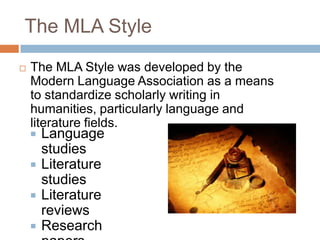
The MLA StyleThe MLA Style was developed by the Modern Language Association as a means to standardize scholarly writing in humanities, particularly language and literature fields.Language studies
Literaturestudies
Literature reviews
Research papers
Manuscripts
BooksThe Works Cited List/BibliographyCommon styles for citing sources are MLA, APA, and Chicago/Turabian. Developed to standardize scholarly types of writing.The purpose is to give credit to your sources, as well as, help readers find the resources you used. Therefore, the citations and Reference Lists should be complete and accurate.
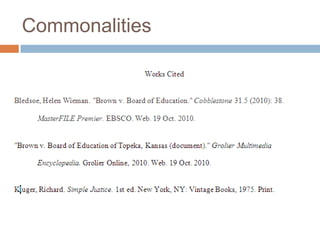
Commonalities
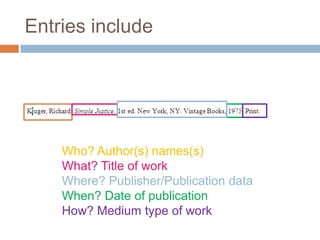
Entries includeWho? Author(s) names(s) What? Title of workWhere? Publisher/Publication dataWhen? Date of publicationHow? Medium type of work
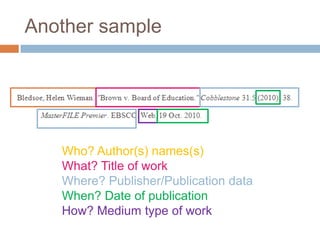
Another sampleWho? Author(s) names(s) What? Title of workWhere? Publisher/Publication dataWhen? Date of publicationHow? Medium type of work
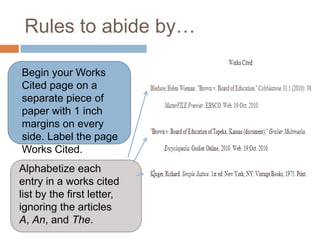
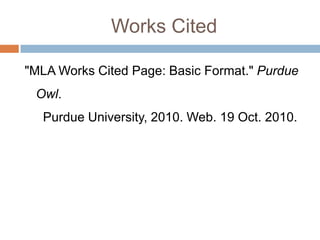
Rules to abide by…Begin your Works Cited page on a separate piece of paper with 1 inch margins on every side. Label the page Works Cited.Alphabetize each entry in a works cited list by the first letter, ignoring the articles A, An, and The.
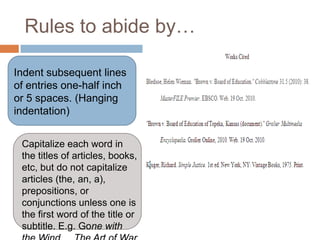
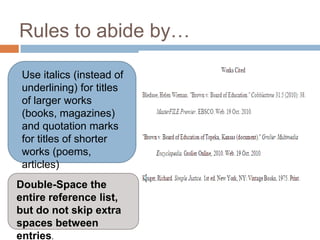
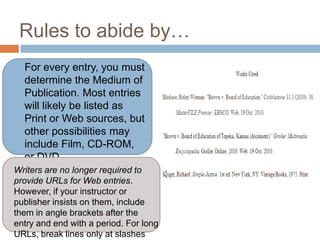
Rules to abide by…Indent subsequent lines of entries one-half inch or 5 spaces. (Hanging indentation)Capitalize each word in the titles of articles, books, etc, but do not capitalize articles (the, an, a), prepositions, or conjunctions unless one is the first word of the title or subtitle. E.g. Gone with the Wind     The Art of War

Mla style basics

  • 1.
  • 2.
    The MLA StyleTheMLA Style was developed by the Modern Language Association as a means to standardize scholarly writing in humanities, particularly language and literature fields.Language studies
  • 3.
  • 4.
  • 5.
  • 6.
  • 7.
    BooksThe Works CitedList/BibliographyCommon styles for citing sources are MLA, APA, and Chicago/Turabian. Developed to standardize scholarly types of writing.The purpose is to give credit to your sources, as well as, help readers find the resources you used. Therefore, the citations and Reference Lists should be complete and accurate.
  • 8.
  • 9.
    Entries includeWho? Author(s)names(s) What? Title of workWhere? Publisher/Publication dataWhen? Date of publicationHow? Medium type of work
  • 10.
    Another sampleWho? Author(s)names(s) What? Title of workWhere? Publisher/Publication dataWhen? Date of publicationHow? Medium type of work
  • 11.
    Rules to abideby…Begin your Works Cited page on a separate piece of paper with 1 inch margins on every side. Label the page Works Cited.Alphabetize each entry in a works cited list by the first letter, ignoring the articles A, An, and The.
  • 12.
    Rules to abideby…Indent subsequent lines of entries one-half inch or 5 spaces. (Hanging indentation)Capitalize each word in the titles of articles, books, etc, but do not capitalize articles (the, an, a), prepositions, or conjunctions unless one is the first word of the title or subtitle. E.g. Gone with the Wind The Art of War