This document discusses materials and structural components for vertical mixed-use buildings. It describes concrete, steel, and aluminum as commonly used materials for high-rise buildings. An alternative material, basalt fiber, is introduced which has better strength characteristics than glass fiber and is highly resistant to various environmental conditions. Basalt fiber is produced from basalt rock through a similar process as glass fiber but requires a higher melting temperature. Research shows basalt fiber has structural behavior similar to glass fiber, but codes have not yet recognized its use. Basalt fiber has high potential but its use currently lags behind other fibers due to lack of code design guidance.
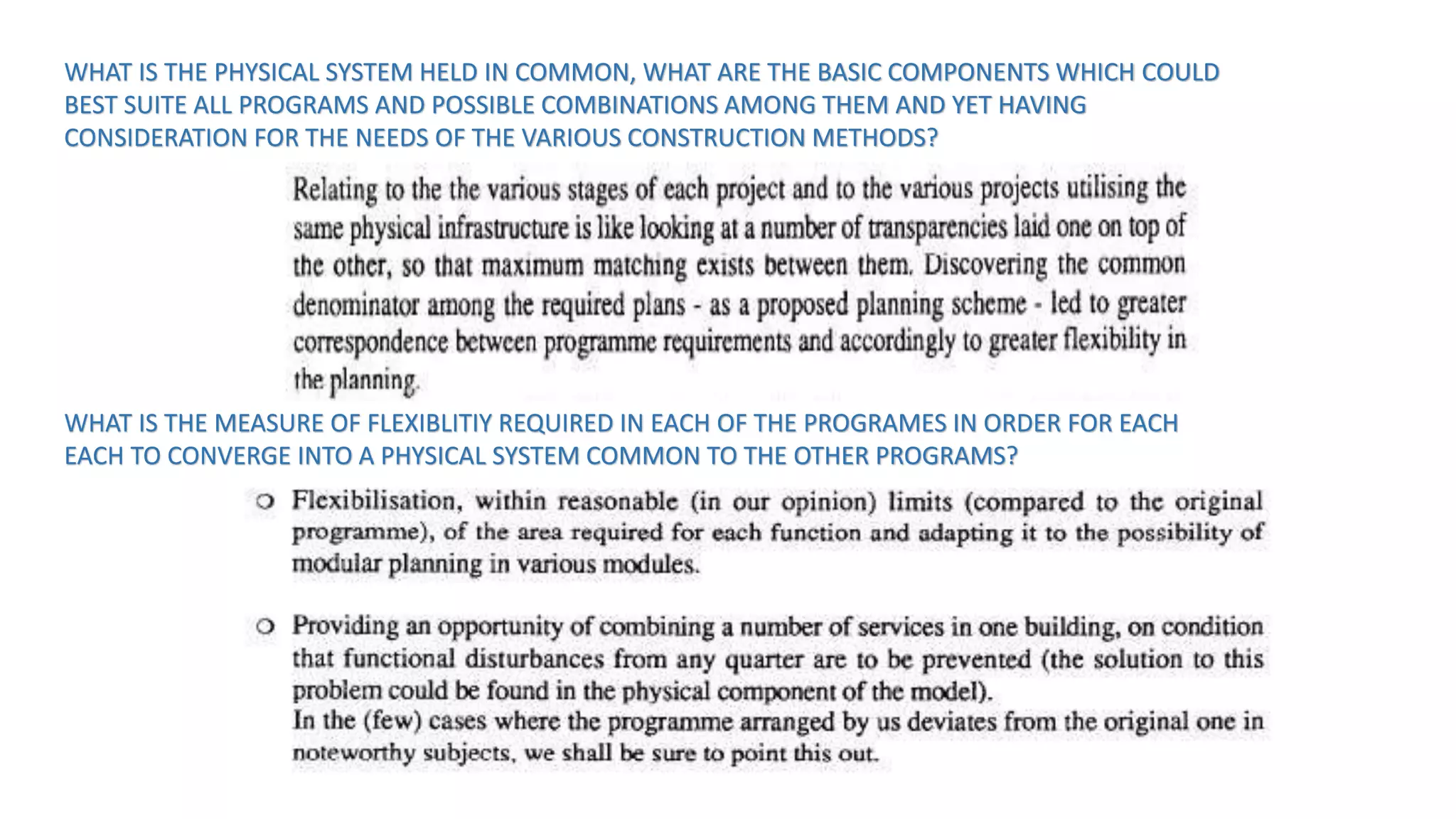
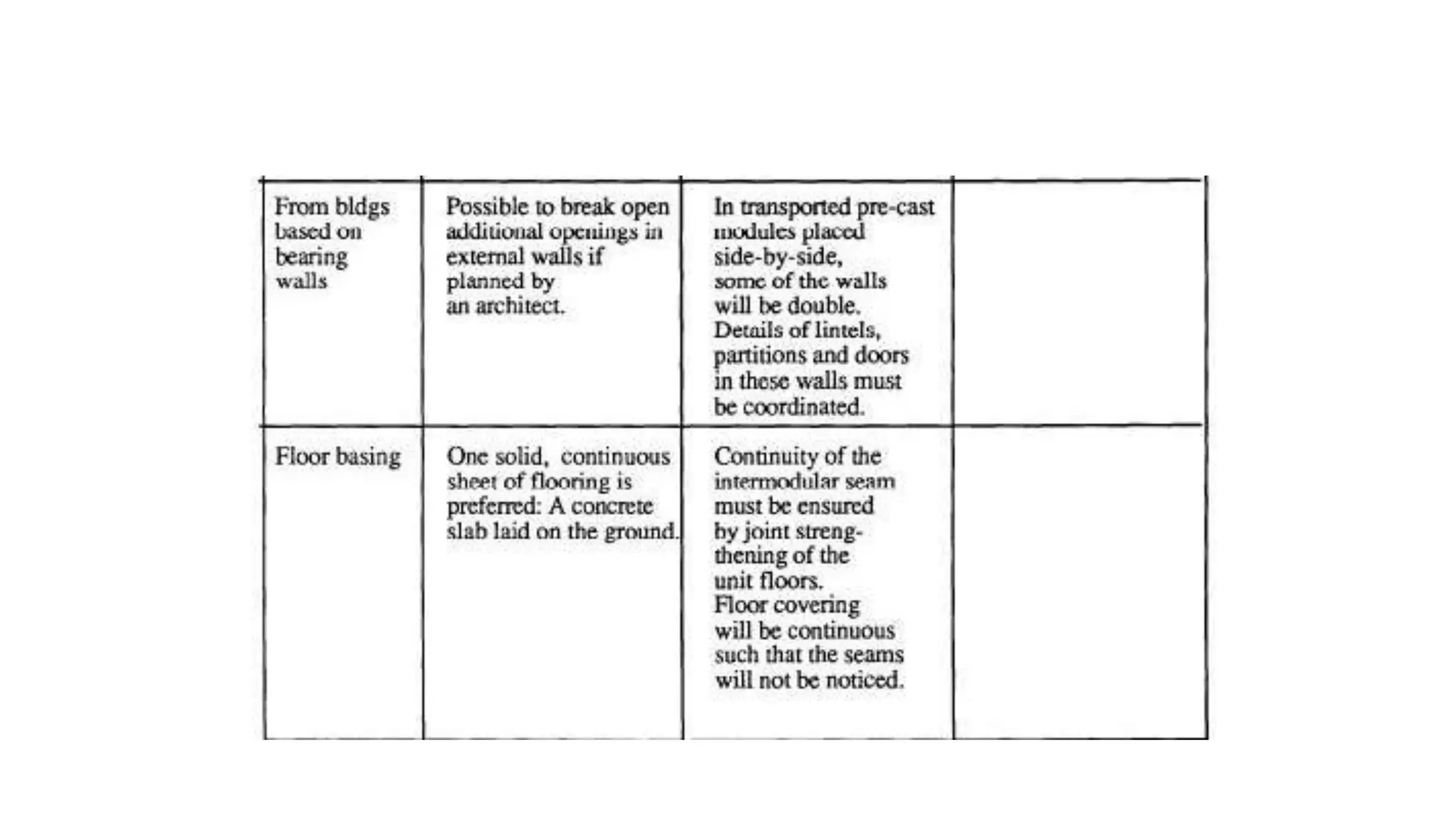
WHAT IS THEPHYSICAL SYSTEM HELD IN COMMON, WHAT ARE THE BASIC COMPONENTS WHICH COULD
BEST SUITE ALL PROGRAMS AND POSSIBLE COMBINATIONS AMONG THEM AND YET HAVING
CONSIDERATION FOR THE NEEDS OF THE VARIOUS CONSTRUCTION METHODS?
WHAT IS THE MEASURE OF FLEXIBLITIY REQUIRED IN EACH OF THE PROGRAMES IN ORDER FOR EACH
EACH TO CONVERGE INTO A PHYSICAL SYSTEM COMMON TO THE OTHER PROGRAMS?
4.
• PUBLIC UNITIS THE CONVERGENCE POINT OF DIFFERENT
PROGRAMS IN SAME BUILDING.
PUBLIC UNIT
• MAIN UNIT IS THE ISOLATED SPACE ,THAT IS ADJACENT TO THE
PUBLIC, SEMI ACCESS AND CONTAINS THE MAJOR FUNCTION
OF THE PROGRAM UNIT
MAIN UNIT
• THESE ARE ADDITIONAL SEPERATIONS INTO MAIN UNIT
DEPENDING ON ITS USE.
ADJACENT UNIT
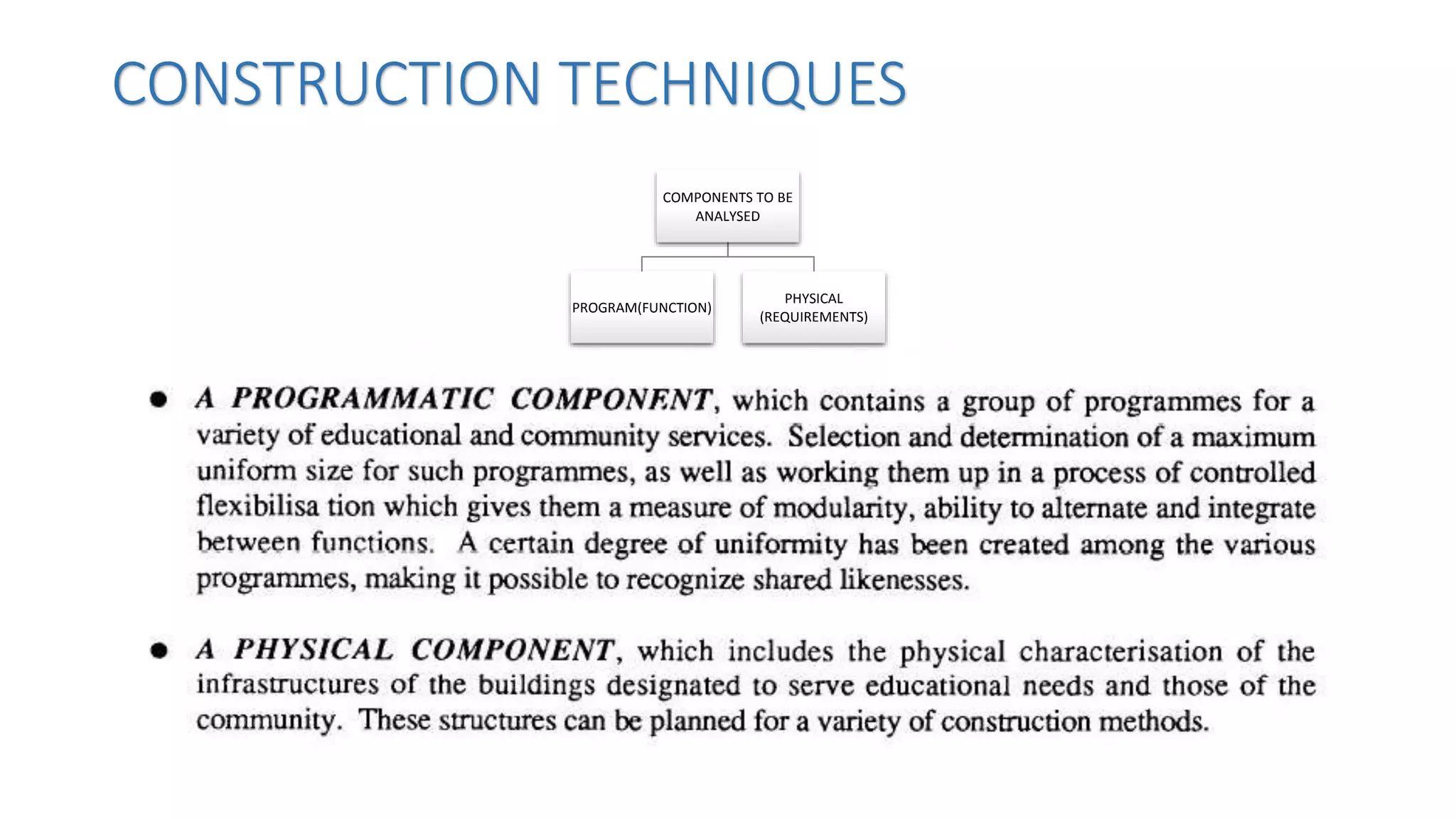
BEFORE UNDERSTANDING THE CONSTRUCTION TECHNIQUES, IT IS IMPORTANT TO REALISE THE TYPE OF PROGRAMS
IN THE STRUCTURE,
TEMPORARY OR PERMANENT.
SECOND, THE DESIGNING OF SPACES AND PATTERN DETERMINES THE CONSTRUCTION METHOD,
CONVENTIONAL OR TRANSITION.
6.
WAREHOUSE METHOD:
THIS TYPEOF DESIGN CONSTRUCTION MOSTLY
INVOLVES EQUAL DIVISION FOR DIFFERENT
PROGRAMS ESTABLISHING HOMOGENITY .
THIS DESIGN IS CARRIED OUT IN TEMPORARY
MIXED USE STRUCTURES.
MODULAR METHOD:
MODULAR METHOD IS DESIGN PROCESS
WHERE THE PROGRAM INDIVIDUALLY IS
CONCENTRATED, GENERALLY ADOPTED FOR
PERMANENT MIXED USE DEVELOPMENT.
EXAMPLE FOR MODULARPLANNING (MOSTLY PERMANENT)
EXAMPLE FOR WAREHOUSE
PANNING(MOSTLY TEMPORARY)
13.
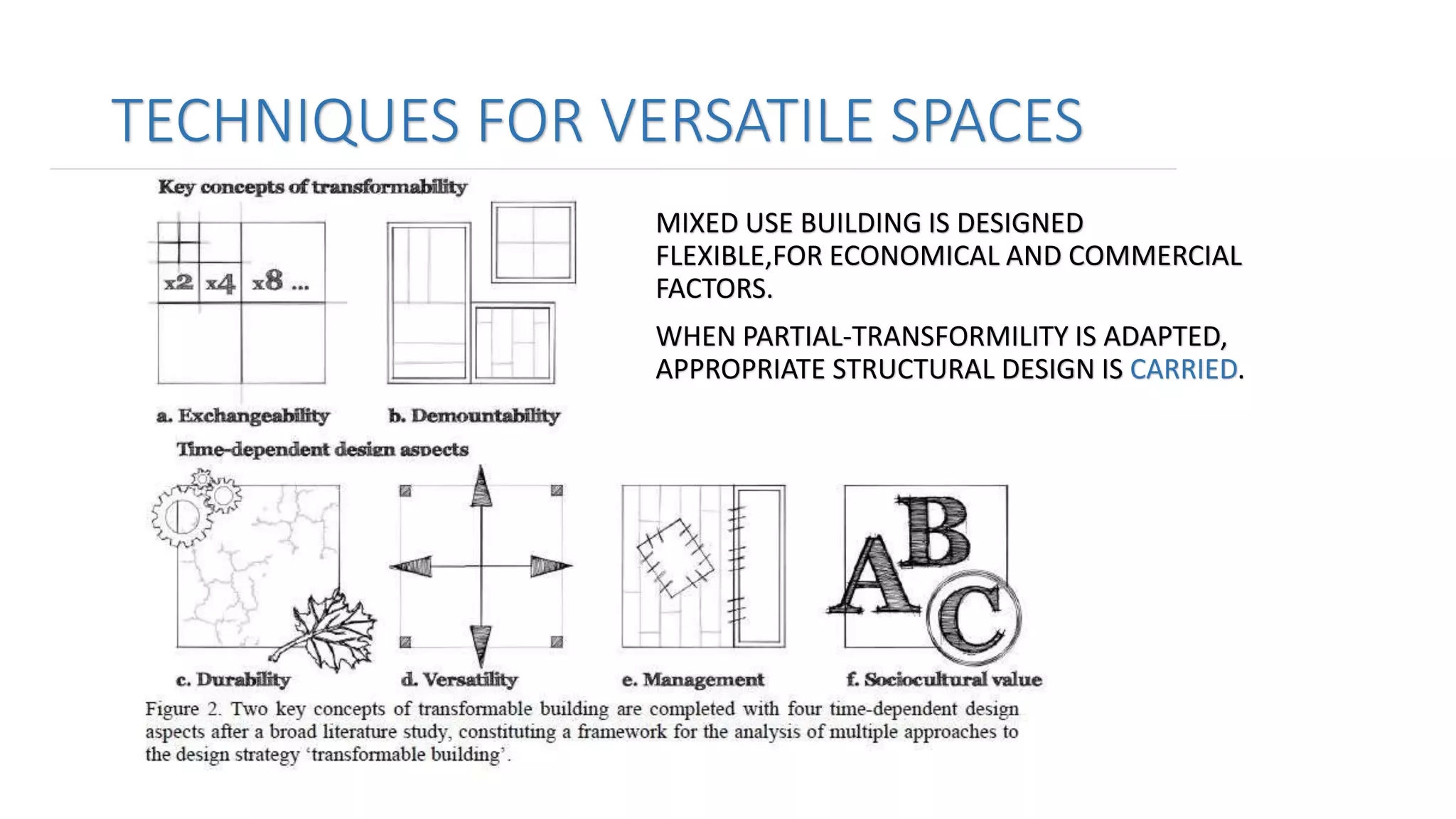
TECHNIQUES FOR VERSATILESPACES
MIXED USE BUILDING IS DESIGNED
FLEXIBLE,FOR ECONOMICAL AND COMMERCIAL
FACTORS.
WHEN PARTIAL-TRANSFORMILITY IS ADAPTED,
APPROPRIATE STRUCTURAL DESIGN IS CARRIED.
Elevator design shouldgive Optimum:
• Number of elevators
• Types of elevators
• Elevator capacities
• Arrangement oF elevator
•
• Minimization of material costs
• Optimization of core geometry
• Minimization of core area
• Minimization of construction time
23.
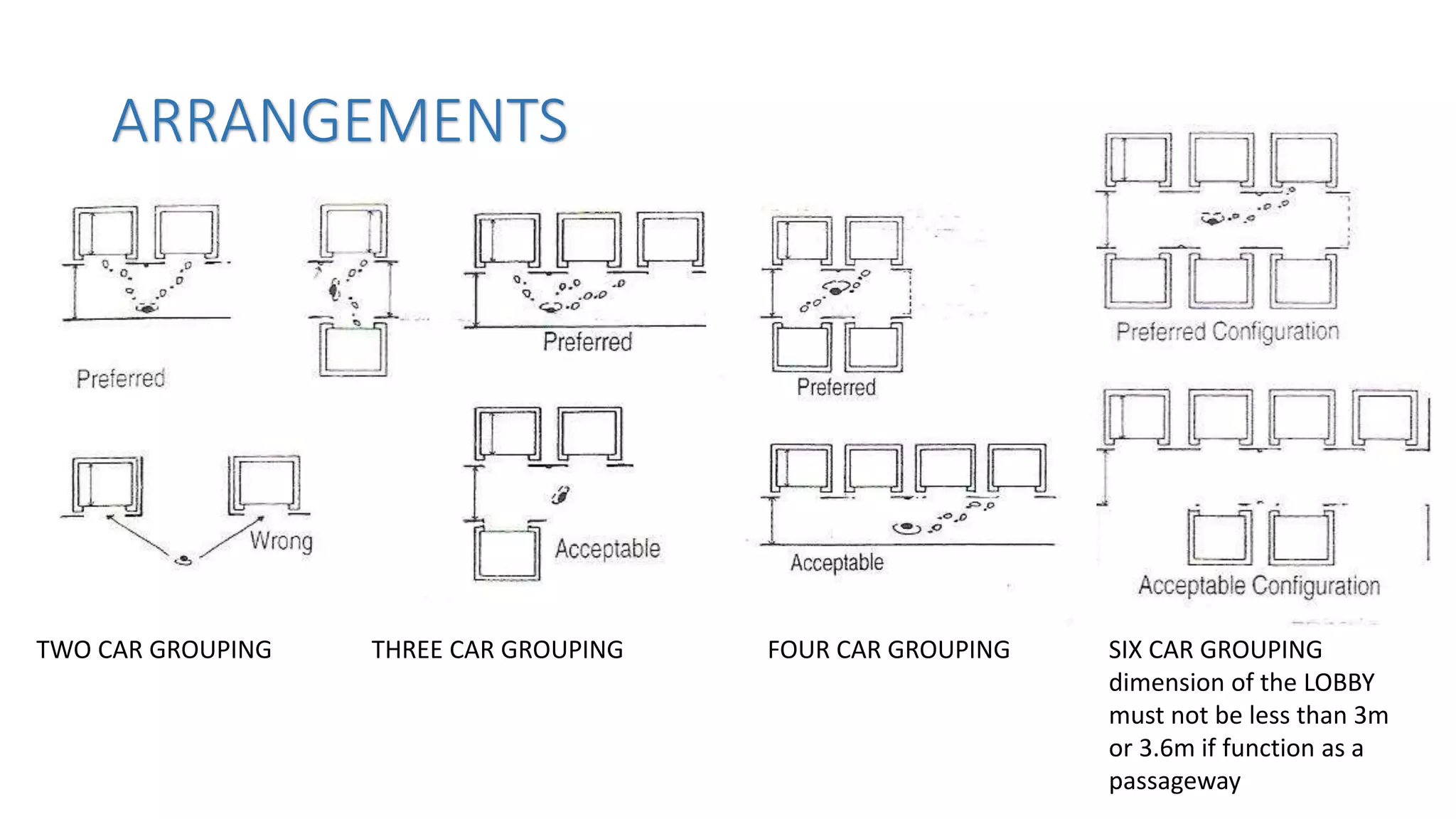
ARRANGEMENTS
TWO CAR GROUPINGTHREE CAR GROUPING FOUR CAR GROUPING SIX CAR GROUPING
dimension of the LOBBY
must not be less than 3m
or 3.6m if function as a
passageway
24.
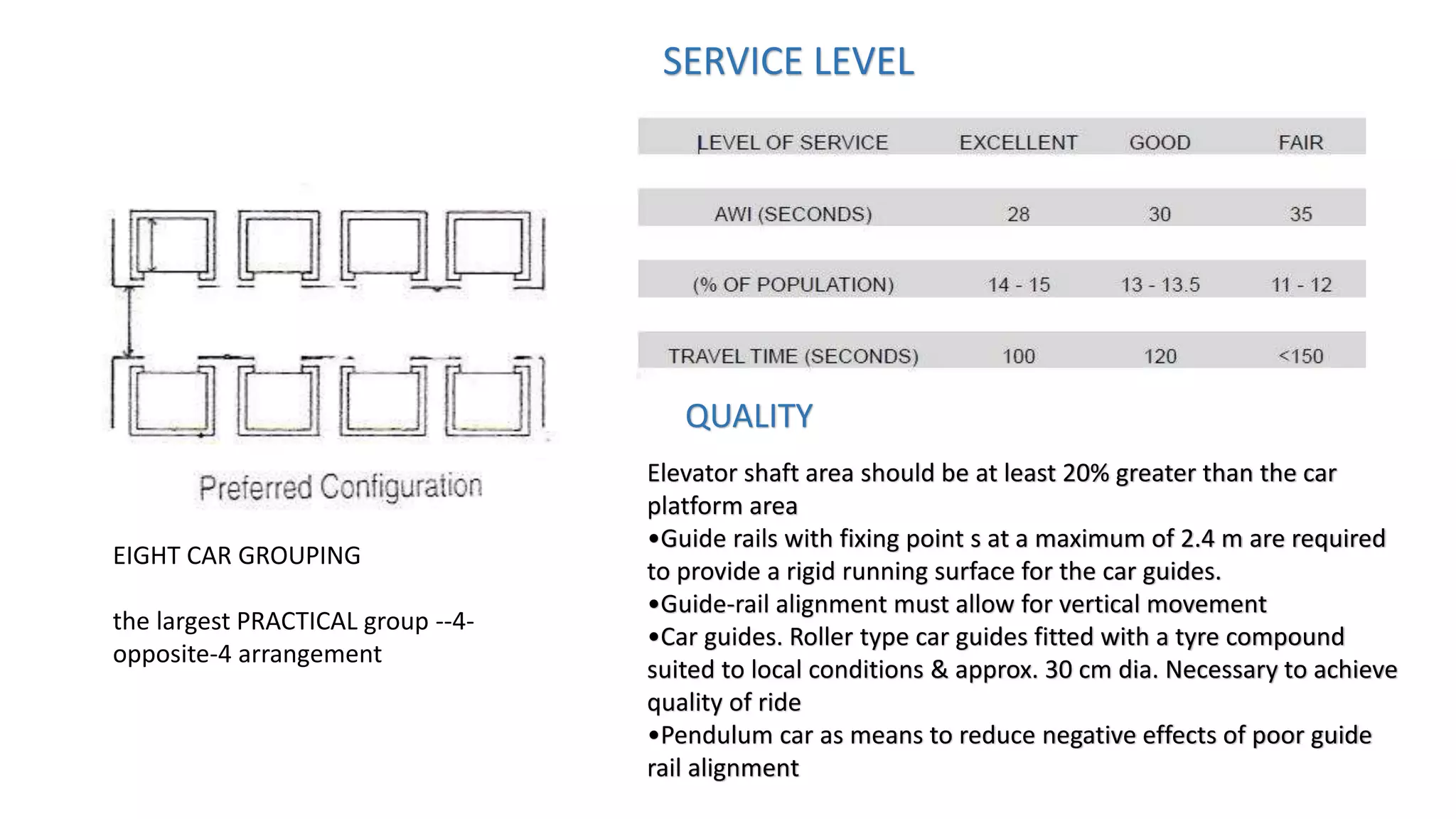
EIGHT CAR GROUPING
thelargest PRACTICAL group --4-
opposite-4 arrangement
SERVICE LEVEL
Elevator shaft area should be at least 20% greater than the car
platform area
•Guide rails with fixing point s at a maximum of 2.4 m are required
to provide a rigid running surface for the car guides.
•Guide-rail alignment must allow for vertical movement
•Car guides. Roller type car guides fitted with a tyre compound
suited to local conditions & approx. 30 cm dia. Necessary to achieve
quality of ride
•Pendulum car as means to reduce negative effects of poor guide
rail alignment
QUALITY
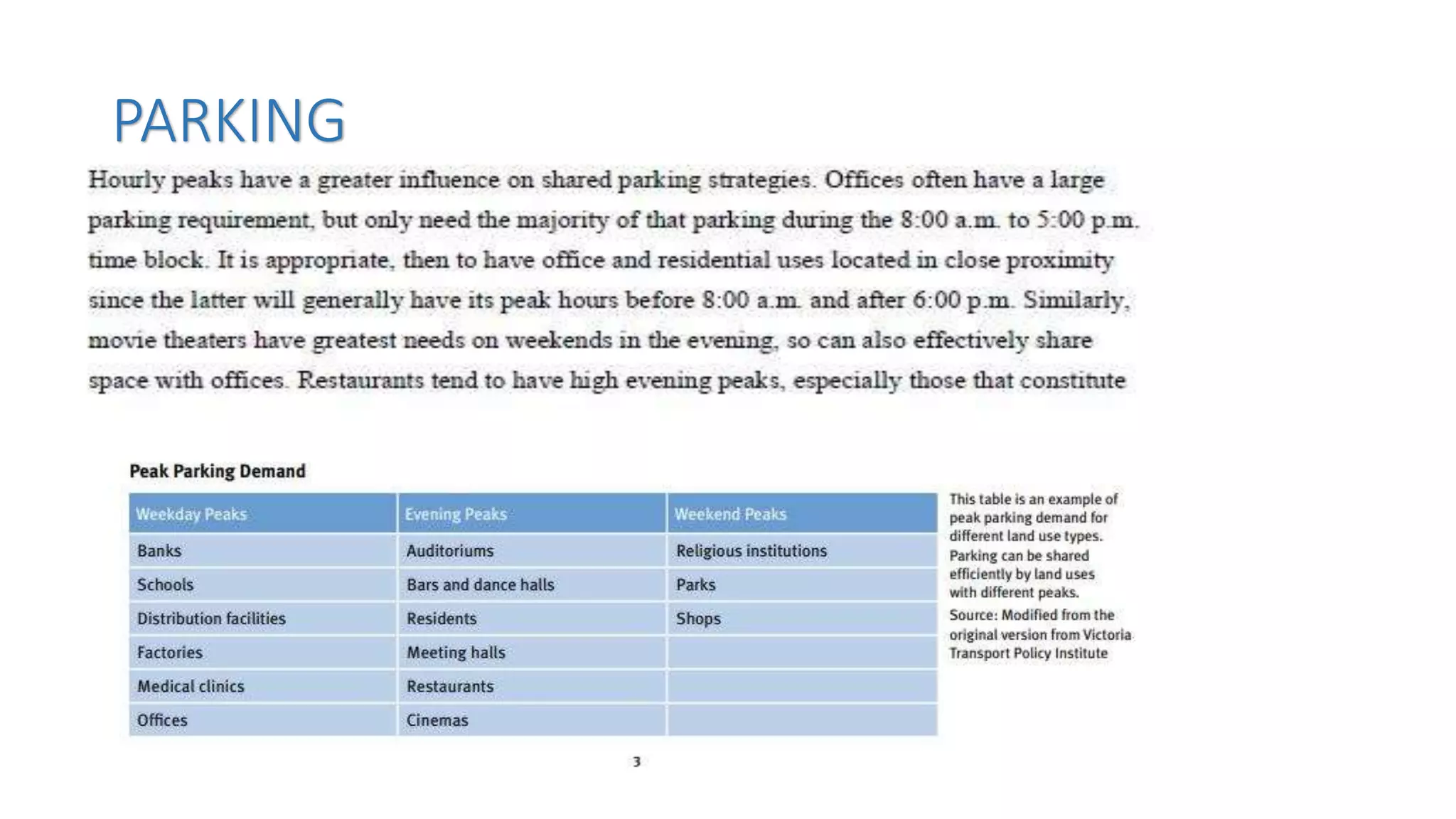
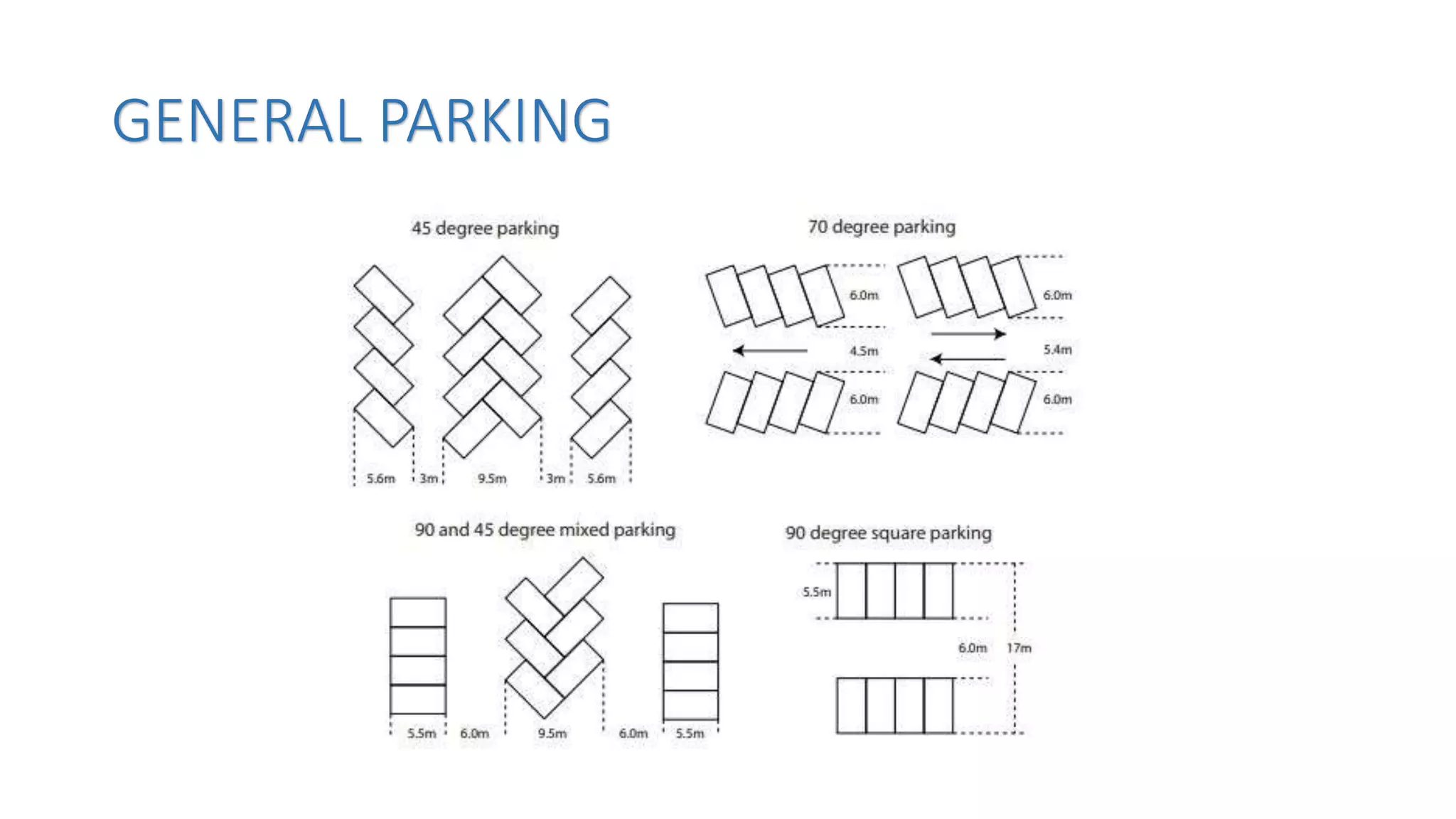
PARKING
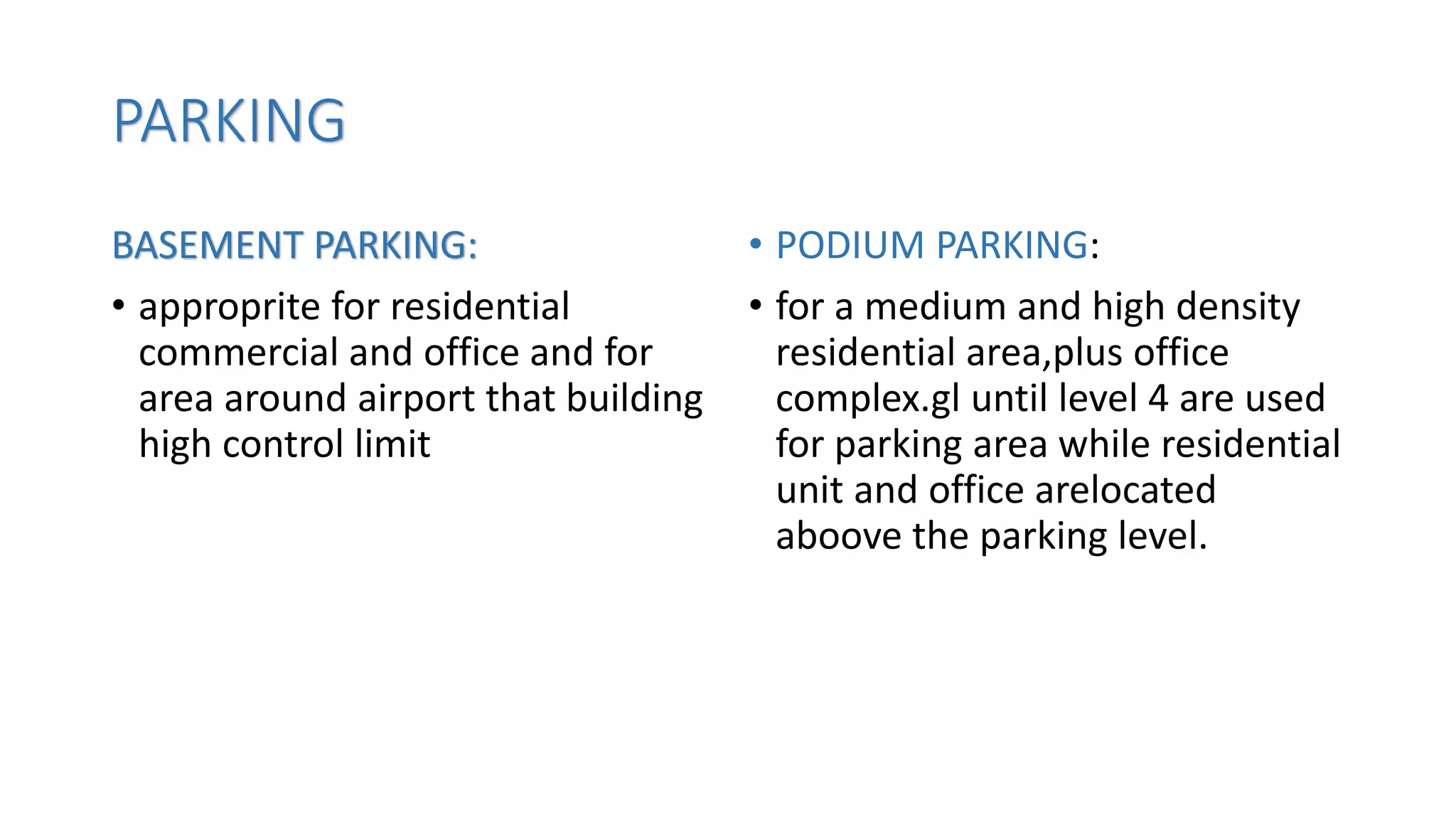
BASEMENT PARKING:
• appropritefor residential
commercial and office and for
area around airport that building
high control limit
• PODIUM PARKING:
• for a medium and high density
residential area,plus office
complex.gl until level 4 are used
for parking area while residential
unit and office arelocated
aboove the parking level.
30.
Characteristics and featuresthat distinguish the
Basement Parking space type include:
• Additional Structural Requirements:
Below grade extension of the building structure to accommodate basement parking is required. This
involves additional excavation, structural frame, floor slabs above, sloped vehicle access ramps, and
basement perimeter walls and partitions separating parking from other building enclosed areas. Typical
structural floor construction is 4000 PSI 6" concrete slab with welded wire fabric designed for a live load
of 80 LBS/SF, and with a ramp slope of no more than 5.5%.
• Signage and Wayfinding:
Signage should indicate all major internal pedestrian access points as well as external major roads and
buildings. In basement parking, pavement markings are reflective paint and traffic control signage is
usually reflective metal with minimum 5" high letters. The Manual on Uniform Traffic Control Devices for
Streets and Highways (ANSI D 6.1e) provides guidance on pavement marking and signage.
31.
Ventilation:
The parking areais generally supplied with unconditioned air utilizing multiple speed
fans, preferably interlocked with carbon monoxide detectors tied into an alarm system.
1-1/2 CFM per square foot capacity and 100% exhaust air coordinated with the supply
air system is recommended.
Parking Management:
Usually pre-manufactured booths with
transaction windows and deal trays are installed
at vehicular entrances/exits to manage entering
and exiting vehicles. A cooling system, like a
packaged terminal air conditioner (PTAC), is
usually incorporated to supply the booth with
outside air at a positive pressure relative to
surrounding parking areas.
Security Protection: Beyond parking management,
several security measures are incorporated into typical
basement parking spaces to ensure the security of visitors.
These generally include: uniform lighting coverage, preferably
with energy- efficient light fixtures; closed circuit television
(CCTV) cameras; card reader access control for vehicle entrance
doors; concrete filled protective bollards to protect vehicle entry
keypads; and hydraulic lift wedge type barriers for egress
control. Also critical is security control of access from the
parking area to other occupied areas of the building either
through termination at a security screening in the main lobby or
through access control at the elevator or stair entrance. Elevator
lobbies are usually tempered safety glass panels with glazed
exterior doors containing keyed lever lockset with panic release
bar. See also WBDG Safe—Security for Building Occupants and
Assets.
32.
• Fire andLife Safety: Proper notification systems, lighting, and signage are
required to facilitate safe and speedy evacuations during an emergency in the
basement parking spaces. This is usually accomplished with proper fire alarm
wiring, pull stations, strobes, annunciators, and exit signage. In addition, exposed
pipe sprinkler system is extended into the basement parking, with a hose bib at
every level. See also WBDG Safe—Fire Protection.
• Drainage and Storm Water Management: Water runoff from vehicles is
typically dealt with in basement parking spaces by installing trench drains with cast
iron covers at all vehicle entrance/exit points, sand and oil traps at all storm drain
discharge points, and floor area drains at every low point.
ALTERNATIVE MATERIAL- BASALTFIBRE
• Basalt fiber is a relative newcomer to fiber reinforced polymers (FRPs) and structural
composites. It has a similar chemical composition as glass fiber but has better strength
characteristics, and unlike most glass fibers is highly resistant to alkaline, acidic and salt
attack making it a good candidate for concrete, bridge and shoreline structures.
• Basalt Fiber Spool
• Compared to carbon and aramid fiber, it has
the features of wider application temperature
range -452° F to 1,200° F (-269° C to +650° C),
higher oxidation resistance, higher radiation
resistance, higher compression strength, and
higher shear strength. (Note that application
temperatures of FRPs are limited by the glass
transition temperature of the matrix, which is
lower than the application temperature of the
fibers.)
37.
• Basalt isa type of igneous rock formed by the
rapid cooling of lava at the surface of a planet.
It is the most common rock in the Earth’s
crust.[1] Basalt rock characteristics vary from
the source of lava, cooling rate, and historical
exposure to the elements. High quality fibers
are made from basalt deposits with uniform
chemical makeup.
• The production of basalt and glass fibers are
similar. Crushed basalt rock is the only raw
material required for manufacturing the fiber.
It is a continuous fiber produced through
igneous basalt rock melt drawing at about
2,700° F (1,500° C).[2]
• Though the temperature required to produce
fibers from basalt is higher than glass, it is
reported by some researchers that
production of fibers made from basalt
requires less energy by due to the uniformity
of its heating.
38.
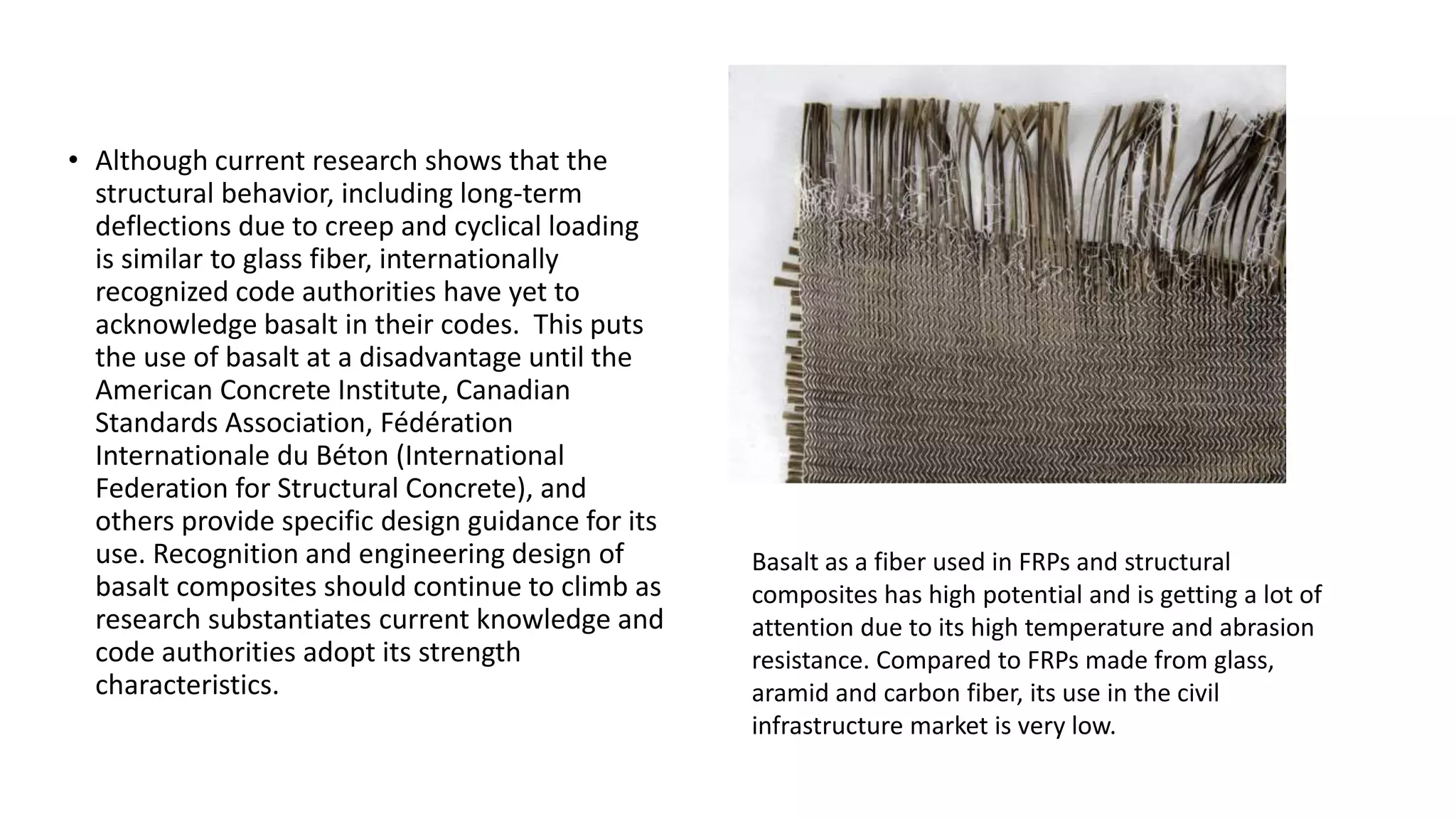
• Although currentresearch shows that the
structural behavior, including long-term
deflections due to creep and cyclical loading
is similar to glass fiber, internationally
recognized code authorities have yet to
acknowledge basalt in their codes. This puts
the use of basalt at a disadvantage until the
American Concrete Institute, Canadian
Standards Association, Fédération
Internationale du Béton (International
Federation for Structural Concrete), and
others provide specific design guidance for its
use. Recognition and engineering design of
basalt composites should continue to climb as
research substantiates current knowledge and
code authorities adopt its strength
characteristics.
Basalt as a fiber used in FRPs and structural
composites has high potential and is getting a lot of
attention due to its high temperature and abrasion
resistance. Compared to FRPs made from glass,
aramid and carbon fiber, its use in the civil
infrastructure market is very low.














![• Basalt is a type of igneous rock formed by the
rapid cooling of lava at the surface of a planet.
It is the most common rock in the Earth’s
crust.[1] Basalt rock characteristics vary from
the source of lava, cooling rate, and historical
exposure to the elements. High quality fibers
are made from basalt deposits with uniform
chemical makeup.
• The production of basalt and glass fibers are
similar. Crushed basalt rock is the only raw
material required for manufacturing the fiber.
It is a continuous fiber produced through
igneous basalt rock melt drawing at about
2,700° F (1,500° C).[2]
• Though the temperature required to produce
fibers from basalt is higher than glass, it is
reported by some researchers that
production of fibers made from basalt
requires less energy by due to the uniformity
of its heating.](https://image.slidesharecdn.com/literaturestudy-190217161742/75/MIXED-USE-DESIGN-BASICS-37-2048.jpg)