Presented by -
Barkha Somani ,Mahim
Lodha,Mittali Jain
Rajat Suwalka
{M.B.A 1st sem
Sangam university}
Presented to -
Mrs. Nidhi bhatnagar
{Professor of managerial commnuication
SANGAM UNIVERSITY
Paper code 105}
1. Commerce
2. E-commerce
2.1 examples of e-commerce
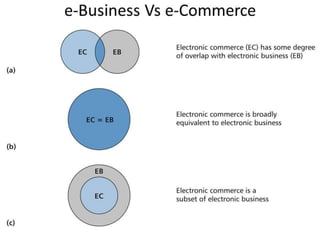
2.2 E-business v/s e-commerce
2.3 Uses of e-commerce
2.4 process
2.5 Types of E-commerce
2.5.1 B2B
2.5.2 B2C
2.5.3 C2C
2.5.4 B2G
2.5.5 M-C
3. Worlds leading companies
4. Opportunities
5. Pros
6. Cons
7. Summary
 Commerce is a division of trade or production which
deals with the exchange of goods and services from
producer to final consumer.
 Commerce need –
1) Product or service to sell.
2) Place from which to sell the products.
3) Figure out a way to get people to come to your place.
4) A way to accept order , money and returns.
 Commonly known as electronic commerce or
electronic marketing.
 It consist of buying and selling goods and
services over an electronic system such as the
internet.
 E-commerce is the purchasing , selling &
exchanging goods and services over computer
network or internet through which transactions or
terms of sale are performed electronically.
o Low Entry cost
o Reduces transaction cost
o Access to the global market
o Secure market secure
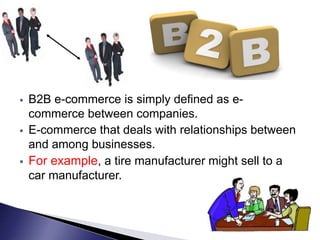
 B2B e-commerce is simply defined as e-
commerce between companies.
 E-commerce that deals with relationships between
and among businesses.
 For example, a tire manufacturer might sell to a
car manufacturer.
 Business-to-consumer e-commerce, or commerce
between companies and consumers, involves
customers gathering information; purchasing
physical goods or receiving products over an
electronic network.
 It is the second largest and the earliest form of e-
commerce.
 Example: Dell selling me a laptop
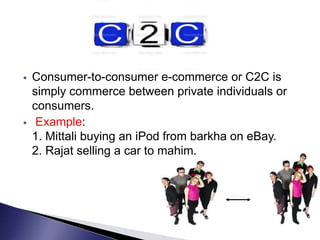
 Consumer-to-consumer e-commerce or C2C is
simply commerce between private individuals or
consumers.
 Example:
1. Mittali buying an iPod from barkha on eBay.
2. Rajat selling a car to mahim.
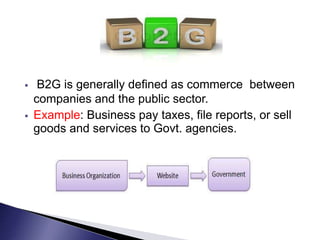
 B2G is generally defined as commerce between
companies and the public sector.
 Example: Business pay taxes, file reports, or sell
goods and services to Govt. agencies.
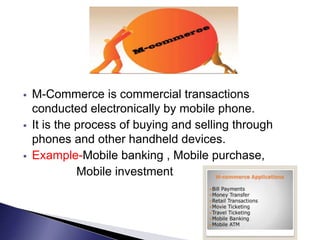
 M-Commerce is commercial transactions
conducted electronically by mobile phone.
 It is the process of buying and selling through
phones and other handheld devices.
 Example-Mobile banking , Mobile purchase,
Mobile investment
 Amazon
 JD .com
 Wal-Mart
 Ebay
 Otto group
 Alibaba(excluding wholesale)
 Groupe
 Tesco
 Rakuten
 Best buy
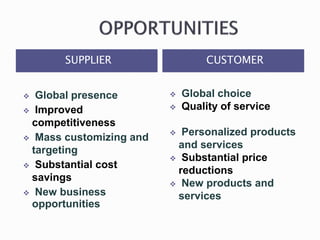
SUPPLIER CUSTOMER
 Global presence
 Improved
competitiveness
 Mass customizing and
targeting
 Substantial cost
savings
 New business
opportunities
 Global choice
 Quality of service
 Personalized products
and services
 Substantial price
reductions
 New products and
services
 Electronic commerce can increase sales and
decrease costs
 If advertising is done well on the Web, it can
get a firm’s promotional message out to
potential customers in every country
 Using e-commerce sales support and order-
taking processes, a business can
◦ Reduce costs of handling sales inquiries
◦ Provide price quotes
 It increases purchasing opportunities for
buyers
 Negotiating price and delivery terms is
easier
 The following cost less to issue and arrive
securely and quickly
◦ Electronic payments of tax refunds
◦ Public retirement
◦ Welfare support
 Unable to examine products personally.
 Not everyone is connected to the internet.
 There is the possibility of credit card number theft.
 Mechanical failures can cause unpredictable
effects on the total processes.
 Commerce
◦ Negotiated exchange of goods or services
 Electronic commerce
◦ Application of new technologies to conduct
business more effectively
 Using electronic commerce, businesses
have
◦ Created new products and services
◦ Improved promotion, marketing, and delivery of
existing offerings
 The global nature of electronic commerce
leads to many opportunities and few
challenges
 To conduct electronic commerce across
international borders, you must understand
the trust, cultural, language , and legal
issues
Mittali ecommerce

Mittali ecommerce

  • 1.
    Presented by - BarkhaSomani ,Mahim Lodha,Mittali Jain Rajat Suwalka {M.B.A 1st sem Sangam university} Presented to - Mrs. Nidhi bhatnagar {Professor of managerial commnuication SANGAM UNIVERSITY Paper code 105}
  • 2.
    1. Commerce 2. E-commerce 2.1examples of e-commerce 2.2 E-business v/s e-commerce 2.3 Uses of e-commerce 2.4 process 2.5 Types of E-commerce 2.5.1 B2B 2.5.2 B2C 2.5.3 C2C 2.5.4 B2G 2.5.5 M-C 3. Worlds leading companies 4. Opportunities 5. Pros 6. Cons 7. Summary
  • 3.
     Commerce isa division of trade or production which deals with the exchange of goods and services from producer to final consumer.  Commerce need – 1) Product or service to sell. 2) Place from which to sell the products. 3) Figure out a way to get people to come to your place. 4) A way to accept order , money and returns.
  • 4.
     Commonly knownas electronic commerce or electronic marketing.  It consist of buying and selling goods and services over an electronic system such as the internet.  E-commerce is the purchasing , selling & exchanging goods and services over computer network or internet through which transactions or terms of sale are performed electronically.
  • 7.
    o Low Entrycost o Reduces transaction cost o Access to the global market o Secure market secure
  • 10.
     B2B e-commerceis simply defined as e- commerce between companies.  E-commerce that deals with relationships between and among businesses.  For example, a tire manufacturer might sell to a car manufacturer.
  • 11.
     Business-to-consumer e-commerce,or commerce between companies and consumers, involves customers gathering information; purchasing physical goods or receiving products over an electronic network.  It is the second largest and the earliest form of e- commerce.  Example: Dell selling me a laptop
  • 12.
     Consumer-to-consumer e-commerceor C2C is simply commerce between private individuals or consumers.  Example: 1. Mittali buying an iPod from barkha on eBay. 2. Rajat selling a car to mahim.
  • 13.
     B2G isgenerally defined as commerce between companies and the public sector.  Example: Business pay taxes, file reports, or sell goods and services to Govt. agencies.
  • 14.
     M-Commerce iscommercial transactions conducted electronically by mobile phone.  It is the process of buying and selling through phones and other handheld devices.  Example-Mobile banking , Mobile purchase, Mobile investment
  • 15.
     Amazon  JD.com  Wal-Mart  Ebay  Otto group  Alibaba(excluding wholesale)  Groupe  Tesco  Rakuten  Best buy
  • 16.
    SUPPLIER CUSTOMER  Globalpresence  Improved competitiveness  Mass customizing and targeting  Substantial cost savings  New business opportunities  Global choice  Quality of service  Personalized products and services  Substantial price reductions  New products and services
  • 19.
     Electronic commercecan increase sales and decrease costs  If advertising is done well on the Web, it can get a firm’s promotional message out to potential customers in every country  Using e-commerce sales support and order- taking processes, a business can ◦ Reduce costs of handling sales inquiries ◦ Provide price quotes
  • 20.
     It increasespurchasing opportunities for buyers  Negotiating price and delivery terms is easier  The following cost less to issue and arrive securely and quickly ◦ Electronic payments of tax refunds ◦ Public retirement ◦ Welfare support
  • 22.
     Unable toexamine products personally.  Not everyone is connected to the internet.  There is the possibility of credit card number theft.  Mechanical failures can cause unpredictable effects on the total processes.
  • 23.
     Commerce ◦ Negotiatedexchange of goods or services  Electronic commerce ◦ Application of new technologies to conduct business more effectively  Using electronic commerce, businesses have ◦ Created new products and services ◦ Improved promotion, marketing, and delivery of existing offerings
  • 24.
     The globalnature of electronic commerce leads to many opportunities and few challenges  To conduct electronic commerce across international borders, you must understand the trust, cultural, language , and legal issues