LETS GET STARTED
PRESENTED BY :-
MUHAMMAD UMAR (R1F15BSCS0015)
UNIVERSITY OF CENTRAL PUNJAB
(RAWALPINDI CAMPUS)
• The buying and selling of products and
services by businesses
and consumers through an
electronic medium, without using any
paper documents.
• E-commerce is widely considered the
buying and selling of products over the
internet.
• E-commerce is
subdivided into
following categories: -
 Business to business or
B2B
 Business to consumer or
B2C
 Consumer to consumer or
C2C
 Business to Government
or B2G
 Government to
Government or G2G
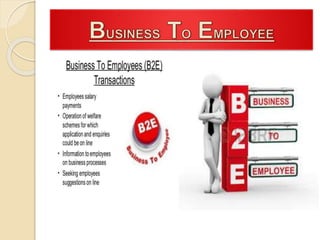
 Business to Employee or
B2E
also called electronic
commerce.
 Non-Cash Payment: E-Commerce enables use of credit cards, debit cards,
smart cards, electronic fund transfer via bank’s website and other modes of
electronics payments.
 Improved Sales: Using E-Commerce orders for the products can be generated
any time, any where without any human intervention. By this way, dependencies
to buy a product reduce at large and sales increases.
 Support: E-Commerce provides various ways to provide pre sales and post
sales assistance to provide better services to customers.
 Inventory Management: Using E-Commerce inventory management of
products becomes automated. Reports get generated instantly when required.
Product inventory managements becomes very efficient and easy to maintain.
 Communication Improvement: E-Commerce provides ways for faster,
efficient, reliable communication with customers and partners.
 Advertising / Marketing: E-Commerce increases the reach of advertising of
products and services of business. It helps in better marketing management of
products / services.
 24x7 Service Availability: E-Commerce automates business of enterprises and
services provided by them to customers are available anytime, anywhere. Here
24x7 refers to 24 hours of each seven days of week.
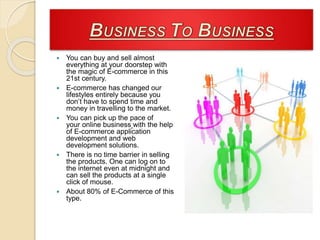
 You can buy and sell almost
everything at your doorstep with
the magic of E-commerce in this
21st century.
 E-commerce has changed our
lifestyles entirely because you
don’t have to spend time and
money in travelling to the market.
 You can pick up the pace of
your online business with the help
of E-commerce application
development and web
development solutions.
 There is no time barrier in selling
the products. One can log on to
the internet even at midnight and
can sell the products at a single
click of mouse.
 About 80% of E-Commerce of this
type.
 A transaction conducted over the Internet bet
-
ween a business and a consumer. For exampl
e, an online publisher may sell a
book to a customer
ship it to him/her, and receive payment
all without ever meeting the customer.
 B2C Ecommerce
first became common in the 1990s with the
popularization of the Internet.
 The conducting
of commerce by companies, government age
ncies, and institutions with consumers over th
e Internet. Amazon.com is typical of a
company engaged in B2C E-commerce.
 Agility, quickness, flexibility and simplicity —
when it comes to B2C, these are the tools of
successful.
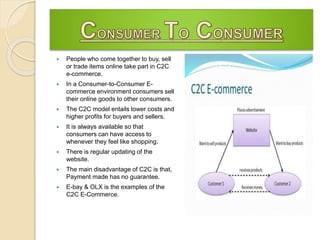
 People who come together to buy, sell
or trade items online take part in C2C
e-commerce.
 In a Consumer-to-Consumer E-
commerce environment consumers sell
their online goods to other consumers.
 The C2C model entails lower costs and
higher profits for buyers and sellers.
 It is always available so that
consumers can have access to
whenever they feel like shopping.
 There is regular updating of the
website.
 The main disadvantage of C2C is that,
Payment made has no guarantee.
 E-bay & OLX is the examples of the
C2C E-Commerce.
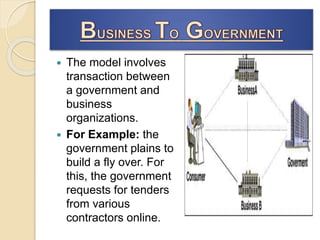
 The model involves
transaction between
a government and
business
organizations.
 For Example: the
government plains to
build a fly over. For
this, the government
requests for tenders
from various
contractors online.
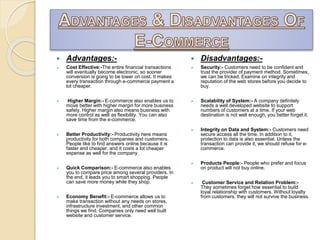
 Advantages:-
 Cost Effective:-The entire financial transactions
will eventually become electronic, so sooner
conversion is going to be lower on cost. It makes
every transaction through e-commerce payment a
lot cheaper.
 Higher Margin:- E-commerce also enables us to
move better with higher margin for more business
safety. Higher margin also means business with
more control as well as flexibility. You can also
save time from the e-commerce.
 Better Productivity:- Productivity here means
productivity for both companies and customers.
People like to find answers online because it is
faster and cheaper, and it costs a lot cheaper
expense as well for the company.
 Quick Comparison:- E-commerce also enables
you to compare price among several providers. In
the end, it leads you to smart shopping. People
can save more money while they shop.
 Economy Benefit:- E-commerce allows us to
make transaction without any needs on stores,
infrastructure investment, and other common
things we find. Companies only need well built
website and customer service.
 Disadvantages:-
 Security:- Customers need to be confident and
trust the provider of payment method. Sometimes,
we can be tricked. Examine on integrity and
reputation of the web stores before you decide to
buy.
 Scalability of System:- A company definitely
needs a well developed website to support
numbers of customers at a time. If your web
destination is not well enough, you better forget it.
 Integrity on Data and System:- Customers need
secure access all the time. In addition to it,
protection to data is also essential. Unless the
transaction can provide it, we should refuse for e-
commerce.
 Products People:- People who prefer and focus
on product will not buy online.
 Customer Service and Relation Problem:-
They sometimes forget how essential to build
loyal relationship with customers. Without loyalty
from customers, they will not survive the business.
 Advantages:-
 Faster buying/selling procedure, as
well as easy to find products.
 Buying/selling 24/7.
 Low operational costs and better
quality of services.
 No need of physical company set-
ups.
 Easy to start and manage a
business.
 Customers can easily select
products from different providers
without moving around physically.
 Disadvantages:-
 Any one, good or bad, can easily
start a business. And there are many
bad sites which eat up customers’
money.
 There is no guarantee of product
quality.
 Mechanical failures can cause
unpredictable effects on the total
processes.
 As there is minimum chance of
direct customer to company
interactions, customer loyalty is
always on a check.
 There are many hackers who look
for opportunities, and thus an
ecommerce site, service, payment
gateways, all are always prone to
attack.
BUSINESS APPLICATIONS
Email
Instant messaging
Online shopping and order tracking
Online banking
Shopping cart software
Teleconferencing
Electronic tickets
E-Commerce || Presentation

E-Commerce || Presentation

  • 1.
  • 2.
    PRESENTED BY :- MUHAMMADUMAR (R1F15BSCS0015) UNIVERSITY OF CENTRAL PUNJAB (RAWALPINDI CAMPUS)
  • 3.
    • The buyingand selling of products and services by businesses and consumers through an electronic medium, without using any paper documents. • E-commerce is widely considered the buying and selling of products over the internet.
  • 4.
    • E-commerce is subdividedinto following categories: -  Business to business or B2B  Business to consumer or B2C  Consumer to consumer or C2C  Business to Government or B2G  Government to Government or G2G  Business to Employee or B2E also called electronic commerce.
  • 5.
     Non-Cash Payment:E-Commerce enables use of credit cards, debit cards, smart cards, electronic fund transfer via bank’s website and other modes of electronics payments.  Improved Sales: Using E-Commerce orders for the products can be generated any time, any where without any human intervention. By this way, dependencies to buy a product reduce at large and sales increases.  Support: E-Commerce provides various ways to provide pre sales and post sales assistance to provide better services to customers.  Inventory Management: Using E-Commerce inventory management of products becomes automated. Reports get generated instantly when required. Product inventory managements becomes very efficient and easy to maintain.  Communication Improvement: E-Commerce provides ways for faster, efficient, reliable communication with customers and partners.  Advertising / Marketing: E-Commerce increases the reach of advertising of products and services of business. It helps in better marketing management of products / services.  24x7 Service Availability: E-Commerce automates business of enterprises and services provided by them to customers are available anytime, anywhere. Here 24x7 refers to 24 hours of each seven days of week.
  • 7.
     You canbuy and sell almost everything at your doorstep with the magic of E-commerce in this 21st century.  E-commerce has changed our lifestyles entirely because you don’t have to spend time and money in travelling to the market.  You can pick up the pace of your online business with the help of E-commerce application development and web development solutions.  There is no time barrier in selling the products. One can log on to the internet even at midnight and can sell the products at a single click of mouse.  About 80% of E-Commerce of this type.
  • 8.
     A transactionconducted over the Internet bet - ween a business and a consumer. For exampl e, an online publisher may sell a book to a customer ship it to him/her, and receive payment all without ever meeting the customer.  B2C Ecommerce first became common in the 1990s with the popularization of the Internet.  The conducting of commerce by companies, government age ncies, and institutions with consumers over th e Internet. Amazon.com is typical of a company engaged in B2C E-commerce.  Agility, quickness, flexibility and simplicity — when it comes to B2C, these are the tools of successful.
  • 9.
     People whocome together to buy, sell or trade items online take part in C2C e-commerce.  In a Consumer-to-Consumer E- commerce environment consumers sell their online goods to other consumers.  The C2C model entails lower costs and higher profits for buyers and sellers.  It is always available so that consumers can have access to whenever they feel like shopping.  There is regular updating of the website.  The main disadvantage of C2C is that, Payment made has no guarantee.  E-bay & OLX is the examples of the C2C E-Commerce.
  • 10.
     The modelinvolves transaction between a government and business organizations.  For Example: the government plains to build a fly over. For this, the government requests for tenders from various contractors online.
  • 13.
     Advantages:-  CostEffective:-The entire financial transactions will eventually become electronic, so sooner conversion is going to be lower on cost. It makes every transaction through e-commerce payment a lot cheaper.  Higher Margin:- E-commerce also enables us to move better with higher margin for more business safety. Higher margin also means business with more control as well as flexibility. You can also save time from the e-commerce.  Better Productivity:- Productivity here means productivity for both companies and customers. People like to find answers online because it is faster and cheaper, and it costs a lot cheaper expense as well for the company.  Quick Comparison:- E-commerce also enables you to compare price among several providers. In the end, it leads you to smart shopping. People can save more money while they shop.  Economy Benefit:- E-commerce allows us to make transaction without any needs on stores, infrastructure investment, and other common things we find. Companies only need well built website and customer service.  Disadvantages:-  Security:- Customers need to be confident and trust the provider of payment method. Sometimes, we can be tricked. Examine on integrity and reputation of the web stores before you decide to buy.  Scalability of System:- A company definitely needs a well developed website to support numbers of customers at a time. If your web destination is not well enough, you better forget it.  Integrity on Data and System:- Customers need secure access all the time. In addition to it, protection to data is also essential. Unless the transaction can provide it, we should refuse for e- commerce.  Products People:- People who prefer and focus on product will not buy online.  Customer Service and Relation Problem:- They sometimes forget how essential to build loyal relationship with customers. Without loyalty from customers, they will not survive the business.
  • 14.
     Advantages:-  Fasterbuying/selling procedure, as well as easy to find products.  Buying/selling 24/7.  Low operational costs and better quality of services.  No need of physical company set- ups.  Easy to start and manage a business.  Customers can easily select products from different providers without moving around physically.  Disadvantages:-  Any one, good or bad, can easily start a business. And there are many bad sites which eat up customers’ money.  There is no guarantee of product quality.  Mechanical failures can cause unpredictable effects on the total processes.  As there is minimum chance of direct customer to company interactions, customer loyalty is always on a check.  There are many hackers who look for opportunities, and thus an ecommerce site, service, payment gateways, all are always prone to attack.
  • 15.
    BUSINESS APPLICATIONS Email Instant messaging Onlineshopping and order tracking Online banking Shopping cart software Teleconferencing Electronic tickets