Camerawork AS
media
By Jaime Lopez
Framing/Distance:
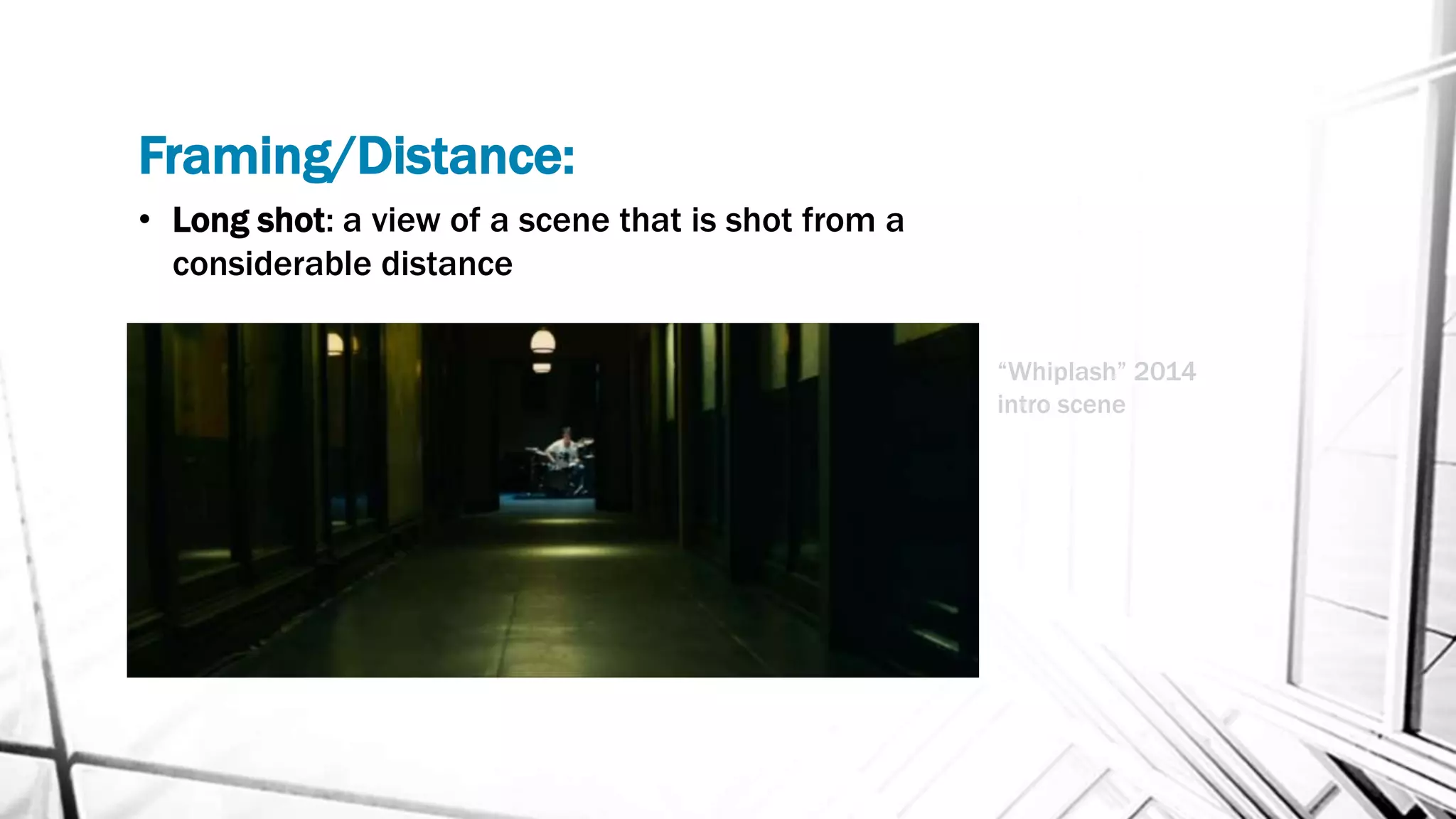
• Long shot: a view of a scene that is shot from a
considerable distance
“Whiplash” 2014
intro scene
Framing/Distance
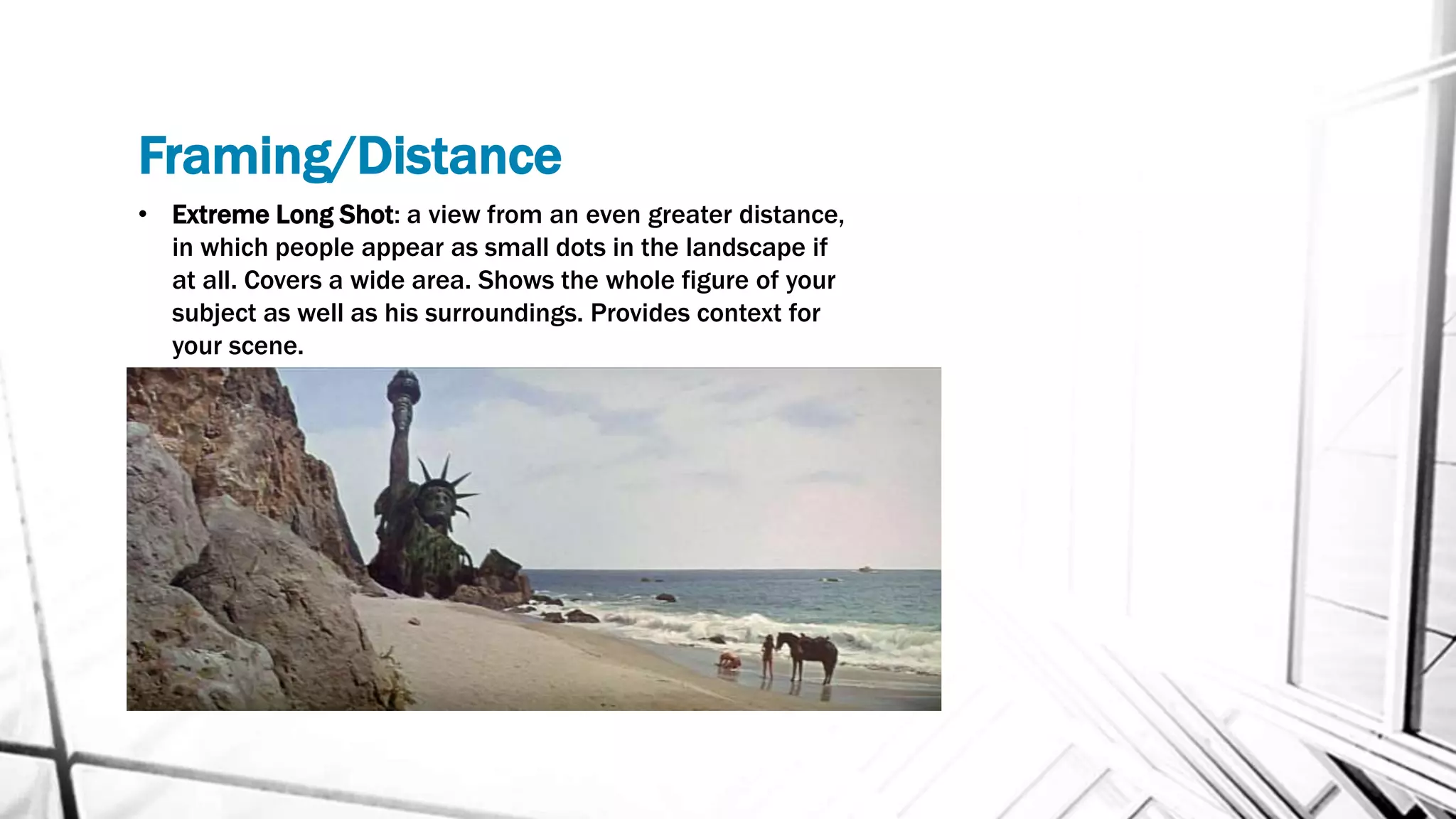
• Extreme Long Shot: a view from an even greater distance,
in which people appear as small dots in the landscape if
at all. Covers a wide area. Shows the whole figure of your
subject as well as his surroundings. Provides context for
your scene.
Framing/Distance
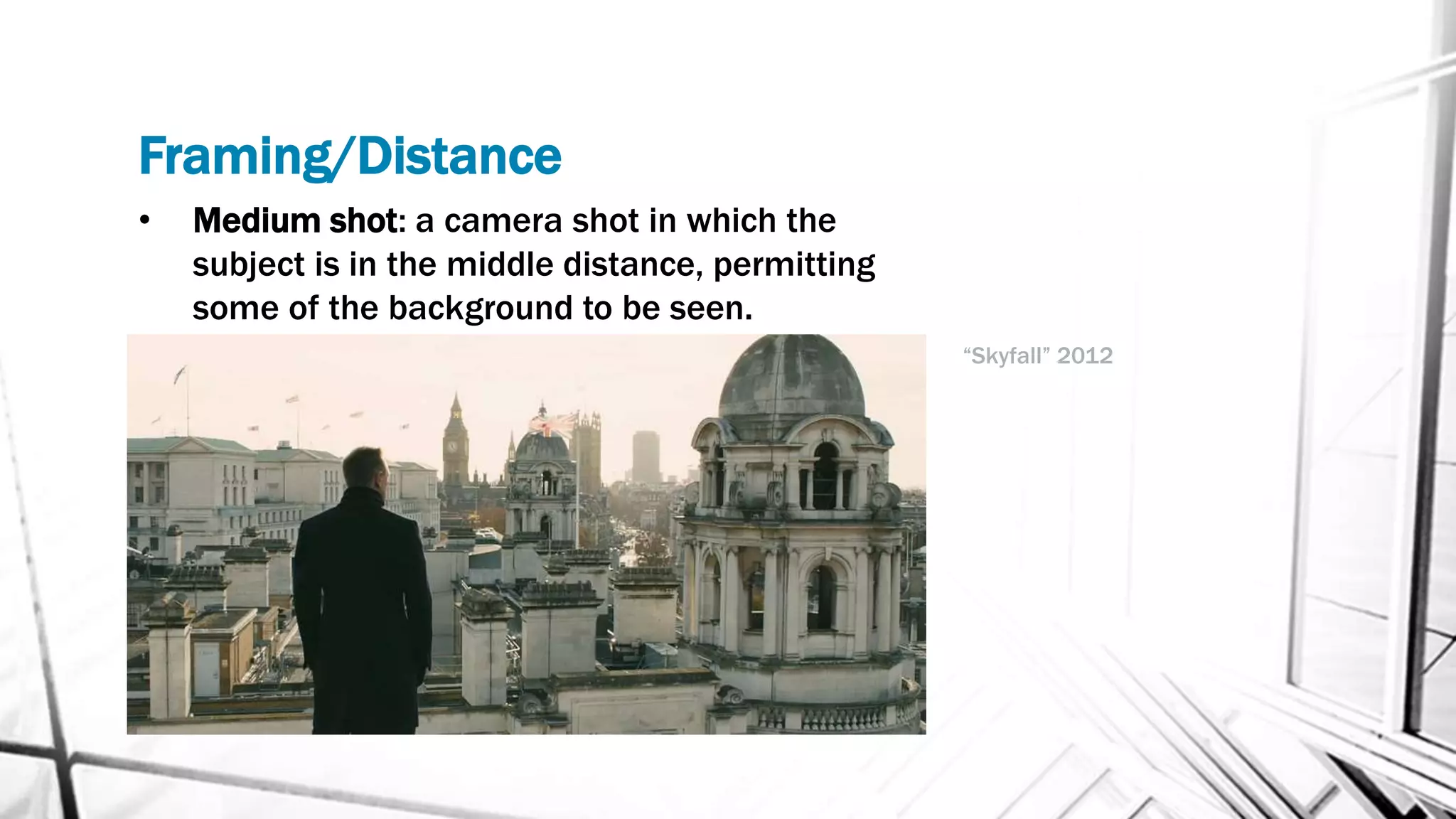
• Medium shot: a camera shot in which the
subject is in the middle distance, permitting
some of the background to be seen.
“Skyfall” 2012
Framing/Distance
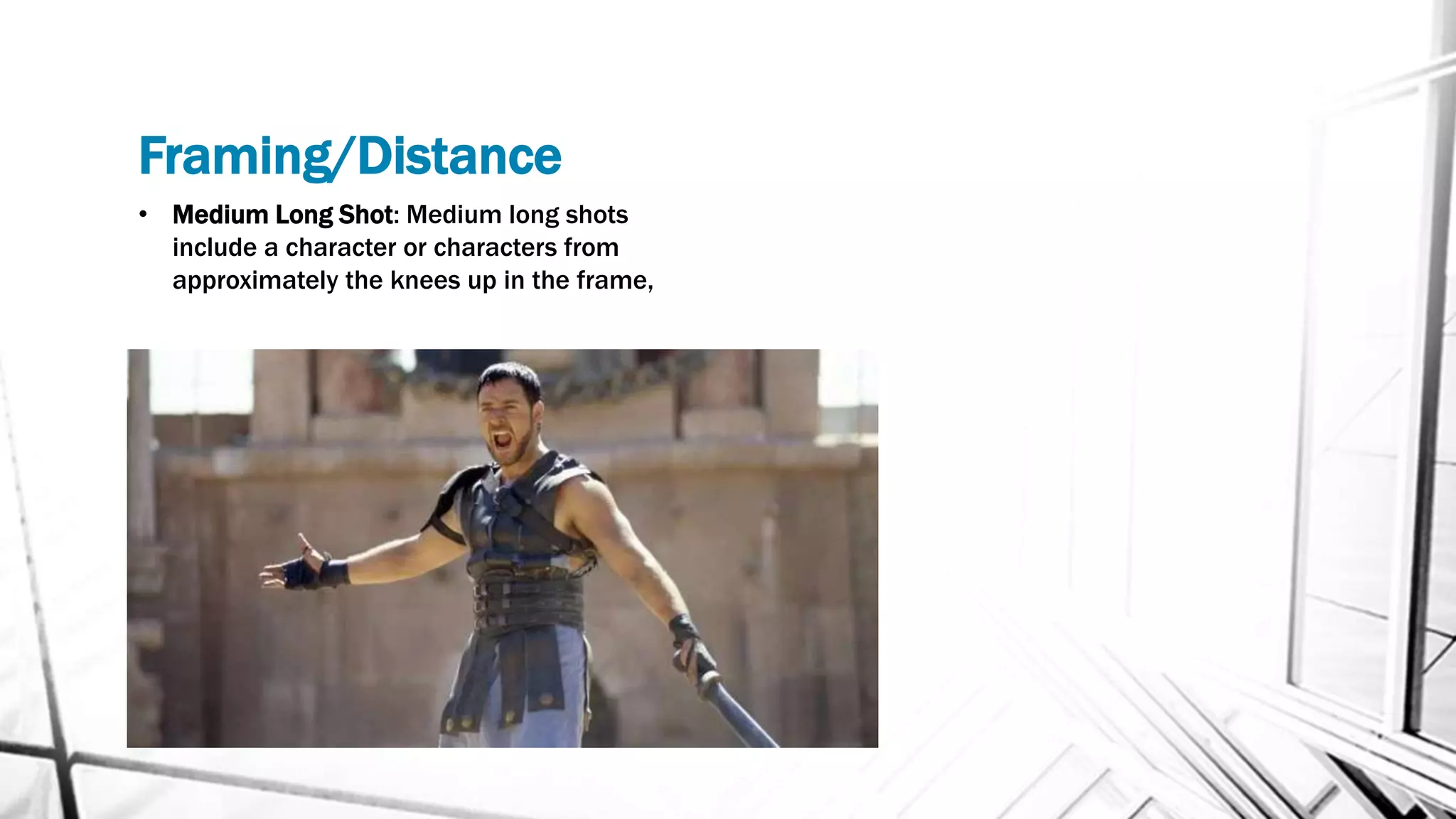
• Medium Long Shot: Medium long shots
include a character or characters from
approximately the knees up in the frame,
Framing/Distance:
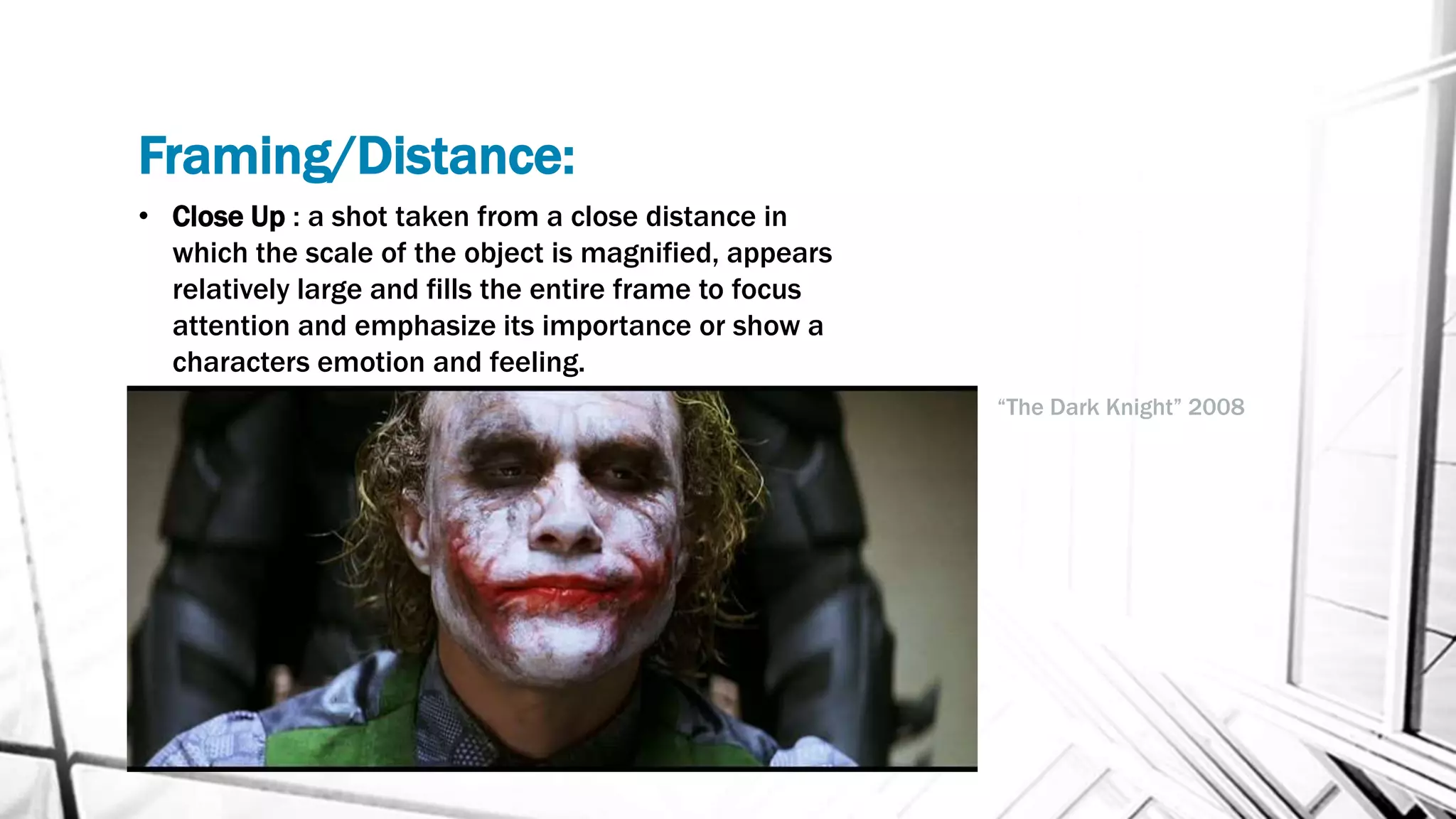
• Close Up : a shot taken from a close distance in
which the scale of the object is magnified, appears
relatively large and fills the entire frame to focus
attention and emphasize its importance or show a
characters emotion and feeling.
“The Dark Knight” 2008
Framing/Distance
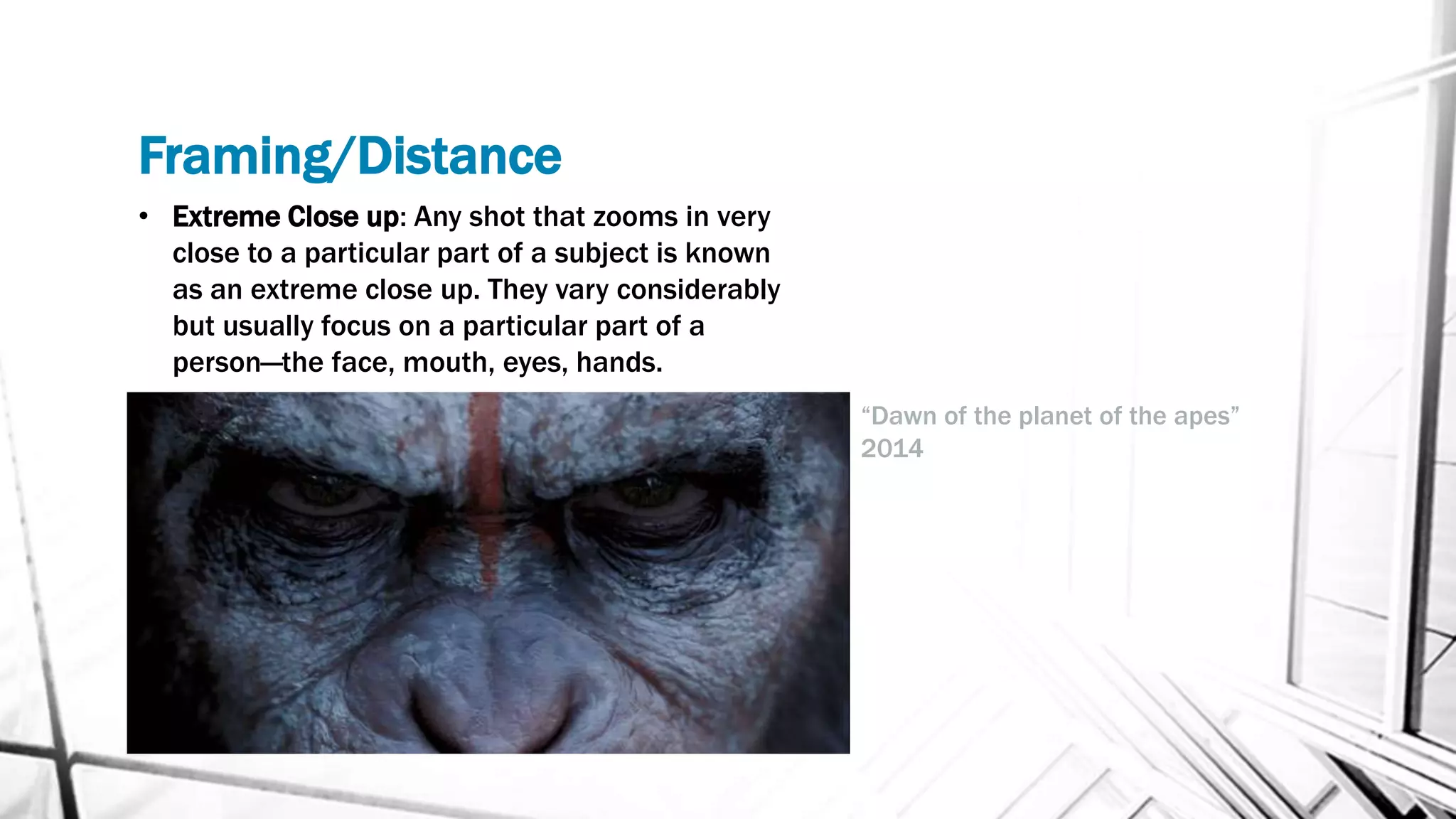
• Extreme Close up: Any shot that zooms in very
close to a particular part of a subject is known
as an extreme close up. They vary considerably
but usually focus on a particular part of a
person—the face, mouth, eyes, hands.
“Dawn of the planet of the apes”
2014
Framing/Distance
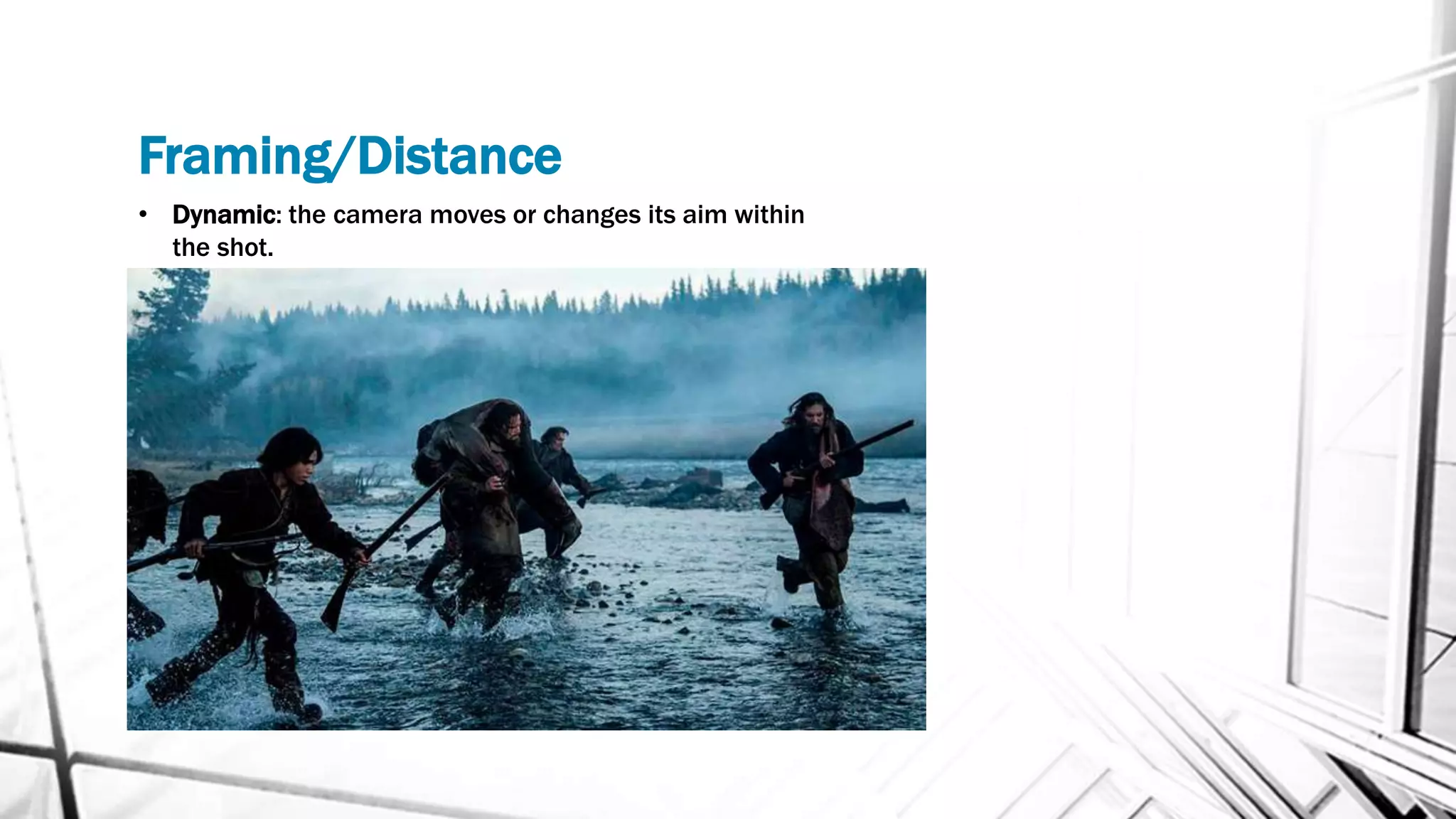
• Dynamic: the camera moves or changes its aim within
the shot.
Shots:
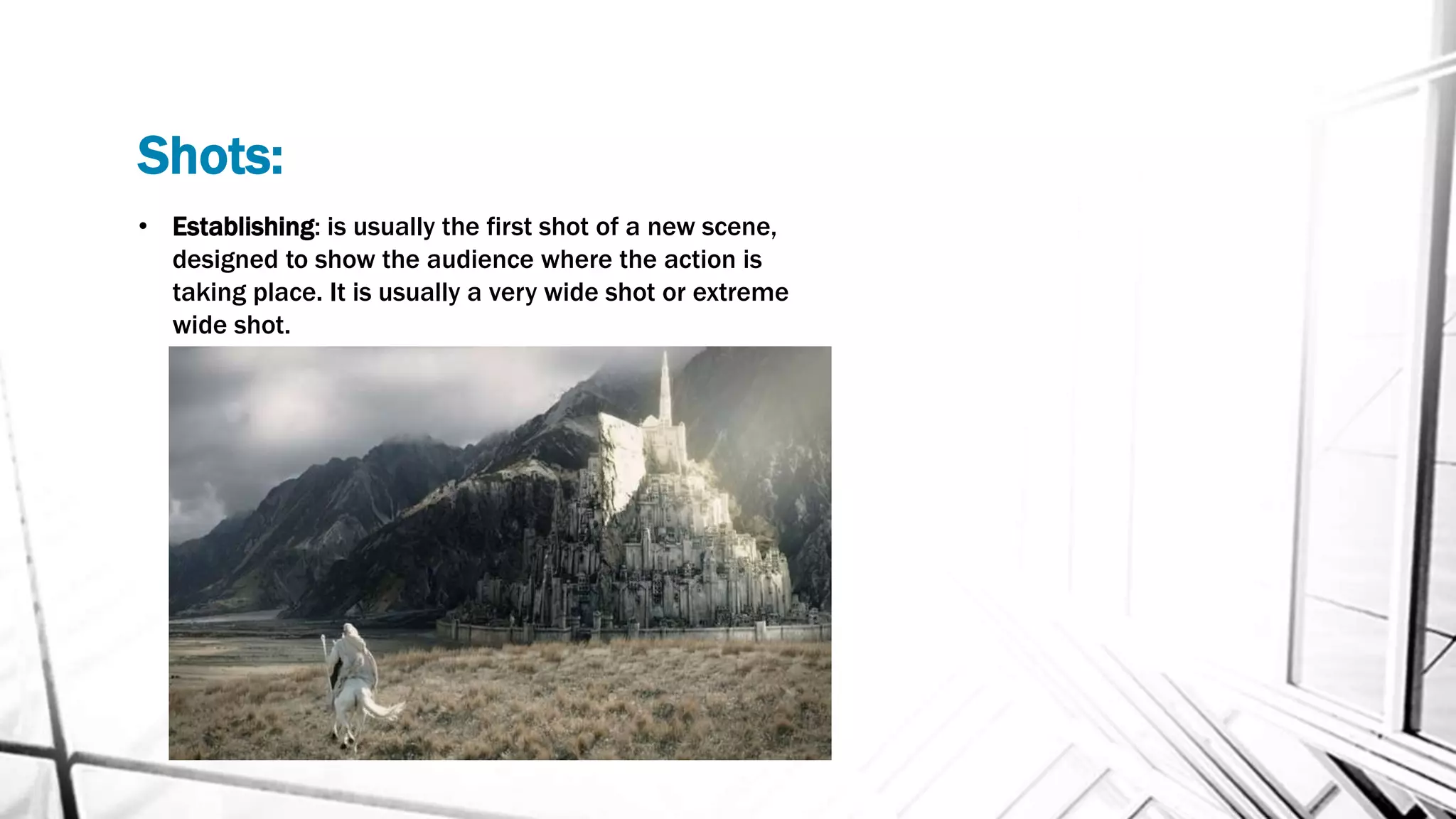
• Establishing: is usually the first shot of a new scene,
designed to show the audience where the action is
taking place. It is usually a very wide shot or extreme
wide shot.
Shots:
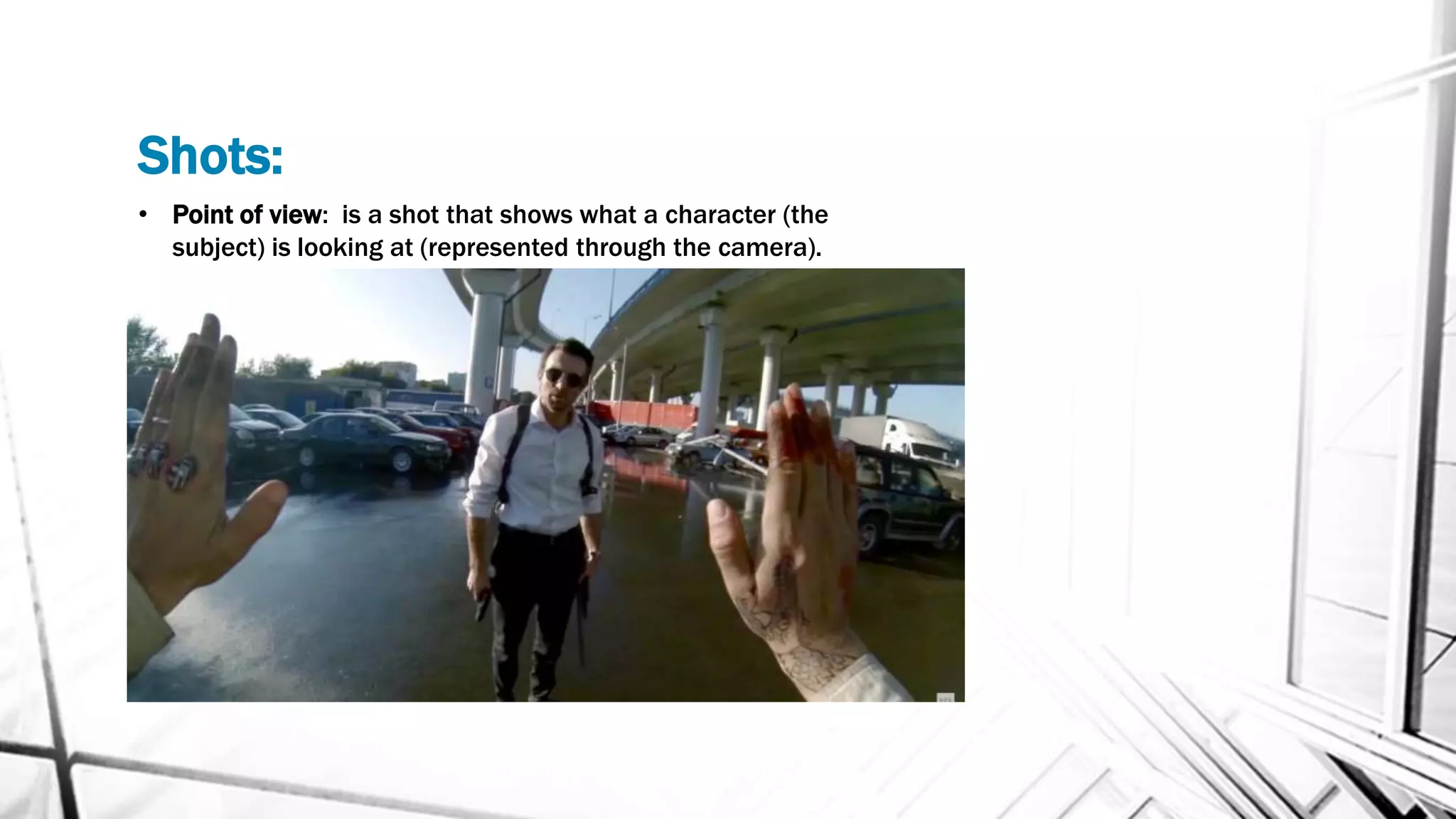
• Point of view: is a shot that shows what a character (the
subject) is looking at (represented through the camera).
Movement:
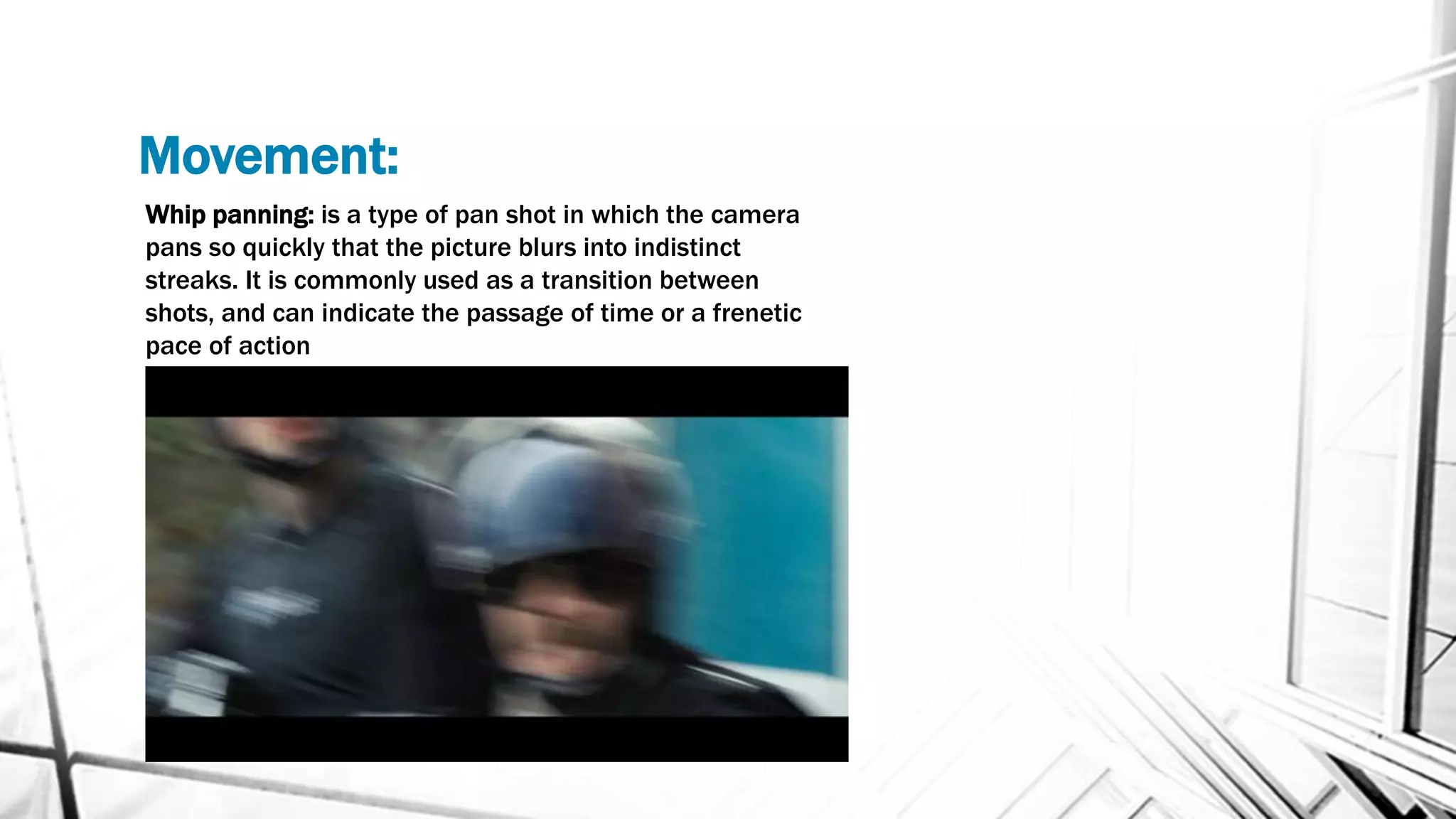
Whip panning: is a type of pan shot in which the camera
pans so quickly that the picture blurs into indistinct
streaks. It is commonly used as a transition between
shots, and can indicate the passage of time or a frenetic
pace of action
Movement:
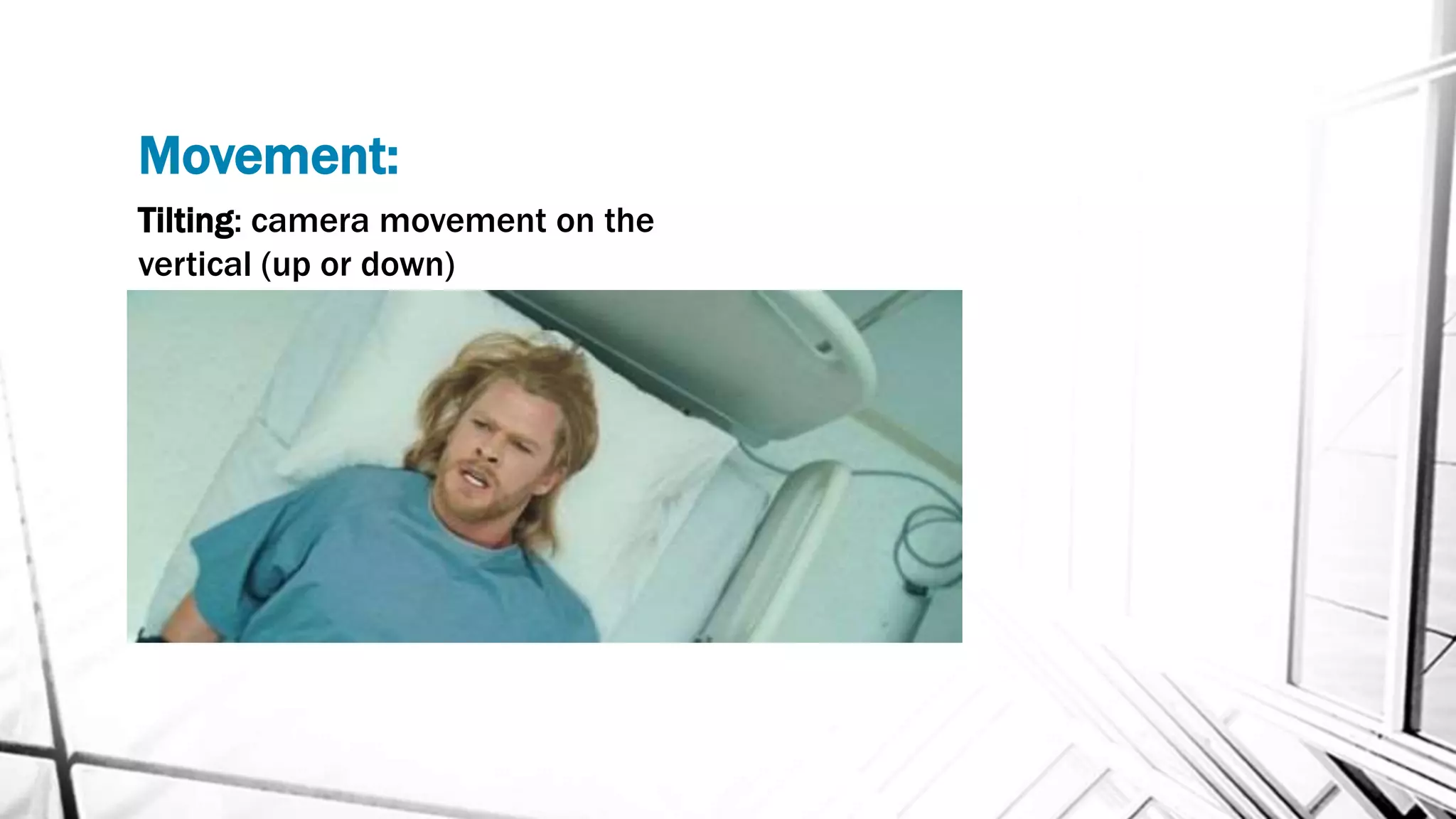
Tilting: camera movement on the
vertical (up or down)
Movement:
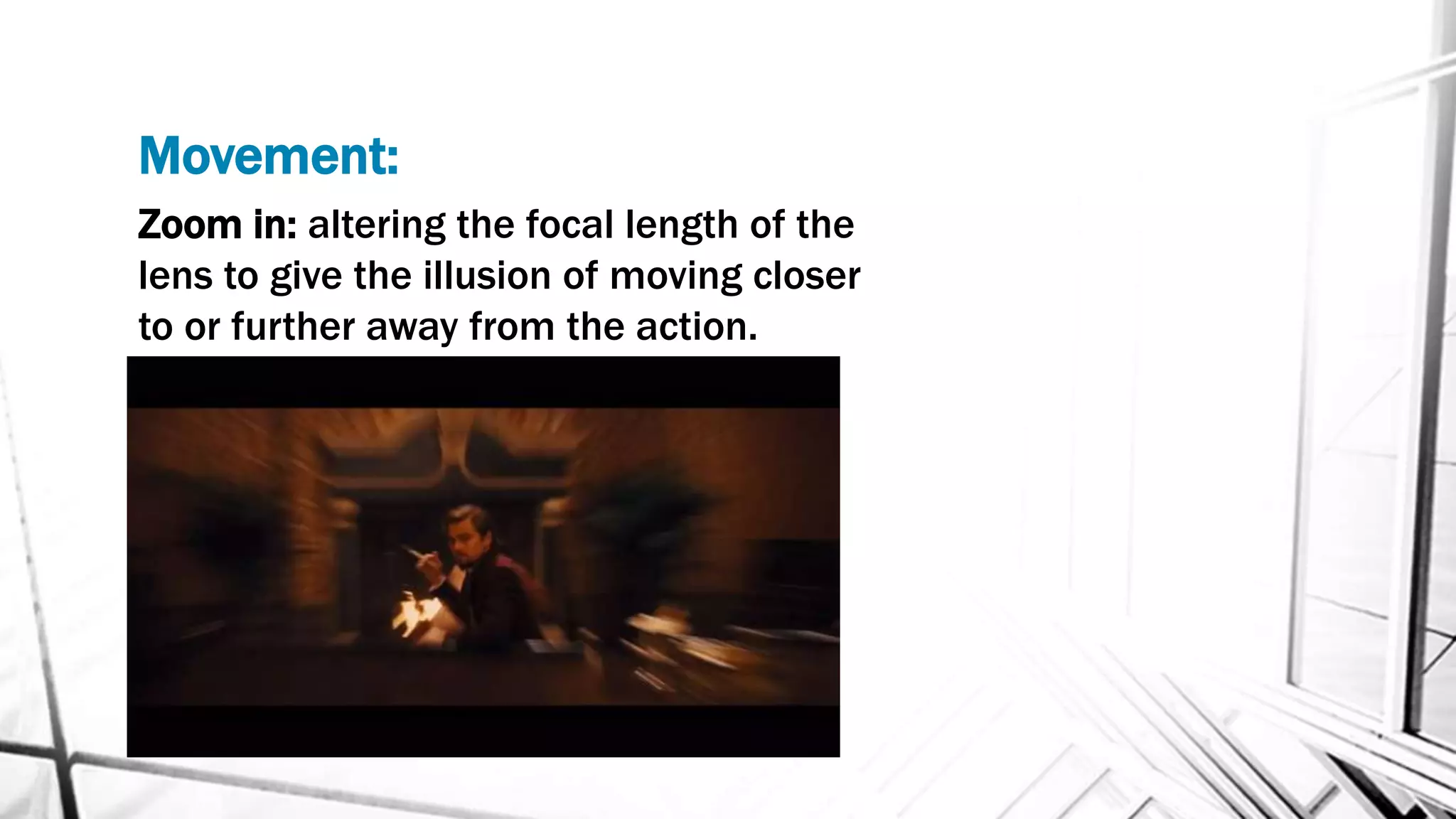
Zoom in: altering the focal length of the
lens to give the illusion of moving closer
to or further away from the action.
Movement:
Handheld: a shaky movement that
follows the movement of the camera
operator. Used to create realism and
sudden figure movement
Movement:
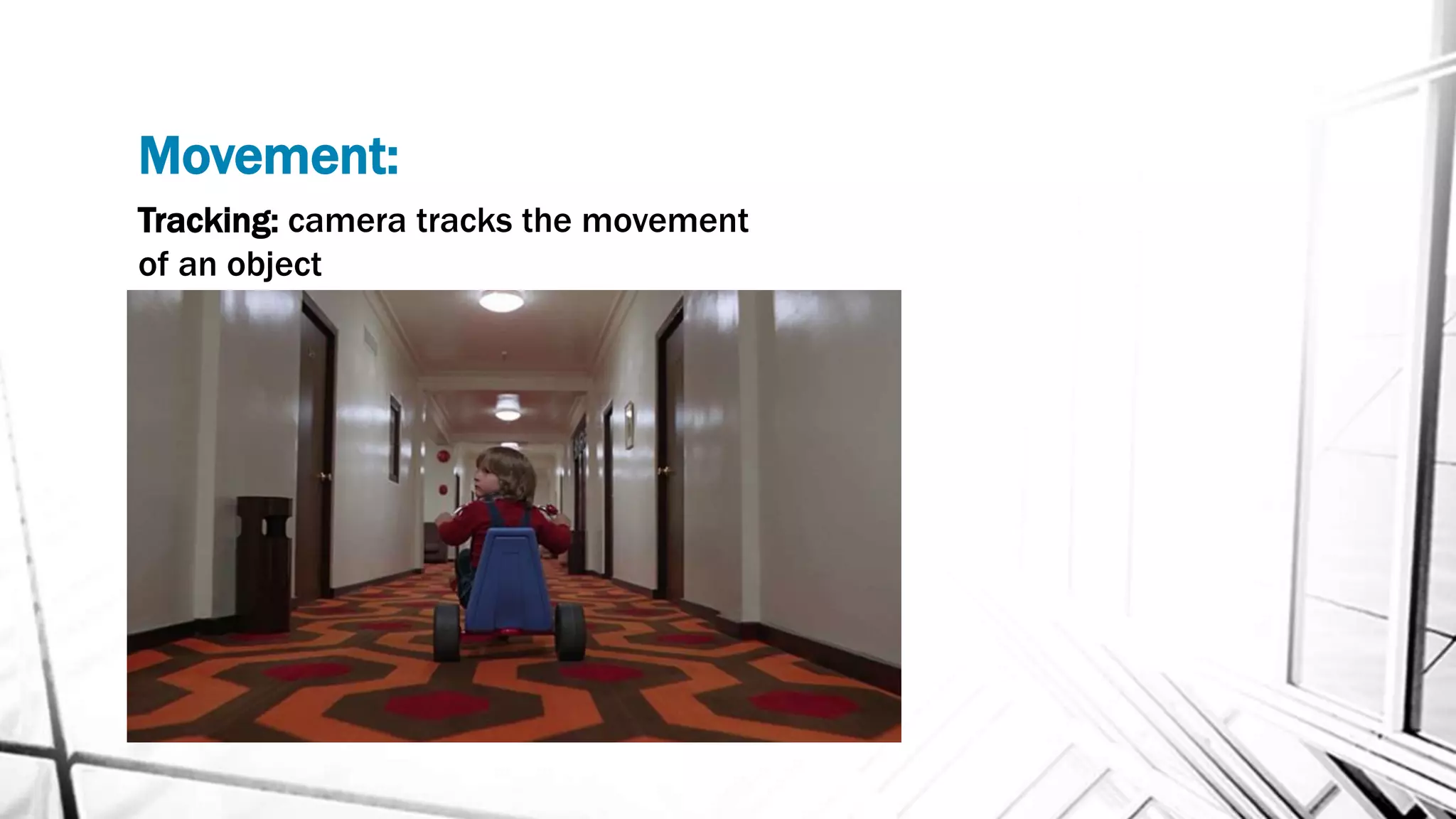
Tracking: camera tracks the movement
of an object
Movement:
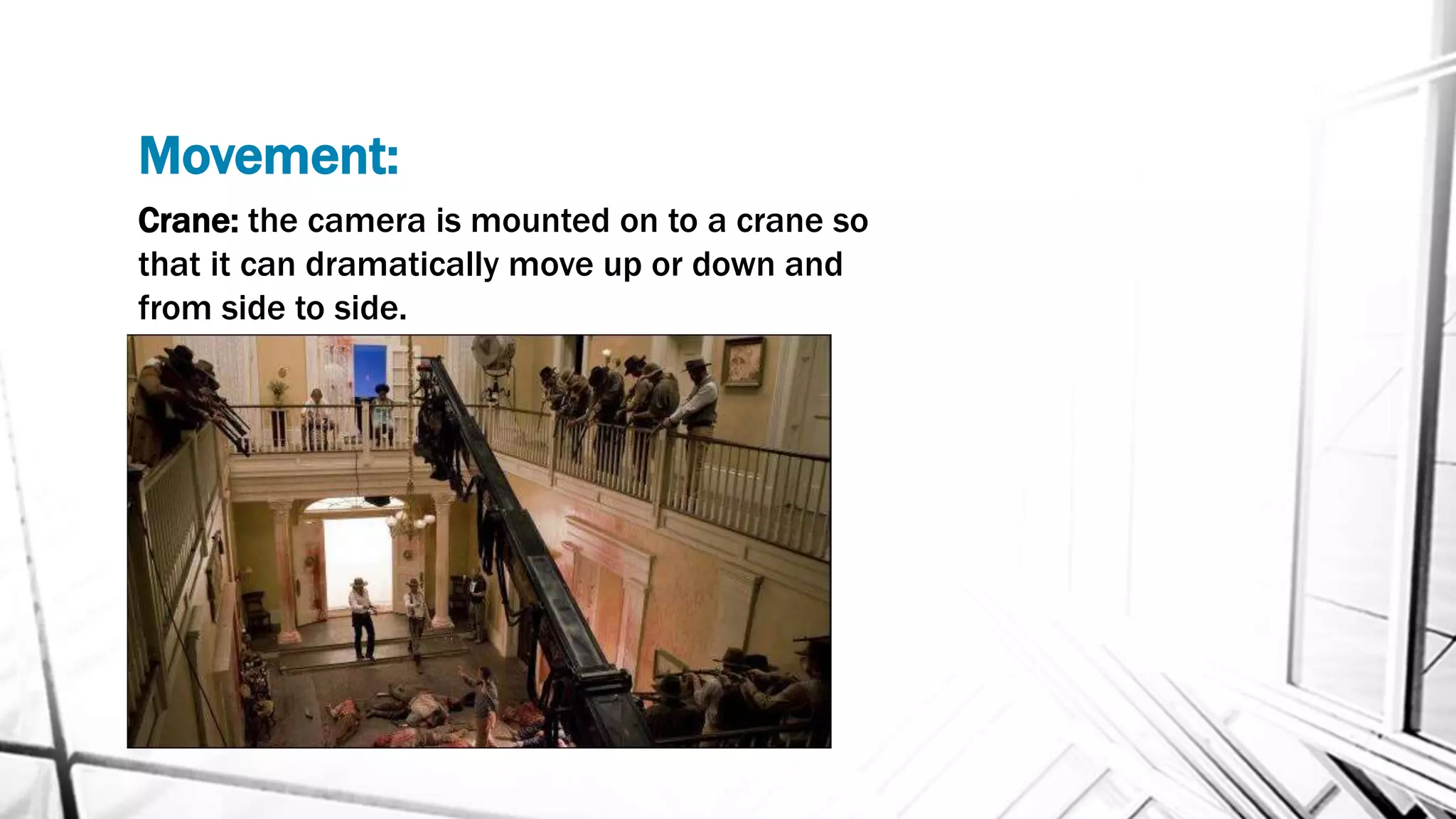
Crane: the camera is mounted on to a crane so
that it can dramatically move up or down and
from side to side.
Angles
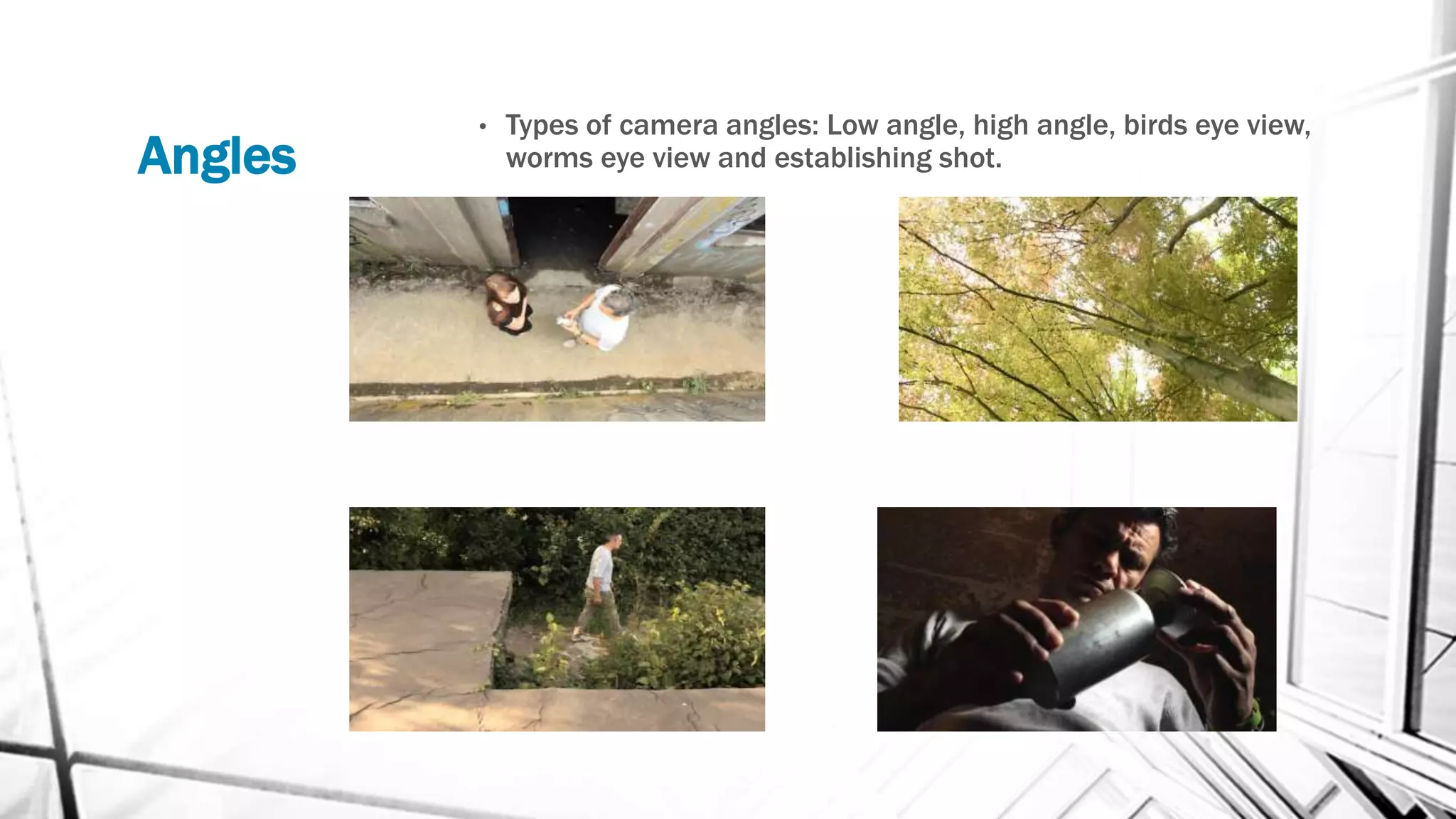
• Types of camera angles: Low angle, high angle, birds eye view,
worms eye view and establishing shot.
Angles
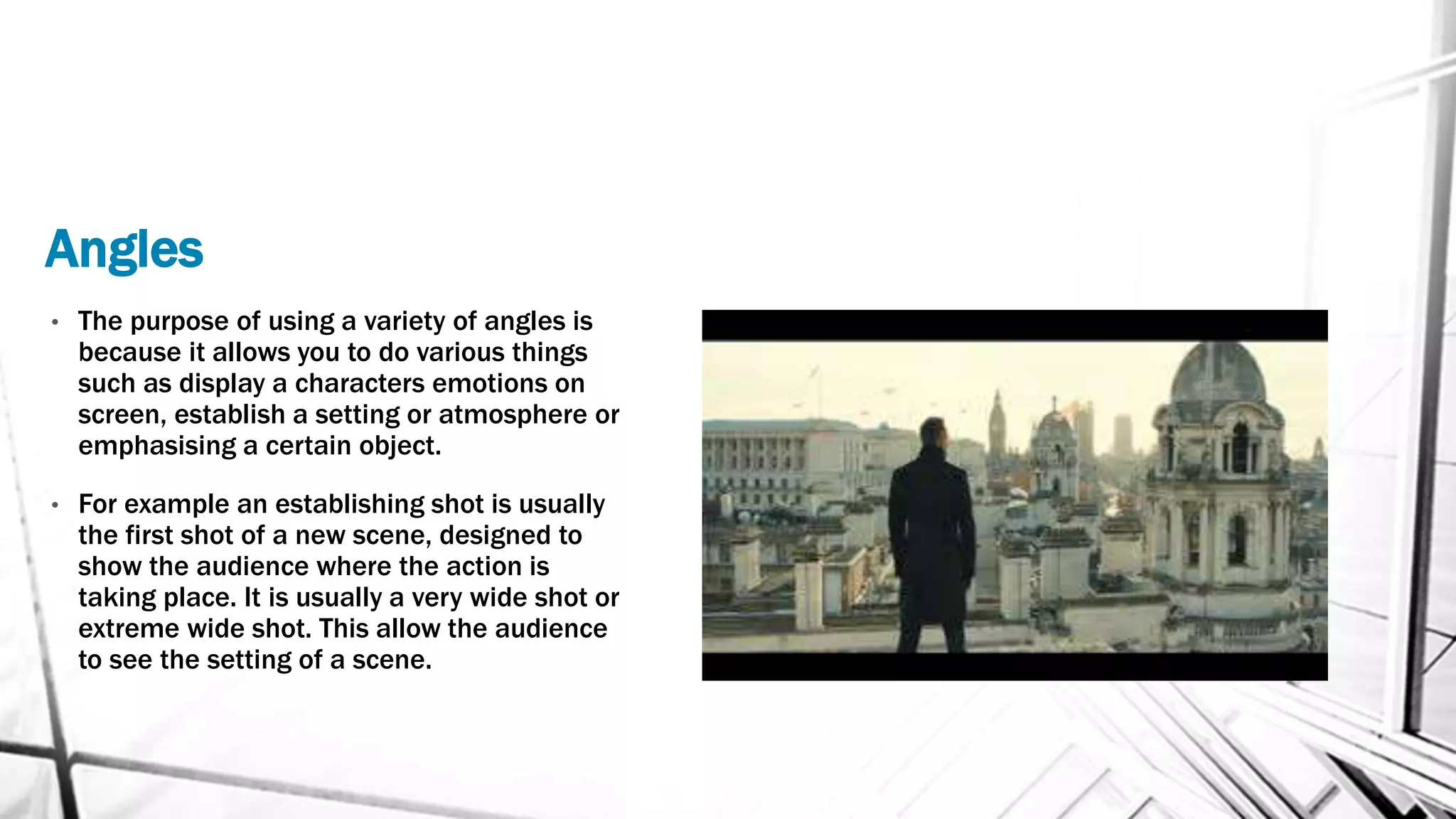
• The purpose of using a variety of angles is
because it allows you to do various things
such as display a characters emotions on
screen, establish a setting or atmosphere or
emphasising a certain object.
• For example an establishing shot is usually
the first shot of a new scene, designed to
show the audience where the action is
taking place. It is usually a very wide shot or
extreme wide shot. This allow the audience
to see the setting of a scene.
Effects
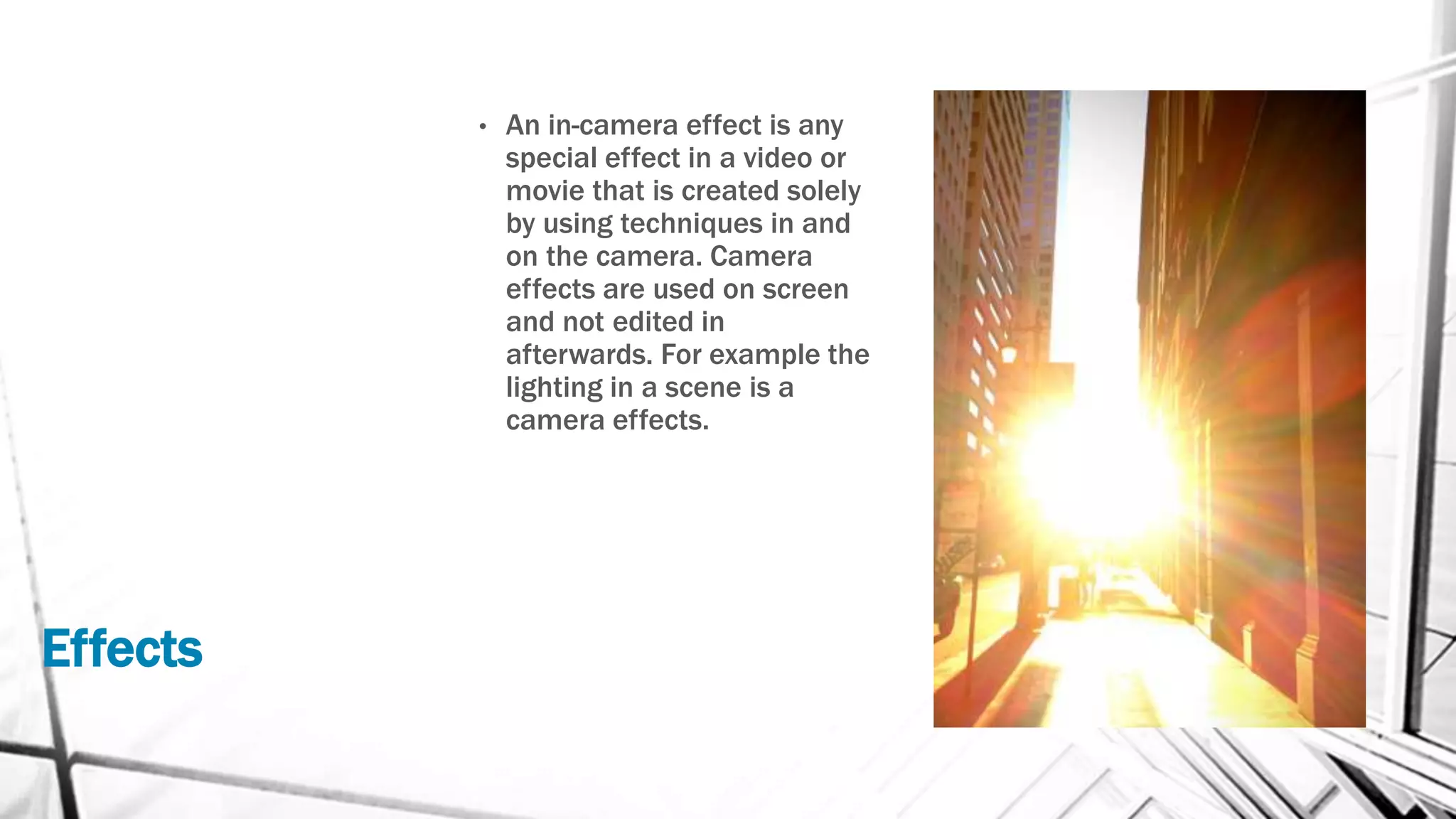
• An in-camera effect is any
special effect in a video or
movie that is created solely
by using techniques in and
on the camera. Camera
effects are used on screen
and not edited in
afterwards. For example the
lighting in a scene is a
camera effects.
Being In Focus
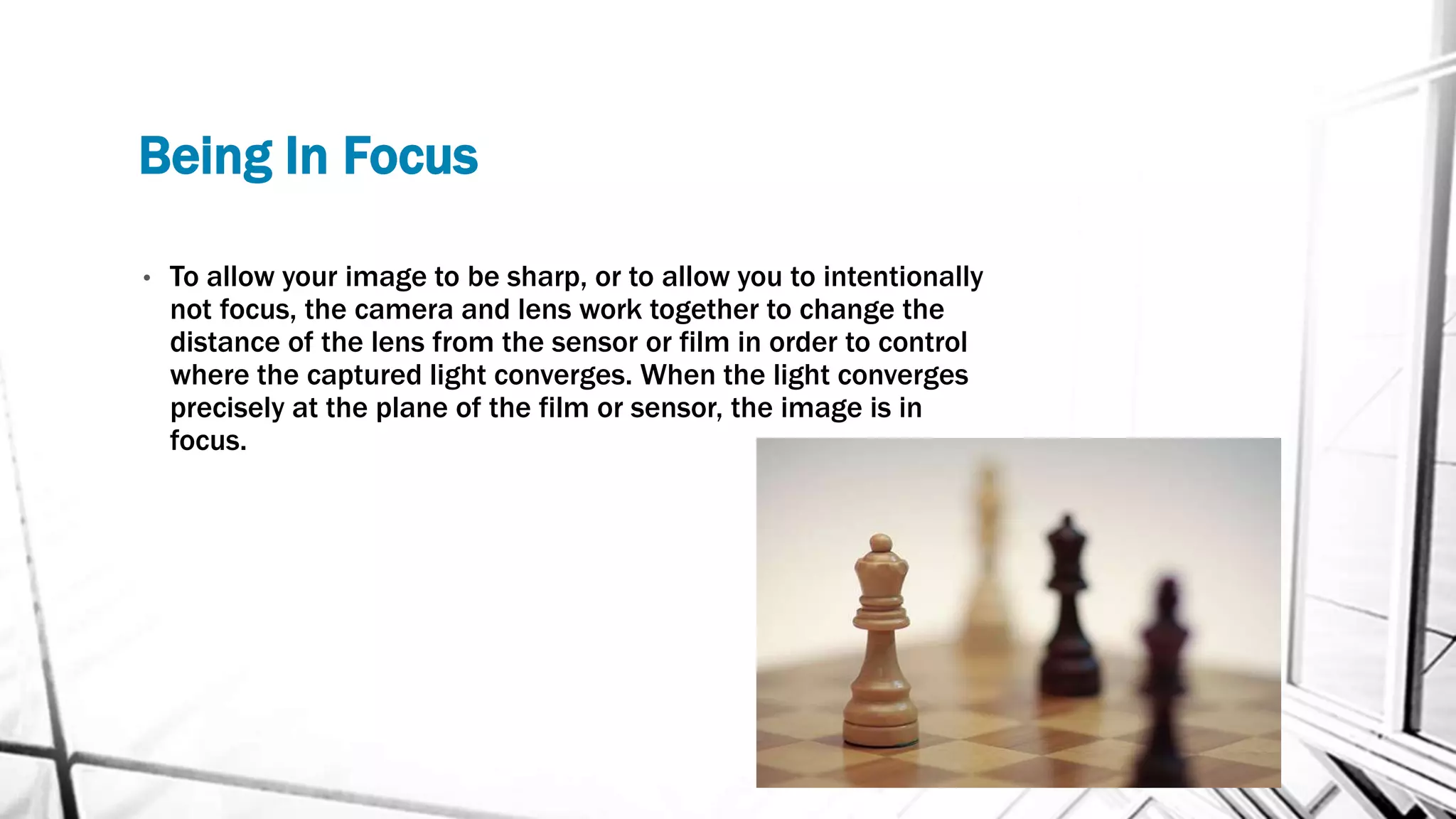
• To allow your image to be sharp, or to allow you to intentionally
not focus, the camera and lens work together to change the
distance of the lens from the sensor or film in order to control
where the captured light converges. When the light converges
precisely at the plane of the film or sensor, the image is in
focus.
Soft Focus
• In photography, soft focus is a lens flaw, in which the lens
forms images that are blurred due to spherical aberration.
A soft focus lens deliberately introduces spherical aberration in
order to give the appearance of blurring the image while
retaining sharp edges; it is not the same as an out-of-
focus image, and the effect cannot be achieved simply by
defocusing a sharp lens.
This is an example
of a Soft Focus
shot because you
can tell by the
image being
slightly blurred all
over.
Sharp Focus
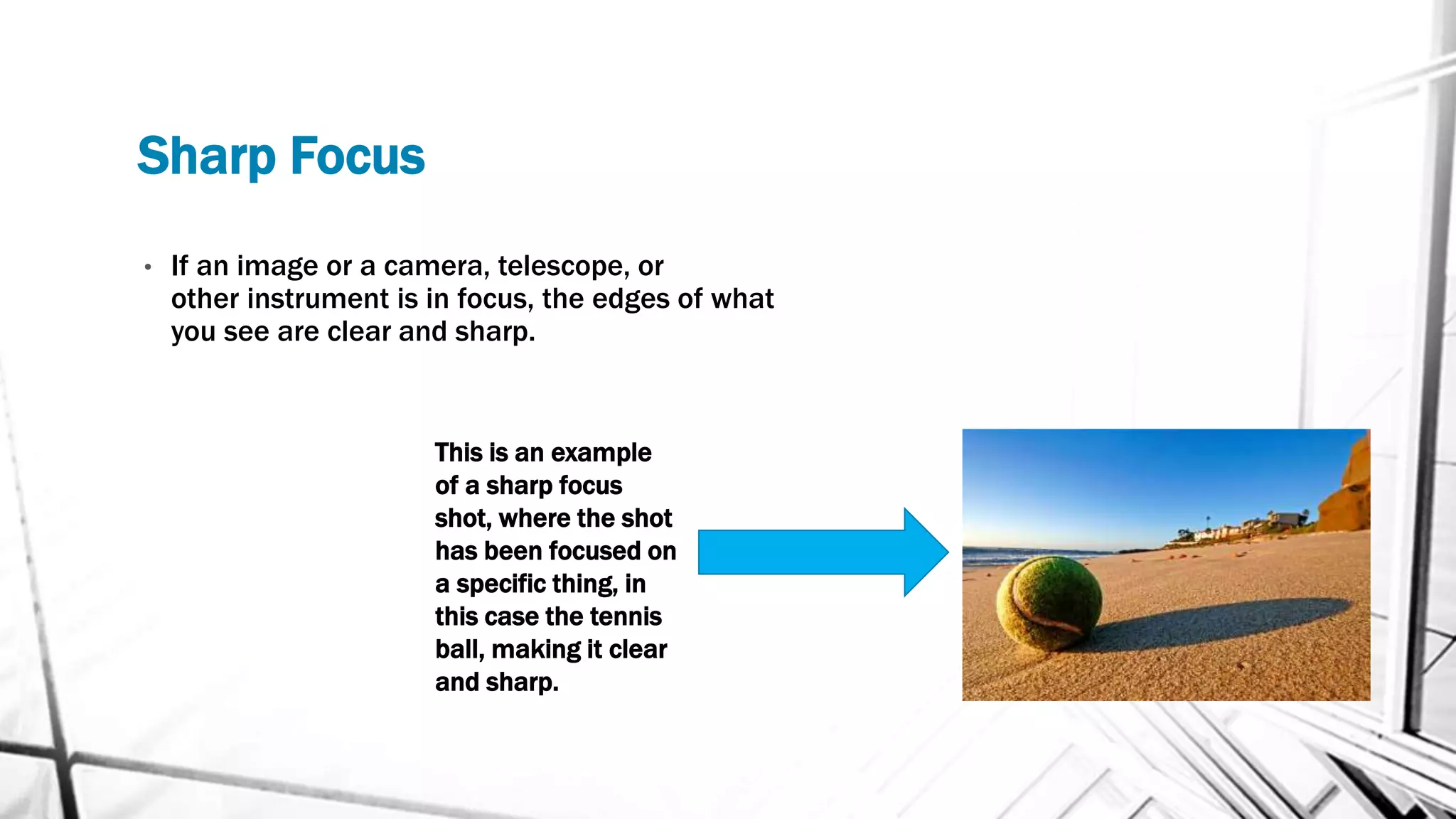
• If an image or a camera, telescope, or
other instrument is in focus, the edges of what
you see are clear and sharp.
This is an example
of a sharp focus
shot, where the shot
has been focused on
a specific thing, in
this case the tennis
ball, making it clear
and sharp.
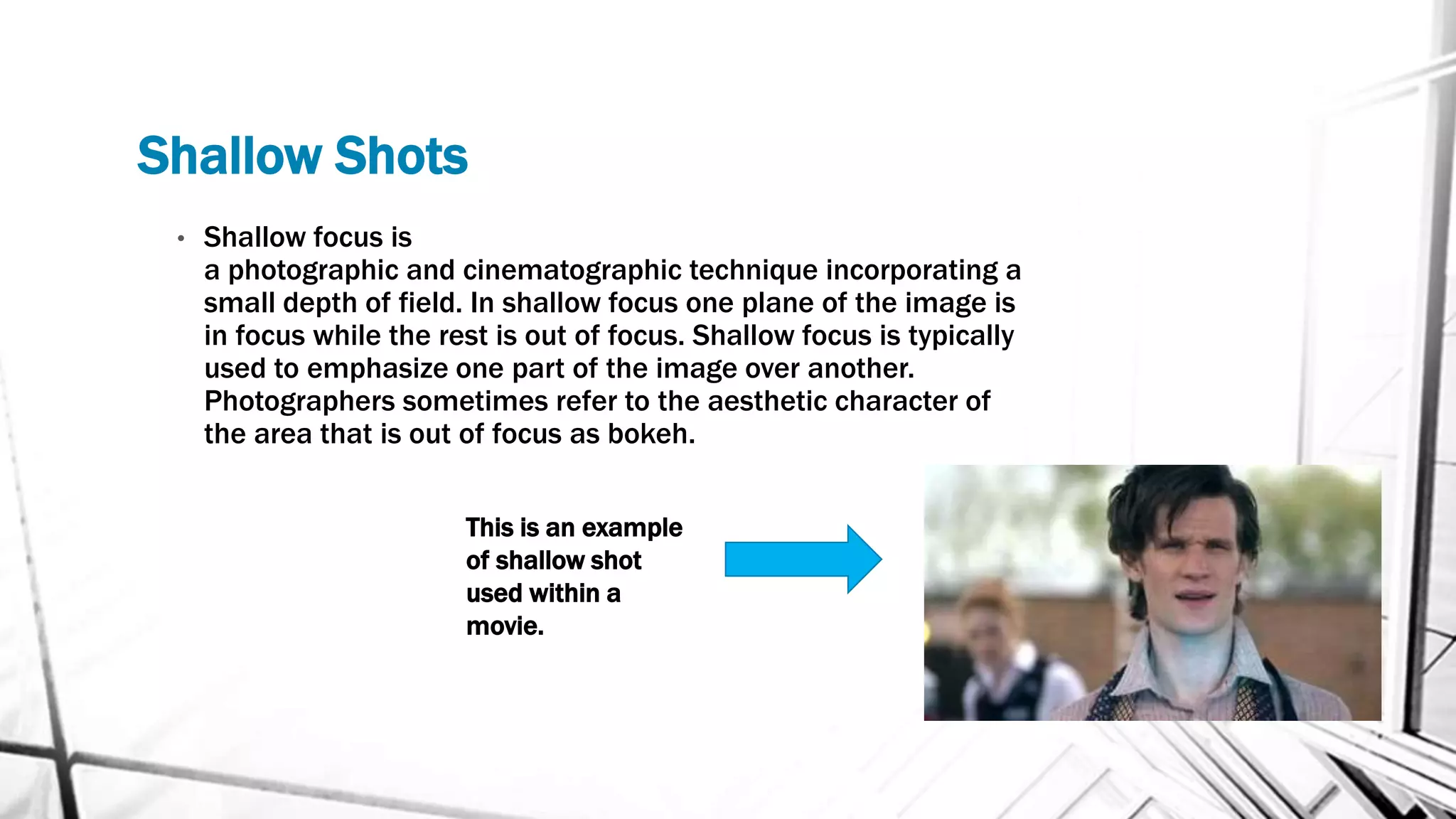
Shallow Shots
• Shallow focus is
a photographic and cinematographic technique incorporating a
small depth of field. In shallow focus one plane of the image is
in focus while the rest is out of focus. Shallow focus is typically
used to emphasize one part of the image over another.
Photographers sometimes refer to the aesthetic character of
the area that is out of focus as bokeh.
This is an example
of shallow shot
used within a
movie.
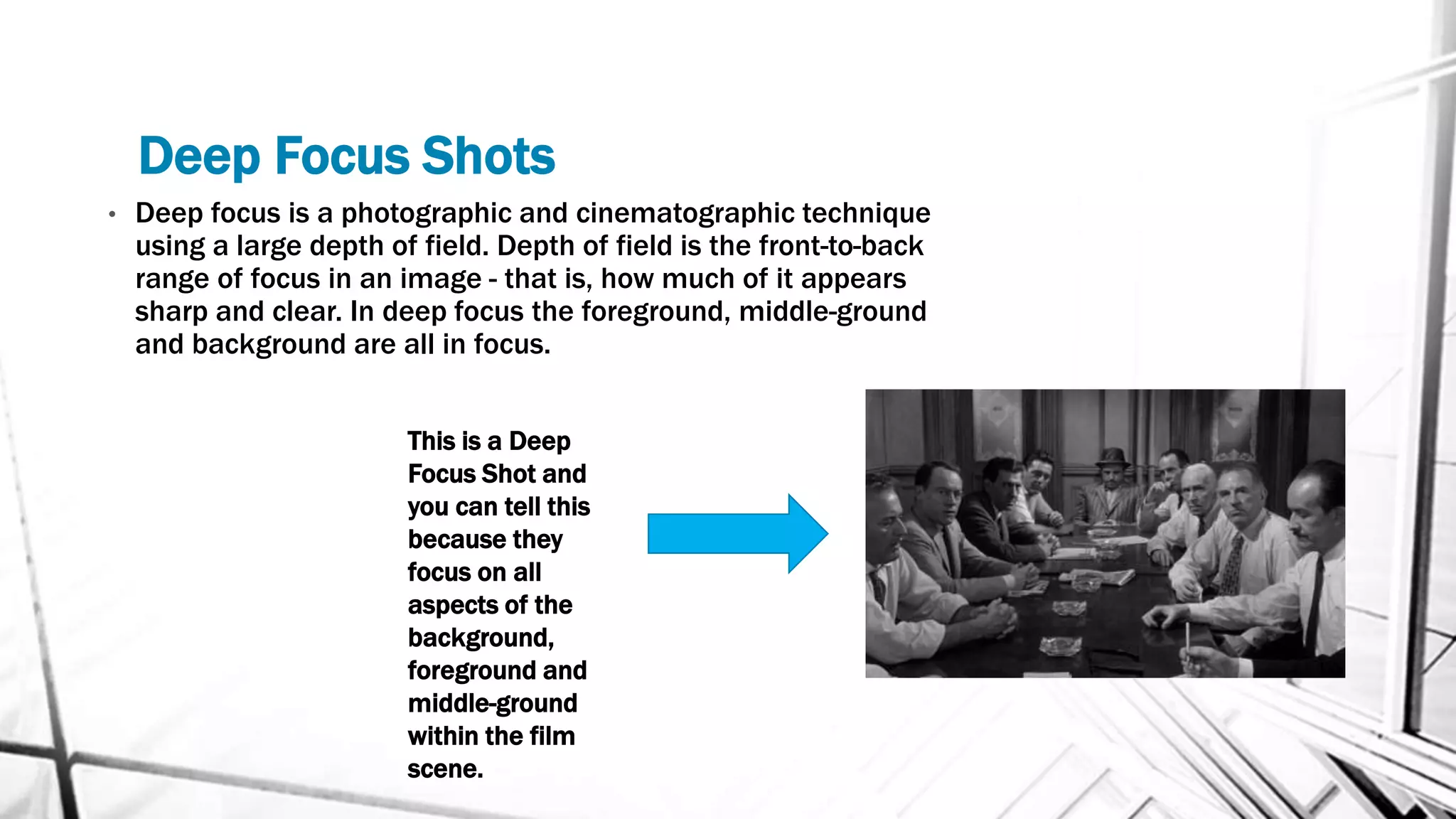
Deep Focus Shots
• Deep focus is a photographic and cinematographic technique
using a large depth of field. Depth of field is the front-to-back
range of focus in an image - that is, how much of it appears
sharp and clear. In deep focus the foreground, middle-ground
and background are all in focus.
This is a Deep
Focus Shot and
you can tell this
because they
focus on all
aspects of the
background,
foreground and
middle-ground
within the film
scene.
Fixed Focus Shots
• A photographic lens for which the focus is not adjustable is
called a fixed-focus lens or sometimes focus-free. The focus is
set at the time of lens design, and remains fixed. It is usually
set to the hyper focal distance, so that the depth of
field ranges all the way down from half that distance to infinity,
which is acceptable for most cameras used for capturing
images of humans or objects larger than a meter.
This is a fixed focus shot,
where the camera has to be
moved to focus because
there is no adjustable focus
available.
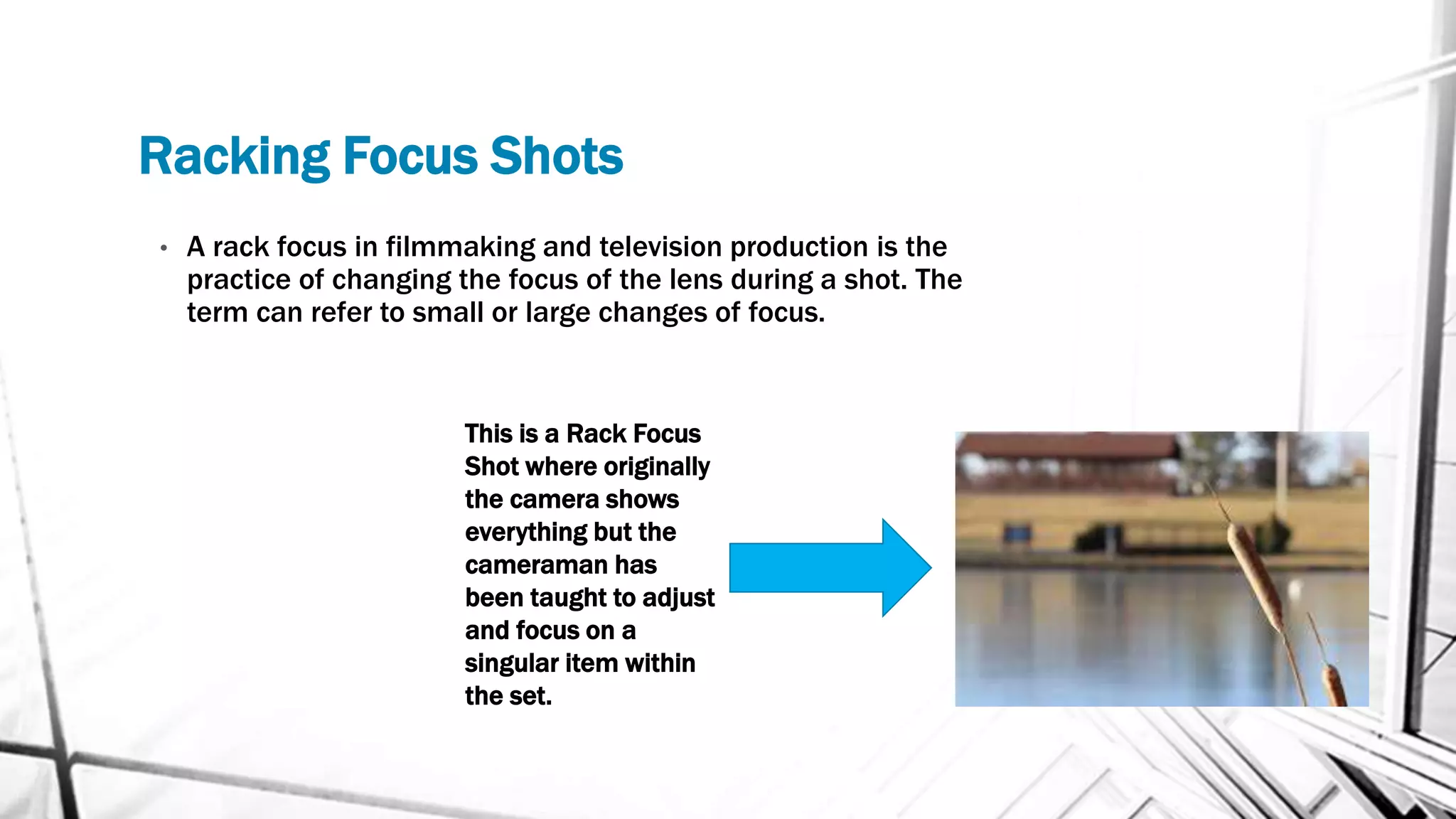
Racking Focus Shots
• A rack focus in filmmaking and television production is the
practice of changing the focus of the lens during a shot. The
term can refer to small or large changes of focus.
This is a Rack Focus
Shot where originally
the camera shows
everything but the
cameraman has
been taught to adjust
and focus on a
singular item within
the set.
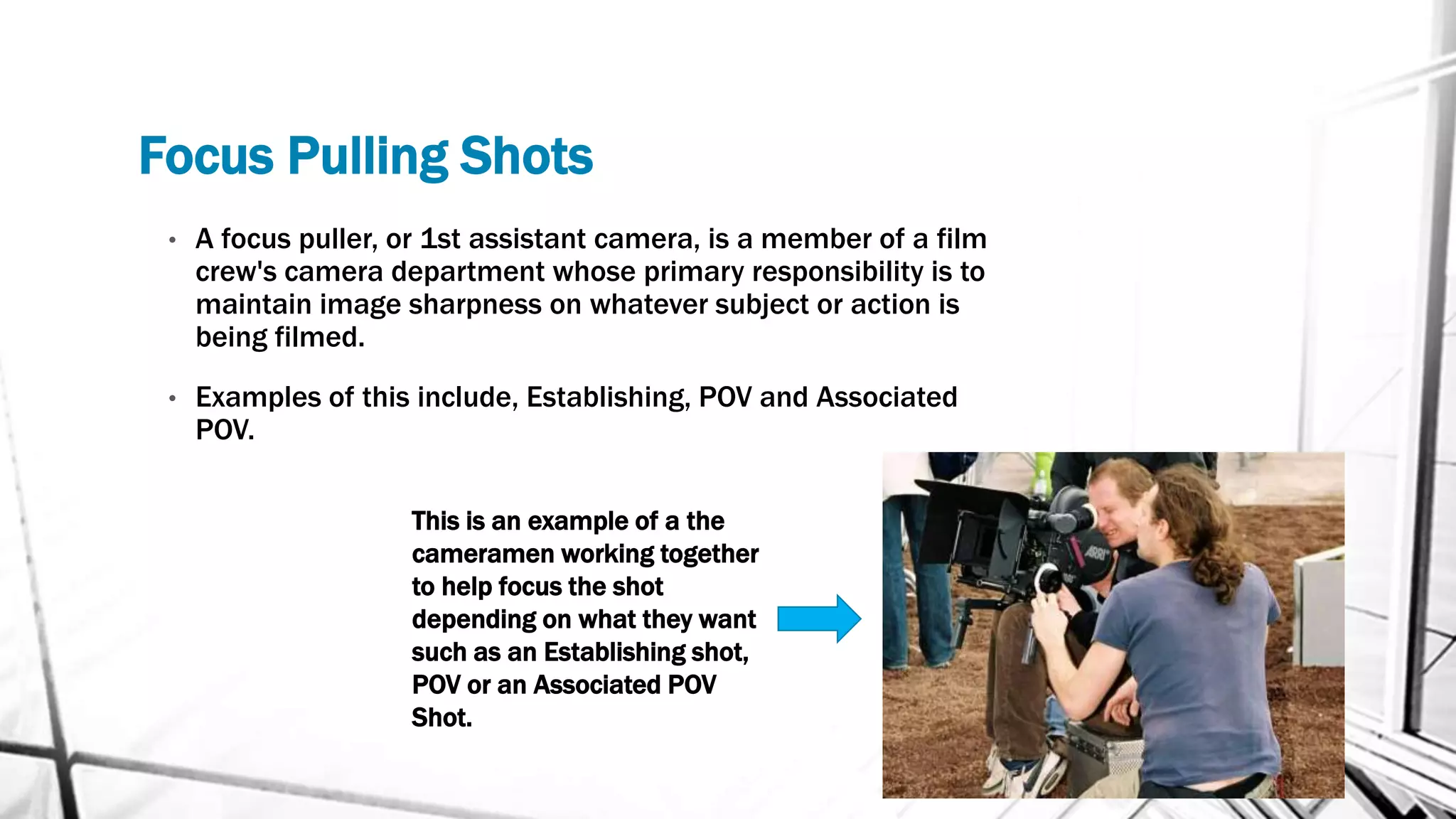
Focus Pulling Shots
• A focus puller, or 1st assistant camera, is a member of a film
crew's camera department whose primary responsibility is to
maintain image sharpness on whatever subject or action is
being filmed.
• Examples of this include, Establishing, POV and Associated
POV.
This is an example of a the
cameramen working together
to help focus the shot
depending on what they want
such as an Establishing shot,
POV or an Associated POV
Shot.

Camerawork as media recovered (jaime)[4651]

  • 1.
  • 2.
    Framing/Distance: • Long shot:a view of a scene that is shot from a considerable distance “Whiplash” 2014 intro scene
  • 3.
    Framing/Distance • Extreme LongShot: a view from an even greater distance, in which people appear as small dots in the landscape if at all. Covers a wide area. Shows the whole figure of your subject as well as his surroundings. Provides context for your scene.
  • 4.
    Framing/Distance • Medium shot:a camera shot in which the subject is in the middle distance, permitting some of the background to be seen. “Skyfall” 2012
  • 5.
    Framing/Distance • Medium LongShot: Medium long shots include a character or characters from approximately the knees up in the frame,
  • 6.
    Framing/Distance: • Close Up: a shot taken from a close distance in which the scale of the object is magnified, appears relatively large and fills the entire frame to focus attention and emphasize its importance or show a characters emotion and feeling. “The Dark Knight” 2008
  • 7.
    Framing/Distance • Extreme Closeup: Any shot that zooms in very close to a particular part of a subject is known as an extreme close up. They vary considerably but usually focus on a particular part of a person—the face, mouth, eyes, hands. “Dawn of the planet of the apes” 2014
  • 8.
    Framing/Distance • Dynamic: thecamera moves or changes its aim within the shot.
  • 9.
    Shots: • Establishing: isusually the first shot of a new scene, designed to show the audience where the action is taking place. It is usually a very wide shot or extreme wide shot.
  • 10.
    Shots: • Point ofview: is a shot that shows what a character (the subject) is looking at (represented through the camera).
  • 11.
    Movement: Whip panning: isa type of pan shot in which the camera pans so quickly that the picture blurs into indistinct streaks. It is commonly used as a transition between shots, and can indicate the passage of time or a frenetic pace of action
  • 12.
    Movement: Tilting: camera movementon the vertical (up or down)
  • 13.
    Movement: Zoom in: alteringthe focal length of the lens to give the illusion of moving closer to or further away from the action.
  • 14.
    Movement: Handheld: a shakymovement that follows the movement of the camera operator. Used to create realism and sudden figure movement
  • 15.
    Movement: Tracking: camera tracksthe movement of an object
  • 16.
    Movement: Crane: the camerais mounted on to a crane so that it can dramatically move up or down and from side to side.
  • 17.
    Angles • Types ofcamera angles: Low angle, high angle, birds eye view, worms eye view and establishing shot.
  • 18.
    Angles • The purposeof using a variety of angles is because it allows you to do various things such as display a characters emotions on screen, establish a setting or atmosphere or emphasising a certain object. • For example an establishing shot is usually the first shot of a new scene, designed to show the audience where the action is taking place. It is usually a very wide shot or extreme wide shot. This allow the audience to see the setting of a scene.
  • 19.
    Effects • An in-cameraeffect is any special effect in a video or movie that is created solely by using techniques in and on the camera. Camera effects are used on screen and not edited in afterwards. For example the lighting in a scene is a camera effects.
  • 20.
    Being In Focus •To allow your image to be sharp, or to allow you to intentionally not focus, the camera and lens work together to change the distance of the lens from the sensor or film in order to control where the captured light converges. When the light converges precisely at the plane of the film or sensor, the image is in focus.
  • 21.
    Soft Focus • Inphotography, soft focus is a lens flaw, in which the lens forms images that are blurred due to spherical aberration. A soft focus lens deliberately introduces spherical aberration in order to give the appearance of blurring the image while retaining sharp edges; it is not the same as an out-of- focus image, and the effect cannot be achieved simply by defocusing a sharp lens. This is an example of a Soft Focus shot because you can tell by the image being slightly blurred all over.
  • 22.
    Sharp Focus • Ifan image or a camera, telescope, or other instrument is in focus, the edges of what you see are clear and sharp. This is an example of a sharp focus shot, where the shot has been focused on a specific thing, in this case the tennis ball, making it clear and sharp.
  • 23.
    Shallow Shots • Shallowfocus is a photographic and cinematographic technique incorporating a small depth of field. In shallow focus one plane of the image is in focus while the rest is out of focus. Shallow focus is typically used to emphasize one part of the image over another. Photographers sometimes refer to the aesthetic character of the area that is out of focus as bokeh. This is an example of shallow shot used within a movie.
  • 24.
    Deep Focus Shots •Deep focus is a photographic and cinematographic technique using a large depth of field. Depth of field is the front-to-back range of focus in an image - that is, how much of it appears sharp and clear. In deep focus the foreground, middle-ground and background are all in focus. This is a Deep Focus Shot and you can tell this because they focus on all aspects of the background, foreground and middle-ground within the film scene.
  • 25.
    Fixed Focus Shots •A photographic lens for which the focus is not adjustable is called a fixed-focus lens or sometimes focus-free. The focus is set at the time of lens design, and remains fixed. It is usually set to the hyper focal distance, so that the depth of field ranges all the way down from half that distance to infinity, which is acceptable for most cameras used for capturing images of humans or objects larger than a meter. This is a fixed focus shot, where the camera has to be moved to focus because there is no adjustable focus available.
  • 26.
    Racking Focus Shots •A rack focus in filmmaking and television production is the practice of changing the focus of the lens during a shot. The term can refer to small or large changes of focus. This is a Rack Focus Shot where originally the camera shows everything but the cameraman has been taught to adjust and focus on a singular item within the set.
  • 27.
    Focus Pulling Shots •A focus puller, or 1st assistant camera, is a member of a film crew's camera department whose primary responsibility is to maintain image sharpness on whatever subject or action is being filmed. • Examples of this include, Establishing, POV and Associated POV. This is an example of a the cameramen working together to help focus the shot depending on what they want such as an Establishing shot, POV or an Associated POV Shot.