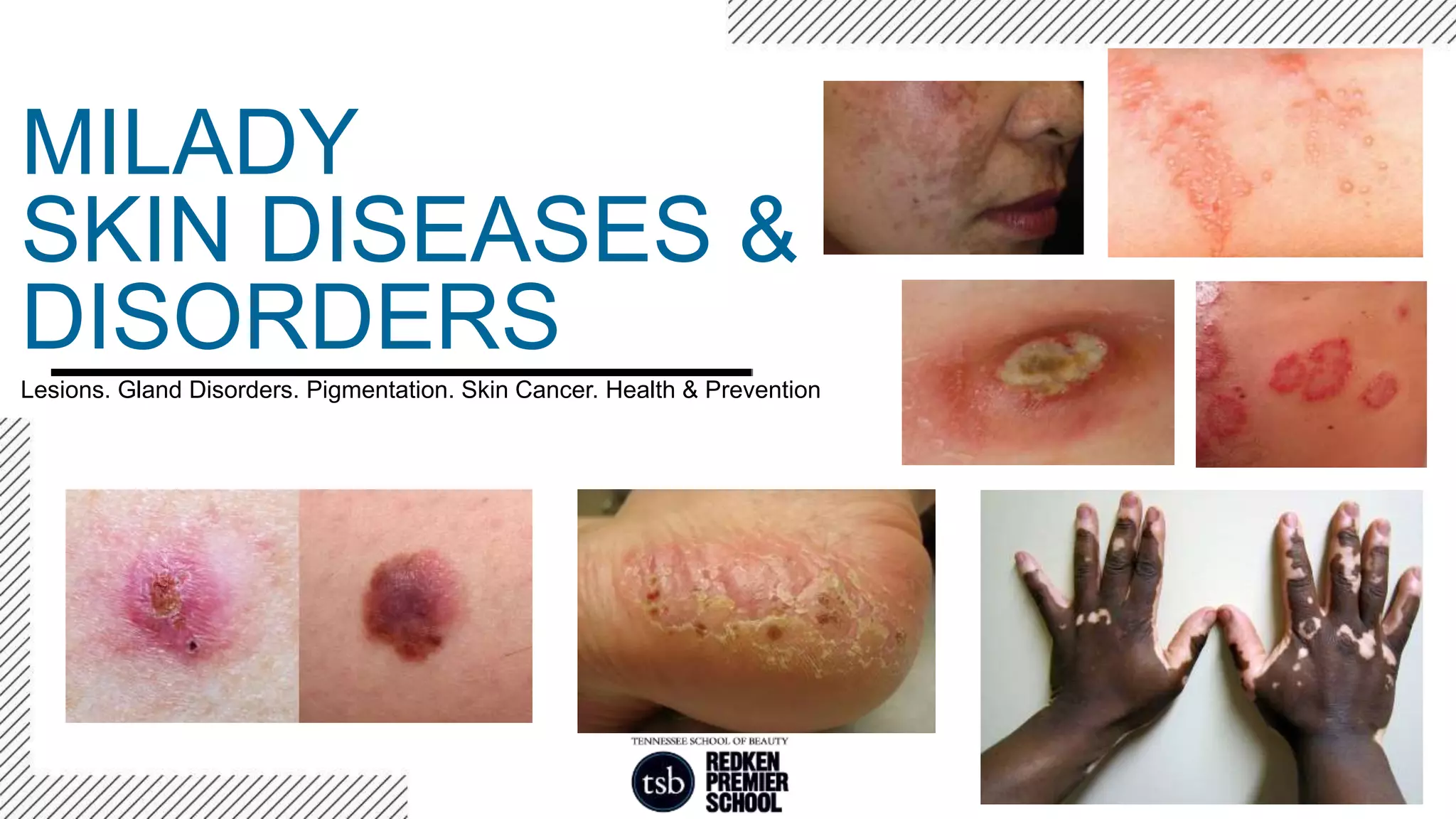
Lesions. Gland Disorders. Pigmentation. Skin Cancer. Health & Prevention
MILADY
SKIN DISEASES &
DISORDERS
THE WHY???
• Understand the two major causes of acne and how to treat them.
• List the factors that contribute to the aging of the skin.
• Explain the effects of overexposure to the sun on the skin.
• Understand what contact dermatitis is and how it can be
prevented.
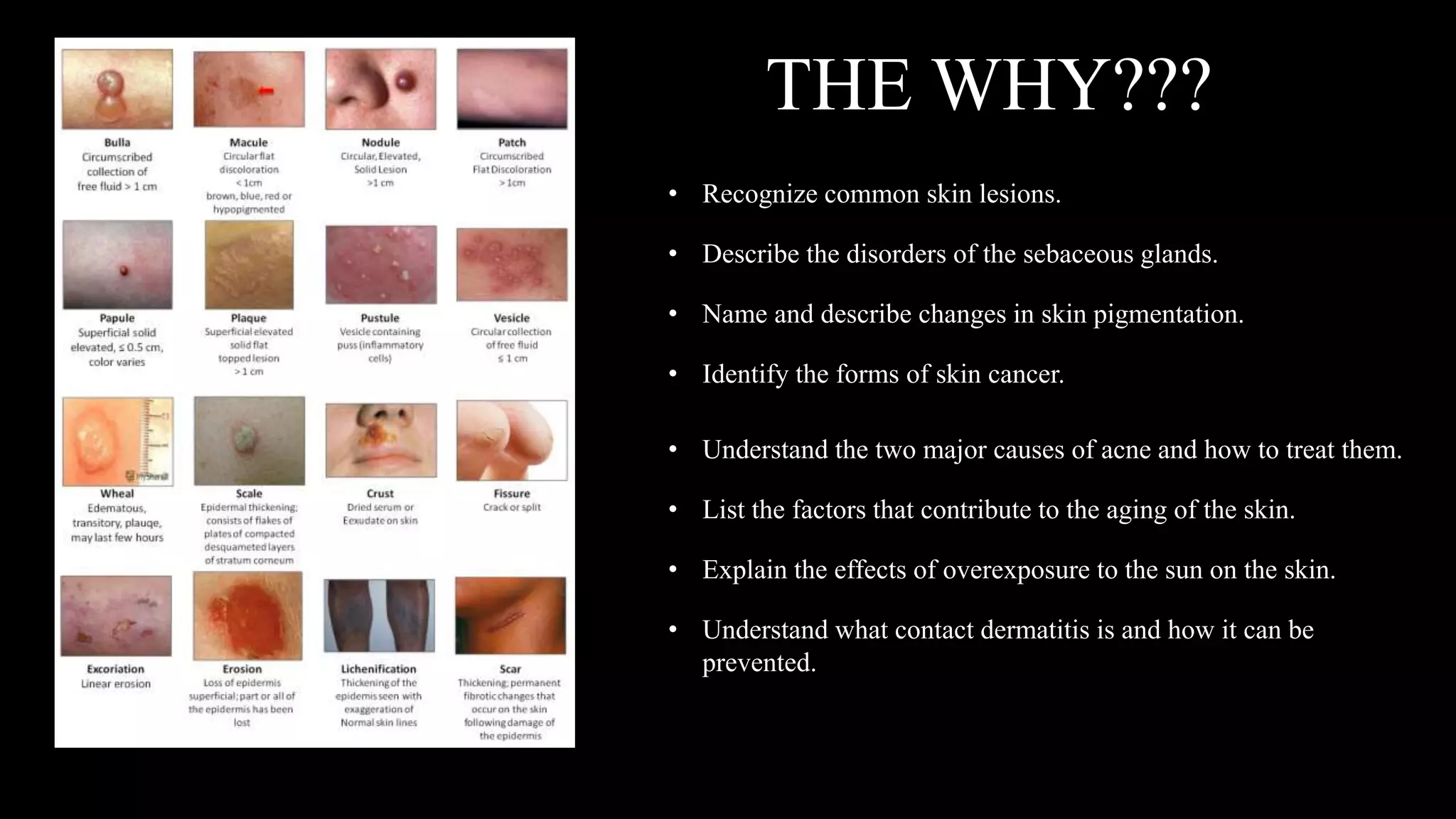
• Recognize common skin lesions.
• Describe the disorders of the sebaceous glands.
• Name and describe changes in skin pigmentation.
• Identify the forms of skin cancer.
• Dermatologist – a physician who
specializes in diseases and disorders of
the skin
• Inflamed skin disorders, whether
infectious or not, should not be served in
the salon.
LESIONS OF THE SKIN
A lesion is a mark on the skin or structural
change in tissues caused by injury or disease.
PRIMARY & SECONDARY
PRIMARY LESIONS
BULLA- Blister
CYST- Sac containing fluid pus
MACULE-
Small, discolored spot or patch
NODULE-
Solid bump larger than .4 in
PAPULE- Pimple
PRIMARY LESIONS
PUSTLE- Raised, inflamed pimple
TUBERCLE- Abnormal
rounded, solid lump
TUMOR- Abnormal cell mass
VESICLE- Small blister with clear fluid
WHEAL- Itchy, swollen
lesion ( hives/bug bite )
SECONDARY LESIONS
CRUST- Dead cells formed over wound or blemish
EXORIATION-
Skin sore or abrasion
FISSURE- Crack in the skin
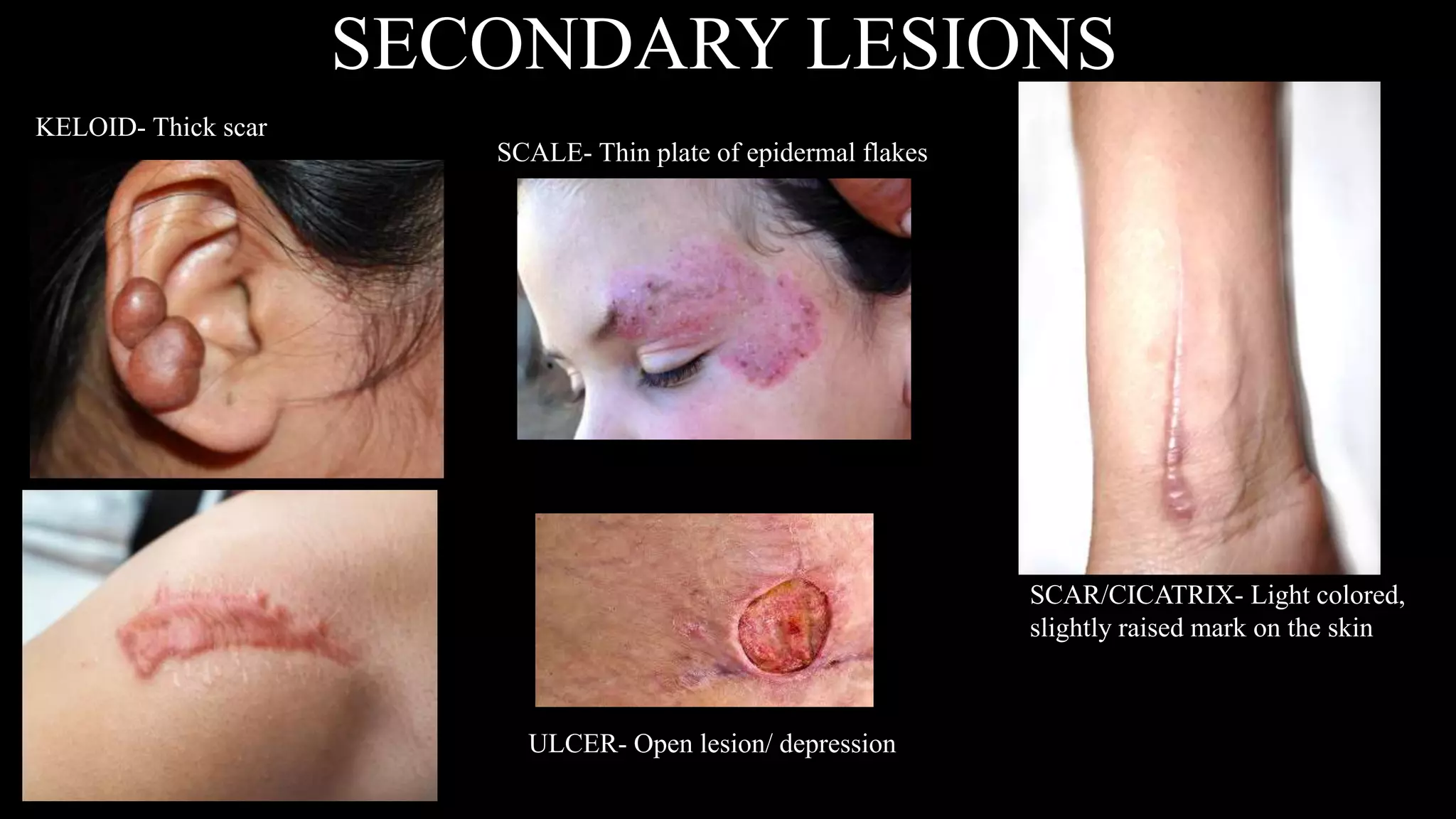
SECONDARY LESIONS
KELOID- Thick scar
SCALE- Thin plate of epidermal flakes
SCAR/CICATRIX- Light colored,
slightly raised mark on the skin
ULCER- Open lesion/ depression
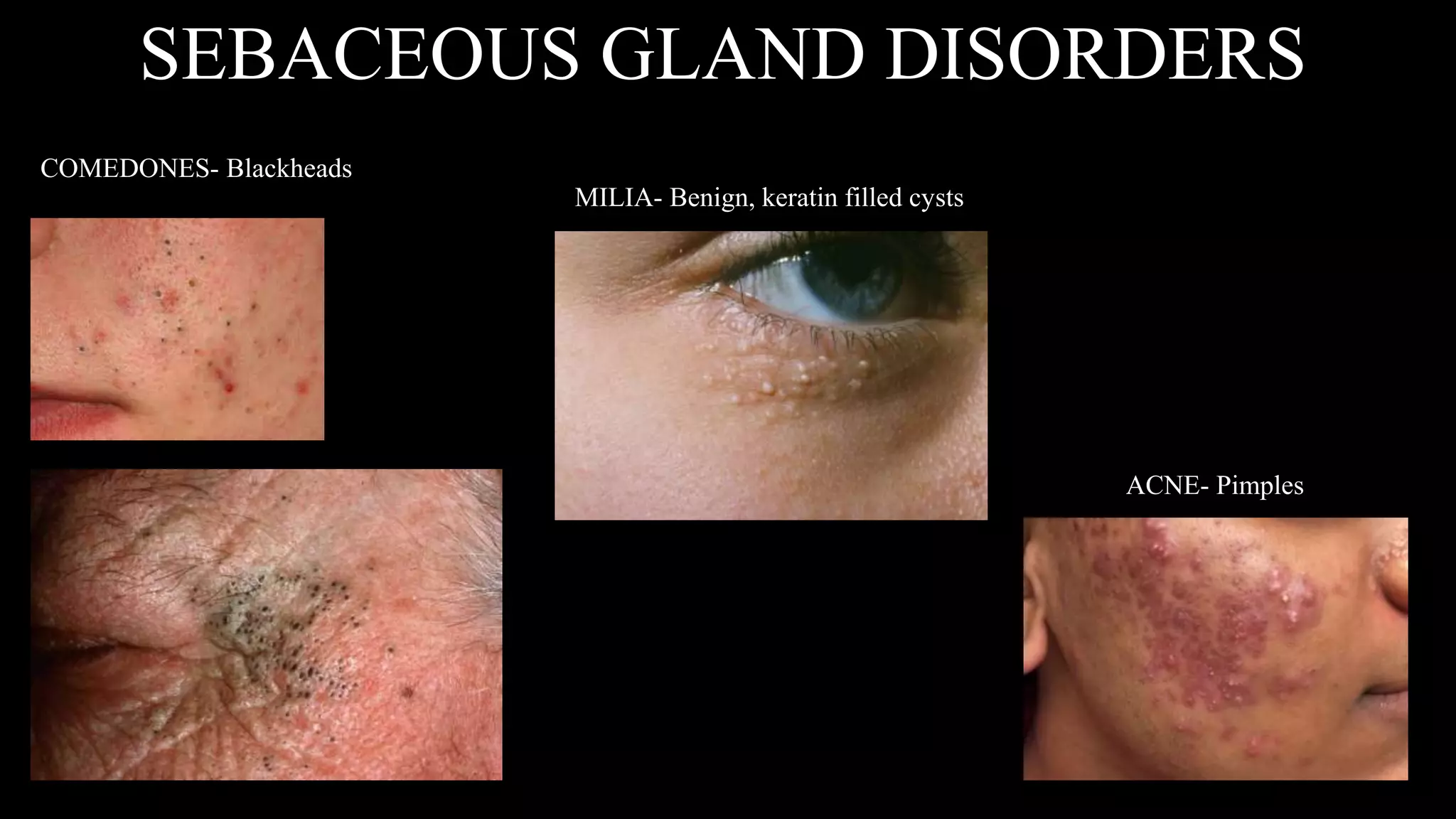
SEBACEOUS GLAND DISORDERS
COMEDONES- Blackheads
MILIA- Benign, keratin filled cysts
ACNE- Pimples
SEBACEOUS GLAND DISORDERS
SEBACEOUS CYST- Large, protruding,
pocketlike lesion filled with sebum
SEBORRHEIC DERMATITIS-
Inflammation of sebaceous glands
ROSACEA- Chronic inflammatory
congestion of the cheeks & nose
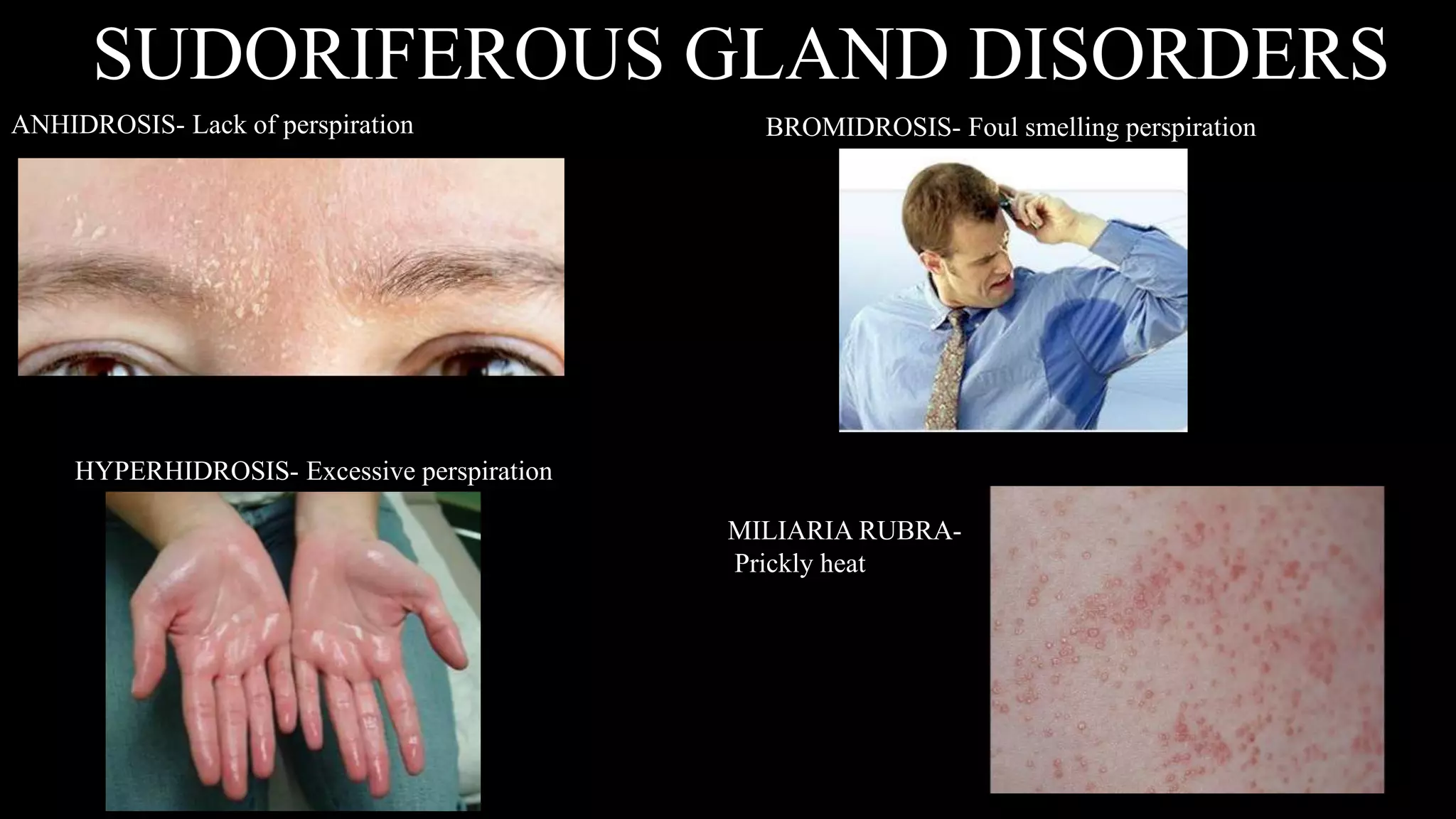
SUDORIFEROUS GLAND DISORDERS
ANHIDROSIS- Lack of perspiration BROMIDROSIS- Foul smelling perspiration
HYPERHIDROSIS- Excessive perspiration
MILIARIA RUBRA-
Prickly heat
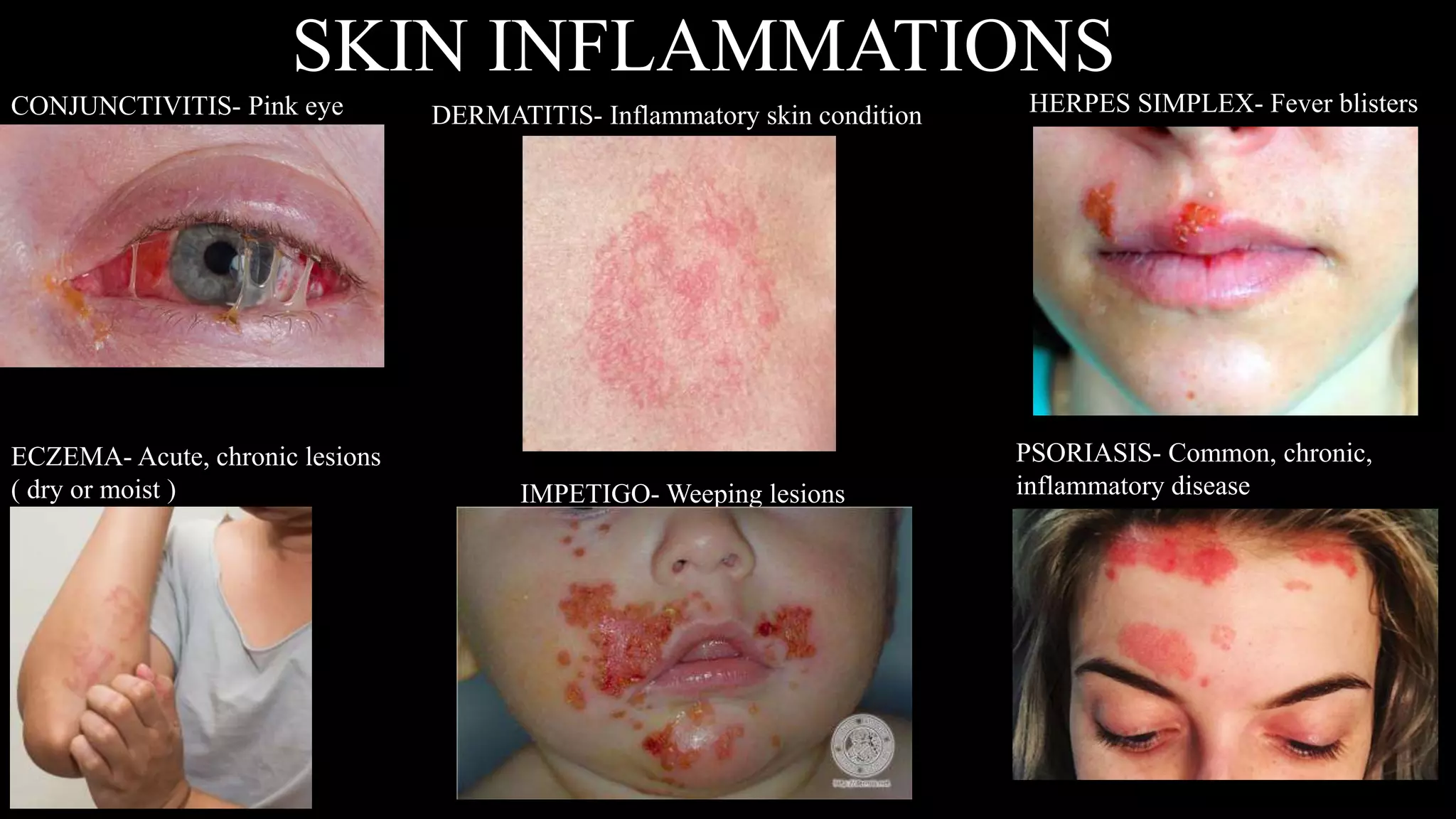
SKIN INFLAMMATIONS
CONJUNCTIVITIS- Pink eye DERMATITIS- Inflammatory skin condition
ECZEMA- Acute, chronic lesions
( dry or moist )
HERPES SIMPLEX- Fever blisters
IMPETIGO- Weeping lesions
PSORIASIS- Common, chronic,
inflammatory disease
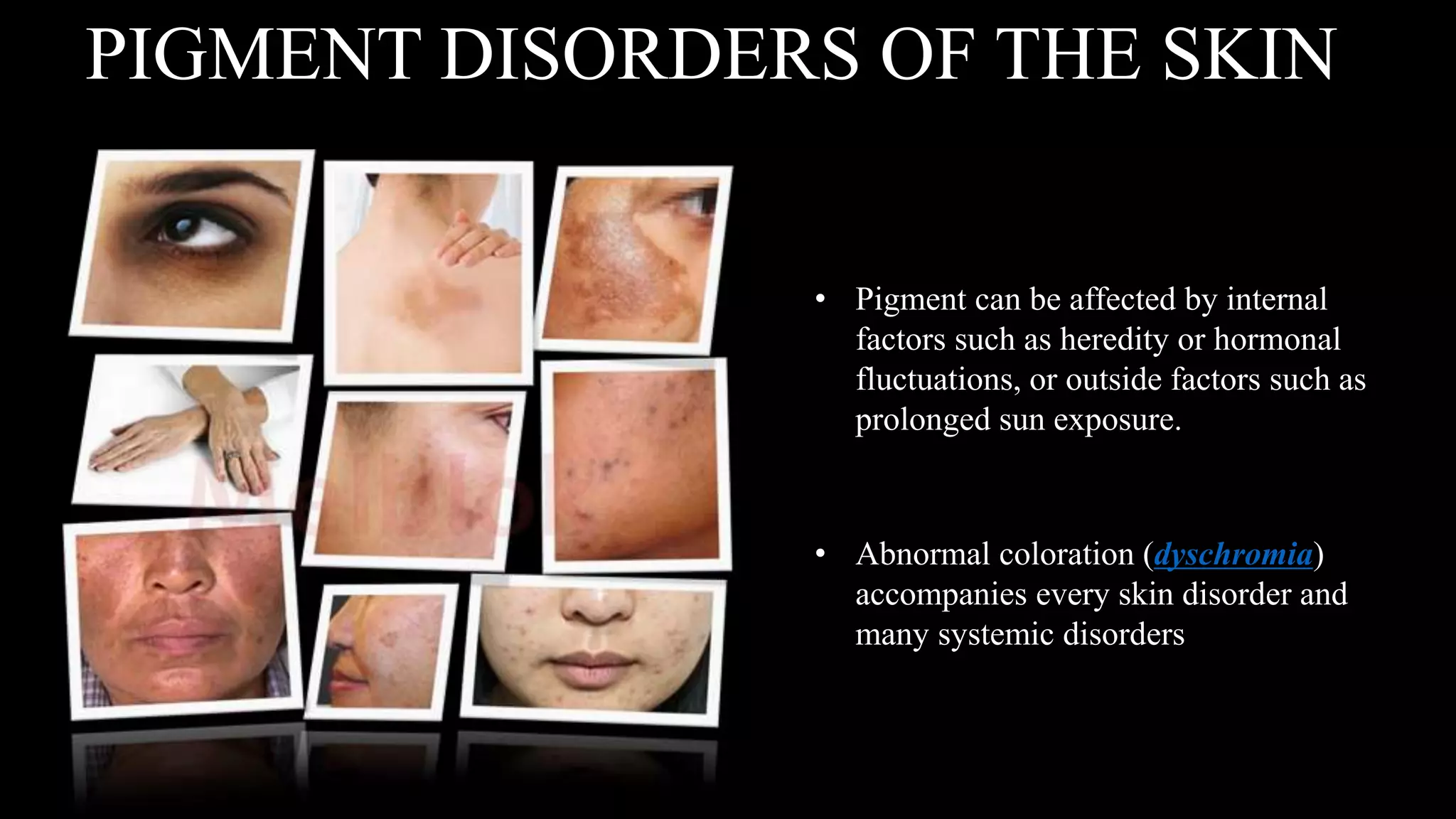
PIGMENT DISORDERS OF THE SKIN
• Pigment can be affected by internal
factors such as heredity or hormonal
fluctuations, or outside factors such as
prolonged sun exposure.
• Abnormal coloration (dyschromia)
accompanies every skin disorder and
many systemic disorders
PIGMENT DISORDERS OF THE SKIN
ALBINISM- Absence of melanin
CHLOASMA- Increases pigment in spots
LENTIGNES- Freckles
LEUCODERMA- Light abnormal patches
HYPERPIGMENTATION- Darker than normal
pigmentation/ dark splotches
HYPOPIGMENTATION-
Absence of pigment/ white splotches
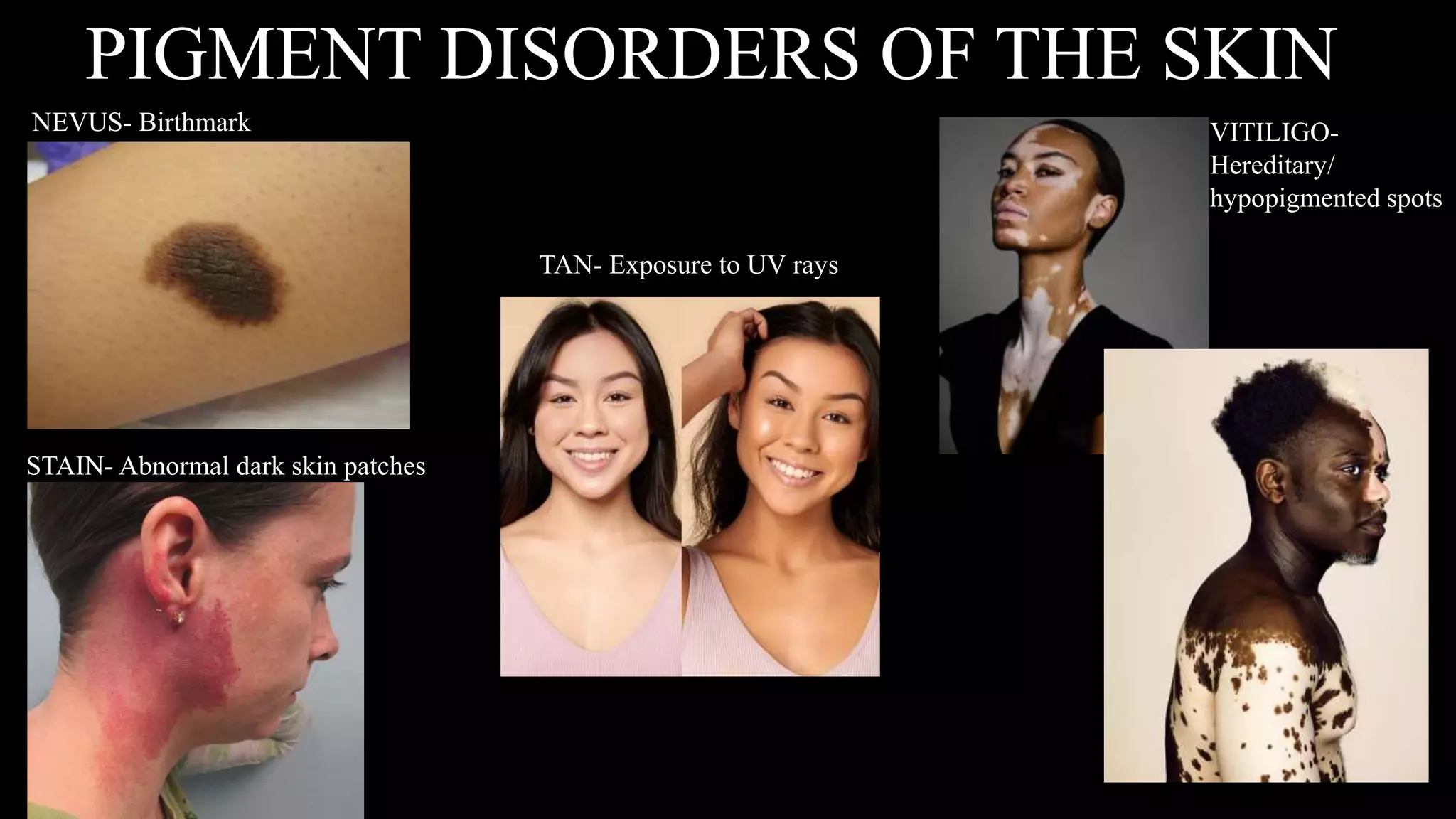
PIGMENT DISORDERS OF THE SKIN
NEVUS- Birthmark
STAIN- Abnormal dark skin patches
TAN- Exposure to UV rays
VITILIGO-
Hereditary/
hypopigmented spots
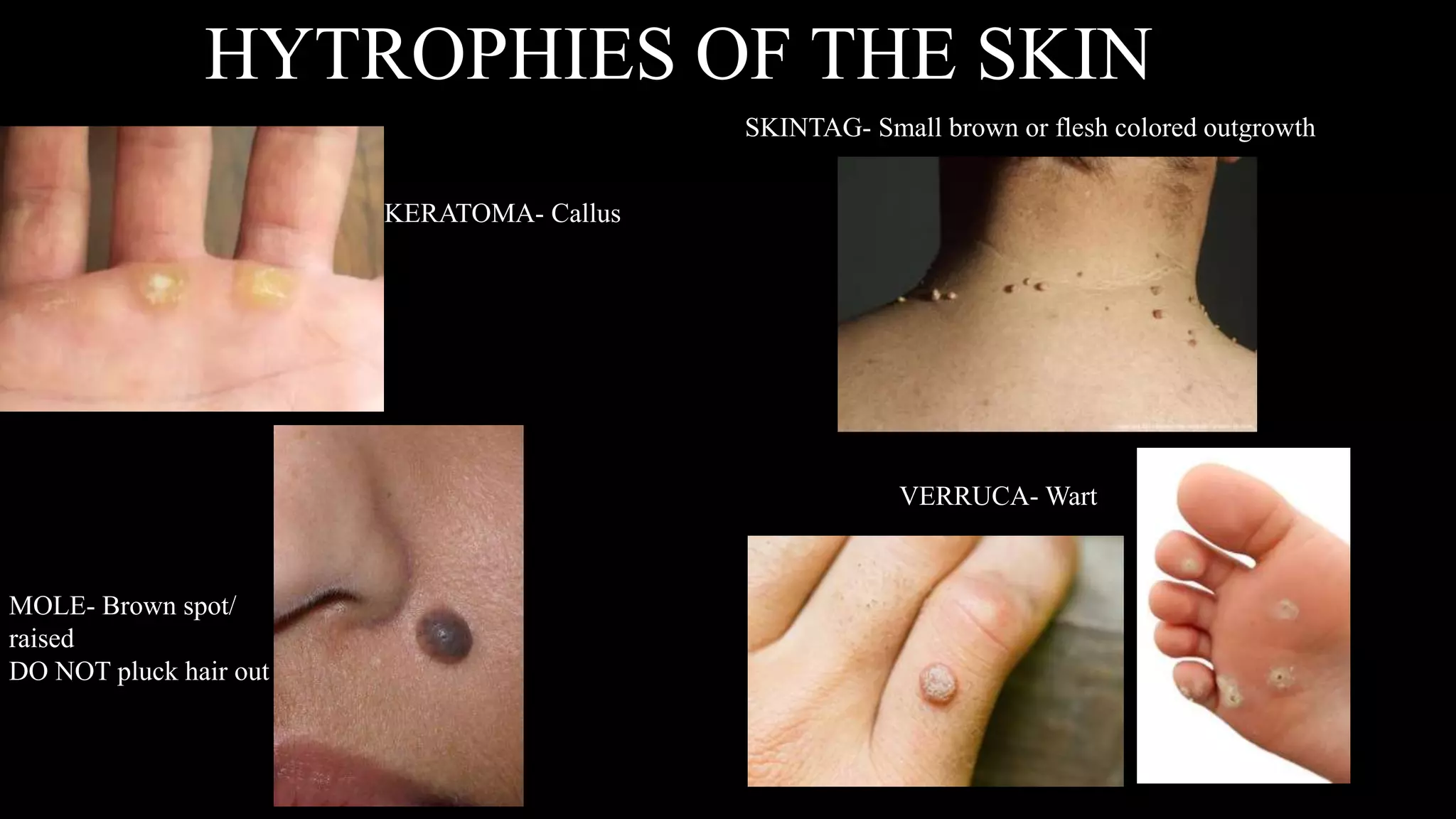
HYTROPHIES OF THE SKIN
KERATOMA- Callus
MOLE- Brown spot/
raised
DO NOT pluck hair out
SKINTAG- Small brown or flesh colored outgrowth
VERRUCA- Wart
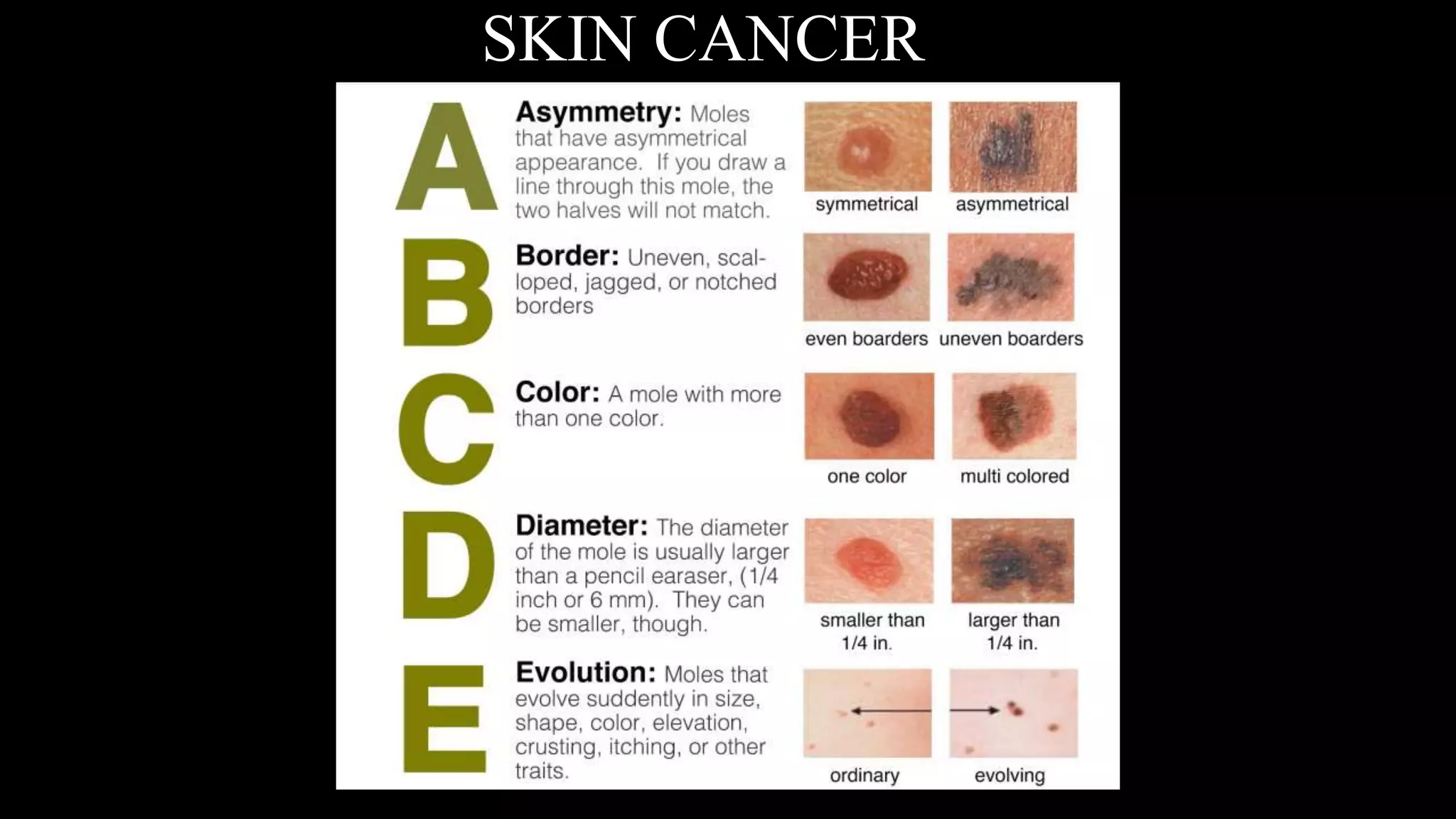
SKIN CANCER
SKIN CANCER
Acne and Problem Skin
• Retention hyperkeratosis – hereditary tendency
for acne-prone skin to retain dead cells in the
follicle
• Propionibacterium acnes – anaerobic
(cannot survive in the presence of oxygen)
• Main food source – fatty acids
Acne Treatment
• Cleansers and toners for oily skin
• Follicle exfoliants
• Avoidance of fatty skin-care products
• Avoidance of harsh products
Intrinsic Skin Aging Factors
• Genetic aging
• Gravity
• Facial expressions
Extrinsic Aging Factors
• Sun exposure
• Smoking
• Excessive alcohol and smoking
• Illegal drugs
• Cumulative stress
• Poor nutrition
• Exposure to pollution
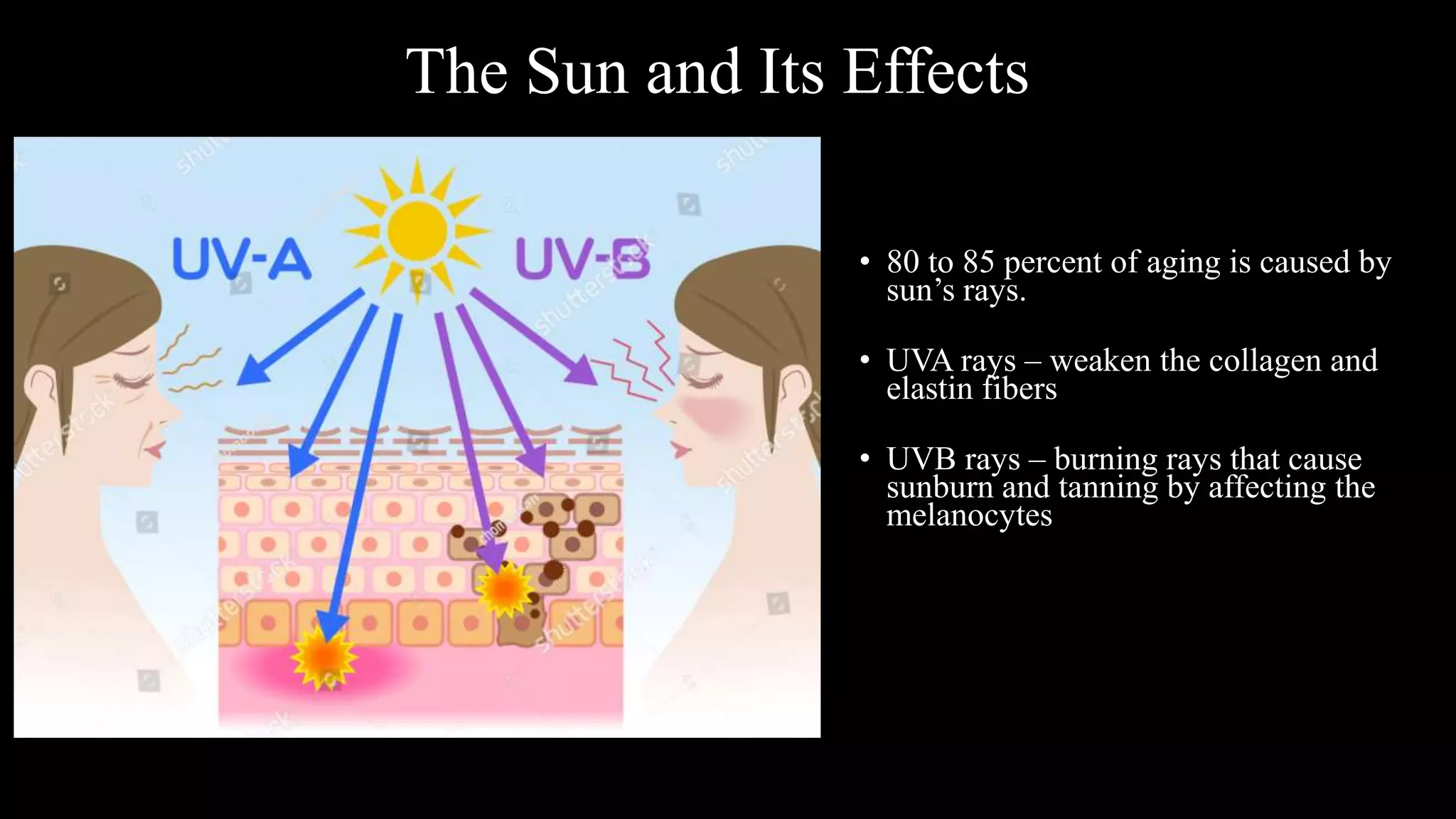
The Sun and Its Effects
• 80 to 85 percent of aging is caused by
sun’s rays.
• UVA rays – weaken the collagen and
elastin fibers
• UVB rays – burning rays that cause
sunburn and tanning by affecting the
melanocytes
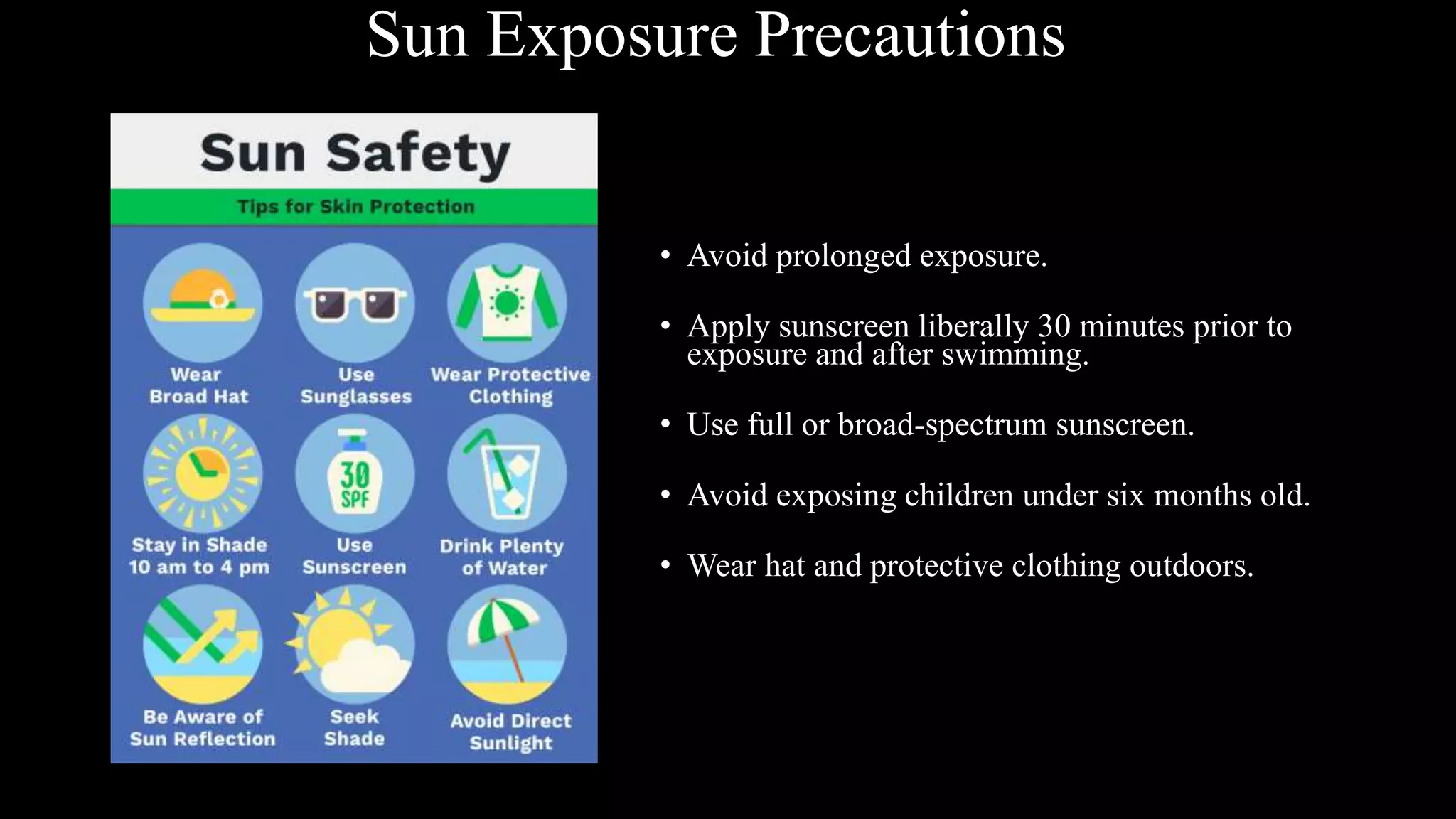
Sun Exposure Precautions
• Avoid prolonged exposure.
• Apply sunscreen liberally 30 minutes prior to
exposure and after swimming.
• Use full or broad-spectrum sunscreen.
• Avoid exposing children under six months old.
• Wear hat and protective clothing outdoors.
Dermatitis
• Medical term for abnormal skin inflammation
• Can result from contact with chemicals or tints
• Allergies from product ingredients
Contact Dermatitis
• Most common work-related skin disorder for cosmetology
professionals
• Caused by certain substances touching skin
Allergic Contact Dermatitis
• Caused when skin is allergic to an
ingredient or product
• Sensitization – an allergic reaction
created by repeated exposure to a
chemical or substance
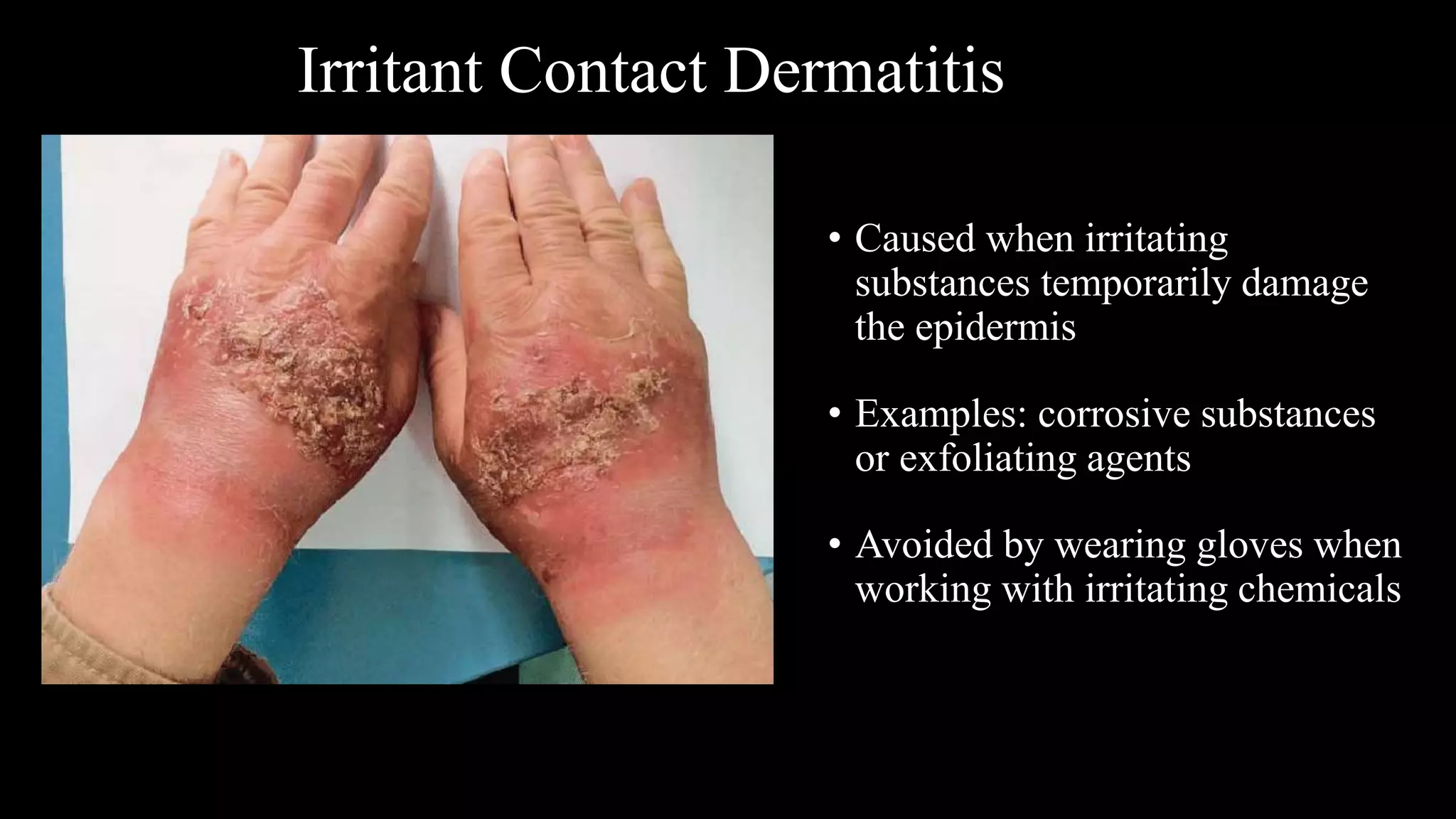
Irritant Contact Dermatitis
• Caused when irritating
substances temporarily damage
the epidermis
• Examples: corrosive substances
or exfoliating agents
• Avoided by wearing gloves when
working with irritating chemicals
Self-Protection
• Keep tools and surroundings clean
• Proper disinfection of brush handles,
containers, surfaces, etc.).
• Wear protective gloves.
• Keep hands clean and moisturized.

Milady skin diseases & disorders

  • 1.
    Lesions. Gland Disorders.Pigmentation. Skin Cancer. Health & Prevention MILADY SKIN DISEASES & DISORDERS
  • 2.
    THE WHY??? • Understandthe two major causes of acne and how to treat them. • List the factors that contribute to the aging of the skin. • Explain the effects of overexposure to the sun on the skin. • Understand what contact dermatitis is and how it can be prevented. • Recognize common skin lesions. • Describe the disorders of the sebaceous glands. • Name and describe changes in skin pigmentation. • Identify the forms of skin cancer.
  • 3.
    • Dermatologist –a physician who specializes in diseases and disorders of the skin • Inflamed skin disorders, whether infectious or not, should not be served in the salon.
  • 4.
    LESIONS OF THESKIN A lesion is a mark on the skin or structural change in tissues caused by injury or disease. PRIMARY & SECONDARY
  • 5.
    PRIMARY LESIONS BULLA- Blister CYST-Sac containing fluid pus MACULE- Small, discolored spot or patch NODULE- Solid bump larger than .4 in PAPULE- Pimple
  • 6.
    PRIMARY LESIONS PUSTLE- Raised,inflamed pimple TUBERCLE- Abnormal rounded, solid lump TUMOR- Abnormal cell mass VESICLE- Small blister with clear fluid WHEAL- Itchy, swollen lesion ( hives/bug bite )
  • 7.
    SECONDARY LESIONS CRUST- Deadcells formed over wound or blemish EXORIATION- Skin sore or abrasion FISSURE- Crack in the skin
  • 8.
    SECONDARY LESIONS KELOID- Thickscar SCALE- Thin plate of epidermal flakes SCAR/CICATRIX- Light colored, slightly raised mark on the skin ULCER- Open lesion/ depression
  • 9.
    SEBACEOUS GLAND DISORDERS COMEDONES-Blackheads MILIA- Benign, keratin filled cysts ACNE- Pimples
  • 10.
    SEBACEOUS GLAND DISORDERS SEBACEOUSCYST- Large, protruding, pocketlike lesion filled with sebum SEBORRHEIC DERMATITIS- Inflammation of sebaceous glands ROSACEA- Chronic inflammatory congestion of the cheeks & nose
  • 11.
    SUDORIFEROUS GLAND DISORDERS ANHIDROSIS-Lack of perspiration BROMIDROSIS- Foul smelling perspiration HYPERHIDROSIS- Excessive perspiration MILIARIA RUBRA- Prickly heat
  • 12.
    SKIN INFLAMMATIONS CONJUNCTIVITIS- Pinkeye DERMATITIS- Inflammatory skin condition ECZEMA- Acute, chronic lesions ( dry or moist ) HERPES SIMPLEX- Fever blisters IMPETIGO- Weeping lesions PSORIASIS- Common, chronic, inflammatory disease
  • 13.
    PIGMENT DISORDERS OFTHE SKIN • Pigment can be affected by internal factors such as heredity or hormonal fluctuations, or outside factors such as prolonged sun exposure. • Abnormal coloration (dyschromia) accompanies every skin disorder and many systemic disorders
  • 14.
    PIGMENT DISORDERS OFTHE SKIN ALBINISM- Absence of melanin CHLOASMA- Increases pigment in spots LENTIGNES- Freckles LEUCODERMA- Light abnormal patches HYPERPIGMENTATION- Darker than normal pigmentation/ dark splotches HYPOPIGMENTATION- Absence of pigment/ white splotches
  • 15.
    PIGMENT DISORDERS OFTHE SKIN NEVUS- Birthmark STAIN- Abnormal dark skin patches TAN- Exposure to UV rays VITILIGO- Hereditary/ hypopigmented spots
  • 16.
    HYTROPHIES OF THESKIN KERATOMA- Callus MOLE- Brown spot/ raised DO NOT pluck hair out SKINTAG- Small brown or flesh colored outgrowth VERRUCA- Wart
  • 17.
  • 18.
  • 19.
    Acne and ProblemSkin • Retention hyperkeratosis – hereditary tendency for acne-prone skin to retain dead cells in the follicle • Propionibacterium acnes – anaerobic (cannot survive in the presence of oxygen) • Main food source – fatty acids
  • 20.
    Acne Treatment • Cleansersand toners for oily skin • Follicle exfoliants • Avoidance of fatty skin-care products • Avoidance of harsh products
  • 21.
    Intrinsic Skin AgingFactors • Genetic aging • Gravity • Facial expressions
  • 22.
    Extrinsic Aging Factors •Sun exposure • Smoking • Excessive alcohol and smoking • Illegal drugs • Cumulative stress • Poor nutrition • Exposure to pollution
  • 23.
    The Sun andIts Effects • 80 to 85 percent of aging is caused by sun’s rays. • UVA rays – weaken the collagen and elastin fibers • UVB rays – burning rays that cause sunburn and tanning by affecting the melanocytes
  • 24.
    Sun Exposure Precautions •Avoid prolonged exposure. • Apply sunscreen liberally 30 minutes prior to exposure and after swimming. • Use full or broad-spectrum sunscreen. • Avoid exposing children under six months old. • Wear hat and protective clothing outdoors.
  • 25.
    Dermatitis • Medical termfor abnormal skin inflammation • Can result from contact with chemicals or tints • Allergies from product ingredients
  • 26.
    Contact Dermatitis • Mostcommon work-related skin disorder for cosmetology professionals • Caused by certain substances touching skin
  • 27.
    Allergic Contact Dermatitis •Caused when skin is allergic to an ingredient or product • Sensitization – an allergic reaction created by repeated exposure to a chemical or substance
  • 28.
    Irritant Contact Dermatitis •Caused when irritating substances temporarily damage the epidermis • Examples: corrosive substances or exfoliating agents • Avoided by wearing gloves when working with irritating chemicals
  • 29.
    Self-Protection • Keep toolsand surroundings clean • Proper disinfection of brush handles, containers, surfaces, etc.). • Wear protective gloves. • Keep hands clean and moisturized.