MANUFACTURING PROCESS

Name : Zia ur Rehman
Roll # 12-MC-16
Presented to : Sir Shah Nawaz
Metal

inert

gas

welding:

a

method of welding in which the filler metal wire supplies the electric

current to maintain the arc, which is shielded from the access of air
by an inert gas, usually argon

The "Metal" in Gas Metal Arc Welding
refers to the wire that is used to start the arc. It is shielded by inert gas
and the feeding wire also acts as the filler rod. MIG is fairly easy to

learn and use as it is a semi-automatic welding process.
Metal Inert Gas (MIG) welding, also
sometimes called Gas Metal Arc Welding (GMAW) is a process
that was developed in the 1940s for welding aluminum and other

non-ferrous metals. MIG welding is an automatic or semiautomatic process in which a wire connected to a source of direct
current acts as an electrode to join two pieces of metal as it is

continuously passed through a welding gun. A flow of an inert gas,
originally argon, is also passed through the welding gun at the same
time as the wire electrode. This inert gas acts as a shield, keeping

airborne contaminants away from the weld zone.
The Welder :
Inside the welder you will find a spool of wire
and a series of rollers that pushes the wire out to the welding
gun.. If the wire feed jams up for any reason (this does

happen from time to time) you will want to check this part of
the machine out.The large spool of wire should be held on
with a tension nut. The nut should be tight enough to keep
the spool from unraveling, but not so tight that the rollers
can't pull the wire from the spool.
The Gas Tank :
Assuming you are
using a shielding gas with your MIG welder
there will be a tank of gas behind the MIG.
The tank is either 100% Argon or a mixture
of CO2 and Argon. This gas shields the
weld as it forms. Without the gas your welds
will look brown, splattered and just
generally not very nice. Open the main

valve of the tank and make sure that there is
some gas in the tank.
The Welding Gun
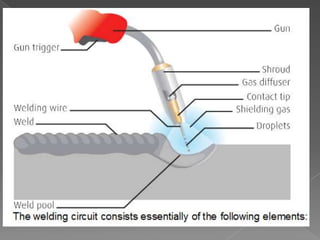
The welding gun is the
business end of things. It's where most of your
attention will be directed during the welding

process. The gun consists of a trigger that controls
the wire feed and the flow of electricity. The wire
is guided by a replaceable copper tip that is made
for each specific welder. Tips vary in size to fit
whatever diameter wire you happen to be welding
with.. The outside of the tip of gun is covered by a
ceramic or metal cup which protects the electrode

and directs the flow of gas out the tip of the gun.
During the MIG welding process, the

electrode melts within the arc and becomes deposited as filler material. The
shielding gas that is used prevents atmospheric contamination from atmospheric
and protects the weld during solidification. The shielding gas also assists with
stabilizing the arc which provides a smooth transfer of metal from the weld
wire to the molten weld pool.
Once your welder is set up and you have prepped your

piece of metal it's time to start focusing on the actual welding.If it's your first
time welding you might want to practice just running a bead before actually
welding two pieces of metal together. You can do this by taking a piece of scrap
metal and making a weld in a straight line of its surface.
Do this a couple of times before you start actually welding so that you can get a
feel for the process and figure out what wire speed and power settings you will
want to use.Every welder is different so you will have to figure these settings
out yourself. Too little power and you will have a splattered weld that won't
penetrate through your work piece. Too much power and you might melt right
through the metal entirely.
Once you've got your method tested out a

bit on some scrap, it's time to do the actual weld. In this photo I am doing just a
simple butt weld on some square stock. We've already ground down the edges
of the surfaces that are going to be welded so that the seem where they meet
makes a small "v". We are basically just taking the welder and making our
sewing motion across the top of the seem. It's ideal to weld from the bottom of
the stock up to the top, pushing the weld forward with the tip of the gun

If the weld is showing or you are
welding something that you want to look nice then you will most likely want to
grind down your weld and smooth it out. Slap a grinding wheel onto an angle

grinder and get started grinding on the weld.
The neater your weld was the less grinding you

will have to do, and after you have spent a whole day grinding, you will see
why it's worth it to keep your welds neat in the first place. If you use a ton of
wire and made a mess of things it's ok, it just means that you might be grinding
for a while. If you had a neat simple weld though, then it shouldn't take too long
to clean things up.

Be careful as you approach the surface of the
original stock. You don't want to grind through your nice new weld or gouge
out a piece of the metal. Move the angle grinder around like you would a sander
so as not to heat up, or grind away any one spot of the metal too much. If you
see the metal get a blue tinge to it you are either pushing too hard with the
grinder or not moving the grinding wheel around enough. This is can happen
especially easily while grinding thing sheets of metal.
Mig welding. Manufacturing Process

Mig welding. Manufacturing Process

  • 2.
    MANUFACTURING PROCESS Name :Zia ur Rehman Roll # 12-MC-16 Presented to : Sir Shah Nawaz
  • 3.
    Metal inert gas welding: a method of weldingin which the filler metal wire supplies the electric current to maintain the arc, which is shielded from the access of air by an inert gas, usually argon The "Metal" in Gas Metal Arc Welding refers to the wire that is used to start the arc. It is shielded by inert gas and the feeding wire also acts as the filler rod. MIG is fairly easy to learn and use as it is a semi-automatic welding process.
  • 4.
    Metal Inert Gas(MIG) welding, also sometimes called Gas Metal Arc Welding (GMAW) is a process that was developed in the 1940s for welding aluminum and other non-ferrous metals. MIG welding is an automatic or semiautomatic process in which a wire connected to a source of direct current acts as an electrode to join two pieces of metal as it is continuously passed through a welding gun. A flow of an inert gas, originally argon, is also passed through the welding gun at the same time as the wire electrode. This inert gas acts as a shield, keeping airborne contaminants away from the weld zone.
  • 5.
    The Welder : Insidethe welder you will find a spool of wire and a series of rollers that pushes the wire out to the welding gun.. If the wire feed jams up for any reason (this does happen from time to time) you will want to check this part of the machine out.The large spool of wire should be held on with a tension nut. The nut should be tight enough to keep the spool from unraveling, but not so tight that the rollers can't pull the wire from the spool.
  • 6.
    The Gas Tank: Assuming you are using a shielding gas with your MIG welder there will be a tank of gas behind the MIG. The tank is either 100% Argon or a mixture of CO2 and Argon. This gas shields the weld as it forms. Without the gas your welds will look brown, splattered and just generally not very nice. Open the main valve of the tank and make sure that there is some gas in the tank.
  • 7.
    The Welding Gun Thewelding gun is the business end of things. It's where most of your attention will be directed during the welding process. The gun consists of a trigger that controls the wire feed and the flow of electricity. The wire is guided by a replaceable copper tip that is made for each specific welder. Tips vary in size to fit whatever diameter wire you happen to be welding with.. The outside of the tip of gun is covered by a ceramic or metal cup which protects the electrode and directs the flow of gas out the tip of the gun.
  • 9.
    During the MIGwelding process, the electrode melts within the arc and becomes deposited as filler material. The shielding gas that is used prevents atmospheric contamination from atmospheric and protects the weld during solidification. The shielding gas also assists with stabilizing the arc which provides a smooth transfer of metal from the weld wire to the molten weld pool. Once your welder is set up and you have prepped your piece of metal it's time to start focusing on the actual welding.If it's your first time welding you might want to practice just running a bead before actually welding two pieces of metal together. You can do this by taking a piece of scrap metal and making a weld in a straight line of its surface.
  • 10.
    Do this acouple of times before you start actually welding so that you can get a feel for the process and figure out what wire speed and power settings you will want to use.Every welder is different so you will have to figure these settings out yourself. Too little power and you will have a splattered weld that won't penetrate through your work piece. Too much power and you might melt right through the metal entirely.
  • 12.
    Once you've gotyour method tested out a bit on some scrap, it's time to do the actual weld. In this photo I am doing just a simple butt weld on some square stock. We've already ground down the edges of the surfaces that are going to be welded so that the seem where they meet makes a small "v". We are basically just taking the welder and making our sewing motion across the top of the seem. It's ideal to weld from the bottom of the stock up to the top, pushing the weld forward with the tip of the gun If the weld is showing or you are welding something that you want to look nice then you will most likely want to grind down your weld and smooth it out. Slap a grinding wheel onto an angle grinder and get started grinding on the weld.
  • 13.
    The neater yourweld was the less grinding you will have to do, and after you have spent a whole day grinding, you will see why it's worth it to keep your welds neat in the first place. If you use a ton of wire and made a mess of things it's ok, it just means that you might be grinding for a while. If you had a neat simple weld though, then it shouldn't take too long to clean things up. Be careful as you approach the surface of the original stock. You don't want to grind through your nice new weld or gouge out a piece of the metal. Move the angle grinder around like you would a sander so as not to heat up, or grind away any one spot of the metal too much. If you see the metal get a blue tinge to it you are either pushing too hard with the grinder or not moving the grinding wheel around enough. This is can happen especially easily while grinding thing sheets of metal.