Ways of the WorldPart I and IIJennifer YungMid-term PowerPoint ReportHistory 4 - Fall 2011Dr. Arguello
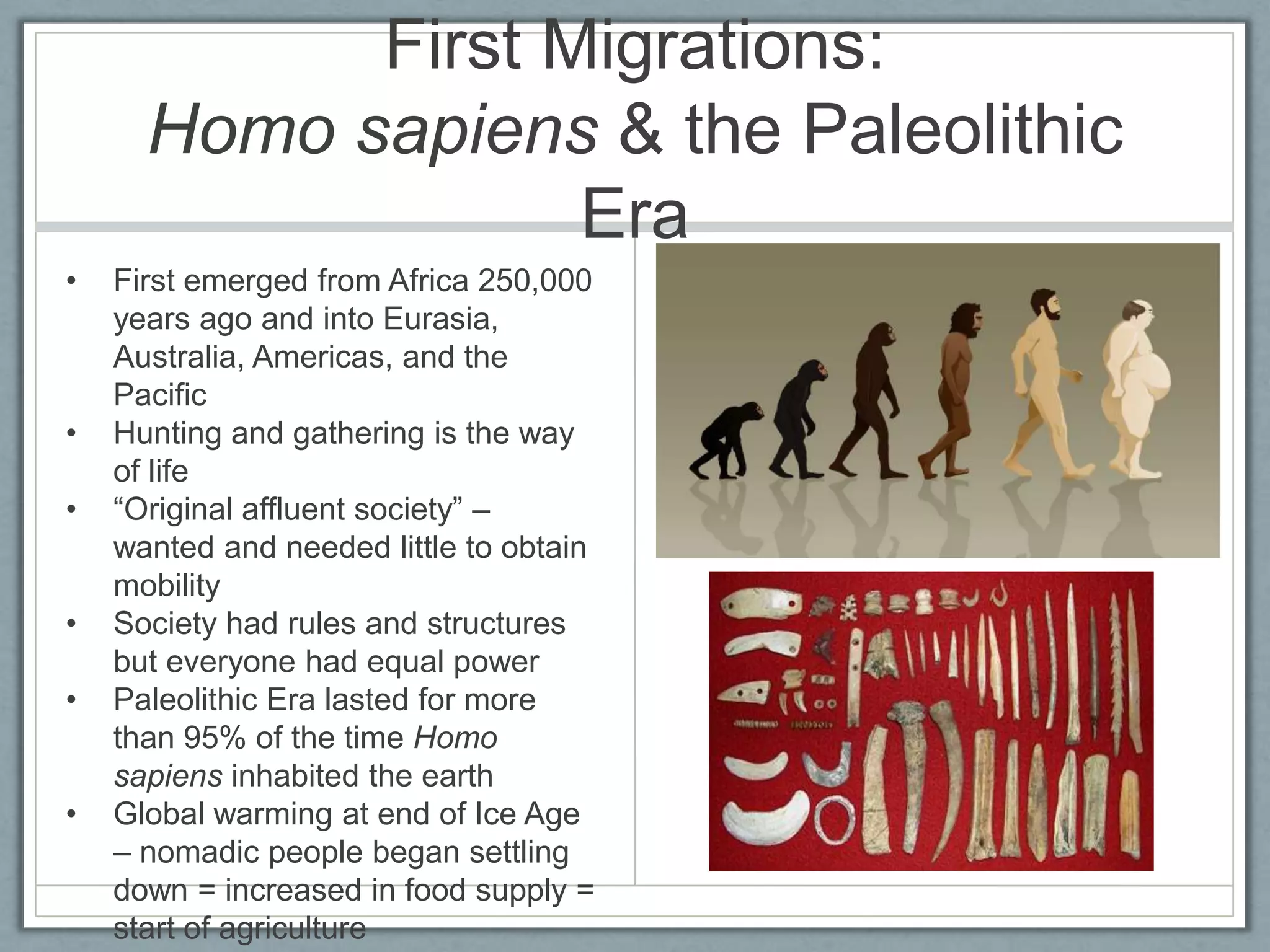
First Migrations:Homo sapiens & the Paleolithic EraFirst emerged from Africa 250,000 years ago and into Eurasia, Australia, Americas, and the PacificHunting and gathering is the way of life“Original affluent society” – wanted and needed little to obtain mobilitySociety had rules and structures but everyone had equal powerPaleolithic Era lasted for more than 95% of the time Homo sapiens inhabited the earthGlobal warming at end of Ice Age – nomadic people began settling down = increased in food supply = start of agriculture
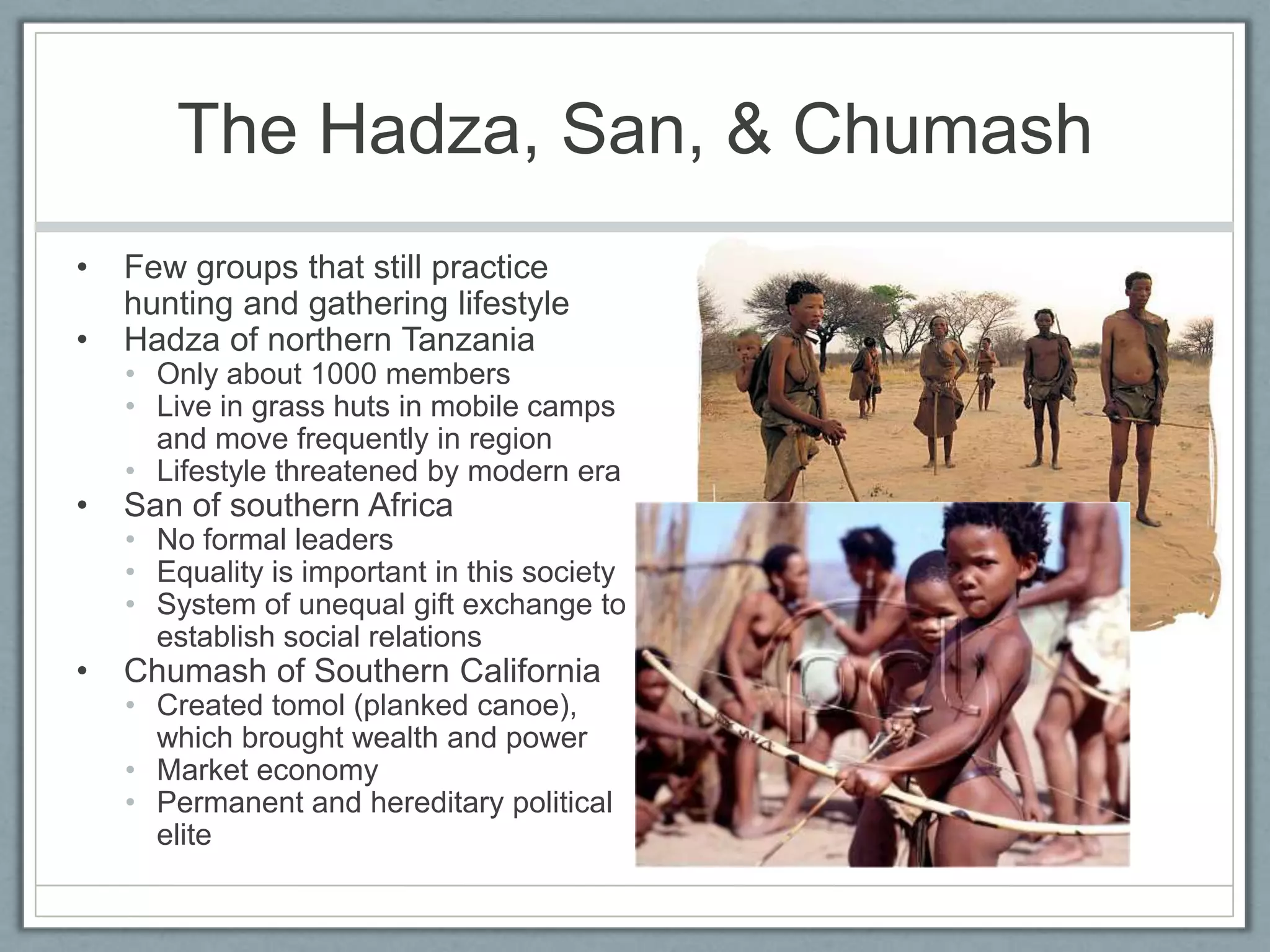
The Hadza, San, & ChumashFew groups that still practice hunting and gathering lifestyleHadza of northern TanzaniaOnly about 1000 membersLive in grass huts in mobile camps and move frequently in regionLifestyle threatened by modern eraSan of southern AfricaNo formal leadersEquality is important in this societySystem of unequal gift exchange to establish social relationsChumash of Southern CaliforniaCreated tomol (planked canoe), which brought wealth and powerMarket economyPermanent and hereditary political elite
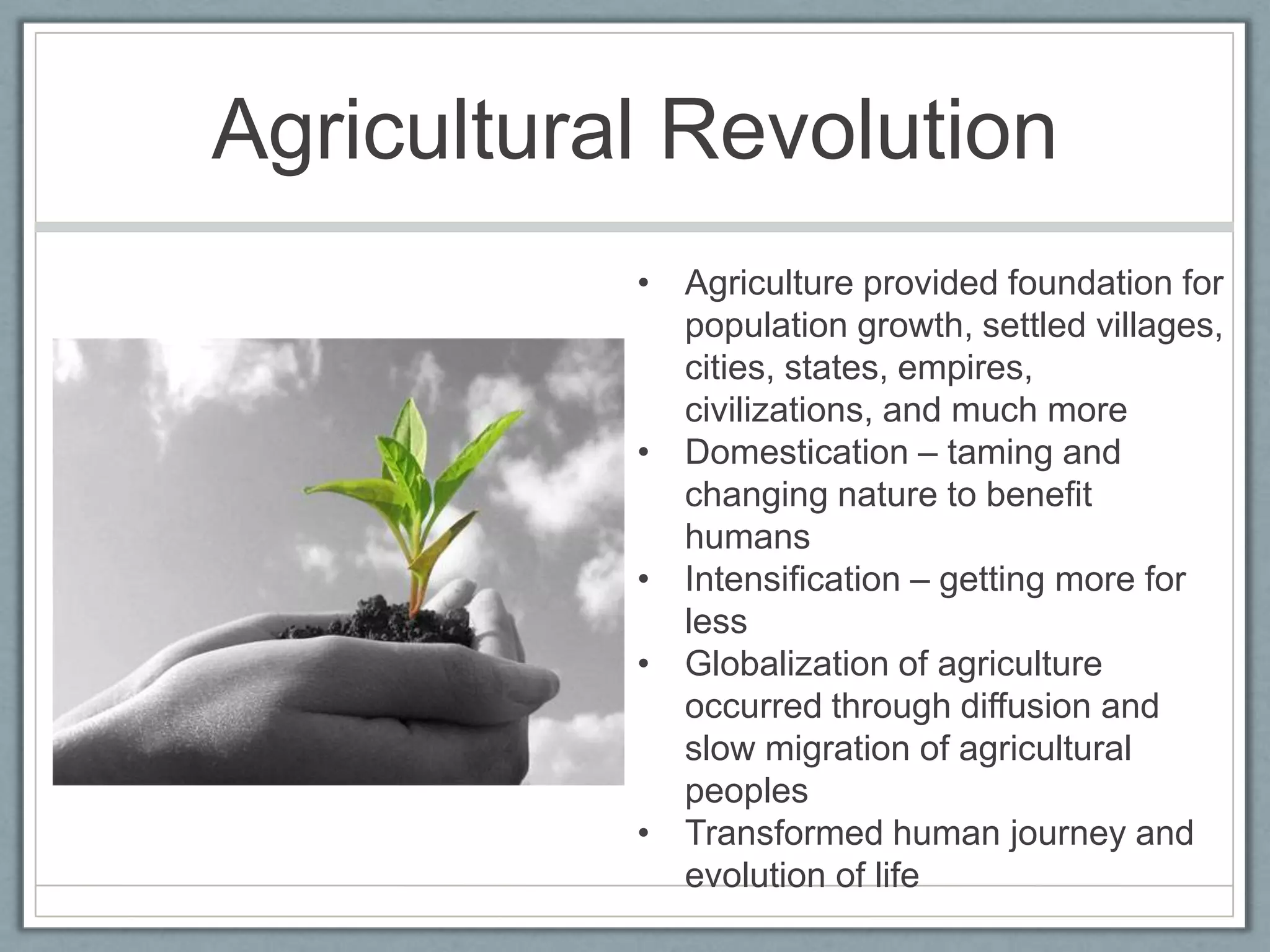
Agricultural RevolutionAgriculture provided foundation for population growth, settled villages, cities, states, empires, civilizations, and much moreDomestication – taming and changing nature to benefit humansIntensification – getting more for lessGlobalization of agriculture occurred through diffusion and slow migration of agricultural peoplesTransformed human journey and evolution of life
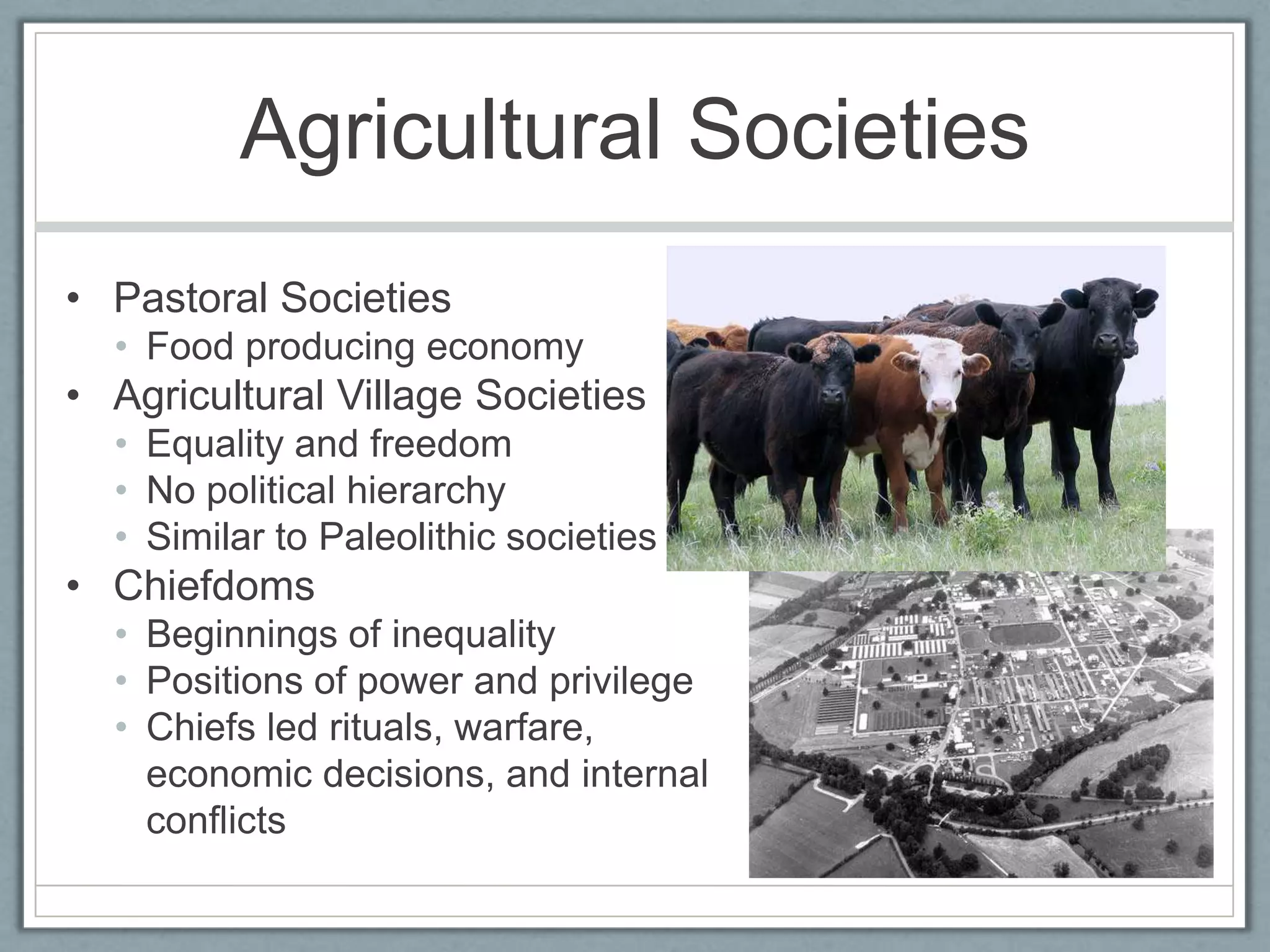
Agricultural SocietiesPastoral SocietiesFood producing economyAgricultural Village SocietiesEquality and freedomNo political hierarchySimilar to Paleolithic societiesChiefdomsBeginnings of inequalityPositions of power and privilegeChiefs led rituals, warfare, economic decisions, and internal conflicts
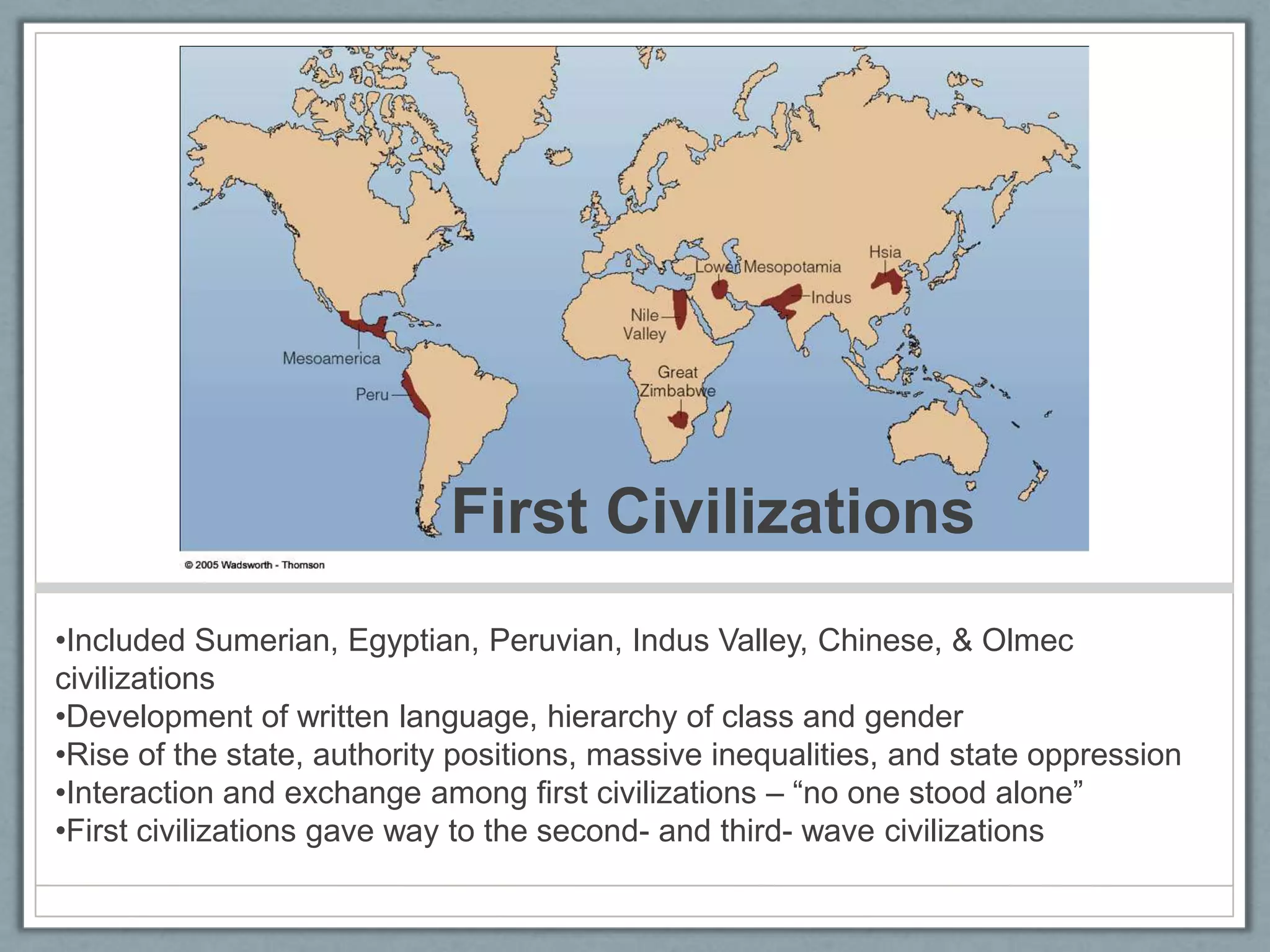
First CivilizationsIncluded Sumerian, Egyptian, Peruvian, Indus Valley, Chinese, & Olmec civilizations
Development of written language, hierarchy of class and gender
Rise of the state, authority positions, massive inequalities, and state oppression
Interaction and exchange among first civilizations – “no one stood alone”

Midterm Powerpoint

  • 1.
    Ways of theWorldPart I and IIJennifer YungMid-term PowerPoint ReportHistory 4 - Fall 2011Dr. Arguello
  • 2.
    First Migrations:Homo sapiens& the Paleolithic EraFirst emerged from Africa 250,000 years ago and into Eurasia, Australia, Americas, and the PacificHunting and gathering is the way of life“Original affluent society” – wanted and needed little to obtain mobilitySociety had rules and structures but everyone had equal powerPaleolithic Era lasted for more than 95% of the time Homo sapiens inhabited the earthGlobal warming at end of Ice Age – nomadic people began settling down = increased in food supply = start of agriculture
  • 3.
    The Hadza, San,& ChumashFew groups that still practice hunting and gathering lifestyleHadza of northern TanzaniaOnly about 1000 membersLive in grass huts in mobile camps and move frequently in regionLifestyle threatened by modern eraSan of southern AfricaNo formal leadersEquality is important in this societySystem of unequal gift exchange to establish social relationsChumash of Southern CaliforniaCreated tomol (planked canoe), which brought wealth and powerMarket economyPermanent and hereditary political elite
  • 4.
    Agricultural RevolutionAgriculture providedfoundation for population growth, settled villages, cities, states, empires, civilizations, and much moreDomestication – taming and changing nature to benefit humansIntensification – getting more for lessGlobalization of agriculture occurred through diffusion and slow migration of agricultural peoplesTransformed human journey and evolution of life
  • 5.
    Agricultural SocietiesPastoral SocietiesFoodproducing economyAgricultural Village SocietiesEquality and freedomNo political hierarchySimilar to Paleolithic societiesChiefdomsBeginnings of inequalityPositions of power and privilegeChiefs led rituals, warfare, economic decisions, and internal conflicts
  • 6.
    First CivilizationsIncluded Sumerian,Egyptian, Peruvian, Indus Valley, Chinese, & Olmec civilizations
  • 7.
    Development of writtenlanguage, hierarchy of class and gender
  • 8.
    Rise of thestate, authority positions, massive inequalities, and state oppression
  • 9.
    Interaction and exchangeamong first civilizations – “no one stood alone”
  • 10.
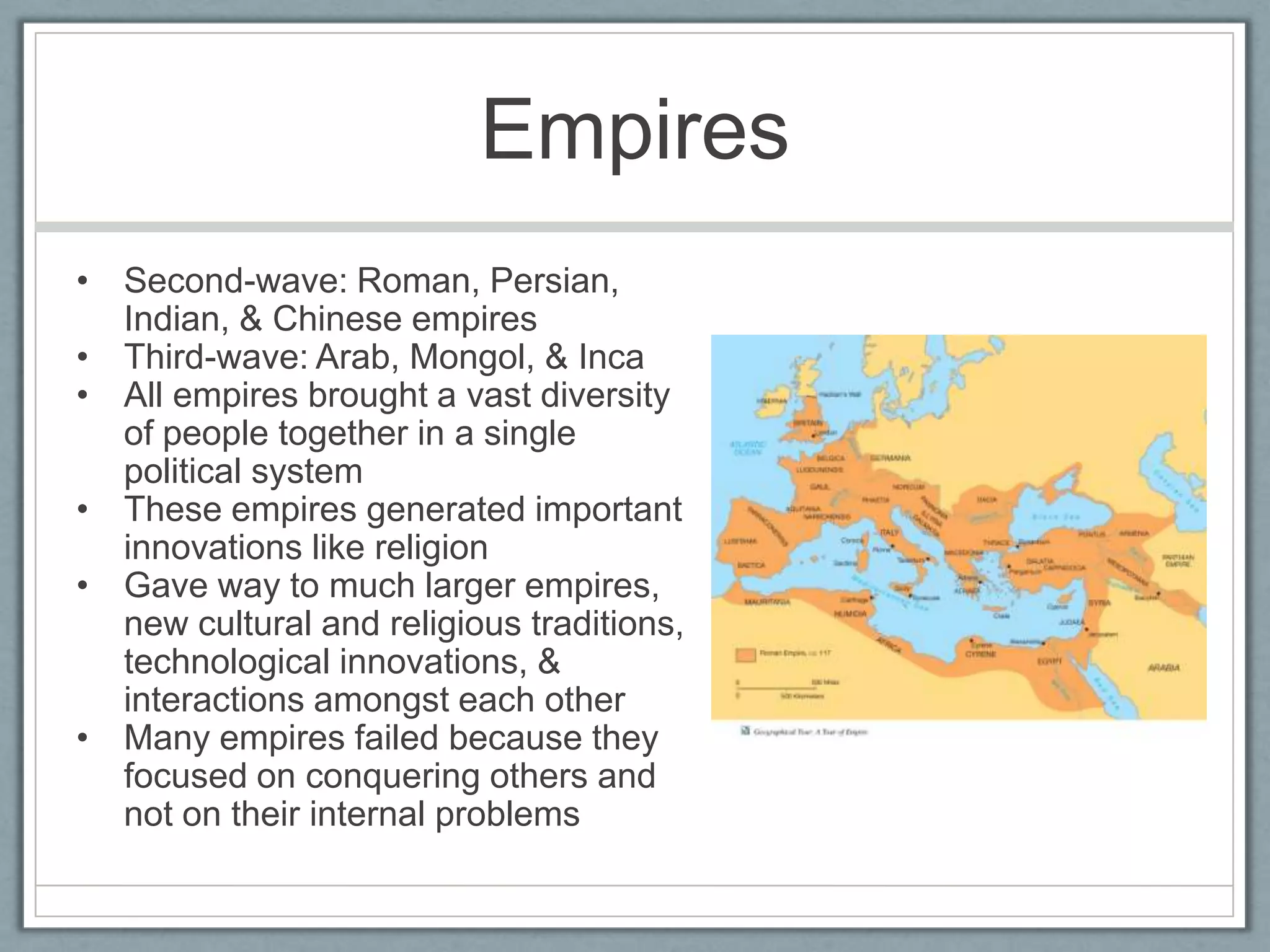
    First civilizations gaveway to the second- and third- wave civilizationsEmpiresSecond-wave: Roman, Persian, Indian, & Chinese empiresThird-wave: Arab, Mongol, & IncaAll empires brought a vast diversity of people together in a single political systemThese empires generated important innovations like religionGave way to much larger empires, new cultural and religious traditions, technological innovations, & interactions amongst each otherMany empires failed because they focused on conquering others and not on their internal problems
  • 11.
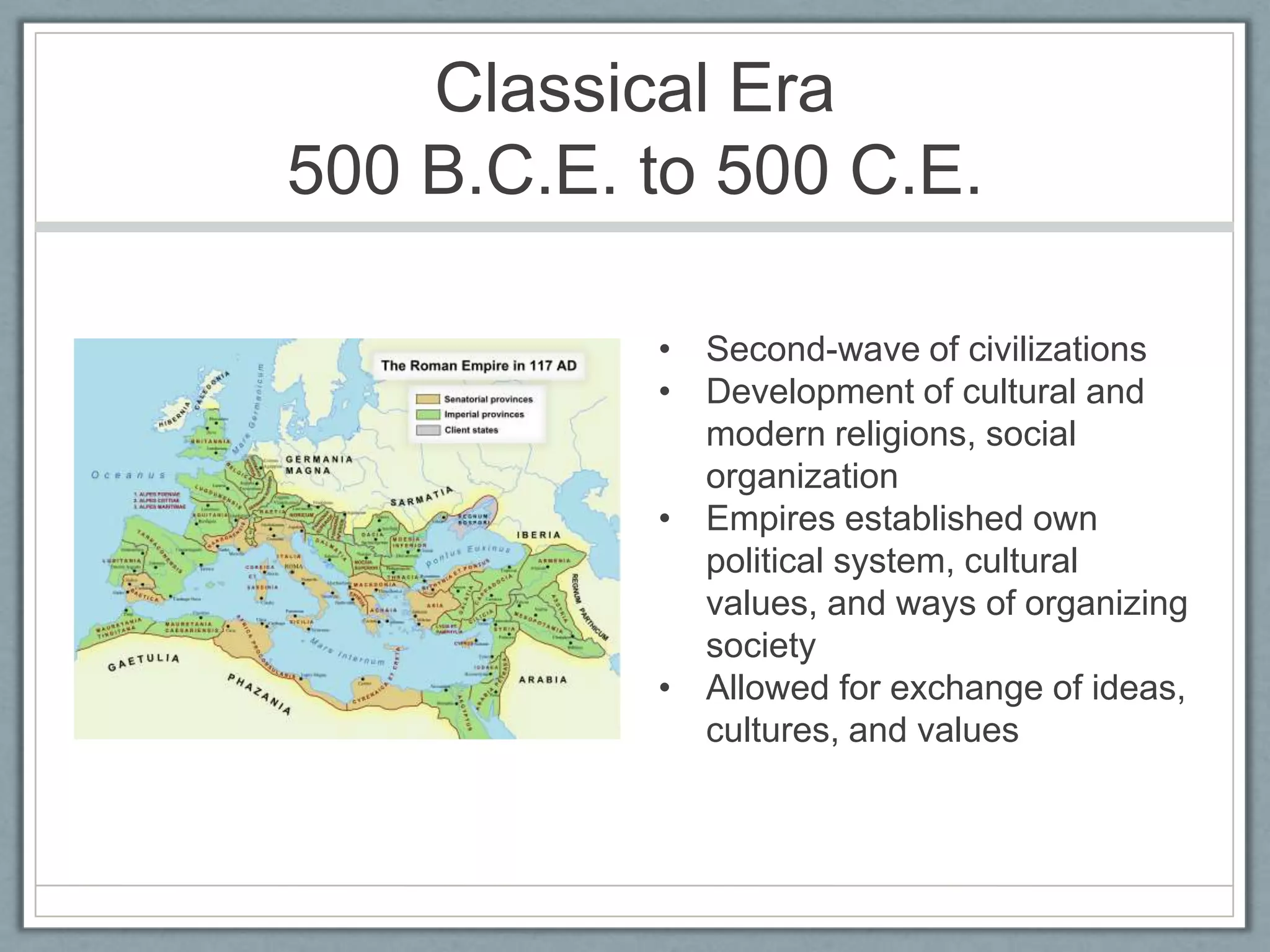
    Classical Era500 B.C.E.to 500 C.E.Second-wave of civilizationsDevelopment of cultural and modern religions, social organizationEmpires established own political system, cultural values, and ways of organizing societyAllowed for exchange of ideas, cultures, and values
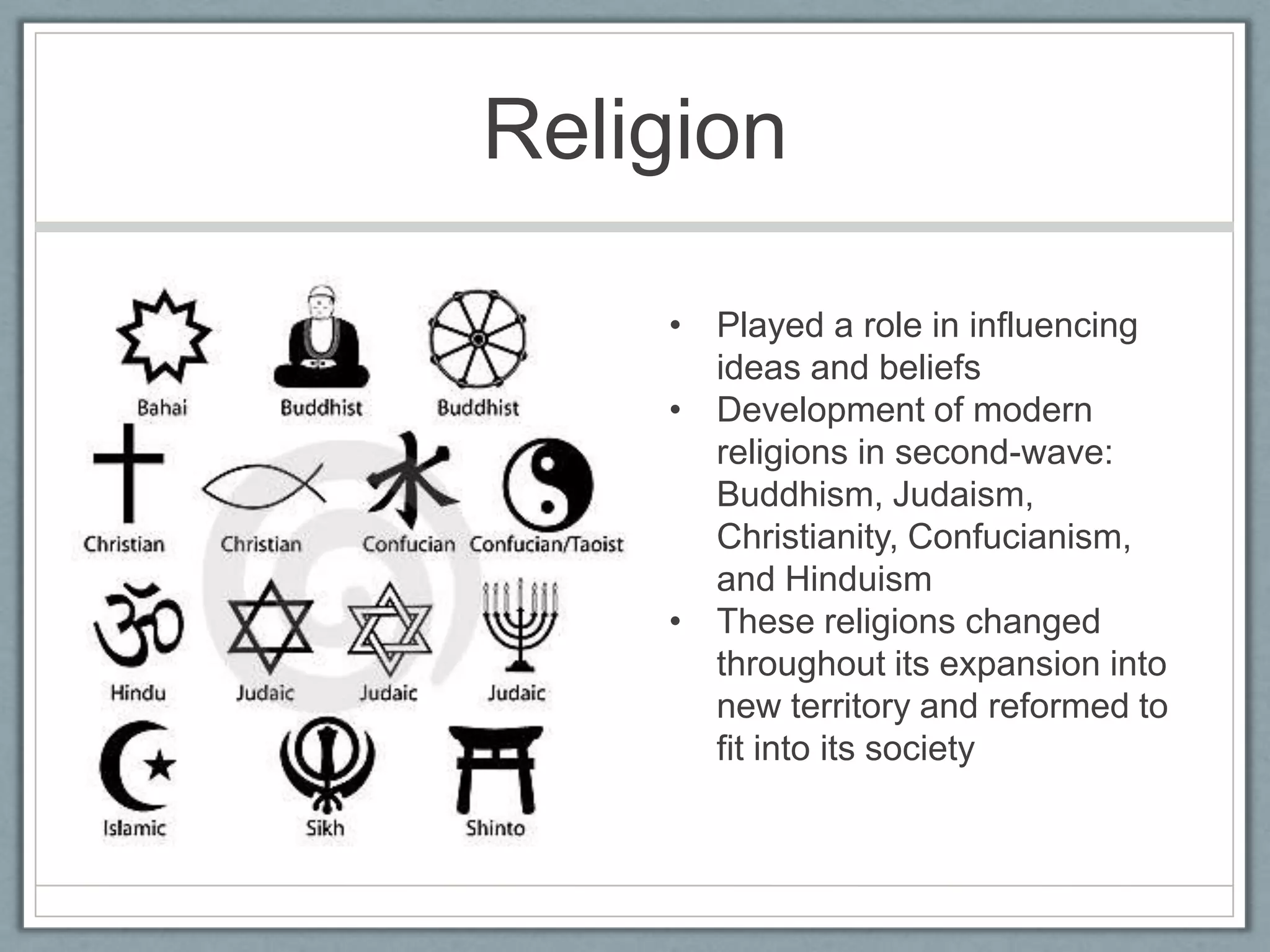
  • 12.
    ReligionPlayed a rolein influencing ideas and beliefsDevelopment of modern religions in second-wave: Buddhism, Judaism, Christianity, Confucianism, and HinduismThese religions changed throughout its expansion into new territory and reformed to fit into its society