History’s Beginnings
Earliest Human Societies
Early Human Migration to 10,000
years ago
 http://www.classzone.com/cz/books/ms_wh_survey/g
et_chapter_group.htm?cin=1&ci=1&rg=map_center&at
=animated_maps&var=animated_maps
Studying History and Early Humans
 Why do people study history and try to learn more
about the past?
 To find out about ancestors and more about themselves
 http://www.classzone.com/cz/books/ms_wh_survey/p
age_build.htm?id=resources/jsp/starting_with_a_stor
y/starting_with_a_story_ch1
Why Study History
 What has happened to a person, a family, or society in
the past may affect what will occur in the future
 More than recounting and studying past events
 Involves: studying society’s culture, religion, politics,
and economics
 Historians try to find patterns and see past through
eyes of people who lived it
Primary and Secondary Sources
 Evidence used to answer Historians questions
 Primary Source: something written or created by a
person who witnessed a historical event
 Military records, marriage certificates, diaries, and
private letters
 Artifacts: buildings, works of art, tools
 Oral History: made up of verbal or unwritten accounts
of events
 includes stories, customs, and songs
 Secondary Source: a work produces about a historical
event by someone who was not actually there
 Newspapers, books, and paintings
 Oral History
Why History Changes
 Historians might use different evidence
 Steps:
 Evidence is examined and trustworthy evidence is
sorted.
 Evidence is interpreted: articles, books, and museum
displays
 Interpretations can be conflicting
 Discovery of new evidence may lead to new conclusions
Early Humans Were Hunter-
Gatherers
 Hunted animals and gathered plants for food
 Moved to new locations when food ran out
Adapting to the Environment
 Depended on Environment for shelter
 Lived in caves, rock shelters, made shelters out of tree
branches, plant fibers or skins of animals
 Lived together in bands
 Made up of several families (30 people)
 Men: hunted and fished
 Women: gathered foods and cared for children
Early Humans on the Move
 Hunter-gatherers were nomads: people who move
from place to place
 Movement limited; returned to same places with
changing seasons
 Some moved to new lands
 Migration: the act of moving from one place to settle in
another
 Migration
 People followed animals to hunt
 13,000 B.C. had migrated to much of world
 Traveled across a land bridge connecting Siberia and Alaska
Developing Tools and Culture
 Technology: ways in which people apply knowledge, tools,
and inventions to meet their needs.
 The Development of Technology
 2 million years ago Stone tools for cutting
 Carrying bags, stone hand axes, awls, drills, bows, flint
spearheads, metal tools
 Tools used for: building shelter, hunting and butchering
animals
 The Use of Fire
 500,000 years ago: learned to make fire
 Provided heat and light (could cook food)
 Used to temper tools made of metal
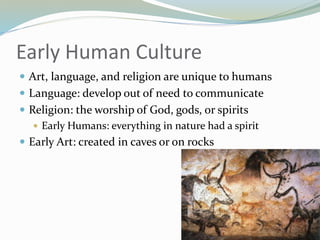
Early Human Culture
 Art, language, and religion are unique to humans
 Language: develop out of need to communicate
 Religion: the worship of God, gods, or spirits
 Early Humans: everything in nature had a spirit
 Early Art: created in caves or on rocks
The Beginnings of Agriculture
 8,000 B.C.
 Learned to grow plants and raise animals
 Climate Changes
 Rising temps caused glaciers to melt
 Humans could move into new areas
 Growing seasons became longer
 Domesticated : (humans learned to grown and breed the
grasses ) wild grasses
The Domestication of Animals
 Learned to capture and tame animals
 Captured animals provided constant source of food
 9,000 B.C.
 1st animals domesticated
 Reliable food source, clothing, and other products
 Made tools from bones
 Horses, llamas, and camels used for transportation
 Dogs domesticated to help in hunts
The Agricultural Revolution
 Development of farming
 Agriculture: planting of seeds to raise crops
 Ag. Revolution
 Shift from food gathering to food raising
 Began around 8,000 B.C.
 Brought changes in tools and technology
 People made hoes, plows and sickles
 More food available allowed for increases in population and
better opportunities to settle in one place

Chapter 1

  • 1.
  • 2.
  • 3.
    Early Human Migrationto 10,000 years ago  http://www.classzone.com/cz/books/ms_wh_survey/g et_chapter_group.htm?cin=1&ci=1&rg=map_center&at =animated_maps&var=animated_maps
  • 4.
    Studying History andEarly Humans  Why do people study history and try to learn more about the past?  To find out about ancestors and more about themselves  http://www.classzone.com/cz/books/ms_wh_survey/p age_build.htm?id=resources/jsp/starting_with_a_stor y/starting_with_a_story_ch1
  • 5.
    Why Study History What has happened to a person, a family, or society in the past may affect what will occur in the future  More than recounting and studying past events  Involves: studying society’s culture, religion, politics, and economics  Historians try to find patterns and see past through eyes of people who lived it
  • 6.
    Primary and SecondarySources  Evidence used to answer Historians questions  Primary Source: something written or created by a person who witnessed a historical event  Military records, marriage certificates, diaries, and private letters  Artifacts: buildings, works of art, tools  Oral History: made up of verbal or unwritten accounts of events  includes stories, customs, and songs
  • 7.
     Secondary Source:a work produces about a historical event by someone who was not actually there  Newspapers, books, and paintings  Oral History
  • 8.
    Why History Changes Historians might use different evidence  Steps:  Evidence is examined and trustworthy evidence is sorted.  Evidence is interpreted: articles, books, and museum displays  Interpretations can be conflicting  Discovery of new evidence may lead to new conclusions
  • 9.
    Early Humans WereHunter- Gatherers  Hunted animals and gathered plants for food  Moved to new locations when food ran out
  • 10.
    Adapting to theEnvironment  Depended on Environment for shelter  Lived in caves, rock shelters, made shelters out of tree branches, plant fibers or skins of animals  Lived together in bands  Made up of several families (30 people)  Men: hunted and fished  Women: gathered foods and cared for children
  • 11.
    Early Humans onthe Move  Hunter-gatherers were nomads: people who move from place to place  Movement limited; returned to same places with changing seasons  Some moved to new lands  Migration: the act of moving from one place to settle in another  Migration  People followed animals to hunt  13,000 B.C. had migrated to much of world  Traveled across a land bridge connecting Siberia and Alaska
  • 12.
    Developing Tools andCulture  Technology: ways in which people apply knowledge, tools, and inventions to meet their needs.  The Development of Technology  2 million years ago Stone tools for cutting  Carrying bags, stone hand axes, awls, drills, bows, flint spearheads, metal tools  Tools used for: building shelter, hunting and butchering animals  The Use of Fire  500,000 years ago: learned to make fire  Provided heat and light (could cook food)  Used to temper tools made of metal
  • 13.
    Early Human Culture Art, language, and religion are unique to humans  Language: develop out of need to communicate  Religion: the worship of God, gods, or spirits  Early Humans: everything in nature had a spirit  Early Art: created in caves or on rocks
  • 14.
    The Beginnings ofAgriculture  8,000 B.C.  Learned to grow plants and raise animals  Climate Changes  Rising temps caused glaciers to melt  Humans could move into new areas  Growing seasons became longer  Domesticated : (humans learned to grown and breed the grasses ) wild grasses
  • 15.
    The Domestication ofAnimals  Learned to capture and tame animals  Captured animals provided constant source of food  9,000 B.C.  1st animals domesticated  Reliable food source, clothing, and other products  Made tools from bones  Horses, llamas, and camels used for transportation  Dogs domesticated to help in hunts
  • 16.
    The Agricultural Revolution Development of farming  Agriculture: planting of seeds to raise crops  Ag. Revolution  Shift from food gathering to food raising  Began around 8,000 B.C.  Brought changes in tools and technology  People made hoes, plows and sickles  More food available allowed for increases in population and better opportunities to settle in one place