Author: Prof.V.S.Sumi,
CDOE, MANUU
Microteaching: What, Types, Why and Its
Importance for Teachers
CONTENTS
1. Learning Objectives
5. Phases of
Microteaching
2. What is
Microteaching?
9. Advantages of
Microteaching
6. Types of Teaching
Skills Practiced
13. Practical Tips for
Effective Microteaching
10. Limitations of
Microteaching
17. References
14. Activity /
Demonstration
3. Features of
Microteaching
7. Example of a
Microteaching Session
11. Microteaching vs.
Traditional Teaching
15. Summary
4. The Microteaching
Cycle
8. Importance of
Microteaching for
Teachers
12. Relevance in
Teacher Education
16. Reflection Questions
1. Learning Objectives
1 Objective 1
Define the concept of
microteaching.
3 Objective 3
Identify different types of teaching
skills.
2 Objective 2
4
Explain the process and cycle of
microteaching.
Objective 4
Understand its importance for
teacher professional
development.
2. What is Microteaching?
Developed by Dwight W. Allen (1963), Stanford University.
A scaled-down teaching technique focusing on specific skills.
Involves a small group (5–10 students) and short duration (5–10
minutes).
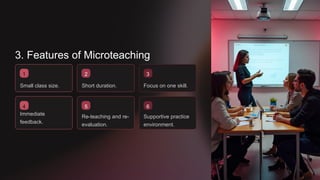
3. Features of Microteaching
1
Small class size.
4
2
Short duration.
Immediate
feedback.
5
Re-teaching and re-
evaluation.
3
Focus on one skill.
6
Supportive practice
environment.
4. The Microteaching Cycle
The cycle includes the following steps: Plan → Teach → Feedback →
Re-plan → Re-teach → Re-feedback.
The cycle continues until mastery of the skill is achieved.
5. Phases of Microteaching
Phase 1
Knowledge Acquisition Phase – Understanding the skill.
Phase 2
Skill Acquisition Phase – Practicing in a micro setting.
1
2
Phase 3
Transfer Phase – Applying skills in a real classroom.
3
6. Types of Teaching Skills Practiced
Questioning.
Blackboard Use.
Illustration with Examples.
Explanation.
Stimulus Variation.
Closure.
Reinforcement.
Introduction.
7. Example of a Microteaching
Session
Skill: Questioning.
1
3
Involves peer observation and
feedback.
Topic: Leadership styles (5
minutes).
2
Re-plan and re-teach
incorporating improvements.
4
8. Importance of Microteaching for
Teachers
Builds confidence and competence.
Encourages reflective practice.
Improves communication skills.
Enhances teaching effectiveness.
9. Advantages of Microteaching
1 Focused skill development.
3 Safe practice environment.
2
4
Immediate feedback.
Individualized and
systematic improvement.
10. Limitations of Microteaching
Artificial environment.
Limited time and content coverage.
Does not capture real classroom complexity.
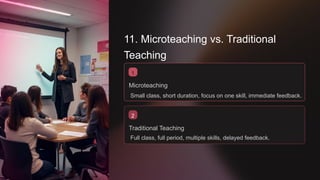
11. Microteaching vs. Traditional
Teaching
1
Microteaching
Small class, short duration, focus on one skill, immediate feedback.
2
Traditional Teaching
Full class, full period, multiple skills, delayed feedback.
12. Relevance in Education
Integral to B.Ed & M.Ed
programs.
Aligned with NEP 2020.
Encourages reflective praxis.
Promotes professional growth.
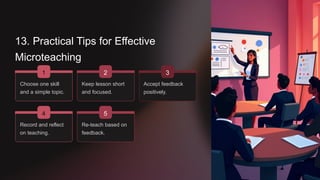
13. Practical Tips for Effective
Microteaching
1
Choose one skill
and a simple topic.
Keep lesson short
and focused.
4
2
Record and reflect
on teaching.
Re-teach based on
feedback.
5
Accept feedback
positively.
3
14. Activity / Demonstration
Show a role play of a microteaching session.
Discuss what went well and identify areas for improvement.
15. Summary
1
The microteaching process: Plan
→ Teach → Feedback → Re-
plan → Re-teach → Re-
feedback.
It provides a laboratory approach
to skill mastery.
2
Develops reflective and
confident teachers.
3
16. Reflection Questions
Which teaching skill do you find
most challenging?
How can microteaching help improve
your identified challenge?
What role does feedback play in
your professional growth?
17. References
1 Allen, D.W. & Ryan, K. (1969). Microteaching.
2 Passi, B.K. (1976). Becoming Better Teachers: Microteaching Approach.
3 NCERT (2005). National Curriculum Framework for Teacher Education.

Thank You

Microteaching in teacher education .pptx

  • 1.
    Author: Prof.V.S.Sumi, CDOE, MANUU Microteaching:What, Types, Why and Its Importance for Teachers
  • 2.
    CONTENTS 1. Learning Objectives 5.Phases of Microteaching 2. What is Microteaching? 9. Advantages of Microteaching 6. Types of Teaching Skills Practiced 13. Practical Tips for Effective Microteaching 10. Limitations of Microteaching 17. References 14. Activity / Demonstration 3. Features of Microteaching 7. Example of a Microteaching Session 11. Microteaching vs. Traditional Teaching 15. Summary 4. The Microteaching Cycle 8. Importance of Microteaching for Teachers 12. Relevance in Teacher Education 16. Reflection Questions
  • 3.
    1. Learning Objectives 1Objective 1 Define the concept of microteaching. 3 Objective 3 Identify different types of teaching skills. 2 Objective 2 4 Explain the process and cycle of microteaching. Objective 4 Understand its importance for teacher professional development.
  • 4.
    2. What isMicroteaching? Developed by Dwight W. Allen (1963), Stanford University. A scaled-down teaching technique focusing on specific skills. Involves a small group (5–10 students) and short duration (5–10 minutes).
  • 5.
    3. Features ofMicroteaching 1 Small class size. 4 2 Short duration. Immediate feedback. 5 Re-teaching and re- evaluation. 3 Focus on one skill. 6 Supportive practice environment.
  • 6.
    4. The MicroteachingCycle The cycle includes the following steps: Plan → Teach → Feedback → Re-plan → Re-teach → Re-feedback. The cycle continues until mastery of the skill is achieved.
  • 7.
    5. Phases ofMicroteaching Phase 1 Knowledge Acquisition Phase – Understanding the skill. Phase 2 Skill Acquisition Phase – Practicing in a micro setting. 1 2 Phase 3 Transfer Phase – Applying skills in a real classroom. 3
  • 8.
    6. Types ofTeaching Skills Practiced Questioning. Blackboard Use. Illustration with Examples. Explanation. Stimulus Variation. Closure. Reinforcement. Introduction.
  • 9.
    7. Example ofa Microteaching Session Skill: Questioning. 1 3 Involves peer observation and feedback. Topic: Leadership styles (5 minutes). 2 Re-plan and re-teach incorporating improvements. 4
  • 10.
    8. Importance ofMicroteaching for Teachers Builds confidence and competence. Encourages reflective practice. Improves communication skills. Enhances teaching effectiveness.
  • 11.
    9. Advantages ofMicroteaching 1 Focused skill development. 3 Safe practice environment. 2 4 Immediate feedback. Individualized and systematic improvement.
  • 12.
    10. Limitations ofMicroteaching Artificial environment. Limited time and content coverage. Does not capture real classroom complexity.
  • 13.
    11. Microteaching vs.Traditional Teaching 1 Microteaching Small class, short duration, focus on one skill, immediate feedback. 2 Traditional Teaching Full class, full period, multiple skills, delayed feedback.
  • 14.
    12. Relevance inEducation Integral to B.Ed & M.Ed programs. Aligned with NEP 2020. Encourages reflective praxis. Promotes professional growth.
  • 15.
    13. Practical Tipsfor Effective Microteaching 1 Choose one skill and a simple topic. Keep lesson short and focused. 4 2 Record and reflect on teaching. Re-teach based on feedback. 5 Accept feedback positively. 3
  • 16.
    14. Activity /Demonstration Show a role play of a microteaching session. Discuss what went well and identify areas for improvement.
  • 17.
    15. Summary 1 The microteachingprocess: Plan → Teach → Feedback → Re- plan → Re-teach → Re- feedback. It provides a laboratory approach to skill mastery. 2 Develops reflective and confident teachers. 3
  • 18.
    16. Reflection Questions Whichteaching skill do you find most challenging? How can microteaching help improve your identified challenge? What role does feedback play in your professional growth?
  • 19.
    17. References 1 Allen,D.W. & Ryan, K. (1969). Microteaching. 2 Passi, B.K. (1976). Becoming Better Teachers: Microteaching Approach. 3 NCERT (2005). National Curriculum Framework for Teacher Education.

  • 20.