MICROPROCESSOR
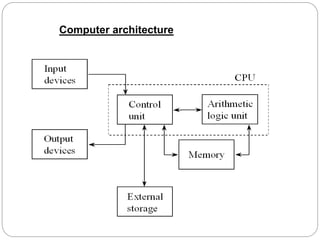
Computer architecture
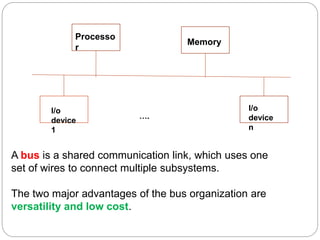
A bus is a shared communication link, which uses one
set of wires to connect multiple subsystems.
The two major advantages of the bus organization are
versatility and low cost.
[[[oo gjj
I I/O
devices
/MNNMOJ
HH==
deviH
Processo
r
Memory
I/o
device
1
I/o
device
n
….
• Most modern computers use single bus arrangement
for connecting I/O devices to CPU & Memory
• The bus enables all the devices connected to it to
exchange information
• Bus consists of 3 set of lines : Address, Data, Control
• Processor places a particular address (unique for an
I/O Dev.) on address lines
• Device which recognizes this address responds to the
commands issued on the Control lines
• Processor requests for either Read / Write
• The data will be placed on Data lines
BUS
•Address bus
•Data bus
•Control bus
Address bus
• It is a group of 16 lines generally identified as A0 to A15
• unidirectional
• from MPU to peripheral devices
• First function:- identifying a peripheral or a memory location
Data bus
Group of 8 lines used for data flow
Data may include instruction , an addressor a number
• lines are bidirectional
• Data flow in both direction
between the MPU , memory and peripheral devices
• second function :- transferring binary information
Control bus
• it is comprised of various single lines that carry
synchronization signal
• MPU uses such line to perform
third function:- providing timing signal
CLOCK SIGNAL
A clock is a sequence of pulses
• clock has several parameters
• clock cycle or period-time interval after which
the pulse pattern repeats
• Another parameter is the time for which the
clock remains low and high during one clock period
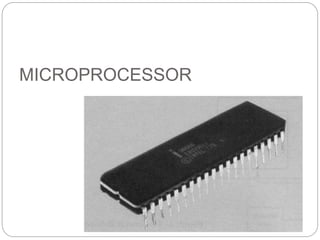
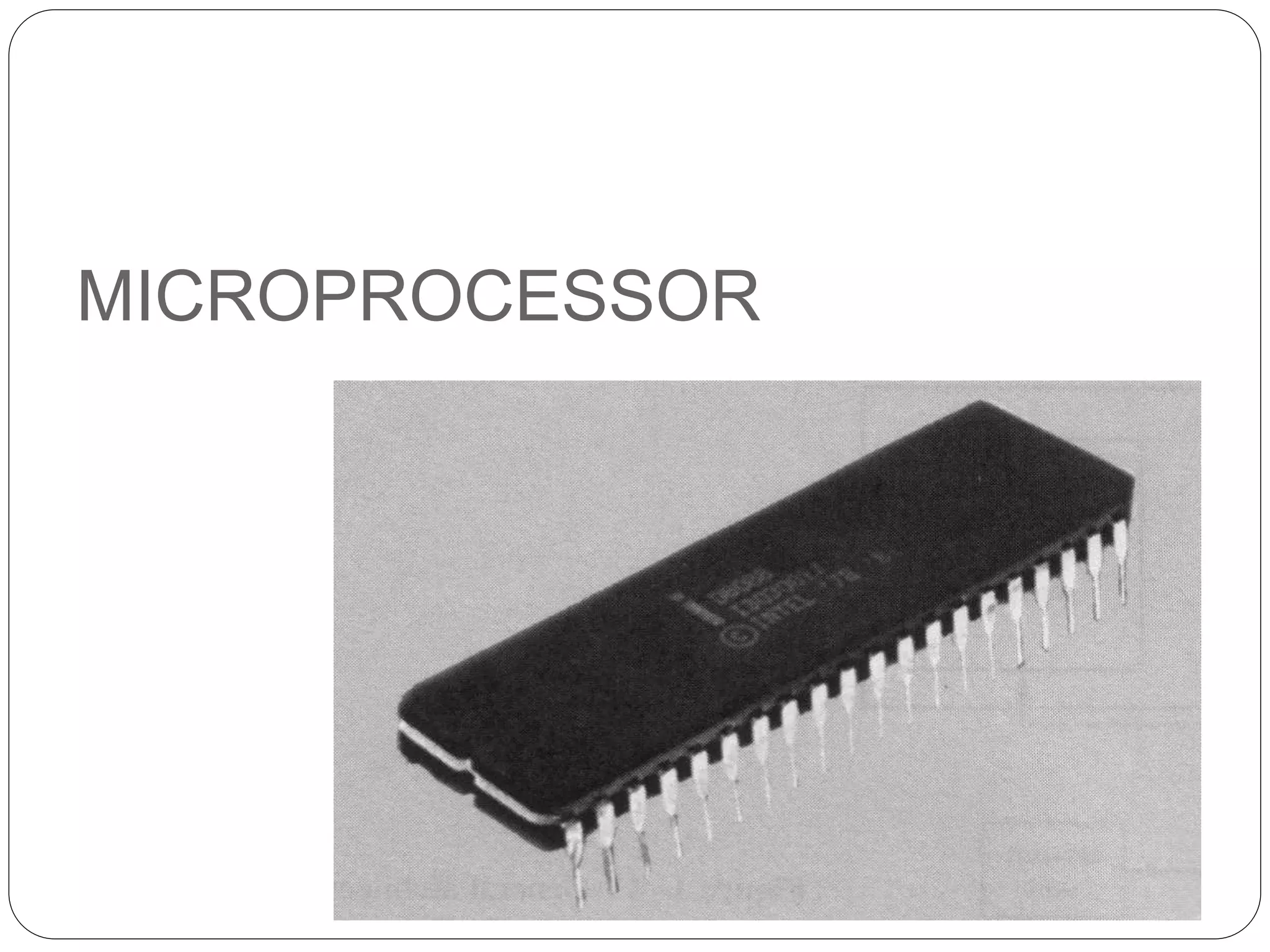
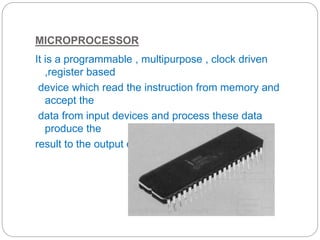
MICROPROCESSOR
It is a programmable , multipurpose , clock driven
,register based
device which read the instruction from memory and
accept the
data from input devices and process these data
produce the
result to the output devices
A typical programmable machine can be
represented with four
Components : Microprocessor , memory ,input
and output
The physical components of this system are
called hardware
A set of instructions written for the
microprocessor
to perform a task is called a program and a group
of program is called software
Memory
Memory stores binary instruction and data , for the
microprocessor whenever necessary. To execute programs
, the microprocessor reads instructions and data from
memory and performs the computing operations in it’s ALU
section .
Results are either transferred to the output section for
display or stored in memory for later use . Memory can
be
Classified into two groups
Primary memory an storage memory
• Primary memory :-read/write memory and read only
memory
•Storage memory :-magnetic tapes or disks

microprocessor

  • 1.
  • 2.
  • 3.
    A bus isa shared communication link, which uses one set of wires to connect multiple subsystems. The two major advantages of the bus organization are versatility and low cost. [[[oo gjj I I/O devices /MNNMOJ HH== deviH Processo r Memory I/o device 1 I/o device n ….
  • 4.
    • Most moderncomputers use single bus arrangement for connecting I/O devices to CPU & Memory • The bus enables all the devices connected to it to exchange information • Bus consists of 3 set of lines : Address, Data, Control • Processor places a particular address (unique for an I/O Dev.) on address lines • Device which recognizes this address responds to the commands issued on the Control lines • Processor requests for either Read / Write • The data will be placed on Data lines
  • 5.
    BUS •Address bus •Data bus •Controlbus Address bus • It is a group of 16 lines generally identified as A0 to A15 • unidirectional • from MPU to peripheral devices • First function:- identifying a peripheral or a memory location
  • 6.
    Data bus Group of8 lines used for data flow Data may include instruction , an addressor a number • lines are bidirectional • Data flow in both direction between the MPU , memory and peripheral devices • second function :- transferring binary information Control bus • it is comprised of various single lines that carry synchronization signal • MPU uses such line to perform third function:- providing timing signal
  • 7.
    CLOCK SIGNAL A clockis a sequence of pulses • clock has several parameters • clock cycle or period-time interval after which the pulse pattern repeats • Another parameter is the time for which the clock remains low and high during one clock period
  • 8.
    MICROPROCESSOR It is aprogrammable , multipurpose , clock driven ,register based device which read the instruction from memory and accept the data from input devices and process these data produce the result to the output devices
  • 9.
    A typical programmablemachine can be represented with four Components : Microprocessor , memory ,input and output The physical components of this system are called hardware A set of instructions written for the microprocessor to perform a task is called a program and a group of program is called software
  • 10.
    Memory Memory stores binaryinstruction and data , for the microprocessor whenever necessary. To execute programs , the microprocessor reads instructions and data from memory and performs the computing operations in it’s ALU section . Results are either transferred to the output section for display or stored in memory for later use . Memory can be Classified into two groups Primary memory an storage memory • Primary memory :-read/write memory and read only memory •Storage memory :-magnetic tapes or disks