Microorganisms in Extreme Environments
Microorganism in extreme
environment
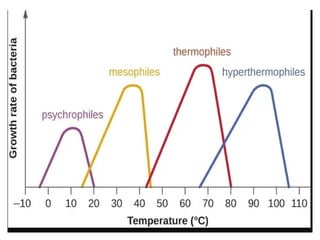
Microorganism that thrive in harsh or extreme
environment known as extremophile microorganism .
There are many such environments like thermophilic ,
pschrophilic, mesophilic , acidophilic , alkaliphilic etc.
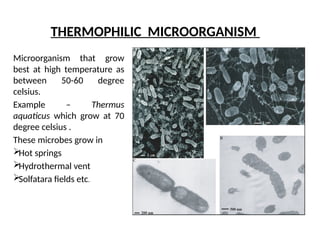
THERMOPHILIC MICROORGANISM
Microorganism that grow
best at high temperature as
between 50-60 degree
celsius.
Example – Thermus
aquaticus which grow at 70
degree celsius .
These microbes grow in

Hot springs

Hydrothermal vent

Solfatara fields etc.
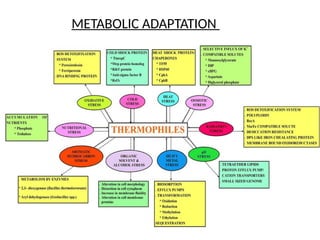
METABOLIC ADAPTATION
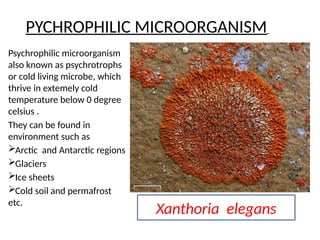
PYCHROPHILIC MICROORGANISM
Psychrophilic microorganism
also known as psychrotrophs
or cold living microbe, which
thrive in extemely cold
temperature below 0 degree
celsius .
They can be found in
environment such as
Arctic and Antarctic regions
Glaciers
Ice sheets
Cold soil and permafrost
etc.
Xanthoria elegans
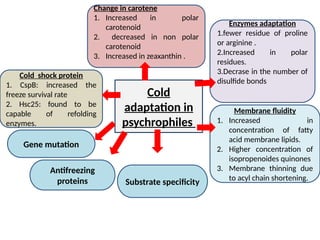
Cold shock protein
1. CspB: increased the
freeze survival rate
2. Hsc25: found to be
capable of refolding
enzymes.
Change in carotene
1. Increased in polar
carotenoid
2. decreased in non polar
carotenoid
3. Increased in zeaxanthin .
Enzymes adaptation
1.fewer residue of proline
or arginine .
2.Increased in polar
residues.
3.Decrase in the number of
disulfide bonds
Membrane fluidity
1. Increased in
concentration of fatty
acid membrane lipids.
2. Higher concentration of
isopropenoides quinones
3. Membrane thinning due
to acyl chain shortening.
Antifreezing
proteins
Gene mutation
Substrate specificity
Cold
adaptation in
psychrophiles
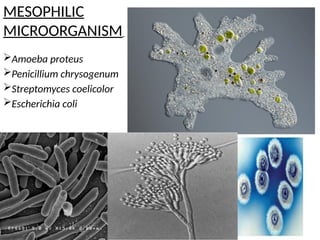
MESOPHILIC
MICROORGANISM
Amoeba proteus
Penicillium chrysogenum
Streptomyces coelicolor
Escherichia coli
Mesophilic microorganism
microorganism that thrive in moderate temperature
environment , typically between 20-45 degree celsius .
These microbes are found in:
 soil
Water
Human body (e.g. gut microbiome)
Food product(e.g. yogurt, cheese)
Industrial process (fermentation)
These microorganism can tolerate wider range of
temperature .
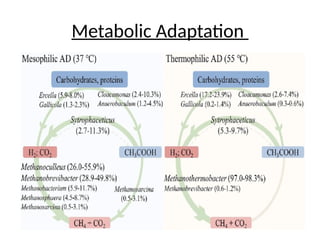
Metabolic Adaptation
ACIDOPHILES
Microorganism that can thrive at acidic pH lower
than 3.0 .
They can be found environment :
Acid mine drainage
Hot springs
Volcanic lakes
Soil and sediments with high sulfur content
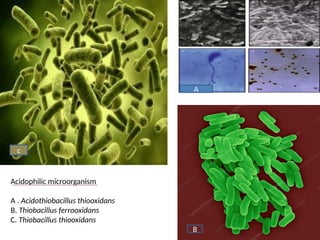
A
B
c
Acidophilic microorganism
A . Acidothiobacillus thiooxidans
B. Thiobacillus ferrooxidans
C. Thiobacillus thiooxidans
Alkaliphilic microorganism
Microbes that can survive at high pH such as 8-9.
These microbes found in environment such as :
soda lakes
Alkaline hot springs
Soil and sediments with high pH
Industrial processes ( e.g. Paper mills , textile
manufacturing )
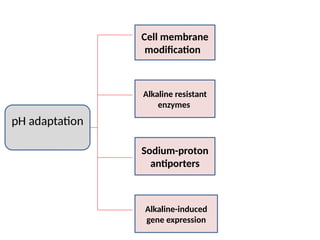
pH adaptation
Cell membrane
modification
Alkaline resistant
enzymes
Sodium-proton
antiporters
Alkaline-induced
gene expression
Conclusion
Microorganism thrive in most diverse
environment .
Therefore microbes are called omnipresent
means cosmopolitan( present in almost every
habitat where life can exist.)


Microorganisms in Extreme Environment...

  • 1.
  • 2.
    Microorganism in extreme environment Microorganismthat thrive in harsh or extreme environment known as extremophile microorganism . There are many such environments like thermophilic , pschrophilic, mesophilic , acidophilic , alkaliphilic etc.
  • 3.
    THERMOPHILIC MICROORGANISM Microorganism thatgrow best at high temperature as between 50-60 degree celsius. Example – Thermus aquaticus which grow at 70 degree celsius . These microbes grow in  Hot springs  Hydrothermal vent  Solfatara fields etc.
  • 4.
  • 5.
    PYCHROPHILIC MICROORGANISM Psychrophilic microorganism alsoknown as psychrotrophs or cold living microbe, which thrive in extemely cold temperature below 0 degree celsius . They can be found in environment such as Arctic and Antarctic regions Glaciers Ice sheets Cold soil and permafrost etc. Xanthoria elegans
  • 6.
    Cold shock protein 1.CspB: increased the freeze survival rate 2. Hsc25: found to be capable of refolding enzymes. Change in carotene 1. Increased in polar carotenoid 2. decreased in non polar carotenoid 3. Increased in zeaxanthin . Enzymes adaptation 1.fewer residue of proline or arginine . 2.Increased in polar residues. 3.Decrase in the number of disulfide bonds Membrane fluidity 1. Increased in concentration of fatty acid membrane lipids. 2. Higher concentration of isopropenoides quinones 3. Membrane thinning due to acyl chain shortening. Antifreezing proteins Gene mutation Substrate specificity Cold adaptation in psychrophiles
  • 7.
  • 8.
    Mesophilic microorganism microorganism thatthrive in moderate temperature environment , typically between 20-45 degree celsius . These microbes are found in:  soil Water Human body (e.g. gut microbiome) Food product(e.g. yogurt, cheese) Industrial process (fermentation) These microorganism can tolerate wider range of temperature .
  • 9.
  • 11.
    ACIDOPHILES Microorganism that canthrive at acidic pH lower than 3.0 . They can be found environment : Acid mine drainage Hot springs Volcanic lakes Soil and sediments with high sulfur content
  • 12.
    A B c Acidophilic microorganism A .Acidothiobacillus thiooxidans B. Thiobacillus ferrooxidans C. Thiobacillus thiooxidans
  • 13.
    Alkaliphilic microorganism Microbes thatcan survive at high pH such as 8-9. These microbes found in environment such as : soda lakes Alkaline hot springs Soil and sediments with high pH Industrial processes ( e.g. Paper mills , textile manufacturing )
  • 14.
    pH adaptation Cell membrane modification Alkalineresistant enzymes Sodium-proton antiporters Alkaline-induced gene expression
  • 15.
    Conclusion Microorganism thrive inmost diverse environment . Therefore microbes are called omnipresent means cosmopolitan( present in almost every habitat where life can exist.)