Introduction to AVR 
Microcontrollers 
Presented By: 
Mahmoud Sadat Badran
OUTLINE: 
• Microcontroller ? (History ,Components, Advantages, Applications) 
• Hardware VS. Software 
• Microcontroller Vs. Microprocessor. 
• Major market players. 
• AVR Microcontroller. 
• References.
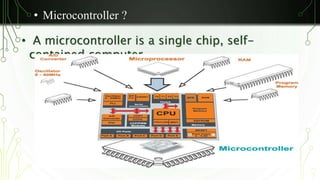
• Microcontroller ? 
• A microcontroller is a single chip, self-contained 
computer.
History. 
1. 1971 Texas Instrument calculator-on-a-chip TMS 1000, which 
was a 4-bit microcontroller with built-in ROM and RAM. 
2. 1976 Intel 8048 was one of Intel's first microcontrollers. 
3. 1980 Intel 8051 followed in and became one of the most 
popular microcontroller families. 
4. 1996 Atmel AVR was one of the first microcontroller families 
to use on-chip flash memory for program storage.
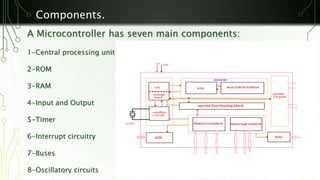
Components. 
A Microcontroller has seven main components: 
1-Central processing unit (CPU) 
2-ROM 
3-RAM 
4-Input and Output 
5-Timer 
6-Interrupt circuitry 
7-Buses 
8-Oscillatory circuits
Advantages. 
1. Cheap. 
2. Very small in size. 
3. Programming of Microcontrollers is simple to learn (c language or 
Assembly). 
4. Ability to simulate project before implementation.
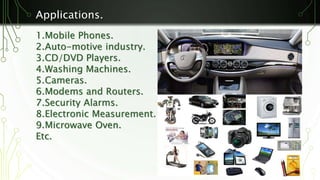
Applications. 
1.Mobile Phones. 
2.Auto-motive industry. 
3.CD/DVD Players. 
4.Washing Machines. 
5.Cameras. 
6.Modems and Routers. 
7.Security Alarms. 
8.Electronic Measurement. 
9.Microwave Oven. 
Etc.
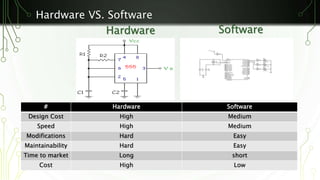
Hardware VS. Software 
Hardware Software 
# Hardware Software 
Design Cost High Medium 
Speed High Medium 
Modifications Hard Easy 
Maintainability Hard Easy 
Time to market Long short 
Cost High Low
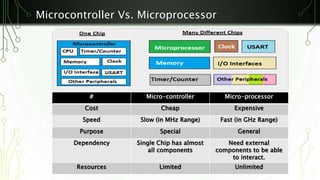
Microcontroller Vs. Microprocessor 
# Micro-controller Micro-processor 
Cost Cheap Expensive 
Speed Slow (in MHz Range) Fast (in GHz Range) 
Purpose Special General 
Dependency Single Chip has almost 
all components 
Need external 
components to be able 
to interact. 
Resources Limited Unlimited
Major market 
1p. lTaeyxeasr sInstruments. 
2. Atmel Corporation. 
3. Microchip. 
4. Renesas Technology Corp. 
5. Intel Corporation. 
6. STMicroelectronics. 
7. Freescale Semiconductor.
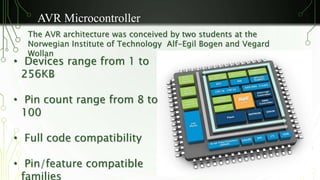
AVR Microcontroller 
The AVR architecture was conceived by two students at the 
Norwegian Institute of Technology Alf-Egil Bogen and Vegard 
Wollan 
• Devices range from 1 to 
256KB 
• Pin count range from 8 to 
100 
• Full code compatibility 
• Pin/feature compatible 
families
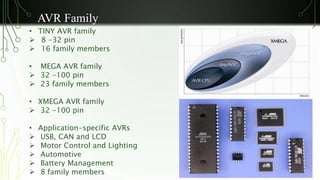
AVR Family 
• TINY AVR family 
 8 -32 pin 
 16 family members 
• MEGA AVR family 
 32 -100 pin 
 23 family members 
• XMEGA AVR family 
 32 -100 pin 
• Application-specific AVRs 
 USB, CAN and LCD 
 Motor Control and Lighting 
 Automotive 
 Battery Management 
 8 family members
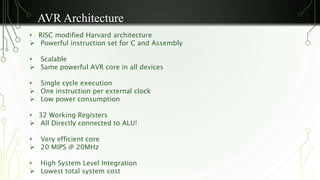
AVR Architecture 
• RISC modified Harvard architecture 
 Powerful instruction set for C and Assembly 
• Scalable 
 Same powerful AVR core in all devices 
• Single cycle execution 
 One instruction per external clock 
 Low power consumption 
• 32 Working Registers 
 All Directly connected to ALU! 
• Very efficient core 
 20 MIPS @ 20MHz 
• High System Level Integration 
 Lowest total system cost
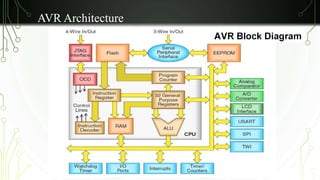
AVR Architecture
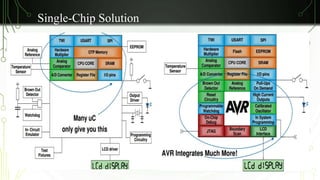
Single-Chip Solution
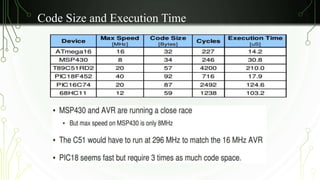
Code Size and Execution Time
Real-life Applications 
1. Complete navigation application 
2. Car Radio control 
3. DES encryption / decryption 
4. Reed-Solomon (error correction) 
encoder/decoder. 
5. Pager protocol 
6. Refrigerator control 
7. Battery charger 
8. Embedded web server 
9. Label/recite printer
Development Tools 
• AVR Studio -front end for all AVR tools 
• Win AVR 
• Code Vision (Evaluation version with limited code 
size) 
 Free 
• Starter kits and evaluation boards 
 From $19 
• On-Chip Debuggers and Emulators 
 From $299
Support 
• Fully updated product web 
• Highly skilled Field Application 
Engineers 
• Support mail handled by AVR 
experts 
• Reference designs 
• Application notes 
• AVRfreaks community website
References : 
1. http://mathcs.slu.edu/~fritts/CSCI305_306_F08/AVR/AVR%20Introduction.pdf 
2. http://www.circuitstoday.com/microcontroller-invention-history 
3. http://www.atmel.com/products/microcontrollers/avr/ 
4. http://www.circuitstoday.com/basics-of-microcontrollers

Introduction to AVR Microcontroller

  • 1.
    Introduction to AVR Microcontrollers Presented By: Mahmoud Sadat Badran
  • 2.
    OUTLINE: • Microcontroller? (History ,Components, Advantages, Applications) • Hardware VS. Software • Microcontroller Vs. Microprocessor. • Major market players. • AVR Microcontroller. • References.
  • 3.
    • Microcontroller ? • A microcontroller is a single chip, self-contained computer.
  • 4.
    History. 1. 1971Texas Instrument calculator-on-a-chip TMS 1000, which was a 4-bit microcontroller with built-in ROM and RAM. 2. 1976 Intel 8048 was one of Intel's first microcontrollers. 3. 1980 Intel 8051 followed in and became one of the most popular microcontroller families. 4. 1996 Atmel AVR was one of the first microcontroller families to use on-chip flash memory for program storage.
  • 5.
    Components. A Microcontrollerhas seven main components: 1-Central processing unit (CPU) 2-ROM 3-RAM 4-Input and Output 5-Timer 6-Interrupt circuitry 7-Buses 8-Oscillatory circuits
  • 6.
    Advantages. 1. Cheap. 2. Very small in size. 3. Programming of Microcontrollers is simple to learn (c language or Assembly). 4. Ability to simulate project before implementation.
  • 7.
    Applications. 1.Mobile Phones. 2.Auto-motive industry. 3.CD/DVD Players. 4.Washing Machines. 5.Cameras. 6.Modems and Routers. 7.Security Alarms. 8.Electronic Measurement. 9.Microwave Oven. Etc.
  • 8.
    Hardware VS. Software Hardware Software # Hardware Software Design Cost High Medium Speed High Medium Modifications Hard Easy Maintainability Hard Easy Time to market Long short Cost High Low
  • 9.
    Microcontroller Vs. Microprocessor # Micro-controller Micro-processor Cost Cheap Expensive Speed Slow (in MHz Range) Fast (in GHz Range) Purpose Special General Dependency Single Chip has almost all components Need external components to be able to interact. Resources Limited Unlimited
  • 10.
    Major market 1p.lTaeyxeasr sInstruments. 2. Atmel Corporation. 3. Microchip. 4. Renesas Technology Corp. 5. Intel Corporation. 6. STMicroelectronics. 7. Freescale Semiconductor.
  • 11.
    AVR Microcontroller TheAVR architecture was conceived by two students at the Norwegian Institute of Technology Alf-Egil Bogen and Vegard Wollan • Devices range from 1 to 256KB • Pin count range from 8 to 100 • Full code compatibility • Pin/feature compatible families
  • 12.
    AVR Family •TINY AVR family  8 -32 pin  16 family members • MEGA AVR family  32 -100 pin  23 family members • XMEGA AVR family  32 -100 pin • Application-specific AVRs  USB, CAN and LCD  Motor Control and Lighting  Automotive  Battery Management  8 family members
  • 13.
    AVR Architecture •RISC modified Harvard architecture  Powerful instruction set for C and Assembly • Scalable  Same powerful AVR core in all devices • Single cycle execution  One instruction per external clock  Low power consumption • 32 Working Registers  All Directly connected to ALU! • Very efficient core  20 MIPS @ 20MHz • High System Level Integration  Lowest total system cost
  • 14.
  • 15.
  • 16.
    Code Size andExecution Time
  • 17.
    Real-life Applications 1.Complete navigation application 2. Car Radio control 3. DES encryption / decryption 4. Reed-Solomon (error correction) encoder/decoder. 5. Pager protocol 6. Refrigerator control 7. Battery charger 8. Embedded web server 9. Label/recite printer
  • 18.
    Development Tools •AVR Studio -front end for all AVR tools • Win AVR • Code Vision (Evaluation version with limited code size)  Free • Starter kits and evaluation boards  From $19 • On-Chip Debuggers and Emulators  From $299
  • 19.
    Support • Fullyupdated product web • Highly skilled Field Application Engineers • Support mail handled by AVR experts • Reference designs • Application notes • AVRfreaks community website
  • 20.
    References : 1.http://mathcs.slu.edu/~fritts/CSCI305_306_F08/AVR/AVR%20Introduction.pdf 2. http://www.circuitstoday.com/microcontroller-invention-history 3. http://www.atmel.com/products/microcontrollers/avr/ 4. http://www.circuitstoday.com/basics-of-microcontrollers