Unit 4 Microbiological
techniques
Dr. Deepak P
Microbiology
and
Microbiological
techniques
Components of Microbial media
• Microbial media, also known as growth media or culture media, are nutrient-rich
substances used to cultivate microorganisms like bacteria, fungi, and protists in
laboratory settings.
• These media typically contain a mixture of organic and inorganic compounds that
provide the necessary nutrients for microbial growth.
• The components of microbial media can vary depending on the type of
microorganism being cultured and the specific requirements of the experiment or
study.
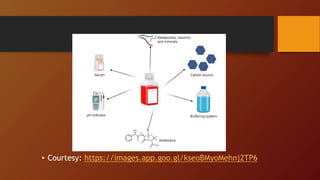
Components of Microbial media
• Water
• Carbon sources
• Nitrogen sources
• Minerals
• Vitamins
• Agar
• pH indicators
• Selective agents
• Indicator organisms
• Buffering agents
• Courtesy: https://images.app.goo.gl/kseoBMyoMehnj2TP6
Natural microbiological media
• Natural microbiological media are those that utilize components
derived directly from natural sources rather than synthetic or
chemically defined ingredients.
• These media mimic the natural environment of microorganisms
more closely and are often used for specific purposes such as
environmental monitoring, isolation of indigenous
microorganisms, or studying microbial interactions in natural
habitats.
• Some examples of natural microbiological media include:
Natural microbiological media
• Soil extract agar: Soil components
• Water agar: organic and inorganic content
• Leaf infusion agar:
• Milk agar:
• Blood agar:
• Shellfish extract agar:
• Plant tissue agar:
• Manure agar:
Synthetic Microbial medium
• Synthetic microbial media are culture media composed of
precisely defined chemical components, often with known
concentrations.
• Unlike natural media, which contain complex mixtures of
organic and inorganic compounds derived from natural
sources, synthetic media are prepared using purified
chemicals.
• These media are advantageous in microbiological research
because they offer greater control over nutrient composition
and can be tailored to specific experimental needs.
• Some common examples of synthetic microbial media include
Minimal media
• Minimal media contain only essential nutrients
required for microbial growth, typically including a
carbon source, nitrogen source, salts, and water.
• They are often used for studying microbial
metabolism, nutrient requirements, and genetic
manipulation.
Defined media
• Defined media are similar to minimal media but may contain
additional specific components such as vitamins, amino acids,
or trace minerals at defined concentrations.
• These media are useful for studying the nutritional
requirements of microorganisms and for controlled
experiments where precise nutrient compositions are
necessary.
Synthetic complete media
• Synthetic complete media are enriched formulations that
contain all necessary nutrients required to support the
growth of a specific microorganism.
• They typically include a carbon source, nitrogen source,
vitamins, minerals, and other essential nutrients.
• Synthetic complete media are commonly used for routine
laboratory culturing of microorganisms and for genetic
manipulation experiments.
Synthetic selective media
• Synthetic selective media are designed to support the
growth of specific microorganisms while inhibiting the
growth of others.
• They contain selective agents such as antibiotics, dyes,
or inhibitors that target particular metabolic pathways or
physiological characteristics of certain microorganisms.
• These media are often used for isolating and identifying
specific bacterial strains from mixed cultures.
Synthetic differential media:
• Synthetic differential media are similar to selective
media but also contain indicators that allow for the
differentiation of microbial colonies based on specific
metabolic activities or biochemical reactions.
• Examples include media for testing carbohydrate
fermentation, urease activity, or hydrogen sulfide
production.
Chemically defined media
• Chemically defined media are synthetic media
composed entirely of chemically defined components,
with each component precisely characterized and
known.
• These media offer the highest level of control over
nutrient composition and are commonly used in
research applications such as bioprocess optimization,
where consistency and reproducibility are critical.
Chemically defined Microbial Media
• Chemically defined microbial media are precisely
formulated culture media composed of pure chemical
compounds with known structures and
concentrations.
• These media provide complete control over the
nutritional composition and are often used in
research settings where reproducibility and
consistency are essential.
• M9 Minimal Medium:
• M9 minimal medium is a classic example of a chemically defined medium
used for culturing bacteria such as Escherichia coli. It contains salts such as
ammonium sulfate, potassium phosphate, sodium chloride, and magnesium
sulfate, along with a carbon source such as glucose or glycerol. Additional
supplements such as amino acids or vitamins can be added as needed.
• E-MEM (Essential Minimal Eagle's Medium):
• E-MEM is a chemically defined medium used for culturing mammalian cells
in tissue culture. It contains essential amino acids, vitamins, inorganic salts,
glucose, and other nutrients required for cell growth. E-MEM provides a
consistent and well-defined environment for cell culture experiments.
• YNB (Yeast Nitrogen Base):
• YNB is a chemically defined medium used for culturing yeast
cells such as Saccharomyces cerevisiae. It contains salts,
vitamins, and trace minerals but lacks a carbon source. YNB
can be supplemented with different carbon sources such as
glucose or galactose and additional nutrients as needed.
Complex microbial medium with examples
• Complex microbial media contain a variety of natural
ingredients derived from biological sources such as
animal tissues, plant extracts, or microbial products.
• These media provide a rich and undefined mixture of
nutrients, growth factors, and other compounds that
support the growth of a wide range of microorganisms.
• Nutrient Agar:
• Nutrient agar is a widely used complex medium for culturing bacteria
and fungi. It typically contains beef extract, peptone (partially
digested protein), agar, and water. Nutrient agar provides a general-
purpose medium suitable for the cultivation of many microorganisms.
• Tryptic Soy Agar (TSA):
• Tryptic soy agar is a complex medium composed of enzymatic digest
of casein (soybean meal) and soybean peptone, along with agar and
water. TSA is commonly used for the isolation and enumeration of
bacteria from various sources due to its nutritive properties and
ability to support the growth of a wide range of microorganisms.
• Blood Agar:
• Blood agar is a complex medium consisting of agar supplemented with
sheep or horse blood. It is often used for the isolation and
differentiation of pathogenic bacteria based on their hemolytic
properties. Blood agar supports the growth of fastidious bacteria and
provides nutrients such as hemoglobin for their growth.
• Chocolate Agar:
• Chocolate agar is a complex medium made by heating blood agar to
lyse red blood cells, releasing nutrients such as hemoglobin. It is
particularly useful for the cultivation of fastidious bacteria such as
Haemophilus influenzae and Neisseria gonorrhoeae.
• MacConkey Agar:
• MacConkey agar is a selective and differential medium used for the
isolation and differentiation of gram-negative bacteria, particularly
members of the family Enterobacteriaceae. It contains bile salts and
crystal violet to inhibit the growth of gram-positive bacteria, as well as
lactose and neutral red to differentiate lactose-fermenting and non-
fermenting organisms.
• Sabouraud Dextrose Agar (SDA):
• Sabouraud dextrose agar is a complex medium used for the isolation and
cultivation of fungi and yeasts. It contains dextrose (glucose) as a carbon
source, peptone, agar, and may be supplemented with antibiotics such as
chloramphenicol or gentamicin to inhibit bacterial growth.
• R2A Agar:
• R2A agar is a complex medium specifically designed for the
enumeration and cultivation of bacteria from water samples. It
contains a reduced nutrient concentration compared to other media,
making it suitable for the recovery of bacteria that may be stressed
or slow-growing in environmental samples.
• Brain Heart Infusion (BHI) Agar:
• BHI agar is a complex medium containing brain and heart extracts,
peptone, and agar. It is commonly used for the cultivation of
fastidious microorganisms, including pathogens such as Streptococcus
and Staphylococcus species.
• Tryptic Soy Agar (TSA):
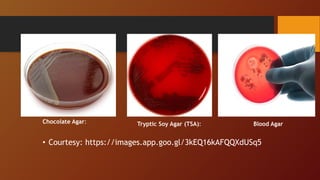
Chocolate Agar: Tryptic Soy Agar (TSA): Blood Agar
• Courtesy: https://images.app.goo.gl/3kEQ16kAFQQXdUSq5
Selective microbial Medium
• Selective microbial media are formulated to encourage the
growth of certain types of microorganisms while inhibiting the
growth of others.
• These media typically contain additives that selectively
suppress the growth of unwanted organisms, allowing the
target microorganisms to thrive and be easily identified.
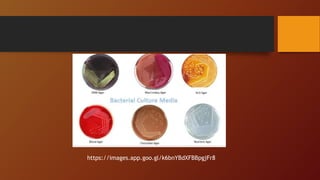
• MacConkey Agar:
• Composition: MacConkey agar contains bile salts, crystal
violet, neutral red dye, lactose, and peptone, along with agar
as a solidifying agent.
• Application: MacConkey agar is selective for gram-negative
bacteria, particularly members of the family
Enterobacteriaceae, while inhibiting the growth of most gram-
positive bacteria. It is differential based on lactose
fermentation, allowing for the differentiation of lactose-
fermenting and non-fermenting bacteria.
•Mannitol Salt Agar (MSA):
• Composition: MSA contains mannitol, salt (typically
sodium chloride), phenol red dye, peptone, and agar.
• Application: MSA is selective for halophilic (salt-
tolerant) bacteria, particularly Staphylococcus species,
while inhibiting the growth of other bacteria. It is
differential based on mannitol fermentation, allowing
for the identification of mannitol-fermenting and non-
fermenting bacteria.
•Xylose Lysine Deoxycholate (XLD) Agar:
• Composition: XLD agar contains xylose, lysine,
deoxycholate, phenol red dye, sodium thiosulfate, and
agar.
• Application: XLD agar is selective for gram-negative
enteric bacteria such as Salmonella and Shigella
species while inhibiting the growth of other bacteria. It
is differential based on the fermentation of xylose and
lysine, as well as the production of hydrogen sulfide
(H2S) gas.
• Hektoen Enteric Agar (HEA):
• Composition: HEA contains bile salts, lactose, sucrose,
salicin, ferric ammonium citrate, bromothymol blue, acid
fuchsin, and agar.
• Application: HEA is selective for gram-negative enteric
bacteria, particularly Salmonella and Shigella species, while
inhibiting the growth of most other bacteria. It is differential
based on the fermentation of lactose, sucrose, and salicin, as
well as the production of hydrogen sulfide (H2S) gas.
https://images.app.goo.gl/k6bnYBdXFBBpgjFr8
Differential microbial media
• Differential microbial media are designed to distinguish
between different types of microorganisms based on
their metabolic or biochemical characteristics.
• These media typically contain indicators or substrates
that undergo specific changes in response to microbial
activity, allowing for the visual differentiation of
bacterial colonies.
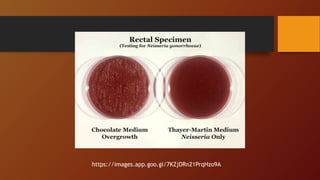
• EMB Agar (Eosin Methylene Blue Agar):
• Composition: EMB agar contains eosin Y and methylene blue dyes,
lactose, peptone, agar, and water.
• Application: EMB agar is selective for gram-negative bacteria,
particularly Enterobacteriaceae, while inhibiting most gram-positive
bacteria.
• It is differential based on lactose fermentation and the ability of
certain organisms to reduce methylene blue.
• Lactose-fermenting bacteria produce dark colonies with a green
metallic sheen due to the precipitation of eosin and methylene blue
dyes. Non-fermenting bacteria appear colorless or pale.
• Xylose Lysine Deoxycholate (XLD) Agar:
• Composition: XLD agar contains xylose, lysine, deoxycholate, phenol red
dye, sodium thiosulfate, and agar.
• Application: XLD agar is selective for gram-negative enteric bacteria
such as Salmonella and Shigella species, while inhibiting most other
bacteria.
• It is differential based on the fermentation of xylose and lysine, as well
as the production of hydrogen sulfide (H2S) gas.
• Salmonella and some Shigella species produce black colonies due to H2S
production, while non-H2S-producing bacteria appear colorless or red.
https://images.app.goo.gl/7KZjDRn21PrqHzo9A
Indicator medium
• Indicator media are specialized microbial growth
media that contain indicators, substances that
undergo observable changes when specific
metabolic activities occur.
• These changes can be visualized and used to
identify or differentiate between different types
of microorganisms or biochemical reactions.
• Phenol Red Broth:
• Composition: Phenol red broth typically contains peptone,
phenol red dye, a carbohydrate such as glucose, lactose, or
sucrose, and sometimes a pH indicator.
• Application: Phenol red broth is used to differentiate
between bacteria based on their ability to ferment
carbohydrates and produce acid. When carbohydrates are
fermented, acid is produced, which lowers the pH of the
broth, causing the phenol red dye to change color. For
example, in phenol red glucose broth, the medium turns
yellow when glucose is fermented, whereas in phenol red
lactose broth, the medium turns yellow when lactose is
fermented.
• Methyl Red-Voges-Proskauer (MR-VP) Broth:
• Composition: MR-VP broth contains peptone, glucose, and a
phosphate buffer. It is divided into two parts: one for the Methyl Red
test and the other for the Voges-Proskauer test.
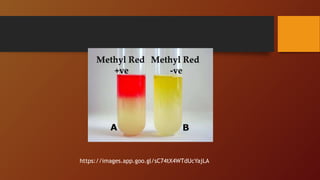
• Application: MR-VP broth is used to differentiate between bacteria
based on their mixed-acid fermentation pathway (Methyl Red test)
and acetoin production (Voges-Proskauer test). In the Methyl Red
test, the addition of Methyl Red dye turns the medium red when the
pH is below 4.4, indicating mixed-acid fermentation. In the Voges-
Proskauer test, the addition of alpha-naphthol and potassium
hydroxide followed by incubation with oxygen results in a red color if
acetoin is present.
https://images.app.goo.gl/sC74tX4WTdUcYajLA
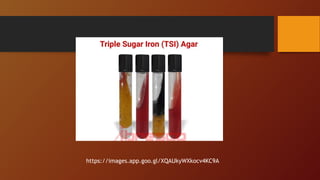
• Triple Sugar Iron (TSI) Agar:
• Composition: TSI agar contains peptone, sugars (glucose, lactose, and
sucrose), ferrous sulfate, and a pH indicator (phenol red).
• Application: TSI agar is used to differentiate between bacteria based
on their ability to ferment sugars and produce hydrogen sulfide (H2S)
gas. Fermentation of sugars leads to the production of acid, which
turns the medium yellow. Production of H2S results in the formation of
black precipitates. The pattern of color changes and gas production
can help identify bacteria and determine their metabolic pathways.
https://images.app.goo.gl/XQAUkyWXkocv4KC9A
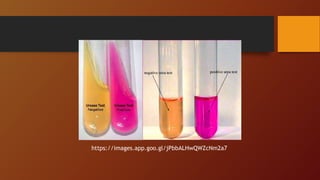
• Urea Broth:
• Composition: Urea broth contains peptone, urea, and a pH
indicator (phenol red).
• Application: Urea broth is used to differentiate between
bacteria based on their ability to hydrolyze urea using the
enzyme urease. Urease-positive bacteria hydrolyze urea,
producing ammonia, which raises the pH of the broth,
turning it pink. Urease-negative bacteria do not hydrolyze
urea, and the medium remains yellow.
https://images.app.goo.gl/jPbbALHwQWZcNm2a7
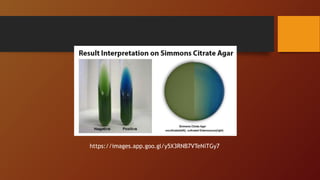
• Simmons Citrate Agar:
• Composition: Simmons citrate agar contains sodium
citrate, ammonium dihydrogen phosphate, bromothymol
blue, and agar.
• Application: Simmons citrate agar is used to differentiate
between bacteria based on their ability to utilize citrate as
the sole carbon source. Citrate-positive bacteria produce
alkaline byproducts, which raise the pH of the medium,

turning it blue.
https://images.app.goo.gl/y5X3RNB7VTeNiTGy7
Enriched medium
• Enriched microbial media are designed to support the
growth of fastidious microorganisms, which have
complex nutritional requirements and may not grow well
on standard media.
• These media contain additional nutrients or growth
factors that provide optimal conditions for the
cultivation of specific microorganisms.
• Blood Agar:
• Composition: Blood agar is a complex medium containing agar
supplemented with sheep or horse blood.
• Application: Blood agar is enriched with nutrients such as
hemoglobin and other factors present in blood, making it suitable
for the cultivation of fastidious microorganisms, particularly those
that require additional nutrients for growth.
• It is commonly used in clinical microbiology for the isolation and
identification of pathogenic bacteria, including streptococci,
staphylococci, and other hemolytic bacteria.
• Chocolate Agar:
• Composition: Chocolate agar is prepared by heating blood
agar to lyse red blood cells, releasing nutrients such as
hemoglobin.
• Application: Chocolate agar is highly enriched with
hemoglobin, amino acids, and other growth factors, making it
particularly suitable for the cultivation of fastidious bacteria
such as Haemophilus influenzae and Neisseria meningitidis. It
is commonly used in clinical microbiology for the isolation
and identification of these pathogens from clinical
specimens.
• Brain Heart Infusion (BHI) Agar:
• Composition: BHI agar contains brain and heart extracts, peptone,
and agar.
• Application: BHI agar is enriched with nutrients derived from animal
tissues, making it suitable for the cultivation of a wide range of
fastidious microorganisms, including anaerobic bacteria,
streptococci, staphylococci, and other fastidious organisms. It is
commonly used in clinical microbiology and research laboratories for
the isolation and cultivation of various microorganisms.
• Tryptic Soy Agar (TSA) with 5% Sheep Blood:
• Composition: TSA with 5% sheep blood contains tryptic soy agar
supplemented with 5% sheep blood.
• Application: TSA with 5% sheep blood provides additional nutrients
and growth factors from blood, making it suitable for the cultivation
of a wide range of fastidious bacteria, including streptococci,
staphylococci, and other hemolytic bacteria. It is commonly used in
clinical microbiology for the isolation and identification of
pathogenic bacteria from clinical specimens.
Enrichment medium
• Enrichment microbial media are designed to
promote the growth of specific groups of
microorganisms by providing selective conditions
that favor their proliferation while inhibiting the
growth of others.
• These media typically contain nutrients that
support the growth of target organisms while
minimizing competition from contaminants.
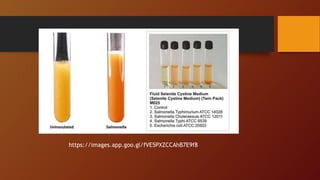
• Selenite Broth:
• Composition: Selenite broth typically contains peptone,
sodium selenite, and other salts in a buffered solution.
• Application: Selenite broth is used for the enrichment and
isolation of Salmonella and Shigella species from clinical and
environmental samples. Sodium selenite inhibits the growth of
most other bacteria, while Salmonella and Shigella species are
able to grow and multiply under these conditions. After
enrichment, the broth is plated onto selective agar media for
further isolation and identification.
https://images.app.goo.gl/fVE5PXZCCAhB7E9f8
• Rappaport-Vassiliadis (RV) Broth:
• Composition: RV broth contains peptone, magnesium chloride,
malachite green, and potassium tellurite in a buffered
solution.
• Application: RV broth is used for the enrichment of Salmonella
species from food and environmental samples. It contains
selective agents such as malachite green and potassium
tellurite, which inhibit the growth of most other bacteria while
allowing Salmonella to grow. RV broth is often used in
combination with other selective media for the isolation and
identification of Salmonella.
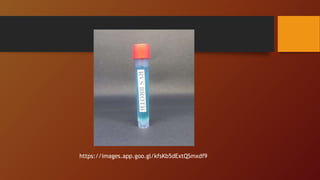
https://images.app.goo.gl/kfsKb5dExtQSmxdf9
• Alkaline Peptone Water:
• Composition: Alkaline peptone water contains peptone and
sodium hydroxide in a buffered solution.
• Application: Alkaline peptone water is used for the enrichment
of Vibrio species, particularly Vibrio cholerae, from clinical and
environmental samples. The alkaline pH of the medium inhibits
the growth of most other bacteria, while Vibrio species are
able to grow and multiply under these conditions. After
enrichment, the broth is plated onto selective agar media for
further isolation and identification.
https://images.app.goo.gl/6KV2wB8fRVfZtpTy6
• Tetrathionate Broth:
• Composition: Tetrathionate broth contains peptone, potassium
tetrathionate, and other salts in a buffered solution.
• Application: Tetrathionate broth is used for the enrichment
and isolation of Salmonella species from clinical and
environmental samples. Potassium tetrathionate inhibits the
growth of most other bacteria, while Salmonella species are
able to grow and multiply under these conditions. After
enrichment, the broth is plated onto selective agar media for
further isolation and identification.
• Muller-Kauffmann Tetrathionate-Novobiocin Broth
(MKTTn):
• Composition: MKTTn broth contains peptone, potassium
tetrathionate, novobiocin, and other salts in a buffered solution.
• Application: MKTTn broth is used for the enrichment and isolation
of Salmonella species, particularly Salmonella typhi and
Salmonella paratyphi, from clinical specimens. Novobiocin inhibits
the growth of most other bacteria, while Salmonella species are
able to grow and multiply under these conditions. After
enrichment, the broth is plated onto selective agar media for
further isolation and identification.
Pure culture methods: Serial dilution and plating
methods (pour plate, spread plate and streak
plate methods
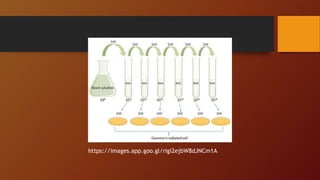
• Serial Dilution:
• Process: Serial dilution involves diluting a sample containing a mixture
of microorganisms in a series of steps to reduce the number of organisms
in each successive dilution. This is typically done by transferring a small
volume of the original sample to a tube containing a known volume of
sterile diluent (e.g., saline or broth) and mixing thoroughly. Subsequent
dilutions are made by transferring a portion of the previous dilution to a
new tube of diluent and mixing again.
• Purpose: Serial dilution is used to reduce the microbial population to a
level where individual colonies can be isolated and counted on agar
plates. It also helps ensure that isolated colonies arise from single cells
or clumps of cells, facilitating the formation of pure cultures.
https://images.app.goo.gl/rigi2ejbW8dJNCm1A
Pure culture methods: Serial dilution and plating
methods (pour plate, spread plate and streak
plate methods
• Plating Methods:
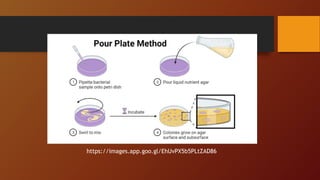
• Pour Plate Method:
• Process: In the pour plate method, a series of diluted samples are
added to separate Petri dishes containing molten agar medium. The
mixture is then gently agitated to ensure even distribution of the
sample within the medium. After solidification, colonies grow both
on the surface and within the agar.
• Purpose: The pour plate method allows for the isolation of
microorganisms both on the surface and within the agar, making it
useful for organisms that may not grow well on the surface alone. It
also provides a higher chance of isolating single colonies compared
to other methods.
https://images.app.goo.gl/EhUvPX5b5PLtZAD86
Pure culture methods: Serial dilution and plating
methods (pour plate, spread plate and streak
plate methods
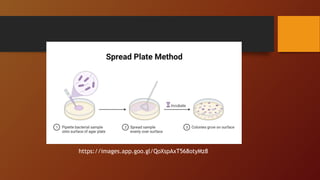
• Spread Plate Method:
• Process: In the spread plate method, a small volume of the
diluted sample is spread evenly over the surface of an agar
plate using a sterile spreading tool such as a spreader or
glass rod. After allowing the plate to dry, colonies grow on
the surface of the agar.
• Purpose: The spread plate method is commonly used when
the objective is to obtain isolated colonies on the surface
of the agar. It is relatively quick and straightforward
compared to the pour plate method.
https://images.app.goo.gl/QoXspAxT568otyMz8
Pure culture methods: Serial dilution and plating
methods (pour plate, spread plate and streak
plate methods
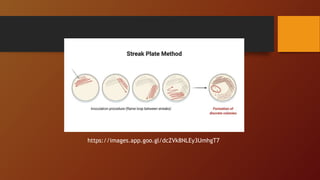
• Streak Plate Method:
• Process: In the streak plate method, a small volume of the original
sample is streaked onto the surface of an agar plate using an
inoculating loop. The loop is then sterilized and used to streak the agar
surface in a pattern that gradually dilutes the sample across the plate.
After incubation, isolated colonies form in distinct regions of the plate.
• Purpose: The streak plate method is particularly useful for obtaining
isolated colonies from a mixed culture. It relies on the dilution of the
sample through sequential streaking, allowing for the isolation of
individual colonies on the plate surface.
https://images.app.goo.gl/dcZVk8NLEy3UmhgT7
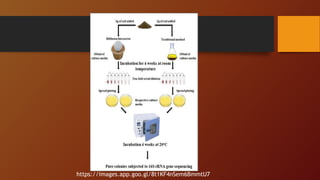
Cultivation of microbes
• Cultivation of microbes refers to the process of
growing and maintaining microorganisms in
laboratory settings for various purposes, including
research, diagnostics, and industrial applications.
Microbial cultivation involves providing suitable
growth conditions, such as nutrient-rich media,
appropriate temperature, pH, and oxygen levels, to
support the growth and reproduction of
microorganisms.
https://images.app.goo.gl/8t1KF4nSem6BmmtU7
• Selection of Microorganisms:
• Preparation of Growth Media:
• Inoculation:
• Incubation:
• Monitoring Growth:
• Subculturing:
• Characterization and Identification:
• Storage and Preservation:
Maintenance and preservation/ stocking of
pure culture
• Regular Subculturing:
• To prevent genetic drift, maintain vitality, and ensure the purity of
cultures, it's essential to regularly subculture microorganisms onto fresh
growth media. Subculturing involves transferring a small portion of the
original culture to new media, typically at regular intervals, such as
weekly or monthly, depending on the growth rate of the microorganism.
• Storage at Refrigeration Temperature:
• Many microorganisms can be stored short-term (weeks to months) at
refrigerator temperatures (2-8°C). Refrigeration slows down metabolic
processes and reduces the rate of microbial growth, helping to maintain
culture viability. However, cultures should still be subcultured
periodically to prevent aging and maintain viability.
https://images.app.goo.gl/a9NpENCzEgyZHexK7
• Cryopreservation:
• Cryopreservation involves freezing microbial cultures at ultra-low temperatures,
typically in liquid nitrogen (-196°C) or deep freezers (-80°C). Cryopreservation
ensures long-term viability and stability of cultures for years to decades. Before
freezing, cultures are usually mixed with a cryoprotectant, such as glycerol or
dimethyl sulfoxide (DMSO), to protect cells from damage during freezing and
thawing.
• Lyophilization (Freeze-Drying):
• Lyophilization is a method of preservation that involves removing water from
microbial cultures under vacuum conditions, followed by sealing the dried
cultures in airtight containers. Freeze-drying preserves cultures in a dehydrated
state, which significantly extends their shelf life. Lyophilized cultures can be
stored at room temperature for years and are easily reconstituted by adding a
suitable rehydration medium.
• Long-Term Maintenance in Culture Collections:
• Culture collections, such as the American Type Culture Collection (ATCC)
and other microbial repositories, specialize in the long-term storage and
distribution of diverse microbial strains. These collections use
cryopreservation, lyophilization, or other specialized techniques to
maintain cultures and provide them to researchers worldwide.
• Maintaining Proper Records:
• It's important to maintain accurate and detailed records of each pure
culture, including strain identification, date of isolation, source of the
culture, growth characteristics, storage conditions, and any subculturing
or preservation methods used. Proper documentation ensures traceability
and reproducibility of research results.
Cultivation of anaerobic bacteria
• Anaerobic Chambers:
• Anaerobic chambers, also known as glove boxes or anaerobic
workstations, are essential for cultivating anaerobic bacteria.
These chambers provide a controlled environment with low
oxygen levels (typically less than 1%) by replacing the
atmosphere with inert gases such as nitrogen and hydrogen. The
atmosphere inside the chamber is maintained by a gas control
system and monitored with oxygen sensors.
Cultivation of anaerobic bacteria
• Anaerobic Culture Media:
• Specialized anaerobic culture media are used to support the growth of
anaerobic bacteria. These media contain reducing agents that help create
anaerobic conditions and provide nutrients required for bacterial growth.
Commonly used anaerobic culture media include:
• Fluid Thioglycollate Medium: Thioglycollate reduces oxygen to water, creating an
anaerobic environment. It also contains nutrients such as peptones, yeast extract,
and dextrose to support bacterial growth.
• Anaerobic Agar: Anaerobic agar is a solid medium that contains reducing agents such
as cysteine or thioglycolate, along with nutrients and indicators to visualize bacterial
growth.
• Brewer's Anaerobic Agar: Brewer's anaerobic agar contains hemin and vitamin K1,
which are necessary for the growth of certain anaerobic bacteria, particularly
anaerobic Gram-positive cocci.
Staining Techniques: Principles of staining, Types
of Stains-simple, structural and differential
• Staining techniques are essential tools in microbiology
for visualizing and studying microorganisms.
• These techniques involve the application of specific dyes
or stains to highlight various structural components of
cells, allowing for their observation under a microscope.
Principles of Staining:
• Affinity for Cellular Components: Stains have an affinity for
specific cellular components based on their chemical properties.
For example, some stains bind to nucleic acids, while others bind
to proteins or carbohydrates.
• Contrast Enhancement: Stains increase the contrast between
different parts of the cell and the background, making cellular
structures more visible under a microscope.
Principles of Staining:
• Fixation: Prior to staining, cells are often fixed to preserve their structure
and prevent them from being washed away during the staining process.
Fixatives such as heat, alcohol, or chemical agents may be used.
• Differentiation: After staining, excess dye is removed through a process
called differentiation. This step helps enhance the contrast between stained
cells and the background.
• Visualization: Stained cells are observed under a microscope, allowing for
the identification and characterization of cellular structures and
morphologies.
Types of Stains:
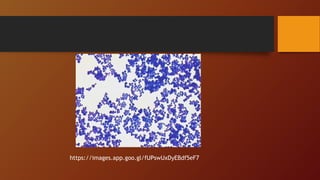
•Simple Stains:
• Principle: Simple stains involve the use of a single
dye that binds to all cells or structures in a uniform
manner, providing contrast between the cells and
the background.
• Examples: Crystal violet, methylene blue, safranin,
and basic fuchsin are commonly used simple stains.
https://images.app.goo.gl/fUPswUxDyEBdf5eF7
Types of Stains:
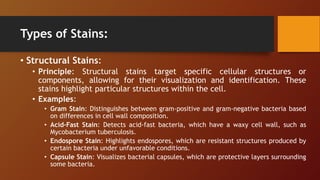
• Structural Stains:
• Principle: Structural stains target specific cellular structures or
components, allowing for their visualization and identification. These
stains highlight particular structures within the cell.
• Examples:
• Gram Stain: Distinguishes between gram-positive and gram-negative bacteria based
on differences in cell wall composition.
• Acid-Fast Stain: Detects acid-fast bacteria, which have a waxy cell wall, such as
Mycobacterium tuberculosis.
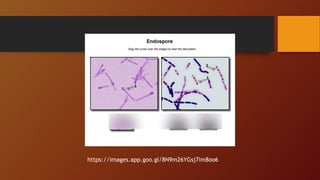
• Endospore Stain: Highlights endospores, which are resistant structures produced by
certain bacteria under unfavorable conditions.
• Capsule Stain: Visualizes bacterial capsules, which are protective layers surrounding
some bacteria.
https://images.app.goo.gl/8N9m26YGsj7im8oo6
Types of Stains:
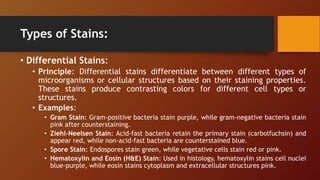
• Differential Stains:
• Principle: Differential stains differentiate between different types of
microorganisms or cellular structures based on their staining properties.
These stains produce contrasting colors for different cell types or
structures.
• Examples:
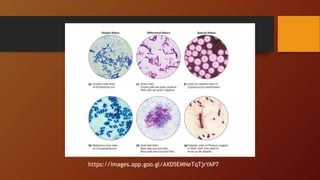
• Gram Stain: Gram-positive bacteria stain purple, while gram-negative bacteria stain
pink after counterstaining.
• Ziehl-Neelsen Stain: Acid-fast bacteria retain the primary stain (carbolfuchsin) and
appear red, while non-acid-fast bacteria are counterstained blue.
• Spore Stain: Endospores stain green, while vegetative cells stain red or pink.
• Hematoxylin and Eosin (H&E) Stain: Used in histology, hematoxylin stains cell nuclei
blue-purple, while eosin stains cytoplasm and extracellular structures pink.
https://images.app.goo.gl/AXD5EMNeTqTjrYAP7

Microbiological techniques: Sterilization

  • 1.
    Unit 4 Microbiological techniques Dr.Deepak P Microbiology and Microbiological techniques
  • 2.
    Components of Microbialmedia • Microbial media, also known as growth media or culture media, are nutrient-rich substances used to cultivate microorganisms like bacteria, fungi, and protists in laboratory settings. • These media typically contain a mixture of organic and inorganic compounds that provide the necessary nutrients for microbial growth. • The components of microbial media can vary depending on the type of microorganism being cultured and the specific requirements of the experiment or study.
  • 3.
    Components of Microbialmedia • Water • Carbon sources • Nitrogen sources • Minerals • Vitamins • Agar • pH indicators • Selective agents • Indicator organisms • Buffering agents
  • 4.
  • 5.
    Natural microbiological media •Natural microbiological media are those that utilize components derived directly from natural sources rather than synthetic or chemically defined ingredients. • These media mimic the natural environment of microorganisms more closely and are often used for specific purposes such as environmental monitoring, isolation of indigenous microorganisms, or studying microbial interactions in natural habitats. • Some examples of natural microbiological media include:
  • 6.
    Natural microbiological media •Soil extract agar: Soil components • Water agar: organic and inorganic content • Leaf infusion agar: • Milk agar: • Blood agar: • Shellfish extract agar: • Plant tissue agar: • Manure agar:
  • 7.
    Synthetic Microbial medium •Synthetic microbial media are culture media composed of precisely defined chemical components, often with known concentrations. • Unlike natural media, which contain complex mixtures of organic and inorganic compounds derived from natural sources, synthetic media are prepared using purified chemicals. • These media are advantageous in microbiological research because they offer greater control over nutrient composition and can be tailored to specific experimental needs. • Some common examples of synthetic microbial media include
  • 8.
    Minimal media • Minimalmedia contain only essential nutrients required for microbial growth, typically including a carbon source, nitrogen source, salts, and water. • They are often used for studying microbial metabolism, nutrient requirements, and genetic manipulation.
  • 9.
    Defined media • Definedmedia are similar to minimal media but may contain additional specific components such as vitamins, amino acids, or trace minerals at defined concentrations. • These media are useful for studying the nutritional requirements of microorganisms and for controlled experiments where precise nutrient compositions are necessary.
  • 10.
    Synthetic complete media •Synthetic complete media are enriched formulations that contain all necessary nutrients required to support the growth of a specific microorganism. • They typically include a carbon source, nitrogen source, vitamins, minerals, and other essential nutrients. • Synthetic complete media are commonly used for routine laboratory culturing of microorganisms and for genetic manipulation experiments.
  • 11.
    Synthetic selective media •Synthetic selective media are designed to support the growth of specific microorganisms while inhibiting the growth of others. • They contain selective agents such as antibiotics, dyes, or inhibitors that target particular metabolic pathways or physiological characteristics of certain microorganisms. • These media are often used for isolating and identifying specific bacterial strains from mixed cultures.
  • 12.
    Synthetic differential media: •Synthetic differential media are similar to selective media but also contain indicators that allow for the differentiation of microbial colonies based on specific metabolic activities or biochemical reactions. • Examples include media for testing carbohydrate fermentation, urease activity, or hydrogen sulfide production.
  • 13.
    Chemically defined media •Chemically defined media are synthetic media composed entirely of chemically defined components, with each component precisely characterized and known. • These media offer the highest level of control over nutrient composition and are commonly used in research applications such as bioprocess optimization, where consistency and reproducibility are critical.
  • 15.
    Chemically defined MicrobialMedia • Chemically defined microbial media are precisely formulated culture media composed of pure chemical compounds with known structures and concentrations. • These media provide complete control over the nutritional composition and are often used in research settings where reproducibility and consistency are essential.
  • 16.
    • M9 MinimalMedium: • M9 minimal medium is a classic example of a chemically defined medium used for culturing bacteria such as Escherichia coli. It contains salts such as ammonium sulfate, potassium phosphate, sodium chloride, and magnesium sulfate, along with a carbon source such as glucose or glycerol. Additional supplements such as amino acids or vitamins can be added as needed. • E-MEM (Essential Minimal Eagle's Medium): • E-MEM is a chemically defined medium used for culturing mammalian cells in tissue culture. It contains essential amino acids, vitamins, inorganic salts, glucose, and other nutrients required for cell growth. E-MEM provides a consistent and well-defined environment for cell culture experiments.
  • 17.
    • YNB (YeastNitrogen Base): • YNB is a chemically defined medium used for culturing yeast cells such as Saccharomyces cerevisiae. It contains salts, vitamins, and trace minerals but lacks a carbon source. YNB can be supplemented with different carbon sources such as glucose or galactose and additional nutrients as needed.
  • 18.
    Complex microbial mediumwith examples • Complex microbial media contain a variety of natural ingredients derived from biological sources such as animal tissues, plant extracts, or microbial products. • These media provide a rich and undefined mixture of nutrients, growth factors, and other compounds that support the growth of a wide range of microorganisms.
  • 19.
    • Nutrient Agar: •Nutrient agar is a widely used complex medium for culturing bacteria and fungi. It typically contains beef extract, peptone (partially digested protein), agar, and water. Nutrient agar provides a general- purpose medium suitable for the cultivation of many microorganisms. • Tryptic Soy Agar (TSA): • Tryptic soy agar is a complex medium composed of enzymatic digest of casein (soybean meal) and soybean peptone, along with agar and water. TSA is commonly used for the isolation and enumeration of bacteria from various sources due to its nutritive properties and ability to support the growth of a wide range of microorganisms.
  • 20.
    • Blood Agar: •Blood agar is a complex medium consisting of agar supplemented with sheep or horse blood. It is often used for the isolation and differentiation of pathogenic bacteria based on their hemolytic properties. Blood agar supports the growth of fastidious bacteria and provides nutrients such as hemoglobin for their growth. • Chocolate Agar: • Chocolate agar is a complex medium made by heating blood agar to lyse red blood cells, releasing nutrients such as hemoglobin. It is particularly useful for the cultivation of fastidious bacteria such as Haemophilus influenzae and Neisseria gonorrhoeae.
  • 21.
    • MacConkey Agar: •MacConkey agar is a selective and differential medium used for the isolation and differentiation of gram-negative bacteria, particularly members of the family Enterobacteriaceae. It contains bile salts and crystal violet to inhibit the growth of gram-positive bacteria, as well as lactose and neutral red to differentiate lactose-fermenting and non- fermenting organisms. • Sabouraud Dextrose Agar (SDA): • Sabouraud dextrose agar is a complex medium used for the isolation and cultivation of fungi and yeasts. It contains dextrose (glucose) as a carbon source, peptone, agar, and may be supplemented with antibiotics such as chloramphenicol or gentamicin to inhibit bacterial growth.
  • 22.
    • R2A Agar: •R2A agar is a complex medium specifically designed for the enumeration and cultivation of bacteria from water samples. It contains a reduced nutrient concentration compared to other media, making it suitable for the recovery of bacteria that may be stressed or slow-growing in environmental samples. • Brain Heart Infusion (BHI) Agar: • BHI agar is a complex medium containing brain and heart extracts, peptone, and agar. It is commonly used for the cultivation of fastidious microorganisms, including pathogens such as Streptococcus and Staphylococcus species.
  • 23.
    • Tryptic SoyAgar (TSA): Chocolate Agar: Tryptic Soy Agar (TSA): Blood Agar • Courtesy: https://images.app.goo.gl/3kEQ16kAFQQXdUSq5
  • 24.
    Selective microbial Medium •Selective microbial media are formulated to encourage the growth of certain types of microorganisms while inhibiting the growth of others. • These media typically contain additives that selectively suppress the growth of unwanted organisms, allowing the target microorganisms to thrive and be easily identified.
  • 25.
    • MacConkey Agar: •Composition: MacConkey agar contains bile salts, crystal violet, neutral red dye, lactose, and peptone, along with agar as a solidifying agent. • Application: MacConkey agar is selective for gram-negative bacteria, particularly members of the family Enterobacteriaceae, while inhibiting the growth of most gram- positive bacteria. It is differential based on lactose fermentation, allowing for the differentiation of lactose- fermenting and non-fermenting bacteria.
  • 26.
    •Mannitol Salt Agar(MSA): • Composition: MSA contains mannitol, salt (typically sodium chloride), phenol red dye, peptone, and agar. • Application: MSA is selective for halophilic (salt- tolerant) bacteria, particularly Staphylococcus species, while inhibiting the growth of other bacteria. It is differential based on mannitol fermentation, allowing for the identification of mannitol-fermenting and non- fermenting bacteria.
  • 27.
    •Xylose Lysine Deoxycholate(XLD) Agar: • Composition: XLD agar contains xylose, lysine, deoxycholate, phenol red dye, sodium thiosulfate, and agar. • Application: XLD agar is selective for gram-negative enteric bacteria such as Salmonella and Shigella species while inhibiting the growth of other bacteria. It is differential based on the fermentation of xylose and lysine, as well as the production of hydrogen sulfide (H2S) gas.
  • 28.
    • Hektoen EntericAgar (HEA): • Composition: HEA contains bile salts, lactose, sucrose, salicin, ferric ammonium citrate, bromothymol blue, acid fuchsin, and agar. • Application: HEA is selective for gram-negative enteric bacteria, particularly Salmonella and Shigella species, while inhibiting the growth of most other bacteria. It is differential based on the fermentation of lactose, sucrose, and salicin, as well as the production of hydrogen sulfide (H2S) gas.
  • 29.
  • 30.
    Differential microbial media •Differential microbial media are designed to distinguish between different types of microorganisms based on their metabolic or biochemical characteristics. • These media typically contain indicators or substrates that undergo specific changes in response to microbial activity, allowing for the visual differentiation of bacterial colonies.
  • 31.
    • EMB Agar(Eosin Methylene Blue Agar): • Composition: EMB agar contains eosin Y and methylene blue dyes, lactose, peptone, agar, and water. • Application: EMB agar is selective for gram-negative bacteria, particularly Enterobacteriaceae, while inhibiting most gram-positive bacteria. • It is differential based on lactose fermentation and the ability of certain organisms to reduce methylene blue. • Lactose-fermenting bacteria produce dark colonies with a green metallic sheen due to the precipitation of eosin and methylene blue dyes. Non-fermenting bacteria appear colorless or pale.
  • 32.
    • Xylose LysineDeoxycholate (XLD) Agar: • Composition: XLD agar contains xylose, lysine, deoxycholate, phenol red dye, sodium thiosulfate, and agar. • Application: XLD agar is selective for gram-negative enteric bacteria such as Salmonella and Shigella species, while inhibiting most other bacteria. • It is differential based on the fermentation of xylose and lysine, as well as the production of hydrogen sulfide (H2S) gas. • Salmonella and some Shigella species produce black colonies due to H2S production, while non-H2S-producing bacteria appear colorless or red.
  • 33.
  • 34.
    Indicator medium • Indicatormedia are specialized microbial growth media that contain indicators, substances that undergo observable changes when specific metabolic activities occur. • These changes can be visualized and used to identify or differentiate between different types of microorganisms or biochemical reactions.
  • 35.
    • Phenol RedBroth: • Composition: Phenol red broth typically contains peptone, phenol red dye, a carbohydrate such as glucose, lactose, or sucrose, and sometimes a pH indicator. • Application: Phenol red broth is used to differentiate between bacteria based on their ability to ferment carbohydrates and produce acid. When carbohydrates are fermented, acid is produced, which lowers the pH of the broth, causing the phenol red dye to change color. For example, in phenol red glucose broth, the medium turns yellow when glucose is fermented, whereas in phenol red lactose broth, the medium turns yellow when lactose is fermented.
  • 36.
    • Methyl Red-Voges-Proskauer(MR-VP) Broth: • Composition: MR-VP broth contains peptone, glucose, and a phosphate buffer. It is divided into two parts: one for the Methyl Red test and the other for the Voges-Proskauer test. • Application: MR-VP broth is used to differentiate between bacteria based on their mixed-acid fermentation pathway (Methyl Red test) and acetoin production (Voges-Proskauer test). In the Methyl Red test, the addition of Methyl Red dye turns the medium red when the pH is below 4.4, indicating mixed-acid fermentation. In the Voges- Proskauer test, the addition of alpha-naphthol and potassium hydroxide followed by incubation with oxygen results in a red color if acetoin is present.
  • 37.
  • 38.
    • Triple SugarIron (TSI) Agar: • Composition: TSI agar contains peptone, sugars (glucose, lactose, and sucrose), ferrous sulfate, and a pH indicator (phenol red). • Application: TSI agar is used to differentiate between bacteria based on their ability to ferment sugars and produce hydrogen sulfide (H2S) gas. Fermentation of sugars leads to the production of acid, which turns the medium yellow. Production of H2S results in the formation of black precipitates. The pattern of color changes and gas production can help identify bacteria and determine their metabolic pathways.
  • 39.
  • 40.
    • Urea Broth: •Composition: Urea broth contains peptone, urea, and a pH indicator (phenol red). • Application: Urea broth is used to differentiate between bacteria based on their ability to hydrolyze urea using the enzyme urease. Urease-positive bacteria hydrolyze urea, producing ammonia, which raises the pH of the broth, turning it pink. Urease-negative bacteria do not hydrolyze urea, and the medium remains yellow.
  • 41.
  • 42.
    • Simmons CitrateAgar: • Composition: Simmons citrate agar contains sodium citrate, ammonium dihydrogen phosphate, bromothymol blue, and agar. • Application: Simmons citrate agar is used to differentiate between bacteria based on their ability to utilize citrate as the sole carbon source. Citrate-positive bacteria produce alkaline byproducts, which raise the pH of the medium, turning it blue.
  • 43.
  • 44.
    Enriched medium • Enrichedmicrobial media are designed to support the growth of fastidious microorganisms, which have complex nutritional requirements and may not grow well on standard media. • These media contain additional nutrients or growth factors that provide optimal conditions for the cultivation of specific microorganisms.
  • 45.
    • Blood Agar: •Composition: Blood agar is a complex medium containing agar supplemented with sheep or horse blood. • Application: Blood agar is enriched with nutrients such as hemoglobin and other factors present in blood, making it suitable for the cultivation of fastidious microorganisms, particularly those that require additional nutrients for growth. • It is commonly used in clinical microbiology for the isolation and identification of pathogenic bacteria, including streptococci, staphylococci, and other hemolytic bacteria.
  • 46.
    • Chocolate Agar: •Composition: Chocolate agar is prepared by heating blood agar to lyse red blood cells, releasing nutrients such as hemoglobin. • Application: Chocolate agar is highly enriched with hemoglobin, amino acids, and other growth factors, making it particularly suitable for the cultivation of fastidious bacteria such as Haemophilus influenzae and Neisseria meningitidis. It is commonly used in clinical microbiology for the isolation and identification of these pathogens from clinical specimens.
  • 47.
    • Brain HeartInfusion (BHI) Agar: • Composition: BHI agar contains brain and heart extracts, peptone, and agar. • Application: BHI agar is enriched with nutrients derived from animal tissues, making it suitable for the cultivation of a wide range of fastidious microorganisms, including anaerobic bacteria, streptococci, staphylococci, and other fastidious organisms. It is commonly used in clinical microbiology and research laboratories for the isolation and cultivation of various microorganisms.
  • 48.
    • Tryptic SoyAgar (TSA) with 5% Sheep Blood: • Composition: TSA with 5% sheep blood contains tryptic soy agar supplemented with 5% sheep blood. • Application: TSA with 5% sheep blood provides additional nutrients and growth factors from blood, making it suitable for the cultivation of a wide range of fastidious bacteria, including streptococci, staphylococci, and other hemolytic bacteria. It is commonly used in clinical microbiology for the isolation and identification of pathogenic bacteria from clinical specimens.
  • 49.
    Enrichment medium • Enrichmentmicrobial media are designed to promote the growth of specific groups of microorganisms by providing selective conditions that favor their proliferation while inhibiting the growth of others. • These media typically contain nutrients that support the growth of target organisms while minimizing competition from contaminants.
  • 50.
    • Selenite Broth: •Composition: Selenite broth typically contains peptone, sodium selenite, and other salts in a buffered solution. • Application: Selenite broth is used for the enrichment and isolation of Salmonella and Shigella species from clinical and environmental samples. Sodium selenite inhibits the growth of most other bacteria, while Salmonella and Shigella species are able to grow and multiply under these conditions. After enrichment, the broth is plated onto selective agar media for further isolation and identification.
  • 51.
  • 52.
    • Rappaport-Vassiliadis (RV)Broth: • Composition: RV broth contains peptone, magnesium chloride, malachite green, and potassium tellurite in a buffered solution. • Application: RV broth is used for the enrichment of Salmonella species from food and environmental samples. It contains selective agents such as malachite green and potassium tellurite, which inhibit the growth of most other bacteria while allowing Salmonella to grow. RV broth is often used in combination with other selective media for the isolation and identification of Salmonella.
  • 53.
  • 54.
    • Alkaline PeptoneWater: • Composition: Alkaline peptone water contains peptone and sodium hydroxide in a buffered solution. • Application: Alkaline peptone water is used for the enrichment of Vibrio species, particularly Vibrio cholerae, from clinical and environmental samples. The alkaline pH of the medium inhibits the growth of most other bacteria, while Vibrio species are able to grow and multiply under these conditions. After enrichment, the broth is plated onto selective agar media for further isolation and identification.
  • 55.
  • 56.
    • Tetrathionate Broth: •Composition: Tetrathionate broth contains peptone, potassium tetrathionate, and other salts in a buffered solution. • Application: Tetrathionate broth is used for the enrichment and isolation of Salmonella species from clinical and environmental samples. Potassium tetrathionate inhibits the growth of most other bacteria, while Salmonella species are able to grow and multiply under these conditions. After enrichment, the broth is plated onto selective agar media for further isolation and identification.
  • 57.
    • Muller-Kauffmann Tetrathionate-NovobiocinBroth (MKTTn): • Composition: MKTTn broth contains peptone, potassium tetrathionate, novobiocin, and other salts in a buffered solution. • Application: MKTTn broth is used for the enrichment and isolation of Salmonella species, particularly Salmonella typhi and Salmonella paratyphi, from clinical specimens. Novobiocin inhibits the growth of most other bacteria, while Salmonella species are able to grow and multiply under these conditions. After enrichment, the broth is plated onto selective agar media for further isolation and identification.
  • 58.
    Pure culture methods:Serial dilution and plating methods (pour plate, spread plate and streak plate methods • Serial Dilution: • Process: Serial dilution involves diluting a sample containing a mixture of microorganisms in a series of steps to reduce the number of organisms in each successive dilution. This is typically done by transferring a small volume of the original sample to a tube containing a known volume of sterile diluent (e.g., saline or broth) and mixing thoroughly. Subsequent dilutions are made by transferring a portion of the previous dilution to a new tube of diluent and mixing again. • Purpose: Serial dilution is used to reduce the microbial population to a level where individual colonies can be isolated and counted on agar plates. It also helps ensure that isolated colonies arise from single cells or clumps of cells, facilitating the formation of pure cultures.
  • 59.
  • 60.
    Pure culture methods:Serial dilution and plating methods (pour plate, spread plate and streak plate methods • Plating Methods: • Pour Plate Method: • Process: In the pour plate method, a series of diluted samples are added to separate Petri dishes containing molten agar medium. The mixture is then gently agitated to ensure even distribution of the sample within the medium. After solidification, colonies grow both on the surface and within the agar. • Purpose: The pour plate method allows for the isolation of microorganisms both on the surface and within the agar, making it useful for organisms that may not grow well on the surface alone. It also provides a higher chance of isolating single colonies compared to other methods.
  • 61.
  • 62.
    Pure culture methods:Serial dilution and plating methods (pour plate, spread plate and streak plate methods • Spread Plate Method: • Process: In the spread plate method, a small volume of the diluted sample is spread evenly over the surface of an agar plate using a sterile spreading tool such as a spreader or glass rod. After allowing the plate to dry, colonies grow on the surface of the agar. • Purpose: The spread plate method is commonly used when the objective is to obtain isolated colonies on the surface of the agar. It is relatively quick and straightforward compared to the pour plate method.
  • 63.
  • 64.
    Pure culture methods:Serial dilution and plating methods (pour plate, spread plate and streak plate methods • Streak Plate Method: • Process: In the streak plate method, a small volume of the original sample is streaked onto the surface of an agar plate using an inoculating loop. The loop is then sterilized and used to streak the agar surface in a pattern that gradually dilutes the sample across the plate. After incubation, isolated colonies form in distinct regions of the plate. • Purpose: The streak plate method is particularly useful for obtaining isolated colonies from a mixed culture. It relies on the dilution of the sample through sequential streaking, allowing for the isolation of individual colonies on the plate surface.
  • 65.
  • 66.
    Cultivation of microbes •Cultivation of microbes refers to the process of growing and maintaining microorganisms in laboratory settings for various purposes, including research, diagnostics, and industrial applications. Microbial cultivation involves providing suitable growth conditions, such as nutrient-rich media, appropriate temperature, pH, and oxygen levels, to support the growth and reproduction of microorganisms.
  • 67.
  • 68.
    • Selection ofMicroorganisms: • Preparation of Growth Media: • Inoculation: • Incubation: • Monitoring Growth: • Subculturing: • Characterization and Identification: • Storage and Preservation:
  • 69.
    Maintenance and preservation/stocking of pure culture • Regular Subculturing: • To prevent genetic drift, maintain vitality, and ensure the purity of cultures, it's essential to regularly subculture microorganisms onto fresh growth media. Subculturing involves transferring a small portion of the original culture to new media, typically at regular intervals, such as weekly or monthly, depending on the growth rate of the microorganism. • Storage at Refrigeration Temperature: • Many microorganisms can be stored short-term (weeks to months) at refrigerator temperatures (2-8°C). Refrigeration slows down metabolic processes and reduces the rate of microbial growth, helping to maintain culture viability. However, cultures should still be subcultured periodically to prevent aging and maintain viability.
  • 70.
  • 71.
    • Cryopreservation: • Cryopreservationinvolves freezing microbial cultures at ultra-low temperatures, typically in liquid nitrogen (-196°C) or deep freezers (-80°C). Cryopreservation ensures long-term viability and stability of cultures for years to decades. Before freezing, cultures are usually mixed with a cryoprotectant, such as glycerol or dimethyl sulfoxide (DMSO), to protect cells from damage during freezing and thawing. • Lyophilization (Freeze-Drying): • Lyophilization is a method of preservation that involves removing water from microbial cultures under vacuum conditions, followed by sealing the dried cultures in airtight containers. Freeze-drying preserves cultures in a dehydrated state, which significantly extends their shelf life. Lyophilized cultures can be stored at room temperature for years and are easily reconstituted by adding a suitable rehydration medium.
  • 72.
    • Long-Term Maintenancein Culture Collections: • Culture collections, such as the American Type Culture Collection (ATCC) and other microbial repositories, specialize in the long-term storage and distribution of diverse microbial strains. These collections use cryopreservation, lyophilization, or other specialized techniques to maintain cultures and provide them to researchers worldwide. • Maintaining Proper Records: • It's important to maintain accurate and detailed records of each pure culture, including strain identification, date of isolation, source of the culture, growth characteristics, storage conditions, and any subculturing or preservation methods used. Proper documentation ensures traceability and reproducibility of research results.
  • 73.
    Cultivation of anaerobicbacteria • Anaerobic Chambers: • Anaerobic chambers, also known as glove boxes or anaerobic workstations, are essential for cultivating anaerobic bacteria. These chambers provide a controlled environment with low oxygen levels (typically less than 1%) by replacing the atmosphere with inert gases such as nitrogen and hydrogen. The atmosphere inside the chamber is maintained by a gas control system and monitored with oxygen sensors.
  • 74.
    Cultivation of anaerobicbacteria • Anaerobic Culture Media: • Specialized anaerobic culture media are used to support the growth of anaerobic bacteria. These media contain reducing agents that help create anaerobic conditions and provide nutrients required for bacterial growth. Commonly used anaerobic culture media include: • Fluid Thioglycollate Medium: Thioglycollate reduces oxygen to water, creating an anaerobic environment. It also contains nutrients such as peptones, yeast extract, and dextrose to support bacterial growth. • Anaerobic Agar: Anaerobic agar is a solid medium that contains reducing agents such as cysteine or thioglycolate, along with nutrients and indicators to visualize bacterial growth. • Brewer's Anaerobic Agar: Brewer's anaerobic agar contains hemin and vitamin K1, which are necessary for the growth of certain anaerobic bacteria, particularly anaerobic Gram-positive cocci.
  • 75.
    Staining Techniques: Principlesof staining, Types of Stains-simple, structural and differential • Staining techniques are essential tools in microbiology for visualizing and studying microorganisms. • These techniques involve the application of specific dyes or stains to highlight various structural components of cells, allowing for their observation under a microscope.
  • 76.
    Principles of Staining: •Affinity for Cellular Components: Stains have an affinity for specific cellular components based on their chemical properties. For example, some stains bind to nucleic acids, while others bind to proteins or carbohydrates. • Contrast Enhancement: Stains increase the contrast between different parts of the cell and the background, making cellular structures more visible under a microscope.
  • 77.
    Principles of Staining: •Fixation: Prior to staining, cells are often fixed to preserve their structure and prevent them from being washed away during the staining process. Fixatives such as heat, alcohol, or chemical agents may be used. • Differentiation: After staining, excess dye is removed through a process called differentiation. This step helps enhance the contrast between stained cells and the background. • Visualization: Stained cells are observed under a microscope, allowing for the identification and characterization of cellular structures and morphologies.
  • 78.
    Types of Stains: •SimpleStains: • Principle: Simple stains involve the use of a single dye that binds to all cells or structures in a uniform manner, providing contrast between the cells and the background. • Examples: Crystal violet, methylene blue, safranin, and basic fuchsin are commonly used simple stains.
  • 79.
  • 80.
    Types of Stains: •Structural Stains: • Principle: Structural stains target specific cellular structures or components, allowing for their visualization and identification. These stains highlight particular structures within the cell. • Examples: • Gram Stain: Distinguishes between gram-positive and gram-negative bacteria based on differences in cell wall composition. • Acid-Fast Stain: Detects acid-fast bacteria, which have a waxy cell wall, such as Mycobacterium tuberculosis. • Endospore Stain: Highlights endospores, which are resistant structures produced by certain bacteria under unfavorable conditions. • Capsule Stain: Visualizes bacterial capsules, which are protective layers surrounding some bacteria.
  • 81.
  • 82.
    Types of Stains: •Differential Stains: • Principle: Differential stains differentiate between different types of microorganisms or cellular structures based on their staining properties. These stains produce contrasting colors for different cell types or structures. • Examples: • Gram Stain: Gram-positive bacteria stain purple, while gram-negative bacteria stain pink after counterstaining. • Ziehl-Neelsen Stain: Acid-fast bacteria retain the primary stain (carbolfuchsin) and appear red, while non-acid-fast bacteria are counterstained blue. • Spore Stain: Endospores stain green, while vegetative cells stain red or pink. • Hematoxylin and Eosin (H&E) Stain: Used in histology, hematoxylin stains cell nuclei blue-purple, while eosin stains cytoplasm and extracellular structures pink.
  • 83.