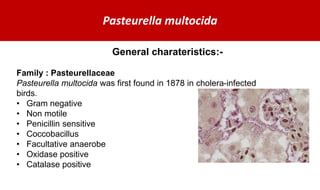
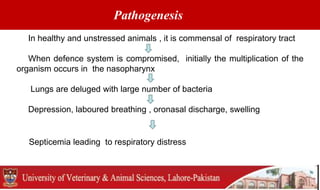
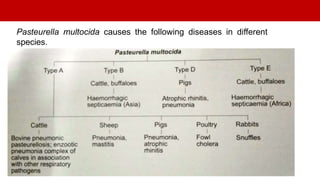
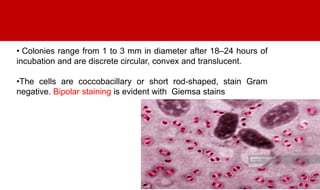
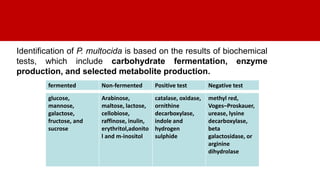
This document provides information on Pasteurella multocida, including its characteristics, serotypes, epidemiology, pathogenesis, identification, and isolation. P. multocida was first found in 1878 infecting birds. It is a gram-negative, non-motile coccobacillus that resides normally in the nasopharynx of animals. Strains are classified into five serogroups and sixteen serotypes based on capsular and somatic antigens. Serogroups B and E are associated with hemorrhagic septicemia, a fatal disease of cattle and buffalo. Identification involves culturing the bacteria from infected tissues and running biochemical tests on colonies.