8C               Summary Sheets
             Microbes
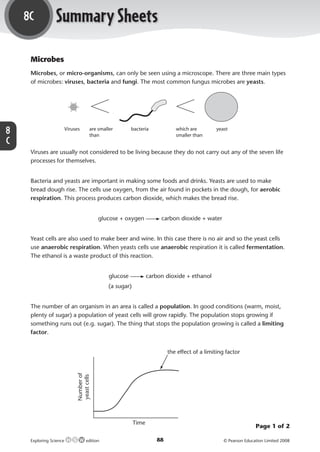
             Microbes, or micro-organisms, can only be seen using a microscope. There are three main types
             of microbes: viruses, bacteria and fungi. The most common fungus microbes are yeasts.


8                                Viruses        are smaller
                                                than
                                                                   bacteria            which are
                                                                                       smaller than
                                                                                                        yeast

C
             Viruses are usually not considered to be living because they do not carry out any of the seven life
             processes for themselves.


             Bacteria and yeasts are important in making some foods and drinks. Yeasts are used to make
             bread dough rise. The cells use oxygen, from the air found in pockets in the dough, for aerobic
             respiration. This process produces carbon dioxide, which makes the bread rise.


                                                    glucose + oxygen             carbon dioxide + water


             Yeast cells are also used to make beer and wine. In this case there is no air and so the yeast cells
             use anaerobic respiration. When yeasts cells use anaerobic respiration it is called fermentation.
             The ethanol is a waste product of this reaction.


                                                         glucose            carbon dioxide + ethanol
                                                         (a sugar)


             The number of an organism in an area is called a population. In good conditions (warm, moist,
             plenty of sugar) a population of yeast cells will grow rapidly. The population stops growing if
             something runs out (e.g. sugar). The thing that stops the population growing is called a limiting
             factor.


                                                                                    the effect of a limiting factor
                                      Number of
                                      yeast cells


                                                                     Time
                                                                                                                           Page 1 of 2

             Exploring Science               edition                           88                           © Pearson Education Limited 2008


M03_ES_AB_Y8_5415_U8C.indd 88                                                                                                                  28/8/08 11:47:46
8C               Summary Sheets (continued)

             Diseases
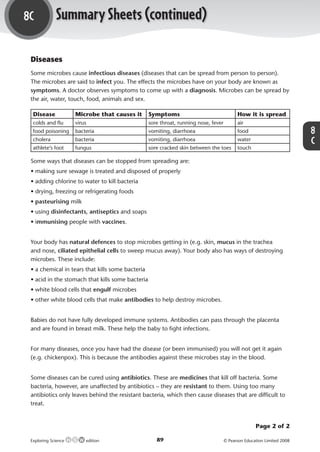
             Some microbes cause infectious diseases (diseases that can be spread from person to person).
             The microbes are said to infect you. The effects the microbes have on your body are known as
             symptoms. A doctor observes symptoms to come up with a diagnosis. Microbes can be spread by
             the air, water, touch, food, animals and sex.

              Disease            Microbe that causes it       Symptoms                                 How it is spread
              colds and flu       virus                        sore throat, running nose, fever         air
              food poisoning     bacteria                     vomiting, diarrhoea                      food                                     8
              cholera            bacteria                     vomiting, diarrhoea                      water
                                                                                                                                                C
              athlete’s foot     fungus                       sore cracked skin between the toes       touch

             Some ways that diseases can be stopped from spreading are:
             • making sure sewage is treated and disposed of properly
             • adding chlorine to water to kill bacteria
             • drying, freezing or refrigerating foods
             • pasteurising milk
             • using disinfectants, antiseptics and soaps
             • immunising people with vaccines.


             Your body has natural defences to stop microbes getting in (e.g. skin, mucus in the trachea
             and nose, ciliated epithelial cells to sweep mucus away). Your body also has ways of destroying
             microbes. These include:
             • a chemical in tears that kills some bacteria
             • acid in the stomach that kills some bacteria
             • white blood cells that engulf microbes
             • other white blood cells that make antibodies to help destroy microbes.


             Babies do not have fully developed immune systems. Antibodies can pass through the placenta
             and are found in breast milk. These help the baby to fight infections.


             For many diseases, once you have had the disease (or been immunised) you will not get it again
             (e.g. chickenpox). This is because the antibodies against these microbes stay in the blood.


             Some diseases can be cured using antibiotics. These are medicines that kill off bacteria. Some
             bacteria, however, are unaffected by antibiotics – they are resistant to them. Using too many
             antibiotics only leaves behind the resistant bacteria, which then cause diseases that are difficult to
             treat.


                                                                                                                Page 2 of 2

             Exploring Science       edition                     89                              © Pearson Education Limited 2008


M03_ES_AB_Y8_5415_U8C.indd 89                                                                                                       28/8/08 11:47:47

Microbes

  • 1.
    8C Summary Sheets Microbes Microbes, or micro-organisms, can only be seen using a microscope. There are three main types of microbes: viruses, bacteria and fungi. The most common fungus microbes are yeasts. 8 Viruses are smaller than bacteria which are smaller than yeast C Viruses are usually not considered to be living because they do not carry out any of the seven life processes for themselves. Bacteria and yeasts are important in making some foods and drinks. Yeasts are used to make bread dough rise. The cells use oxygen, from the air found in pockets in the dough, for aerobic respiration. This process produces carbon dioxide, which makes the bread rise. glucose + oxygen carbon dioxide + water Yeast cells are also used to make beer and wine. In this case there is no air and so the yeast cells use anaerobic respiration. When yeasts cells use anaerobic respiration it is called fermentation. The ethanol is a waste product of this reaction. glucose carbon dioxide + ethanol (a sugar) The number of an organism in an area is called a population. In good conditions (warm, moist, plenty of sugar) a population of yeast cells will grow rapidly. The population stops growing if something runs out (e.g. sugar). The thing that stops the population growing is called a limiting factor. the effect of a limiting factor Number of yeast cells Time Page 1 of 2 Exploring Science edition 88 © Pearson Education Limited 2008 M03_ES_AB_Y8_5415_U8C.indd 88 28/8/08 11:47:46
  • 2.
    8C Summary Sheets (continued) Diseases Some microbes cause infectious diseases (diseases that can be spread from person to person). The microbes are said to infect you. The effects the microbes have on your body are known as symptoms. A doctor observes symptoms to come up with a diagnosis. Microbes can be spread by the air, water, touch, food, animals and sex. Disease Microbe that causes it Symptoms How it is spread colds and flu virus sore throat, running nose, fever air food poisoning bacteria vomiting, diarrhoea food 8 cholera bacteria vomiting, diarrhoea water C athlete’s foot fungus sore cracked skin between the toes touch Some ways that diseases can be stopped from spreading are: • making sure sewage is treated and disposed of properly • adding chlorine to water to kill bacteria • drying, freezing or refrigerating foods • pasteurising milk • using disinfectants, antiseptics and soaps • immunising people with vaccines. Your body has natural defences to stop microbes getting in (e.g. skin, mucus in the trachea and nose, ciliated epithelial cells to sweep mucus away). Your body also has ways of destroying microbes. These include: • a chemical in tears that kills some bacteria • acid in the stomach that kills some bacteria • white blood cells that engulf microbes • other white blood cells that make antibodies to help destroy microbes. Babies do not have fully developed immune systems. Antibodies can pass through the placenta and are found in breast milk. These help the baby to fight infections. For many diseases, once you have had the disease (or been immunised) you will not get it again (e.g. chickenpox). This is because the antibodies against these microbes stay in the blood. Some diseases can be cured using antibiotics. These are medicines that kill off bacteria. Some bacteria, however, are unaffected by antibiotics – they are resistant to them. Using too many antibiotics only leaves behind the resistant bacteria, which then cause diseases that are difficult to treat. Page 2 of 2 Exploring Science edition 89 © Pearson Education Limited 2008 M03_ES_AB_Y8_5415_U8C.indd 89 28/8/08 11:47:47