K.J. Somaiya College of Science and Commerce
(Autonomous)
Reaccredited by NAAC with Grade”A”
Project on
MARKETING ENVIRONMENT
Bachelor of Management Studies
Semester III
2014-2015
By
Aftab Manihar
Seat number :15-8525
Project guide : PROF CETAN JIWANI
MARKETING ENVIRONMENT
• PRESENTED BY:
• AFTAB MANIHAR
• SYBMS (MARKETING)
“It is useless to tell a river to stop running; the best thing
is to learn how to swim in the direction it is flowing.”
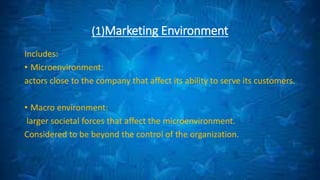
(1)Marketing Environment
Includes:
• Microenvironment:
actors close to the company that affect its ability to serve its customers.
• Macro environment:
larger societal forces that affect the microenvironment.
Considered to be beyond the control of the organization.
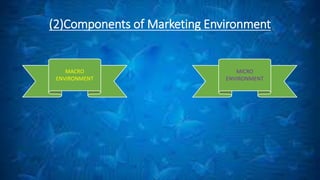
(2)Components of Marketing Environment
MICRO
ENVIRONMENT
MACRO
ENVIRONMENT
(A)Micro Environment
• The micro-environment affects the organization directly. It refers to
the environment that most closely linked to the firm
• This environment is not also under the full control of business.
• The business is influence by this environment.
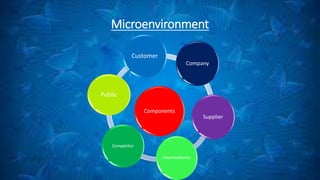
Microenvironment
Components
Customer
Supplier
Intermediaries
Competitor
Public
Company
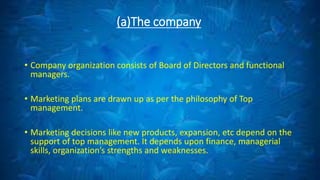
(a)The company
• Company organization consists of Board of Directors and functional
managers.
• Marketing plans are drawn up as per the philosophy of Top
management.
• Marketing decisions like new products, expansion, etc depend on the
support of top management. It depends upon finance, managerial
skills, organization’s strengths and weaknesses.
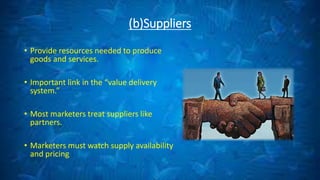
(b)Suppliers
• Provide resources needed to produce
goods and services.
• Important link in the “value delivery
system.”
• Most marketers treat suppliers like
partners.
• Marketers must watch supply availability
and pricing
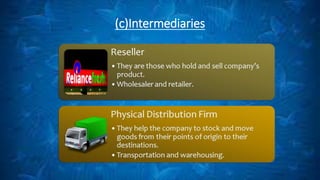
(c)Intermediaries
(d)Customer
• Purchase requirements vary from
customer to customer
• influenced by cultural, social and
psychological factors
• They are large in number
(e)Competitors
• To be successful, a company must satisfy needs and wants of
consumers better than competitors
• A company should monitor three variables when analyzing each of
its competitors
1. Share of Market
2. Share of Mind
3. Share of Heart
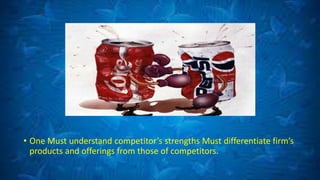
• One Must understand competitor’s strengths Must differentiate firm’s
products and offerings from those of competitors.
(f)Publics
• A group that has an actual or potential interest in or impact on an
organization
• Seven publics include:
1. Financial
2. Media
3. Government
4. Citizen-action
5. Local
6. General
7. Internal
(B)Macro Environment
• The major external and uncontrollable
factors that influence an organization's decision making, and affect
its performance and strategies. These factors include the economic
factors, demographics, legal, political, and social conditions,
technological changes, and natural forces.
• Specific examples of macro environment influences
include competitors, changes in interest rates, changes in cultural
tastes, disastrous weather, or government regulations.
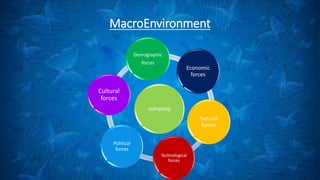
MacroEnvironment
company
Demographic
forces
Economic
forces
Technological
forces
Political
forces
Cultural
forces
Natural
forces
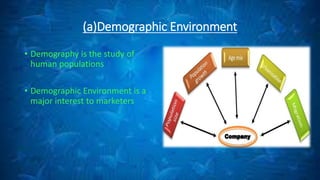
(a)Demographic Environment
• Demography is the study of
human populations
• Demographic Environment is a
major interest to marketers
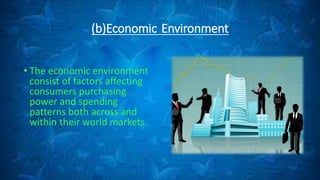
(b)Economic Environment
• The economic environment
consist of factors affecting
consumers purchasing
power and spending
patterns both across and
within their world markets.
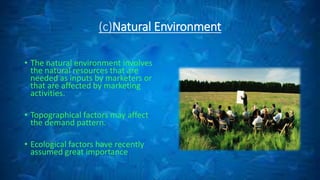
(c)Natural Environment
• The natural environment involves
the natural resources that are
needed as inputs by marketers or
that are affected by marketing
activities.
• Topographical factors may affect
the demand pattern.
• Ecological factors have recently
assumed great importance
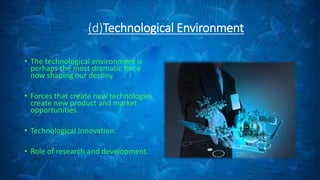
(d)Technological Environment
• The technological environment is
perhaps the most dramatic force
now shaping our destiny.
• Forces that create new technologies,
create new product and market
opportunities.
• Technological Innovation.
• Role of research and development.
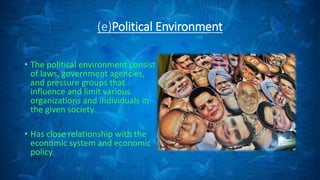
(e)Political Environment
• The political environment consist
of laws, government agencies,
and pressure groups that
influence and limit various
organizations and individuals in
the given society.
• Has close relationship with the
economic system and economic
policy.
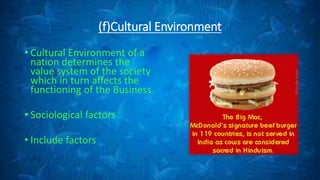
(f)Cultural Environment
• Cultural Environment of a
nation determines the
value system of the society
which in turn affects the
functioning of the Business.
• Sociological factors
• Include factors
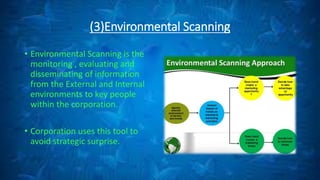
(3)Environmental Scanning
• Environmental Scanning is the
monitoring , evaluating and
disseminating of information
from the External and Internal
environments to key people
within the corporation.
• Corporation uses this tool to
avoid strategic surprise.
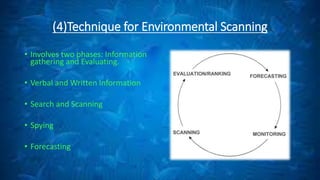
(4)Technique for Environmental Scanning
• Involves two phases: Information
gathering and Evaluating.
• Verbal and Written Information
• Search and Scanning
• Spying
• Forecasting
THANK YOU
Micro and macro environment

Micro and macro environment

  • 1.
    K.J. Somaiya Collegeof Science and Commerce (Autonomous) Reaccredited by NAAC with Grade”A” Project on MARKETING ENVIRONMENT Bachelor of Management Studies Semester III 2014-2015 By Aftab Manihar Seat number :15-8525 Project guide : PROF CETAN JIWANI
  • 2.
    MARKETING ENVIRONMENT • PRESENTEDBY: • AFTAB MANIHAR • SYBMS (MARKETING)
  • 3.
    “It is uselessto tell a river to stop running; the best thing is to learn how to swim in the direction it is flowing.”
  • 4.
    (1)Marketing Environment Includes: • Microenvironment: actorsclose to the company that affect its ability to serve its customers. • Macro environment: larger societal forces that affect the microenvironment. Considered to be beyond the control of the organization.
  • 5.
    (2)Components of MarketingEnvironment MICRO ENVIRONMENT MACRO ENVIRONMENT
  • 6.
    (A)Micro Environment • Themicro-environment affects the organization directly. It refers to the environment that most closely linked to the firm • This environment is not also under the full control of business. • The business is influence by this environment.
  • 7.
  • 8.
    (a)The company • Companyorganization consists of Board of Directors and functional managers. • Marketing plans are drawn up as per the philosophy of Top management. • Marketing decisions like new products, expansion, etc depend on the support of top management. It depends upon finance, managerial skills, organization’s strengths and weaknesses.
  • 9.
    (b)Suppliers • Provide resourcesneeded to produce goods and services. • Important link in the “value delivery system.” • Most marketers treat suppliers like partners. • Marketers must watch supply availability and pricing
  • 10.
  • 11.
    (d)Customer • Purchase requirementsvary from customer to customer • influenced by cultural, social and psychological factors • They are large in number
  • 12.
    (e)Competitors • To besuccessful, a company must satisfy needs and wants of consumers better than competitors • A company should monitor three variables when analyzing each of its competitors 1. Share of Market 2. Share of Mind 3. Share of Heart
  • 13.
    • One Mustunderstand competitor’s strengths Must differentiate firm’s products and offerings from those of competitors.
  • 14.
    (f)Publics • A groupthat has an actual or potential interest in or impact on an organization • Seven publics include: 1. Financial 2. Media 3. Government 4. Citizen-action 5. Local 6. General 7. Internal
  • 15.
    (B)Macro Environment • Themajor external and uncontrollable factors that influence an organization's decision making, and affect its performance and strategies. These factors include the economic factors, demographics, legal, political, and social conditions, technological changes, and natural forces. • Specific examples of macro environment influences include competitors, changes in interest rates, changes in cultural tastes, disastrous weather, or government regulations.
  • 16.
  • 17.
    (a)Demographic Environment • Demographyis the study of human populations • Demographic Environment is a major interest to marketers
  • 18.
    (b)Economic Environment • Theeconomic environment consist of factors affecting consumers purchasing power and spending patterns both across and within their world markets.
  • 19.
    (c)Natural Environment • Thenatural environment involves the natural resources that are needed as inputs by marketers or that are affected by marketing activities. • Topographical factors may affect the demand pattern. • Ecological factors have recently assumed great importance
  • 20.
    (d)Technological Environment • Thetechnological environment is perhaps the most dramatic force now shaping our destiny. • Forces that create new technologies, create new product and market opportunities. • Technological Innovation. • Role of research and development.
  • 21.
    (e)Political Environment • Thepolitical environment consist of laws, government agencies, and pressure groups that influence and limit various organizations and individuals in the given society. • Has close relationship with the economic system and economic policy.
  • 22.
    (f)Cultural Environment • CulturalEnvironment of a nation determines the value system of the society which in turn affects the functioning of the Business. • Sociological factors • Include factors
  • 23.
    (3)Environmental Scanning • EnvironmentalScanning is the monitoring , evaluating and disseminating of information from the External and Internal environments to key people within the corporation. • Corporation uses this tool to avoid strategic surprise.
  • 24.
    (4)Technique for EnvironmentalScanning • Involves two phases: Information gathering and Evaluating. • Verbal and Written Information • Search and Scanning • Spying • Forecasting
  • 25.