Environmental scanningEnvironmental scanning is a process of gathering, analyzing, and dispensing information for tactical or strategic purposes. The environmental scanning process entails obtaining both factual and subjective information on the business environments in which a company is operating or considering entering
Kinds of environmental scanningAd-hoc scanning - Short term, infrequent examinations usually initiated by a crisisRegular scanning - Studies done on a regular schedule (e.g. once a year)Continuous scanning (also called continuous learning) - continuous structured data collection and processing on a broad range of environmental factors
Environmental scanning usually refers just to the macro environment, but it can also include industry, competitor analysis, marketing research (consumer analysis), new product development (product innovations) or the company's internal environment.
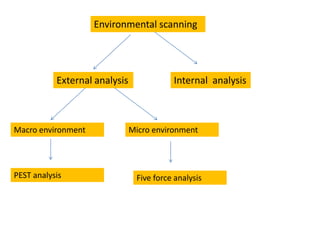
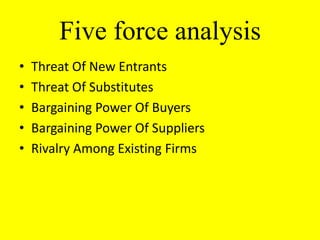
Environmental scanningExternal analysisInternal  analysisMacro environmentMicro environmentPEST analysisFive force analysis
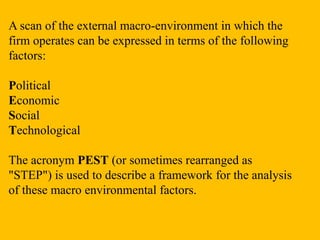
A scan of the external macro-environment in which the firm operates can be expressed in terms of the following factors:PoliticalEconomicSocialTechnologicalThe acronym PEST (or sometimes rearranged as "STEP") is used to describe a framework for the analysis of these macro environmental factors.
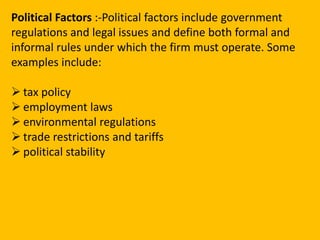
Political Factors:-Political factors include government regulations and legal issues and define both formal and informal rules under which the firm must operate. Some examples include:tax policy
employment laws
environmental regulations
trade restrictions and tariffs
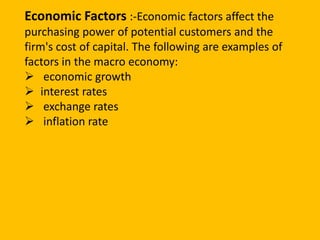
political stabilityEconomic Factors :-Economic factors affect the purchasing power of potential customers and the firm's cost of capital. The following are examples of factors in the macro economy:economic growth
interest rates

Environmental scanning

  • 1.
    Environmental scanningEnvironmental scanningis a process of gathering, analyzing, and dispensing information for tactical or strategic purposes. The environmental scanning process entails obtaining both factual and subjective information on the business environments in which a company is operating or considering entering
  • 2.
    Kinds of environmentalscanningAd-hoc scanning - Short term, infrequent examinations usually initiated by a crisisRegular scanning - Studies done on a regular schedule (e.g. once a year)Continuous scanning (also called continuous learning) - continuous structured data collection and processing on a broad range of environmental factors
  • 3.
    Environmental scanning usuallyrefers just to the macro environment, but it can also include industry, competitor analysis, marketing research (consumer analysis), new product development (product innovations) or the company's internal environment.
  • 4.
    Environmental scanningExternal analysisInternal analysisMacro environmentMicro environmentPEST analysisFive force analysis
  • 5.
    A scan ofthe external macro-environment in which the firm operates can be expressed in terms of the following factors:PoliticalEconomicSocialTechnologicalThe acronym PEST (or sometimes rearranged as "STEP") is used to describe a framework for the analysis of these macro environmental factors.
  • 6.
    Political Factors:-Political factorsinclude government regulations and legal issues and define both formal and informal rules under which the firm must operate. Some examples include:tax policy
  • 7.
  • 8.
  • 9.
  • 10.
    political stabilityEconomic Factors:-Economic factors affect the purchasing power of potential customers and the firm's cost of capital. The following are examples of factors in the macro economy:economic growth
  • 11.

Editor's Notes

  • #3 Most commentators feel that in today's turbulent business environment the best scanning method available is continuous scanning because this allows the firm to act quickly, take advantage of opportunities before competitors do and respond to environmental threats before significant damage is done.