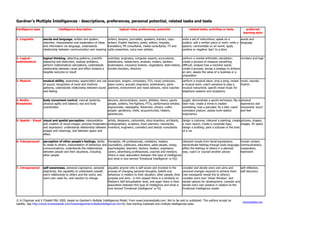
Gardner's Multiple Intelligences - descriptions, preferences, personal potential, related tasks and tests

intelligence type                 intelligence description                            typical roles, preferences, potential                       related tasks, activities or tests             preferred
                                                                                                                                                                                               learning style

1. Linguistic         words and language, written and spoken;                writers, lawyers, journalists, speakers, trainers, copy-        write a set of instructions; speak on a        words and
                      retention, interpretation and explanation of ideas     writers, English teachers, poets, editors, linguists,           subject; edit a written piece or work; write a language
                      and information via language, understands              translators, PR consultants, media consultants, TV and          speech; commentate on an event; apply
                      relationship between communication and meaning         radio presenters, voice-over artistes                           positive or negative 'spin' to a story


2. Logical -          logical thinking, detecting patterns, scientific       scientists, engineers, computer experts, accountants,           perform a mental arithmetic calculation;       numbers and logic
mathematical          reasoning and deduction; analyse problems,             statisticians, researchers, analysts, traders, bankers          create a process to measure something
                      perform mathematical calculations, understands         bookmakers, insurance brokers, negotiators, deal-makers,        difficult; analyse how a machine works;
                      relationship between cause and effect towards a        trouble-shooters, directors                                     create a process; devise a strategy to achieve
                      tangible outcome or result                                                                                             an aim; assess the value of a business or a
                                                                                                                                             proposition
3. Musical            musical ability, awareness, appreciation and use musicians, singers, composers, DJ's, music producers,                 perform a musical piece; sing a song; review music, sounds,
                      of sound; recognition of tonal and rhythmic      piano tuners, acoustic engineers, entertainers, party-                a musical work; coach someone to play a      rhythm
                      patterns, understands relationship between sound planners, environment and noise advisors, voice coaches               musical instrument; specify mood music for
                      and feeling                                                                                                            telephone systems and receptions


4. Bodily -           body movement control, manual dexterity,               dancers, demonstrators, actors, athletes, divers, sports-       juggle; demonstrate a sports technique; flip a   physical
Kinesthetic           physical agility and balance; eye and body             people, soldiers, fire-fighters, PTI's, performance artistes;   beer-mat; create a mime to explain               experience and
                      coordination                                           ergonomists, osteopaths, fishermen, drivers, crafts-            something; toss a pancake; fly a kite; coach     movement, touch
                                                                             people; gardeners, chefs, acupuncturists, healers,              workplace posture, assess work-station           and feel
                                                                             adventurers                                                     ergonomics

5. Spatial - Visual visual and spatial perception; interpretation        artists, designers, cartoonists, story-boarders, architects,        design a costume; interpret a painting; create pictures, shapes,
                    and creation of visual images; pictorial imagination photographers, sculptors, town-planners, visionaries,               a room layout; create a corporate logo;        images, 3D space
                    and expression; understands relationship between inventors, engineers, cosmetics and beauty consultants                  design a building; pack a suitcase or the boot
                    images and meanings, and between space and                                                                               of a car
                    effect

6. Interpersonal      perception of other people's feelings; ability         therapists, HR professionals, mediators, leaders,               interpret moods from facial expressions;         human contact,
                      to relate to others; interpretation of behaviour and   counsellors, politicians, educators, sales-people, clergy,      demonstrate feelings through body language;      communications,
                      communications; understands the relationships          psychologists, teachers, doctors, healers, organisers,          affect the feelings of others in a planned       cooperation,
                      between people and their situations, including         carers, advertising professionals, coaches and mentors;         way; coach or counsel another person             teamwork
                      other people                                           (there is clear association between this type of intelligence
                                                                             and what is now termed 'Emotional Intelligence' or EQ)


7. Intrapersonal      self-awareness, personal cognisance, personal          arguably anyone who is self-aware and involved in the           consider and decide one's own aims and       self-reflection,
                      objectivity, the capability to understand oneself,     process of changing personal thoughts, beliefs and              personal changes required to achieve them self-discovery
                      one's relationship to others and the world, and        behaviour in relation to their situation, other people, their   (not necessarily reveal this to others);
                      one's own need for, and reaction to change             purpose and aims - in this respect there is a similarity to     consider one's own 'Johari Window', and
                                                                             Maslow's Self-Actualisation level, and again there is clear     decide options for development; consider and
                                                                             association between this type of intelligence and what is       decide one's own position in relation to the
                                                                             now termed 'Emotional Intelligence' or EQ                       Emotional Intelligence model


© A Chapman and V Chislett MSc 2005, based on Gardner's Multiple Intelligences Model. From www.businessballs.com. Not to be sold or published. The authors accept no
                                                                                                                                                                                               businessballs.com
liability. See http://www.businessballs.com/howardgardnermultipleintelligences.htm for free training materials and multiple intelligences tests.

Mi test-intelligences-descriptions

  • 1.
    Gardner's Multiple Intelligences- descriptions, preferences, personal potential, related tasks and tests intelligence type intelligence description typical roles, preferences, potential related tasks, activities or tests preferred learning style 1. Linguistic words and language, written and spoken; writers, lawyers, journalists, speakers, trainers, copy- write a set of instructions; speak on a words and retention, interpretation and explanation of ideas writers, English teachers, poets, editors, linguists, subject; edit a written piece or work; write a language and information via language, understands translators, PR consultants, media consultants, TV and speech; commentate on an event; apply relationship between communication and meaning radio presenters, voice-over artistes positive or negative 'spin' to a story 2. Logical - logical thinking, detecting patterns, scientific scientists, engineers, computer experts, accountants, perform a mental arithmetic calculation; numbers and logic mathematical reasoning and deduction; analyse problems, statisticians, researchers, analysts, traders, bankers create a process to measure something perform mathematical calculations, understands bookmakers, insurance brokers, negotiators, deal-makers, difficult; analyse how a machine works; relationship between cause and effect towards a trouble-shooters, directors create a process; devise a strategy to achieve tangible outcome or result an aim; assess the value of a business or a proposition 3. Musical musical ability, awareness, appreciation and use musicians, singers, composers, DJ's, music producers, perform a musical piece; sing a song; review music, sounds, of sound; recognition of tonal and rhythmic piano tuners, acoustic engineers, entertainers, party- a musical work; coach someone to play a rhythm patterns, understands relationship between sound planners, environment and noise advisors, voice coaches musical instrument; specify mood music for and feeling telephone systems and receptions 4. Bodily - body movement control, manual dexterity, dancers, demonstrators, actors, athletes, divers, sports- juggle; demonstrate a sports technique; flip a physical Kinesthetic physical agility and balance; eye and body people, soldiers, fire-fighters, PTI's, performance artistes; beer-mat; create a mime to explain experience and coordination ergonomists, osteopaths, fishermen, drivers, crafts- something; toss a pancake; fly a kite; coach movement, touch people; gardeners, chefs, acupuncturists, healers, workplace posture, assess work-station and feel adventurers ergonomics 5. Spatial - Visual visual and spatial perception; interpretation artists, designers, cartoonists, story-boarders, architects, design a costume; interpret a painting; create pictures, shapes, and creation of visual images; pictorial imagination photographers, sculptors, town-planners, visionaries, a room layout; create a corporate logo; images, 3D space and expression; understands relationship between inventors, engineers, cosmetics and beauty consultants design a building; pack a suitcase or the boot images and meanings, and between space and of a car effect 6. Interpersonal perception of other people's feelings; ability therapists, HR professionals, mediators, leaders, interpret moods from facial expressions; human contact, to relate to others; interpretation of behaviour and counsellors, politicians, educators, sales-people, clergy, demonstrate feelings through body language; communications, communications; understands the relationships psychologists, teachers, doctors, healers, organisers, affect the feelings of others in a planned cooperation, between people and their situations, including carers, advertising professionals, coaches and mentors; way; coach or counsel another person teamwork other people (there is clear association between this type of intelligence and what is now termed 'Emotional Intelligence' or EQ) 7. Intrapersonal self-awareness, personal cognisance, personal arguably anyone who is self-aware and involved in the consider and decide one's own aims and self-reflection, objectivity, the capability to understand oneself, process of changing personal thoughts, beliefs and personal changes required to achieve them self-discovery one's relationship to others and the world, and behaviour in relation to their situation, other people, their (not necessarily reveal this to others); one's own need for, and reaction to change purpose and aims - in this respect there is a similarity to consider one's own 'Johari Window', and Maslow's Self-Actualisation level, and again there is clear decide options for development; consider and association between this type of intelligence and what is decide one's own position in relation to the now termed 'Emotional Intelligence' or EQ Emotional Intelligence model © A Chapman and V Chislett MSc 2005, based on Gardner's Multiple Intelligences Model. From www.businessballs.com. Not to be sold or published. The authors accept no businessballs.com liability. See http://www.businessballs.com/howardgardnermultipleintelligences.htm for free training materials and multiple intelligences tests.