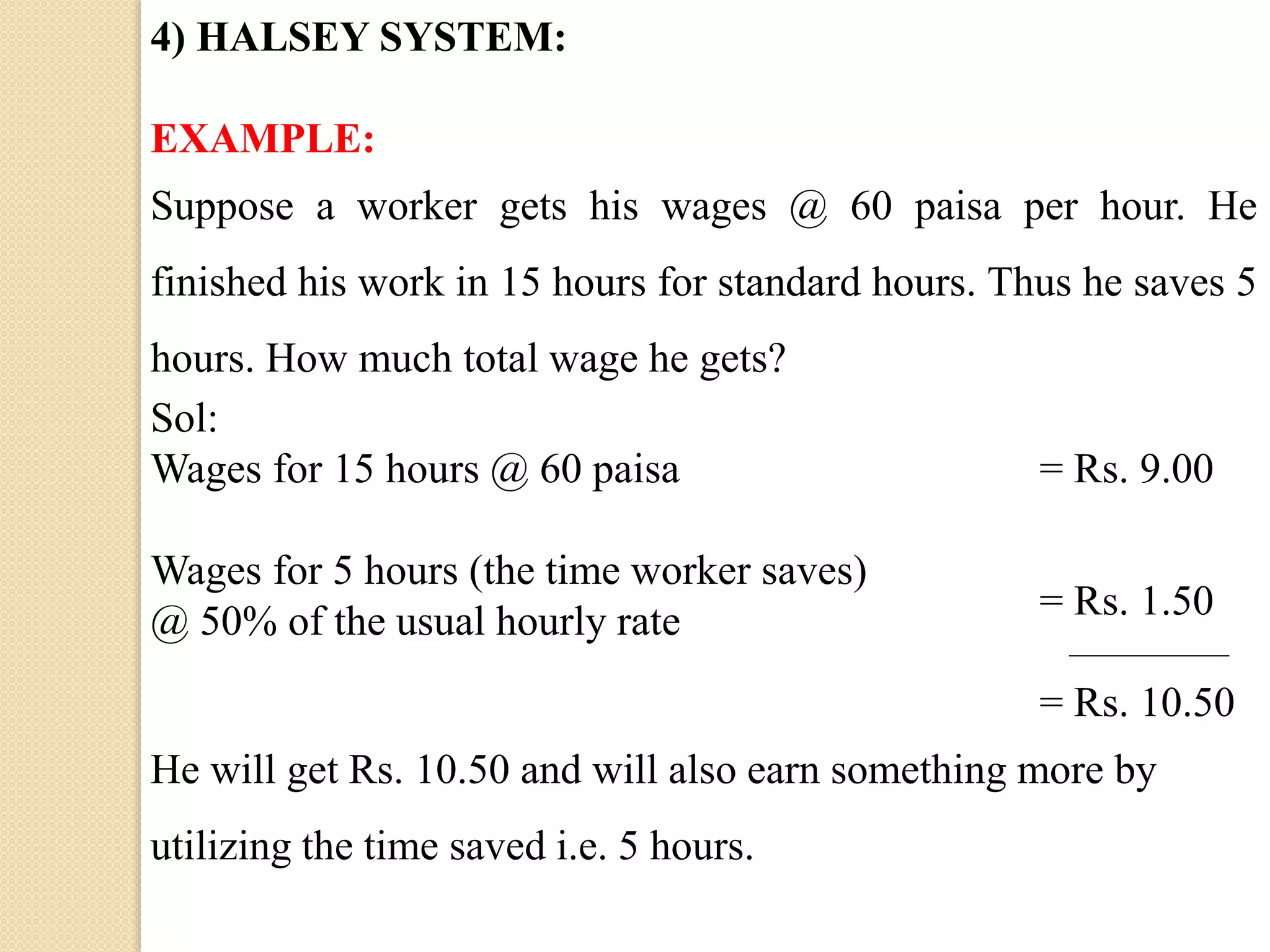
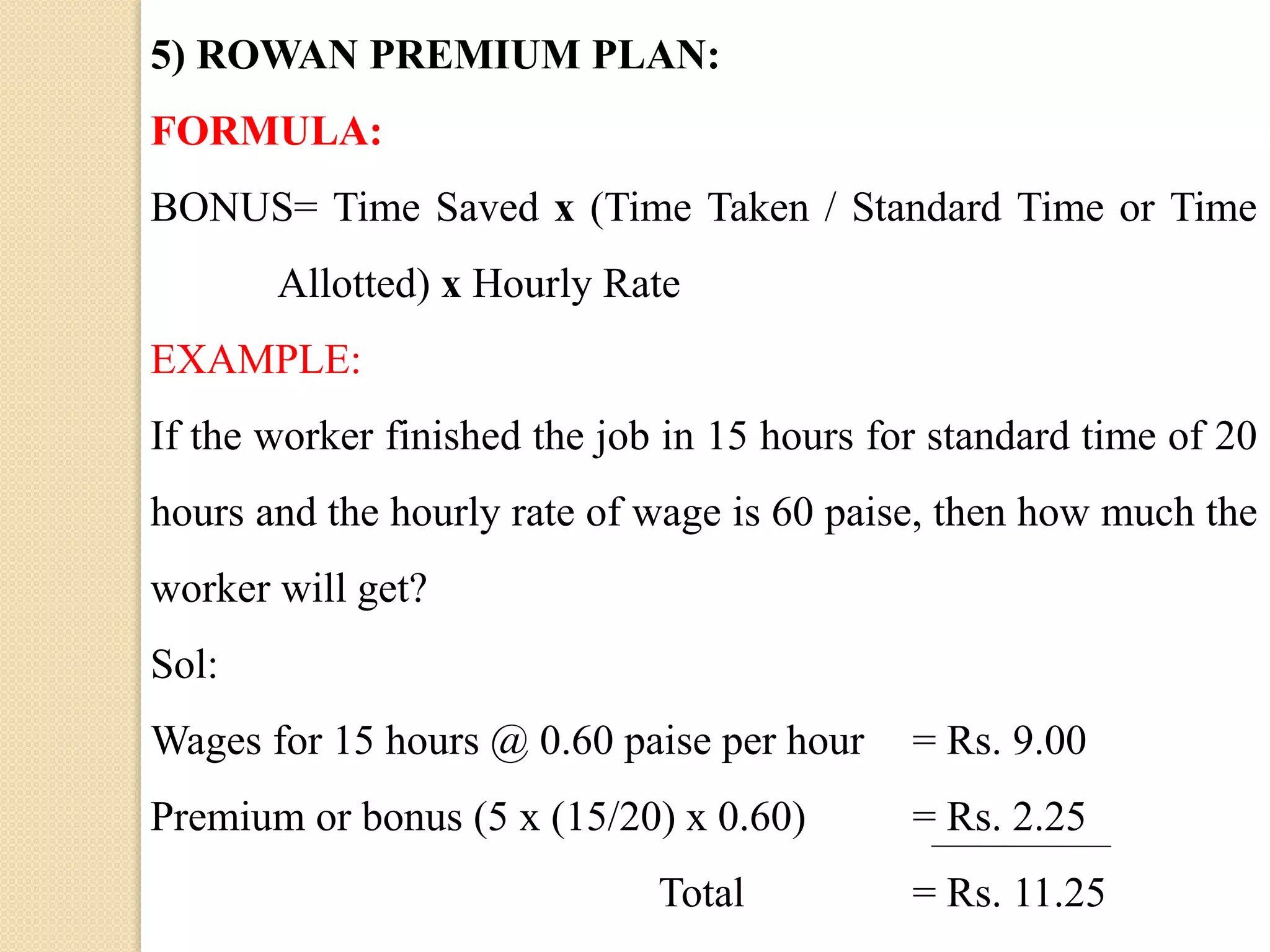


This document discusses 5 different methods of wage fixation: 1) Time Rate System, where wages are calculated based on hours or days worked multiplied by an hourly or daily rate. 2) Piece Rate System, where wages are calculated by multiplying the number of units produced by a rate per unit. 3) Balance or Debt Method, where workers are paid the higher of their time rate wages or piece rate earnings each week, with deficits or surpluses carried over to future weeks. 4) Halsey System, where workers are paid their time rate for work completed, plus 50% of their hourly rate for any time saved. 5) Rowan Premium Plan, where a bonus is paid based on time saved multiplied by the ratio of actual
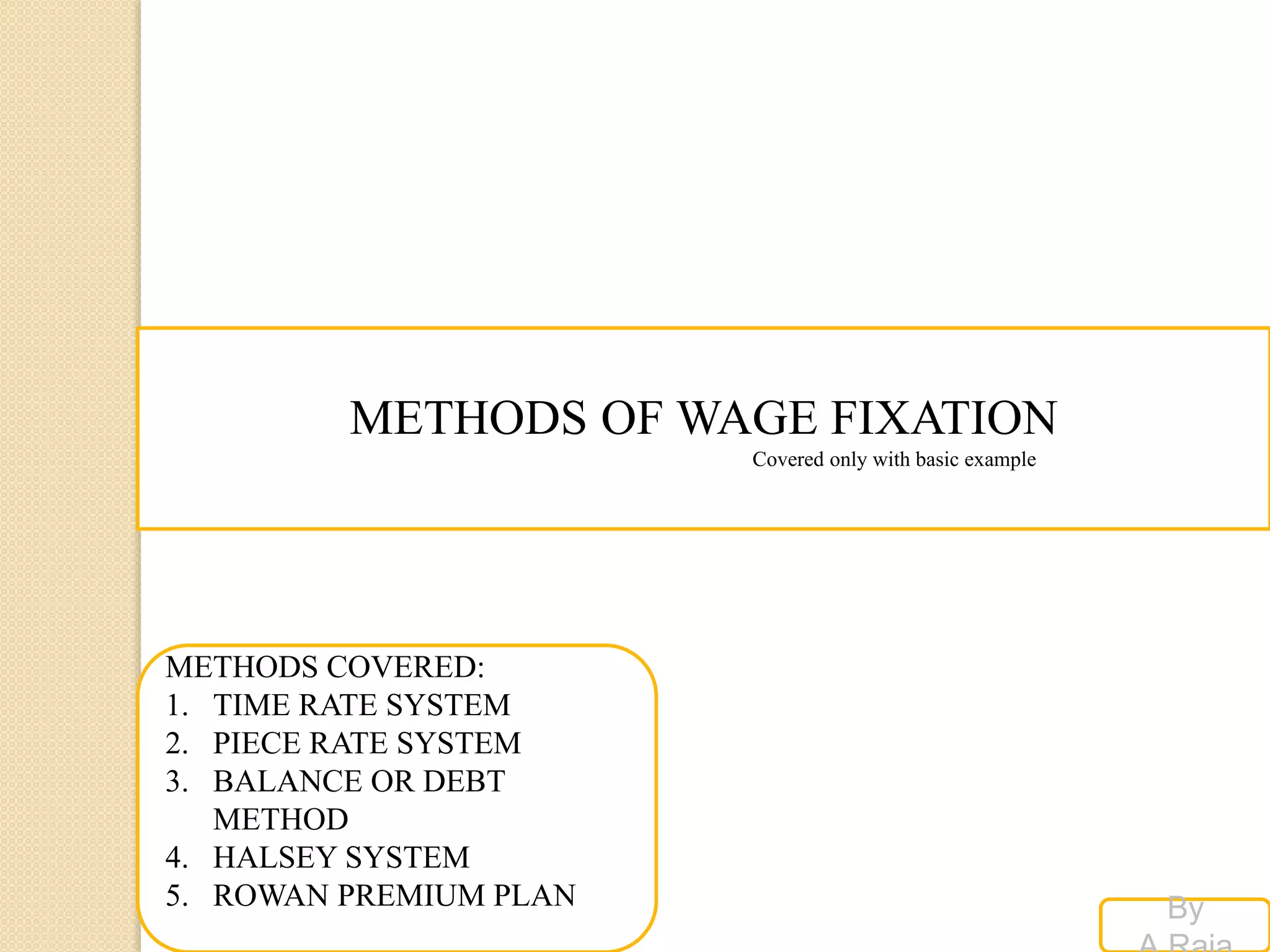
Introduction to methods of wage fixation including time rate, piece rate, balance method, Halsey system, and Rowan premium plan.
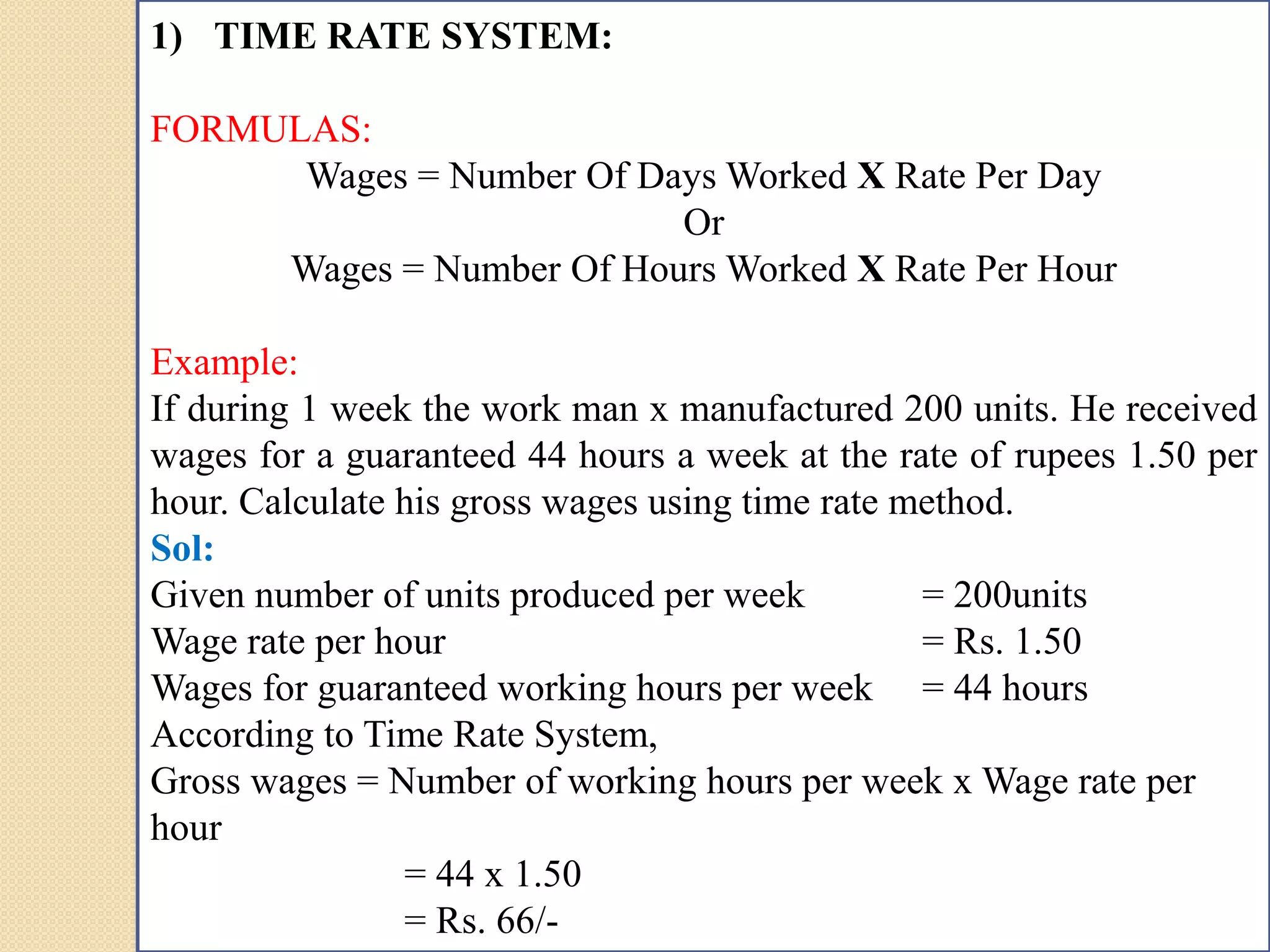
Details the time rate system formula for calculating wages based on hours or days worked with an example.
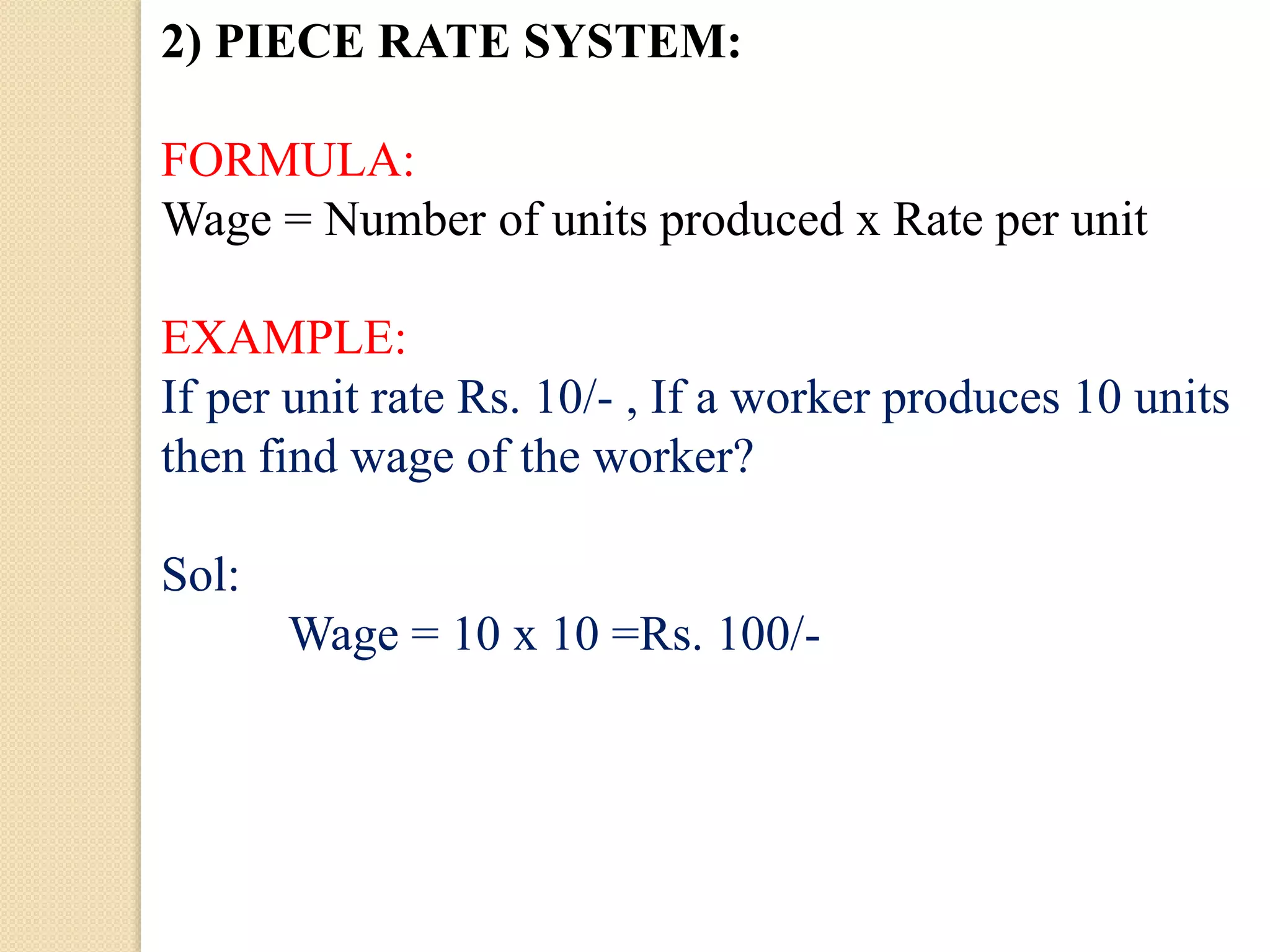
Explains the piece rate system with a formula and example for calculating wages based on the number of units produced.
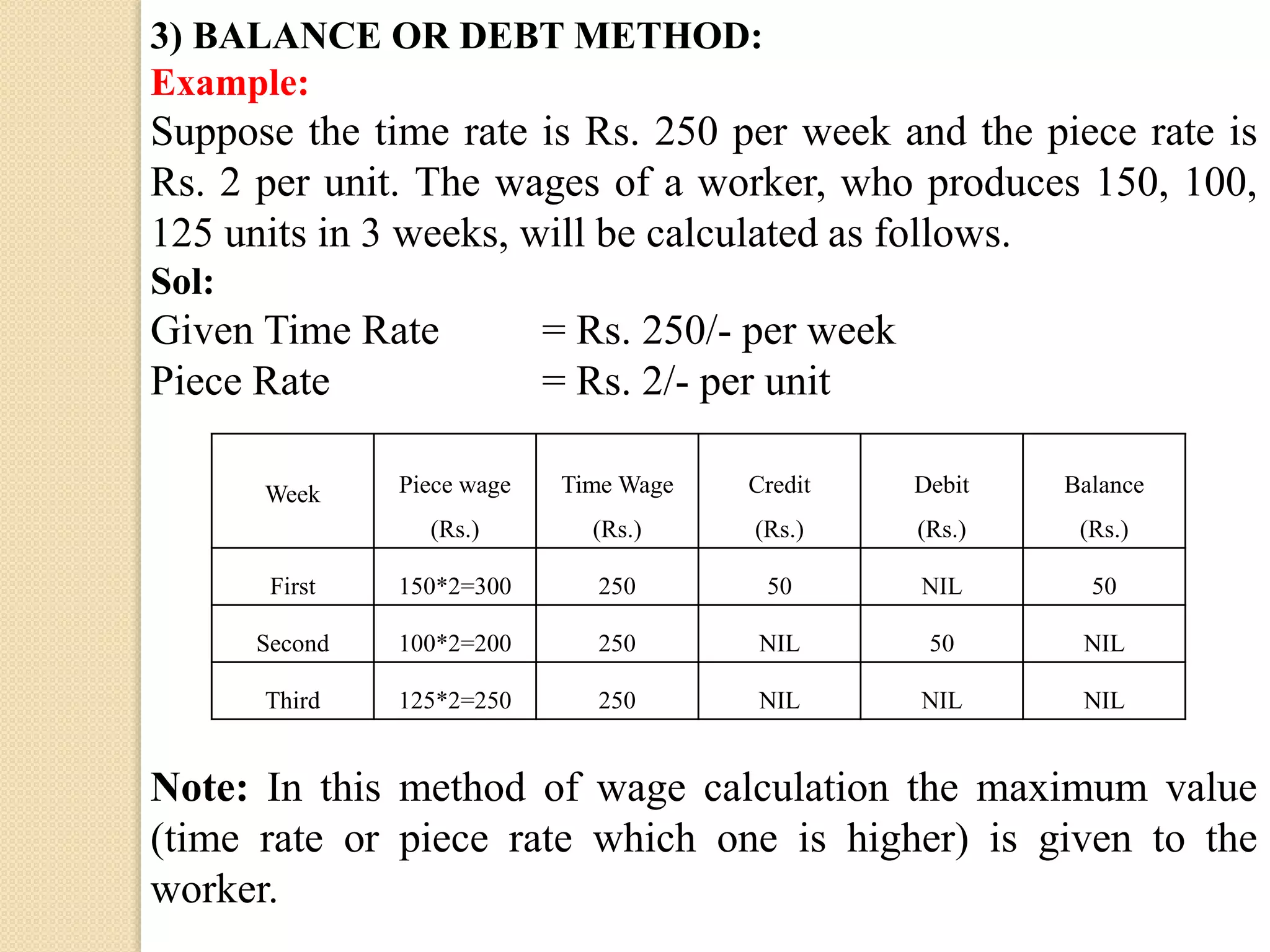
Describes the balance method of wage calculation using both time and piece rates with a practical example.
Explains the Halsey system for calculating wages including bonuses from time saved, illustrated by an example.
Defines the Rowan premium plan for wage calculation with an explanation of bonus calculations based on time saved.
Final slide thanking the audience and concluding the presentation on wage fixation methods.


