Methods of Organizing and
Structuring Data
 data is the vital ingredient or raw material that
is processed in an information system.

 Structure of data can be examined from a
technical or logical viewpoint.

 determining the structure of data involves
identifying how the individual items of data must
be arranged.
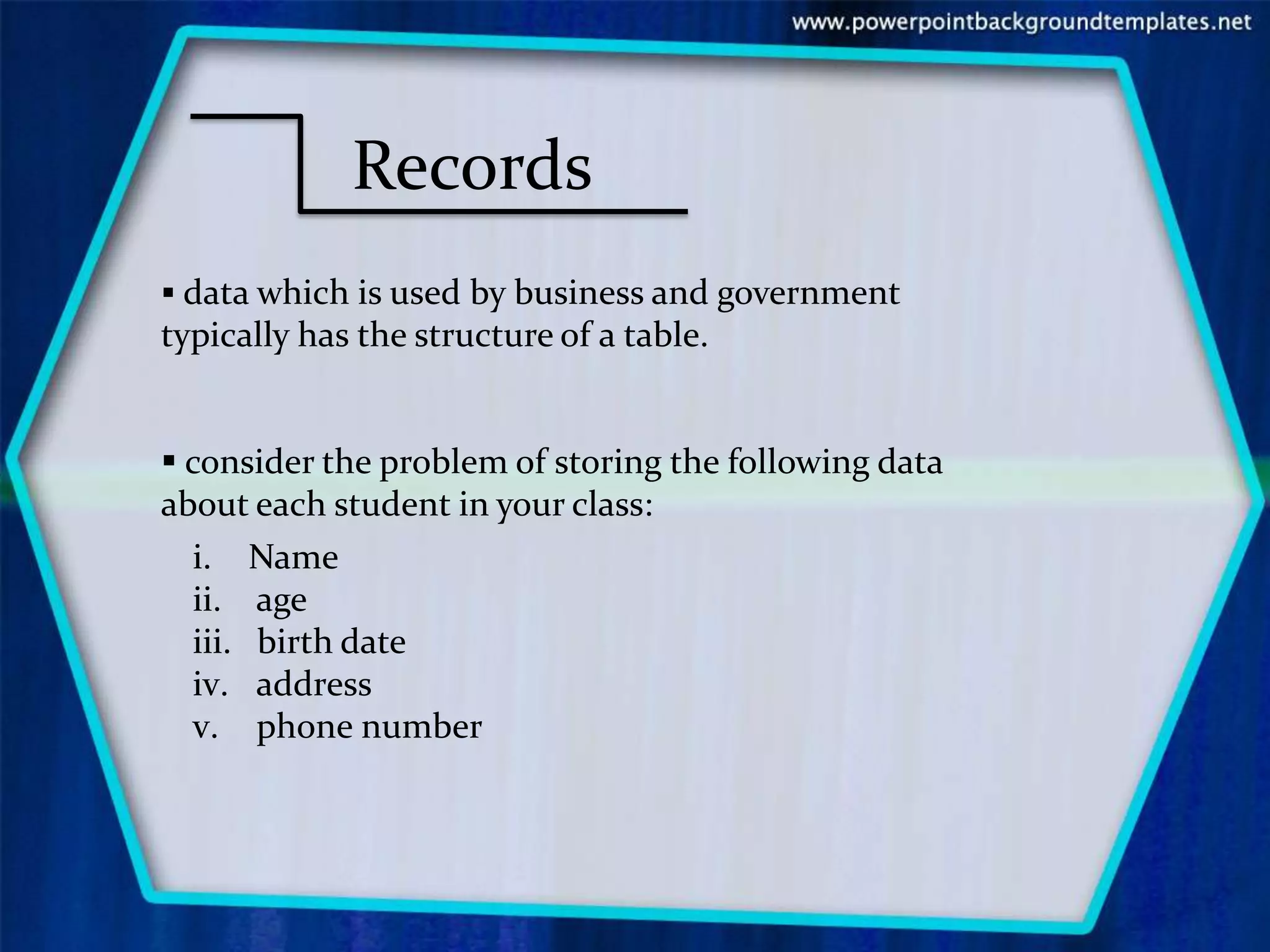
Records
 data which is used by business and government
typically has the structure of a table.


 consider the problem of storing the following data
about each student in your class:
   i. Name
   ii. age
   iii. birth date
   iv. address
   v. phone number
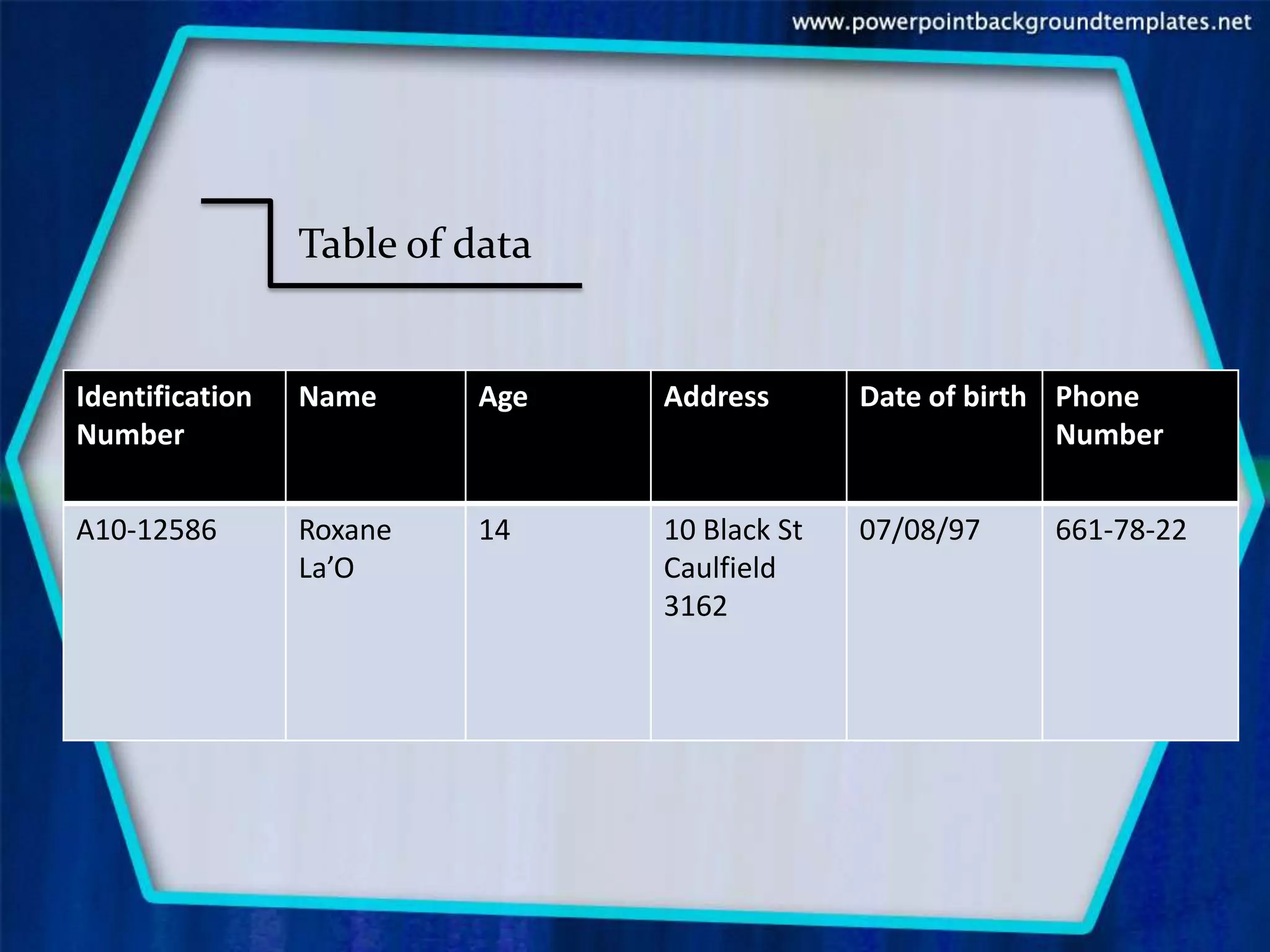
Table of data


Identification   Name      Age   Address       Date of birth Phone
Number                                                       Number


A10-12586        Roxane    14    10 Black St   07/08/97    661-78-22
                 La’O            Caulfield
                                 3162
 In the example given you could organize the data in a
sorted order and distinguish each record by using ‘name’
field.

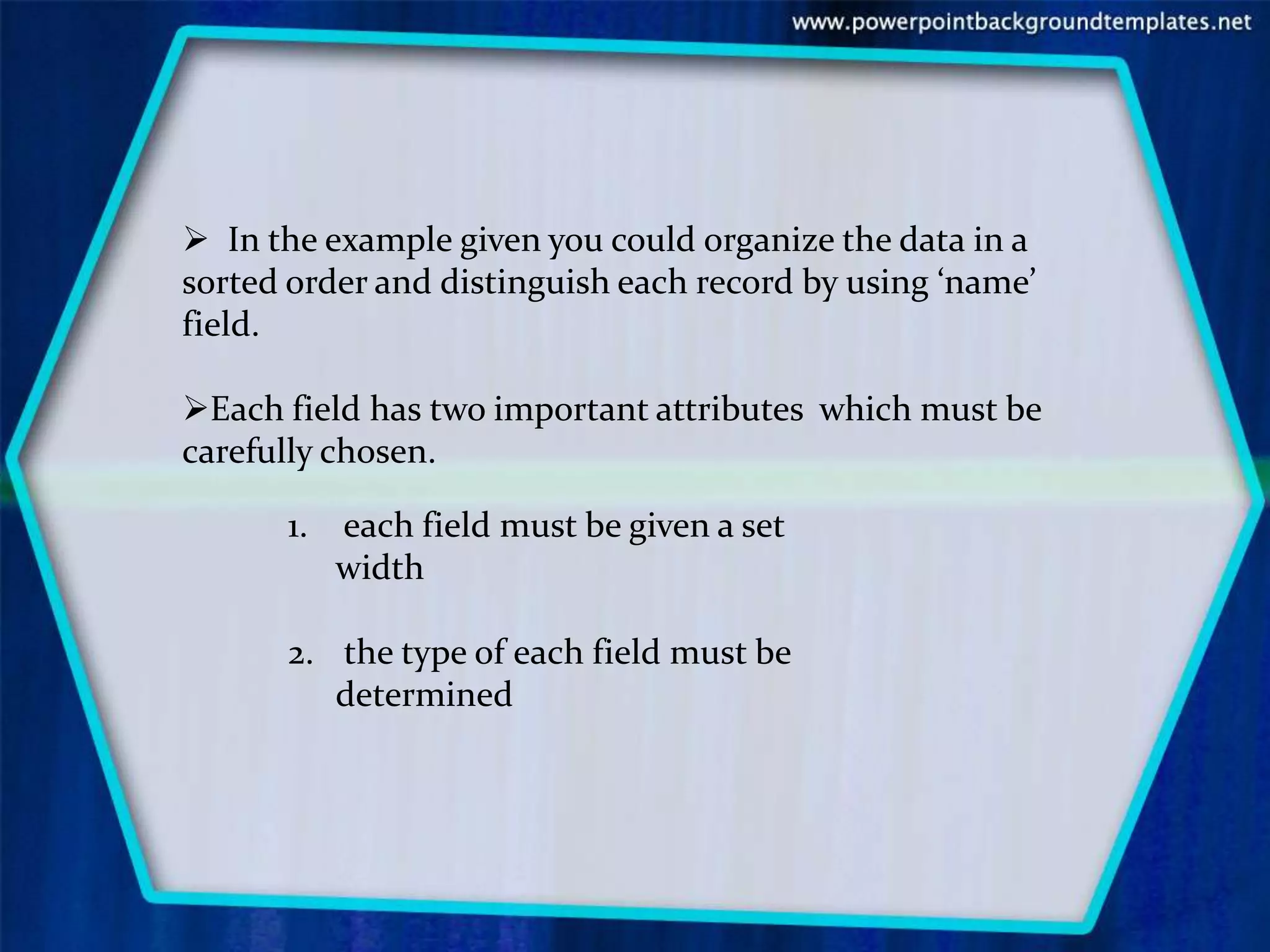
Each field has two important attributes which must be
carefully chosen.

      1.   each field must be given a set
           width

      2. the type of each field must be
         determined
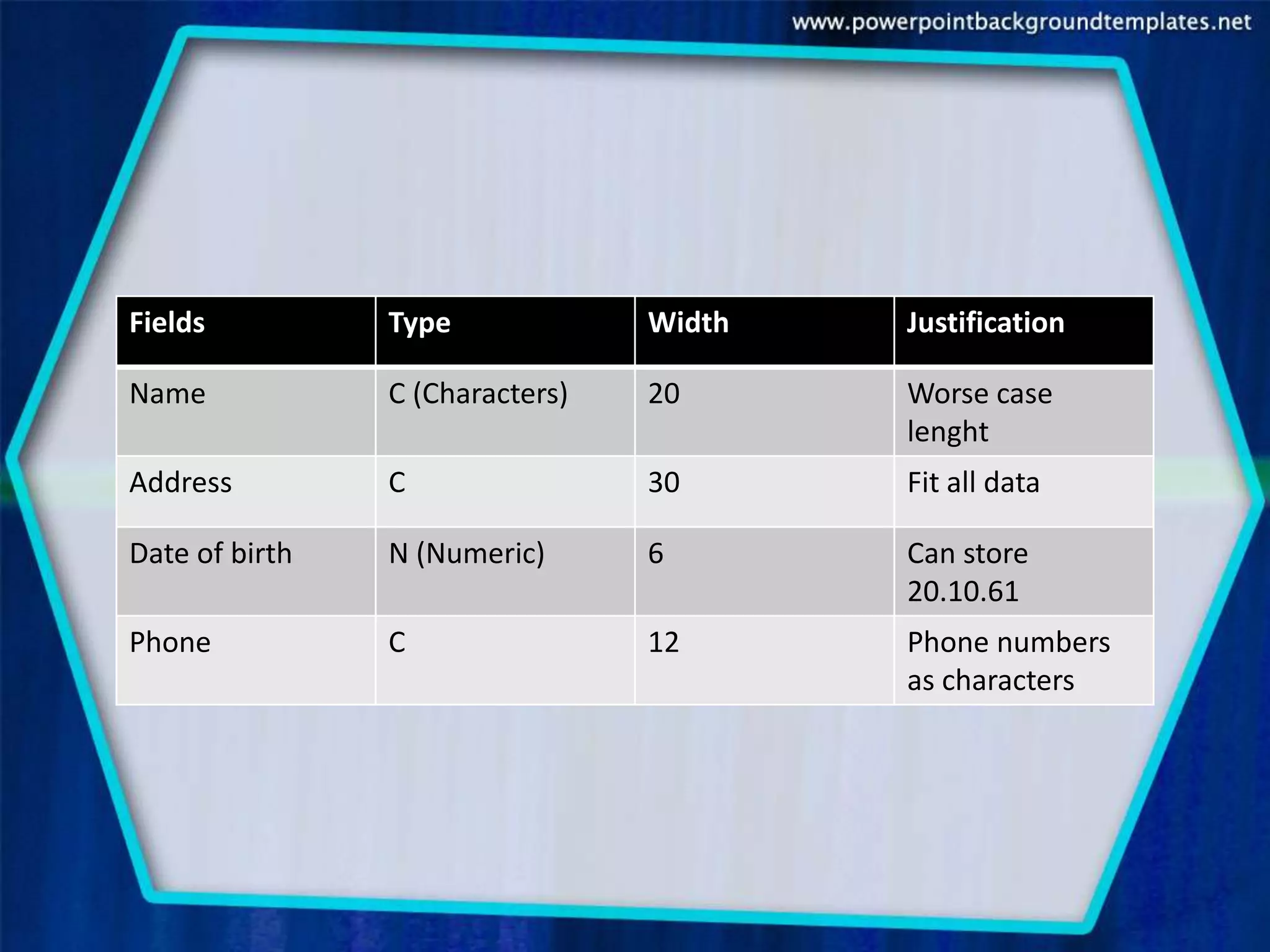
Fields          Type             Width   Justification

Name            C (Characters)   20      Worse case
                                         lenght
Address         C                30      Fit all data

Date of birth   N (Numeric)      6       Can store
                                         20.10.61
Phone           C                12      Phone numbers
                                         as characters
Relational Data
Structures


 Many organizational problems can be easily
solved by storing data in more than one table or
flat file.
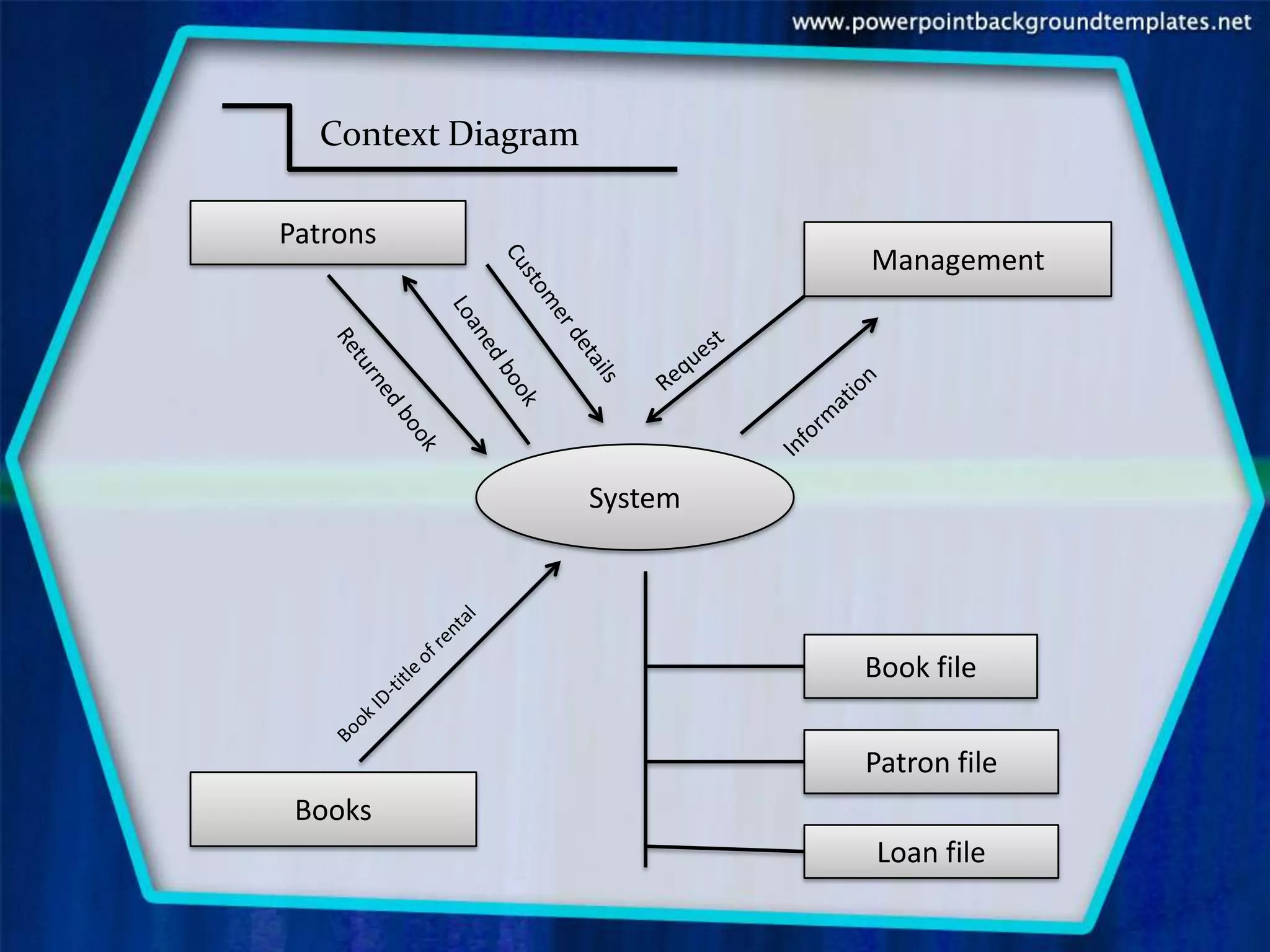
Context Diagram

Patrons
                             Management


                    System


                             Book file


                             Patron file
 Books
                             Loan file
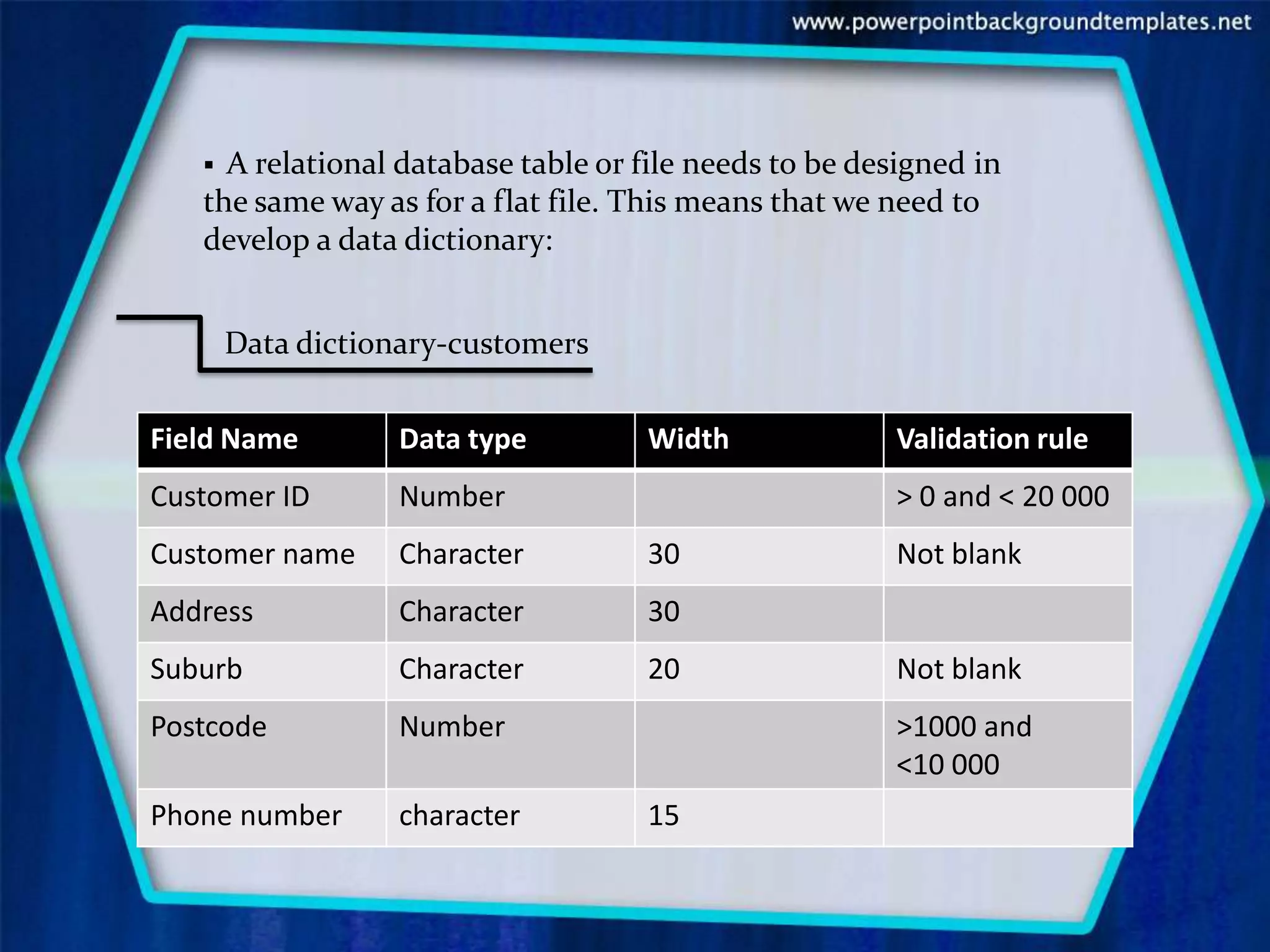
 A relational database table or file needs to be designed in
   the same way as for a flat file. This means that we need to
   develop a data dictionary:


       Data dictionary-customers


Field Name        Data type         Width              Validation rule
Customer ID       Number                               > 0 and < 20 000
Customer name     Character         30                 Not blank
Address           Character         30
Suburb            Character         20                 Not blank
Postcode          Number                               >1000 and
                                                       <10 000
Phone number      character         15
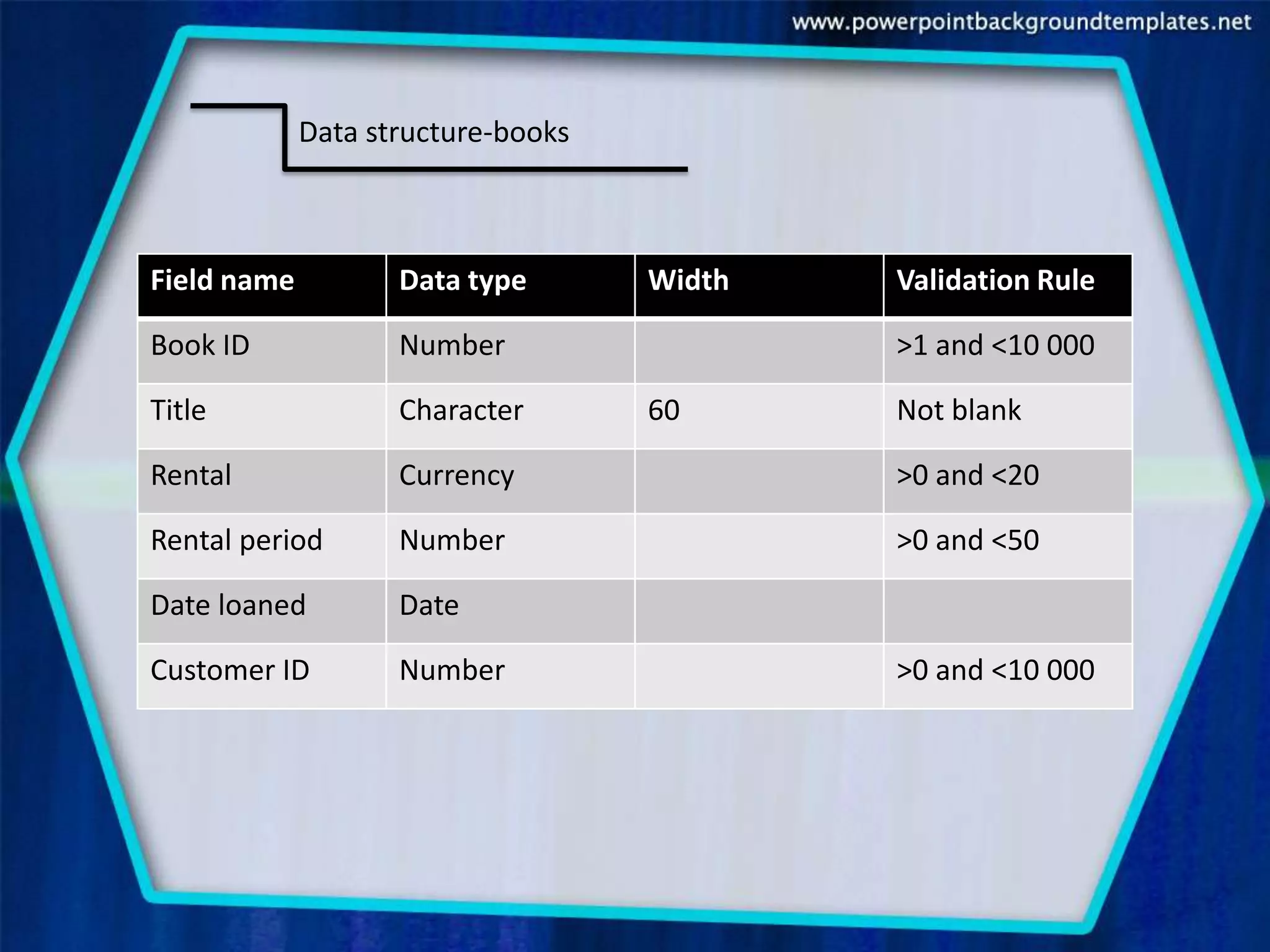
Data structure-books


Field name          Data type       Width   Validation Rule

Book ID             Number                  >1 and <10 000

Title               Character       60      Not blank

Rental              Currency                >0 and <20

Rental period       Number                  >0 and <50

Date loaned         Date

Customer ID         Number                  >0 and <10 000
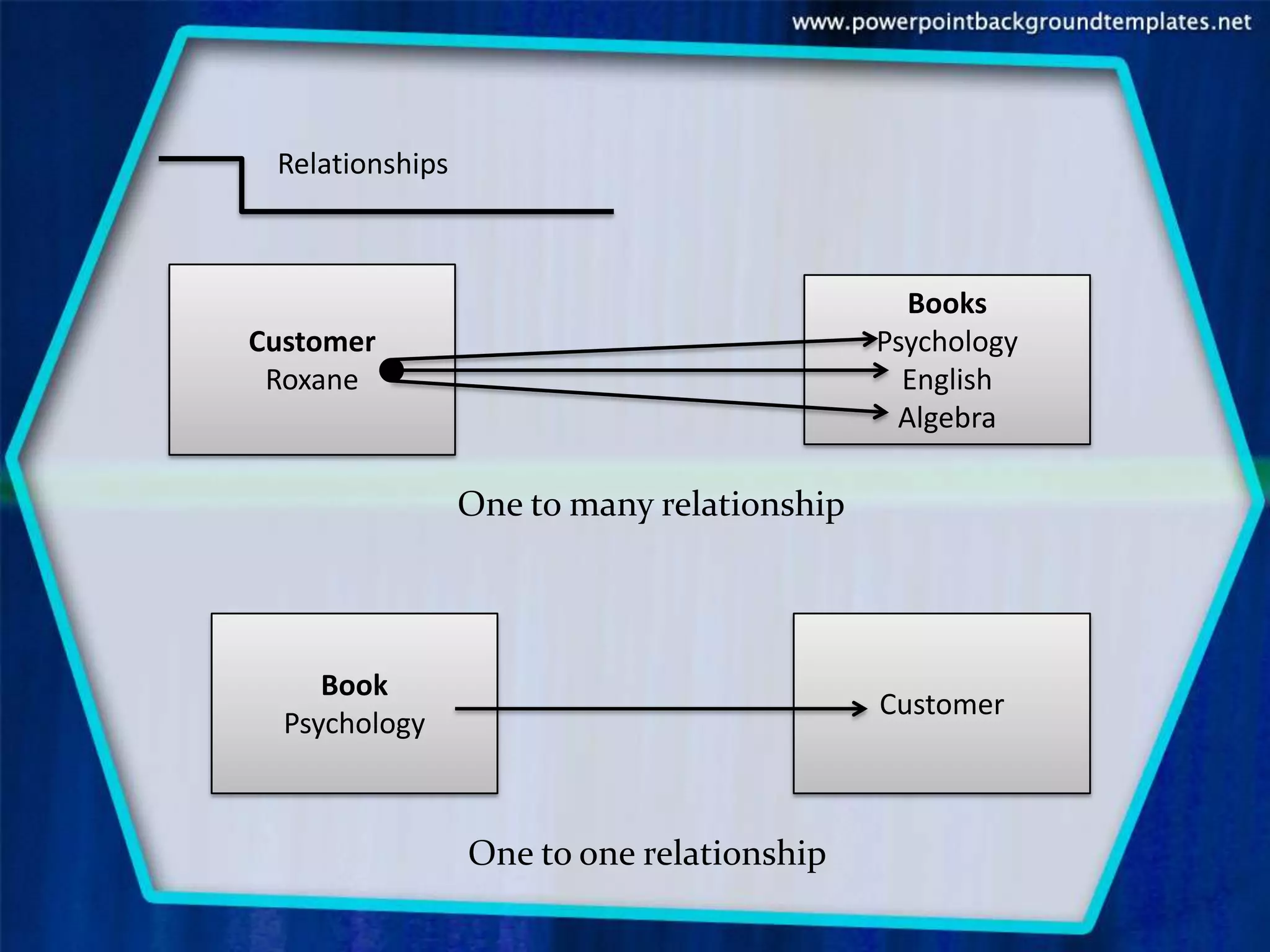
 one patron can borrow many books; this is called one
to many relationship.

However, a single video can be relate to only one
customer; this is referred to as a one to one
relationship.
Relationships


                                              Books
Customer                                    Psychology
 Roxane                                       English
                                             Algebra

                 One to many relationship


     Book
                                            Customer
  Psychology


                 One to one relationship
Design strategy for
         WWW documents


When designing the basic data structure for a World Wide
Web document you should:

         outline the overall block structure
         outline each sub-documentary structure
         outline each sub-secondary structure.
Data structure and
                 design of a multimedia
                 presentation


 HTML and Internet-enabled documents are examples of multimedia
documents.


Multimedia documents have the capacity to present information in a
variety of formats: text, hypertext, sound, graphics and video.
Formats of Multimedia Presentation can be:


Simple Multimedia Presentation
 In the past, such presentation would typically have
been done with slides or an overhead projector.

 data structure of a standard presentation takes the
format of a linear sequence of slides.

 the most common software used for this is
powerpoint.
Complex Multimedia presentation:

You will probably have seen many examples of World
Wide Web documents.

 many of these contain the characteristics of a simple,
linear multimedia design.


Important data
               structure design
               consideration
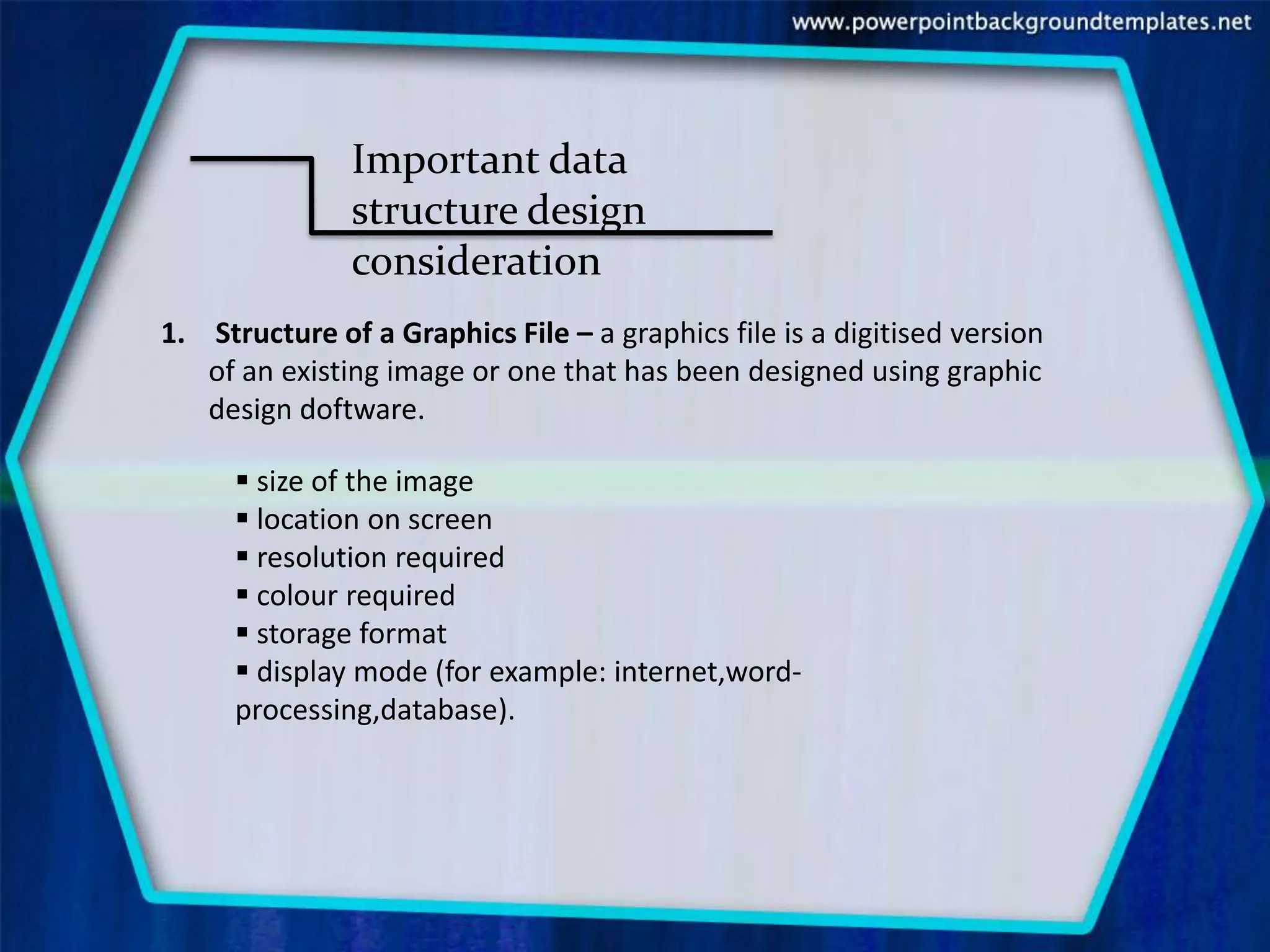
1. Structure of a Graphics File – a graphics file is a digitised version
   of an existing image or one that has been designed using graphic
   design doftware.

       size of the image
       location on screen
       resolution required
       colour required
       storage format
       display mode (for example: internet,word-
      processing,database).
2. Testing and Validating Data

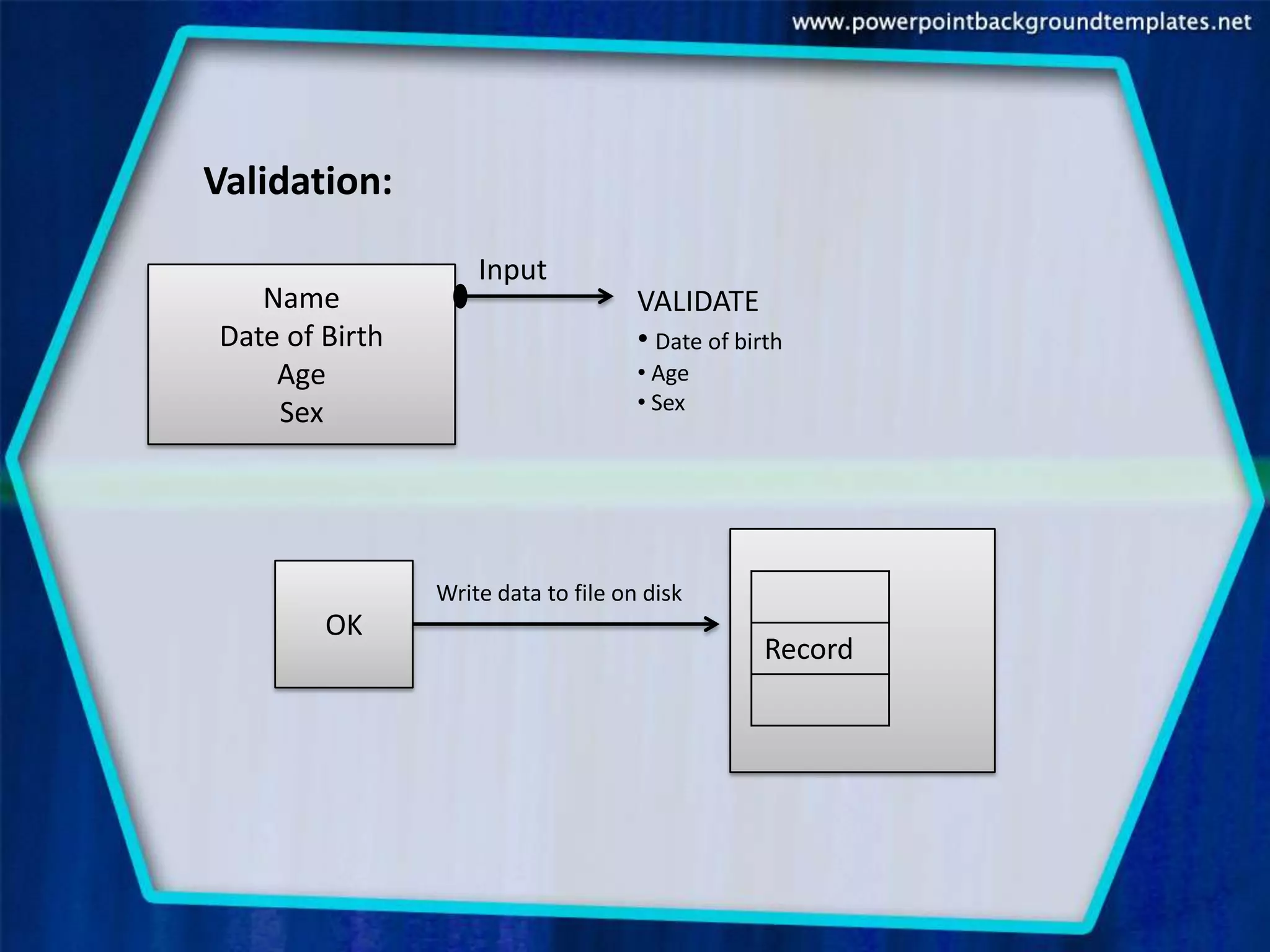
 Validation refers to the checking of data to ensure that
it is reasonable.

 Testing of a solution refers to the process of verifying
that a solution produces the correct results after data
has been processed.
Validation:

                    Input
   Name                              VALIDATE
Date of Birth                        • Date of birth
    Age                              • Age
    Sex                              • Sex


                Write data to file on disk
        OK
                                                  Record
Prepared by:
Anna Roxane La’O

Methods of organizing data

  • 1.
    Methods of Organizingand Structuring Data
  • 2.
     data isthe vital ingredient or raw material that is processed in an information system.  Structure of data can be examined from a technical or logical viewpoint.  determining the structure of data involves identifying how the individual items of data must be arranged.
  • 3.
    Records  data whichis used by business and government typically has the structure of a table.  consider the problem of storing the following data about each student in your class: i. Name ii. age iii. birth date iv. address v. phone number
  • 4.
    Table of data Identification Name Age Address Date of birth Phone Number Number A10-12586 Roxane 14 10 Black St 07/08/97 661-78-22 La’O Caulfield 3162
  • 5.
     In theexample given you could organize the data in a sorted order and distinguish each record by using ‘name’ field. Each field has two important attributes which must be carefully chosen. 1. each field must be given a set width 2. the type of each field must be determined
  • 6.
    Fields Type Width Justification Name C (Characters) 20 Worse case lenght Address C 30 Fit all data Date of birth N (Numeric) 6 Can store 20.10.61 Phone C 12 Phone numbers as characters
  • 7.
    Relational Data Structures  Manyorganizational problems can be easily solved by storing data in more than one table or flat file.
  • 8.
    Context Diagram Patrons Management System Book file Patron file Books Loan file
  • 9.
     A relationaldatabase table or file needs to be designed in the same way as for a flat file. This means that we need to develop a data dictionary: Data dictionary-customers Field Name Data type Width Validation rule Customer ID Number > 0 and < 20 000 Customer name Character 30 Not blank Address Character 30 Suburb Character 20 Not blank Postcode Number >1000 and <10 000 Phone number character 15
  • 10.
    Data structure-books Field name Data type Width Validation Rule Book ID Number >1 and <10 000 Title Character 60 Not blank Rental Currency >0 and <20 Rental period Number >0 and <50 Date loaned Date Customer ID Number >0 and <10 000
  • 11.
     one patroncan borrow many books; this is called one to many relationship. However, a single video can be relate to only one customer; this is referred to as a one to one relationship.
  • 12.
    Relationships Books Customer Psychology Roxane English Algebra One to many relationship Book Customer Psychology One to one relationship
  • 13.
    Design strategy for WWW documents When designing the basic data structure for a World Wide Web document you should:  outline the overall block structure  outline each sub-documentary structure  outline each sub-secondary structure.
  • 14.
    Data structure and design of a multimedia presentation  HTML and Internet-enabled documents are examples of multimedia documents. Multimedia documents have the capacity to present information in a variety of formats: text, hypertext, sound, graphics and video.
  • 15.
    Formats of MultimediaPresentation can be: Simple Multimedia Presentation  In the past, such presentation would typically have been done with slides or an overhead projector.  data structure of a standard presentation takes the format of a linear sequence of slides.  the most common software used for this is powerpoint.
  • 16.
    Complex Multimedia presentation: Youwill probably have seen many examples of World Wide Web documents.  many of these contain the characteristics of a simple, linear multimedia design. 
  • 17.
    Important data structure design consideration 1. Structure of a Graphics File – a graphics file is a digitised version of an existing image or one that has been designed using graphic design doftware.  size of the image  location on screen  resolution required  colour required  storage format  display mode (for example: internet,word- processing,database).
  • 18.
    2. Testing andValidating Data  Validation refers to the checking of data to ensure that it is reasonable.  Testing of a solution refers to the process of verifying that a solution produces the correct results after data has been processed.
  • 19.
    Validation: Input Name VALIDATE Date of Birth • Date of birth Age • Age Sex • Sex Write data to file on disk OK Record
  • 20.