Methods for Teaching with
Technology
Teaching
Philosophies
Ideas Assumptions
2Types ofTeachingPhilosophies
Teacher-
Centered
Learning
Student-
Centered
Learning
Teacher-Centered
Learning
Student-Centered Learning
Learning
METHODS every
stcentury
TEACHER should know
Inquiry-Based
Learning
Problem-Based
Learning
Project-Based
TRADITIONAL
TECHNOLOGY
EDUCvsATION
with
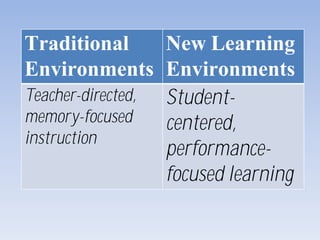
Traditional
Environments
New Learning
Environments
Teacher-directed,
memory-focused
instruction
Student-
centered,
performance-
focused learning
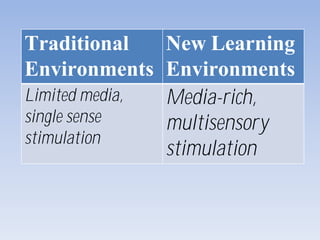
Traditional
Environments
New Learning
Environments
Limited media,
single sense
stimulation
Media-rich,
multisensory
stimulation
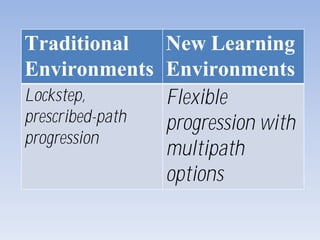
Traditional
Environments
New Learning
Environments
Lockstep,
prescribed-path
progression
Flexible
progression with
multipath
options
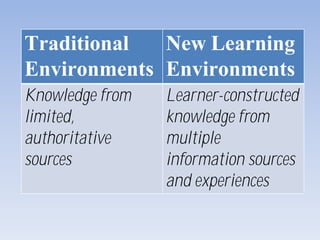
Traditional
Environments
New Learning
Environments
Knowledge from
limited,
authoritative
sources
Learner-constructed
knowledge from
multiple
information sources
and experiences
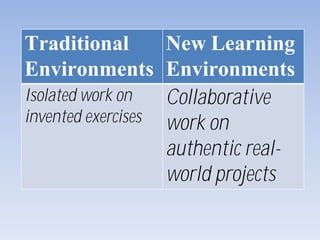
Traditional
Environments
New Learning
Environments
Isolated work on
invented exercises
Collaborative
work on
authentic real-
world projects
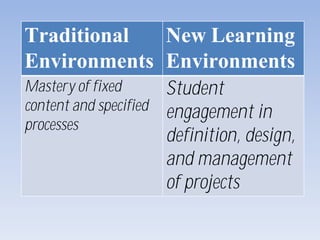
Traditional
Environments
New Learning
Environments
Mastery of fixed
content and specified
processes
Student
engagement in
definition, design,
and management
of projects
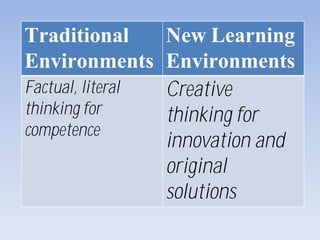
Traditional
Environments
New Learning
Environments
Factual, literal
thinking for
competence
Creative
thinking for
innovation and
original
solutions
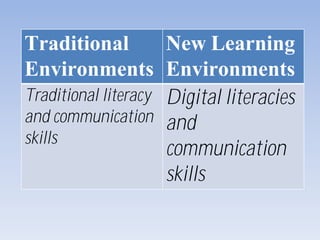
Traditional
Environments
New Learning
Environments
Traditional literacy
and communication
skills
Digital literacies
and
communication
skills
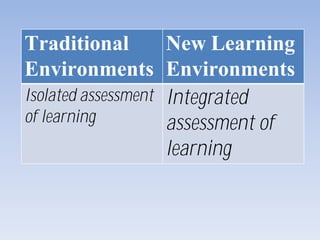
Traditional
Environments
New Learning
Environments
Isolated assessment
of learning
Integrated
assessment of
learning
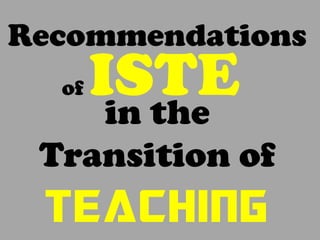
Recommendations
of ISTEin the
Transition of
Teaching
1Less teacher talk,
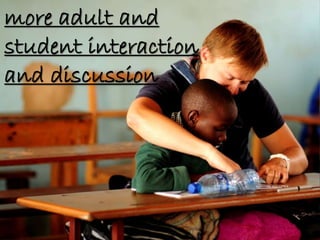
more adult and
student interaction
and discussion
2 Less individual work by
students at their desks
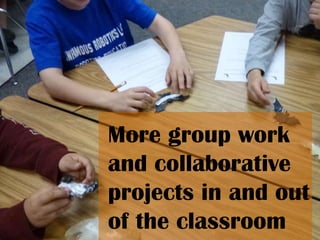
More group work
and collaborative
projects in and out
of the classroom
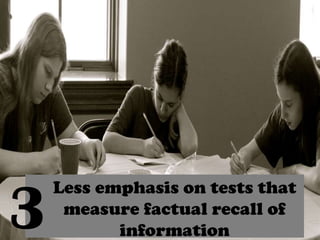
3
Less emphasis on tests that
measure factual recall of
information
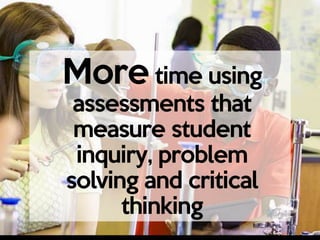
More time using
assessments that
measure student
inquiry, problem
solving and critical
thinking
USING
IN EDUCATION
#EdTech101
Follow and have your
students follow experts
in your field on Twitter
1
2 Use a course
Use social
media to
role play
3
CHALLENGE
studentsto summarize a lesson in a
six second Vine video
4
5 Have students
live during events
6 Have students
BLOG about
their learning
experiences
7 Have students
produce and create a
video for next year's
students with tips for
being successful in your
class

Methods for Teaching with Technology