METAPHYSICAL
PAINTING
Revision
Origin
• It is an Italian art movement
• It was born in 1917 in Ferrara with
the work of
– Carlo Carrá
– Giorgio de Chirico
• The word metaphysical is core to the
poetic of the movement
Characteristics
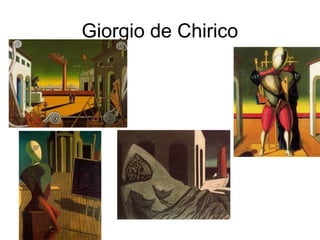
• They depicted a dreamlike imagery
with figures and objects seemingly
frozen in time
• Artists accept the representation of
the visible world in a traditional
perspective space
Characteristics
• There is something strange in their
works:
– Unusual arrangement of human beings
as dummy-like models
– Objects in strange, illogical contexts
– Unreal lights and colours
– Unnatural static of still figures
Characteristics
• Opposite to Futurism
• They had more than a new way of
painting, only a new way of seeing
things
• They used a different logic with:
– Deserted squares
– Silent, rigidly rendered buildings
– Colonnades and shadows
Characteristics
– Trains passing far away in the distance
– Clocks and statues
• There is never any precise hint in
the paintings about the place or
moment of the scene.
Characteristics
• Scenes are full of:
– Eventless
– Tome of silence
– Imminence
– Enigma
Characteristics
• All that generated a new reality
which goes beyond the meaning of
the things presented
– Creating a sense of
• Expectation
• mistery
– Bonded with the unconscious mind
Influences
• It may appear as a reaction against
– Cubism
– Futurism
• It may seem strange that many of the
achievements of 20th century Italian
art came during the rise of Fascism
• It created the premises of Surrealism
Artists
• Main members of the movement
were:
– Giorgio de Chirico
– Carlo Carra
– Giorgio Morandi
– Italo Savino
– Luigi Filippo Tibertelli
– Ardengo Soffici
Giorgio de Chirico
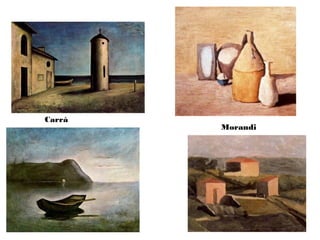
Carrá
Morandi

Metaphysical painting (new)

  • 1.
  • 2.
    Origin • It isan Italian art movement • It was born in 1917 in Ferrara with the work of – Carlo Carrá – Giorgio de Chirico • The word metaphysical is core to the poetic of the movement
  • 3.
    Characteristics • They depicteda dreamlike imagery with figures and objects seemingly frozen in time • Artists accept the representation of the visible world in a traditional perspective space
  • 4.
    Characteristics • There issomething strange in their works: – Unusual arrangement of human beings as dummy-like models – Objects in strange, illogical contexts – Unreal lights and colours – Unnatural static of still figures
  • 5.
    Characteristics • Opposite toFuturism • They had more than a new way of painting, only a new way of seeing things • They used a different logic with: – Deserted squares – Silent, rigidly rendered buildings – Colonnades and shadows
  • 6.
    Characteristics – Trains passingfar away in the distance – Clocks and statues • There is never any precise hint in the paintings about the place or moment of the scene.
  • 7.
    Characteristics • Scenes arefull of: – Eventless – Tome of silence – Imminence – Enigma
  • 8.
    Characteristics • All thatgenerated a new reality which goes beyond the meaning of the things presented – Creating a sense of • Expectation • mistery – Bonded with the unconscious mind
  • 9.
    Influences • It mayappear as a reaction against – Cubism – Futurism • It may seem strange that many of the achievements of 20th century Italian art came during the rise of Fascism • It created the premises of Surrealism
  • 10.
    Artists • Main membersof the movement were: – Giorgio de Chirico – Carlo Carra – Giorgio Morandi – Italo Savino – Luigi Filippo Tibertelli – Ardengo Soffici
  • 11.
  • 12.