
METALLIC
MINERALS
BY EMERALD HOUSE
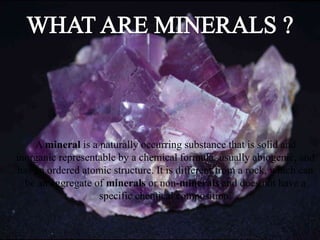
A mineral is a naturally occurring substance that is solid and
inorganic representable by a chemical formula, usually abiogenic, and
has an ordered atomic structure. It is different from a rock, which can
be an aggregate of minerals or non-minerals and does not have a
specific chemical composition.
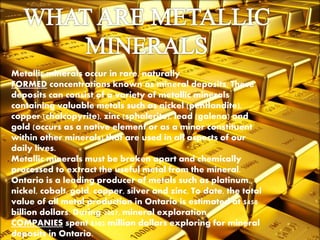
Metallic minerals occur in rare, naturally
FORMED concentrations known as mineral deposits. These
deposits can consist of a variety of metallic minerals
containing valuable metals such as nickel (pentlandite),
copper (chalcopyrite), zinc (sphalerite), lead (galena) and
gold (occurs as a native element or as a minor constituent
within other minerals) that are used in all aspects of our
daily lives.
Metallic minerals must be broken apart and chemically
processed to extract the useful metal from the mineral.
Ontario is a leading producer of metals such as platinum,
nickel, cobalt, gold, copper, silver and zinc. To date, the total
value of all metal production in Ontario is estimated at $450
billion dollars. During 2007, mineral exploration
COMPANIES spent $502 million dollars exploring for mineral
deposits in Ontario.
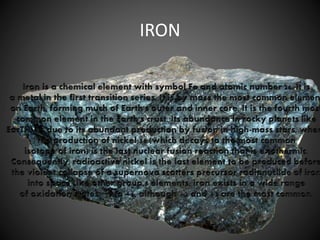
IRON
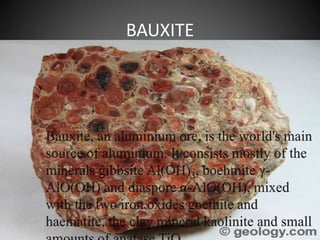
BAUXITE
Copper is a chemical element with
symbol Cu from Latin and atomic number 29. It is
a ductile metal with very high thermal and electrical
conductivity. Pure copper is soft and malleable; a
freshly exposed surface has a reddish-orange color. It
is used as a conductor of heat and electricity, a
building material, and a constituent of various
metal alloys.
Metallic   Minerals

Metallic Minerals

  • 1.
  • 2.
    A mineral isa naturally occurring substance that is solid and inorganic representable by a chemical formula, usually abiogenic, and has an ordered atomic structure. It is different from a rock, which can be an aggregate of minerals or non-minerals and does not have a specific chemical composition.
  • 3.
    Metallic minerals occurin rare, naturally FORMED concentrations known as mineral deposits. These deposits can consist of a variety of metallic minerals containing valuable metals such as nickel (pentlandite), copper (chalcopyrite), zinc (sphalerite), lead (galena) and gold (occurs as a native element or as a minor constituent within other minerals) that are used in all aspects of our daily lives. Metallic minerals must be broken apart and chemically processed to extract the useful metal from the mineral. Ontario is a leading producer of metals such as platinum, nickel, cobalt, gold, copper, silver and zinc. To date, the total value of all metal production in Ontario is estimated at $450 billion dollars. During 2007, mineral exploration COMPANIES spent $502 million dollars exploring for mineral deposits in Ontario.
  • 6.
  • 7.
  • 8.
    Copper is achemical element with symbol Cu from Latin and atomic number 29. It is a ductile metal with very high thermal and electrical conductivity. Pure copper is soft and malleable; a freshly exposed surface has a reddish-orange color. It is used as a conductor of heat and electricity, a building material, and a constituent of various metal alloys.