WELCOME
to Learning & Development session
1
MENTORING and its
MODELs
Subodh L Anjal
2
INDEX3
Trainer vs Coach vs Mentor
What is Mentoring?
Benefits of Mentoring
Mentoring Models
Question n Answer
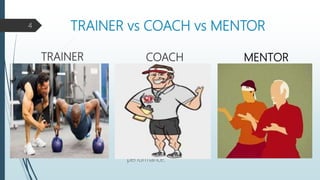
TRAINER vs COACH vs MENTOR
TRAINER COACH
 Coaches on pre-existing
talent, skills
 Helps in utilizing cocachee’s
talent
 Coaching is not time
bounded but is bounded by
task
 More emphasis on coachee’s
learning
 The outcome is Coachee’s
performance.
4
MENTOR
 Trains on pre-defined task
 Trains for acquiring new
knowledge and skills
 Training is time bounded
 Less emphasis on trainee’s
learning
 The outcome is assessed
through test.
 Shares his expertise and
knowledge
 Helps in understanding his
talent and enhance it
 Not Time bound, but spends
more time with Mentee
 Listens, shows empathy and
provide accurate feedback
 The outcome is Mentee’s
confidence and satisfaction.
What is Mentoring?
Definition as per Cambridge Dictionary -
“Mentoring is the activity of supporting and advising
someone with less experience to help them develop in
their work”.
As per ATD (Association Talent Development) -
“Mentoring is a reciprocal and collaborative at-will
relationship that most often occurs between a senior and
junior employee for the purpose of the mentee’s growth,
learning, and career development.”
5
What is Mentoring?
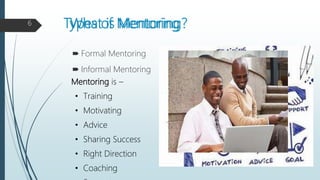
 Formal Mentoring
 Informal Mentoring
Mentoring is –
• Training
• Motivating
• Advice
• Sharing Success
• Right Direction
• Coaching
6 Types of Mentoring
Benefits of Mentoring
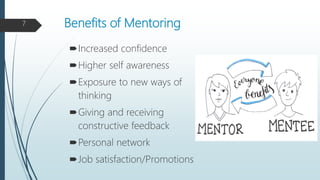
Increased confidence
Higher self awareness
Exposure to new ways of
thinking
Giving and receiving
constructive feedback
Personal network
Job satisfaction/Promotions
7
How to do Mentoring?
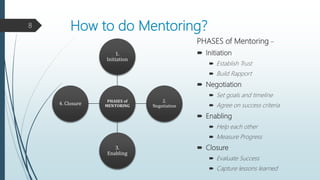
PHASES of Mentoring –
 Initiation
 Establish Trust
 Build Rapport
 Negotiation
 Set goals and timeline
 Agree on success criteria
 Enabling
 Help each other
 Measure Progress
 Closure
 Evaluate Success
 Capture lessons learned
8
PHASES of
MENTORING
1.
Initiation
2.
Negotiation
3.
Enabling
4. Closure
MENTORING MODELs9
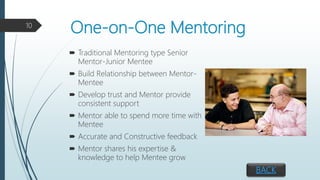
One-on-One Mentoring
 Traditional Mentoring type Senior
Mentor-Junior Mentee
 Build Relationship between Mentor-
Mentee
 Develop trust and Mentor provide
consistent support
 Mentor able to spend more time with
Mentee
 Accurate and Constructive feedback
 Mentor shares his expertise &
knowledge to help Mentee grow
10
BACK
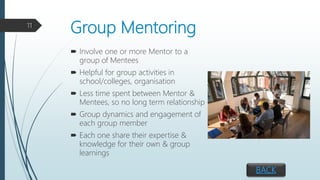
Group Mentoring
 Involve one or more Mentor to a
group of Mentees
 Helpful for group activities in
school/colleges, organisation
 Less time spent between Mentor &
Mentees, so no long term relationship
 Group dynamics and engagement of
each group member
 Each one share their expertise &
knowledge for their own & group
learnings
11
BACK
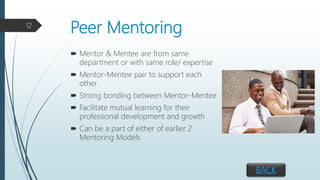
Peer Mentoring
 Mentor & Mentee are from same
department or with same role/ expertise
 Mentor-Mentee pair to support each
other
 Strong bonding between Mentor-Mentee
 Facilitate mutual learning for their
professional development and growth
 Can be a part of either of earlier 2
Mentoring Models
12
BACK
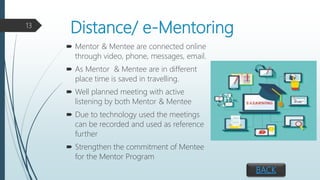
Distance/ e-Mentoring
 Mentor & Mentee are connected online
through video, phone, messages, email.
 As Mentor & Mentee are in different
place time is saved in travelling.
 Well planned meeting with active
listening by both Mentor & Mentee
 Due to technology used the meetings
can be recorded and used as reference
further
 Strengthen the commitment of Mentee
for the Mentor Program
13
BACK
Reverse Mentoring
 A novel Corporate practice
 Its flip-flop of traditional One-on
one Mentoring
 A junior employee mentors the
senior experienced employee
 To get the new perspective and
ideas from newcomer
 Strong relationship between Senior
and junior employees
 Create an environment of learning
and growth
14
BACK
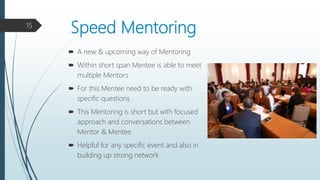
Speed Mentoring
 A new & upcoming way of Mentoring
 Within short span Mentee is able to meet
multiple Mentors
 For this Mentee need to be ready with
specific questions
 This Mentoring is short but with focused
approach and conversations between
Mentor & Mentee
 Helpful for any specific event and also in
building up strong network
15
QUESTION – ANSWER
Session
16
KEY Take Home Messages
 Mentoring is helping mentee in learning and growing in his life
professionally and personally.
 Formal Mentoring is about goals defined and set with
determined requirements.
 Informal Mentoring is about goals setting but emphasis more on
relationship between Mentor-Mentee.
 Trainers trains the new learning, Coach helps in enhancing and
utilizing the learning, while Mentor helps in maximizing the
learning by self development
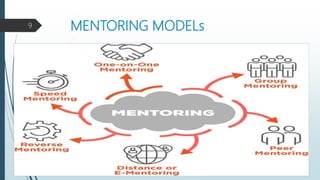
 Mentoring Models : One-on-One, Group, Peer, Distance, Reverse
& Speed Mentoring.
17
THANK YOU
18

Mentoring

  • 1.
    WELCOME to Learning &Development session 1
  • 2.
  • 3.
    INDEX3 Trainer vs Coachvs Mentor What is Mentoring? Benefits of Mentoring Mentoring Models Question n Answer
  • 4.
    TRAINER vs COACHvs MENTOR TRAINER COACH  Coaches on pre-existing talent, skills  Helps in utilizing cocachee’s talent  Coaching is not time bounded but is bounded by task  More emphasis on coachee’s learning  The outcome is Coachee’s performance. 4 MENTOR  Trains on pre-defined task  Trains for acquiring new knowledge and skills  Training is time bounded  Less emphasis on trainee’s learning  The outcome is assessed through test.  Shares his expertise and knowledge  Helps in understanding his talent and enhance it  Not Time bound, but spends more time with Mentee  Listens, shows empathy and provide accurate feedback  The outcome is Mentee’s confidence and satisfaction.
  • 5.
    What is Mentoring? Definitionas per Cambridge Dictionary - “Mentoring is the activity of supporting and advising someone with less experience to help them develop in their work”. As per ATD (Association Talent Development) - “Mentoring is a reciprocal and collaborative at-will relationship that most often occurs between a senior and junior employee for the purpose of the mentee’s growth, learning, and career development.” 5
  • 6.
    What is Mentoring? Formal Mentoring  Informal Mentoring Mentoring is – • Training • Motivating • Advice • Sharing Success • Right Direction • Coaching 6 Types of Mentoring
  • 7.
    Benefits of Mentoring Increasedconfidence Higher self awareness Exposure to new ways of thinking Giving and receiving constructive feedback Personal network Job satisfaction/Promotions 7
  • 8.
    How to doMentoring? PHASES of Mentoring –  Initiation  Establish Trust  Build Rapport  Negotiation  Set goals and timeline  Agree on success criteria  Enabling  Help each other  Measure Progress  Closure  Evaluate Success  Capture lessons learned 8 PHASES of MENTORING 1. Initiation 2. Negotiation 3. Enabling 4. Closure
  • 9.
  • 10.
    One-on-One Mentoring  TraditionalMentoring type Senior Mentor-Junior Mentee  Build Relationship between Mentor- Mentee  Develop trust and Mentor provide consistent support  Mentor able to spend more time with Mentee  Accurate and Constructive feedback  Mentor shares his expertise & knowledge to help Mentee grow 10 BACK
  • 11.
    Group Mentoring  Involveone or more Mentor to a group of Mentees  Helpful for group activities in school/colleges, organisation  Less time spent between Mentor & Mentees, so no long term relationship  Group dynamics and engagement of each group member  Each one share their expertise & knowledge for their own & group learnings 11 BACK
  • 12.
    Peer Mentoring  Mentor& Mentee are from same department or with same role/ expertise  Mentor-Mentee pair to support each other  Strong bonding between Mentor-Mentee  Facilitate mutual learning for their professional development and growth  Can be a part of either of earlier 2 Mentoring Models 12 BACK
  • 13.
    Distance/ e-Mentoring  Mentor& Mentee are connected online through video, phone, messages, email.  As Mentor & Mentee are in different place time is saved in travelling.  Well planned meeting with active listening by both Mentor & Mentee  Due to technology used the meetings can be recorded and used as reference further  Strengthen the commitment of Mentee for the Mentor Program 13 BACK
  • 14.
    Reverse Mentoring  Anovel Corporate practice  Its flip-flop of traditional One-on one Mentoring  A junior employee mentors the senior experienced employee  To get the new perspective and ideas from newcomer  Strong relationship between Senior and junior employees  Create an environment of learning and growth 14 BACK
  • 15.
    Speed Mentoring  Anew & upcoming way of Mentoring  Within short span Mentee is able to meet multiple Mentors  For this Mentee need to be ready with specific questions  This Mentoring is short but with focused approach and conversations between Mentor & Mentee  Helpful for any specific event and also in building up strong network 15
  • 16.
  • 17.
    KEY Take HomeMessages  Mentoring is helping mentee in learning and growing in his life professionally and personally.  Formal Mentoring is about goals defined and set with determined requirements.  Informal Mentoring is about goals setting but emphasis more on relationship between Mentor-Mentee.  Trainers trains the new learning, Coach helps in enhancing and utilizing the learning, while Mentor helps in maximizing the learning by self development  Mentoring Models : One-on-One, Group, Peer, Distance, Reverse & Speed Mentoring. 17
  • 18.