






Menopause
Prepared by/
Yasmine Mahmoud
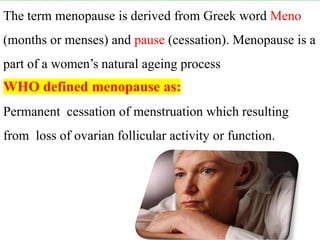
The term menopause is derived from Greek word Meno
(months or menses) and pause (cessation). Menopause is a
part of a women’s natural ageing process
WHO defined menopause as:
Permanent cessation of menstruation which resulting
from loss of ovarian follicular activity or function.
NICE define menopause as:
Menopause is a biological stage in a woman's life that occurs
when she stops menstruating and reaches the end of her
natural reproductive life. This is not usually abrupt, but a
gradual process during which women experience
perimenopause before reaching post-menopause”
(NICE, 2015).
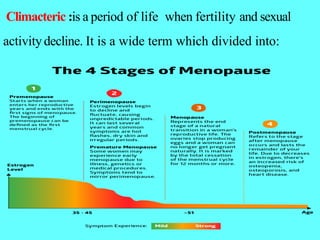
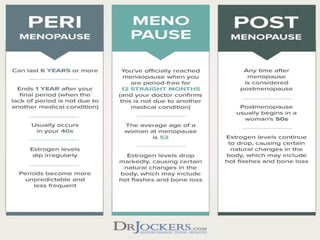
Climacteric :is a period of life when fertility and sexual
activitydecline. It is a wide term which divided into:
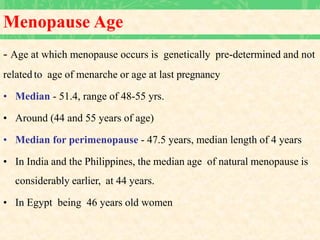
Menopause Age
- Age at which menopause occurs is genetically pre-determined and not
related to age of menarche or age at last pregnancy
• Median - 51.4, range of 48-55 yrs.
• Around (44 and 55 years of age)
• Median for perimenopause - 47.5 years, median length of 4 years
• In India and the Philippines, the median age of natural menopause is
considerably earlier, at 44 years.
• In Egypt being 46 years old women
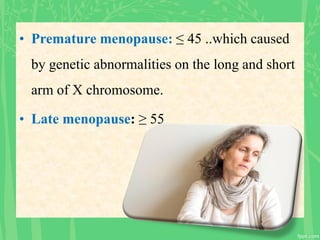
• Premature menopause: ≤ 45 ..which caused
by genetic abnormalities on the long and short
arm of X chromosome.
• Late menopause: ≥ 55
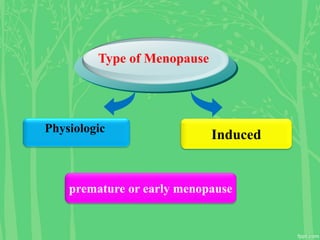
Physiologic
Induced
Type of Menopause
premature or early menopause
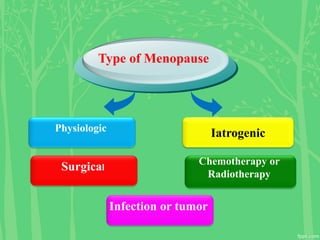
Physiologic
Iatrogenic
Type of Menopause
Surgical
Chemotherapy or
Radiotherapy
Infection or tumor
physiology of the peri-menopause
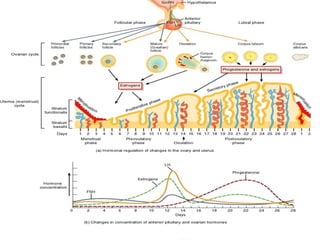
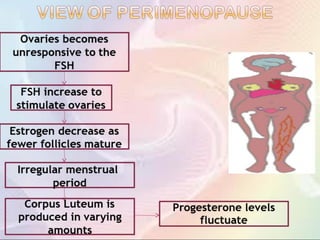
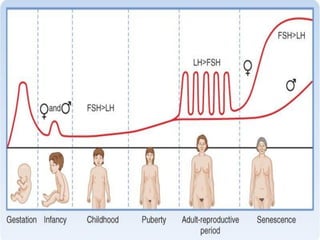
• Shorten of menstrual cycle length or anovulatory cycle and
prolong cycle
• Shorten of the follicular phase ,↓no of follicles
• ↑ FSH
• ↓ inhibin hormone
• Estradiol level fluctuate but remain within the wide range
• Progesterone level fluctuate depending on the presence
&adequacy of ovulation
• Androgen level steadily ↓ during the transitional period
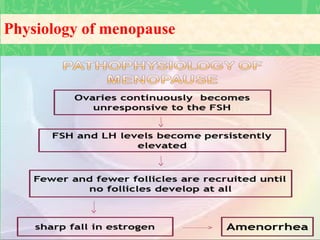
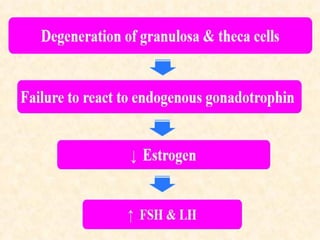
Physiology of menopause
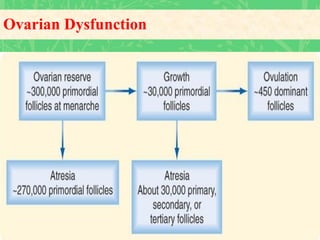
Ovarian Dysfunction
Ovarian Dysfunction
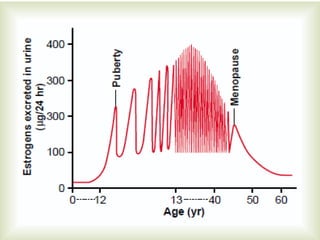
• At menarche ↓400,000 ova
• Most women menstruate about 400 times between
menarche & menopause
• With menopause, the ovary is no longer capable of
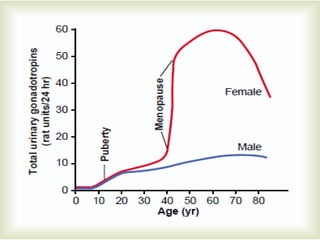
responding to pituitary gonadotropins →↓
production of estrogen &progesterone
Physiology of menopause
Changes in hormones metabolism
Androgens :-
• ↑ androgen level due to stromal cell stimulation by
endogenous gonadotrophins
• ↓ Androstenedion (adrenal)
• ↑ Testosterone level
• This lead to defeminization hirsutism ,virilism,
Changes in hormones metabolism
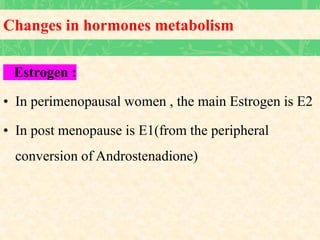
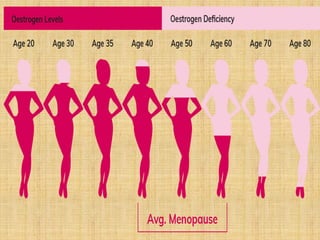
Estrogen :
• In perimenopausal women , the main Estrogen is E2
• In post menopause is E1(from the peripheral
conversion of Androstenadione)
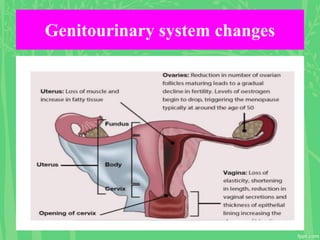
Genitourinary system changes
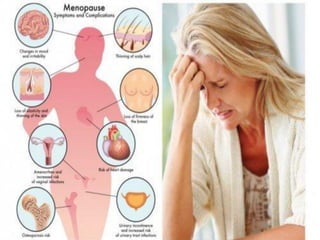
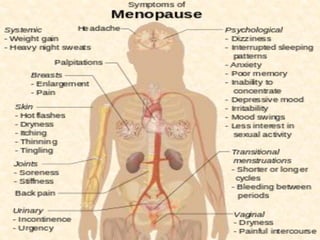
• Irregular periods, vaginal dryness, incontinence, and loss of
libido
• Irregular periods are universal genitourinary symptom of
menopause associated with fluctuating levels of estrogen in the
body.
• Ovaries: Become more fibrotic as follicles diminish.
• Uterus: Loses Weight and Volume.
• Vaginal walls: become thinner, dryer, less elastic, and possibly
irritated.
• Sometimes sex becomes painful due to these vaginal changes.
• Decrease a woman's interest and pleasure in sex, leading to loss
of libido.
Genitourinary system changes
• Urologic: 30% drop in urethral closure pressure at rest and
during stress in postmenopausal women because of atrophy
of the urethral mucosa, varying degrees of bladder and
urethral prolapsed and loss of UV angle
• Atrophic urethritis -> urgency, frequency, dysuria,
suprapubic pain, ø UTI
• Atrophic cystitis -> urge incontinence, frequency, dysuria,
and nocturia
Genitourinary system changes
• Dyspareunia or painful intercourse
• Decreased libido
• Problems reaching orgasm
• Sexual issues generally increase with aging;
distressing sexual complaints peak during midlife
(ages 45-64) and are lowest from age 65 onward
• Decreased estrogen causes a decline in vaginal
lubrication and elasticity
Sexual symptoms
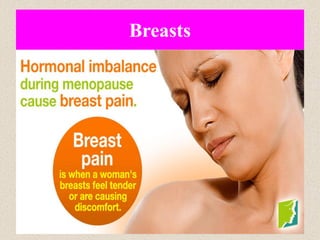
Breasts
Hot Flashes
are typically defined by a strong sense of warmth in
the skin, (mainly the face), followed by excessive
sweating.
Onset: 10% prior to menopause
50% after cessation of menses
Cardiovascular Symptoms
Menopause-related hormonal changes affect the heart and
vascular system. These effects can cause menopause
symptoms such as migraines, dizziness, irregular
heartbeat and the constriction of blood vessels.
❑ The reduction in ovarian function also appears to be
correlated with heart disease risk (arteriosclerosis) in
menopausal women.
Skeletal System changes
Osteoporosis: Decreased bone mass following menopause
that appears to be the result of declining estrogen level with a
risk of fractures, mainly in the wrist, neck of the femur and
vertebra and osteoporotic fractures, musculoskeletal disease,
and dental problems.
Gastrointestinal changes
Primary hormonal changes in menopause can also affect
GIT, potentially causing digestive problems, bloating,
reduced metabolic rate and weight gain and even obesity
(The distribution of body fat may change, with body fat
being deposited more in the waist and abdominal area than in
the hips and thighs).
Skin
❑ Significant decrease in epidermal thickness and collagen ,
healing of skin is generally slower
❑ Postmenopausal estrogen maintains premenopausal
levels of synthesis of collagen and prevents thinning of
skin and retards wrinkling process
❑ Formication (itching, tingling, burning, pins and needles,
or sensation of ants crawling on or under the skin)
Skin
• Facial Hair: Also due to the unmasking of testosterone, some
women may develop facial hair, particularly in the chin area.
• Itchy skin can be associated with declining levels in collagen
production in the skin around the time of menopause.
• More Prone to Sun Damage: The maintenance of Melanocytes is
under the control of estrogens.
• Hyperpigmentation / Age Spots: Estrogens also temper melanin
production. This can result in brown “age spots” appearing on the
face, hands, neck, arms and chest of many women.
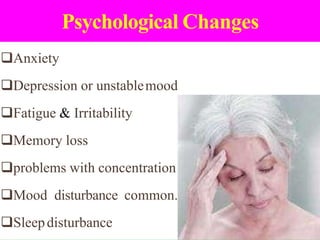
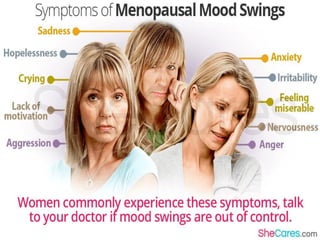
Psychological Changes
❑Anxiety
❑Depression or unstablemood
❑Fatigue & Irritability
❑Memory loss
❑problems with concentration
❑Mood disturbance common.
❑Sleepdisturbance
Psychological Changes
Sleepiness
Aggressiveness
Tension
Phobias
Low self-esteem
Tearfulness
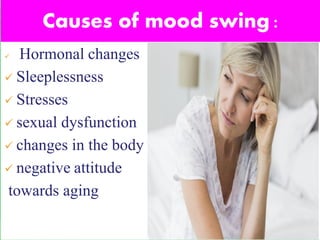
Causes of mood swing :
✓ Hormonal changes
✓ Sleeplessness
✓ Stresses
✓ sexual dysfunction
✓ changes in the body
✓ negative attitude
towards aging
Diagnosis
Physical signs and symptoms
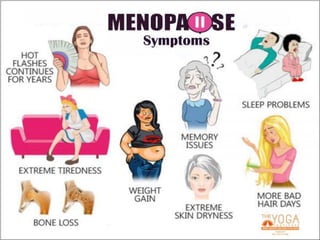
• Hot flushes (occurring in approximately 60% of women)
• Sweats (often at night)
• Tiredness
• Headaches
• Joint and bone pain
• Unusual skin sensations
• Vaginal dryness, incontinence and infections of the urinary tract and
vagina may occur due to the thinning of the vagina and bladder walls.
• Loss of collagen and elasticity
• Aches
Diagnosis
investigations:-
▪ Vaginal pH Test
▪ Follicle-Stimulating Hormone
▪ Thyroid-stimulating hormone
▪ Androgen
▪ Inhibin
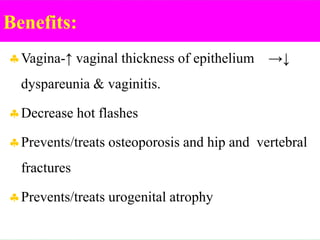
Benefits:
Vagina-↑ vaginal thickness of epithelium →↓
dyspareunia & vaginitis.
Decrease hot flashes
Prevents/treats osteoporosis and hip and vertebral
fractures
Prevents/treats urogenital atrophy
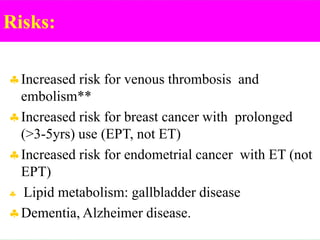
Risks:
Increased risk for venous thrombosis and
embolism**
Increased risk for breast cancer with prolonged
(>3-5yrs) use (EPT, not ET)
Increased risk for endometrial cancer with ET (not
EPT)
 Lipid metabolism: gallbladder disease
Dementia, Alzheimer disease.
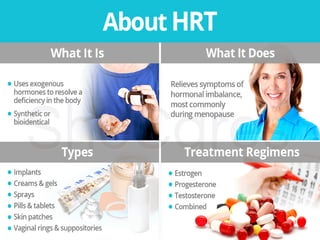
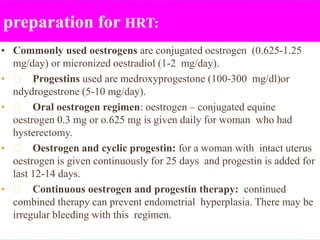
preparation for HRT:
• Commonly used oestrogens are conjugated oestrogen (0.625-1.25
mg/day) or micronized oestradiol (1-2 mg/day).
• Progestins used are medroxyprogestone (100-300 mg/dl)or
ndydrogestrone (5-10 mg/day).
• Oral oestrogen regimen: oestrogen – conjugated equine
oestrogen 0.3 mg or o.625 mg is given daily for woman who had
hysterectomy.
• Oestrogen and cyclic progestin: for a woman with intact uterus
oestrogen is given continuously for 25 days and progestin is added for
last 12-14 days.
• Continuous oestrogen and progestin therapy: continued
combined therapy can prevent endometrial hyperplasia. There may be
irregular bleeding with this regimen.
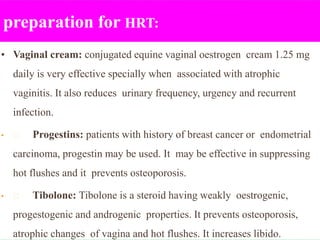
preparation for HRT:
• Vaginal cream: conjugated equine vaginal oestrogen cream 1.25 mg
daily is very effective specially when associated with atrophic
vaginitis. It also reduces urinary frequency, urgency and recurrent
infection.
• Progestins: patients with history of breast cancer or endometrial
carcinoma, progestin may be used. It may be effective in suppressing
hot flushes and it prevents osteoporosis.
• Tibolone: Tibolone is a steroid having weakly oestrogenic,
progestogenic and androgenic properties. It prevents osteoporosis,
atrophic changes of vagina and hot flushes. It increases libido.
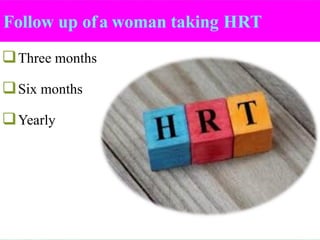
Follow up ofa woman taking HRT
❑Three months
❑Six months
❑Yearly
Role ofmidwifery nurse:
Aim:
• provide women-centered assessment
• advice and treatment which improves quality of life
• promotes health into the years beyond menopause
NICE guidelines:
• adopting an individualized approach at all stages of diagnosis,
• investigation and management
• providing information in different ways, tailored to the
individual
• discussing treatment options, including an individualized risk
assessment of each types and excluding contraindications
• offering treatment as appropriate, monitoring and adjusting as
necessary
NICE guidelines:
• adapting treatment as needed, based on a woman’s changing
circumstances
• taking into account fertility needs
• considering and address psychological needs
• seeing women at high risk of/or with breast cancer
• seeing women with other risk factors such as type 2 diabetes
• seeing women with premature ovarian insufficiency
The key areas to cover are:
• Smoking status
• Diet and nutrition
• Exercise
• Alcohol consumption
• Weight control
• Psychological aspects of the menopause
• Reinforcing breast awareness
• Encouraging attendance for breast and
• cervical screening
• Assessing cardiovascular risk
• Osteoporosis risk assessment
Stopping smoking
:Smoking has many negative effects:
• cigarette smoking can increase the risk of having a heart attack
by two or three times;
• coronary heart disease (CHD) is the most common cause of death
in women
• smoking leads to an earlier menopause – up to two years earlier
when compared with non-smokers.
• smoking tends to increase blood cholesterol levels and adversely
effects the HDL/LDL ratio.
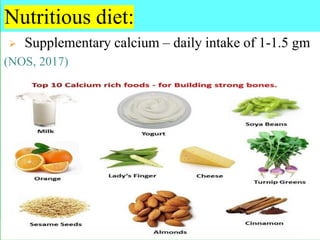
Nutritious diet:
➢ Supplementary calcium – daily intake of 1-1.5 gm
(NOS, 2017)
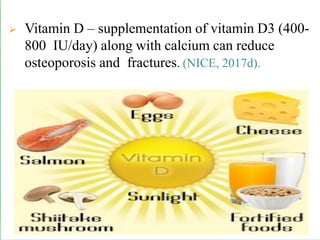
➢ Vitamin D – supplementation of vitamin D3 (400-
800 IU/day) along with calcium can reduce
osteoporosis and fractures. (NICE, 2017d).
• Intake of omega-3 fatty acids:
- found in cold water oily fish, or in vegetarian sources
such as; nuts, seeds, especially flaxseed (linseed)
which is also a form of phytoestrogen, as well as
providing omega-3 oils.
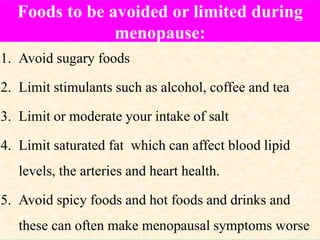
Foods to be avoided or limited during
menopause:
1. Avoid sugary foods
2. Limit stimulants such as alcohol, coffee and tea
3. Limit or moderate your intake of salt
4. Limit saturated fat which can affect blood lipid
levels, the arteries and heart health.
5. Avoid spicy foods and hot foods and drinks and
these can often make menopausal symptoms worse
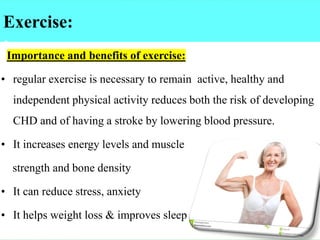
Exercise:
:
Importance and benefits of exercise:
• regular exercise is necessary to remain active, healthy and
independent physical activity reduces both the risk of developing
CHD and of having a stroke by lowering blood pressure.
• It increases energy levels and muscle
strength and bone density
• It can reduce stress, anxiety
• It helps weight loss & improves sleep
Exercise:
:
❑ weight-bearing exercise :such as brisk walking, dancing,
skipping, aerobics, tennis and running stimulate bone to
strengthen itself
❑ cycling and swimming are both good cardiovascular exercises
❑ exercise should be varied and should be taken for at least 30
minutes on five or more days of the week for maximum benefit
Alcohol:
:
❑ It is recommended that women drink no more than three units
of alcohol a day, with a weekly consumption of fewer than 14
units. One to two alcohol-free days per week are recommended.
❑ keeping alcohol levels low can lower the risk of heart disease
and stroke
❑ too much alcohol is damaging to bone turnover
❑ heavy drinking increases the risk of heart disease and stroke,
and raises blood pressure which can lead to depression
Weight control:
:
❑ It is not inevitable that women will put on weight at the
menopause, but many due in part to a decline in muscle mass
and a subsequent slow-down in the basal metabolic rate.
❑ Women should be advised to:
✓ eat a healthy diet
✓ exercise regularly; start slowly and gradually increase
✓ lose extra weight slowly and steadily.
Psychological aspects:
:
❑ Regular mental stimulation seems to maintain cognitive ability
❑ Regular exercise can make sleeping easier
❑ A balanced diet will ensure an adequate intake
of essential minerals and vitamins
❑ Social activity improves mental function
❑ concentration can be improved with
crosswords, puzzles, quizzes.
Screening:
:
❖ Breast awareness:
✓ Breast cancer is the most common cancer in women.
✓ Health care professionals, women and their partners can access
posters, leaflets and information booklets that inform women
about the breast screening programme from the information
resources.
✓ Educate women about these risks factors, helping to support
them in addressing those that are modifiable.
Screening:
:
❖ Cervical screening:
✓ Aims to detect pre-cancerous abnormalities which may, if
left untreated, lead to cervical cancer.
✓ The cervical screening programme invites women:
▪ 25 and 45 years of age every three years for a screening
test,
▪ While those aged between 50 and 64 years of age are
invited every five years.
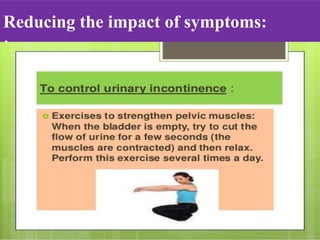
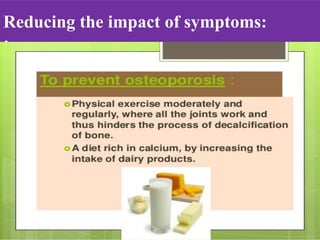
Reducing the impact of symptoms:
:
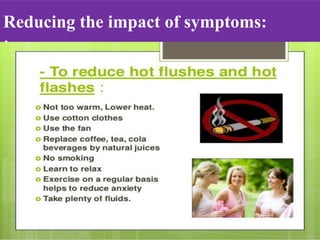
Reducing the impact of symptoms:
:
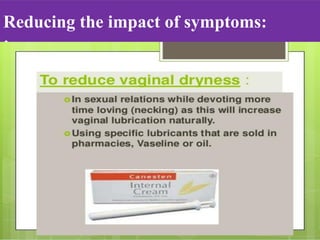
Reducing the impact of symptoms:
:
Reducing the impact of symptoms:
:
Initiating and monitoring HRT:
:
• Nurses are often involved with decision making about HRT,
with baseline investigations of women and the ongoing
monitoring
• blood pressure – Weight it has become established practice
to record as a baseline measurement.
• pelvic examination –breast examination … not routinely
performed before treatment, but clinically indicated in
women with a history of fibroids. (NICE, 2015)
Kingsoft Office
published by www.Kingsoftstore.com
@Kingsoft_Office
kingsoftstore

Menopause

  • 1.
  • 2.
    The term menopauseis derived from Greek word Meno (months or menses) and pause (cessation). Menopause is a part of a women’s natural ageing process WHO defined menopause as: Permanent cessation of menstruation which resulting from loss of ovarian follicular activity or function.
  • 3.
    NICE define menopauseas: Menopause is a biological stage in a woman's life that occurs when she stops menstruating and reaches the end of her natural reproductive life. This is not usually abrupt, but a gradual process during which women experience perimenopause before reaching post-menopause” (NICE, 2015).
  • 4.
    Climacteric :is aperiod of life when fertility and sexual activitydecline. It is a wide term which divided into:
  • 6.
    Menopause Age - Ageat which menopause occurs is genetically pre-determined and not related to age of menarche or age at last pregnancy • Median - 51.4, range of 48-55 yrs. • Around (44 and 55 years of age) • Median for perimenopause - 47.5 years, median length of 4 years • In India and the Philippines, the median age of natural menopause is considerably earlier, at 44 years. • In Egypt being 46 years old women
  • 7.
    • Premature menopause:≤ 45 ..which caused by genetic abnormalities on the long and short arm of X chromosome. • Late menopause: ≥ 55
  • 8.
  • 9.
  • 11.
    physiology of theperi-menopause • Shorten of menstrual cycle length or anovulatory cycle and prolong cycle • Shorten of the follicular phase ,↓no of follicles • ↑ FSH • ↓ inhibin hormone • Estradiol level fluctuate but remain within the wide range • Progesterone level fluctuate depending on the presence &adequacy of ovulation • Androgen level steadily ↓ during the transitional period
  • 13.
  • 14.
  • 15.
    Ovarian Dysfunction • Atmenarche ↓400,000 ova • Most women menstruate about 400 times between menarche & menopause • With menopause, the ovary is no longer capable of responding to pituitary gonadotropins →↓ production of estrogen &progesterone
  • 16.
  • 18.
    Changes in hormonesmetabolism Androgens :- • ↑ androgen level due to stromal cell stimulation by endogenous gonadotrophins • ↓ Androstenedion (adrenal) • ↑ Testosterone level • This lead to defeminization hirsutism ,virilism,
  • 19.
    Changes in hormonesmetabolism Estrogen : • In perimenopausal women , the main Estrogen is E2 • In post menopause is E1(from the peripheral conversion of Androstenadione)
  • 27.
  • 28.
    • Irregular periods,vaginal dryness, incontinence, and loss of libido • Irregular periods are universal genitourinary symptom of menopause associated with fluctuating levels of estrogen in the body. • Ovaries: Become more fibrotic as follicles diminish. • Uterus: Loses Weight and Volume. • Vaginal walls: become thinner, dryer, less elastic, and possibly irritated. • Sometimes sex becomes painful due to these vaginal changes. • Decrease a woman's interest and pleasure in sex, leading to loss of libido. Genitourinary system changes
  • 29.
    • Urologic: 30%drop in urethral closure pressure at rest and during stress in postmenopausal women because of atrophy of the urethral mucosa, varying degrees of bladder and urethral prolapsed and loss of UV angle • Atrophic urethritis -> urgency, frequency, dysuria, suprapubic pain, ø UTI • Atrophic cystitis -> urge incontinence, frequency, dysuria, and nocturia Genitourinary system changes
  • 30.
    • Dyspareunia orpainful intercourse • Decreased libido • Problems reaching orgasm • Sexual issues generally increase with aging; distressing sexual complaints peak during midlife (ages 45-64) and are lowest from age 65 onward • Decreased estrogen causes a decline in vaginal lubrication and elasticity Sexual symptoms
  • 31.
  • 32.
    Hot Flashes are typicallydefined by a strong sense of warmth in the skin, (mainly the face), followed by excessive sweating. Onset: 10% prior to menopause 50% after cessation of menses
  • 33.
    Cardiovascular Symptoms Menopause-related hormonalchanges affect the heart and vascular system. These effects can cause menopause symptoms such as migraines, dizziness, irregular heartbeat and the constriction of blood vessels. ❑ The reduction in ovarian function also appears to be correlated with heart disease risk (arteriosclerosis) in menopausal women.
  • 34.
    Skeletal System changes Osteoporosis:Decreased bone mass following menopause that appears to be the result of declining estrogen level with a risk of fractures, mainly in the wrist, neck of the femur and vertebra and osteoporotic fractures, musculoskeletal disease, and dental problems.
  • 35.
    Gastrointestinal changes Primary hormonalchanges in menopause can also affect GIT, potentially causing digestive problems, bloating, reduced metabolic rate and weight gain and even obesity (The distribution of body fat may change, with body fat being deposited more in the waist and abdominal area than in the hips and thighs).
  • 36.
    Skin ❑ Significant decreasein epidermal thickness and collagen , healing of skin is generally slower ❑ Postmenopausal estrogen maintains premenopausal levels of synthesis of collagen and prevents thinning of skin and retards wrinkling process ❑ Formication (itching, tingling, burning, pins and needles, or sensation of ants crawling on or under the skin)
  • 37.
    Skin • Facial Hair:Also due to the unmasking of testosterone, some women may develop facial hair, particularly in the chin area. • Itchy skin can be associated with declining levels in collagen production in the skin around the time of menopause. • More Prone to Sun Damage: The maintenance of Melanocytes is under the control of estrogens. • Hyperpigmentation / Age Spots: Estrogens also temper melanin production. This can result in brown “age spots” appearing on the face, hands, neck, arms and chest of many women.
  • 38.
    Psychological Changes ❑Anxiety ❑Depression orunstablemood ❑Fatigue & Irritability ❑Memory loss ❑problems with concentration ❑Mood disturbance common. ❑Sleepdisturbance
  • 39.
  • 41.
    Causes of moodswing : ✓ Hormonal changes ✓ Sleeplessness ✓ Stresses ✓ sexual dysfunction ✓ changes in the body ✓ negative attitude towards aging
  • 42.
    Diagnosis Physical signs andsymptoms • Hot flushes (occurring in approximately 60% of women) • Sweats (often at night) • Tiredness • Headaches • Joint and bone pain • Unusual skin sensations • Vaginal dryness, incontinence and infections of the urinary tract and vagina may occur due to the thinning of the vagina and bladder walls. • Loss of collagen and elasticity • Aches
  • 43.
    Diagnosis investigations:- ▪ Vaginal pHTest ▪ Follicle-Stimulating Hormone ▪ Thyroid-stimulating hormone ▪ Androgen ▪ Inhibin
  • 47.
    Benefits: Vagina-↑ vaginal thicknessof epithelium →↓ dyspareunia & vaginitis. Decrease hot flashes Prevents/treats osteoporosis and hip and vertebral fractures Prevents/treats urogenital atrophy
  • 48.
    Risks: Increased risk forvenous thrombosis and embolism** Increased risk for breast cancer with prolonged (>3-5yrs) use (EPT, not ET) Increased risk for endometrial cancer with ET (not EPT)  Lipid metabolism: gallbladder disease Dementia, Alzheimer disease.
  • 50.
    preparation for HRT: •Commonly used oestrogens are conjugated oestrogen (0.625-1.25 mg/day) or micronized oestradiol (1-2 mg/day). • Progestins used are medroxyprogestone (100-300 mg/dl)or ndydrogestrone (5-10 mg/day). • Oral oestrogen regimen: oestrogen – conjugated equine oestrogen 0.3 mg or o.625 mg is given daily for woman who had hysterectomy. • Oestrogen and cyclic progestin: for a woman with intact uterus oestrogen is given continuously for 25 days and progestin is added for last 12-14 days. • Continuous oestrogen and progestin therapy: continued combined therapy can prevent endometrial hyperplasia. There may be irregular bleeding with this regimen.
  • 51.
    preparation for HRT: •Vaginal cream: conjugated equine vaginal oestrogen cream 1.25 mg daily is very effective specially when associated with atrophic vaginitis. It also reduces urinary frequency, urgency and recurrent infection. • Progestins: patients with history of breast cancer or endometrial carcinoma, progestin may be used. It may be effective in suppressing hot flushes and it prevents osteoporosis. • Tibolone: Tibolone is a steroid having weakly oestrogenic, progestogenic and androgenic properties. It prevents osteoporosis, atrophic changes of vagina and hot flushes. It increases libido.
  • 52.
    Follow up ofawoman taking HRT ❑Three months ❑Six months ❑Yearly
  • 53.
  • 54.
    Aim: • provide women-centeredassessment • advice and treatment which improves quality of life • promotes health into the years beyond menopause
  • 55.
    NICE guidelines: • adoptingan individualized approach at all stages of diagnosis, • investigation and management • providing information in different ways, tailored to the individual • discussing treatment options, including an individualized risk assessment of each types and excluding contraindications • offering treatment as appropriate, monitoring and adjusting as necessary
  • 56.
    NICE guidelines: • adaptingtreatment as needed, based on a woman’s changing circumstances • taking into account fertility needs • considering and address psychological needs • seeing women at high risk of/or with breast cancer • seeing women with other risk factors such as type 2 diabetes • seeing women with premature ovarian insufficiency
  • 57.
    The key areasto cover are: • Smoking status • Diet and nutrition • Exercise • Alcohol consumption • Weight control • Psychological aspects of the menopause • Reinforcing breast awareness • Encouraging attendance for breast and • cervical screening • Assessing cardiovascular risk • Osteoporosis risk assessment
  • 58.
    Stopping smoking :Smoking hasmany negative effects: • cigarette smoking can increase the risk of having a heart attack by two or three times; • coronary heart disease (CHD) is the most common cause of death in women • smoking leads to an earlier menopause – up to two years earlier when compared with non-smokers. • smoking tends to increase blood cholesterol levels and adversely effects the HDL/LDL ratio.
  • 59.
    Nutritious diet: ➢ Supplementarycalcium – daily intake of 1-1.5 gm (NOS, 2017)
  • 60.
    ➢ Vitamin D– supplementation of vitamin D3 (400- 800 IU/day) along with calcium can reduce osteoporosis and fractures. (NICE, 2017d).
  • 61.
    • Intake ofomega-3 fatty acids: - found in cold water oily fish, or in vegetarian sources such as; nuts, seeds, especially flaxseed (linseed) which is also a form of phytoestrogen, as well as providing omega-3 oils.
  • 64.
    Foods to beavoided or limited during menopause: 1. Avoid sugary foods 2. Limit stimulants such as alcohol, coffee and tea 3. Limit or moderate your intake of salt 4. Limit saturated fat which can affect blood lipid levels, the arteries and heart health. 5. Avoid spicy foods and hot foods and drinks and these can often make menopausal symptoms worse
  • 65.
    Exercise: : Importance and benefitsof exercise: • regular exercise is necessary to remain active, healthy and independent physical activity reduces both the risk of developing CHD and of having a stroke by lowering blood pressure. • It increases energy levels and muscle strength and bone density • It can reduce stress, anxiety • It helps weight loss & improves sleep
  • 66.
    Exercise: : ❑ weight-bearing exercise:such as brisk walking, dancing, skipping, aerobics, tennis and running stimulate bone to strengthen itself ❑ cycling and swimming are both good cardiovascular exercises ❑ exercise should be varied and should be taken for at least 30 minutes on five or more days of the week for maximum benefit
  • 67.
    Alcohol: : ❑ It isrecommended that women drink no more than three units of alcohol a day, with a weekly consumption of fewer than 14 units. One to two alcohol-free days per week are recommended. ❑ keeping alcohol levels low can lower the risk of heart disease and stroke ❑ too much alcohol is damaging to bone turnover ❑ heavy drinking increases the risk of heart disease and stroke, and raises blood pressure which can lead to depression
  • 68.
    Weight control: : ❑ Itis not inevitable that women will put on weight at the menopause, but many due in part to a decline in muscle mass and a subsequent slow-down in the basal metabolic rate. ❑ Women should be advised to: ✓ eat a healthy diet ✓ exercise regularly; start slowly and gradually increase ✓ lose extra weight slowly and steadily.
  • 69.
    Psychological aspects: : ❑ Regularmental stimulation seems to maintain cognitive ability ❑ Regular exercise can make sleeping easier ❑ A balanced diet will ensure an adequate intake of essential minerals and vitamins ❑ Social activity improves mental function ❑ concentration can be improved with crosswords, puzzles, quizzes.
  • 70.
    Screening: : ❖ Breast awareness: ✓Breast cancer is the most common cancer in women. ✓ Health care professionals, women and their partners can access posters, leaflets and information booklets that inform women about the breast screening programme from the information resources. ✓ Educate women about these risks factors, helping to support them in addressing those that are modifiable.
  • 71.
    Screening: : ❖ Cervical screening: ✓Aims to detect pre-cancerous abnormalities which may, if left untreated, lead to cervical cancer. ✓ The cervical screening programme invites women: ▪ 25 and 45 years of age every three years for a screening test, ▪ While those aged between 50 and 64 years of age are invited every five years.
  • 72.
    Reducing the impactof symptoms: :
  • 73.
    Reducing the impactof symptoms: :
  • 74.
    Reducing the impactof symptoms: :
  • 75.
    Reducing the impactof symptoms: :
  • 76.
    Initiating and monitoringHRT: : • Nurses are often involved with decision making about HRT, with baseline investigations of women and the ongoing monitoring • blood pressure – Weight it has become established practice to record as a baseline measurement. • pelvic examination –breast examination … not routinely performed before treatment, but clinically indicated in women with a history of fibroids. (NICE, 2015)
  • 77.
    Kingsoft Office published bywww.Kingsoftstore.com @Kingsoft_Office kingsoftstore